Haruki Murakami Announces an Archive That Will House His Manuscripts, Letters & Collection of 10,000+ Vinyl Records

Image by wakarimasita, via Wikimedia Commons
It has become the norm for notable writers to bequeath documents related to their work, and even their personal correspondence, to an institution that promises to maintain it all, in perpetuity, in an archive open to scholars. Often the institution is located at a university to which the writer has some connection, and the case of the Haruki Murakami Library at Tokyo’s Waseda University is no exception: Murakami graduated from Waseda in 1975, and a dozen years later used it as a setting in his breakthrough novel Norwegian Wood.
That book’s portrayal of Waseda betrays a somewhat dim view of the place, but Murakami looks much more kindly on his alma mater now than he did then: he must, since he plans to entrust it with not just all his papers but his beloved record collection as well. If you wanted to see that collection today, you’d have to visit him at home. “I exchanged my shoes for slippers, and Murakami took me upstairs to his office,” writes Sam Anderson, having done just that for a 2011 New York Times Magazine profile of the writer. “This is also, not coincidentally, the home of his vast record collection. (He guesses that he has around 10,000 but says he’s too scared to count.)”
Having announced the plans for Waseda’s Murakami Library at the end of last year, Murakami can now rest assured that the counting will be left to the archivists. He hopes, he said at a rare press conference, “to create a space that functions as a study where my record collection and books are stored.” In his own space now, he explained, he has “a collection of records, audio equipment and some books. The idea is to create an atmosphere like that, not to create a replica of my study.” Some of Murakami’s stated motivation to establish the library comes out of convictions about the importance of “a place of open international exchanges for literature and culture” and “an alternative place that you can drop by.” And some of it, of course, comes out of practicality: “After nearly 40 years of writing, there is hardly any space to put the documents such as manuscripts and related articles, whether at my home or at my office.”
“I also have no children to take care of them,” Murakami added, “and I didn’t want those resources to be scattered and lost when I die.” Few of his countless readers around the world can imagine that day coming any time soon, turn 70 though Murakami did last month, but many are no doubt making plans even now for a trip to the Waseda campus to see what shape the Murakami Library takes during the writer’s lifetime, especially since he plans to take an active role in what goes on there. “Murakami is also hoping to organize a concert featuring his collection of vinyl records,” notes The Vinyl Factory’s Gabriela Helfet. Until he does, you can have a listen to the playlists, previously featured here on Open Culture, of 96 songs from his novels and 3,350 from his record collection — but you’ll have to recreate the atmosphere of his study yourself for now.
Related Content:
A 3,350-Song Playlist of Music from Haruki Murakami’s Personal Record Collection
A 26-Hour Playlist Featuring Music from Haruki Murakami’s Latest Novel, Killing Commendatore
Haruki Murakami’s Passion for Jazz: Discover the Novelist’s Jazz Playlist, Jazz Essay & Jazz Bar
Based in Seoul, Colin Marshall writes and broadcasts on cities, language, and culture. His projects include the book The Stateless City: a Walk through 21st-Century Los Angeles and the video series The City in Cinema. Follow him on Twitter at @colinmarshall or on Facebook.
Read More...Watch Bauhaus World, a Free Documentary That Celebrates the 100th Anniversary of Germany’s Legendary Art, Architecture & Design School
This April 1st marks the 100th anniversary of the founding of the Bauhaus, the German art school that, though short-lived, launched an entire design movement with a stark, functional aesthetic all its own. It can be tempting, looking into that aesthetic that finds the beauty in industry and the industry in beauty, to regard it as purely a product of its time and place, specifically a 20th-century Europe between the wars searching for ways to invent the future. But as revealed in Bauhaus World, this three-part documentary from German broadcaster Deutsche Welle, the legacy of the Bauhaus lives on not just in the reputations of its best known original members — Walter Gropius, Paul Klee, László Moholy-Nagy, and Josef Albers, among others — but in the currently active creators it continues to inspire in every corner of the Earth.
“What do escalators in Medellín, Arabic lettering in Amman, story-telling furniture from London, urban farming in Detroit and a co-living complex in Tokyo have to do with the Bauhaus?” asks Deutsche Welle’s web site. They all draw from “the influence that the philosophy of the Bauhaus movement still exerts on the globalized society of the 21st century,” a time that has its societal parallels with the year 1919.
To illustrate those parallels as well as the continuing relevance of Bauhaus teachings, “we meet architects, urban planners, designers and artists from around the globe who, in the spirit of the Bauhaus, want to rethink and change the world.” True to its title, Bauhaus World’s journey involves a wide variety of countries, and not just European ones: different segments profile the work of Bauhaus-influenced designers everywhere from Mexico to Jordan, Colombia to Israel, the United States to Japan.
It’s in Japan, in fact, that the first part of Bauhaus World, “The Code,” finds the outer reaches of the spread of Bauhaus that began with the exile of its members from Nazi Germany. The second part, “The Effect,” deals with the enduring influence that has turned Bauhaus and its principles from a movement to a brand, one that has potentially done more than its share to make us as design-obsessed as we’ve become in the 21st century — a century that, the third and final part “The Utopia” considers, may or may not have a place for the original Bauhaus ideals. But whatever Gropius, Klee, Moholy-Nagy, Albers, and the rest would think of what the Bauhaus they created has become over the past hundred years, over the next hundred years more and more designers — emerging from a wider and wider variety of societies and traditions — will come to see themselves as its descendants.
Bauhaus World will be added to our list of Free Documentaries, a subset of our collection, 4,000+ Free Movies Online: Great Classics, Indies, Noir, Westerns, Documentaries & More.
Related Content:
32,000+ Bauhaus Art Objects Made Available Online by Harvard Museum Website
Based in Seoul, Colin Marshall writes and broadcasts on cities, language, and culture. His projects include the book The Stateless City: a Walk through 21st-Century Los Angeles and the video series The City in Cinema. Follow him on Twitter at @colinmarshall or on Facebook.
Read More...How Obsessive Artists Colorize Old Photographs & Restore the True Colors of the Past
The art of hand-coloring or tinting black and white photographs has been around, the Vox video above explains, since the earliest days of photography itself. “But these didn’t end up looking super realistic,” at least not next to their modern counterparts, created with computers. Digital colorization “has made it possible for artists to reconstruct images with far more accuracy.”
Accuracy, you say? How is it possible to reconstruct color arrangements from the past when they have only been preserved in black and white? Well, this requires research. “You now have a wealth of information,” says Jordan Lloyd, a master digital colorist. “It’s just knowing where to look.”
Historical advertisements, diaries, documents, and the assessments of historians and ethnographers, among other resources, provide enough data for a realistic approximation. Some conjecture is involved, but when you see the amount of research that goes into determining the colors of the past, you will most surely be impressed.

This isn’t playing with filters and settings in Photoshop until the images look good—it’s using software to recreate what scholarship uncovers, the kind of digging that turns up important historical facts such as the original red-on-black logo of 7Up, or the fact that the Eiffel tower was painted a color called “Venetian red” during its construction.
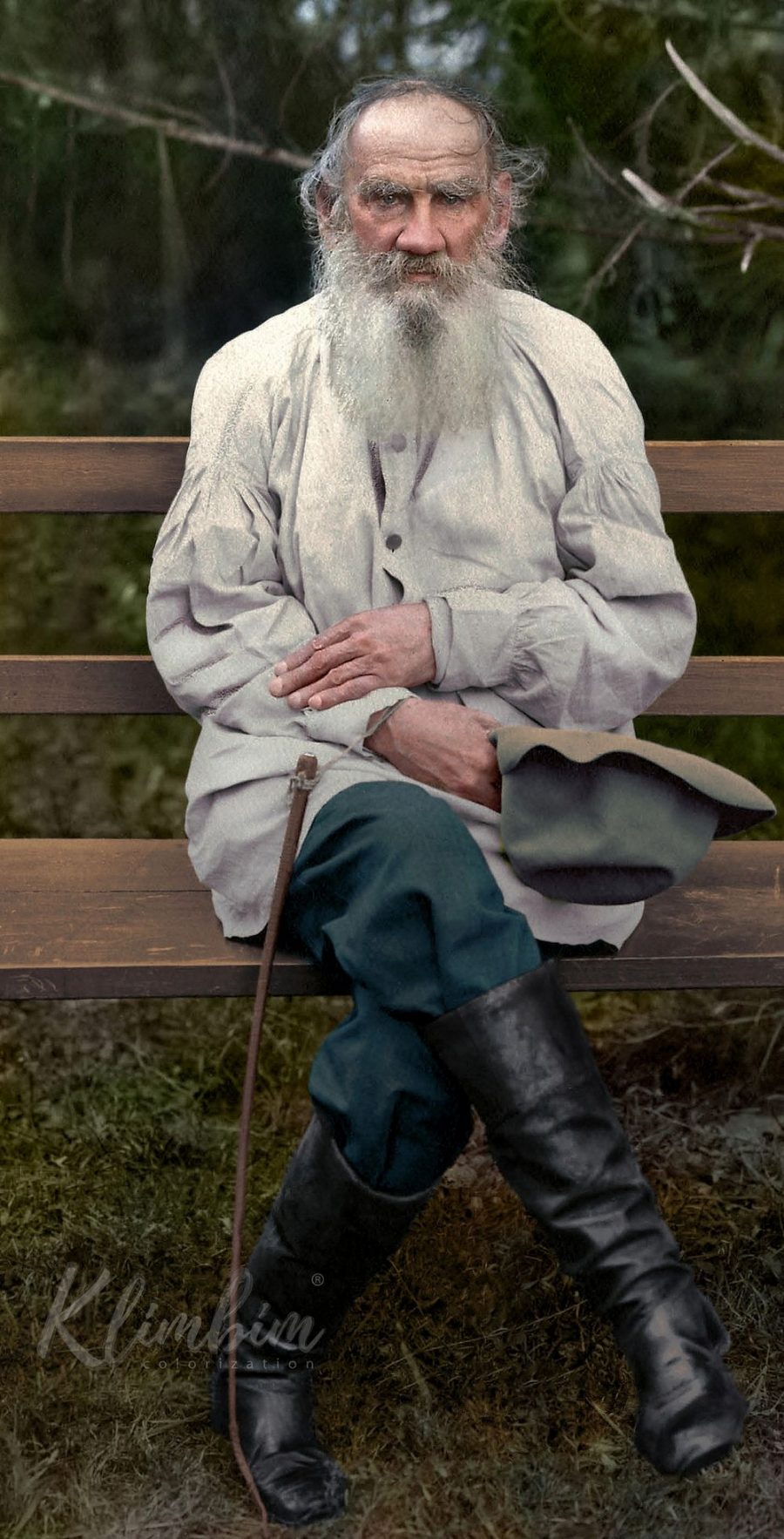
Unless we know this color history, we might be inclined to think colorized photographs that get it right are wrong. However, the aim of modern colorizers is not only to make the past seem more immediate to us in the present; they also attempt to restore the colors people saw when photographs from the 19th and early 20th centuries were taken.
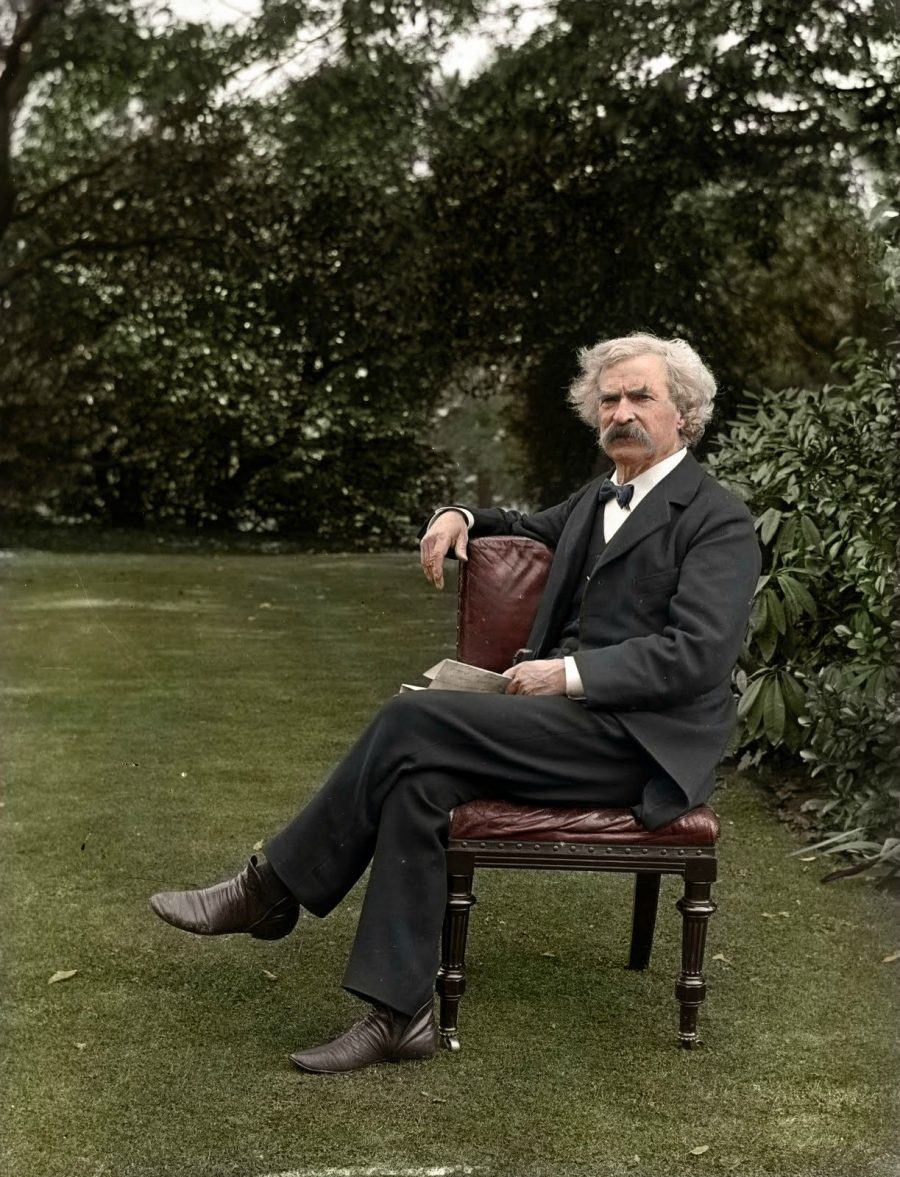
The software may not dictate color, but it still plays an indispensable role in how alive digitally colorized photographs appear. Colorizers first use it to remove blemishes, scratches, and the signs of age. Then they blend hundreds of layers of colors. It’s a little like making a digital oil painting. Human skin can have up to 20 layers of colors, ranging from pinks, to yellows, to blues.
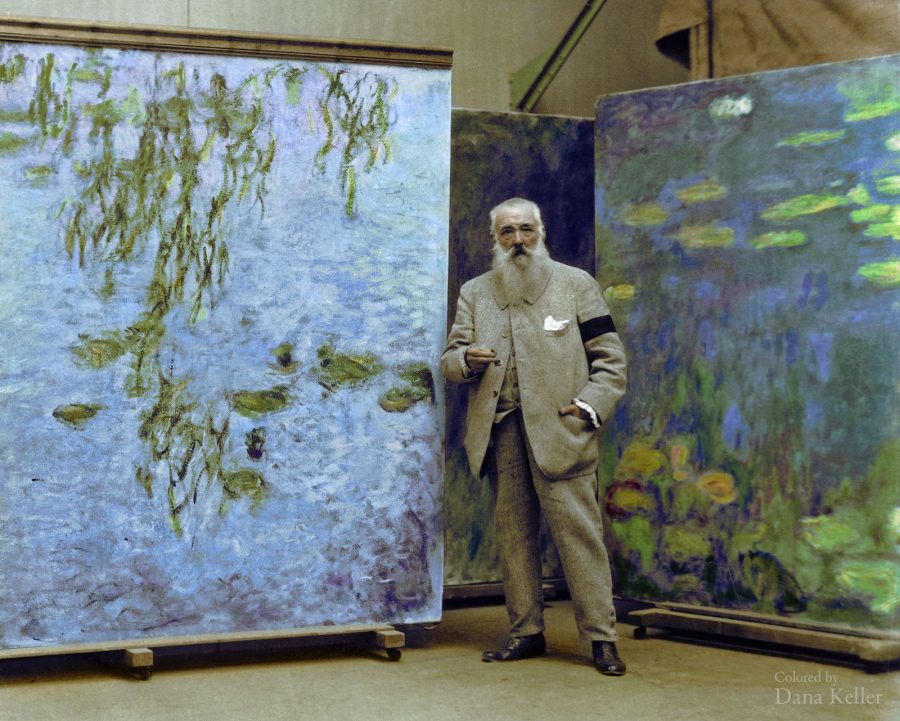
Without “an intuitive understanding of how light works in the atmosphere,” however, these artists would fail to persuade us. Color is produced by light, as we know, and light is conditioned by levels of artificial and natural light blending in a space, by atmospheric conditions and time of day. Different surfaces reflect light differently. Correctly interpreting these conditions in a monochromatic photograph is the key to “achieving photorealism.”
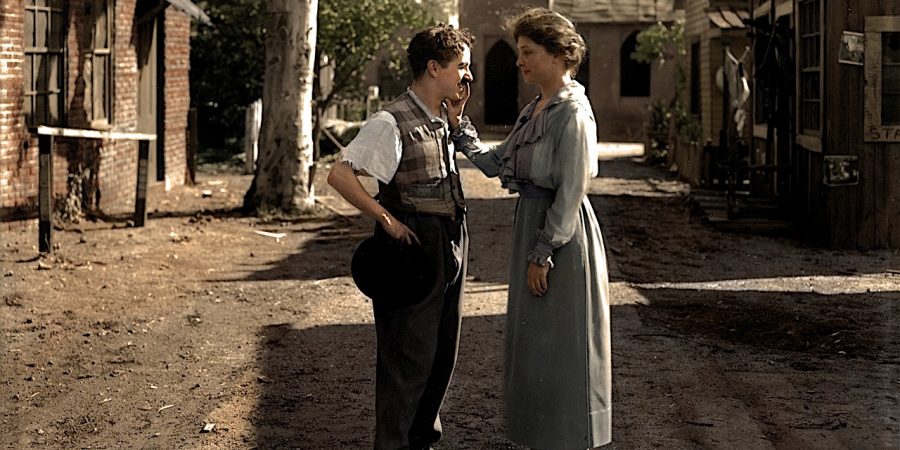
Critics of colorization treat it like a form of vandalism, but as Lloyd points out, the process is not meant to substitute for the original artifacts, but to supplement them. The colorized photos we see in the video and at the links below are of images in the public domain, available to use and reuse for any purpose. Colorization artists have found their purpose in making the past seem far less like a distant country.
Related Content:
Colorized Photos Bring Walt Whitman, Charlie Chaplin, Helen Keller & Mark Twain Back to Life
The Opening of King Tut’s Tomb, Shown in Stunning Colorized Photos (1923–5)
Josh Jones is a writer and musician based in Durham, NC. Follow him at @jdmagness
Read More...An Interactive Map of the 2,000+ Sounds Humans Use to Communicate Without Words: Grunts, Sobs, Sighs, Laughs & More
When did language begin? The question is not an easy one to answer. There are no records of the event. “Languages don’t leave fossils,” notes the Linguistic Society of America, “and fossil skulls only tell us the overall shape and size of hominid brains, not what the brains could do.” The scant evidence from evolutionary biology does not tell us when early humans first began to use language, only that they could 100,000 years or so ago.
However, the question also depends on what we mean by language. Before the linguistic technologies of grammar and syntax, hominids, like other mammals today and a good number of non-mammals too, had a wordless language that communicated more directly, and more honestly, than any of the thousands of ways to string syllables into sentences.
That language still exists, of course, and those who understand it know when someone is afraid, relieved, frustrated, angry, confused, surprised, embarrassed, or awed, no matter what that someone says. It is a language of feeling—of sighs, grunts, rumbles, moans, whistles, sniffs, laughs, sobs, and so forth. Researchers call them “vocal bursts” and as any long-suffering married couple can tell you, they communicate a whole range of specific feelings.
“Emotional expressions,” says UC Berkeley psychology graduate student Alan Cowen, “color our social interactions with spirited declarations of our inner feeling that are difficult to fake, and that our friends, co-workers and loved ones rely on to decipher our true commitments.“ Cowen and his colleagues devised a study to test the range of emotion vocal bursts can carry.
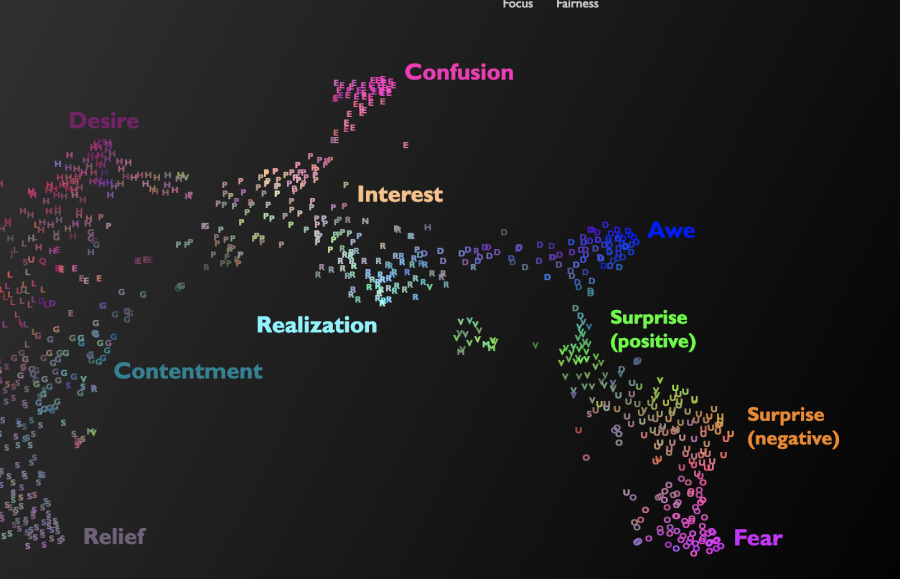
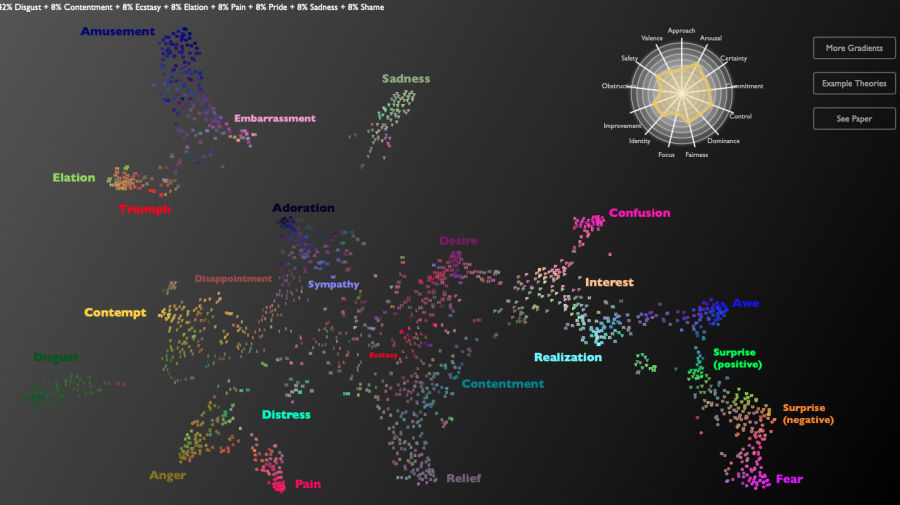
The researchers asked 56 people, reports Discover magazine, “some professional actors and some not, to react to different emotional scenarios” in recordings. Next, they played the recordings for over a 1,000 people, who rated “the vocalizations based on the emotions and tone (positive or negative) they thought the clips conveyed.”
The researchers found that “vocal bursts convey at least 24 distinct kinds of emotions.” They plotted those feelings on a colorful interactive map, publicly available online. “The team says it could be useful in helping robotic devices better pin down human emotions,” Discover writes. “It could also be handy in clinical settings, helping patients who struggle with emotional processing.” The study only recorded vocalizations from English speakers, and “the results would undoubtedly vary if people from other countries or who spoke other languages were surveyed.”
But this limitation does not undermine another implication of the study: that human language consists of far more than just words, and that vocal bursts, which we likely share with a wide swath of the animal kingdom, are not only, perhaps, an original language but also one that continues to communicate the things we can’t or won’t say to each other. Read the study here and see the interactive vocal burst map here.
via MetaFilter
Related Content:
Where Did the English Language Come From?: An Animated Introduction
Why We Say “OK”: The History of the Most Widely Spoken Word in the World
The History of the English Language in Ten Animated Minutes
Josh Jones is a writer and musician based in Durham, NC. Follow him at @jdmagness
Read More...A New Collection of Official, Authorized Prince GIFs!
Tech entrepreneur Anil Dash, podcaster, music historian, and advisor to the Obama White House’s Office of Digital Strategy, knows his way around Prince’s catalogue.
Less than a year after the iconoclastic musician left the planet, Dash created a guide to help newbies and casual listeners become better acquainted with his oeuvre:
The nice thing about Prince’s work is that there are no bad starting points; if you don’t like what you hear at first, he almost certainly made a song in the complete opposite style as well.
He assembled playlists for the Prince-resistant, reeling ‘em in by catering to various tastes, from “riff-driven rock tracks” and electronica to “Prince for Redbone fans.”
(Those playlists are also a great service to those of us whose attention wandered in the decades following Prince’s 80’s heyday.)
Dash has also now done us a solid and highlighted an official archive of high-quality Prince GIFs, taken from his music videos.
Prince was notoriously protective of his image, and wild as it is, the GIF archive, a collaboration with GIPHY, Paisley Park and Prince’s estate, colors within those lines by steering clear of unflattering reaction shots culled from interviews, live performances, or public appearances.
There’s still a broad range of attitudes on display, though best get out of line if you’re looking for an expression that conveys “lack of confidence” or “the opposite of sexy.”
The archive is arranged by album. Click on a song title and you’ll find a number of moments drawn from its official music video.
Any captions come straight from the horse’s mouth. No backseat caption jockeys can has cheezburger with Prince Rogers Nelson’s image, thank you very much.
Begin your explorations of the Prince GIF Archive here.
Related Content:
Read Prince’s First Interview, Printed in His High School Newspaper (1976)
Hear Prince’s Personal Playlist of Party Music: 22 Tracks That Will Bring Any Party to Life
Prince Plays Guitar for Maria Bartiromo: It’s Awkward (2004)
Ayun Halliday always stood at the back of the line, a smile beneath her nose. Ayun is an author, illustrator, theater maker and Chief Primatologist of the East Village Inky zine. See her onstage in New York City in February as host of Theater of the Apes book-based variety show, Necromancers of the Public Domain. Follow her @AyunHalliday.
Read More...Famous Drawings by Leonardo da Vinci Celebrated in a New Series of Stamps
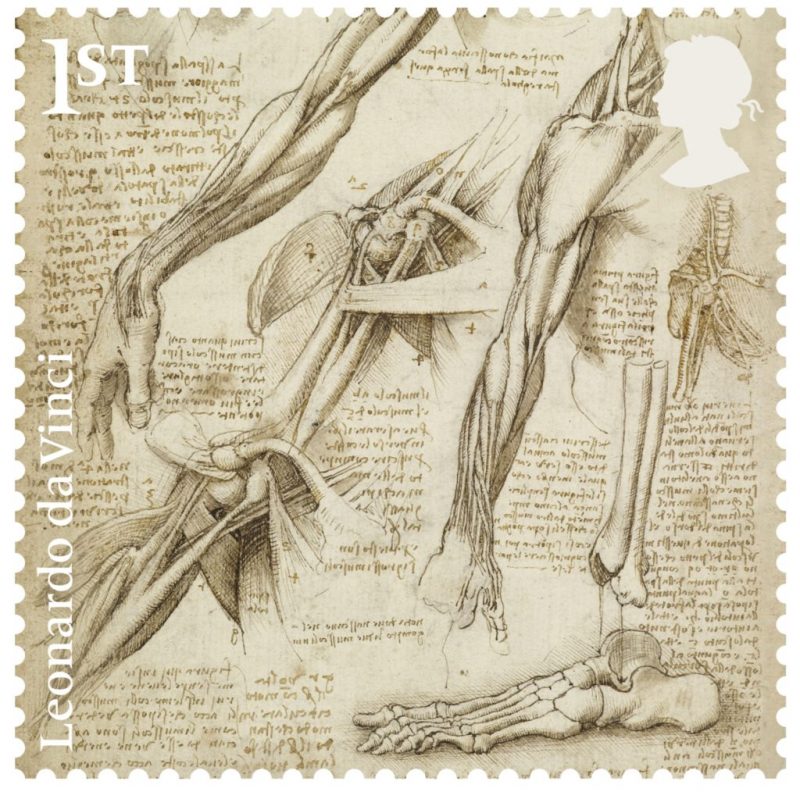
No special occasion is required to celebrate Leonardo da Vinci, but the fact that he died in 1519 makes this year a particularly suitable time to look back at his vast, innovative, and influential body of work. Just last month, “Leonardo da Vinci: A Life in Drawing” opened in twelve museums across the United Kingdom. “144 of Leonardo da Vinci’s greatest drawings in the Royal Collection are displayed in 12 simultaneous exhibitions across the UK,” says the exhibition’s site, with each venue’s drawings “selected to reflect the full range of Leonardo’s interests – painting, sculpture, architecture, music, anatomy, engineering, cartography, geology and botany.”
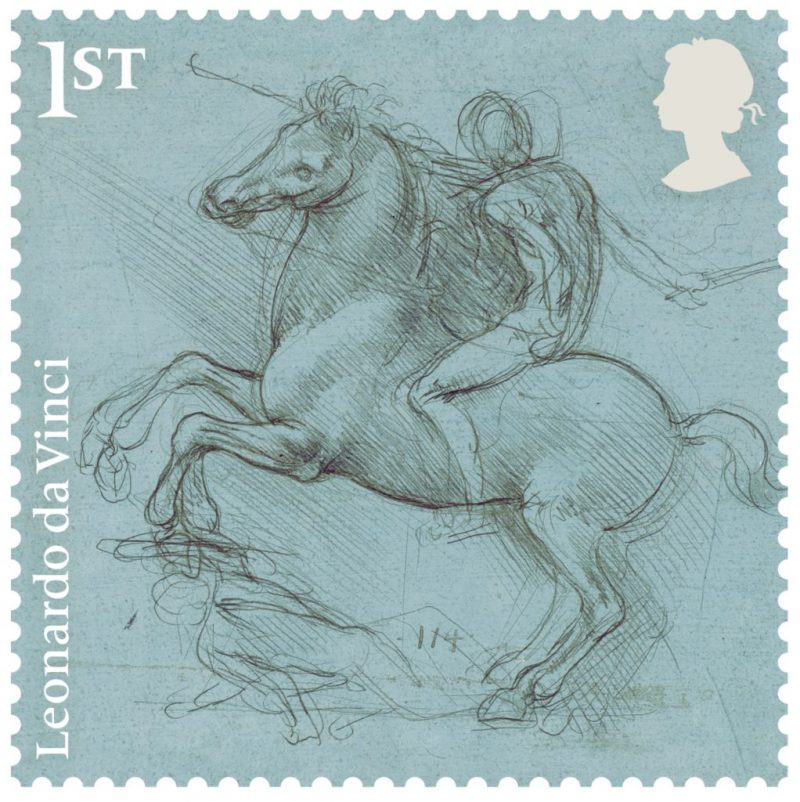
The Royal Collection Trust, writes Artnet’s Sarah Cascone, has even “sent a dozen drawings from Windsor Castle to each of the 12 participating institutions.” They’d previously been in Windsor Castle’s Print Room, the home of a collection of old master prints and drawings routinely described as one of the finest in the world.
Now displayed at institutions like Liverpool’s Walker Art Gallery, Sheffield’s Millennium Gallery, Belfast’s Ulster Museum, and Cardiff’s National Museum Wales, this selection of Leonardo’s drawings will be much more accessible to the public during the exhibition than before.
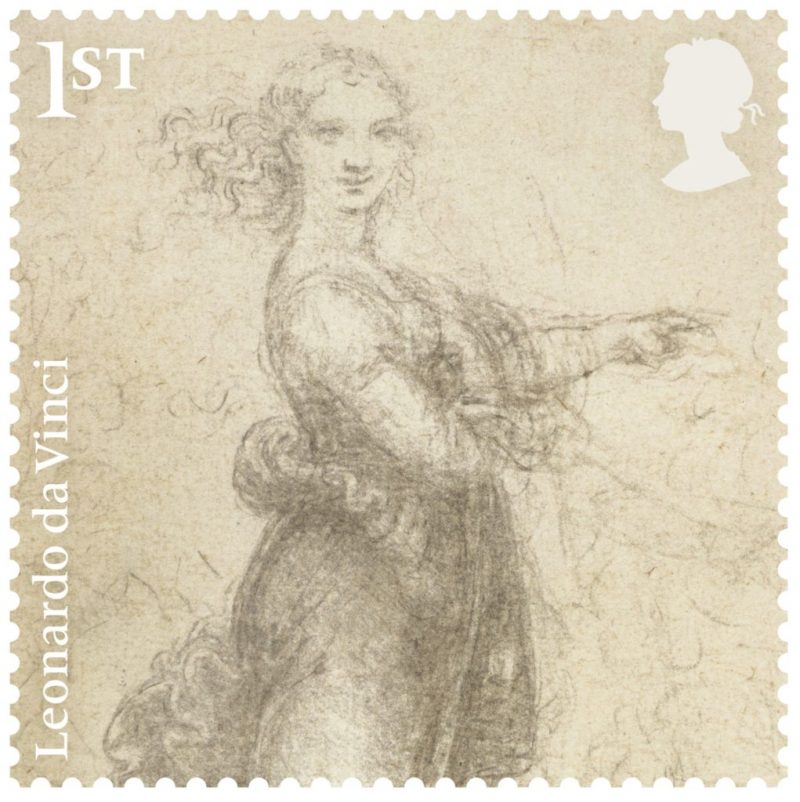
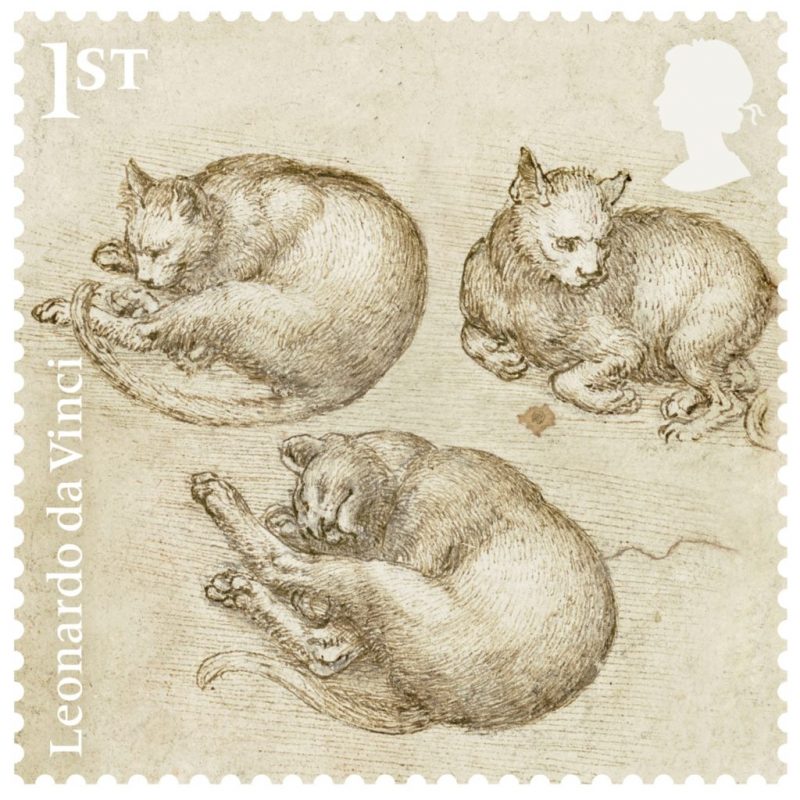
But the Royal Mail has made sure that the drawings will be even more widely seen, doing its part for the 500th anniversary of Leonardo’s death by issuing them in stamp form.
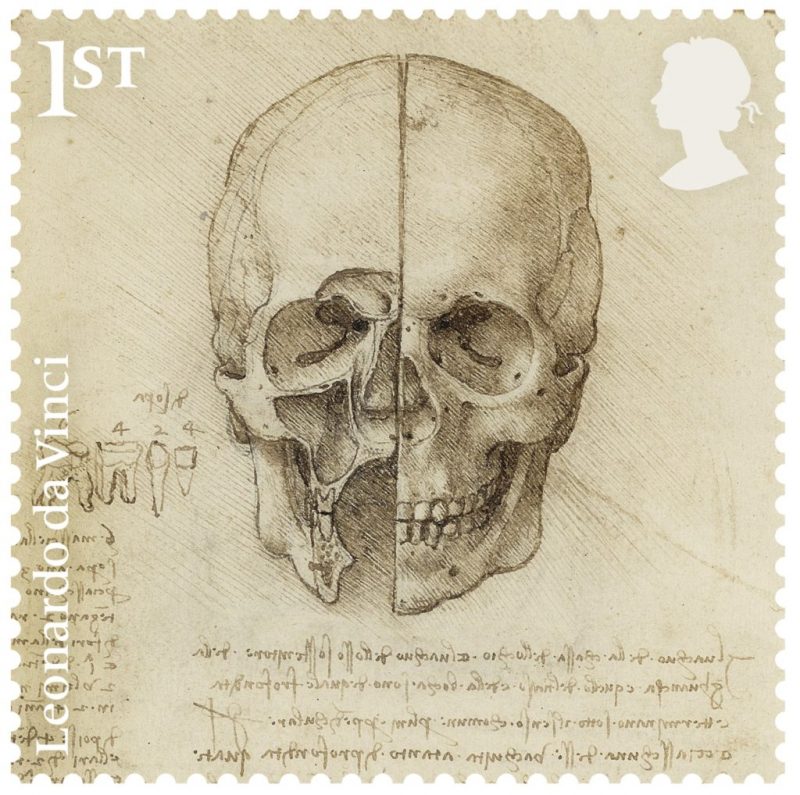
“The stamps depict several well-known works,” writes Artnet’s Kate Brown, “such as The skull sectioned (1489) and The head of Leda (1505–08), a study for his eventual painting of the myth of Leda, the queen of Sparta, which was the most valuable work in Leonardo’s estate when he died and was apparently destroyed around 1700. Other stamps show the artist’s studies of skeletons, joints, and cats.”
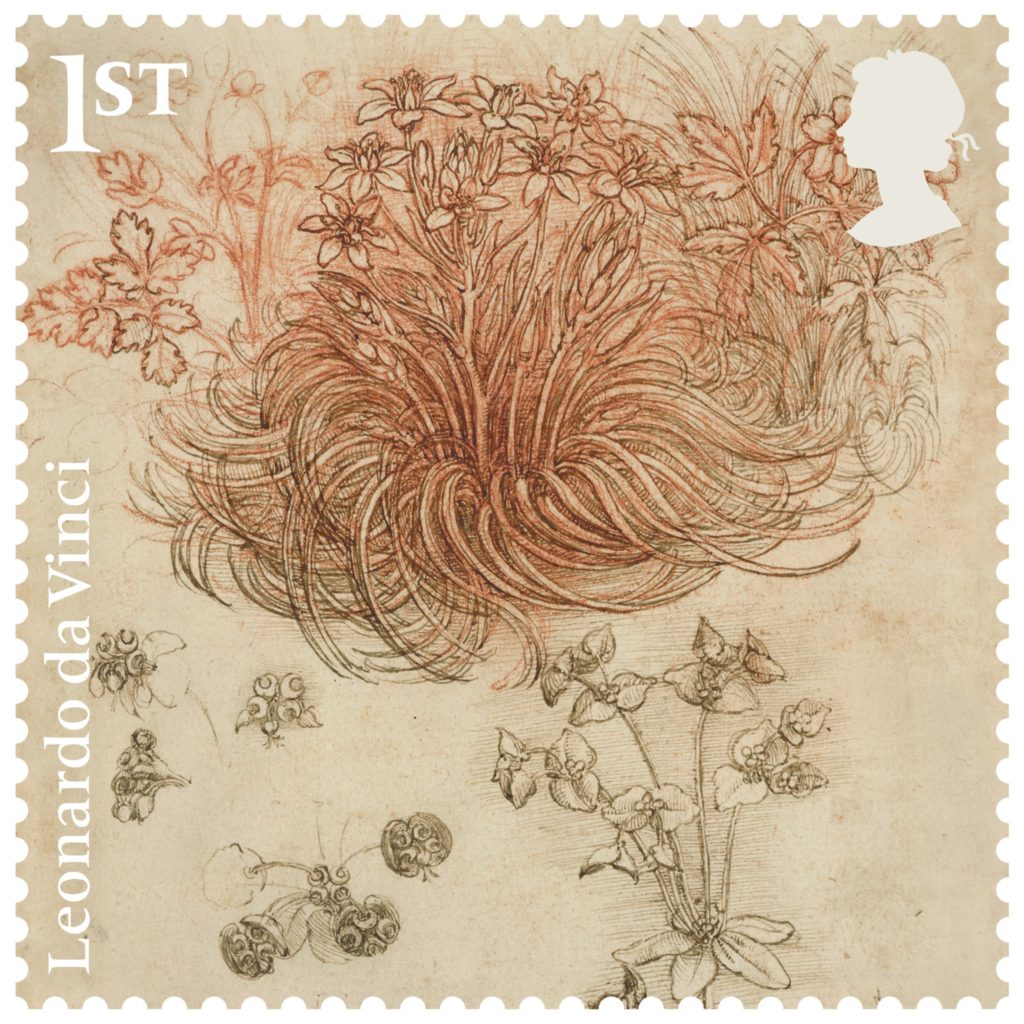
While none of these images enjoy quite the cultural profile of a Vitruvian Man, let alone a Mona Lisa, they all show that whatever Leonardo drew, he drew it in a way revealing that he saw it like no one else did (possibly due in part, as we’ve previously posted about here on Open Culture, to an eye disorder).
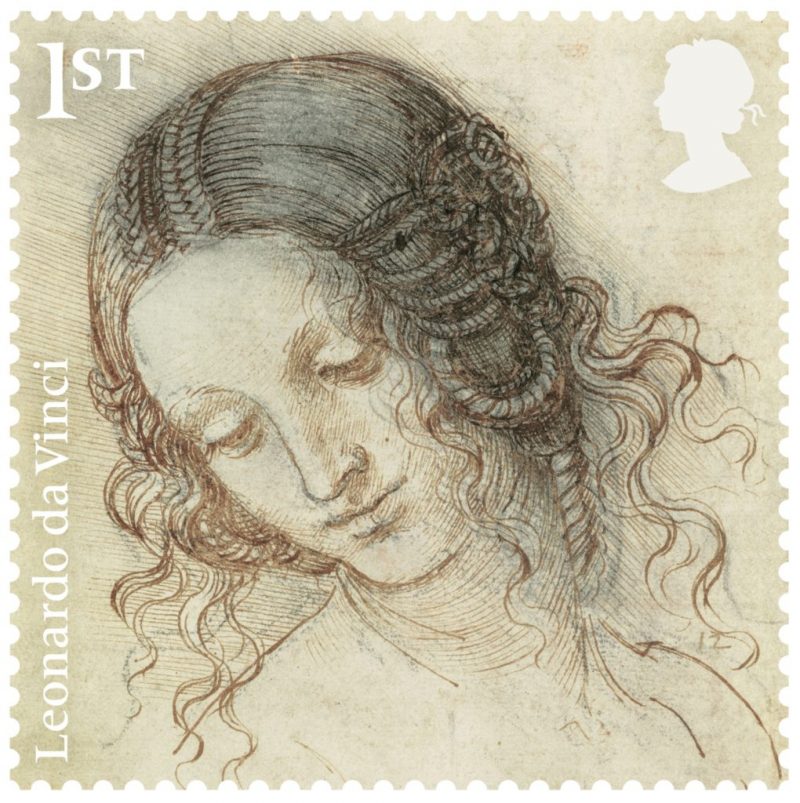
Though that may come across more clearly at the scale of the originals than at the scale of postage stamps, even a glimpse at the intellectually boundless Renaissance polymath’s drawings compressed into 21-by-24-millimeter squares will surely be enough to draw many into his still-inspirational artistic and scientific world. To the intrigued, may we suggest plunging into his 570 pages of notebooks?
Note: If you live in the San Francisco Bay Area, consider attending the new course–The Genius of Leonardo da Vinci: A 500th Anniversary Celebration–being offered through Stanford Continuing Studies. Registration opens on February 25. The class runs from April 16 through June 4.
Related Content:
Leonardo da Vinci’s Bizarre Caricatures & Monster Drawings
New Stamp Collection Celebrates Six Novels by Jane Austen
Postage Stamps from Bhutan That Double as Playable Vinyl Records
Based in Seoul, Colin Marshall writes and broadcasts on cities, language, and culture. His projects include the book The Stateless City: a Walk through 21st-Century Los Angeles and the video series The City in Cinema. Follow him on Twitter at @colinmarshall or on Facebook.
Read More...A Telecaster Made Out of 1200 Colored Pencils
A couple weeks back, Burls Art dared to make a Stratocaster out of 1200 Crayola colored pencils. Now comes a Telecaster-style guitar, which Fender first put into production back in 1950. You can watch it get made, from start to finish, in the 11-minute video above.
On a more serious note, anyone interested in the history of the electric guitar–particularly the Strat, Tele and Les Paul–should spend time with the new book by Ian S. Port, The Birth of Loud: Leo Fender, Les Paul, and the Guitar-Pioneering Rivalry That Shaped Rock ‘n’ Roll. It offers a pretty rich and lively account of the inventors and instruments who created a new modern sound. If interested, you can get The Birth of Loud as a free audiobook if you sign up for Audible.com’s free trial program. Find details on that here.
If you would like to support the mission of Open Culture, consider making a donation to our site. It’s hard to rely 100% on ads, and your contributions will help us continue providing the best free cultural and educational materials to learners everywhere. You can contribute through PayPal, Patreon, and Venmo (@openculture). Thanks!
Related Content:
A Fender Stratocaster Made Out of 1200 Colored Pencils
Behold the First Electric Guitar: The 1931 “Frying Pan”
Brian May’s Homemade Guitar, Made From Old Tables, Bike and Motorcycle Parts & More
Oxford Scientist Explains the Physics of Playing Electric Guitar Solos
Read More...800 Illuminated Medieval Manuscripts Are Now Online: Browse & Download Them Courtesy of the British Library and Bibliothèque Nationale de France
Kazuo Ishiguro’s novel The Buried Giant begins with an immersive depiction of what it might have been like to live in a European village during the middle ages. Or what it might feel like for us moderns, at least. The couple at the center of the story spends several pages fretting over the loss of a candle, their only one. Without it, their nights are pitch black. In the day, they wander in a fog, unable to remember anything. Though the cause of this turns out to be dark magic, one can’t help thinking that a smartphone would immediately solve all their problems.
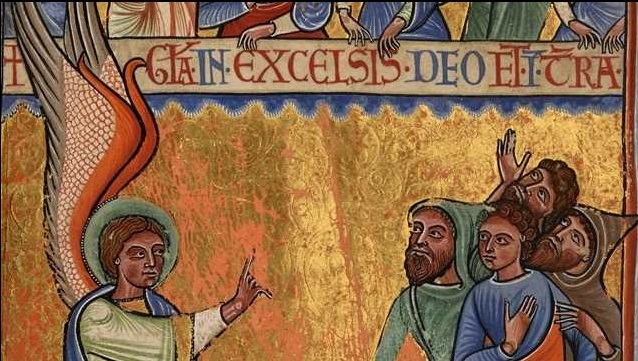
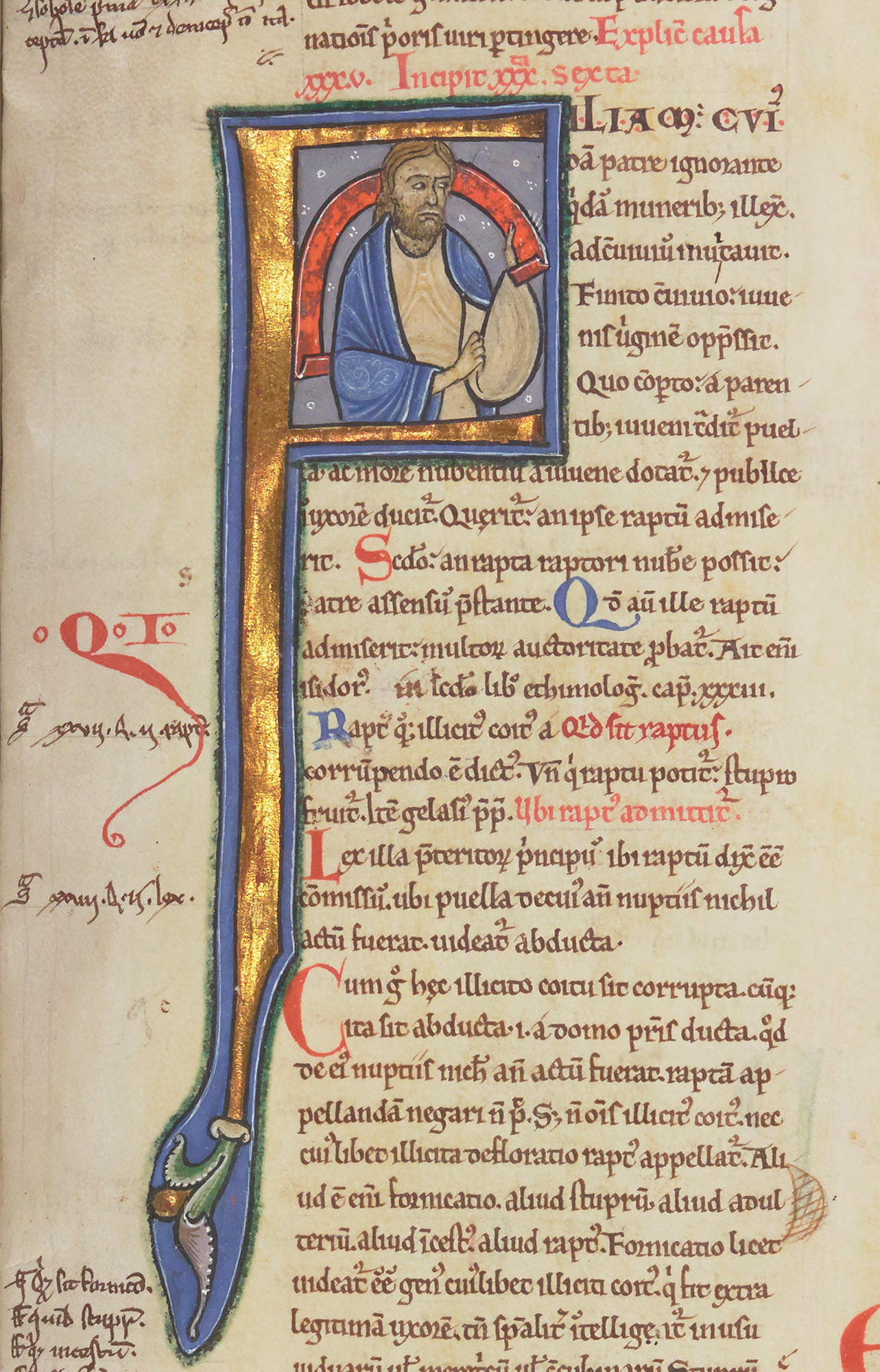
This was a time not only before mobile video, but when images of any kind were scarce, when every book was painstakingly copied by hand in careful, elegant script. Many of those rare, scribal copies were not illustrated, they were “illuminated.” Their pages shone out into the darkness and fog. Most of the population could not read them, but they could, in rare instances when they might catch a glimpse, be deeply moved by the colorful, stylized images and lettering.
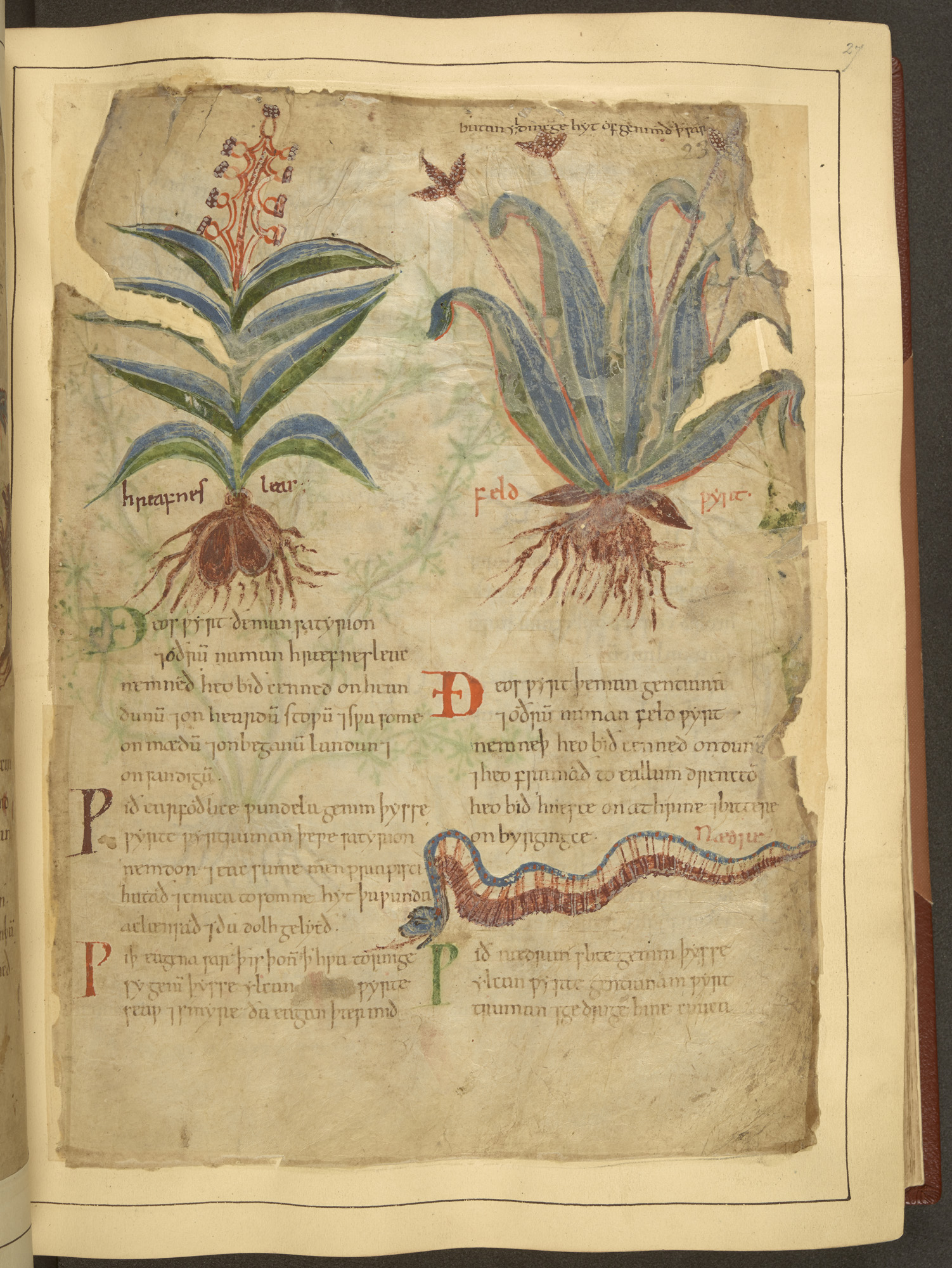
For the intellectual classes, illumination constituted a language of its own, framing and interpreting medical, classical, and legal texts, gospels and works by the church fathers. Not all books received this treatment but the “most luxurious,” notes the British Library, were “literally ‘lit up’ by decorations and pictures in brightly coloured pigments and burnished gold leaf.” For centuries, despite the explosion of image-making technologies of every kind, most of us, unless we were scholars or aristocrats, were in the same position vis-à-vis these stunning artifacts as the average medieval peasant. Medieval manuscripts were locked away in rare book rooms and seen by very few.
The situation has changed dramatically as libraries digitize their holdings. Last November, hundreds more rare, valuable medieval manuscripts became available to everyone when the British Library and the Bibliothèque nationale de France launched a joint project, making “800 manuscripts decorated before the year 1200 available freely” online, as the BL blog announced in 2016. Both institutions provided 400 manuscripts each for digitization. Some of these are currently on display at the wildly popular, sold-out British Library exhibition Anglo-Saxon Kingdoms: Art, Word, War. Now they are also virtual public property, as it were, thanks to a grant from the Polonsky Foundation.
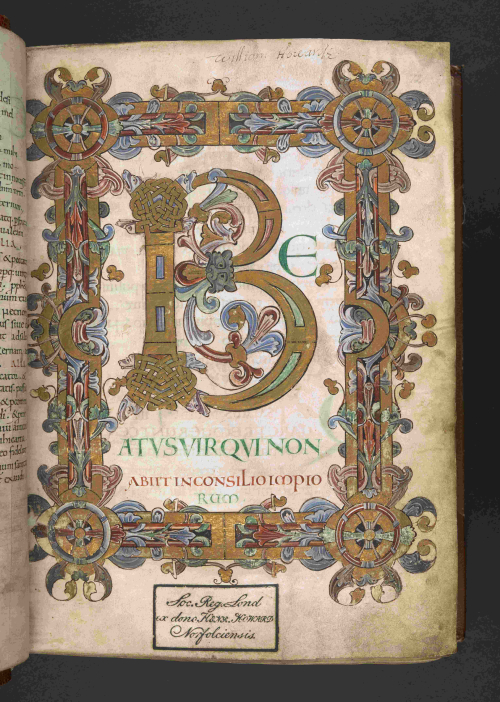
That these fragile artifacts have been so inaccessible, kept under glass and well away from insects, thieves, and vandals, now means they are in a condition to be digitally copied and uploaded in high resolution for close viewing, comparison, and careful study. Medievalists.net describes the complementary websites the two libraries have launched:
The first, France-England: medieval manuscripts between 700 and 1200, has been created by the Bibliothèque nationale de France based on the Gallica marque blanche infrastructure, using the IIIF standard and Mirador viewer to make the images held by the different institutions interoperable and enable them to be compared side-by-side within the same digital library or annotated. The second website, Medieval England and France, 700‑1200, is aimed at a wider public audience, and has been developed by the British Library to showcase a selection of manuscripts as well as articles, essays and video clips.
The French site has ports of entry according to theme, author, place, and century, and many links to resources for scholars. The British Library site features curated selections, introduced by accessible articles. Laypeople with little experience studying medieval manuscripts can learn about legal, medical, and musical texts, see how the writings of the church fathers received special attention in monastic culture, and learn how manuscripts circulated before 1200. Those who know what they are looking for can conduct advanced searches at the Medieval Manuscripts site, and download a full list of all 800 manuscripts here.
Related Content:
Josh Jones is a writer and musician based in Durham, NC. Follow him at @jdmagness
Read More...Lucille Ball Demos a Precursor to Peter Frampton’s “Talk Box” (1939)
Decades before Peter Frampton made the Talk Box come alive on songs like “Do You Feel Like We Do” and “Show Me the Way,” another legend, Lucille Ball, experimented with its forerunner, the Sonovox. Invented by Gilbert Wright in 1939, the Sonovox “used speakers pressed into [a performer’s] throat to produce mechanical talking sounds.” And the sounds could then be modulated by the tongue and lips. Above, in a 1939 newsreel clip called “Machine Made Voices!,” Ball puts the Sonovox on display. This marked one of her earliest appearances on film.
The Sonovox would later feature prominently in radio station IDs and jingles. Bela Lugosi would use it to “portray the voice of a dead person during a seance.” And it would even make an appearance on The Who’s 1967 album, The Who Sell Out–all before the modern Talk Box arrived on the scene.
If you would like to support the mission of Open Culture, consider making a donation to our site. It’s hard to rely 100% on ads, and your contributions will help us continue providing the best free cultural and educational materials to learners everywhere. You can contribute through PayPal, Patreon, and Venmo (@openculture). Thanks!
Related Content:
The Only Surviving Behind-the-Scenes Footage of I Love Lucy, and It’s in Color! (1951)
How to Use the Rotary Dial Phone: A Primer from 1927
How Vinyl Records Are Made: A Primer from 1956
Read More...10 Tips on How to Write a Great Screenplay from Billy Wilder: Pearls of Wisdom from the Director of Sunset Boulevard, Some Like It Hot, Double Indemnity & More
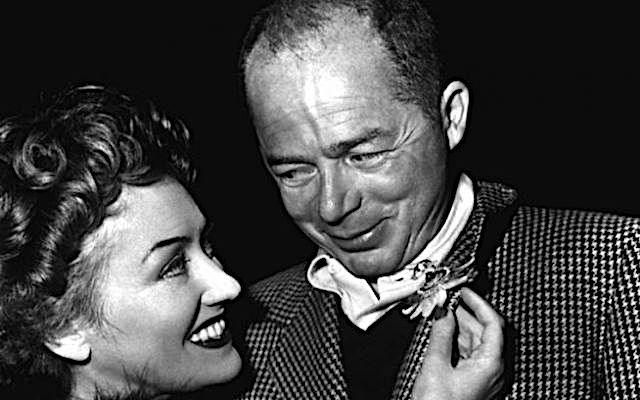
Image via Wikimedia Commons
There’s an old story — Orson Welles called it “the greatest Hollywood one-liner ever made” — that when someone attending the 1958 funeral of Harry Cohn, the fearsome president of Columbia Pictures, asked how it was possible that such a huge crowd would show up for Cohn’s funeral, Billy Wilder quipped: “Well, give the people what they want.”
The story is almost certainly apocryphal. The line may have been spoken by someone else, at a different Hollywood mogul’s funeral. But the fact that it is so often attributed to Wilder says something about his reputation as a man with a razor-sharp wit and a firm grasp of the imperatives of popular movie-making. In films like Sunset Boulevard, Some Like it Hot, Double Indemnity and Sabrina, Wilder used his formidable craft as a director to tell stories in a clear and efficient way. It was an ethic he picked up as a screenwriter.
Wilder was born in Austria-Hungary and moved as a young man to Germany, where he worked as a newspaper reporter. In the late 1920s he began writing screenplays for the German film industry, but he fled the country soon after Adolf Hitler became chancellor in 1933. Wilder made his way to Hollywood, where he continued to write screenplays. He co-wrote a number of successful films in the 30s, including Ninotchka, Hold Back the Dawn and Ball of Fire. In the early 40s he got his first chance to direct a Hollywood movie, and a long string of hits followed. In 1960 he won three Academy Awards for producing, writing and directing The Apartment.
Wilder was 90 years old when the young director Cameron Crowe approached him in 1996 about playing a small role in Jerry Maguire. Wilder said no, but the two men formed a friendship. Over the next several years they talked extensively about filmmaking, and in 1999 Crowe published Conversations with Wilder. One of the book’s highlights is a list of ten screenwriting tips by Wilder. “I know a lot of people that have already Xeroxed that list and put it by their typewriter,” Crowe said in a 1999 NPR interview. “And, you know, there’s no better film school really than listening to what Billy Wilder says.”
Here are Wilder’s ten rules of good filmmaking:
1: The audience is fickle.
2: Grab ’em by the throat and never let ’em go.
3: Develop a clean line of action for your leading character.
4: Know where you’re going.
5: The more subtle and elegant you are in hiding your plot points, the better you are as a writer.
6: If you have a problem with the third act, the real problem is in the first act.
7: A tip from Lubitsch: Let the audience add up two plus two. They’ll love you forever.
8: In doing voice-overs, be careful not to describe what the audience already sees. Add to what they’re seeing.
9: The event that occurs at the second act curtain triggers the end of the movie.
10: The third act must build, build, build in tempo and action until the last event, and then — that’s it. Don’t hang around.
Note: Readers might also be interested in Wilder’s 1996 Paris Review interview. It’s called The Art of of Screenwriting.
An earlier version of this post appeared on our site in August 2013.
Related Content:
Ingmar Bergman Names the 11 Films He Liked Above All Others (1994)
Tarkovsky’s Advice to Young Filmmakers: Sacrifice Yourself for Cinema
Watch Raymond Chandler’s Long-Unnoticed Cameo in Double Indemnity
Read More...
Support Us
We're hoping to rely on loyal readers, rather than erratic ads. Please click the Donate button and support Open Culture. You can use Paypal, Venmo, Patreon, even Crypto! We thank you!

About Us

Open Culture scours the web for the best educational media. We find the free courses and audio books you need, the language lessons & educational videos you want, and plenty of enlightenment in between.
Advertise With Us

FREE UPDATES!
GET OUR DAILY EMAIL
Get the best cultural and educational resources on the web curated for you in a daily email. We never spam. Unsubscribe at any time.
FOLLOW ON SOCIAL MEDIA

Open Culture editor Dan Colman scours the web for the best educational media. He finds the free courses and audio books you need, the language lessons & movies you want, and plenty of enlightenment in between.
Advertise With Us


