What Does the World’s Oldest Surviving Piano Sound Like? Watch Pianist Give a Performance on a 1720 Cristofori Piano
Imagine your favorite works for the piano—the delicate and haunting, the thundering and powerful. The minimalism of Erik Satie, the Romanticism of Claude Debussy or Modest Mussorgsky, the rapturous swooning of Beethoven’s concertos. Maybe it’s Jerry Lee Lewis or Little Richard; Thelonious Monk or Duke Ellington. Tom Waits, Tori Amos, Rufus Wainwright, Prince… you get the idea.
Now imagine all of it never existing. A giant hole opens up in world culture. Catastrophic! Or maybe, I suppose, we’d never know the difference. But I’m certain we’d be worse off for it, somehow. The piano seems inevitable when we look back into music history. Its immediate predecessors, the clavichord and harpsichord, so resemble the modern piano that they must have evolved in just such a way, we think. But it needn’t have been so.
The harpsichord, writes Georgia State University’s Hyperphysics, “has a shape similar to a grand piano,” but its operation prevents one critical musical property: dynamics—“the player has no control over the loudness and quality of the tone.” On the whole, every innovation of the harpsichord’s design aimed to solve this problem. Over the instrument’s 400-year history, none of them did so as elegantly as the piano, invented around 1700 by Bartolomeo Cristofori. In the video above, you can hear a slightly later version of his instrument from 1720 played by pianist Dongsok Shin—an excerpt from one of the first pieces of music ever written for the instrument.
Cristofori called his design the gravecembalo col piano et forte, “keyboard instrument with soft and loud” sounds. This soon shortened to simply pianoforte. It’s interesting that the word for “soft” eventually became its sole name. For all its grandeur and thunderous capability, it’s the piano’s softness that so often captures our attention—the ability of this lumbering beast of an instrument to pull its punches and move with quiet grace. As you’ll probably note in Shin’s demonstration, the earliest pianos still retained a bit of the harpsichord’s twang, but we can also clearly discern the woody thumps, rumbles, and tinkling highs of modern pianos. (Compare it to this, for example.)
True to its name, the “quiet nature of the piano’s birth around 1700,” writes the Metropolitan Museum of Art, “comes as something of a surprise.” It was invented “almost entirely by one man,” Cristofori, whose expertise had made him steward of Florentine Prince Ferdinando d’Medici’s entire collection of harpsichords and other musical instruments. The first mention comes from a 1700 Medici inventory describing a harpsichord-like instrument “newly invented by Bartolomeo Cristofori with hammers and dampers, two keyboards, and a range of four octaves, C‑c.” The first pianos had 54 keys rather than 88, and used “small wooden hammers covered with deerskin.”
Other makers tried different mechanisms, but “Cristofori was an artful inventor,” the Met remarks, “creating such a sophisticated action for his pianos that, at the instrument’s inception, he solved many of the technical problems that continued to puzzle other piano designers for the next seventy-five years of its evolution.” These designers made shortcuts, since Cristofori’s “action was highly complex and thus expensive.” But nothing matched his design, and those features were “gradually reinvented and reincorporated in later decades.”
Cristofori’s ingenious innovations included an “escapement” mechanism that enabled the hammer to fall away from the string instantly after striking it, so as not to dampen the string, and allowing the string to be struck harder than on a clavichord; a “check” that kept the fast-moving hammer from bouncing back to re-hit the string; a dampening mechanism on a jack to silence the string when not in use; isolating the soundboard from the tension-bearing parts of the case, so that it could vibrate more freely; and employing thicker strings at higher tensions than on a harpsichord.
The piano Shin plays above is the oldest surviving instrument of Cristofori’s design, and it resides at the Metropolitan Museum of Art. Only “two other Cristofori pianos survive today,” notes CMuse, “in Rome and another at Leipzi University.” This instrument might have represented an elegant dead end in musical evolution. Though Baroque composers at the time, including Johann Sebastian Bach, “were aware of it,” most, like Bach, harbored doubts. “It was only with the compositions of Haydn and Mozart” decades later “that the piano found a firm place in music.” A place so firm, it’s nearly impossible to imagine the last 250 years of music without it.
Related Content:
Musician Plays the Last Stradivarius Guitar in the World, the “Sabionari” Made in 1679
Why Violins Have F‑Holes: The Science & History of a Remarkable Renaissance Design
Musicians Play Bach on the Octobass, the Gargantuan String Instrument Invented in 1850
Josh Jones is a writer and musician based in Durham, NC. Follow him at @jdmagness
Read More...205 Big Thinkers Answer the Question, “What Scientific Term or Concept Ought to Be More Widely Known?”

Image by Benjamin Reay, via Flickr Commons
It’s a new year, which means it’s time for the Edge.org to pose its annual question to some of the world’s finest minds. The 2017 edition asks, “What scientific term or concept ought to be more widely known?” And the question comes prefaced by this thought:
Richard Dawkins’ “meme” became a meme, known far beyond the scientific conversation in which it was coined. It’s one of a handful of scientific ideas that have entered the general culture, helping to clarify and inspire.
Of course, not everyone likes the idea of spreading scientific understanding. Remember what the Bishop of Birmingham’s wife is reputed to have said about Darwin’s claim that human beings are descended from monkeys: “My dear, let us hope it is not true, but, if it is true, let us hope it will not become generally known.”
So what established scientific idea should we try to get out there? What concept should, at all costs, see the light of day? The replies — 205 in total — feature thoughts by Richard Dawkins, of course, who’d have us learn more about the notion of “Genetic Book of the Dead.” You will also find selections by Brian Eno (“Confirmation Bias”), Jared Diamond (“Common Sense”), Janna Levin (“The Principle of Least Action”), Steven Pinker (“The Second Law of Thermodynamics”) and more. Access the complete collection of responses here.
If you would like to support the mission of Open Culture, consider making a donation to our site. It’s hard to rely 100% on ads, and your contributions will help us continue providing the best free cultural and educational materials to learners everywhere. You can contribute through PayPal, Patreon, and Venmo (@openculture). Thanks!
Read More...Kill the Wabbit!: How the 1957 Bugs Bunny Cartoon, “What’s Opera, Doc?,” Inspired Today’s Opera Singers to First Get Into Opera
It comes as no surprise that many American children’s first, and often only exposure to opera comes compliments of Bugs Bunny. One of the rascally rabbit’s most enduring turns is as Brünnhilde opposite Elmer Fudd’s Siegfried in “What’s Opera, Doc?,” a 1957 cartoon spoofing Richard Wagner’s Der Ring des Nibelungen.
Other well known names, including Marilyn Horne and Placido Domingo have assayed these parts over the years, but thanks to the miracle of syndication, Bugs and Elmer are the ones who truly own them, as a celebrated part of their repertoire for six decades and counting.
The law of averages dictates that a percentage—a very small percentage—of their billions of child viewers would grow up to become opera professionals.
The Wall Street Journal recently confirmed that for several prominent Wagnerians, including the executive director of the Metropolitan Opera’s Lindemann Young Artist Development Program, “What’s Opera, Doc?” and an earlier work, 1949’s “Rabbit of Seville,” had a profound impact.
And no disrespect to director Francis Ford Coppola, who deployed Ride of the Valkyries so memorably in Apocalypse Now, but no one will ever use it to greater effect than the cartoon’s writer, Michael Maltese, author of the immortal lyrics:
Kiww the wabbit! Kiww the wabbit!
It’s a phrase even the least opera-inclined child can remember and sing, well into adulthood.
Read the complete Wall Street Journal article here.
Related Content:
The Strange Day When Bugs Bunny Saved the Life of Mel Blanc
Read More...Stream Brian Eno’s “Magnificently Peaceful” New Album Reflection: A Thoughtful Way to Start 2017
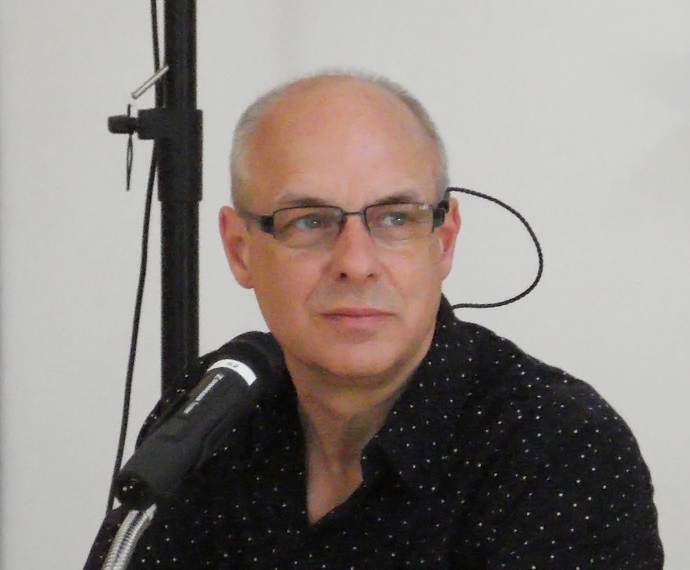
Creative Commons image via Wikimedia Commons
“The consensus among most of my friends seems to be that 2016 was a terrible year, and the beginning of a long decline into something we don’t even want to imagine.” Perhaps you find yourself, here at the dawn of 2017, thinking the very same thing. But Brian Eno, who wrote those words in a new year’s Facebook message to his fans, wonders if 2016 marked “the end — not the beginning — of a long decline.” Amid all the sound and fury, he’s also noticed “a quieter but equally powerful stirring: people are rethinking what democracy means, what society means and what we need to do to make them work again.”
If share and reaction counts are any indication, Eno’s assessment of the current human situation has resonated with people, many of whom must simply feel relieved to hear that at least one of their favorite musical luminaries has made it into 2017 unscathed.
Not only has he survived, he’s put out a brand new album called Reflection which, in an essay on his web site, he calls “the latest work in a long series” that includes 1975’s Discreet Music, 1985’s Thursday Afternoon, 1993’s Neroli, 2012’s Lux, and “the first original piece of music I ever made, at Ipswich Art School in 1965 — recordings of a metal lampshade slowed down to half and quarter speed, all overlaid.”
Eno refers, broadly speaking, to the sort of music now known as “ambient,” though “I don’t think I understand what that term stands for anymore.” He more accurately describes this thread of his work as “generative music,” which means music where the pieces “make themselves. My job as a composer is to set in place a group of sounds and phrases, and then some rules which decide what happens to them. I then set the whole system playing and see what it does, adjusting the sounds and the phrases and the rules until I get something I’m happy with.” The album version of Reflection, which you can stream on Spotify (after downloading Spotify’s free software here) or purchase on Amazon or iTunes, represents just one “recording of one of those unfoldings.”
Reflection’s single track, writes the Guardian’s Kitty Empire, “unfurls very gradually over 54 minutes (and one second), its thrums and oscillations reverberating at a pace you might call glacial if the glaciers weren’t all melting in such a hurry. At seven minutes in, the tones gather momentum. At 21 minutes, there’s something like the twitter of an electronic bird. It gets going again at the 47-minute mark, when the bell-like nuances once again turn up a notch. The overall effect is deeply, magnificently peaceful, meditative, even; ambient certainly monopolises certain sections of the thesaurus. Naysayers may liken ambient music to watching paint dry, but this is paint drying on a Mark Rothko canvas.”
Just as a Rothko canvas provides a visual environment conducive to thought, so an ambient Eno album provides a sonic one. “Reflection is so called because I find it makes me think back. It makes me think things over,” Eno writes on his notes on the album. “It seems to create a psychological space that encourages internal conversation. And external ones actually — people seem to enjoy it as the background to their conversations.” This goes just as much, presumably, for the the app version, which provides the generative system for a different Reflection listening experience each time. We need the kind of space it creates more than ever, now that, as Eno put it in his optimistic New Year’s dispatch, “people are thinking hard, and, most importantly, thinking out loud, together.”
Related Content:
Brian Eno on Why Do We Make Art & What’s It Good For?: Download His 2015 John Peel Lecture
The Genius of Brian Eno On Display in 80 Minute Q&A: Talks Art, iPad Apps, ABBA, & More
Brian Eno Once Composed Music for Windows 95; Now He Lets You Create Music with an iPad App
Based in Seoul, Colin Marshall writes and broadcasts on cities and culture. He’s at work on a book about Los Angeles, A Los Angeles Primer, the video series The City in Cinema, the crowdfunded journalism project Where Is the City of the Future?, and the Los Angeles Review of Books’ Korea Blog. Follow him on Twitter at @colinmarshall or on Facebook.
Read More...The Science of Willpower: 15 Tips for Making Your New Year’s Resolutions Last from Dr. Kelly McGonigal
This weekend, millions of New Year’s resolutions will go into effect, with the most common ones being lose weight, get fit, quit drinking and smoking, save money, and learn something new. Unfortunately, 33% of these resolutions will be abandoned by January’s end. And 80% will eventually fall by the wayside. Making resolutions stick is tricky business. But it’s possible, and psychologist Kelly McGonigal has a few scientifically-proven suggestions for you.
For years, McGonigal has taught a very popular course called The Science of Willpower in Stanford’s Continuing Studies program, where she introduces students to the idea that willpower is not an innate trait. Rather it’s a “complex mind-body response that can be compromised by stress, sleep deprivation and nutrition and that can be strengthened through certain practices.”
For those of you who don’t live in the San Francisco Bay Area, you can find McGonigal’s ideas presented in a recent book, The Willpower Instinct: How Self-Control Works, Why It Matters, and What You Can Do to Get More of It. Below, we have highlighted 15 of Dr. McGonigal’s strategies for increasing your willpower reserves and making your New Year’s resolution endure.
- Will power is like a muscle. The more you work on developing it, the more you can incorporate it into your life. It helps, McGonigal says in this podcast, to start with small feats of willpower before trying to tackle more difficult feats. Ideally, find the smallest change that’s consistent with your larger goal, and start there.
- Choose a goal or resolution that you really want, not a goal that someone else desires for you, or a goal that you think you should want. Choose a positive goal that truly comes from within and that contributes to something important in life.
- Willpower is contagious. Find a willpower role model — someone who has accomplished what you want to do. Also try to surround yourself with family members, friends or groups who can support you. Change is often not made alone.
- Know that people have more willpower when they wake up, and then willpower steadily declines throughout the day as people fatigue. So try to accomplish what you need to — for example, exercise — earlier in the day. Then watch out for the evenings, when bad habits can return.
- Understand that stress and willpower are incompatible. Any time we’re under stress it’s harder to find our willpower. According to McGonigal, “the fight-or-flight response floods the body with energy to act instinctively and steals it from the areas of the brain needed for wise decision-making. Stress also encourages you to focus on immediate, short-term goals and outcomes, but self-control requires keeping the big picture in mind.” The upshot? “Learning how to better manage your stress is one of the most important things you can do to improve your willpower.” When you get stressed out, go for a walk. Even a five minute walk outside can reduce your stress levels, boost your mood, and help you replenish your willpower reserves.
- Sleep deprivation (less than six hours a night) makes it so that the prefrontal cortex loses control over the regions of the brain that create cravings. Science shows that getting just one more hour of sleep each night (eight hours is ideal) helps recovering drug addicts avoid a relapse. So it can certainly help you resist a doughnut or a cigarette.
- Also remember that nutrition plays a key role. “Eating a more plant-based, less-processed diet makes energy more available to the brain and can improve every aspect of willpower from overcoming procrastination to sticking to a New Year’s resolution,” McGonigal says.
- Don’t think it will be different tomorrow. McGonigal notes that we have a tendency to think that we will have more willpower, energy, time, and motivation tomorrow. The problem is that “if we think we have the opportunity to make a different choice tomorrow, we almost always ‘give in’ to temptation or habit today.”
- Acknowledge and understand your cravings rather than denying them. That will take you further in the end. The video above has more on that.
- Imagine the things that could get in the way of achieving your goal. Understand the tendencies you have that could lead you to break your resolution. Don’t be overly optimistic and assume the road will be easy.
- Know your limits, and plan for them. Says McGonigal, “People who think they have the most self-control are the most likely to fail at their resolutions; they put themselves in tempting situations, don’t get help, give up at setbacks. You need to know how you fail; how you are tempted; how you procrastinate.”
- Pay attention to small choices that add up. “One study found that the average person thinks they make 14 food choices a day; they actually make over 200. When you aren’t aware that you’re making a choice, you’ll almost always default to habit/temptation.” It’s important to figure out when you have opportunities to make a choice consistent with your goals.
- Be specific but flexible. It’s good to know your goal and how you’ll get there. But, she cautions, “you should leave room to revise these steps if they turn out to be unsustainable or don’t lead to the benefits you expected.”
- Give yourself small, healthy rewards along the way. Research shows that the mind responds well to it. (If you’re trying to quite smoking, the reward shouldn’t be a cigarette, by the way.)
- Finally, if you experience a setback, don’t be hard on yourself. Although it seems counter-intuitive, studies show that people who experience shame/guilt are much more likely to break their resolutions than ones who cut themselves some slack. In a nutshell, you should “Give up guilt.”
To put all of these tips into a bigger framework, you can get a copy of Kelly McGonigal’s book, The Willpower Instinct: How Self-Control Works, Why It Matters, and What You Can Do to Get More of It. And now you can take The Science of Willpower as an online course that begins on January 23.
Finally you might also want to peruse How to Think Like a Psychologist (iTunes Video), a free online course led by Kelly McGonigal. It appears in our collection of 1200 Free Courses Online.
A version of this post first appeared on Open Culture in 2014.
Related Content:
The Power of Empathy: A Quick Animated Lesson That Can Make You a Better Person
Jacques Lacan’s Confrontation with a Young Rebel: Classic Moment, 1972
New Animation Explains Sherry Turkle’s Theories on Why Social Media Makes Us Lonely
Free Online Psychology Courses, a subset of our collection 1,700 Free Online Courses from Top Universities
Read More...Google Lets You Take a 360-Degree Panoramic Tour of Street Art in Cities Across the World
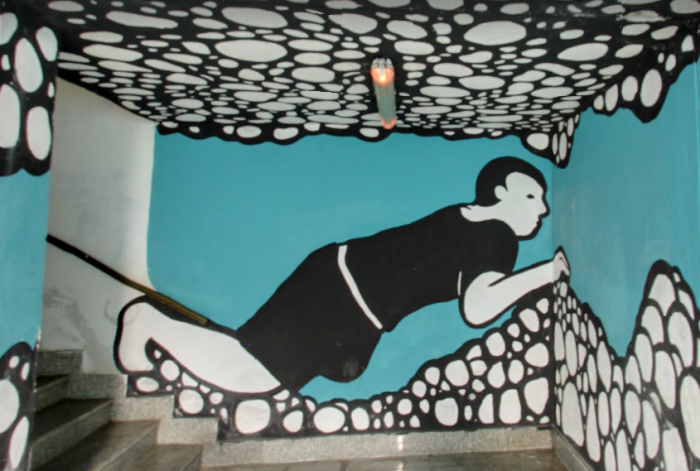
A friend of mine, a fellow American living in Seoul, just recently put up a vlog in which he at once admires a piece of street art he happens upon here and remarks on how much the presence of the stuff bothered him back in the States. It illustrates an important point about the very medium of street art, graffiti, tagging, or whatever you happen to call it: context is everything — or rather, context and skill are everything. The worst examples, as Paul Graham writes, happen “at the intersection of ambition and incompetence: people want to make their mark on the world, but have no other way to do it than literally making a mark on the world.”
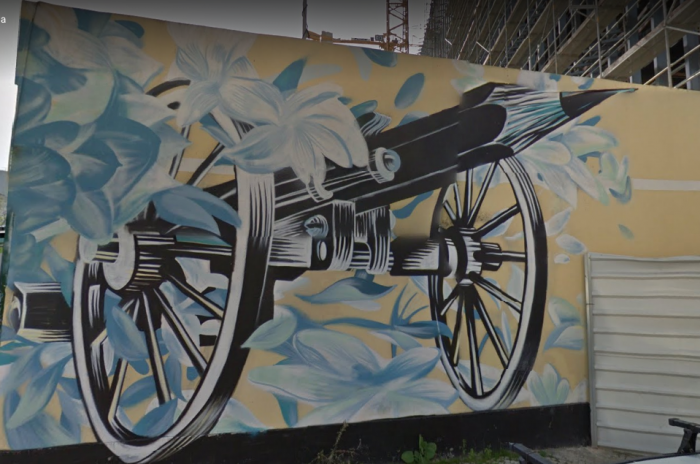
How to find the best examples? Ideally, they’ll catch you by surprise in their natural urban environment, but you can’t be in every urban environment at once. Hence Google Street Art, the virtual museum we featured last year. Since then Google Street Art introduced another innovation: the ability to behold some of their 10,000 collected pieces in “museum view.”
We’ve all used Google Street View to remotely explore the faraway places that pique our curiosity, and some of us have already tried using it to check out the world’s street art, but this provides a kind of Street View especially for street art, a high-resolution 360-degree panoramic perspective that lets you step forward and backward, to the left and to the right, and look at it from whichever angle you want to look at it.
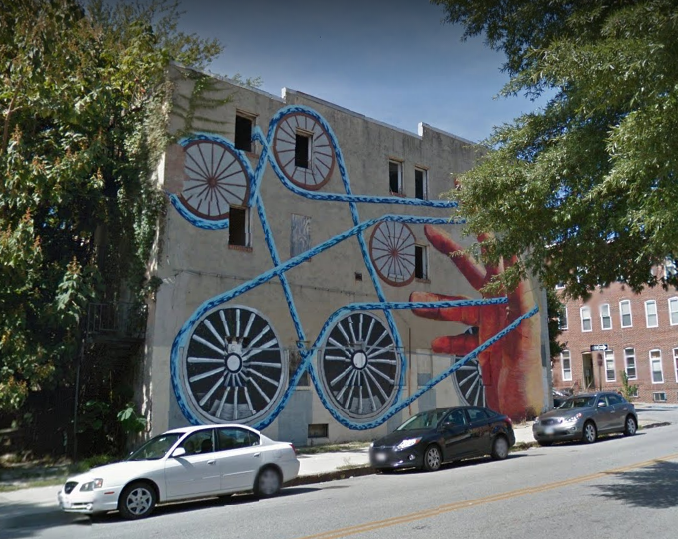
Now you can check out 94 pieces and counting in much greater detail, from Los Angeles to Baltimore, Lisbon to London, Buenos Aires to Melbourne. The selection even includes pieces of street art brought indoors, as found in Paris’ Palais de Tokyo and the Gyeonggi Museum of Art right here in Korea. Whether street art has the proper impact outside its original urban context, or in a digital rather than a concrete version of that urban context, will surely remain an interesting debate. “A city can never be a unified work of art or a beautiful object,” argues architectural historian Joseph Rykwert in The Seduction of Place, since “all sorts of things buffet and push human intentions about.” Perhaps, but that buffeting and pushing creates so much, from the grandest towers to the humblest alley murals, that counts as art in itself.
Related Content:
Google Puts Online 10,000 Works of Street Art from Across the Globe
Obey the Giant: Short Film Presents the True Story of Shepard Fairey’s First Act of Street Art
Big Bang Big Boom: Graffiti Stop-Motion Animation Creatively Depicts the Evolution of Life
Artists Paint Paris, Berlin and London with High-Tech Video Graffiti
Based in Seoul, Colin Marshall writes and broadcasts on cities and culture. He’s at work on a book about Los Angeles, A Los Angeles Primer, the video series The City in Cinema, the crowdfunded journalism project Where Is the City of the Future?, and the Los Angeles Review of Books’ Korea Blog. Follow him on Twitter at @colinmarshall or on Facebook.
Read More...Jim Jarmusch Lists His Favorite Poets: Dante, William Carlos Williams, Arthur Rimbaud, John Ashbery & More

Wikimedia Commons photo by Chrysoula Artemis
When it comes to American indie director Jim Jarmusch, we tend to think right away of the importance of music in his films, what with his collaborations with Neil Young, Tom Waits, and Iggy Pop. (Jarmusch is himself a musician who has released two studio albums and three EPs under the moniker Sqürl.) But Jarmusch’s most recent film, Paterson, is an ode to poetry, drawn from his own love of New York School poets like Frank O’Hara and John Ashbery. Set in Paterson, New Jersey and featuring a main character also named Paterson (Adam Driver), the film aims to show, writes Time magazine, “how art—maybe even especially art made in the margins—can fill up everyday life.”
Jarmusch was drawn to Paterson, the town, by William Carlos Williams. The modernist poet called the town home and published an epic poem called Paterson in 1946. Although that dense, complex work is “not one of my favorite poems,” Jarmusch tells Time, he namechecks Williams as one of his favorite poets.
I think we can see the influence of Williams’ spare visual imagination in Jarmusch films like Stranger than Paradise, Down by Law, Ghost Dog, and Broken Flowers. Jarmusch goes on in the course of his discussion about Paterson, the film, to name a handful of other poets he counts as inspirations. In the list below, you can find Jarmusch’s favorites, along with links to some of their most-beloved poems.
–William Carlos Williams (“Asphodel, That Greeny Flower,” “4th of July”)
–Wallace Stevens (“The Man with the Blue Guitar,” “The Snow Man,” “Thirteen Ways of Looking at a Blackbird”)
–Dante Alighieri (Canto I of the Inferno)
–Arthur Rimbaud (“The Drunken Boat,” “Vagabonds”)
–John Ashbery (“Self-Portrait in a Convex Mirror”—read by Ashbery)
–Kenneth Koch (“In Love With You,” “One Train May Hide Another”)
–Frank O’Hara (“Steps,” Various Poems)
As we read or re-read these poets, we might ask how they have informed Jarmusch’s stylish films in addition to the influence of his cinematic favorites. Several great directors have contributed to his peculiar visual aesthetic. The only filmmaker he mentions as a hero in his Time interview is Bernardo Bertollucci, but you can read about Jarmusch’s top ten films at our previous post–films directed by such luminaries as Yasujiro Ozu, Nicholas Ray, and Robert Bresson.
via Austen Kleon’s weekly newsletter
Related Content:
Jim Jarmusch: The Art of the Music in His Films
Werner Herzog Creates Required Reading & Movie Viewing Lists for Enrolling in His Film School
Josh Jones is a writer and musician based in Durham, NC. Follow him at @jdmagness
Read More...Watch Neil Gaiman & Amanda Palmer’s Haunting, Animated Take on Leonard Cohen’s “Democracy”
The late Leonard Cohen’s 1992 anthem “Democracy” feels not just fresh, but painfully relevant these days.
Cohen, a Canadian who spent much of his adult life in the States, avowed that the song was neither sarcastic nor ironic, but rather hopeful, an “affirmation of the experiment of democracy in this country.”
He started writing it in the late ’80s, churning out dozens of verses as he pondered the impact of the fall of the Berlin Wall and the Tiananmen Square protests.
The press kit for the album on which the song originally appeared stated:
These are the final days, this is the darkness, this is the flood. What is the appropriate behavior in a catastrophe, in a flood? You know, while you’re cleaning out your orange crate in the torrent and you pass somebody else hanging on to a spar of wood. What do you declare yourself? “left wing” “right wing” “pro-abortion” “against abortion”? All these things are luxuries which you can no longer afford. What is the proper behavior in a flood?
For musician Amanda Palmer and her husband, author Neil Gaiman, the answer to Cohen’s question is the stripped down, spoken word version of “Democracy,” above—a fundraiser for the free speech defense organization, PEN America.
The video’s stirring watercolors are courtesy of artist David Mack, an official Ambassador of Arts & Story for the US State Department who has illustrated several of Gaiman’s poems. Singer-songwriter Olga Nunes, another in Gaiman and Palmer’s vast stable of talented co-conspirators, animated.
Gaiman fans will no doubt thrill to hear that unmistakable accent gamely tackling such lyrics as “the homicidal bitchin’ that goes down in every kitchen,” but for my money, the most memorable phrase is the description of this country as “the cradle of the best and of the worst.”
Truly.
You can purchase the track here—the project was funded by 9,408 contributors to Palmer’s Patreon and all proceeds benefit PEN America.
Related Content:
Hear Leonard Cohen’s Final Interview: Recorded by David Remnick of The New Yorker
Hear Amanda Palmer’s Cover of “Purple Rain,” a Gorgeous Stringfelt Send-Off to Prince
Ayun Halliday is an author, illustrator, theater maker and Chief Primatologist of the East Village Inky zine. Her play Zamboni Godot is opening in New York City in March 2017. Follow her @AyunHalliday.
Read More...25 Animations of Great Literary Works: From Plato, Dostoevsky & Dickinson, to Kafka, Hemingway & Bradbury
Over the years, we’ve featured a large number of literary works that have been wonderfully re-imagined by animators. Rather than leaving these works buried in the archives, we’re bringing them back and putting them all on display. And what better place to start than with a foundational text — Plato’s Republic. We were tempted to show you a claymation version of the seminal philosophical work (watch here), but we decided to go instead with Orson Welles’ 1973 narration of The Cave Allegory, which features the surreal artistic work of Dick Oden.
Staying with the Greeks for another moment … This one may have Sophocles and Aeschylus spinning in their graves. Or, who knows, perhaps they would have enjoyed this bizarre twist on the Oedipus myth. Running eight minutes, Jason Wishnow’s 2004 film features vegetables in the starring roles.
One of the first stop-motion films shot with a digital still camera, Oedipus took two years to make with a volunteer staff of 100. The film has since been screened at 70+ film festivals and was eventually acquired by the Sundance Channel. Separate videos show you the behind-the-scenes making of the film, plus the storyboards used during production.
Eight years before Piotr Dumala tackled Dostoyevsky’s Crime and Punishment, the Russian animator produced a short animated film based on The Diaries of Franz Kafka. Once again, you can see his method, known as “destructive animation,” in action. It’s well worth the 16 minutes. Or you can spend time with this 2007 Japanese animation of Kafka’s cryptic tale of “A Country Doctor.” And if you’re still hankering for animated Kafka, don’t miss The Metamorphosis of Mr. Samsa (Caroline Leaf’s sand animation from 1977) and also Orson Welles’ narration of the Parable, “Before the Law.” The latter film was made by Alexander Alexeieff and Claire Parker, who using a technique called pinscreen animation, created a longer film adaptation of Nikolai Gogol’s story, “The Nose.” You can view it here.
The animated sequence above is from the 1974 film adaptation of Herman Hesse’s 1927 novel Steppenwolf. In this scene, the Harry Haller character played by Max von Sydow reads from the “Tractate on the Steppenwolf.” The visual imagery was created by Czech artist Jaroslav Bradác.
In 1999, Aleksandr Petrov won the Academy Award for Short Film (among other awards) for a film that follows the plot line of Ernest Hemingway’s classic novella, The Old Man and the Sea (1952). As noted here, Petrov’s technique involves painting pastels on glass, and he and his son painted a total of 29,000 images for this work. (For another remarkable display of their talents, also watch his adaptation of Dostoevsky’s “The Dream of a Ridiculous Man”.)
Italo Calvino, one of Italy’s finest postwar writers, published Italian Folktales in 1956, a series of 200 fairy tales based sometimes loosely, sometimes more strictly, on stories from a great folk tradition. Upon the collection’s publication, The New York Times named Italian Folktales one of the ten best books of the year. And more than a half century later, the stories continue to delight. Case in point: in 2007, John Turturro, the star of numerous Coen brothers and Spike Lee films, began working on Fiabe italiane, a play adapted from Calvino’s collection of fables. The animated video above features Turturro reading “The False Grandmother,” Calvino’s reworking of Little Red Riding Hood. Kevin Ruelle illustrated the clip, which was produced as part of Flypmedia’s more extensive coverage of Turturro’s adaptation. You can find another animation of a Calvino story (The Distance of the Moon) here.
Emily Dickinson’s poetry is widely celebrated for its beauty and originality. To celebrate her birthday (it just recently passed us by) we bring you this little film of her poem, “I Started Early–Took My Dog,” from the “Poetry Everywhere” series by PBS and the Poetry Foundation. The poem is animated by Maria Vasilkovsky and read by actress Blair Brown.
Shel Silverstein wrote The Giving Tree in 1964, a widely loved children’s book now translated into more than 30 languages. It’s a story about the human condition, about giving and receiving, using and getting used, neediness and greediness, although many finer points of the story are open to interpretation. Today, we’re rewinding the videotape to 1973, when Silverstein’s little book was turned into a 10 minute animated film. Silverstein narrates the story himself and also plays the harmonica.
During the Cold War, one American was held in high regard in the Soviet Union, and that was Ray Bradbury. A handful of Soviet animators demonstrated their esteem for the author by adapting his short stories. Vladimir Samsonov directed Bradbury’s Here There Be Tygers, which you can see above. And here you can see another adaptation of “There Will Come Soft Rains.”
The online bookseller Good Books created an animated mash-up of the spirits of Franz Kafka and Hunter S. Thompson. Under a bucket hat, behind aviator sunglasses, and deep into an altered mental state, our narrator feels the sudden, urgent need for a copy of Kafka’s Metamorphosis. Unwilling to make the purchase in “the great river of mediocrity,” he instead makes the buy from “a bunch of rose-tinted, willfully delusional Pollyannas giving away all the money they make — every guilt-ridden cent.” The animation, created by a studio called Buck, should easily meet the aesthetic demands of any viewer in their own altered state or looking to get into one.
39 Degrees North, a Beijing motion graphics studio, started developing an unconventional Christmas card several years ago. And once they got going, there was no turning back. Above, we have the end result – an animated version of an uber dark Christmas poem (read text here) written by Neil Gaiman, the bestselling author of sci-fi and fantasy short stories. The poem was published in Gaiman’s collection, Smoke and Mirrors.
This collaboration between filmmaker Spike Jonze and handbag designer Olympia Le-Tan doesn’t bring a particular literary tale to life. Rather this stop motion film uses 3,000 pieces of cut felt to show famous books springing into motion in the iconic Parisian bookstore, Shakespeare and Company. It’s called Mourir Auprès de Toi.
Other notables include: a two minute take on Mikhail Bulgakov’s The Master and Margarita; a 1977 experimental adaptation of The Rime of the Ancient Mariner, which marries the classic engravings of Gustave Doré to an Orson Welles narration of Coleridge’s poem; and “Beer,” a mind-warping animation of Charles Bukowski’s 1971 poem honoring his favorite drink.
Are there impressive literary animations that didn’t make our list? Please let us know in the comments below. We’d love to know about them.
Related Content:
Piotr Dumala’s Artful Animations of Literary Works by Kafka & Dostoevsky
A Beautifully Hand-Painted Animation of Ernest Hemingway’s The Old Man and the Sea (1999)
Read More...Roman Architecture: A Free Online Course from Yale University
Taught by Yale professor Diana E. E. Kleiner, this course offers “an introduction to the great buildings and engineering marvels of Rome and its empire, with an emphasis on urban planning and individual monuments and their decoration, including mural painting.”
The course description continues: “While architectural developments in Rome, Pompeii, and Central Italy are highlighted, the course also provides a survey of sites and structures in what are now North Italy, Sicily, France, Spain, Germany, Greece, Turkey, Croatia, Jordan, Lebanon, Libya, and North Africa. The lectures are illustrated with over 1,500 images, many from Professor Kleiner’s personal collection.”
You can watch the 24 lectures above, or find the complete lecture set on YouTube and iTunes. To get more information on the course, including the syllabus, please visit Yale’s website.
Texts used in this course include:
- Ward-Perkins, John B. Roman Imperial Architecture. New Haven: Yale University Press, 1994.
- Claridge, Amanda. Rome: An Oxford Archaeological Guide, second edition, Oxford and New York: Oxford University Press, 2010.
Roman Architecture will be added to our collection, 1,700 Free Online Courses from Top Universities. Find more courses focused on the Ancient world here.
If you would like to support the mission of Open Culture, consider making a donation to our site. It’s hard to rely 100% on ads, and your contributions will help us continue providing the best free cultural and educational materials to learners everywhere. You can contribute through PayPal, Patreon, and Venmo (@openculture). Thanks!
Related Content:
Rome Reborn: Take a Virtual Tour of Ancient Rome, Circa 320 C.E.
The History of Rome in 179 Podcasts
The Rise & Fall of the Romans: Every Year Shown in a Timelapse Map Animation (753 BC ‑1479 AD)
Free Courses in Ancient History, Literature & Philosophy
What Life Was Like for Teenagers in Ancient Rome: Get a Glimpse from a TED-ED Animation
Read More...Support Us
We're hoping to rely on loyal readers, rather than erratic ads. Please click the Donate button and support Open Culture. You can use Paypal, Venmo, Patreon, even Crypto! We thank you!

About Us

Open Culture scours the web for the best educational media. We find the free courses and audio books you need, the language lessons & educational videos you want, and plenty of enlightenment in between.
Advertise With Us

FREE UPDATES!
GET OUR DAILY EMAIL
Get the best cultural and educational resources on the web curated for you in a daily email. We never spam. Unsubscribe at any time.
FOLLOW ON SOCIAL MEDIA

Open Culture editor Dan Colman scours the web for the best educational media. He finds the free courses and audio books you need, the language lessons & movies you want, and plenty of enlightenment in between.
Advertise With Us


