H.P. Lovecraft’s Cthulhu in Anime: A First Glimpse
Mark it on your calendars. 2018 will bring an anime adaptation of the popular card game Force of Will. An omnibus collection of six animations, the film will include one short created by Shuhei Morita, whose 2013 animation “Possessions” already earned him an Academy Award nomination. Morita’s next task–to bring to life H.P. Lovecraft’s “Cthulhu.” We’ve previously highlighted Lovecraft’s 1934 drawings of the monster to which he gave literary life in 1928. (See “The Call of Cthulhu.”) Above, catch a very first glimpse of Morita’s take on the gigantic octopus. Below, in the Relateds, find a good deal of material on Cthulhu–drawings, radio dramatizations and much more.
If you would like to support the mission of Open Culture, consider making a donation to our site. It’s hard to rely 100% on ads, and your contributions will help us continue providing the best free cultural and educational materials to learners everywhere. You can contribute through PayPal, Patreon, and Venmo (@openculture). Thanks!
Related Content
H.P. Lovecraft’s Classic Horror Stories Free Online: Download Audio Books, eBooks & More
Read More...When L. Frank Baum’s Wizard of Oz Series Was Banned for “Depicting Women in Strong Leadership Roles” (1928)
We’ve reached the final stretch of the most infuriating, unsettling election I’ve ever experienced. And we find the U.S. so polarized that—as The Wall Street Journal chillingly demonstrates in their “Blue Feed Red Feed” feature—the left and right seem to live in two entirely different realities. Still, one would have to work very hard on either side, I think, to deny the role sexism has played. One candidate, a known and well-documented misogynist, leads millions of supporters calling for his opponent’s death, imprisonment, and humiliation. That opponent, of course, happens to be the first woman to run on a major party ticket in a general election.
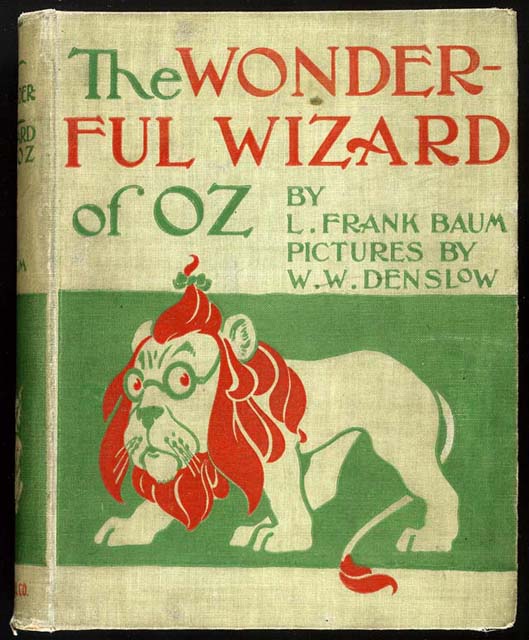
Do many Americans still have a problem with accepting women as leaders? I personally don’t think there’s much of an argument there, and people who see the question as redundant marvel at how long archaic attitudes about women in power have persisted. At least these days we can openly have the—often highly inflamed—conversation about sexism in business, entertainment, and government. And we can support a cultural industry thriving on strong female characters in fiction, film, and television. Not so much in 1928, when the Chicago Public Library banned The Wizard of Oz, writes Kristina Rosenthal at the University of Tulsa Department of Special Collections, “arguing that the story was ungodly for ‘depicting women in strong leadership roles.’”
First published in 1900, L. Frank Baum’s fantasy novel initiated a series of 13 Oz-themed sequels, all of which became immensely popular after MGM’s 1939 film adaptation. (You can find them all in text and audio format here.) And yet, “throughout the years the books have been opposed for their positive portrayals of femininity.” Various libraries used similar excuses to ban the books throughout the 50s and 60s. The Detroit public library banned the Oz books in 1957, stating they had “no value for children of today.” The ban remained in place until 1972. One Florida librarian circulated a memo to her colleagues calling the books “unwholesome,” among other things, and causing a run on local bookstores as children desperately tried to find them.
Other groups decided that the books promoted witchcraft in charges similar to those levied at the Harry Potter series. In 1986, a group of Fundamentalist Christian families in Tennessee came together to remove the The Wizard of Oz from their schools’ curriculum, protesting “the novel’s depiction of benevolent witches.” They argued, writes Rosenthal, “that all witches are bad, therefore it is ‘theologically impossible ‘for good witches to exist.” Many seeking to ban the books since have similarly referred to their positive depictions of magic and “godless supernaturalism,” but the Tennessee case stands as a landmark in the Religious Right’s litigious crusade against the government. The attorney who represented plaintiff Vicki Frost called on “every born-again Christian to get their children out of public schools.”
It’s odd to think of whimsical children’s literature so seemingly innocuous as The Wizard of Oz books as territory in the long culture wars of the 20th century. But as we are reminded every year during Banned Books Week (September 25 − October 1, 2016), literature often arouses the ire of those incensed by change and difference. Yet their attempts to suppress certain books have always backfired, making the targets of their censorship even more popular and sought-after. If you’d like to read Baum’s Oz books now, you needn’t confront a gatekeeping librarian; simply head over to our post on the complete Wizard of Oz series, with free eBooks and audio books of all 14 female-centric fantasy classics.
Related Content:
800 Free eBooks for iPad, Kindle & Other Devices
The Complete Wizard of Oz Series, Available as Free eBooks and Free Audio Books
74 Free Banned Books (for Banned Books Week)
1,000 Free Audio Books: Download Great Books for Free
Josh Jones is a writer and musician based in Durham, NC. Follow him at @jdmagness
Read More...J.G. Ballard’s Experimental Text Collages: His 1958 Foray into Avant-Garde Literature
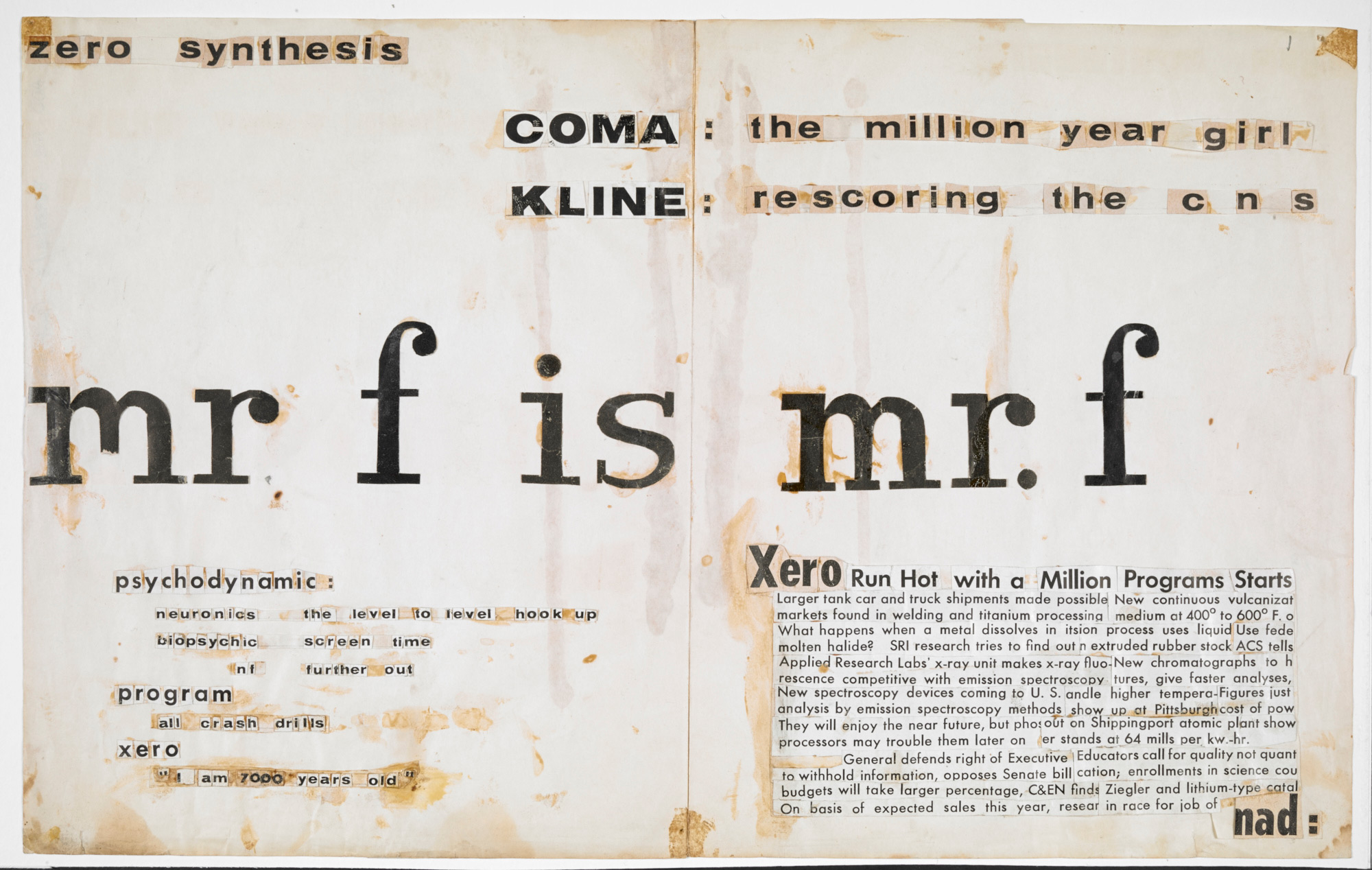
Image by J. G. Ballard, via the British Library
J.G. Ballard became famous for his 1985 autobiographical novel Empire of the Sun (later turned by Steven Spielberg into a major motion picture). Before that, he became well-known for his controversial, car-wreck-eroticizing 1973 novel Crash (later turned by David Cronenberg into a semi-major motion picture). Before that, he made cultural waves with the experimental 1970 collection of “condensed novels” The Atrocity Exhibition and the both post-apocalyptic and psychological Drowned World trilogy of the 1960s. Go just a bit deeper back into the Ballard canon and you find a work, in its way, even more daring still: 1958’s Project for a New Novel.
“Ballard formed the ‘novel’ from scientific and technical material cut from professional literature,” says the page at the British Library where you can see images of the work, the process of whose composition bears a resemblance to William Burroughs’ famous “cut-up writing” technique. “Letters, words and sentence fragments are pasted onto backing sheets with glue. Their design visually references everyday media, with headlines, body text and double-page spreads suggesting a magazine layout. Originally Ballard planned to display the work on billboards, as if it was a public advertisement.”
Ballard himself described the Project as “sample pages of a new kind of novel, entirely consisting of magazine-style headlines and layouts, with a deliberately meaningless text, the idea being that the imaginative content could be carried by the headlines and overall design, so making obsolete the need for a traditional text except for virtually decorative purposes.”
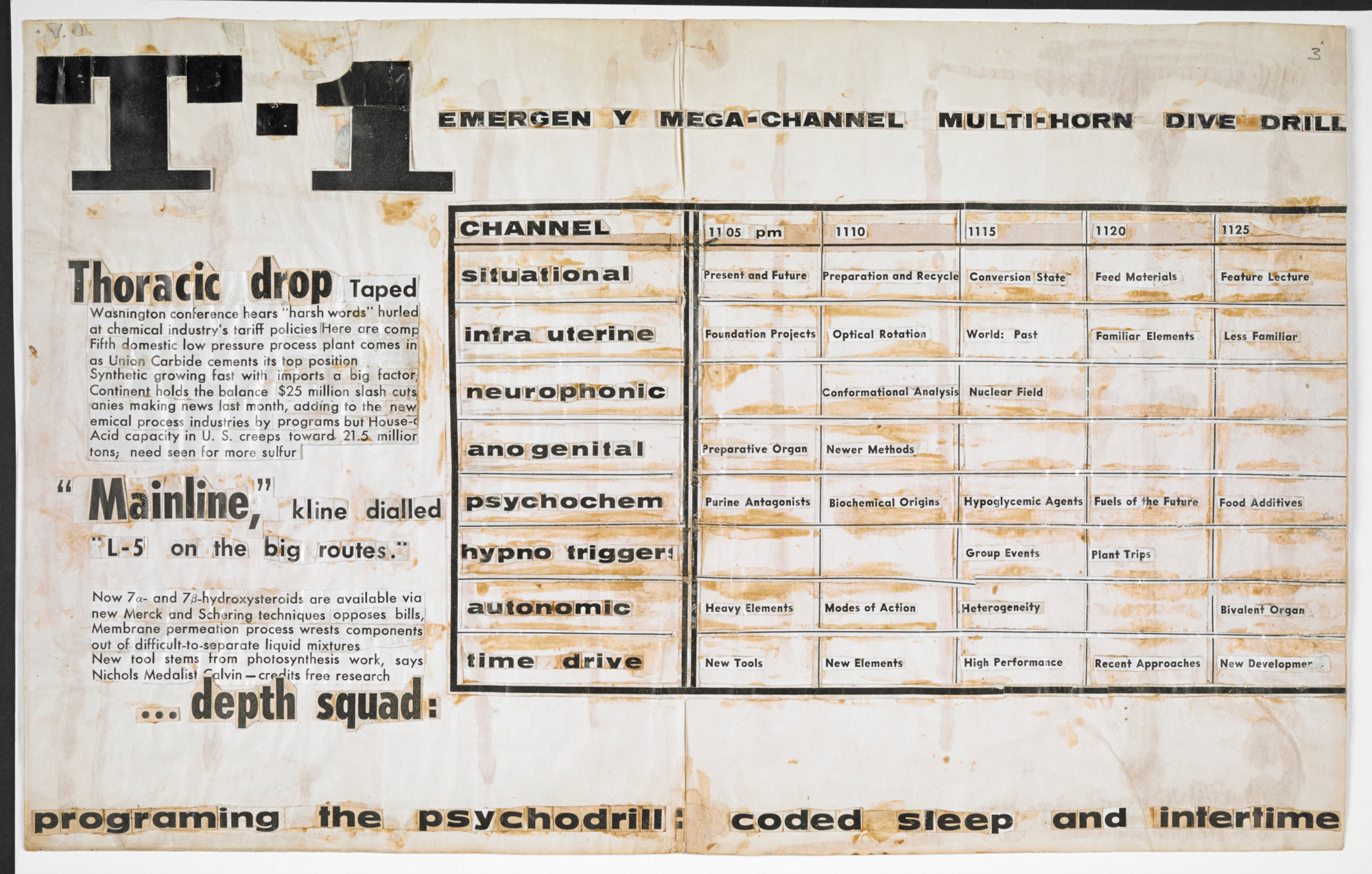
Image by J. G. Ballard, via the British Library
Employment at a London chemical society journal gave him access not just to photocopying facilities (then a rarity) but the magazine Chemical and Engineering News, which became his basic material: “I liked the stylish typography. I also like the scientific content, and used stories to provide the text of my novel. Curiously enough, far from being meaningless, the science news stories somehow become fictionalized by the headings around them.”
That quote comes from an article by Rick McGrath at jgballard.ca, who points out that “many of the characters and concerns in Project have resurfaced over the years” in his subsequent writings such as The Atrocity Exhibition and The Terminal Beach: “Ballard’s ‘collage of things’ spawned such characters as Coma, Kline and Xero, and such phrases as ‘the terminal beach’, ‘Mr F is Mr F’, ‘thoracic drop’ ‘intertime’ ‘T‑12’ and many more Ballardian tropes now familiar to his readers today.”
Though Ballard’s work remained imaginative in a way that no other writer has replicated, he never, after the Project for a New Novel and the pieces of 1970s follow-up Advertiser’s Announcements (“ ‘ads’ in the same sense that Project For A New Novel is a ‘novel‘”), got so experimental again. “Fascinated with the causality of time, Ballard’s first step is to remove it. Bored with action/reaction, Ballard inverts it,” writes McGrath. “Unwilling to accept the fictions of the world, Ballard creates a personal reality. The result is an autopsy report, or a box of tools, or a lineup of service station attendants at a police station. It’s up to you to make a kind of personal sense of it all” — a bit like the modern world itself.
via The Scofield
Related Content:
The Very First Film of J.G. Ballard’s Crash, Starring Ballard Himself (1971)
Sci-Fi Author J.G. Ballard Predicts the Rise of Social Media (1977)
William S. Burroughs on the Art of Cut-up Writing
Based in Seoul, Colin Marshall writes and broadcasts on cities and culture. He’s at work on a book about Los Angeles, A Los Angeles Primer, the video series The City in Cinema, the crowdfunded journalism project Where Is the City of the Future?, and the Los Angeles Review of Books’ Korea Blog. Follow him on Twitter at @colinmarshall or on Facebook.
Read More...The Sights & Sounds of 18th Century Paris Get Recreated with 3D Audio and Animation
In what is often called the “Early Modern” period, or the “Long Eighteenth Century,” Europe witnessed an explosion of satire, not only as a political and literary weapon, but as a means of reacting to a whole new way of life that arose in the cities—principally London and Paris—as a displaced rural population and expanding bourgeoisie radically altered the character of urban life. In England, poets like Alexander Pope and Jonathan Swift savaged their rivals in print, while also commenting on the increasing pace and declining tastes of the city.
In France, Voltaire punched up, using his pen to needle Parisian authorities, serving 11 months in the Bastille for a satirical verse accusing the Regent of incest. Despite the hugely successful premiere of his play Oedipus seven months after his release, Voltaire would ultimately be exiled from his beloved city for 28 years, returning in 1778 at the age of 83.
Now, of course, Parisians celebrate Voltaire in every possible way, but what would it have been like to have experienced the city during his lifetime, when it became the buzzing center of European intellectual life? In the video recreation above, we can partially answer that question by experiencing what 18th century Paris may have looked and sounded like, according to musicologist Mylène Pardoen, who designed this “historical audio reconstitution,” writes CNRS News, with a “team of historians, sociologists and specialists in 3D representations.”
The team chose to animate “the Grand Châtelet district, between the Pont au Change and Pont Notre Dame bridges” because, Pardoen explains, the neighborhood “concentrates 80% of the background and sound environments of Paris in that era, whether through familiar trades—shopkeepers, craftsmen, boatmen, washerwomen on the banks of the Seine… or the diversity of acoustic possibilities, like the echo heard under a bridge or in a covered passageway.” The result is “the first 3D reconstruction based solely on a sonic background.”
“We are the whipped cream of Europe,” Voltaire once said of his Paris, a luxurious, aristocratic world. But 18th century Paris was also a grimy city full of ordinary laborers and merchants, of “cesspools and kennels”—as a commentary on Dickens’ A Tale of Two Cities notes—and of wine-stained streets without proper drainage. And it was a city on the verge of a revolution from below, inspired by iconoclasts from above like Voltaire. In the 3D video and audio recreation above, we get a small, video-game-like taste of a bustling city caught between immense luxury and crushing poverty, between medieval theology and humanist philosophy, and between the rule of divine kings and a bloody secular revolution to come.
We started the video above at the 2:06 mark when the animations kick in. Feel free to start the video from the very beginning.
Related Content:
Fly Through 17th-Century London’s Gritty Streets with Prize-Winning Animations
What Makes Paris Look Like Paris? A Creative Use of Google Street View
Josh Jones is a writer and musician based in Durham, NC. Follow him at @jdmagness
Read More...8+ Hours of Classic Charles Dickens Stories Dramatized, Starring Orson Welles, Boris Karloff, Richard Burton & More
Do you know who would have understood our current political moment? Who would have known how to make sense of the naked avarice, widespread bullying, demagoguery, and predatory politicking? Charles Dickens, that’s who.
The villainy in Oliver Twist alone suffices to show just how well Dickens understood misogyny, criminal exploitation, and the ways seductive insincerity works to ensnare the vulnerable.
As we approach the interminable holiday season, many of us will reflect on Dickens’ scathing indictment of greed in A Christmas Carol. Nearly everyone wants a piece of Dickens’ presumed political views. The Socialist Review proclaims “he would have been only too familiar with the shameless piling up of wealth, the poor struggling to survive, the penny pinching of welfare, and the lofty contempt of our rulers” in the 21st century.
But Dickens was no revolutionary. His foreign policy ideas “anticipate Kipling’s proletarian defenders of empire,” and he might have fit right in with the most starry-eyed of neoconservatives.
Was he a defender of free market ideals, as some allege? The idea seems implausible. Characters like pre-redemption Scrooge and Ralph Nickleby—who in, say, Ayn Rand’s hands might be champions of individualism and selfishness as a virtue—become in Dickens’ novels examples of frighteningly truncated humanity. Take this description of Nickleby, uncle of the orphaned Nicholas:
He wore a sprinkling of powder upon his head, as if to make himself look benevolent; but if that were his purpose, he would perhaps have done better to powder his countenance also, for there was something in its very wrinkles, and in his cold restless eye, which seemed to tell of cunning that would announce itself in spite of him.
This is the look of the deceitful, scheming businessman in Dickens: the cold eyes, the barely-concealed malice. In novels like Oliver Twist and Hard Times, Dickens “provides a damning critique of industrial England of the nineteenth century” and “an indictment of global laissez faire capitalism of the twenty-first century.” So argues The Copperfield Review, in any case.
But when we read Dickens, we don’t do so foremost to have our political views bolstered or challenged, but to experience the immensely moving and entertaining plots, with their vividly delineated characters like Ralph Nickleby above. These qualities have always made Dickens’ work translate beautifully to the stage and screen, and also to the radio waves, where Dickens appeared in dramatic adaptations during the medium’s golden age and beyond, often in star-studded productions.
For example, at the top of the post, you can hear a 1950 radio play of David Copperfield with Richard Burton in the title role and Boris Karloff as “the smarmiest creep in Dickens,” Uriah Heep. The latter character may be one of the most obsessively described in all of the author’s works, to the point of caricature. And yet, writes Sam Jordison at The Guardian, “just as Satan gets the best lines in Paradise Lost, Heep gets some of the best moments in David Copperfield.”
Further up, you can hear Orson Welles star in a 1938 production of A Tale of Two Cities. This play is the third in Welles and John Houseman’s series The Mercury Theatre on the Air, which featured Welles’ handpicked company of actors. Soon sponsored by Campbell’s Soup, the program was renamed The Campbell Playhouse by the time Welles produced an adaptation of A Christmas Carol with Lionel Barrymore as Scrooge.
In the Spotify playlist above, hear that production as well as a second Welles-starring version of A Tale of Two Cities recorded in 1945 for the legendary Lux Radio Theater. You’ll also find Richard Burton’s David Copperfield and classic productions of Great Expectations, Oliver Twist, The Pickwick Papers, The Mystery of Edwin Drood, and short stories like “The Queer Client,” “The Signalman,” and “The Trial for Murder.” If you need Spotify’s free software, download it here.
Visiting, or revisiting, the Dickensian world through radio plays fits in perfectly with the author’s own mode of disseminating his fiction: he was a showman who loved to give readings of his work “with full histrionic brilliance,” writes Simon Callow, “and stage-managed to a point of high theatricality.” And through such entertainment, he believed, he might move readers and audiences with his critiques of the exploitative systems of his day.
The playlist above will be added to our collection, 1,000 Free Audio Books: Download Great Books for Free. Copies of Dickens’ works can be found in our collection, 800 Free eBooks for iPad, Kindle & Other Devices.
Related Content:
An Animated Introduction to the Life & Literary Works of Charles Dickens
Hear Charles Dickens’ A Christmas Carol Read by His Great-Granddaughter in His Preferred Style
Charles Dickens’ Hand-Edited Copy of His Classic Holiday Tale, A Christmas Carol
Josh Jones is a writer and musician based in Durham, NC. Follow him at @jdmagness
Read More...Charlie Chaplin Finds Comedy Even in the Brutality of WWI: A Scene from Shoulder Arms (1918)
A friend of the Roman poet Martial once asked him why he went to watch lions devour slaves at the Coliseum. “These are my times,” replied Martial, “and I must know them.” Not every Roman enjoyed such brutal spectacles, and Martial himself perhaps least of all, but he regarded it as a duty as an observer and interpreter not to spare himself the awful sight that pleased so many of his fellow citizens. Charlie Chaplin, too, knew his times, as evidenced by pictures like 1936’s Modern Times, which made light of industrial capitalism, and The Great Dictator, his sharp 1940 satire of Nazism and fascism.
But the horrors of the previous World War gave him material too, as you can see in this scene from the 1918 silent comedy Shoulder Arms, above: “There have been learned discussions as to whether Chaplin’s comedy is low or high, artistic or crude,” said the contemporary New York Times review of the film, Chaplin’s most popular to date, “but no one can deny that when he impersonates a screen fool he is funny.”
His screen fool, in this case, has enlisted in the “awkward squad,” and though boot camp gives him a hard time, the pratfalls he goes through when sent off to Europe eventually lead him to win the Great War almost singlehandedly. Alas, as with most of Chaplin’s hapless protagonists, his moment of triumph vanishes even more quickly than it came, and at the time of its premiere the real war still had weeks to go.
Before making the movie, Chaplin himself had doubts about the potential for humor in the bloodiest conflict in the history of mankind, but he must have ultimately understood what all the most astute comedians do: that comedy and tragedy have always gone hand-in-hand. “Saying something is too terrible to joke about is like saying a disease is to terrible to try to cure,” as the particularly astute Louis C.K. recently put it — a man of our own comedic and tragic times, and one who certainly knows them as well as Chaplin knew his.
Find 65 Free Charlie Chaplin Films Online in our collection, 4,000+ Free Movies Online: Great Classics, Indies, Noir, Westerns, Documentaries & More.
Related Content:
Charlie Chaplin Does Cocaine and Saves the Day in Modern Times (1936)
Chaplin Meets Inception: The Final Speech of The Great Dictator
When Charlie Chaplin Entered a Chaplin Look-Alike Contest and Came in 20th Place
Based in Seoul, Colin Marshall writes and broadcasts on cities and culture. He’s at work on a book about Los Angeles, A Los Angeles Primer, the video series The City in Cinema, the crowdfunded journalism project Where Is the City of the Future?, and the Los Angeles Review of Books’ Korea Blog. Follow him on Twitter at @colinmarshall or on Facebook.
Read More...Explore 5,300 Rare Manuscripts Digitized by the Vatican: From The Iliad & Aeneid, to Japanese & Aztec Illustrations
Hundreds of years before vast public/private partnerships like Google Arts & Culture, the Vatican served as one of the foremost conservators of cultural artifacts from around the world. In the era of the Holy Roman Empire, few of those works were available to the masses (excepting, of course, the city’s considerable public architecture and sculpture). But with over 500 years of history, Vatican Museums and Libraries have amassed a trove of artifacts that rival the greatest world collections in their breadth and scope, and these have slowly become public over time. In 1839, for example, Pope Gregory XVI founded the Egyptian Museum, an extensive collection of Egyptian and Mesopotamian artifacts including the famous Book of the Dead. We also have The Collection of Modern Religious Art, which holds 19th and 20th century impressionists, surrealists, cubists, expressionists, etc. In-between are large public collections from antiquity to the Renaissance.
When it comes to manuscripts, the Vatican Library is no less an embarrassment of riches. But unlike the art collections, most of these have been completely inaccessible to the public due to their rarity and fragility. That’s all going to change, now that ancient and modern conservation has come together in partnerships like the one the Library now has with Japanese company NTT DATA.
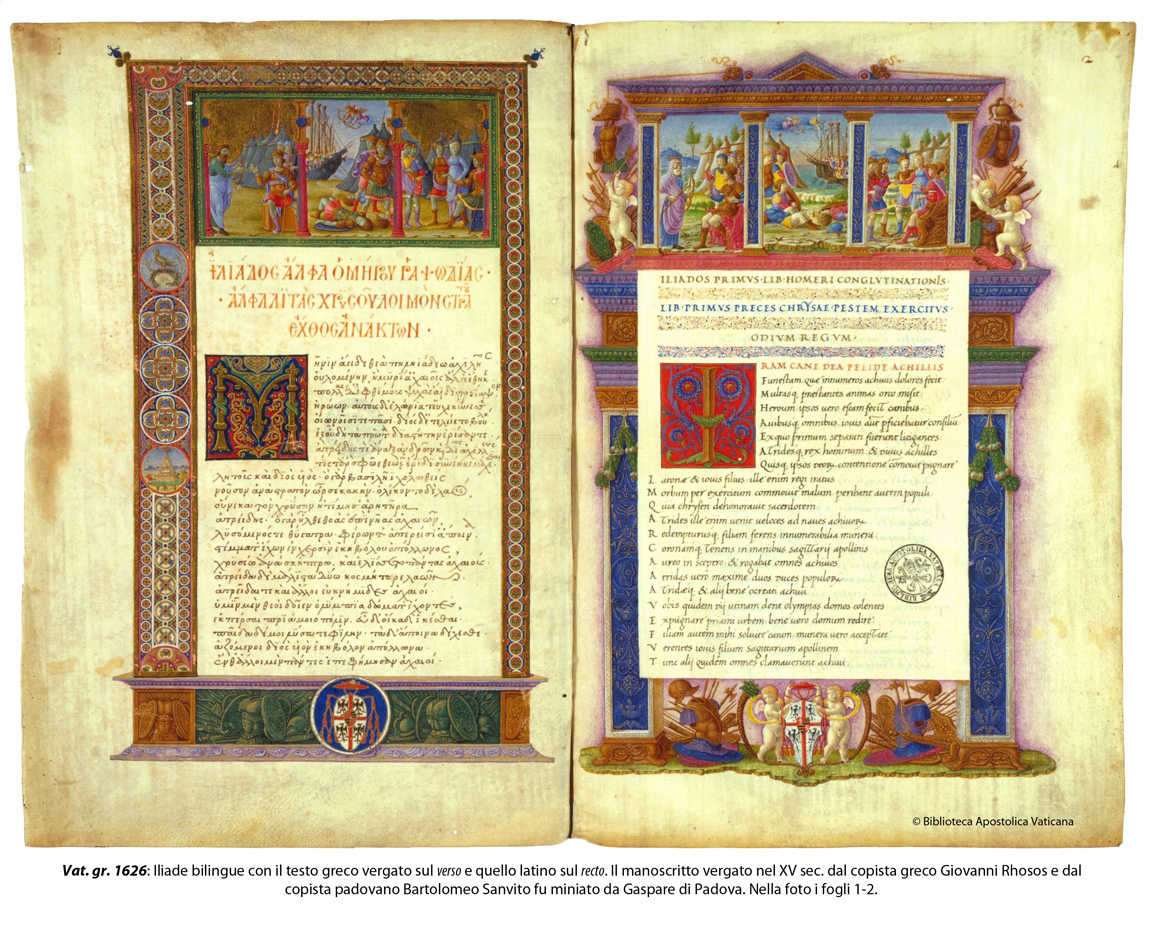
Their combined project, the Digital Vatican Library, promises to digitize 15,000 manuscripts within the next four years and the full collection of over 80,000 manuscripts in the next decade or so, consisting of codices mostly from the “Middle Age and Humanistic Period.” They’ve made some excellent progress. Currently, you can view high-resolution scans of over 5,300 manuscripts, from all over the world. We previously brought you news of the Library’s digitization of Virgil’s Aeneid. They’ve also shared a finely illustrated, bilingual (Greek and Latin) edition of its predecessor, The Iliad (top).
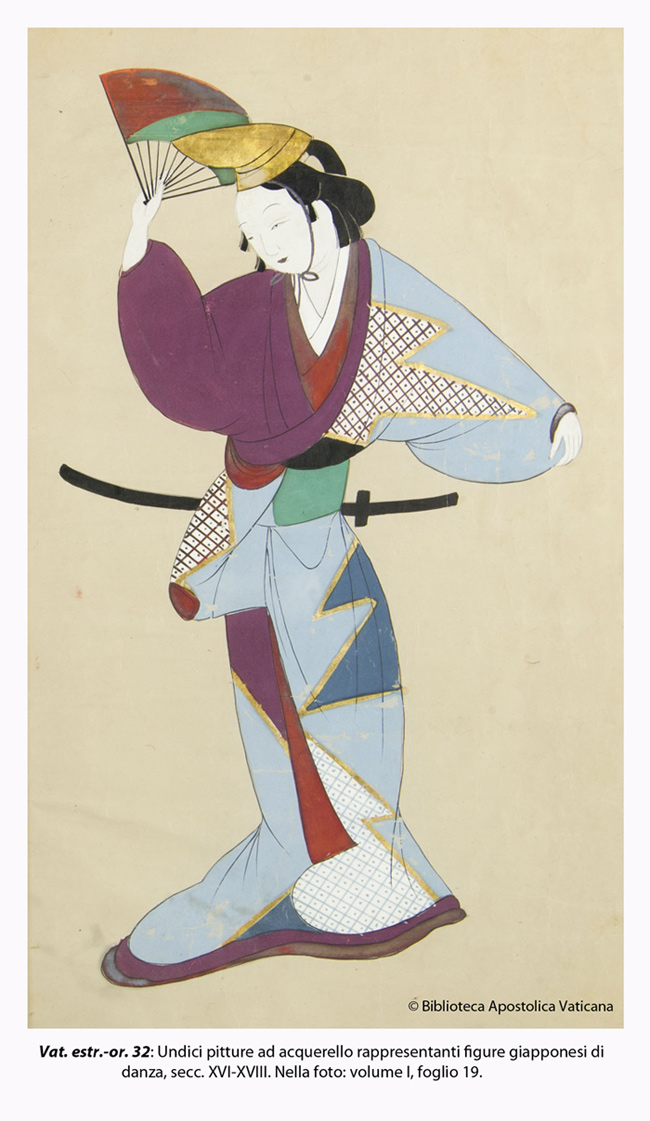
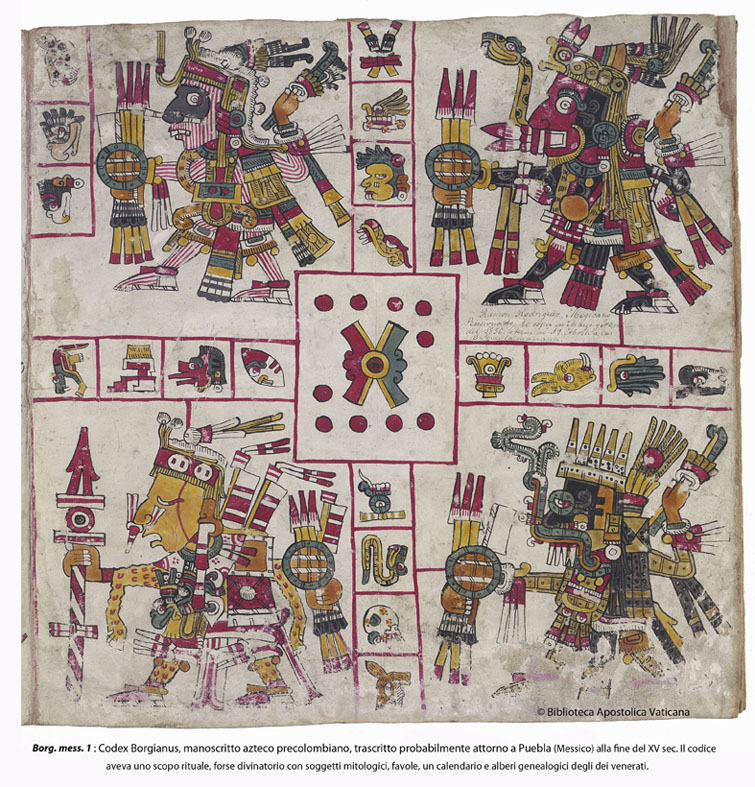
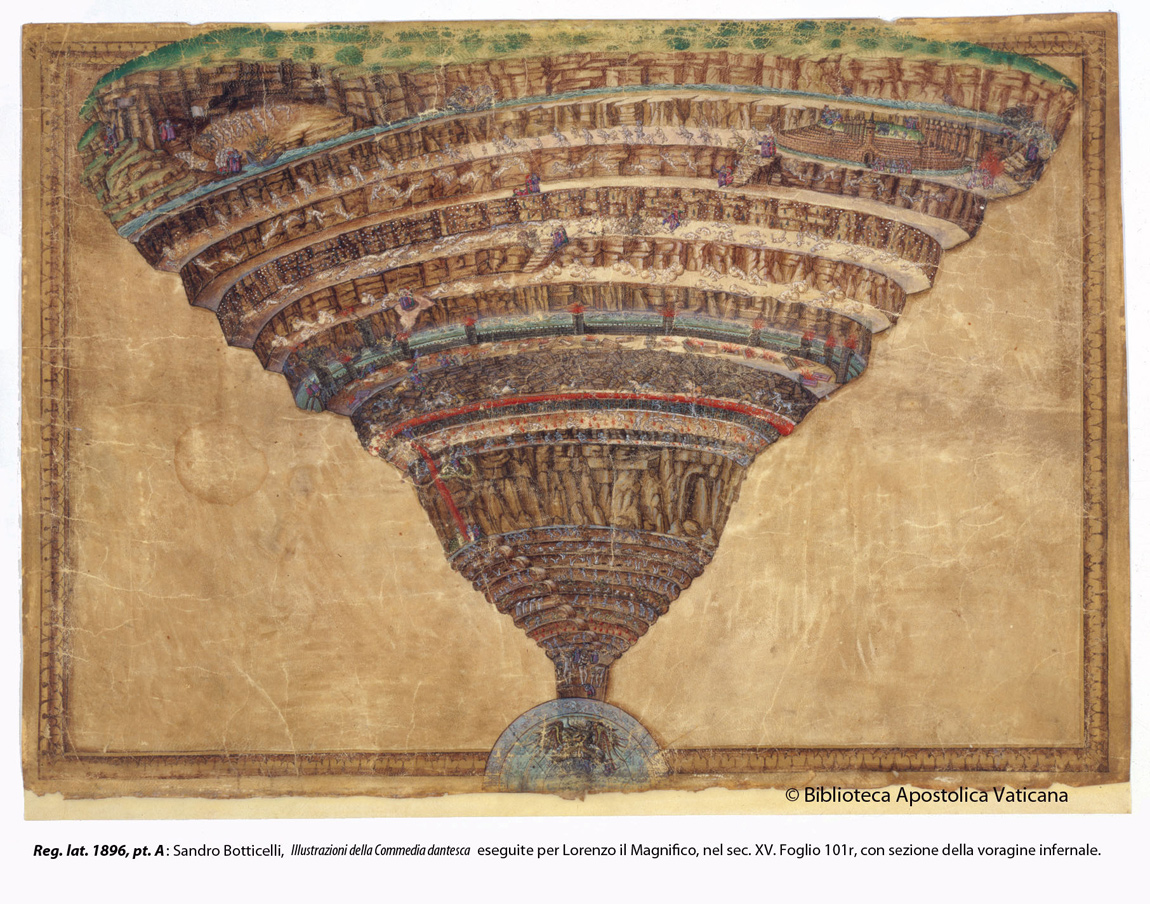
Further up, from a similar time but very different place, we see a Pre-Columbian Aztec manuscript, equally finely-wrought in its hand-rendered intricacies. You’ll also find illustrations like the circa 17th-century Japanese watercolor painting above, and the rendering of Dante’s hell, below, from a wonderful, if incomplete, series by Renaissance great Sandro Botticelli (which you can see more of here). Begun in 2010, the huge-scale digitization project has decided on some fairly rigorous criteria for establishing priority, including “importance and preciousness,” “danger of loss,” and “scholar’s requests.” The design of the site itself clearly has scholars in mind, and requires some deftness to navigate. But with simple and advanced search functions and galleries of Selected and Latest Digitized Manuscripts on its homepage, the Digital Vatican Library has several entry points through which you can discover many a textual treasure. As the site remarks, “the world’s culture, thanks to the web, can truly become a common heritage, freely accessible to all.” You can enter the collection here.
Related Content:
1,600-Year-Old Illuminated Manuscript of the Aeneid Digitized & Put Online by The Vatican
Botticelli’s 92 Illustrations of Dante’s Divine Comedy
15,000 Colorful Images of Persian Manuscripts Now Online, Courtesy of the British Library
Josh Jones is a writer and musician based in Durham, NC. Follow him at @jdmagness
Read More...1944 Instructional Video Teaches You the Lindy Hop, the Dance That Originated in 1920’s Harlem Ballrooms
1944’s MGM short Groovie Movie, above, bills itself as an instructional film for those wishing to learn the Lindy Hop and its extremely close cousin, the Jitterbug.
The educational model here is definitely of the “toss ‘em in the pool and see if they swim” variety.
The easily frustrated are advised to seek out a calm and patient teacher, willing to break the footwork down into a number of small, easily digestible lessons.
Or better yet, find someone to teach you in person. We’re about 20 years into a swing dance revival, and with a bit of Googling, you should be able to find an athletic young teacher who can school you in the dance popularized by Frankie “Musclehead” Manning and his partner Freda Washington at Harlem’s Savoy ballroom.
Speaking of teachers, you might recognize Arthur “King Cat” Walsh, the “top flight hep cat” star of Groovie Movie, as the fellow who was brought in to teach I Love Lucy’s Lucy Ricardo how to boogie woogie.
He’s got more chemistry with his Groovie Movie partner, Jean Veloz. Backed by Lenny Smith, Kay Vaughn, Irene Thomas, Chuck Saggau, and several talented kiddies, they quickly achieve an astonishingly manic intensity as narrator Pete Smith barks out a host of jazzy lingo. (Herein, lays the truly solid instruction. The attitude!)
Smith also heps viewers to a few of the influences at work, including ballet, traditional Javanese dance, and even the “gay old waltz.” Sadly, he fails to mention the Harlem ballroom scene from whence it most directly sprung.
At least Whitey’s Lindy Hoppers, a professional troop drawn from the Savoy’s most skilled practitioners, got their due in the 1941 film, Hellzapoppin’, below. Again, astonishing!
Okay, worms, let’s squirm.
Related Content:
James Brown Gives You Dancing Lessons: From The Funky Chicken to The Boogaloo
Jazz ‘Hot’: The Rare 1938 Short Film With Jazz Legend Django Reinhardt
Ayun Halliday is an author, illustrator, theater maker and Chief Primatologist of the East Village Inky zine. Her play Zamboni Godot is opening in New York City in March 2017. Follow her @AyunHalliday.
Read More...Akira Kurosawa’s Advice to Aspiring Filmmakers: Write, Write, Write and Read
We should all learn from the best, and in the domain of cinema, that means studying under masters like Akira Kurosawa. Though now nearly twenty years gone, the Japanese filmmaker known as “the Emperor” left behind not just one of the most impressive bodies of directorial work in existence — Rashomon, Seven Samurai, Throne of Blood, Ran, and much else besides — but a generous quantity of words. In addition to the voluminous materials related to the films themselves, he wrote the book Something Like an Autobiography, gave in-depth interviews, and offered filmmaking advice to established colleagues and young aspirants alike.
“If you genuinely want to make films,” Kurosawa tells the next generation of directors in the clip above, “then write screenplays. All you need to write a script is paper and a pencil. It’s only through writing scripts that you learn specifics about the structure of film and what cinema is.”
This brings to mind the story of how, long unable to find funding for Kagemusha, he wrote and re-wrote its screenplay, then, still unable to go into production, painted the entire film, shot by shot. Such persistence requires no little strength of patience and discipline, the very kind one builds through rigorous writing practice. Kurosawa quotes Balzac: “The most essential and necessary thing is the forbearance to face the dull task of writing one word at a time.”
Take it one word at a time: apparently creators as ostensibly different as Balzac, Kurosawa, and Stephen King agree on how to handle the writing process. And to write, Kurosawa adds, you must read. “Young people today don’t read books,” he says, echoing an oft-heard complaint. “It’s important that they at least do a certain amount of reading. Unless you have a rich reserve within, you can’t create anything. Memory is the source of your creation. Whether it’s from reading or from your own real-life experience, you can’t create unless you have something inside yourself.” Or, as Werner Herzog more recently put it: “Read, read, read, read, read, read, read, read, read… read, read… read.” But per Kurosawa, don’t forget to write — and when the writing gets tough, do anything but give up.
If you would like to support the mission of Open Culture, consider making a donation to our site. It’s hard to rely 100% on ads, and your contributions will help us continue providing the best free cultural and educational materials to learners everywhere. You can contribute through PayPal, Patreon, and Venmo (@openculture). Thanks!
Related Content:
Akira Kurosawa’s List of His 100 Favorite Movies
How Akira Kurosawa Used Movement to Tell His Stories: A Video Essay
Based in Seoul, Colin Marshall writes and broadcasts on cities and culture. He’s at work on a book about Los Angeles, A Los Angeles Primer, the video series The City in Cinema, the crowdfunded journalism project Where Is the City of the Future?, and the Los Angeles Review of Books’ Korea Blog. Follow him on Twitter at @colinmarshall or on Facebook.
Read More...David Byrne & Neil deGrasse Tyson Explain the Importance of an Arts Education (and How It Strengthens Science & Civilization)
Unless you’re a policy geek or an educator, you may never have heard of the “STEM vs. STEAM” debate. STEM, of course, stands for the formula of “science, technology, engineering, and mathematics” as a baseline for educational curriculum. STEAM argues for the necessity of the arts, which in primary and secondary education have waxed and waned depending on prevailing theory and, perhaps more importantly, political will. Andrew Carnegie may have donated handsomely to higher education, but he frowned on the study of “dead languages” and other useless pursuits. Industrialist Richard Teller Crane opined in 1911 that no one with “a taste for literature has the right to be happy” because “the only men entitled to happiness… are those who are useful.”
It’s a long way from thinking of poets as “the unacknowledged legislators of the world,” as Percy Shelley wrote in his “Defence of Poetry” 90 years earlier, but Shelley’s essay shows that even then the arts needed defending. By the time we get to STEM thinking, the arts have disappeared entirely from the conversation, become an afterthought, as venture capitalists, rather than wealthy industrialists, decide to trim them away from public policy and private investment. The situation may be improving, as more educators embrace STEAM, but “there’s tension,” as Neil DeGrasse Tyson says in the excerpt above from his StarTalk interview show on Nat Geo. In the kinds of funding crises most school districts find themselves in, “school boards are wondering, do we cut the art, do we keep the science?”
The choice is a false one, argues former Talking Heads frontman and sometimes Cassandra-like cultural theorist David Byrne. “In order to really succeed in whatever… math and the sciences and engineering and things like that,” Byrne tells Tyson above, “you have to be able to think outside the box, and do creative problem solving… the creative thinking is in the arts. A certain amount of arts education…” will help you “succeed more and bring more to the world… bringing different worlds together has definite tangible benefits. To kind of cut one, or separate them, is to injure them and cripple them.”
The idea goes back to Aristotle, and to the creation of universities, when medieval thinkers touted the Liberal Arts—the Trivium (grammar, rhetoric, and logic) and Quadrivium (arithmetic, geometry, music, and astronomy)—as models for a balanced education. Tyson agrees that the arts and sciences should not be severed: “Suppose they did that back in Renaissance Europe? What would Europe be without the support and interest in art?” He goes even further, saying, “We measure the success of a civilization by how well they treat their creative people.”
It’s a bold statement that emerges from a longer conversation Tyson has with Byrne, which you can hear in the StarTalk Radio podcast above. Tyson is joined by co-host Maeve Higgins and neuroscientist and concert pianist Dr. Mónica López-González—and later by Professor David Cope, who taught a computer to write music, and Bill Nye. Byrne makes his case for the equal value of the arts and sciences with personal examples from his early years in grade school and art college, and by building conceptual bridges between the two ways of thinking. One theme he returns to is the interrelationship between architecture and music as an example of how art and engineering co-evolve (a subject on which he previously delivered a fascinating TED talk).
You won’t find much debate here among the participants. Everyone seems to readily agree with each other, and I can’t say I’m surprised. Speaking anecdotally, all of the scientists I know affirm the value of the arts, and a high percentage have a creative avocation. Likewise, I’ve rarely met an artist who doesn’t value science and technology. We find example after example of scientist-artists—from Albert Einstein to astrophysicist Stephon Alexander, who sees physics in Coltrane. The central question may not be whether artists and scientists can mutually appreciate each other—they generally already do—but whether school boards, politicians, voters, and investors can see things their way.
Related Content:
David Byrne: How Architecture Helped Music Evolve
The Musical Mind of Albert Einstein: Great Physicist, Amateur Violinist and Devotee of Mozart
Josh Jones is a writer and musician based in Durham, NC. Follow him at @jdmagness
Read More...Support Us
We're hoping to rely on loyal readers, rather than erratic ads. Please click the Donate button and support Open Culture. You can use Paypal, Venmo, Patreon, even Crypto! We thank you!

About Us

Open Culture scours the web for the best educational media. We find the free courses and audio books you need, the language lessons & educational videos you want, and plenty of enlightenment in between.
Advertise With Us

FREE UPDATES!
GET OUR DAILY EMAIL
Get the best cultural and educational resources on the web curated for you in a daily email. We never spam. Unsubscribe at any time.
FOLLOW ON SOCIAL MEDIA

Open Culture editor Dan Colman scours the web for the best educational media. He finds the free courses and audio books you need, the language lessons & movies you want, and plenty of enlightenment in between.
Advertise With Us

