Henri Matisse Illustrates Baudelaire’s Censored Poetry Collection, Les Fleurs du Mal
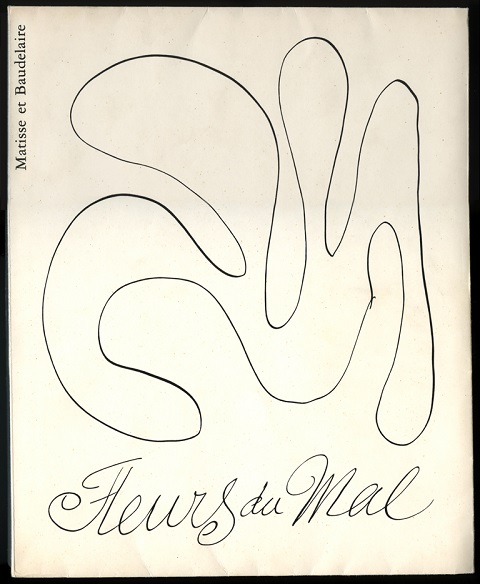
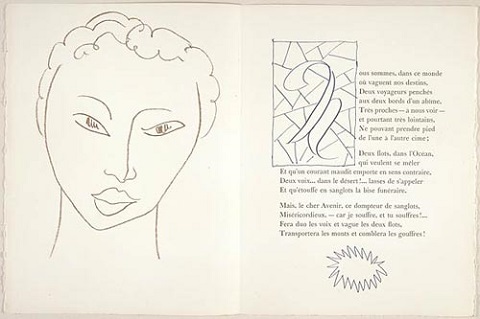
We previously featured Henri Matisse’s illustrations for a 1935 edition of James Joyce’s Ulysses. If the Odyssey-themed etchings he did for that book surprised you, have a look at his illustrations for Charles Baudelaire’s poetry collection Les Fleurs du mal, first published in 1857. According to Henri-Matisse.net, the book (available in French and English in our collection of 600 Free eBooks) had “been illustrated over the years by a variety of major artists, including Emile Bernard, Charles Despiau, Jacob Epstein, Gustave Rodin, Georges Rouault, and Pierre-Yes Trémois. Each interpreted selected poems more or less faithfully. Matisse took a different approach in the 1947 edition published by La Bibliothèque Française.” As you can see from the examples provided here, he went an even more unconventional route this time, accompanying Baudelaire’s poems with nothing but portraiture.
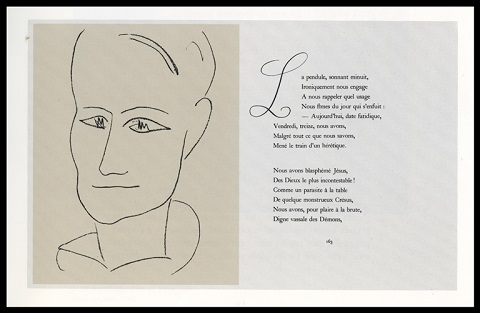
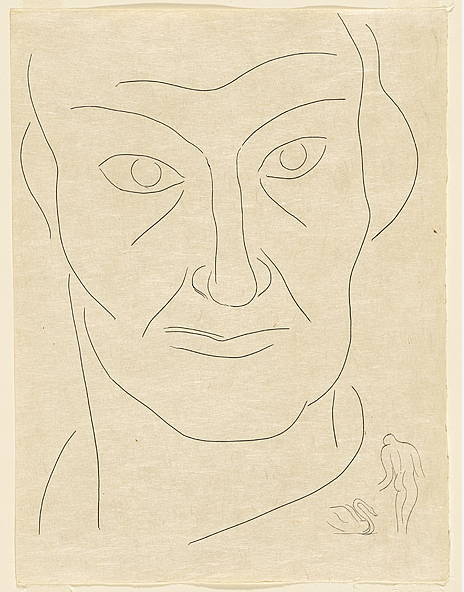
The edition’s 33 portraits, including one of Matisse himself and one of Baudelaire, capture a variety of subjects, mostly women — also a source of inspiration for the poet. However, as the site that bears his name makes clear, “Matisse did not indulge in the biographical fallacies of the literary critics of his day who attempted to understand Baudelaire by associating each poem with the woman who may have inspired it. Thus, his gallery of facial portraits provides an accompaniment rather than an imitative rendition of selected poems.” Would that more illustrators of literature follow his example and make a break from pure literalism, allowing the meaning of the relationship between text and image to cohere in the reader-viewer’s mind. You might say that Matisse pioneered, in other words, the most poetic possible method of illustrating poetry.
Since it is Banned Books Week, it’s perhaps worth noting that Baudelaire’s Les Fleurs du Mal was quickly censored in France. Yale’s Modernism Lab website notes that, two months after its publication in 1857, a French court “banned six of Baudelaire’s erotic poems, two of them on lesbian themes and the other four heterosexual but mildly sado-masochistic. The ban was not officially lifted until 1949, by which time Baudelaire had achieved ‘classic’ status as among the most important influences on modern literature in France and throughout Europe.” A second expurgated (or as Baudelaire called it “mutilated”) edition was published in 1861. Presumably Matisse illustrated that edition in 1947. If you want to buy one of the 300 copies with Matisse’s illustrations, you will have to shell out about $7500.
Related Content:
Henri Matisse Illustrates 1935 Edition of James Joyce’s Ulysses
Hear Gertrude Stein Read Works Inspired by Matisse, Picasso, and T.S. Eliot (1934)
Vintage Film: Watch Henri Matisse Sketch and Make His Famous Cut-Outs (1946)
Colin Marshall hosts and produces Notebook on Cities and Culture and writes essays on cities, language, Asia, and men’s style. He’s at work on a book about Los Angeles, A Los Angeles Primer. Follow him on Twitter at @colinmarshall or on Facebook.
Read More...Cartoonists Draw Their Famous Cartoon Characters While Blindfolded (1947)
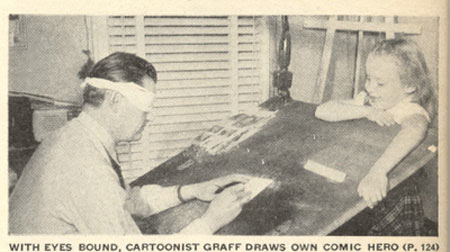
At some point in your life, no doubt, you’ve thought that you have done something so many times that you could do it with your eyes closed — be it change a diaper, make coffee, drive to work or perform a minor surgical procedure. Not that this would necessarily be a good idea (especially that last one) but there’s something about repetition, routine and muscle memory that makes a task so familiar that sight seems superfluous.
In 1947, LIFE Magazine asked some of the most famous cartoonists around to draw their comic strip characters blindfolded. The results are fascinating, looking a bit like the outcome of a clinical test on artists before and after taking illicit substances. (See our previous post: Artist Draws Nine Portraits on LSD During 1950s Research Experiment.)
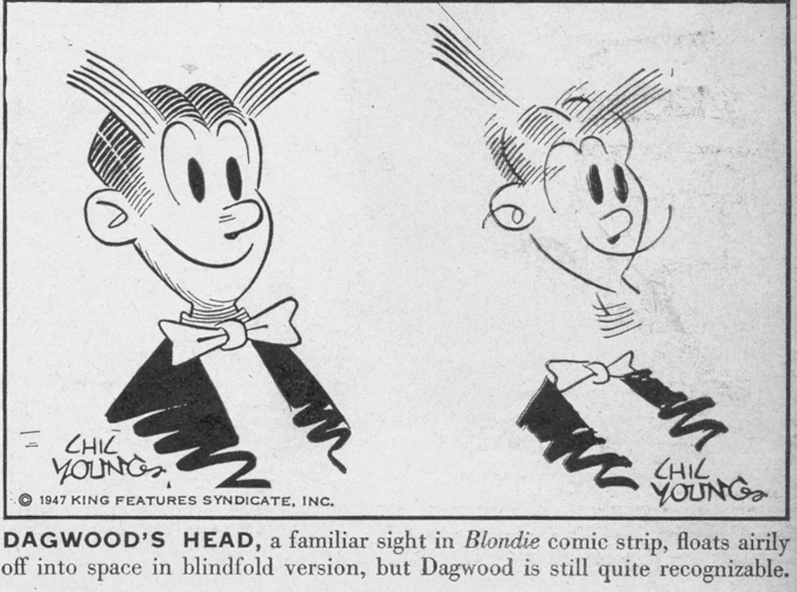
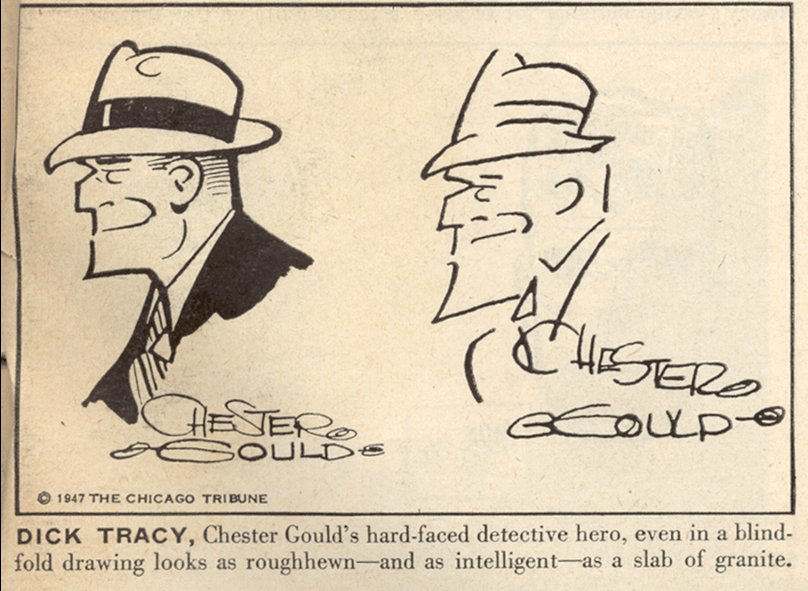
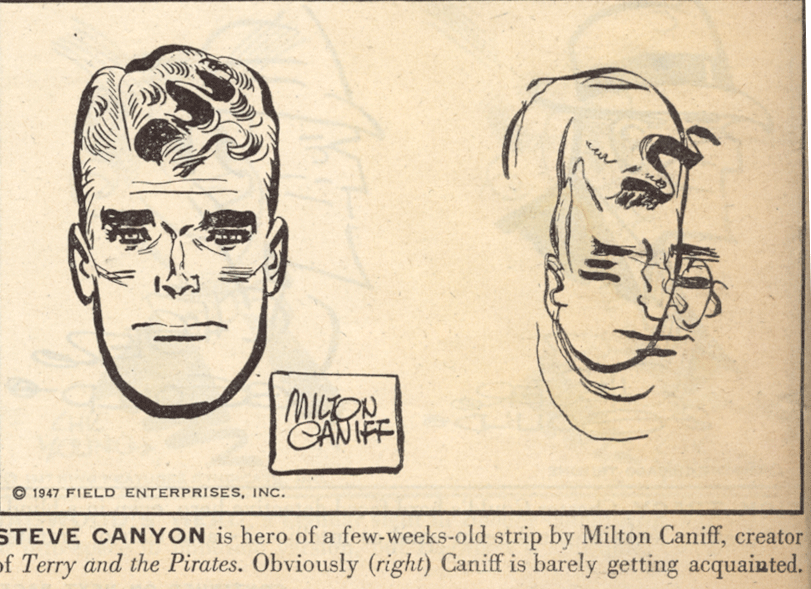
Chic Young’s blindfolded version of Dagwood Bumstead is all dynamic lines and spirals, looking a bit like a doodle from an Italian Futurist. Chester Gould’s blind attempt at Dick Tracy’s chiseled profile looks not all that different from the sighted version. And Milton Caniff’s Steve Canyon has all the elements there — the flinty eyes, the wavy hair – but it’s all jumbled together.
You can see more such drawings here.
via BoingBoing
Related Content:
Gertie the Dinosaur: The Mother of all Cartoon Characters
How Walt Disney Cartoons are Made
Jonathan Crow is a Los Angeles-based writer and filmmaker whose work has appeared in Yahoo!, The Hollywood Reporter, and other publications. You can follow him at @jonccrow. And check out his blog Veeptopus, featuring one new drawing of a vice president with an octopus on his head daily. The Veeptopus store is here.
Read More...
Monty Python and the Holy Grail Censorship Letter: We Want to Retain “Fart in Your General Direction”
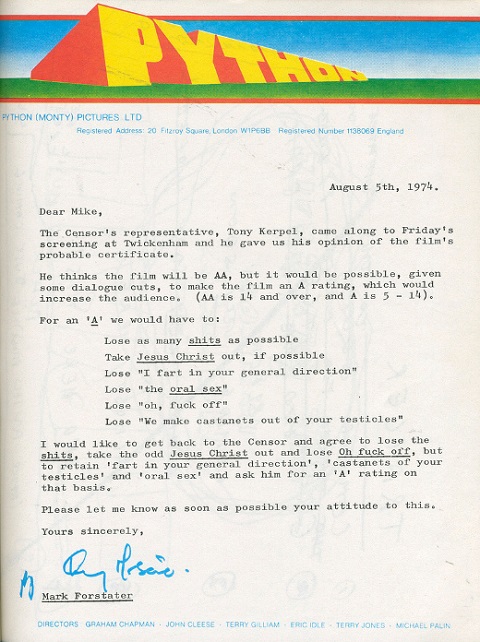
If anyone could make toilet humor funny past the age of 14, it was Monty Python. Mining equally the halls of academia and the grade school yard, there was no register too high or too low for the masterful British satirists. And when it came time for them to release their second film in 1975—Arthurian spoof Monty Python and the Holy Grail—the troop fought in vain to reach an audience of all ages. Unlike today’s many ratings gradations, the British Board of Film Classification (BBFC) then had a very simple classification system: AA for 14 and over, and A for ages 5–14. Hoping to increase the film’s audience, producer Mark Forstater wrote the letter above to fellow producer Michael White a few days after a Twickenham screening attended by BBFC member Tony Kerpel, who suggested a few cuts to bring the film an A rating.
In the letter, Forstater lists Kerpel’s recommendations:
Lose as many shits as possible
Take Jesus Christ out, if possible
Lose “I fart in your general direction”
Lose “the oral sex”
Lose “oh, fuck off”
Lose “We make castanets out of your testicles”
Two of these lines you no doubt recognize as uttered by the obnoxious mocking French guard the Grail questers encounter on their journey. Played by John Cleese, the Frenchman gets some of the best lines in the film, including the offending “fart” and “testicles” bits (at 2:15 and 6:05 in the clip above). Forstater must have had a keen sense of just how funny—therefore how necessary—these lines were. In his suggestions to White, he writes,
I would like to get back to the Censor and agree to lose the shits, take the odd Jesus Christ out and lose Oh fuck off, but to retain ‘fart in your general direction’, ‘castanets of your testicles’ and ‘oral sex’ and ask him for an ‘A’ rating on that basis.
Unfortunately for Britain’s Python-loving kids and for the film’s investors, the AA rating stuck, at least until 2006, when it was re-rated for ages 12 and below in a theatrical re-release. This by contrast to its U.S. status, where the movie first scored a PG rating and was later upgraded to PG-13 (which didn’t exist in 1975) for its Blu-ray release. Monty Python and the Holy Grail has received a variety of mature ratings in various countries and—we should mention, since it’s Banned Books Week—has been entirely banned in Malaysia.
Another comedy team encountered similar difficulties with film ratings. The South Park duo—similarly adept at pitching potty jokes to grown-ups—ended up with an R for the feature length Bigger, Longer & Uncut, though censors originally wanted an NC-17. See the cuts the MPAA recommended for that film in Matt Stone’s legendary response memo to the ratings board and read the full transcript of the Python letter at Letters of Note.
Related Content:
Watch All of Terry Gilliam’s Monty Python Animations in a Row
Classic Monty Python: Oscar Wilde and George Bernard Shaw Engage in a Hilarious Battle of Wits
Josh Jones is a writer and musician based in Durham, NC. Follow him at @jdmagness.
Read More...Steven Soderbergh Creates Silent, Black & White Recut of Raiders of the Lost Ark to Explain the Art of “Staging”
Since officially retiring from filmmaking last year, Steven Soderbergh has filled his time writing Twitter novellas, creating mashups of Alfred Hitchcock and Gus Van Sant Psycho films, and posting a log of all the films, TV shows and books he immersed himself in in 2009.
Now comes his latest side project: On his web site, extension765.com, Soderbergh presents a short lesson in “staging,” a term that refers in cinema “to how all the various elements of a given scene or piece are aligned, arranged, and coordinated.” He tells us: “I operate under the theory a movie should work with the sound off, and under that theory, staging becomes paramount.”
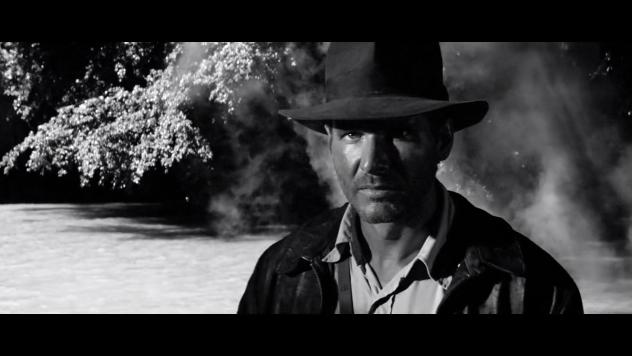
To illustrate his point, he takes the entirety of Steven Spielberg’s 1981 film, The Raiders of the Lost Ark; turns it into a silent, black & white film (watch it here); and then adds this commentary:
So I want you to watch this movie and think only about staging, how the shots are built and laid out, what the rules of movement are, what the cutting patterns are. See if you can reproduce the thought process that resulted in these choices by asking yourself: why was each shot—whether short or long—held for that exact length of time and placed in that order? Sounds like fun, right? It actually is. To me. Oh, and I’ve removed all sound and color from the film, apart from a score designed to aid you in your quest to just study the visual staging aspect. Wait, WHAT? HOW COULD YOU DO THIS? Well, I’m not saying I’m like, ALLOWED to do this, I’m just saying this is what I do when I try to learn about staging, and this filmmaker forgot more about staging by the time he made his first feature than I know to this day (for example, no matter how fast the cuts come, you always know exactly where you are—that’s high level visual math shit).
Ok, that’s probably enough film school for today…
via Metafilter
Related Content:
Alfred Hitchcock’s Seven-Minute Editing Master Class
Werner Herzog’s Rogue Film School: Apply & Learn the Art of Guerilla Filmmaking & Lock-Picking
Spike Lee Shares His NYU Teaching List of 87 Essential Films Every Aspiring Director Should See
Read More...Longform’s New, Free App Lets You Read Great Journalism from Your Favorite Publishers

If you have managed to keep your attention span intact during this distracting information age, then you’re almost certainly familiar with Longform.org, a web site that makes it easy to find something great to read online, especially if you like reading informative, well-crafted works of non-fiction. Last week, Longform enhanced its service with the release of a new, free app for iPhone and iPad. It’s the “only 100% free app that filters out the internet junk and delivers nothing but smart, in-depth reads.” And, drawing on material from 1,000 publishers, the app lets readers “create their own custom feeds of high quality, feature-length journalism,” and then read it all on the go. It’s a mission that certainly aligns with ours, so we’re more than happy to give the new app a plug.
Sign up for our daily email and, once a day, we’ll bundle all of our daily posts and drop them in your inbox, in an easy-to-read format. You don’t have to come to us; we’ll come to you!
Read More...Readers Predict in 1936 Which Novelists Would Still Be Widely Read in the Year 2000
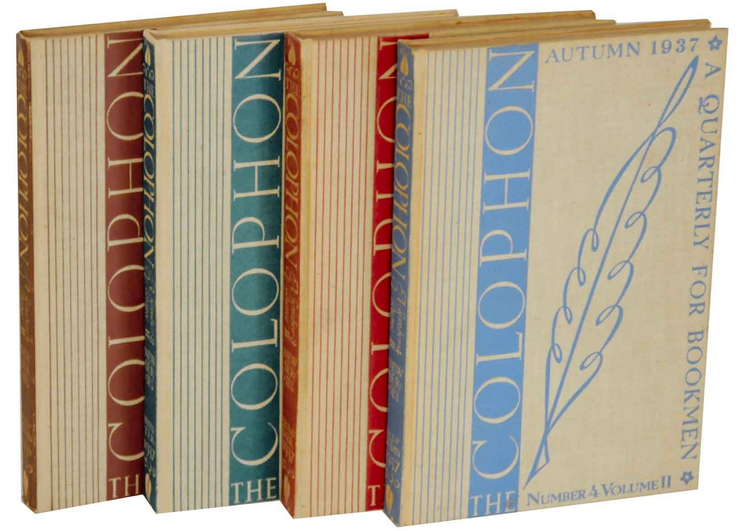
Few know as much about our incompetence at predicting our own future as Matt Novak, author of the site Paleofuture, “a blog that looks into the future that never was.” Not long ago, I interviewed him on my podcast Notebook on Cities and Culture; ever since, I’ve invariably found out that all the smartest dissections of just how little we understand about our future somehow involve him. And not just those — also the smartest dissections of how little we’ve always understood about our future. Take, for example, the year 1936, when, in Novak’s words, “a quarterly magazine for book collectors called The Colophon polled its readers to pick the ten authors whose works would be considered classics in the year 2000.” They named the following:
- Sinclair Lewis
- Willa Cather
- Eugene O’Neill
- Edna St. Vincent Millay
- Robert Frost
- Theodore Dreiser
- James Truslow Adams
- George Santayana
- Stephen Vincent Benét
- James Branch Cabell
At first glance, this list might not look so embarrassing. Nobel laureate Sinclair Lewis remains oft-referenced, if much more so for Babbitt (Kindle + Other Formats – Read Online Now), his 1922 indictment of a business-blinkered America, than for It Can’t Happen Here, his bestselling Hitler satire from the year before the poll. Most Americans passing through high school English still bump into Willa Cather, Robert Frost (four of whose volumes you can find in our collection Free eBooks), and perhaps Eugene O’Neill (likewise) and Theodore Dreiser (especially through Sister Carrie: Kindle + Other Formats – Read Online Now) as well.
Some of us may also remember Stephen Vincent Benét’s epic Civil War poem John Brown’s Body from our school days, but it would take a well-read soul indeed to nod in agreement with such selections as New England historian James Truslow Adams and now little-read (though once Sinclair- and Dreiser-acclaimed) fantasist James Branch Cabell. The well-remembered George Santayana still looks like a judgment call to me, but what of absent famous names like F. Scott Fitzgerald, William Faulkner, Ernest Hemingway, or maybe James Joyce? The Colophon’s editors included Hemingway on their own list, but which writers do you think stand as the Fitzgeralds and Faulkners of today — or, more to the point, of the year 2078? Care to put your guess on record? Feel free to make your predictions in the comments section below.
via @ElectricLit/Smithsonian
Related Content:
The 10 Greatest Books Ever, According to 125 Top Authors (Download Them for Free)
The 25 Best Non-Fiction Books Ever: Readers’ Picks
600 Free eBooks for iPad, Kindle & Other Devices
Colin Marshall hosts and produces Notebook on Cities and Culture and writes essays on cities, language, Asia, and men’s style. He’s at work on a book about Los Angeles, A Los Angeles Primer. Follow him on Twitter at @colinmarshall or on Facebook.
Read More...Winston Churchill’s Paintings: Great Statesman, Surprisingly Good Artist
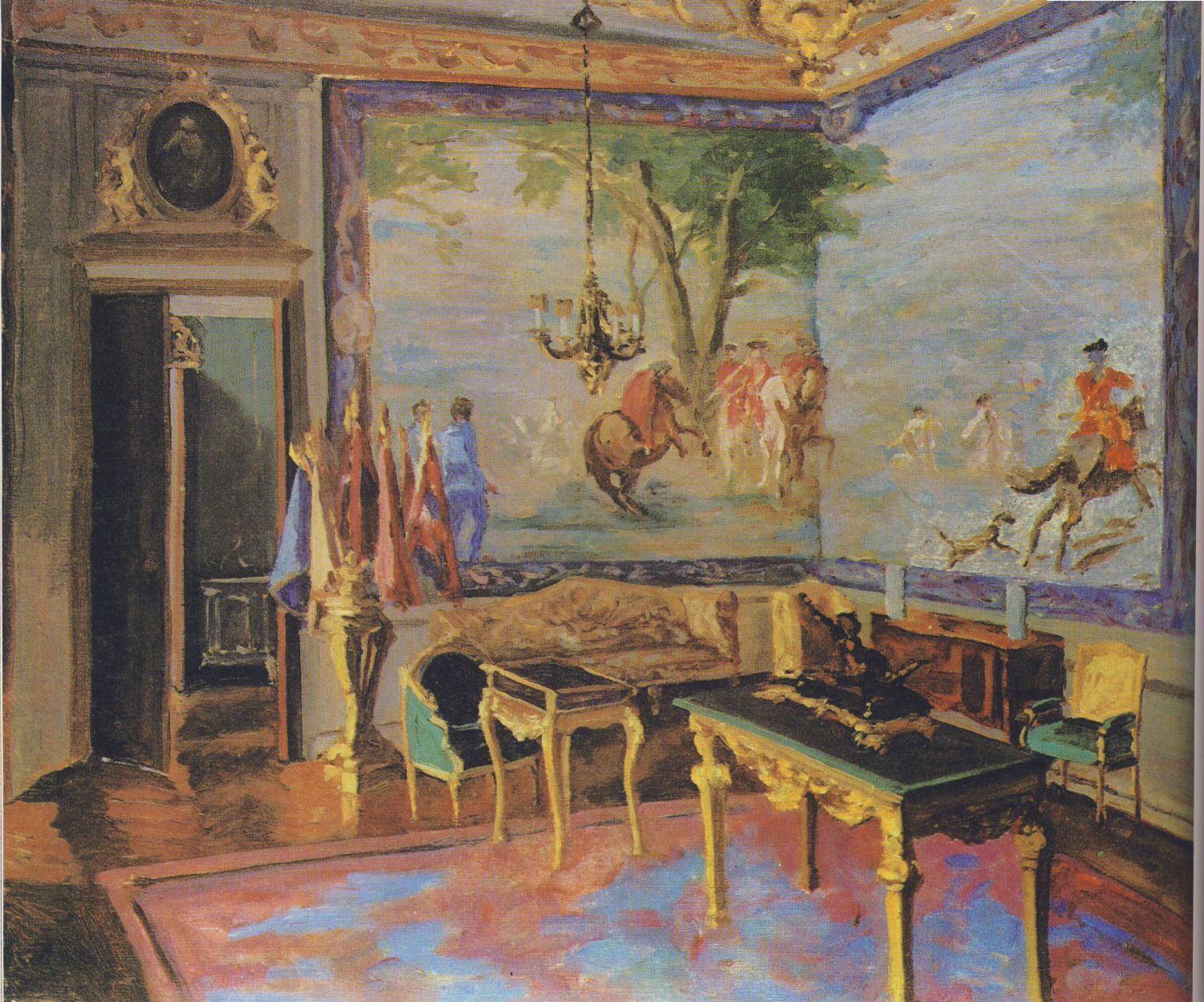
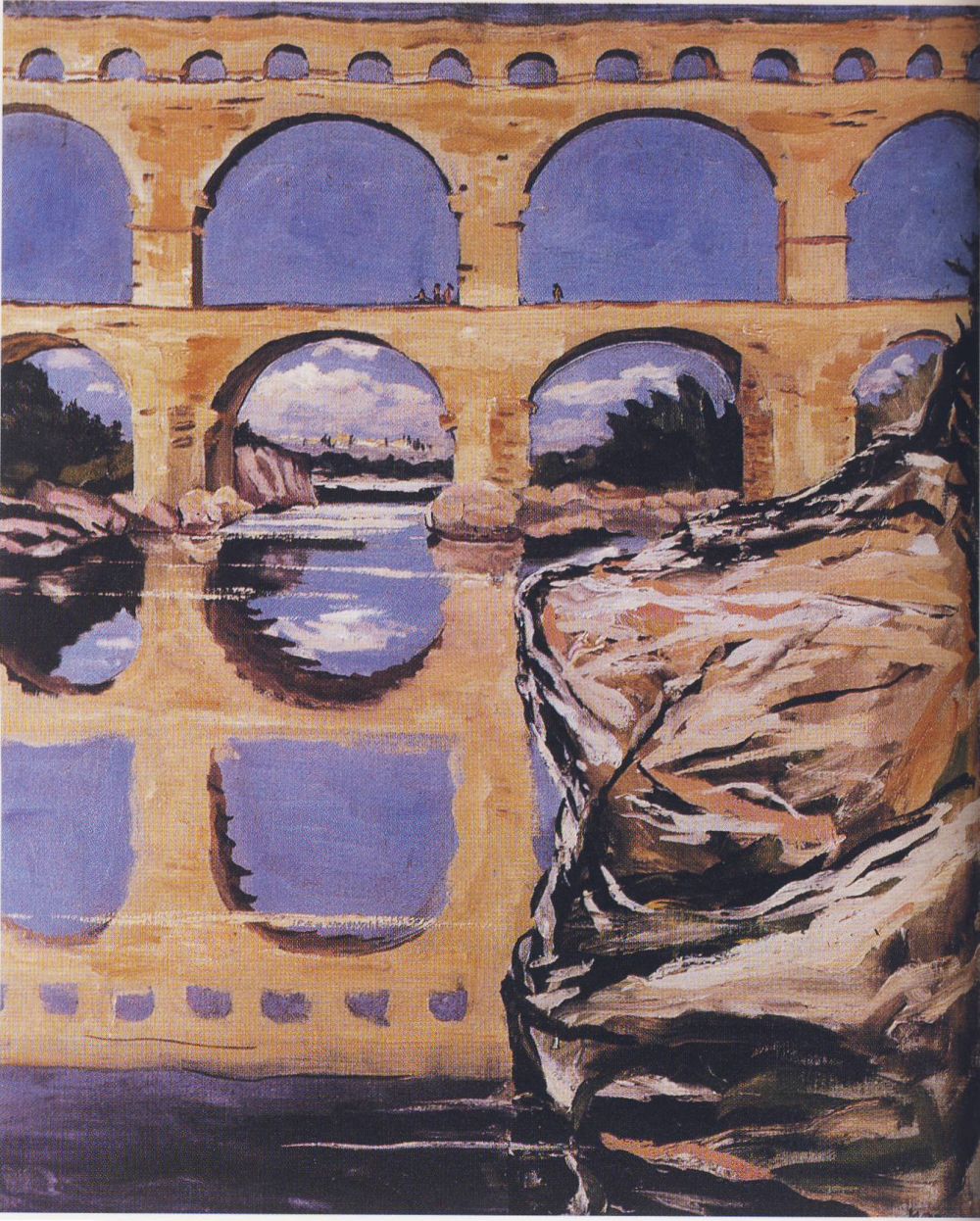
Winston Churchill is one of those colossal figures who readily qualifies for that unfashionable moniker of The Great Man of History. This was a guy who warned of Hitler’s threat long before it seemed polite to do so. Through his political acumen and brilliant oratory skills, the two-time prime minister rallied his demoralized country to face down the massive, seemingly unstoppable German army. Beyond that, he won the 1953 Nobel Prize for Literature, for, among other works, his six volume series on the Second World War. And, on top of all that, Churchill was also a passionate painter. And unlike George W. Bush’s touchingly awkward attempts, Churchill’s paintings were actually pretty good. You can see a few above and below and even more here. (Click on the images to view them in a larger format.)
For Churchill, painting was the best way to mentally step away from what had to be a titanically stressful job. “Painting is complete as a distraction,” he wrote in 1948. “I know of nothing which, without exhausting the body, more entirely absorbs the mind. Whatever the worries of the hour or the threats of the future, once the picture has begun to flow along, there is no room for them in the mental screen.”
Churchill turned to painting at a low point in his life. After an invasion of Gallipoli, which he in part orchestrated, went spectacularly wrong in 1915, he resigned from his government position (First Lord of the Admiralty) in disgrace. “I had great anxiety and no means of relieving it,” he wrote. Then he discovered the joys of putting paint to canvas. Over the next 48 years, he cranked out some 500 paintings, mostly landscapes. Oil was his preferred medium and, judging from his oeuvre, Claude Monet, Vincent Van Gogh and William Turner were big influences. “When I get to heaven I mean to spend a considerable portion of my first million years in painting,” he wrote. “And so get to the bottom of the subject.”
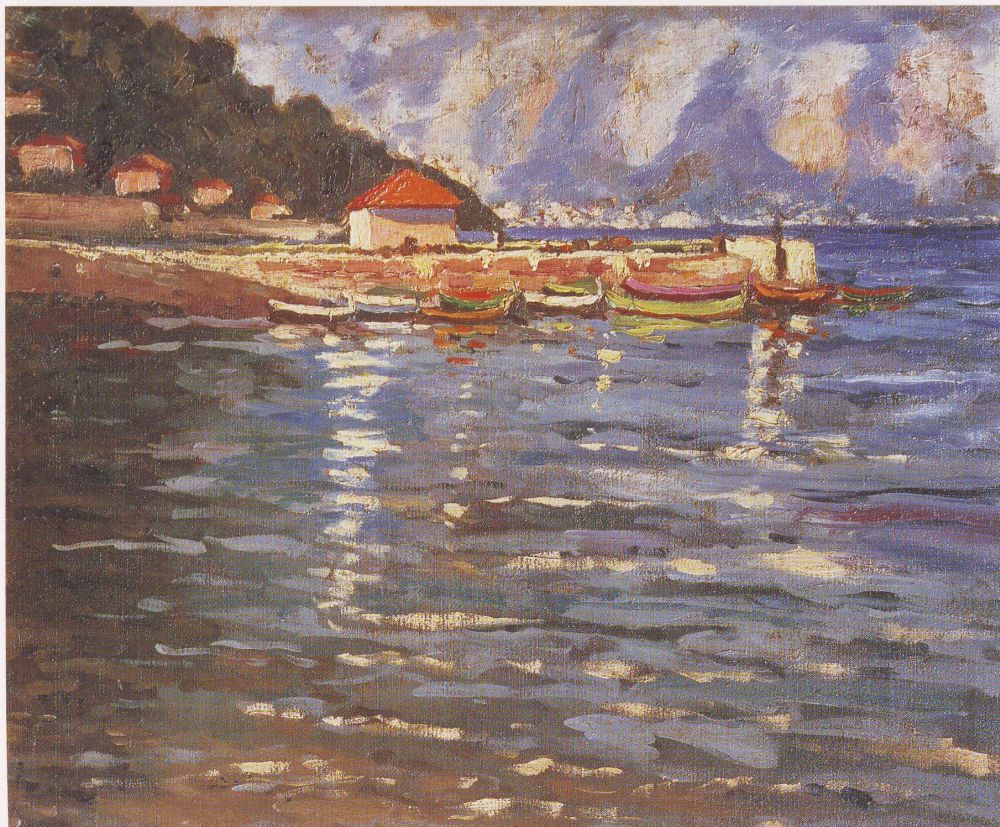
So how good was he? Noted English artist and royal portraitist Sir Oswald Birley was quite impressed by the Prime Minister’s abilities. “If Churchill had given the time to art that he has given to politics, he would have been by all odds the world’s greatest painter.” Of course, Birley was also regularly employed by Churchill, so you might want to take that statement with a grain of salt. David Coombs, who co-authored the book Sir Winston Churchill: His Life and His Paintings, offered a more even-handed assessment. “When he’s very good, he’s very, very good, but sometimes, he’s horrid.”
Top: Marlborough Tapestries at Blenheim
Middle: Pont du Gard
Bottom: The Harbour at St. Jean Cap Ferrat
Related Content:
Color Footage of Winston Churchill’s Funeral in 1965
Jonathan Crow is a Los Angeles-based writer and filmmaker whose work has appeared in Yahoo!, The Hollywood Reporter, and other publications. You can follow him at @jonccrow. And check out his blog Veeptopus, featuring one new drawing of a vice president with an octopus on his head daily. The Veeptopus store is here.
Read More...Hear Allen Ginsberg Teach “Literary History of the Beats”: Audio Lectures from His 1977 & 1981 Naropa Courses
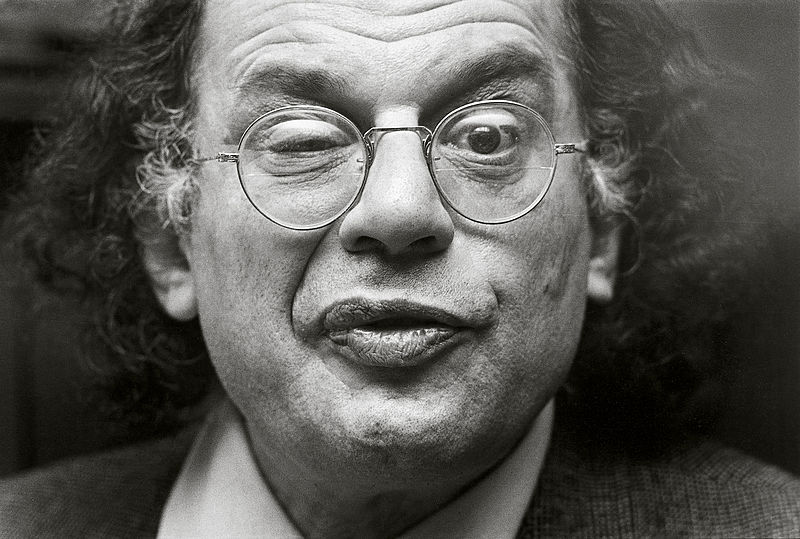
Image by Michiel Hendryckx, via Wikimedia Commons
It’s not often one gets the opportunity to take a course on a major literary movement taught by a founding member of that movement. Imagine sitting in on lectures on Romantic poetry taught by John Keats or William Wordsworth? It may be the case, however, that the Romantic poets would have a hard time of it in the cutthroat world of professionalized academic poetry, a world Allen Ginsberg helped create in 1974 with the founding of his Jack Kerouac School of Disembodied Poetics at Naropa University, almost twenty years after he brought hip modern poetry to the masses with the wildly popular City Lights paperback edition of Howl and Other Poems. (Here you can listen to the first recording of Ginsberg reading that famous poem.)
Dismissed by the modernist old guard as “vacuous self-promoters” in their time, the Beats’ legend often portrays them as paragons of artistic integrity. There’s no reason they couldn’t be both in some sense. The anti-authoritarian pranks and poses gained them notoriety for matters of style, and their dedication to radicalizing American literature provided the substance.
As the Academy of American Poets writes, “there is a clear work ethic that reverberates in their lives and in their writing, and in the eyes of many readers and critics, the Beats fostered a sustained, authentic, and compelling attack on post-World War II American Culture,” rejecting both “the stultifying materialism and conformism of the cold war era” and “the highly wrought and controlled aesthetic of modernist stalwarts.”
Thanks to the archives at Naropa, we can hear Ginsberg himself lecture on both the style and substance of Beat literary culture in a series of lectures he delivered in 1977 for his summer course called “Literary History of the Beats.” We’ve previously featured the extensive “specialized reading list” Ginsberg handed students for that class, which he titled “Celestial Homework.” In the first series of lectures—divided in 18 parts in the archive—hear him discuss the list. The Naropa archive describes the first lecture as diving “right into the 40’s lives of Ginsberg, Kerouac, Burroughs, Herbert Huncke, and others living in NYC at that time. From consuming Benzadrine inhalers to the discovery of the void, Ginsberg’s account and analyses are entertaining and lively as well as insightful.” Hear part one of that talk at the top of the post, and part two just above.
Ginsberg focuses on the 40s as the period of Beat origins in his 1977 class. Another section of the course—taught in 1981—covers the 50s, with topics such as “Burroughs’ recommended reading lists,” “Burroughs on drugs and society,” and “the founding of the study of semantics.” Hear the first lecture in that series just above.
Literary History of the Beats will be added to our collection, 1,700 Free Online Courses from Top Universities.
Image above was taken by Marcelo Noah.
Related Content:
William S. Burroughs Teaches a Free Course on Creative Reading and Writing (1979)
“Expansive Poetics” by Allen Ginsberg: A Free Course from 1981
13 Lectures from Allen Ginsberg’s “History of Poetry” Course (1975)
Download 55 Free Online Literature Courses: From Dante and Milton to Kerouac and Tolkien
Josh Jones is a writer and musician based in Durham, NC. Follow him at @jdmagness.
Read More...Let’s Learn Japanese: Two Classic Video Series to Get You Started in the Language
Say the name “Yan-san” to anyone who’s studied Japanese in the last thirty years, and you’ll probably get a reaction of delighted recognition. It means that, inside or outside the classroom, they studied with Let’s Learn Japanese, a series of educational videos produced by the Japan Foundation. The first “season,” if you like, came out in 1984, the time of an enormous Asian economic bubble that made the world’s future look Japanese, sending the language straight to the top of every international business-minded student’s to-do-list. (Sound familiar, current strugglers with Mandarin?) Its hero, a young man of deliberately ambiguous nationality named Yan — the Japanese all address him with the everyday honorific -san — turns up in Japan for a few years of life in Tokyo and works at an architecture firm, helped along by his host family the Katos, his eagerly team-playing co-workers (one of whom introduces himself, in English, with the phase, “We are friends — okay?”), and a variety of helpful citizens and professionals all across the Land of the Rising Sun.
This may sound like dull stuff — the stuff of run-of-the-mill language-learning videos — but Let’s Learn Japanese raised the bar for this sort of thing, in terms of not just production value and teaching effectiveness but sheer rewatchability. In addition to Yan-san’s life among the Japanese people, Let’s Learn Japanese also offers instructional segments led by Mary Althaus, still a professor at Tokyo’s Tsuda College, and imaginative illustrative skits performed by the indefatigable trio of Mine, Kaihō, and Sugihara. In the more advanced Season 2, released over a decade later in 1995, they’ve become the eerily similar Kodama, Andō, and Koyanagi, and Yan-san has become a graduate student with girlfriend troubles. Having watched all 52 episodes several times through, I can vouch for both its entertainment value and its effectiveness. (It also spurred me to start volunteering at the Japan Foundation, Los Angeles.) So can the foreigners who give a hero’s welcome to star Nick Muhrin (who, last I heard, still lives in Japan) when they run into him. I know I’ve learned enough to buy Yan-san a drink.
You can find more useful Japanese-learning materials to supplement all this in our archive of free language lessons. It includes resources ranging from the Foreign Service Institute’s digitized textbooks and tapes to podcasts like the life abroad-oriented Japanesepod101 [iTunes Free — Feed] and the anime-geared Japancast [iTunes Free — Feed]. 皆さんがんばって!
Related Content:
Learn 48 Languages Online for Free: Spanish, Chinese, English & More
Woody Allen Lives the “Delicious Life” in Early-80s Japanese Commercials
Wim Wenders Visits, Marvels at a Japanese Fake Food Workshop
Colin Marshall hosts and produces Notebook on Cities and Culture and writes essays on cities, language, Asia, and men’s style. He’s at work on a book about Los Angeles, A Los Angeles Primer. Follow him on Twitter at @colinmarshall or on Facebook.
Read More...Butterfly Lands on Flutist’s Face During Flute Competition: The Show Must Go On
Last Monday, Yukie Ota, a Japanese born flutist now living in Chicago, was performing in the first round of the Carl Nielsen International Flute Competition in Denmark, when a butterfly flitted across the stage and landed, rather inconveniently, on the bridge of her nose. Not missing a beat — er, a note — Ota took a quick glance at the critter, and played on, unfazed. On the merits of her performance, Ota made it to the final round of the competition held on Saturday. She eventually lost out to Sébastian Jacot, who apparently played the entire competition with a damaged flute. In other news, you can check out Vladimir Nabokov’s delightful butterfly drawings here.
via NPR H/T Mike S.
Sign up for our daily email and, once a day, we’ll bundle all of our daily posts and drop them in your inbox, in an easy-to-read format. You don’t have to come to us; we’ll come to you!
Read More...Support Us
We're hoping to rely on loyal readers, rather than erratic ads. Please click the Donate button and support Open Culture. You can use Paypal, Venmo, Patreon, even Crypto! We thank you!

About Us

Open Culture scours the web for the best educational media. We find the free courses and audio books you need, the language lessons & educational videos you want, and plenty of enlightenment in between.
Advertise With Us

FREE UPDATES!
GET OUR DAILY EMAIL
Get the best cultural and educational resources on the web curated for you in a daily email. We never spam. Unsubscribe at any time.
FOLLOW ON SOCIAL MEDIA

Open Culture editor Dan Colman scours the web for the best educational media. He finds the free courses and audio books you need, the language lessons & movies you want, and plenty of enlightenment in between.
Advertise With Us


