How Audrey Hepburn Risked Death to Help the Dutch Resistance in World War II
Audrey Hepburn may not have had the most prolific Hollywood career, but a fair few of her characters still feel today like roles she was born to play. Perhaps the same could have been true of the part of Anne Frank, had she not refused to take it up. When Anne’s father Otto Frank inquired about it, one might imagine that Hepburn felt like she didn’t have the right experience to play that young woman, now long regarded as the embodiment of the victims of the Holocaust. In fact, for the actress who would be remembered as Princess Ann and Holly Golightly, it was too close to home: Hepburn could remember all too well her own harrowing wartime experience in the Netherlands, coming to the point of starvation while hiding from the Nazis.
Born in Belgium, the young Hepburn went to boarding school in England in the mid-nineteen-thirties. At the end of that decade, with the outbreak of the war, she went with her mother to live in the Netherlands. A student of ballet, she danced for audiences that included Nazi party members — an unavoidable fact of which much has been made — but she also danced, secretly, for the resistance. As biographer Robert Matzen writes, “Audrey’s celebrity as a ballerina for nearly four years at the Arnhem city theater made her talents valuable to Dr. Visser ’t Hooft,” one of that movement’s leaders, who put on “illegal musical performances at various by-invitation-only locations” meant to earn artists money “after they had been forced out of the Dutch mainstream by the Nazi union of artists, the Kultuurkamer.”
Hepburn herself discusses this period in the interview clip at the top of the post. As time went on, Matzen writes, “Dr. Visser ’t Hooft sent her at one point during this period to take a message, and perhaps food, to one of the downed fliers. Her qualifications were simple: She spoke English fluently whereas other young people within easy reach in the village did not.”
In the autumn of 1944, “she and her family kept a British paratrooper in their basement, the latest act in a series of defiances,” writes Den of Geek’s David Crow. “By the following winter, they too would be living down there, wary to even crawl out of ‘bed’ as the bombs fell on their small Dutch village of Velp.” Eventually, “after what was left of their food was depleted, they ate tulip bulbs. When those were gone, they ate the weeds.”
Endured at such a young age, this ordeal had lasting effects. “The deprivations would haunt Audrey the rest of her days, informing her svelte frame and, Matzen argues, possibly her early death from appendiceal cancer.” No wonder, then, that she remained fairly taciturn about her war even after becoming an internationally famous actress (an alternative to her first dream of dancing). Hence the formidable challenge laid before Matzen in the research that went into what became Dutch Girl: Audrey Hepburn and World War II, which you can hear him discuss in the Storytellers’ Studio video just above. Her story turned out differently from Anne Frank’s — which itself, as Matzen argues, beset her with a kind of “survivor’s guilt” — but now, both of them live on as icons of the twentieth century at its lightest and darkest.
Related content:
Audrey Hepburn’s Moving Screen Test for Roman Holiday (1953)
Color Footage of the Liberation of Paris, Shot by Hollywood Director George Stevens (1944)
Charade, the Best Hitchcock Film Hitchcock Never Made. Stars Cary Grant & Audrey Hepburn
Based in Seoul, Colin Marshall writes and broadcasts on cities, language, and culture. His projects include the Substack newsletter Books on Cities and the book The Stateless City: a Walk through 21st-Century Los Angeles. Follow him on Twitter at @colinmarshall or on Facebook.
Read More...Why You Can Never Tune a Piano
Grab a cup of coffee, put on your thinking cap, and start working through this video from Minute Physics, which explains why guitars, violins and other instruments can be tuned to a tee. But when it comes to pianos, it’s an entirely different story, a mathematical impossibility. Pianos are slightly but necessarily out of tune.
If you would like to support the mission of Open Culture, consider making a donation to our site. It’s hard to rely 100% on ads, and your contributions will help us continue providing the best free cultural and educational materials to learners everywhere. You can contribute through PayPal, Patreon, and Venmo (@openculture). Thanks!
Related Content
The Making of a Steinway Grand Piano, From Start to Finish
Read More...13 Experimental Animations of Osamu Tezuka, “the Godfather of Manga” (1964–1987)
If you enjoy modern Japanese animation, you can no doubt name several masterpieces of the form off the top of your head, whether acclaimed series like Neon Genesis Evangelion and Cowboy Bebop to the work of cinema auteurs like Satoshi Kon and Hayao Miyazaki. What may cross your mind less readily is how much these and other anime productions owe to Astro Boy, or as it was known in Japan, Tetsuwan Atomu (“Mighty Atom”). First conceived on the page by artist Osamu Tezuka, remembered today as “the Godfather of Manga” (i.e., Japanese comics), it became an animated television series in 1962, a production overseen — and fatefully under-budgeted — by Tezuka himself.
“It was a stupidly low number,” Tezuka later wrote in his autobiography of the per-episode figure he quoted to his reluctant sponsors. Yet despite the manifold production stresses it caused, it forced — like any severe limitation — a good deal of creativity.
In time, writes Matt Alt in Pure Invention: How Japan Made the Modern World, “the beloved hallmarks of Japanese animated fare — the striking of theatrical poses, the lingering freeze-frames, the limited ranges of motion — evolved from desperate cost-saving workarounds into factors that distinguish anime from content produced in other lands.”
When they were first publicly screened in November of 1962, the first episodes of Astro Boy were accompanied by a lesser-known Tezuka project: Tales from a Certain Street Corner (ある街角の物語), a 40-minute film crafted with an “anti-Disney” aesthetic. At Nishikata Film Review, Cathy Munroe Hotes describes this as “the first of Tezuka’s jikken animation – or experimental works – which Tezuka made for artistic rather than commercial purposes. Although the animation does employ some unusual techniques such as a POV shot of a plane tree seed flying to the ground, it is not ‘experimental’ in the usual sense of the word.”
The term better suits some of the other works included in the playlist at the top of the post, which collects clips of a variety of Tezuka’s experimental and quasi-experimental animations produced between the mid-nineteen-sixties and the late eighties (many of which can easily be seen in full on Youtube), which collectively exhibit both imaginative power and a sense of humor. “Memory” (めもりい), from 1964, mixes traditional animation with Monty Python-style cutouts to depict the yearnings of a postwar salaryman. The omnibus Pictures at an Exhibition (展覧会の絵), made a couple of years later, satirizes modern society in ten different ways, each scored with a movement of the eponymous Mussorgsky piece.
By the last years of Tezuka’s life, the style of his animation seems to have evolved in several directions at once. “Jumping” (ジャンピング) from 1984, imagines what it would be like to jump ever-more-superhuman heights from a first-person perspective; “Push” (プッシュ), from 1987, uses a more conventionally cartoonish aesthetic to render a post-apocalyptic world dominated by vending machines. That same year, Tezuka — a descendant of famed samurai Hanzō Hattori — also released “Muramasa” (村正), a nuclear-annihilation allegory about a haunted sword. The threat posed to Earth by man was also the major theme of Legend of the Forest (森の伝説), left unfinished by the time of Tezuka’s death in 1989 but later picked up by his son Makoto: just one of the countless animators, Japanese and otherwise, working under the Godfather’s influence today.
Related content:
Watch the First Episode of Osamu Tezuka’s Astro Boy, Of Which Stanley Kubrick Became a Big Fan
Jim Henson Creates an Experimental Animation Explaining How We Get Ideas (1966)
Watch the Oldest Japanese Anime Film, Jun’ichi Kōuchi’s The Dull Sword (1917)
The Origins of Anime: Watch Early Japanese Animations (1917 to 1931)
Watch Fantasmagorie, the World’s First Animated Cartoon (1908)
Based in Seoul, Colin Marshall writes and broadcasts on cities, language, and culture. His projects include the Substack newsletter Books on Cities and the book The Stateless City: a Walk through 21st-Century Los Angeles. Follow him on Twitter at @colinmarshall or on Facebook.
Read More...Death: A Free Online Philosophy Course from Yale Helps You Grapple with the Inescapable
It pays to think intelligently about the inevitable. And this course taught by Yale professor Shelly Kagan does just that, taking a rich, philosophical look at death. Here’s how the course description reads:
There is one thing I can be sure of: I am going to die. But what am I to make of that fact? This course will examine a number of issues that arise once we begin to reflect on our mortality. The possibility that death may not actually be the end is considered. Are we, in some sense, immortal? Would immortality be desirable? Also a clearer notion of what it is to die is examined. What does it mean to say that a person has died? What kind of fact is that? And, finally, different attitudes to death are evaluated. Is death an evil? How? Why? Is suicide morally permissible? Is it rational? How should the knowledge that I am going to die affect the way I live my life?
Major texts used in this course include Plato’s Phaedo, Tolstoy’s The Death of Ivan Ilych, and John Perry’sA Dialogue on Personal Identity and Immortality. Kagan also later published a companion book–simply called Death–which can be purchased online.
You can watch the 26 lectures above. Or find them on YouTube and iTunes in video and audio formats. For more information on this course, including the syllabus, please visit this Yale site.
This course has been added to our list of Free Online Philosophy courses, a subset of our meta collection, 1,700 Free Online Courses from Top Universities.
If you would like to support the mission of Open Culture, consider making a donation to our site. It’s hard to rely 100% on ads, and your contributions will help us continue providing the best free cultural and educational materials to learners everywhere. You can contribute through PayPal, Patreon, and Venmo (@openculture). Thanks!
Related Content:
Aldous Huxley, Dying of Cancer, Left This World Tripping on LSD (1963)
Alan Watts Explains Why Death is an Art, Adventure and Creative Act
Zen Master Alan Watts Discovers the Secrets of Aldous Huxley and His Art of Dying
Free Online Philosophy Courses
Read More...Michio Kaku Demystifies the God Equation: The Key to Understanding Everything
It speaks to the importance of discoveries in physics over the past few generations that even the disinterested layman has heard of the field’s central challenge. In brief, there exist two separate systems: general relativity, which describes the physics of space, time, and gravity, and quantum mechanics which describes the physics of fundamental particles like electrons and photons. Each being applicable only at its own scale, one would seem to be incompatible with the other. What the field needs to bring them together is kind of a “grand unified theory,” a concept that has long since worked its way into popular culture.
In the Big Think video above, physicist Michio Kaku explains this scientific quest for what he calls “the God equation” in about five minutes. Such an equation “should unify the basic concepts of physics.” But general relativity as conceived by Albert Einstein is “based on smooth surfaces,” while quantum mechanics is “based on chopping things up into particles.”
The challenge of bringing the two into concert has attracted “the greatest minds of the entire human race,” but to no definitive avail. At this point, Kaku says, only one conception “has survived every challenge: string theory, which is what I do for a living” — and which has attained a rather high level of public awareness, if not necessarily public understanding.
Kaku breaks it down as follows: “If you can peer into the heart of an electron, you would see that it’s a rubber band: a tiny, tiny vibrating string, very similar to a guitar string. There’s an infinite number of vibrations, and that is why we have subatomic particles,” each variety of which corresponds to a different vibration. “A simple idea that encapsulates the entire universe” — and, crucially, a mathematically consistent one — string theory has attracted astute proponents and detractors alike, the latter objecting to its untestabillity. But one day, technology may well advance sufficiently to falsify it or not, and if not, the door opens to the possibility of time machines, wormholes, parallel universes, “things out of The Twilight Zone.” A physicist can dream, can’t he?
For more on this subject read Michio Kaku’s book The God Equation: The Quest for the Theory of Everything.
Related content:
Michio Kaku Explains the Physics Behind Absolutely Everything
What Is Déjà Vu? Michio Kaku Wonders If It’s Triggered by Parallel Universes
Beautiful Equations: Documentary Explores the Beauty of Einstein & Newton’s Great Equations
Bohemian Gravity: String Theory Explored With an A Cappella Version of Bohemian Rhapsody
Based in Seoul, Colin Marshall writes and broadcasts on cities, language, and culture. His projects include the Substack newsletter Books on Cities and the book The Stateless City: a Walk through 21st-Century Los Angeles. Follow him on Twitter at @colinmarshall or on Facebook.
Read More...The Big Map of Who Lived When Shows Which Cultural Figures Walked the Earth at the Same Time: From 1200 to Present
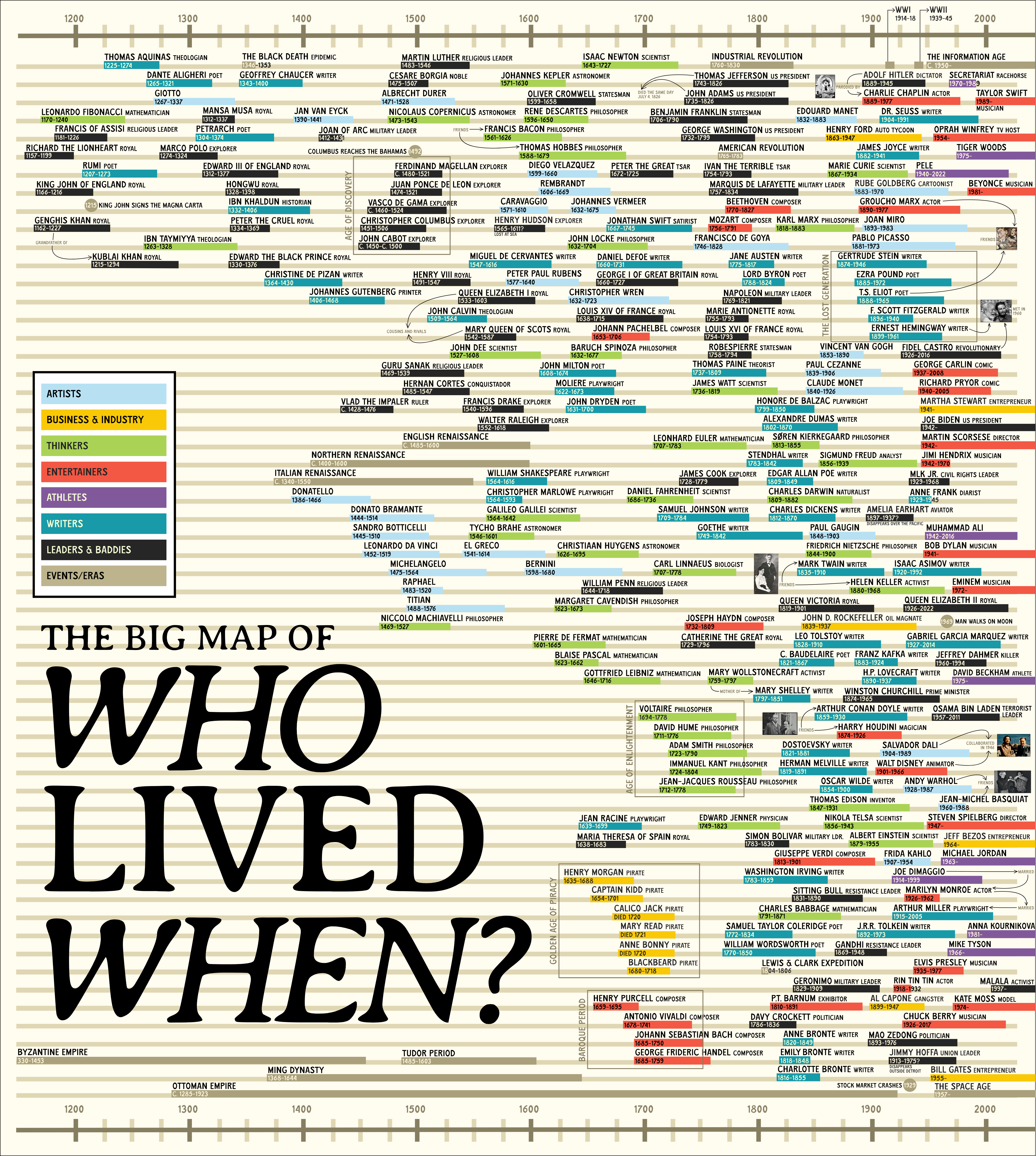
We could call the time in which we live the “Information Age.” Or we could describe it more vividly as the era of Bill Gates and Jeff Bezos, Martin Scorsese and Steven Spielberg, Oprah Winfrey and Martha Stewart, Beyoncé and Bob Dylan. Whatever you think of the work of any of these figures in particular, you can hardly deny the impact they’ve had on our culture. Were we living a century ago, we might have said the same of Henry Ford and John D. Rockefeller, James Joyce and F. Scott Fitzgerald (though he hadn’t quite published The Great Gatsby yet), Pablo Picasso and Charlie Chaplin, Marie Curie and Sigmund Freud.
Were we living in the year 1225, our lives would’ve overlapped with those of Leonardo Fibonacci, Francis of Assisi, Rumi, and Thomas Aquinas, as well as both Genghis Khan and his grandson Kublai Khan.
All this is laid out visually in The Big Map of Who Lived When, created earlier this year by a Reddit user called Profound_Whatever. As Big Think’s Frank Jacobs writes, the map reveals surprising instances of contemporaneousness, such as that current U.S. President Joe Biden “for about a year was alive at the same time as Nikola Tesla (1854–1943), the Serbian-American inventor who developed the alternating current (AC) system that is used for distributing electricity.”
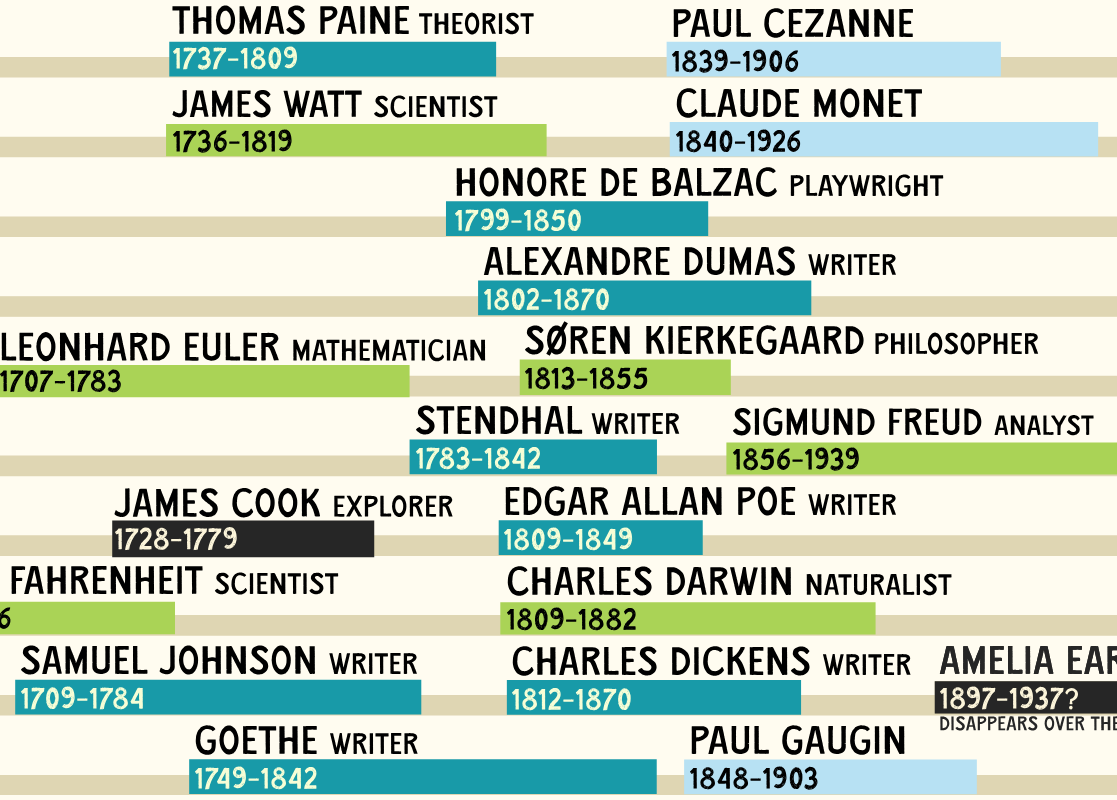
For “another, more recent (and more baffling) overlap: The life of J.R.R. Tolkien (1892–1973), who wrote The Lord of the Rings, coincided ever so slightly with that of Eminem.” Going farther into the past, how many of us were fully aware that “Christopher Columbus (1451–1506), Leonardo da Vinci (1452–1519), and Martin Luther (1483–1546) were contemporaries of each other”? Or that “the lives of Oliver Cromwell (1599–1658) and René Descartes (1596–1650) synced almost perfectly with each other, despite the one being the dogmatically Puritan figurehead of the English Civil War, and the other the father of modern, rationalist philosophy by giving doubt to a central role in the pursuit of truth”?
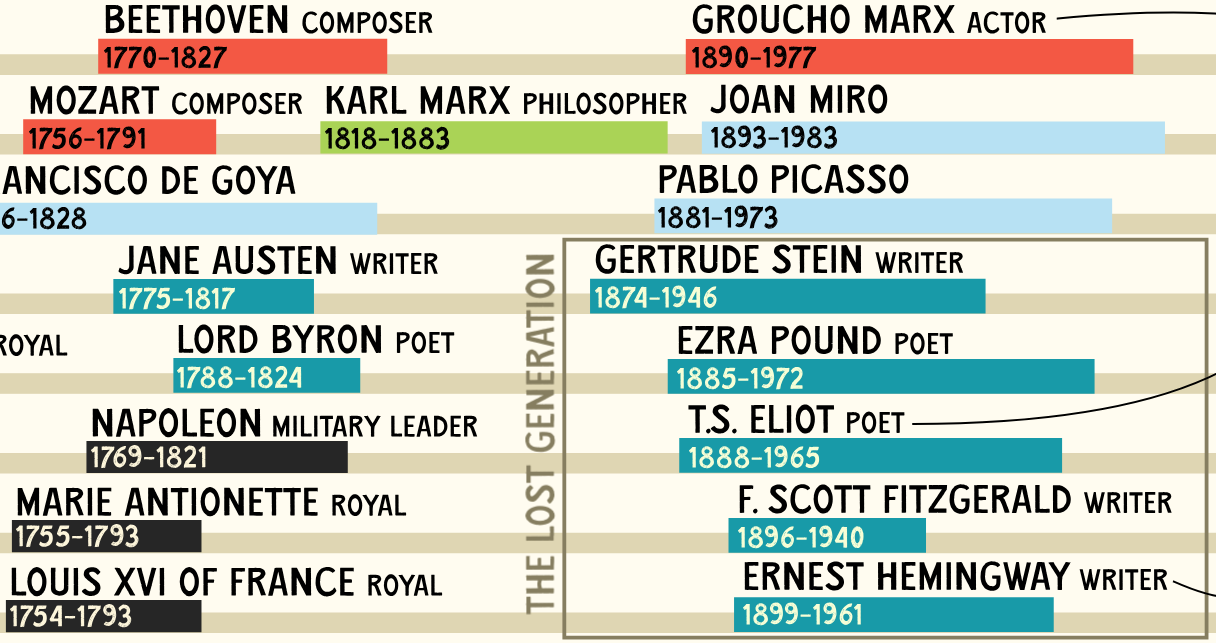
The Big Map of Who Lived When uses a color-coding system to divide the figures whose lifespans it charts into eight categories, including artists (Leonardo da Vinci, Rube Goldberg), thinkers (John Locke, Charles Darwin), “business & industry” (including famed pirates from Henry Morgan to Blackbeard), and “leaders & baddies” (Napoleon, Adolf Hitler). It all reminds us that we’d give anything for a chance to meet some of them, or to stay out of the path of others. Of course, the individuals we think of as having defined a particular historical era weren’t always regarded that way by everyone else who lived at the same time: something it wouldn’t hurt to bear in mind when considering our own place in history.
Related content:
5‑Minute Animation Maps 2,600 Years of Western Cultural History
4000 Years of History Displayed in a 5‑Foot-Long “Histomap” (Early Infographic) From 1931
180,000 Years of Religion Charted on a “Histomap” in 1943
10 Million Years of Evolution Visualized in an Elegant, 5‑Foot Long Infographic from 1931
The History of the World in One Video: Every Year from 200,000 BCE to Today
Based in Seoul, Colin Marshall writes and broadcasts on cities, language, and culture. His projects include the Substack newsletter Books on Cities and the book The Stateless City: a Walk through 21st-Century Los Angeles. Follow him on Twitter at @colinmarshall or on Facebook.
Read More...How 2001: A Space Odyssey Became “the Hardest Film Kubrick Ever Made”
Stanley Kubrick’s 2001: A Space Odyssey has been praised in all manner of terms since it came out more than half a century ago. An early advertising campaign, tapping into the enthusiasm of the contemporary counterculture, called it “the ultimate trip”; in the equivalently trendy parlance of the twenty-twenties, one could say that it “goes hard,” in that it takes no few bold, even unprecedented aesthetic and dramatic turns. The new video essay from Just One More Thing even describes 2001 as “the hardest film Kubrick ever made” — which, given Kubrick’s uncompromising ambitions as a filmmaker, is certainly saying something.
In one of the many interview clips that constitute the video’s 23 minutes, Steven Spielberg recalls his conversations with Kubrick in the last years of the master’s life. “I want to make a movie that changes the form,” Kubrick would often say to Spielberg. Arguably, he’d already done so with 2001, which continues to launch its first-time viewers into an experience unlike any they’ve had with a movie before. Unlike the more substance-inclined members of his generation, Spielberg went into the theater “clean as a whistle,” but “came out of there altered” nevertheless. It didn’t require drugs to appreciate after all; “that film was the drug.”
This isn’t to say that 2001 is purely or even primarily an abstract work of cinema. In collaboration with Arthur C. Clarke, Kubrick put a great deal of technical thought into the film’s vision of the future, with its well-appointed space stations, its artificially intelligent computers, its video calls, and its tablet-like mobile devices. Working in the years before the moon landing, says Stanley Kubrick: The Complete Films author Paul Duncan, they “had to completely visualize, and make real, things that had never occurred.” Such was the realism of their speculative work (up to and including imagining how Earth would look from space) that, as Roger Ebert notes, the real Apollo 11 astronauts could describe their experience simply: “It was like 2001.”
Conceived in the heat of the Space Race, the film envisions a great deal that didn’t come to pass by the eponymous year — and indeed, has yet to materialize still today. “We haven’t quite gotten to artificial intelligence as portrayed,” says star Keir Dullea in a 50th-anniversary interview. “Almost, but not quite.” Still, even since then, the technology has come far enough along that few of us can ponder the current state of AI without sooner or later hearing the ominously polite voice of HAL somewhere in the back of our minds. The saga of astronauts currently stranded on the International Space Station does contrast harshly with 2001’s visions of stable and well-functioning life in outer space — but as a story, it might well have appealed to Kubrick in his Dr. Strangelove mode.
Related content:
1966 Film Explores the Making of Kubrick’s 2001: A Space Odyssey (and Our High-Tech Future)
How Stanley Kubrick Made 2001: A Space Odyssey: A Seven-Part Video Essay
Discover the Life & Work of Stanley Kubrick in a Sweeping Three-Hour Video Essay
How Stanley Kubrick Became Stanley Kubrick: A Short Documentary Narrated by the Filmmaker
Did Stanley Kubrick Invent the iPad in 2001: A Space Odyssey?
Based in Seoul, Colin Marshall writes and broadcasts on cities, language, and culture. His projects include the Substack newsletter Books on Cities and the book The Stateless City: a Walk through 21st-Century Los Angeles. Follow him on Twitter at @colinmarshall or on Facebook.
Read More...Bringing Tsarist Russia to Life: Vivid Color Images from 1905–1915
History escapes us. Events that changed the world forever, or should have, slide out of collective memory. If we’re pointing fingers, we might point at educational systems that fail to educate, or at huge historical blind spots in mass media. Maybe another reason the recent past fades like old photographs may have to do with old photographs.

The present leaps out at us from our ubiquitous screens in vivid, high-resolution color. We are riveted to the spectacles of the moment. Perhaps if we could see history in color—or at least the small but significant sliver of it that has been photographed—we might have somewhat better historical memories. It’s only speculation, who knows? But looking at the images here makes me think so.
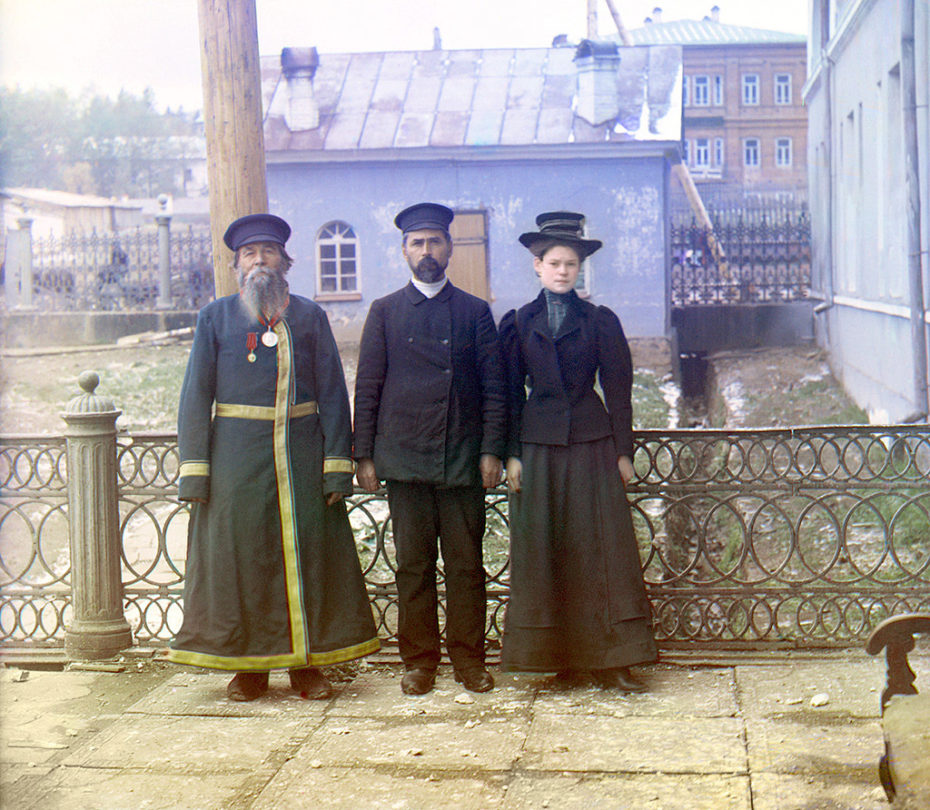
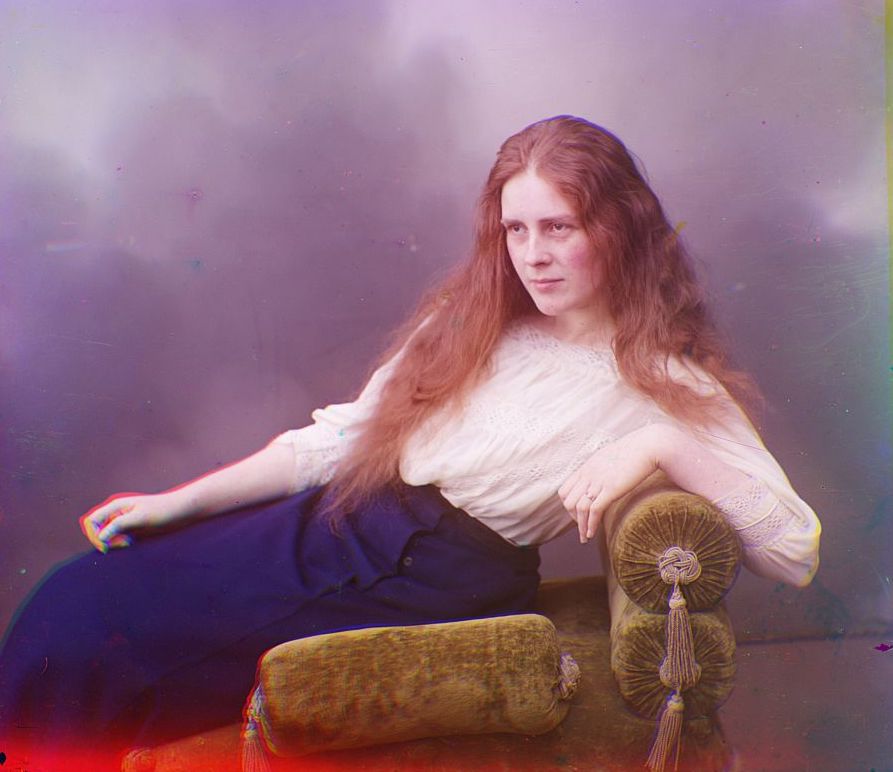
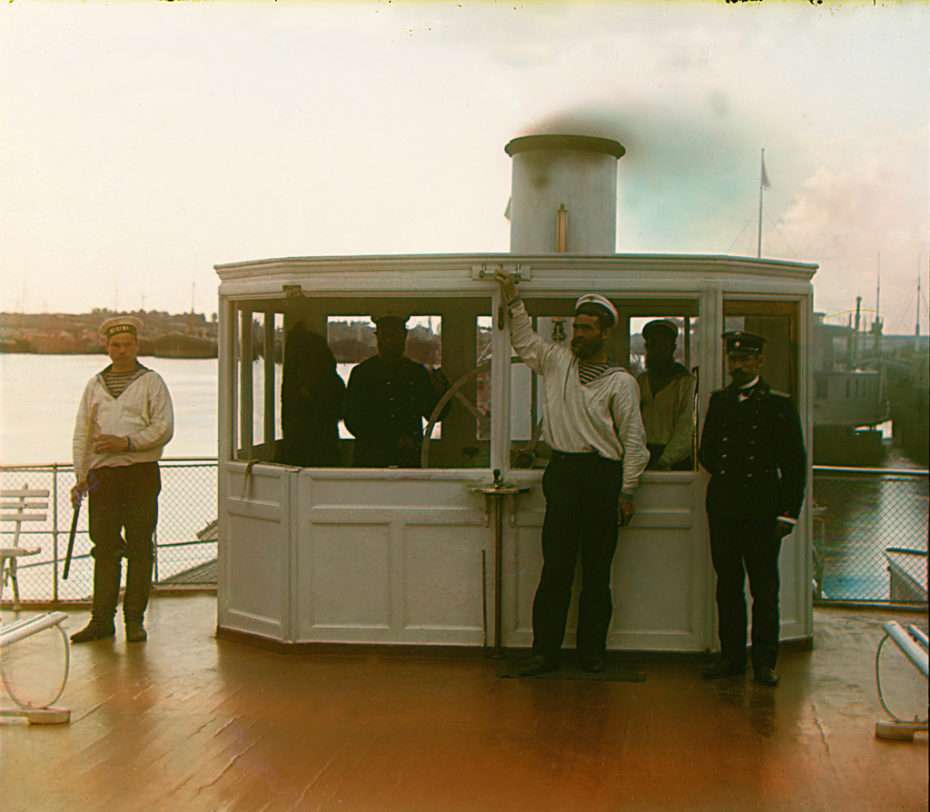
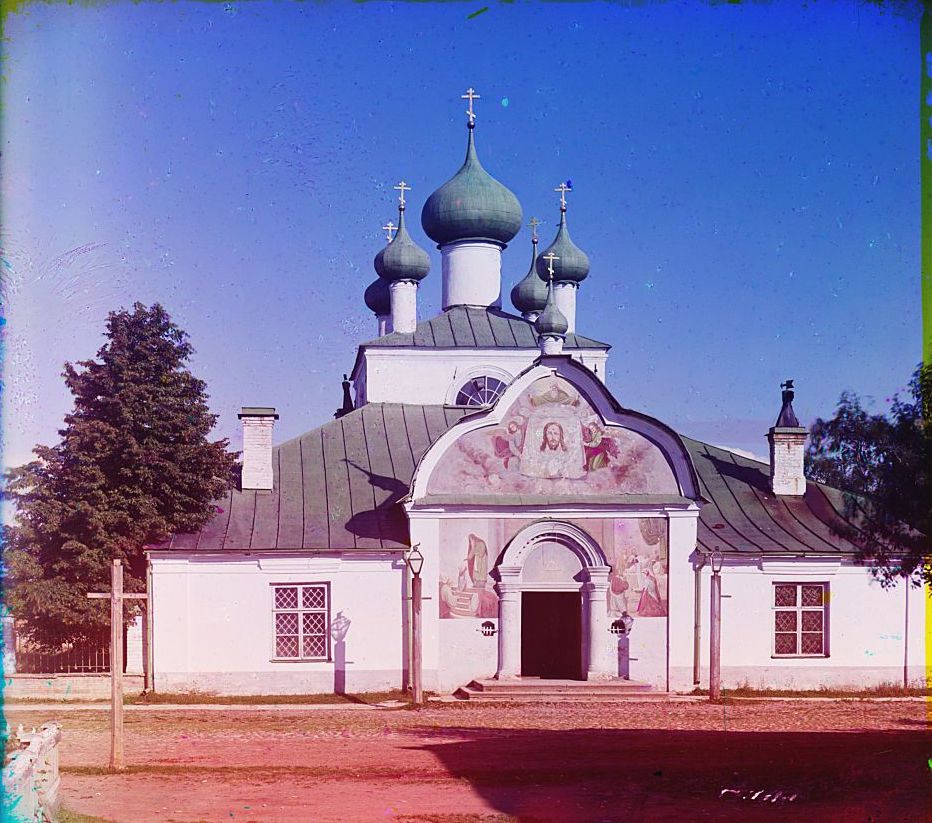
Although we can date color photography back as early as 1861, when physicist James Clerk Maxwell made an experimental print with color filters, the process didn’t really come into its own until the turn of the century. (It wouldn’t be until much later in the 20th century that mass-producing color photographs became feasible.) One early master of the art, Russian chemist and photographer Sergei Mikhailovich Prokudin-Gorskii, used Maxwell’s filter process and other methods to create the images you see here, dating from between 1905 and 1915.

You can see hundreds more such images—over 2000, in fact—at the Library of Congress’ collection, digitally recreated from color glass negatives for your browsing and downloading pleasure or historical research. “I don’t think I’ve ever looked at a photograph from the past and felt its subjects come alive so vividly,” writes Messy Nessy, “as if they’ve almost blinked at me, as if it were just yesterday.”
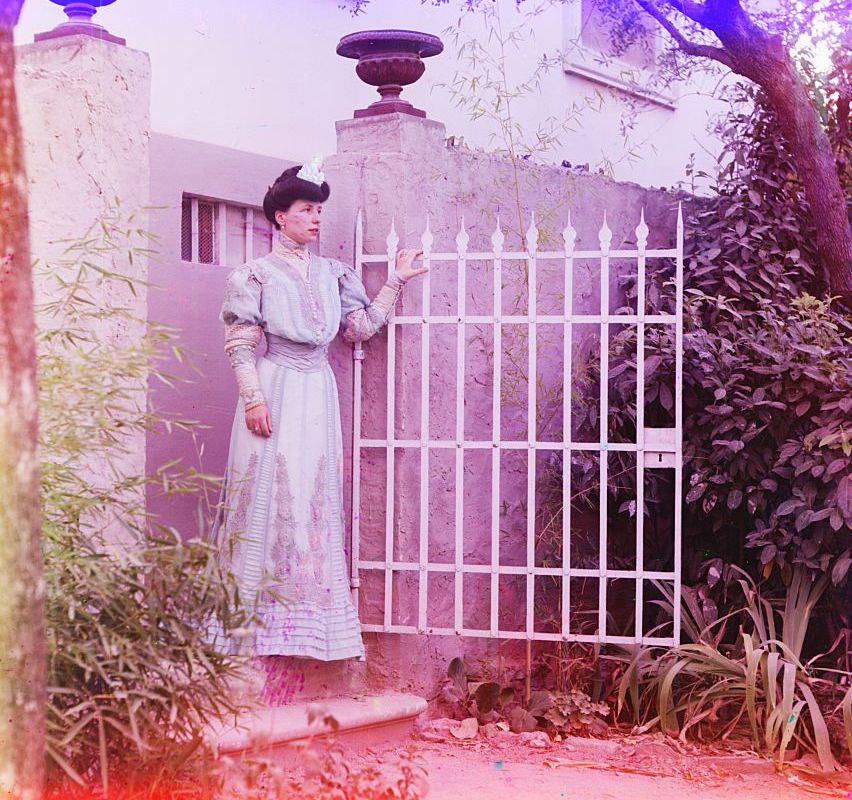
Clearly the clothing, architecture, and other markers of the past give away the age of these pictures, as does their faded quality. But imagine this latter evidence of time passed as an Instragram filter and you might feel like you could have been there, on the farms, churches, waterways, gardens, forests, city streets, and drawing rooms of Imperial Russia during the doomed last years of the Romanovs.

Several hundred of the photos in the archive aren’t in color. Prokudin-Gorskii, notes the LoC, “undertook most of his ambitious color documentary project from 1909 to 1915.” Even while traveling around photographing the countryside, he made just as many monochrome images. Because of our cultural conditioning and the way we see the world now we are bound to interpret black-and-white and sepia-toned prints as more distant and estranged.
Prokudin-Gorskii took his most famous photo, a color image of Leo Tolstoy which we’ve featured here before, in 1908. It granted him an audience with the Tsar, who afterward gave him “a specially equipped railroad-car darkroom,” Messy Nessy notes, and “two permits that granted him access to restricted areas.” After the Revolution, he fled to Paris, where he died in 1944, just one month after the city’s liberation.
His surviving photos, plates, and negatives had been stored in the basement of his Parisian apartment building until a Library of Congress researcher found and purchased them in 1948. His work in color, a novelty at the time, now strikes us in its ordinariness; an aid “for anyone who has ever found it difficult to connect with historical photographs.” Still, we might wonder, “what will they think of our photographs in a hundred years’ time?”

I suspect a hundred years from now, or maybe even 20 or 30, people will marvel at our quaint, primitive two-dimensional vision, while strolling around in virtual 3D recreations, maybe chatting casually with holographic, AI-endowed historical people. Maybe that technology will make it harder for the future to forget us, or maybe it will make it easier to misremember.
Enter the Library of Congress Prokudin-Gorskii archive here.
Related Content:
Watch Scenes from Czarist Moscow Vividly Restored with Artificial Intelligence (May 1896)
Josh Jones is a writer and musician based in Durham, NC. Follow him at @jdmagness
Read More...Every Frame a Painting Returns to YouTube & Explores Why the Sustained Two-Shot Vanished from Movies
Video essayists don’t normally retire; in most cases, they just drift into inactivity. Hence the surprise and even dismay of the internet’s cinephiles when Tony Zhou and Taylor Ramos declared the end of their respected channel Every Frame a Painting in 2016. We here at Open Culture had featured their analyses of everything from the work of auteurs like Martin Scorsese, Jackie Chan, and Michael Bay to how classical art inspired celebrated shots to the thoughts and feelings of editors to the use of Vancouver in film. Now, nearly eight years after their last such video essay, Zhou and Ramos have returned to YouTube.
The new Every Frame a Painting video explains the technique of the sustained two-shot, and, as IndieWire’s Sarah Shachat writes, “charts — in under six minutes — the technological and industrial trends that have put it more or less in favor with filmmakers and its utility in contemporary filmmaking as a showcase for two actors’ chemistry. This is standard. Zhou, who narrates the series, still can’t avoid feeling like an unseen character within the essay and also the film school TA we all wish we had.” What’s more, it incorporates footage from Zhou and Ramos’ own short film “The Second” to more directly approach the filmmaking challenge of “needing to change coverage plans for an outdoor scene when you’re losing the light.”
As implied by its name, a two-shot contains two actors, and a sustained two-shot continues unbroken for the length of a dialogue between them. We don’t see so many of them in recent pictures, Zhou explains, because they were created in a time when “film was expensive, so it encouraged filmmakers to rehearse more and conserve their takes.” Now, “digital is cheaper, so people don’t really pick one angle and shoot it; they cover a scene from as many angles as possible,” reconstructing it out of bits and pieces in the editing room. Acting styles have also changed since the old-Hollywood days, with all their “gesturing and moving around” that increased the two-shot’s visual interest.
Yet today’s filmmakers ignore the power of this disused form at their peril: “The sustained two-shot is the composition that best allows two performers to play off each other, and try as you might, you cannot replicate this feeling with editing.” And indeed, it’s only one of the effective elements of twentieth-century film that have only become more difficult to replicate amid the practically endless array of options afforded by digital tools and media. One hopes that Zhou and Ramos will cover a variety of them in Every Frame a Painting’s limited-run comeback — and even more so, that they’ll put them to good use in their own narrative filmmaking careers.
Related content:
The Most Beautiful Shots in Cinema History: Scenes from 100+ Films
Based in Seoul, Colin Marshall writes and broadcasts on cities, language, and culture. His projects include the Substack newsletter Books on Cities and the book The Stateless City: a Walk through 21st-Century Los Angeles. Follow him on Twitter at @colinmarshall or on Facebook.
Read More...A Digital Archive Features Hundreds of Audio Cassette Tape Designs, from the 1960s to the 1990s
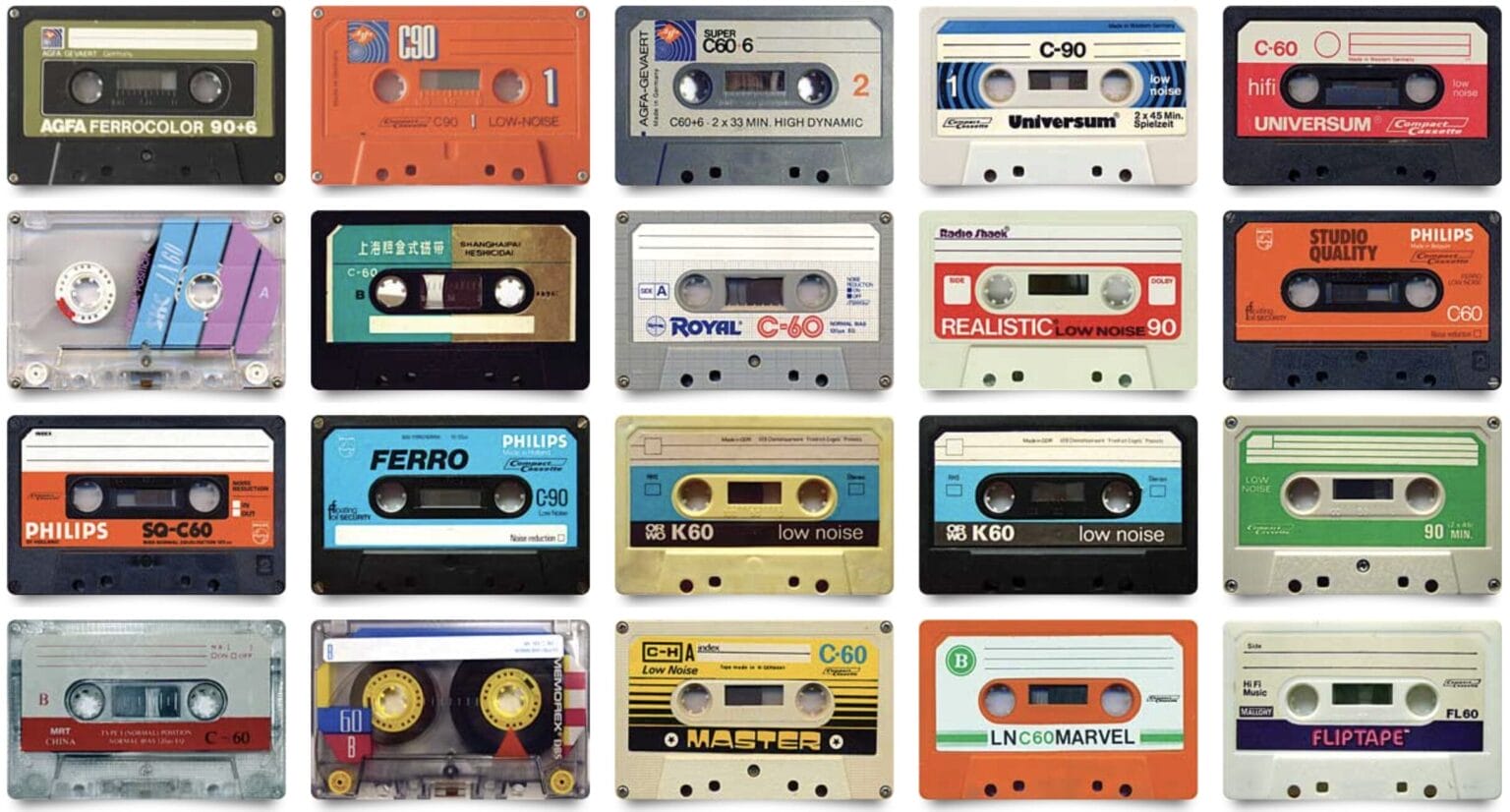
Audio cassette tapes first appeared on the market in the early nineteen-sixties, but it would take about a decade before they came to dominate it. And when they did, they’d changed the lives of many a music-lover by having made it possible not just to listen to their albums of choice on the go, but also to collect and trade their own custom-assembled listening experiences. By the eighties, blank tapes had become a household necessity on the order of batteries or toilet paper for such consumers — and just as with those frequently replenished products, everyone seemed to have their favorite brand.
Some preferred tapes from Philips, which developed the format of the Compact Cassette in the first place. Others had their pick from Fuji, BASF, Sony, Radio Shack, Scotch (which also made tape of the sticky variety), and a host of other brands besides.
Even some members of post-cassette generations recognize the old tagline “Is it live or is it Memorex?” or Maxell’s “Blown Away Guy” in his scarf and LC2. If you’re old enough to have done taping of your own, you don’t need a logo to recognize your brand; you’ll know it as soon as you spot the design of the cassette itself in the online archive at tapedeck.org.
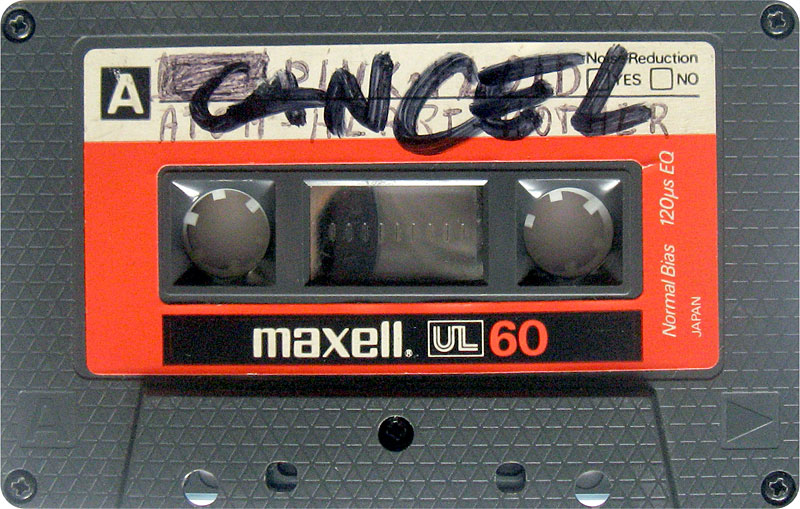
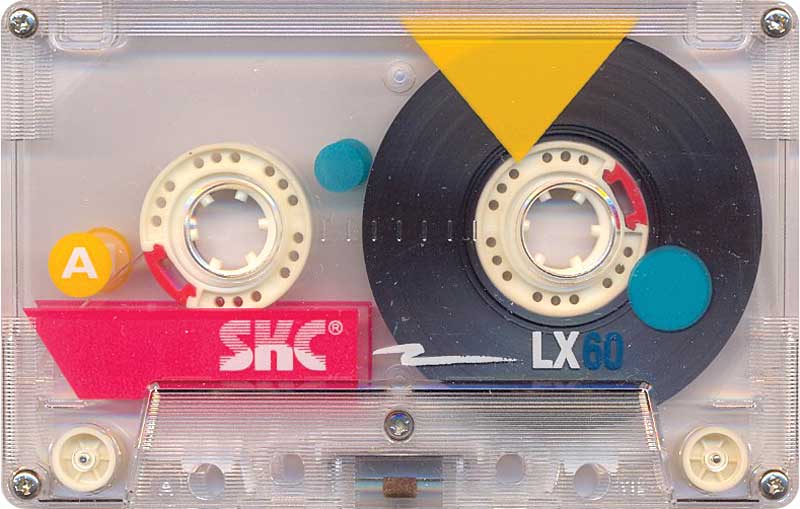
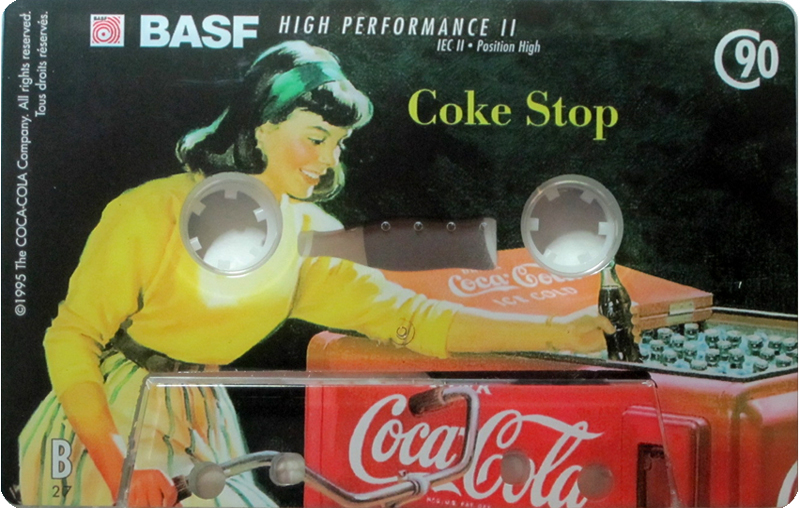
“I built tapedeck.org to showcase the amazing beauty and (sometimes) weirdness found in the designs of the common audio tape cassette,” writes the site’s creator Oliver Gelbrich. “There’s an amazing range of designs, starting from the early 60’s functional cassette designs, moving through the colorful playfulness of the 70’s audio tapes to amazing shape variations during the 80s and 90s.” You can browse the ever-expanding collection by brand, running time, color, and even tape coating: chrome, ferro, ferrochrome, and metal, by whose differences audiophiles set great store.
Somewhat improbably, in this age where even home CD-burning has been displaced by near-instantaneous streaming and downloading of digital music, the cassette tape has made something of a comeback. The near-mythological allure of the mixtape has only grown in recent years, during which artists both minor and major have put out cassette releases — and in some cases, cassette-only releases. This seems to be happening around the world: a few weeks ago, while strolling an art-school neighborhood in Seoul, where I live, I passed a coffee shop that offered its young customers rentals of both tapes and Walkman-style players on which to listen to them. As another generation-transcending slogan has it, everything old is new again.
via Colossal
Related content:
Based in Seoul, Colin Marshall writes and broadcasts on cities, language, and culture. His projects include the Substack newsletter Books on Cities and the book The Stateless City: a Walk through 21st-Century Los Angeles. Follow him on Twitter at @colinmarshall or on Facebook.
Read More...Support Us
We're hoping to rely on loyal readers, rather than erratic ads. Please click the Donate button and support Open Culture. You can use Paypal, Venmo, Patreon, even Crypto! We thank you!

About Us

Open Culture scours the web for the best educational media. We find the free courses and audio books you need, the language lessons & educational videos you want, and plenty of enlightenment in between.
Advertise With Us

FREE UPDATES!
GET OUR DAILY EMAIL
Get the best cultural and educational resources on the web curated for you in a daily email. We never spam. Unsubscribe at any time.
FOLLOW ON SOCIAL MEDIA

Open Culture editor Dan Colman scours the web for the best educational media. He finds the free courses and audio books you need, the language lessons & movies you want, and plenty of enlightenment in between.
Advertise With Us


