Behold the First American Board Game, Travellers’ Tour Through the United States (1822)
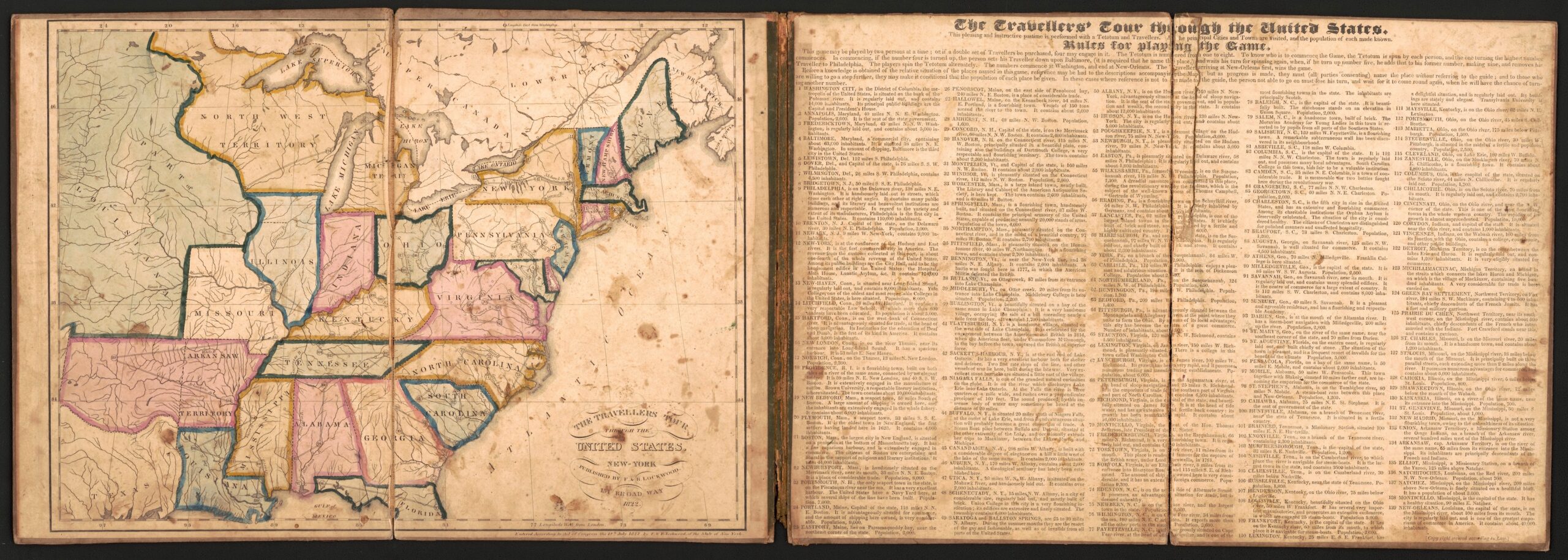
Asked to name a classic American board game, most of us would first think of Monopoly, whose imagery and verbiage — Park Place, Rich Uncle Pennybags, “Do not pass go” — has worked its way deep into the culture since Parker Brothers brought it to market in 1935. Despite that, it isn’t the oldest American board game: that honor goes to Travellers’ Tour Through the United States, which came out more than a century earlier, in 1822. Whereas Monopoly teaches its players about real-estate values in Depression-era Atlantic City (as well as a thing or two about capitalism), the older game took a larger subject for its educational ambitions: the whole of the United States of America.
Of course, that whole was a lot smaller back in 1822, the year after Missouri became the 24th state. Travellers’ Tour Through the United States presents its two-to-four players with the task of traversing the young country, beginning in Washington and ending in New Orleans. This is done by spinning something called a “teetotum,” a kind of hybrid between a top and a die, designed to hedge against the sinful associations of gambling. The player then moves ahead according to the distance shown on the teetotum, but must name the unlabeled city on which they’ve landed — and, in a more challenging variation, guess its population — in order to remain there.
As they move their pieces across the country, players can also read the included descriptions of each city, town, and region through which they pass. “Promoting the value of education, the game highlights institutions of learning,” writes Smithsonian.com’s Matthew Wynn Sivils. “Philadelphia’s ‘literary and benevolent institutions are numerous and respectable.’ Providence boasts ‘Brown University, a respectable literary institution.’ ” Making their way south, “players learn about Richmond’s ‘fertile backcountry’ and the ‘polished manners and unaffected hospitality’ of the citizens of Charleston. Savannah ‘contains many splendid edifices’ and Columbia’s ‘South Carolina College … bids fair to be a valuable institution.’ ”
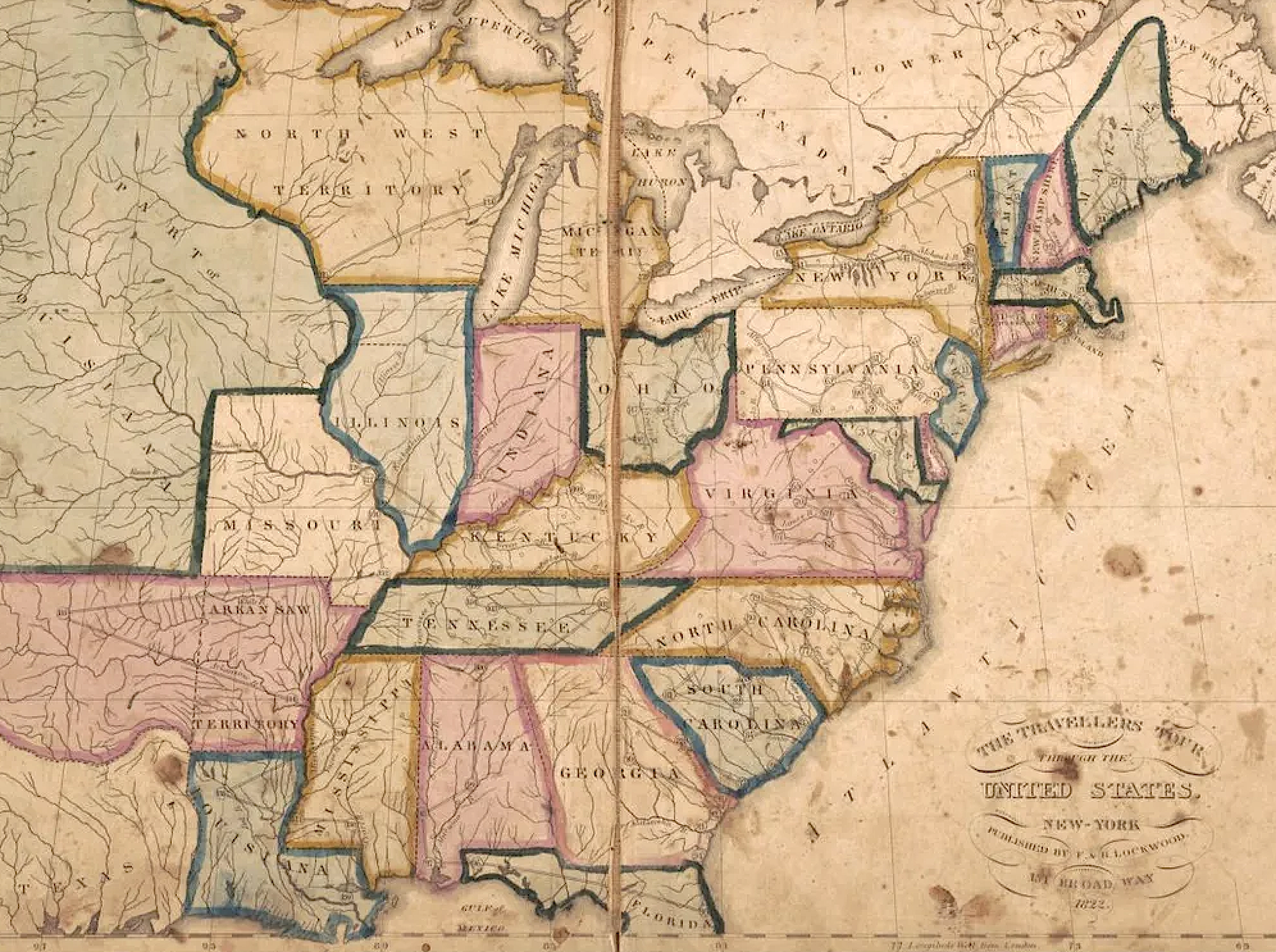
As clear-eyed descriptions of the United States in the early nineteenth century, these fall somewhat short of Tocqueville — but then, they were written almost a decade before Alexis de Tocqueville set foot in America. Not only did the country still have much expansion across the continent left to do, it had amassed but a fraction of the power and influence it would go on to do in the twentieth century. However compelling a spectacle the U.S. had become to foreign observers, it must have inspired among its own people an even stronger yearning to understand its nature, and therefore its future — a yearning the makers of Travellers’ Tour Through the United States clearly hoped would motivate sales. As a product, it seems not to have been successful, but as an idea, it lives on more than 200 years later in the form of the great American road trip.
via My Modern Met/Smithsonian
Related content:
The Fear and Loathing in Las Vegas Board Game, Inspired by Hunter S. Thompson’s Rollicking Novel
A Brief History of the Great American Road Trip
Based in Seoul, Colin Marshall writes and broadcasts on cities, language, and culture. His projects include the Substack newsletter Books on Cities and the book The Stateless City: a Walk through 21st-Century Los Angeles. Follow him on Twitter at @colinmarshall or on Facebook.
Read More...The Night Frank Zappa Jammed With Pink Floyd … and Captain Beefheart Too (Belgium, 1969)
Recently an older musician acquaintance told me he never “got into ‘Interstellar Overdrive’ and all that,” referring to the “first major space jam” of Pink Floyd’s career and the subsequent explosion of space rock bands. I found myself a little taken aback. Though I was born too late to be there, I’ve come to see “’Interstellar Overdrive’ and all that” as one of the most interesting things about the end of the sixties—the coming of Captain Beefheart and the Magic Band, of The Soft Machine, of Hawkwind and other psychedelic warriors.
Too oft overlooked in the popular Woodstock/Altamont binary shorthand for fin-de-sixties rock and roll, these bands’ brand of prog/jazz/blues/psych-rock experimentalism got its due in Amougies, Belgium, in a 1969 festival meant as Europe’s answer to the three-day “Aquarian exposition” staged in upstate New York that same year.
Sponsored by Paris magazine Actuel, “The Actuel Rock Festival” featured all of the bands mentioned above (except Hawkwind), along with Yes, Pharoah Sanders, Don Cherry, and many more. MC’ing the event, and serving as Beefheart’s manager, was none other than impresario of weird himself, Frank Zappa, who sat in with Floyd on “Interstellar Overdrive,” bringing his considerable lead guitar prowess to their dark, descending instrumental.
Just above, hear that Zappa/Floyd performance of the song. The live audio recording is fuzzy and a bit hollow, but the playing comes through perfectly clear. Zappa, in fact, jammed with nearly all the artists on the roster, though only a few recordings have surfaced, like this one from an audience member. Of their collaboration, Pink Floyd drummer Nick Mason said in 1973, “Frank Zappa is really one of those rare musicians that can play with us. The little he did in Amougies was terribly correct.” I think you’ll agree.
Dangerous Minds records many of Zappa’s recollections of the event, including a characteristically sardonic account he gave in an interview with The Simpsons’ Matt Groening in which he complains of feeling “like Linda McCartney” and about the scourge of “slumbering euro-hippies.” Zappa apparently did not remember jamming with Floyd but “the photos don’t lie and neither does the recording.” He does recall playing with Captain Beefheart, who says he himself “enjoyed it.” You can hear Beefheart’s set with Zappa above.
According to a biography of founding Pink Floyd singer and guitarist Syd Barrett—gone by the time of the festival—footage of the Zappa/Floyd jam exists, part of an unreleased documentary of the event by Gerome Laperrousaz. That film has yet to surface, it seems, but we do have the film above—slipping between black-and-white and color—of Pink Floyd playing “Green is the Colour,” “Careful With That Axe, Eugene,” and “Set the Controls For the Heart of the Sun.” It’s a must-watch if only for Roger Waters’ bone-chilling screams in the second song.
The festival is notable not only for these early performances of the newly Gilmour-fronted Pink Floyd, but also for the appearance of Aynsley Dunbar, future Zappa drummer and journeyman musician extraordinaire. Allegedly Zappa met Dunbar at the festival and was quite impressed with the latter’s jazz chops (though Dunbar first joined Zappa’s band on guitar before moving to drums). You can hear Zappa jam with his eventual star drummer’s band, Aynsley Dunbar’s Retaliation, above.
Related Content:
Watch Frank Zappa Play Michael Nesmith (RIP) on The Monkees–and Vice Versa (1967)
Psychedelic Scenes of Pink Floyd’s Early Days with Syd Barrett, 1967
Josh Jones is a writer and musician based in Durham, NC. Follow him at @jdmagness.
Read More...
Download 1,000+ Digitized Tapes of Sounds from Classic Hollywood Films & TV, Courtesy of the Internet Archive

Watch enough classic movies — especially classic movies from slightly downmarket studios — and you’ll swear you’ve been hearing the very same sound effects over and over again. That’s because you have been hearing the very same sound effects over and over again: once recorded or acquired for one film, they could, of course, be re-used in another, and another, and another. No such frequently employed recording has a more illustrious and well-documented history than the so-called “Wilhelm scream,” which, according to Oliver Macaulay at the Science + Media Museum, “has been used in over 400 films and TV programs.”
“First recorded in 1951, the ‘Wilhelm scream’ was initially featured as stock sound effect in Raoul Walsh’s western Distant Drums,” writes Macaulay, but it got its name from a scene in The Charge at Feather River, from 1953: “When Private Wilhelm takes an arrow to the leg, he lets out the fabled blood-curdling cry which came to permeate Hollywood’s soundscape.”
It may well have been most widely heard in the original Star Wars, “when Luke Skywalker shoots a stormtrooper off a ledge,” but for decades it was pulled from the vault whenever “characters meet a grim and grisly end, from being shot to falling off a building to being caught up in an explosion.”
Originally labeled “Man eaten by an alligator; screams” (for such was the fate of the character in Distant Drums), the original recording session of this much-discussed sound effect is now downloadable from the USC Optical Sound Effects Library at the Internet Archive. It contains three collections: the Gold and Red Libraries, which “consist of high-quality, first generation copies of original nitrate optical sound effects from the 1930s & 40s created for Hollywood studios,” and the Sunset Editorial (SSE) Library, which “includes classic effects from the 1930s into the ’80s” by the eponymous outfit. At a Freesound Blog post about the archiving and preservation of the SSE Library, audio engineer Craig Smith notes that the company “mainly did episodic television shows like Bewitched, I Dream of Jeannie, The Partridge Family, and The Waltons.”
Listening through the USC Optical Sound Effects Library will thus prove a resonant experience, as it were, with fans of mid-century Hollywood movies and television alike. It may also inspire an appreciation for the sheer amount of recording, indexing, editing, and mixing work that must have gone into even outwardly simple productions, which nevertheless required the sounds of doors, birds, sirens, guns, and falling bodies — as well as the voices of men, women, children — to fill out a plausible audiovisual atmosphere. They also reveal, as Smith puts it, “the shared culture of Hollywood’s take on what things ‘sounded like.’ ” Heard in isolation, some of these may seem no more realistic than the Wilhelm scream, but that wasn’t quite the point; they just had to sound like things do in movies and on TV.
Related content:
How the Sounds You Hear in Movies Are Really Made: Discover the Magic of “Foley Artists”
Based in Seoul, Colin Marshall writes and broadcasts on cities, language, and culture. His projects include the Substack newsletter Books on Cities and the book The Stateless City: a Walk through 21st-Century Los Angeles. Follow him on Twitter at @colinmarshall or on Facebook.
Read More...Browse 64 Years of RadioShack Catalogs Free Online … and Revisit the History of American Consumer Electronics
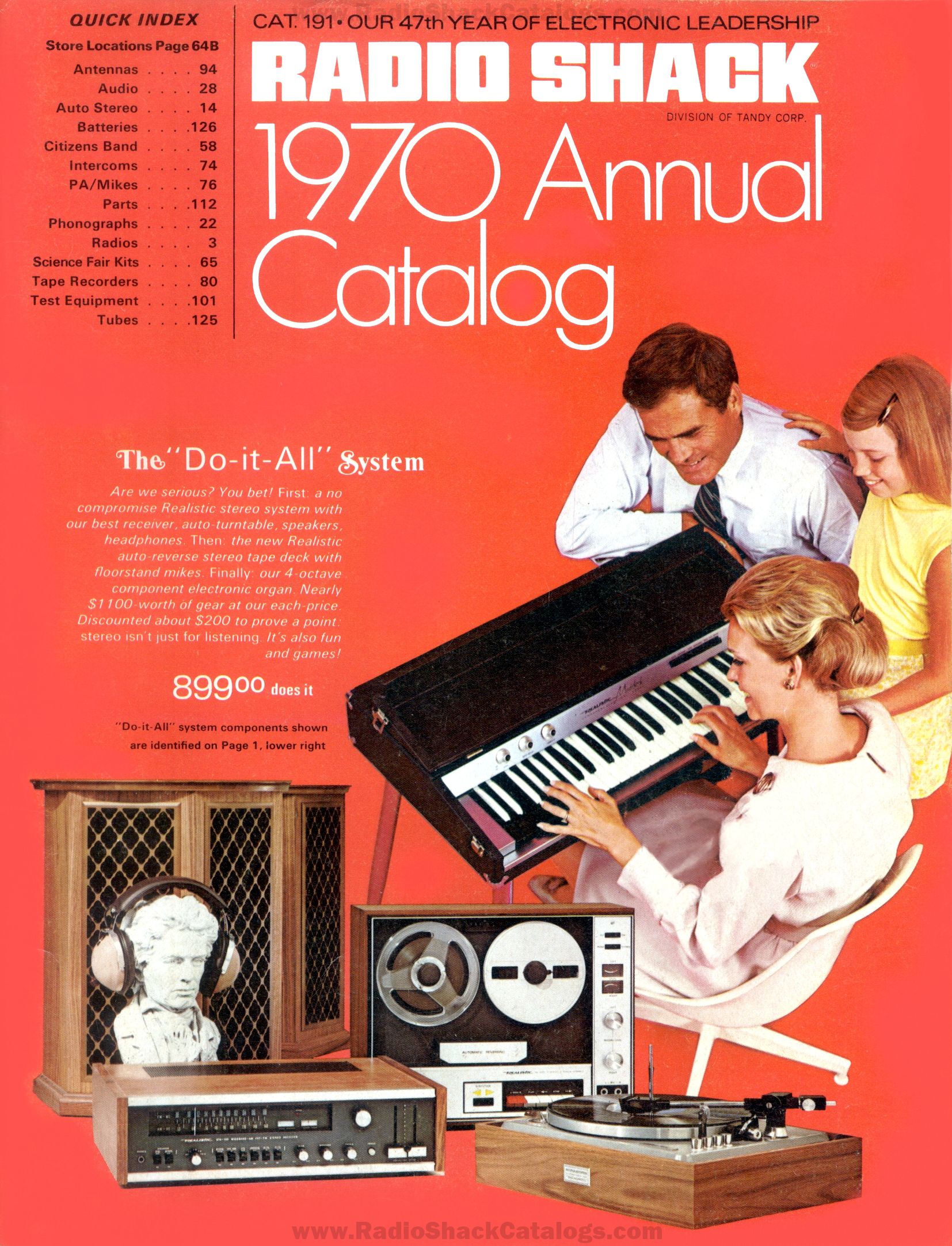
“I bet RadioShack was great once,” writes former employee Jon Bois in a much-circulated 2014 piece for SB Nation. “I can’t look through their decades-old catalogs and come away with any other impression. They sold giant walnut-wood speakers I’d kill to have today. They sold computers back when people were trying to understand what they were. When I was a little kid, going to RadioShack was better than going to the toy store. It was the toy store for tall people.” Yet by the mid-twenty-tens, it had become a “panicked and half-dead retail empire”; in 2015, it finally filed for bankruptcy.

Still, all those catalogs live on, free to browse in the digital archive at Radioshackcatalogs.com. The first volume dates from 1939, by which time Radio Shack (as its name was originally written) had already been in business for seventeen years. “This catalog is intended to serve as a comprehensive and accurate listing of what we believe to be the essential and unusual requirements of the radio amateur, the serviceman, laboratories, industries, and schools,” declares its opening letter to the customer. “To boast of our service in any respect would be so much useless verbiage, service having been the feature of our growth.”
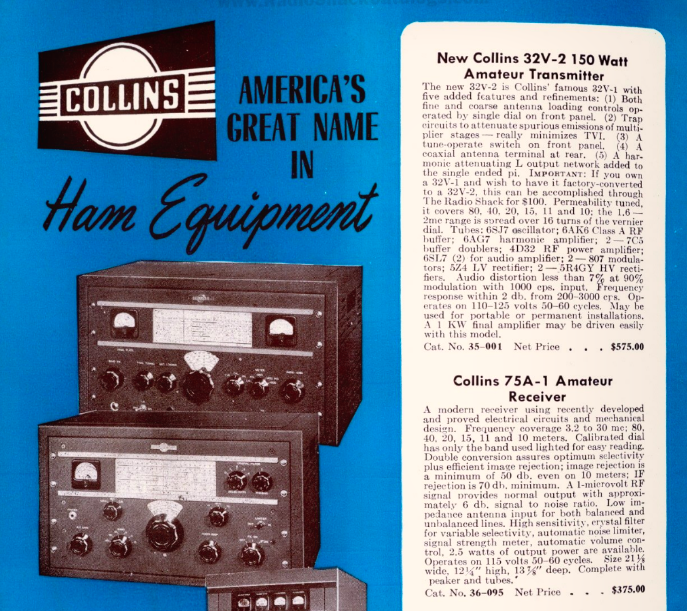
Neither service nor growth remained features of the company by the time Bois was working there. But it had been a pretty glorious run: to behold the first 50 years of RadioShack catalogs is to behold nothing less than the evolution of American consumer electronics. At first directed toward those with serious technical know-how, the company’s offerings expanded over the decades to appeal to hobbyists, then to ordinary people looking to introduce a bit of electronic — and later, digital — enrichment into their professional and personal lives.

Some Americans found their way to RadioShack by building crystal radios and science-fair projects in childhood; others began frequenting its stores while building their first real hi-fi system, component by component; others still got into personal computing through the store-brand TRS-80 (or “Trash 80,” as more serious computer nerds called it). My own grandfather was such a habitué that, when he died early in the nineties, our house suddenly filled up with inherited RadioShack-only products, from Realistic radios to Tandy computers. (I remember spending many happy hours with the Model 100, a primitive laptop grandly marketed as a “Micro Executive Work Station.”)
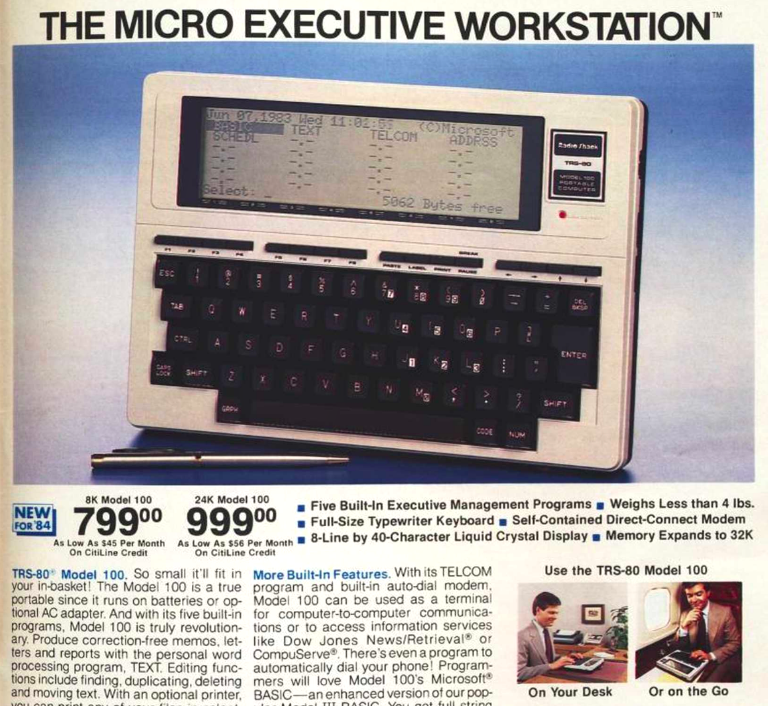
“This is a consumer technology business that is built to work perfectly in the year 1975,” writes Bois. And indeed, the 1975 RadioShack catalog offers page after wondrous page of remote-controlled stereos (“the ultimate in luxury”) and “action radios”; fiber-optic decorative lighting fixtures, eight-track car tape decks; calculators promising a “pocketful of miracles”; and built-it-yourself intercoms, pocket lie detectors, and “color organs.” Alas, like so many commercial enterprises that rode high in the mid-twentieth-century, RadioShack failed to take advantage of the internet, and was ultimately crushed by it — an ironic fate indeed for what had so long been the one-stop technology shop. Enter the archive of RadioShack catalogs here.

via MetaFilter
Related content:
Watch “Hi-Fi-Fo-Fum,” a Short Satirical Film About the Invention of the Audiophile (1959)
Nirvana Plays in a Radio Shack, the Day After Recording its First Demo Tape (1988)
The First Cellphone: Discover Motorola’s DynaTAC 8000X, a 2‑Pound Brick Priced at $3,995 (1984)
One Man’s Quest to Build the Best Stereo System in the World
Based in Seoul, Colin Marshall writes and broadcasts on cities, language, and culture. His projects include the Substack newsletter Books on Cities and the book The Stateless City: a Walk through 21st-Century Los Angeles. Follow him on Twitter at @colinmarshall or on Facebook.
Read More...Maurice Sendak’s First Published Illustrations: Discover His Drawings for a 1947 Popular Science Book
McGraw-Hill/public domain; copy from the Niels Bohr Library & Archives
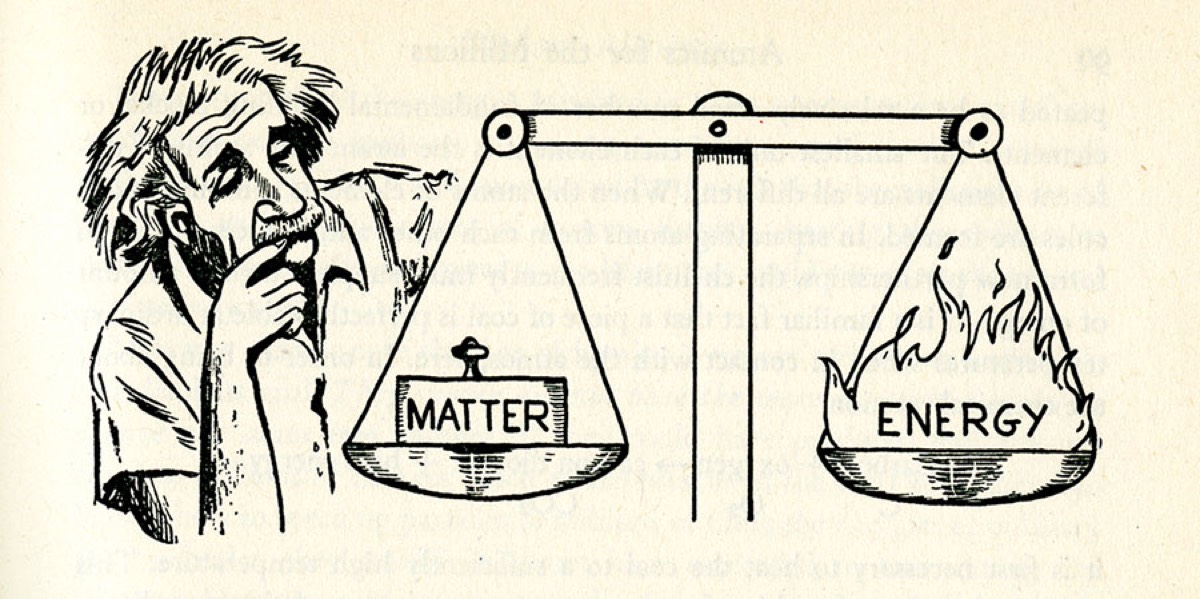
Once upon a time, long before Maurice Sendak illustrated Where The Wild Things Are (1963), he published, notes Ars Technica, “his first professional illustrations in a 1947 popular science book about nuclear physics, Atomics for the Millions.” Only 18 years old, Sendak provided the illustrations; his physics teacher, Hyman Ruchlis authored the text, along with professor Maxwell Leigh Eidinoff.
According to science historian Ryan Dahn, “Sendak agreed to do the work for 1% of the royalties, of which he received an advance of $100, about $1600 today.” Not bad for a teenager creating his first credited work.
At Physics Today, you can read Dahn’s new article on Sendak’s early physics illustrations. You can also read/view all of Atomics for the Millions on the HathiTrust website.

Related Content
The Only Drawing from Maurice Sendak’s Short-Lived Attempt to Illustrate The Hobbit
An Animated Christmas Fable by Maurice Sendak (1977)
Maurice Sendak Sent Beautifully Illustrated Letters to Fans — So Beautiful a Kid Ate One
Read More...
Solving a 2,500-Year-Old Puzzle: How a Cambridge Student Cracked an Ancient Sanskrit Code

If you find yourself grappling with an intellectual problem that’s gone unsolved for millennia, try taking a few months off and spending them on activities like swimming and meditating. That very strategy worked for a Cambridge PhD student named Rishi Rajpopat, who, after a summer of non-research-related activities, returned to a text by the ancient grammarian, logician, and “father of linguistics” Pāṇini and found it newly comprehensible. The rules of its composition had stumped scholars for 2,500 years, but, as Rajpopat tells it in an article by Tom Almeroth-Williams at Cambridge’s website, “Within minutes, as I turned the pages, these patterns started emerging, and it all started to make sense.”
Pāṇini composed his texts using a kind of algorithm: “Feed in the base and suffix of a word and it should turn them into grammatically correct words and sentences through a step-by-step process,” writes Almeroth-Williams. But “often, two or more of Pāṇini’s rules are simultaneously applicable at the same step, leaving scholars to agonize over which one to choose.” Or such was the case, at least, before Rajpopat’s discovery that the difficult-to-interpret “metarule” meant to apply to such cases dictates that “between rules applicable to the left and right sides of a word respectively, Pāṇini wanted us to choose the rule applicable to the right side.”
That may not be immediately understandable to those unfamiliar with the structure of Sanskrit. Almeroth-Williams’ piece clarifies with an example using mantra, one word from the language that everybody knows. “In the sentence ‘devāḥ prasannāḥ mantraiḥ’ (‘The Gods [devāḥ] are pleased [prasannāḥ] by the mantras [mantraiḥ]’) we encounter ‘rule conflict’ when deriving mantraiḥ, ‘by the mantras,’ ” he writes. ” The derivation starts with ‘mantra + bhis.’ One rule is applicable to the left part ‘mantra’ and the other to right part ‘bhis.’ We must pick the rule applicable to the right part ‘bhis,’ which gives us the correct form ‘mantraih.’ ”
Applying this rule renders interpretations of Pāṇini’s work almost completely unambiguous and grammatical. It could even be employed, Rajpopat has noted, to teach Sanskrit grammar to computers being programmed for natural language processing. It no doubt took him a great deal of intensive study to reach the point where he was able to discover the true meaning of Pāṇini’s clarifying metarule, but it didn’t truly present itself until he let his unconscious mind take a crack at it. As we’ve said here on Open Culture before, there are good reasons we do our best thinking while doing things like walking or taking a shower, a phenomenon that philosophers have broadly recognized through the ages — and, like as not, was understood by the great Pāṇini himself.
Related content:
Learn Latin, Old English, Sanskrit, Classical Greek & Other Ancient Languages in 10 Lessons
Introduction to Indian Philosophy: A Free Online Course
How Scholars Finally Deciphered Linear B, the Oldest Preserved Form of Ancient Greek Writing
Based in Seoul, Colin Marshall writes and broadcasts on cities, language, and culture. His projects include the Substack newsletter Books on Cities and the book The Stateless City: a Walk through 21st-Century Los Angeles. Follow him on Twitter at @colinmarshall or on Facebook.
Read More...Frank Lloyd Wright Thought About Making the Guggenheim Museum Pink
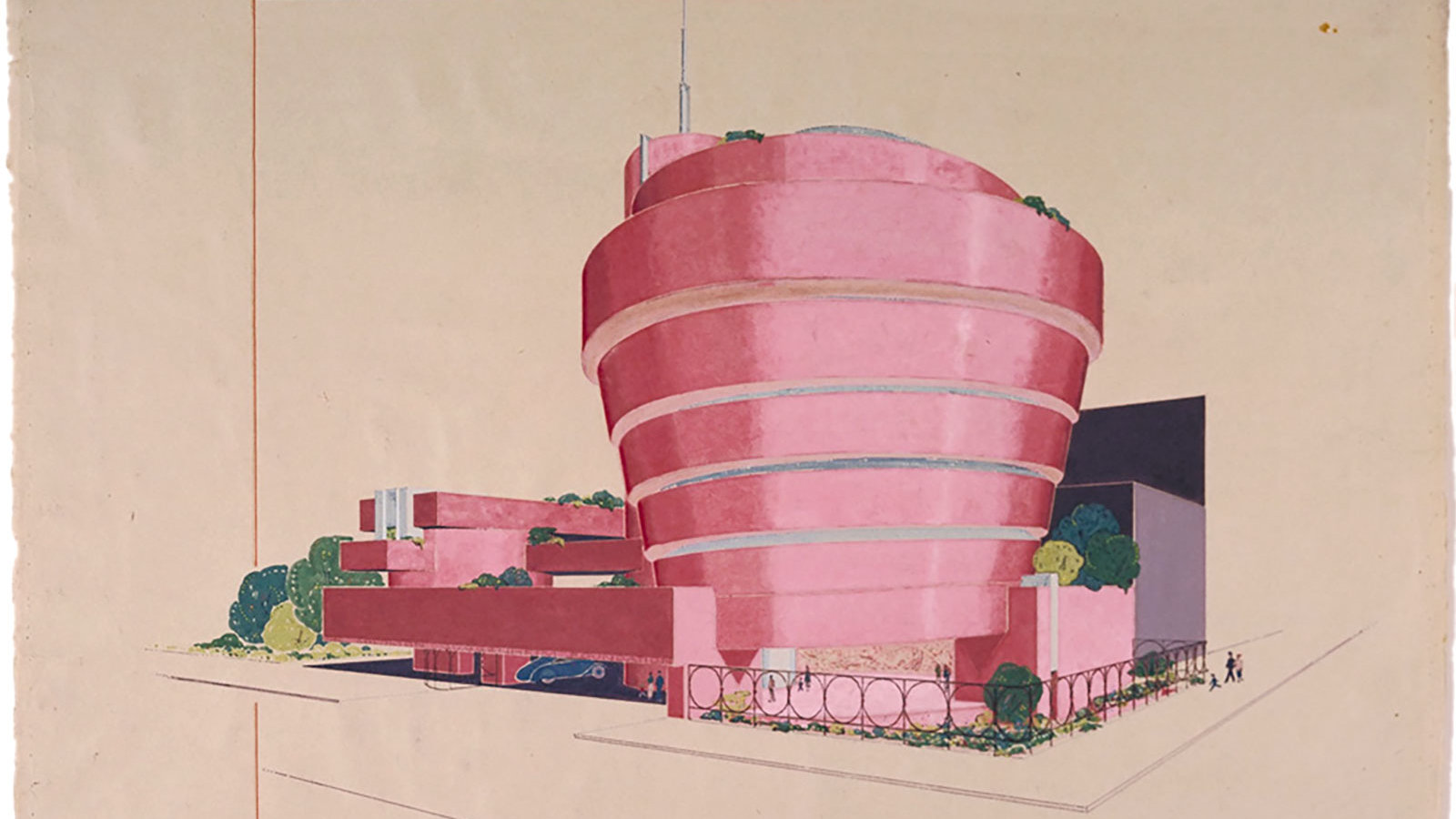
Image via The Frank Lloyd Wright Foundation Archives
Seen today, the Solomon R. Guggenheim Museum, designed by Frank Lloyd Wright, seems to occupy several time periods at once, looking both modern and somehow ancient. The latter quality surely has to do with its bright white color, which we associate (especially in such an institutional context) with Greek and Roman statues. But just like those statues, the Guggenheim wasn’t actually white to begin with. “Fewer and fewer New Yorkers may recall that the museum, in a then-grimier city, used to be beige,” writes the New York Times’ Michael Kimmelman. “Robert Moses thought it looked like ‘jaundiced skin.’ ” Hence, presumably, the decision during a 1992 expansion to paint over the earthen hue of Wright’s choice.
Not that beige was the only contender in the design phase. Look at the archival drawings, Kimmelman writes, and you’ll find “a reminder that Wright had contemplated some pretty far-out colors — Cherokee red, orange, pink.”
The very thought of that last “leads down a rabbit hole of alternative New York history,” and if you’re curious to see what a pink Guggenheim might have looked like from the street, David Romero at Hooked on the Past has created a few digitally modified photos. The result hardly comes off as being in taste quite as poor as one might expect; in fact, it could have fit quite well into the Memphis-embracing nineteen-eighties, and even the postmodern nineties. The image above, showing the Guggenheim imagined in pink, comes from The Frank Lloyd Wright Foundation Archives.
But as it is, “closed off to the city around it, the building’s antiseptic, spanking-white facade, today is in keeping with the neighborhood.” That itself is in keeping with Wright’s ideas for transforming the American city, which he kept on putting forth until the end of his life. Attempting to solve “the problem of the inner city,” he conceived “fantastical megastructures for places like downtown Pittsburgh, Baghdad, and Madison, Wisconsin,” all of them “city-based but anti-urban projects, divorced from the streets.” Even working in the United States’ densest metropolis, Wright expressed a longing for the splendid isolation of the American countryside, where a man — at least as the lore has it — can paint his house any color he pleases.
via Messy Nessy/Hooked on the Past
Related content:
Frank Lloyd Wright Designs an Urban Utopia: See His Hand-Drawn Sketches of Broadacre City (1932)
Behold Ancient Egyptian, Greek & Roman Sculptures in Their Original Color
The Guggenheim Puts 109 Free Modern Art Books Online
Based in Seoul, Colin Marshall writes and broadcasts on cities, language, and culture. His projects include the Substack newsletter Books on Cities and the book The Stateless City: a Walk through 21st-Century Los Angeles. Follow him on Twitter at @colinmarshall or on Facebook.
Read More...Is Andrew Huberman Ruining Your Morning Coffee Routine?
Andrew Huberman–the host of the influential Huberman Lab podcast–has gotten a lot of mileage out of his recommended morning routine. His routine emphasizes the importance of getting sunlight within 30–60 minutes of waking; also engaging in light physical activity; hydrating well; and avoiding coffee for the first 90–120 minutes. In his words:
I highly recommend that everybody delay their caffeine intake for 90 to 120 minutes after waking. However painful it may be to eventually arrive at that 90 to 120 minutes after waking, you want, and I encourage you, to clear out whatever residual adenosine is circulating in your system in that first 90 to 120 minutes of the day. Get that sunlight exposure, get some movement to wake up, and then, and only then, start to ingest caffeine because what you’ll do if you delay caffeine intake until 90 to 120 minutes after waking is you will avoid the so-called afternoon crash.
And if you drink caffeine at any point throughout the day, really try and avoid any caffeine, certainly avoid drinking more than a hundred milligrams of caffeine after 4:00 p.m and probably even better to limit your last caffeine intake to 3:00 p.m. or even 2:00 p.m.
For many, this isn’t exactly a welcome piece of advice. And you naturally wonder how the advice sits with James Hoffmann, author of The World Atlas of Coffee, who has developed a robust YouTube channel where he explores the ins and outs of making coffee. In the video above, Hoffmann explores the research supporting Huberman’s advice, all with the goal of determining whether Huberman is ruining (or improving) our early waking hours.
Related Content
How Humanity Got Hooked on Coffee: An Animated History
The Birth of Espresso: The Story Behind the Coffee Shots That Fuel Modern Life
The Curious Story of London’s First Coffeehouses (1650–1675)
Read More...The 11 Censored Looney Tunes and Merrie Melodies Cartoons That Haven’t Been Aired Since 1968
For decades and decades, Warner Bros.’ Looney Tunes and Merrie Melodies cartoons have served as a kind of default children’s entertainment. Originally conceived for theatrical exhibition in the nineteen-thirties, they were animated to a standard that held its own against the subsequent generations of television productions alongside which they would later be broadcast. Even their classical music-laden soundtracks seemed to signal higher aspirations. But when scrutinized closely enough, they turned out not to be as timeless and inoffensive as everyone had assumed. In fact, eleven Looney Tunes and Merrie Melodies cartoons have been withheld from syndication since the nineteen-sixties due to their content.
The LSuperSonicQ video above takes a look at the “Censored Eleven,” all of which have been suppressed for qualities like “exaggerated features, racist tones, and outdated references.” Produced between 1931 and 1944, these cartoons have been described as reflecting perceptions widely held by viewers at the time that have since become unacceptable. Take, for example, the black proto-Elmer Fudd in “All This and Rabbit Stew,” from 1941, a collection of “ethnic stereotypes including oversized clothing, a shuffle to his movement, and mumbling sentences.” In other productions, like “Jungle Jitters” and “The Isle of Pingo Pongo,” the offense is against native islanders, depicted therein as hard-partying cannibals.
At first glance, “Coal Black and de Sebben Dwarfs,” from 1943, may resemble a grotesque carnival of stereotypes. But as director Bob Clampett later explained, it originated when he “was approached in Hollywood by the cast of an all-black musical off-broadway production called Jump For Joy while they were doing some special performances in Los Angeles. They asked me why there weren’t any Warner’s cartoons with black characters and I didn’t have any good answer for that question. So we sat down together and came up with a parody of Disney’s Snow White, and ‘Coal Black’ was the result.” These performers provided the voices (credited, out of contractual obligation, to Mel Blanc), and Clampett paid tribute in the character designs to real jazz musicians he knew from Central Avenue.
However admirable the intentions of “Coal Black” — and however masterful its animation, which has come in for great praise from historians of the medium — it remains relegated to the banned-cartoons netherworld. Of course, this doesn’t mean you can’t see it today: like most of the “Censored Eleven,” it’s long been bootlegged, and it even underwent restoration for the first annual Turner Classic Movies Film Festival in 2010. Some of these controversial shorts appear on the Looney Tunes Gold Collection Volume: 3 DVDs, introduced by Whoopi Goldberg, who makes the sensible point that “removing these inexcusable images and jokes from this collection would be the same as saying they never existed.” Grown-ups may be okay with that, but kids — always the most discerning audience for Warner Bros. cartoons — know when they’re being lied to.
Related Content:
Conspiracy Theory Rock: The Schoolhouse Rock Parody Saturday Night Live May Have Censored
Donald Duck’s Bad Nazi Dream and Four Other Disney Propaganda Cartoons from World War II
Dr. Seuss Draws Anti-Japanese Cartoons During WWII, Then Atones with Horton Hears a Who!
Based in Seoul, Colin Marshall writes and broadcasts on cities, language, and culture. His projects include the Substack newsletter Books on Cities and the book The Stateless City: a Walk through 21st-Century Los Angeles. Follow him on Twitter at @colinmarshall or on Facebook.
Read More...The Enchanting Opera Performances of Klaus Nomi
After making one of the grandest entrances in music history on the stages of East Village clubs, the BBC’s The Old Grey Whistle Test, and Saturday Night Live, theatrical German new wave space alien Klaus Nomi died alone in 1983, a victim of the “first beachhead of the AIDS epidemic.” The disease frightened Nomi’s friends away—no one knew anything about what was then called “gay cancer” but that it was deadly. Soon afterward, the immensely talented singer’s reputation declined. Writer Rupert Smith pronounced Nomi “largely forgotten” in a 1994 issue of Attitude magazine, and made a case for renewed attention. “Nomi,” wrote Smith, “remains rock music’s queerest exponent, who outshone the many acts following in his wake.”
But Nomi has since received his due, in a moment of revival that has extended over several years, thanks in part to many of those later acts. In his own day, wrote LD Beghtol at The Village Voice, “the underground punk-opera singer was mostly unknown beyond his small circle of friends and fans.” Nomi was “queer in multiple senses of the word and stood well apart from his fellow East Village bohos.
And he possessed an undeniable gift, a voice that surged up from a husky Weimar croon into the falsetto stratosphere. Operatic countertenors, though, were hopelessly déclassé. His professional options were few.” It’s also the case that Nomi’s opera experience wouldn’t have taken him very far. “As young Klaus Sperber,” writes Smith, “he had worked front-of-house at the Berlin Opera in the late Sixties, and would entertain colleagues with his renditions of the great arias as they swept up after performances.”
But with or without the résumé, Nomi had the voice—one audiences could hardly believe came from the strange, diminutive cabaret character with heavy makeup and tri-cornered receding hairline. At the top of the post, see Nomi’s 1978 debut at New Wave Vaudeville, a four-night revue at Irving Plaza. “Nomi,” Smith tells us, “was a smash.” Skip ahead to 2:14 to see Nomi’s musical director Kristian Hoffman introduce his performance of “Mon cœur s’ouvre à ta voix” (“My heart opens to your voice”) from Camille Saint-Saëns’ 1877 opera Samson et Dalila. After every subsequent performance, Hoffman says, the cabaret’s MC had to assure audiences that Nomi’s voice was “not an electrical recording.”
Nomi’s voice and presence attracted the attention of stars like David Bowie, who hired him as a backup singer for that SNL appearance in 1979 after he appeared on the cult New York public access show TV Party. Glenn O’Brien’s introduction of Nomi as “one of the finest pastry chefs in New York,” above, is only partly tongue in cheek; that was indeed the singer’s day job. But in character, he wielded his otherworldly falsetto like a raygun. “Every song,” writes Pitchfork in an appreciation, “included dramatic multiple shifts in octave, where Klaus would rise to extreme highs and lows, handling both effortlessly. He would jerk his hands into karate chops with each changing note, widening his eyes every time he skirted into higher octaves.”
Nomi’s brand of opera-infused synth-pop and retro-futurist, shiny-suited cabaret act—the “Klaus Nomi Show” as it was called—brought him notoriety in the New York art scene during his lifetime, and has since made him a star, decades after his tragic death. As gratifying as that may be for longtime fans of Nomi’s work, we should also remember that Nomi’s devotion to opera was no mere gimmick, but a lifelong passion and undeniable talent. As we noted in an earlier post, in Nomi’s last performance before his death—in a small 1982 European tour—he sang the aria “Cold Genius” from Henry Purcell’s 1691 opera King Arthur or, The British Worthy, a performance, wrote Matthias Rascher, that was “certainly one of the most memorable in operatic history.” Perhaps we might call it one of the most memorable moments in pop music history as well.
Related Content:
Klaus Nomi: Watch the Final, Brilliant Performance of a Dying Man
David Bowie and Klaus Nomi’s Hypnotic Performance on SNL (1979)
Klaus Nomi’s Ad for Jägermeister (Circa 1980)
Josh Jones is a writer and musician based in Durham, NC. Follow him at @jdmagness
Read More...Support Us
We're hoping to rely on loyal readers, rather than erratic ads. Please click the Donate button and support Open Culture. You can use Paypal, Venmo, Patreon, even Crypto! We thank you!

About Us

Open Culture scours the web for the best educational media. We find the free courses and audio books you need, the language lessons & educational videos you want, and plenty of enlightenment in between.
Advertise With Us

FREE UPDATES!
GET OUR DAILY EMAIL
Get the best cultural and educational resources on the web curated for you in a daily email. We never spam. Unsubscribe at any time.
FOLLOW ON SOCIAL MEDIA

Open Culture editor Dan Colman scours the web for the best educational media. He finds the free courses and audio books you need, the language lessons & movies you want, and plenty of enlightenment in between.
Advertise With Us

