Student Asks Noam Chomsky for Dating Advice
Noam Chomsky is a pretty unlikely celebrity. As a preeminent anarchist theorist, his political writing is full of passionate intensity, but in his numerous public appearances, he conforms much more to images associated with his day job as a preeminent academic and linguist. He’s very soft-spoken—I’ve never heard him raise his voice above the register of polite coffee-shop conversation—and frumpy in that elder scholar kind of way: uncombed gray hair, an endless supply of sweaters and corduroy jackets…
So, yes, it’s amusing when, in the short clip above, a young Chomsky fan asks the 85-year-old “father of modern linguistics” for advice on how to talk to women. Chomsky’s nonplussed response is honest and heartfelt. He has nothing to offer in this regard, he says: “I got out of that business 70 years ago.” If it seems like Chomsky’s math is a little off—he was married in 1949—consider that he and his wife Carol met when they were both just five years old.
Theirs was a quietly charming romance. Chomsky, who has always possessed an extraordinary ability to keep his personal, political, and professional lives separate, did not speak much of their marriage until after Carol’s death in 2008. In the excerpt above from a Big Think interview shortly after, Chomsky tells a story of group of peasants in Southern Columbia who planted a forest in his wife’s memory. He’s also asked to define love. This time, he has a much more interesting response than his reply to the would-be pick up artist above: “I just know it’s—has an unbreakable grip, but I can’t tell you what it is. It’s just life’s empty without it.”
Related Content:
Noam Chomsky Schools 9/11 Truther; Explains the Science of Making Credible Claims
Filmmaker Michel Gondry Presents an Animated Conversation with Noam Chomsky
Noam Chomsky Spells Out the Purpose of Education
Josh Jones is a writer and musician based in Durham, NC. Follow him at @jdmagness
Read More...Read Ezra Pound’s List of 23 “Don’ts” For Writing Poetry (1913)
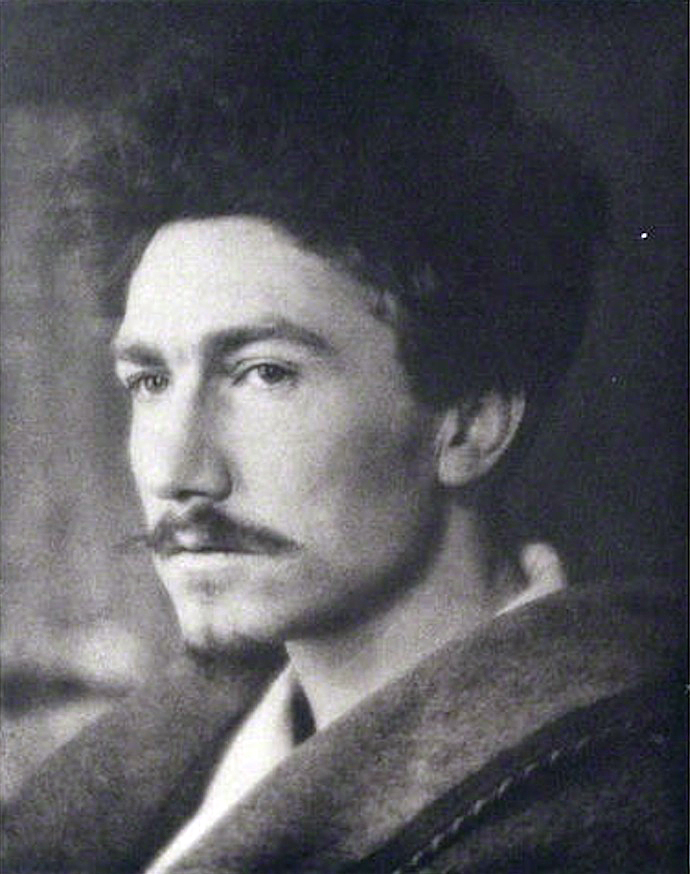
1922 image by Alvin Langdon Coburn, via Wikimedia Commons
Ezra Pound was a key figure in 20th century poetry. Not only did he demonstrate impressive poetic skill in his Cantos; he also proved to be a crucial early supporter of several famous contemporaries, championing the likes of Robert Frost, T. S. Eliot, James Joyce, Ernest Hemingway, and H.D.. Before deservedly being condemned for his fascist politics and antisemitism, Pound established himself as one of the leading literary critics of his time. David Perkins, in A History of Modern Poetry, wrote, “During a crucial decade in the history of modern literature, approximately 1912–1922, Pound was the most influential and in some ways the best critic of poetry in England or America.”
Early in the 20th century, Pound helped found the Imagist poetry movement, which abided by three key laws:
1. Direct treatment of the “thing” whether subjective or objective.
2. To use absolutely no word that does not contribute to the presentation.
3. As regarding rhythm: to compose in the sequence of the musical phrase, not in sequence of a metronome.
In 1913, Pound wrote an essay entitled “A Few Don’ts.” Its rules, enumerated below, provide young poets with a much-needed reminder to reign in their egos and apply themselves assiduously to their craft.
In a nutshell, the rules state that each verse should be lean and purposeful, with no frills or filler to provide padding. They also emphasize the importance of possessing an awareness of the work of previous poets, and of using this understanding in the creation of new work.
- Pay no attention to the criticism of men who have never themselves written a notable work. Consider the discrepancies between the actual writing of the Greek poets and dramatists, and the theories of the Graeco-Roman grammarians, concocted to explain their metres.
- Use no superfluous word, no adjective which does not reveal something.
- Don’t use such an expression as ‘dim lands of peace’. It dulls the image. It mixes an abstraction with the concrete. It comes from the writer’s not realizing that the natural object is always the adequate symbol.
- Go in fear of abstractions. Do not retell in mediocre verse what has already been done in good prose. Don’t think any intelligent person is going to be deceived when you try to shirk all the difficulties of the unspeakably difficult art of good prose by chopping your composition into line lengths.
- What the expert is tired of today the public will be tired of tomorrow. Don’t imagine that the art of poetry is any simpler than the art of music, or that you can please the expert before you have spent at least as much effort on the art of verse as an average piano teacher spends on the art of music.
- Be influenced by as many great artists as you can, but have the decency either to acknowledge the debt outright, or to try to conceal it. Don’t allow ‘influence’ to mean merely that you mop up the particular decorative vocabulary of some one or two poets whom you happen to admire. A Turkish war correspondent was recently caught red-handed babbling in his dispatches of ‘dove-grey’ hills, or else it was ‘pearl-pale’, I can not remember.
- Use either no ornament or good ornament.
- Let the candidate fill his mind with the finest cadences he can discover, preferably in a foreign language, so that the meaning of the words may be less likely to divert his attention from the movement; e.g. Saxon charms, Hebridean Folk Songs, the verse of Dante, and the lyrics of Shakespeare — if he can dissociate the vocabulary from the cadence. Let him dissect the lyrics of Goethe coldly into their component sound values, syllables long and short, stressed and unstressed, into vowels and consonants.
- It is not necessary that a poem should rely on its music, but if it does rely on its music that music must be such as will delight the expert.
- Let the neophyte know assonance and alliteration, rhyme immediate and delayed, simple and polyphonic, as a musician would expect to know harmony and counterpoint and all the minutiae of his craft. No time is too great to give to these matters or to any one of them, even if the artist seldom have need of them.
- Don’t imagine that a thing will ‘go’ in verse just because it’s too dull to go in prose.
- Don’t be ‘viewy’ — leave that to the writers of pretty little philosophic essays. Don’t be descriptive; remember that the painter can describe a landscape much better than you can, and that he has to know a deal more about it.
- When Shakespeare talks of the ‘Dawn in russet mantle clad’ he presents something which the painter does not present. There is in this line of his nothing that one can call description; he presents.
- Consider the way of the scientists rather than the way of an advertising agent for a new soap. The scientist does not expect to be acclaimed as a great scientist until he has discovered something. He begins by learning what has been discovered already. He goes from that point onward. He does not bank on being a charming fellow personally. He does not expect his friends to applaud the results of his freshman class work. Freshmen in poetry are unfortunately not confined to a definite and recognizable class room. They are ‘all over the shop’. Is it any wonder ‘the public is indifferent to poetry?’
- Don’t chop your stuff into separate iambs. Don’t make each line stop dead at the end and then begin every next line with a heave. Let the beginning of the next line catch the rise of the rhythm wave, unless you want a definite longish pause. In short, behave as a musician, a good musician, when dealing with that phase of your art which has exact parallels in music. The same laws govern, and you are bound by no others.
- Naturally, your rhythmic structure should not destroy the shape of your words, or their natural sound, or their meaning. It is improbable that, at the start, you will he able to get a rhythm-structure strong enough to affect them very much, though you may fall a victim to all sorts of false stopping due to line ends, and caesurae.
- The Musician can rely on pitch and the volume of the orchestra. You can not. The term harmony is misapplied in poetry; it refers to simultaneous sounds of different pitch. There is, however, in the best verse a sort of residue of sound which remains in the ear of the hearer and acts more or less as an organ-base.
- A rhyme must have in it some slight element of surprise if it is to give pleasure, it need not be bizarre or curious, but it must be well used if used at all.
- That part of your poetry which strikes upon the imaginative eye of the reader will lose nothing by translation into a foreign tongue; that which appeals to the ear can reach only those who take it in the original.
- Consider the definiteness of Dante’s presentation, as compared with Milton’s rhetoric. Read as much of Wordsworth as does not seem too unutterably dull. If you want the gist of the matter go to Sappho, Catullus, Villon, Heine when he is in the vein, Gautier when he is not too frigid; or, if you have not the tongues, seek out the leisurely Chaucer. Good prose will do you no harm, and there is good discipline to be had by trying to write it.
- Translation is likewise good training, if you find that your original matter ‘wobbles’ when you try to rewrite it. The meaning of the poem to be translated can not ‘wobble’.
- If you are using a symmetrical form, don’t put in what you want to say and then fill up the remaining vacuums with slush.
- Don’t mess up the perception of one sense by trying to define it in terms of another. This is usually only the result of being too lazy to find the exact word. To this clause there are possibly exceptions.
To read Pound’s complete essay, alongside several other works of his criticism, head over to Poetry Foundation.
Texts and readings by Pound can be found in our Free eBooks and Free Audio Books collections.
Ilia Blinderman is a Montreal-based culture and science writer. Follow him at @iliablinderman.
Related Content:
Hear Ezra Pound Read From His “Cantos,” Some of the Great Poetic Works of the 20th Century
Ezra Pound’s Fiery 1939 Reading of His Early Poem, ‘Sestina: Altaforte’
Pier Paolo Pasolini Talks and Reads Poetry with Ezra Pound (1967)
Read More...Free Online Astronomy Courses
Get free Astronomy courses online from the world’s leading universities. You can download these audio & video courses straight to your computer or mp3 player. For more online courses, visit our complete collection, 1,700 Free Online Courses from Top Universities.
- Astrobiology and Space Exploration — Free iTunes Video — Free Online Video — Lynn Rothschild, Stanford
- Exploring Black Holes: General Relativity & Astrophysics — Free Online Video — Course Info — Edmund Bertschinger, MIT
- From Chemistry to Life — Web Video — Dimitar D. Sasselov, World Science U/Harvard
- Frontiers and Controversies in Astrophysics - Free Online Video — Free iTunes Audio — Free iTunes Video — Course Materials — Charles Bailyn, Yale
- Hunting for Life in the Universe — Free Online Video — James Bullock, UC Irvine
- Introduction to Astrophysics — Free Online Audio — Joshua Bloom, UC Berkeley
- Introduction to Cosmology — Free Online Video - James Bullock, UC Irvine
- Introduction to General Astronomy — Free Online Audio — Alex Filippenko, UC Berkeley
- Introduction to General Astronomy — Free Online Audio — Joshua Bloom, UC Berkeley
- Introduction Planetary Science and Astronomy — Free Online Video — Bruce Betts, Planetary Society
- Introduction to Solar System Astronomy - Free iTunes Video — Richard Pogge, Ohio State
- Stars, Galaxies and the Universe — Free iTunes Audio — Richard Pogge, Ohio State
- Life in the Universe — Free Online Audio — Richard Pogge, Ohio State
- Survey of Astronomy — Free Online Video — Becky Baker, Missouri State
- The Accelerating Universe — Free Online Video — Adam Riess, Johns Hopkins/World Science U
- The Planets (Christmas Lectures for Kids) — Free Online Lectures — Carl Sagan, Royal Institution
For a complete list of online courses, please visit our complete collection, 1,700 Free Online Courses from Top Universities.
For a list of online certificate programs, visit 200 Online Certificate & Microcredential Programs from Leading Universities & Companies, which features programs from our partners Coursera, Udacity, FutureLearn and edX.
And if you’re interested in Online Mini-Masters and Master’s Degrees programs from universities, see our collection: Online Degrees & Mini Degrees: Explore Masters, Mini Masters, Bachelors & Mini Bachelors from Top Universities.
Read More...Environment & Natural Resources: Free Online Courses
Get free online courses on the Environment & Natural Resources from the world’s leading universities. You can download these audio & video courses straight to your computer or mp3 player. For more online courses, visit our complete collection, 1,700 Free Online Courses from Top Universities.
- Adaptation to Climate Change — Free iTunes Video — Charlie Kennel, Cambridge
- Australian Environmental History — Free iTunes Audio — Richard Broome & Katie Holmes, La Trobe University-Australia
- Blue Planet: Introduction to Oceanography - Free Online Video — Edwin Schauble, UCLA
- Education for Sustainable Living: Environment — Free Online Video — Multiple profs, UCLA
- Environmental Economics & Policy — Free Online Video — David Zetland, UC Berkeley
- Environmental Law and Policy - Free Online Video — Bob Infelise, UC Berkeley, UC Berkeley
- Environmental Politics and Law - Free Online Video — Free iTunes Video — Free iTunes Audio — Free Video & Course Materials — John P. Wargo, Yale
- Food and the Environment — Free Online Audio — Nathan Sayre, UC Berkeley
- Global Warming: Understanding the Forecast - Free Online Videos — David Archer, University of Chicago
- How Climate Works — Free Online Video — Multiple Profs, Princeton
- Introduction to Literature and the Environment — Free Online Video — Ken Hiltner, Princeton
- Mitigating Agriculture’s Impact — Free Online Video — Gordon Geballe, Yale
- Oceans in Peril — Free Online Video — Sylvia Earle, Mission Blue/World Science U
- On Thin Ice: Climate Change and the Cryosphere — Free Online Video + Course Info — Free Online Video — Julie Ferguson, UC Irvine
- Our Earth’s Future — Massive Open Online Course (MOOC) — American Museum of Natural History
- Radar — Free iTunes Video — Kevin Kloesel, University of Oklahoma
- Sustainable Living — Free Online Video — Multiple profs, UCLA
- Synthetic Biology’s Industrial Revolution — Free Online Video — Drew Endy, Stanford/World Science U
- The Atmosphere, the Ocean, and Environmental Change — Free Online Video — Free iTunes Audio — Free Online Video & Course Info — Ronald B. Smith, Yale
- The Habitable Planet: A Systems Approach to Environmental Science — Free Online Video — Harvard/Smithsonian
- Tipping Points: Climate Change and Society — Massive Open Online Course (MOOC) — University of Exeter
- Woods Energy Seminar — Free Online Video — Multiple Professors, Stanford
For a complete list of online courses, please visit our complete collection, 1,700 Free Online Courses from Top Universities.
For a list of online certificate programs, visit 200 Online Certificate & Microcredential Programs from Leading Universities & Companies, which features programs from our partners Coursera, Udacity, FutureLearn and edX.
And if you’re interested in Online Mini-Masters and Master’s Degrees programs from universities, see our collection: Online Degrees & Mini Degrees: Explore Masters, Mini Masters, Bachelors & Mini Bachelors from Top Universities.
Read More...Learn Latin, Old English, Sanskrit, Classical Greek & Other Ancient Languages in 10 Lessons
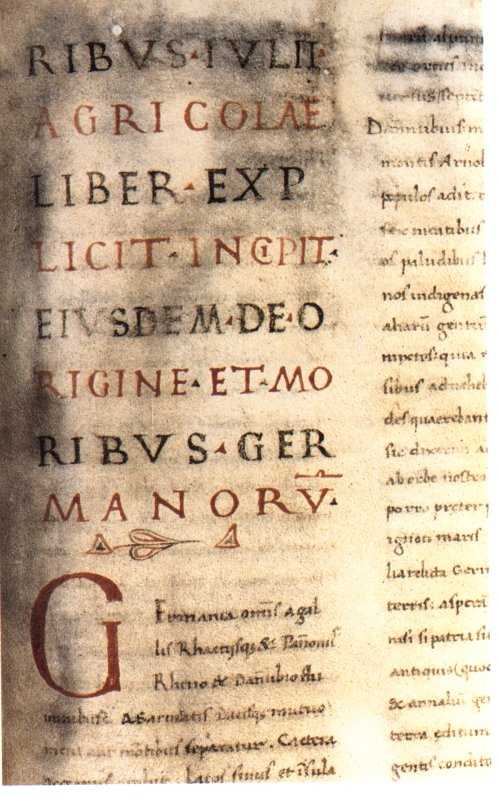
I receive weekly reminders of my linguistic ignorance whenever I read anything by authors fluent in Latin. How could I not, whenever Clive James starts to pontificate on the greatness of, say, Tacitus?
“For students acquiring Latin in adult life, the language is most easily approached through those historians who really wrote chronicles — Cornelius Nepos, Sallust, Suetonius and Livy — but with the Histories of Tacitus you get the best reason for approaching it at all… What Sainte-Beuve said of Montaigne — that his prose is like one continuous epigram — is even more true of Tacitus.”
Fantastic! So, which translation should I read?
“There are innumerable translations but the original gives you [Tacitus]’ unrivalled powers of compression.”
As with Latin classics, so with other Indo-European language texts, including Beowulf, originally in Old English, Homer’s Iliad and Odyssey, in Classical Greek, and the ancient Vedic hymns of the Rigveda, in Sanskrit.
For those willing to take up the challenge of reading these canonic texts in their original form, the University of Texas’ Linguistics Research Center provides an excellent resource. In addition to hosting a multitude of Indo-European volumes in their entirety, the LRC has made 10-lesson crash courses, developed by several UT-Austin academics. Lessons include a brief guide to the alphabet, background knowledge on the language’s development, and a grammar guide, all available for the following languages:
- Albanian
- Armenian
- Baltic
- Old English
- Old French
- Gothic
- Greek (Classical)
- Greek (New Testament)
- Hittite
- Old Iranian
- Old Irish
- Latin
- Old Norse
- Old Russian
- Vedic Sanskrit
- Old Slavonic
- Tocharian
Best of all, lessons are based on seminal texts from each language: Latin lessons rely on Tacitus’ Germania, Livy’s History of Rome, and Virgil’s Aeneid, while Homer, Hesiod’s Works and Days, and Plato’s Republic feature prominently in the Classical Greek classes. Students progress through each lesson by reading the original passages, and using the provided guides to translate them to English.
Ilia Blinderman is a Montreal-based culture and science writer. Follow him at @iliablinderman.
Related Content:
What Ancient Greek Music Sounded Like: Hear a Reconstruction That is ‘100% Accurate’
Hear Homer’s Iliad Read in the Original Ancient Greek
Hear The Epic of Gilgamesh Read in the Original Akkadian, the Language of Mesopotamia
Read More...The Tom Waits Map: A Mapping of Every Place Waits Has Sung About, From L.A. to Africa’s Jungles
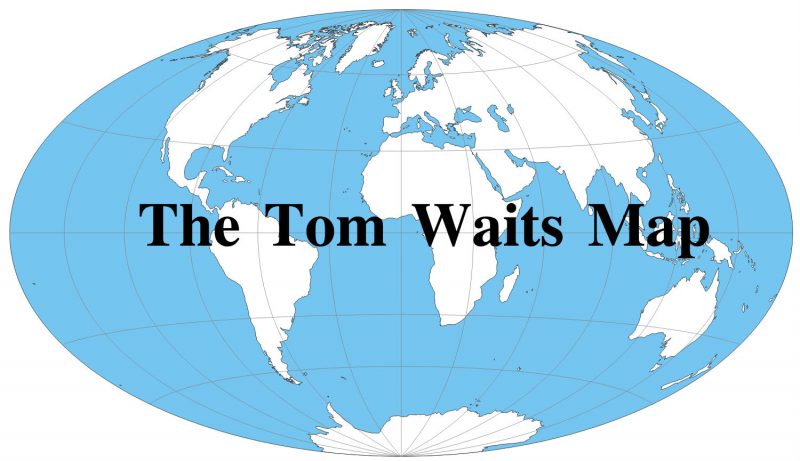
“And what becomes of all the little boys who never comb their hair? They’re lined up all around the block, on the Nickel over there.” So sings Tom Waits on 1980’s “On the Nickel,” which he originally composed for Ralph Waite’s eponymous feature film, a story of shame, degradation, and good times in the sketchiest part of downtown Los Angeles, through which runs 5th Street — the “Nickel” of the title. That part of town has managed an astonishing cleanup since 1980 (then again, most parts of town have, including the once-seething corner referenced by Heartattack and Vine, the title of Waits’ album from that year) to the point that you’ll now find, just off 5th, the new-wave retro, hipster-friendly Nickel Diner: a favorite eatery of mine, incidentally, but hardly one describable with Waits’ signature rasp, a forcefully resigned instrument tuned to evoke the classically, near-mythologically ragged American life.
Still, you can find the old Nickel on The Tom Waits Map, which marks out all the lyrically identifiable places in Waits’ America, from Minneapolis’ 9th Street (“Hey Charlie, I’m pregnant and living on the 9th street,” goes “Christmas Card From A Hooker In Minneapolis”) to the state of Idaho (“Danny says we gotta go, gotta go to Idaho, but we can’t go surfing ’cause it’s 20 below,” on “Danny Says”).
We may think of Waits’ artistic persona as a certain lower slice of America made song, but this map, when zoomed out to a global level, reveals references to many exotic lands, as when he sings about “a Hong Kong drizzle on Cuban heels,” from the perspective of a character who “drank with all the Chinamen, walked the sewers of Paris” and of “Radion the human torso, deep from the jungles of Africa.”
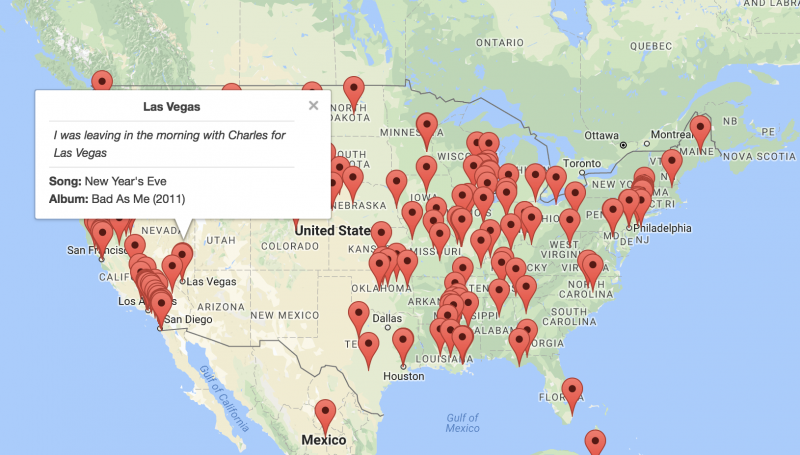
The Tom Waits map itself, in fact, comes from an obviously die-hard Swedish fan by the name of Jonas Nordström. As he and the rest of the Waits faithful know, the man doesn’t just speak to an askew sensibility in America; he speaks to askew sensibilities all throughout humanity.
via @sheerly
If you would like to support the mission of Open Culture, consider making a donation to our site. It’s hard to rely 100% on ads, and your contributions will help us continue providing the best free cultural and educational materials to learners everywhere. You can contribute through PayPal, Patreon, and Venmo (@openculture). Thanks!
Related Content:
Watch Big Time, the Concert Film Capturing Tom Waits on His Best Tour Ever (1988)
Tom Waits’ Classic Appearance on Australian TV, 1979
Tom Waits Reads Charles Bukowski
Colin Marshall hosts and produces Notebook on Cities and Culture and writes essays on cities, Asia, film, literature, and aesthetics. He’s at work on a book about Los Angeles, A Los Angeles Primer. Follow him on Twitter at @colinmarshall or on his brand new Facebook page.
Read More...Quentin Tarantino & Steve Buscemi Rehearse Scenes for Reservoir Dogs in 1991 (NSFW)
Think about the actors and directors who stood as pillars of the 1990s “indiewood” movement, and the distinctive images of Quentin Tarantino and Steve Buscemi will surely cross your mind. Both delivered much of interest in that cinematically fruitful decade. Buscemi, whom Roger Ebert deemed “the house act of American independent films,” played highly memorable roles in movies like Alexandre Rockwell’s In the Soup, Tom DiCillo’s Living in Oblivion, and the Coen brothers’ Fargo and The Big Lebowski. Tarantino directed three features that need no introduction, the first of which, 1991’s Reservoir Dogs, brought them together. In the clip above, you can watch Tarantino and Buscemi’s videotaped rehearsal sessions, wherein, among other things, they work out their respective characters, the would-be diamond thieves Mr. Brown and Mr. Pink.
Before Reservoir Dogs, Tarantino had attempted only the incomplete My Best Friend’s Birthday. Before shooting what would become his first finished movie for real, he put together mock-ups of these scenes at the Sundance Institute Director’s Workshop and Lab, which then subjected them to frank evaluations from a rotating panel of veteran filmmakers. As much as we enjoy his acting, let’s not forget his own contributions as a director; his 1996 debut Trees Lounge, in which he also stars, easily ranks among the finest products of that era’s independent cinema. And as for Tarantino’s own subsequent forays into acting… well, nobody can argue that they don’t entertain.
via Biblioklept
Related Content:
My Best Friend’s Birthday, Quentin Tarantino’s 1987 Debut Film
Kansas City Confidential: Did This 1952 Noir Film Inspire Quentin Tarantino’s Reservoir Dogs?
Colin Marshall hosts and produces Notebook on Cities and Culture and writes essays on cities, Asia, film, literature, and aesthetics. He’s at work on a book about Los Angeles, A Los Angeles Primer. Follow him on Twitter at @colinmarshall or on his brand new Facebook page.
Read More...Watch Documentaries on the Making of Pink Floyd’s Dark Side of the Moon and Wish You Were Here
Pink Floyd had to find its way again after founding singer Syd Barrett had a mental breakdown and left the band in 1968. The new group became introspective, exploring a range of effects and soundscapes that increasingly trended toward (or invented) New Age music. For example the opening instrumental, “Shine On You Crazy Diamond (Part 1)” from 1975’s Wish You Were Here sounds for all the world like Vangelis. At this point in their career, the band seemed like it would be perfectly at home scoring sci-fi films, which—given the golden age of far out space-glam futurism that was the 1970s—I consider a wonderful thing. What this also means however, is that Wish You Were Here is an album short on songs, featuring only five properly listed, though the first and last tracks are over ten minute long rock operettas.
Musically, it’s a tremendously accomplished piece of work, lush and expansive but curiously restrained. The centerpiece, “Have a Cigar”— surely a precursor of bitter showbiz rant disguised as double concept album, The Wall—is in fact sung by a ringer, Roy Harper. (The only other time the band featured a guest vocalist was on the soaring, wordless “Great Gig in the Sky” from the previous album, Dark Side of the Moon.) Though the collaboration was a fluke—Harper simply happened to be recording in the next studio over—his presence seems essential in hindsight. The band were big fans of Harper’s, an eccentric folk singer who has released 22 albums to date. It’s easy to see why. He’s like a psychedelic British Neil Young, an artist whom, I would argue, sometimes has a lot in common with Pink Floyd, such as a willingness to release albums almost fully composed of extended jams.
Wish You Were Here was written around the song “Shine on You Crazy Diamond,” an extended jam broken into two extended sequences that bookend the album. The song is about their tragically befuddled former singer, and the album has some of the saddest lyrics in the band’s oeuvre, which I suppose says quite a lot (I attended many an adolescent party where someone—yes, sometimes that someone was me—picked up the acoustic guitar and led a maudlin singalong of the title track.) Fans of the band will need no further persuading to watch the above documentary about the making of Wish You Were Here, but if my touting doesn’t sway you, consider it then a rare opportunity to see some of the most talented musicians of the twentieth century at work, shining even into their very English older years (though rarely in the same room), with a dignity and dedication that is difficult to find in modern pop music. I say this with full awareness of how cranky it may sound, but so be it. They don’t make bands like this anymore.
People do still occasionally make records like Pink Floyd’s, especially like 1973’s Dark Side of the Moon—which more or less perfected the sound of space rock—but no one has ever made one so perfectly realized. And yet if asked to choose between that album and Wish You Were Here, I could not do it. They are far too different in their approaches. In the Making of Dark Side of the Moon documentary, Roger Waters characteristically says that Dark Side was made at a time when the band “still had a common goal—that is to become rich and famous.” And for all its acid satire of wealth and fame and its often morbid themes, it’s the sound of a band full of youthful self-confidence and ambition, where the follow-up’s orchestral pieces speak of deeper and sadder realms.
The songs on Dark Side of the Moon were partly finished live as the band debuted experimental versions of the songs in a 1972 tour, and the album’s success the following year saw the band realize their dreams. Pink Floyd became a stadium act overnight. One can imagine the toll the Dark Side of the Moon touring took on the band, who—despite their renown for stage spectacles—have always seemed like very retiring individuals, except for the frequently grandiose Waters.
Waters has taken a lot of flack for his part in the longstanding animosity between himself and co-leader, guitarist David Gilmour, but seeing him mastermind Dark Side of the Moon—through retrospective interviews mainly—reminds us of what an enormous talent he had. Speaking of retiring personalities, Waters, for a time the band’s primary lyricist, penned the unforgettable line, “hanging on in quiet desperation is the English way” from “Time”—a line cribbed from Thoreau but that could have been written by Evelyn Waugh or Somerset Maugham, says guitarist Nigel Williamson. It’s a “description of the English character,” says Williamson, that “permeate[s] the whole record, and indeed the whole of Pink Floyd’s career.”
H/T and thanks goes to @BrainPicker for sending the top film our way.
Related Content:
Dark Side of the Rainbow: Pink Floyd Meets The Wizard of Oz in One of the Earliest Mash-Ups
Watch Pink Floyd Play Live in the Ruins of Pompeii (1972)
Josh Jones is a writer and musician based in Durham, NC. Follow him at @jdmagness
Read More...David Foster Wallace Talks About Literature (and More) in an Internet Chatroom: Read the 1996 Transcript
Reddit’s Ask Me Anything (AMA) series, where users get the chance to pose questions to the likes of Neil deGrasse Tyson, Stephen King, and Bill Nye the Science Guy, provides a surprisingly simple way to interact with celebrities. Before Reddit’s arrival in 2005, however, real-time exchanges between your garden-variety Internet user and famous personalities were occasionally conducted in Internet chatrooms. One such early case appears to be a chat between the readers of WORD Magazine and David Foster Wallace (read 30 of his essays free online), which seems to have taken place in May of 1996.
If AMAs are an orderly, if vast, Q & A session, this chat is more like a boozy group meeting with your favorite English lit professor in a smoky bar. (Read the transcript here.) Wallace, using the handle “dfw,” is on a refreshingly level field with the other chat participants, and the conversation naturally drifts from one topic to another. Things, as they often do, begin with a bit of banter:
dfw: I’ve had some unpleasant nicknaames and monikers in my time, but nobody’s ever hung “fosty” on me before.
Keats: You know, I still think it should be spelled Fostie, or Fostey.
Keats: Fosty looks too much like “Frosty” and “sty” to me.Keats: And makes me think of eyeballs packed in ice.
dfw: “Sty” as in an impacted eyelash or a pigpen, you mean?
Keats: Yeah. Is that what a sty as in “sty in your eye” is?
Marisa: I used to think the word “sty” was pronounced “stee”.
Keats: I had no idea exactly, just an unpleasant feeling about it.
dfw: Yes. Massively painful and embarrassing, too. Like a carbuncle on the exact tip of your nose — that sort of thing.
Keats: I used to think the word “trough” was pronounced “troff.”
Keats: You know, I happen to have a carbuncle on the tip of my nose right now.
Keats: Except it’s not a carbuncle, it’s more like a welt. It’s still embarrassing.
dfw: In my very first seminar in college, I pronounced facade “fakade.” The memory’s still fresh and raw.
Soon, things take a turn for the serious, and readers begin to ask Wallace about irony:
dfw: I don’t think irony’s meant to synergize with anything as heartfelt as sadness. I think the main function of contemporary irony is to protect the speaker from being interpreted as naive or sentimental.
Marisa: Why are people afraid to be seen as naive and sentimental?
dfw: Marisa: I think that’s a very deep, very hard question. One answer is that commercial comedy’s often set up to feature an ironist making devastating sport of someone who’s naive or sentimental or pretentious or pompous.
Keats: I’m starting to see a lot of irony in Hollywood and in advertising, but its function seems to be to let them talk out of both sides of their mouths.
dfw: Keats: advertising that makes fun of itself is so powerful because it implicitly congratulates both itself and the viewer (for making the joke and getting the joke, respectively).
Wallace also drops a few mentions of some of his favorite authors:
DaleK: Mr. Wallace, I’m curious…who among current novelists do you find the most interesting?
dfw: Dalek — DeLillo, Ozick, R. Powers, AM Homes, Denis Johnson, David Markson, (old) JA Phillips and Louise Erdrich.
While we can’t conclusively confirm that this was indeed the real DFW conducting the chat, it’s hard to deny that “dfw” sounds very much like the author. Certainly, the complete exchange is as much fun to read for its mid-90s internet chatroom nostalgia as it is for Wallace’s thoughts on irony, Infinite Jest, and the sound of one hand clapping. The whole transcript is available here.
Ilia Blinderman is a Montreal-based culture and science writer. Follow him at @iliablinderman.
Related Content:
30 Free Essays & Stories by David Foster Wallace on the Web
David Foster Wallace’s Love of Language Revealed by the Books in His Personal Library
The David Foster Wallace Audio Archive: A Little Gift For the Novelist’s 50th Birthday
Read More...David Lynch’s Perfume Ads Based on the Works of Hemingway, F. Scott Fitzgerald & D.H. Lawrence
As we wrote last week, David Lynch is not only one of the great cinematic spelunkers of the unconscious, creating images and storylines that have disturbed moviegoers for almost four decades, but he’s also had a successful run as a commercial director, making ads for among other companies Alka-Seltzer, Barilla Pasta and Georgia Coffee.
In 1988, fresh off his success with Blue Velvet and just before he started production on his landmark TV series Twin Peaks, he made his first commercials — a quartet of advertisements for Calvin Klein’s perfume Obsession featuring passages from such literary titans as F. Scott Fitzgerald, D.H. Lawrence and Ernest Hemingway. (Lynch’s ad featuring Gustave Flaubert is mysteriously unavailable on Youtube.)
The commercials have all the pretension, the luscious black and white photography and the vacant-eyed beautiful people that you might expect from a Calvin Klein ad. Yet they also show glimmers of Lynch’s aesthetic – a noirish, dream-like tone, an oddly framed close up, a fondness for flashing lights. Lynch dialed down the weird to serve the text. The result is far more romantic and beautiful than you might expect from the director. If you’re hoping to see a David Lynch commercial that will give nightmares, check this one out instead.
The ad for F. Scott Fitzgerald, which you can see above, uses one of the more famous passages from The Great Gatsby.
He knew that when he kissed this girl, and forever wed his unutterable visions to her perishable breath, his mind would never romp again like the mind of God. So he waited, listening for a moment longer to the tuning-fork that had been struck upon a star. Then he kissed her. At his lips’ touch she blossomed for him like a flower and the incarnation was complete.
Sharp-eyed viewers might have caught that the ad stars future Oscar-winning actor Benicio Del Toro and Heather Graham, who would later appear in Twin Peaks. The commercial dissolves back and forth between Del Toro and Graham until the inevitable kiss when the ad cuts, with surprisingly literalness, to a blooming flower.
The D.H. Lawrence ad uses a quotation from Women in Love:
Her fingers went over the mould of his face, over his features. How perfect and foreign he was—ah how dangerous! Her soul thrilled with complete knowledge. This was the glistening, forbidden apple … She kissed him, putting her fingers over his face, his eyes, his nostrils, over his brows and his ears, to his neck, to know him, to gather him in by touch.
Lynch shows a blonde in a brocade dress looming over her improbably beautiful paramour who is lying on a divan. She paws at his chiseled features before leaning in for a kiss.
And finally, the Ernest Hemingway ad – the spookiest and most Lynchian of the bunch — features a passage from The Sun Also Rises:
I lay awake thinking and my mind jumping around. Then I couldn’t keep away from it, and I started to think about Brett. I was thinking about Brett and my mind started to go in sort of smooth waves. Then all of a sudden I started to cry. After a while it was better and I lay in bed and listened to the heavy trams go by.. and then I went to sleep.
This ad opens with a half-naked man lying awake in a darkened room filled with grotesque shadows. He’s haunted by the specter of an androgynous woman in a tank top. There’s a flash of lightening and then the woman kisses his cheek. Lynch closes up on his eye, which is welling up with a single tear.
As a side note: the half-naked guy in the ad is James Marshall who went on to star in Twin Peaks, as did Lara Flynn Boyle who appears in the missing Flaubert commericial. Lynch has a reputation of being very loyal to his actors.
The Obsession ads proved to be such a success that he started getting requests to do commercials for other luxury perfume companies like Giorgio Armani’s Gio and Yves Saint Laurent’s Opium.
As Lynch told Chris Rodley in Lynch on Lynch, he thinks of commercials as “little bitty films, and I always learn something by doing them.”
Jonathan Crow is a Los Angeles-based writer and filmmaker whose work has appeared in Yahoo!, The Hollywood Reporter, and other publications. You can follow him at @jonccrow.
Related Content:
David Lynch’s Unlikely Commercial for a Home Pregnancy Test (1997)
David Lynch Teaches You to Cook His Quinoa Recipe in a Weird, Surrealist Video
What David Lynch Can Do With a 100-Year-Old Camera and 52 Seconds of Film
Support Us
We're hoping to rely on loyal readers, rather than erratic ads. Please click the Donate button and support Open Culture. You can use Paypal, Venmo, Patreon, even Crypto! We thank you!

About Us

Open Culture scours the web for the best educational media. We find the free courses and audio books you need, the language lessons & educational videos you want, and plenty of enlightenment in between.
Advertise With Us

FREE UPDATES!
GET OUR DAILY EMAIL
Get the best cultural and educational resources on the web curated for you in a daily email. We never spam. Unsubscribe at any time.
FOLLOW ON SOCIAL MEDIA

Open Culture editor Dan Colman scours the web for the best educational media. He finds the free courses and audio books you need, the language lessons & movies you want, and plenty of enlightenment in between.
Advertise With Us


