What Can Philosophy Do For You? Higher Test Scores, Better Jobs, Bigger Pay (Among Other Things)
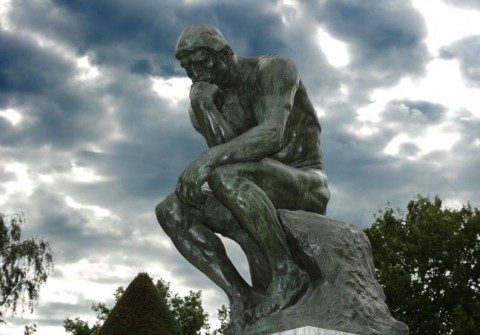 What can philosophy do for you? The question is perhaps better asked this way. What can’t it do for you?
Head over to this web site created by Tomás Bogardus, a philosophy professor at Pepperdine, and you’ll learn why philosophy can answer big questions (we all know that), but also improve your test scores on the LSAT, GRE and GMAT, and then make you more employable and better compensated in the workplace. Yes, rigorous thinking can do that.
If you’re wondering which philosophy grads have actually made a dent in the world, here’s a list of players and yet another list. They include names like: George Soros, the Karl Popper disciple who singlehandedly broke the Bank of England (missed the course on ethics, I guess); Phil Jackson, the zen master who led 11 basketball teams to NBA championships; Carly Fiorina, the first woman to become the CEO of a Fortune 20 company; and Vaclav Havel, the playwright who later became president of Czechoslovakia.
If you want to start living the examined life too, we’d suggest getting started with our collection of 90 Free Philosophy Courses, and otherwise exploring related courses in our collection of 750 Free Courses Online.
via Leiter Reports
Related Content:
Take First-Class Philosophy Lectures Anywhere with Free Oxford Podcasts
The History of Philosophy … Without Any Gaps
Read More...Eric Clapton’s Favorite Guitar Solo: Duane Allman on Wilson Pickett’s 1968 Cover of the Beatles’ ‘Hey Jude’
Ask a group of guitarists to name their favorite guitar solo, and there’s a pretty good chance someone will mention Eric Clapton’s solo on the live recording of “Crossroads,” from Cream’s 1968 Wheel’s of Fire album. So then, whose solo does Eric Clapton like? On more than one occasion he has singled out Duane Allman’s breakthrough performance on Wilson Pickett’s R & B cover of the Beatles’ “Hey Jude.”
In late 1968 Allman was about 22 years old and had not yet formed the Allman Brothers Band. Eager to make a name for himself, he showed up at Rick Hall’s now-legendary FAME Studios in Muscle Shoals, Alabama, to offer his services as a session guitarist. Hall told Allman he already had more guitar players than he could use. Allman asked if he could just hang around the studio and help out if the need should ever arise. “I mean, this was Duane,” Hall said to Allman’s biographer Randy Poe. “He was hell-bent for stardom and nothing was going to stop him.”
Hall let the young guitarist hang around, and before long he was playing on a few sessions with Clarence Carter. Hall liked what he heard, and Allman’s crucial moment arrived shortly afterward, when the former Stax recording artist Wilson Pickett showed up at the studio unexpectedly. As Poe writes in his book Skydog: The Duane Allman Story,
“Pickett came into the studio,” says Hall, “and I said, ‘We don’t have anything to cut.’ We didn’t have a song. Duane was there, and he came up with an idea. By this time he’d kind of broken the ice and become my guy. So Duane said, ‘Why don’t we cut “Hey Jude”?’ I said, ‘That’s the most preposterous thing I ever heard. It’s insanity. We’re gonna cover the Beatles? That’s crazy!’ And Pickett said, ‘No, we’re not gonna do it.’ I said, ‘Their single’s gonna be Number 1. I mean, this is the biggest group in the world!’ And Duane said, ‘That’s exactly why we should do it — because [the Beatles single] will be Number 1 and they’re so big. The fact that we would cut the song with a black artist will get so much attention, it’ll be an automatic smash.’ That made all the sense in the world to me. So I said, ‘Well, okay. Let’s do it.’
The original Beatles version of “Hey Jude” is over seven minutes long. Pickett was determined to keep his version shorter, to make it suitable for radio play. At four minutes long, it was still more than a minute longer than the average popular song from that era. Most of the extra time is taken up by Allman’s explosive rock and roll-style guitar solo. “From the moment Duane plays the first lick ten seconds into the coda,” writes Poe, “until the song fades out over a minute later, it is entirely his show. The background vocalists are singing those familiar ‘na-na-na-na’s’ — but it’s all for naught. Rick Hall has pushed them so far down in the mix, they are merely ambiance. Absolutely nothing matters but Duane’s guitar.” When it was over, everyone rushed to hear the playback. Hall was so excited he picked up the telephone and called Atlantic Records producer and executive Jerry Wexler, who had sent Pickett to Muscle Shoals. Writes Poe:
Hall cranked up the volume, held the receiver near the speakers, and played the recording all the way through. The guitar player, naturally, blew Jerry Wexler away. “Who is he?” Wexler asked. Hall told Wexler that Pickett called him Sky Man. He said that Sky Man was a hippie from Florida who had talked Pickett into cutting the tune. Wexler persisted. “Who the hell is he?” “Name’s Duane Allman,” Rick replied.
Before Pickett christened Allman “Sky Man,” the guitarist already had a nickname he was fond of: “Dog.” In keeping with it, he always wore a dog collar wrapped around his right boot, like a spur. So the two nicknames were combined, and Allman was known thereafter as “Skydog.”
Although Pickett recorded “Hey Jude” against his will, he liked the result so much he made it the title song of his next album. And right about the time the Beatles’ version was coming down after nine weeks at number one on the American charts, Pickett’s version started going up. It peaked at number 15 on the R & B chart and number 23 on the pop chart. When Clapton first heard Allman’s solo on his car radio, he reportedly pulled over to the side of the road to listen. “I drove home and called Atlantic Records immediately,” Clapton said. “I had to know who that was playing guitar and I had to know now.”
Listen to the full song:
Related Content:
Here Comes The Sun: The Lost Guitar Solo by George Harrison
Guitar Stories: Mark Knopfler on the Six Guitars That Shaped His Career
Read More...A Poet in Cinema: Andrei Tarkovsky Reveals the Director’s Deep Thoughts on Filmmaking and Life
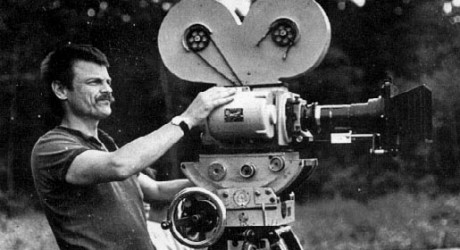
Those who find their way into the rich emotional and aesthetic realm of Russian filmmaker Andrei Tarkovsky (see our collection of Free Tarkovsky movies online) might at first assume that nobody can put the experiential appeal of his cinema into words. The well-known writer and Tarkovsky fan Geoff Dyer demonstrated this, in a sense, with his highly entertaining book Zona: A Book About a Film About a Journey to a Room, which ostensibly describes the director’s acclaimed Stalker but actually heads off in a thousand different digressive directions, all of them driven by the writer’s appreciation for the movie. Pictures like Stalker, Solaris, Nostalghia, or The Mirror may set off within you a range of reactions to film you’d never thought possible, but wouldn’t that only make them more difficult to talk about? Rarely do the much-discussed musical rather than intellectual properties of cinema as an art form seem as relevant as when you watch Tarkovsky; the old line comparing writing about music to dancing about architecture comes to mind.
But Tarkovsky himself thought of film as sculpture, as he explains in the posthumously published treatise on his craft Sculpting in Time. The book has much to teach about the unique artistic potential of the medium as this master understood it, and it reveals that, indeed, one can speak cogently about Tarkovsky, and nobody can do it more cogently than Tarkovsky himself. This ability he also displays in the documentary Voyage in Time, from which we’ve previously featured a clip of his advice to young filmmakers. Here we have a less-seen portrait, but one that makes a similarly thorough examination, with interviews, dramatizations, and historical footage, of the auteur’s reality: Donatella Baglivo’s 1983 Tarkovsky: A Poet in Cinema. (Watch it online here.) From Baglivo’s short but choice prompts, Tarkovsky expounds on not just his life and work but the essential importance of fighting, the conceptual nonexistence of happiness, what childhood determines about us, wartime’s impact on fantasies, and the salutary effects of a year laboring in Siberia — all in the first fifteen minutes of this 140-minute argument that film, at its most powerful, doesn’t just get you talking about film; it demands that you talk about existence itself.
Related Content:
Tarkovsky Films Now Free Online
Tarkovsky’s Advice to Young Filmmakers: Sacrifice Yourself for Cinema
Tarkovsky’s Solaris Revisited
Andrei Tarkovsky’s Very First Films: Three Student Films, 1956–1960
Colin Marshall hosts and produces Notebook on Cities and Culture and writes essays on literature, film, cities, Asia, and aesthetics. He’s at work on a book about Los Angeles, A Los Angeles Primer. Follow him on Twitter at @colinmarshall.
Read More...The Getty Puts 4600 Art Images Into the Public Domain (and There’s More to Come)
Not long ago, I went over to the Getty to see the J. Paul Getty Trust’s President and CEO James Cuno in live conversation with Pico Iyer, one of his favorite writers as well as one of mine. Cuno, himself the author of books like Whose Culture?: The Promise of Museums and the Debate over Antiquities and Museums Matter: In Praise of the Encyclopedic Museum, impressed me not only with his choice of interlocutors but with the open, forward-thinking nature he revealed during the talk. On Monday, he demonstrated it again by publishing another piece of writing, very brief but undeniably important: his announcement of the Getty’s Open Content Program, which has just made available over 4600 high-resolution images of the museum’s collection freely available in the public domain. You can download them, modify them, distribute them — do what you please with them.
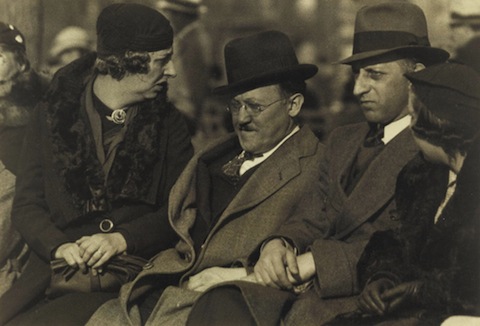
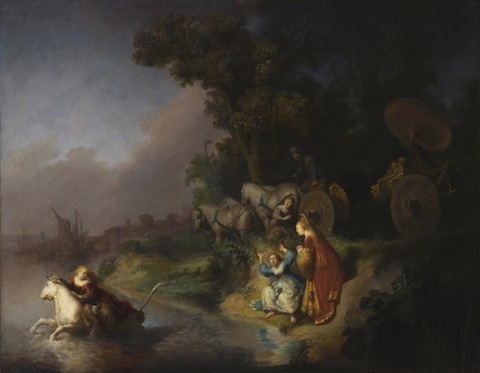
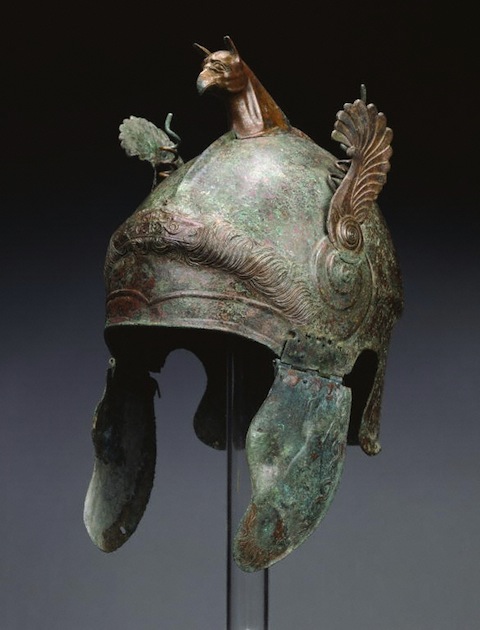
“Why open content? Why now?” Cuno writes. “The Getty was founded on the conviction that understanding art makes the world a better place, and sharing our digital resources is the natural extension of that belief. This move is also an educational imperative. Artists, students, teachers, writers, and countless others rely on artwork images to learn, tell stories, exchange ideas, and feed their own creativity.” If you enjoy engaging in any of these pursuits — which, as an Open Culture habitué, I assume you do — begin by browsing all the Open Content Program’s currently available images, or check for download links on individual Getty collection pages. This post includes three images straight from the Getty: Rembrandt’s The Abduction of Europa, Walker Evans’ A Bench in the Bronx on Sunday, and a helmet of Chalcidian type circa 350–300 B.C. Cuno promises many more images to come, and material from other sources like the Getty’s international field projects. He’s got my anticipation.
Related Content:
40,000 Artworks from 250 Museums, Now Viewable for Free at the Redesigned Google Art Project
LA County Museum Makes 20,000 Artistic Images Available for Free Download
The Rijksmuseum Puts 125,000 Dutch Masterpieces Online, and Lets You Remix Its Art
Art.sy Rolls Out Huge Archive of Fine-Art Images and an Intelligent Art Appreciation Guide
Free: The Metropolitan Museum of Art and the Guggenheim Offer 474 Free Art Books Online
Colin Marshall hosts and produces Notebook on Cities and Culture and writes essays on literature, film, cities, Asia, and aesthetics. He’s at work on a book about Los Angeles, A Los Angeles Primer. Follow him on Twitter at @colinmarshall.
Read More...Jimi Hendrix Live at Woodstock: Historic Concert Captured on Film
By the time Jimi Hendrix arrived onstage at the Woodstock Festival on the morning of August 18, 1969, the crowd of nearly 500,000 people had dwindled to fewer than 40,000. Much of Max Yasgur’s farm looked desolate. Litter was strewn everywhere and — hard as it may be to imagine — scores of people were streaming out as Hendrix played.
The festival was billed as “3 Days of Peace & Music,” but rain and other problems delayed Hendrix’s festival-closing performance until 8:30 on the morning of the fourth day, a Monday. The people who remained were exhausted and wet and just waking up. As festival organizer Michael Lang writes in The Road to Woodstock:
The massive stage was sparsely populated compared to how packed it had been all weekend with musicians, crew, and friends. Jimi, a red scarf around his head and wearing a white fringed and beaded leather shirt, looked almost like a mystical holy man in meditation. His eyes closed, his head back, he’d merged with his music, his Strat — played upside down since he’s a lefty — his magic wand. Though he was surrounded by his band, he projected the feeling he was all alone.
As he almost reverently started the national anthem, the bedraggled audience, worn out and muddy, moved closer together. Those of us who’d barely slept in three days were awakened, exhilarated by Jimi’s song. One minute he was chording the well-worn melody, the next he was reenacting “bombs bursting in air” with feedback and distortion. It was brilliant. A message of joy and love of country, while at the same time an understanding of all the conflict and turmoil that’s torn America apart.
The Jimi Hendrix Experience had broken up a few weeks earlier, with the departure of bassist Noel Redding. At the festival, Hendrix and drummer Mitch Mitchell were joined by two musicians Hendrix had worked with before he was famous — bassist Billy Cox and guitarist Larry Lee — along with conga players Juma Sultan and Jerry Velez. The group had rehearsed for less than two weeks in Hendrix’s rented house near Woodstock. They called themselves “Gypsy Sun & Rainbows,” or “Band of Gypsys” for short.
Hendrix’s psychedelic performance of “The Star-Spangled Banner” was immortalized in Michael Wadleigh’s Academy Award-winning 1970 film, Woodstock. A two-disc DVD capturing most of Hendrix’s nearly two-hour set, called Jimi Hendrix Live at Woodstock, was released in 1999. The 57-minute film above is an abridged version. It begins with an excerpt from “Message to Love” (the song Hendrix opened with) played over general scenes of the festival. It goes on to show Hendrix onstage, playing the following songs:
- “Fire”
- “Izabella”
- “Red House”
- “Jam Back at the House”
- “Voodoo Child (Slight Return)”
- “Star-Spangled Banner”
- “Purple Haze”
- “Woodstock Improvisation”
- “Villanova Junction”
The songs in the film are not presented in the order Hendrix played them in, and some have been omitted. Second guitarist Larry Lee (who can be heard soloing in “Jam Back at the House”) sang lead vocals on “Mastermind” and “Gypsy Woman/Aware of Love,” but those songs have been cut from this version. Also left out are “Spanish Castle Magic,” “Hear My Train a Comin’,” “Lover Man,” “Foxy Lady,” “Stepping Stone,” and an encore of “Hey Joe.” Despite the omissions, this abridged version of Jimi Hendrix Live at Woodstock is a fascinating and enjoyable look at one of the great moments in rock and roll history.
Related Content:
In 1969 Telegram, Jimi Hendrix Invites Paul McCartney to Join a Super Group with Miles Davis
See Jimi Hendrix’s First TV Appearance, and His Last as a Backing Musician (1965)
Watch Jimi Hendrix’s ‘Voodoo Chile’ Performed on a Gayageum, a Traditional Korean Instrument
Read More...8‑Year-Old George Orwell Sends a Cute Picture and Error-Filled Letter To His Mother, 1911
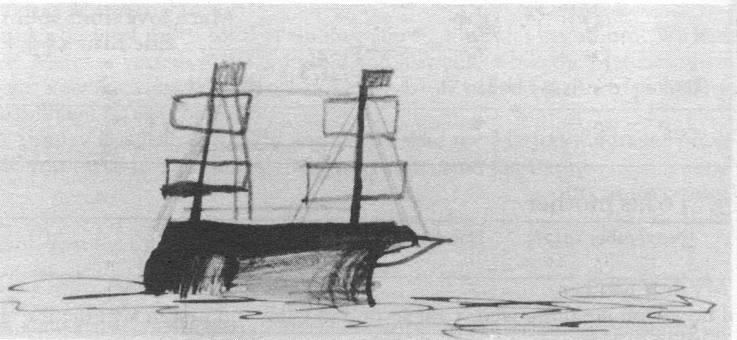
It’s hard to imagine a time when George Orwell didn’t exercise masterful control over the English language. But if you go far enough back, you’ll find proof that every writer starts somewhere. We all begin as mortals.
In December 2, 1911, an 8‑year-old Eric Blair (the birth name of Orwell), wrote a letter to his mother, Ida, detailing his day-to-day affairs at St. Cyprian’s School, a boarding school in Southern England. The letter is sweet for many reasons, not least because of the phonetic spelling/misspellings that run through the note. The original/uncorrected text appears below. It’s one of many letters gathered on GeorgeOrwellNovels.com, and it’s also the very first letter published in a new volume this week, George Orwell: A Life in Letters. The endearing letter was apparently sent with a cute picture enclosed. You can see it right above.
My dear Mother, I hope you are alright,
It was Mrs: Wilkes birthday yesterday, we had aufel fun after tea and played games all over the house. We all went for a walk to Beachy-Head.
I am third in Arithmatick.
‘Its’ very dull today, and dosent look as if its going to be very warm. Thank you for your letter.It is getting very near the end of the term, there are only eighteen days more. On Saturday evening we have dncing, and I am going to say a piece of poetry, some of the boys sing.
Give my love to Father and Avril. Is Togo alright, We had the Oxford and Cambridge Matches yesterday. Cambridge won in the first and third, and the second did not have a Match. I am very glad Colonel Hall6 has given me some stamps, he said he wold last year but I thought he had forgoten. Its a beastly wet day today all rain and cold.
I am very sorry to hear we had those beastly freaks of smelly white mice back.
I hope these arnt smelly one. if they arnt I shall like them.From your loveing son,
E. A. Blair.
Related Content:
Download George Orwell’s Animal Farm and 1984 as Free Audio Books
The Only Known Footage of George Orwell (Circa 1921)
George Orwell Explains How to Make a Proper Cup of Tea
Read More...Michel Foucault — Beyond Good and Evil: 1993 Documentary Explores the Theorist’s Controversial Life and Philosophy
Michel Foucault’s colorful life and hugely influential work were both struggles against limitation—the limits of language, of social structures and stultifying historical identities. As such, he managed to provoke scholars of every possible persuasion, since he called into question all positive programs—the ancient imperial, feudal, and liberal humanist—while steadfastly refusing to replace them with comprehensive alternative systems. And yet systems, social institutions of power and domination, were precisely the problem in Foucault’s estimation. Through his technique of raiding archives to produce an “archaeology of knowledge,” Foucault showed how every institution is shot through with what William E. Connolly calls “arbitrary… systemic cruelty.”
The 1993 documentary film above, Michel Foucault: Beyond Good and Evil, explores the philosopher and his complex and controversial life through interviews with colleagues and biographers and re-enactments of Foucault’s storied exploits in the American counterculture. Biographer James Miller points out that Foucault was “preoccupied with exploring states that were beyond normal everyday experience… drugs, certain forms of eroticism,” as a way to “reconfigure the world and his place in it.” In this, says anthropologist Paul Rabinow, Foucault sought to resurrect the questions that sober analytic philosophy had largely abandoned: questions about what it means to be human, beyond the social categories we take as natural and given.
You can find Michel Foucault: Beyond Good and Evil listed in our collection, 4,000+ Free Movies Online: Great Classics, Indies, Noir, Westerns, Documentaries & More.
Related Content:
Michel Foucault: Free Lectures on Truth, Discourse & The Self
Clash of the Titans: Noam Chomsky & Michel Foucault Debate Human Nature & Power on Dutch TV, 1971
John Searle on Foucault and the Obscurantism in French Philosophy
Josh Jones is a writer and musician based in Washington, DC. Follow him at @jdmagness
Read More...Alfred Hitchcock’s 50 Ways to Kill a Character (and Our Favorite Hitch Resources on the Web)
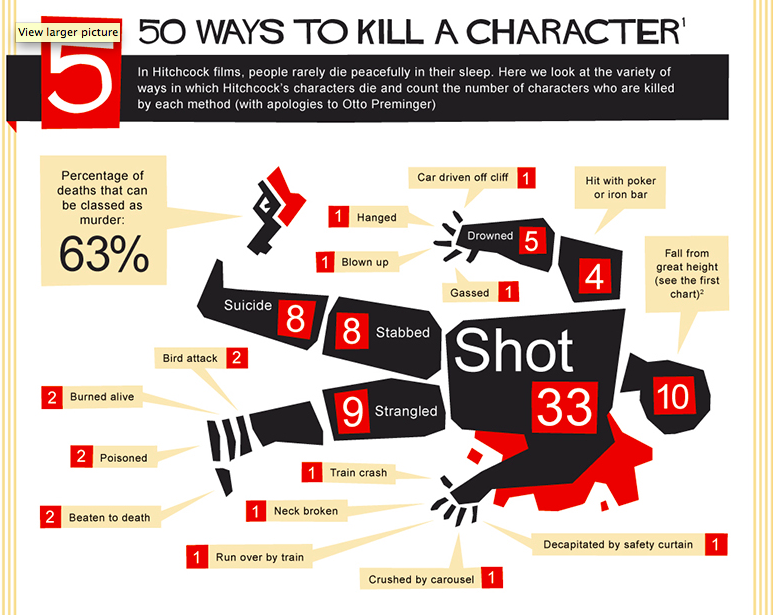 Alfred Hitchcock would have celebrated his 114th birthday today. And, to mark the occasion, The Guardian has created a big infographic that delves into the themes and motifs that Hitchcock obsessed over in his many films. Above, we have a segment showing the way Hitchcock characters die, and the number of people who die according to particular methods. The best part is that you can download the infographic for free online.
Now time for us to dish up our favorite Hitchcock material found on the web. The best of the best:
Watch 20 Free Hitchcock Movies Online
Alfred Hitchcock’s Seven-Minute Editing Master Class
François Truffaut’s Big 12 Hour Interview with Alfred Hitchcock
37 Hitchcock Cameos over 50 Years: All in One Video
36 Hitchcock Murder Scenes Climaxing in Unison
Salvador Dalí Creates a Dream Sequence for Spellbound, Hitchcock’s Psychoanalytic Thriller
Alfred Hitchcock’s Rules for Watching Psycho (1960)
Read More...The Three Punctuation Rules of Cormac McCarthy (RIP), and How They All Go Back to James Joyce
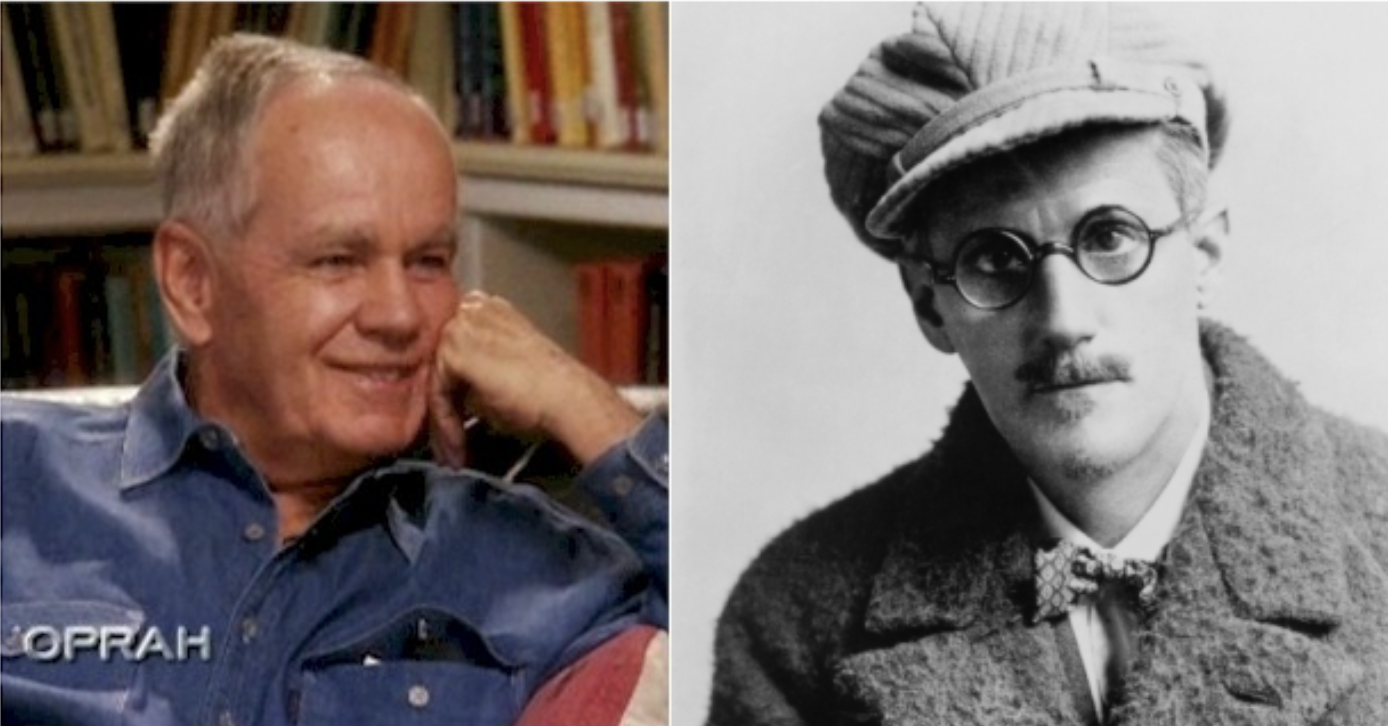
Cormac McCarthy has been—as one 1965 reviewer of his first novel, The Orchard Keeper, dubbed him—a “disciple of William Faulkner.” He makes admirable use of Faulknerian traits in his prose, and I’d always assumed he inherited his punctuation style from Faulkner as well. But in his very rare 2008 televised interview with Oprah Winfrey, McCarthy cites two other antecedents: James Joyce and forgotten novelist MacKinlay Kantor, whose Andersonville won the Pulitzer Prize in 1955. Joyce’s influence dominates, and in discussion of punctuation, McCarthy stresses that his minimalist approach works in the interest of maximum clarity. Speaking of Joyce, he says,
James Joyce is a good model for punctuation. He keeps it to an absolute minimum. There’s no reason to blot the page up with weird little marks. I mean, if you write properly you shouldn’t have to punctuate.
So what “weird little marks” does McCarthy allow, or not, and why? Below is a brief summary of his stated rules for punctuation:
1. Quotation Marks:
McCarthy doesn’t use ’em. In his Oprah interview, he says MacKinlay Kantor was the first writer he read who left them out. McCarthy stresses that this way of writing dialogue requires particular deliberation. Speaking of writers who have imitated him, he says, “You really have to be aware that there are no quotation marks, and write in such a way as to guide people as to who’s speaking.” Otherwise, confusion reigns.
2. Colons and semicolons:
Careful McCarthy reader Oprah says she “saw a colon once” in McCarthy’s prose, but she never encountered a semicolon. McCarthy confirms: “No semicolons.”
Of the colon, he says: “You can use a colon, if you’re getting ready to give a list of something that follows from what you just said. Like, these are the reasons.” This is a specific occasion that does not present itself often. The colon, one might say, genuflects to a very specific logical development, enumeration. McCarthy deems most other punctuation uses needless.
3. All other punctuation:
Aside from his restrictive rationing of the colon, McCarthy declares his stylistic convictions with simplicity: “I believe in periods, in capitals, in the occasional comma, and that’s it.” It’s a discipline he learned first in a college English class, where he worked to simplify 18th century essays for a textbook the professor was editing. Early modern English is notoriously cluttered with confounding punctuation, which did not become standardized until comparatively recently.
McCarthy, enamored of the prose style of the Neoclassical English writers but annoyed by their over-reliance on semicolons, remembers paring down an essay “by Swift or something” and hearing his professor say, “this is very good, this is exactly what’s needed.” Encouraged, he continued to simplify, working, he says to Oprah, “to make it easier, not to make it harder” to decipher his prose. For those who find McCarthy sometimes maddeningly opaque, this statement of intent may not help clarify things much. But lovers of his work may find renewed appreciation for his streamlined syntax.
Related Content:
Werner Herzog Reads From Cormac McCarthy’s All the Pretty Horses
Seven Tips From William Faulkner on How to Write Fiction
David Foster Wallace Breaks Down Five Common Word Usage Mistakes in English
Josh Jones is a writer and musician based in Washington, DC. Follow him at @jdmagness
Read More...Listen to Charles Bukowski Poems Being Read by Bukowski Himself & the Great Tom Waits
The outspoken, ragged-edged poet and novelist Charles Bukowski entered our world 93 years ago this Friday, and presumably began making trouble immediately. HarperCollins marks the occasion a bit early this year by releasing today eight Bukowski audiobooks, the first of their kind. (Sign up for a Free Trial with Audible.com and you can get one for free.) Alas, Bukowski didn’t live quite long enough to commit Post Office, South of No North, Factotum, Women, Ham on Rye, Hot Water Music, Hollywood, and Pulp to tape himself. ”
It would be Bukowski himself reading here, if the technology had advanced quickly enough,” Galleycat quotes publisher Daniel Halpern as saying, “but his voice rings clear and deep in these renditions – and from them, the genius of Bukowski flows forth.” Whether or not you plan to purchase these new audiobooks, we offer you here a dose of Bukowski out loud.
At the top you’ll find one of Bukowski’s own readings, “The Secret of My Endurance,” a poem that appeared in Dangling In The Tournefortia (1982). Down below you can hear Bukowski’s “Nirvana” as read by Tom Waits, who possesses a voice famously evocative of unforgiving American life, one that perhaps sounds more like that of a Bukowski poem than Bukowski’s own. And if you missed our earlier post featuring Waits’ interpretation of “The Laughing Heart (middle),” what more suitable occasion could you have to circle back and heed its battered yet optimistic guidance: “Your life is your life. Don’t let it be clubbed into dank submission.”
If you would like to support the mission of Open Culture, consider making a donation to our site. It’s hard to rely 100% on ads, and your contributions will help us continue providing the best free cultural and educational materials to learners everywhere. You can contribute through PayPal, Patreon, and Venmo (@openculture). Thanks!
Related Content:
Charles Bukowski Sets His Amusing Conditions for Giving a Poetry Reading (1971)
“Don’t Try”: Charles Bukowski’s Concise Philosophy of Art and Life
Charles Bukowski: Depression and Three Days in Bed Can Restore Your Creative Juices (NSFW)
Colin Marshall hosts and produces Notebook on Cities and Culture and writes essays on literature, film, cities, Asia, and aesthetics. He’s at work on a book about Los Angeles, A Los Angeles Primer. Follow him on Twitter at @colinmarshall.
Read More...Support Us
We're hoping to rely on loyal readers, rather than erratic ads. Please click the Donate button and support Open Culture. You can use Paypal, Venmo, Patreon, even Crypto! We thank you!

About Us

Open Culture scours the web for the best educational media. We find the free courses and audio books you need, the language lessons & educational videos you want, and plenty of enlightenment in between.
Advertise With Us

FREE UPDATES!
GET OUR DAILY EMAIL
Get the best cultural and educational resources on the web curated for you in a daily email. We never spam. Unsubscribe at any time.
FOLLOW ON SOCIAL MEDIA

Open Culture editor Dan Colman scours the web for the best educational media. He finds the free courses and audio books you need, the language lessons & movies you want, and plenty of enlightenment in between.
Advertise With Us


