Thelonious Monk, Legendary Jazz Pianist, Revealed in 1968 Cinéma Vérité Film
Thelonious Monk’s personality was as quirky and original as his piano playing. An elusive, insular figure, Monk was nevertheless persuaded in late 1967 to allow a camera crew to follow him around over an extended period of time for a West German television documentary. The film, Monk (shown above in its entirety), is a fascinating up-close look at one of the giants of Jazz.
The 55-minute movie was shot by the American filmmakers Michael and Christian Blackwood for the networks NDR (North German Broadcasting) and WDR (West German Broadcasting). The Blackwood brothers had unprecedented access to Monk over a six-month period in late 1967 and early 1968, as he and his quartet performed and recorded in New York, Atlanta and Europe. The quartet includes Charlie Rouse on tenor saxophone, Larry Gales on bass and Ben Riley on drums. Although there are a few brief passages of untranslated German narration, the film is basically a cinéma vérité piece on Monk (who speaks English) and his remarkable music.
The Blackwood brothers’ footage, which Stephen Holden of The New York Times called “some of the most valuable jazz sequences ever shot,” later became the nucleus of a longer 1988 documentary produced by Clint Eastwood. You can watch that film and learn more about it in our 2011 post, “Thelonious Monk: Straight No Chaser.”
Related content:
Thelonious Monk in His Prime: Copenhagen, 1966
Advice From the Master: Thelonious Monk Scribbles a List of Tips for Playing a Gig
10 Great Performances From 10 Legendary Jazz Artists: Django, Miles, Monk, Coltrane & More
Read More...Blade Runner: The Pillar of Sci-Fi Cinema that Siskel, Ebert, and Studio Execs Originally Hated

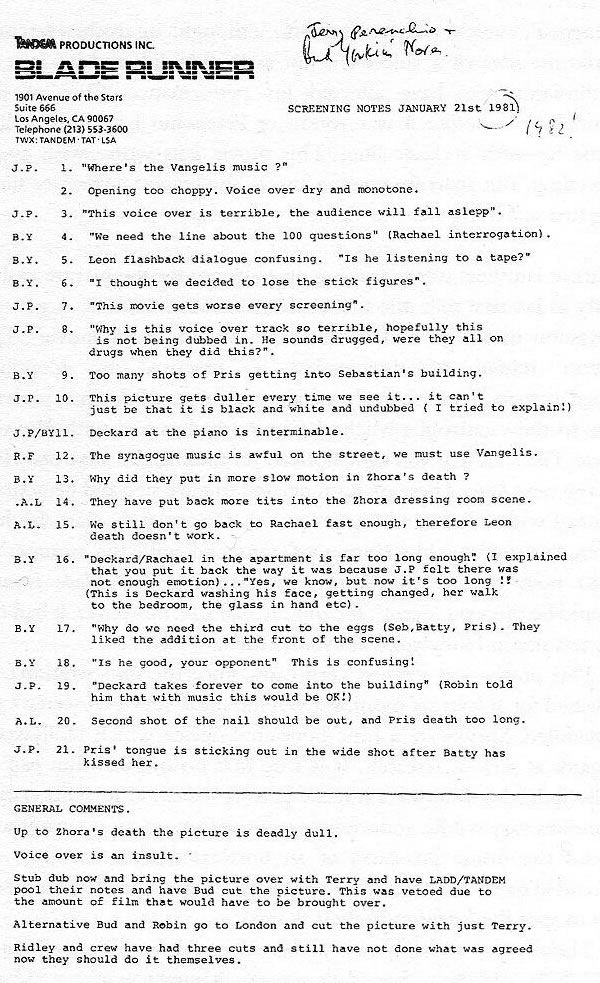
Growing up, I didn’t think about all the individual qualities that make a great movie. I just thought of Blade Runner. Whatever Ridley Scott’s 1982 adaptation of Philip K. Dick’s Do Androids Dream of Electric Sheep had, it made for high cinematic quality indeed. As naive as it sounds, it doesn’t fall much short of modern critical and target-audience consensus. Visually, intellectually, and technically, Blade Runner has endured the decades almost effortlessly; how many other tales of humans real and artificial in a dystopian future megalopolis can you say the same about, at least with a straight face? Yet back in the early eighties, you would have had to call the picture, which opened to a weekend of only $6.15 million in ticket sales against its $28 million budget, a flop. Nor could critics come up with much praise: “A waste of time,” said Gene Siskel of Siskel & Ebert. (“I have never quite embraced Blade Runner,” Ebert wrote 25 years later, “but now it is time to cave in and admit it to the canon.”)
Have a look at the sheet of screening notes above (or click here to view a larger image), and you’ll find that even the studio executives didn’t like the movie. Some Blade Runner fans blame the poor initial reception on the cut that 1982’s critics and audiences saw, which differs considerably from the version so many of us revere today. They cite in particular a series of deadeningly explanatory voice-overs performed after the fact by star Harrison Ford, which sounds like a classic demand by philistine “suits” in charge until you read the notes from one executive referred to as J.P.: “Voice over dry and monotone,” “This voice over is terrible,” “Why is this voice over track so terrible.” And under “general comments”: “Voice over is an insult.” But with the offending track’s removal, the replacement of certain shots, tweaks in the plot, and the simple fullness of time, Blade Runner has gone from one of the least respected science fiction films to one of the most. Yet part of me wonders if some of those higher-ups in the screening ever made peace with it. A certain A.L., for instance, makes the fourteenth point, and adamantly: “They have to put more tits into the Zhora dressing room scene.”
via Neatorama
Related Content:
Blade Runner is a Waste of Time: Siskel & Ebert in 1982
The Blade Runner Sketchbook: The Original Art of Syd Mead and Ridley Scott Online
Blade Runner: The Final, Final Cut of the Cult Classic
Colin Marshall hosts and produces Notebook on Cities and Culture and writes essays on literature, film, cities, Asia, and aesthetics. He’s at work on a book about Los Angeles, A Los Angeles Primer. Follow him on Twitter at @colinmarshall.
Read More...What Should Have Entered the Public Domain in 2013?: Philip K. Dick, James Bond, Billie Holiday, Etc
What entered the public domain in the US in 2013? It’s not a long answer, because the answer is .… nothing.
Now here’s a question that yields a longer answer. What books would have entered the public domain if we were still operating under reasonable, pre-1978 copyright laws? Here’s a little list that comes from Duke University’s Center for the Study of the Public Domain:
- Winston Churchill, A History of the English-Speaking Peoples
- Philip K. Dick, Minority Report
- Ian Fleming, Diamonds are Forever (a James Bond novel)
- Fred Gibson, Old Yeller
- Billie Holiday, Lady Sings the Blues
- Alan Lerner, My Fair Lady
- Eugene O’Neill, Long Day’s Journey into Night
- John Osborne, Look Back in Anger
- Dodie Smith, 101 Dalmatians
You can also add films to the list, like:
- Hitchcock’s The Man Who Knew Too Much
- The Searchers (directed by John Ford and starring John Wayne)
- Note: We have catalogued 21 Free John Wayne films on the web here.
- The Ten Commandments (1956 version by Cecil B. DeMille, who also directed a similar film in 1923)
- Around the World in 80 Days
- Godzilla, King of the Monsters!
- The Best Things in Life are Free
And we shouldn’t fail to mention that we could have had the first issue of MAD magazine, with Alfred E. Neuman gracing the cover.
In the meantime, if you’re wondering what will hit the public domain in 2014, the answer is “nothing.” And you can keep repeating that answer until 2019! That’s the next time something new will enter America’s creative commons. Yet one more reason Congress’ approval rating deserves to sit at 15%.
Related Content:
Lawrence Lessig’s Last Speech on Free Culture. Watch it Online.
Support The Public Domain Review
Creative Commons Announces “School of Open” with Courses to Focus on Digital Openness
Read More...
House of Earth: Hear Woody Guthrie’s Lost Novel, Published by Johnny Depp, as an Audio Book
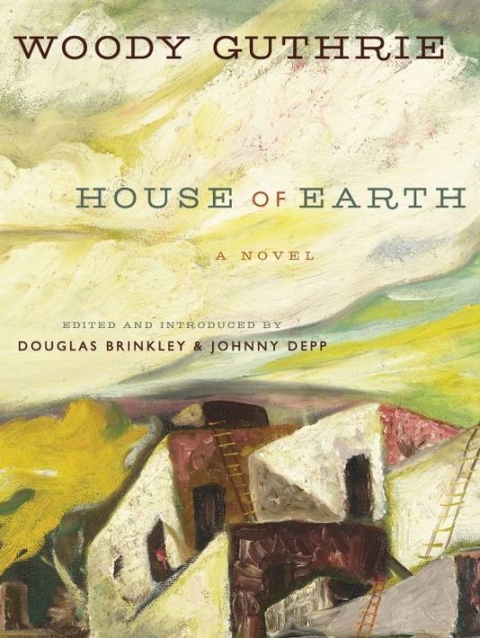
Woody Guthrie may have written as many as 3,000 folk songs, but he didn’t limit himself there. He also managed to write a novel called House of Earth, which only last month saw the light of day. To whom do we owe the pleasure of reading this previously unknown addendum to the prolific singer-songwriter’s career? Why, to historian Douglas Brinkley, actor Johnny Depp, and Guthrie’s daughter Nora. Researching a forthcoming biography of Bob Dylan, Brinkley spotted a mention of House of Earth somewhere deep in the files of famous folk-music recordist Alan Lomax. He traced the manuscript to the University of Tulsa library, which had it in storage. Depp had recently started his own publishing imprint, Infinitum Nihil, and Brinkley passed along this promising piece of material. (The two had known each other for years, having initially met through that great literary connector, Dr. Hunter S. Thompson.)
With House of Earth, Guthrie wrote a Dust Bowl novel, but one very much in tune with his own sensibilities. Unlike John Steinbeck’s The Grapes of Wrath, Guthrie’s story follows not the farm families who fled west, but those who remained on the Texas plains. “Pitched somewhere between rural realism and proletarian protest,” write Brinkley and Depp in a New York Times Book Review essay, “somewhat static in terms of narrative drive, ‘House of Earth’ nonetheless offers a searing portrait of the Panhandle and its marginalized Great Depression residents. Guthrie successfully mixes Steinbeck’s narrative verve with D. H. Lawrence’s openness to erotic exploration.” As of this week, you can read and also now hear the book, as read by Will Patton, in an audio version released by Audible.com. (Find info on how to get it for free below.) At the top of this post, you’ll find a short clip of Patton delivering the singer’s prose. Though Guthrie will remain best known for his politically-charged songs, his novel, which launches broadsides against big finance, big lumber, and big agriculture, should carry charge enough for any of his enthusiasts.
Note: Do you want to download House of Earth from Audible for free? Here’s one way to do it. Just head over to Audible.com and register for a 30-day free trial. You can download any audio book for free. Then, when the trial is over, you can continue your Audible subscription, or cancel it, and still keep the audio book. The choice is yours. And, in full disclosure, let me tell you that we have a nice arrangement with Audible. Whenever someone signs up for a free trial, it helps support Open Culture. That’s cool. But frankly, we work with them because I personally use the service nothing short of religiously.
Related Content:
Woody Guthrie at 100: Celebrate His Amazing Life with a BBC Film
Woody Guthrie’s Fan Letter To John Cage and Alan Hovhaness (1947)
375 Free eBooks: Download to Kindle, iPad/iPhone & Nook
Colin Marshall hosts and produces Notebook on Cities and Culture and writes essays on literature, film, cities, Asia, and aesthetics. He’s at work on a book about Los Angeles, A Los Angeles Primer. Follow him on Twitter at @colinmarshall.
Read More...Carnegie Hall MOOC Will Teach You How to Listen to Orchestras (Free)
In advance of its May 2013 concert series, Carnegie Hall has created a Massive Open Online Course (MOOC) that will teach students how to listen to orchestras. The course, S4MU — short for Spring 4 Music University — is premised on the idea that “listening is an art itself,” and that you won’t overcome a tin ear by studying music theory alone. Starting on April 1, the four-week course will be taught by Baltimore Symphony Orchestra conductor Marin Alsop; ArtsJournal editor Douglas McLennan (seen above); composer Jennifer Higdon; vocalist Storm Large; and conductor Leonard Slatkin. Like all other MOOCs, the course is free. You can reserve your spot in the class right here.
Spring 4 Music University has been added to our complete list of MOOCs, where you will find 45 courses starting in April.
Thanks goes to Maxine for the heads up on this new offering.
Related Content:
Leonard Bernstein’s Masterful Lectures on Music (11+ Hours of Video Recorded in 1973)
85,000 Classical Music Scores (and Free MP3s) on the Web
Bobby McFerrin Shows the Power of the Pentatonic Scale
Yale’s Open Course “Listening to Music”
Read More...Ralph Ellison Reads from His Novel-in-Progress, Juneteenth, in Rare Video Footage (1966)
?t=20m27s
Perhaps you haven’t given Ralph Ellison any thought since reading Invisible Man in high school. Watch the interview above, and you’ll have no choice but to consider his work and opinions again. Just past twenty minutes into this short documentary called USA: The Novel, he reads an excerpt from a work of his that you may not have read: Juneteenth, the book that would follow up Invisible Man — 47 years later. It saw publication only in 1999, 33 years after this film on Ellison’s “work in progress,” and five years after his death. He’d written over 2000 pages, and even then claimed to have lost portions of the manuscript in a fire. One of Ellison’s biographers, John F. Callahan, cut down and organized the remaining material. Another of his biographers, Arnold Rampersad, doubts that the fire destroyed much of the troubled novel at all.
Though Ellison’s work remains readily available — even Juneteenth reappeared in 2012 in the 1101-page expansion Three Days Before the Shooting… — the writer left behind fewer direct reflections than his fans and scholars might like. That makes footage like this all the more valuable, and, in it, he even addresses his tendency to not to speak publicly: “I’m fascinated by how the interviewer’s mind works, and I’m also aware that, for all my shunning of a public role which is divorced from my identity as a writer, any kind of statement I make, any time my face appears, there are a lot of people who are going to be interpreting my face, my statements in terms of my racial identity rather than in terms of the quality of what I have to say. Power for the writer, it seems to me, lies in his ability to reveal only a little bit more about the complexity of humanity.”
Related Content:
James Baldwin Bests William F. Buckley in 1965 Debate at Cambridge University
Robert Penn Warren Archive Brings Early Civil Rights to Life
Donald Barthelme’s Syllabus Highlights 81 Books Essential for a Literary Education
Colin Marshall hosts and produces Notebook on Cities and Culture and writes essays on literature, film, cities, Asia, and aesthetics. He’s at work on a book about Los Angeles, A Los Angeles Primer. Follow him on Twitter at @colinmarshall.
Read More...LA County Museum (LACMA) Makes 20,000 Artistic Images Available for Free Download
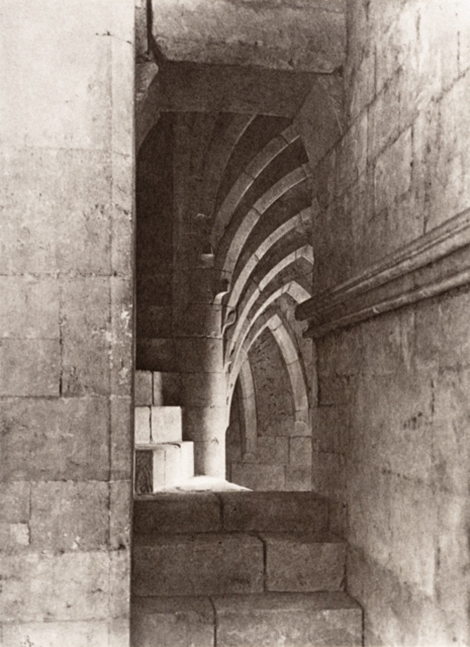
The Los Angeles County Museum of Art houses the largest American collection of art west of Chicago. Developed as an “encyclopedic” museum—its collections represent nearly every human civilization since recorded time—LACMA’s eclectic holdings span from art of the ancient world to video installations. Like all great public collections, LACMA sees its mission as providing the greatest possible access to the widest range of art.
Two years ago LACMA made a relatively small number of its image holdings available for free download in an online library. From that beginning of 2,000 images, the museum recently expanded its downloadable collection by ten-fold, making 20,000 images of artwork available for free.
This represents about a quarter of all the art represented on LACMA’s site. They’ve chosen images of artworks the museum believes to be in the public domain and developed a robust digital archive with a richer search function than most museums.
LACMA’s online collection (80,000 images altogether, including restricted use and unrestricted) is sorted by the usual curatorial terms (“American Art,” “Art of the Pacific” and so on) but that’s just one of many filtering options.
A search for works related to the word “roses” can be done as a general search of all objects, turning up, among 268 other items, Toulouse-Lautrec’s Mlle Marcelle Lender. This item happens to be available for free download. (Note the bloom in the Madamoiselle’s cleavage to see why the image turned up in this search.)
But the collection can be searched more narrowly by object type and curatorial area. There’s also a cool option to search by what’s on view now right now. This choice allows users to zero in on a specific building or floor of the museum’s eight buildings. The collection can also be entered according to chronological era, from 10,000 BCE to the present day.
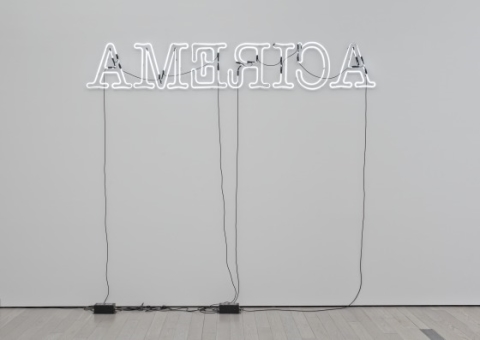
This is important for the public, but even more so for students and educators. Nine years ago Eastman Kodak stopped producing slide projectors. Since then the task of assembling quality images for the study of art history has become hopelessly daunting, with teachers and students searching a myriad websites to create digital “carousels” for class or study.
For whatever reason, in an age over-abundant with high resolution images of nearly everything, pictures of art itself are scattered and expensive.
Institutions like Google Art Projects, the Metropolitan Museum of Art and LACMA are among a few that offer extensive, free art images online.
Of course there are still copyright issues that all institutions must contend with. But it is to LACMA’s credit that they take their mission of public access seriously and put resources into making their wonderful collection available to the international community.
Related Content:
Free: The Guggenheim Puts 65 Modern Art Books Online
Google Art Project Expands, Bringing 30,000 Works of Art from 151 Museums to the Web
Download Hundreds of Free Art Catalogs from The Metropolitan Museum of Art
Kate Rix writes about digital media and education. Visit her website, , to see more work.
Read More...Watch Brian Eno’s “Video Paintings,” Where 1980s TV Technology Meets Visual Art
Brian Eno, the well-known music producer, resident intellectual of rock, “non-musician” musician, “drifting clarifier,” and popularizer of ambient records, went to art school. (The Colchester Institute in Essex, specifically.) Anyone familiar with Eno’s career knows that English art school of the sixties must have perfectly suited his interests and inclinations. But read up on his generation of U.K. popular musicians, and you’ll find art school not a wholly unusual rite of passage. That background united several of the members of Roxy Music, the band in which Eno would hone his sonic craft (and build his notoriety) in the early seventies. Though music would offer him his highest peaks of fame and fortune, Eno never quite forgot that he’d originally entered art school with the intention of painting. Attending an exhibition of his 77 Million Paintings a few years back, I delighted in seeing his interest in technology and composition intersect with his penchant for the visual arts.
Rewind, now, to the eighties, where we find another, equally fascinating example of Eno continuing to “paint,” but in a technologically rethought manner. You can now watch his “video paintings” of that era on Youtube. Here you can see Thursday Afternoon, his series on the female form (some of which, despite approaching abstraction, could potentially be considered NSFW, though any mainstream gallery today would show them openly). Just above, you’ll find an excerpt from his series Mistaken Memories of Medieval Manhattan. It may not look like much, and indeed, Eno’s initial process involved little more than accidentally leaving his camcorder recording on the windowsill. But bear in mind that the actual installation involved screening the piece right-side-up on a television itself turned on its side — a simple recontextualization, but as those who saw the original have assured me, a striking one. Rainy-day project: try replicating that setup at home. I think Eno would approve.
Related content:
Brian Eno on Creating Music and Art As Imaginary Landscapes (1989)
Brian Eno Once Composed Music for Windows 95; Now He Lets You Create Music with an iPad App
Day of Light: A Crowdsourced Film by Multimedia Genius Brian Eno
How David Byrne and Brian Eno Make Music Together: A Short Documentary
Colin Marshall hosts and produces Notebook on Cities and Culture and writes essays on literature, film, cities, Asia, and aesthetics. He’s at work on a book about Los Angeles, A Los Angeles Primer. Follow him on Twitter at @colinmarshall.
Read More...Big History: David Christian Covers 13.7 Billion Years of History in 18 Minutes
Perhaps you noticed? During the past two years, the TED brand has morphed into something new. Once known for staging a couple of high-priced annual conferences, TED has recently launched a series of new products: TEDx conferences for the masses, TED Books, TED Radio, TED ED and Ads Worth Spreading. In the wake of all of this, some have questioned whether TED has grown too quickly, or to put it more colloquially, “jumped the shark.” There are days when TED feels like a victim of its own success. But there are other days — especially when it returns to its roots — where the organization can still be a vital force. That happens whenever TED wraps up its big annual conference, as it did two weeks ago, and puts some noteworthy talks online. (See, for example, Stewart Brand describing how scientists will bring extinct species back from the dead.) Or it happens when TED brings older talks from its archive to YouTube.
Which brings us to the talk above. Here we have David Christian, a professor at Australia’s Macquarie University, explaining the history of the world in less than 18 minutes, starting with the Big Bang and then covering another 13.7 billion years. Formally trained as a Russian historian, Christian began working on Big History in the 1980s, a meta discipline that “examines long time frames using a multidisciplinary approach based on combining numerous disciplines from science and the humanities.” Christian then popularized his newfangled way of telling history when he produced for the Teaching Company: Big History: The Big Bang, Life on Earth, and the Rise of Humanity. It didn’t hurt that Bill Gates stumbled upon the lectures and gave backing to The Big History Project, an online initiative that experiments with bringing Big History to high school students. The Big History Project got its start at the 2011 TED conference, with the talk presented above.
Related Content:
Free Online History Courses from Great Universities
A Crash Course in World History
The Complete History of the World (and Human Creativity) in 100 Objects
Read More...Adrian Belew Presents the Fine Art of Making Guitar Noise — Past, Present, and Future
Since 1989, the Chicago Humanities Festival has been “devoted to making the humanities a vital and vibrant ingredient of daily life.” A quick perusal of their site should convince you of their seriousness. The most recent lineup features a lecture on Josephine Baker and Eva Peron, a history of the banjo, and three University of Illinois professors discussing the first book-length academic study of Mad Men.
But while the focus of CHF may be scholarly, the festival is not all lecture-based. In the summer of 2011, guitarist Adrian Belew appeared on a panel entitled “The History and Future of Guitar Noise.” Musicians out there will likely know Belew’s name, but for those who don’t, he was an integral part of prog-rock giants King Crimson, played with Frank Zappa, the Talking Heads, David Bowie, Nine Inch Nails, and has made a name for himself as one of the most unique electric players of the past several decades (reference his solo below, for example, at 2:20, in a 1978 live performance of Bowie’s “Jean Genie”).
In the video at the top of the page, see Belew in conversation with host Stuart Flack and a live audience. He talks the history of Fender guitars—his instruments of choice until he started playing the Parker Fly he holds on stage. He discusses his current effects setup, and the influence of effects pioneer Jimi Hendrix on his playing. But more than just guitar noise, Belew talks about, and demonstrates, the physicality of his playing, and the ways that he adapted the instrument as an extension of his body.
Belew’s physical ownership of the guitar makes him a fascinating player to watch, and listen to. He respects the shredders who practice sixteen hours a day in their bedrooms, and yet Belew’s affection lies with players like Jeff Beck, “the guys who make it sound like a voice.” Whomever he’s played with, and whatever tech he uses, Belew makes guitars sing, in weird electric tones no voice could match. The conversation above is a treat, but if you’re anxious to hear what Belew sounds like lately, watch his instrumental performance of “Drive” (below), a composition built of layers upon layers of looped “noise” and Belew’s individual chordal phrasing, bends, finger tapping, and vibrato.
Related Content:
Live in Rome, 1980: The Talking Heads Concert Film You Haven’t Seen
Watch Phish Play the Entirety of the Talking Heads’ Remain in Light(1996)
Josh Jones is a writer, editor, and musician based in Washington, DC. Follow him @jdmagness
Read More...Support Us
We're hoping to rely on loyal readers, rather than erratic ads. Please click the Donate button and support Open Culture. You can use Paypal, Venmo, Patreon, even Crypto! We thank you!

About Us

Open Culture scours the web for the best educational media. We find the free courses and audio books you need, the language lessons & educational videos you want, and plenty of enlightenment in between.
Advertise With Us

FREE UPDATES!
GET OUR DAILY EMAIL
Get the best cultural and educational resources on the web curated for you in a daily email. We never spam. Unsubscribe at any time.
FOLLOW ON SOCIAL MEDIA

Open Culture editor Dan Colman scours the web for the best educational media. He finds the free courses and audio books you need, the language lessons & movies you want, and plenty of enlightenment in between.
Advertise With Us