Meet Fanny, the First Female Rock Band to Top the Charts: “They Were Just Colossal and Wonderful, and Nobody’s Ever Mentioned Them”
When the Beatles upended popular music, thousands of wannabe beat groups were born all over the world, and many of them–for the first time ever, really–were all-female groups. This Amoeba Records article has a fairly exhaustive list of these girl bands, with names like The Daughters of Eve, The Freudian Slips, The Moppets, The Bombshells, and The What Four. Very few got past a few singles.
Instead, it would take until the 1970s for an all-female rock band to crack the charts. And no, it wasn’t the Runaways.
Formed in Sacramento by two Filipina sisters, Jean and June Millington, the group known as Fanny would be the first all-female band to release an album on a major label (their self-titled debut, on Reprise, 1970) and land four singles in the Billboard Hot 100–the title track from their 1971 album Charity Ball, a cover of Marvin Gaye’s “Ain’t That Peculiar” (as seen above), “I’ve Had It,” and finally “Butter Boy,” their highest chart success, at #29 in 1975. That last track was Jean Millington’s song about David Bowie, with whom she’d had a brief fling while touring the UK.
Born to a Filipina mother and a white American serviceman father, the two sisters found refuge in music when life at their Sacramento middle school was intimidating and racist. Rock music, however, was a way to make friends and find a support system. In their teens, they started a band called The Svelts, and watched as various other band members came and went due to marriage, or boyfriends who insisted they stop making music. The Millingtons didn’t stop, and having gained reliable band members in Addie Lee on guitar and Brie Brandt on drums, they followed their rhythm section to Los Angeles, changed the band name to Wild Honey, and wound up getting signed to Reprise after changing the name one more time to Fanny.
Though the man who signed them, Mo Ostin, considered them a novelty act, they were soon sent out on tour to open for groups like The Kinks and Humble Pie. They also backed Barbra Streisand on her Barbra Joan Streisand album, when the singer wanted a rockier sound.
In a 1999 Rolling Stone interview, David Bowie still sang their praises: “They were one of the finest fucking rock bands of their time, in about 1973. They were extraordinary: they wrote everything, they played like motherfuckers, they were just colossal and wonderful, and nobody’s ever mentioned them. They’re as important as anybody else who’s ever been, ever; it just wasn’t their time.”
After five albums and some personnel changes (including bringing in Patti Quatro, Suzi Quatro’s sister), the band called it quits. Jean would go on to marry Bowie’s guitarist Earl Slick; June came out as gay and later established the Institute for Musical Arts, which supported the women’s music movement.
Fanny dropped from rock consciousness, more or less, and are rarely brought up when pioneering women in rock are mentioned. June Millington still bristles about it, telling the Guardian, “All these women carved out their careers and I never once heard them mention Fanny…I looked. I waited. I read interviews. And I never saw it.”
They reunited in 2018 for an album, Fanny Walked the Earth, bringing back June, Jean, and Brie for a batch of politically charged songs and celebrity appearances by Runaways singer Cherie Currie, Kathy Valentine of the Go-Go’s and Susanna Hoffs and Vicki Peterson of the Bangles.
Rhino Records also rereleased their first four albums in a box set in 2002, for those who would like to investigate further.
Related Content:
New Web Project Immortalizes the Overlooked Women Who Helped Create Rock and Roll in the 1950s
Four Female Punk Bands That Changed Women’s Role in Rock
How Joan Jett Started the Runaways at 15 and Faced Down Every Barrier for Women in Rock and Roll
Chrissie Hynde’s 10 Pieces of Advice for “Chick Rockers” (1994)
Chrissie Hynde’s 10 Pieces of Advice for “Chick Rockers” (1994)
Ted Mills is a freelance writer on the arts who currently hosts the artist interview-based FunkZone Podcast and is the producer of KCRW’s Curious Coast. You can also follow him on Twitter at @tedmills, read his other arts writing at tedmills.com and/or watch his films here.
Read More...Read 20 Short Stories From Nobel Prize-Winning Writer Alice Munro (RIP) Free Online
Note: Back in 2013, when Alice Munro won the Nobel Prize in Literature, we published a post featuring 20 short stories written by Munro. Today, with the sad news that Alice Munro has passed away, at the age of 92, we’re bringing the original post (from October 10, 2013) back to the surface–in part because you can still read the 20 stories free online. Please find the stories at the bottom of this post.
Calling her a “master of the contemporary short story,” the Swedish Academy awarded 82-year-old Alice Munro the Nobel Prize in Literature today. It is well-deserved, and hard-earned (and comes not long after she announced her retirement from fiction). After 14 story collections, Munro has reached at least a couple generations of writers with her psychologically subtle stories about ordinary men and women in Huron County, Ontario, her birthplace and home. Only the 13th woman writer to win the Nobel, Munro has previously won the Man Booker Prize in 2009, the Governor General’s Literary Award for Fiction in Canada three times (1968, 1978, and 1986), and two O. Henry Awards (2006 and 2008). Her regional fiction draws as much from her Ontario surroundings as does the work of the very best so-called “regional” writers, and captivating interactions of character and landscape tend to drive her work more so than intricate plotting.
Of that region she loves, Munro has said: “It means something to me that no other country can—no matter how important historically that other country may be, how ‘beautiful,’ how lively and interesting. I am intoxicated by this particular landscape… I speak the language.” The language she may have learned from the “brick houses, the falling-down barns, the trailer parks, burdensome old churches, Wal-Mart and Canadian Tire.” But the short story form she learned from writers like Carson McCullers, Flannery O’Connor, and Eudora Welty. She names all three in a 2001 interview with The Atlantic, and also mentions Chekhov and “a lot of writers that I found in The New Yorker in the fifties who wrote about the same type of material I did—about emotions and places.”
Munro was no young literary phenom—she did not achieve fame in her twenties with stories in The New Yorker. A mother of three children, she “learned to write in the slivers of time she had.” She published her first collection, Dance of the Happy Shades in 1968 at 37, an advanced age for writers today, so many of whom have several novels under their belts by their early thirties. Munro always meant to write a novel, many in fact, but “there was no way I could get that kind of time,” she said:
Why do I like to write short stories? Well, I certainly didn’t intend to. I was going to write a novel. And still! I still come up with ideas for novels. And I even start novels. But something happens to them. They break up. I look at what I really want to do with the material, and it never turns out to be a novel. But when I was younger, it was simply a matter of expediency. I had small children, I didn’t have any help. Some of this was before the days of automatic washing machines, if you can actually believe it. There was no way I could get that kind of time. I couldn’t look ahead and say, this is going to take me a year, because I thought every moment something might happen that would take all time away from me. So I wrote in bits and pieces with a limited time expectation. Perhaps I got used to thinking of my material in terms of things that worked that way. And then when I got a little more time, I started writing these odder stories, which branch out a lot.
Whether Munro’s adherence to the short form has always been a matter of expediency, or whether it’s just what her stories need to be, hardly matters to readers who love her work. She discusses her “stumbling” on short fiction in the interview above from 1990 with Rex Murphy. For a detailed sketch of Munro’s early life, see her wonderful 2011 biographical essay “Dear Life” in The New Yorker. And for those less familiar with Munro’s exquisitely crafted narratives, we offer you below several selections of her work free online. Get to know this author who, The New York Times writes, “revolutionized the architecture of short stories.”
“Voices” - (2013, Telegraph)
“A Red Dress—1946” (2012–13, Narrative—requires free sign-up)
“Amundsen” (2012, The New Yorker)
“Train” (2012, Harper’s)
“To Reach Japan” (2012, Narrative—requires free sign-up)
“Axis” (2001, The New Yorker — in audio)
“Gravel” (2011, The New Yorker)
“Fiction” (2009, Daily Lit)
“Deep Holes” (2008, The New Yorker)
“Free Radicals” (2008, The New Yorker)
“Face” (2008, The New Yorker)
“Dimension” (2006, The New Yorker)
“Wenlock Edge” (2005, The New Yorker)
“The View from Castle Rock” (2005, The New Yorker)
“Passion” (2004, The New Yorker)
“Runaway” (2003, The New Yorker)
“Some Women” (2008, New Yorker)
“The Bear Came Over the Mountain” (1999, The New Yorker)
“Queenie” (1998, London Review of Books
“Boys and Girls” (1968)
Related Content:
Josh Jones is a writer and musician based in Durham, NC. Follow him at @jdmagness
Read More...Wes Anderson Directs & Stars in an Ad Celebrating the 100th Anniversary of Montblanc’s Signature Pen
One hardly has to be an expert on the films of Wes Anderson to imagine that the man writes with a fountain pen. Maybe back in the early nineteen-nineties, when he was shooting the black-and-white short that would become Bottle Rocket on the streets of Austin, he had to settle for ordinary ballpoints. But now that he’s long since claimed his place in the top ranks of major American auteurs, he can indulge his taste for painstaking craftsmanship and recent-past antiquarianism both onscreen and off. For a brand like Montblanc, this surely made him the ideal choice to direct a commercial celebrating the hundredth anniversary of their flagship writing tool, the Meisterstück.
Shot at Studio Babelsberg in Germany, where Anderson is at work on his next feature The Phoenician Scheme, the resulting short “features Anderson himself, sporting a wispy walrus mustache, as well as frequent collaborators Jason Schwartzman and Rupert Friend, all posing as a group of mountain-climbers with a particular affection for the freedom and inspiration offered by Montblanc’s products,” writes Indiewire’s Harrison Richlin.
Within its first minute, “the ad takes us from the cold, snowy caps of Mont Blanc to a cozy chalet Anderson announces as The Mont Blanc Observatory and Writer’s Room.” Vogue Business’ Christina Binkley reports that this indoor-to-outdoor transition alone required 50 takes, which was only one of the surprises in store for Montblanc’s marketing officer.
Anderson also turned up with an unexpected proposal of his own. “The filmmaker presented a prototype pen of his own design that he asked the German company to manufacture,” Binkley writes. “He’d even named it: the Schreiberling, which means ‘the scribbler’ in German. That had not been part of the pitch.” Perhaps convinced by the built prototype assembled by Anderson’s set-design team, Montblanc “agreed to produce 1,969 copies of this small, green fountain pen to commemorate Anderson’s birth year, 1969.” At 55 years of age, Anderson may no longer be the preternaturally confident young filmmaker we remember from the days of Rushmore or The Royal Tenenbaums, but since then, he’s only grown more adept at getting exactly what he wants from a company, whether it be a movie studio or a European luxury-goods manufacturer.
Related Content:
Wes Anderson’s Shorts Films & Commercials: A Playlist of 8 Short Andersonian Works
Montblanc Unveils a New Line of Miles Davis Pens … and (Kind of) Blue Ink
Why Do Wes Anderson Movies Look Like That?
Has Wes Anderson Sold Out? Can He Sell Out? Critics Take Up the Debate
Based in Seoul, Colin Marshall writes and broadcasts on cities, language, and culture. His projects include the Substack newsletter Books on Cities, the book The Stateless City: a Walk through 21st-Century Los Angeles and the video series The City in Cinema. Follow him on Twitter at @colinmarshall or on Facebook.
Read More...A New Analysis of Beethoven’s DNA Reveals That Lead Poisoning Could Have Caused His Deafness
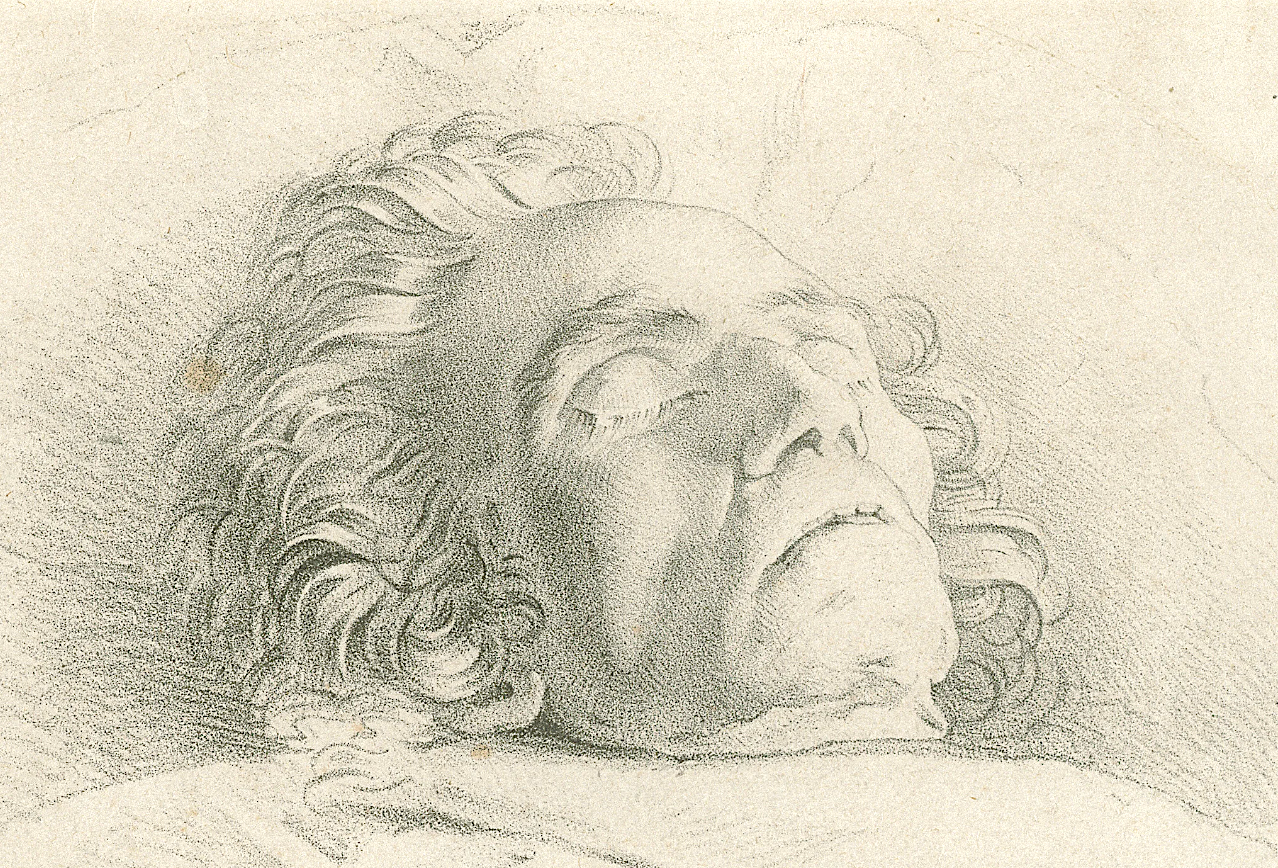
Despite the intense scrutiny paid to the life and work of Ludwig van Beethoven for a couple of centuries now, the revered composer still has certain mysteries about him. Some of them he surely never intended to clarify, like the identity of “Immortal Beloved”; others he explicitly requested be made public, like the cause of his death. The trouble is that, for generation after generation, nobody could quite figure out what that cause was. But recent genetic analysis of his hair, which we first featured last year here on Open Culture, has shed new light on the matter of what killed Beethoven — or rather, what increasingly ailed him up until he died at the age of 56.
This effort “began a few years ago, when researchers realized that DNA analysis had advanced enough to justify an examination of hair said to have been clipped from Beethoven’s head by anguished fans as he lay dying,” writes the New York Times’ Gina Kolata.
With the genuine samples separated from the frauds, a test for heavy metals revealed that “one of Beethoven’s locks had 258 micrograms of lead per gram of hair and the other had 380 micrograms”: 64 times and 95 times the normal amount, respectively. Chronic lead poisoning, possibly caused by Beethoven’s habit of drinking cheap wine sweetened with “lead sugar,” could have caused the “unrelenting abdominal cramps, flatulence and diarrhea” that plagued him in his lifetime.
It could also have hastened the deafness that had become nearly complete by age thirty. “Over the years, Beethoven consulted many doctors, trying treatment after treatment for his ailments and his deafness, but found no relief,” Kolata writes. “At one point, he was using ointments and taking 75 medicines, many of which most likely contained lead.” Alas, the true danger of lead poisoning, a condition that had been acknowledged since antiquity, wouldn’t be taken seriously until the late nineteenth century. According to the research so far, even this degree of lead exposure wouldn’t have been fatal by itself. But with a bit less of it, would Beethoven have completed his tenth symphony, or even continued on to an eleventh? Add that to the still-growing list of unanswerable questions about him.
Related content:
The Secrets of Beethoven’s Fifth, the World’s Most Famous Symphony
The Math Behind Beethoven’s Music
Read Beethoven’s Lengthy Love Letter to His Mysterious “Immortal Beloved” (1812)
Based in Seoul, Colin Marshall writes and broadcasts on cities, language, and culture. His projects include the Substack newsletter Books on Cities, the book The Stateless City: a Walk through 21st-Century Los Angeles and the video series The City in Cinema. Follow him on Twitter at @colinmarshall or on Facebook.
Read More...Jerry Seinfeld Delivers Commencement Address at Duke University: You Will Need Humor to Get Through the Human Experience
This weekend, Jerry Seinfeld gave the commencement speech at Duke University and offered the graduates his three keys to life: 1. bust your ass, 2. pay attention, and 3. fall in love. Then, 10 minutes later, he added essentially a fourth key to life: “Do not lose your sense of humor. You can have no idea at this point in your life how much you’re going to need it to get through. Not enough of life makes sense for you to be able to survive it without humor.” “It is worth the sacrifice of an occasional discomfort to have some laughs. Don’t lose that.” “Humor is the most powerful, most survival-essential quality you will ever have or need to navigate through the human experience.” Amen.
Related Content
John Waters’ RISD Graduation Speech: Real Wealth Is Life Without A*Holes
Conan O’Brien Kills It at Dartmouth Graduation
Jon Stewart’s William & Mary Commencement Address: The Entire World is an Elective
Read More...Aldous Huxley Explains How Man Became “the Victim of His Own Technology” (1961)
Just a couple of days ago, Apple CEO Tim Cook tweeted out a video promoting, “the new iPad Pro: the thinnest product we’ve ever created.” The response has been overwhelming, and overwhelmingly negative: for many viewers, the ad’s imagery of a hydraulic press crushing a heap of musical instruments, art supplies, and vintage entertainment into a single tablet inadvertently articulated a discomfort they’ve long felt with technology’s direction in the past couple of decades. As the novelist Hari Kunzru put it, “Crushing the symbols of human creativity to produce a homogenized branded slab is pretty much where the tech industry is at in 2024.”
One wonders whether this would have surprised Aldous Huxley. He understood, as he explains in the 1961 BBC interview above, that “if you plant the seed of applied science or technology, it proceeds to grow, and it grows according to the laws of its own being. And the laws of its being are not necessarily the same as the laws of our being.”
Even six decades ago, he and certain others had the sense, which has since become fairly common, that “man is being subjected to his own inventions, that he is now the victim of his own technology”; that “the development of recent social and scientific history has created a world in which man seems to be made for technology rather than the other way around.”
Having written his acclaimed dystopian novel Brave New World thirty years earlier, Huxley was established as a seer of possible technology-driven totalitarian futures. He understood that “we are a little reluctant to embark upon technology, to allow technology to take over,” but that, “in the long run, we generally succumb,” allowing ourselves to be mastered by our own creations. In this, he resembles the Julia of Byron’s Don Juan, who, “whispering ‘I will ne’er consent’ – consented.” Huxley also knew that “it is possible to make people content with their servitude,” even more effectively in modernity than antiquity: “you can provide them with bread and circuses, and you can provide them with endless amounts of distraction and propaganda” — delivered, here in the twenty-first-century, straight to the device in our hand.
Related content:
Aldous Huxley Predicts in 1950 What the World Will Look Like in the Year 2000
An Animated Aldous Huxley Identifies the Dystopian Threats to Our Freedom (1958)
Aldous Huxley to George Orwell: My Hellish Vision of the Future is Better Than Yours (1949)
Hear Aldous Huxley Narrate His Dystopian Masterpiece Brave New World
Aldous Huxley, Dying of Cancer, Left This World Tripping on LSD (1963)
Based in Seoul, Colin Marshall writes and broadcasts on cities, language, and culture. His projects include the Substack newsletter Books on Cities, the book The Stateless City: a Walk through 21st-Century Los Angeles and the video series The City in Cinema. Follow him on Twitter at @colinmarshall or on Facebook.
Read More...Watch an Enthusiast Drive the First Car Ever Made, the 1885 Mercedes Benz
In 1885, Karl Benz built what’s now considered the first modern automobile. According to the Mercedes Benz website, the car featured a “compact high-speed single-cylinder four-stroke engine installed horizontally at the rear, a tubular steel frame … and three wire-spoked wheels. The engine output was 0.75 hp (0.55 kW).” Two years after its invention, Karl Benz’s wife Bertha proved that the car was ready for prime time, driving her early Benz from Mannheim to Pforzheim. After that groundbreaking drive, the Benz went into production, becoming the first commercially available automobile in history.
Above, you can watch a car enthusiast known as “Mr. Benz” take the nineteenth-century car for a spin. Below, watch a re-enactment of Bertha’s historic drive.
Related Content
178,000 Images Documenting the History of the Car Now Available on a New Stanford Web Site
A Flying Car Took to the Skies Back in 1949: See the Taylor Aerocar in Action
Read More...
Read the Uncompromising Letter That Steve Albini (RIP) Wrote to Nirvana Before Producing In Utero (1993)

Today, Steve Albini, the musician and producer of important albums by Nirvana, PJ Harvey, the Pixies and many others, passed away in Chicago, at the all-too-early age of 61. In tribute, we’re bringing you this classic 2013 post from our archive.
Journeyman record producer Steve Albini (he prefers to be called a “recording engineer”) is perhaps the crankiest man in rock. This is not an effect of age. He’s always been that way, since the emergence of his scary, no-frills post-punk band Big Black and later projects Rapeman and Shellac. In his current role as elder statesman of indie rock and more, Chicago’s Albini has developed a reputation as kind of a hardass. He’s also a consummate professional who musicians want to know and work with. From the sound of the Pixies’ Surfer Rosa to Joanna Newsom’s Ys, Albini has had a hand in some of the defining albums of the last thirty plus years, and there is good reason for that: nothing sounds like an Albini record. His method is all his own, and his results—minimalist, dynamic, and raw—are impossible to argue with.
So when Nirvana embarked on recording their final, painful (in hindsight) album In Utero, they asked Albini to steer them away from the more major-label sound of the breakout Nevermind, produced by Butch Vig. True to form, the typically verbose Albini sent a four-page typed letter in response. The letter (first page above—see the rest here) is a testament to perhaps the most thoughtful producer since Quincy Jones and lays out Albini’s philosophy in very fine detail. Two sample paragraphs serve as a thesis:
I’m only interested in working on records that legitimately reflect the band’s own perception of their music and existence. If you will commit yourselves to that as a tenet of the recording methodology, then I will bust my ass for you. I’ll work circles around you. I’ll rap your head with a ratchet…
I have worked on hundreds of records (some great, some good, some horrible, a lot in the courtyard), and I have seen a direct correlation between the quality of the end result and the mood of the band throughout the process. If the record takes a long time, and everyone gets bummed and scrutinizes every step, then the recordings bear little resemblance to the live band, and the end result is seldom flattering. Making punk records is definitely a case where more “work” does not imply a better end result. Clearly you have learned this yourselves and appreciate the logic.
Albini decries any interference from the “front office bulletheads,” or record company execs (his feuds with such people are legendary), and makes it quite clear that he’s there to serve the interests of the band and their sound, not the product of a marketing campaign. While Albini has issued many a surly manifesto over the years, this statement of his craft is maybe the most comprehensive. He is driven by what he calls a “kinship” with the bands he works with. And his passionate commitment to musicians and to quality sound makes him one of the most artistically virtuous people working in popular music today. For more on In Utero, read Dave Grohl’s Rolling Stone interview here. Below, see Dave Grohl, Krist Novoselic and Steve Albini discuss the now-famous letter to Nirvana.
Related Content:
Visit “Mariobatalivoice,” the Cooking Blog by Steve Albini, Musician & Record Producer
Josh Jones is a writer and musician based in Durham, NC. Follow him at @jdmagness
Read More...Watch Animations Showing How Humans Migrated Across the World Over the Past 60,000 Years
Ex Africa semper aliquid novi. Attributed to various luminaries of antiquity, that saying (the probable inspiration for Isak Dinesen’s poem “Ex Africa,” itself the probable inspiration for her memoir Out of Africa, which in turn was loosely adapted into Sydney Pollack’s Oscar-lavished film) translates to “Out of Africa, always something new.” But it’s perhaps more notable that out of Africa came something quite old indeed: humankind itself, which over the past 60,000 years has been spreading ever farther across the world. You can see how it happened in the Insider Science video above, which animates those 60 millennia of global migration in less than two and a half minutes.
For more detail, consider supplementing that video with this one from GeoNomad, which tracks the outward expansion of humanity through DNA research. “Scientific research has shown that the 7.5 billion people who occupy the earth today are the descendants of a woman who lived 200,000 years ago,” explains its narration.
“Scientists call her Mitochondrial Eve,” in reference to the DNA located in mitochondria, a type of energy-producing organelle known as “the powerhouse of the cell.” Both male and female humans possess mitochondrial DNA, of course, but only female mitochondrial DNA passes down to offspring; hence our not talking about a Mitochondrial Adam.
DNA mapping has allowed us to trace the genetic and geographical history of the Mitochondrial Eve’s descendants. Some left for other parts of Africa, and others for what we now know as the Middle East and India. Whether by wanderlust or necessity — and given the harrowing conditions implied by their low survival rate, the latter probably had more to do with it — certain groups continued on to modern-day southeast Asia and Australia. It was through western Asia that the first humans entered neanderthal-populated Europe as early as 56,800 years ago. There, some 546 centuries later, Terence would write, “Homo sum, humani nihil a me alienum puto”: a declaration perhaps made in the suspicion that, when you go back far enough, we’re all one big family.
Related content:
New Study Finds That Humans Are 33,000 Years Older Than We Thought
How Humans Migrated Across The Globe Over 200,000 Years: An Animated Look
Where Did Human Beings Come From? 7 Million Years of Human Evolution Visualized in Six Minutes
The History of the World in One Video: Every Year from 200,000 BCE to Today
Cats Migrated to Europe 7,000 Years Earlier Than Once Thought
Based in Seoul, Colin Marshall writes and broadcasts on cities, language, and culture. His projects include the Substack newsletter Books on Cities, the book The Stateless City: a Walk through 21st-Century Los Angeles and the video series The City in Cinema. Follow him on Twitter at @colinmarshall or on Facebook.
Read More...Download 131,000 Historic Maps from the Huge David Rumsey Map Collection

The world has changed dramatically over the past 500 years, albeit not quite as dramatically as how we see the world. That’s just what’s on display at the David Rumsey Map Collection, whose more than 131,000 historical maps and related images are available to browse (or download) free online. Since we last featured it here on Open Culture, the collection has added at least 40,000 items to its digital holdings, making it an even more valuable resource for not just understanding how humanity has viewed the world throughout the ages, but how we’ve imagined it — and, for that matter, how we’ve imagined other worlds from Mars to Narnia to Krypton.
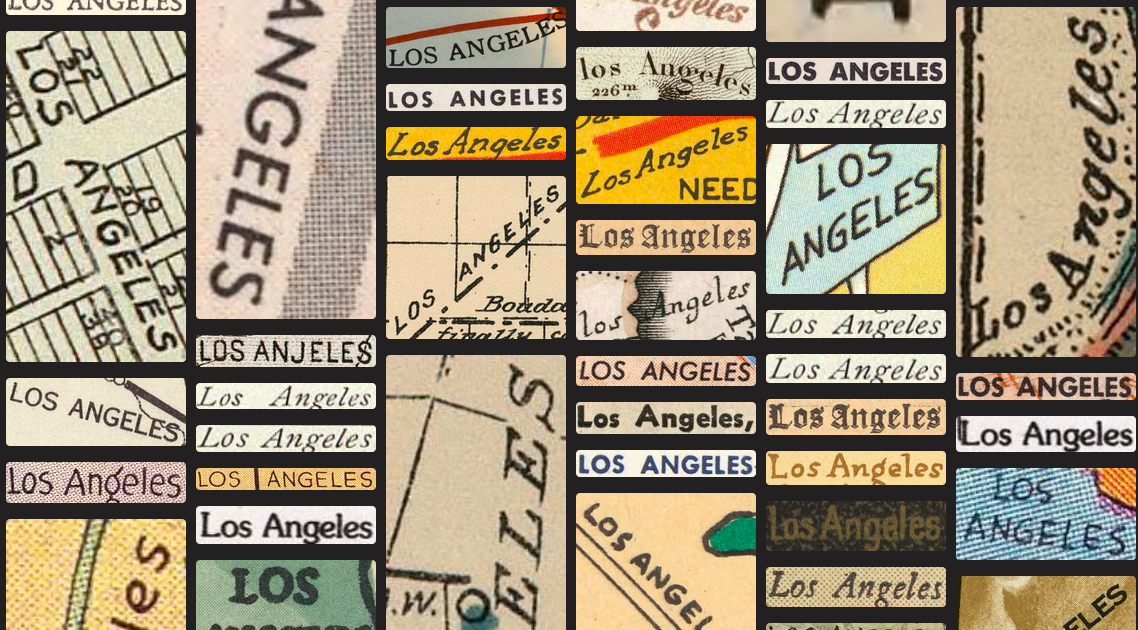
“Imaginary maps” is just one of the categories through which you can explore the David Rumsey Map Collection. There are also tags for newspaper maps, timelines, city maps, celestial maps, data visualizations, children’s maps, and more varieties besides.
If you’d prefer a more traditional form of organization, you can search for maps of specific geographical regions: North America, South America, Europe, Asia, Africa, Australia, Antarctica, the Pacific, the Arctic, and of course, the world. If it’s the last item you’re interested in, apart from the considerable two-dimensional holdings, the interactive globes constitute a gallery of their own, and there you can view ones made between the mid-sixteenth century and just last year from every possible angle.

Among the site’s new features is a “search by text-on-maps” feature, which you can activate by clicking the “by Text on Maps” button next to the search window at the top of the page. This lets you compare and contrast the ways particular places have been labeled on the variety of maps in the collection: not just proper names like Cairo, Madrid, and Yosemite, but also more general terms like “gold mine,” “lighthouse” or “dragons.” Arguably, we look at maps more often here in the twenty-first century than we ever did before, though seldom if ever do we depart from whichever mapping app we happen to keep on our phones. It’s worth stepping back in cartographical time to remember that there were once as many ways of understanding the world as there were depictions of it.

Related content:
Oculi Mundi: A Beautiful Online Archive of 130 Ancient Maps, Atlases & Globes
40,000 Early Modern Maps Are Now Freely Available Online (Courtesy of the British Library)
Based in Seoul, Colin Marshall writes and broadcasts on cities, language, and culture. His projects include the Substack newsletter Books on Cities, the book The Stateless City: a Walk through 21st-Century Los Angeles and the video series The City in Cinema. Follow him on Twitter at @colinmarshall or on Facebook.
Read More...Support Us
We're hoping to rely on loyal readers, rather than erratic ads. Please click the Donate button and support Open Culture. You can use Paypal, Venmo, Patreon, even Crypto! We thank you!

About Us

Open Culture scours the web for the best educational media. We find the free courses and audio books you need, the language lessons & educational videos you want, and plenty of enlightenment in between.
Advertise With Us
FREE UPDATES!
GET OUR DAILY EMAIL
Get the best cultural and educational resources on the web curated for you in a daily email. We never spam. Unsubscribe at any time.
FOLLOW ON SOCIAL MEDIA
Open Culture editor Dan Colman scours the web for the best educational media. He finds the free courses and audio books you need, the language lessons & movies you want, and plenty of enlightenment in between.
Advertise With Us

