One of the Oldest Buddhist Manuscripts Has Been Digitized & Put Online: Explore the Gandhara Scroll
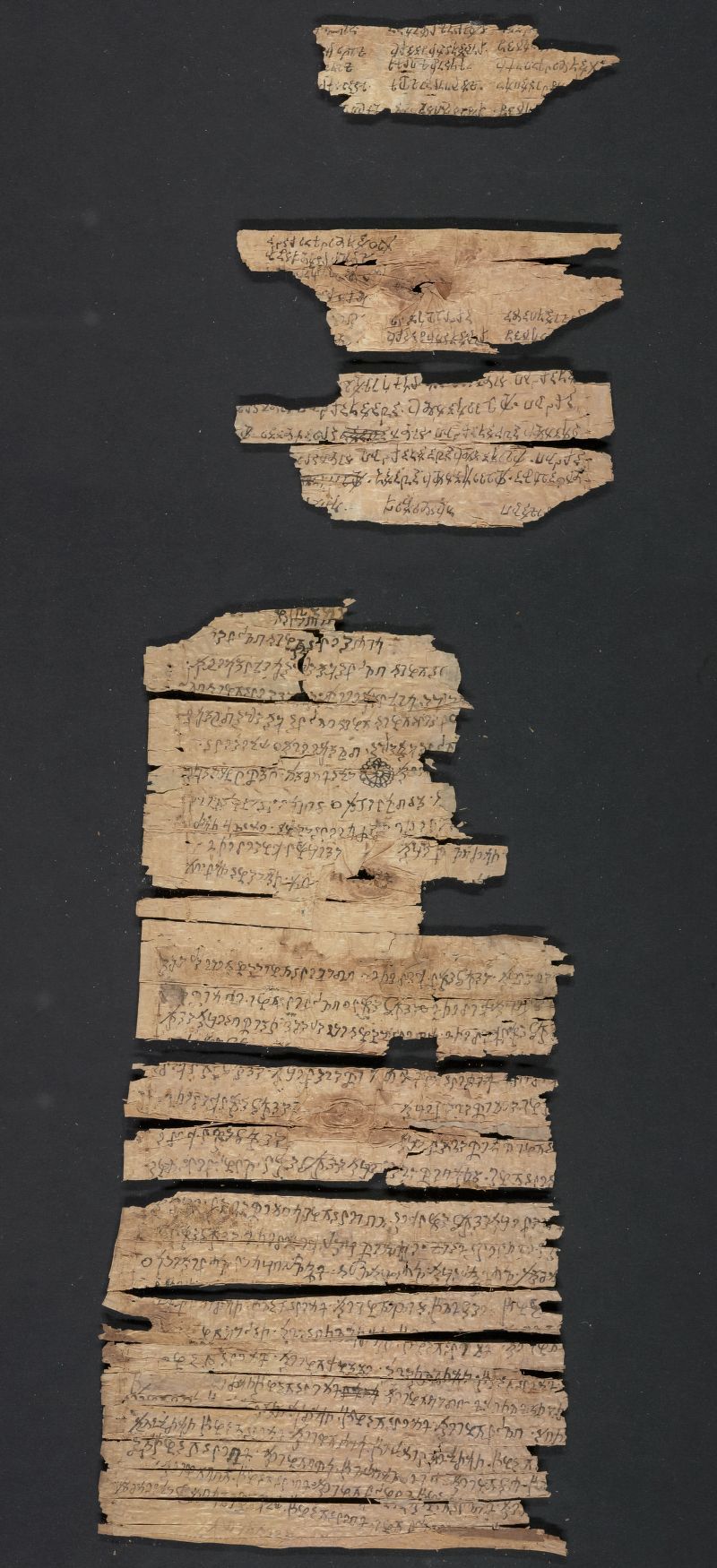
Buddhism goes way back — so far back, in fact, that we’re still examining important evidence of just how far back it goes. Take the exhibit above, which may look like nothing more than a collection of faded scraps with writing on them. In fact, they’re pieces of the laboriously and carefully unrolled and scanned Gandhara Scroll, which, having originally been written about two millennia ago, ranks as one of the oldest Buddhist manuscripts currently known. You can read the scroll’s story at the blog of the Library of Congress, the institution that possesses it and only last year was able to put it online for all to see.
“The scroll originated in Gandhara, an ancient Buddhist kindgom located in what is today the northern border areas of Afghanistan and Pakistan,” writes the Library’s Neely Tucker. “Surviving manuscripts from the Gandharan realm are rare; only a few hundred are known to still exist.” That realm “was under the rule of numerous kings and dynasties, including Alexander the Great, the Mauryan emperor Ashoka and the Kushan emperor Kanishka I,” and for a time “became a major seat of Buddhist art, architecture and learning. One of the region’s most notable characteristics is the Hellenistic style of its Buddhist sculptures, including figures of the Buddha with wavy hair, defined facial features, and contoured robes reminiscent of Greco-Roman deities.”
Written in the Gandhari variant of Sanskrit, the “Bahubuddha Sutra” or “Many Buddhas Sutra,” as this scroll has been called, constitutes part of “the much larger Mahavastu, or ‘Great Story,’ a biography of the Buddha and his past lives.” Here Tucker draws from the scholarship of Richard G. Salomon, emeritus professor of Sanskrit and Buddhist studies at the University of Washington, another institution that holds a piece of the Gandharan Buddhist texts. Many more reside at the British Library, which acquired them in 1994. The Library of Congress bought its Gandhara Scroll from a British dealer more recently, in 2003, and it arrived in what Tucker describes as “an ordinary pen case, accompanied by a handwritten note: ‘Extremely fragile, do not open unless necessary.’ ”
So began “several years of thought and planning to devise a treatment strategy,” an effort that at one point saw the Library’s conservator practicing “her unrolling technique on a dried-up cigar — an item that only approximates the difficulty of working with a compacted birch bark scroll.” Then came “gradual humidification over a few days, careful unrolling by hand with precision tools on a sheet of inert glass, followed by placing another sheet of glass on top once the scroll was completely unrolled,” a “dramatic and silent affair” described in greater detail by Atlas Obscura’s Sabrina Imbler.
The result was six large fragments and more than 100 smaller ones, together constituting roughly 80 percent of the scroll’s original text. You can see all those fragments of the Gandhara Scroll, scanned in high resolution, at the Library of Congress’ web site. This will naturally be a more edifying experience if, like Salomon, you happen to be able to read Gandhari. Even if you can’t, there’s something to be felt in the experience of simply beholding a 2,000 year old text composed on birch bark through the digital medium on which we do most of our reading here in the 21st century — where interest in Buddhism shows no signs of waning.
Related Content:
Breathtakingly-Detailed Tibetan Book Printed 40 Years Before the Gutenberg Bible
The World’s Largest Collection of Tibetan Buddhist Literature Now Online
Google Digitizes Ancient Copies of the Ten Commandments and Genesis
Google Puts The Dead Sea Scrolls Online (in Super High Resolution)
Based in Seoul, Colin Marshall writes and broadcasts on cities, language, and culture. His projects include the book The Stateless City: a Walk through 21st-Century Los Angeles and the video series The City in Cinema. Follow him on Twitter at @colinmarshall, on Facebook, or on Instagram.
Read More...Explore the Ruins of Timgad, the “African Pompeii” Excavated from the Sands of Algeria

Image via Wikimedia Commons
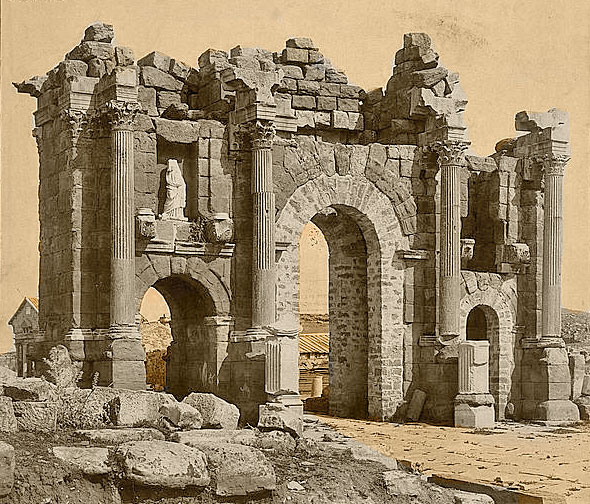
Fifteen centuries after its fall, the Roman Empire lives on in unexpected places. Take, for instance, the former colonial city of Timgad, located in Algeria 300 miles from the capital. Founded by the Emperor Trajan around 100 AD as Colonia Marciana Ulpia Traiana Thamugadi, it thrived as a piece of Rome in north Africa before turning Christian in the third century and into a center of the Donatist sect in the fourth. The three centuries after that saw a sacking by Vandals, a reoccupation by Christians, and another sacking by Berbers. Abandoned and covered by sand from the Sahara from the seventh century on, Timgad was rediscovered by Scottish explorer James Bruce in 1765. But not until the 1880s, under French rule, did a proper excavation begin.

Today a visitor to the ruins of Timgad can see the outlines of exactly where each of its buildings once stood (especially if they have the aerial view of the photo above, recently tweeted out by Architecture Hub). This, in part, is what qualified the place for inscription on UNESCO’s World Heritage List.
“With its square enclosure and orthogonal design based on the cardo and decumanus, the two perpendicular routes running through the city, it is an excellent example of Roman town planning,” says UNESCO’s web site. Its “remarkable grid system” — quite normal to 21st-century city-dwellers, much less so in second-century Africa — makes it “a typical example of an urban model” that “continues to bear witness to the building inventiveness of the military engineers of the Roman civilization, today disappeared.”
“Within a few generations of its birth,” writes Messy Nessy,” the outpost had expanded to over 10,000 residents of both Roman, African, as well as Berber descent. “The extension of Roman citizenship to non-Romans was a carefully planned strategy of the Empire,” she adds. “In return for their loyalty, local elites were given a stake in the great and powerful Empire, benefitted from its protection and legal system, not to mention, its modern urban amenities such as Roman bath houses, theatres, and a fancy public library.”
Timgad’s library, which “would have housed manuscripts relating to religion, military history and good governance,” seems to have been fancy indeed, and its ruins indicate the purchase Roman culture managed to attain in this far-flung settlement.

Image via Wikimedia Commons
Timgad’s library is just one element of what UNESCO calls its “rich architectural inventory comprising numerous and diversified typologies, relating to the different historical stages of its construction: the defensive system, buildings for the public conveniences and spectacles, and a religious complex.” Having outgrown its original street grid, Timgad “spread beyond the perimeters of its ramparts and several major public buildings are built in the new quarters: Capitolium, temples, markets and baths,” most of which date from the city’s “Golden Age” in the Severan period between 193 and 235.

Image Alan and Flora Botting via Flickr Commons
This makes for an African equivalent of Pompeii, the Roman city famously buried and thus preserved in the explosion of Mount Vesuvius in the year 79. But it is lesser-known Timgad, with its still clearly laid-out blocks, its recognizable public facilities, and its demarcated “downtown” and “suburbs,” that will feel more familiar to us today, whichever city in the world we come from.
via Architecture Hub/MessyNessy
Related Content:
Visit Pompeii (also Stonehenge & Versailles) with Google Street View
Rome Reborn: Take a Virtual Tour Through Ancient Rome, 320 C.E.
Pierre Bourdieu’s Photographs of Wartime Algeria
Replica of an Algerian City, Made of Couscous: Now on Display at The Guggenheim
Based in Seoul, Colin Marshall writes and broadcasts on cities, language, and culture. His projects include the book The Stateless City: a Walk through 21st-Century Los Angeles and the video series The City in Cinema. Follow him on Twitter at @colinmarshall, on Facebook, or on Instagram.
Read More...Zamrock: An Introduction to Zambia’s 1970s Rich & Psychedelic Rock Scene
The story of popular music in the late 20th century is never complete without an account of the explosive psychedelic rock, funk, Afrobeat, and other hybrid styles that proliferated on the African continent and across Latin American and the Caribbean in the 1960s and 70s. It’s only lately, however, that large audiences are discovering how much pioneering music came out of Kenya, Ghana, Nigeria, and other postcolonial countries, thanks to UK labels like Strut and Soundway (named by The Guardian as “one of the 10 British Labels defining the sound of 2014” and named “Label of the Year” in 2017).
Germany’s Analogue Africa, a label that reissues classic albums from the era, puts it this way: “the future of music happened decades ago.” Only most Western audiences weren’t paying attention—with notable exceptions, of course: superstar drummer Ginger Baker apprenticed himself to Fela Kuti and became an evangelist for African drumming; Brian Eno and Talking Heads’ David Byrne (who also introduced thousands to “world music”) imported the sound of African rock to New Wave in the 80s, as did post-punk bands like Orange Juice and others in Britain, where music from Africa generally had a bigger impact.
But the fusion of African polyrhythms with rock instruments and song structures had been done, and done incredibly well, already by dozens of bands, including several in the East African country of Zambia, which had been British-controlled Northern Rhodesia until its independence in 1964. In the decade after, bands formed around the country to create a unique form of music known as “Zamrock,” as it came to be called, “forged by a particular set of national circumstances,” writes Calum MacNaughton at Music in Africa.
Zamrock bands were influenced by the funk and soul of James Brown and the heavy rock of Hendrix, Deep Purple, Led Zeppelin, The Who, and Cream—the same music everyone else was listening to. As Rikki Ililonga from the band Musi-O-Tunya says in the Vinyl Me, Please mini-documentary above, says, “the hippie time, the flowers, love and everything, Woodstock. We were a part of that culture too. If the record was in the Top 10 in the UK, it was in the Top 10 here.” But Zambia had its own concerns, and its own powerful musical traditions.
“As much as we wanted to play rock from the Western world, we are Africans,” says Jagari Chanda, vocalist for a band called WITCH (“we intend to cause havoc”), “so the other part is from Africa—Zambia. So it’s Zambian type of rock—Zamrock.” The term was coined by Zambian DJ Manasseh Phiri. The music itself “was the soundtrack of Kenneth Kaunda’s socialist ideology of Zambian Humanism,” MacNaughton notes. “In fact, Zamrock owed much of its existence to the nation’s first president and founding father. A guitar-picker who took great pleasure in song” and who promoted local music “via a quota system” imposed on the newly-formed Zambia Broadcasting Service (ZBS).
Vinyl Me, Please has collaborated with MacNaughton and others from Now-Again Records to release 8 Zamrock albums, “7 of which have never been reissued in their original form.” The video above, “The Story of Zamrock,” reflects their decade-long journey to rediscover the 70s scene and its pioneers. In the video at the top from Bandsplaining, you can learn more about Zamrock, which has been gaining prominence in album reissues for the last several years, and which “deserves to be a part of the musical history of Africa in a much bigger way than it has been up to now,” Henning Goranson Sandberg writes at The Guardian. See all of the music featured in the video at the top in the tracklist below.
0:00 WITCH — “Living In The Past”
0:40 Keith Mlevhu — “Love and Freedom”
1:05 Paul Ngozi — “Bamayo”
3:11 WITCH — “Introduction”
4:19 Musi-O-Tunya — “Mpondolo”
4:32 Musi-O-Tunya — “Dark Sunrise”
5:28 Rikki Ililonga — “Sheebeen Queen”
5:37 WITCH — “Lazy Bones”
6:00 Paul Ngozi — “Anasoni”
6:16 The Peace — “Black Power”
6:46 Keith Mlevhu — “Ubuntungwa”
7:06 Amanaz — “Khala my Friend”
7:24 WITCH — “Living In The Past”
8:19 The Blackfoot — “When I Needed You”
8:39 Salty Dog — “See The Storm”
9:30 Salty Dog — “Fast”
10:42 Rikki Ililonga & Derick Mbao — “Madzi A Moyo”
10:54 Paul Ngozi — “Nshaupwa Bwino”
11:43 Amanaz — “Sunday Morning”
12:38 The Blackfoot — “Lonley Highway”
Related Content:
Stream 8,000 Vintage Afropop Recordings Digitized & Made Available by The British Library
Josh Jones is a writer and musician based in Durham, NC. Follow him at @jdmagness
Read More...The Rise & Fall of Silver Apples: The 1960s Electronic Band That Built Their Own Synthesizer, Produced Two Pioneering Albums, and Then Faded into Obscurity
In the late 70s and early 80s, a handful of musical duos emerged who would have tremendous impact on post-punk, alternative, new wave, and experimental electronic music. Bands like Suicide, NEU!, and the Pet Shop Boys made far bigger sounds than their size would suggest. Before them all came Silver Apples, a duo who should rightly get credit as pioneers of electronic experimentation in pop song form. Like many a pioneer, Silver Apples had no idea what they were doing. They also suffered from a string of some of the worst luck a band could have, disappearing after their second album in 1969 until a mid-90s rediscovery and brief return.
Bandmembers Simeon Coxe and Danny Taylor formed the band in 1967 from the ruins of a rock group called The Overland Stage Electric Band, which fell apart when Coxe began experimenting with old oscillators onstage. All of the members quit except Taylor, and Coxe set about building his own synthesizer, “a machine nicknamed ‘the Simeon,’” Daniel Dylan Wray writes at The Guardian, “which grew to consist of nine audio oscillators with 86 manual controls—including telegraph keys—to control lead, rhythm and bass pulses with the user’s hands, feet and elbows.”
Coxe was the only person who could play the Simeon, and he sang as he did so, his weird, warbly voice complementing his machine, as Taylor played proto-Krautrock beats behind him. “I had heard the word synthesizer,” he says, “but I had no idea what it was. We were dirt poor and used what we had, which was often discarded world war two gear.” They were essentially making up electronic pop music as they went along, isolated from parallel developments happening at the same time. They named the project after a line by William Butler Yeats (many of their lyrics were written by poet Stanley Warren). Around the same time, composer Morton Subotnick released his groundbreaking all-electronic album, titled—after Yeats—Silver Apples of the Moon.
It was Silver Apples’ fate to be overshadowed by other releases that came out immediately after their 1968 self-titled debut, such as Wendy Carlos’ Switched on Bach and Gershon Kingsley’s hit “Popcorn,” both of which popularized Robert Moog’s modular synthesizers. Moog himself became so fascinated with Coxe’s singular creation that he visited the Silver Apples studio to see it for himself. The band’s manager scored them their very first gig playing for 30,000 people in Central Park, “providing a live soundtrack to the Apollo moon landing—broadcast on enormous screens beside them,” writes Cian Traynor at Huck magazine, “as people took their clothes off in the rain.”
This magical experience—and other brushes with fame, such as a one-off recording session with Jimi Hendrix—was no indication of a bright future for the band. For their second album, they were allowed to photograph themselves inside the cockpit of a Pan Am jet. The inclusion of drug paraphernalia in the photo, and of a crashed airplane on the back, prompted a lawsuit from the airline. The album was pulled from the shelves, the band shut out of the industry, and a third album, The Garden, remained unreleased until 1998.
For a look at how musically forward-thinking Silver Apples were, see the short documentary about their rise and fall above. They ended up influencing neo-psychedelic electronic bands like Stereolab and 90s duo Portishead, whose Geoff Barrow says, “for people like us, they are the perfect band…. They should definitely be up there with the pioneers of electronic music.” Taylor sadly died in 2005, just after Coxe had partially recovered from a broken neck suffered the year of their 90s resurgence. But Silver Apples music is immortal, and immortally otherworldly and strange, even if its creators never quite understood why. “To me and Danny,” says Coxe, “it sounded perfectly normal and was a normal progression into the areas we were trying to go.”
As so much experimental electronic pop music that emerged around the same time proves, Coxe was more right than he knew. What Silver Apples did turned out to be a “normal” musical development, though they had no idea that it was happening when they made their astonishingly groovy, spaced-out records.
Related Content:
Daphne Oram Created the BBC’s First-Ever Piece of Electronic Music (1957)
The History of Electronic Music in 476 Tracks (1937–2001)
Josh Jones is a writer and musician based in Durham, NC. Follow him at @jdmagness
Read More...New Digital Archive Opens Access to Thousands of Digitized African American Funeral Programs (1886–2019)
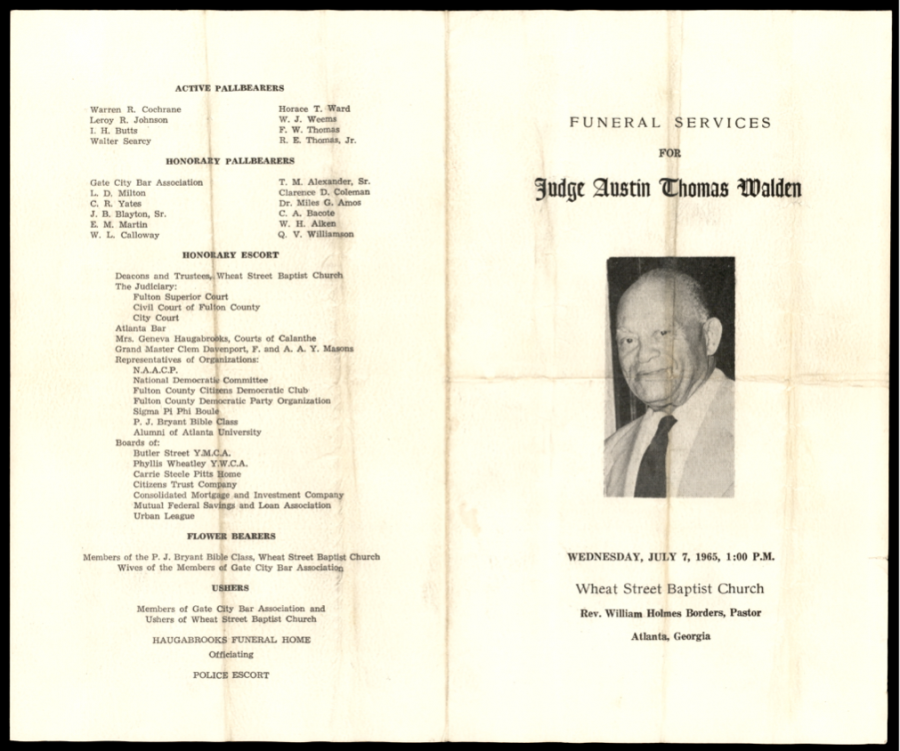
Funeral rites, burials, and other rituals are held near-universally sacred, not only due to religious and cultural beliefs about death: We preserve our connection to our ancestors through the records of their births and deaths. For many Black Americans in the U.S. south, grief and loss have been compounded by centuries of violence and tragedy, but funerals have still tended to be “celebrations of life” rather than mournful events, says Derek Mosley, archivist at the Auburn Avenue Research Library on African American Culture and History.” African American “funeral programs tend to reflect that,” and therefore offer a wealth of information for historians and genealogists as well as family members.
Mosley is a contributor to a new digital archive that “currently boasts more than 11,500 digitized pages and is expected to grow as more programs are contributed.” These historical documents date from between 1886 to 2019, though “most of the programs are from services during the late twentieth and early twenty-first centuries,” notes the Digital Library of Georgia, who houses the collection. “A majority of the programs are from churches in the Atlanta, Georgia area, with a few programs from other states such as South Carolina, Tennessee, Florida, Michigan, New Jersey, and New York, among others.”
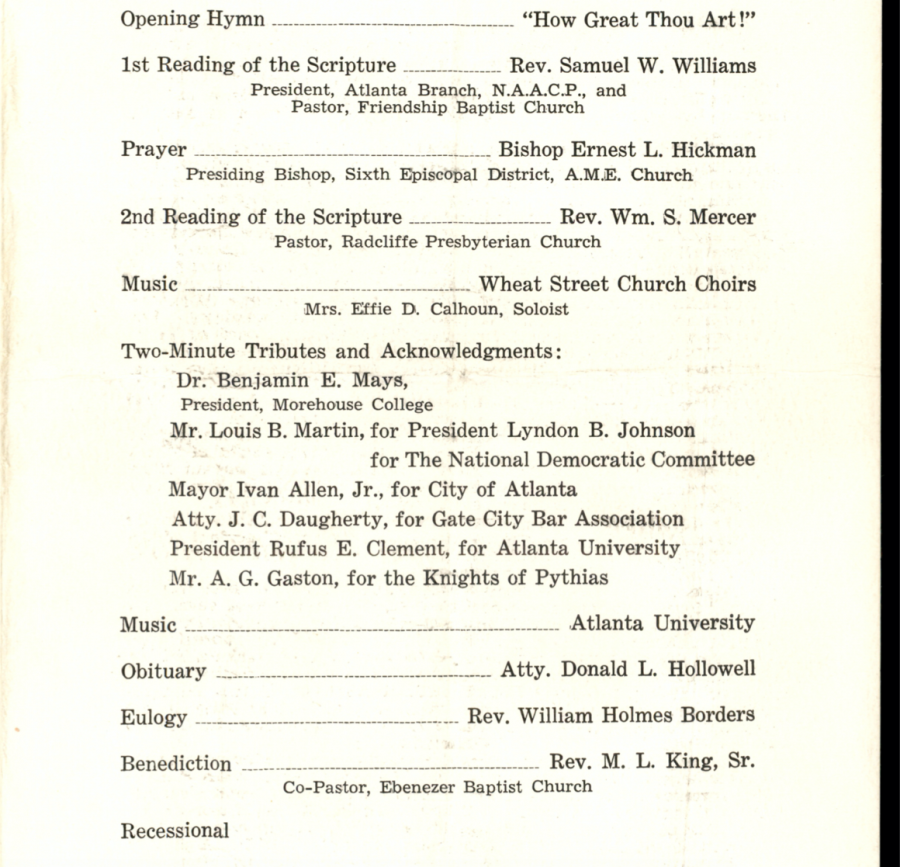
The archive offers an incredible resource for people looking for information about relatives. For researchers “these documents also represent a gold mine of archival information,” Nora McGreevy writes at Smithsonian, including “birth and death dates, photos, lists of relatives, nicknames, maiden names, residences, church names, and other clues that can help reveal the stories of the deceased.”
In many cases, those stories were lost when Jim Crow, poverty, and redevelopment displaced families and erased burial sites. The collection, says Mosley, offers “a public space for legacy.”
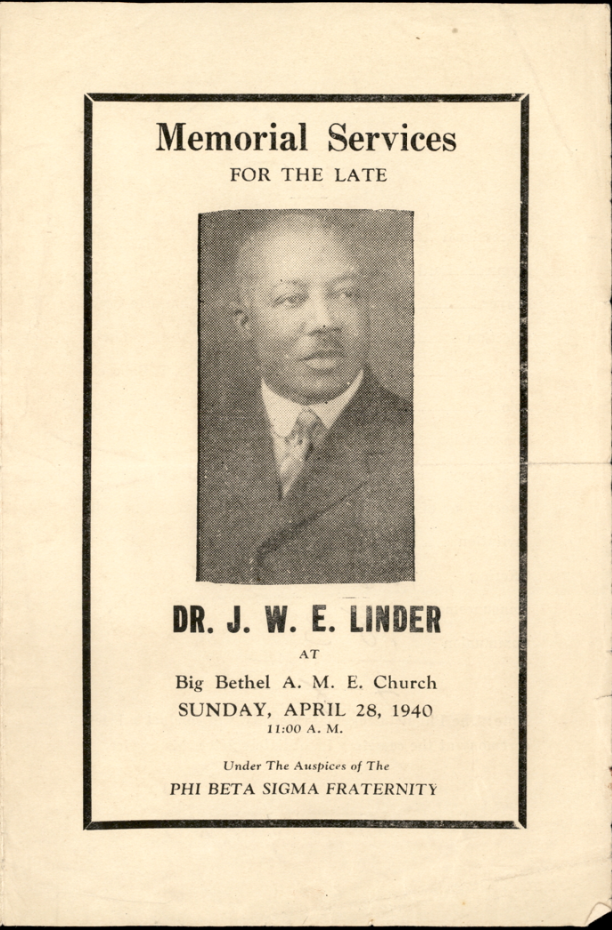
It is a way for local historians to recover important community figures. One program, for Dr. J.W.E. Linder, “who died in 1939,” Atlas Obscura’s Matthew Taub writes, “and whose memorial service was held in 1940” informs us that the deceased was the son of “Congressman George W. Linder, of the Georgia House of Representatives during the Reconstruction Period.” In the program for Judge Austin Thomas Walden, who died in 1965, we learn that he served as the first municipal judge in Georgia since Reconstruction. His benediction was delivered by the Reverend Martin Luther King Sr. and he received tributes from the Mayor of Atlanta, the President of Morehouse College, and the office of President Johnson.
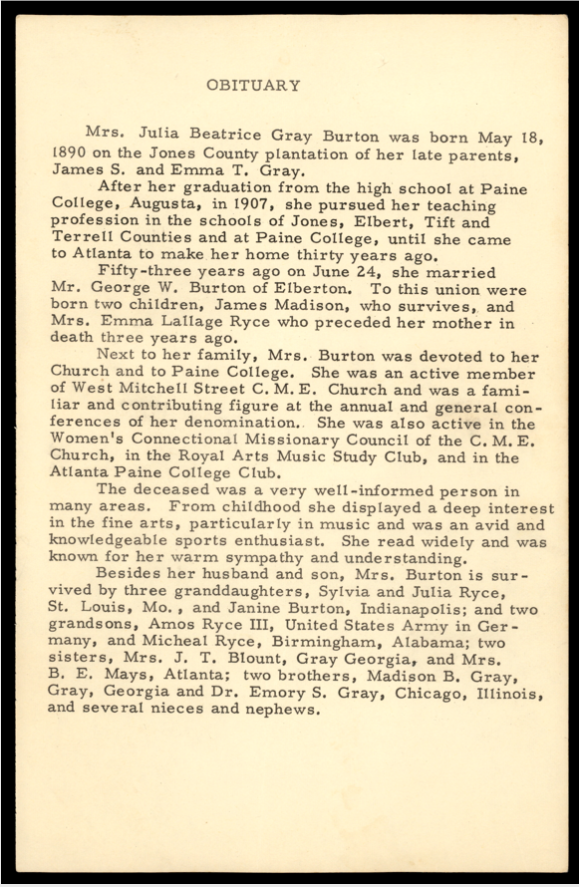
Such pillars of the community can be found among a host of programs memorializing ordinary, everyday people. The descriptions in the funeral literature open fascinating windows onto their lives and their extended family connections. Mrs. Julia Burton’s program from 1960, for example, tells us she was born on the plantation where her parents were likely enslaved. Her obituary not only describes her many clubs and her character as “a well-informed person in many areas,” but also lists the names of her husband and son, three granddaughters, two grandsons, two sisters, and two brothers—invaluable information for people searching for relatives.
“The challenge for African American genealogy and family research continues to be the lack of free access to historical information that can enable us to the tell the stories of those who have come before us,” remarks Tammy Ozier, president of the Atlanta Chapter of the Afro-American Historical and Genealogical Society. “This monumental collection helps to close the gap.” As it grows, it will likely come to represent greater geographical areas around the country. For now, the roughly 3300 digitized funeral programs, some a single page, some elaborate, full-color productions, focus on an area to which thousands of families around the country can trace their lineage, and to which many may find their way back through public archives like this one.
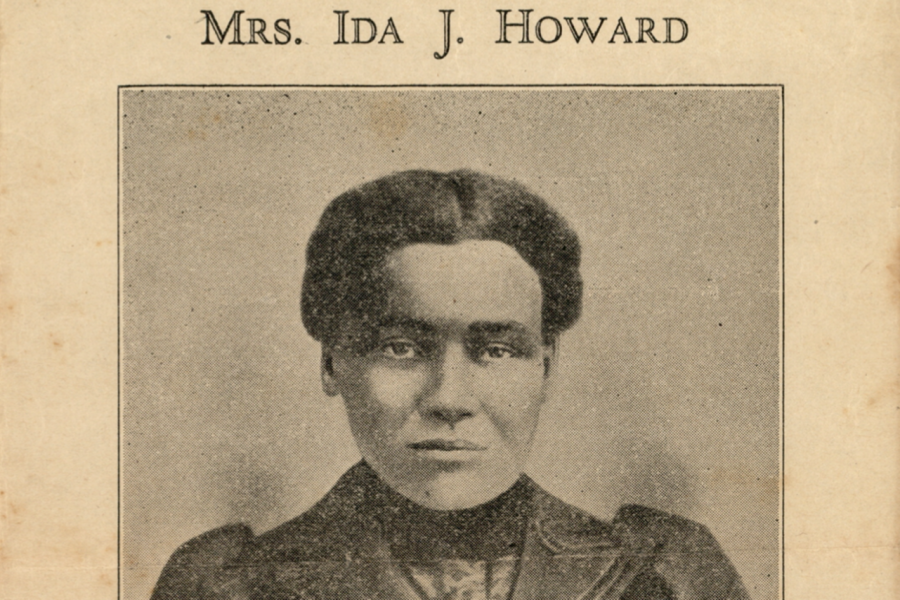
via Atlas Obscura
Related Content:
Josh Jones is a writer and musician based in Durham, NC. Follow him at @jdmagness
Read More...How Ornette Coleman Freed Jazz with His Theory of Harmolodics
The term free jazz may have existed before Ornette Coleman’s The Shape of Jazz to Come arrived in 1959. Yet, however innovative the modal experiments of Coltrane or Davis, jazz still adhered to its most fundamental formulas before Coleman. “Conventional jazz harmony is religiously chord-based,” writes Josephine Livingstone at New Republic, “with soloists improvising within each key like balls pinging through a pinball machine. Coleman, in contrast, imagined harmony, melody, and rhythm as equal constituents.”
This philosophy, jazz critic Martin Williams wrote upon hearing Coleman’s debut, was necessary to free jazz from its formal constraints. “Someone had to break through the walls that those harmonies have built and restore melody.” Melody was everything to Coleman—even drummers can play like melodic instrumentalists. In a 1987 interview, he described how Ed Blackwell “plays the drums as if he’s playing a wind instrument. Actually, he sounds more like a talking drum. He’s speaking a certain language that I find is very valid in rhythm instruments.”
Coleman connected his musical theory back to the origins of rhythmic music: “the drums, in the beginning, used to be like the telephone—to carry the message.” Interviewer Michael Jarrett ventures that Coleman’s ensemble recordings are more like a “party line,” to which the saxophonist agrees. Music, he believed, was a radically democratic—“beyond democratic”—form of communication. “If you decided to go out today and get you an instrument,” he says, “and do whatever it is that you do, no one can tell you how you’re going to do it but when you do it.”
This approach seemed irresponsible to many of Coleman’s peers. Alto saxophonist Jackie McLean described the general reaction as “spend[ing] your whole life making a three-piece suit that’s incredible, and this guy comes along with a jumpsuit, and people find that it’s easier to step into a jumpsuit than to put on three pieces.” Collective improvisation, however, cannot in any way be described as “easy,” and Coleman was a brilliant player who could do it all.
“I could play and sound like Charlie Parker note-for-note,” he has said, “but I was only playing it from method. So I tried to figure out where to go from there,” Loosening the constrictions did not mean that Coleman lacked “requisite virtuosity,” as Maria Golia writes in a new Coleman biography. Instead, he “proposed an alternative means for its expression.” (In Thomas Pynchon’s V, a character says of a Coleman-like saxophonist, “he plays all the notes Bird missed.”) This emerged in experimental improvisations like 1961’s landmark Free Jazz, an album that “practically defies superlatives in its historical importance,” Steve Huey writes at Allmusic.
The album features players like Blackwell, Don Cherry, and Eric Dolphy in a “double-quartet format,” with two rhythm sections playing simultaneously, one on the right stereo channel, one on the left. Composed on the spot, “there was no road map for this kind of recording.” But there was a theory that held it all together. Coleman eventually called the theory “Harmolodics,” a word that sums up his ideas about the equality of rhythm, harmony, and melody—a compositional method that freed jazz from its dependence on European forms and returned it, in a way, to its roots in a call-and-response tradition.
Coleman described his long-simmering ideas in a 1983 manifesto titled “Prime Time for Harmolodics.” The title references the band, Prime Time, he formed in 1975 that featured two bassists, two guitarists, and—like his ensemble on Free Jazz, or like the Grateful Dead—two drummers. Jerry Garcia joined the band for its 1988 album Virgin Beauty, expanding Coleman’s fanbase—already significant in various rock circles—to Deadheads. (See Prime Time in Germany in 1981 below.) Harmolodic playing could be dissonant, atonal, and cacophonous, and it could be sublime, often in the same moment.
Simultaneity, radical democracy, intimate communication—these were the principles of “unison” that Coleman found essential to his improvisations.
Question: “Where can/will I find a player who can read (or not read) who can play their instrument to their own satisfaction and accept the challenge of the music environment?” For Harmolodic Democracy — the player would need the freedom to express what Harmolodic information they found to work in composed music. There is always a rhythm — melody — harmony concept. All ideas have lead resolutions. Each player can choose any of the connections from the composers work for their personal expression, etc. Prime Time is not a jazz, classical, rock or blues ensemble. It is pure Harmolodic where all forms that can, or could exist yesterday, today, or tomorrow can exist in the now or moment without a second.
In harmolodic improvisation musicians contribute equally on their own terms, Coleman believed. “From Ornette’s point of view,” writes Robert Palmer in liner notes to the Complete Atlantic Recordings, “each contribution is equally essential to the whole. One tends to hear the horn player as a soloist, backed by a rhythm section, but this is not Coleman’s perspective. ‘In the music we play,’ he said of the performances collected in this box, ‘no one player has the lead. Anyone can come out with it at any time.’ ” Jerry Garcia remembers feeling confused when first recording with the saxophonist. “Finally,” says Garcia, “he said, ‘Oh, just go ahead and play, man.’ And I thought, ‘Oh, I get it now.’”
But of course, Garcia was the kind of musician who could “just go ahead and play.” This was the essential element, and it was here, perhaps, that Coleman differed least from his fellow jazz artists—in his sense of having just the right ensemble. “You really have to have players with you who will allow your instincts to flourish in such a way that they will make the same order as if you had sat down and written a piece of music,” he writes. “To me, that is the most glorified goal of the improvising quality of playing – to be able to do that.”
In “harmolodic democracy” no one ever takes the lead, or not for long, and there are no “sidemen.” Rather than following a chord chart or bandleader, the musicians must all listen closely to each other. Conventional riffs and progressions pop up, only to veer wildly in unexpected directions. “Its clear that [harmolodics] is based on taking motifs,” says avant-garde guitarist Marc Ribot, “and freeing it up to become polytonal, melodically and rhythmically.” Rather than abandoning form, Coleman invented new ways to compose and new ways, he wrote, to play.
I was out at Margaret Mead’s school and was teaching some kids how to play instantly. I asked the question, ‘How many kids would like to play music and have fun?’ And all the little kids raised up their hands. And I asked,‘Well, how do you do that?’ And one little girl said, ‘You just apply your feelings to sound.’ She was right — if you apply your feelings to sound, regardless of what instrument you have, you’ll probably make good music.
Coleman formed a label called Harmolodic in 1995 with his son and drummer Denardo. In 2005, he recorded the live album Sound Grammar in Germany, which would go on to win a Pulitzer Prize two years later. The record became the first release on his new label, also called Sound Grammar, and represented a refinement of the harmolodic theory, now called “sound grammar,” in which Coleman re-emphasizes the importance of music as the ur-form of human communication. “Music,” he says, “is a language of sounds that transforms all human languages.”
Related Content:
How Ornette Coleman Shaped the Jazz World: An Introduction to His Irreverent Sound
Josh Jones is a writer and musician based in Durham, NC. Follow him at @jdmagness.
Read More...H.R. Giger’s Dark, Surrealist Album Covers: Debbie Harry, Emerson, Lake & Palmer, Celtic Frost, Danzig & More
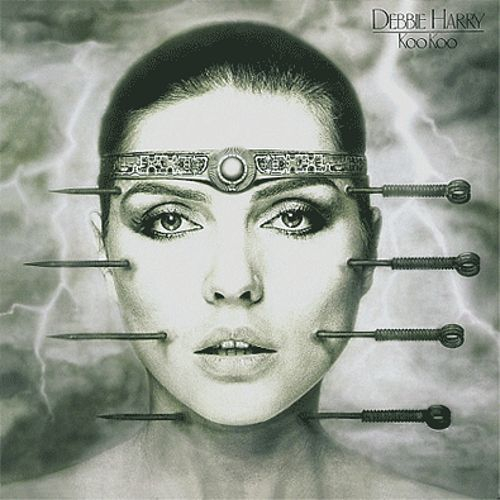
The work of H.R. Giger is immensely powerful. Giger’s amazing cover for Emerson, Lake and Palmer’s album Brain Salad Surgery portrays a Gothic touch that could fit any heavy metal band at any time.
—Jimmy Page
Swiss artist Hans Ruedi Giger is a genre unto his own, single-handedly inventing the biomechanical horror of the 1980s with his designs for Ridley Scott’s 1979 Alien, the film that launched him into international prominence and turned Debbie Harry on to his work. Meeting him the following year, the Blondie singer asked Giger to design the cover and music videos for her solo album, KooKoo.
The album was panned, but the cover ended up being as prescient as the film that preceded it. It would “see its influence in films like Hellraiser, the rise of what was called the ‘modern primitive’ movement, and help cultivate the dark masochistic character Harry would play in David Cronenberg’s Videodrome,” writes Ted Mills in an earlier Open Culture post. “It was a feeling that would flourish in the decadent ‘80s.”

The record was also, in a way, “a throwback to Giger’s other famous record cover, the one for Emerson, Lake, and Palmer’s Brain Salad Surgery” from 1973 (above). Ten years before Alien, Giger designed his first album cover, for a “proto-metal” band called The Shivers.
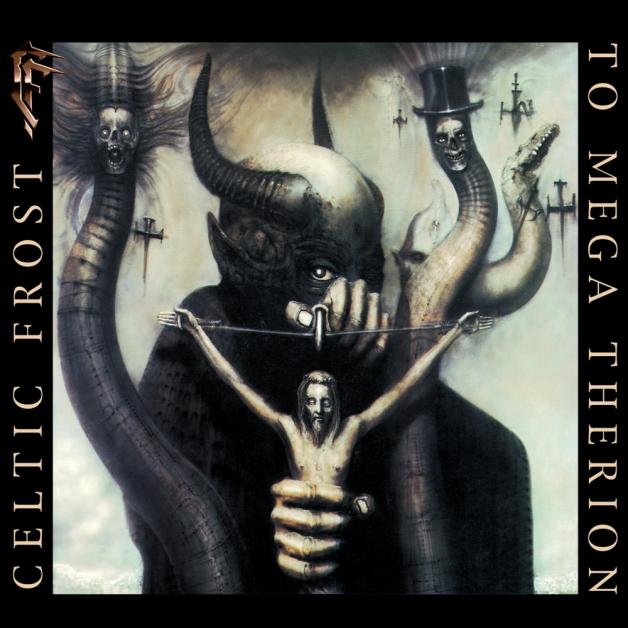
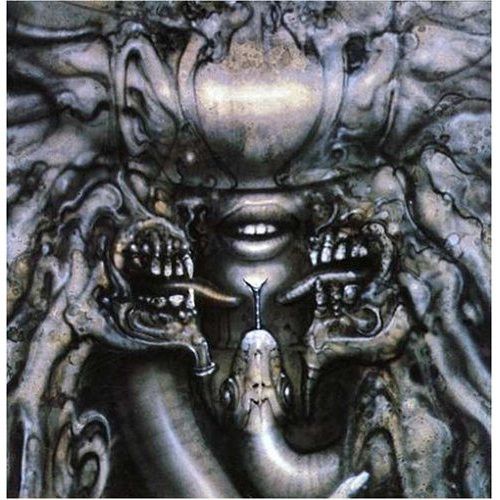
Their 1969 Walpurgis, features what look very much like Alien’s facehuggers. Giger had been having this nightmare for a long time. Years after these beginnings, due in large part to Alien and its sequels and the Debbie Harry cover, Giger became highly sought after by metal bands, from Celtic Frost to Danzig to Carcass.
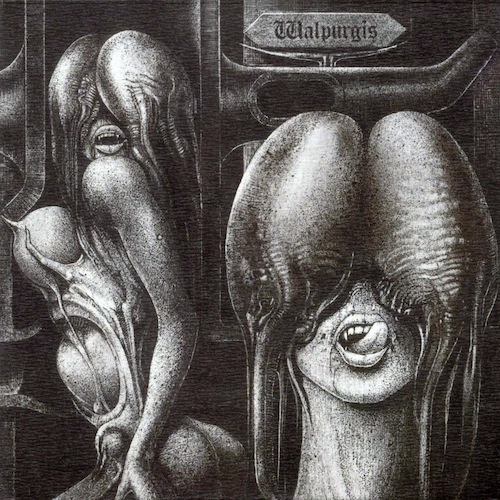
His work appears, however, on far more album covers than he would like. There have been “many small bands over the years,” he writes on his site, “presumably fans of mine, who had appropriated my artwork for their album and CD covers,” without getting permission. Giger himself has only created a few pieces specifically as album cover art, the last in 1989 for Steve Stevens’ Atomic Playboys. “Of the approximately 20 records on which my artwork has been seen over the last 30 years,” he writes, only a small number have been commissions. These include The Shivers, ELP, Harry, and Stevens.
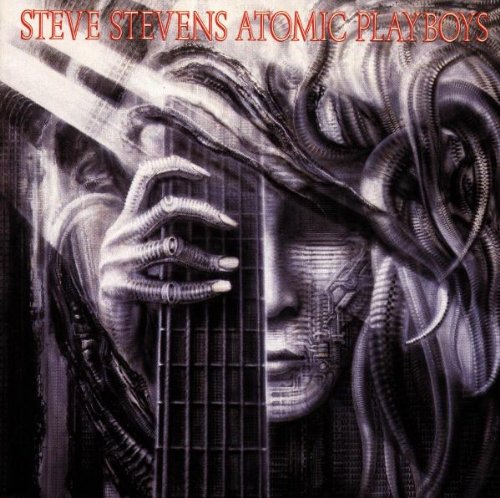
All the other covers—those officially sanctioned, in any case—come from work Giger “made for myself, many years before, which the bands, later, licensed for their own use after seeing them in my books.” Though Giger himself is more of a jazz fan, his appeal to heavy metal is obvious. “Giger’s style of adding a surrealist twist to mechanical and biological scenes,” writes Allmusic, “often with twisted sexual undertones—was immediately identifiable,” and immediately identified a band as something seductively taboo and possibly deadly.
At least one use of his work got a band prosecuted. “Bay Area punks the Dead Kennedys included a poster of Giger’s Landscape #XX, also known as Penis Landscape (the image depicted rows of erect phalluses in coitus), in the packaging of their 1985 album Frankenchrist,” writes Rolling Stone, “and were subsequently put on trial for obscenity.”
Those who would misuse his work and violate his copyright may also find themselves in court. “It will,” he warns, “cost a lot more than if they had first contacted me, through my agent, to ask for permission.”
Related Content:
When Debbie Harry Combined Artistic Forces with H.R. Giger
Josh Jones is a writer and musician based in Durham, NC. Follow him at @jdmagness
Read More...Cambridge University Professor Cooks 4000-Year-Old Recipes from Ancient Mesopotamia, and Lets You See How They Turned Out

Those of us who’ve dedicated a portion of our isolation to the art of sourdough have not suffered for a lack of information on how that particular sausage should get made.
The Internet harbors hundreds, nay, thousands of complicated, contrary, often contradictory, extremely firm opinions on the subject. You can lose hours…days…weeks, agonizing over which method to use.
The course for Bill Sutherland’s recent culinary experiment was much more clearly charted.
As documented in a series of now-viral Twitter posts, the Cambridge University professor of Conservation Biology decided to attempt a Mesopotamian meal, as inscribed on a 3770-year-old recipe tablet containing humankind’s oldest surviving recipes.
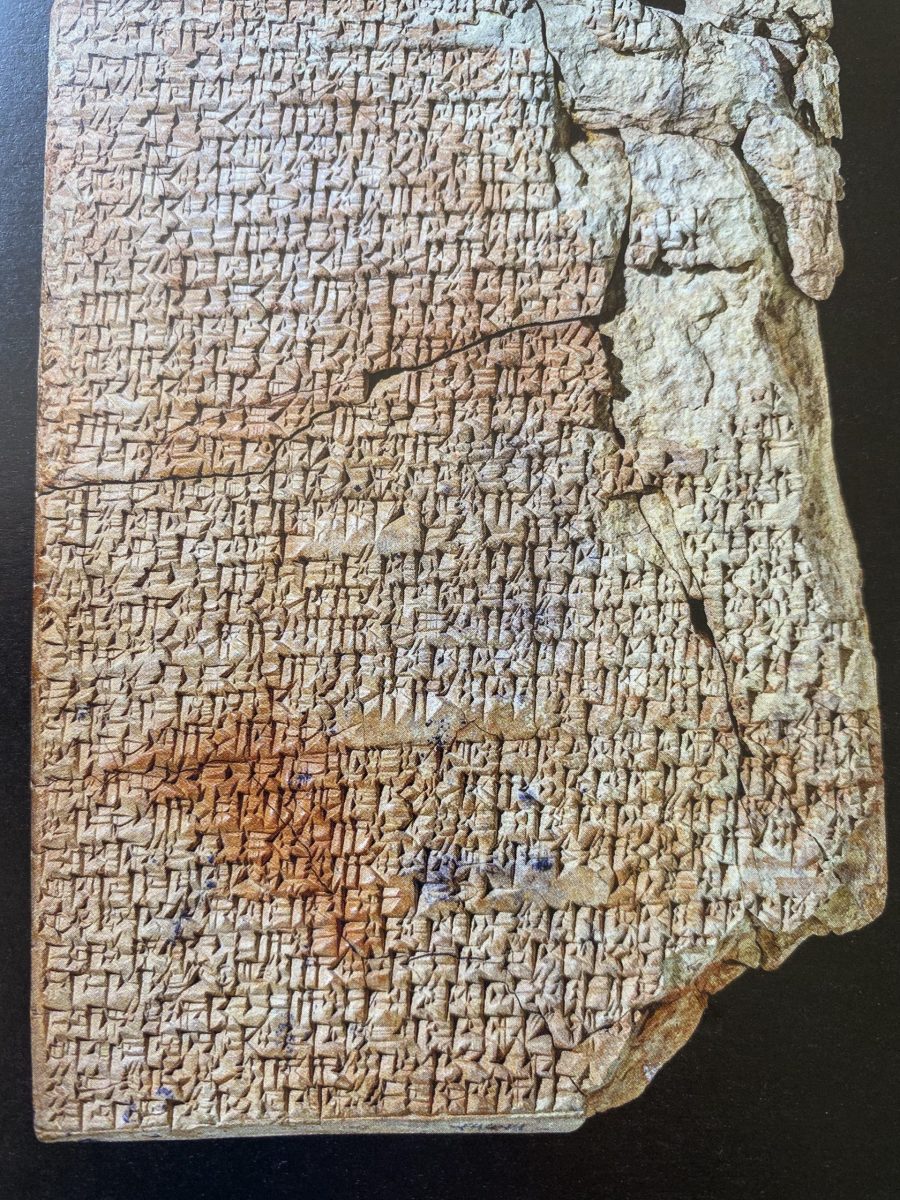
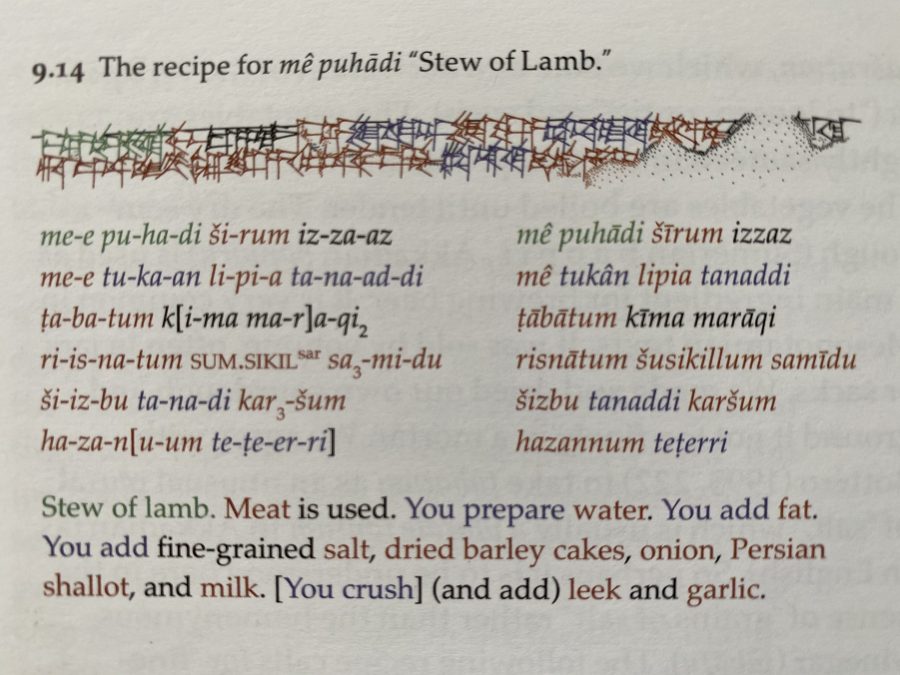
As Sutherland told Bored Panda’s Liucija Adomaite and Ilona Baliūnaitė, the translated recipes, found in Ancient Mesopotamia Speaks: Highlights of the Yale Babylonian Collection, were “astonishingly terse” and “perplexing,” leading to some guess work with regard to onions and garlic.
In addition to 25 recipes, the book has photos and illustrations of various artifacts and essays that “present the ancient Near East in the light of present-day discussion of lived experiences, focusing on family life and love, education and scholarship, identity, crime and transgression, demons, and sickness.”
Kind of like a cradle of civilization Martha Stewart Living, just a bit less user friendly with regard to things like measurements, temperature, and cooking times. Which is not to say the instructions aren’t step-by-step:
Stew of Lamb
Meat is used.
You prepare water.
You add fat.
You add fine-grained salt, barley cakes, onion, Persian shallot, and milk.
You crush and add leek and garlic.
The meal, which required just a couple hours prep in Sutherland’s non-ancient kitchen sounds like something he might have ordered for delivery from one of Cambridge’s Near Eastern restaurants.

The lamb stew was the hit of the night.
Unwinding, a casserole of leeks and spring onion, looked inviting but was “a bit boring.”
Elamite Broth was “peculiar but delicious,” possibly because Sutherland substituted tomato sauce for sheep’s blood.

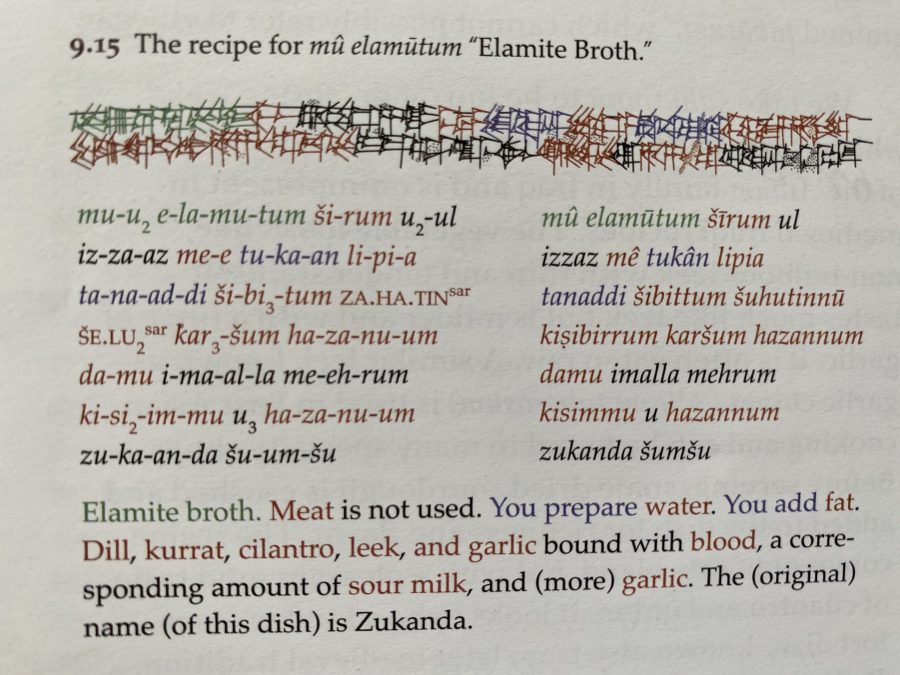
It’s an admittedly meaty proposition. Only 2 of the 25 recipes in the collection are vegetarian (“meat is not used.”)
And even there, to be really authentic, you’d have to sauté everything in sheep fat.
(Sutherland swapped in butter.)
Related Content:
Listen to the Oldest Song in the World: A Sumerian Hymn Written 3,400 Years Ago
Hear The Epic of Gilgamesh Read in the Original Akkadian and Enjoy the Sounds of Mesopotamia
Ayun Halliday is an author, illustrator, theater maker and Chief Primatologist of the East Village Inky zine. Her isolation projects are sourdough and an animation with free downloadable posters, encouraging the use of face coverings to stop the spread of COVID-19. Follow her @AyunHalliday.
Read More...An Introduction to Jean Baudrillard, Who Predicted the Simulation-Like Reality in Which We Live
Each and every morning, many of us wake up and immediately check on what’s happening in the world. Sometimes these events stir emotions within us, and occasionally we act on those emotions, which raise in us a desire to affect the world ourselves. But does this entire ritual involve anything real? While performing it we don’t experience the world, but only media; when we respond, we respond not with action in the world, but only with action in media. We have directly interacted, to put it bluntly, with nothing more than pixels on a screen. This condition has pitilessly intensified in our era of smartphones and social media, and though philosopher and sociologist Jean Baudrillard died three months before the introduction of the iPhone, nothing about it would surprise him.
Assembled in an ominous, vintage stock footage-heavy style reminiscent of Adam Curtis (he of The Century of the Self and HyperNormalisation), the half-hour Then & Now video essay above provides an introduction to Baudrillard’s ideas, especially those that predicted the world in which we live today, a “hyperreal postmodern” one filled with signs referencing little that actually exists. “In the run-up to the 2008 crash,” the narrator reminds us, “the real value of mortgages was hidden under layers of sign value, under deceitful insurance policies and financial ratings based on nothing.” On the news, “it doesn’t matter what’s real. What matters is how it’s said, who says it — the perspective, whether it will be provocative enough, whether it will entertain.” We live, in sum, in a “postmodern carnival” where “things like reality TV, Disneyland, and Facebook define our lives.”
Baudrillard saw this happening nearly 40 years ago: “People no longer look at each other, but there are institutes for that,” he writes in Simulacra and Simulation. “They no longer touch each other, but there is contactotherapy. They no longer walk, but they go jogging, etc. Everywhere one recycles lost faculties, or lost bodies, or lost sociality, or the lost taste for food.” He credited Marshall McLuhan, fellow gnomic observer of late 20th-century society, with “one of the defining axioms of postmodern life.” When McLuhan declared that “the medium is the message,” says the narrator, he saw that “what mattered in this new world was not what was real and material, but what was represented as signs: in short, television, and now the computer screen, has come to dominate social life. Sign production has replaced material production as the organizing principle of political economy.”
What would Baudrillard make of a production like HBO’s Chernobyl, whose painstaking reconstruction of historical events we previously featured here on Open Culture? What made that show a spectacle, says the narrator, was that “the depiction was more real than the event itself: costumes, props, special effects, and the perfect angle, the Geiger counter mapped onto the score already overdetermined by signs.” And so, “in twenty years’ time we think of Chernobyl, will we think of the real event, or images conjured by TV studios?” But we need hardly look that far into the future. The very things our screens insist to us are happening in the world right now, far beyond the walls of the homes fewer and fewer of us leave these days — what do we truly know of their existence apart from this digital blizzard of signs? If Baudrillard were alive to hear our speculation about the possibility that we live in another being’s simulation, he’d surely point out that we’ve already created the simulation ourselves.
Related Content:
French Philosopher Jean Baudrillard Reads His Poetry, Backed By All-Star Arts Band (1996)
The Simulation Theory Explained In Three Animated Videos
McLuhan Said “The Medium Is The Message”; Two Pieces Of Media Decode the Famous Phrase
Based in Seoul, Colin Marshall writes and broadcasts on cities, language, and culture. His projects include the book The Stateless City: a Walk through 21st-Century Los Angeles and the video series The City in Cinema. Follow him on Twitter at @colinmarshall, on Facebook, or on Instagram.
Read More...Vintage Science Face Masks: Conquer the Pandemic with Science, Courtesy of Maria Popova’s BrainPickings
If you don’t floss or brush your teeth, they will rot and fall out. If you don’t eat fruits and vegetables, you will get scurvy or some other horrible disease. If you don’t use protection… well, you know the rest. These are facts of life we mostly accept if we care about ourselves and others because they are beyond disputing. But the idea of wearing a cloth mask when in public during a viral pandemic spread through droplets from the nose and mouth—a practice endorsed by the CDC, the World Health Organization, scientists at Stanford, Johns Hopkins, and pretty much every other research university—has become some kind of bizarre culture war.
Maybe some walk around mask-less because they’ve internalized the idea that the coronavirus is “over,” despite the fact it’s spreading at around 50,000 new cases per day in the US, and potentially heading toward double that number. Maybe some feel it won’t affect them because they aren’t elderly or immunocompromised, never mind that viruses mutate, and that the novel (meaning “new”) coronavirus has already demonstrated that it is far less discriminating (in purely biological terms) than previously thought. (In Florida, the median age for COVID-19 has dropped from 65 to 37 years old.) Never mind that spreading the virus, even if one is not personally at high risk, compromises everybody else.

Are masks uncomfortable, especially in hot, humid weather? Do they muffle speech and make it hard to have satisfying face-to-face interactions? Well, yes. But consider your hourlong masked trip to the grocery store against the 12 or 24 or 48 or whatever hour-long shifts medical personnel are pulling in emergency departments across the country.
It really is the least we can do. And we can do it in style—masks went from scarce, with armies of homebound neighbors sewing homely stacks of them, to truly overabundant and fashionable, on the rack of every grocery, pharmacy, and convenience store. It couldn’t be easier.
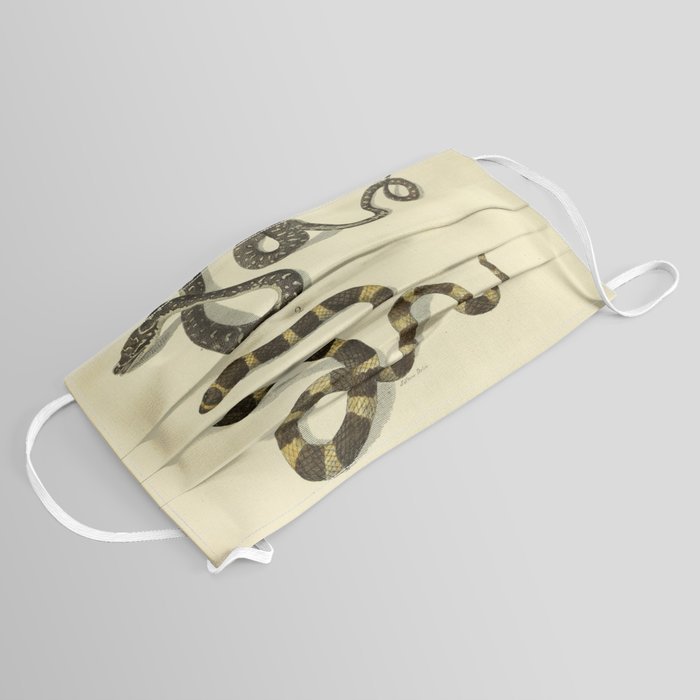
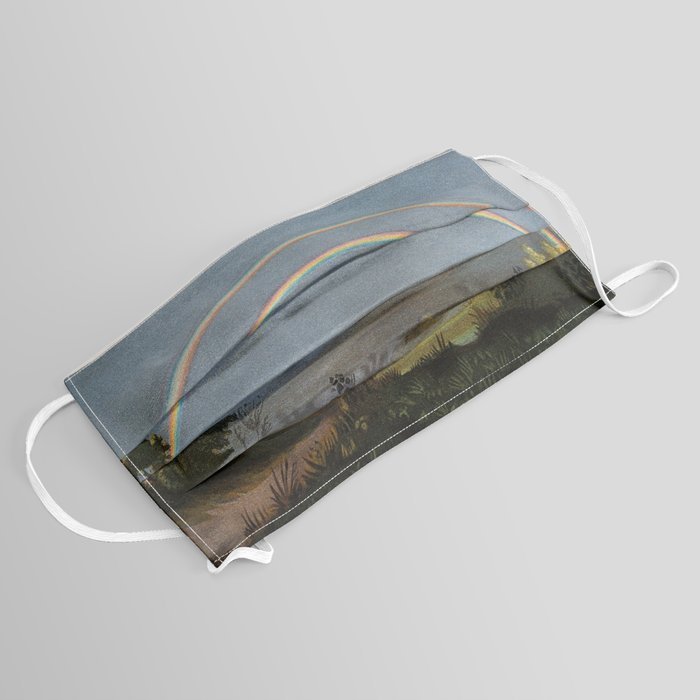
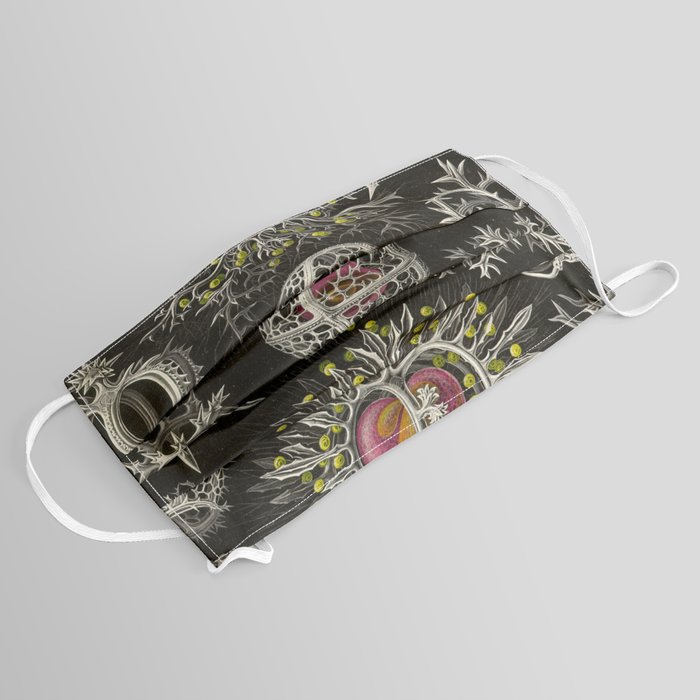
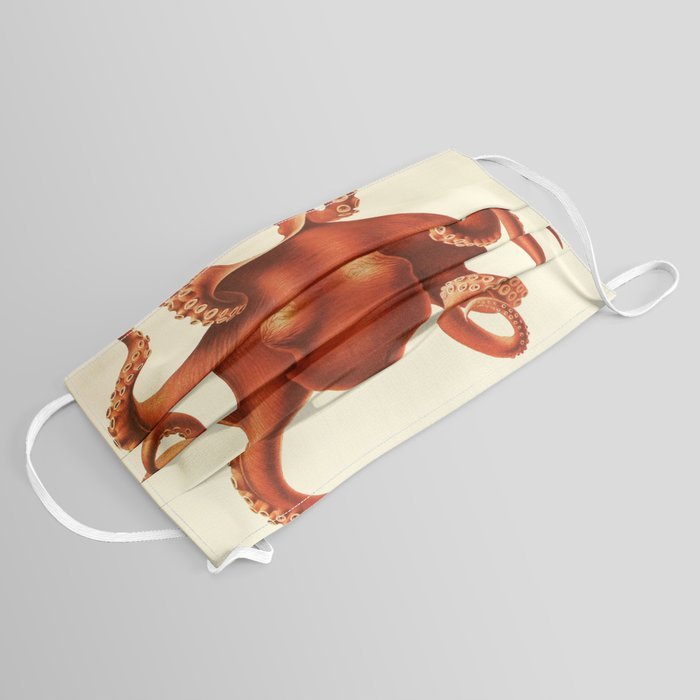
If you’re concerned about looking like every other masked weirdo out there, consider these masks created by Maria Popova of Brain Pickings, which she introduces with references to Rebecca Elson’s poem, “Antidotes to Fear of Death.” The science of public health may demand that we are grimly practical at the moment, but Popova wants to remind us that scientific thinking is equally invested in the experience of awe and the love of life. By wearing these masks, we can communicate to others, those who may be feeling despondent over the sea of masked faces in public places, that there is beauty in the world and we can fully experience if we get through this. Popova’s masks, printed and sold by Society6, illustrate the wonders of scientific curiosity with “wondrous centuries-old astronomical art and natural history illustrations.”

These include “treasures like the Solar System quilt Ella Harding Baker spent seven years crafting… gorgeous 18th-century illustrations from the world’s first encyclopedia of medicinal plants… astonishing drawings of celestial objects and phenomena…trailblazing 18th-century artist Sarah Stone’s stunning illustrations of exotic, endangered, and now-extinct animals; some graphically spectacular depictions of how nature works from a 19th-century French physics textbook; Ernst Haeckel’s heartbreak-fomented drawings of the otherworldly beauty of jellyfish…William Saville Kent’s pioneering artistic-scientific effort to bring the world’s awareness and awe to the creatures of the Great Barrier Reef; and art from the German marine biologist Carl Chun’s epoch-making Cephalopod Atlas — the world’s first encyclopedia of creatures of the deep.”
Society6 is donating a portion of its proceeds to World Center Kitchen, and Popova is donating to The Nature Conservancy. You can purchase your own vintage science illustration mask here and see some of these illustrations in their original context at the links further down.
Antidotes to Fear of Death
Sometimes as an antidote
To fear of death,
I eat the stars.Those nights, lying on my back,
I suck them from the quenching dark
Til they are all, all inside me,
Pepper hot and sharp.Sometimes, instead, I stir myself
Into a universe still young,
Still warm as blood:No outer space, just space,
The light of all the not yet stars
Drifting like a bright mist,
And all of us, and everything
Already there
But unconstrained by form.And sometime it’s enough
To lie down here on earth
Beside our long ancestral bones:To walk across the cobble fields
Of our discarded skulls,
Each like a treasure, like a chrysalis,
Thinking: whatever left these husks
Flew off on bright wings.
Related Content:
The Brilliant Colors of the Great Barrier Revealed in a Historic Illustrated Book from 1893
Josh Jones is a writer and musician based in Durham, NC. Follow him at @jdmagness
Read More...Support Us
We're hoping to rely on loyal readers, rather than erratic ads. Please click the Donate button and support Open Culture. You can use Paypal, Venmo, Patreon, even Crypto! We thank you!

About Us

Open Culture scours the web for the best educational media. We find the free courses and audio books you need, the language lessons & educational videos you want, and plenty of enlightenment in between.
Advertise With Us

FREE UPDATES!
GET OUR DAILY EMAIL
Get the best cultural and educational resources on the web curated for you in a daily email. We never spam. Unsubscribe at any time.
FOLLOW ON SOCIAL MEDIA

Open Culture editor Dan Colman scours the web for the best educational media. He finds the free courses and audio books you need, the language lessons & movies you want, and plenty of enlightenment in between.
Advertise With Us


