Paul McCartney’s “Blackbird” competes with Lennon’s “Julia” as the most tender song on the Beatles’ White Album and maybe in the band’s entire catalogue. Inspired by a Bach piece that McCartney and George Harrison learned to play when they were young, its finger-picked acoustic guitar has the sound of a folk lullaby. But the song’s shifting time signatures and delicate melody make it something of a tricky one: recording sessions at Abbey Road involved a series of 32 takes, most of them false starts and only 11 complete. The version we hear on the album is the final take, finished while Lennon worked on “Revolution 9” in the studio next door.
You can see 1:33 of that session in the footage above, captured on 16mm by a film crew from Apple Records directed by Tony Bramwell, part of a 10-minute promo that also included footage of McCartney recording “Helter Skelter” and “various other scenes from inside the studio, in the Apple Boutique, Apple Tailoring, McCartney’s garden and other locations,” the Beatles Bible notes. It’s an ephemeral document of time passing peaceably during the grueling 5‑month White Album sessions, which for all their legendary tension and rancor, included many moments like these.
The three-day ordeal that was the recording of “Ob-La-Di, Ob-La-Da” (after which engineer Geoff Emerick quit) provides stark contrast, and maybe confirmation that the Beatles were at their best when they worked separately in 1968. The brief film above also confirms a more technical recording concern: the ticking we hear in the studio track is not a metronome, but Paul’s feet alternately tapping on the wood studio floor to measure out the bars of the complex song, which shifts between 3/4, 4/4, and 2/4 time. “Part of its structure is a particular harmonic thing between the melody and the bass line which intrigued me,” he remembered, and we see him striving to get it right.
After the Beatles, McCartney made “Blackbird” a regular part of his set, playing it at nearly every concert from 1975 on. It wasn’t only the beauty of the song that has moved him all these years, but its inspiration, the Civil Rights movement, which “all of us cared passionately about,” he said. “Blackbird” is “symbolic, so you could apply it to your particular problem,” but the song’s intended message, he said, was “from me to a black woman, experiencing these problems in the States: ‘Let me encourage you to keep trying, to keep your faith, there is hope.’”
Below you can watch McCartney talk about the story behind “Blackbird” in a 2005 production called Chaos & Creation at Abbey Road.
Today we can appreciate Japanese woodblock prints from sizableonlinearchives whenever we like, and even download them for ourselves. Before the internet, how many chances would we have had even to encounter such works of art in the course of life? Very few of us, certainly, would ever have beheld a Japanese printmaker at work, but here in the age of streaming video, we all can. In the Smithsonian video above, printmaker Keiji Shinohara demonstrates a suite of traditional techniques (and more specialized ones in a follow-up below) for creating ukiyo‑e, the “pictures of the floating world” whose style originally developed to capture Japanese life and landscapes of the 17th, 18th, and 19th centuries.
“So uh,” asks one commenter below this video of Shinohara at work, “anyone else come from unintentional ASMR?” That abbreviation, which stands for “autonomous sensory meridian response,” labels a genre of Youtube video that exploded in popularity in recent years.
Attempts have been made to define the underlying phenomenon scientifically, but suffice it to say that ASMR involves a set of distinctively pleasurable sounds that happens to coincide with those made by the tools of printmakers and other highly analog craftsmen. When ASMR enthusiasts discovered Youtube art conservator Julian Baumgartner, previously featured here on Open Culture, he created special sonically enhanced versions of his videos just for them.
In the case of Shinohara, the Best Unintentional ASMR channel has done it for him. Itsversion of his videos greatly emphasize the sounds of brushes rubbed against paper, inks spread onto wood, and droplets of water falling into the rinsing bowl. Of course, the original king of unintentional ASMR in art is universally acknowledged to be Bob Ross, host of The Joy of Painting, whose soft-spoken industriousness seems now to inhabit the person of David Bull, an English-Canadian ukiyo‑e printmaker living in Tokyo. In a sense, Bull is the Western counterpart to the Osaka-born Shinohara, who after a decade’s apprenticeship in Kyoto crossed the Pacific Ocean in the other direction to make his home in the United States. But however traditional their art, they both belong, now to the floating world of the internet. You can listen to non-ASMR versions of the videos above here and here.
Based in Seoul, Colin Marshall writes and broadcasts on cities, language, and culture. His projects include the Substack newsletterBooks on Cities, the book The Stateless City: a Walk through 21st-Century Los Angeles and the video series The City in Cinema. Follow him on Twitter at @colinmarshall or on Facebook.
In the perennial conflict between art and our corporate entertainment machine, animation seems designed to be mechanized, given how labor-intensive it is, and yes, most of our animation comes aimed at children (or naughty adults) from a few behemoths (like, say, Disney).
Your hosts Mark Linsenmayer, Erica Spyres, and Brian Hirt are joined by Benjamin Goldman to discuss doing animation on your own, with only faint hope of “the cavalry” (e.g. Netfilx money or the Pixar fleet of animators) coming to help you realize (and distribute and generate revenue from) your vision. As an adult viewer, what are we looking for from this medium?
We talk about what exactly constitutes “indie,” shorts vs. features, how the image relates to the narration, realism or its avoidance, and more. Watch Benjamin’s film with Daniel Gamburg, “Eight Nights.”
Follow Benjamin on Instagram @bgpictures. Here’s something he did for a major film studio that you might recognize, from the film version of A Series of Unfortunate Events:
Andrei Tarkovsky is a popular filmmaker. This will come as a surprise to those who know the Soviet master mostly by his reputation as a maker of movies so poetic, serious, and deliberate of pace that they alter their viewers’ relationship to time itself. Yet Stalker, which ranks among his very most poetic, serious, and deliberate works, was, as of the recording of the video essay above by Youtuber CinemaTyler, the most streamed movie on the Criterion Channel. Not only that, but the essay itself, “Stalker (1979): The Sci-Fi Masterpiece That Killed Its Director,” has as of this writing racked up more than 1.6 million views.
As CinemaTyler’s most-seen episode, this Stalker exegesis outranks in popularity his analyses of classics like Blade Runner, North by Northwest, and Monty Python and the Holy Grail. It has also drawn more viewers than his many videos on the work of Stanley Kubrick, from The Shining and 2001: A Space Odyssey to Barry Lyndon and A Clockwork Orange. But for an auteur enthusiast of his kind, one can hardly begin discussing Kubrick without bringing up Tarkovsky, and vice versa. Some points of comparison are more obvious than others: CinemaTyler mentions Tarkovsky’s low opinion of 2001, which played a part in shaping the starkly different look and feel of his own first science-fiction picture Solaris.
There’s also a reference to “Kubrick/Tarkovsky,” a video essay previously featured here on Open Culture that catalogs the subtler visual resonances between their films. “Kubrick is one side of the brain,” as CinemaTyler puts it, “and Tarkovsky the other.” As much as they have in common on a deeper level, on the surface Kubrick and Tarkovsky’s oeuvres both oppose and complement each other. While Kubrick worked only in genres, Tarkovsky mostly eschewed them: Stalker, which came out seven years after Solaris, pulls sci-fi almost unrecognizably far into his own aesthetic territory.
This thrust Tarkovsky and his collaborators into their most arduous filmmaking effort yet: they had to execute complicated setups in real industrial wastelands, make several changes of cinematographer, and even shoot the entire movie twice after problems with the initial film stock. CinemaTyler recounts these difficulties and others, not ignoring the widely held suspicion that these poisonous locations ultimately caused the deaths of several of its creators, including Tarkovsky himself. Kubrick’s shoots were also notoriously difficult, of course, but none demanded quite the sacrifice Stalker did — and arguably, none produced quite an inexplicably compelling a cinematic experience.
Based in Seoul, Colin Marshall writes and broadcasts on cities, language, and culture. His projects include the Substack newsletterBooks on Cities, the book The Stateless City: a Walk through 21st-Century Los Angeles and the video series The City in Cinema. Follow him on Twitter at @colinmarshall or on Facebook.
Dave Grohl, like many rock musicians, does not come from a classically trained background. Instead he has an ability to write according to what sounds good, and where noodling around in the studio can bring great rewards. That’s where The Foo Fighters’ best song “Everlong” originates.
In this 2020 clip from Oates Song Fest, Grohl tells the story of “Everlong,” and how it came to him in the studio one day in between working on the band’s second album. It started with a chord.
“I’m not a trained musician, so I don’t know what that chord is,” he says. (The Intertubes seem to agree it’s a Dmaj7). At first he thought it was a chord from Sonic Youth (“Schizophrenia,” in fact), one of his favorite bands of all time. So that was a good start. One chord led to another and soon he had a sketch of a song.
At the time, Grohl was essentially homeless after a divorce from his wife, photographer Jennifer Youngblood. And the band were at a low ebb as well, not happy that their debut album hadn’t taken off like they wanted. But Grohl then fell in love again, this time with Louise Post of the band Veruca Salt. Over Christmas 1996, he wrote the lyrics. He would tell Kerrang magazine in 2006: “That song’s about a girl that I’d fallen in love with and it was basically about being connected to someone so much, that not only do you love them physically and spiritually, but when you sing along with them you harmonize perfectly.”
He recorded a demo of the song, playing all the instruments (he might not be a *trained* musician, but he is a well rounded one), and the finished studio version really didn’t stray too far from the original. Post provided harmonies recorded down a telephone, as she was in Chicago at the time. (You can hear them isolated, along with a lot more gearhead chat on this Produce Like a Pro episode): “I never considered doing this acoustically, I thought it was a rock song,” Grohl adds. That was until he did the Howard Stern show, early in the morning at 6 a.m., and performed it with just solo guitar. “It gave the song a new life,” he said. “It makes the song feel the way I always wish it would.”
The song catapulted the band to the top of the charts, and is considered one of the great rock songs of the 1990s. David Letterman considers it his favorite song, and asked the band to play it at the close of his final show in 2015. For a very specific lyric written about a very specific woman, with chords discovered while just goofing about, it has a universal quality.
Ted Mills is a freelance writer on the arts who currently hosts the Notes from the Shed podcast and is the producer of KCRW’s Curious Coast. You can also follow him on Twitter at @tedmills, and/or watch his films here.
An online design museum made by and for designers? The concept seems obvious, but has taken decades in internet years for the reality to fully emerge in the Letterform Archive. Now that it has, we can see why. Good design may look simple, but no one should be fooled into thinking it’s easy. “After years of development and months of feedback,” write the creators of the Letterform Archive online design museum, “we’re opening up the Online Archive to everyone. This project is a labor of love from everyone on our staff, and many generous volunteers, and we hope it provides a source of beautiful distraction and inspiration to all who love letters.”
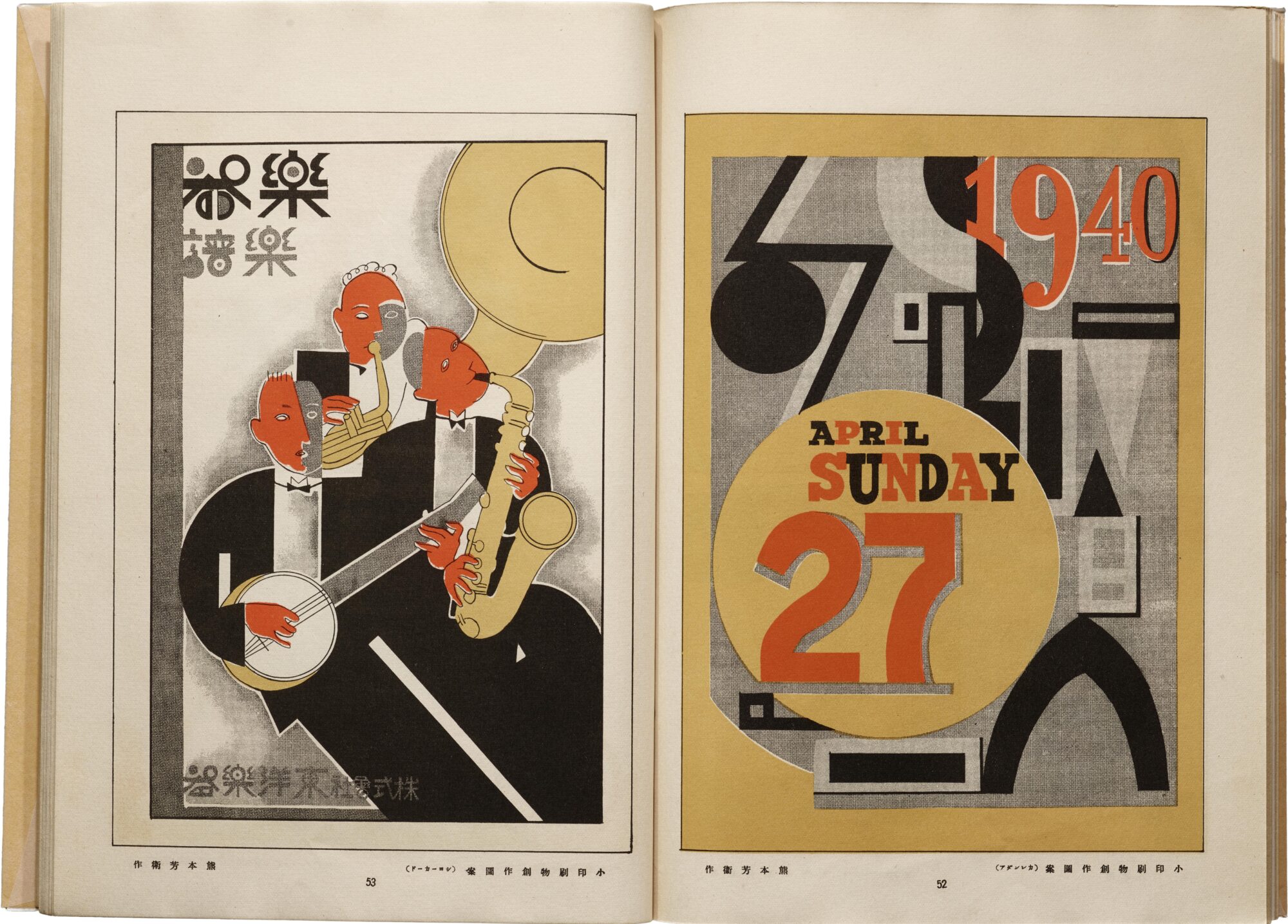
That’s letters as in fonts, not epistles, and there are thousands of them in the archive. But there are also thousands of photographs, lithographs, silkscreens, etc. representing the height of modern simplicity. This and other unifying threads run through the collection of the Letterform Archive, which offers “unprecedented access… with nearly 1,500 objects and 9,000 hi-fi images.”
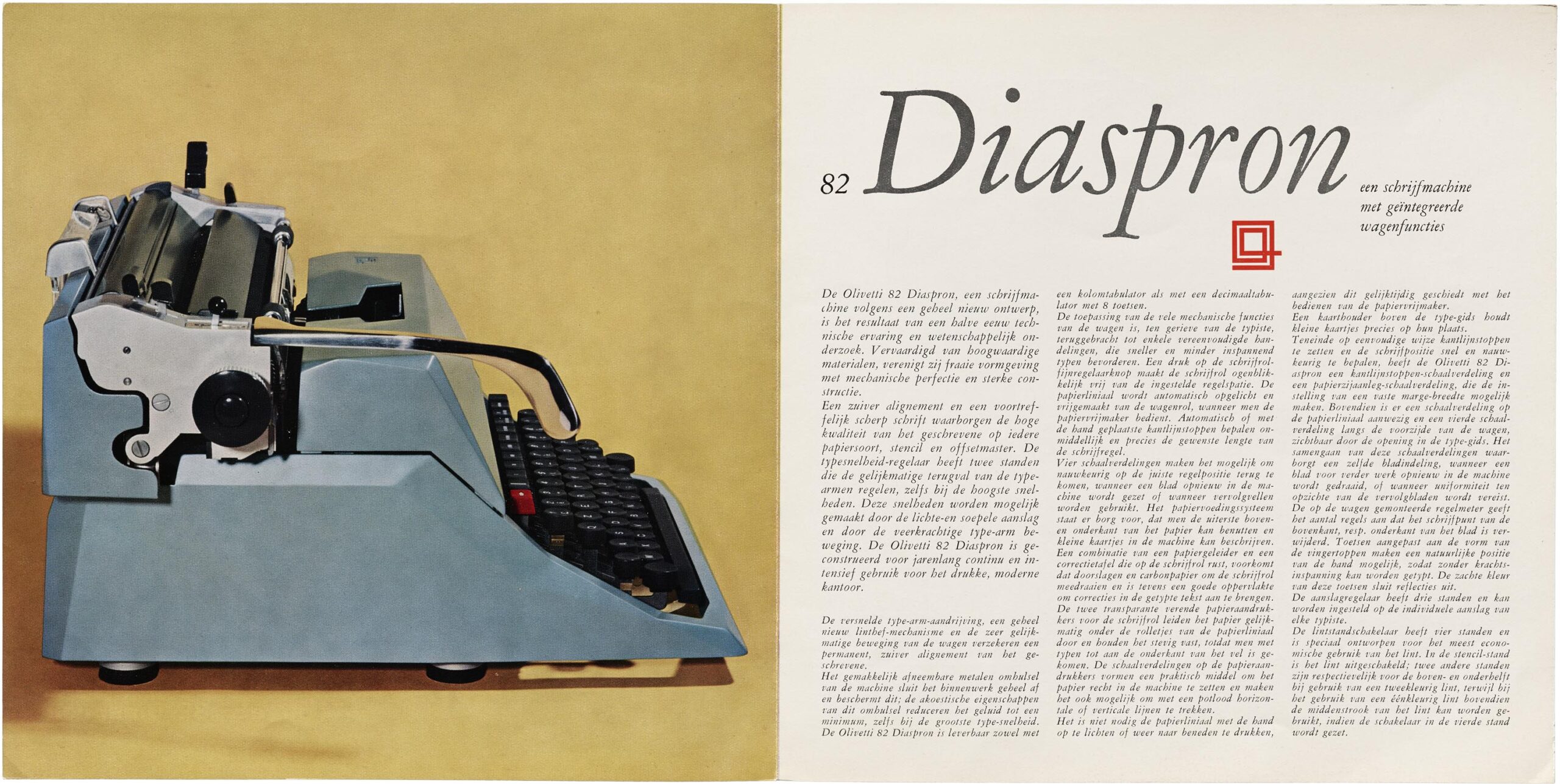
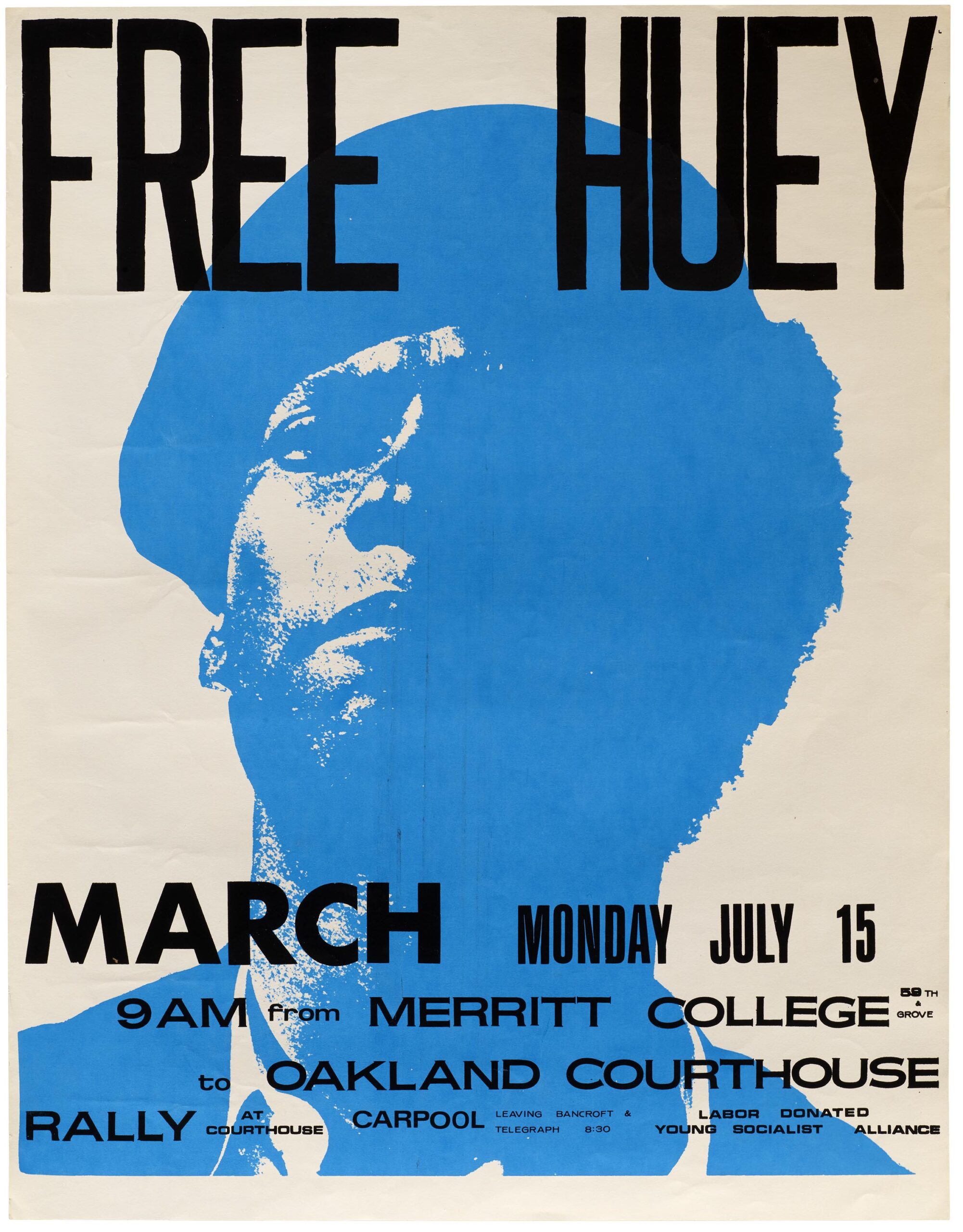
You’ll find in the Archive the sleek elegance of 1960s Olivetti catalogs, the iconic militancy of Emory Douglas’ designs for The Black Panther newspaper, and the eerily stark militancy of the “SILENCE=DEATH” t‑shirt from the 1980s AIDS crisis.
The site was built around the ideal of “radical accessibility,” with the aim of capturing “a sense of what it’s like to visit the Archive” (which lives permanently in San Francisco). But the focus is not on the casual onlooker — Letterform Archive online caters specifically to graphic designers, which makes its interface even simpler, more elegant, and easier to use for everyone, coincidentally (or not).
The graphic design focus also means there are functions specific to the discipline that designers won’t find in other online image libraries: “we encourage you to use the search filters: click on each category to explore disciplines like lettering, and formats like type specimens, or combine filters like decades and countries to narrow your view to a specific time and place.”
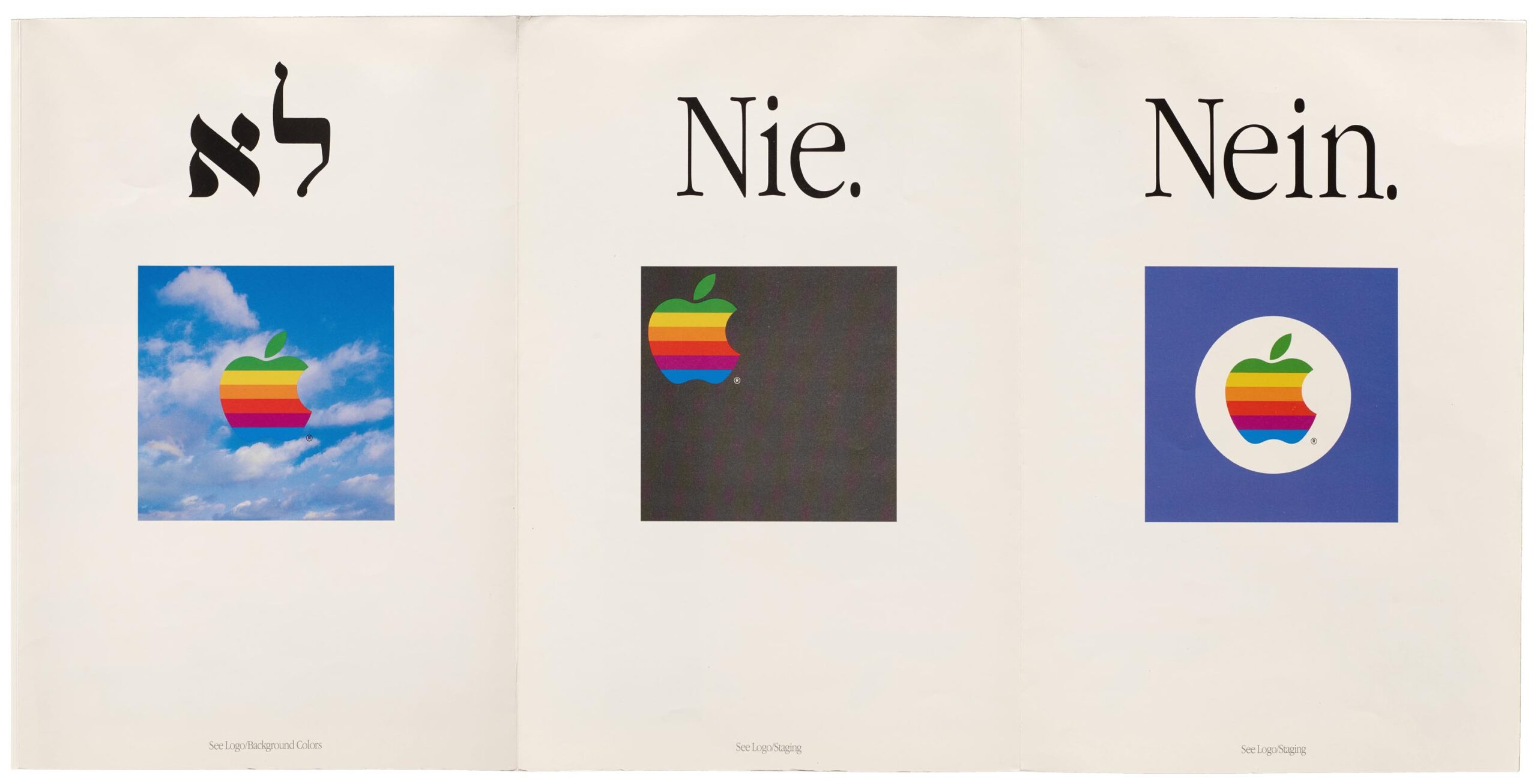
From the radical typography of Dada to the radical 60s zine scene to the sleek designs (and Neins) found in a 1987 Apple Logo Standards pamphlet, the museum has something for everyone interested in recent graphic design history and typology. But it’s not all sleek simplicity. There are also rare artifacts of elaborately intricate design, like the Persian Yusef and Zulaikha manuscript, below, dating from between 1880 and 1910. You’ll find dozens more such treasures in the Letterform Archive here.
The top flight crew of L.A. studio musicians known as The Wrecking Crew acquired their name, legend has it, because they “were wrecking the business for everyone else,” writes Janet Maslin at The New York Times, meaning older session players who couldn’t keep up. Drummers like Hal Blaine (“who justifiably calls himself ’10 of Your Favorite Drummers’ on his Web site”) and guitarists like Tommy Tedesco and Carol Kaye could play anything put in front of them perfectly, in one take, with the style and perfect timing that characterize the absolute best rock, folk, pop, and soul of the 1960s.
With some exceptions, this group kept a low profile and have only become known in subsequent retrospectives that reveal just how much they contributed to the music of the era. The answer is: more than anyone surely suspected at the time. But “the Wrecking Crew was not supposed to attract attention. Groups like the Beach Boys, the Byrds, the Monkees and many others didn’t care to point out why they sounded so much better on records than on the road.”
Not only did members of the Crew “work miracles,” playing a “first-take, no-glitch version of ‘The Little Old Lady From Pasadena,’” for example, but in many cases, they composed iconic parts without which songs like “The Beat Goes On” or “These Boots Were Made For Walking” would probably not have become hits.
“Nine times out of ten the producer or arranger would tell us to use the charts as a guide, that’s all,” Blaine remembered. “We were encouraged to go for it, to go beyond what had been written. We had the opportunity to create, to be a team of arrangers.”
Though mostly unknown to listeners, the couple dozen or so musicians in this group of exceptional performers did produce two major stars, Leon Russell and Glen Campbell, who toured with the Beach Boys in the mid-60s until he became a major superstar with the Jimmy Webb-penned songs “By the Time I Get to Phoenix” and “Wichita Lineman,” both recorded, of course, with members of the Crew. They played on jazz records and recorded iconic TV theme songs like The Twilight Zone, Green Acres, Bonanza, M*A*S*H*, Batman, Mission: Impossible, and Hawaii Five‑O.
The only female member of the Crew, Carol Kaye, was described as “the greatest bass player I’ve ever met,” by no less than Brian Wilson. Reported to have played on something like 10,000 sessions, she wrote basslines for songs from “California Girls” to the “Theme from Shaft.”
You can learn much more about the once-hidden work of some of the best studio musicians in the country, rivals of the best players in Motown, Memphis, and Muscle Shoals, in the documentary above directed by Danny Tedesco, son of Wrecking Crew guitarist Tony Tedesco. Or Kent Hartman’s book, The Wrecking Crew: The Inside Story of Rock and Roll’s Best-Kept Secret.
Listen to a YouTube playlist of classic Wrecking Crew tracks here. And see why when you thought you were listening to The Byrds, Beach Boys, Mamas and Papas, Monkees and even Simon & Garfunkel, you were really often listening to the Wrecking Crew.
When Peter Jackson’s The Fellowship of the Ring came out in 2001, it heralded a cinematic adaptation of J.R.R. Tolkien’s Lord of the Rings trilogy that would, at long last, possess scale, production value, and sheer ambition enough to do justice to the original novels. This set it somewhat apart from the version of The Fellowship of the Ring that had aired just ten years before on Leningrad Television — and hasn’t been seen since, at least until its recent upload (in twoparts) to Youtube. An unofficial adaptation, Khraniteli tells a story every single Tolkien reader around the world will recognize, even if they don’t understand unsubtitled Russian. The production’s appeal lies in any case not in its dialogue, but what we’ll call its look and feel.
“Featuring a score by Andrei Romanov of the rock band Akvarium and some incredibly cheap production design, no one is going to confuse this Lord of the Rings with Jackson’s films,” writes /Film’s Chris Evangelista. “The sets look like, well, sets, and the special effects — if you can call them that — are delightfully hokey. This appears to have had almost no budget, and that only lends to the charm.”
Despite its cheapness, Khraniteli displays exuberance on multiple levels, including its often-theatrical performances as well as visual effects, executed with the still-new video technology of the time, that oscillate between the hokily traditional and the nearly avant-garde. Some scenes, in fact, look not entirely dissimilar to those of Prospero’s Books, Peter Greenaway’s high-tech vision of Shakespeare that also premiered in 1991.
That year was the Soviet Union’s last, and the prolonged political shakeup that ensued could partially explain why Khraniteli went unseen for so long. Until now, obscurity-hunters have had to make do with The Fairytale Journey of Mr. Bilbo Baggins, The Hobbit (previously featured here on Open Culture), Leningrad Television’s earlier adaptation of Tolkien’s pre-Lord of the Rings children’s novel. It was the now long-gone Leningrad Television’s successor entity 5TV that just put the Soviet Fellowship of the Ring online — and in seemingly pristine condition at that — to the delight of global Tolkien enthusiasts who’d known only rumors of its existence. And as many of them have already found, for all the shortcomings, Khraniteli still has Tom Bombadil, for whose omission from his sprawling blockbusters Jackson will surely never hear the end.
Based in Seoul, Colin Marshall writes and broadcasts on cities, language, and culture. His projects include the Substack newsletterBooks on Cities, the book The Stateless City: a Walk through 21st-Century Los Angeles and the video series The City in Cinema. Follow him on Twitter at @colinmarshall or on Facebook.
What would pop music sound like now if the musicians of the 27 club had lived into maturity? Can we know where Amy Winehouse would have gone, musically, if she had taken another path? What if Hendrix’s influence over guitar heroics (and less obvious styles) came not only from his sixties playing but from an unimaginable late-career cosmic blues? Whether questions like these can ever be given real flesh and blood, so to speak, by artificial intelligence may still be very much undecided.
Of course, it may not be for us to decide. “The charts of 2046,” Mark Beaumont predicts at NME, “will be full of 12G code-pop songs, baffling to the human brain, written by banks of composerbots purely for the Spotify algorithm to recommend to its colonies of ÆPhone listening farms.” Seems as likely as any other future music scenario at this point. In the meantime, we still get to judge the successes, such as they are, of AI songwriters on human merits.
The Beatles-esque “Daddy’s Car,” the most notable computer-generated tribute song to date, was “composed by AI… capable of learning to mimic a band’s style from its entire database of songs.” The program produced a competent pastiche that nonetheless sounds like “cold computer psychedelia — eerie stuff.” What do we, as humans, make of Lost Tapes of the 27 Club, a compilation of songs composed in the style of musicians who infamously perished by suicide or overdose at the tender age of 27?
The “tapes” include four tracks designed to sound like lost songs from Hendrix, Winehouse, Nirvana, and the Doors. Highlighting a handful of artists who left us too soon in order to address “music’s mental health crisis,” the project used Magenta, the same Google AI as “Daddy’s Car,” to analyze the artists’ repertoires, as Rolling Stone explains:
For the Lost Tapes project, Magenta analyzed the artists’ songs as MIDI files, which works similarly to a player-piano scroll by translating pitch and rhythm into a digital code that can be fed through a synthesizer to recreate a song. After examining each artist’s note choices, rhythmic quirks, and preferences for harmony in the MIDI file, the computer creates new music that the staff could pore over to pick the best moments.
There is significant human input, such as the curation of 20 or 30 songs fed to the computer, broken down separately into different parts of the arrangement. Things did not always go smoothly. Kurt Cobain’s “loose and aggressive guitar playing gave Magenta some trouble,” writes Endgadget, “with the AI mostly outputting a wall of distortion instead of something akin to his signature melodies.”
Judge the end results for yourself in “Drowned by the Sun,” above. The music for all four songs is synthesized with MIDI files. “An artificial neural network was then used to generate the lyrics,” Eddie Fu writes at Consequence of Sound, “while the vocals were recorded by Eric Hogan, frontman of an Atlanta Nirvana tribute band.” Other songs feature different sound-alike vocalists (more or less). In no ways does the project claim that MIDI-generated computer files can replace actual musicians.
They’re affectionate tributes, made by players without hearts, but they don’t really tell us anything about what, say, Jim Morrison would have done if he hadn’t died at 27. Yet the cause is a noble one: a rejection of the romantic idea at the heart of the “27 Club” narrative — that mental illness, substance abuse, etc. should be glamorized in any way. “Lost Tapes of the 27 Club is the work of Over the Bridge,” notes Fu, “a Toronto organization that helps members of the music industry struggling with mental illness.” Learn more about the project here and about Over the Bridge’s programs here.
Sent back in time 600 years and tasked with building the world’s largest dome, how would most of us fare? Most of us, of course, are not trained architects or engineers, but then, neither was Filippo Brunelleschi. Known at the time as a goldsmith, Brunelleschi ended up winning the commission to build just such a colossal dome atop Florence’s Cattedrale di Santa Maria del Fiore, which itself had already been under construction for well over a century. The year was 1418, the dawn of the Italian Renaissance, but a break with medieval building styles had already been made, not least in the rejection of the kind of flying buttresses that had held up the stone ceilings of previous cathedrals. Brunelleschi had thus not just to build an unprecedentedly large dome, in accordance with a design drawn up 122 years earlier, but also to come up with the technology required to do so.
“He invented an ox-driven hoist that brought the tremendously heavy stones up to the level of construction,” architect David Wildman tells HowStuffWorks. Noticing that “marble for the project was being damaged as it was unloaded off of boats,” he also “invented an amphibious boat that could be used on land to transport the large pieces of marble to the cathedral.”
These and other new devices were employed in service of an ingenious structure using not just one dome but two, the smaller inner one reinforced with hoops of stone and chain. Built in brick — the formula for the concrete used in the Pantheon having been lost, like so much ancient Roman knowledge — the dome took sixteen years in total, which constituted the final stage of the Cattedrale di Santa Maria del Fiore’s generations-long construction.
Brunelleschi’s masterpiece, still the largest masonry dome in the world, has yet to quite yield all of its secrets: “There is still some mystery as to how all of the components of the dome connect with each other,” as Wildman puts it, thanks to Brunelleschi’s vigilance about concealing the nature of his techniques throughout the project. But you can see some of the current theories visualized (and, in a shamelessly fake Italian accent, hear them explained) in the National Geographic video at the top of the post. However he did it, Brunelleschi ensured that every part of his structure fit together perfectly — and that it would hold up six centuries later, when we can look at it and see not just an impressive church, but the beginning of the Renaissance itself.
Based in Seoul, Colin Marshall writes and broadcasts on cities, language, and culture. His projects include the Substack newsletterBooks on Cities, the book The Stateless City: a Walk through 21st-Century Los Angeles and the video series The City in Cinema. Follow him on Twitter at @colinmarshall or on Facebook.
In November 1965, after some hondling between the Carnegie Corporation and the Ford Foundation, a senior executive from Carnegie called former president of MIT James Killian with an invitation. Would Killian be interested in assembling a commission to study educational television with an eye toward strengthening the American system of learning on screen, and could he start right away? Killian jumped; a commission was formed; and two years, eight meetings, 225 interviews, and 92 site visits later, the Carnegie Commission’s report comes out, a bill gets written, the bill becomes law, and President Johnson is signing the 1967 Public Television Act to create public television and radio.
At the signing ceremony, Johnson said, “Today, we rededicate a part of the airwaves – which belong to all the people – and we dedicate them for the enlightenment of all the people. We must consider,” he said, “new ways to build a great network for knowledge – not just a broadcast system, but one that employs every means of sending and storing information that the individual can use.”
Heady stuff. But it gets even better:
Think of the lives that this would change:
The student in a small college could tap the resources of a great university. […]
The country doctor getting help from a distant laboratory or a teaching hospital;
A scholar in Atlanta might draw instantly on a library in New York;
A famous teacher could reach with ideas and inspirations into some far-off classroom, so that no child need be neglected.
Eventually, I think this electronic knowledge bank could be as valuable as the Federal Reserve Bank.
And such a system could involve other nations, too – it could involve them in a partnership to share knowledge and to thus enrich all mankind.
A wild and visionary idea? Not at all. Yesterday’s strangest dreams are today’s headlines and change is getting swifter every moment.
I have already asked my advisers to begin to explore the possibility of a network for knowledge – and then to draw up a suggested blueprint for it.
The system he was signing into law, Johnson said, “will be free, and it will be independent – and it will belong to all of our people.”
A new network for knowledge.
Imagine.
Fifty years later, totally (seemingly) unrelated, then MIT president Charles Vest went on to speak of something else, something that became MIT Open Courseware. Together with new foundations – this time the Hewlett Foundation and the Mellon Foundation led the way – Vest envisioned “a transcendent, accessible, empowering, dynamic, communally constructed framework of open materials and platforms on which much of higher education worldwide can be constructed or enhanced:”
A meta-university that will enable, not replace, residential campuses, that will bring cost efficiencies to institutions through the shared development of educational materials. That will be adaptive, not prescriptive. It will serve teachers and learners in both structured and informal contexts. It will speed the propagation of high-quality education and scholarship. It will build bridges across cultures and political boundaries. And it will be particularly important to the developing world.
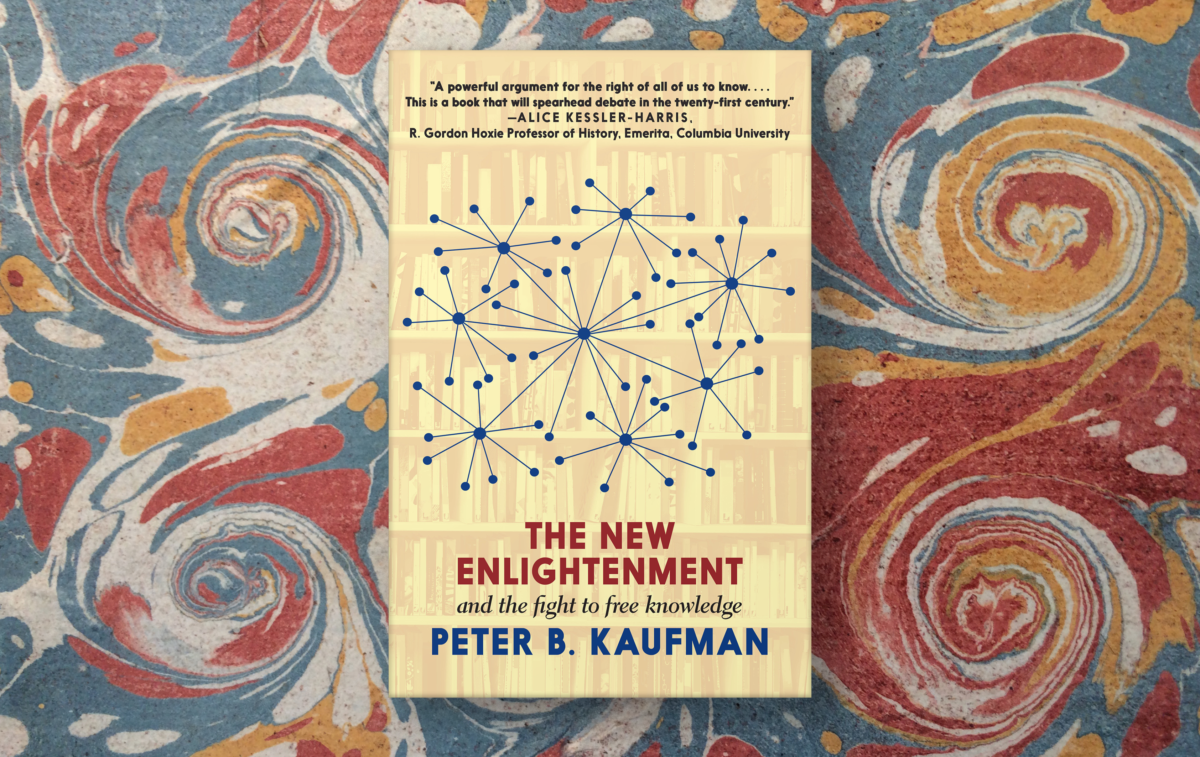
Today, in our time of severe truth decay, our great epistemic crisis, it might be time again to envision another intervention, formative and transformational as the establishment of public broadcasting, imaginative and daring as the launch of open courseware and the open education movement. Indeed, something as breathtaking as the events above, and their own vital forbear over a century ago – the founding of a network of public libraries across America and other parts of the world (which also happened with Andrew Carnegie’s financial support).
The original Enlightenment brought us Newton’s physics, Rousseau’s political philosophy, Linnaeus’s taxonomies, Montesquieu’s laws, the Declaration of Independence, the Declaration of the Rights of Man – it was the Age of Reason. Its founders – as we noted in [Parts 1 and II on] Open Culture – comprised between themselves what became known as the great Republic of Letters. They were all men, though; and they all were white; while they had access to their own means and to the mean of media production, and they delivered new systems of thinking much of the modern world is based on today, their circles were limited; their imaginations were not our imaginations.
Today we have a chance to do more – to take advantage of the cultures and communities that have arisen in the centuries and from the struggles since that time, to launch a new Enlightenment, and to realize perhaps in bolder and more secure ways this new network for knowledge. Video, more than text now, has taken over the internet; video is a new key to our networked world. The company Cisco Systems – which makes many of the devices that connect us – deploys a forecasting tool it calls the Visual Networking Index (VNI). The latest VNI tells us that there were 3.4 billion Internet users on the planet in 2017, almost half of the planet’s current population of 7.7 billion people. By 2022, there will be 4.8 billion Internet users: 60 percent of the planet, and more people in the world will be connected to the Internet than not. By 2022, more than 28 billion “devices and connections” will be online. And – here’s the kicker – video will make up 82 percent of global Internet traffic. Video is dominant already. During peak evening hours in the Americas, Netflix can account for as much as 40 percent of downstream Internet traffic, and Netflix – Netflix alone – constitutes 15 percent of Internet traffic worldwide. All this forecasting was completed before the pandemic; before 125 million cases of Corona virus; before 3 million deaths worldwide; before the explosion of Zoom.
We are living in a video age. What will be our next media intervention? How do knowledge institutions secure their deservedly central place in search and on the web? We need to look over our rights vis-à-vis the government and the giant companies that increasingly control our Internet; we need to look at the growing power we have to contribute to access to knowledge and share our wealth especially in the online Commons; we need to make sure that the public record, especially video (and especially video of all the lies and crimes, and of all the outrageous falsehoods leaders circulate about COVID) is all archived and preserved. We need to strengthen how much of the network we own and control.
What’s important is that we have begun to reach toward the point where there is equity in the leadership of our knowledge institutions. No longer are white men and only white men in charge of the Library of Congress, for example, or the Smithsonian Institution, or, and thus by extension, of our new Enlightenment. New and diverse study and action groups are being formed specifically to address our information disorder. But many more of our leading knowledge institutions – and, critically, foundations and funding agencies again – need to lead this work. This is a 20th-anniversary year for MIT Open CourseWare, for Wikipedia, and for Creative Commons; indeed, MIT OCW starts to celebrate its birthday this month. Many other like-minded progressive institutions and their supporters are on the move. That network for knowledge is coming again: this time, our new Enlightenment moment will belong to all of us.
We're hoping to rely on loyal readers, rather than erratic ads. Please click the Donate button and support Open Culture. You can use Paypal, Venmo, Patreon, even Crypto! We thank you!
Open Culture scours the web for the best educational media. We find the free courses and audio books you need, the language lessons & educational videos you want, and plenty of enlightenment in between.