Flannery O’Connor Reads ‘Some Aspects of the Grotesque in Southern Fiction’ (c. 1960)

Here is a rare record­ing of Flan­nery O’Con­nor read­ing an ear­ly ver­sion of her wit­ty and reveal­ing essay, “Some Aspects of the Grotesque in South­ern Fic­tion.”

O’Con­nor gives an elo­quent out­line of her vision as both a South­ern and a Catholic writer. She defends her work against crit­ics who say it is high­ly unre­al­is­tic. “All nov­el­ists are fun­da­men­tal­ly seek­ers and describers of the real,” she says, “but the real­ism of each nov­el­ist will depend on his view of the ulti­mate reach­es of real­i­ty.” In the pub­lished ver­sion of the essay, she writes:

When­ev­er I’m asked why South­ern writ­ers par­tic­u­lar­ly have a pen­chant for writ­ing about freaks, I say it is because we are still able to rec­og­nize one. To be able to rec­og­nize a freak, you have to have some con­cep­tion of the whole man, and in the South the gen­er­al con­cep­tion of man is still, in the main, the­o­log­i­cal. That is a large state­ment, and it is dan­ger­ous to make it, for almost any­thing you say about South­ern belief can be denied in the next breath with equal pro­pri­ety. But approach­ing the sub­ject from the stand­point of the writer, I think it is safe to say that while the South is hard­ly Christ-cen­tered, it is most cer­tain­ly Christ-haunt­ed. The South­ern­er, who isn’t con­vinced of it, is very much afraid that he may have been formed in the image and like­ness of God. Ghosts can be very fierce and instruc­tive. They cast strange shad­ows, par­tic­u­lar­ly in our lit­er­a­ture. In any case, it is when the freak can be sensed as a fig­ure for our essen­tial dis­place­ment that he attains some depth in lit­er­a­ture.

This pas­sage can be heard, in dif­fer­ent form, begin­ning at the 3:40 mark in the record­ing. Like many of O’Con­nors essays, “Some Aspects of the Grotesque in South­ern Fic­tion” was writ­ten not for pub­li­ca­tion, but for pub­lic read­ing. She was known to rewrite and rearrange these pieces between read­ings. In this record­ing, O’Con­nor is using the piece as a prepara­to­ry state­ment for a read­ing of her clas­sic sto­ry, “A Good Man is Hard to Find.”

We don’t know the date of the record­ing, but the text dif­fers sig­nif­i­cant­ly from the posthu­mous­ly pub­lished ver­sion, so per­haps it is an ear­ly ver­sion. The ear­li­est extant record­ing of the essay that we know of was made on Octo­ber 28, 1960 for the Dorothy Lamar Blount Lec­ture Series at Wes­leyan Col­lege in Macon, Geor­gia. There is also known to be a record­ing of O’Con­nor read­ing the piece on Novem­ber 16, 1962 at East Texas State Uni­ver­si­ty.

To com­pare the record­ed ver­sion to the one even­tu­al­ly pub­lished in Mys­tery and Man­ners: Occa­sion­al Prose, you can click here to open the essay in a new win­dow.

Relat­ed Con­tent:

Rare 1959 Audio: Flan­nery O’Connor Reads ‘A Good Man is Hard to Find’

Hear Flan­nery O’Connor’s Short Sto­ry, “Rev­e­la­tion,” Read by Leg­endary His­to­ri­an & Radio Host, Studs Terkel

Flan­nery O’Connor’s “Every­thing That Ris­es Must Con­verge” Read by Estelle Par­sons

Enrich Yourself with Free Courses, Audio Books, eBooks, Movies, Textbooks & More

iphone einstein

How’s that New Year’s res­o­lu­tion going? You know, the one where you promised to make bet­ter use of your free time and learn new things? If you’re off track, fear not. It’s only April. It’s not too late to make good on your promise. And we can help. Below, we’ll tell you how to fill your Kin­dle, iPad, com­put­er, smart­phone, com­put­er, etc. with free intel­li­gent media — great ebooks and audio books, movies, cours­es, and the rest:

Free eBooks: You have always want­ed to read the great works. And now is your chance. When you dive into our Free eBooks col­lec­tion you will find 400 great works by some clas­sic writ­ers (Dick­ens, Dos­to­evsky, Shake­speare and Tol­stoy) and con­tem­po­rary writ­ers (F. Scott Fitzger­ald, Philip K. Dick, Isaac Asi­mov, and Kurt Von­negut). The col­lec­tion also gives you access to the 51-vol­ume Har­vard Clas­sics.

If you’re an iPad/iPhone user, the down­load process is super easy. Just click the “iPad/iPhone” links and you’re good to go. Kin­dle and Nook users will gen­er­al­ly want to click the “Kin­dle + Oth­er For­mats links” to down­load ebook files, but we’d sug­gest watch­ing these instruc­tion­al videos (Kin­dle –Nook) before­hand.

Free Audio Books: What bet­ter way to spend your free time than lis­ten­ing to some of the great­est books ever writ­ten? This page con­tains a vast num­ber of free audio books, includ­ing works by Arthur Conan Doyle, James Joyce, Jane Austen, Edgar Allan Poe, George Orwell and more recent writ­ers — Ita­lo Calvi­no, Vladimir Nabokov, Ray­mond Carv­er, etc. You can down­load these clas­sic books straight to your gagdets, then lis­ten as you go.

[Note: If you’re look­ing for a con­tem­po­rary book, you can down­load one free audio book from Audible.com. Find details on Audi­ble’s no-strings-attached deal here.]

Free Online Cours­es: This list brings togeth­er over 700 free online cours­es from lead­ing uni­ver­si­ties, includ­ing Stan­ford, Yale, MIT, UC Berke­ley, Oxford and beyond. These full-fledged cours­es range across all dis­ci­plines – his­to­ryphysicsphi­los­o­phypsy­chol­o­gy and beyond. Most all of these cours­es are avail­able in audio, and rough­ly 75% are avail­able in video. You can’t receive cred­its or cer­tifi­cates for these cours­es (click here for cours­es that do offer cer­tifi­cates). But the amount of per­son­al enrich­ment you will derive is immea­sur­able.

Free Movies: With a click of a mouse, or a tap of your touch screen, you will have access to 525 great movies. The col­lec­tion hosts many clas­sics, west­erns, indies, doc­u­men­taries, silent films and film noir favorites. It fea­tures work by some of our great direc­tors (Alfred Hitch­cock, Orson Welles, Andrei Tarkovsky, Stan­ley Kubrick, Jean-Luc Godard and David Lynch) and per­for­mances by cin­e­ma leg­ends: John Wayne, Jack Nichol­son, Audrey Hep­burn, Char­lie Chap­lin, and beyond. On this one page, you will find thou­sands of hours of cin­e­ma bliss.

Free Lan­guage Lessons: Per­haps learn­ing a new lan­guage is one of your res­o­lu­tions. Well, here is a great way to do it. Take your pick of 40 lan­guages — Span­ish, French, Ital­ian, Man­darin, Eng­lish, Russ­ian, Dutch, even Finnish, Yid­dish and Esperan­to. These lessons are all free and ready to down­load.

Free Text­books: And one last item for the life­long learn­ers among you. We have scoured the web and pulled togeth­er a list of 150 Free Text­books. It’s a great resource par­tic­u­lar­ly if you’re look­ing to learn math, com­put­er sci­ence or physics on your own. There might be a dia­mond in the rough here for you.

by | Permalink | Make a Comment ( 2 ) |

John, Paul and George Perform Dueling Guitar Solos on The Beatles’ Farewell Song (1969)

It all came to an end with “The End,” the last real track on the Bea­t­les’ final stu­dio album Abbey Road.* Record­ed in July and August of 1969, “The End” takes up the last 2 min­utes and 20 sec­onds of the mas­ter­ful 16-minute med­ley (lis­ten here) that brings Abbey Road to a cli­max. And it fea­tures some of the last great “cos­mic, philo­soph­i­cal lines” (as John Lennon lat­er called them) the Bea­t­les left us to pon­der:

And in the end,
The love you take,
Is equal to the love you make.

The song also gave us some­thing we weren’t accus­tomed to: all four Bea­t­les per­form­ing a solo. Any ardent Bea­t­les fan knows that Ringo Starr nev­er liked drum solos. As Paul recalled years lat­er, “[Ringo] hat­ed drum­mers who did lengthy drum solos. We all did.” Despite this gen­er­al view, McCart­ney thought a solo worked on this final track, and it took a fair amount of “gen­tle per­sua­sion” before Starr relent­ed and gave us the only drum solo per­formed on a Bea­t­les album. You can hear it below.

The End has anoth­er sig­na­ture moment — the moment when Paul, George and John sparred on lead gui­tars, play­ing solos in rapid suc­ces­sion, with­out miss­ing a beat. As you’ll see in the anno­tat­ed video above, Paul kicks things off with a solo that fea­tures some fan­cy string bends. George picks up with some melod­ic slides. And John takes over with his own dis­tor­tion-filled solo. Around it goes three times, until we reach the end.

If you’re into Bea­t­les gui­tar solos, make sure you don’t miss “Here Comes The Sun: The Lost Gui­tar Solo by George Har­ri­son.” It’s delight­ful.

Note: When we call “The End” the last real track on Abbey Road, we’re dis­count­ing “Her Majesty,” the 23-sec­ond song that was tacked on as some­thing of an after­thought. We call Abbey Road the last stu­dio album because it was record­ed after (though released before) Let It Be.

Relat­ed Con­tent:

Gui­tarist Randy Bach­man Demys­ti­fies the Open­ing Chord of ‘A Hard Day’s Night’

The Bea­t­les: Unplugged Col­lects Acoustic Demos of White Album Songs (1968)

Peter Sell­ers Reads The Bea­t­les’ “She Loves You” in Four Voic­es

by | Permalink | Make a Comment ( 9 ) |

Martin Heidegger Talks About Language, Being, Marx & Religion in Vintage 1960s Interviews


Ger­man philoso­pher Mar­tin Hei­deg­ger, whom read­ers of post-struc­tural­ist the­o­ry have to thank for pop­u­lar­iz­ing the ubiq­ui­tous phrase “always already,” was a very labored writer who coined much of his own ter­mi­nol­o­gy and gave many a trans­la­tor migraines. His prose betrays an obses­sion with the pow­er of lan­guage that many of his stu­dents and suc­ces­sors, such as Jacques Der­ri­da and Michel Fou­cault, inher­it­ed in the con­struc­tion of their own elab­o­rate the­o­ries. While Heidegger’s first book Being and Time (1927) had enor­mous influ­ence on Exis­ten­tial­ist and Phe­nom­e­no­log­i­cal thought, he also wrote exten­sive­ly on tech­nol­o­gy, the­ol­o­gy, and art and poet­ics, engag­ing with the ideas of Edmund Husserl, Kierkegaard, Niet­zsche, and the roman­tic Ger­man poet Friedrich Hӧlder­lin.

In the short film above, see the man him­self in excerpts from a lec­ture and three dif­fer­ent inter­views. The footage comes from a 1975 doc­u­men­tary called Heidegger’s Speech­es. Hei­deg­ger first dis­cuss­es some the­o­ry of lan­guage, quot­ing Goethe, then, in an inter­view, talks about how he came to the cen­tral pre­oc­cu­pa­tion of his philo­soph­i­cal career: the “ques­tion of being,” or Dasein. The third inter­view con­cerns Heidegger’s thoughts on Karl Marx. He quotes Marx’s rad­i­cal dic­tum, “philoso­phers have only inter­pret­ed the world; the point is to change it,” and offers a crit­i­cal per­spec­tive based in hermeneu­tics. In the fourth and final inter­view seg­ment, Hei­deg­ger prof­fers some thoughts on reli­gion and com­mu­nism.

For a much fuller pic­ture of Heidegger’s life and work, watch the BBC doc­u­men­tary above, from their Exis­ten­tial­ist series “Human All Too Human” that begins with Niet­zsche and ends with Sartre. And this page also has video of a num­ber of philoso­phers dis­cussing Heidegger’s work, which left such a last­ing impres­sion on the char­ac­ter of late mod­ern and post­mod­ern thought that it’s hard to find a con­tem­po­rary philoso­pher who doesn’t owe some sort of debt to him.

It may be impos­si­ble to over­state Heidegger’s impor­tance to twen­ti­eth cen­tu­ry Euro­pean phi­los­o­phy in gen­er­al, and upon sev­er­al promi­nent Jew­ish thinkers in par­tic­u­lar like his for­mer stu­dent and lover Han­nah Arendt and ethi­cist Emmanuel Lev­inas. But it also must be said that Heidegger’s lega­cy is taint­ed with con­tro­ver­sy. While it’s typ­i­cal­ly good form to sep­a­rate a thinker’s work from his or her per­son­al laps­es, Heidegger’s laps­es of judg­ment, if that’s what they were, are not so easy to ignore. As the doc­u­men­tary above informs us, Hei­deg­ger was a Nazi. A review­er of a recent biog­ra­phy col­or­ful­ly sums up the case this way:

Let’s be clear about this: Mar­tin Hei­deg­ger, a thinker many regard as the most impor­tant philoso­pher of the twen­ti­eth cen­tu­ry, was indeed a bona-fide, arm-aloft, palm-out­stretched Nazi. Zeal­ous­ly renew­ing his par­ty mem­ber­ship every year between 1933 and 1945, his com­mit­ment to the Nation­al Social­ist cause was unstint­ing. Nowhere was this more in evi­dence than in his pub­lic role as rec­tor of Freiburg Uni­ver­si­ty, where he praised ‘the inner truth and great­ness’ of Nazism in his 1933 rec­toral address, and lat­er penned a paean to mur­dered Nazi thug Leo Schlageter. Hei­deg­ger was no token fas­cist; he was jack-boot­ed and ready. Wear­ing a swasti­ka on his lapel at all times he, along­side his proud, vir­u­lent­ly anti-Semit­ic wife, also prac­tised pri­vate dis­crim­i­na­tion against Jews, from fel­low exis­ten­tial­ist philoso­pher Karl Jaspers to his one-time men­tor Edmund Husserl. Not that he was with­out friends. In fact his friend­ship with Eugene Fis­ch­er, direc­tor of Berlin Insti­tute for Racial Hygiene, last­ed years.

Heidegger’s Nazi sym­pa­thies are hard­ly evi­dent in his philo­soph­i­cal work, yet it is still dif­fi­cult for many read­ers to rec­on­cile these facts about his life. Some refer to a 1966 Der Spiegel inter­view in which the philoso­pher explained away his Nazism as exi­gent cir­cum­stances. Sort of what we call today a non-apol­o­gy apol­o­gy. Oth­ers, like one­time admir­er Lev­inas, don’t find the task so easy. In a com­men­tary on for­give­ness, Lev­inas once wrote, “One can for­give many Ger­mans, but there are some Ger­mans it is dif­fi­cult to for­give. It is dif­fi­cult to for­give Hei­deg­ger.”

You can find more resources on Hei­deg­ger in our archive of free online phi­los­o­phy cours­es.

Relat­ed Con­tent:

Friedrich Niet­zsche & Exis­ten­tial­ism Explained to Five-Year-Olds (in Com­i­cal Video by Red­dit)

Wal­ter Kaufmann’s Lec­tures on Niet­zsche, Kierkegaard and Sartre (1960)

Han­nah Arendt’s Orig­i­nal Arti­cles on “the Banal­i­ty of Evil” in the New York­er Archive

Josh Jones is a writer and musi­cian based in Wash­ing­ton, DC. Fol­low him @jdmagness

Friedrich Nietzsche & Existentialism Explained to Five-Year-Olds (in Comical Video by Reddit)

Who’s ready for a les­son on “Eggsalent­lal­ism?” How about “Exa­ten­talum?” Sound like fun? Great! Pull up a tiny chair, grab a toy, and get ready to have Niet­zsche explained like you’re five with “Explain Like I’m Five: Exis­ten­tial­ism and Friederich Niet­zsche.” A web series inspired by a sub­red­dit, “Explain Like I’m Five” has explained oth­er com­pli­cat­ed sub­jects to five year-olds, includ­ing the cri­sis in Syr­ia and the volatil­i­ty of the stock mar­ket. In this episode, our two pre­sen­ters prime their stu­dents for a dis­cus­sion on slave moral­i­ty with the ques­tion “who here thinks they’re a good boy or a good girl?”

All the kids eager­ly raise their hands, and after some Socrat­ic dia­logue are told that Exis­ten­tial­ism means “there is no uni­ver­sal moral­i­ty that gov­erns all of us.” I’ll leave it to the philoso­phers out there to assess this def­i­n­i­tion. The kids don’t respond well. They hate Niet­zsche. One vocif­er­ous young crit­ic pro­pos­es toss­ing him on the street and step­ping on him. Like good 19th cen­tu­ry Ger­man burghers, they can’t imag­ine a world with­out rules. I imag­ine these kids’ par­ents would also like to toss Niet­zsche in the street when their angels come home para­phras­ing Beyond Good and Evil.

Some of the pop­u­lar respons­es to Niet­zsche among adults can also be over­ly emo­tion­al. First there is fear: of the sup­posed nihilist who pro­claimed the death of God and who—thanks to the machi­na­tions of his unscrupu­lous and anti-Semit­ic sis­ter—became erro­neous­ly asso­ci­at­ed with Nazi ide­ol­o­gy after his death. Then there’s the enthu­si­as­tic embrace of Nietzsche’s work by unso­phis­ti­cat­ed read­ers who see him only as an anti­estab­lish­ment roman­tic rebel, hell­bent on under­min­ing all author­i­ty. Some of these impres­sions are valid as far as they go, but they tend to stop with the style and leave out the sub­stance.

What peo­ple tend to miss are Nietzsche’s sus­tained defense of a prag­mat­ic nat­u­ral­ism and his trag­ic embrace of indi­vid­ual human free­dom, which is not won with­out great per­son­al cost. The unusu­al thing about Exis­ten­tial­ism is that it’s a phi­los­o­phy so broad, or so gen­er­ous, it can include the anti-Chris­t­ian Niet­zsche, rad­i­cal­ly Chris­t­ian Kierkegaard, and the Marx­ist Sartre. A more seri­ous treat­ment of the subject—1999 three-part BBC doc­u­men­tary series “Human All Too Human”—also includes Mar­tin Hei­deg­ger, who actu­al­ly did truck with Nazi ide­ol­o­gy. The series, which pro­files Niet­zsche, Hei­deg­ger, and Sartre, begins with the Niet­zsche doc below (this one with Por­tuguese sub­ti­tles).

If you’re new to Niet­zsche, and not actu­al­ly a five-year-old, it’s worth an hour of your time. Then maybe head on over to our col­lec­tion of ven­er­a­ble Prince­ton pro­fes­sor Wal­ter Kaufmann’s lec­tures on Niet­zsche, Kierkegaard, and Sartre. For addi­tion­al seri­ous resources, Dr. Gre­go­ry B. Sadler has an exten­sive YouTube lec­ture series on Niet­zsche, Exis­ten­tial­ism, and oth­er philo­soph­i­cal top­ics. And if all you want is anoth­er good chuck­le at Nietzsche’s expense, check out Ricky Ger­vais’ take on the woe­ful­ly mis­un­der­stood philoso­pher.

Relat­ed Con­tent:

Exis­ten­tial­ism with Hubert Drey­fus: Four Free Phi­los­o­phy Cours­es

The Exis­ten­tial Star Wars: Sartre Meets Darth Vad­er

The Dead Authors Pod­cast: H.G. Wells Com­i­cal­ly Revives Lit­er­ary Greats with His Time Machine

Find Many Clas­sic Works by Niet­zsche in our Free eBooks Col­lec­tion

Josh Jones is a writer and musi­cian based in Wash­ing­ton, DC. Fol­low him @jdmagness

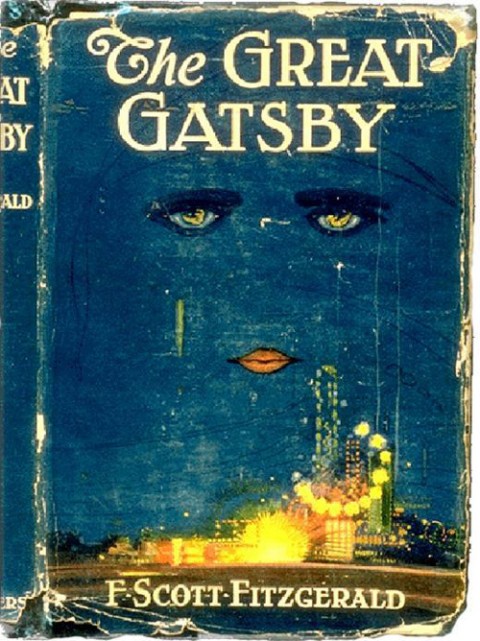
83 Years of Great Gatsby Book Cover Designs: A Photo Gallery

great gatsby cover designsEvery­body is famil­iar with Fran­cis Cugat’s orig­i­nal cov­er art for The Great Gats­by. It famous­ly gives expres­sion to lines from Fitzger­ald’s clas­sic work — lines that talk about Daisy Buchanan as the “girl whose dis­em­bod­ied face float­ed along the dark cor­nices and blind­ing signs.” Accord­ing to Charles Scrib­n­er III, the orig­i­nal pub­lish­er, Cugat cre­at­ed the design while Fitzger­ald was still writ­ing the nov­el, and when Fitzger­ald saw the dis­em­bod­ied face, he could­n’t resist writ­ing the imagery into the book. Scrib­n­er quotes the author as say­ing, “For Christ’s sake, dont give any­one that jack­et youre sav­ing for me. Ive writ­ten it into the book.”

Today, Cugat’s orig­i­nal book jack­et fetch­es more at auc­tion than a first edi­tion of the nov­el itself. And even though many oth­er artists have tak­en a crack at design­ing cov­ers for The Great Gats­by, none holds a can­dle to Cugat’s 1925 design. Just take a look at this pho­to gallery at The New York Times. (Click on each cov­er to see them in a larg­er for­mat.)

The Gats­by book cov­ers all cur­rent­ly reside at the Uni­ver­si­ty of South Car­oli­na, which hous­es oth­er items that Fitzger­ald held near and dear to him — like his copy of Joyce’s Ulysses, his leather brief­caseflask, and more. You can also find orig­i­nal dust jack­ets for Fitzger­ald’s oth­er nov­els on the SC web site, includ­ing Ten­der is the Night, This Side of Par­adise, and The Last Tycoon.

Relat­ed Con­tent:

The Only Known Footage of the 1926 Film Adap­ta­tion of The Great Gats­by (Which F. Scott Fitzger­ald Hat­ed)

Sev­en Tips From F. Scott Fitzger­ald on How to Write Fic­tion

Loli­ta Book Cov­ers: 100+ Designs From 37 Coun­tries (Plus Nabokov’s Favorite Design)

Jack Kerouac’s Hand-Drawn Cov­er for On the Road

Find The Great Gats­by in our Free eBooks col­lec­tion

Find the Yale Course “Hem­ing­way, Fitzger­ald, Faulkn­er” in our Col­lec­tion of 700 Free Online Cours­es

Learn How Richard Feynman Cracked the Safes with Atomic Secrets at Los Alamos

The sto­ry has become part of physics lore: A young Richard Feyn­man, future Nobel win­ner, was bored with life in the remote New Mex­i­co desert while work­ing on the atom­ic bomb dur­ing World War II, so he amused him­self by learn­ing to pick the com­bi­na­tion locks in the sup­pos­ed­ly secure fil­ing cab­i­nets con­tain­ing Amer­i­ca’s nuclear secrets. As Feyn­man would lat­er write in his essay, “Safe­crack­er Meets Safe­crack­er”:

To demon­strate that the locks meant noth­ing, when­ev­er I want­ed some­body’s report and they weren’t around, I’d just go in their office, open the fil­ing cab­i­net, and take it out. When I was fin­ished I would give it back to the guy: “Thanks for your report.”

“Where’d you get it?”

“Out of your fil­ing cab­i­net.”

“But I locked it!”

“I know you locked it. The locks are no good.”

So the offi­cials at Los Alam­os installed cab­i­nets with bet­ter locks. But Feyn­man stud­ied the new ones sys­tem­at­i­cal­ly, and even­tu­al­ly, giv­en a lit­tle time, he could open any lock at will. As a joke, he left a note in one cab­i­net that said, “I bor­rowed doc­u­ment no. LA4312–Feynman the safe­crack­er.”

I opened the safes which con­tained all the secrets to the atom­ic bomb: the sched­ules for the pro­duc­tion of the plu­to­ni­um, the purifi­ca­tion pro­ce­dures, how much mate­r­i­al is need­ed, how the bomb works, how the neu­trons are gen­er­at­ed, what the design is, the dimensions–the entire infor­ma­tion that was known at Los Alam­os: the whole schmeer!

To learn a bit about how Feyn­man did it, watch this fas­ci­nat­ing lit­tle video by jour­nal­ist Brady Haran of the YouTube-fund­ed Num­ber­phile. Haran inter­views Roger Bow­ley, emer­i­tus pro­fes­sor of physics at the Uni­ver­si­ty of Not­ting­ham, who explains sev­er­al of the inge­nious meth­ods used by Feyn­man to solve the prob­lem of crack­ing a lock with (sup­pos­ed­ly) a mil­lion pos­si­ble com­bi­na­tions. And to learn more about Feyn­man’s adven­ture as a safe­crack­er, be sure to read “Safe­crack­er Meets Safe­crack­er,” which is includ­ed in his book Sure­ly You’re Jok­ing, Mr. Feyn­man! and can be read on PDF by click­ing here.

If you would like to sup­port the mis­sion of Open Cul­ture, con­sid­er mak­ing a dona­tion to our site. It’s hard to rely 100% on ads, and your con­tri­bu­tions will help us con­tin­ue pro­vid­ing the best free cul­tur­al and edu­ca­tion­al mate­ri­als to learn­ers every­where. You can con­tribute through Pay­Pal, Patre­on, and Ven­mo (@openculture). Thanks!

Relat­ed Con­tent:

Free: Richard Feynman’s Physics Course from Cor­nell (1964)

Richard Feynman’s Ode to a Flower: A Short Ani­ma­tion

Abandoned Alternate Titles for Two Great Films: Kubrick’s Dr. Strangelove and Hitchcock’s Vertigo

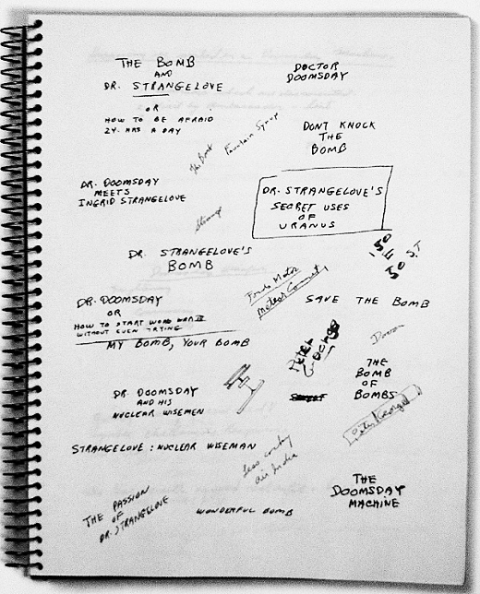
Kubrick notebook

We have here a page out of Stan­ley Kubrick­’s note­book, which Lists of Note—the sis­ter site of Let­ters of Note, always a favorite of ours here at Open Cul­ture—post­ed as a col­lec­tion of alter­na­tive titles for Dr. Strangelove. The list includes Dr. Dooms­day, The Dooms­day Machine, Dr. Doomsday and His Nuclear Women, Don’t Knock the Bomb: these ideas came not from an inter­fer­ing stu­dio, but from Kubrick­’s own mind as he worked his way toward the most suit­able name. You can see him get­ting clos­er; while this page does­n’t include the film’s final title, Dr. Strangelove: Or, How I Learned to Stop Wor­ry­ing and Love the Bomb, it does include Dr. Strangelove’s Bomb, Strangelove; Nuclear Wise­man, and the Gib­son­ian-sound­ing The Pas­sion of Dr. Strangelove. I myself will always won­der how Dr. Strangelove’s Secret Uses of Uranus would have played, but when you deal with cin­e­mat­ic crafts­men as detail-ori­ent­ed and reput­ed­ly “per­fec­tion­ist” as Kubrick, you know that their dri­ving desire to get things right extends all the way to their titles and beyond.

This holds just as true for Alfred Hitch­cock. Alone in the Dark, Behind the Mask, The Dark Tow­er, With­out a Trace, all pos­si­ble titles for the movie we now know as Ver­ti­go. When Hitch­cock­’s San Fran­cis­co psy­cho­log­i­cal thriller recent­ly topped Sight and Sound’s crit­ics poll of the great­est films of all time, it sure­ly did so for cin­e­mat­ic mer­its hav­ing noth­ing to do with its name.

But would a Ver­ti­go by any oth­er title feel quite as fresh and grip­ping today, 55 years after it first came out? This goes espe­cial­ly for the pre-thread­bare titles I rat­tled off above, which only account for four of 47 of the sug­ges­tions Para­mount Pic­tures exec­u­tive Sam Frey pitched to Hitch­cock, includ­ing Deceit, Deceit­ful, and, for good mea­sure, Decep­tion. You can read all of them below, or at Lists of Note. I quite like The Face Vari­a­tions, but Hitch­cock knew his project most inti­mate­ly, and thus knew that Ver­ti­go it had to be.

  1. Afraid to Love
  2. Alone in the Dark
  3. The Appari­tion
  4. Behind the Mask
  5. Car­lot­ta
  6. Check­mate
  7. Con­science
  8. Cry from the Rooftop
  9. The Dark Tow­er
  10. Deceit
  11. Deceit­ful
  12. Decep­tion
  13. Don’t Leave Me
  14. Dream With­out End­ing
  15. The Face Vari­a­tions
  16. Foot­steps
  17. For the Last Time
  18. The Hid­den life
  19. In the Shad­ows
  20. The Inves­ti­ga­tor
  21. A Life Is For­ev­er
  22. The Lure
  23. Mal­ice
  24. The Mask and the Face
  25. The Mask Illu­sion
  26. My Madeleine
  27. A Mat­ter of Fact
  28. Nev­er Leave Me
  29. Night Shade
  30. Noth­ing Is For­ev­er
  31. Past, Present and Future
  32. The Phan­tom
  33. The Sec­ond Chance
  34. The Shad­ow
  35. Shad­ow and Sub­stance
  36. Shad­ow on the Stairs
  37. Shock
  38. Steps on the Stairs
  39. Ter­ror
  40. To Live Again
  41. Tonight Is Ours
  42. Too Late My Love
  43. Two Kinds of Women
  44. The Unknown
  45. Want­ed
  46. With­out A Trace
  47. The Wit­ness

Relat­ed Con­tent:

Inside Dr. Strangelove: Doc­u­men­tary Reveals How a Cold War Sto­ry Became a Kubrick Clas­sic

Philoso­pher Slavoj Zizek Inter­prets Hitchcock’s Ver­ti­go in The Pervert’s Guide to Cin­e­ma (2006)

20 Free Hitch­cock Movies Online

Col­in Mar­shall hosts and pro­duces Note­book on Cities and Cul­ture and writes essays on lit­er­a­ture, film, cities, Asia, and aes­thet­ics. He’s at work on a book about Los Ange­lesA Los Ange­les Primer. Fol­low him on Twit­ter at @colinmarshall.

« Go BackMore in this category... »
Quantcast