What makes for a “cult band”? Not just a small audience, because Grateful Dead fans are an archetypical cult. Not just a devoted, emotionally invested audience; no volume of Swifties make Taylor Swift qualify as a cult act. Does the music have to be somehow inaccessible, or the fans snobby?
Your host Mark Linsenmayer and three other musicians try to figure it out:
We talk about how the Internet has affected fandom and the music business, the power of musicians lauding each other, and how music fandom relates to other fandom.
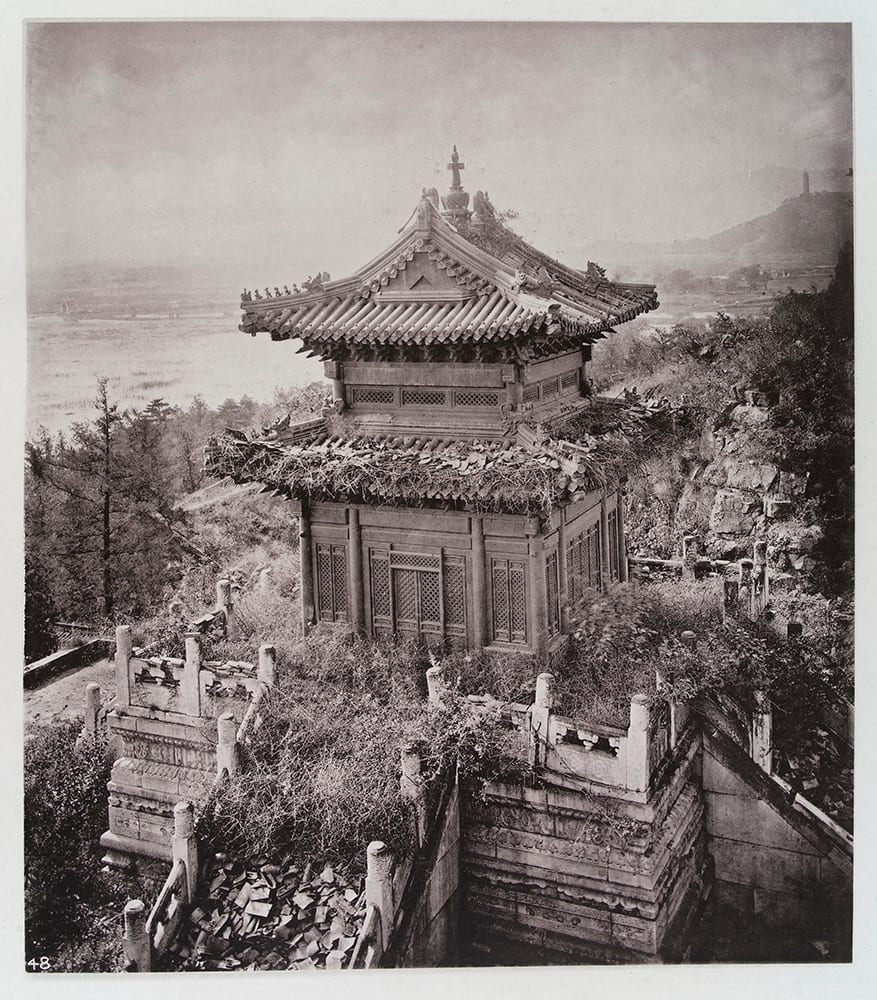
In the early 1860s, a few Westerners had seen China — but nearly all of them had seen it for themselves. The still-new medium of photography had yet to make images of everywhere available to viewers everywhere else, which meant an opportunity for traveling practitioners like John Thomson. “The son of a tobacco spinner and shopkeeper,” says BBC.com, ” he was apprenticed to an Edinburgh optical and scientific instrument manufacturer where he learned the basics of photography.”
In 1862 Thomson sailed from Leith “with a camera and a portable dark room. He set up in Singapore before exploring the ancient civilizations of China, Thailand — then known as Siam — and Cambodia.” It is for his extensive photography of China in the late 1860s and early 1870s that he’s best known today.
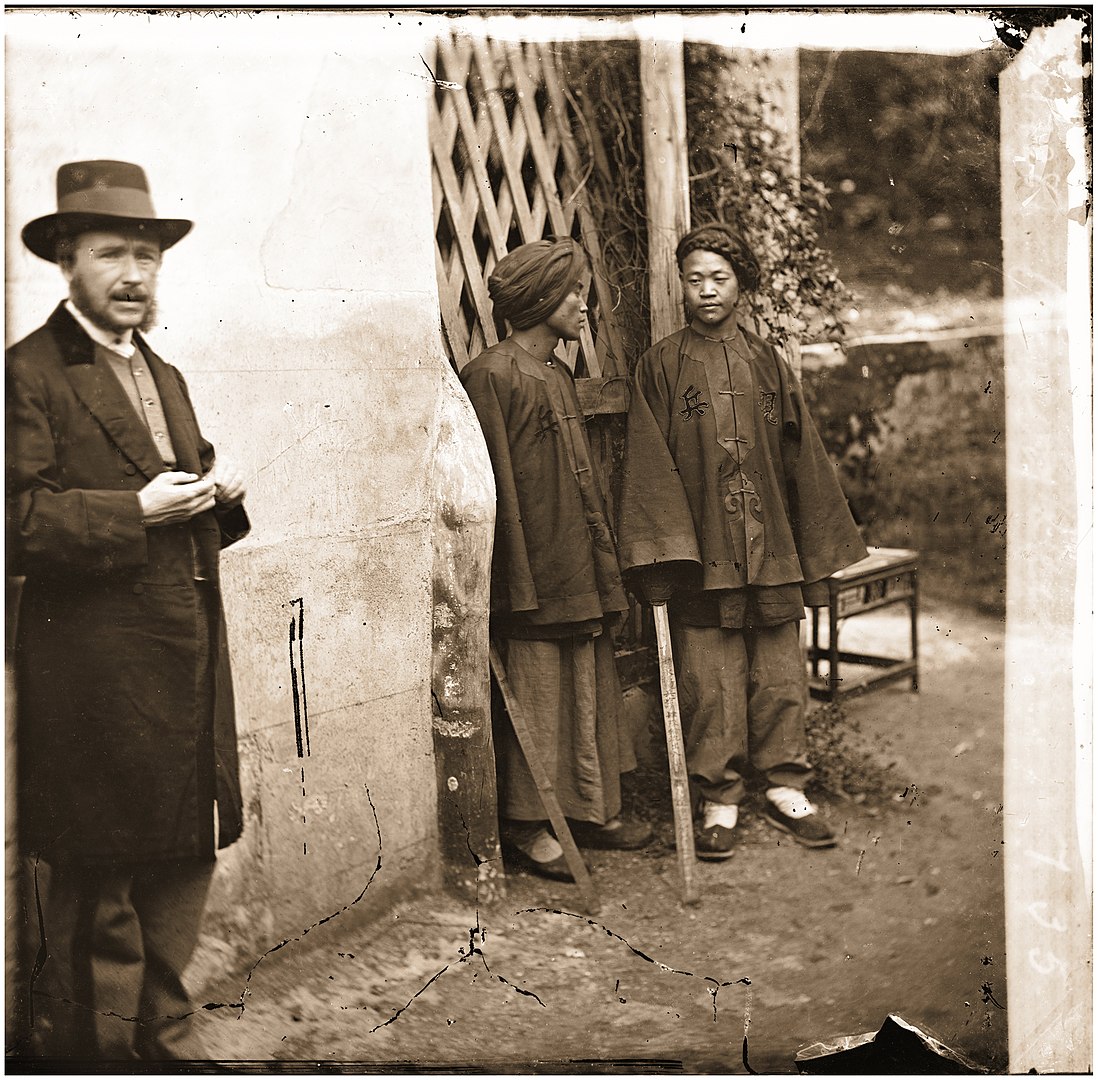
First lavishly published in a series of books titled Illustrations of China and Its People (now available to read free online at the Yale University Library: volume one, volume two, volume three, volume four), they now constitute some of the earliest and richest direct visual records of Chinese landscapes, cityscapes, and society as they were in the late 19th century.
“The first Western photographer to travel widely through the length and breadth of China,” Thomson brought his camera on journeys “far more extensive than those undertaken by most Westerners of his generation,” extending “beyond the relative comfort and safety of the coastal treaty ports.” Those words come from scholar of the 19th-century Allen Hockley, whose five-part visual essay “John Thomson’s China” at MIT Visualizing Cultures provides a detailed overview and historical contextualization of Thomson’s work in Asia.
Thomson’s photographs, writes Hockley, “fall into two broad categories: scenic views and types. Views encompassed both natural landscapes and built environments. They could be panoramic, taking in large swaths of scenery, or they might highlight specific natural phenomena or individual structures.”
Types “focused on the manners and customs of Chinese people and tended to highlight the defining features of gender, age, class, ethnicity, and occupation.” A century and a half later, both Thomson’s views and types have given scholars in a variety of disciplines much to discuss.
“It is clear from his commentary to Illustrations of China that, however sympathetic he was towards Chinese people, he could often be superior and high-handed,” writes Andrew Hiller at Visualizing China. “If Thomson never sought to question the validity of Britain’s presence, his attitude towards China was ambivalent. Whilst critical of what he saw as the corruption and obfuscation of Qing officials, he nevertheless could see the country’s potential.”
Thomson also helped others to see that potential — or at least those who could afford to buy his books, whose prices matched the quality of their production. But today, thanks to online archives like Historical Photographs of China and Wellcome Collection, they’re free for everyone to behold. China itself has become much more accessible since Thomson’s day, of course, but it’s famously a much different place than it was 25 years ago, let alone 150 years ago. The land through which he traveled — and of which he took so many of the very earliest photographs — is now infinitely less accessible to us than it ever was to his fellow Westerners of the 19th century.
Based in Seoul, Colin Marshall writes and broadcasts on cities, language, and culture. His projects include the Substack newsletterBooks on Cities, the book The Stateless City: a Walk through 21st-Century Los Angeles and the video series The City in Cinema. Follow him on Twitter at @colinmarshall or on Facebook.
For many Open Culture readers, the Halloween season offers an opportunity — not to say an excuse — to re-experience classic horror films: F.W. Murnau’s Nosferatu from 1922, for instance, or even George Méliès The Haunted Castle, which launched the whole form in 1896. This year, may we suggest a home screening of the formidable work of vintage cinema that is 1968’s The Astro Zombies? Written, produced, and directed by Ted Mikels — auteur of The Corpse Grinders and Blood Orgy of the She-Devils — it features not just “a mad astro-scientist” played by John Carradine and “two gore-crazed, solar-powered killer robot zombies,” but “a bloody trail of girl-next-door victims; Chinese communist spies; deadly Mexican secret agents led by the insanely voluptuous Tura Satana” and an “intrepid CIA agent” on the case of it all.
True cult-film enthusiasts, of course, may well go straight to the available selections, thoughtfully grouped together, from “Master of Italian Horror” Mario Bava and prolific Spanish “B‑movie” kingpin Jesús Franco. Those looking to throw a fright night might consider Kino Cult’s offerings filed under “hardboiled horror”: Killbillies, The House with 100 Eyes, Bunny: The Killer Thing.
Few of these pictures skimp on the grotesque; fewer still skimp on the humor, a necessary ingredient in even the most harrowing horror movies. Far from a pile of cynical hackwork, Kino Cult’s library has clearly been curated with an eye toward films that, although for the most part produced inexpensively and with unrelenting intent to provoke visceral reactions in their audiences, are hardly without interest to serious cinephiles. The site even includes an “artsploitation” section containing such taboo-breaching works as Curtis Burz’s Summer House. Among its general recent additions you’ll also find Dogtooth by Yorgos Lanthimos, perhaps the most daring high-profile provocateur currently at work in the medium. Since Kino Cult has made all these films and more available to stream at no charge, none of us, no matter our particular cinematic sensibilities, has an excuse to pass this Halloween un-entertained — and more to the point, undisturbed. Enter the collection here.
Based in Seoul, Colin Marshall writes and broadcasts on cities, language, and culture. His projects include the Substack newsletterBooks on Cities, the book The Stateless City: a Walk through 21st-Century Los Angeles and the video series The City in Cinema. Follow him on Twitter at @colinmarshall or on Facebook.
How do you make the show go on after a broken leg?
The blessing we give performers before they go onstage isn’t something we actually want to see happen. Nonetheless, stage injuries occur frequently, and in some cases, severely, as when Patti Smith fell 15 feet into a concrete orchestra pit in 1977 and broke several vertebrae in her back. “I felt like an asshole,” she told Circus magazine, “but my doctor told me not to worry, it happens to everybody.”
Maybe not everybody, but when the Foo Fighters played Gothenburg, Sweden in 2015, Dave Grohl took a major spill from the front of the stage, breaking his leg, while a crowd of 52,000 people watched. They also watched as, several minutes later, his crew carried him back onstage while the rest of the band fittingly played Queen’s “Under Pressure.”
The fall happened during the second song of the show, and Grohl returned to play the entire 26-song set, his doctor kneeling next to him, holding his leg together.
It didn’t hurt until I wound up on my couch in my hotel room, with a beer in my hand. They gave me some really strong painkillers—I never take pills, but within half an hour I was like, “Get me the f—ing Oxys right now, man!” It was pretty painful. And then I thought I could just get up and do a show a week later after surgery, but I literally could not get out of bed for about six or seven days. It was so f—ing painful. I had never experienced anything like that in my life.
With his leg in a cast, he determined that the band would make their Fourth of July show in Washington, DC, a return to Grohl’s hometown. “I started thinking… ‘I might not be able to get onstage next week,’” he told Entertainment Weekly, “‘but I’m not missing that Fourth of July show, and if that goes OK then we’re just going to keep going.’” The gig went so well the band kept touring, Grohl perched in a specially-designed stage throne.
“I love my job,” Grohl said, “I mean, f–, I’m out there with a broken leg and a plate and pins in a bone and I can’t even stand up, but I still want to get on stage and play, with my family. We’re not breaking up anytime soon, that would be like your grandparents getting a divorce.” There’s no shame in taking it easy after an injury, but if you’re a dedicated performer who lives onstage, you might heal even faster if you don’t. At the time, Grohl epitomized another old cliche — if you love what you do, you won’t have to work a day in your life, even when you have to work with a broken leg. Watch the fall just above and the triumphant return minutes later at the top of the post. Below you can see the reunion with the doctor who held his leg together.
You should never become lazy. It’s essential to remain positive about your life and never give up. You need to push yourself and stay aware, so you can move forward.
Photographer Tsuneko Sasamoto is an excellent poster child for both. Born in Tokyo in 1914, shortly after the beginning of the first World War, she is Japan’s first female photojournalist and — at 107, its oldest living photojournalist.
Her traditional father thwarted her hopes of becoming a painter, but early encounters with a black-and-white film by Man Ray and the work of Margaret Bourke-White suggested that photography might prove a similarly fulfilling path.
By 1940, she was able to parlay a job as a part-time illustrator on the local news pages at Tokyo Nichinichi Shimbun (now known as the Mainichi Shimbun) into a probationary gig as a shooter, though as a young woman, she was constrained by gender expectations.
Unlike her male counterparts, she was not allowed to document WWII at the front. Instead, she was charged with special interest stories of a patriotic nature and portraits of diplomatic envoys. She deeply resented her professionally mandated uniform — skirts and heels that occasionally hampered her from getting the shot.
Her ambition benefited from a stubbornly defiant streak. An article in The Japan Timesdetails how she weathered discriminatory comments, resisted male family members’ scripts, and, in 1947, piped up to ask General Douglas MacArthur, Supreme Commander of the Allied Powers, if he would grant her a redo when her camera malfunctioned at the ribbon cutting ceremony he was attending.
Other subjects from her eight decades-long career:
Student protesters
The wives of coal miners who were on strike against the then-largest coal mine in Japan
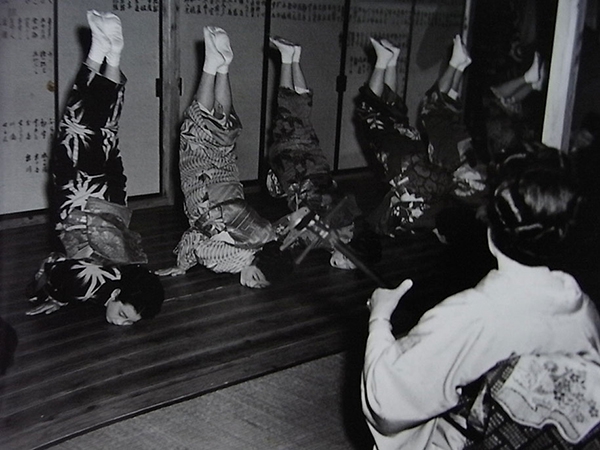
Young women training to be geisha
The Imperial Family
Socialist Party head Inejiro Asanuma the day before his 1960 assassination
A who’s who of Japanese novelists, poets, and artists
I photographed her toward the end of her life when she was in her eighties and bedridden. I was one of the few allowed to see her at that time, I think because I was born in the Taisho era (1912–26) and she felt I could understand her…. She kept telling me, ‘I am not formidable.’
Shortly after turning 100, Sasamoto weighed in on digital cameras — their lighter weight made them easy to carry around, but their functions were difficult to understand.
As for her health regimen: maintaining contact with family and friends, a daily piece of chocolate, a glass of red wine every night, and way more red meat than recommended.
People do not understand how hard a jazz musician works for a living. I’m not putting nobody down, but I’m telling you nobody understands how hard jazz musicians work. Jazz is not big in the US, because the States are too worried about Pac-Man and The Police. — Jaco
When Jaco Pastorius uttered the quote above in a typically entertaining and insightful interview with Guitar World from 1983, he meant no disrespect to the members of The Police. It’s safe to say, in fact, that Pastorius significantly influenced crossover subgenres in punk, New Wave, and No Wave, through compositions like “Punk Jazz” — “a real jazz players stab at a brave new music,” writes Guitar World’s Peter Mengaziol. In general, Pastorius’ music was “a fusion with energy but without overkill.” He absorbed influences from everywhere, and nothing seemed out of bounds in his playing. “I am not an original musician,” he says in the same interview:
I am a thief…. You see, I rip off everything. I have no originals. Only animals and children can understand my music; I love women, children, music, I love everything that’s going in the right direction, everything that flows… I just love music. I don’t know what I’m doing!
It’s not that Pastorius necessarily thought of jazz as a more elevated form than rock or funk or soul or pop — hardly. He regarded Hendrix with the same worshipful awe as he did Motown bassist Jerry Jemmott, and both equally informed his playing and showmanship. Yet he seemed to feel under-appreciated in his time, and that is probably because he was, even though he was acclaimed as one of the world’s greatest bass players during his brief 35 years, and he radically altered the sound of popular music on albums by Joni Mitchell and other non-jazz-world stars.
But Pastorius knew that few understood what he was trying to do with jazz-rock groups like Weather Report and Blood, Sweat & Tears and in his solo work. He knew he could sell records and sell out performances, but he didn’t care about commerce. (He spent the last few years of his life sleeping on park benches.)
Warner Bros. refused to release his third solo album, Holiday for Pans — a selection of original compositions and tunes by the Beatles, Coltrane, and Alan Hovhaness, centered around the steel drum playing of Othello Molineaux — on the basis that it was “extremely esoteric.” Described by The Penguin Guide to Jazz as “by far the most imaginative project Pastorius ever undertook,” Holiday for Pans received a release in Japan in 1993, but remains unreleased in the US, perhaps validating the bassist’s opinion of his country’s cultural limitations.
The fan-made documentary at the top, Jaco Pastorius — The Lost Tapes Documentary, first appeared “on a somewhat obscure French channel called ‘Realcut’,” notes the site Jazz in Europe. The title refers the interview footage with choice subjects like Marcus Miller, Joe Zawinul, Peter Erskine, Dave Carpenter, and Paco Seri, all shot while the musicians “were on tour in France back in the mid noughties.” In 2008, “the images were definitively lost,” the filmmakers write in their description, only to surface again on a hard drive in a dusty attic last year.
Tying these interviews together with archival Internet footage of Pastorius, the makers of The Lost Tapes Documentary have done an excellent job of introducing the man and his work to a broad audience through the words of those who knew and played with him, and they’ve done so with “no budget, no financial aid or no image purchase.… The people who worked on this project did it voluntarily, out of passion and love of music, and the film will in no way be monetized on the platforms.” Pastorius would have approved. “I don’t want to sell shit,” he told Guitar World back in 1983. “I want to do what has to be done.” For him, that meant constant innovation and change. “I’m not a magician, I’m not a politician, I’m a musician,” he said. “I have no goal. You don’t get better, you grow. I am a musician, and I finally realized it!”
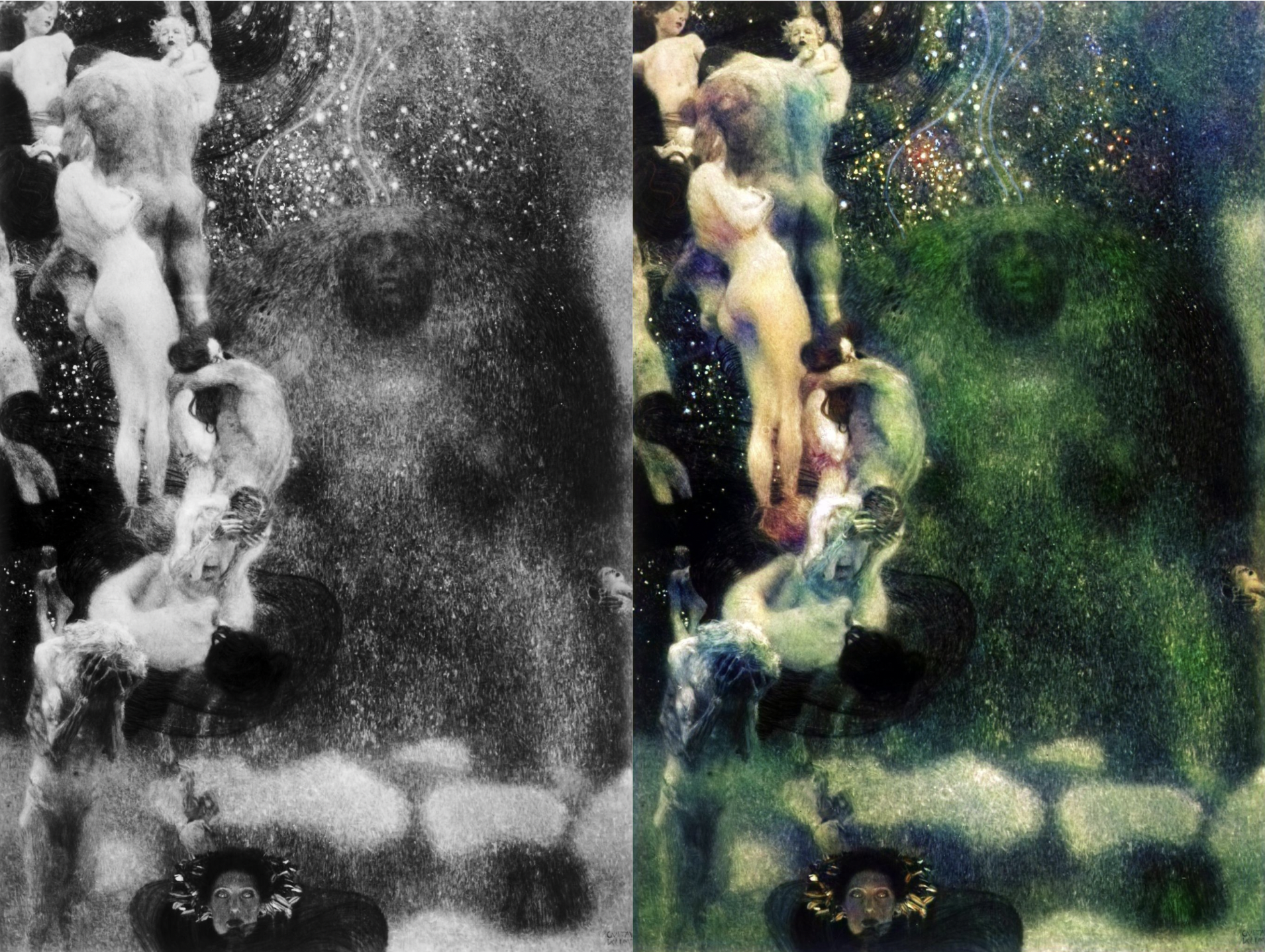
A century after the death of Gustav Klimt, his art continues to enrapture its viewers. Maybe it has enraptured you, but no matter how deep you’ve gone into Klimt’s oeuvre, there are three paintings you’ve only ever seen in black and white. That’s not because he painted them in that way; rich and brilliant colors originally figured into all his work, the most notable usage being the real gold layered onto his best-known painting, 1908’s The Kiss. In the year before TheKiss, he completed an even more ambitious work: a series of paintings commissioned for the University of Vienna’s Great Hall, meant to represent the fields after which they were titled: Philosophy, Medicine, and Jurisprudence.
Klimt’s “Faculty Paintings,” as they’re now known, struck critics at the time as pieces of “perverted excess.” Such charges must have been nothing new to Klimt, for whom unabashed eroticism and subjective views of reality — neither particularly in fashion in the institutions of early 20th-century Vienna — constituted basic artistic principles.
Ultimately, Klimt himself bought Philosophy, Medicine, and Jurisprudence back, and by the end of the Second World War all three had found their way into the hands of the Nazis. With defeat looming, they chose to burn down rather than surrender the Austrian castle in which they’d been storing the Faculty Paintings and other works of art.
With the Faculty Paintings surviving only in black-and-white photographs and scanty descriptions, generations of Klimt enthusiasts have had to imagine how they really looked. Now, Google Arts & Culture and Vienna’s Belvedere Museum have joined forces to figure out to a greater degree of certainty than ever, using artificial intelligence to determine what colors Klimt would have applied to Philosophy, Medicine, and Jurisprudence based on in-depth analyses of the rest of his work. You can get an overview of the process from the short video at the top of the post, and you can read about it in more detail at Google Arts & Culture.
“Klimt’s three Faculty Paintings were among the largest artworks Klimt ever created and in the field of Symbolist painting they represent Klimt’s masterpieces,” says Belvedere curator Dr. Franz Smola in a Google Arts & Culture blog post. “The colors were essential for the overwhelming effect of these paintings, and they caused quite a stir among Klimt’s contemporaries. Therefore the reconstruction of the colors is synonymous with recognizing the true value and significance of these outstanding artworks.” The project comes as just one part of Klimt vs. Klimt: The Man of Contradictions, an online retrospective featuring more than 120 of the artist’s works available to view in augmented reality, as well as an ultra-high-resolution scan of The Kiss. Klimt’s paintings may no longer shock us, but they still have much to show us.
Based in Seoul, Colin Marshall writes and broadcasts on cities, language, and culture. His projects include the Substack newsletterBooks on Cities, the book The Stateless City: a Walk through 21st-Century Los Angeles and the video series The City in Cinema. Follow him on Twitter at @colinmarshall or on Facebook.
When J.R.R. Tolkien’s The Lord of the Rings appeared in the mid-1950s, its first critical readers held some diverging views on the books’ quality. On the one hand, there was praise for the revival of fantasy for grown-ups, and comparisons to great epics of the past. On the other hand, Tolkien’s prose was excoriated for its wordiness, length, and seemingly inexhaustible obsession with obscurities. Both perspectives seemed to miss something important. Yes, Tolkien drew liberally from epics of the past such as the Norse Sagas and created a world as fully-realized as any in ancient mythology, building in decades what took centuries to develop.
It’s also true that Tolkien wrote in a thoroughly unusual way — unfamiliar as he was with the conventions of contemporary literary prose. But his style did not only derive from his work as a scholar of Anglo-Saxon literature. For all of the discussion of Tolkien’s encyclopedic technique, no one seemed to note at the time that the author had, in fact, invented for himself (with apologies to James Joyce) a new genre and way of writing, a kind of etymological fantasy, a kind of writing he learned while working on the Oxford English Dictionary, that august catalogue of the English language which first appeared in full in 1928 — in ten volumes after fifty years of work.
The Oxford English Dictionary (OED) remains an indispensable reference for scholars of language and literature, but it is not itself a typical academic text. It is a compendium, a miscellany, a descriptive map and timeline tracking how English evolves; it is the ultimate reference work, a work of philology, a discipline that had fallen out of fashion by the time of The Lord of the Rings. The first edition of the OED, begun in 1878 (five years into the proposed timeline, the editors had only reached the word “ant”), contained around 400,000 words. Between the years 1919 and 1920, Tolkien was responsible for the words between waggle and warlock. He would later say he “learned more in those two years than in any other equal period of my life.”
The OED establishes linguistic histories by citing a word’s appearances in literature and popular press over time, tracing derivations from other languages, and tracing the evolution, and extinction, of words and meanings. After his return from World War I, the future novelist found himself working under founding co-editor Henry Bradley, laboring away on words like walnut, walrus, and wampum, which “seem to have been assigned to Tolkien because of their particularly difficult etymologies,” notes theOED blog. These entries would later be singled out by Bradley as “containing ‘etymological facts or suggestion not given in other dictionaries.’ ”
The experience as an OED lexicographer prepared Tolkien for his lifelong career as a philologist. It also informed his literary technique, argue Peter Gilliver, Jeremy Marshall, and Edmund Weiner, the authors of Ring of Words: Tolkien and the Oxford English Dictionary and former OED editors, all. The authors show how Tolkien drew the language of his books directly from his etymological research. For example, “for decades it was assumed that he was being characteristically modest” when he declined to claim credit for the invention of the word “hobbit.” As it turned out, “an obscure list of mythical beings, published in 1895” came to light in 1977, including the word “ ‘hobbits’, along with such other irresistible creatures as ‘boggleboes’ and gallytrots,” writes Kelly Grovier at The Guardian.
Tolkien’s relationship to etymology in The Hobbit, The Lord of the Rings, and every other lengthy piece of writing Middle Earth-related goes far beyond digging up obscure words or coining new ones. He learned to think like a lexicographer. As the authors write, “in describing his own creative processes, Tolkien often comments on how the contemplation of an individual word can be the starting point for an adventure in imagination — and contemplating individual words is precisely what lexicographers do.” Tolkien’s boundless curiosity about the roots of language led him to “invent everything,” writes Tolkien critic John Garth, “from star mariners to calendars, flowers, cities, foodstuffs, writing systems and birthday customs, to mention just a few of the eclectic features of Middle-earth.”
Decades after Tolkien’s first association with the OED, he would become involved again with the publication in 1969 when the editor of the dictionary’s Supplement, his former student Robert Burchfield, asked for comments on the entry for “Hobbit.” Tolkien offered his own definition for just one of the many Tolkienian words that would eventually make into the OED (along with mathom, orc, mithril, and balrog). Burchfield published Tolkien’s definition almost exactly as written:
In the tales of J. R. R. Tolkien (1892–1973): one of an imaginary people, a small variety of the human race, that gave themselves this name (meaning ‘hole-dweller’) but were called by others halflings, since they were half the height of normal men.
We're hoping to rely on loyal readers, rather than erratic ads. Please click the Donate button and support Open Culture. You can use Paypal, Venmo, Patreon, even Crypto! We thank you!
Open Culture scours the web for the best educational media. We find the free courses and audio books you need, the language lessons & educational videos you want, and plenty of enlightenment in between.