The Ten Earliest Depictions of Jesus: How Art Visualized Jesus in the First Centuries After His Death

Jesus Christ: as soon as you hear those words, assum­ing they’re not being used exclam­a­to­ri­ly, you see a face. In almost all cas­es, that face is beard­ed and framed by long brown hair. Usu­al­ly it has strong, some­what sharp fea­tures and an expres­sion of benev­o­lence, patience, faint expectan­cy, or (depend­ing on the rel­e­vant Chris­t­ian tra­di­tion) com­plete agony. What­ev­er the details of his appear­ance, even the least reli­gious among us has a per­son­al Jesus in our imag­i­na­tion, a com­pos­ite of the many depic­tions we’ve seen through­out our lives. But where, exact­ly, did those depic­tions come from?

The Use­fulCharts video above assem­bles the ten ear­li­est known images of Jesus in art, orga­niz­ing them in a count­down that works its way back from the sixth cen­tu­ry. Remark­ably, these exam­ples remain imme­di­ate­ly rec­og­niz­able even a mil­len­ni­um and a half back, though beyond that point the son of God becomes rather more clean-cut.

“Orig­i­nal­ly, Jesus was always depict­ed with­out a beard,” explains Use­ful­Carts cre­ator Matt Bak­er, “and as we’re about to see, he usu­al­ly just looks like a typ­i­cal Roman from the time of the Roman Empire.” Ancient-Rome enthu­si­asts will rec­og­nize his man­ner of dress, although they might be sur­prised to see him using a mag­ic wand, in one late-third-cen­tu­ry image, to raise Lazarus from the dead.

The hol­i­day sea­son is an espe­cial­ly appro­pri­ate time to con­sid­er where our cul­tur­al con­cep­tion of Jesus comes from, giv­en that he is — at least as some Chris­tians put it — the very “rea­son for the sea­son.” And indeed, among these ten ear­li­est art­works fea­tur­ing Jesus is a sar­coph­a­gus lid inscribed with a clas­sic Christ­mas tableau, which depicts him as a “baby being held by his moth­er, Mary. Stand­ing behind them is, pre­sum­ably, Joseph, and in front of them are the three wise men and the star of Beth­le­hem.” That’s cer­tain­ly a depic­tion of Jesus for all time. As for what depic­tion of Jesus reflects our own time, we can hard­ly stop a cer­tain “restored” nine­teen-thir­ties Span­ish fres­co turned inter­net phe­nom­e­non from com­ing to mind.

Relat­ed con­tent:

What Makes Caravaggio’s The Tak­ing of Christ a Time­less, Great Paint­ing?

Behold! The Very First Christ­mas Card (1843)

Did Psy­che­del­ic Mush­rooms Appear in Medieval Chris­t­ian Art?: A Video Essay

Sal­vador Dalí’s Avant-Garde Christ­mas Cards

Based in Seoul, Col­in Marshall writes and broad­casts on cities, lan­guage, and cul­ture. His projects include the Sub­stack newslet­ter Books on Cities, the book The State­less City: a Walk through 21st-Cen­tu­ry Los Ange­les and the video series The City in Cin­e­ma. Fol­low him on Twit­ter at @colinmarshall or on Face­book.

101 Hidden Gems: The Greatest Films You’ve Never Seen

Last year, the British Film Insti­tute’s Sight and Sound mag­a­zine con­duct­ed its once-a-decade poll to deter­mine the great­est films of all time. As usu­al, the results were divid­ed into two sec­tions: one for the crit­ics’ votes, and the oth­er for the film­mak­ers’. The lat­ter put Stan­ley Kubrick­’s 2001: A Space Odyssey at the top, dis­plac­ing Yasu­jirō Ozu’s Tokyo Sto­ry, which itself had dis­placed Orson Welles’ Cit­i­zen Kane. The for­mer had their own reign of Kane, which came to an end in 2012 with the rise of Alfred Hitch­cock­’s Ver­ti­go. All these pic­tures are well-known clas­sics of cin­e­ma, and even if you haven’t seen them, you may feel as if you have. But did you have the same reac­tion to Chan­tal Aker­man’s Jeanne Diel­man, 23, quai du Com­merce, 1080 Brux­elles when it came out num­ber one in the crit­ics poll last year?

This month, the BFI pub­lished a new list of 101 films that make Jeanne Diel­man look like Home Alone. Léontine’s Elec­tric Bat­tery, My Sur­vival as an Abo­rig­i­nal, The 8 Dia­gram Pole Fight­er, Qabyo 2, and all the rest of these “hid­den gems” received just one vote in the lat­est S&S poll, mean­ing that just one par­tic­i­pat­ing crit­ic or film­mak­er ranks it among the ten best films ever made.

“Hail­ing from every con­ti­nent but Antarc­ti­ca and span­ning more than 120 years, this selec­tion is, in its way, as rep­re­sen­ta­tive of the rich­es of cin­e­ma his­to­ry as that oth­er list we released at the end of last year,” writes con­trib­u­tor Thomas Flew. “Fic­tion rubs shoul­ders with non­fic­tion, films made by col­lec­tives sit along­side hand-craft­ed ani­ma­tion, and a healthy dose of com­e­dy sidles up to heart­break­ing dra­ma — and then there are the films that defy all cat­e­go­riza­tion.”

On this list you’ll find less­er-known works from brand-name direc­tors like Oliv­er Assayas, whose Cold Water is to cin­e­ma “what The Catch­er in the Rye is to lit­er­a­ture,” or Kathryn Bigelow, whose The Love­less, “set in a gener­ic 1950s Amer­i­cana land­scape, is sat­u­rat­ed with libido, can­did charm and for­mal inven­tion.” Oth­er films come rec­om­mend­ed by major auteurs: Apichat­pong Weerasethakul describes Bruce Bail­lie’s Quick Bil­ly as “Muybridge’s horse res­ur­rect­ed, expe­ri­enc­ing death, rebirth and death once more”; Guy Maddin picks Desire Me, which had four dif­fer­ent direc­tors, and “all of them were fool­ish enough to take their names off this thing because it’s pret­ty wild”; the late Ter­ence Davies prais­es Cur­tis Bern­hardt’s Pos­sessed as a film in which “Amer­i­ca has nev­er seemed bleak­er or less roman­tic.”

Per­haps you’re the type of cinephile who can imag­ine no more com­pelling rec­om­men­da­tion than “David Lynch cites it as the first movie he remem­bers watch­ing,” which Beat­rice Loy­aza writes of Hen­ry King’s Wait till the Sun Shines, Nel­lie. Or per­haps you’re more intrigued by Hen­ry Blake’s endorse­ment of Rolf de Heer’s Bad Boy Bub­by: “If you can get past the incest and vio­lence in the first 45 min­utes of this film, it is an aching­ly pow­er­ful sto­ry about love and it urges the audi­ence to nev­er give up on any­one.” This is not to say that all of the BFI’s hid­den gems are har­row­ing spec­ta­cles, though it’s a safe bet that none of them offer a view­ing expe­ri­ence quite like any you’ve ever had before — except, per­haps, the ear­li­est one, Le chat qui joue by cin­e­ma pio­neers Auguste and Louis Lumière, a “cat video” avant la let­tre.

Explore the BFI’s list of hid­den gems here.

via Metafil­ter

Relat­ed con­tent:

480 Film­mak­ers Reveal the 100 Great­est Movies in the World

The 100 Great­est Films of All Time Accord­ing to 1,639 Film Crit­ics & 480 Direc­tors: See the Results of the Once-a-Decade Sight and Sound Poll

The Nine Great­est Films You’ve Nev­er Seen

Based in Seoul, Col­in Marshall writes and broad­casts on cities, lan­guage, and cul­ture. His projects include the Sub­stack newslet­ter Books on Cities, the book The State­less City: a Walk through 21st-Cen­tu­ry Los Ange­les and the video series The City in Cin­e­ma. Fol­low him on Twit­ter at @colinmarshall or on Face­book.

What the Romans Saw When They Reached New Parts of the World: Hear First-Hand Accounts by Appian, Pliny, Tacitus & Other Ancient Historians

If you real­ly want to impress your fam­i­ly, friends, and social-media fol­low­ing with your next voy­age abroad, con­sid­er book­ing a trip to Thule. But where, exact­ly, is it? It could be Ice­land or Green­land with­in the Orkney arch­i­pel­ago of north­ern Scot­land; it could be the Eston­ian island of Saare­maa; it could be the Nor­we­gian island of Smøla. To under­stand the loca­tion of the much-mythol­o­gized Thule for your­self — and more so, its mean­ing — you should con­sult not sources nor mod­ern but ancient, or at least medieval. That’s the modus operan­di of the video above from Voic­es of the Past, which spends an hour and 45 min­utes gath­er­ing his­tor­i­cal impres­sions of not just Thule, but every extrem­i­ty of the known world reached by the Roman Empire.

To much of human­i­ty in antiq­ui­ty, “the known world” was more or less a syn­onym for the ter­ri­to­ry of the Roman Empire. It was through the exer­tions of that mighty empire’s adven­tures, traders, and mil­i­tary men that, with time, the world to the north, east, west, and south of Rome itself became ever more “known,” and it is along those four car­di­nal direc­tions that this video orga­nized its tales.

Telling of expe­di­tions “beyond Carthage,” it draws upon the words of ancient his­to­ri­ans Appi­an of Alexan­dria, Poly­bius, and Arri­an of Nico­me­dia; telling of the Roman pur­suit of the trade-route “incense trails,” it brings in the Greek poly­math Stra­bo as well as the King James Bible. Accounts of such even far­ther-flung places as the source of the Nile and the forests of Ger­ma­nia come from Pliny the Elder and the Roman Emper­or Augus­tus.

This is all in keep­ing with the ori­en­ta­tion toward pri­ma­ry sources of Voic­es of the Past, a Youtube chan­nel pre­vi­ous­ly fea­tured here on Open Cul­ture for videos on Niko­la Tes­la’s pre­dic­tions for the world of 2026, Pla­to’s cre­ation of the myth of Atlantis, ancient Japan as described by ancient Japan­ese, and the Roman Empire as described by an ancient Chi­nese his­to­ri­an. How­ev­er you define it, Rome nev­er con­sti­tut­ed the entire world, nor even the entire­ty of the civ­i­lized world. But no pre­vi­ous civ­i­liza­tion had ever made such a con­sis­tent effort to push its bound­aries out­ward, reach­ing — and, if pos­si­ble, mas­ter­ing — dis­tant realms of seem­ing­ly fan­tas­ti­cal beasts, unfath­omable land­scapes, and unin­hab­it­able cli­mates. We might do well to imag­ine that it was just such places (or at least the Roman per­cep­tion of those places) best sym­bol­ized by Thule, though whether you trust Plutarch, Jose­phus, or Tac­i­tus’ descrip­tion of it is up to you.

Relat­ed con­tent:

The Most Dis­tant Places Vis­it­ed by the Romans: Africa, Scan­di­navia, Chi­na, India, Ara­bia & Oth­er Far-Flung Lands

Based in Seoul, Col­in Marshall writes and broad­casts on cities, lan­guage, and cul­ture. His projects include the Sub­stack newslet­ter Books on Cities, the book The State­less City: a Walk through 21st-Cen­tu­ry Los Ange­les and the video series The City in Cin­e­ma. Fol­low him on Twit­ter at @colinmarshall or on Face­book.

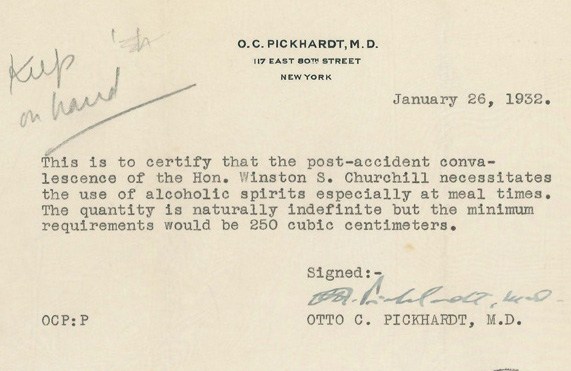
Winston Churchill Gets a Doctor’s Note to Drink Unlimited Alcohol While Visiting the U.S. During Prohibition (1932)

In Decem­ber 1931, hav­ing just embarked on a 40-stop lec­ture tour of the Unit­ed States, Win­ston Churchill was run­ning late to dine with financier Bernard Baruch on New York City’s Upper East Side. He hadn’t both­ered to bring Baruch’s address, oper­at­ing under the incor­rect assump­tion that his friend was so dis­tin­guished a per­son­age, any ran­dom cab-dri­ving com­mon­er would auto­mat­i­cal­ly rec­og­nize his build­ing.

Such were the days before cell phones and Google Maps.…

Even­tu­al­ly, Churchill bagged the cab, and shot out across 5th Avenue mid-block, think­ing he would fare bet­ter on foot.

Instead, he was very near­ly “squashed like a goose­ber­ry” when he was struck by a car trav­el­ing about 35 miles an hour.

Churchill, who wast­ed no time ped­dling his mem­o­ries of the acci­dent and sub­se­quent hos­pi­tal­iza­tion to The Dai­ly Mail, explained his mis­cal­cu­la­tion thus­ly:

In Eng­land we fre­quent­ly cross roads along which fast traf­fic is mov­ing in both direc­tions. I did not think the task I set myself now either dif­fi­cult or rash. But at this moment habit played me a dead­ly trick. I no soon­er got out of the cab some­where about the mid­dle of the road and told the dri­ver to wait than I instinc­tive­ly turned my eyes to the left. About 200 yards away were the yel­low head­lights of an approach­ing car. I thought I had just time to cross the road before it arrived; and I start­ed to do so in the prepossession—wholly unwar­rant­ed— that my only dan­gers were from the left.

Yeah, well, that’s why we paint the word “LOOK” in the cross­walk, pal, equip­ping the Os with left-lean­ing pupils for good mea­sure.

Anoth­er cab fer­ried the wound­ed Churchill to Lenox Hill Hos­pi­tal, where he iden­ti­fied him­self as “Win­ston Churchill, a British States­man” and was treat­ed for a deep gash to the head, a frac­tured nose, frac­tured ribs, and severe shock.

“I do not wish to be hurt any more. Give me chlo­ro­form or some­thing,” he direct­ed, while wait­ing for the anes­thetist.

After two weeks in the hos­pi­tal, where he man­aged to devel­op pleurisy in addi­tion to his injuries, Churchill and his fam­i­ly repaired to the Bahamas for some R&R.

It didn’t take long to feel the finan­cial pinch of all those can­celled lec­ture dates, how­ev­er. Six weeks after the acci­dent, he resumed an abbre­vi­at­ed but still gru­el­ing 14-stop ver­sion of the tour, despite his fears that he would prove unfit.

Otto Pick­hardt, Lenox Hill’s admit­ting physi­cian came to the res­cue by issu­ing Churchill the Get Out of Pro­hi­bi­tion Free Pass, above. To wit:

…the post-acci­dent con­va­les­cence of the Hon. Win­ston S. Churchill neces­si­tates the use of alco­holic spir­its espe­cial­ly at meal times. The quan­ti­ty is nat­u­ral­ly indef­i­nite but the min­i­mum require­ments would be 250 cubic cen­time­ters.

Per­haps this is what the emi­nent British States­man meant by chlo­ro­form “or some­thing”? No doubt he was relieved about those indef­i­nite quan­ti­ties. Cheers.

Read Churchill’s “My New York Mis­ad­ven­ture” in its entire­ty here. You can also learn more by perus­ing this sec­tion of Mar­tin Gilbert’s biog­ra­phy, Win­ston Churchill: The Wilder­ness Years.

Note: An ear­li­er ver­sion of this post appeared on our site in 2016.

Relat­ed Con­tent:

What Hap­pens When Mor­tals Try to Drink Win­ston Churchill’s Dai­ly Intake of Alco­hol

Oh My God! Win­ston Churchill Received the First Ever Let­ter Con­tain­ing “O.M.G.” (1917)

Win­ston Churchill Goes Back­ward Down a Water Slide & Los­es His Trunks (1934)

Win­ston Churchill’s List of Tips for Sur­viv­ing a Ger­man Inva­sion: See the Nev­er-Dis­trib­uted Doc­u­ment (1940)

Ayun Hal­l­i­day is an author, illus­tra­tor, and Chief Pri­ma­tol­o­gist of the East Vil­lage Inky zine. She lives in New York City, some 30 blocks to the north of the scene of Churchill’s acci­dent. Fol­low her @AyunHalliday

by | Permalink | Make a Comment ( 5 ) |

The Beatles Versus the Stones: An Animated Battle of the Bands

?si=ua0n7JebOzIPV0zM

The Bea­t­les or the Stones? We’ve been debat­ing that ques­tion for the past 60 years. Above, the Lon­don-based com­pa­ny Dog & Rab­bit con­tin­ues the con­ver­sa­tion with a clever video that ani­mates Bea­t­les and Stones album cov­ers. From there, all kinds of high jinks ensue.

The “Bea­t­les vs The Stones” ani­ma­tion has won awards at var­i­ous fes­ti­vals. Recent­ly made avail­able online, you can watch it above.

via Colos­sal

Relat­ed Con­tent 

The Bea­t­les Release Their Final Song, “Now and Then”: Hear the Song & Watch the Music Video Direct­ed by Peter Jack­son

Watch Clas­si­cal Music Come to Life in Art­ful­ly Ani­mat­ed Scores: Stravin­sky, Debussy, Bach, Beethoven, Mozart & More

Watch Ani­mat­ed Scores to Music by Radio­head, Talk­ing Heads, LCD Soundsys­tem, Photek & Oth­er Elec­tron­ic/­Post-Punk/A­vant-Garde Musi­cians

Ani­mat­ed Series Drawn & Record­ed Tells “Untold Sto­ries” from Music His­to­ry: Nir­vana, Leonard Cohen, Blind Willie John­son & More

Glen Hansard & Lisa O’Neill Perform a Stirring Version of “Fairytale of New York” at Shane MacGowan’s Funeral: Watch Their Send-Off

On Fri­day, Glen Hansard & Lisa O’Neill per­formed “Fairy­tale of New York” at Shane Mac­Gowan’s funer­al, giv­ing the Pogues’ front­man quite the send-off. The mov­ing per­for­mance took place before a packed church in Nenagh, a coun­try town in Ire­land. And it all ends, per­haps fit­ting­ly, with mourn­ers danc­ing in the aisles. Below, you can also watch Nick Cave per­form a Pogues song from 1986, “A Rainy Night in Soho.”

Relat­ed Con­tent

The Sto­ry of The Pogues’ “Fairy­tale of New York,” the Boozy Bal­lad That Has Become One of the Most Beloved Christ­mas Songs of All Time

Shane Mac­Gowan & Sinéad O’Connor Duet Togeth­er, Per­form­ing a Mov­ing Ren­di­tion of “Haunt­ed”

RIP Shane Mac­Gowan: Watch the Celtic Punk Rock­er Per­form with Nick Cave, Kirsty Mac­Coll & the Dublin­ers

The Won­drous Night When Glen Hansard Met Van Mor­ri­son

by | Permalink | Make a Comment ( 5 ) |

College Presidents Lampooned on Saturday Night Live’s Cold Open

Ouch!

by | Permalink | Make a Comment ( 2 ) |

The Oldest Voices That We Can Still Hear: Hear Audio Recordings of Ghostly Voices from the 1800s

What his­to­ry nerd doesn’t thrill to Thomas Edi­son speak­ing to us from beyond the grave in a 50th anniver­sary repeat of his ground­break­ing 1877 spo­ken word record­ing of (those hop­ing for lofti­er stuff should dial it down now) Mary Had a Lit­tle Lamb?

The orig­i­nal rep­re­sents the first time a record­ed human voice was suc­cess­ful­ly cap­tured and played back. We live in hope that the frag­ile tin­foil sheet on which it was record­ed will turn up in someone’s attic some­day.

Appar­ent­ly Edi­son got it in the can on the first take. The great inven­tor lat­er rem­i­nisced that he “was nev­er so tak­en aback” in his life as when he first heard his own voice, issu­ing forth from the phono­graph into which he’d so recent­ly shout­ed the famous nurs­ery rhyme:

Every­body was aston­ished. I was always afraid of things that worked the first time.

His achieve­ment was a game chang­er, obvi­ous­ly, but it was­n’t the first time human speech was suc­cess­ful­ly record­ed, as Kings and Things clar­i­fies in the above video.

That hon­or goes to Ă‰douard-LĂ©on Scott de Mar­t­inville, whose pho­nau­to­graph, patent­ed in 1857, tran­scribed vocal sounds as wave forms etched onto lamp­black-coat­ed paper, wood, or glass.

Edison’s plans for his inven­tion hinged on its abil­i­ty to repro­duce sound in ways that would be famil­iar and of ser­vice to the lis­ten­ing pub­lic. A sam­pling:

  • A music play­er 
  • A device for cre­at­ing audio­books for blind peo­ple
  • A lin­guis­tic tool
  • An aca­d­e­m­ic resource of archived lec­tures
  • A record of tele­phone con­ver­sa­tions
  • A means of cap­tur­ing pre­cious fam­i­ly mem­o­ries. 

LĂ©on Scot­t’s vision for his pho­nau­to­graph reflects his pre­oc­cu­pa­tion with the sci­ence of sound.

A pro­fes­sion­al type­set­ter, with an inter­est in short­hand, he con­ceived of the pho­nau­to­graph as an arti­fi­cial ear capa­ble of repro­duc­ing every hic­cup and quirk of pro­nun­ci­a­tion far more faith­ful­ly than a stenog­ra­ph­er ever could. It was, in the words of audio his­to­ri­an Patrick Feast­er,  the “ulti­mate speech-to-text machine.”

As he told NPR’s Talk of the Nation, Léon Scott was dri­ven to “get sounds down on paper where he could look at them and study them:”

…in terms of what we’re talk­ing about here visu­al­ly, any­body who’s ever used audio edit­ing soft­ware should have a pret­ty good idea of what we’re talk­ing about here, that kind of wavy line that you see on your screen that some­how cor­re­sponds to a sound file that you’re work­ing with…He was hop­ing peo­ple would learn to read those squig­gles and not just get the words out of them.

Although Léon Scott man­aged to sell a few pho­nau­to­graphs to sci­en­tif­ic lab­o­ra­to­ries, the gen­er­al pub­lic took lit­tle note of his inven­tion. He was pained by the glob­al acclaim that greet­ed Edison’s phono­graph 21 years lat­er, fear­ing that his own name would be lost to his­to­ry.

His fear was not unfound­ed, though as Conan O’Brien, of all peo­ple, mused, “even­tu­al­ly, all our graves go unat­tend­ed.”

But Léon Scott got a sec­ond act, as did sev­er­al uniden­ti­fied long-dead humans whose voic­es he had record­ed, when Dr. Feast­er and his First Sounds col­league David Gio­van­noni con­vert­ed some pho­nau­to­grams to playable dig­i­tal audio files using non-con­tact opti­cal-scan­ning tech­nol­o­gy from the Lawrence Berke­ley Nation­al Lab­o­ra­to­ry.

Dr. Feast­er describes the eerie expe­ri­ence of lis­ten­ing to the cleaned-up spo­ken word tracks after a long night of tweak­ing file speeds, using Léon Scot­t’s pho­nau­to­grams of tun­ing forks as his guide:

I’m a sound record­ing his­to­ri­an, so hear­ing a voice from 100 years ago is no real sur­prise for me. But sit­ting there, I was just kind of stunned to be think­ing, now I’m sud­den­ly at last lis­ten­ing to a per­for­mance of vocal music made in France before the Amer­i­can Civ­il War. That was just a stun­ning thing, feel­ing like a ghost is try­ing to sing to me through that sta­t­ic.

Scan­ning tech­nol­o­gy also allowed his­to­ri­ans to cre­ate playable dig­i­tal files of frag­ile foil record­ings made on Edi­son devices, like the St. Louis Tin­foil , made by writer and ear­ly adopter Thomas Mason in the sum­mer of 1878, as a way of show­ing off his new-fan­gled phono­graph, pur­chased for the whop­ping sum of $95.

The British Library’s Tin­foil Record­ing is thought to be the ear­li­est in exis­tence. It fea­tures an as-yet uniden­ti­fied woman, who may or may not be quot­ing from social the­o­rist Har­ri­et Mar­tineau… this gar­bled ghost is excep­tion­al­ly dif­fi­cult to pin down.

Far eas­i­er to deci­pher are the 1889 record­ings of Pruss­ian Field Mar­shall Hel­muth Von Multke, who was born in 1800, the last year of the 18th cen­tu­ry, mak­ing his the ear­li­est-born record­ed voice in audio his­to­ry.

The nona­ge­nar­i­an recites from Ham­let and Faust, and con­grat­u­lates Edi­son on his aston­ish­ing inven­tion:

This phono­graph makes it pos­si­ble for a man who has already long rest­ed in the grave once again to raise his voice and greet the present.

Relat­ed Con­tent

Down­load 10,000 of the First Record­ings of Music Ever Made, Cour­tesy of the UCSB Cylin­der Audio Archive

Suzanne Vega, “The Moth­er of the MP3,” Records “Tom’s Din­er” with the Edi­son Cylin­der

A Beer Bot­tle Gets Turned Into a 19th Cen­tu­ry Edi­son Cylin­der and Plays Fine Music

400,000+ Sound Record­ings Made Before 1923 Have Entered the Pub­lic Domain

The Web Site “Cen­turies of Sound” is Mak­ing a Mix­tape for Every Year of Record­ed Sound from 1860 to Present

Stream 385,000 Vin­tage 78 RPM Records at the Inter­net Archive: Louis Arm­strong, Glenn Miller, Bil­lie Hol­i­day & More

– Ayun Hal­l­i­day is the Chief Pri­ma­tol­o­gist of the East Vil­lage Inky zine and author, most recent­ly, of Cre­ative, Not Famous: The Small Pota­to Man­i­festo and Cre­ative, Not Famous Activ­i­ty Book. Fol­low her @AyunHalliday.

« Go BackMore in this category... »
Quantcast