“The Matilda Effect”: How Pioneering Women Scientists Have Been Written Out of Science History

Pho­to via Wiki­me­dia Com­mons

The his­to­ry of sci­ence, like most every his­to­ry we learn, comes to us as a pro­ces­sion of great, almost exclu­sive­ly white, men, unbro­ken but for the occa­sion­al token woman—well-deserving of her hon­ors but seem­ing­ly anom­alous nonethe­less. “If you believe the his­to­ry books,” notes the Time­line series The Matil­da Effect, “sci­ence is a guy thing. Dis­cov­er­ies are made by men, which spur fur­ther inno­va­tion by men, fol­lowed by acclaim and prizes for men. But too often, there is an unsung woman genius who deserves just as much cred­it” and who has been over­shad­owed by male col­leagues who grabbed the glo­ry.

In 1993, Cor­nell Uni­ver­si­ty his­to­ri­an of sci­ence Mar­garet Rossiter dubbed the denial of recog­ni­tion to women sci­en­tists “the Matil­da effect,” for suf­frag­ist and abo­li­tion­ist Matil­da Joslyn Gage, whose 1893 essay “Woman as an Inven­tor” protest­ed the com­mon asser­tion that “woman… pos­sess­es no inven­tive or mechan­i­cal genius.” Such asser­tions, Gage pro­ceed­ed to demon­strate, “are care­less­ly or igno­rant­ly made… although woman’s sci­en­tif­ic edu­ca­tion has been gross­ly neglect­ed, yet some of the most impor­tant inven­tions of the world are due to her.”

Over 100 years lat­er, Rossiter’s tena­cious work in unearthing the con­tri­bu­tions of U.S. women sci­en­tists inspired the His­to­ry of Sci­ence Soci­ety to name a pres­ti­gious prize after her. The Time­line series pro­files a few of the women whom it describes as prime exam­ples of the Matil­da effect, includ­ing Dr. Lise Meit­ner, the Aus­tri­an-born physi­cist and pio­neer of nuclear tech­nol­o­gy who escaped the Nazis and became known in her time as “the Jew­ish Moth­er of the Bomb,” though she had noth­ing to do with the atom­ic bomb. Instead, “Meit­ner led the research that ulti­mate­ly dis­cov­ered nuclear fis­sion.” But Meit­ner would become “lit­tle more than a foot­note in the his­to­ry of Nazi sci­en­tists and the birth of the Atom­ic age.”

Instead, Meitner’s col­league Otto Hahn received the acco­lades, a Nobel Prize in Chem­istry and “renown as the dis­cov­er­er of nuclear fis­sion. Meit­ner, who direct­ed Hahn’s most sig­nif­i­cant exper­i­ments and cal­cu­lat­ed the ener­gy release result­ing from fis­sion, received a few essen­tial­ist head­lines fol­lowed by decades of obscu­ri­ty.” (See Meit­ner and Hahn in the pho­to above.) Like­wise, the name of Alice Augus­ta Ball has been “all but scrubbed from the his­to­ry of med­i­cine,” though it was Ball, an African Amer­i­can chemist from Seat­tle, Wash­ing­ton, who pio­neered what became known as the Dean Method, a rev­o­lu­tion­ary treat­ment for lep­rosy.

Ball con­duct­ed her research at the Uni­ver­si­ty of Hawaii, but she trag­i­cal­ly died at the age of 24, in what was like­ly a lab acci­dent, before the results could be pub­lished. Instead, Uni­ver­si­ty Pres­i­dent Dr. Arthur Dean, who had co-taught chem­istry class­es with Ball, con­tin­ued her work. But he failed “to men­tion Ball’s key con­tri­bu­tion” despite protes­ta­tions from Dr. Har­ry Holl­mann, a sur­geon who worked with Ball on treat­ing lep­rosy patients. Dean claimed cred­it and pub­lished their work under his name. Decades lat­er, “the scant archival trail of Alice Ball was redis­cov­ered…. In 2000, a plaque was installed at the Uni­ver­si­ty of Hawaii com­mem­o­rat­ing Ball’s accom­plish­ments.”

Oth­er women in the Matil­da effect series include bac­te­r­i­al geneti­cist Esther Leder­berg, who made amaz­ing dis­cov­er­ies in genet­ics that won her hus­band a Nobel Prize; Irish astro­physi­cist Joce­lyn Bell Bur­nell, who dis­cov­ered the first radio pul­sars in 1967, but was exclud­ed from the Nobel award­ed to her the­sis super­vi­sor Antony Hewish and astronomer Mar­tin Ryle. A sim­i­lar fate befell Dr. Ros­alind Franklin, the chemist exclud­ed from the Nobel award­ed to her col­leagues James Wat­son, Fran­cis Crick, and Mau­rice Wilkins for the dis­cov­ery of DNA.

These promi­nent exam­ples are but the tip of the ice­berg when it comes to women who made sig­nif­i­cant con­tri­bu­tions to sci­en­tif­ic his­to­ry and were reward­ed by being writ­ten out of it and denied awards and recog­ni­tion in their life­time. For more on the his­to­ry of U.S. women in sci­ence and the social forces that worked to exclude them, see Mar­garet Rossiter’s three-vol­ume Women Sci­en­tists in Amer­i­ca series: Strug­gles and Strate­gies to 1940, Before Affir­ma­tive Action, 1940–1972, and Forg­ing a New World since 1972. And read Timeline’s Matil­da Effect series of arti­cles here.

Note: An ear­li­er ver­sion of this post appeared on our site in 2018.

Relat­ed Con­tent:

Read the “Don’t Let the Bas­tards Get You Down” Let­ter That Albert Ein­stein Sent to Marie Curie Dur­ing a Time of Per­son­al Cri­sis (1911)

Women Sci­en­tists Launch a Data­base Fea­tur­ing the Work of 9,000 Women Work­ing in the Sci­ences

Marie Curie Attend­ed a Secret, Under­ground “Fly­ing Uni­ver­si­ty” When Women Were Banned from Pol­ish Uni­ver­si­ties

The Ency­clo­pe­dia of Women Philoso­phers: A New Web Site Presents the Con­tri­bu­tions of Women Philoso­phers, from Ancient to Mod­ern

Meet the Physi­cist Who Has Cre­at­ed 1600+ Wikipedia Entries for Impor­tant Female & Minor­i­ty Sci­en­tists

Josh Jones is a writer and musi­cian based in Durham, NC. 

by | Permalink | Make a Comment ( 2 ) |

The Gnostic Gospels: An Introduction to the Forbidden Teachings of Jesus

It would be impos­si­ble to under­stand West­ern civ­i­liza­tion with­out under­stand­ing the his­to­ry of Chris­tian­i­ty. But in order to do that, it may serve us well to think of it as the his­to­ry of Chris­tian­i­ties, plur­al. So sug­gests Hochela­ga cre­ator Tom­mie Trelawny in the new video above, which explains the Gnos­tic Gospels, the “for­bid­den teach­ings of Jesus.” As a sys­tem of beliefs, Gnos­ti­cism is a fair­ly far cry from the main­stream forms of Chris­tian­i­ty with which most of us are famil­iar today. But its sur­viv­ing texts may sound uncan­ni­ly famil­iar, despite also involv­ing out­landish-sound­ing ele­ments that seem to belong to anoth­er civ­i­liza­tion entire­ly. Gnos­tic teach­ings have long been con­sid­ered heresy by Chris­tians, but do they real­ly rep­re­sent just a dif­fer­ent evo­lu­tion­ary branch of the faith: anoth­er Chris­tian­i­ty?

Reli­gious schol­ars of many stripes have con­cerned them­selves with few mat­ters as inten­sive­ly as they have with theod­i­cy, that is, the mat­ter of how to square the notion of a good, omnipo­tent deity with the obvi­ous exis­tence of evil down here in the world. Since its loose coali­tion of beliefs came togeth­er in the late first cen­tu­ry, Gnos­ti­cism has pro­posed an ele­gant solu­tion: that the deity is not, in fact, good, or rather, that under the tran­scen­dent, unknow­able God is a much more poor­ly behaved “demi­urge” who dis­plays an indif­fer­ence, at best, to the lot of human­i­ty. In this view, our result­ing world is less a per­fect cre­ation than a cos­mic mis­take — a propo­si­tion that would account for cer­tain of its qual­i­ties we expe­ri­ence on the day-to-day lev­el, even if we have no par­tic­u­lar reli­gious pro­cliv­i­ties.

Thanks to the dis­cov­ery of Egyp­t’s Nag Ham­ma­di library in 1945, we can direct­ly access many of the teach­ings of the so-called “Gnos­tic Gospels.” They tell us, to make a few grand sim­pli­fi­ca­tions, that our real­i­ty is illu­so­ry and that we can only come to grasp the true nature of both it and our­selves through eso­teric learn­ing, gno­sis being the ancient Greek term for knowl­edge. This world­view may bring to mind that of cer­tain Greek philoso­phers, or indeed that of The Matrix, a near-oblig­a­tory ref­er­ence for a video like this. A quar­ter-cen­tu­ry on from that movie, it’s not hard to under­stand why it res­onat­ed with the siz­able-enough pro­por­tion of human­i­ty who feel alien­at­ed from who they real­ly are or what the world real­ly is — and who, any mil­len­ni­um now, would make rea­son­ably promis­ing can­di­dates to bring about a Gnos­tic revival.

Relat­ed con­tent:

3,500 Occult Man­u­scripts Will Be Dig­i­tized & Made Freely Avail­able Online, Thanks to The Da Vin­ci Code Author Dan Brown

Behold the Codex Gigas (aka “Devil’s Bible”), the Largest Medieval Man­u­script in the World

The Phi­los­o­phy of The Matrix: From Pla­to and Descartes, to East­ern Phi­los­o­phy

The Ancient Greeks Who Con­vert­ed to Bud­dhism

Dis­cov­er Thomas Jefferson’s Cut-and-Paste Ver­sion of the Bible, and Read the Curi­ous Edi­tion Online

How Our Depic­tion of Jesus Changed Over 2,000 Years and What He May Have Actu­al­ly Looked Like

Based in Seoul, Col­in Marshall writes and broad­casts on cities, lan­guage, and cul­ture. His projects include the Sub­stack newslet­ter Books on Cities and the book The State­less City: a Walk through 21st-Cen­tu­ry Los Ange­les. Fol­low him on the social net­work for­mer­ly known as Twit­ter at @colinmarshall.

George Orwell’s Six Rules for Writing Clear and Tight Prose

Image via Wiki­me­dia Com­mons

Most every­one who knows the work of George Orwell knows his 1946 essay “Pol­i­tics and the Eng­lish Lan­guage” (pub­lished here), in which he rails against care­less, con­fus­ing, and unclear prose. “Our civ­i­liza­tion is deca­dent,” he argues, “and our lan­guage… must inevitably share in the gen­er­al col­lapse.” The exam­ples Orwell quotes are all guilty in var­i­ous ways of “stal­e­ness of imagery” and “lack of pre­ci­sion.”

Ulti­mate­ly, Orwell claims, bad writ­ing results from cor­rupt think­ing, and often attempts to make palat­able cor­rupt acts: “Polit­i­cal speech and writ­ing are large­ly the defense of the inde­fen­si­ble.” His exam­ples of colo­nial­ism, forced depor­ta­tions, and bomb­ing cam­paigns find ready ana­logues in our own time. Pay atten­tion to how the next arti­cle, inter­view, or book you read uses lan­guage “favor­able to polit­i­cal con­for­mi­ty” to soft­en ter­ri­ble things.

Orwell’s analy­sis iden­ti­fies sev­er­al cul­prits that obscure mean­ing and lead to whole para­graphs of bom­bas­tic, emp­ty prose:

Dying metaphors: essen­tial­ly clichés, which “have lost all evoca­tive pow­er and are mere­ly used because they save peo­ple the trou­ble of invent­ing phras­es for them­selves.”

Oper­a­tors or ver­bal false limbs: these are the wordy, awk­ward con­struc­tions in place of a sin­gle, sim­ple word. Some exam­ples he gives include “exhib­it a ten­den­cy to,” “serve the pur­pose of,” “play a lead­ing part in,” “have the effect of.” (One par­tic­u­lar peeve of mine when I taught Eng­lish com­po­si­tion was the phrase “due to the fact that” for the far sim­pler “because.”)

Pre­ten­tious dic­tion: Orwell iden­ti­fies a num­ber of words he says “are used to dress up a sim­ple state­ment and give an air of sci­en­tif­ic impar­tial­i­ty to biased judg­ments.” He also includes in this cat­e­go­ry “jar­gon pecu­liar to Marx­ist writ­ing” (“pet­ty bour­geois,” “lack­ey,” “flunkey,” “hye­na”).

Mean­ing­less words: Abstrac­tions, such as “roman­tic,” “plas­tic,” “val­ues,” “human,” “sen­ti­men­tal,” etc. used “in the sense that they not only do not point to any dis­cov­er­able object, but are hard­ly ever expect­ed to do so by the read­er.” Orwell also damns such polit­i­cal buzz­words as “democ­ra­cy,” “social­ism,” “free­dom,” “patri­ot­ic,” “jus­tice,” and “fas­cism,” since they each have “sev­er­al dif­fer­ent mean­ings which can­not be rec­on­ciled with one anoth­er.”

Most read­ers of Orwell’s essay inevitably point out that Orwell him­self has com­mit­ted some of the faults he finds in oth­ers, but will also, with some intro­spec­tion, find those same faults in their own writ­ing. Any­one who writes in an insti­tu­tion­al context—be it acad­e­mia, jour­nal­ism, or the cor­po­rate world—acquires all sorts of bad habits that must be bro­ken with delib­er­ate intent. “The process” of learn­ing bad writ­ing habits “is reversible” Orwell promis­es, “if one is will­ing to take the nec­es­sary trou­ble.” How should we pro­ceed? These are the rules Orwell sug­gests:

(i) Nev­er use a metaphor, sim­i­le, or oth­er fig­ure of speech which you are used to see­ing in print.

(ii) Nev­er use a long word where a short one will do.

(iii) If it is pos­si­ble to cut a word out, always cut it out.

(iv) Nev­er use the pas­sive where you can use the active.

(v) Nev­er use a for­eign phrase, a sci­en­tif­ic word, or a jar­gon word if you can think of an every­day Eng­lish equiv­a­lent.

(vi) Break any of these rules soon­er than say any­thing out­right bar­barous.

What con­sti­tutes “out­right bar­barous” word­ing he does not say, exact­ly. As the inter­net cliché has it: Your Mileage May Vary. You may find cre­ative ways to break these rules with­out there­by being obscure or jus­ti­fy­ing mass mur­der.

But Orwell does pref­ace his guide­lines with some very sound advice: “Prob­a­bly it is bet­ter to put off using words as long as pos­si­ble and get one’s mean­ing as clear as one can through pic­tures and sen­sa­tions. After­ward one can choose—not sim­ply accept—the phras­es that will best cov­er the mean­ing.” Not only does this prac­tice get us clos­er to using clear, spe­cif­ic, con­crete lan­guage, but it results in writ­ing that grounds our read­ers in the sen­so­ry world we all share to some degree, rather than the airy world of abstract thought and belief that we don’t.

These “ele­men­tary” rules do not cov­er “the lit­er­ary use of lan­guage,” writes Orwell, “but mere­ly lan­guage as an instru­ment for express­ing and not for con­ceal­ing or pre­vent­ing thought.” In the almost eighty years since his essay, the qual­i­ty of Eng­lish prose has like­ly not improved, but our ready access to writ­ing guides of all kinds has. Those who care about clar­i­ty of thought and respon­si­ble use of rhetoric would do well to con­sult them often, and to read, or re-read, Orwell’s essay.

Note: An ear­li­er ver­sion of this post appeared on our site in 2016.

Relat­ed Con­tent:

10 Writ­ing Tips from Leg­endary Writ­ing Teacher William Zinss­er

Stephen King’s 20 Rules for Writ­ers

V.S. Naipaul Cre­ates a List of 7 Rules for Begin­ning Writ­ers

Nietzsche’s 10 Rules for Writ­ing with Style

Josh Jones is a writer and musi­cian based in Durham, NC. 

Did Tintin Creator Hergé Collaborate with the Nazis? A Historical Investigation

The Adven­tures of Tintin may be a chil­dren’s com­ic series from mid-twen­ti­eth-cen­tu­ry Europe, but its appeal has long since tran­scend­ed the bound­aries of form, cul­ture, and gen­er­a­tion. In fact, many if not most seri­ous­ly ded­i­cat­ed fans of Tintin are in mid­dle age and beyond, and few of them can have avoid­ed ever con­sid­er­ing the ques­tion of his cre­ator’s activ­i­ties dur­ing the Sec­ond World War. Georges Remi, known by the nom de plume Hergéwas born to a low­er-mid­dle-class fam­i­ly in a Brus­sels sub­urb in 1907: utter­ly mun­dane begin­nings, per­haps, but ones that would lead to what the apoc­ryphal ancient Chi­nese curse calls inter­est­ing times, even for a young man whose inter­ests did­n’t run far past scout­ing and draw­ing.

After serv­ing in the Bel­gian army, explains his­to­ry YouTu­ber Mark Fel­ton in his new video above, Remi was hired by the con­ser­v­a­tive Catholic paper Le Vingtième Siè­cle to draw comics for its chil­dren’s sup­ple­ment Le Petit Vingtième. It was there that he became Hergé and cre­at­ed the boy reporter Tintin, whom the paper’s edi­tor asked to be sent to a fic­tion­al­ized Sovi­et Union in order to expose the evils of the Bol­she­viks. Pop­u­lar­i­ty came imme­di­ate­ly, and built up to the degree that an actor was hired to put his hair into a quiff and “return” by train to an appre­cia­tive crowd in Brus­sels upon the sto­ry’s con­clu­sion. There fol­lowed the fur­ther adven­tures of Tintin in the Con­go (at the time, a Bel­gian colony) and Tintin in Amer­i­ca, both of which have since come in for a great deal of crit­i­cism for their reliance on stereo­types.

Though very much his own artist, Hergé at this stage let the pol­i­tics of Tintin sto­ries be dic­tat­ed by high­er-ups. Con­ceived in response to Japan’s inva­sion of Manchuria, The Blue Lotus, from 1934, did offer him an oppor­tu­ni­ty to increase the real­ism of his art, ren­der­ing the look and feel of Chi­na as accu­rate­ly as his research could make pos­si­ble; he con­tin­ued to incor­po­rate large amounts of detail from all over the world into The Bro­ken Ear, The Black Island, and King Ottokar’s Scep­tre. Though that last deals with fic­tion­al Euro­pean coun­tries, it also clear­ly sat­i­rizes the inva­sive ten­den­cies of Hitler’s Ger­many — which would come for Hergé’s home­land in 1940, shut­ting down Le Petit Vingtième, putting him out of a job, and even req­ui­si­tion­ing his home.

Even­tu­al­ly, Hergé land­ed on his feet and joined Le Soir, Bel­gium’s largest French-lan­guage news­pa­per. Though he could pub­lish Tintin there, the Nazis had turned it into their ide­o­log­i­cal mouth­piece, a fact that did­n’t reflect well on Hergé after the Allied vic­to­ry. He found him­self black­list­ed and cat­e­go­rized with the thou­sands of Bel­gian col­lab­o­ra­tors who could receive the death penal­ty or life in prison, but an inves­ti­ga­tion into his case found him to be “a blun­der­er rather than a trai­tor” — shades of P. G. Wode­house mak­ing broad­casts about the lighter side of intern­ment for the Gestapo. His good stand­ing as a cit­i­zen and artist was even­tu­al­ly restored, though even today, his wartime activ­i­ties are occa­sion­al­ly called into ques­tion. Still, he was able to con­tin­ue Tintin’s adven­tures until he died in 1983, engag­ing in only the kind of col­lab­o­ra­tion he could do with his staff at Stu­dios Hergé.

Relat­ed Con­tent:

Hergé Draws Tintin in Vin­tage Footage (and What Explains the Character’s Endur­ing Appeal)

How Andy Warhol and Tintin Cre­ator Hergé Mutu­al­ly Admired and Influ­enced One Anoth­er

Comics Inspired by Wait­ing for Godot, Fea­tur­ing Tintin, Roz Chast, and Beav­is & Butthead

How Dis­ney Fought Fas­cism with Pro­pa­gan­da Car­toons Dur­ing World War II & Avert­ed Finan­cial Col­lapse

How the Nazis Waged War on Mod­ern Art: Inside the “Degen­er­ate Art” Exhi­bi­tion of 1937

The Nazis’ 10 Con­trol-Freak Rules for Jazz Per­form­ers: A Strange List from World War II

Based in Seoul, Col­in Marshall writes and broad­casts on cities, lan­guage, and cul­ture. His projects include the Sub­stack newslet­ter Books on Cities and the book The State­less City: a Walk through 21st-Cen­tu­ry Los Ange­les. Fol­low him on the social net­work for­mer­ly known as Twit­ter at @colinmarshall.

Why Do Filmmakers Call The Battle of Algiers the Greatest War Movie Ever?: Watch It Free Online

Paul Thomas Ander­son­’s lat­est film, the loose Thomas Pyn­chon adap­ta­tion One Bat­tle After Anoth­er, serves up many a mem­o­rable scene. But for a cer­tain kind of cinephile, noth­ing — not the ter­ror­ist attacks, not the chas­es, not the swerves into askew com­e­dy — sticks in the mind quite so much as the moment in which Leonar­do diCapri­o’s stoned pro­tag­o­nist tunes in to a broad­cast of Gillo Pon­tecor­vo’s The Bat­tle of Algiers. First released in 1966 (and cur­rent­ly free to watch on YouTube in cer­tain regions), that pic­ture has now been a main­stay of film-stud­ies syl­labi long enough that one for­gets just how much it would have star­tled its ear­li­est view­ers, more than a few of whom had no idea whether they were watch­ing a war movie or gen­uine Alger­ian War news­reel footage.

Some of those view­ers includ­ed major film­mak­ers, not least Stan­ley Kubrick, who lat­er described all films as “false doc­u­men­taries,” and Pon­tecor­vo’s work as an espe­cial­ly impres­sive exam­ple there­of. Antho­ny Frewin, who worked as Kubrick­’s per­son­al assis­tant, remem­bers the direc­tor telling him that “I could­n’t real­ly under­stand what cin­e­ma was capa­ble of with­out see­ing The Bat­tle of Algiers. He was still enthus­ing about it pri­or to his death.”

The new Stu­dioBinder video at the top of the post also includes tes­ti­mo­ni­als from a host of oth­er auteurs includ­ing Wern­er Her­zog, Steven Soder­bergh, Oliv­er Stone, Alfon­so Cuarón, Spike Lee, Mira Nair, and Christo­pher Nolan.

Kathryn Bigelow — who, as the direc­tor of pic­tures like The Hurt Lock­er and Zero Dark Thir­ty, knows some­thing about spin­ning recent mil­i­tary con­flicts into com­pelling, real­is­tic thrillers — pulled The Bat­tle of Algiers from the shelves on her vis­it to the Cri­te­ri­on Col­lec­tion’s clos­et. She calls it “prob­a­bly my favorite movie of all time,” adding that “the metronome of ten­sion is almost insuf­fer­able, but I say that as a com­pli­ment.” A young Roger Ebert, in his con­tem­po­rary review of the film, warned that it “may be a deep­er film expe­ri­ence than many audi­ences can with­stand: too cyn­i­cal, too true, too cru­el and too heart­break­ing. It is about the Alger­ian war, but those not inter­est­ed in Alge­ria may sub­sti­tute anoth­er war.”

Such a “uni­ver­sal frame of ref­er­ence” is also com­mon to the oth­er high­lights of the Ital­ian neo­re­al­ist move­ment, which also include Rober­to Rossellini’s Rome, Open City, Vit­to­rio De Sica’s Bicy­cle Thieves, and Luchi­no Vis­con­ti’s The Earth Trem­bles, with their stark black-and-white cin­e­matog­ra­phy, their real, often still war-torn loca­tions, and their most­ly non-pro­fes­sion­al actors. Despite their ven­er­a­bil­i­ty, these films can remind even us twen­ty-first-cen­tu­ry view­ers who feel as if we’ve seen it all just how much cin­e­mat­ic poten­tial remains untapped. As Paul Thomas Ander­son puts it, “It’s always a good idea to watch The Bat­tle of Algiers again, just as a cin­e­mat­ic exer­cise to get you excit­ed” — no alter­ation of con­scious­ness required before­hand.

Relat­ed con­tent:

Stan­ley Kubrick’s List of Top 10 Films: The First and Only List He Ever Cre­at­ed

Fear and Desire: Stan­ley Kubrick’s First and Least-Seen Fea­ture Film (1953)

How Post­war Ital­ian Cin­e­ma Cre­at­ed La Dolce Vita and Then the Paparazzi

Ani­mat­ed Intro­duc­tions to Edward Said’s Ground­break­ing Book Ori­en­tal­ism

The Film Music of Ennio Mor­ri­cone (RIP) Beau­ti­ful­ly Per­formed by the Dan­ish Nation­al Sym­pho­ny Orches­tra Play: “The Good, the Bad, and the Ugly” & Much More

Based in Seoul, Col­in Marshall writes and broad­casts on cities, lan­guage, and cul­ture. His projects include the Sub­stack newslet­ter Books on Cities and the book The State­less City: a Walk through 21st-Cen­tu­ry Los Ange­les. Fol­low him on the social net­work for­mer­ly known as Twit­ter at @colinmarshall.

The Oldest Known Depiction of Human Sexuality: The Turin Papyrus (Circa 1150 B.C.E.)

Image via Wiki­me­dia Com­mons

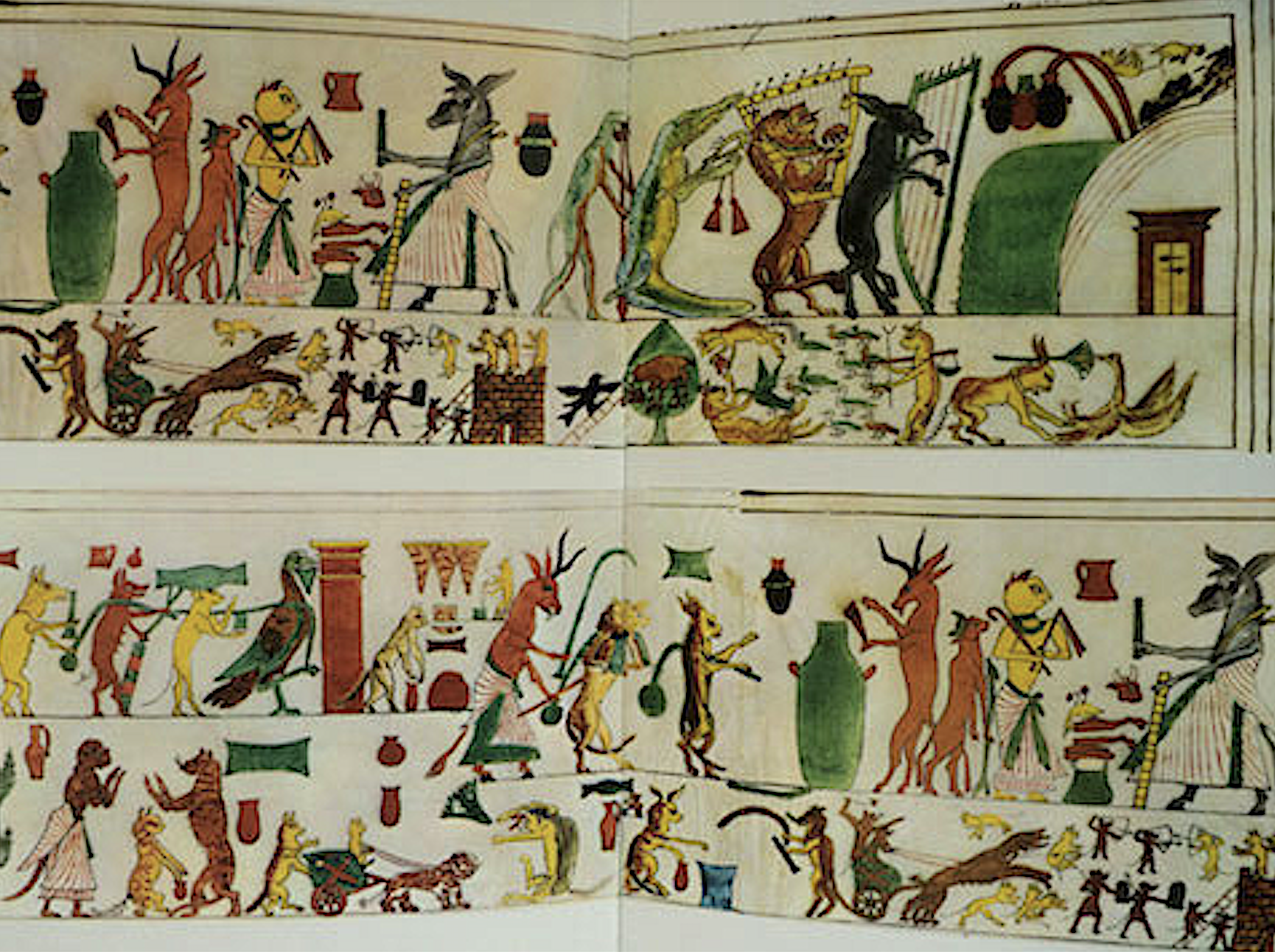
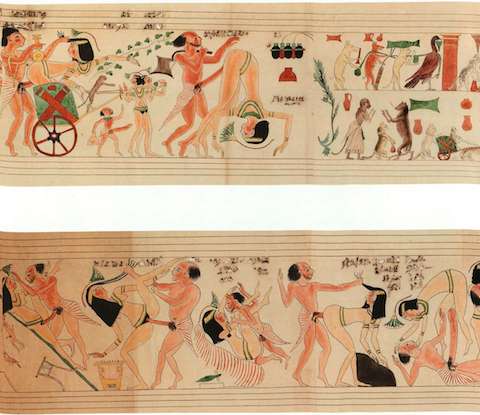
With the old joke about every gen­er­a­tion think­ing they invent­ed sex, List­verse brings us the papyrus above, the old­est depic­tion of sex on record. Paint­ed some­time in the Rames­side Peri­od (1292–1075 B.C.E.), the frag­ments above—called the “Turin Erot­ic Papyrus” because of their “dis­cov­ery” in the Egypt­ian Muse­um of Turin, Italy—only hint at the frank ver­sions of ancient sex they depict (see a graph­ic par­tial recon­struc­tion at the bot­tom of the post—probably NSFW). The num­ber of sex­u­al posi­tions the papyrus illustrates—twelve in all—“fall some­where between impres­sive­ly acro­bat­ic and unnerv­ing­ly ambi­tious,” one even involv­ing a char­i­ot. Apart from its obvi­ous fer­til­i­ty sym­bols, writes archae­ol­o­gy blog Ancient Peo­ples, the papyrus also has a “humor­ous and/or satir­i­cal” pur­pose, and prob­a­bly a male audience—evidenced, per­haps, by its resem­blance to 70’s porn: “the men are most­ly unkempt, unshaven, and bald­ing […], where­as the women are the ide­al of beau­ty in Egypt.”

In fact the erot­ic por­tion of the papyrus was only made pub­lic in the 1970s. Egyp­tol­o­gists have known of the larg­er scroll, tech­ni­cal­ly called “Papyrus Turin 55001” since the 1820s. On the right side of the papyrus (above) ani­mals per­form var­i­ous human tasks as musi­cians, sol­diers, and arti­sans. The artist meant this piece too as satire, Ancient Peo­ples alleges. Like ancient Roman and Greek satir­i­cal art, the ani­mals may rep­re­sent sup­posed arche­typ­al aspects of the artists and trades­men shown here. All very inter­est­ing, but of course the real inter­est in Papyrus Turin 55001 is of the pruri­ent vari­ety.

Egyp­tol­ogy stu­dent Car­o­line Sea­wright points us toward the rather lurid His­to­ry Chan­nel seg­ment on the erot­ic papyrus, which calls the pic­tures “one of the most shock­ing sets of images in the whole of antiq­ui­ty.” Against a per­cep­tion of ancient Egyp­tians as “but­toned-up and repressed,” the video, and Sea­wright, detail the ways in which the cul­ture rev­eled in a styl­ized rit­u­al sex­u­al­i­ty quite dif­fer­ent from our own lim­it­ed mores.

Sacred tem­ple pros­ti­tutes held a priv­i­leged posi­tion and mytho­log­i­cal nar­ra­tives incor­po­rat­ed unbi­ased descrip­tions of homo­sex­u­al­i­ty and trans­gen­derism. Ancient Egyp­tians even expect­ed to have sex after death, attach­ing fab­ri­cat­ed organs to their mum­mies. The above applies main­ly to a cer­tain class of Egypt­ian. As archae­ol­o­gist David O’Connor points out, the Turin Erot­ic Papyrus’ high “artis­tic mer­it” marks it as with­in the prove­nance of “an elite own­er and audi­ence.” You can find more detailed images from a dif­fer­ent recon­struc­tion of the erot­ic papyrus here.

Turin Reconstruction

Note: An ear­li­er ver­sion of this post appeared on our site in 2014.

Relat­ed Con­tent:

An Ancient Egypt­ian Home­work Assign­ment from 1800 Years Ago: Some Things Are Tru­ly Time­less

3,200-Year-Old Egypt­ian Tablet Records Excus­es for Why Peo­ple Missed Work: “The Scor­pi­on Bit Him,” “Brew­ing Beer” & More

Sex and Alco­hol in Medieval Times: A Look into the Plea­sures of the Mid­dle Ages

Sci­en­tists Dis­cov­er that Ancient Egyp­tians Drank Hal­lu­cino­genic Cock­tails from 2,300 Year-Old Mug

Josh Jones is a writer and musi­cian based in Durham, NC. 

by | Permalink | Make a Comment ( 1 ) |

The Unlikely Friendship of Mark Twain and Nikola Tesla

Mark Twain was, in the esti­ma­tion of many, the Unit­ed States of Amer­i­ca’s first tru­ly home­grown man of let­ters. And in keep­ing with what would be rec­og­nized as the can-do Amer­i­can spir­it, he could­n’t resist putting him­self forth now and again as a man of sci­ence — or, more prac­ti­cal­ly, a man of tech­nol­o­gy. Here on Open Cul­ture, we’ve pre­vi­ous­ly fea­tured his patent­ed inven­tions (includ­ing a bet­ter bra strap), the type­writer of which he made pio­neer­ing use to write a book, and even the inter­net-pre­dict­ing sto­ry he wrote in 1898. Giv­en Twain’s incli­na­tions, his fame, and the time in which he lived, it may come as no sur­prise to hear that he also struck up a friend­ship with the much-roman­ti­cized inven­tor Niko­la Tes­la.

As it hap­pens, Tes­la had become a fan of Twain’s long before they met, hav­ing found solace in the Amer­i­can writer’s books pro­vid­ed dur­ing a long, near-fatal stretch of child­hood ill­ness. He cred­its his recov­ery with the laugh­ter that read­ing mate­r­i­al pro­vid­ed him, and one imag­ines see­ing life in the U.S. through Twain’s eyes played some part in his even­tu­al emi­gra­tion there.

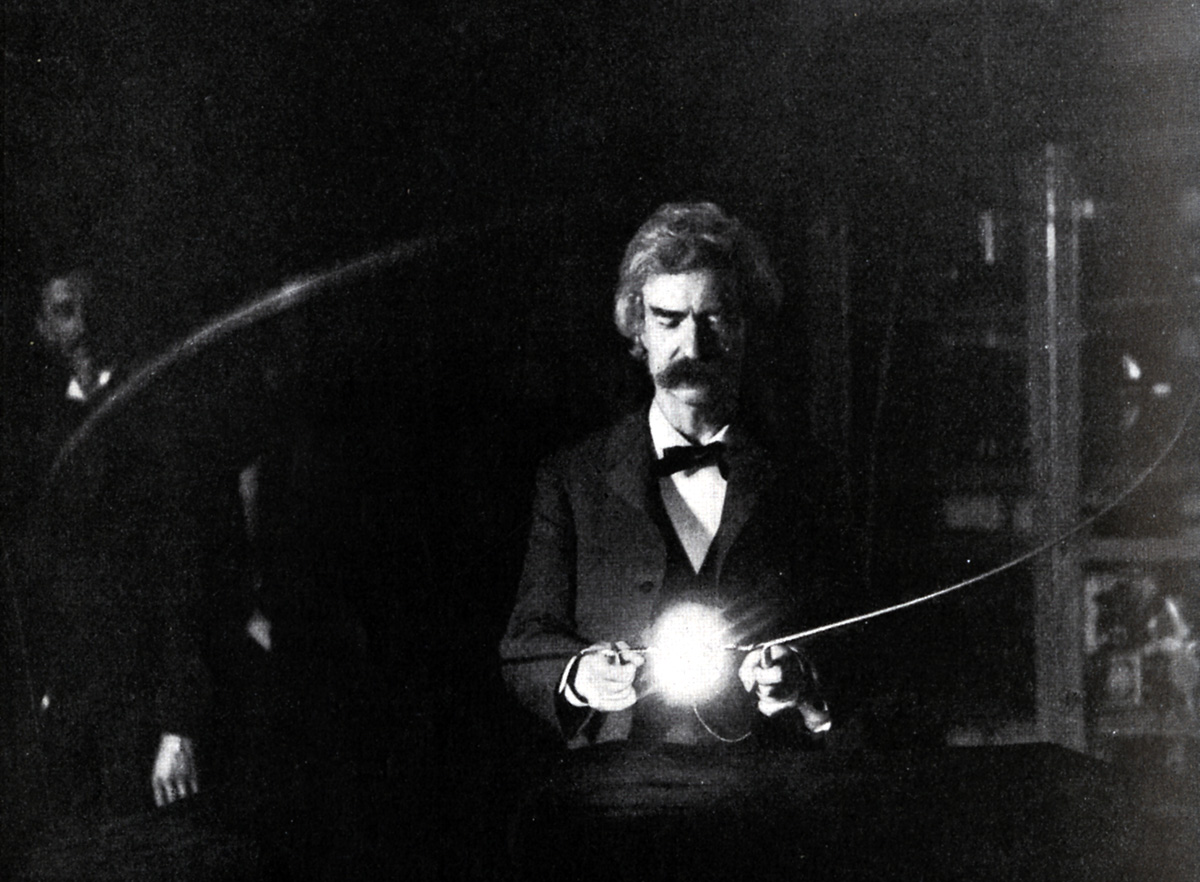
By that point, Twain him­self was liv­ing in Europe, though his fre­quent vis­its to New York meant that he could drop by Tes­la’s lab and see how his lat­est exper­i­ments with elec­tric­i­ty were going. It was there, in 1894, that the two men took the pho­to­graph above, in which Twain holds a vac­u­um lamp engi­neered by Tes­la and pow­ered (out of frame) by the elec­tro­mag­net­ic coil that bears his name.

As Ian Har­vey writes at The Vin­tage News, “Tes­la was a sci­en­tist whose work large­ly revolved around elec­tric­i­ty; at that time, mak­ing your liv­ing as a sci­en­tist and inven­tor could often mean hav­ing to be some­what of a show­man,” a pres­sure Twain under­stood. His­to­ry has record­ed that Tes­la pro­vid­ed Twain with — in addi­tion to an elec­tric­i­ty-based con­sti­pa­tion cure that worked rather too well — advice against putting his mon­ey into an uncom­pet­i­tive auto­mat­ic type­set­ting machine that, unfor­tu­nate­ly, went unheed­ed. The one­time river­boat cap­tain went on to make an even more unsound invest­ment in a pow­der called Plas­mon, which promised to end world hunger. Per­haps Tes­la’s spir­i­tu­al descen­dants are to be found in today’s Sil­i­con Val­ley, invent­ing the future; Mark Twain’s cer­tain­ly are, under­writ­ing any num­ber of far-fetched schemes, if with far less of a sense of humor.

Relat­ed Con­tent:

Mark Twain Plays With Elec­tric­i­ty in Niko­la Tesla’s Lab (Pho­to, 1894)

Mark Twain Wrote the First Book Ever Writ­ten With a Type­writer

Mark Twain’s Patent­ed Inven­tions for Bra Straps and Oth­er Every­day Items

Mark Twain Pre­dicts the Inter­net in 1898: Read His Sci-Fi Crime Sto­ry, “From The ‘Lon­don Times’ in 1904”

Niko­la Tesla’s Pre­dic­tions for the 21st Cen­tu­ry: The Rise of Smart Phones & Wire­less, The Demise of Cof­fee & More (1926/35)

When David Bowie Became Niko­la Tes­la: Watch His Elec­tric Per­for­mance in The Pres­tige (2006)

Based in Seoul, Col­in Marshall writes and broad­casts on cities, lan­guage, and cul­ture. His projects include the Sub­stack newslet­ter Books on Cities and the book The State­less City: a Walk through 21st-Cen­tu­ry Los Ange­les. Fol­low him on the social net­work for­mer­ly known as Twit­ter at @colinmarshall.

Talking Heads’ David Byrne Performs a Tiny Desk Concert

If you’ve seen a David Byrne con­cert in recent years, you know that he per­forms with a large ensem­ble of musi­cians, each car­ry­ing their own instru­ments across the stage, all while mov­ing in intri­cate­ly chore­o­graphed pat­terns. On his cur­rent tour, Byrne and his band stopped by NPR’s stu­dio and played a very dif­fer­ent kind of show—a show tight­ly squeezed behind NPR’s Tiny Desk. As you will see above, they per­formed two songs (“Every­body Laughs” and “Don’t Be Like That”) from Byrne’s new album, along with two Talk­ing Heads favorites, “(Noth­ing But) Flow­ers” and “Life Dur­ing Wartime.” Enjoy!

Relat­ed Con­tent 

David Byrne Explains How the “Big Suit” He Wore in Stop Mak­ing Sense Was Inspired by Japan­ese Kabu­ki The­atre

A Behind-the-Scenes Tour of NPR’s Tiny Desk Con­cert

Watch a Very Ner­vous, 23-Year-Old David Byrne and Talk­ing Heads Per­form­ing Live in NYC (1976)

Watch David Byrne Prac­tice His Dance Moves for Stop Mak­ing Sense in New­ly Released Behind-the-Scenes Footage

224 Books About Music in David Byrne’s Per­son­al Library

« Go BackMore in this category... »
Quantcast