Over on his Tumblr, “The Professional Dork,” Bhautik Joshi has posted 2001: A Space Odyssey “rendered in the style of Picasso using deep neural network based style transfer.” And also Blade Runner in the style of ‘Starry Night’ by Van Gogh. All of this is done using Deep Neural Networks, a programming paradigm that allows a computer to learn from observational data (including the painting styles of iconic painters). To learn more about Neural Networks and Deep Learning, you can read this free ebook by Michael Nielsen, which will be added to our collection of 200+ Free Textbooks. Enjoy.
If you would like to support the mission of Open Culture, consider making a donation to our site. It’s hard to rely 100% on ads, and your contributions will help us continue providing the best free cultural and educational materials to learners everywhere. You can contribute through PayPal, Patreon, and Venmo (@openculture). Thanks!
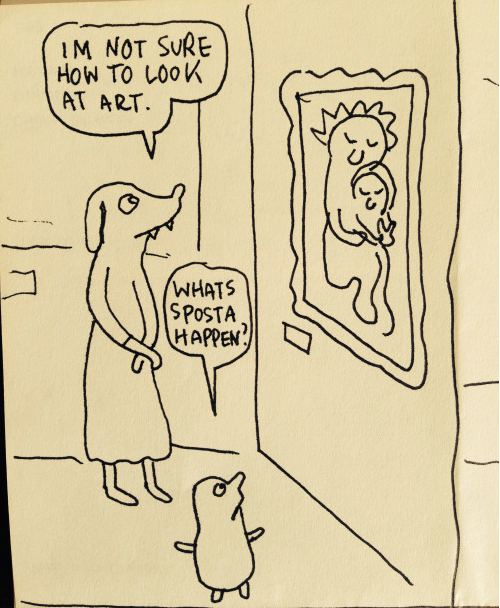
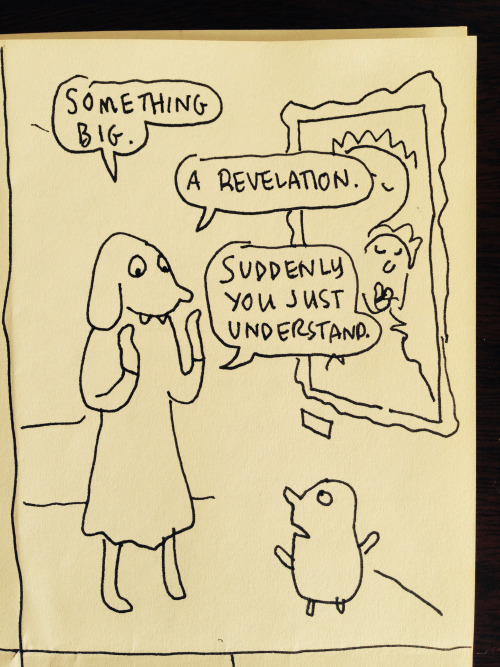
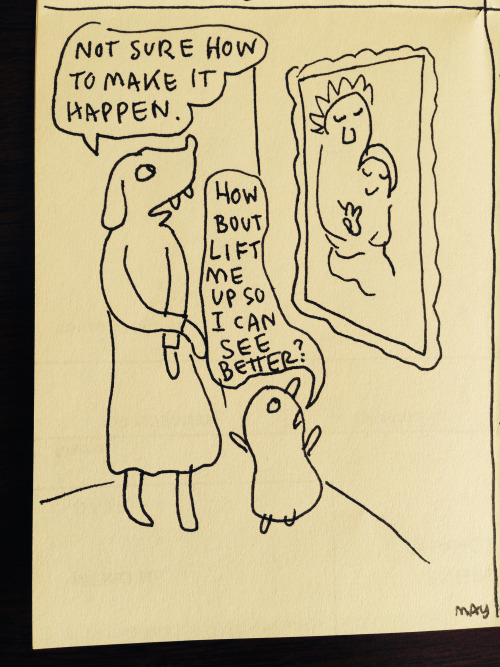
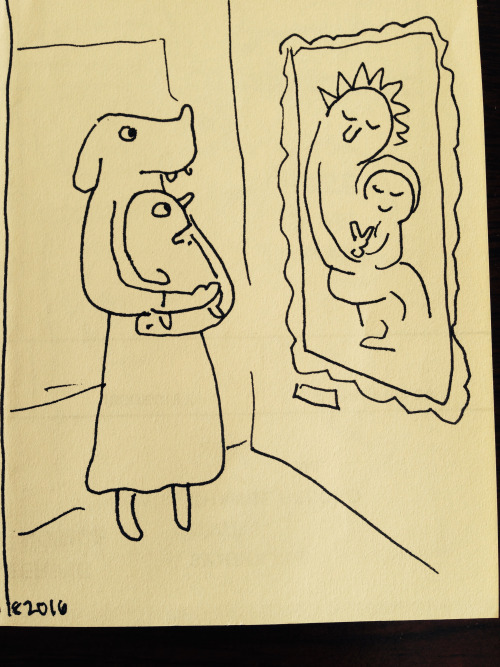
Despite the small, narrative doodle posted to her Tumblr a couple of weeks back, inspirational teacher and cartoonist Lynda Barry clearly has no shortage of strategies for viewing art in a meaningful way.
She takes a Socratic approach with students and readers eager to forge a deeper personal connection to images.
She traces this tendency back forty years, to when she studied with Marilyn Frasca at Evergreen State College. Could Frasca have anticipated what she wrought when she asked the young Barry, “What is an image?”
For Barry, who claims to have spent over forty years trying to answer the above question, there will almost always be an emotional component. In a 2010 interview with The Paris Review, she addressed the ways in which art, visual and otherwise, can fill certain crucial holes:
In the course of human life we have a million phantom-limb pains—losing a parent when you’re little, being in a war, even something as dumb as having a mean teacher—and seeing it somehow reflected, whether it’s in our own work or listening to a song, is a way to deal with it.
The Greeks knew about it. They called it catharsis, right? And without it we’re fucked. I think this is the thing that keeps our mental health or emotional health in balance, and we’re born with an impulse toward it.
No wonder the snaggle-toothed dog woman on Barry’s Tumblr looks so anxious. She craves that elusive something that never much troubled Helen Hockinson’s museum-going comic matrons.
(Had revelation been on the menu, those ladies would have dutifully paged through the most highly recommended guidebook of the day, confident they’d find it within those pages.)
These days, the internet abounds with pointers on how to get the most from art.
Another critic, New York magazine’s firebrand, Jerry Saltz, recommends an aggressively tactile approach for those who would look at art like an artist. Get up close. Cop a feel. Try to see how any given piece is made. (He himself is given to contemplating art with his hips thrust forward and head tilted back as far as it will go, in duplication of Jasper Johns’ stance.)
Of course, some of us don’t mind a hint or two to help us feel we’re on the right track. Those in that camp might enjoy the Metropolitan Museum of Art’s 82nd and 5th series, in which expert curators wax rhapsodic about their love of particular works in the collection.
You understand that this is just the tip of the proverbial ‘berg…
Readers, if you have any tips for achieving revelation through art, please share them by leaving a comment below.
And don’t forget to lift your shorter companion up so he can see better.
It’s easy to think of Expressionism—the art form that flourished in Germany during the early decades of the 20th century—as a kind of inchoate release of emotion onto the canvas. The name itself suggests the common idea of art as a means of “expressing oneself.” Often intensely childlike, such as the work of Paul Klee, or completely abstract, such as Wassily Kandinsky’s many geometric compositions, expressionist styles influenced artists throughout the century whom we tend to associate with emotion over reason, passion over restraint: Willem de Kooning and Jackson Pollack, Jean-Michel Basquiat and Francis Bacon.
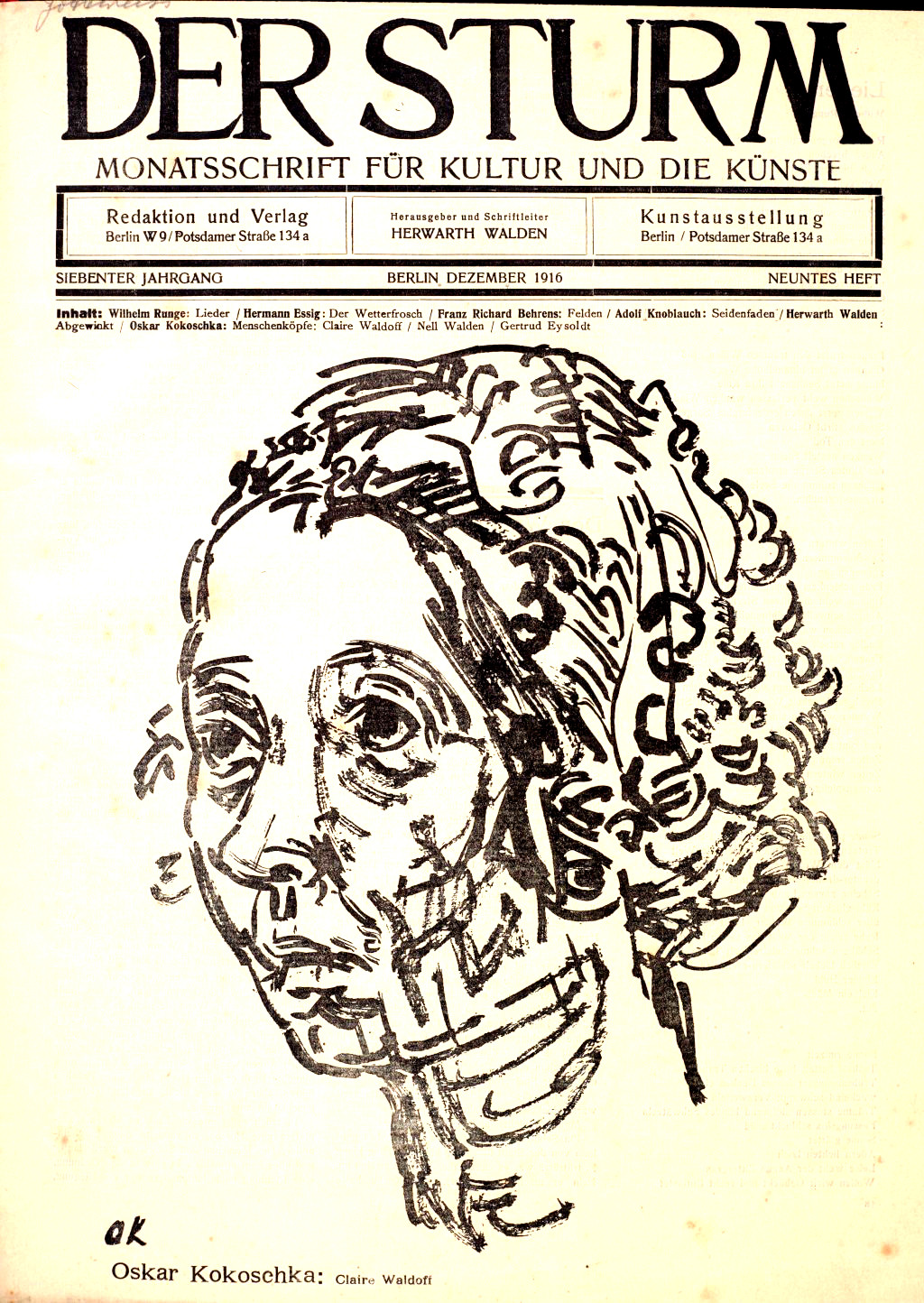
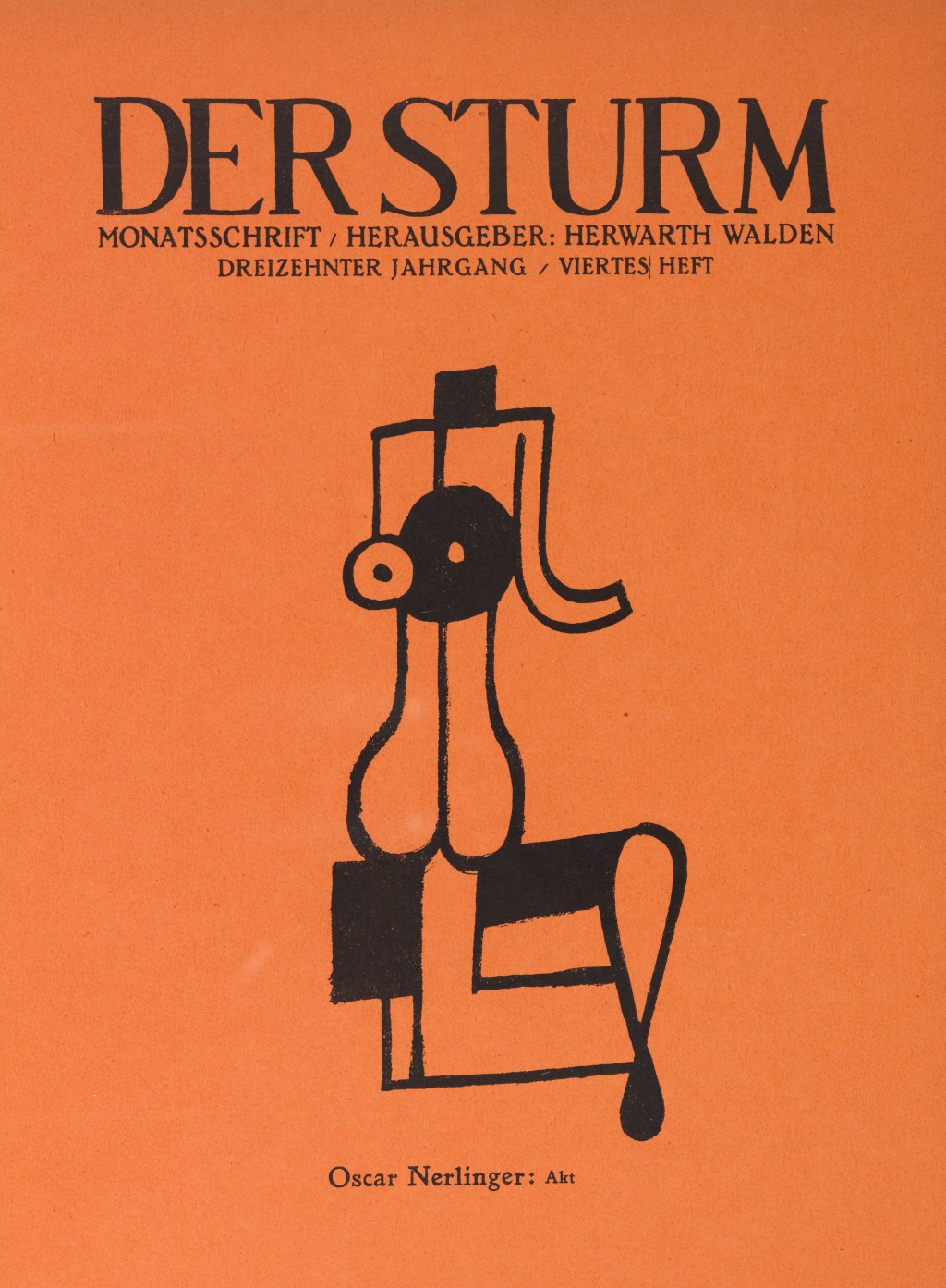
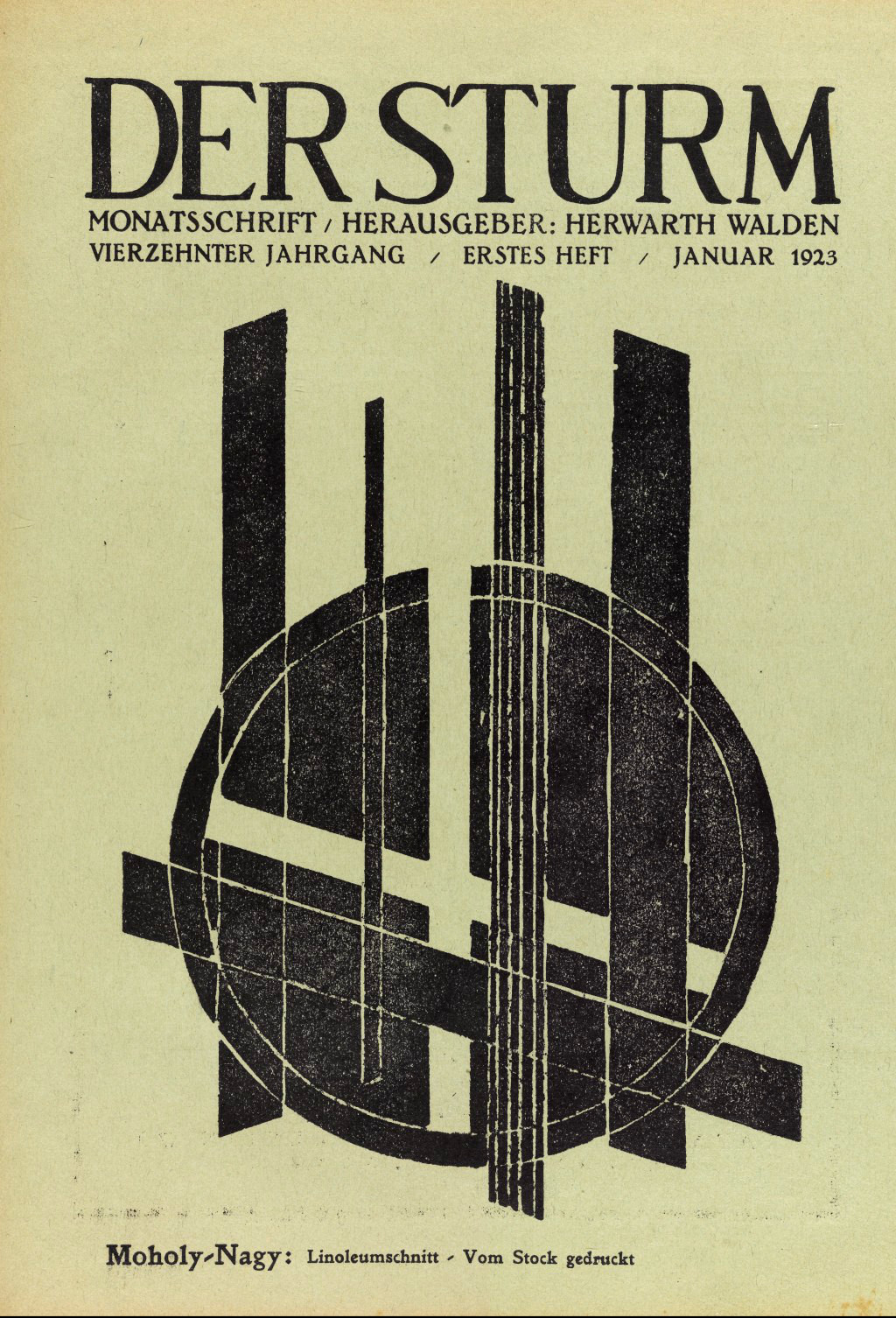
But let us return to the movement’s roots and we see from its very beginnings that Expressionism was highly theoretical in its emotionalism. Its high priest, Kandinsky, pioneered non-representational painting, and explained his method in coolly analytical terms in his treatise Concerning the Spiritual in Art. Expressionism—not only in painting, but in drama, sculpture, dance, film, and literature—early on communicated its ideas in a weekly magazine, Der Sturm (The Storm), founded in 1910 by artist and critic Herwarth Walden and running weekly until 1914, then quarterly from 1924 to 1932. In that time, the publication amassed quite a few issues, and you can read (in German) and download all 336 of them here.
You can also see some of the inspired cover designs Der Sturm used over its decades of publication. “The magazine became well known for the inclusion of woodcuts and linocuts,” writes the Guggenheim, “including works by Guggenheim collection artists Marc Chagall,Vasily Kandinsky, Paul Klee, Oscar Kokoschka, Franz Marc, László Moholy-Nagy, and others.” The museum site features several of Der Sturm’s graphic designs by Moholy-Nagy, such as the cover above, and Monoskop adds the covers further up and at the top of the post, by Oscar Nerlinger and Oskar Kokoschka, respectively. Monoskop also provides a good deal of historical context for the magazine and the gallery it fostered, Galerie Der Sturm, “started by Walden to celebrate its 100th edition, in 1912.”
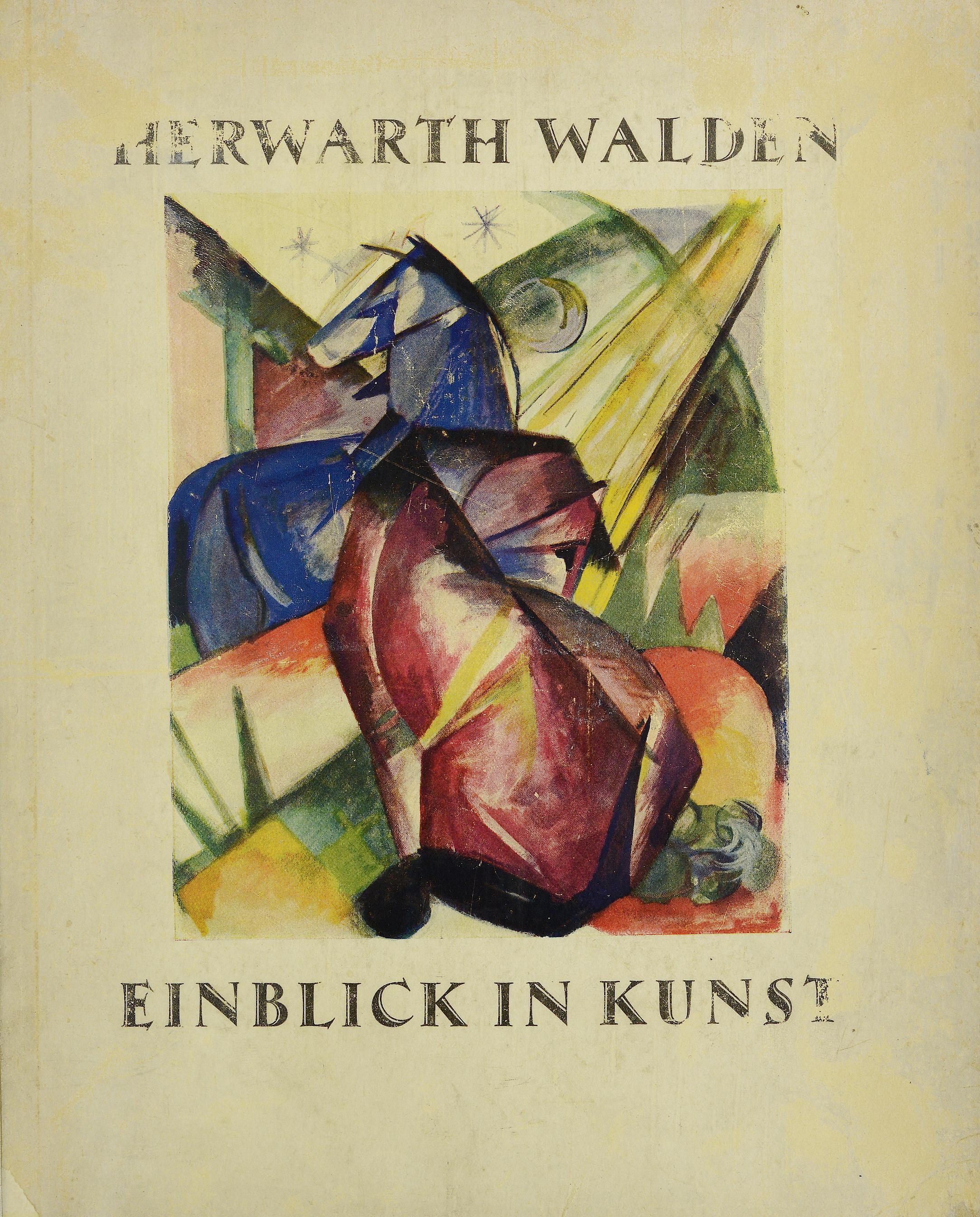
The gallery’s many exhibitions demonstrate how much Expressionism overlapped with a host of other modernist –isms of the period. It started “with an exhibition of Fauves and Der Blaue Reiter [a group including Kandinsky and Paul Klee that formed the core of first Expressionist painters], followed by the introduction in Germany of the Italian Futurists, Cubists and Orphists.” Edvard Munch exhibited there, as did Georges Braque and Pablo Picasso. Walden expanded the gallery’s activities after WWI to include lectures and a theater, and he began publishing books and portfolios by Expressionist artists. Just above see the cover of Walden’s own book Einblick in Kunst, and see several more book covers and a bibliography at Monoskop.
A product of the Weimar Republic’s high culture, the German Expressionist movement largely came to an end, along with Der Sturm and its associated work, as the Nazis came to power. But the current of Expressionism moved powerfully through the century, inspiring among others the mid-century American Abstract Expressionists, who often broke away from detached, theoretical understandings of art and engaged in direct and sometimes brutal ways with paint and canvas. But one can’t imagine these later painters taking the subjective license they did without the groundwork laid by the tireless Kandinsky and his contemporaries or Walden’s expansive Der Sturm movement.
You can peruse the entire collection of Der Sturmhere.
Apologies to Stephen King, but when I think of The Shining, I think of Stanley Kubrick’s 1980 film. While King has long and vigorously objected to Kubrick’s liberties in adapting the story, I’d argue it’s one of those oft-listicled cases where the film is better than the book. Granted, the horror writer has made several justified criticisms of the film’s misogynistic portrayal of Shelly Duvall’s character, but he has also confessed to a total indifference to movies, telling Rolling Stone, “I see [film] as a lesser medium than fiction, than literature, and a more ephemeral medium.” In this instance, at least, he’s dead wrong. Movie lovers have been obsessing over every blessed detail of Kubrick’s The Shining for 36 years and show no signs of stopping.
Part of the reason the story works better on film than on the page is that The Shining is what one might call an architectural horror—its monster is a building, the Overlook Hotel, and Kubrick wisely exploited the idea to its maximum potential, adding an additional structure, the topiary maze, as a further instantiation of the story’s themes of isolation, entrapment, and existential dead ends. Video game designers—many the same age as the film’s young protagonist Danny when the movie came out—surely paid attention. The long takes of Danny’s exploration of the ominous, empty mountain lodge now, in hindsight, resemble any number of virtual console and PC worlds in many a first-person game.
Now joining the architecturally-obsessed reimaginings of The Shining is “Shining 360,” a project by digital artist Claire Hentschker. She describes it as:
a 30-minute audio-visual experiment for VR derived from the physical space within Stanley Kubrick’s film ‘The Shining.’ Using photogrammetry, 3D elements are extracted and extruded from the original film stills, and the subsequent fragments are stitched together and viewed along the original camera path.
In other words, the project allows viewers to move around, using 360-degree Youtube video, in a digitally fragmented space built out of the first 30 minutes of the film. Be aware that there are browser restrictions, but if you open the video in Chrome, Firefox, Internet Explorer, or Opera, you’ll be able to navigate through the space using your mouse or the WASD keys.
It’s a very weird experience. The Overlook’s interior exists in contiguous 3D photographic blobs suspended in black nothingness—giving one the feeling of reaching the edge of some previously-believable video game world and finding out there’s nothing beyond it. And it’s made all the creepier by the near-exclusion of the very few people the hotel does contain—with the exception of a kind of residue of partial bodies—and by a droning, one-note ambient synthesizer score. This isn’t the first time Hentschker has used the film’s spatial uniqueness as computer art. In the short student video above from 2015, she introduces a wonky technical precursor to “Shining 360” that also thematically addresses the movie’s misogyny: “Mapping the Female Gaze in Horror Movies.”
At the time, the collection contained 2.6 million public domain images, but “eventually,” we noted in a previous post, “this archive will grow to 14.6 million images.” Well, it has almost doubled in size since our first post, and it now features over 5.3 million images, thanks again to Kalev Leetaru, who headed the digitization project while on a Yahoo-sponsored fellowship at Georgetown University.
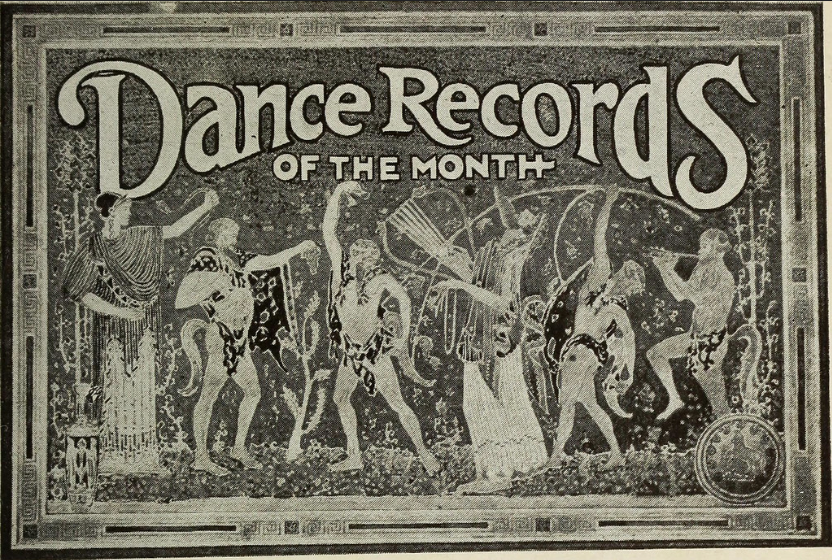
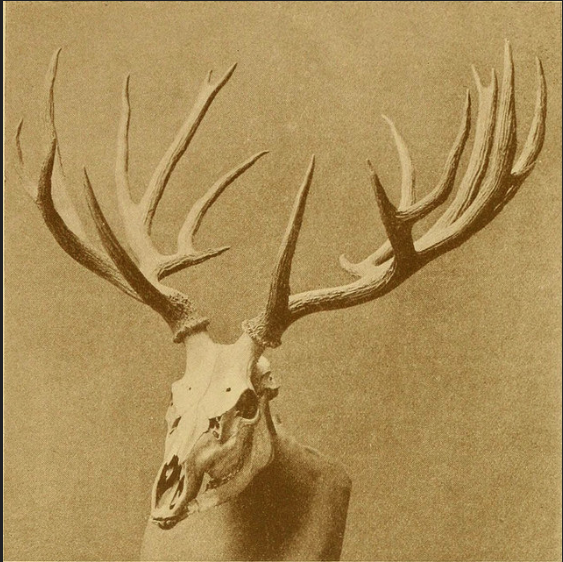
Rather than using optical character recognition (OCR), as most digitization software does to scan only the text of books, Leetaru’s code reversed the process, extracting the images the Internet Archive’s OCR typically ignores. Thousands of graphic illustrations and photographs await your discovery in the searchable database. Type in “records,” for example, and you’ll run into the 1917 ad in “Colombia Records for June” (top) or the creepy 1910 photograph above from “Records of big game: with their distribution, characteristics, dimensions, weights, and horn & tusk measurements.” Two of many gems amidst utilitarian images from dull corporate and government record books.
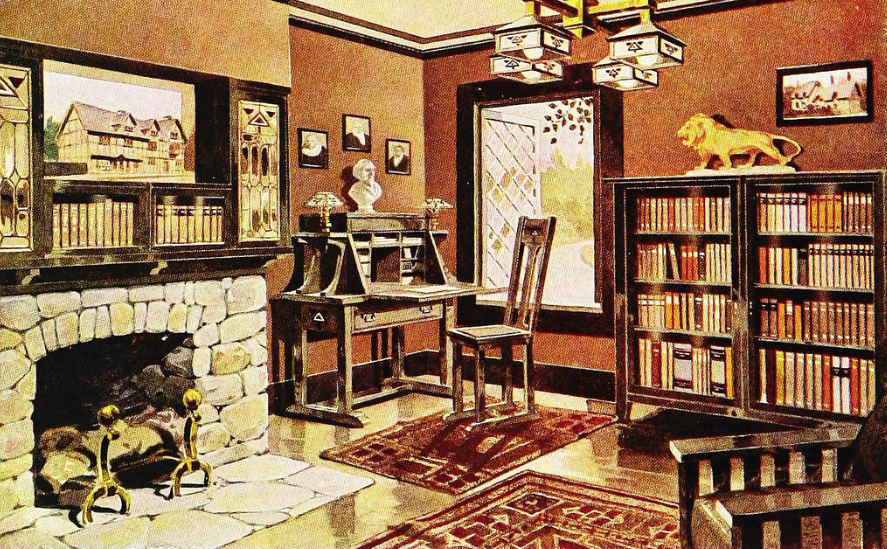
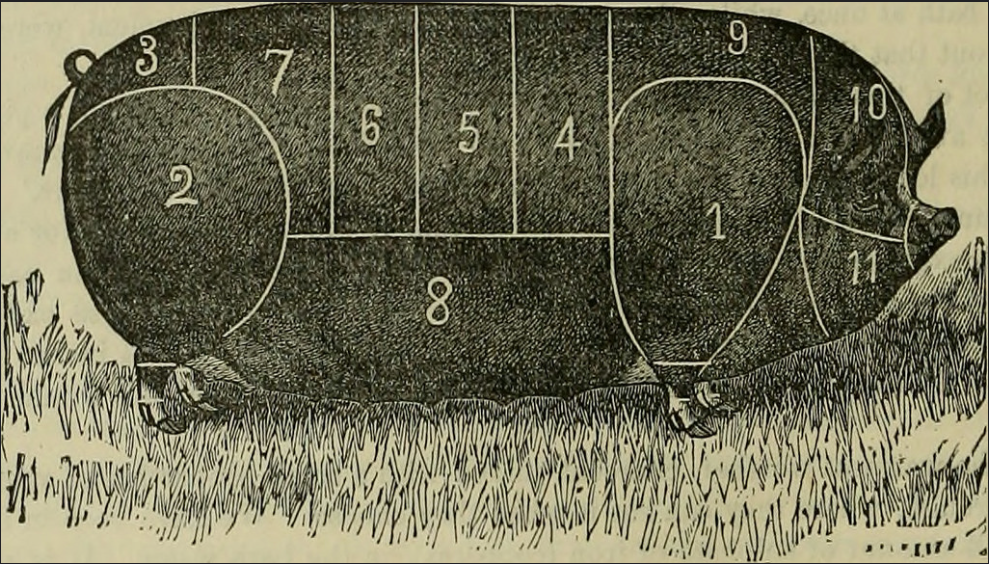
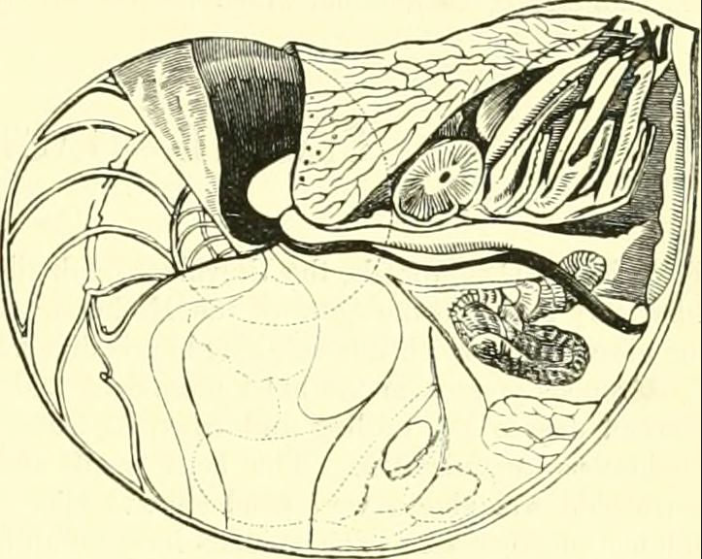
Search “library” and you’ll arrive at a fascinating assemblage, from the fashionable room above from 1912’s “Book of Home Building and Decoration,” to the rotund, mournful, soon-to-be carved pig below from 1882’s “The American Farmer: A Complete Agricultural Library,” to the nifty Nautilus drawing further down from an 1869 British Museum of Natural History publication. To see more images from any of the sources, simply click on the title of the book that appears in the search results. The organization of the archive could use some improvement: as yet millions of images have not been organized into thematic albums, which would greatly streamline browsing through them. But it’s a minor gripe given the number and variety of free, public domain images available for any kind of use.
Moreover, Leetaru has planned to offer his code to institutions, telling the BBC, “Any library could repeat this process. That’s actually my hope, that libraries around the world run this same process of their digitized books to constantly expand this universe of images.” Scholars and archivists of book and art history and visual culture will find such a “universe of images” invaluable, as will editors of Wikipedia. “What I want to see,” Leetaru also said, “is… Wikipedia have a national day of going through this [collection] to illustrate Wikipedia articles.”
Short of that, individual editors and users can sort through images of all kinds when they can’t find freely available pictures of their subject. And, of course, sites like Open Culture—which rely mainly on public domain and creative commons images—benefit greatly as well. So, thanks, Internet Archive Book Images Collection! We’ll check back later and let you know when they’ve grown even more.
Spend an hour or two at MoMA, Tate Modern, or some other world class museum and inevitably you’’ll overhear some variation of “my seven-year-old could paint that.”
Mayhaps, Madam, but how much would it fetch at auction?
As a new documentary series, the Art Market (in Four Parts), makes clear, the monetary value of art is tricky to assign.
There are exceptions, of course, such as in the irresistible Picasso anecdote cited in the trailer, above.
Usually however, even the experts must resort to an educated guess, based on a number of factors, none of which can tell the whole story.
I’d have thought a signature as famous as Warhol’s would confer the same sort of insta-worth Picasso claimed his John Hancock did.
The unpredictability of final sales figures has led auction houses to issue guarantees in return for a split of the profits, a practice Sotheby’s North and South America chairman, Lisa Dennison, likens to an insurance policy for the seller.
With the exception of the ill-fated Warhol’s great big goose egg, the numbers batted around by the series’ influential talking heads are pretty staggering. Snappy editing also lends a sense of art world glamour, though gallerist Michele Maccarone betrays a certain weariness that may come closer to the true energy at the epicenter of the scene.
As for me, I couldn’t help thinking back to my days as a receptionist in a commercial gallery on Chicago’s tourist friendly Magnificent Mile. I was contemptuous of most of the stuff on our walls, which ran heavily to pastel garden parties and harlequins posed in front of recognizable landmarks. One day, a couple who’d wandered in on impulse dropped a ridiculous sum on a florid beach scene, complete with shimmering rainbows. Rich they may have been, but their utter lack of taste was appalling, at least until the wife excitedly confided that the painting’s setting reminded them of their long ago Hawaiian honeymoon. That clarified a lot for me as to art’s true value. I hope that the couple is still alive and enjoying the most for their money’s worth, every single day.
The Art Market’s other three parts, “Galleries,” “Patrons,” and “Art Fairs,” will be released weekly through mid-June. And we’ll try to add them to this post, as they roll out.
What does Kafka mean to you? To me he has always represented the triumph of smallness, which is no slight; the exemplary figure of what Gilles Deleuze and Felix Guattari called “a minor literature.” Kafka made minutiae and triviality compelling, invested the petty struggles of everyday life with a dramatic intensity and metaphysical aura that linger for days after reading him. Kafka’s letters show him caught in the grip of a crippling, yet deeply funny, intellectual ambivalence; his stories and novels equally trade in absurdist humor and philosophical seriousness. Kafka haunts the small domestic spaces and tedium of office life, imbuing secular modernity with a tragicomic strangeness. He trembles at the continued power of a dethroned religious authority, perplexed by its emptiness, rewriting the inwardness and self-negation of religious asceticism in parables absent of any god.
Seeking the source of authority, Kafka’s heroes find instead unsolvable riddles and mysterious vacancies. Which is why it seems odd to me that Kafka should himself be memorialized as a gigantic head in statuary—an 11 meter, 45 ton stainless steel head, with 42 motorized layers that move independently, rearranging and “metamorphosing” the author’s face.
Called “K on Sun” and created by Czech artist David Černý, the shimmering, monumental work, installed in 2014, sits near the office building where Kafka worked as a clerk at an insurance company and across from the Prague City Hall. The “enormous mirrored bust” writes Christopher Jobson at This is Colossal, “brilliantly reveals Kafka’s tortured personality and unrelenting self-doubt.” Perhaps. Jacob Shamsian at Business Insider has another interpretation: “It’s meant to distract people from the frustrations of dealing with government employees.”
Maybe the key to understanding “K on Sun” is by comparison with an earlier piece by Černý called Metalmorphosis, which as you can see above, uses the same monumental, stainless steel design to create an enormous, gleaming, constantly rearranging head. This one sits at the Whitehall Technology Park in Charlotte, North Carolina, the kind of bland, homogenized corporate office campus that might have driven Kafka mad. “Černý,” writes Atlas Obscura, “notes the Metalmorphosis as something of a self-portrait of his own psyche,” saying “This is how I feel; it is a mental self-portrait.” Can we regard “Kafka in Sun” as also something of a portrait of Černý as well, imagining himself as Kafka? Perhaps.
The artist is a trickster character, known for frustrating and infuriating patrons and audiences, “a rebellious mix of Antony Gormley and Damien Hirst,” The Guardian opines, “as controversial as he is amusing.” One work, “Piss,” features just that, “two gyrating, mechanical men urinating on a map of the Czech Republic.” Their urine spells out famous sayings from Prague residents. Located right next to the Franz Kafka museum, the sculpture mocks the idea of art as a cultural enterprise devoted to the national interest. “Kafka in Sun” presents us with a much more imposingly serious piece than so many of Černý’s other, more whimsical, works. But it’s hard to imagine the satirical artist had a more serious, straightforward intention. In imagining Kafka as a huge, shiny sunlit head, he inverts the author’s small, private, self-contained world, turning Kafka into a strangely looming, public, authoritative presence resembling an enormous metal god.
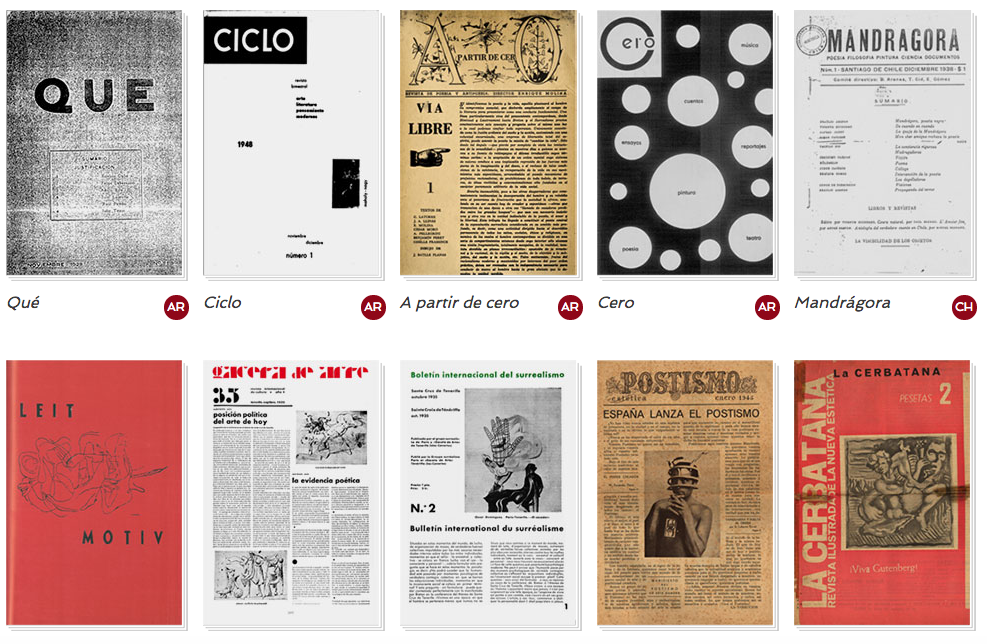
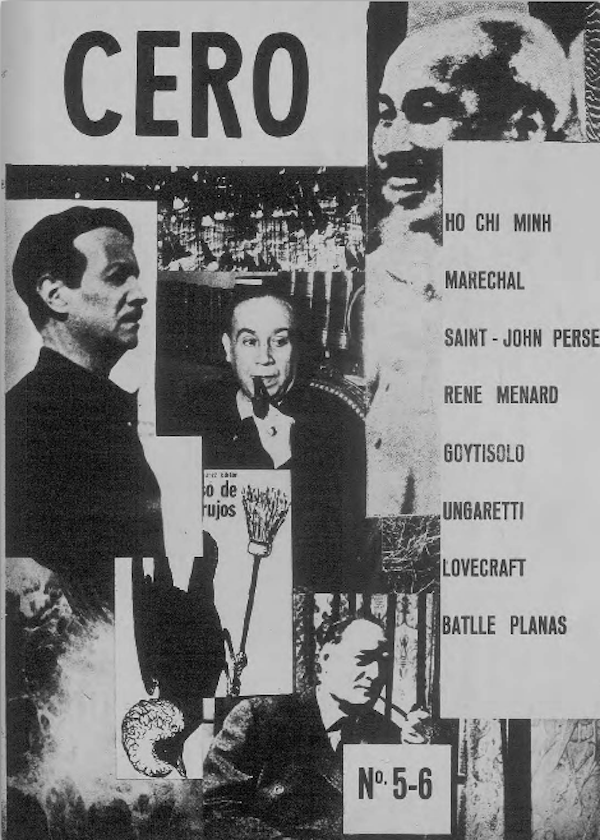
They all appear as part of an investigative project whose name translates to “Toward a Characterization of Hispanic Surrealism.” The archive includes, from Argentina:
the surrealism-dedicated issues ofGaceta de Arte (Art Gazette)
When you click on one of the magazines in the archive, the site will take you to a page with more information describing the magazine as well as placing it in the proper historical and cultural context of surrealism’s history. (Non-Spanish-speakers can get some translation if they view the page with Google Chrome.) From there, you can click on an individual issue to read it.
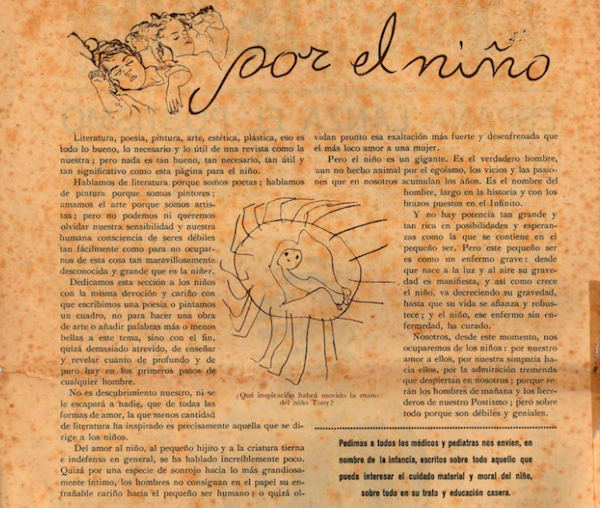
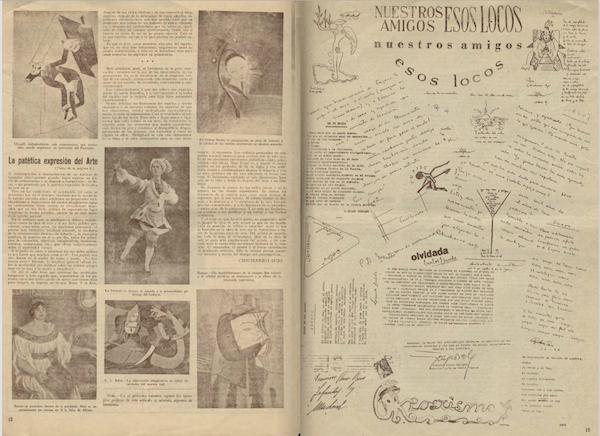
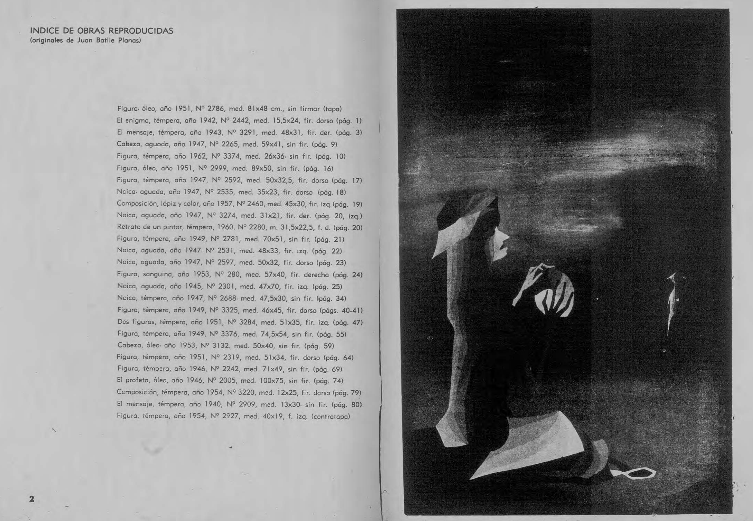
As you flip through these records of an artistically fascinating time in a series of places well suited to it, you’ll get a sense of how much the discourse varied even just within the realm of Spanish-speaking surrealists: some have a more playful tone while others have a more serious one (though mixing the two did become something of a surrealist specialty); some look out to the rest of the world while others look inward; and some come filled with striking illustrations while others stick to the analysis of relevant ideas through text — and lots of it.
Even though the most recent of these publications came off the presses nearly half a century ago, any visitor to Spain, Argentine, or Chile, as well as other countries in the Hispanophone world, will find they still have a certain surrealistic sensibility to them. Long may they retain it.
We're hoping to rely on loyal readers, rather than erratic ads. Please click the Donate button and support Open Culture. You can use Paypal, Venmo, Patreon, even Crypto! We thank you!
Open Culture scours the web for the best educational media. We find the free courses and audio books you need, the language lessons & educational videos you want, and plenty of enlightenment in between.