Discover the First Horror & Fantasy Magazine, Der Orchideengarten, and Its Bizarre Artwork (1919–1921)

Der_Orchideengarten,_1920_cover_(Leidlein)

From the 18th cen­tu­ry onward, the gen­res of Goth­ic hor­ror and fan­ta­sy have flour­ished, and with them the sen­su­al­ly vis­cer­al images now com­mon­place in film, TV, and com­ic books. These gen­res per­haps reached their aes­thet­ic peak in the 19th cen­tu­ry with writ­ers like Edgar Allan Poe and illus­tra­tors like Gus­tave Dore. But it was in the ear­ly twen­ti­eth cen­tu­ry that a more pop­ulist sub­genre tru­ly came into its own: “weird fic­tion,” a term H.P. Love­craft used to describe the pulpy brand of super­nat­ur­al hor­ror cod­i­fied in the pages of Amer­i­can fan­ta­sy and hor­ror mag­a­zine Weird Tales—first pub­lished in 1923. (And still going strong!)
Orchid_2

A pre­cur­sor to EC Comics’ many lurid titles, Weird Tales is often con­sid­ered the defin­i­tive ear­ly twen­ti­eth cen­tu­ry venue for weird fic­tion and illus­tra­tion.

But we need only look back a few years and to anoth­er con­ti­nent to find an ear­li­er pub­li­ca­tion, serv­ing Ger­man-speak­ing fans—Der Orchideen­garten (“The Gar­den of Orchids”), the very first hor­ror and fan­ta­sy mag­a­zine, which ran 51 issues from Jan­u­ary 1919 to Novem­ber 1921.

Orchid_3

The mag­a­zine fea­tured work from its edi­tors Karl Hans Strobl and Alfons von Czibul­ka, from bet­ter-known con­tem­po­raries like H.G. Wells and Karel Capek, and from fore­fa­thers like Dick­ens, Pushkin, Guy de Mau­pas­sant, Poe, Voltaire, Wash­ing­ton Irv­ing, Nathaniel Hawthorne, and oth­ers. “Although two issues of Der Orchideen­garten were devot­ed to detec­tive sto­ries,” writes 50 Watts, “and one to erot­ic sto­ries about cuck­olds, it was a gen­uine fan­ta­sy mag­a­zine.” And it was also a gallery of bizarre and unusu­al art­work.

04-Der-Orchideengarten--1919--German-magazine-cover_900

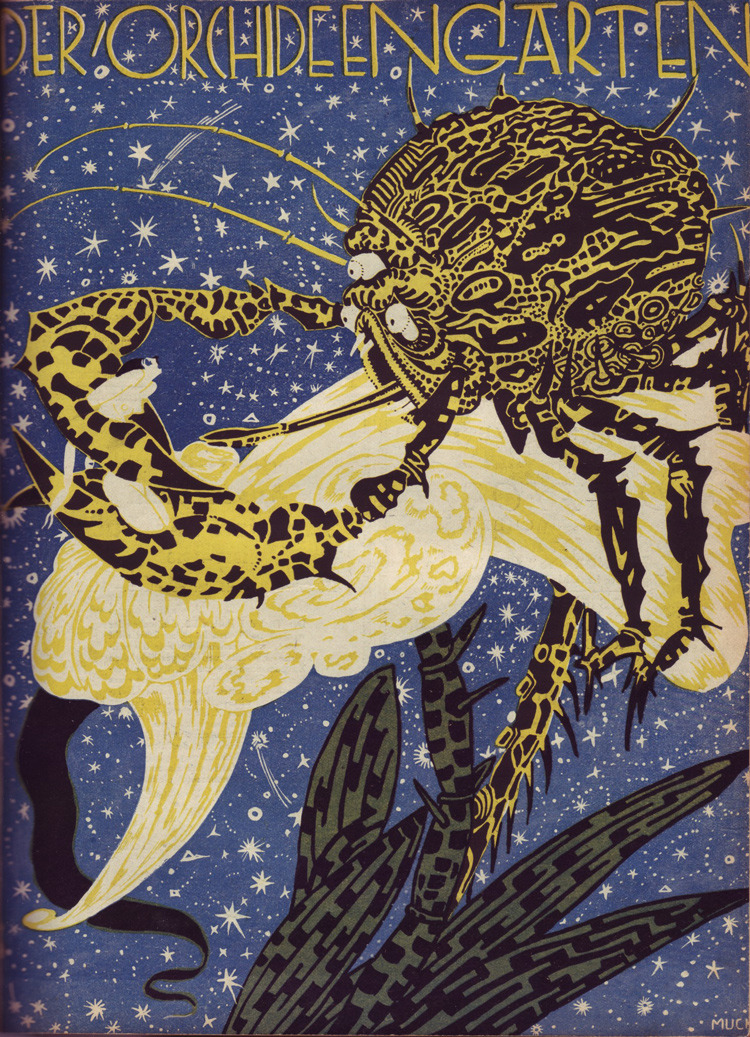
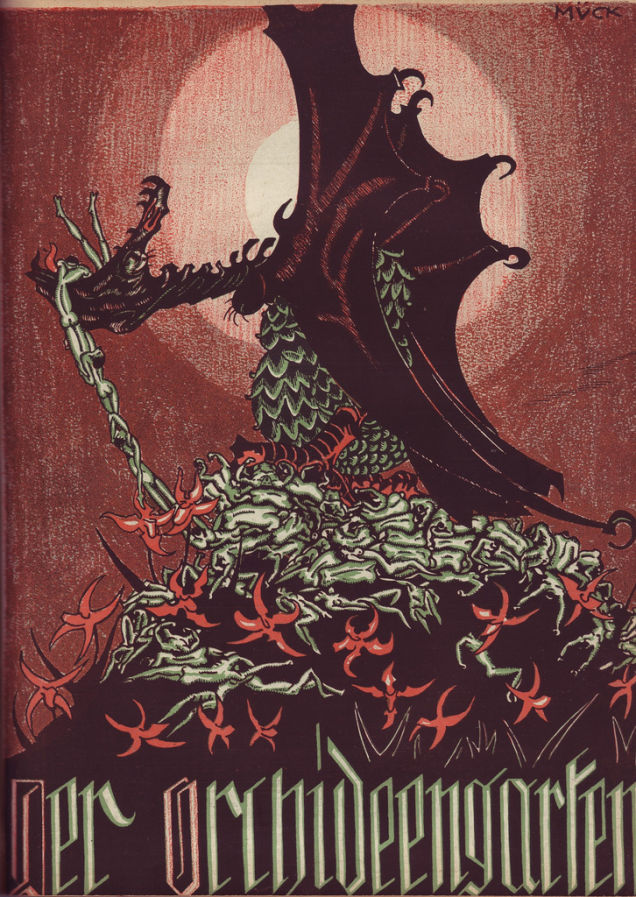
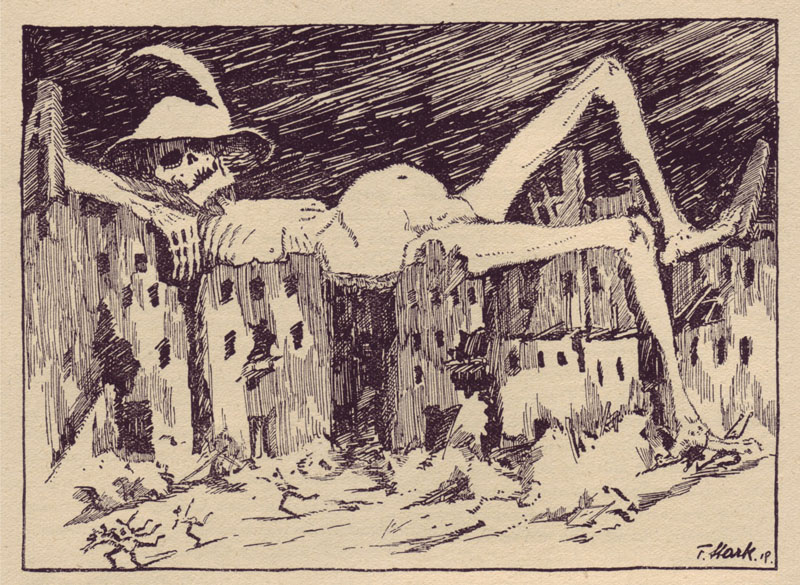
50 Watts quotes from Franz Rottensteiner’s descrip­tion of the magazine’s art, which ranged “from rep­re­sen­ta­tions of medieval wood­cuts to the work of mas­ters of the macabre such as Gus­tave Dore or Tony Johan­not, to con­tem­po­rary Ger­man artists like Rolf von Hoer­schel­mann, Otto Lenneko­gel, Karl Rit­ter, Hein­rich Kley, or Alfred Kubin.” These artists cre­at­ed the cov­ers and illus­tra­tions you see here, and many more you can see at 50 Watts, the black sun, and John Coulthart’s {feuil­leton}.

Orchid_5

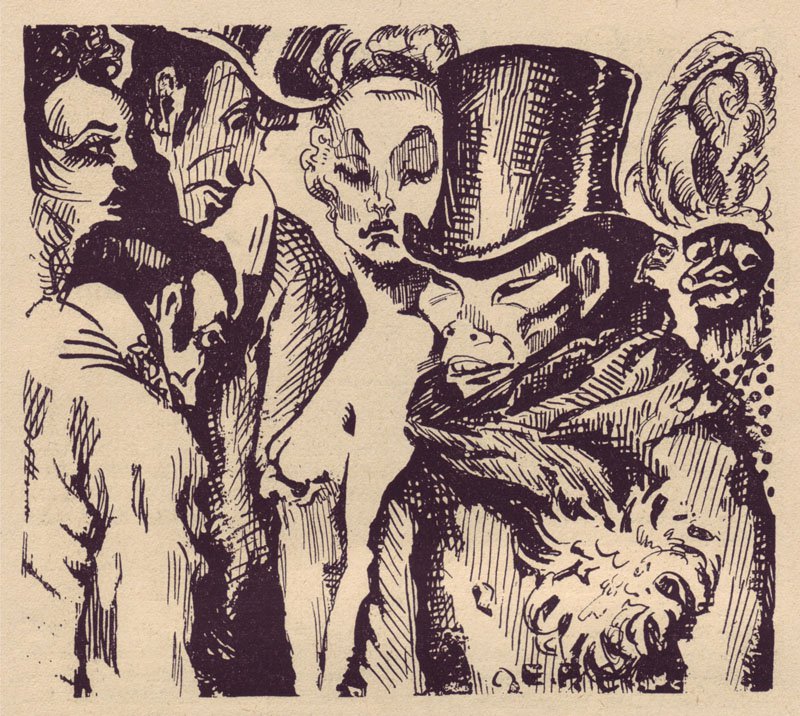
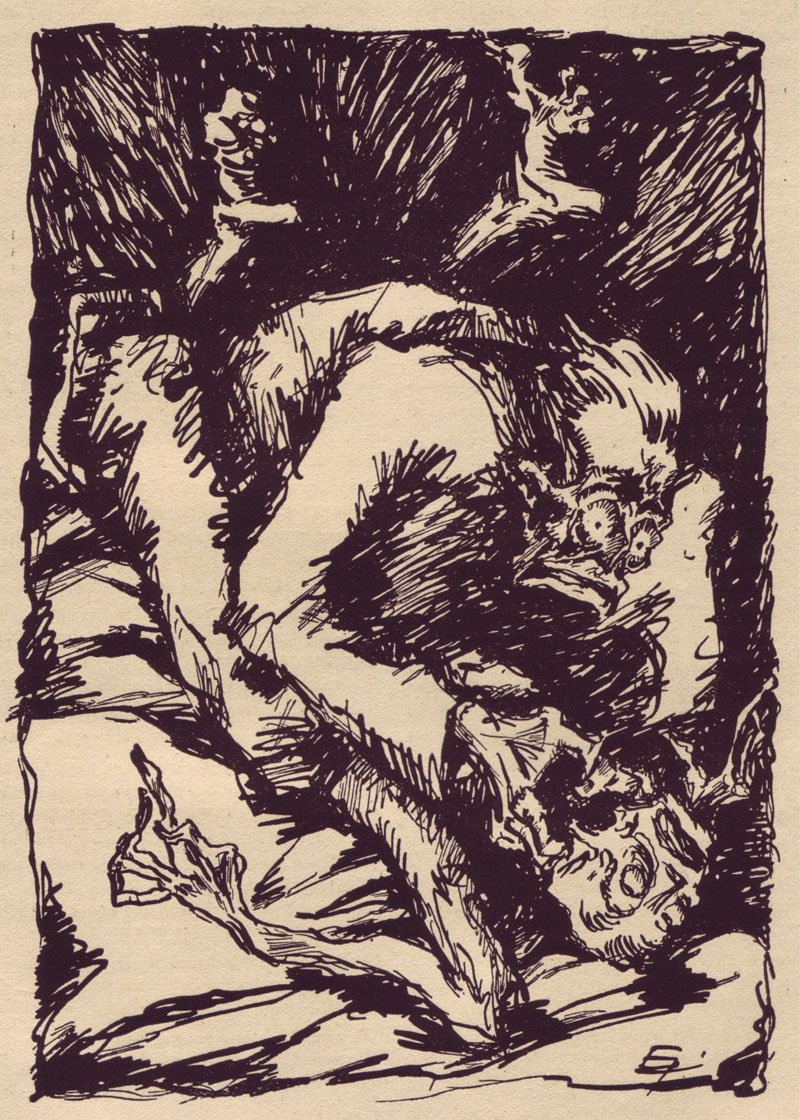
“What strikes me about these black-and-white draw­ings,” like the dense, fren­zied pen-and-ink scene above, Coulthart com­ments, “is how dif­fer­ent they are in tone to the pulp mag­a­zines which fol­lowed short­ly after in Amer­i­ca and else­where. They’re at once far more adult and fre­quent­ly more orig­i­nal than the Goth­ic clichés which padded out Weird Tales and less­er titles for many years.” Indeed, though the for­mat may be sim­i­lar to its suc­ces­sors, Der Orchideen­garten’s cov­ers show the influ­ence of Sur­re­al­ism, “some are almost Expres­sion­ist in style,” and many of the illus­tra­tions show “a dis­tinct Goya influ­ence.”

Orchid_1

Pop­u­lar fan­ta­sy and hor­ror illus­tra­tion has often leaned more toward the soft-porn of sev­en­ties air­brushed vans, pulp-nov­el cov­ers, or the gris­ly kitsch of the comics. Rot­ten­stein­er writes in his 1978 Fan­ta­sy Book that this “large-for­mat mag­a­zine… must sure­ly rank as one of the most beau­ti­ful fan­ta­sy mag­a­zines ever pub­lished.” It’s hard to argue with that assess­ment. View, read (in Ger­man), and down­load orig­i­nal scans of the magazine’s first sev­er­al issues over on this Prince­ton site.

Note: An ear­li­er ver­sion of this post appeared on our site in 2016.

If you would like to sign up for Open Culture’s free email newslet­ter, please find it here. It’s a great way to see our new posts, all bun­dled in one email, each day.

If you would like to sup­port the mis­sion of Open Cul­ture, con­sid­er mak­ing a dona­tion to our site. It’s hard to rely 100% on ads, and your con­tri­bu­tions will help us con­tin­ue pro­vid­ing the best free cul­tur­al and edu­ca­tion­al mate­ri­als to learn­ers every­where. You can con­tribute through Pay­Pal, Patre­on, and Ven­mo (@openculture). Thanks!

Relat­ed Con­tent:

How Georges Méliès A Trip to the Moon Became the First Sci-Fi Film & Changed Cin­e­ma For­ev­er (1902)

Read Mar­garet Cavendish’s The Blaz­ing World: The First Sci-Fi Nov­el Writ­ten By a Woman (1666)

The First Work of Sci­ence Fic­tion: Read Lucian’s 2nd-Cen­tu­ry Space Trav­el­ogue A True Sto­ry

Free: 356 Issues of Galaxy, the Ground­break­ing 1950s Sci­ence Fic­tion Mag­a­zine

Josh Jones is a writer and musi­cian based in Durham, NC. Fol­low him at @jdmagness

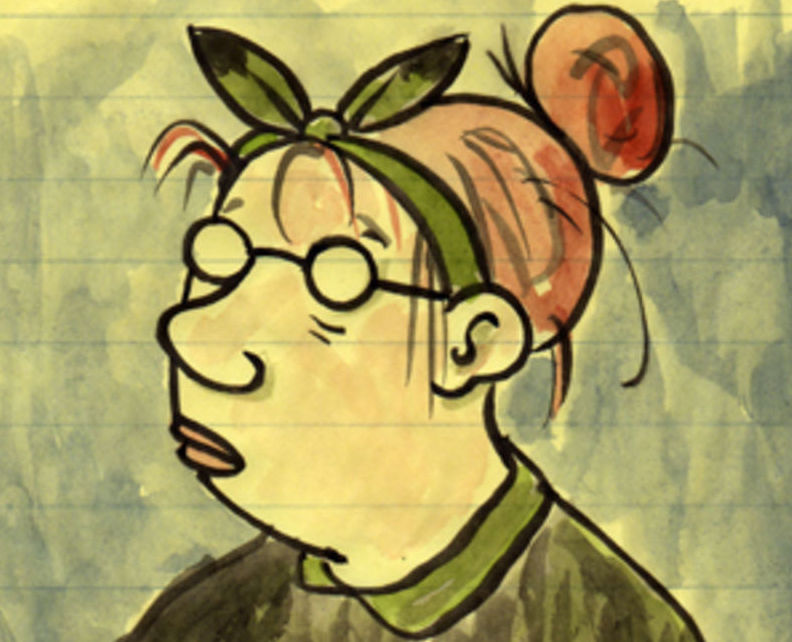
Lynda Barry on How the Smartphone Is Endangering Three Ingredients of Creativity: Loneliness, Uncertainty & Boredom

The phone gives us a lot but it takes away three key ele­ments of dis­cov­ery: lone­li­ness, uncer­tain­ty and bore­dom. Those have always been where cre­ative ideas come from. — Lyn­da Bar­ry

In the spring of 2016, the great car­toon­ist and edu­ca­tor, Lyn­da Bar­ry, did the unthink­able, pri­or to giv­ing a lec­ture and writ­ing class at NASA’s God­dard Space Flight Cen­ter.

She demand­ed that all par­tic­i­pat­ing staff mem­bers sur­ren­der their phones and oth­er such per­son­al devices.

Her vic­tims were as jan­gled by this prospect as your aver­age iPhone-addict­ed teen, but sur­ren­dered, agree­ing to write by hand, anoth­er anti­quat­ed notion Bar­ry sub­scribes to:

The delete but­ton makes it so that any­thing you’re unsure of you can get rid of, so noth­ing new has a chance. Writ­ing by hand is a rev­e­la­tion for peo­ple. Maybe that’s why they asked me to NASA – I still know how to use my hands… there is a dif­fer­ent way of think­ing that goes along with them.

Barry—who told the Onion’s AV Club that she craft­ed her book What It Is with an eye toward bored read­ers stuck in a Jiffy Lube oil-change wait­ing room—is also a big pro­po­nent of doo­dling, which she views as a cre­ative neu­ro­log­i­cal response to bore­dom:

Bor­ing meet­ing, you have a pen, the usu­al clowns are yakking. Most peo­ple will draw some­thing, even peo­ple who can’t draw. I say “If you’re bored, what do you draw?” And every­body has some­thing they draw. Like “Oh yeah, my lit­tle guy, I draw him.” Or “I draw eye­balls, or palm trees.” … So I asked them “Why do you think you do that? Why do you think you doo­dle dur­ing those meet­ings?” I believe that it’s because it makes hav­ing to endure that par­tic­u­lar sit­u­a­tion more bear­able, by chang­ing our expe­ri­ence of time. It’s so slight. I always say it’s the dif­fer­ence between, if you’re not doo­dling, the min­utes feel like a cheese grater on your face. But if you are doo­dling, it’s more like Bril­lo.  It’s not much bet­ter, but there is a dif­fer­ence. You could han­dle Bril­lo a lit­tle longer than the cheese grater.

Meet­ings and class­rooms are among the few remain­ing venues in which screen-addict­ed moths are expect­ed to force them­selves away from the phone’s invit­ing flame. Oth­er settings—like the Jiffy Lube wait­ing room—require more ini­tia­tive on the user’s part.

Once, we were keen­er stu­dents of minor changes to famil­iar envi­ron­ments, the books strangers were read­ing in the sub­way, and those strangers them­selves. Our sub­se­quent obser­va­tions were known to spark con­ver­sa­tion and some­times ideas that led to cre­ative projects.

Now, many of us let those oppor­tu­ni­ties slide by, as we fill up on such fleet­ing con­fec­tions as fun­ny videos and all-you-can-eat serv­ings of social media.

It’s also tempt­ing to use our phones as defac­to shields any time social anx­i­ety looms. This dodge may pro­vide short term com­fort, espe­cial­ly to younger peo­ple, but remem­ber, Bar­ry and many of her car­toon­ist peers, includ­ing Daniel Clowes, Simon Hansel­mann, and Ariel Schrag, toughed it out by mak­ing art. That’s what got them through the lone­li­ness, uncer­tain­ty, and bore­dom of their mid­dle and high school years.

The book you hold in your hands would not exist had high school been a pleas­ant expe­ri­ence for me… It was on those qui­et week­end nights when even my par­ents were out hav­ing fun that I began mak­ing seri­ous attempts to make sto­ries in comics form.

Adri­an Tomine, intro­duc­tion to 32 Sto­ries

Bar­ry is far from alone in encour­ag­ing adults to peel them­selves away from their phone depen­den­cy for their cre­ative good.

Pho­tog­ra­ph­er Eric Pickersgill’s Removed imag­ines a series of every­day sit­u­a­tions in which phones and oth­er per­son­al devices have been ren­dered invis­i­ble. (It’s worth not­ing that he removed the offend­ing arti­cles from the mod­els’ hands, rather that Pho­to­shop­ping them out lat­er.)

Com­put­er Sci­ence Pro­fes­sor Calvin Newport’s book, Deep Work, posits that all that shal­low phone time is cre­at­ing stress, anx­i­ety, and lost cre­ative oppor­tu­ni­ties, while also doing a num­ber on our per­son­al and pro­fes­sion­al lives.

Author Manoush Zomorodi’s TED Talk on how bore­dom can lead to bril­liant ideas, below, details a week­long exper­i­ment in bat­tling smart­phone habits, with lots of sci­en­tif­ic evi­dence to back up her find­ings.

But what if you wipe the slate of dig­i­tal dis­trac­tions only to find that your brain’s just… emp­ty? A once occu­pied room, now devoid of any­thing but dim­ly recalled memes, and gen­er­al­ized dread over the state of the world?

The afore­men­tioned AV Club inter­view with Bar­ry offers both encour­age­ment and some use­ful sug­ges­tions that will get the tem­porar­i­ly par­a­lyzed mov­ing again:

I don’t know what the strip’s going to be about when I start. I nev­er know. I often­times have—I call it the word-bag. Just a bag of words. I’ll just reach in there, and I’ll pull out a word, and it’ll say “ping-pong.” I’ll just have that in my head, and I’ll start draw­ing the pic­tures as if I can… I hear a sen­tence, I just hear it. As soon as I hear even the begin­ning of the first sen­tence, then I just… I write real­ly slow. So I’ll be writ­ing that, and I’ll know what’s going to go at the top of the pan­el. Then, when it gets to the end, usu­al­ly I’ll know what the next one is. By three sen­tences or four in that first pan­el, I stop, and then I say “Now it’s time for the draw­ing.” Then I’ll draw. But then I’ll hear the next one over on anoth­er page! Or when I’m draw­ing Marlys and Arna, I might hear her say some­thing, but then I’ll hear Marlys say some­thing back. So once that first sen­tence is there, I have all kinds of choic­es as to where I put my brush. But if noth­ing is hap­pen­ing, then I just go over to what I call my decoy page. It’s like decoy ducks. I go over there and just start mess­ing around.

Note: An ear­li­er ver­sion of this post appeared on our site in 2017.

Relat­ed Con­tent:

How Infor­ma­tion Over­load Robs Us of Our Cre­ativ­i­ty: What the Sci­en­tif­ic Research Shows

The Case for Delet­ing Your Social Media Accounts & Doing Valu­able “Deep Work” Instead, Accord­ing to Prof. Cal New­port

Lyn­da Barry’s Illus­trat­ed Syl­labus & Home­work Assign­ments from Her New UW-Madi­son Course, “Mak­ing Comics”

Lyn­da Bar­ry, Car­toon­ist Turned Pro­fes­sor, Gives Her Old Fash­ioned Take on the Future of Edu­ca­tion

Ayun Hal­l­i­day is an author, illus­tra­tor, and the­ater mak­er in NYC.

by | Permalink | Make a Comment ( 1 ) |

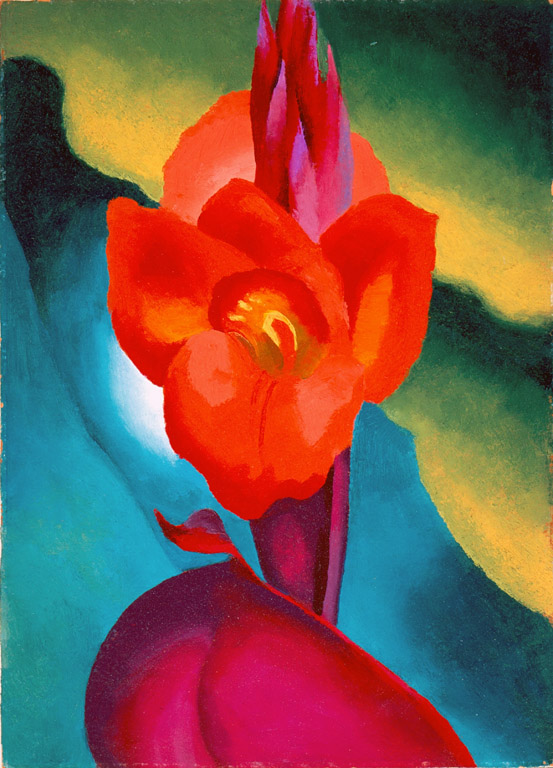
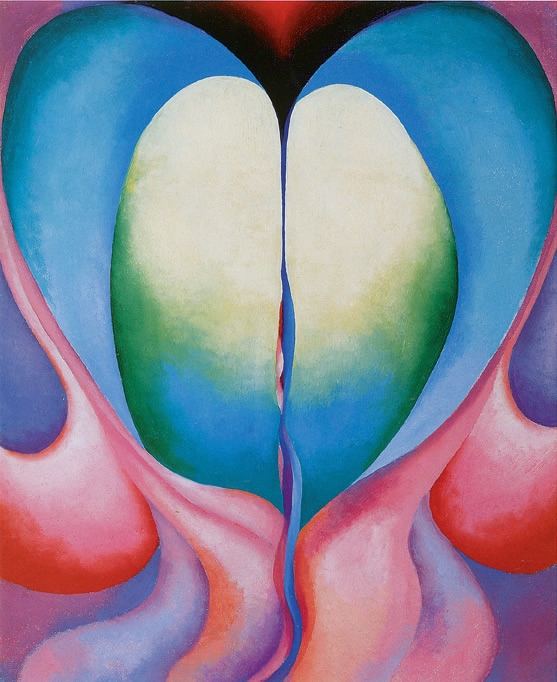
Every Known Work by Georgia O’Keeffe Has Been Digitized and Made Available Online

Upon hear­ing the names of Arthur Dove or Mars­den Hart­ley, the sat­u­rat­ed col­ors and organ­i­cal­ly askew lines of those painters’ land­scapes may appear before your mind’s eye. But unless you have a spe­cial inter­est in Amer­i­can mod­ernists of the ear­ly twen­ti­eth cen­tu­ry, they prob­a­bly don’t. The name Geor­gia O’Ke­effe, by con­trast, can hard­ly fail to bring a few images even to the mind of the strict­ly casu­al art appre­ci­a­tor: New Mex­i­can mesas, ani­mal skulls, and above all flow­ers in extreme close-up. Apart from the artis­tic skill and dis­tinc­tive vision with which she cre­at­ed it, O’Ke­ef­fe’s work per­sists in the wider cul­ture because of how well it hap­pens to repro­duce in a vari­ety of con­texts, includ­ing post­cards, mugs, and even appar­el, such as that sold at her epony­mous muse­um in San­ta Fe.

Keep­ing such prod­ucts around is, of course, no sub­sti­tute for see­ing the real thing; in their phys­i­cal real­i­ty, O’Ke­ef­fe’s paint­ings have a way of rebuff­ing all the inter­pre­ta­tions with which they’ve been freight­ed for more than a cen­tu­ry now. If you can’t make it out to New Mex­i­co, the Geor­gia O’Ke­effe Muse­um has been work­ing to make every sin­gle one of her pieces (includ­ing sculp­tures and pho­tographs) avail­able for view­ing online at a just-launched por­tal called Access O’Ke­effe.

The muse­um describes it as a “user-friend­ly, search­able web­site with high-res­o­lu­tion images, visu­al descrip­tions, exhi­bi­tion his­to­ries, archival mate­ri­als, and research data asso­ci­at­ed with the artist’s two-vol­ume cat­a­logue raison­né.” The site’s vis­i­tors “can browse by col­or, shape, or medi­um, explore the con­text of works cre­at­ed before and after a spe­cif­ic paint­ing, trace his­toric exhi­bi­tions, cre­ate lists of favorites, and down­load images.”

Access O’Ke­effe makes it easy to find the artist’s most famous paint­ings, but also works that may sur­prise view­ers who only know her mesas, skulls, and flow­ers. Take, for exam­ple, such noc­tur­nal­ly themed can­vas­es as her ear­ly Starlight Night, from 1917, or her late Unti­tled (City Night), from the nine­teen-sev­en­ties. O’Ke­ef­fe’s Amer­i­ca, we must remem­ber, isn’t lim­it­ed to the desert: though she did spend most of her near­ly cen­tu­ry-long life’s sec­ond half in New Mex­i­co, it also took her from Wis­con­sin to Vir­ginia to Texas to New York, with stints in South Car­oli­na and Hawaii. Giv­en the impor­tance of under­stand­ing any artist’s con­texts both geo­graph­i­cal and social, Access O’Ke­effe also pro­vides an archive of arti­facts and exhi­bi­tions relat­ed to the peo­ple and orga­ni­za­tions asso­ci­at­ed with her — Arthur Dove and Mars­den Hart­ley includ­ed.

Relat­ed con­tent:

Geor­gia O’Keeffe: A Life in Art, a Short Doc­u­men­tary on the Painter Nar­rat­ed by Gene Hack­man

How Geor­gia O’Keeffe Became Geor­gia O’Keeffe: An Ani­mat­ed Video Tells the Sto­ry

An Intro­duc­tion to the Paint­ing That Changed Geor­gia O’Keeffe’s Career: Ram’s Head, White Hol­ly­hock-Hills

The Real Geor­gia O’Keeffe: The Artist Reveals Her­self in Vin­tage Doc­u­men­tary Clips

Recipes from the Kitchen of Geor­gia O’Keeffe

Alfred Stieglitz: The Elo­quent Eye, a Reveal­ing Look at “The Father of Mod­ern Pho­tog­ra­phy”

Based in Seoul, Col­in Marshall writes and broad­casts on cities, lan­guage, and cul­ture. He’s the author of the newslet­ter Books on Cities as well as the books 한국 요약 금지 (No Sum­ma­riz­ing Korea) and Kore­an Newtro. Fol­low him on the social net­work for­mer­ly known as Twit­ter at @colinmarshall.

The Met Releases High-Definition 3D Scans of 140 Famous Art Objects: Sarcophagi, Van Gogh Paintings, Marble Sculptures & More

We can go through most of our lives hold­ing out hope of one day see­ing in real­i­ty such works as van Gogh’s Sun­flow­ersMon­et’s Haystacks, a clay tablet con­tain­ing actu­al cuneiform writ­ing with our own eyes, or the ancient Egypt­ian Tem­ple of Den­dur. We can actu­al­ly come face to face — or rather, face to sur­face — with all of them, tem­ple includ­ed, at New York’s Met­ro­pol­i­tan Muse­um of Art, which con­tains all those and more arti­facts of human civ­i­liza­tion than any of us could hope to exam­ine close­ly in a life­time. But even if we did, we might only feel tempt­ed to look at them more close­ly still, even to touch them. That may be an improb­a­ble hope, but we can at least get clos­er than ever now thanks to the Met’s new archive of high-def­i­n­i­tion 3D scans.

“View­ers can zoom in, rotate, and exam­ine each mod­el, bring­ing unprece­dent­ed access to sig­nif­i­cant works of art,” says the Met’s offi­cial announce­ment. “The 3D mod­els can also be explored in view­ers’ own spaces through aug­ment­ed real­i­ty (AR) on most smart­phone and VR head­sets, as a resource for research, explo­ration, and curios­i­ty.”

High­lights include “a mar­ble sar­coph­a­gus with lions felling ante­lope (3rd cen­tu­ry); a stat­ue of Horus as a fal­con pro­tect­ing King Nectanebo II (360–343 BCE); Kano Sansetsu’s Old Plum (1646); and a house mod­el by Nayarit artist(s) (200 BCE–300 CE).” Or per­haps you’d pre­fer an inti­mate view of an eigh­teenth-cen­tu­ry tile depic­tion of Mec­ca, a nine­teenth-cen­tu­ry mar­ble sculp­ture of Perseus with the head of Medusa, or a suit of armor belong­ing to King Hen­ry II of France?

Brows­ing this archive of more than 100 dig­i­tized his­tor­i­cal objects, you’ll also notice pieces from Japan like sev­en­teenth-cen­tu­ry screens by the artists Kano Sanset­su and Suzu­ki Kiit­su. These must have been pri­or­i­ties for the Met’s insti­tu­tion­al part­ner in this project, the Japan­ese tele­vi­sion net­work NHK. It all came about “as part of the pub­lic broadcaster’s ini­tia­tive to pro­duce ultra-high def­i­n­i­tion 3D com­put­er graph­ics of nation­al trea­sures and oth­er impor­tant art­works,” with “fur­ther edu­ca­tion­al pro­gram­ming and poten­tial con­tent using these cut­ting-edge, best-in-class mod­els” in the off­ing. For now, though, the archive offers us more than enough to behold from any pos­si­ble angle. To do so, just click the “View in 3D” but­ton below the image on the page of your arti­fact or art­work of choice. It may not be the same as hold­ing the object in your hands, but it’s as close as you’re going to get — unless, of course, you find your­self inspired to pur­sue the dream of becom­ing a cura­tor at the Met.

via Colos­sal

Relat­ed con­tent:

Take a New Vir­tu­al Real­i­ty Tour of the Met­ro­pol­i­tan Muse­um of Art

See Vermeer’s Girl with a Pearl Ear­ring in 3D in a New 108-Gigapix­el Scan

3D Scans of 7,500 Famous Sculp­tures, Stat­ues & Art­works: Down­load & 3D Print Rodin’s Thinker, Michelangelo’s David & More

Explore Metic­u­lous 3D Mod­els of Endan­gered His­tor­i­cal Sites in Google’s “Open Her­itage” Project

Open­Ver­te­brate Presents a Mas­sive Data­base of 13,000 3D Scans of Ver­te­brate Spec­i­mens

The Earth Archive Will 3D-Scan the Entire World & Cre­ate an “Open-Source” Record of Our Plan­et

Based in Seoul, Col­in Marshall writes and broad­casts on cities, lan­guage, and cul­ture. He’s the author of the newslet­ter Books on Cities as well as the books 한국 요약 금지 (No Sum­ma­riz­ing Korea) and Kore­an Newtro. Fol­low him on the social net­work for­mer­ly known as Twit­ter at @colinmarshall.

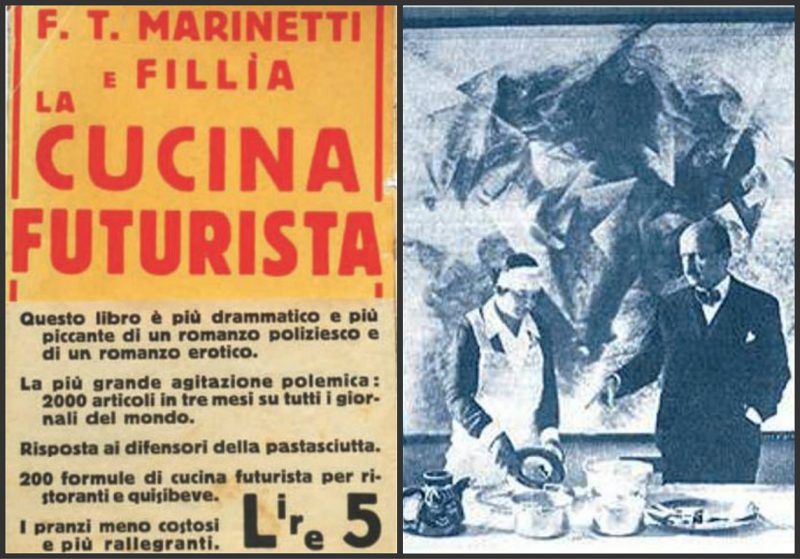
The Futurist Cookbook (1930) Tried to Turn Italian Cuisine into Modern Art

With the sav­age cuts in arts fund­ing, per­haps we’ll return to a sys­tem of noblesse oblige famil­iar to stu­dents of The Gild­ed Age, when artists need­ed inde­pen­dent wealth or patron­age, and wealthy indus­tri­al­ists often decid­ed what was art, and what wasn’t. Unlike fine art, how­ev­er, haute cui­sine has always relied on the patron­age of wealthy donors—or din­ers. It can be mar­ket­ed in pre­made pieces, sold in cook­books, and made to look easy on TV, but for rea­sons both cul­tur­al and prac­ti­cal, giv­en the nature of food, an exquis­ite­ly-pre­pared dish can only be made acces­si­ble to a select few.

Still, we would be mis­tak­en, sug­gest­ed Futur­ist poet and the­o­rist F.T. Marinet­ti (1876–1944), should we neglect to see cook­ing as an art form akin to all the oth­ers in its moral and intel­lec­tu­al influ­ence on us. While hard­ly the first or the last artist to pub­lish a cook­book, Marinetti’s Futur­ist Cook­book seems at first glance dead­ly, even aggres­sive­ly, seri­ous, lack­ing the whim­sy, imprac­ti­cal weird­ness, and sur­re­al­ist art of Sal­vador Dali’s Les Din­ers de Gala, for exam­ple, or the eclec­tic wist­ful­ness of the MoMA’s Artist’s Cook­book.

Just as he had sought with his ear­li­er Futur­ist Man­i­festo to rev­o­lu­tion­ize art, Marinet­ti intend­ed his cook­book to foment a “rev­o­lu­tion of cui­sine,” as Alex Rev­el­li Sori­ni and Susan­na Cuti­ni point out. You might even call it an act of war when it came to cer­tain sta­ples of Ital­ian eat­ing, like pas­ta, which he thought respon­si­ble for “slug­gish­ness, pes­simism, nos­tal­gic inac­tiv­i­ty, and neu­tral­ism” (antic­i­pat­ing scads of low and no-carb diets to come).

Believ­ing that peo­ple “think, dream and act accord­ing to what they eat and drink,” Marinet­ti for­mu­lat­ed strict rules not only for the prepa­ra­tion of food, but also the serv­ing and eat­ing of it, going so far as to call for abol­ish­ing the knife and fork. A short excerpt from his intro­duc­tion shows him apply­ing to food the tech­no-roman­ti­cism of his Futur­ist theory—an ethos tak­en up by Ben­i­to Mus­soli­ni, whom Marinet­ti sup­port­ed:

The Futur­ist culi­nary rev­o­lu­tion … has the lofty, noble and uni­ver­sal­ly expe­di­ent aim of chang­ing rad­i­cal­ly the eat­ing habits of our race, strength­en­ing it, dynamiz­ing it and spir­i­tu­al­iz­ing it with brand-new food com­bi­na­tions in which exper­i­ment, intel­li­gence and imag­i­na­tion will eco­nom­i­cal­ly take the place of quan­ti­ty, banal­i­ty, rep­e­ti­tion and expense.

In hind­sight, the fas­cist over­tones in Marinetti’s lan­guage seem glar­ing. In 1932, when the Futur­ist Cook­book was pub­lished, his Futur­ism seemed like a much-need­ed “jolt to all the prac­ti­cal and intel­lec­tu­al activ­i­ties,” note Sori­ni and Cuti­ni.  “The sub­ject [of cook­ing] need­ed a good shake to reawak­en its spir­it.” And that’s just what it got. The Futur­ist Cook­book act­ed as “a pre­view of Ital­ian-style Nou­velle Cui­sine,” with such inno­va­tions as “addi­tives and preser­v­a­tives added to food, or using tech­no­log­i­cal tools in the kitchen to mince, pul­ver­ize, and emul­si­fy.”

Yet, for all the high seri­ous­ness with which Marinet­ti seems to treat his sub­ject, “what the media missed” at the time, writes Maria Popo­va, “was that the cook­book was arguably the great­est artis­tic prank of the twen­ti­eth cen­tu­ry.” In an intro­duc­tion to the 1989 edi­tion, British jour­nal­ist and his­to­ri­an Les­ley Cham­ber­lain called the Futur­ist Cook­book “a seri­ous joke, rev­o­lu­tion­ary in the first instance because it over­turned with rib­ald laugh­ter every­thing ‘food’ and ‘cook­books’ held sacred.” Marinet­ti first swept away tra­di­tion in favor of cre­ative din­ing events the Futur­ists called “aer­oban­quets,” such as one in Bologna in 1931 with a table shaped like an air­plane and dish­es called “spicy air­port” (Olivi­er sal­ad) and “ris­ing thun­der” (orange risot­to). Lam­br­us­co wine was served in gas cans.

It’s per­for­mance art wor­thy of Dal­i’s bizarre cos­tumed din­ner par­ties, but fueled by a gen­uine desire to rev­o­lu­tion­ize food, if not the actu­al eat­ing of it, by “bring­ing togeth­er ele­ments sep­a­rat­ed by bias­es that have no true foun­da­tion.” So remarked French chef Jules Main­cave, a 1914 con­vert to Futur­ism and inspi­ra­tion for what Marinet­ti calls “flex­i­ble fla­vor­ful com­bi­na­tions.” See sev­er­al such recipes excerpt­ed from the Futur­ist Cook­book at Brain Pick­ings, read the full book in Ital­ian here, and, just below, see Marinetti’s rules for the per­fect meal, first pub­lished in 1930 as the “Man­i­festo of Futur­ist Cui­sine.”

Futur­ist cui­sine and rules for the per­fect lunch

1. An orig­i­nal har­mo­ny of the table (crys­tal ware, crock­ery and glass­ware, dec­o­ra­tion) with the fla­vors and col­ors of the dish­es.

2. Utter orig­i­nal­i­ty in the dish­es.

3. The inven­tion of flex­i­ble fla­vor­ful com­bi­na­tions (edi­ble plas­tic com­plex), whose orig­i­nal har­mo­ny of form and col­or feeds the eyes and awak­ens the imag­i­na­tion before tempt­ing the lips.

4. The abo­li­tion of knife and fork in favor of flex­i­ble com­bi­na­tions that can deliv­er prelabi­al tac­tile enjoy­ment.

5. The use of the art of per­fumery to enhance taste. Each dish must be pre­ced­ed by a per­fume that will be removed from the table using fans.

6. A lim­it­ed use of music in the inter­vals between one dish and the next, so as not to dis­tract the sen­si­tiv­i­ty of the tongue and the palate and serves to elim­i­nate the fla­vor enjoyed, restor­ing a clean slate for tast­ing.

7. Abo­li­tion of ora­to­ry and pol­i­tics at the table.

8. Mea­sured use of poet­ry and music as unex­pect­ed ingre­di­ents to awak­en the fla­vors of a giv­en dish with their sen­su­al inten­si­ty.

9. Rapid pre­sen­ta­tion between one dish and the next, before the nos­trils and the eyes of the din­ner guests, of the few dish­es that they will eat, and oth­ers that they will not, to facil­i­tate curios­i­ty, sur­prise, and imag­i­na­tion.

10. The cre­ation of simul­ta­ne­ous and chang­ing morsels that con­tain ten, twen­ty fla­vors to be tast­ed in a few moments. These morsels will also serve the ana­log func­tion […] of sum­ma­riz­ing an entire area of life, the course of a love affair, or an entire voy­age to the Far East.

11. A sup­ply of sci­en­tif­ic tools in the kitchen: ozone machines that will impart the scent of ozone to liq­uids and dish­es; lamps to emit ultra­vi­o­let rays; elec­trolyz­ers to decom­pose extract­ed juices etc. in order to use a known prod­uct to achieve a new prod­uct with new prop­er­ties; col­loidal mills that can be used to pul­ver­ize flours, dried fruit and nuts, spices, etc.; dis­till­ing devices using ordi­nary pres­sure or a vac­u­um, cen­trifuge auto­claves, dial­y­sis machines.

The use of this equip­ment must be sci­en­tif­ic, avoid­ing the error of allow­ing dish­es to cook in steam pres­sure cook­ers, which leads to the destruc­tion of active sub­stances (vit­a­mins, etc.) due to the high tem­per­a­tures. Chem­i­cal indi­ca­tors will check if the sauce is acidic or basic and will serve to cor­rect any errors that may occur: lack of salt, too much vine­gar, too much pep­per, too sweet.”

Note: An ear­li­er ver­sion of this post appeared on our site in 2017.

Relat­ed Con­tent

When Ital­ian Futur­ists Declared War on Pas­ta (1930)

Sal­vador Dalí’s 1973 Cook­book Gets Reis­sued: Sur­re­al­ist Art Meets Haute Cui­sine

MoMA’s Artists’ Cook­book (1978) Reveals the Meals of Sal­vador Dalí, Willem de Koon­ing, Andy Warhol, Louise Bour­geois & More

The Artists’ and Writ­ers’ Cook­book Col­lects Recipes From T.C. Boyle, Mari­na Abramović, Neil Gaiman, Joyce Car­ol Oates & More

Josh Jones is a writer and musi­cian based in Durham, NC. 

by | Permalink | Make a Comment ( 1 ) |

Roman Statues Weren’t White; They Were Once Painted in Vivid, Bright Colors

The idea of the clas­si­cal period—the time of ancient Greece and Rome—as an ele­gant­ly uni­fied col­lec­tion of supe­ri­or aes­thet­ic and philo­soph­i­cal cul­tur­al traits has its own his­to­ry, one that comes in large part from the era of the Neo­clas­si­cal. The redis­cov­ery of antiq­ui­ty took some time to reach the pitch it would dur­ing the 18th cen­tu­ry, when ref­er­ences to Greek and Latin rhetoric, archi­tec­ture, and sculp­ture were inescapable. But from the Renais­sance onward, the clas­si­cal achieved the sta­tus of cul­tur­al dog­ma.

One tenet of clas­si­cal ide­al­ism is the idea that Roman and Greek stat­u­ary embod­ied an ide­al of pure whiteness—a mis­con­cep­tion mod­ern sculp­tors per­pet­u­at­ed for hun­dreds of years by mak­ing busts and stat­ues in pol­ished white mar­ble. But the truth is that both Greek stat­ues and their Roman counterparts—as you’ll learn in the Vox video above—were orig­i­nal­ly bright­ly paint­ed in riotous col­or.

This includes the 1st cen­tu­ry A.D. Augus­tus of Pri­ma Por­ta, the famous fig­ure of the Emper­or stand­ing tri­umphant­ly with one hand raised. Rather than left as blank white mar­ble, the stat­ue would have had bronzed skin, brown hair, and a fire-engine red toga. “Ancient Greece and Rome were real­ly col­or­ful,” we learn. So how did every­one come to believe oth­er­wise?

It’s part­ly an hon­est mis­take. After the fall of Rome, ancient sculp­tures were buried or left out in the open air for hun­dreds of years. By the time the Renais­sance began in the 1300s, their paint had fad­ed away. As a result, the artists unearthing, and copy­ing ancient art didn’t real­ize how col­or­ful it was sup­posed to be.

But white mar­ble couldn’t have become the norm with­out some will­ful igno­rance. Even though there was a bunch of evi­dence that ancient sculp­ture was paint­ed, artists, art his­to­ri­ans and the gen­er­al pub­lic chose to dis­re­gard it. West­ern cul­ture seemed to col­lec­tive­ly accept that white mar­ble was sim­ply pret­ti­er.

White stat­u­ary sym­bol­ized a clas­si­cal ide­al that “depends high­ly on the great­est pos­si­ble decon­tex­tu­al­iza­tion,” writes James I. Porter, pro­fes­sor of Rhetoric and Clas­sics at the Uni­ver­si­ty of Cal­i­for­nia, Berke­ley. “Only so can the val­ues it cher­ish­es be iso­lat­ed: sim­plic­i­ty, tran­quil­i­ty, bal­anced pro­por­tions, restraint, puri­ty of form… all of these are fea­tures that under­score the time­less qual­i­ty of the high­est pos­si­ble expres­sion of art, like a breath held indef­i­nite­ly.” These ideals became insep­a­ra­ble from the devel­op­ment of racial the­o­ry.

Learn­ing to see the past as it was requires us to put aside his­tor­i­cal­ly acquired blind­ers. This can be exceed­ing­ly dif­fi­cult when our ideas about the past come from hun­dreds of years of inher­it­ed tra­di­tion, from every peri­od of art his­to­ry since the time of Michelan­ge­lo. But we must acknowl­edge this tra­di­tion as fab­ri­cat­ed. Influ­en­tial art his­to­ri­an Johann Joachim Winck­el­mann, for exam­ple, extolled the val­ue of clas­si­cal sculp­ture because, in his opin­ion, “the whiter the body is, the more beau­ti­ful it is.”

Winck­el­mann also, Vox notes, “went out of his way to ignore obvi­ous evi­dence of col­ored mar­ble, and there was a lot of it.” He dis­missed fres­coes of col­ored stat­u­ary found in Pom­peii and judged one paint­ed sculp­ture dis­cov­ered there as “too prim­i­tive” to have been made by ancient Romans. “Evi­dence wasn’t just ignored, some of it may have been destroyed” to enforce an ide­al of white­ness. While many stat­ues were denud­ed by the ele­ments over hun­dreds of years, the first archae­ol­o­gists to dis­cov­er the Augus­tus of Pri­ma Por­ta in the 1860s described its col­or scheme in detail.

Cri­tiques of clas­si­cal ide­al­ism don’t orig­i­nate in a polit­i­cal­ly cor­rect present. As Porter shows at length in his arti­cle “What Is ‘Clas­si­cal’ About Clas­si­cal Antiq­ui­ty?,” they date back at least to 19th cen­tu­ry philoso­pher Lud­wig Feuer­bach, who called Winckelmann’s ideas about Roman stat­ues “an emp­ty fig­ment of the imag­i­na­tion.” But these ideas are “for the most part tak­en for grant­ed rather than ques­tioned,” Porter argues, “or else clung to for fear of los­ing a pow­er­ful cachet that, even in the belea­guered present, con­tin­ues to trans­late into cul­tur­al pres­tige, author­i­ty, elit­ist sat­is­fac­tions, and eco­nom­ic pow­er.”

Note: An ear­li­er ver­sion of this post appeared on our site in 2019.

Relat­ed Con­tent:

Why Most Ancient Civ­i­liza­tions Had No Word for the Col­or Blue

Why Ancient Romans Paid a For­tune for the Col­or Pur­ple — More Than Even Sil­ver

How Ancient Greek Stat­ues Real­ly Looked: Reseasrch Reveals Their Bold, Bright Col­ors and Pat­terns

The Met Dig­i­tal­ly Restores the Col­ors of an Ancient Egypt­ian Tem­ple, Using Pro­jec­tion Map­ping Tech­nol­o­gy

Watch Art on Ancient Greek Vas­es Come to Life with 21st Cen­tu­ry Ani­ma­tion

Josh Jones is a writer and musi­cian based in Durham, NC. 

Download 60,000 Works of Art from the National Gallery, Including Masterpieces by Van Gogh, Gauguin, Rembrandt & More

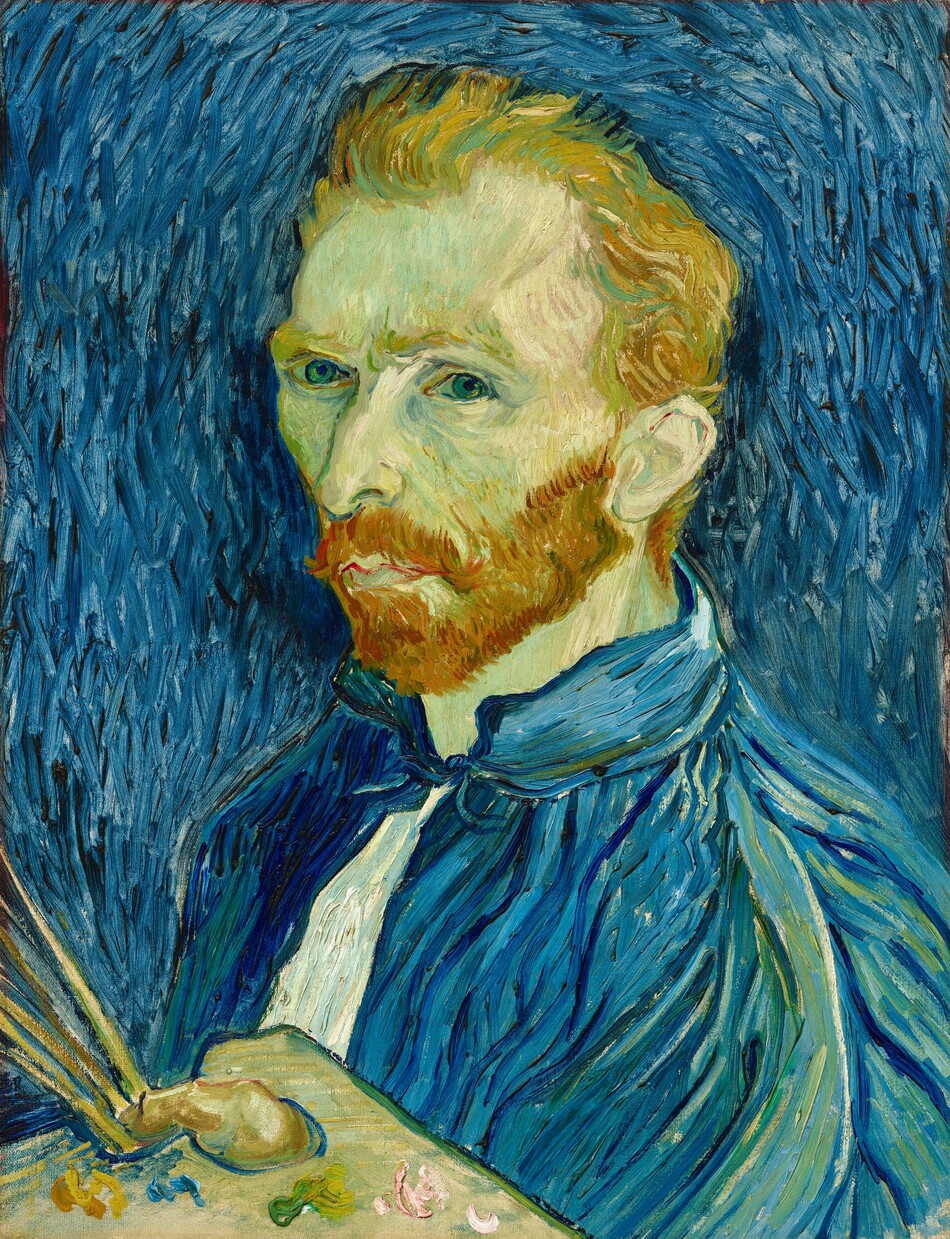
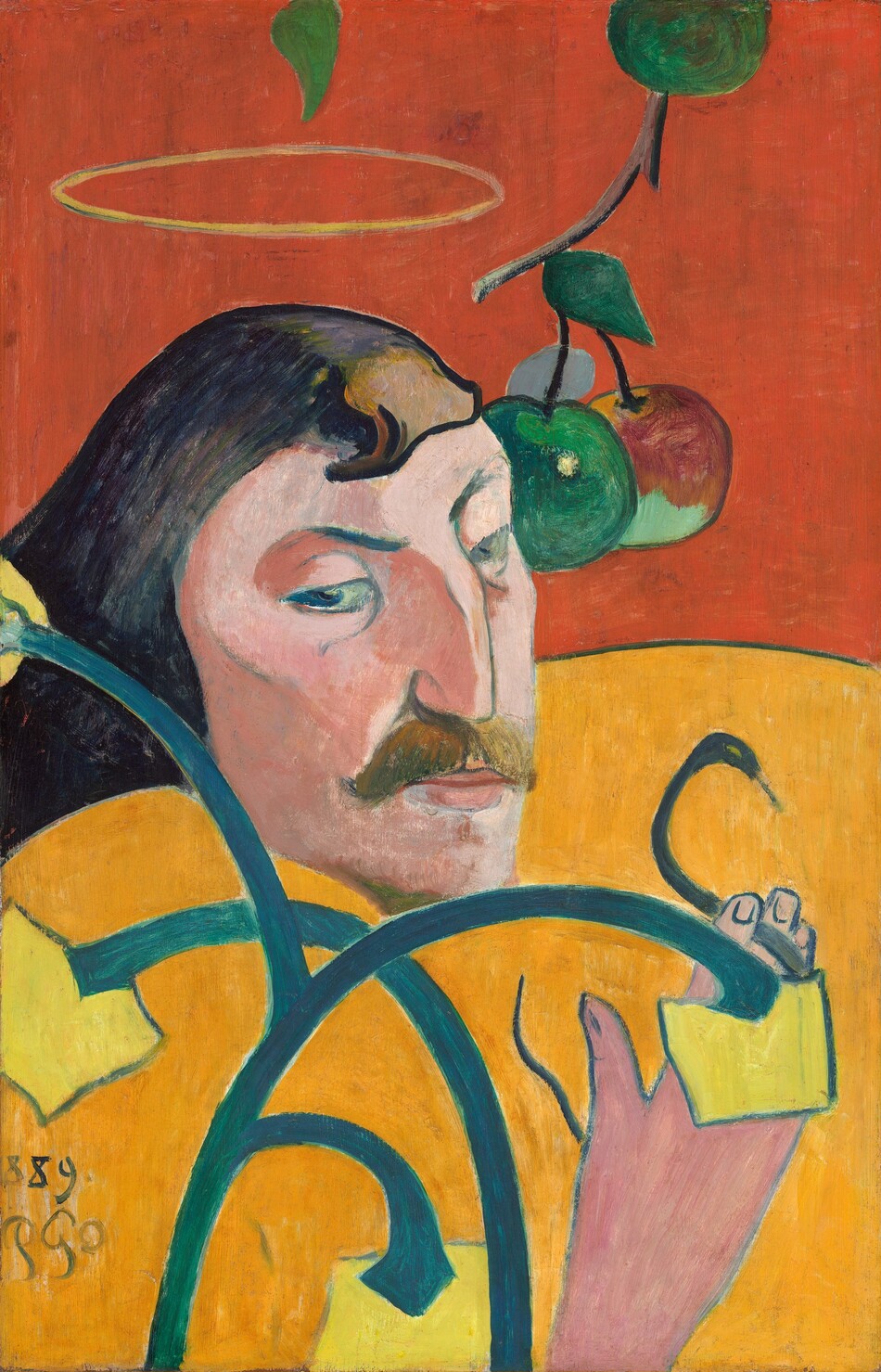
As a young ama­teur painter and future art school dropout, I fre­quent­ly found myself haunt­ed by the faces of two artists, that famous­ly odd cou­ple from my favorite art his­to­ry novelization—and Kirk Dou­glas role and Iggy Pop song—Lust for Life. Vin­cent van Gogh and Paul Gau­guin, above and below respec­tive­ly, the tor­ment­ed Dutch fanat­ic and burly French bully—how, I still won­der, could such a pair have ever co-exist­ed, how­ev­er briefly? How could such beau­ti­ful­ly skewed visions of life have exist­ed at all?

Van Gogh and Gauguin’s sev­er­al self-por­traits still inspire won­der. My younger self had the lux­u­ry of see­ing these par­tic­u­lar two up close and in per­son at the Nation­al Gallery of Art in Wash­ing­ton, DC: Van Gogh’s gaunt and pierc­ing vis­age, Gauguin’s sneer­ing self-par­o­dy.

Now, thanks to the won­ders of dig­i­tal tech­nol­o­gy, my old­er self, and yours, can view and down­load high-res­o­lu­tion pho­tos of both paint­ings, and over 60,000 more from the museum’s vast hold­ings, through NGA Images, “a repos­i­to­ry of dig­i­tal images of the col­lec­tions of the Nation­al Gallery of Art.”

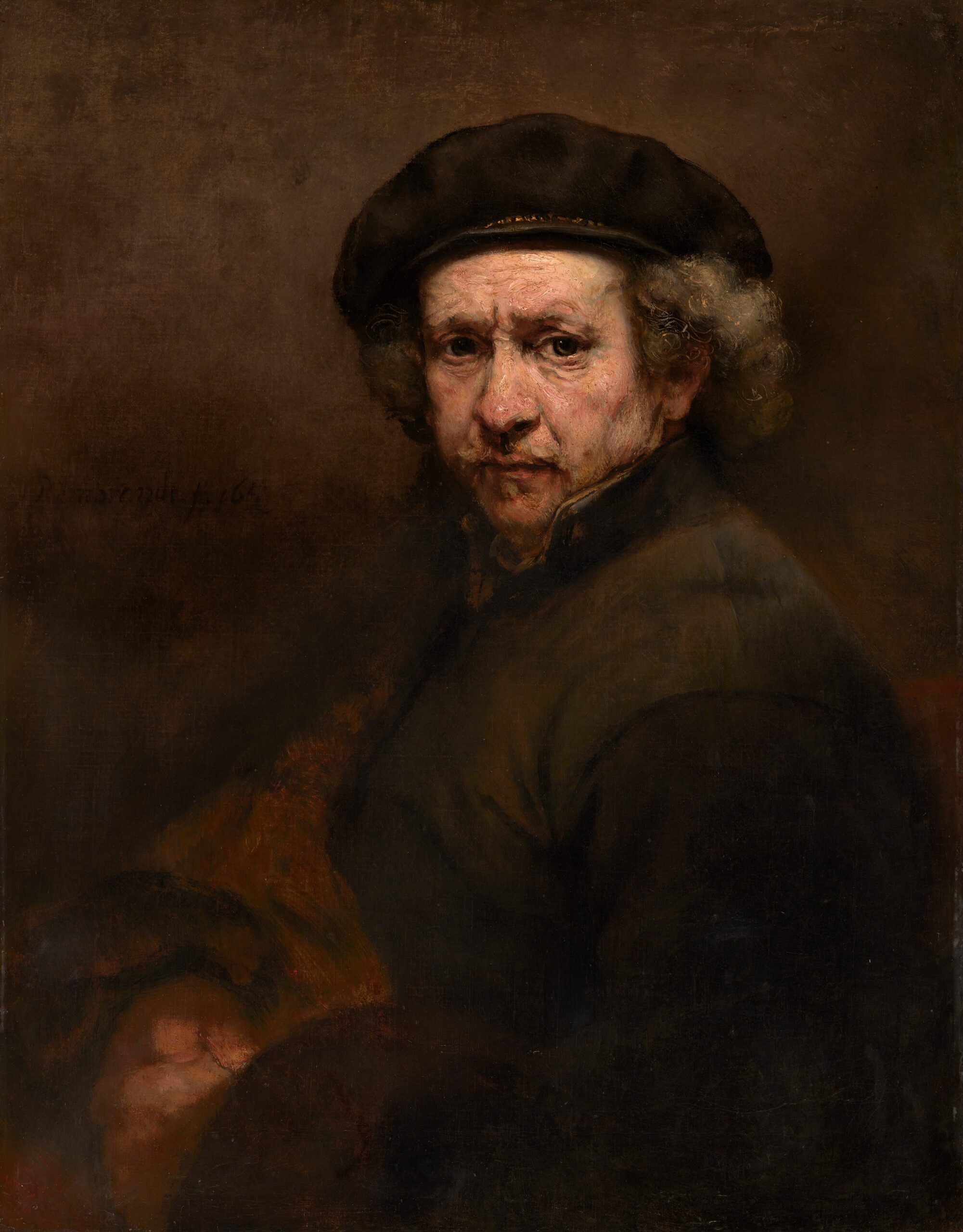
There you’ll find works by anoth­er obses­sive Dutch self-por­traitist, Rem­brandt van Rijn, such as the lush 1659 paint­ing below. You’ll find paint­ings from the heroes of the var­i­ous Renais­sances and French Impres­sion­ism, from move­ments mod­ern and colo­nial, pas­toral and urban. The col­lec­tion is dizzy­ing, and a lover of art could eas­i­ly lose hours sort­ing through it, sav­ing “open access dig­i­tal images up to 3000 pix­els each […] avail­able free of charge for down­load and use.” The pur­pose of NGA Images is “to facil­i­tate learn­ing, enrich­ment, enjoy­ment, and explo­ration,” and there’s no doubt that it sat­is­fies all of those goals and then some.

Browse the var­i­ous col­lec­tions, includ­ing one devot­ed to self-por­traits. Con­duct advanced search­es, if you have more knowl­edge of the Gallery’s many trea­sures. You are the cura­tor! And the lucky ben­e­fi­cia­ry of the Nation­al Gallery’s benef­i­cence. While I can tell you from expe­ri­ence that it’s noth­ing like stand­ing face to face with these paint­ings in their in-real-life dimen­sions, tex­tures, lines, and colors—despite the throngs of dis­in­ter­est­ed tourists—it’s at least a close sec­ond. And for stu­dents and edu­ca­tors of the visu­al arts, NGA Images offers an oppor­tu­ni­ty like no oth­er to view and share great works of art often hid­den away from even the museum’s vis­i­tors. Enter the col­lec­tion here.

Note: An ear­li­er ver­sion of this post appeared on our site in 2014.

If you would like to sign up for Open Culture’s free email newslet­ter, please find it here. It’s a great way to see our new posts, all bun­dled in one email, each day.

If you would like to sup­port the mis­sion of Open Cul­ture, con­sid­er mak­ing a dona­tion to our site. It’s hard to rely 100% on ads, and your con­tri­bu­tions will help us con­tin­ue pro­vid­ing the best free cul­tur­al and edu­ca­tion­al mate­ri­als to learn­ers every­where. You can con­tribute through Pay­Pal, Patre­on, and Ven­mo (@openculture). Thanks!

Relat­ed Con­tent:

Down­load 1,600+ Pub­li­ca­tions from the Met­ro­pol­i­tan Muse­um of Art: Books, Guides, Mag­a­zines & More

The Met­ro­pol­i­tan Muse­um of Art Puts 490,000 High-Res Images Online & Makes Them Free to Use

The Louvre’s Entire Col­lec­tion Goes Online: View and Down­load 480,00 Works of Art

The Get­ty Makes Near­ly 88,000 Art Images Free to Use How­ev­er You Like

Down­load 100,000 Free Art Images in High-Res­o­lu­tion from The Get­ty

Josh Jones is a writer and musi­cian based in Durham, NC. 

Behold the First Realistic Depiction of the Human Face (Circa 25,000 BCE)

?si=HOvgnTtB4xSNqpNE

In 1894, archae­ol­o­gist Édouard Piette dis­cov­ered the “Venus of Brassem­pouy,” oth­er­wise known as the “Lady with the Hood.” Unearthed in south­west­ern France and dat­ing to around 25,000 BCE, this carv­ing rep­re­sents the ear­li­est real­is­tic depic­tion of a human face. The figure’s fore­head, nose, and brows are care­ful­ly carved in relief, as is the hair, arranged in a neat geo­met­ric pat­tern. But what hap­pened to the mouth? Or the eyes? We’re not sure.

The Venus is carved from mam­moth ivory, like­ly using a stone flint, and stands just 3.65 cm tall. For some, it marks a major devel­op­ment in fig­u­ra­tive art. Or, as his­to­ri­an Simon Schama has sug­gest­ed, this fig­urine may well be the “dawn of the idea of beau­ty” in human cul­ture.

Relat­ed Con­tent 

The World’s Old­est Cave Art, Dis­cov­ered in Indone­sia, Is at Least 67,800 Years Old

Alger­ian Cave Paint­ings Sug­gest Humans Did Mag­ic Mush­rooms 9,000 Years Ago

Was a 32,000-Year-Old Cave Paint­ing the Ear­li­est Form of Cin­e­ma?

A Styl­ish 2,000-Year-Old Roman Shoe Found in a Well

Exquis­ite 2300-Year-Old Scythi­an Woman’s Boot Pre­served in the Frozen Ground of Siberia

by | Permalink | Make a Comment ( 1 ) |

More in this category... »
Quantcast