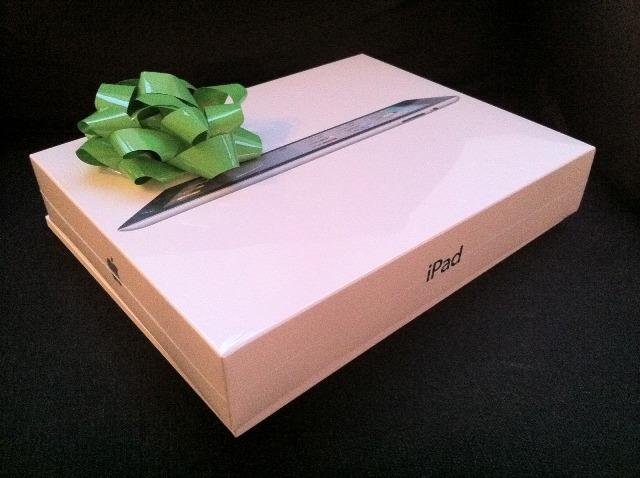
Santa left a new Kindle, iPad, Kindle Fire or other media player under your tree. He did his job. Now we’ll do ours. We’ll tell you how to fill those devices with free intelligent media — great books, movies, courses, and all of the rest. And if you didn’t get a new gadget, fear not. You can access all of these materials right on a computer. Here we go:
Free eBooks: You have always wanted to read the great works. And now is your chance. When you dive into our Free eBooks collection you will find 800 great works by some classic writers (Dickens, Dostoevsky, Austen, Shakespeare and Tolstoy) and contemporary writers (Philip K. Dick, Isaac Asimov, and Kurt Vonnegut). The collection also gives you access to the 51-volume Harvard Classics.
If you’re an iPad/iPhone user, the download process is super easy. Just click the “iPad/iPhone” links and you’re good to go. Kindle and Nook users will generally want to click the “Kindle + Other Formats links” to download ebook files, but we’d suggest watching these instructional videos (Kindle – Nook) beforehand.
Free Audio Books: What better way to spend your free time than listening to some of the greatest books ever written? This page contains a vast number of free audio books — 700 works in total — including texts by Arthur Conan Doyle, James Joyce, Jane Austen, Edgar Allan Poe, George Orwell and more recent writers — Italo Calvino, Vladimir Nabokov, Raymond Carver, etc. You can download these classic books straight to your gadgets, then listen as you go.
[Note: If you’re looking for a contemporary book, you can download one free audio book from Audible.com. Find details on Audible’s no-strings-attached deal here.]
Free Online Courses: This list brings together over 1150 free online courses from leading universities, including Stanford, Yale, MIT, UC Berkeley, Oxford and beyond.
These full-fledged courses range across all disciplines — history, physics, philosophy, psychology, business, and beyond. Most all of these courses are available in audio, and roughly 75% are available in video. You can’t receive credits or certificates for these courses (click here for courses that do offer certificates). But the amount of personal enrichment you will derive is immeasurable.
Free Movies: With a click of a mouse, or a tap of your touch screen, you will have access to 725 great movies. The collection hosts many classics, westerns, indies, documentaries, silent films and film noir favorites. It features work by some of our great directors (Alfred Hitchcock, Orson Welles, Andrei Tarkovsky and more) and performances by cinema legends: John Wayne, Jack Nicholson, Audrey Hepburn, Charlie Chaplin, and beyond. On this one page, you will find thousands of hours of cinema bliss.
Free Language Lessons: Perhaps learning a new language is high on your list of New Year’s resolutions. Well, here is a great way to do it. Take your pick of 46 languages, including Spanish, French, Italian, Mandarin, English, Russian, Dutch, even Finnish, Yiddish and Esperanto. These lessons are all free and ready to download.
Free Textbooks: And one last item for the lifelong learners among you. We have scoured the web and pulled together a list of 200 Free Textbooks. It’s a great resource particularly if you’re looking to learn math, computer science or physics on your own. There might be a diamond in the rough here for you.
Thank Santa, maybe thank us, and enjoy that new device.…
If you would like to support the mission of Open Culture, consider making a donation to our site. It’s hard to rely 100% on ads, and your contributions will help us continue providing the best free cultural and educational materials to learners everywhere. You can contribute through PayPal, Patreon, and Venmo (@openculture). Thanks!
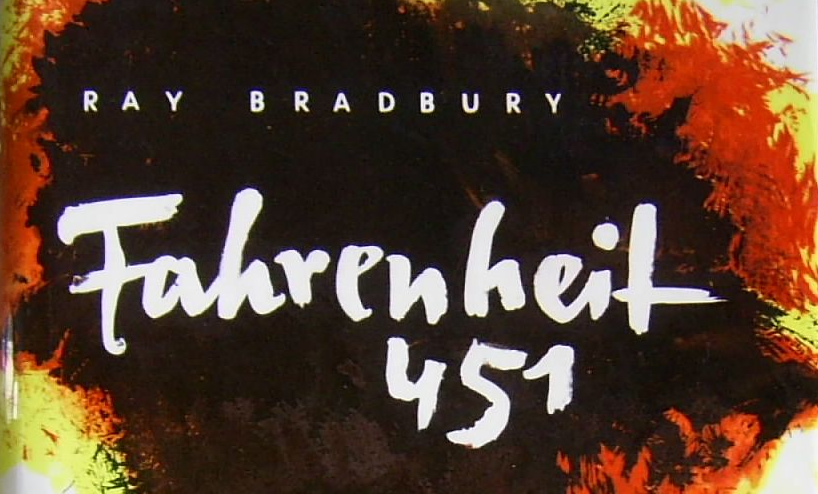
Last week we featured a list of 100 novels all kids should read before graduating from high school. Chosen by 500 English teachers from all over Britain, the list happens to have a lot of overlap with many others like it. Invariably, these kinds of young adult reading lists include Ray Bradbury’s novel of dystopian censorship and anti-intellectualism, Fahrenheit 451. Why, I’ve always wondered, should this novel be pitched almost exclusively at teenagers, so much so that it seems like one of those books many of us read in high school, then never read again, even if we are fans of Bradbury’s work?
A strange disconnect emerges when we look at the history of Bradbury’s novel as a teaching tool. Although most high school students are presented with freethinking as an ideal, and given cautionary tales of its suppression, their own educations are just as often highly circumscribed by adults who fret about the effects of various bad influences.
Whether, as a student, you read the bowdlerized or the “adult” version of Bradbury’s novel, perhaps it’s time to revisit Fahrenheit 451, particularly now that freedoms of thought, belief, and expression have again come under intense scrutiny. And in addition to re-reading Bradbury’s novel, you can listen to the 1971 radio play above. Produced in Vancouver by the CBC (and re-broadcast in recent years by the Radio Enthusiasts of Puget Sound podcast), the abridged, one-hour adaptation by necessity changes the source material, though for dramatic purposes, not to expressly soften the message. Ray Bradbury’s reputation may have been tamed over the decades. He became late in life an avuncular sci-fi master, primarily known as a writer of books for high school students. But at one time, his work—and science fiction in general—were so subversive that the FBI kept close tabs on them.
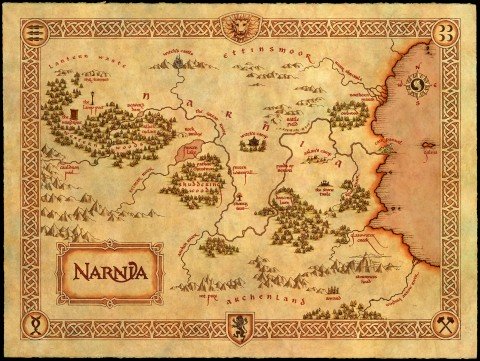
I have not seen the second two of a promised seven films based on the novels in C.S. Lewis’ The Chronicles of Narniaseries. But I tend to agree with several critics of the first filmed adaptation, The Lion, the Witch and the Wardrobe: “The PG-rated movie feels safe and constricted,” Peter Travers observed, “in a way the story never does on the page.” Although Lewis “did nothing to hide his devout Christianity” in his allegorical Narnia books for young adults, nor in his grown-up sci-fi fantasy series, The Space Trilogy, Lewis on the page comes across as a rigorous writer first and a Christian apologist second. Except, I’d argue, for his work of explicitly populist, and rather facile, apologetics, Mere Christianity (originally a series of radio lectures), his fiction and popular non-fiction alike present readers—whatever their beliefs—with challenging, inventive, witty, and moving ways to think about the human condition.
Lewis’ immersion in European Medieval and Renaissance literature in his day-job role as an Oxford don—and his ecumenical, almost Jungian, approach to literature generally—gives his fiction a serious archetypal depth that most modern religious novelists lack, making him, along with fellow “Inkling” J.R.R. Tolkien, something of a literary saint in modern Christianity. Though it may offend the orthodox to say so, Lewis’ novels capture a “deep magic” at the heart of all mythological and literary traditions. And they do so in a way that makes exploring heavy, grown-up themes exciting for both children and adults. Though I’ve personally left behind the beliefs that animated my first readings of his books, I can still return to The Chronicles of Narnia and find in them deep magic and mystery.
There’s no denying the enormous influence these books have had on children’s fantasy literature, from Harry Potter to Lewis’ atheist antagonist Philip Pullman. I look forward to sharing his books with my daughter, whatever she ends up making of their religiosity. I’ve still got my tattered paperback copies, and I’ll gladly read them to her before she can tackle them herself, but I’m also grateful for the complete audio recordings of The Chronicles of Narnia, available free online and read by English child psychologist and author Chrissi Hart. In installments of two chapters at a time, Hart reads all seven of the Narnia books, The Lion, the Witch and the Wardrobe, Prince Caspian, The Voyage of the Dawn Treader, The Silver Chair, The Horse and His Boy, The Magician’s Nephew, and The Last Battle.
And it should be noted that CS Lewis Pte. Ltd. granted permission to put these recordings online, according to the Ancient Faith web site. The recordings are therefore listed in our collection, 1,000 Free Audio Books: Download Great Books for Free. Enjoy.
No matter how casual a relationship you’ve had with 20th-century American poetry, you’ve heard the name Sylvia Plath. Maybe you’ve already dared to experience her dark but compelling literary world, or maybe you just know a few of the basic elements of her life and career: her autobiographical novel The Bell Jar, her famously harrowing poetry collection Ariel, her stormy marriage to British poet laureate Ted Hughes, her death by her own hand at the age of thirty. But what better day than today, the 83rd anniversary of Plath’s birth, to get better acquainted with her work?
And what better way than to hear that work read in Plath’s own voice? Sure, you could just pick up one of the many yellowed mass-market paperback copies of Ariel you see on bookshelves all across America and plunge in, but you might first consider turning to our archives, which contain a 2013 post in which we featured Plath reading fifteen poems that would appear in the Ariel collection that, published two years after her death (“left sitting on the kitchen table to be found along with her body,” noted Josh Jones), would raise her poetic reputation to new heights. You can hear the first part of these readings, recorded in 1962, at the top of this post, and the rest at this original post.
We might feel lucky that, in her short life, she left even those performances for posterity, but there’s more: last year, we featured Sylvia Plath reading her poetry, the 1977 record released by pioneering pre-audiobook label Caedmon which contains 23 poems Plath committed to tape as early as 1959. Find all of the readings here.
If these two audio collections give you a taste for the poet biographer Carl Rollyson called “the Marilyn Monroe of modern literature,” have a listen to Credo Records’ album Sylvia Plath, which offers some material you’ll have heard alongside some you won’t have. Having listened to all this, you’ll hardly associate the adjective “celebratory” with Plath’s work — but that doesn’t mean that, on what would have been her 83rd birthday, poetry-lovers can’t celebrate it.
If you would like to support the mission of Open Culture, consider making a donation to our site. It’s hard to rely 100% on ads, and your contributions will help us continue providing the best free cultural and educational materials to learners everywhere. You can contribute through PayPal, Patreon, and Venmo (@openculture). Thanks!
Despite its ancient origins, The Odyssey is an epic for modernity. The Greek poem gives us the hero as a homesick wanderer and uprooted seeker, an exile or a refugee, sustained by his cunning; he even comes across, writes scholar Deirdre McClosky, as “a crafty merchant type,” while also representing “three pagan virtues—temperance, justice, and prudence.” He’s a complicated hero, that is to say—most unlike Achilles, his antithesis in the prior epic The Iliad, the “foundational text,” says Simon Goldhill, “of Western culture.”
Goldhill, a Cambridge classics professor, introduces an undertaking itself admirably epic: a reading of The Iliad featuring “sixty-six artists, 18,225 lines of text” and—on the day it took place, August 14th of this year—an “audience of more than 50,000 people across the world, watching online or in person at the Almeida and the British Museum.” Now you can watch all 68 sections of the marathon event at the Almeida’s website until September 21, 2016. (Access the videos on pages One, Two, and Three.) Just above, see a short video that documents the making of this historic reading.
Goldhill goes on to say that the epic poem, “puts in place most of the great themes of Western literature, from power to adultery.” In a way, it’s fitting that it be a huge communal event: If The Odyssey is novelistic in many ways, as James Joyce’s Ulysses seems to have definitively shown, The Iliad is like a blockbuster comic book film. Achilles, writes McClosky, “is what the Vikings called a berserker”—his motive force, over and above companionship or love—is kleos: fame and glory. The one question that drives the “whole of The Iliad,” says Goldsmith, is “the question of what is worth dying for. For Achilles, the answer is simple.”
Undoubtedly we admire Achilles even as we cringe at his fury, and we celebrate all sorts of people who run headlong into what seems like certain death. But we also find figures who embody his violence and certainty disturbing, to say the least, both on and off the battlefield. Though crafty Odysseus temporarily stays Achilles’ rage, the warrior eventually kills so many Trojans that a river turns against him, and his abuse of Hector’s body makes for stomach-turning reading—or listening as the case may be. Pragmatic Odysseus may have given us the modern hero, and anti-hero, but power and glory-mad strongmen like Agamemnon and Achilles may be even more with us these days, and The Iliad is still an essential part of the architecture of Western grand narrative traditions.
After Goldhill’s introduction, see “greatest stage actor of his generation” Simon Russell Beale pick up the text, then younger actors Pippa Bennett-Warner and Mariah Gale, followed by gruff Brian Cox. (Find the readings on this page.) Few of the readers are as famous as Scottish film and stage star Cox, but nearly all are British theater-trained actors who deliver stirring, often thrilling, readings of the Robert Fagles translation. See the remaining 63 readings at the Almeida Theatre’s website here.
As you know if you saw our previous posts featuring Leonard Nimoy’s readings of stories by Ray Bradbury and Isaac Asimov, the late Star Trek icon could — unsurprisingly, perhaps — tell a science-fiction tale with the best of them. It turns out that he could also give masterful readings of science fiction from other eras too, as far back as the earliest works to define the genre, which we’ve discovered after hearing his performance of H.G. Wells’ The War of the Worlds, an out-of-print edition recently digitized from cassette tape and posted to Youtube in twoparts.
With this story of Earth invaded from “across the gulf of space” by aliens with “minds that are to our minds as ours are to those of the beasts that perish, intellects vast and cool and unsympathetic,” Wells did much to help give science fiction the form we recognize today. The War of the Worlds came out in book form in 1898, preceded by such similarly speculative and innovative works as The Time Machine and The Invisible Man, and then followed by the likes of The First Men in the Moon and The Shape of Things to Come. (Find most of these works neatly packaged in the HG Wells Classic Collection.) This Leonard Nimoy recording originally came out in 1976, published by the record label Caedmon, known for doing plenty of innovation of their own in the then-yet-unnamed field of audiobooks.
Caedmon put out not just this album and the one with Nimoy reading Bradbury, but others featuring Kurt Vonnegut, Vincent Price, Tennessee Williams, T.S. Eliot, Ernest Hemingway, and Sylvia Plath. As much as science-fiction die-hards will enjoy hearing this pairing of Nimoy and Wells here, some will certainly want to track down the actual LP — not just for the collectors’ value, but because it features liner notes by none other than that other vastly influential creator of sci-fi as we know it, Isaac Asimov. It looks like there’s one used copy on Amazon. The reading, we should note, is an abridged version of the original text.
By the time she got the all clear, both of us had large portions of it committed to memory.
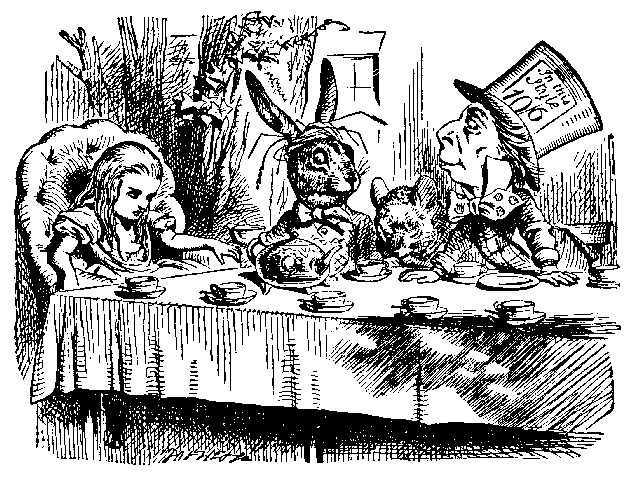
Christopher, I treasure the memories of those long hours spent together on cassette, but I’m afraid I’ll be spending the 150th anniversary of Alicewith Sir John Gielgud, below.
The celebrated dry wit that served him so well throughout his illustrious career keeps this 1989 Alice very easy on the ears. He takes the opposite approach from Plummer, underplaying the character voices. It’s rare to find a gentleman of 85 who can play a 7‑year-old girl so convincingly, and with so little fuss.
We're hoping to rely on loyal readers, rather than erratic ads. Please click the Donate button and support Open Culture. You can use Paypal, Venmo, Patreon, even Crypto! We thank you!
Open Culture scours the web for the best educational media. We find the free courses and audio books you need, the language lessons & educational videos you want, and plenty of enlightenment in between.