Saturday Night Live’s Very First Sketch: Watch John Belushi Launch SNL in October, 1975

How do you kick off the longest run­ning live sketch com­e­dy show in tele­vi­sion his­to­ry? If you’re in the cast and crew for the first episode of Sat­ur­day Night Live, you have no idea you’re doing any­thing of the kind. Still the pressure’s on, and the new­ly hired “Not Ready for Prime­time Play­ers” had a lot of com­pe­ti­tion on their own show that night. When Sat­ur­day Night, the orig­i­nal title for SNL, made its debut on Octo­ber 11, 1975, doing live com­e­dy on tele­vi­sion was an extreme­ly risky propo­si­tion.

So, what do you do if you’re pro­duc­ers Dick Eber­sol and Lorne Michaels? Put your riski­est foot for­ward — John Belushi, the “first rock & roll star of com­e­dy” writes Rolling Stone, and “the ‘live’ in Sat­ur­day Night Live.” The man who would be comedy’s king, for a time, before he left the stage too soon. His first sketch, and the first on-air for SNL, reveals “a ten­den­cy toward the time­less­ly pecu­liar,” Time mag­a­zine writes, that made the show an instant cult hit.

Rather than skew­er­ing top­i­cal issues or imper­son­at­ing celebri­ties, the first sketch, “The Wolver­ines” goes after the ripe tar­gets of an immi­grant (Belushi) learn­ing Eng­lish and his teacher, played by head writer Michael O’Donoghue, who insists on mak­ing Belushi repeat the tit­u­lar word in non­sen­si­cal phras­es like “I would like to feed your fin­ger­tips to the wolver­ines.”

Belushi’s accent has shades of Andy Kaufman’s “for­eign man” from Caspi­ar, and he gets a brief moment to dis­play his phys­i­cal com­e­dy skills when he keels over in imi­ta­tion of his teacher hav­ing a heart attack. “The Wolver­ines” is short, non­sen­si­cal, and weird­ly sweet. “No one would know what kind of show this was from see­ing that,” Michaels remem­bered. We can still look back at that wild­ly uneven first sea­son and won­der what kind of show SNL would be now if it had held on to the anar­chic spir­it of the ear­ly years. But that’s a lot to ask of a 45-year-old live com­e­dy show.

The night’s guest was George Car­lin, who did not appear in any sketch­es, but who did get three sep­a­rate mono­logues. The show also fea­tured two musi­cal guests, Bil­ly Pre­ston and Janis Ian. Andy Kauf­man made an appear­ance doing his famous Mighty Mouse bit, and the Mup­pets were there (not the fun Mup­pets, but a “dark and grumpy ver­sion” Jim Hen­son dis­owned after the first sea­son.)

The first episode was also the first to fea­ture the icon­ic intro, “Live from New York, it’s Sat­ur­day Night!” — deliv­ered by Chevy Chase. Though it has become a cel­e­bra­to­ry announce­ment, at the time “it’s Sat­ur­day Night!” was a dark reminder of the live com­e­dy vari­ety show, Sat­ur­day Night Live with Howard Cosell, then fail­ing through its first and only sea­son before its 18-episode run came to an end the fol­low­ing year.

See more from that weird first night above, includ­ing Carlin’s Foot­ball and Base­ball mono­logue and the for­got­ten SNL Mup­pets, just above.

via Ulti­mate Clas­sic Rock

Relat­ed Con­tent: 

Cre­at­ing Sat­ur­day Night Live: Behind-the Scenes Videos Reveal How the Icon­ic Com­e­dy Show Gets Made

Lorne Michaels Intro­duces Sat­ur­day Night Live and Its Bril­liant First Cast for the Very First Time (1975)

Clas­sic Punk Rock Sketch­es from Sat­ur­day Night Live, Cour­tesy of Fred Armisen

Josh Jones is a writer and musi­cian based in Durham, NC. Fol­low him at @jdmagness

John Cleese’s Very Favorite Comedy Sketches

Asked by Time mag­a­zine to name his favorite sketch­es among all those he has writ­ten or per­formed in, John Cleese delib­er­ate­ly exclud­ed most of his Mon­ty Python work. Instead he turned deep­er into his back pages, all the way to At Last the 1948 Show, which orig­i­nal­ly aired on ITV in 1967. (Its title ref­er­enced the long delays inflict­ed by tele­vi­sion’s exec­u­tive deci­sion-mak­ing process­es.) The pro­gram was con­ceived at the behest of broad­cast­er David Frost, who’d pre­vi­ous­ly engaged Cleese and fel­low Cam­bridge Foot­lights alum­nus (and future Python) Gra­ham Chap­man to write and per­form on The Frost Report, one of the major fruits of the “satire boom” in mid-1960s Britain.

“We would come up with crazy ideas, and all the writ­ers would roar with laugh­ter at the table,” Cleese remem­bered of his Frost Report expe­ri­ence in a 2014 Q&A at the British Film Insti­tute. But how­ev­er hilar­i­ous, these ideas would inevitably be reject­ed for the rea­son that “they won’t get it in Brad­ford.”

The late-night 1948 Show let Cleese and his col­lab­o­ra­tors, includ­ing come­di­an Mar­ty Feld­man, take a few more chances: “We knew that not every­one in Brad­ford would get it, so were tak­ing a lit­tle bit of a bet that enough peo­ple would get it.” This result­ed in sketch­es like “The Book­shop,” in which Feld­man’s cus­tomer makes a series of impos­si­ble demands of Cleese’s shop­keep­er, allow­ing the lat­ter to show­case his already well-honed abil­i­ty to per­form frus­tra­tion boil­ing over into derange­ment.

Cleese, who still gets comedic mileage out of his upright “estab­lish­ment” appear­ance, seems to have spe­cial­ized in play­ing such absurd­ly bur­dened busi­ness­men. His most icon­ic role must be the clenched, boor­ish hote­lier Basil Fawl­ty, played in the post-Python series Fawl­ty Tow­ers, but he was essay­ing such fig­ures long before. Take the far­ci­cal sketch about a hard-of-hear­ing eye­wear deal­er, which lat­er evolved into a seg­ment of the Ger­man spe­cial Mon­ty Python’s Fliegen­der Zirkus from 1972. Ear­li­er that year, Mon­ty Python’s Fly­ing Cir­cus put Cleese on the cus­tomer’s side of the counter, oppo­site Michael Pal­in’s cheese shop own­er who evi­dent­ly refus­es to stock all known vari­eties of cheese. Though it did­n’t orig­i­nate on the 1948 Show, the now-immor­tal “cheese shop sketch” was writ­ten as anoth­er Cleese-Chap­man col­lab­o­ra­tion — and one that dis­plays a firm com­mit­ment to cus­tomer ser­vice, or the lack there­of, as com­ic mate­r­i­al.

via Boing­Bo­ing

Relat­ed Con­tent:

John Cleese Plays the Dev­il, Makes a Spe­cial Appeal for Hell, 1966

John Cleese’s Advice to Young Artists: “Steal Any­thing You Think Is Real­ly Good”

Mon­ty Python’s John Cleese Cre­ates Ads for the Amer­i­can Philo­soph­i­cal Asso­ci­a­tion

Based in Seoul, Col­in Mar­shall writes and broad­casts on cities, lan­guage, and cul­ture. His projects include the Sub­stack newslet­ter Books on Cities, the book The State­less City: a Walk through 21st-Cen­tu­ry Los Ange­les and the video series The City in Cin­e­ma. Fol­low him on Twit­ter at @colinmarshall or on Face­book.

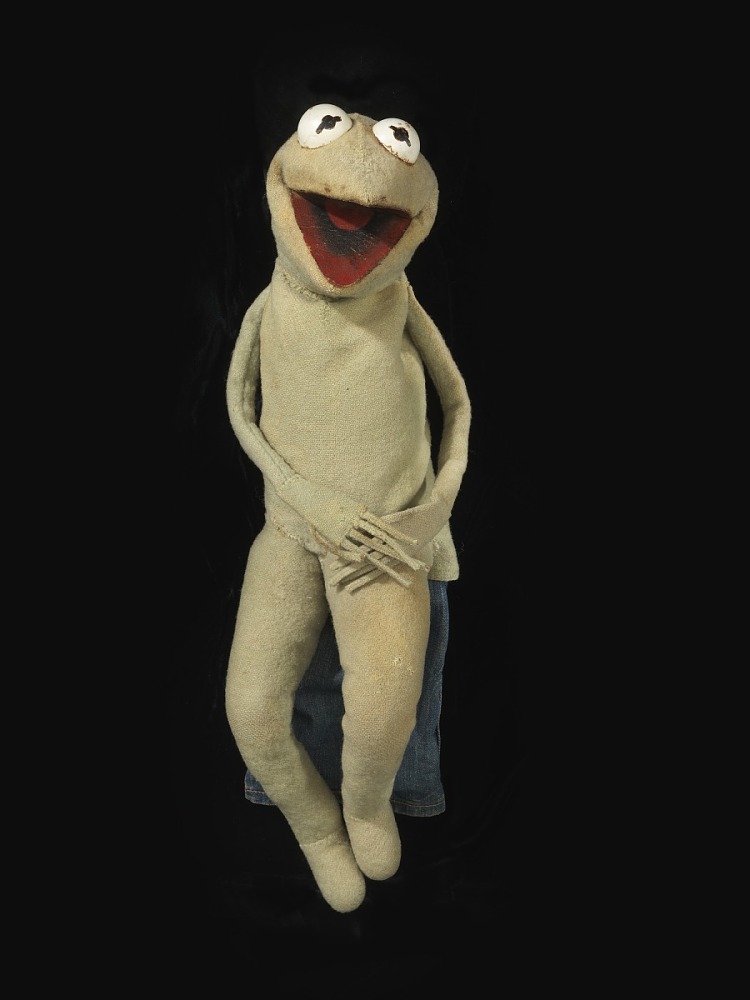
Witness the Birth of Kermit the Frog in Jim Henson’s Live TV Show, Sam and Friends (1955)

Long before “green” became syn­ony­mous with eco-friend­ly prod­ucts and pro­duc­tion, an 18-year-old Jim Hen­son cre­at­ed a pup­pet who would go on to become the color’s most cel­e­brat­ed face from his mother’s cast-off green felt coat and a sin­gle ping pong ball.

Ker­mit debuted in black and white in the spring of 1955 as an ensem­ble mem­ber of Sam and Friendsa live tele­vi­sion show com­prised of five-minute episodes that the tal­ent­ed Hen­son had been tapped to write and per­form, fol­low­ing some ear­li­er suc­cess as a teen pup­peteer.

Air­ing on the Wash­ing­ton DC-area NBC affil­i­ate between the evening news and The Tonight ShowSam and Friends was an imme­di­ate hit with view­ers, even if they ranked Ker­mit, orig­i­nal­ly more lizard than frog, fourth in terms of pop­u­lar­i­ty. (Top spot went to a skull pup­pet named Yorick.)

Watch­ing the sur­viv­ing clips of Sam and Friends, it’s easy to catch glimpses of where both Ker­mit and Hen­son were head­ed.

While Hen­son voiced Sam and all of his pup­pet friends, Ker­mit wound up sound­ing the clos­est to Hen­son him­self.

Kermit’s sig­na­ture face-crum­pling reac­tions were by design. Where­as oth­er pup­pets of the peri­od, like the tit­u­lar Sam, had stiff heads with the occa­sion­al mov­ing jaw, Kermit’s was as soft as a foot­less sock, allow­ing for far greater expres­sive­ness.

Hen­son honed Kermit’s expres­sions by plac­ing live feed mon­i­tors on the floor so he and his pup­peteer bride-to-be Jane, could see the pup­pets from the audi­ence per­spec­tive.

Unlike pre­vi­ous­ly tele­vised pup­pet per­for­mances, which pre­served the exist­ing prosce­ni­ums of the the­aters to which the play­ers had always been con­fined, Hen­son con­sid­ered the TV set frame enough. Lib­er­at­ing the pup­pets thus­ly gave more of a sketch com­e­dy feel to the pro­ceed­ings, some­thing that would car­ry over to Sesame Street and lat­er, The Mup­pet Show.

By the 12th episode, Ker­mit has found a niche as wry straight man for wack­i­er char­ac­ters like jazz afi­ciona­do Har­ry the Hip­ster who intro­duced an ele­ment of musi­cal nota­tion to the ani­mat­ed let­ters and num­bers that would become a Sesame Street sta­ple.

And sure­ly we’re not the only ones who think the Mup­pets’ recent appear­ance in a Super Bowl ad pales in com­par­i­son to Ker­mit and Harry’s live com­mer­cial for Sam and Friends’ spon­sor, a region­al brand of bacon and lunch meat.

Sam and Friends ran from 1955 to 1961, but Kermit’s first per­for­mance on The Tonight Show in 1956, lip sync­ing to Rose­mary Clooney’s record­ing of “I’ve Grown Accus­tomed to Your Face” and mug­ging in a blonde braid­ed wig, hint­ed that he and Hen­son would soon out­grow the local tele­vi­sion pond.

Relat­ed Con­tent: 

Jim Hen­son Cre­ates an Exper­i­men­tal Ani­ma­tion Explain­ing How We Get Ideas (1966)

The Cre­ative Life of Jim Hen­son Explored in a Six-Part Doc­u­men­tary Series

Watch The Sur­re­al 1960s Films and Com­mer­cials of Jim Hen­son

Jim Hen­son Teach­es You How to Make Pup­pets in Vin­tage Primer From 1969

Ayun Hal­l­i­day is an author, illus­tra­tor, the­ater mak­er and Chief Pri­ma­tol­o­gist of the East Vil­lage Inky zine, cur­rent issue #63. Fol­low her @AyunHalliday.

Take a Road Trip Across America with Cartoonist Lynda Barry in the 90s Documentary, Grandma’s Way Out Party

Who wouldn’t love to take a road trip with beloved car­toon­ist and edu­ca­tor Lyn­da Bar­ry? As evi­denced by Grandma’s Way Out Par­ty, above, an ear­ly-90s doc­u­men­tary made for Twin Cities Pub­lic Tele­vi­sion, Bar­ry not only finds the humor in every sit­u­a­tion, she’s always up for a detour, whether to a time hon­ored des­ti­na­tion like Mount Rush­more or Old Faith­ful, or a more impul­sive pit­stop, like a Wash­ing­ton state car repair shop dec­o­rat­ed with sculp­tures made from cast off muf­flers or the Mon­tana State Prison Hob­by Store.

Alter­nat­ing in the driver’s seat with then-boyfriend, sto­ry­teller Kevin Kling, she makes up songs on her accor­dion, clowns around in a cheap cow­girl hat, sam­ples an over­sized gas sta­tion donut, and chats up every­one she encoun­ters.

At the World’s Only Corn Palace in Mitchell, South Dako­ta, she breaks the ice by ask­ing a beard­ed local guy in offi­cial Corn Palace cap and t‑shirt if his job is the ful­fill­ment of a long held dream.

“Nah,” he says. “I thought it was a joke … in Far­go, they call it the world’s biggest bird feed­er. We do have the biggest birds in South Dako­ta. They get fed good.”

He leads them to Cal Schultz, the art teacher who designed over 25 years worth of murals fes­toon­ing the exte­ri­or walls. Nudged by Bar­ry to pick a favorite, Schultz choos­es one that his 9th grade stu­dents worked on.

“I would have loved to have been in his class,” Bar­ry, a teacher now her­self, says emphat­i­cal­ly. “I would have giv­en any­thing to have worked on a Corn Palace when I was 14-years-old.”

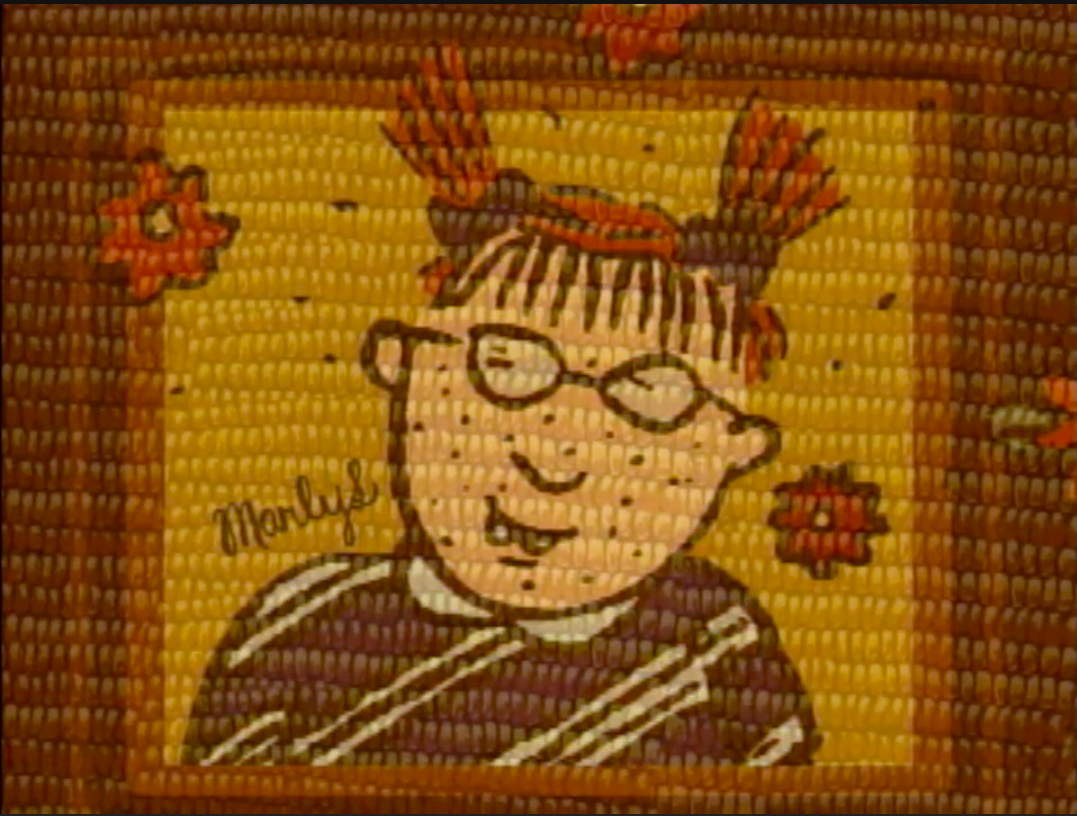
This point is dri­ven home with a quick view of her best known cre­ation, the pig­tailed, bespec­ta­cled Marlys, osten­si­bly ren­dered in corn—an hon­or Marlys would no doubt appre­ci­ate.

Bar­ry has long been laud­ed for her under­stand­ing of and respect for children’s inner lives, and we see this nat­ur­al affin­i­ty in action when she befriends Desmond and Jake, two young par­tic­i­pants in the Crow Fair Pow Wowjust south of Billings, Mon­tana.

Frus­trat­ed by her inabil­i­ty to get a han­dle on the pro­ceed­ings (“Why didn’t I learn it in school!? Why wasn’t it part of our cur­ricu­lum?”), Bar­ry retreats to the com­fort of her sketch­book, which attracts the curi­ous boys. Even­tu­al­ly, she draws their por­traits to give them as keep­sakes, get­ting to know them bet­ter in the process.

The draw­ings they make in return are trea­sured by the recip­i­ent, not least for the win­dow they pro­vide on the cul­ture with which they are so casu­al­ly famil­iar.

Bar­ry and Kling also chance upon the Stur­gis Motor­cy­cle Ral­ly, and after a bite at the Road Kill Cafe (“from your grill to ours”), Bar­ry wax­es philo­soph­i­cal about the then-unusu­al sight of so much tat­tooed flesh:

There’s some­thing about the fact that they want some­thing on them that they can’t wash off, that even on days when they don’t want peo­ple to know they’re a bik­er, it’s still there. And I have always loved that about peo­ple, like …drag queens who will shave off their eye­brows so they can draw per­fect eye­brows on, or any­body who knows they’re dif­fer­ent and does some­thing to them­selves phys­i­cal­ly so that even on their bad days, they can’t deny it. Because I think that in the end, that’s sort of what saves your life, that you wear your col­ors. You can’t help it.

The afore­men­tioned muf­fler store prompts some mus­ings that will be very famil­iar to any­one who has immersed them­selves in Mak­ing ComicsPic­ture This, or any oth­er of Barry’s instruc­tion­al books con­tain­ing her won­der­ful­ly loopy, intu­itive cre­ative exer­cis­es:

I think this urge to cre­ate is actu­al­ly our ani­mal instinct. And what’s sad is if we don’t let that come through us, I don’t think we have a full life on this earth. And I think we get sick because of it. I mean, it’s weird that it’s an instinct, but it’s an option, just like you can take a wild ani­mal, a beau­ti­ful, wild ani­mal and put him in a zoo. They live, they’re fine in their cage, but you don’t get to see them do the thing that a chee­tah does best, which is, you know, just run like the wind and be able to jump and do the things… I mean, it’s our instinct, it’s instinc­tu­al, it’s our beau­ti­ful, beau­ti­ful, mag­i­cal, poet­ic, mys­te­ri­ous instinct. And every once in a while, you see the flower of it come right up out of a gas sta­tion. 

After 1653 miles and one squab­ble after over­shoot­ing a sched­uled stop (“You don’t want me to go to Butte!”), the two arrive at their final des­ti­na­tion, Barry’s child­hood home in Seat­tle. The occa­sion? Barry’s Fil­ipino grandmother’s 83rd birth­day, and plans are afoot for a potluck bash at the local VFW hall. Fans will swoon to meet this ven­er­at­ed lady and the rest of Barry’s extend­ed clan, and hear Barry’s reflec­tions on what it was like to grow up in a work­ing class neigh­bor­hood where most of the fam­i­lies were mul­ti-racial.

“I walked in and it was every­thing Lyn­da said,” Kling mar­vels.

Indeed.

The jour­ney is every­thing we could have hoped for, too.

Lis­ten to a post-trip inter­view with Kling on Min­neso­ta Pub­lic Radio.

H/t to read­er Char­lotte Book­er

Relat­ed Con­tent:

Lyn­da Bar­ry on How the Smart­phone Is Endan­ger­ing Three Ingre­di­ents of Cre­ativ­i­ty: Lone­li­ness, Uncer­tain­ty & Bore­dom

Car­toon­ist Lyn­da Bar­ry Shows You How to Draw Bat­man in Her UW-Madi­son Course, “Mak­ing Comics”

Lyn­da Barry’s New Book Offers a Mas­ter Class in Mak­ing Comics

Ayun Hal­l­i­day is an author, illus­tra­tor, the­ater mak­er and Chief Pri­ma­tol­o­gist of the East Vil­lage Inky zine — cur­rent issue: #63 Fol­low her @AyunHalliday.

A New Yorker Cartoonist Explains How to Draw Literary Cartoons

“I enjoy pok­ing fun at any­thing edu­cat­ed peo­ple do and civ­i­lized soci­ety per­pet­u­ates that is odd, frus­trat­ing, wacky, or hyp­o­crit­i­cal,” car­toon­ist Amy Kurzweil, above, recent­ly told the New York Pub­lic Library’s Mar­go Moore.

Unsur­pris­ing­ly, she’s been get­ting pub­lished in The New York­er a lot of late.

The process for get­ting car­toons accept­ed there is the stuff of leg­end, though report­ed­ly less gru­el­ing since Emma Allen, the magazine’s youngest and first-ever female car­toon edi­tor, took over. Allen has made a point of seek­ing out fresh voic­es, and work­ing with them to help mold their sub­mis­sions into some­thing in The New York­er vein, rather than “this end­less game of pre­sent­ing work and then hear­ing ‘yes’ or ‘no.’”

Kurzweil has a fond­ness for lit­er­ary themes (and the same brand of pen­cils that John Stein­beck, Tru­man Capote, and Vladimir Nabokov pre­ferred—Black­wings—whether in her hand or, con­vers­ing with Allen on Zoom, above, in her ears.)

Get­ting the joke of a New York­er car­toon often depends on get­ting the ref­er­ence, and while both women seem tick­led at the first exam­ple, Kurzweil’s mash-up of Proust’s Remem­brance of Things Past and the pic­ture book If You Give a Mouse a Cook­ie, it may go over many read­ers’ heads.

The thing that holds it all togeth­er?

Madeleines, of course, though out­side France, not every Proust lover is able to iden­ti­fy an inked rep­re­sen­ta­tion of this evoca­tive cook­ie by shape.

Kurzweil states that she has nev­er actu­al­ly read the children’s book that sup­plies half the con­text.

(It’s okay. Like the idea that mem­o­ries can be trig­gered by cer­tain nos­tal­gic scents, its con­cept is pret­ty easy to grasp.)

Nor has she read philoso­pher Derek Parfit’s whop­ping 1,928-page On What Mat­ters. Her inspi­ra­tion for using it in a car­toon is her per­son­al con­nec­tion to the mas­sive, unread three-vol­ume set in her family’s library. Because both the size and the title are part of the joke, she directs the viewer’s eye to the unwieldy tome with a light water­col­or wash.

She also has a good tip for any­one draw­ing a library scene—go fig­u­ra­tive, rather than lit­er­al, vary­ing sizes and shapes until the eye is tricked into see­ing what is mere­ly sug­gest­ed.

A all-too-true lit­er­ary expe­ri­ence informs her sec­ond exam­ple at the 4:30 mark—that of a lit­tle known author giv­ing a read­ing in a book­store. Despite a pref­er­ence for draw­ing “fleshy things like peo­ple and ani­mals” she for­goes depict­ing the author or those in atten­dance, giv­ing the punch­line instead to the event posters in the store’s win­dow.

As she told the NYPL’s Moore:

A car­toon is always an oppor­tu­ni­ty to show­case a con­tem­po­rary phe­nom­e­non by exag­ger­at­ing it or plac­ing it in a dif­fer­ent con­text.

Over the last year, a huge num­ber of New York­er car­toons have con­cerned them­selves with the domes­tic dull­ness of the pan­dem­ic, but when Allen asked if she has a favorite New York­er car­toon cliché, Kurzweil went with “the Moby Dick trope, because whales are easy to draw, and I like a good metaphor for the unat­tain­able.”

Relat­ed Con­tent:

New York­er Car­toon Edi­tor Bob Mankoff Reveals the Secret of a Suc­cess­ful New York­er Car­toon

The Not York­er: A Col­lec­tion of Reject­ed & Late Cov­er Sub­mis­sions to The New York­er

Down­load a Com­plete, Cov­er-to-Cov­er Par­o­dy of The New York­er: 80 Pages of Fine Satire

Ayun Hal­l­i­day is an author, illus­tra­tor, the­ater mak­er and Chief Pri­ma­tol­o­gist of the East Vil­lage Inky zine. She most recent­ly appeared as a French Cana­di­an bear who trav­els to New York City in search of food and mean­ing in Greg Kotis’ short film, L’Ourse.  Fol­low her @AyunHalliday.

What Has the Internet Done to Comedy? A Pretty Much Pop Culture Podcast Discussion (#74)

Does remov­ing gate­keep­ers mean a more dis­trib­uted com­ic land­scape, or does it inevitably end with a small num­ber of comics dom­i­nat­ing the world? The Inter­net means that peo­ple can and do judge comics based on very short clips, but also makes it easy to fol­low the activ­i­ties of some­one you dis­cov­er that you like.

Tiffany comes not from stand-up but from music the­ater, and is active in cre­at­ing char­ac­ter-based com­e­dy and nov­el­ty songs for Insta­gram, YouTube, etc. She joins your hosts Eri­ca Spyres, Mark Lin­sen­may­er, and Bri­an Hirt to explore the types of short-form humor and view­ing habits that grow out of video cre­at­ed for Tik­Tok, Snapchat, and oth­er plat­forms. What’s the cre­ator’s rela­tion to the audi­ence? Social media blurs the line between con­struct­ed bits and extem­po­rized com­men­tary. It’s often react­ing to cur­rent events, yet stays post­ed long after. “Going viral” is not typ­i­cal­ly the result of mere organ­ic shar­ing or chance, and some comics (and their con­sul­tants) have real­ly stud­ied the medi­um to find out what appeals and how to get the word out.

We touch on Car­men Lynch, Sarah Coop­er, Eva Vic­tor, Bowen Yang, Coin­ci­d­ance, Miran­da Sings, Lock­Pick­ingLawyer, Jim­my Sloni­na, AskChick­ie, and more.

Watch Tiffany’s Frag­ile White Sad­ness. And her ode to Dis­ney Plus. Our Long Novem­ber has passed, thank good­ness.

Tiffany also rec­om­mends Jen Tul­lock, Josh Ruben, Jor­dan First­man, Megan Stal­ter, Cole Esco­la, Craw­ford Mill­ham Hor­ton, Ben­i­to Skin­ner, Inap­pro­pri­ate Pat­ti, Advent Car­olen­dar, and Marc Rebil­let.

Read: “These Come­di­ans Are Using Tik­Tok to Cre­ate Some of the Inter­net’s Fun­ni­est (And Wok­est) Con­tent)” by Kat Cur­tis.

Hear more of this pod­cast at prettymuchpop.com. This episode includes bonus dis­cus­sion you can access by sup­port­ing the pod­cast at patreon.com/prettymuchpop. This pod­cast is part of the Par­tial­ly Exam­ined Life pod­cast net­work.

Pret­ty Much Pop: A Cul­ture Pod­cast is the first pod­cast curat­ed by Open Cul­ture. Browse all Pret­ty Much Pop posts.

Why David Sedaris Hates “The Santaland Diaries,” the NPR Piece that Made Him Famous

This past fall David Sedaris pub­lished his first full-fledged anthol­o­gy, The Best of Me. It includes “Six to Eight Black Men,” his sto­ry about bewil­der­ing encoun­ters with Euro­pean Christ­mas folk­tales, but not “The San­ta­land Diaries,” which launched him straight into pop­u­lar cul­ture when he read it aloud on Nation­al Pub­lic Radio’s Morn­ing Edi­tion in 1992. True to its title, that piece is drawn from entries in his diary (the rig­or­ous keep­ing of which is the core of his writ­ing process) made while employed as one of San­ta’s elves at Macy’s Her­ald Square in New York. Not only was the sub­ject sea­son­al­ly appro­pri­ate, Sedaris cap­tured the vari­eties of seething resent­ment felt at one time or anoth­er — not least around Christ­mas — by cus­tomer-ser­vice work­ers in Amer­i­ca.

Accord­ing to a Macy’s exec­u­tive who worked at Her­ald Square at the time, Sedaris made an “out­stand­ing elf.” (So the New Repub­lic’s Alex Heard dis­cov­ered when attempt­ing to fact-check Sedaris’ work.) Whether or not he has fond mem­o­ries of his time in “green vel­vet knick­ers, a for­est-green vel­vet smock and a perky lit­tle hat dec­o­rat­ed with span­gles,” he holds “The San­ta­land Diaries” itself in no regard what­so­ev­er. “I’m grate­ful that I wrote some­thing that peo­ple enjoyed, but because it was my choice what went into this book, I was so hap­py to exclude it,” he says in an inter­view with WBUR about The Best of Me. “I want­ed its feel­ings to be hurt.”

Over the past 28 years he has seized numer­ous oppor­tu­ni­ties to dis­par­age the piece that made him  famous.“I have no idea why that went over the way that it did,” Sedaris once admit­ted to Pub­lish­er’s Week­ly. “There are about two ear­ly things I’ve writ­ten that I could go back and read again, and that’s not one of them.” And by the time of that first Morn­ing Edi­tion broad­cast, he had already been keep­ing his diary every day for fif­teen years. “When you first start writ­ing, you’re going to suck,” he says in the Atlantic video just below. In his first years writ­ing, he says, “I was sit­ting at the Inter­na­tion­al House of Pan­cakes in Raleigh, North Car­oli­na with a beret screwed to my head,” and the result was “the writ­ing you would expect from that per­son.”

Since then Sedaris’ dress has become more eccen­tric, but his writ­ing has improved immea­sur­ably. “I want to be bet­ter at what I do,” said Sedaris in a recent inter­view with the Col­orado Springs Inde­pen­dent. “It’s just some­thing that I per­son­al­ly strive for. Which is sil­ly, because most peo­ple can’t even rec­og­nize that. Peo­ple will say, ‘Oh, I loved that San­ta­land thing.’ And that thing is so clunki­ly writ­ten. I mean, it’s just hor­ri­bly writ­ten, and peo­ple can’t even see it.” Much of the audi­ence may be “lis­ten­ing to the sto­ry, but they’re not pay­ing atten­tion to how it’s con­struct­ed, or they’re not pay­ing atten­tion to the words that you used. They’re not hear­ing the craft of it.” But if you lis­ten to “The San­ta­land Diaries” today, you may well hear what Ira Glass did when he and Sedaris orig­i­nal­ly record­ed it.

As a young free­lance radio pro­duc­er who had yet to cre­ate This Amer­i­can Life, Glass first saw the thor­ough­ly non-famous Sedaris when he read from his diary onstage at a Chica­go club. Glass knew instinc­tive­ly that Sedaris’ dis­tinc­tive voice as both writer and read­er would play well on the radio, as would his even more dis­tinc­tive sense of humor. But it was­n’t until a few years lat­er, when he called on Sedaris to record a hol­i­day-themed seg­ment for Morn­ing Edi­tion, that Glass under­stood just what kind of tal­ent he’d dis­cov­ered. “I remem­ber we got to the part where you sing like Bil­lie Hol­i­day,” Glass told Sedaris in an inter­view mark­ing the 25th anniver­sary of “The San­ta­land Diaries.” “I was a pret­ty expe­ri­enced radio pro­duc­er at that point, and I was like, ‘This is a good one.’ ”

Relat­ed Con­tent:

20 Free Essays & Sto­ries by David Sedaris: A Sam­pling of His Inim­itable Humor

David Sedaris Breaks Down His Writ­ing Process: Keep a Diary, Car­ry a Note­book, Read Out Loud, Aban­don Hope

David Sedaris Cre­ates a List of His 10 Favorite Jazz Tracks: Stream Them Online

Why David Sedaris Hates America’s Favorite Word, “Awe­some”

David Sedaris Spends 3–8 Hours Per Day Pick­ing Up Trash in the UK; Tes­ti­fies on the Lit­ter Prob­lem

Based in Seoul, Col­in Mar­shall writes and broad­casts on cities, lan­guage, and cul­ture. His projects include the Sub­stack newslet­ter Books on Cities, the book The State­less City: a Walk through 21st-Cen­tu­ry Los Ange­les and the video series The City in Cin­e­ma. Fol­low him on Twit­ter at @colinmarshall, on Face­book, or on Insta­gram.

An Introduction to Rap Battles: Pretty Much Pop: A Culture Podcast #71

Pret­ty Much Pop hosts Mark Lin­sen­may­er, Eri­ca Spyres, and Bri­an Hirt are rejoined by our audio edi­tor and res­i­dent rap­per Tyler His­lop (rap name: “Sac­ri­fice”) to dis­cuss a form of enter­tain­ment close to his heart: Two peo­ple star­ing each oth­er in the face in front of a crowd and tak­ing lengthy turns insult­ing each oth­er in a loud voice using intri­cate rhymes, ref­er­ences, jokes and even some cul­tur­al com­men­tary and philo­soph­i­cal spit-balling.

So what are the rules? How does mod­ern bat­tle rap com­pare to free-styling, the beefs aired on rap albums, and clas­sic insult com­e­dy? What’s the appeal of this art form? Is it because of or despite the aggres­sion involved? Bat­tle rap is regard­ed as a free speech zone, where any­thing’s fair game, but does that real­ly make sense?

A few rel­e­vant films came up in the dis­cus­sion:

  • Bod­ied (2017), a film writ­ten by Alex Larsen (aka Kid Twist) and pro­duced by Eminem, fea­tur­ing sev­er­al cur­rent bat­tle rap­pers doing their thing along with dis­cus­sion by the char­ac­ters of the eth­i­cal issues involved
  • 8 Mile (2002), a semi-auto­bi­o­graph­i­cal film star­ring Eminem, which dis­plays the old­er, free-styling over a beat type of bat­tle rap­ping
  • Rox­anne Rox­anne (2017) a biopic about Rox­anne Shante depict­ing hip-hop rival­ries of the 1980s.

Here are some match­es Tyler rec­om­mend­ed that also get men­tioned:

More resources:

Hear Tyler talk about his many rap albums on Naked­ly Exam­ined Music #24.

Hear more of this pod­cast at prettymuchpop.com. This episode includes bonus dis­cus­sion you can access by sup­port­ing the pod­cast at patreon.com/prettymuchpop. This pod­cast is part of the Par­tial­ly Exam­ined Life pod­cast net­work.

Pret­ty Much Pop: A Cul­ture Pod­cast is the first pod­cast curat­ed by Open Cul­ture. Browse all Pret­ty Much Pop posts.

« Go BackMore in this category... »
Quantcast