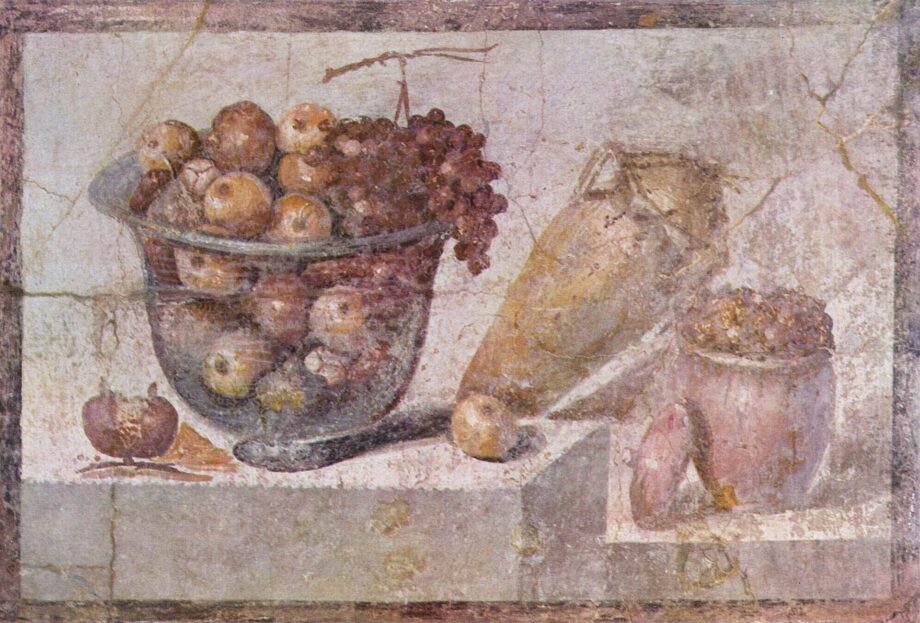
Marcus Gavius Apicius, who lived in the first century AD, was as fine an embodiment of Rome’s insatiable excess as any of his fellow citizens. While some men gained infamy for wanton cruelty or feats of courage, Apicius came to be known as Rome’s most prodigious glutton, with Pliny calling him “the most riotous glutton and bellie-god of his time.” (An alternative, and equally delectable translation, is the “most gluttonous gorger of all spendthrifts.”)
Among Apicius’ most impressive culinary exploits was sailing to Libya to pick up some crawfish:
Hearing too that [the crawfish] were very large in Africa, he sailed thither, without waiting a single day, and suffered exceedingly on his voyage. But when he came near the place, before he disembarked from the ship, (for his arrival made a great noise among the Africans,) the fishermen came alongside in their boats and brought him some very fine crawfish; and he, when he saw them, asked if they had any finer; and when they said that there were none finer than those which they brought, he, recollecting those at Minturnæ, ordered the master of the ship to sail back the same way into Italy, without going near the land.
Some would say that sailing all the way to Libya for fish and refusing to set foot ashore because you weren’t impressed with some fishermen’s wares might be called petulant. They would be wrong. It is gastronomically discerning. No less, however, would be expected of a man who ended his life when, as Martial remarks, his purse could no longer support his stomach:
Apicius, you have spent 60 million [sesterces] on your stomach, and as yet a full 10 million remained to you. You refused to endure this, as also hunger and thirst, and took poison in your final drink. Nothing more gluttonous was ever done by you, Apicius.
Only fitting, then, that one of Rome’s best known gourmands became the attributed author of the oldest surviving cookbook. Apicius’ De re coquinaria, which emerged between the 4th and 5th centuries AD, is a compilation of almost 500 Roman recipes arranged, much like contemporary cookbooks, by ingredients. This culinary goldmine, which includes instructions on preparing brains and udders, was inaccessible to English speakers until the advent of Barbara Flower and Elizabeth Rosenbaum’s The Roman cookery book: A critical translation of “The art of cooking” by Apicius, for use in the study and kitchen (1958). Here’s a sample from Book 9, From The Sea:
- Mussels: liquamen, chopped leeks, passum, savory, wine. Dilute the mixture with water, and boil the mussels in it.
- (Sauce) for oysters: pepper, lovage, yolk of egg, vinegar, liquamen, oil and wine. If you wish, add honey.
- (Sauce) for all kinds of shellfish: pepper, lovage, parsley, dried mint, lots of cumin, honey, vinegar, liquamen. If you wish, add a bay leaf and folium indicum.
Unfortunately for the aspiring Roman chef, neither De re coquinaria nor Mmes. Flower and Rosenbaum included the necessary quantities of the ingredients. While one may choose to parse the translation independently to arrive at the appropriate meaning of “lots of cumin,” there is help for those looking for a quick fix.
In 2003, a chef and food historian named Patrick Faas published Around the Roman Table: Food and Feasting in Ancient Rome. While some of the content concerns Roman table manners, the heart of the book lies in the recipes. Faas provides over 150 recipes, most of which he sources from Flower and Rosenbaum’s translation (alongside a few dishes mentioned by Pliny and Cato). Eight are freely available on the University of Chicago Press website, and we’ve provided a few as an amuse-bouche:
Roast Wild Boar
Aper ita conditur: spogiatur, et sic aspergitur ei sal et cuminum frictum, et sic manet. Alia die mittitur in furnum. Cum coctus fuerit perfundutur piper tritum, condimentum aprunum, mel, liquamen, caroenum et passum.
Boar is cooked like this: sponge it clean and sprinkle with salt and roast cumin. Leave to stand. The following day, roast it in the oven. When it is done, scatter with ground pepper and pour on the juice of the boar, honey, liquamen, caroenum, and passum. (Apicius, 330)
For this you would need a very large oven, or a very small boar, but the recipe is equally successful with the boar jointed. Remove the bristles and skin, then scatter over it plenty of sea salt, crushed pepper and coarsely ground roasted cumin. Leave it in the refrigerator for 2–3 days, turning it occasionally.
Wild boar can be dry, so wrap it in slices of bacon before you roast it. At the very least wrap it in pork caul. Then put it into the oven at its highest setting and allow it to brown for 10 minutes. Reduce the oven temperature to 180°C/350°F/Gas 4, and continue to roast for 2 hours per kg, basting regularly.
Meanwhile prepare the sauce. To make caroenum, reduce 500ml wine to 200ml. Add 2 tablespoons of honey, 100ml passum, or dessert wine, and salt or garum to taste. Take the meat out of the oven and leave it to rest while you finish the sauce. Pour off the fat from the roasting tin, then deglaze it with the wine and the honey mixture. Pour this into a saucepan, add the roasting juices, and fat to taste.
Carve the boar into thin slices at the table, and serve the sweet sauce separately.
Ostrich Ragoût
Until the 1980s the ostrich was considered as exotic as an elephant, but since then it has become available in supermarkets. Cooking a whole ostrich is an enormous task, but Apicius provides a recipe for ostrich:
In struthione elixo: piper, mentam, cuminum assume, apii semen, dactylos vel caryotas, mel, acetum, passum, liquamen, et oleum modice et in caccabo facies ut bulliat. Amulo obligas, et sic partes struthionis in lance perfundis, ete desuper piper aspargis. Si autem in condituram coquere volueris, alicam addis.
For boiled ostrich: pepper, mint, roast cumin, celery seed, dates or Jericho dates, honey, vinegar, passum, garum, a little oil. Put these in the pot and bring to the boil. Bind with amulum, pour over the pieces of ostrich in a serving dish and sprinkle with pepper. If you wish to cook the ostrich in the sauce, add alica. (Apicius, 212)
You may prefer to roast or fry your ostrich, rather than boil it. Whichever method you choose, this sauce goes with it well. For 500g ostrich pieces, fried or boiled, you will need:
2 teaspoon flour
2 tablespoons olive oil
300ml passum (dessert wine)
1 tablespoon roast cumin seeds
1 teaspoon celery seeds
3 pitted candied dates
3 tablespoons garum or a 50g tin of anchovies
1 teaspoon peppercorns
2 tablespoons fresh chopped mint
1 teaspoon honey
3 tablespoons strong vinegar
Make a roux with the flour and 1 tablespoon of the olive oil, add the passum, and continue to stir until the sauce is smooth. Pound together in the following order: the cumin, celery seeds, dates, garum or anchovies, peppercorns, chopped mint, the remaining olive oil, the honey, and vinegar. Add this to the thickened wine sauce. Then stir in the ostrich pieces and let them heat through in the sauce.
Nut Tart
Patina versatilis vice dulcis: nucleos pineos, nuces fractas et purgatas, attorrebis eas, teres cum melle, pipere, liquamine, lacte, ovis, modico mero et oleo, versas in discum.
Try patina as dessert: roast pine nuts, peeled and chopped nuts. Add honey, pepper, garum, milk, eggs, a little undiluted wine, and oil. Pour on to a plate. (Apicius, 136)
400g crushed nuts—almonds, walnuts or pistachios
200g pine nuts
100g honey
100ml dessert wine
4 eggs
100ml full-fat sheep’s milk
1 teaspoon salt or garum
pepper
Preheat the oven to 240°C/475°F/Gas 9.
Place the chopped nuts and the whole pine nuts in an oven dish and roast until they have turned golden. Reduce the oven temperature to 200°C/400°F/Gas 6. Mix the honey and the wine in a pan and bring to the boil, then cook until the wine has evaporated. Add the nuts and pine nuts to the honey and leave it to cool. Beat the eggs with the milk, salt or garum and pepper. Then stir the honey and nut mixture into the eggs. Oil an oven dish and pour in the nut mixture. Seal the tin with silver foil and place it in roasting tin filled about a third deep with water. Bake for about 25 minutes until the pudding is firm. Take it out and when it is cold put it into the fridge to chill. To serve, tip the tart on to a plate and pour over some boiled honey.
Columella Salad
Columella’s writings suggest that Roman salads were a match for our own in richness and imagination:
Addito in mortarium satureiam, mentam, rutam, coriandrum, apium, porrum sectivum, aut si non erit viridem cepam, folia latucae, folia erucae, thymum viride, vel nepetam, tum etiam viride puleium, et caseum recentem et salsum: ea omnia partier conterito, acetique piperati exiguum, permisceto. Hanc mixturam cum in catillo composurris, oleum superfundito.
Put savory in the mortar with mint, rue, coriander, parsley, sliced leek, or, if it is not available, onion, lettuce and rocket leaves, green thyme, or catmint. Also pennyroyal and salted fresh cheese. This is all crushed together. Stir in a little peppered vinegar. Put this mixture on a plate and pour oil over it. (Columella, Re Rustica, XII-lix)
A wonderful salad, unusual for the lack of salt (perhaps the cheese was salty enough), and that Columella crushes the ingredients in the mortar.
100g fresh mint (and/or pennyroyal)
50g fresh coriander
50g fresh parsley
1 small leek
a sprig of fresh thyme
200g salted fresh cheese
vinegar
pepper
olive oil
Follow Columella’s method for this salad using the ingredients listed.
In other salad recipes Columella adds nuts, which might not be a bad idea with this one.
Apart from lettuce and rocket many plants were eaten raw—watercress, mallow, sorrel, goosefoot, purslane, chicory, chervil, beet greens, celery, basil and many other herbs.
via University of Chicago Press and De Coquinaria
Ilia Blinderman is a Montreal-based culture writer. Follow him at @iliablinderman
Related Content:
Archive of Handwritten Recipes (1600 – 1960) Will Teach You How to Stew a Calf’s Head and More
What Ancient Greek Music Sounded Like: Hear a Reconstruction That is ‘100% Accurate’
How Many U.S. Marines Could Bring Down the Roman Empire?