Get a First Glimpse of Foundation, the New TV Series Being Adapted from Isaac Asimov’s Iconic Series of Novels

Five years ago we told you about the plans to cre­ate a mini-series out of Isaac Asimov’s clas­sic sci-fi series Foun­da­tion, while also point­ing you in the direc­tion of the 1973 BBC radio drama­ti­za­tion. Back in 2015, Jonathan Nolan, broth­er of Christo­pher, was attached and HBO was set to pro­duce. And then we all for­got about it. (Well I did, any­way.)

Fast for­ward into the COVID tsuna­mi of this week and AppleTV just dropped the first trail­er for the series. Nolan is out and David Goy­er is in as showrun­ner. Goy­er loves his pulp, and wrote or co-wrote the Blade tril­o­gy, the Dark Knight tril­o­gy, Dark City, and a lot of the recent DC Uni­verse films. Also on board as exec­u­tive pro­duc­er is Robyn Asi­mov, Isaac’s daugh­ter.

Pro­duc­tion had start­ed in Ire­land on the series, but it closed up shop in March due to COVID-19. We have no idea how much of the 10-episode first sea­son was shot, which might explain a pre­pon­der­ance of footage in the above trail­er of peo­ple walk­ing down cor­ri­dors, walk­ing into rooms, and star­ing out of win­dows, along with pure­ly CGI estab­lish­ing shots of space­ships and a black hole straight out of Inter­stel­lar.

On the oth­er hand, we get a glimpse of Jared Har­ris (Mad Men, Cher­nobyl) as Hari Sel­don, a math­e­mati­cian who has devel­oped a the­o­ry called “psy­chohis­to­ry” that allows him to see the future. And he does not like what he sees–empires col­laps­ing, and a long dark age of 30,000 years. There’s also his pro­tege called Gaal, played here by new­com­er Lou Llo­bell; Lee Pace (Halt and Catch Fire) plays Broth­er Day, the emper­or; and Leah Har­vey plays Salvor, the war­den of Ter­mi­nus, where Sel­don and Gaal are exiled. (Spoil­er alert…we think.)

Two large ques­tions to ask right now: will this ever get fin­ished? And do we real­ly need Foun­da­tion, or has its time passed?

For the first, AppleTV has put a date of 2021 for the hope­ful pre­miere, but all the arts are on hold now. We might be look­ing at films that are even more CGI than they are now, shot total­ly on green­screen in large social­ly dis­tant stu­dios, and assem­bled by a gigan­tic crew of remote ani­ma­tors. (Ire­land is down to less than 10 cas­es of COVID-19 per day, so who knows.)

The sec­ond is more a mat­ter of taste and a case of who’s adapt­ing the books. Goyer’s fil­mog­ra­phy shows he’s much more of an action guy, and Asi­mov was more of an intel­lec­tu­al. We might see some­thing between the inter­na­tion­al trade tar­iff skull­dug­gery of The Phan­tom Men­ace and some Game of Thrones court intrigue.

The dis­cus­sion on Metafil­ter cer­tain­ly deserves a look, as it brings up issues like Asimov’s his­to­ry of sex­u­al harass­ment, the idea of Grand Old White Men of Sci-Fi, and a need to keep pres­tige tele­vi­sion churn­ing out prod­uct. And, of course, there’s a dis­cus­sion of how much we might need some of Asimov’s opti­mism.

Asimov’s Foun­da­tion series was influ­enced by Edward Gib­bon’s His­to­ry of the Decline and Fall of the Roman Empire, and we are cer­tain­ly think­ing about empires falling right now, espe­cial­ly as we can hear Nero’s fid­dle off in the dis­tance, get­ting loud­er every day.

Relat­ed Con­tent:

Isaac Asi­mov Pre­dicts the Future of Civilization–and Rec­om­mends Ways to Ensure That It Sur­vives (1978)

Isaac Asimov’s Guide to the Bible: A Wit­ty, Eru­dite Atheist’s Guide to the World’s Most Famous Book

Isaac Asi­mov Laments the “Cult of Igno­rance” in the Unit­ed States: A Short, Scathing Essay from 1980

Ted Mills is a free­lance writer on the arts who cur­rent­ly hosts the Notes from the Shed pod­cast and is the pro­duc­er of KCR­W’s Curi­ous Coast. You can also fol­low him on Twit­ter at @tedmills, and/or watch his films here.

This Is What The Matrix Looks Like Without CGI: A Special Effects Breakdown

Those of us who saw the The Matrix in the the­ater felt we were wit­ness to the begin­ning of a new era of cin­e­mat­i­cal­ly and philo­soph­i­cal­ly ambi­tious action movies. Whether that era deliv­ered on its promise — and indeed, whether The Matrix’s own sequels deliv­ered on the fran­chise’s promise — remains a mat­ter of debate. More than twen­ty years lat­er, the film’s black-leather-and-sun­glass­es aes­thet­ic may date it, but its visu­al effects some­how don’t. The Fame Focus video above takes a close look at two exam­ples of how the cre­ators of The Matrix com­bined tra­di­tion­al, “prac­ti­cal” tech­niques with then-state-of-the-art dig­i­tal tech­nol­o­gy in a way that kept the result from going as stale as, in the movies, “state-of-the-art dig­i­tal tech­nol­o­gy” usu­al­ly has a way of guar­an­tee­ing.

By now we’ve all seen revealed the mechan­ics of “bul­let time,” an effect that aston­ished The Matrix’s ear­ly audi­ences by seem­ing near­ly to freeze time for dra­mat­ic cam­era move­ments (and to make vis­i­ble the epony­mous pro­jec­tiles, of which the film includ­ed a great many). They lined up a bunch of still cam­eras along a pre­de­ter­mined path, then had each of the cam­eras take a shot, one-by-one, in the span of a split sec­ond.

But as we see in the video, get­ting con­vinc­ing results out of such a ground­break­ing process — which required smooth­ing out the unsteady “footage” cap­tured by the indi­vid­ual cam­eras and per­fect­ly align­ing it with a com­put­er-gen­er­at­ed back­ground mod­eled on a real-life set­ting, among oth­er tasks — must have been even more dif­fi­cult than invent­ing the process itself. The man­u­al labor that went into The Matrix series’ high-tech veneer comes across even more in the behind-the-scenes video below:

In the third install­ment, 2003’s The Matrix Rev­o­lu­tions, Keanu Reeves’ Neo and Hugo Weav­ing’s Agent Smith duke it out in the pour­ing rain as what seem like hun­dreds of clones of Smith look on. View­ers today may assume Weav­ing was filmed and then copy-past­ed over and over again, but in fact these shots involve no dig­i­tal effects to speak of. The team actu­al­ly built 150 real­is­tic dum­mies of Weav­ing as Smith, all oper­at­ed by 80 human extras them­selves wear­ing intri­cate­ly detailed sil­i­con-rub­ber Smith masks. The logis­tics of such a one-off endeav­or sound painful­ly com­plex, but the phys­i­cal­i­ty of the sequence speaks for itself. With the next Matrix film, the first since Rev­o­lu­tions, due out next year, fans must be hop­ing the ideas of the Pla­ton­i­cal­ly tech­no-dystopi­an sto­ry the Wachowskis start­ed telling in 1999 will be prop­er­ly con­tin­ued, and in a way that makes full use of recent advances in dig­i­tal effects. But those of us who appre­ci­ate the endur­ing pow­er of tra­di­tion­al effects should hope the film’s mak­ers are also get­ting their hands dirty.

Relat­ed Con­tent:

The Phi­los­o­phy of The Matrix: From Pla­to and Descartes, to East­ern Phi­los­o­phy

The Matrix: What Went Into The Mix

Philip K. Dick The­o­rizes The Matrix in 1977, Declares That We Live in “A Com­put­er-Pro­grammed Real­i­ty”

Daniel Den­nett and Cor­nel West Decode the Phi­los­o­phy of The Matrix

Why 1999 Was the Year of Dystopi­an Office Movies: What The Matrix, Fight Club, Amer­i­can Beau­ty, Office Space & Being John Malkovich Shared in Com­mon

Based in Seoul, Col­in Mar­shall writes and broad­casts on cities, lan­guage, and cul­ture. His projects include the book The State­less City: a Walk through 21st-Cen­tu­ry Los Ange­les and the video series The City in Cin­e­ma. Fol­low him on Twit­ter at @colinmarshall, on Face­book, or on Insta­gram.

The Original Star Wars Trilogy Adapted into a 14-Hour Radio Drama by NPR (1981–1996)

When it opened in 1977, Star Wars revived the old-fash­ioned swash­buck­ling adven­ture film. With­in a few years, Nation­al Pub­lic Radio made a bet that it could do the same for the radio dra­ma. Though still well with­in liv­ing mem­o­ry, the “gold­en age of radio” in Amer­i­ca had end­ed decades ear­li­er, and with it the shows that once filled the air­waves with sto­ries of every kind. Radio dra­mas seemed extinct, but then, before George Lucas’ space opera turned block­buster, so had movie seri­als like Flash Gor­don and Buck Rogers. The episod­ic nature of such source mate­r­i­al res­onat­ed with the sim­i­lar­ly episod­ic nature of clas­sic radio dra­ma, and that must have brought with­in the realm of pos­si­bil­i­ty a bold and near-scan­dalous propo­si­tion: to re-make Star Wars for NPR.

The idea came from a stu­dent at the Uni­ver­si­ty of Cal­i­for­nia, who sug­gest­ed it to USC School of the Per­form­ing arts dean and radio-dra­ma enthu­si­ast Richard Toscan. There could have been no insti­tu­tion bet­ter-placed to take on such a project. Since Toscan had already pro­duced dra­mas on the school’s NPR-affil­i­at­ed radio sta­tion KUSC, he made an ide­al col­lab­o­ra­tor in the net­work’s effort to breathe new life into its dra­mat­ic pro­gram­ming. And as Lucas’ alma mater, USC inspired in him a cer­tain gen­eros­i­ty: Lucas sold KUSC Star Wars’ radio rights, along with use of the film’s music and sound effects, for one dol­lar. Found­ed just a decade ear­li­er, NPR still lacked the expe­ri­ence and resources to han­dle such an ambi­tious project itself, and so entered into a co-pro­duc­tion deal with the BBC, which had nev­er let radio dra­ma go into eclipse.

When the Star Wars radio dra­ma was first broad­cast in the spring of 1981, fans of the movie would have heard a mix­ture of the famil­iar (includ­ing the voic­es of Mark Hamill as Luke Sky­walk­er and Antho­ny Daniels as C‑3PO) and the unfa­mil­iar. With sci­ence-fic­tion nov­el­ist Bri­an Daley brought on to add or restore scenes to the script of the orig­i­nal dia­logue-light fea­ture film, the sto­ry stretch­es out to thir­teen episodes for a total run­time of six hours. The series thus stands as an ear­ly exam­ple of the expan­sion of the Star Wars uni­verse that, in all kinds of media, has con­tin­ued apace ever since. An Empire Strikes Back radio dra­ma fol­lowed in 1983, with Return of the Jedi fol­low­ing, after pro­longed devel­op­ment chal­lenges, in 1996.

You can hear all four­teen hours of these orig­i­nal Star Wars tril­o­gy radio dra­mas at the Inter­net Archive (Star Wars, The Empire Strikes Back, Return of the Jedi), or on a Youtube playlist with fan edits com­bin­ing the orig­i­nal­ly dis­crete episodes into con­tin­u­ous lis­ten­ing expe­ri­ences. NPR’s gam­ble on adapt­ing a Hol­ly­wood hit paid off: the first Star Wars radio dra­ma drew 750,000 new lis­ten­ers, many from the youth­ful demo­graph­ic the net­work had hoped to cap­ture. It was the biggest sci­ence-fic­tion event on Amer­i­can radio since Orson Welles scared the coun­try with his adap­ta­tion of H.G. Welles’ The War of the Worlds more than 40 years ear­li­er — a broad­cast pro­duced by John House­man, who in his capac­i­ty as USC’s artis­tic direc­to­ry in the 1970s, encour­aged Toscan to bring radio dra­ma back. In recent years, NPR’s audi­ence has con­tin­ued to age while the Star Wars fran­chise has in the­aters, on tele­vi­sion and else­where, gone from strength to strength. Has the time come for radio to use the Force once again?

Relat­ed Con­tent:

Sci-Fi Radio: Hear Radio Dra­mas of Sci-Fi Sto­ries by Ray Brad­bury, Philip K. Dick, Ursu­la K. LeGuin & More (1989)

30 Hours of Doc­tor Who Audio Dra­mas Now Free to Stream Online

Hear Five JG Bal­lard Sto­ries Pre­sent­ed as Radio Dra­mas

Dimen­sion X: The 1950s Sci­Fi Radio Show That Dra­ma­tized Sto­ries by Asi­mov, Brad­bury, Von­negut & More

The Com­plete Star Wars “Fil­mu­men­tary”: A 6‑Hour, Fan-Made Star Wars Doc­u­men­tary, with Behind-the-Scenes Footage & Com­men­tary

Based in Seoul, Col­in Mar­shall writes and broad­casts on cities, lan­guage, and cul­ture. His projects include the book The State­less City: a Walk through 21st-Cen­tu­ry Los Ange­les and the video series The City in Cin­e­ma. Fol­low him on Twit­ter at @colinmarshall, on Face­book, or on Insta­gram.

Hyperland: The “Fantasy Documentary” in Which Douglas Adams and Doctor Who’s Tom Baker Imagine the World Wide Web (1990)

Thir­ty years ago, the inter­net we use today would have looked like sci­ence fic­tion. Now as then, we spend a great deal of time star­ing at streams of video, but the high-tech 21st cen­tu­ry has endowed us with the abil­i­ty to cus­tomize those streams as nev­er before. No longer do we have to set­tle for tra­di­tion­al tele­vi­sion and the tyran­ny of “what’s on”; we can fol­low our curios­i­ty wher­ev­er it leads through vast, ever-expand­ing realms of image, sound, and text. No less a sci­ence-fic­tion writer than Dou­glas Adams dreams of just such realms in Hyper­land, a 1990 BBC “fan­ta­sy doc­u­men­tary” that opens to find him fast asleep amid the mind­less sound and fury spout­ed unceas­ing­ly by his tele­vi­sion set — so unceas­ing­ly, in fact, that it keeps on spout­ing even when Adams gets up and toss­es it into a junk­yard.

Amid the scrap heaps Adams meets a ghost of tech­nol­o­gy’s future: his “agent,” a dig­i­tal fig­ure played by Doc­tor Who star Tom Bak­er. “I have the hon­or to pro­vide instant access to every piece of infor­ma­tion stored dig­i­tal­ly any­where in the world,” says Bak­er’s Vir­gil to Adams’ Dante. “Any pic­ture or film, any sound, any book, any sta­tis­tic, any fact — any con­nec­tion between any­thing you care to think of.”

Adams’ fans know how much the notion must have appealed to him, unex­pect­ed con­nec­tions between dis­parate aspects of real­i­ty being a run­ning theme in his fic­tion. It became espe­cial­ly promi­nent in the Dirk Gen­tly’s Holis­tic Detec­tive Agency Series, whose wide range of ref­er­ences includes Samuel Tay­lor Coleridge’s Kubla Khan — one of the many pieces of infor­ma­tion Adams has his agent pull up in Hyper­land.

Adams’ jour­ney along this pro­to-Infor­ma­tion Super­high­way also includes stops at Beethoven’s 9th Sym­pho­ny, Picas­so’s Guer­ni­ca, and Kurt Von­negut’s the­o­ry of the shape of all sto­ries. Such a path­way will feel famil­iar to any­one who reg­u­lar­ly goes down “rab­bit holes” on the inter­net today, a pur­suit — or per­haps com­pul­sion — enabled by hyper­text. Already that term sounds old fash­ioned, but at the dawn of the 1990s active­ly fol­low­ing “links” from one piece of infor­ma­tion, so com­mon now as to require no intro­duc­tion or expla­na­tion, struck many as a mind-bend­ing nov­el­ty. Thus the pro­gram’s seg­ments on the his­to­ry of the rel­e­vant tech­nolo­gies, begin­ning with U.S. gov­ern­ment sci­en­tist Van­nevar Bush and the the­o­ret­i­cal “Memex” sys­tem he came up with at the end of World War II — and first described in an Atlantic Month­ly arti­cle you can, thanks to hyper­text, eas­i­ly read right now.

Though to an extent required to stand for the con­tem­po­rary view­er, Adams was hard­ly a tech­no­log­i­cal neo­phyte. An ardent ear­ly adopter, he pur­chased the very first Apple Mac­in­tosh com­put­er ever sold in Europe. “I hap­pen to know you’ve writ­ten inter­ac­tive fic­tion your­self,” says Bak­er, refer­ring to the adven­ture games Adams designed for Info­com, one of them based on his beloved Hitch­hik­er’s Guide to the Galaxy nov­els. Though Adams’ con­sid­er­able tech savvy makes all this look amus­ing­ly pre­scient, he could­n’t have known just then how con­nect­ed every­one and every­thing was about to become. “While Dou­glas was cre­at­ing Hyper­land,” says his offi­cial web site, “a stu­dent at CERN in Switzer­land was work­ing on a lit­tle hyper­text project he called the World Wide Web.” And despite his ear­ly death, the man who dreamed of an elec­tron­ic “guide­book” con­tain­ing and con­nect­ing all the knowl­edge in the uni­verse lived long enough to see that such a thing would one day become a real­i­ty.

Relat­ed Con­tent:

Play The Hitchhiker’s Guide to the Galaxy Video Game Free Online, Designed by Dou­glas Adams in 1984

In 1999, David Bowie Pre­dicts the Good and Bad of the Inter­net: “We’re on the Cusp of Some­thing Exhil­a­rat­ing and Ter­ri­fy­ing”

John Tur­tur­ro Intro­duces Amer­i­ca to the World Wide Web in 1999: Watch A Beginner’s Guide To The Inter­net

Pio­neer­ing Sci-Fi Author William Gib­son Pre­dicts in 1997 How the Inter­net Will Change Our World

Sci-Fi Author J.G. Bal­lard Pre­dicts the Rise of Social Media (1977)

Arthur C. Clarke Pre­dicts the Inter­net & PC in 1974

Based in Seoul, Col­in Mar­shall writes and broad­casts on cities, lan­guage, and cul­ture. His projects include the book The State­less City: a Walk through 21st-Cen­tu­ry Los Ange­les and the video series The City in Cin­e­ma. Fol­low him on Twit­ter at @colinmarshall, on Face­book, or on Insta­gram.

Star Trek: World-Building Over Generations—Pretty Much Pop: A Culture Podcast #42

The world-wide Trib­ble infes­ta­tion and Star Trek: Picard drop­ping make this an apt time to address our most philo­soph­i­cal sci-fi fran­chise. 44 years of thought exper­i­ments (with pho­ton tor­pe­does!) about what it is to be human should have taught us some­thing, and Bri­an Hirt, Eri­ca Spyres, and Mark Lin­sen­may­er along with Drew Jack­son (Eri­ca’s hus­band) reflect on what makes a Star Trek sto­ry, world build­ing over gen­er­a­tions in Gene Rod­den­ber­ry’s land, canon you don’t remem­ber vs. some­thing that just has­n’t been shown on screen, Trek vs. Wars, and step-chil­dren like The Orville and Galaxy Quest.

We have gath­ered a heap of arti­cles for fur­ther cog­i­ta­tion:

For some sug­gest­ed episodes to catch up on, there are lists online rec­om­mend­ing those from the orig­i­nal series and from the fran­chise over­all. There are also fan cre­ations like these orig­i­nal series episodes, a Star Trek musi­cal, and of course the Impro­vised Star Trek pod­cast. For some rel­e­vant words from Rod Rod­den­ber­ry, check out episode 55 of the Mis­sion Log pod­cast.

Learn more at prettymuchpop.com. This episode includes bonus dis­cus­sion that you can only hear by sup­port­ing the pod­cast at patreon.com/prettymuchpop. This pod­cast is part of the Par­tial­ly Exam­ined Life pod­cast net­work.

Pret­ty Much Pop: A Cul­ture Pod­cast is the first pod­cast curat­ed by Open Cul­ture. Browse all Pret­ty Much Pop posts or start with the first episode.


Jules Verne’s Most Famous Books Were Part of a 54-Volume Masterpiece, Featuring 4,000 Illustrations: See Them Online

Not many read­ers of the 21st cen­tu­ry seek out the work of pop­u­lar writ­ers of the 19th cen­tu­ry, but when they do, they often seek out the work of Jules Verne. Jour­ney to the Cen­ter of the Earth, Twen­ty Thou­sand Leagues Under the Sea, Around the World in Eighty Days: fair to say that we all know the titles of these fan­tas­ti­cal French tales from the 1860s and 70s, and more than a few of us have actu­al­ly read them. But how many of us know that they all belong to a sin­gle series, the 54-vol­ume Voy­ages Extra­or­di­naires, that Verne pub­lished from 1863 until the end of his life? Verne described the pro­jec­t’s goal to an inter­view­er thus: “to con­clude in sto­ry form my whole sur­vey of the world’s sur­face and the heav­ens.”

Verne intend­ed to edu­cate, but at the same time to enter­tain and even artis­ti­cal­ly impress: “My object has been to depict the earth, and not the earth alone, but the uni­verse,” he said. “And I have tried at the same time to real­ize a very high ide­al of beau­ty of style.” This he accom­plished with great suc­cess in a time and place with­out even what we would now con­sid­er a ful­ly lit­er­ate pub­lic.

As philoso­pher Marc Sori­ano writes of the 1860s when Verne began pub­lish­ing, “The dri­ve for lit­er­a­cy in France has been under­way since the Guizot Law of 1833, but there is still much to do. Any well-advised edi­tor must aid his read­ers who have not yet achieved a good read­ing pro­fi­cien­cy.”

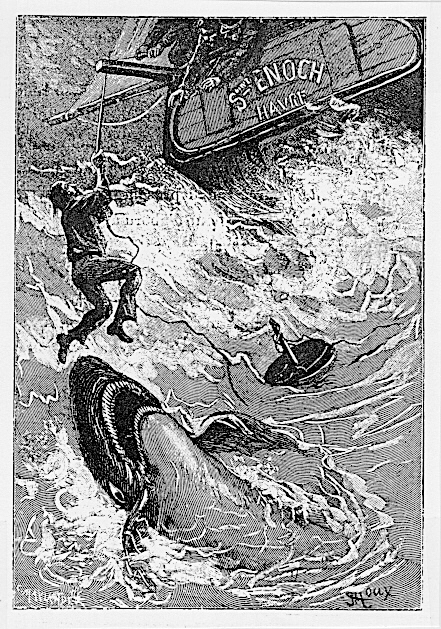
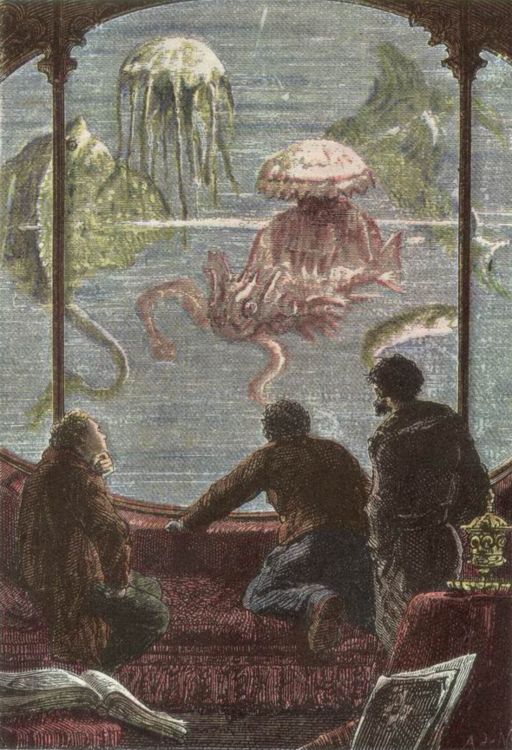
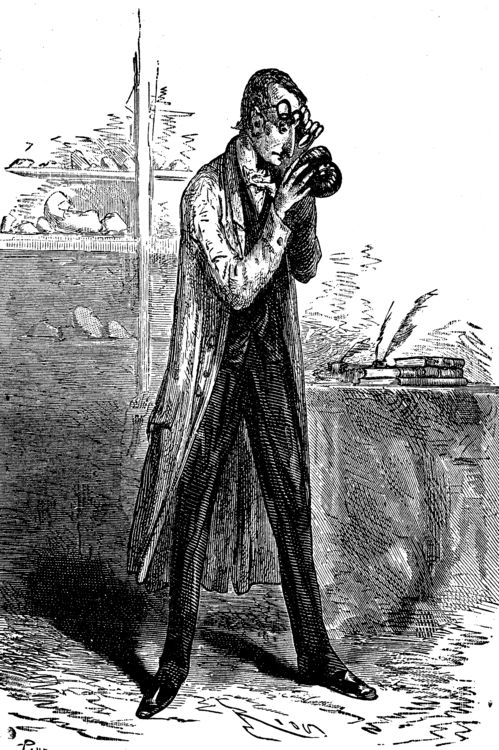
Hence the need for illus­tra­tions: beau­ti­ful illus­tra­tions, sci­en­tif­i­cal­ly and nar­ra­tive­ly faith­ful illus­tra­tions, and above all a great many illus­tra­tions: over 4,000 of them, by the count of Arthur B. Evans in his essay on the series’ artists, “an aver­age of 60+ illus­tra­tions per nov­el, one for every 6–8 pages of text.” Still today, “most mod­ern French reprints of the Voy­ages Extra­or­di­naires con­tin­ue to fea­ture their orig­i­nal illus­tra­tions — recap­tur­ing the ‘feel’ of Verne’s socio-his­tor­i­cal milieu and evok­ing that sense of far­away exoti­cism and futur­is­tic awe which the orig­i­nal read­ers once expe­ri­enced from these texts. And yet, to date, the bulk of Vern­ian crit­i­cism has vir­tu­al­ly ignored the cru­cial role played by these illus­tra­tions in Verne’s oeu­vre.”

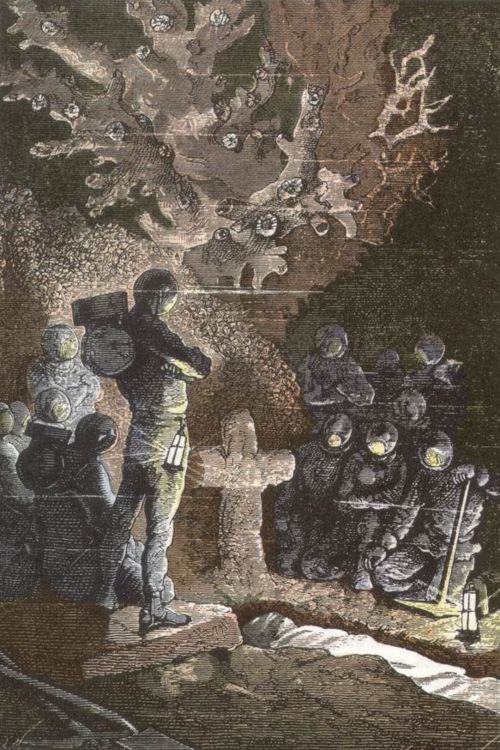
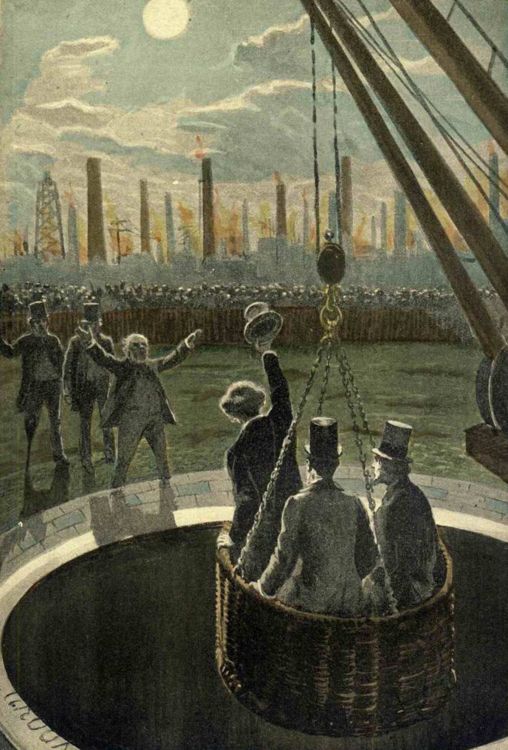
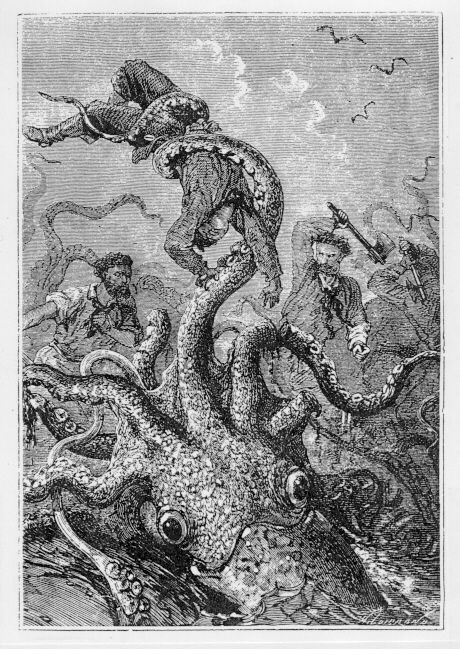
Evans iden­ti­fies four dif­fer­ent types of illus­tra­tions in the series: “ren­der­ings of the pro­tag­o­nists of the sto­ry — e.g., por­traits like the one of Impey Bar­bi­cane in De la terre à la lune”; “panoram­ic and post­card-like” views of the “exot­ic locales, unusu­al sights, and flo­ra and fau­na which the heroes encounter dur­ing their jour­ney, like the one from Vingt mille lieues sous les mers depict­ing divers walk­ing on the ocean floor”; “doc­u­men­ta­tion­al” illus­tra­tions like “the map of the Polar regions (hand-drawn by Verne him­self) for his 1864 nov­el Les Voy­ages et aven­tures du cap­i­taine Hat­teras”; and por­tay­als of “a spe­cif­ic moment of action in the narrative—e.g., the one from Voy­age au cen­tre de la terre where Prof. Liden­brock, Axel, and Hans are sud­den­ly caught in a light­ning storm on a sub­ter­ranean ocean.”

Verne and his edi­tor Pierre-Jules Het­zel com­mis­sioned these illus­tra­tions from no few­er than eight artists, a group includ­ing Edouard Riou, Alphonse de Neuville, Emile-Antoine Bayard (pre­vi­ous­ly fea­tured here on Open Cul­ture), and Léon Benett — all well-known artists in late 19th-cen­tu­ry France, and made even more so by their work in the Voy­ages Extra­or­di­naires. You can browse a com­plete gallery of the series’ orig­i­nal illus­tra­tions here, and if you like, enrich the expe­ri­ence with this exten­sive essay by Ter­ry Har­pold on “read­ing” these images in con­text.

Togeth­er with the sto­ries them­selves, on the back of which Verne remains the most trans­lat­ed sci­ence-fic­tion author of all time, they allow Har­pold to make the cred­i­ble claim that “the tex­tu­al-graph­ic domain con­sti­tut­ed by these objects is unmatched in its breadth and vari­ety; no oth­er cor­pus asso­ci­at­ed with a sin­gle author is com­pa­ra­ble.” Human knowl­edge of the uni­verse has widened and deep­ened since Verne’s day, but for sheer intel­lec­tu­al and adven­tur­ous won­der about what that uni­verse might con­tain, has any writer, from any era or land, out­done him since?

Relat­ed Con­tent:

Émile-Antoine Bayard’s Vivid Illus­tra­tions of Jules Verne’s Around the Moon: The First Seri­ous Works of Space Art (1870)

Jules Verne Accu­rate­ly Pre­dicts What the 20th Cen­tu­ry Will Look Like in His Lost Nov­el, Paris in the Twen­ti­eth Cen­tu­ry (1863)

How French Artists in 1899 Envi­sioned Life in the Year 2000: Draw­ing the Future

Hear Rick Wakeman’s Musi­cal Adap­ta­tion of Jules Verne’s Jour­ney to the Cen­tre of the Earth, “One of Prog Rock’s Crown­ing Achieve­ments”

Petite Planète: Dis­cov­er Chris Marker’s Influ­en­tial 1950s Trav­el Pho­to­book Series

The Art of Sci-Fi Book Cov­ers: From the Fan­tas­ti­cal 1920s to the Psy­che­del­ic 1960s & Beyond

Based in Seoul, Col­in Mar­shall writes and broad­casts on cities, lan­guage, and cul­ture. His projects include the book The State­less City: a Walk through 21st-Cen­tu­ry Los Ange­les and the video series The City in Cin­e­ma. Fol­low him on Twit­ter at @colinmarshall or on Face­book.

42 Hours of Ambient Sounds from Blade Runner, Alien, Star Trek and Doctor Who Will Help You Relax & Sleep

Back in 2009, the musi­cian who goes by the name “Cheesy Nir­vosa” began exper­i­ment­ing with ambi­ent music, before even­tu­al­ly launch­ing a YouTube chan­nel where he “com­pos­es long­form space and sci­fi ambi­ence.” Or what he oth­er­wise calls “ambi­ent geek sleep aids.” Click on the video above, and you can get lulled to sleep lis­ten­ing to the ambi­ent dron­ing sound–get ready Blade Run­ner fans!– heard in Rich Deckard’s apart­ment. It runs a good con­tin­u­ous 12 hours.

You’re more a Star Trek fan? Ok, try nod­ding off to the idling engine noise of a ship fea­tured in Star Trek: The Next Gen­er­a­tion. Mr. Nir­vosa cleaned up a sam­ple from the show and then looped it for 24 hours. That makes for one long sleep.

Or how about 12 hours of ambi­ent engine noise gen­er­at­ed by the USCSS Nos­tro­mo in Alien?

Final­ly, and per­haps my favorite, Cheesy cre­at­ed a 12 hour clip of the ambi­ent sounds made by the Tardis, the time machine made famous by the British sci-fi TV show, Doc­tor Who. But watch out. You might wake up liv­ing in a dif­fer­ent time and place.

For lots more ambi­ent sci-fi sounds (Star Wars, The Matrix, Bat­tlestar Galac­ti­ca, etc. ) check out this super long playlist here.

Note: An ear­li­er ver­sion of this post appeared on our site in March 2017.

If you would like to sup­port the mis­sion of Open Cul­ture, con­sid­er mak­ing a dona­tion to our site. It’s hard to rely 100% on ads, and your con­tri­bu­tions will help us con­tin­ue pro­vid­ing the best free cul­tur­al and edu­ca­tion­al mate­ri­als to learn­ers every­where. You can con­tribute through Pay­Pal, Patre­on, and Ven­mo (@openculture). Thanks!

Relat­ed Con­tent:

The Ency­clo­pe­dia of Sci­ence Fic­tion: 17,500 Entries on All Things Sci-Fi Are Now Free Online

10 Hours of Ambi­ent Arc­tic Sounds Will Help You Relax, Med­i­tate, Study & Sleep

Moby Lets You Down­load 4 Hours of Ambi­ent Music to Help You Sleep, Med­i­tate, Do Yoga & Not Pan­ic

Music That Helps You Sleep: Min­i­mal­ist Com­pos­er Max Richter, Pop Phe­nom Ed Sheer­an & Your Favorites

by | Permalink | Make a Comment ( 3 ) |

A Concise Breakdown of How Time Travel Works in Popular Movies, Books & TV Shows

As least since H.G. Wells’ 1895 nov­el The Time Machine, time trav­el has been a promis­ing sto­ry­telling con­cept. Alas, it has sel­dom deliv­ered on that promise: whether their char­ac­ters jump for­ward into the future, back­ward into the past, or both, the past 125 years of time-trav­el sto­ries have too often suf­fered from inel­e­gance, incon­sis­ten­cy, and implau­si­bil­i­ty. Well, of course they’re implau­si­ble, every­one but Ronald Mal­lett might say — they’re sto­ries about time trav­el. But fic­tion only has to work on its own terms, not real­i­ty’s. The trou­ble is that the fic­tion of time trav­el can all too eas­i­ly stum­ble over the poten­tial­ly infi­nite con­vo­lu­tions and para­dox­es inher­ent in the sub­ject mat­ter.

In the Min­utePhysics video above, Hen­ry Reich sorts out how time-trav­el sto­ries work (and fail to work) using noth­ing but mark­ers and paper. For the time-trav­el enthu­si­ast, the core inter­est of such fic­tions isn’t so much the spec­ta­cle of char­ac­ters hurtling into the future or past but “the dif­fer­ent ways time trav­el can influ­ence causal­i­ty, and thus the plot, with­in the uni­verse of each sto­ry.” As an exam­ple of “100 per­cent real­is­tic trav­el” Reich points to Orson Scott Card’s Ender’s Game, in which space trav­el­ers at light speed expe­ri­ence only days or months while years pass back on Earth. The same thing hap­pens in Plan­et of the Apes, whose astro­nauts return from space think­ing they’ve land­ed on the wrong plan­et when they’ve actu­al­ly land­ed in the dis­tant future.

But when we think of time trav­el per se, we more often think of sto­ries about how active­ly trav­el­ing to the past, say, can change its future — and thus the sto­ry’s “present.” Reich pos­es two major ques­tions to ask about such sto­ries. The first is “whether or not the time trav­el­er is there when his­to­ry hap­pens the first time around. Was “the time-trav­el­ing ver­sion of you always there to begin with?” Or “does the very act of time trav­el­ing to the past change what hap­pened and force the uni­verse onto a dif­fer­ent tra­jec­to­ry of his­to­ry from the one you expe­ri­enced pri­or to trav­el­ing?” The sec­ond ques­tion is “who has free will when some­body is time trav­el­ing” — that is, “whose actions are allowed to move his­to­ry onto a dif­fer­ent tra­jec­to­ry, and whose aren’t?”

We can all look into our own pasts for exam­ples of how our favorite time-trav­el sto­ries have dealt with those ques­tions. Reich cites such well-known time-trav­el­ers’ tales as A Christ­mas Car­ol, Ground­hog Day, and Bill & Ted’s Excel­lent Adven­ture, as well, of course, as Back to the Future, the most pop­u­lar drama­ti­za­tion of the the­o­ret­i­cal chang­ing of his­tor­i­cal time­lines caused by trav­el into the past. Rian John­son’s Loop­er treats that phe­nom­e­non more com­plex­ly, allow­ing for more free will and tak­ing into account more of the effects a char­ac­ter in one time peri­od would have on that same char­ac­ter in anoth­er. Con­sult­ing on that film was Shane Car­ruth, whose Primer — my own per­son­al favorite time-trav­el fic­tion — had already tak­en time trav­el “to the extreme, with time trav­el with­in time trav­el with­in time trav­el.”

Har­ry Pot­ter and the Pris­on­er of Azk­a­ban, Reich’s per­son­al favorite time-trav­el fic­tion, exhibits a clar­i­ty and con­sis­ten­cy uncom­mon in the genre. J.K. Rowl­ing accom­plish­es this by fol­low­ing the rule that “while you’re expe­ri­enc­ing your ini­tial pre-time trav­el pas­sage through a par­tic­u­lar point in his­to­ry, your time-trav­el­ing clone is also already there, doing every­thing you’ll even­tu­al­ly do when you time-trav­el your­self.” This sin­gle-time-line ver­sion of time trav­el, in which “you can’t change the past because the past already hap­pened,” gets around prob­lems that have long bedev­iled oth­er time-trav­el fic­tions. But it also demon­strates the impor­tance of self-con­sis­ten­cy in fic­tion of all kinds: “In order to care about the char­ac­ters in a sto­ry,” Reich says, “we have to believe that actions have con­se­quences.” Sto­ries, in oth­er words, must obey their own rules — even, and per­haps espe­cial­ly, sto­ries involv­ing time-trav­el­ing child wiz­ards.

Relat­ed Con­tent:

What’s the Ori­gin of Time Trav­el Fic­tion?: New Video Essay Explains How Time Trav­el Writ­ing Got Its Start with Charles Dar­win & His Lit­er­ary Peers

Pro­fes­sor Ronald Mal­lett Wants to Build a Time Machine in this Cen­tu­ry … and He’s Not Kid­ding

Mark Twain Pre­dicts the Inter­net in 1898: Read His Sci-Fi Crime Sto­ry, “From The ‘Lon­don Times’ in 1904”

What Hap­pened When Stephen Hawk­ing Threw a Cock­tail Par­ty for Time Trav­el­ers (2009)

Pret­ty Much Pop #22 Untan­gles Time-Trav­el Sce­nar­ios in the Ter­mi­na­tor Fran­chise and Oth­er Media

Based in Seoul, Col­in Mar­shall writes and broad­casts on cities, lan­guage, and cul­ture. His projects include the book The State­less City: a Walk through 21st-Cen­tu­ry Los Ange­les and the video series The City in Cin­e­ma. Fol­low him on Twit­ter at @colinmarshall or on Face­book.

« Go BackMore in this category... »
Quantcast