Here at Open Culture, Richard Feynman is never far from our minds. Though he distinguished himself with his work on the development of the atomic bomb and his Nobel Prize-winning research on quantum electrodynamics, you need no special interest in either World War II or theoretical physics to look to him as an intellectual model. In the years after his death in 1988, his legend grew as not just a scientific mind but even more so as a veritable personification of curiosity, surrounded by stories (deliberately cultivated by him in his lifetime) of safe-cracking, bongo-playing, and nude model-drawing, to the point that Feynman the man became somewhat hard to discern.
In the view of Freakonomics Radio host Stephen Dubner, Feynman’s public profile has lately fallen into an unfortunate desuetude. It seems that people just don’t talk about him the way they used to, hard though that is to imagine for any of us who grew up reading collections of anecdotes like Surely You’re Joking, Mr. Feynman!.
“The Curious, Brilliant, Vanishing Mr. Feynman” (also available on Apple and Spotify) includes a variety of interviews with its subject’s friends, relatives, collaborators, and successors. All speak highly of him, though some complicate the legend by looking at the downsides of his idiosyncratic attitudes toward both science and the social world: his insistence on understanding everything by figuring it out himself from scratch may have led to him making fewer discoveries than he would have, had he made more use of the research of others, and his enthusiasm for womankind, shall we say, manifested in ways that would probably generate calls for “cancellation” today. But just as Feynman eschewed the label of “genius,” he never claimed to be a perfect human being. And besides, it isn’t his social inclinations or even his bongo skills we should admire, but his dedication to defeating “lousy ideas” — which, as he no doubt expected, have only proliferated since he left us.
Based in Seoul, Colin Marshall writes and broadcasts on cities, language, and culture. His projects include the Substack newsletterBooks on Cities, the book The Stateless City: a Walk through 21st-Century Los Angeles and the video series The City in Cinema. Follow him on Twitter at @colinmarshall or on Facebook.
Could you use a mental escape? Maybe a trip to Mars will do the trick. Above, you can find high definition footage captured by NASA’s three Mars rovers–Spirit, Opportunity and Curiosity. The footage (also contributed by JPL-Caltech, MSSS, Cornell University and ASU) was stitched together by ElderFox Documentaries, creating what they call the most lifelike experience of being on Mars. Adding more context, Elder Fox notes:
The footage, captured directly by NASA’s Mars rovers — Spirit, Opportunity, Curiosity, and Perseverance — unveils the red planet’s intricate details. These rovers, acting as robotic geologists, have traversed varied terrains, from ancient lake beds to towering mountains, uncovering Mars’ complex geological history.
As viewers enjoy these images, they will notice informal place names assigned by NASA’s team, providing context to the Martian features observed. Each rover’s unique journey is highlighted, showcasing their contributions to Martian exploration.
Safe travels.
If you would like to support the mission of Open Culture, consider making a donation to our site. It’s hard to rely 100% on ads, and your contributions will help us continue providing the best free cultural and educational materials to learners everywhere. You can contribute through PayPal, Patreon, and Venmo (@openculture). Thanks!
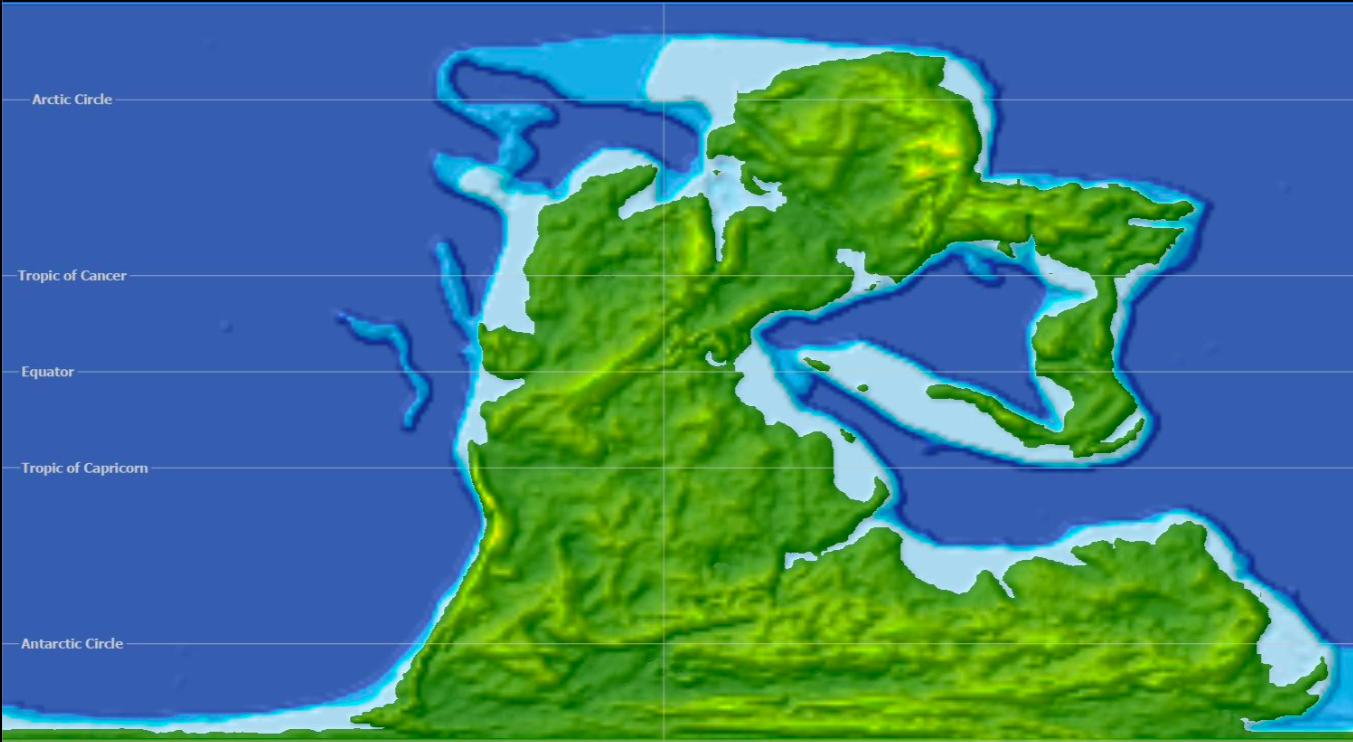
Especially when you’re tracking the continental movement from Pangea to the present day in 5 million years increments at the rate of 2.5 million years per second.
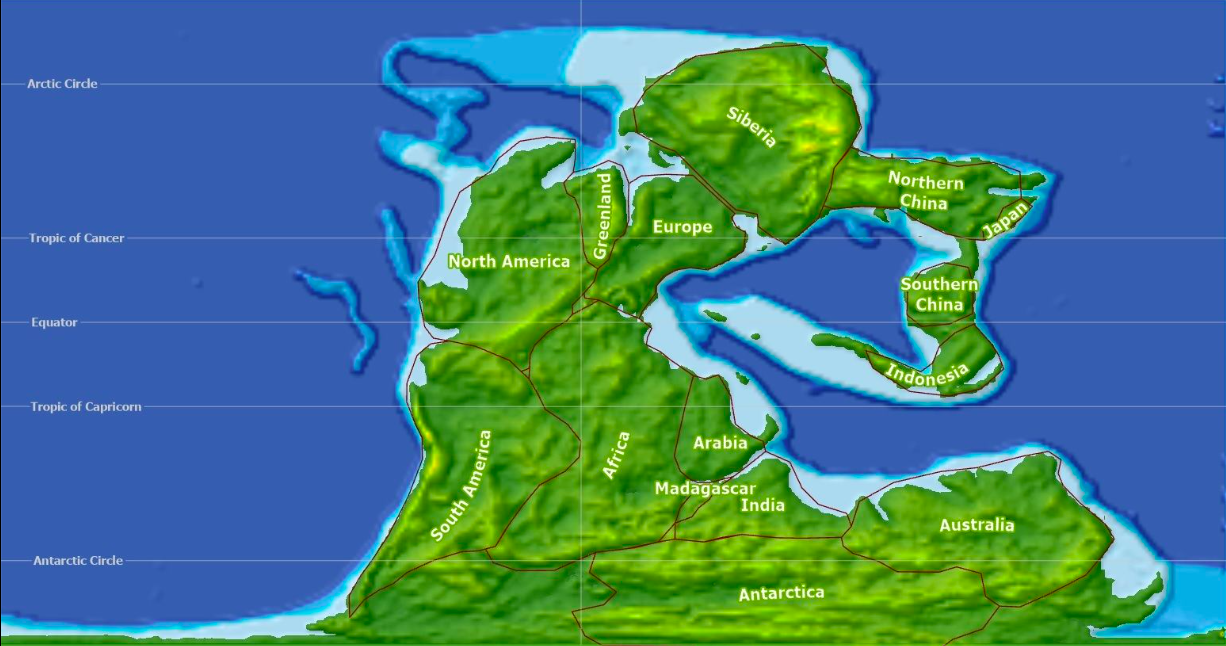
Here’s a map of what things looked like back then.
Those who’ve grown a bit fuzzy on their geography may require some indications of where future landmasses formed when Pangea broke apart. Your map apps can’t help you here.
The first split occurred in the middle of the Jurassic period, resulting in two hemispheres, Laurasia to the north and Gondwana.
As the project’s story map notes, 175 million years ago Africa and South America already bore a resemblance to their modern day configurations.
North America, Asia, and Europe needed to stay in the oven a bit longer, their familiar shapes beginning to emerge between 150 and 120 million years ago.
India peeled off from its “mother” continent of Gondwana some 100 million years ago.
Its tectonic plate collided with the Eurasian Plate, giving rise to the Himalayas and the Tibetan Plateau, by which point, dinosaurs had been extinct for about 15 million years…)
Geography nerds may chafe at the seemingly inaccurate sizes of Greenland, Antarctica and Australia. Rest assured that the mapmakers are aware, chalking it to the “distortion of the cartographic projection that exaggerates areas close to the Poles.”
Just for fun, let’s run it backwards!
But enough of the past. What of the future?
Those who really want to know could jump ahead to the end of the story map to see PALEOMAP Project founder Christopher Scotese’s speculative configuration of earth 250 million years hence, should current tectonic plate motion trends continue.
Behold his vision of mega-continent, Pangea Proxima, a landmass “formed from all current continents, with an apparent exception of New Zealand, which remains a bit on the side:”
On the opposite side of the world, North America is trying to fit to Africa, but it seems like it does not have the right shape. It will probably need more time…
Not to bum you out, but a more recent study paints a grimmer picture of a coming supercontinent, Pangea Ultima, when extreme temperatures have rendered just 8 percent of Earth’s surface hospitable to mammals, should they survive at all.
As the study’s co-author, climatologist Alexander Farnsworth, told Nature News, humans might do well to get “off this planet and find somewhere more habitable.”
From the Royal Society comes a short primer on snowflakes. Narrated by physicist Brian Cox, the video explains how they form, and why no two snowflakes have the exact same dimensions. It also recounts how Johannes Kepler developed a groundbreaking theory about the hexagonal shape of snowflakes in 1611–one proved right 400 years later. And then comes the kicker: snowflakes aren’t actually white; they’re clear.
Along the way, Cox references the first photographs of snowflakes. You can find our post on those 1885photographs here.
If you would like to support the mission of Open Culture, consider making a donation to our site. It’s hard to rely 100% on ads, and your contributions will help us continue providing the best free cultural and educational materials to learners everywhere. You can contribute through PayPal, Patreon, and Venmo (@openculture). Thanks!
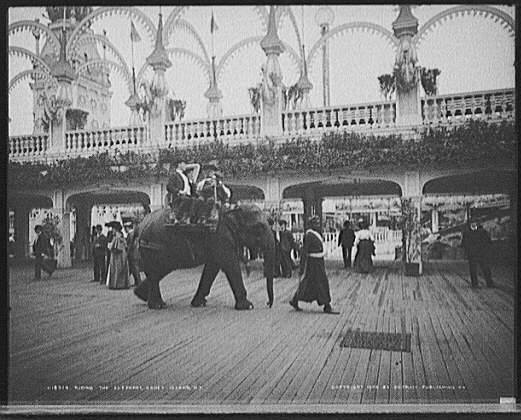
Early in the 20th century, crowds flocked to New York City’s Coney Island, where wonders awaited at every turn.
In 1902, the Brooklyn Daily Eagle published a few of the highlights in store for visitors at Coney Island’s soon-to-open “electric Eden,” Luna Park:
…the most important will be an illustration of Jules Verne’s ‘Twenty Thousand Leagues Under the Sea’, which will cover 55,000 square feet of ground, and a naval spectatorium, which will have a water area of 60,000 square feet. Beside these we will have many novelties, including the River Styx, the Whirl of the Town, Shooting the White Horse Rapids, the Grand Canyon, the ’49 Mining Camp, Dragon Rouge, overland and incline railways, Japanese, Philippine, Irish, Eskimo and German villages, the infant incubator, water show and carnival, circus and hippodrome, Yellowstone Park, zoological gardens, performing wild beasts, sea lions and seals, caves of Capri, the Florida Everglades and Mont Pelee, an electric representation of the volcanic destruction of St. Pierre.
Hold up a sec…what’s this about an infant incubator? What kind of name is that for a roller coaster!?
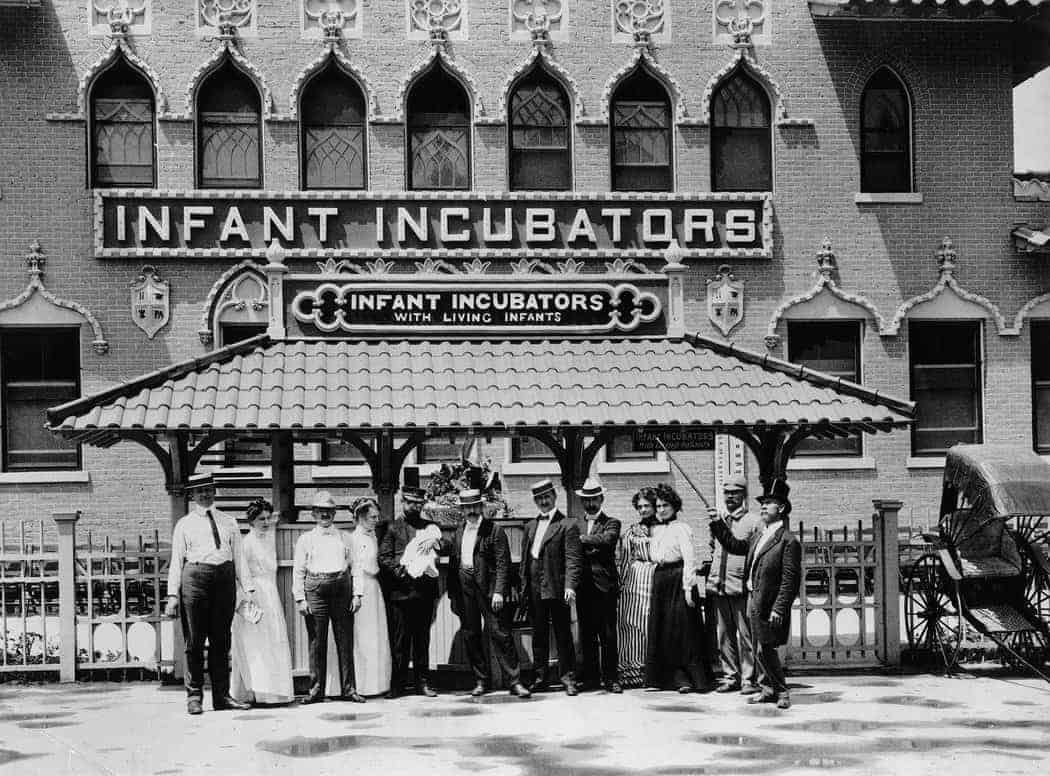
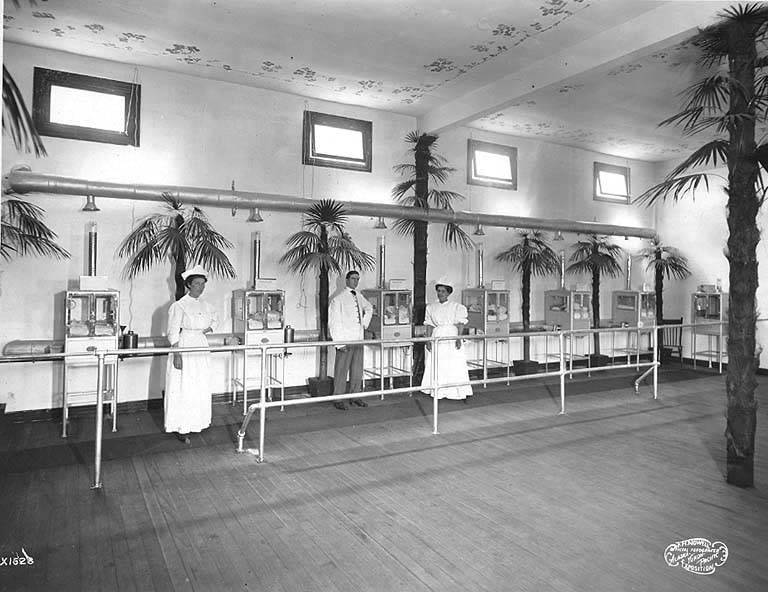
As it turns out, amid all the exotica and bedazzlements, a building furnished with steel and glass cribs, heated from below by temperature-controlled hot water pipes, was one of the boardwalk’s leading attractions.
Antiseptic-soaked wool acted as a rudimentary air filter, while an exhaust fan kept things properly ventilated.
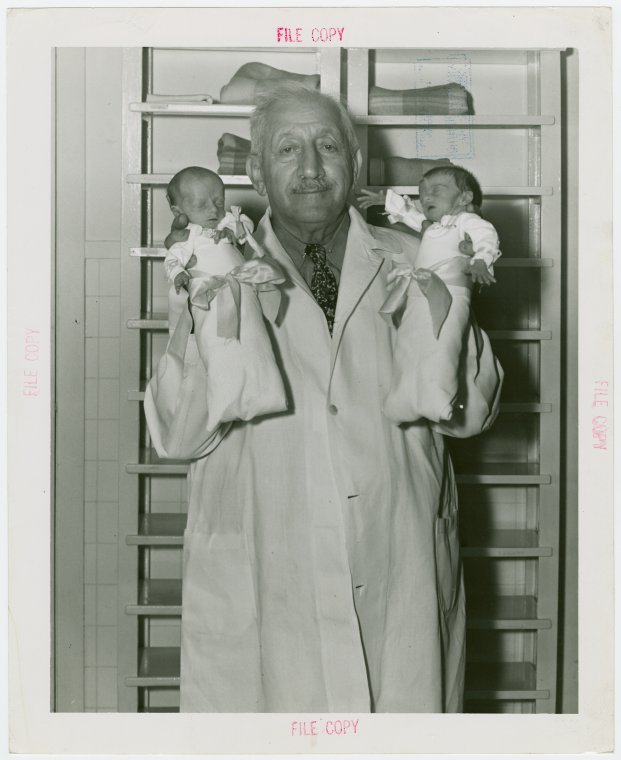
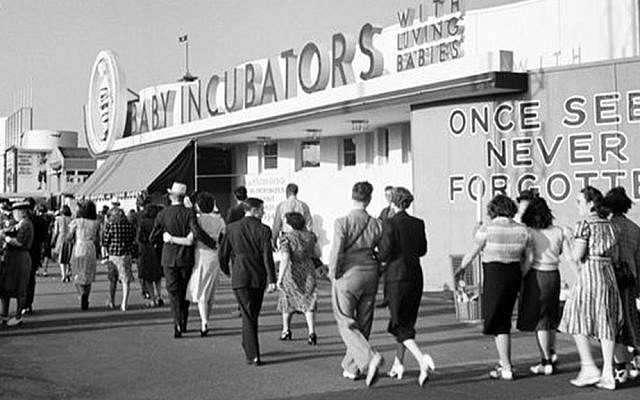
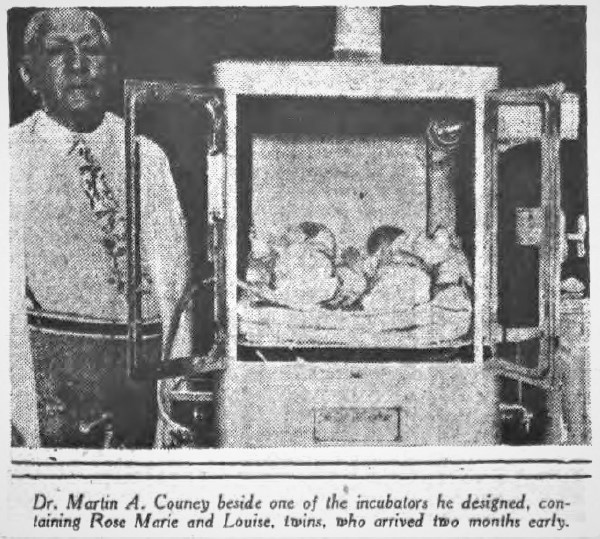
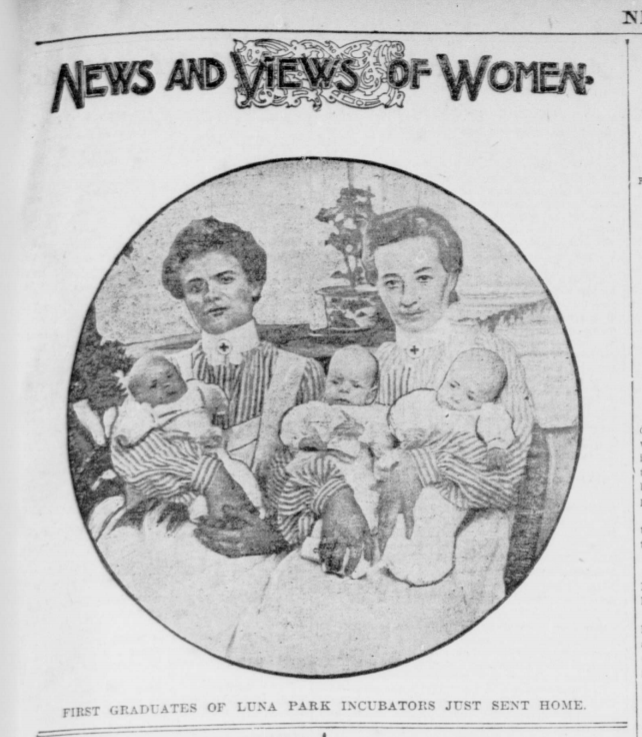
The real draw were the premature babies who inhabited these cribs every summer, tended to round the clock by a capable staff of white clad nurses, wet nurses and Dr. Martin Couney, the man who had the ideas to put these tiny newborns on display…and in so doing, saved thousands of lives.
Couney, a breast feeding advocate who once apprenticed under the founder of modern perinatal medicine, obstetrician Pierre-Constant Budin, had no license to practice.
Initially painted as a child-exploiting charlatan by many in the medical community, he was as vague about his background as he was passionate about his advocacy for preemies whose survival depended on robust intervention.
Having presented Budin’s Kinderbrutanstalt — child hatchery — to spectators at 1896’s Great Industrial Exposition of Berlin, and another infant incubator show as part of Queen Victoria Diamond Jubilee Celebration, he knew firsthand the public’s capacity to become invested in the preemies’ welfare, despite a general lack of interest on the part of the American medical establishment.
Thusly was the idea for the boardwalk Infantoriums hatched.
As word of Couney’s Infantorium spread, parents brought their premature newborns to Coney Island, knowing that their chances of finding a lifesaving incubator there was far greater than it would be in the hospital. And the care there would be both highly skilled and free, underwritten by paying spectators who observed the operation through a glass window. Prentice notes that “Couney took in babies from all backgrounds, regardless of race or social class:”
… a remarkably progressive policy, especially when he started out. He did not take a penny from the parents of the babies. In 1903 it cost around $15 (equivalent to around $405 today) a day to care for each baby; Couney covered all the costs through the entrance fees.
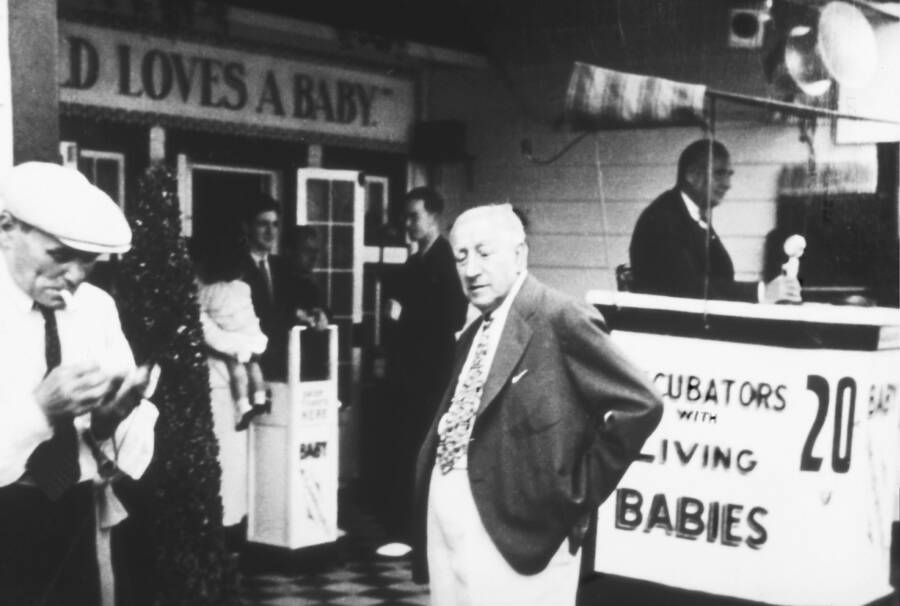
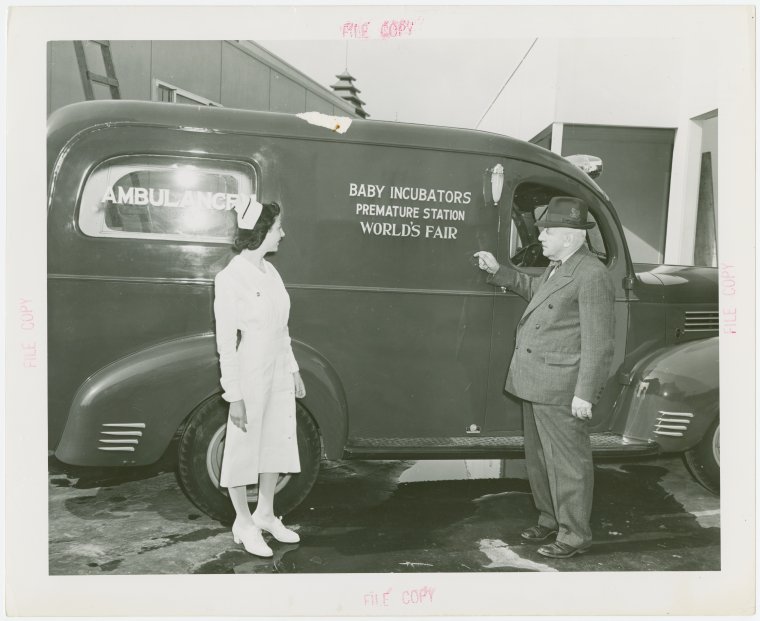
The New Yorker’s A. J. Lieblingobserved Couney at the 1939 World’s Fair in Flushing, Queens, where he had set up in a pink-and-blue building that beckoned visitors with a sign declaring “All the World Loves a Baby:”
The backbone of Dr. Couney’s business is supplied by the repeaters. A repeater becomes interested in one baby and returns at intervals of a week or less to note its growth. Repeaters attend more assiduously than most of the patients’ parents, even though the parents get in on passes. After a preemie graduates, a chronic repeater picks out another one and starts watching it. Dr. Couney’s prize repeater, a Coney Island woman named Cassatt, visited his exhibit there once a week for thirty-six seasons. Repeaters, as one might expect, are often childless married people, but just as often they are interested in babies because they have so many children of their own. “It works both ways,” says Dr. Couney, with quiet pleasure.
It’s estimated that Couney’s incubators spared the lives of more than 6,500 premature babies in the United States, London, Paris, Mexico and Brazil.
Despite his lack of bonafides, a number of pediatricians who toured Couney’s infantoriums were impressed by what they saw, and began referring patients whose families could not afford to pay for medical care. Many, as Liebling reported in 1939, wished his boardwalk attraction could stay open year round, “for the benefit of winter preemies:”
In the early years of the century no American hospital had good facilities for handling prematures, and there is no doubt that every winter many babies whom Dr. Couney could have saved died. Even today it is difficult to get adequate care for premature infants in a clinic. Few New York hospitals have set up special departments for their benefit, because they do not get enough premature babies to warrant it; there are not enough doctors and nurses experienced in this field to go around. Care of prematures as private patients is hideously expensive. One item it involves is six dollars a day for mother’s milk, and others are rental of an incubator and hospital room, oxygen, several visits a day by a physician, and fifteen dollars a day for three shifts of nurses. The New York hospitals are making plans now to centralize their work with prematures at Cornell Medical Center, and probably will have things organized within a year. When they do, Dr. Couney says, he will retire. He will feel he has “made enough propaganda for preemies.”
Listen to a StoryCorps interview with Lucille Horn, a 1920 graduate of Couney’s Coney Island incubators below.
From Kurzgesagt comes the history of our planet in one hour. They write: “Earth is 4.5 billion years old — which is approximately the same amount of time it took us to create this video. We’ve scaled the complete timeline of our Earth’s life into our first animated movie! Every second shows about a million years of the planet’s evolution. Hop on a musical train ride and experience how long a billion years really is.” Below, you can find the timestamps for the geologic periods covered in the video.
If you would like to support the mission of Open Culture, consider making a donation to our site. It’s hard to rely 100% on ads, and your contributions will help us continue providing the best free cultural and educational materials to learners everywhere. You can contribute through PayPal, Patreon, and Venmo (@openculture). Thanks!
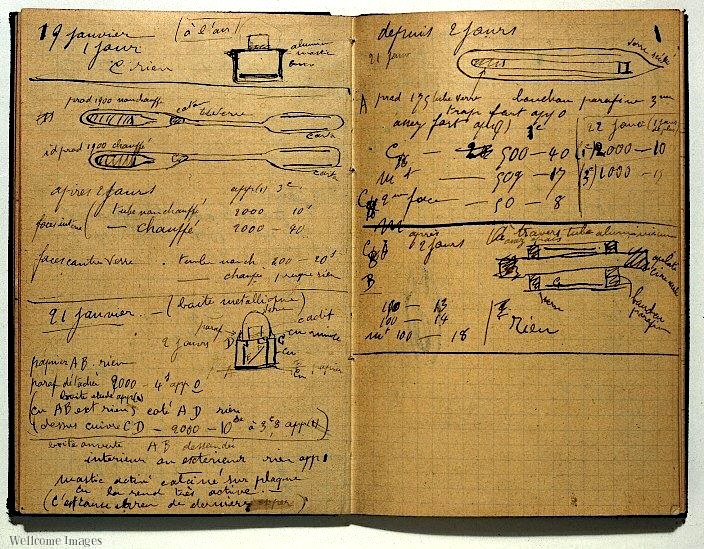
When researching a famous historical figure, access to their work and materials usually proves to be one of the biggest obstacles. But things are much more difficult for those writing about the life of Marie Curie, the scientist who, along her with husband Pierre, discovered polonium and radium and birthed the idea of particle physics. Her notebooks, her clothing, her furniture (not to mention her lab), pretty much everything surviving from her Parisian suburban house, is radioactive, and will be for 1,500 years or more.
If you want to look at her manuscripts, you have to sign a liability waiver at France’s Bibliotheque Nationale, and then you can access the notes sealed in a lead-lined box. The Curies didn’t know about the dangers of radioactive materials, though they did know about radioactivity. Their research attempted to find out which substances were radioactive and why, and so many dangerous elements–thorium, uranium, plutonium–were just sitting there in their home laboratory, glowing at night, which Curie thought beautiful, “like faint, fairy lights,” she wrote in her autobiography. Marie Curie carried these glowing objects around in her pockets. She and her husband wore standard lab clothing, nothing more.
Marie Curie died at age 66 in 1934, from aplastic anemia, attributed to her radioactive research. The house, however, continued to be used up until 1978 by the Institute of Nuclear Physics of the Paris Faculty of Science and the Curie Foundation. After that it was kept under surveillance, authorities finally now aware of the dangers inside. When many people in the neighborhood noticed high cancer rates among them, as reported in Le Parisien, they blamed the Curie’s home.
The laboratory and the building were decontaminated in 1991, a year after the Curie estate began allowing access to Curie’s notes and materials, which had been removed from the house. A flood of biographies appeared soon after: Marie Curie: A Life by Susan Quinn in 1995, Pierre Curie by Anna Hurwic in 1998, Curie: Le rêve scientifique by Loïc Barbo in 1999, Marie Curie et son laboratoire by Soraya Boudia in 2001, Obsessive Genius: The Inner World of Marie Curieby Barbara Goldsmith in 2005, and Radioactive: Marie and Pierre Curie, a Tale of Love and Falloutby Lauren Redniss in 2011.
Still, passing away at 66 is not too shabby when one has changed the world in the name of science. Marie Curie was the first woman to win a Nobel Prize (1903), the only woman to win it again (1911), the first woman to become a professor at the University of Paris, and the first woman to be entombed (on her own merits) at the Panthéon in Paris. And she managed many of her breakthroughs after the passing of her husband Pierre in 1906–who slipped and fell in the rain on a busy Paris street and was run over by the wheels of a horse-drawn cart.
Note: An earlier version of this post appeared on our site in 2015.
Ted Mills is a freelance writer on the arts who currently hosts the FunkZone Podcast. You can also follow him on Twitter at @tedmills, read his other arts writing at tedmills.com and/or watch his films here.
Nature doesn’t care if you’re happy, but Yale psychology professor Laurie Santos does.
As Dr. Santos points out during the above appearance on The Well, the goals of natural selection have been achieved as long as humans survive and reproduce, but most of us crave something more to consider life worth living.
With depression rising to near epidemic levels on college campuses and elsewhere, it’s worth taking a look at our ingrained behavior, and maybe making some modifications to boost our happiness levels.
Psychology and the Good Life, Dr. Santos’ massive twice weekly lecture class that actively tackles ways of edging closer to happiness, is the most popular course in Yale’s more than 300-year history.
Do we detect some resistance?
Positive psychology — or the science of happiness — is a pretty crowded field lately, and the overwhelming demand created by great throngs of people longing to feel better has attracted a fair number of grifters willing to impart their proven methodologies to anyone enrolling in their paid online courses.
By contrast, Dr. Santos not only has that Yale pedigree, she also cites other respected academics such as the University of Chicago’s Nicholas Epley, a social cognition specialist who believes undersociality, or a lack of face-to-face engagement, is making people miserable, and Harvard’s Dan Gilbert and the University of Virginia’s Timothy Wilson, who co-authored a paper on “miswanting”, or the tendency to inaccurately predict what will truly result in satisfaction and happiness.
Yale undergrad Mickey Rose, who took Psychology and the Good Life in the spring of 2022 to fulfill a social science credit, told the Yale Daily News that her favorite part of the class was that “everything was cited, everything had a credible source and study to back it up:”
I’m a STEM major and it’s kind of my overall personality type to question claims that I find not very believable. Obviously the class made a lot of claims about money, grades, happiness, that are counterintuitive to most people and to Yale students especially.
With Psychology and the Good Life now available to the public for free on Coursera, even skeptics might consider giving Dr. Santos’ recommended “re-wirement practices” a peek, though be forewarned, you should be prepared to put them into practice before making pronouncements as to their efficacy.
It’s all pretty straightforward stuff, starting with “use your phone to actually be a phone”, meaning call a friend or family member to set up an in person get together rather than scrolling through endless social media feeds.
Other common sense adjustments include looking beyond yourself to help by volunteering, resolving to adopt a glass-is-half-full type attitude, cultivating mindfulness, making daily entries in a gratitude journal, and becoming less sedentary.
Things to guard against are measuring your own happiness against the perceived happiness of others and “impact bias” — overestimating the duration and intensity of happiness that is the expected result of some hotly anticipated event, acquisition or change in social standing.
Below Dr. Santos gives a tour of the Good Life Center, an on-campus space that stressed out, socially anxious students can visit to get help putting some of those re-wirement practices into play.
We're hoping to rely on loyal readers, rather than erratic ads. Please click the Donate button and support Open Culture. You can use Paypal, Venmo, Patreon, even Crypto! We thank you!
Open Culture scours the web for the best educational media. We find the free courses and audio books you need, the language lessons & educational videos you want, and plenty of enlightenment in between.