Download 222 Belle Époque Art Posters: An Online Archive of Masterpieces from the “Golden Age of the Poster” (1880–1918)
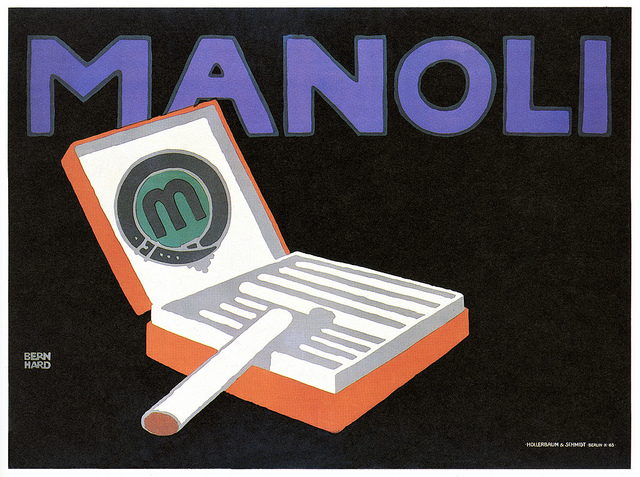
Europe at the end of the nineteenth century and beginning of the twentieth: what a time and place to be alive. Or rather, what a time and place to be alive for people in the right countries and, more importantly, of the right classes, those who saw a new world taking shape around them and partook of it with all possible heartiness. The period between the end of the Franco-Prussian War in 1871 and the outbreak of World War I in 1914, best known by its French name La Belle Époque, saw not just peace in Europe and empires at their zenith, but all manner of technological, social, and cultural innovations at home as well.
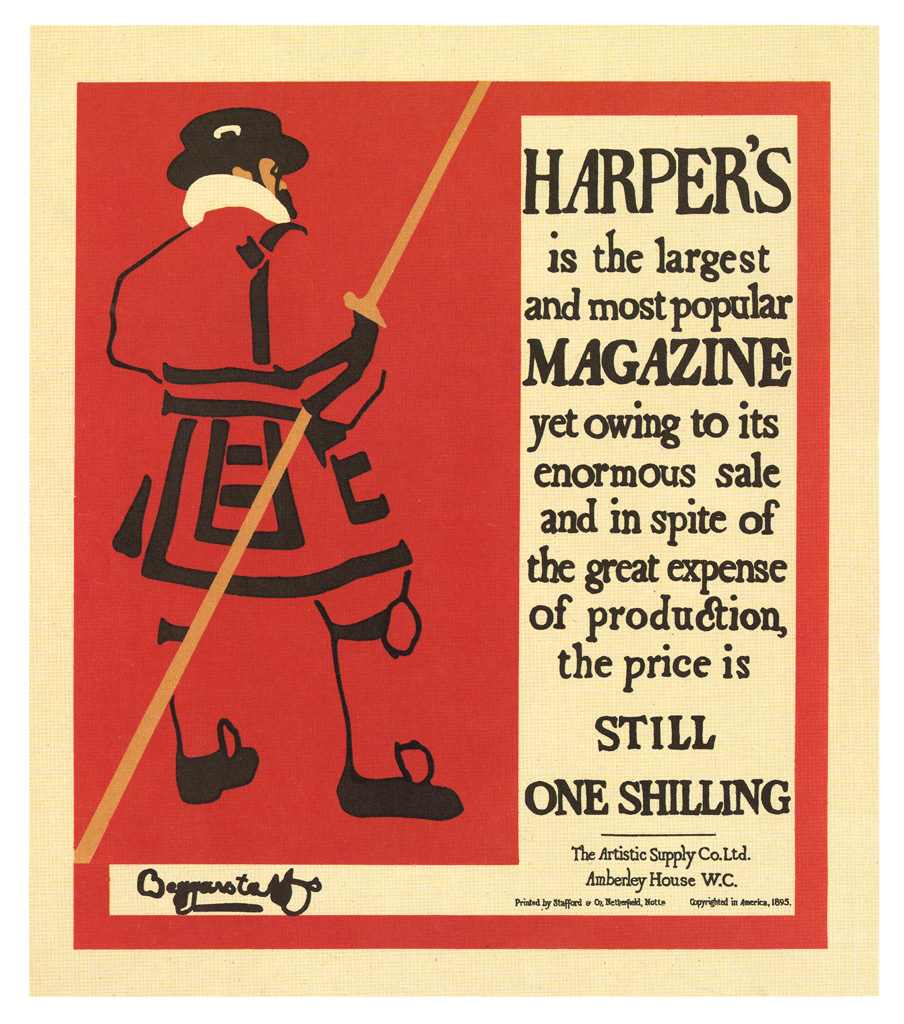
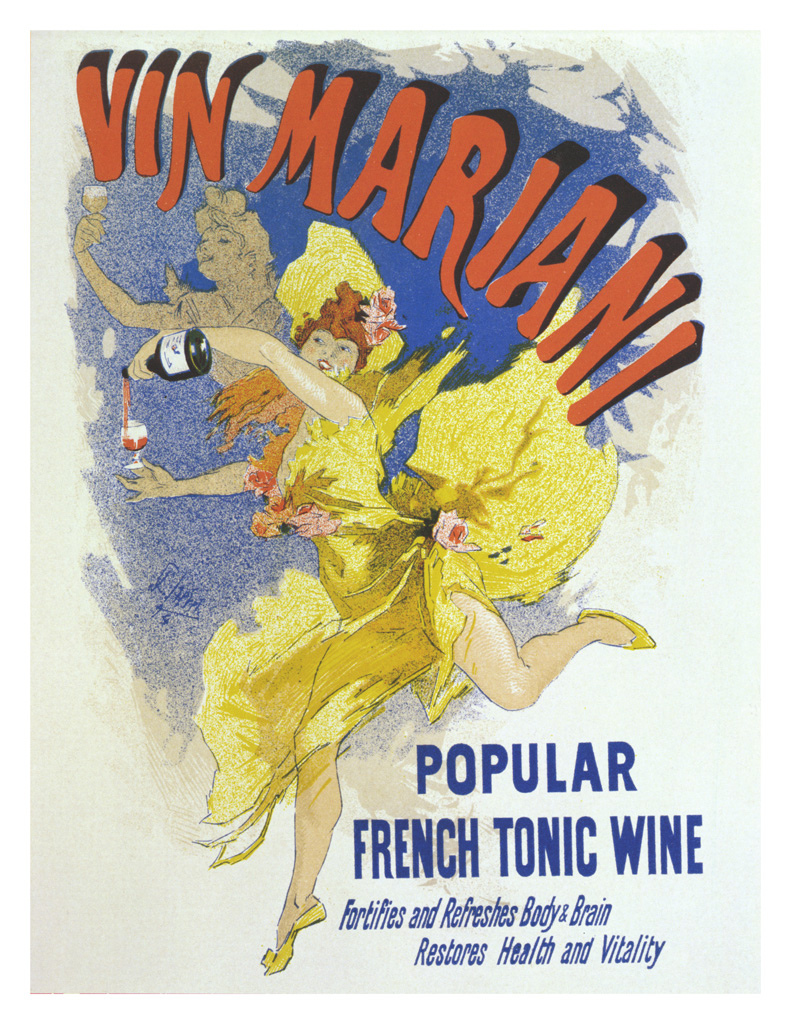
We here in the 21st century have few ways of tasting the life of that time as rich as its posters, more than 200 of which you can view in high resolution and download from the “Art of the Poster 1880–1918,” a Flickr collection assembled by the Minneapolis College of Art and Design.
“In the late nineteenth century, lithographers began to use mass-produced zinc plates rather than stones in their printing process,” says the accompanying text. “This innovation allowed them to prepare multiple plates, each with a different color ink, and to print these with close registration on the same sheet of paper. Posters in a range of colors and variety of sizes could now be produced quickly, at modest cost.”
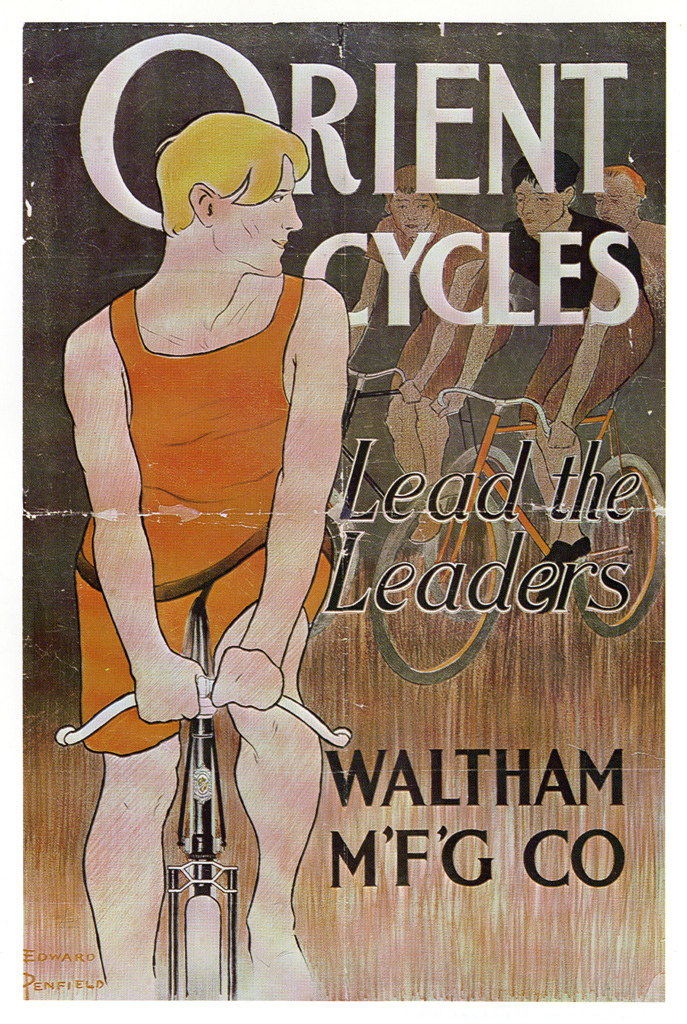
Like other of the most fruitful technological advancements of the era, this leap forward in poster-printing drew the attention, and soon the efforts, of artists: well-regarded illustrators and graphic designers like Alphonse Mucha, Jules Chéret, Eugène Grasset, and Henri de Toulouse-Lautrec took to the new method, and “The ‘Golden Age of the Poster’ was the spectacular result.”
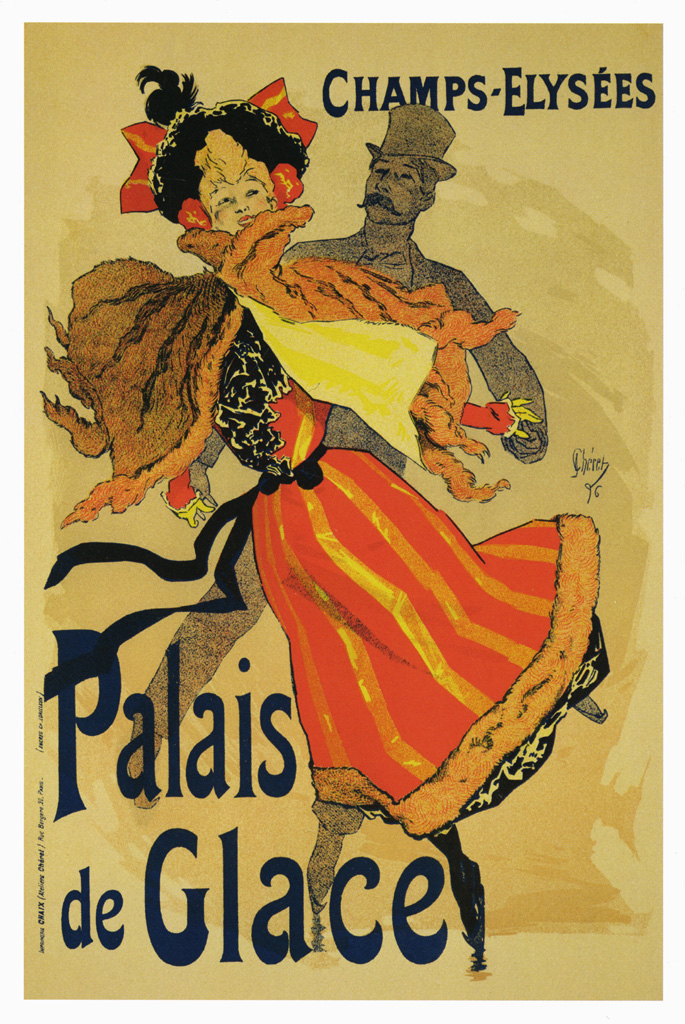
While many of the best-remembered posters of that Golden Age come from France, it touched the streets of every major city in western Europe as well as those of England and America, all places whose well-heeled populations found themselves newly and avidly interested in art, photography, motion pictures, magazines, bicycles, automobiles, absinthe, coffee, cigarettes, and world travel.

The companies behind all those exciting things had, of course, to advertise, but unlike in earlier times, they couldn’t settle for getting the word out; they had to use images, and the most vivid ones possible at that. They had to use them in such a way as to associate what they had to offer with the abundant spirit of the time, whether they called that time La Belle Époque, the Wilhelmine period, the late Victorian and Edwardian era, or the Gilded Age.

All those names, of course, were applied only in retrospect, after it became clear how bad times could get in the twentieth century. But then, none of us ever realize we’re living through a golden age before it comes to its inevitable end; until that time, best just to enjoy it. You can enter the poster archive here.
Note: An earlier version of this post appeared on our site in 2017.
Related Content:
René Magritte’s Early Art Deco Advertising Posters, 1924–1927
Read More...Meet Jason Arday, the Cambridge Professor Who Didn’t Learn to Talk Until Age 11, or to Read Until Age 18
When Jason Arday became a professor at University of Cambridge at the age of 37, he also became the youngest black person ever appointed to a professorship there. That’s impressive, but it becomes much more so when you consider that he didn’t learn to speak until he was eleven years old and read until he was eighteen. Diagnosed with Autism Spectrum Disorder at the age of three, he had to find different ways to develop himself and his life than most of us, and also to take advantage of help from the right collaborators: his mother, for instance, who learned the value of repetition to the autistic mind, and introduced her son to the highly repetitive game of snooker to get him used to mastering tasks.
“It’s hard to say if it worked or not,” Arday says in the Great Big Story video above. “Well, in terms of snooker, it did, because I became a really good snooker player.” An interested high school teacher, Chris Trace, and later a college tutor named Sandro Sandri, encouraged Arday to use his strong focus to not just catch up with but far surpass the average student.
“I don’t consider myself to be intelligent,” Arday says in the Black in Academia video below, “but I would bet that I’m one of the hardest-working people in the world.” In the Sociology of Education department, he’s directed his own work toward improving the situation of students possessed of similar drive in similarly difficult starting conditions.
Among Arday’s projects, according to the University of Cambridge’s web site, “a book with Dr. Chantelle Lewis (University of Oxford) about the challenges and discrimination faced by neurodiverse populations and students of color,” a program “to support the mental health of young people from ethnic minority backgrounds,” research into “the role of the arts and cultural literacy in effective mental health interventions,” and “a book about Paul Simon’s 1986 album, Graceland, focusing on the ethical dilemmas the singer-songwriter confronted by breaking cultural apartheid in South Africa to involve marginalized black communities in its production.”
Here on Open Culture, we’ve previously featured work on how music has helped autistic young people. It’s certainly helped Arday, who credits certain songs with helping him along in his quest for knowledge and academic credentials. He makes reference to David Bowie’s song “Golden Years,” because “there was a period of five years where it felt like everything I touched turned to gold — and I had another period of five years where it was just really, really difficult.” Overcoming disadvantages seems to have constituted half of Arday’s battle, but no less important, in his telling, has been his subsequent decision to focus on his distinctive set of strengths. Despite the young age at which he made professor, none of this came quickly — but then, he’d been psychologically prepared for that by another of his major musical touchstones: AC/DC’s “It’s a Long Way to the Top (If You Wanna Rock ‘N’ Roll).”
Related content:
The Wisdom & Advice of Maurice Ashley, the First African-American Chess Grandmaster
Based in Seoul, Colin Marshall writes and broadcasts on cities, language, and culture. His projects include the Substack newsletter Books on Cities, the book The Stateless City: a Walk through 21st-Century Los Angeles and the video series The City in Cinema. Follow him on Twitter at @colinmarshall or on Facebook.
Read More...David Foster Wallace’s Famous Commencement Speech, “This is Water,” Gets Animated on a Whiteboard
Author David Foster Wallace titled his famous address to Kenyon College’s Class of 2005 “This is Water,” a reference to its opening joke — self-mockingly framed as a “didactic little parable-ish story” that is “a standard requirement of US commencement speeches:”
There are these two young fish swimming along and they happen to meet an older fish swimming the other way, who nods at them and says “Morning, boys. How’s the water?” And the two young fish swim on for a bit, and then eventually one of them looks over at the other and goes “What the hell is water?”
Mark Wooding, founder of After Skool, a YouTube channel “committed to finding the most powerful content and delivering it in the most engaging way possible” gave his whiteboard animation of the speech a different title: “Your Mind is an Excellent Servant, but a Terrible Master.”
It’s the “old cliche” Wallace invoked midway through, noting that “like many clichés, so lame and unexciting on the surface, (it) actually expresses a great and terrible truth:”
It is not the least bit coincidental that adults who commit suicide with firearms almost always shoot themselves in: the head. They shoot the terrible master. And the truth is that most of these suicides are actually dead long before they pull the trigger.
Wallace himself died by suicide a little more than three years after delivering the speech, prompting author Tom Bissell to write in an essay for the New York Times that “the terrible master eventually defeated David Foster Wallace, which makes it easy to forget that none of the cloudlessly sane and true things he had to say about life in 2005 are any less sane or true today, however tragic the truth now seems:”
This Is Water does nothing to lessen the pain of Wallace’s defeat. What it does is remind us of his strength and goodness and decency — the parts of him the terrible master could never defeat, and never will.
We braced a bit wondering how Wooding would handle this portion of the speech.
It would have been a good time for one of his more abstract flights of fancy.
In truth, sometimes Wooding’s dry erase drawings cluttered our headspace unnecessarily, distracting from Wallace’s message. Isn’t that ironic? A large part of the speech deals with choosing what to pay attention to, and how to pay attention to it.
In an attempt to follow Wallace’s advice and push back against the “basic self-centeredness …that is our default setting, hard-wired into our boards at birth”, we’ll concede that Wooding’s animation may help the speech land with those who’d give a pass on listening to an audio recording or reading a transcript.
As Wooding told the San Francisco Chronicle, “Some people are visual learners, some learn by hearing things, some have to do it… what I’ve tried to do with After Skool is combine every style of learning to make the ideas as accessible as possible, to take ideas that are kind of complex and make it so that an eighth-grader can understand it.”
The wicket grows a bit stickier when Wooding delves into the long passages wherein Wallace unleashes a torrent of grouchy self-serving thoughts born of boredom, routine and petty frustration… as an “example of how NOT to think”, he says in an aside.
Wallace presented this unvarnished ugliness as a set up, something to throttle back from — an illustration of how our lizard brains’ snap judgments need not get the final word:
… if you’re aware enough to give yourself a choice, you can choose to look differently at this fat, dead-eyed, over-made-up lady who just screamed at her kid in the checkout line. Maybe she’s not usually like this. Maybe she’s been up three straight nights holding the hand of a husband who is dying of bone cancer. Or maybe this very lady is the low-wage clerk at the motor vehicle department, who just yesterday helped your spouse resolve a horrific, infuriating, red-tape problem through some small act of bureaucratic kindness…If you’re automatically sure that you know what reality is, and you are operating on your default setting, then you, like me, probably won’t consider possibilities that aren’t annoying and miserable. But if you really learn how to pay attention, then you will know there are other options.
We wish Wooding had leaned out rather than in when Wallace’s bad mood makes him view the people suffering through traffic jams, crowded aisles, and long checkout lines with him as “repulsive”, “stupid”, “cow-like”, and “dead-eyed”.
Knowing that Wallace was winding up to reveal these knee jerk assessments as the fabrications of a testy, self-absorbed mind operating on autopilot, the illustrations might have better served the message had they been a step or two ahead of the messenger. Doodles depicting these people as far more neutral looking than the deliberately vitriolic portrait Wallace was painting could have added some dimension.
It’s important to remember that these visuals aren’t animated in the traditional sense. They’re manipulated time lapse drawings. Unless Wooding breaks out the eraser and doubles back to make modifications, they’re fixed on the whiteboard and in our minds.
This may explain in part why the fed up mom in the check out line appears to get a fairer shake in The Glossary’s live action adaptation of excerpts from the same speech, below.
If you’d rather not gild the lily with whiteboard animation, you can listen to Wallace’s speech and read the transcript here.
Related Content
– Ayun Halliday is the Chief Primatologist of the East Village Inky zine and author, most recently, of Creative, Not Famous: The Small Potato Manifesto and Creative, Not Famous Activity Book. Follow her @AyunHalliday.
Read More...How to Be Happier in 5 Research-Proven Steps, According to Popular Yale Professor Laurie Santos
Nature doesn’t care if you’re happy, but Yale psychology professor Laurie Santos does.
As Dr. Santos points out during the above appearance on The Well, the goals of natural selection have been achieved as long as humans survive and reproduce, but most of us crave something more to consider life worth living.
With depression rising to near epidemic levels on college campuses and elsewhere, it’s worth taking a look at our ingrained behavior, and maybe making some modifications to boost our happiness levels.
Psychology and the Good Life, Dr. Santos’ massive twice weekly lecture class that actively tackles ways of edging closer to happiness, is the most popular course in Yale’s more than 300-year history.
Do we detect some resistance?
Positive psychology — or the science of happiness — is a pretty crowded field lately, and the overwhelming demand created by great throngs of people longing to feel better has attracted a fair number of grifters willing to impart their proven methodologies to anyone enrolling in their paid online courses.
By contrast, Dr. Santos not only has that Yale pedigree, she also cites other respected academics such as the University of Chicago’s Nicholas Epley, a social cognition specialist who believes undersociality, or a lack of face-to-face engagement, is making people miserable, and Harvard’s Dan Gilbert and the University of Virginia’s Timothy Wilson, who co-authored a paper on “miswanting”, or the tendency to inaccurately predict what will truly result in satisfaction and happiness.
Yale undergrad Mickey Rose, who took Psychology and the Good Life in the spring of 2022 to fulfill a social science credit, told the Yale Daily News that her favorite part of the class was that “everything was cited, everything had a credible source and study to back it up:”
I’m a STEM major and it’s kind of my overall personality type to question claims that I find not very believable. Obviously the class made a lot of claims about money, grades, happiness, that are counterintuitive to most people and to Yale students especially.
With Psychology and the Good Life now available to the public for free on Coursera, even skeptics might consider giving Dr. Santos’ recommended “re-wirement practices” a peek, though be forewarned, you should be prepared to put them into practice before making pronouncements as to their efficacy.
It’s all pretty straightforward stuff, starting with “use your phone to actually be a phone”, meaning call a friend or family member to set up an in person get together rather than scrolling through endless social media feeds.
Other common sense adjustments include looking beyond yourself to help by volunteering, resolving to adopt a glass-is-half-full type attitude, cultivating mindfulness, making daily entries in a gratitude journal, and becoming less sedentary.
(You might also give Dr. Santos’ Happiness Lab podcast a go…)
Things to guard against are measuring your own happiness against the perceived happiness of others and “impact bias” — overestimating the duration and intensity of happiness that is the expected result of some hotly anticipated event, acquisition or change in social standing.
Below Dr. Santos gives a tour of the Good Life Center, an on-campus space that stressed out, socially anxious students can visit to get help putting some of those re-wirement practices into play.
Sign up for Coursera’s 10-week Science of Well-Being course here.
Related Content
The Science of Well-Being: Take a Free Online Version of Yale University’s Most Popular Course
Free Online Psychology & Neuroscience Courses, a subset of our collection, 1,700 Free Online Courses from Top Universities
What Are the Keys to Happiness? Lessons from a 75-Year-Long Harvard Study
– Ayun Halliday is the Chief Primatologist of the East Village Inky zine and author, most recently, of Creative, Not Famous: The Small Potato Manifesto and Creative, Not Famous Activity Book. Follow her @AyunHalliday.
Read More...The Fantastic Women Of Surrealism: An Introduction
When André Breton, a leader of the Surrealist movement and author of its first manifesto, wrote that “the problem of woman is the most marvelous and disturbing problem in all the world,” he was not alluding to the unfair lack of recognition experienced by his female peers.
Marquee name Surrealists like Breton, Salvador Dalí, Man Ray, René Magritte, and Max Ernst positioned the women in their circle as muses and symbols of erotic femininity, rather than artists in their own right.
As Méret Oppenheim, subject of a recent retrospective at the Museum of Modern Art, is seen remarking at the outset of Behind the Masterpiece’s introduction to “the fantastic women of Surrealism”, above, it was up to female Surrealists to free themselves of the narrowly defined role society — and their male counterparts — sought to impose on them:
A woman isn’t entitled to think, to express aggressive ideas.
The first artist Behind the Masterpiece profiles needs no introduction. Frida Kahlo is surely one of the best known female artists in the world, a woman who played by her own rules, turning to poetic, often brutal imagery as she delved into her own physical and mental suffering:
I paint self-portraits, because I paint my own reality. I paint what I need to. Painting completed my life. I lost three children and painting substituted for all of this… I am not sick, I am broken. But I am happy to be alive as long as I can paint.
The National Museum of Women in the Arts notes that Remedios Varo — the subject of a current exhibition at the Art Institute of Chicago- and Leonora Carrington “were seen as the ‘femmes-enfants’ to the famous and much older male artists in their lives.”
Their friendship was ultimately more satisfying and far longer lasting then their romantic attachments to Surrealist luminaries Ernst and poet Benjamin Péret. Carrington paid tribute to it in her novel, The Hearing Trumpet.
The pair’s work reveals a shared interest in alchemy, astrology and the occult, approaching them from characteristically different angles, as per Stefan van Raay, author of Surreal Friends: Leonora Carrington, Remedios Varo, and Kati Horna:
Carrington’s work is about tone and color and Varo’s is about line and form.
The name of Dorothea Tanning, like that of Leonora Carrington, is often linked to Max Ernst, though she made no bones about her desire to keep her artistic identity separate from that of her husband of 30 years.
Her work evolved several times over the course of a career spanning seven decades, but her first major museum survey was a posthumous one.
University of Cambridge art history professor, Alyce Mahon, co-curator of that Tate Modern exhibit, touches on the nature of Tanning’s deceptively feminine soft sculptures:
If I asked for two words that you associate with pin cushions, you would say sewing and craft, and you would associate those with the female in the house. Tanning played with the idea of wifely skills and took a very humble object and turned it into a fetish. She crafted her first one out of velvet in 1965 and randomly placed pins in it and aligned it with a voodoo doll. She says it ‘bristles’ with images. So she takes something fabulously familiar and makes it uncanny and strange to encourage us to think differently.
Tanning rejected the label of ‘woman artist’, viewing it as “just as much a contradiction in terms as ‘man artist’ or ‘elephant artist’.”
Put that in your pipe and smoke it, Sigmund Freud!
The famed psychoanalyst’s concept of the subconscious mind was central to Surrealism, but he also wrote that “women oppose change, receive passively, and add nothing of their own.”
One wonders what he would have made of Object, the fur lined teacup, saucer and spoon that is Oppenheim’s best known work, for better or worse.
In an essay for Khan Academy’s AP/College Art History course Josh Rose describes how Museum of Modern Art patrons declared it the “quintessential” Surrealist object when it was featured in the influential 1936–37 exhibition “Fantastic Art, Dada, and Surrealism:”
But for Oppenheim, the prestige and focus on this one object proved too much, and she spent more than a decade out of the artistic limelight, destroying much of the work she produced during that period. It was only later when she re-emerged, and began publicly showing new paintings and objects with renewed vigor and confidence, that she began reclaiming some of the intent of her work. When she was given an award for her work by the City of Basel, she touched upon this in her acceptance speech, (saying,) “I think it is the duty of a woman to lead a life that expresses her disbelief in the validity of the taboos that have been imposed upon her kind for thousands of years. Nobody will give you freedom; you have to take it.”
Related Content
Discover Leonora Carrington, Britain’s Lost Surrealist Painter
A Brief Animated Introduction to the Life and Work of Frida Kahlo
The Forgotten Women of Surrealism: A Magical, Short Animated Film
– Ayun Halliday is the Chief Primatologist of the East Village Inky zine and author, most recently, of Creative, Not Famous: The Small Potato Manifesto and Creative, Not Famous Activity Book. Follow her @AyunHalliday.
Sylvia Plath’s Ten Back to School Commandments (1953)
Before her literary fame, her stormy relationship with Ted Hughes and her crippling battles with depression, Sylvia Plath was an enthusiastic student at Smith College. “The world is splitting open at my feet like a ripe, juicy watermelon,” she wrote to her mother. “If only I can work, work, work to justify all of my opportunities.”
During her junior year, she broke her leg on a skiing trip in upstate New York. The accident landed her briefly in the hospital and she wound up with a cast on her leg. Her mood darkened.
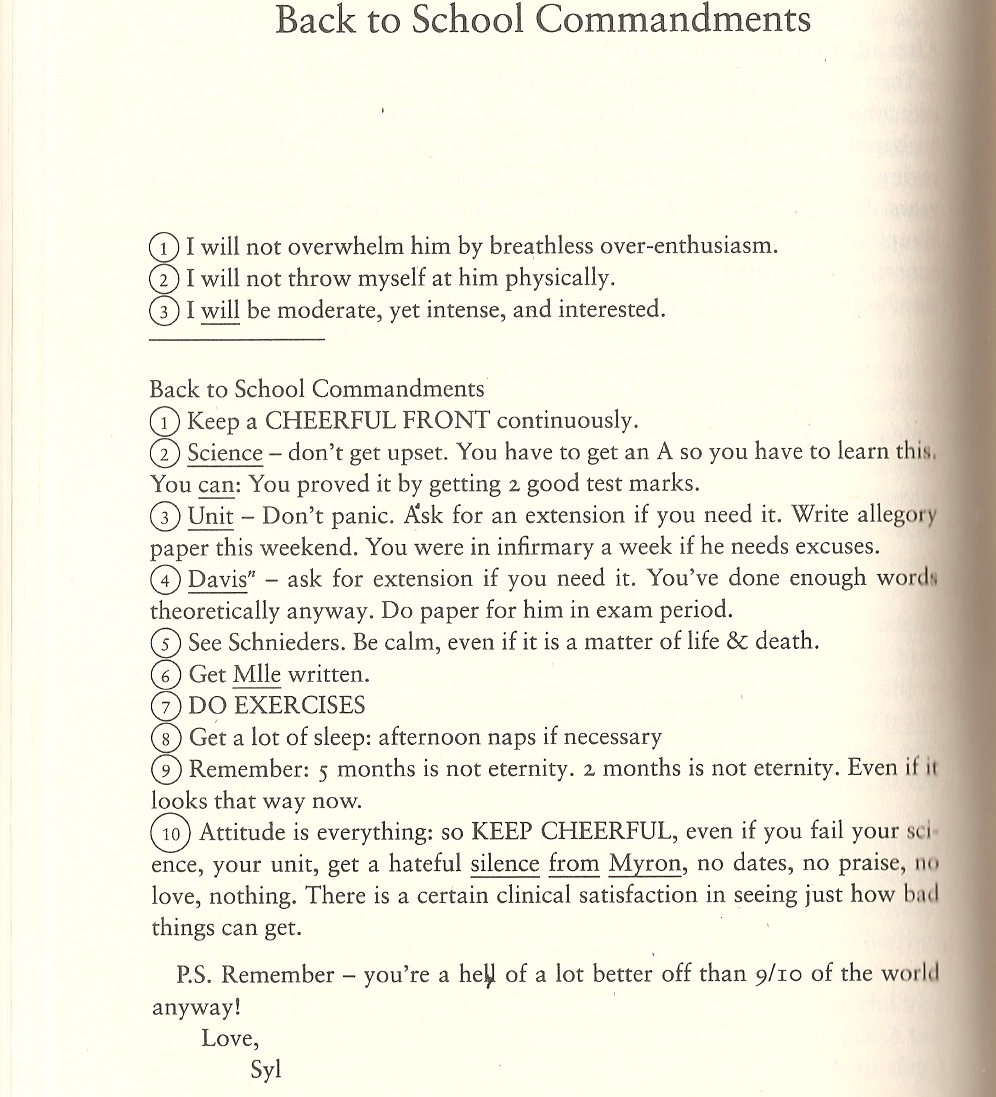
Psyching herself out for her return to college, she wrote in her diary a pair of lists.
The first list is a short series of rules about how to behave around her new beau, Myron Lotz. All three points are good advice for anyone who is utterly smitten, particularly number two – “I will not throw myself at him physically.” In the end, Plath’s relationship with Lotz didn’t amount to much. She reportedly commemorated him within her poem “Mad Girl’s Love Song” with the refrain “I think I made you up inside my head.”
The second list is a collection of “Back to School Commandments.” These commandments included asking her English prof Robert Gorham Davis for an extension; consulting with her German teacher Marie Schnieders (“Be calm,” she writes mysteriously, “even it is a matter of life & death.”); and completing her application to be a guest editor for Mademoiselle magazine. (She nailed that last task.)
The list’s final commandment comes off bleaker than the mildly panicky motivational tone of the rest of the list. “Attitude is everything: so KEEP CHEERFUL, even if you fail your science, your unit, get a hateful silence from Myron, no dates, no praise, no love, nothing. There is a certain clinical satisfaction in seeing just how bad things can get.”
Note: An earlier version of this post appeared on our site in 2015.
via The Excellent Lists of Note book
Related Content:
Why Should We Read Sylvia Plath? An Animated Video Makes the Case
Christopher Hitchens Creates a Revised List of The 10 Commandments for the 21st Century
Jonathan Crow is a Los Angeles-based writer and filmmaker whose work has appeared in Yahoo!, The Hollywood Reporter, and other publications. You can follow him at @jonccrow. And check out his blog Veeptopus, featuring lots of pictures of vice presidents with octopuses on their heads. The Veeptopus store is here.
Read More...Coffee Connoisseur James Hoffmann Reviews a $20,000 Espresso Maker
It costs roughly $20,000, weighs nearly 100 pounds, and looks like a high-end microscope. Handmade in Switzerland, the MANUMENT Leva Machine makes espresso. How well does it make espresso? How do the shots taste?: According to coffee expert James Hoffmann–he’s the author of The World Atlas of Coffee–the shots have a texture that is “very enjoyable.” The texture is “silky, buttery and soft.” That verdict is sandwiched in the middle of a 20-minute review of the machine, which you can watch above.
If you would like to support the mission of Open Culture, consider making a donation to our site. It’s hard to rely 100% on ads, and your contributions will help us continue providing the best free cultural and educational materials to learners everywhere. You can contribute through PayPal, Patreon, and Venmo (@openculture). Thanks!
Related Content
The Birth of Espresso: The Story Behind the Coffee Shots That Fuel Modern Life
Understanding Espresso: A Six-Part Series Explaining What It Takes to Pull the Ideal Shot
Coffee College: Everything You Wanted to Know about Coffee Making in One Lecture
How to Make Coffee in the Bialetti Moka Pot: The “Ultimate Techique”
Read More...The Psychedelic Animated Video for Kraftwerk’s “Autobahn” (1979)
Ah, yes, “Autobahn.” From the moment the door slams and the ignition starts, prog rockers and pre-new wavers know a journey is afoot. Though the members of Kraftwerk made three albums before this, the members still looking like well meaning bookish hippies, 1974’s “Autobahn” is considered Year Zero for the denizens of the electric cafe, the four German robots who made human music with machines.
Created in 1979, but bopping around again in pop culture orbit is this cel-drawn animation by Roger Mainwood, created to promote “Autobahn” after most of the culture had caught up. By that last year of the ’70s Omni magazine was a year old, music was sifting through the shockwaves left by Bowie’s Low and Heroes, analog was flirting with digital, and the world was ready to drive on that long, electric highway.
Mainwood’s protagonist is part alien, part human, and he begins looking around in awe in his hip goggles, then setting off for a run straight out of a Muybridge loop, only to wind up floating, flying, sailing and swimming through a landscape indebted to Peter Max, PushPin Studios, underground comix, and 1930 modernism.
Mainwood had just graduated from London’s Royal College of Art Film and Television School, and was commissioned by John Halas, the Hungarian immigrant who became known as the Father of British Animation, for Kraftwerk’s record label. The label wanted to put out one of the first music Laserdiscs. (Halas, by the way, directed a very UPA-influenced short called “Automania” in 1963). According to Mainwood, he still doesn’t know if the band liked the short or even if they watched it.
Mainwood avoided any direct representation of driving or automobiles, much to his credit, which may be why the film holds its fascination. The animator continued in his field, winding up a producer of several classics of British animation, including The Snowman and the chilling When the Wind Blows. As for the meaning of “Autobahn,” we’ll let Mainwood have the last word:
Thinking back to my thought processes at that time, I remember wanting to specifically not have conventional cars in the film. I wanted a sense of a repetitive journey, and alienation, which I took to be what the music was about…hence the solitary futuristic figure, protected by large goggles, moving through and trying to connect with the journey he is taking. The automobile “monsters” are deliberately threatening (I have never been a big fan of cars or motorways!) and when our “hero” tries to make human contact (with different coloured clones of himself) he can never do it. In the end he realises he is making the repetitive and circular journey alone but strides forward purposefully at the end as he did in the beginning. All of which sounds rather pretentious…but I was a young thing in those days!
You can read more of an interview with Mainwood here.
Find more animations in our collection, 4,000+ Free Movies Online: Great Classics, Indies, Noir, Westerns, Documentaries & More.
Related Content:
Kraftwerk’s First Concert: The Beginning of the Endlessly Influential Band (1970)
Kraftwerk’s “The Robots” Performed by German 1st Graders in Cute Cardboard Robot Costumes
Ted Mills is a freelance writer on the arts who currently hosts the artist interview-based FunkZone Podcast. You can also follow him on Twitter at @tedmills, read his other arts writing at tedmills.com and/or watch his films here.
Read More...How to Spot Bullshit: A Manual by Princeton Philosopher Harry Frankfurt (RIP)
Note: Over the weekend, the Princeton philosopher Harry Frankfurt passed away at the age of 94. After a long career, he became the author of the surprise bestselling book, On Bullshit, which we featured in 2016. Please revisit our original post below.
We live in an age of truthiness. Comedian Stephen Colbert coined the word to describe the Bush administration’s tendency to fudge the facts in its favor.
Ten years after the American Dialect Society named it Word of the Year, former president Bush’s calendar is packed with such leisure activities as golf and painting portraits of world leaders, but “truthiness” remains on active duty.
It’s particularly germane in this election year, though politicians are far from its only practitioners.
Take global warming. NASA makes a pretty rock solid case for both its existence and our role in it:
97 percent or more of actively publishing climate scientists agree: Climate-warming trends over the past century are extremely likely due to human activities. In addition, most of the leading scientific organizations worldwide have issued public statements endorsing this position.
In view of such numbers, it’s understandable that a suburban Joe with a freezer full of factory-farmed beef and multiple SUVs in his garage would cling to the position that global warming is a lie. It’s his last resort, really.
But such self-rationalizations are not truth. They are truthiness.
Or to use the old-fashioned word favored by philosopher Harry Frankfurt, above: bullshit!
Frankfurt–a philosopher at Princeton and the author of On Bullshit–allows that bullshit artists are often charming, or at their very least, colorful. They have to be. Achieving their ends involves engaging others long enough to persuade them that they know what they’re talking about, when in fact, that’s the opposite of the truth.
Speaking of opposites, Frankfurt maintains that bullshit is a different beast from an out-and-out lie. The liar makes a specific attempt to conceal the truth by swapping it out for a lie.
The bullshit artist’s approach is far more vague. It’s about creating a general impression.
There are times when I admit to welcoming this sort of manure. As a maker of low budget theater, your honest opinion of any show I have Little Red Hen’ed into existence is the last thing I want to hear upon emerging from the cramped dressing room, unless you truly loved it.
I’d also encourage you to choose your words carefully when dashing a child’s dreams.
But when it comes to matters of public policy, and the public good, yes, transparency is best.
It’s interesting to me that filmmakers James Nee and Christian Britten transformed a portion of their learned subject’s thoughts into voiceover narration for a lightning fast stock footage montage. It’s diverting and funny, featuring such ominous characters as Nosferatu, Bill Clinton, Charlie Chaplin’s Great Dictator, and Donald Trump, but isn’t it also the sort of misdirection sleight of hand at which true bullshitters excel?
Frankfurt expands upon his thoughts on bullshit in his aptly titled bestselling book, On Bullshit and its followup On Truth.
Related Content:
Noam Chomsky Schools 9/11 Truther; Explains the Science of Making Credible Claims
Ayun Halliday is an author, illustrator, and Chief Primatologist of the East Village Inky zine. Follow her @AyunHalliday
Read More...The Three Punctuation Rules of Cormac McCarthy (RIP), and How They All Go Back to James Joyce
Note: Today novelist Cormac McCarthy (All the Pretty Horses, The Road and No Country for Old Men) passed away at the age of 89. Below, we’re revisiting a favorite post from our archive that focuses on punctuation, a distinctive element of McCarthy’s writing.
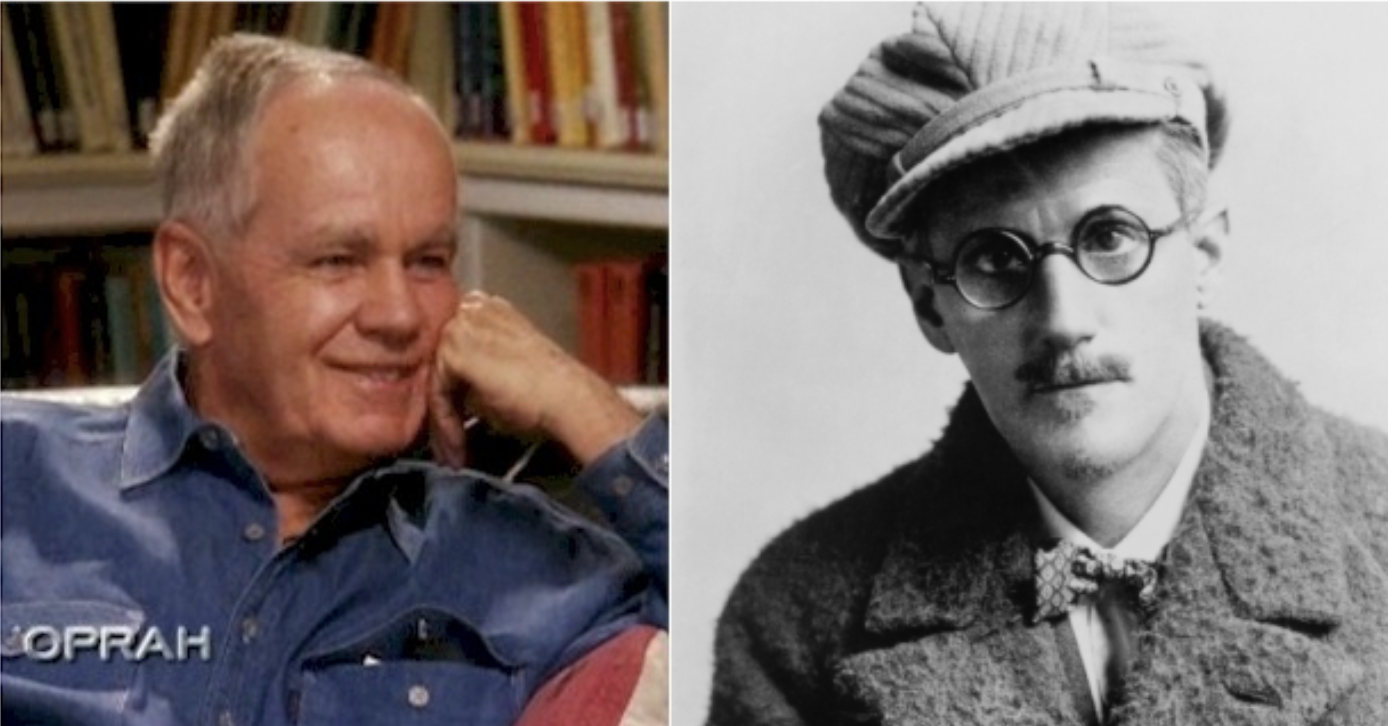
Cormac McCarthy has been—as one 1965 reviewer of his first novel, The Orchard Keeper, dubbed him—a “disciple of William Faulkner.” He makes admirable use of Faulknerian traits in his prose, and I’d always assumed he inherited his punctuation style from Faulkner as well. But in his very rare 2008 televised interview with Oprah Winfrey, McCarthy cites two other antecedents: James Joyce and forgotten novelist MacKinlay Kantor, whose Andersonville won the Pulitzer Prize in 1955. Joyce’s influence dominates, and in discussion of punctuation, McCarthy stresses that his minimalist approach works in the interest of maximum clarity. Speaking of Joyce, he says,
James Joyce is a good model for punctuation. He keeps it to an absolute minimum. There’s no reason to blot the page up with weird little marks. I mean, if you write properly you shouldn’t have to punctuate.
So what “weird little marks” does McCarthy allow, or not, and why? Below is a brief summary of his stated rules for punctuation:
1. Quotation Marks:
McCarthy doesn’t use ’em. In his Oprah interview, he says MacKinlay Kantor was the first writer he read who left them out. McCarthy stresses that this way of writing dialogue requires particular deliberation. Speaking of writers who have imitated him, he says, “You really have to be aware that there are no quotation marks, and write in such a way as to guide people as to who’s speaking.” Otherwise, confusion reigns.
2. Colons and semicolons:
Careful McCarthy reader Oprah says she “saw a colon once” in McCarthy’s prose, but she never encountered a semicolon. McCarthy confirms: “No semicolons.”
Of the colon, he says: “You can use a colon, if you’re getting ready to give a list of something that follows from what you just said. Like, these are the reasons.” This is a specific occasion that does not present itself often. The colon, one might say, genuflects to a very specific logical development, enumeration. McCarthy deems most other punctuation uses needless.
3. All other punctuation:
Aside from his restrictive rationing of the colon, McCarthy declares his stylistic convictions with simplicity: “I believe in periods, in capitals, in the occasional comma, and that’s it.” It’s a discipline he learned first in a college English class, where he worked to simplify 18th century essays for a textbook the professor was editing. Early modern English is notoriously cluttered with confounding punctuation, which did not become standardized until comparatively recently.
McCarthy, enamored of the prose style of the Neoclassical English writers but annoyed by their over-reliance on semicolons, remembers paring down an essay “by Swift or something” and hearing his professor say, “this is very good, this is exactly what’s needed.” Encouraged, he continued to simplify, working, he says to Oprah, “to make it easier, not to make it harder” to decipher his prose. For those who find McCarthy sometimes maddeningly opaque, this statement of intent may not help clarify things much. But lovers of his work may find renewed appreciation for his streamlined syntax.
Related Content:
Werner Herzog Reads From Cormac McCarthy’s All the Pretty Horses
Werner Herzog and Cormac McCarthy Talk Science and Culture
Josh Jones is a writer and musician based in Washington, DC. Follow him at @jdmagness
Read More...Support Us
We're hoping to rely on loyal readers, rather than erratic ads. Please click the Donate button and support Open Culture. You can use Paypal, Venmo, Patreon, even Crypto! We thank you!

About Us

Open Culture scours the web for the best educational media. We find the free courses and audio books you need, the language lessons & educational videos you want, and plenty of enlightenment in between.
Advertise With Us
FREE UPDATES!
GET OUR DAILY EMAIL
Get the best cultural and educational resources on the web curated for you in a daily email. We never spam. Unsubscribe at any time.
FOLLOW ON SOCIAL MEDIA
Open Culture editor Dan Colman scours the web for the best educational media. He finds the free courses and audio books you need, the language lessons & movies you want, and plenty of enlightenment in between.
Advertise With Us

