10 Most Popular MOOCs (Massive Open Online Courses) Getting Started in June: Enroll Free Today
Like everything else these days, education has become a 24/7 affair. Yes, things are slowing down on college campuses this summer. But, on the internet, it’s full steam ahead. This June alone, over 300 free MOOCs (Massive Open Online Courses) are getting underway. They’re all neatly catalogued by the education web site Class Central, which also tracks the most popular MOOCS offered each month. What’s hot in June? Find the top 10 below. And don’t hesitate to enroll in any of the courses. They’re all free.
Personal Finance Planning
Purdue University via edX
Manage your money more effectively by learning practical solutions to key investment, credit, insurance and retirement questions.
Bookmark | Next Session : 15th Jun, 2016
Nutrition and Health: Food Safety
Wageningen University via edX
Learn about bacteria, pesticides and health hazards present in food.
Bookmark | Next Session : 1st Jun, 2016
Islam Through Its Scriptures
Harvard University via edX
Learn about the Quran, the central sacred text of Islam, through an exploration of the rich diversity of roles and interpretations in Muslim societies.
Bookmark | Next Session : 1st Jun, 2016
History of Graphic Design
California Institute of the Arts via Coursera
This condensed survey course focuses on four major areas of design and their history: Typography, Image-Making, Interactive Media, and Branding.
Bookmark | Next Session : 20th Jun, 2016
Big Data: Data Visualisation
Queensland University of Technology via FutureLearn
Data visualisation is vital in bridging the gap between data and decisions. Discover the methods, tools and processes involved.
Bookmark | Next Session : 27th Jun, 2016
Microeconomics: When Markets Fail
University of Pennsylvania via Coursera
Perfect markets achieve efficiency: maximizing total surplus generated. But real markets are imperfect. This course will explore a set of market imperfections to understand why they fail and to explore possible remedies, including antitrust policy, regulation, and government intervention.
Bookmark | Next Session : 6th Jun, 2016
Single Page Web Applications with AngularJS
Johns Hopkins University via Coursera
Do you want to write powerful, maintainable, and testable front end applications faster and with less code? Then consider joining this course to gain skills in one of the most popular Single Page Application (SPA) frameworks today, AngularJS
Bookmark | Next Session : 20th Jun, 2016
Machine Learning: Clustering & Retrieval
University of Washington via Coursera
A reader is interested in a specific news article and you want to find similar articles to recommend. What is the right notion of similarity? Moreover, what if there are millions of other documents?
Bookmark | Next Session : 15th Jun, 2016
Introduction to Engineering
University of Texas at Arlington via edX
The application of knowledge to design and build devices, systems, materials and processes in engineering.
Bookmark | Next Session : 8th, Jun, 2016
Social Norms, Social Change
University of Pennsylvania via Coursera
This is a course on social norms, the rules that glue societies together. It teaches how to diagnose social norms, and how to distinguish them from other social constructs, like customs or conventions.
Bookmark | Next Session : 20th Jun, 2016
For a complete list of courses starting in June, click here.
If you would like to support the mission of Open Culture, consider making a donation to our site. It’s hard to rely 100% on ads, and your contributions will help us continue providing the best free cultural and educational materials to learners everywhere. You can contribute through PayPal, Patreon, and Venmo (@openculture). Thanks!
Read More...Learn Calligraphy from Lloyd Reynolds, the Teacher of Steve Jobs’ Own Famously Inspiring Calligraphy Teacher
The story has, over time, solidified into one of the columns of Steve Jobs lore: in the early 1970s, the man who would found Apple left for Reed College. But before long, not wanting to spend any more of his parents’ money on tuition (and perhaps not temperamentally compatible with the structure of higher education anyway), he officially dropped out, couch-surfed through friends’ pads, lived on free meals ladled out by Hare Krishnas, continued to audit a variety of classes, and generally lived the prototype techno-neo-hippie lifestyle Silicon Valley has continued relentlessly to refine.
Perhaps the least likely of those classes was one on calligraphy, taught by Trappist monk and calligrapher Robert Palladino. More than thirty years later, delivering a now-famous Stanford commencement speech, Jobs recalled his time in the calligraphy class: “None of this had even a hope of any practical application in my life. But 10 years later, when we were designing the first Macintosh computer, it all came back to me. And we designed it all into the Mac. It was the first computer with beautiful typography.”
And what of the calligraphy teacher who made that possible? “Palladino, who died in late February at 83, joined the Trappist order of monks in New Mexico in 1950, according to a 2003 profile in Reed Magazine,” writes the Washington Post’s Niraj Chokshi. “Just 17 at the time, his handwriting attracted the attention of the monastery scribe, who worked with him on his art. Five years later, Palladino moved to Lafayette, Ore., where local artists brought news of a skilled amateur to Lloyd Reynolds, an icon in the field and the creator of Reed’s calligraphy program.”
Now you, too, can receive instruction from Reynolds, who in 1968 starred in a series on the Oregon Education Television Service’s program Men Who Teach, shooting twenty half-hour broadcasts on italic calligraphy and handwriting. Eight years later — about the time Jobs co-founded Apple with Steve Wozniak — he re-shot the series in color, and you can watch that version almost in its entirety with the playlist at the top of the post. (Reed has also made some related instructional materials available.) You may feel the temptation to turn all of Reynolds’ lessons on the art of writing toward your goal of becoming the next Steve Jobs. But try to resist that impulse and appreciate it for its own nature, which Jobs himself described as “beautiful, historical, artistically subtle in a way that science can’t capture.”
We’ll add these vintage lessons to our collection, 1,700 Free Online Courses from Top Universities.
Related Content:
Steve Jobs on Life: “Stay Hungry, Stay Foolish”
Steve Jobs Narrates the First “Think Different” Ad (Never Aired)
Steve Jobs Muses on What’s Wrong with American Education, 1995
One of World’s Oldest Books Printed in Multi-Color Now Opened & Digitized for the First Time
Discover What Shakespeare’s Handwriting Looked Like, and How It Solved a Mystery of Authorship
Based in Seoul, Colin Marshall writes and broadcasts on cities, language, and style. He’s at work on a book about Los Angeles, A Los Angeles Primer, the video series The City in Cinema, the crowdfunded journalism project Where Is the City of the Future?, and the Los Angeles Review of Books’ Korea Blog. Follow him on Twitter at @colinmarshall or on Facebook.
Read More...Sir Ian McKellen Releases New Apps to Make Shakespeare’s Plays More Enjoyable & Accessible
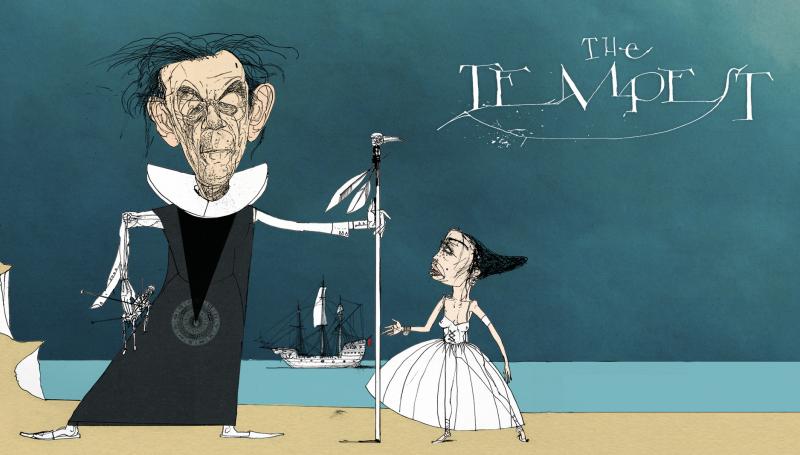
FYI: Ian McKellen, who first made his reputation performing at the Royal Shakespeare Company in the 1970s and 80s, has just released the first of a series of iPad apps meant to make Shakespeare’s plays more accessible, especially for high school and college students.
As McKellen explains above, Shakespeare’s plays were originally meant to be seen performed live in a theatre, not read as books. And so these apps feature actors performing dramatic scenes from the plays, while text scrolls by. They’ve just launched the first of 37 apps. It’s devoted to The Tempest, runs $5.99 on iTunes, and frankly seems well worth the price. Benedict Cumberbatch likes it. See below.
The app also includes these features:
- The full text of The Tempest as published in the First Folio.
- A full digital version of Arden Shakespeare The Tempest.
- The ability to switch between three different levels of notes depending on the level of reader’s needs.
- A full breakdown and explanation of every character and all of their lines across every scene.
- A linked historical time line of Shakespeare’s life, his plays, his theatres, and contemporary context to put it all into perspective.
- Video explanations and discussions by both Sir Ian McKellen and Professor Sir Jonathan Bate on characters, themes, and the meaning of the play.
- A full “play at a glance” with illustrations and summaries to explain the play’s plot with key quotes and events.
- A history of all the major productions of The Tempest from the 17th century to the present day.
- The option to make notes, copy and highlight text that can be collected, correlated and exported for later use.
- The option to search the play’s full text and essays.
Keep your eye on Heuristic Shakespeare’s iTunes site for new Shakespeare apps down the line.
Related Content:
Ian McKellen Stars in King Lear
Sir Ian McKellen Puts on a Dazzling One-Man Shakespeare Show
Read More...Brian Eno Creates a List of His 13 Favorite Records: From Gospel to Afrobeat, Shoegaze to Bulgarian Folk
For most of us, making a list of our favorite albums involves no small amount of nostalgia. We remember highlights from high school and college: songs on constant rotation after breakups and during summers of bliss. More so than any other media we consume, music—from classical to the most commercial pop—feels deeply personal.
But there are many other ways to relate to music. Brian Eno’s journey through the world of recorded sound, for example, more resembles that of a 19th century explorer. He gravitates toward the culturally exotic, makes studious observations, and advances hypotheses and theories. In reading through an interview he gave to The Quietus for their “baker’s dozen” series—in which they ask famous artists to name their top 13 albums—one theme emerges in the way Eno talks about music: discovery.
And as Eno reminds us in his commentary on his first pick—a gospel record by Reverend Maceo Woods and The Christian Tabernacle Choir—one precursor to discovery is curiosity, unbounded by prejudice or preconception. It’s an approach that has enabled him to create some of the most consistently interesting records decade after decade (hear 150 Eno tracks here), and to remain relevant long after most of his ’70s peers have disappeared.
Eno first heard, or misheard, the gospel group on U.S. radio. To his ears, the refrain “surrender to His will” sounded like “surrender to the wheel,” a cryptic phrase that provoked all sorts of associations. But even after he learned the real lyric, he was hooked on the group’s sound, and wanted to know more, though he himself is entirely non-religious.
“Why am I so moved by a music based on something that I just don’t believe in?,” Eno asked himself. His response ranges into philosophical territory, then ends on an unexpectedly upbeat note. If it surprises you that one of Eno’s favorite albums is an obscure record by an amateur gospel group, take a look at the rest of his picks. We’d expect the Velvet Underground to appear—given his famous comment about their massive influence—and they do. The rest is a collection of wild cards. See the eclectic list below and stop by The Quietus to read Eno’s thoughtful, candid commentary on each album.
The Dynamic Reverend Maceo Woods and The Christian Tabernacle Choir in Concert, by Reverend Maceo Woods and The Christian Tabernacle Choir
Farid El Atrache, by Farid El Atrache
Umut, by Arif Sag
“Go Where I Send Thee,” The Golden Gate Quartet (single)
Fresh, by Sly and the Family Stone
Plantation Lullabies, Me’Shell NdegeOcello
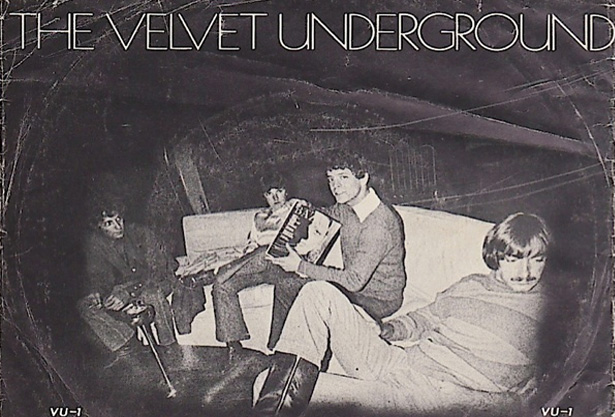
The Velvet Underground, by The Velvet Underground
Early Works, by Steve Reich
Afrodisiac, by Fela Ransome-Kuti & The Africa ‘70
Glider, by My Bloody Valentine
Heartland, by Owen Pallett
Grande Liturgie Orthodoxe Slave, by Chœur Bulgare Svetoslav Obretenov
Court and Spark, by Joni Mitchell
via The Quietus
Related Content:
David Bowie Lists His 25 Favorite LPs in His Record Collection: Stream Most of Them Free Online
Tom Waits Makes a List of His Top 20 Favorite Albums of All Time
Kurt Cobain Lists His 50 Favorite Albums: Features LPs by David Bowie, Public Enemy & More
Josh Jones is a writer and musician based in Durham, NC. Follow him at @jdmagness
Read More...Hear What It Sounds Like When Philosopher Daniel Dennett’s Brain Activity Gets Turned into Music
The refinements of medical imaging technologies like fMRI have given neuroscientists, psychologists, and philosophers better tools with which to study how the brain responds to all sorts of stimuli. We’ve seen studies of the brain on Jane Austen, the brain on LSD, the brain on jazz improv…. Music, it seems, offers an especially rich field for brain research, what with its connection to language, bodily coordination, mathematics, and virtually every other area of human intelligence. Scientists at MIT have even discovered which specific regions of the brain respond to music.
And yet, though we might think of music as a discrete phenomenon that stimulates isolated parts of the brain, Brownell professor of philosophy Dan Lloyd has a much more radical hypothesis, “that brain dynamics resemble the dynamics of music.”
He restates the idea in more poetic terms in an article for Trinity College: “All brains are musical—you and I are symphonies.” Plenty of people who can barely whistle on key or clap to a beat might disagree. But Lloyd doesn’t mean to suggest that we all have musical talent, but that—as he says in his talk below—“everything that goes on in the brain can be interpreted as having musical form.”
To demonstrate his theory, Lloyd chose not a musician or composer as a test subject, but another philosopher—and one whose brain he particularly admires—Daniel Dennett. And instead of giving us yet more colorful but baffling brain images to look at, he chose to convert fMRI scans of Dennett’s brain—“12 gigabytes of 3‑d snapshots of his cranium”—into music, turning data into sound through a process called “sonification.” You can hear the result at the top of the post—the music of Dennett’s brain, which is apparently, writes Daily Nous, “a huge Eno fan.”
In his paper “Mind as Music,” Lloyd argues that the so-called “language of thought” is, in fact, music. As he puts it, “the lingua franca of cognition is not a lingua at all,” an idea that has “aftershocks for semantics, method, and more.” Several questions arise: I, for one, am wondering if all our brains sound like Dennett’s abstract ambient score, or if some play waltzes, some operas, some psychedelic blues.…
You can learn much more about Lloyd’s fascinating research in his talk, which simplifies the technical language of his paper. Lloyd’s work goes much further, as he says, than studying “the brain on music”; instead he makes a sweepingly bold case for “the brain as music.”
via Daily Nous
Related Content:
This is Your Brain on Jazz Improvisation: The Neuroscience of Creativity
The Neuroscience of Drumming: Researchers Discover the Secrets of Drumming & The Human Brain
New Research Shows How Music Lessons During Childhood Benefit the Brain for a Lifetime
Josh Jones is a writer and musician based in Durham, NC. Follow him at @jdmagness
Read More...New LSD Research Provides the First Images of the Brain on Acid, and Hints at Its Potential to Promote Creativity
Talk to nearly any veteran of sixties counterculture, and you’re bound to hear a story or three about an acid trip. Some of those trips were bad, man, full of nightmare hallucinations and severe anxiety. In other accounts, however, LSD gets credit for opening up the mind, releasing old patterns of thought, and freeing up latent creative energy. From Ken Kesey to R. Crumb, these stories abound. Are they credible? Now that scientists have once again begun to study the drug—first synthesized in 1938 and used in experiments in the 50s and 60s until it was banned nearly everywhere—they are finding concrete answers using the latest in brain imaging technology.

And it appears that LSD—-in a controlled laboratory setting at least—“can be seen as reversing the more restricted thinking we develop from infancy to adulthood.” So reports The Guardian in regard to experiments recently conducted by neuropharmacologist David Nutt, former “drugs advisor” for the British government. Nutt gave volunteer subjects an injection of LSD, then captured the first images ever recorded of the brain on acid. You can see dramatic animations of those scans in the video at the top of the post, comparing the brains of test subjects on the drug and those on placebo, and see some static images above. The study, says Nutt, “is to neuroscience what the Higgs boson was to particle physics.” In an interview with Nature, he describes LSD research as a “way to study the biological phenomenon that is consciousness.”
What the subjects experienced won’t necessarily surprise anyone who has been on one of those legendary, mind-altering trips: researchers found, writes The Guardian, that “under the drug, regions [of the brain] once segregated spoke to one another,” producing hallucinations, “feelings of oneness with the world,” and “a loss of personal identity called ‘ego dissolution.’” However, prior to this study, Nutt says, “we didn’t know how these profound effects were produced.” There has been precious little data, because “scientists were either scared or couldn’t be bothered to overcome the enormous hurdles to get this done.”
Working with the Beckley Foundation, which studies psychoactive drugs and promotes policy reform, Nutt and his colleague Robert Carhart-Harris crowdfunded their study; in the video above, you can hear them both describe the goals and rationale of their research. What they eventually found, The Guardian reports, was that “under the influence, brain networks that deal with vision, attention, movement and hearing became far more connected, leading to what looked like a ‘more unified brain.’”
But at the same time, other networks broke down. Scans revealed a loss of connections between part of the brain called the parahippocampus and another region known as the retrosplenial cortex.
Nutt and his colleagues have more specific experiments planned, he tells Nature, “to look at how LSD can influence creativity, and how the LSD state mimics the dream state.” And just as the drug was tested decades ago as a therapy for addictions and psychiatric disorders, Nutt hopes he can conduct similar trials. But his research has an even larger scope: As Amanda Feilding, director of the Beckley Foundation, puts it, “We are finally unveiling the brain mechanisms underlying the potential of LSD, not only to heal, but also to deepen our understanding of consciousness itself.” We look forward to Nutt’s further research findings. Perhaps someday, LSD will be available with a prescription. Until then, it’s probably wise not to try these experiments at home.
Related Content:
Artist Draws Nine Portraits on LSD During 1950s Research Experiment
Ken Kesey Talks About the Meaning of the Acid Tests in a Classic Interview
R. Crumb Describes How He Dropped LSD in the 60s & Instantly Discovered His Artistic Style
Josh Jones is a writer and musician based in Durham, NC. Follow him at @jdmagness
Read More...Monty Python’s John Cleese Worries That Political Correctness Will Lead Us into a Humorless World, Reminiscent of Orwell’s 1984
As with all of our political debates, those over “political correctness” have become even more polarized, vitriolic, and outsized than when I was in college at the height of the first culture wars, when it often seemed to me like just new etiquette for increasingly pluralist campuses and workplaces. Now, people use the phrase to refer to any call for basic human decency and intellectual honesty—and use it to dismiss such calls out of hand. On the other hand, many efforts at curbing or criticizing certain kinds of speech can seem genuinely, unnecessarily, repressive. Whether it’s an illiberal college group pressuring their university to disinvite entertainers or shut down debates, or fanatical gunmen threatening, and taking, the lives of journalists or bloggers, the stakes over what can and can’t be said have grown exponentially.
Have we reached a crisis of “Orwellian” proportions in the U.S.? I’d hesitate to say so, given the overuse and abuse of Orwell’s name and ideas as a catch-all for societal dysfunction. We have rallies in which tens of thousands gather to cheer for the demonization and slander of entire people groups. It hardly seems to me that anyone’s losing their freedom of speech any time soon. But John Cleese in the Big Think video above makes an argument about a particular kind of political correctness that he defines as “the idea that you have to be protected from any kind of uncomfortable emotion.” Describing this kind of speech policing as pathological, Cleese refers to a theory of a psychiatrist friend, Robin Skinner, that people who can’t control their own emotions “have to start to control other people’s behavior.”
Cleese doesn’t blanketly impugn the motives of all activists for politically correct speech. He notes a similar trajectory as I have when it comes to college campuses. “Political correctness,” he says, “has been taken from being a good idea, which is ‘let’s not be mean, and particularly to people who are not able to look after themselves very well,’ to the point where any kind of criticism of any individual or group can be labeled cruel.” Perhaps he’s right. (And Cleese is by no means the first comic to say so—and to swear off college campuses.) In any case, his observations about the necessary relationship of comedy to criticism or offense are dead on, as well as his conclusion that once the humor’s gone, so “goes a sense of proportion, and… you’re living in 1984.” I can’t think of a book, or a society, with less humor in it.
One point of interest: Political Correctness means a great many things to a great many people. For some it is about agency and self-determination, and righting historical wrongs so as not to perpetuate them in the present. For others, it tends more toward a patronizing activist crusade on behalf, as Cleese says in his definition of the term, of “people who are not able to look after themselves.” While he calls a little of this latter attitude a good thing, George Carlin saw it as condescending and disingenuous. By no means a respecter of any party ideology, Carlin described even seemingly innocuous forms of politically correct language as fascism masquerading as manners.
In my experience, few people can make arguments against politically correct language without occasionally falling into the trap of proving its point. But Carlin and Cleese make thoughtful cases, especially when they use humor—as Carlin did over an entire career of railing against the speech police. In his bit above on the increasing insistence on ungainly euphemisms and puffed-up jargon, he demonstrates what Cleese calls the effective antidote to a political movement run riot: a sense of proportion—as well as a sense of compassion.
Related Content:
Slavoj Žižek Calls Political Correctness a Form of “Modern Totalitarianism”
What “Orwellian” Really Means: An Animated Lesson About the Use & Abuse of the Term
Josh Jones is a writer and musician based in Durham, NC. Follow him at @jdmagness
Read More...5 Books You Can Read Again .… and Again and Again: Here’s Our Picks, Now Yours
Recently, a Metafilter user asked the question: which books do you reread again and again, and why— whether for “comfort, difficulty, humour, identification, whatever”? It got me thinking about a few of the ways I’ve discovered such books.
Writing an essay or book about a novel is one good way to find out how well it holds up under multiple readings. You stare at plot holes, implausible character development, inconsistent chronologies, and other literary flaws (or maybe features) for weeks, months, sometimes even years. And you also live with the language that first seduced you, the characters who drew you in, the images, places, atmospheres you can’t forget….
But reading alone can mean that blind spots never get addressed. We hold to our biases, positive and negative, despite ourselves. Another great way to test the durability of work of fiction is to teach it for years, or otherwise read it in a group of engaged people, who will see what you don’t, can’t, or won’t, and help better your appreciation (or deepen your dislike).
Having spent many years doing both of these things as a student and teacher, there are a few books that survived semester after semester, and still sit prominently on my shelves, where at any time I can pull them down, open them up, and be immediately absorbed. Then there are books I read when younger, and which seemed so mysterious, so possessed of an almost religious significance, I returned to them again and again—looking for the most enchanted sentences.
If I had to narrow down to a short list the books I consistently reread, those books would come out of all three experiences above, and they would include, in no necessary order—
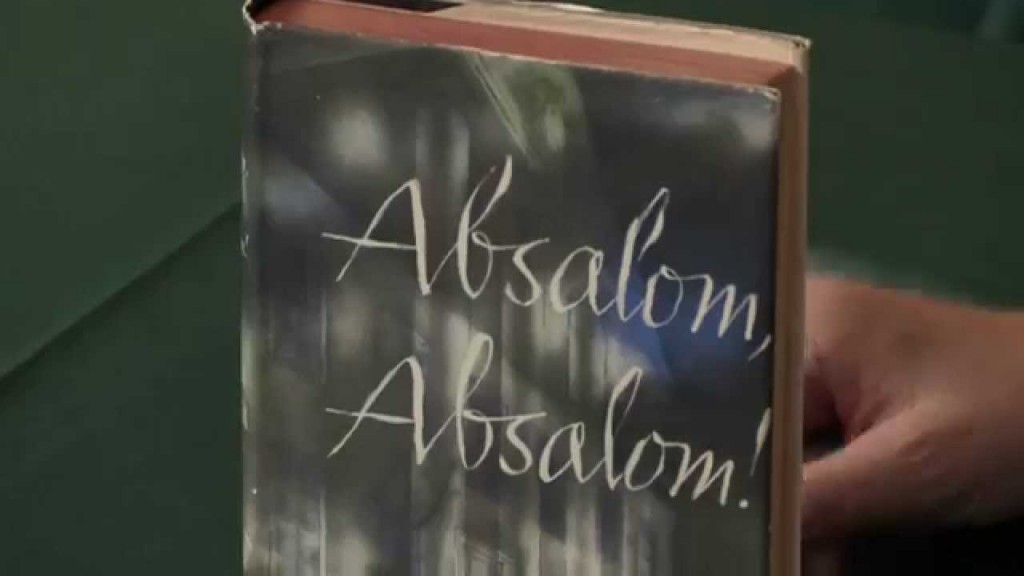
Absalom, Absalom!, by William Faulkner: I’ve written several essays on this novel, over the course of several years, and I love it as much or more as when I first picked it up. It’s a book that becomes both more grim and more darkly humorous as time goes on; its vertiginous narrative strategy creates an inexhaustible number of ways to see the story.
Wuthering Heights, by Emily Bronte: I read this novel as a child and understood almost nothing about it but the ghostly setting of “wiley, windy moors” (as Kate Bush described it) and the furious emotional intensity of Heathcliff and Catherine. These elements kept me coming back to discover just how much Bronte—like Faulkner—encircles her reader in a cyclone of possibility; multiple stories, told from multiple characters, times, and places, swirl around, never settling on what we most want in real life but never get there either—simple answers.
Song of Solomon, by Toni Morrison: Morrison’s novel extracts from the 20th century African American experience a tale of profound individual struggle, as characters in her fictional family fight to define themselves against social inequities and to transcend oppressive identities. Their failures to do so are just as poignant as their successes, and characters like Pilate and Milkman achieve an almost archetypal significance through the course of the novel. Morrison creates modern myth.
The Yiddish Policeman’s Union, by Michael Chabon. I taught this novel for years because it seemed like, and was, a great way to introduce students to the complications of plot, the joys of speculative fiction, and the empathetic imagining of other people and cultures that the novel can enable. I can think of many ways some critics might find Chabon’s book politically “problematic,” but my consistent enjoyment of its wild-eyed story has never diminished since I first picked up the book and read it straight through in a couple of days, fully convinced by its fictional world.
Labyrinths, by Jorge Luis Borges. The Argentinian writer’s best-known collection of stories and essays requires patient rereading. My first encounter with the book early in college provoked amazement, but little comprehension. I still can’t say that I understand Borges, but every time I reread him, I seem to discover some new alcove, and sometimes a whole other room, filled with inscrutable, mysterious treasures.
This list is not in any way comprehensive, but it covers a few of the books that have stayed with me, each of them for well over a decade, and a few of the reasons why. What books do you reread, and why? What is it about them that keeps you returning, and how did you discover these books? While I stuck with fiction above, I could also make a list of philosophical books, as well as poetry. Feel free to include such books in the comments section below as well.
Related Content:
The 10 Greatest Books Ever, According to 125 Top Authors (Download Them for Free)
Vladimir Nabokov Names the Greatest (and Most Overrated) Novels of the 20th Century
Read 700 Free eBooks Made Available by the University of California Press
Josh Jones is a writer and musician based in Durham, NC. Follow him at @jdmagness
Read More...A Massive 800-Track Playlist of 90s Indie & Alternative Music, in Chronological Order
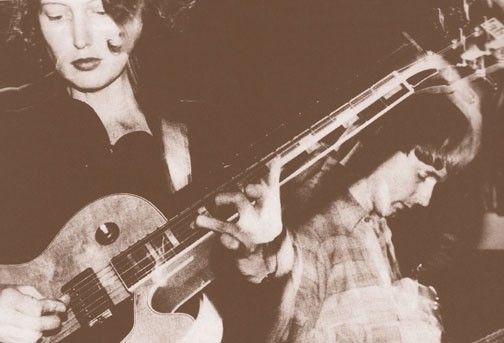 In the time it’s taken me to grow out of my wayward 90s youth and into mostly solid citizen adulthood, cultural memories of that decade have crystalized around a few genres that have seen some renewal of late. I’m more than pleased to find current musicians reviving shoegaze, 90s electronica, and neo-soul. And with so many artists who peaked twenty or so years ago still releasing records or getting back together for impressive reunions, it often seems like the music I grew up with never left, even if a whole raft of stars I couldn’t pick out of a lineup have emerged in the meantime.
And yet, though the veneration of 90s music has become a thing in recent years, the perspective of it by people perhaps not even born when the decade ended tends to be somewhat limited. Perhaps all of us forget how strange and eclectic 90s music was. Even at the time, pop and alternative cultures were almost instantly reduced in films, compilation albums, and more-or-less every show on MTV. It was an era when subcultures were quickly commodified, sanitized, and sold back to us in theaters and on record shelves.
To remind ourselves of just how wide-ranging the 90s were, we might turn to the expansive “giant 90s alt/indie/etc” playlist here, compiled by Aroon Korvna (born in 1982, but precociously “musically conscious” during the decade). The journey begins with the nasal chamber pop of They Might Be Giants’ “Birdhouse in Your Soul”—a classic of DIY dork-rock—and ends with Jay Z’s “Big Pimpin,” a song heralding the triumph of radio-ready rap and club hits over the decades’ many quirky rock and hip-hop guises.
Hear the playlist in three parts: Part I (1990–94) and II (1995–96) above; Part III (1997–99) below. (If you need Spotify’s software, download it here.) Along the way, we run into forgotten songs by under-the-radar bands like The Dwarves, Red House Painters, Guided By Voices, The Beta Band, and The Microphones; leftfield choices from one-hit wonders like Ned’s Atomic Dustbin and Information Society; the first stirrings from now-superstars like Daft Punk and Jack White; and cuts from just about every other artist on college or alternative radio throughout the decade.
“The inspiration for this playlist,” writes Korvna, “came from seeing one too many of those nostalgia-bait pieces aimed at my cohort: ‘You totally forgot about these 20 amazing hits from the 90’s.… After the 6th or 7th of these articles all listing off the same obvious things, you start to think you really have heard everything from the 90s. But we all know that’s not true.”
By doing a bit of internet research to fill gaps in memory, Korvna compiled “a mix of things everyone is familiar with, and more obscure artifacts, the sorts of songs you might have only been familiar with if you were, say, listening to college rock in 1991.”
If the 90s is to you an unknown country, you’ll find that this three-part Spotify playlist offers a comprehensive walk-through of the decades’ diverse musical culture—and it doesn’t just play the hits. If you’re a gentleman or lady of a certain age, it will refresh a few memories, make you smile and wince with nostalgia, and perhaps fill you with indignation over all the songs you think need to be on there but aren’t.
Feel free to leave your suggestions in the comments—or to make your own 90s playlist. And while you’re at it, you might want to take a look at Flavorwire’s surprising list of “105 ‘90s Alternative Bands that Still Exist.”
via Metafilter/Medium
Related Content:
62 Psychedelic Classics: A Free Playlist Created by Sean Lennon
Josh Jones is a writer and musician based in Durham, NC. Follow him at @jdmagness
Read More...Virginia Woolf Offers Gentle Advice on “How One Should Read a Book”
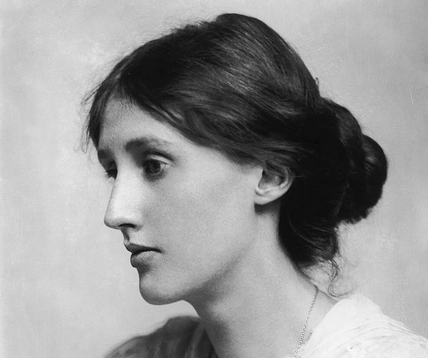
I am privileged to have grown up in a house filled with books. I don’t remember learning to read; I simply recall books—those that felt beneath me, those that seemed forever beyond comprehension. No one taught me how to read—by which I mean no one told me what to attend to in books, what to ignore; what to love, what to scorn. The shelves in my home, school, and local library were a wilderness, and I was left to carve my own paths through their thickets.
That all changed when I got to college, then graduate school, where I found various critical movements, literary theories, and philosophical schools, and was compelled to choose between their methods, politics, and prohibitions. Reading became a strenuous activity, a heavy intellectual exercise in which I felt those critics and theorists always looking over my shoulder. Those who have done intensive study in the humanities may sympathize: Afterward, I had to relearn how to read without an agenda.
Such is the kind of unfettered reading Virginia Woolf recommends in an essay titled “How Should One Read a Book?”, published in a series called The Common Reader—a title, in fact, of two collections, the first published in 1925, the second in 1932. Woolf wrote these essays for lay readers, not scholars, and many were previously published in venues like The Nation, Vogue, and The Yale Review. In them, Woolf’s informal investigations of writers like Jonathan Swift, Daniel Defoe, Christina Rossetti, and Thomas Hardy—writes a 1925 New York Times review—do not “put the author in the attitude of a defender or an expositor of certain trends in literature.”
“How Should One Read a Book?” appears at the end of the second series of The Common Reader. The essay “cautions,” writes Maria Popova, “against bringing baggage and pre-conceived notions to your reading” and abjures a formal, critical approach:
After all, what laws can be laid down about books? The battle of Waterloo was certainly fought on a certain day; but is Hamlet a better play than Lear? Nobody can say. Each must decide that question for himself. To admit authorities, however heavily furred and gowned, into our libraries and let them tell us how to read, what to read, what value to place upon what we read, is to destroy the spirit of freedom which is the breath of those sanctuaries. Everywhere else we may be bound by laws and conventions — there we have none.
Though herself a more than able scholar and critic, Woolf does not recommend that her readers become so. “The only advice,” she writes, “that one person can give another about reading is to take no advice, to follow your instincts, to use your own reason, to come to your own conclusions.” That said, however, she feels “at liberty to put forward a few ideas and suggestions” that we are free to take or leave. She offers her guidelines to aid enjoyment, not stifle it, and to help us sort and sift the “multitudinous chaos” we encounter when confronted with genres, periods, and styles of every type.
“Where,” Woolf asks, “are we to begin?” Below, in brief, find a few of her “ideas and suggestions,” offered with all of the careful caveats above:
- “Since books have classes—fiction, biography, poetry—we should separate them and take from each what it is right that each should give us.”
Most commonly we come to books with blurred and divided minds, asking of fiction that it shall be true, of poetry that it shall be false, of biography that it shall be flattering, of history that it shall enforce our own prejudices. If we could banish all such preconceptions when we read, that would be an admirable beginning. Do not dictate to your author; try to become him. Be his fellow-worker and accomplice. If you hang back, and reserve and criticise at first, you are preventing yourself from getting the fullest possible value from what you read.
- “Perhaps the quickest way to understand the elements of what a novelist is doing is not to read, but to write; to make your own experiment with the dangers and difficulties of words.”
Recall, then, some event that has left a distinct impression on you — how at the corner of the street, perhaps, you passed two people talking. A tree shook; an electric light danced; the tone of the talk was comic, but also tragic; a whole vision, an entire conception, seemed contained in that moment…. When you attempt to reconstruct it in words, you will find that it breaks into a thousand conflicting impressions…. Then turn from your blurred and littered pages to the opening pages of some great novelist — Defoe, Jane Austen, Hardy. Now you will be better able to appreciate their mastery.
- “We can read [biographies and memoirs] with another aim, not to throw light on literature, not to become familiar with famous people, but to refresh and exercise our own creative powers.”
The greater part of any library is nothing but the record of… fleeting moments in the lives of men, women, and donkeys. Every literature, as it grows old, has its rubbish-heap, its record of vanished moments and forgotten lives told in faltering and feeble accents that have perished. But if you give yourself up to the delight of rubbish-reading you will be surprised, indeed you will be overcome, by the relics of human life that have been cast out to moulder. It may be one letter — but what a vision it gives! It may be a few sentences — but what vistas they suggest!
Read the entirety of Woolf’s essay here to learn her nuanced view of reading. She concludes her essay with another gentle swipe at literary criticism and recommends humility in the company of literature:
If to read a book as it should be read calls for the rarest qualities of imagination, insight, and judgment, you may perhaps conclude that literature is a very complex art and that it is unlikely that we shall be able, even after a lifetime of reading, to make any valuable contribution to its criticism. We must remain readers.
Clearly Woolf did not think of reading as a passive activity, but rather one in which we engage our own imaginations and literary abilities, such as they are. But if we are not to criticize, not draw firm conclusions, morals, life lessons, or philosophies from the books we read, of what use is reading to us?
Woolf answers the question with some questions of her own: “Are there not some pursuits that we practice because they are good in themselves, and some pleasures that are final? And is not this among them?”
Related Content:
Take Vladimir Nabokov’s Quiz to See If You’re a Good Reader–The Same One He Gave to His Students
An Animated Introduction to Virginia Woolf
Josh Jones is a writer and musician based in Durham, NC. Follow him at @jdmagness
Read More...Support Us
We're hoping to rely on loyal readers, rather than erratic ads. Please click the Donate button and support Open Culture. You can use Paypal, Venmo, Patreon, even Crypto! We thank you!

About Us

Open Culture scours the web for the best educational media. We find the free courses and audio books you need, the language lessons & educational videos you want, and plenty of enlightenment in between.
Advertise With Us
FREE UPDATES!
GET OUR DAILY EMAIL
Get the best cultural and educational resources on the web curated for you in a daily email. We never spam. Unsubscribe at any time.
FOLLOW ON SOCIAL MEDIA
Open Culture editor Dan Colman scours the web for the best educational media. He finds the free courses and audio books you need, the language lessons & movies you want, and plenty of enlightenment in between.
Advertise With Us

