Saint John Coltrane: The San Francisco Church Built On A Love Supreme
Little of San Francisco today is as it was half a century ago. But at the corner of Turk Boulevard and Lyon Street stands a true survivor: the Church of St. John Coltrane. Though officially founded in 1971, the roots of this unique musical-religious institution (previously featured here on Open Culture) go back further still. “It was our first wedding anniversary, September 18, 1965 and we celebrated the occasion by going to the Jazz Workshop,” write founders Franzo and Marina King on the Church’s web site. “When John Coltrane came onto the stage we could feel the presence of the Holy Spirit moving with him.” Overcome with the sense that Coltrane was playing directly to them, “we did not talk to each other during the performance because we were caught up in what later would be known as our Sound Baptism.”
Or as Marina puts it in this new short documentary from NPR’s Jazz Night in America, “The holy ghost fell in a jazz club in 1965, and our lives were changed forever.” This was the year of Coltrane’s masterpiece A Love Supreme, a jazz album that, in the words of The New Yorker’s Richard Brody, “isn’t merely a collection of performances. It’s both one unified composition and, in effect, a concept album. And the core of that concept is more than musical — it’s the spiritual, religious dimension.”
Coltrane, as the documentary tells it, composed the suite in isolation, determined to go cold-turkey and kick the heroin habit that got him fired from Miles Davis’ band. In the process he underwent a “spiritual awakening,” which convinced him that his music could have a much higher purpose.
It was Coltrane’s early death in 1967 that clarified the Kings’ mission in life, eventually prompting them to convert the latest in a series of jazz spaces they’d been running into a proper house of worship. “John Coltrane became their Christ, their God,” writes NPR’s Anastasia Tsioulcas. A Love Supreme “became their central text, and ‘Coltrane consciousness’ became their guiding principle.” Over the past 50 years, their church has endured its share of hardships. In the early 1980s a lifeline appeared in the form of the African Orthodox Church, whose leaders wanted to bring it into the fold but had, as Fanzo remembers it, one condition: “John Coltrane cannot be God, okay?” Then the Kings remembered a remark Coltrane conveniently made in a Japanese interview to the effect that, one day, he’d like to be a saint. Thenceforth, St. Coltrane it was: not bad at all for a sax player from North Carolina.
Related Content:
John Coltrane’s Handwritten Outline for His Masterpiece A Love Supreme
Based in Seoul, Colin Marshall writes and broadcasts on cities, language, and culture. His projects include the Substack newsletter Books on Cities, the book The Stateless City: a Walk through 21st-Century Los Angeles and the video series The City in Cinema. Follow him on Twitter at @colinmarshall or on Facebook.
Read More...Hear a Prehistoric Conch Shell Musical Instrument Played for the First Time in 18,000 Years
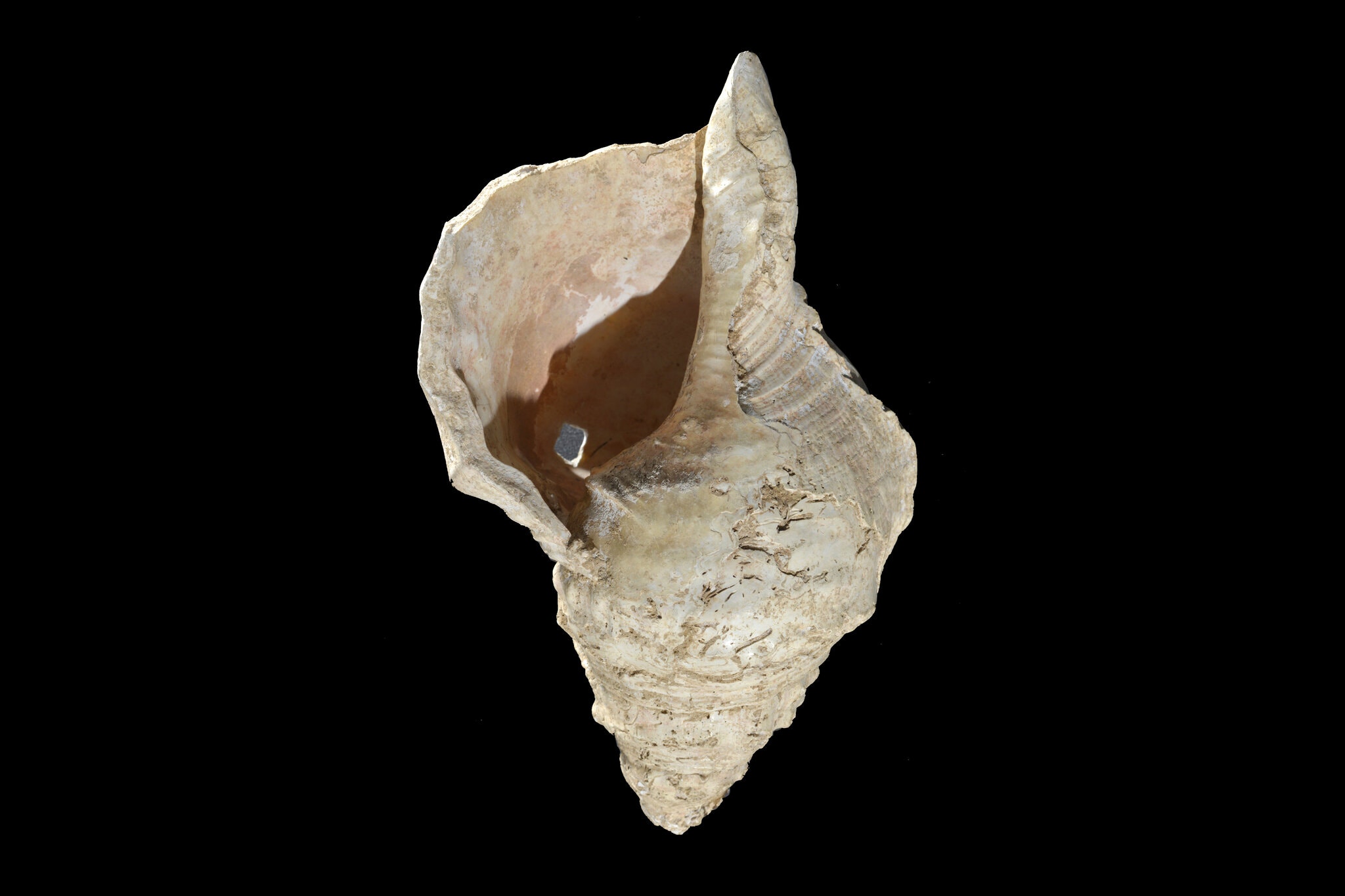
Photo by C. Fritz, Muséum d’Histoire naturelle de Toulouse
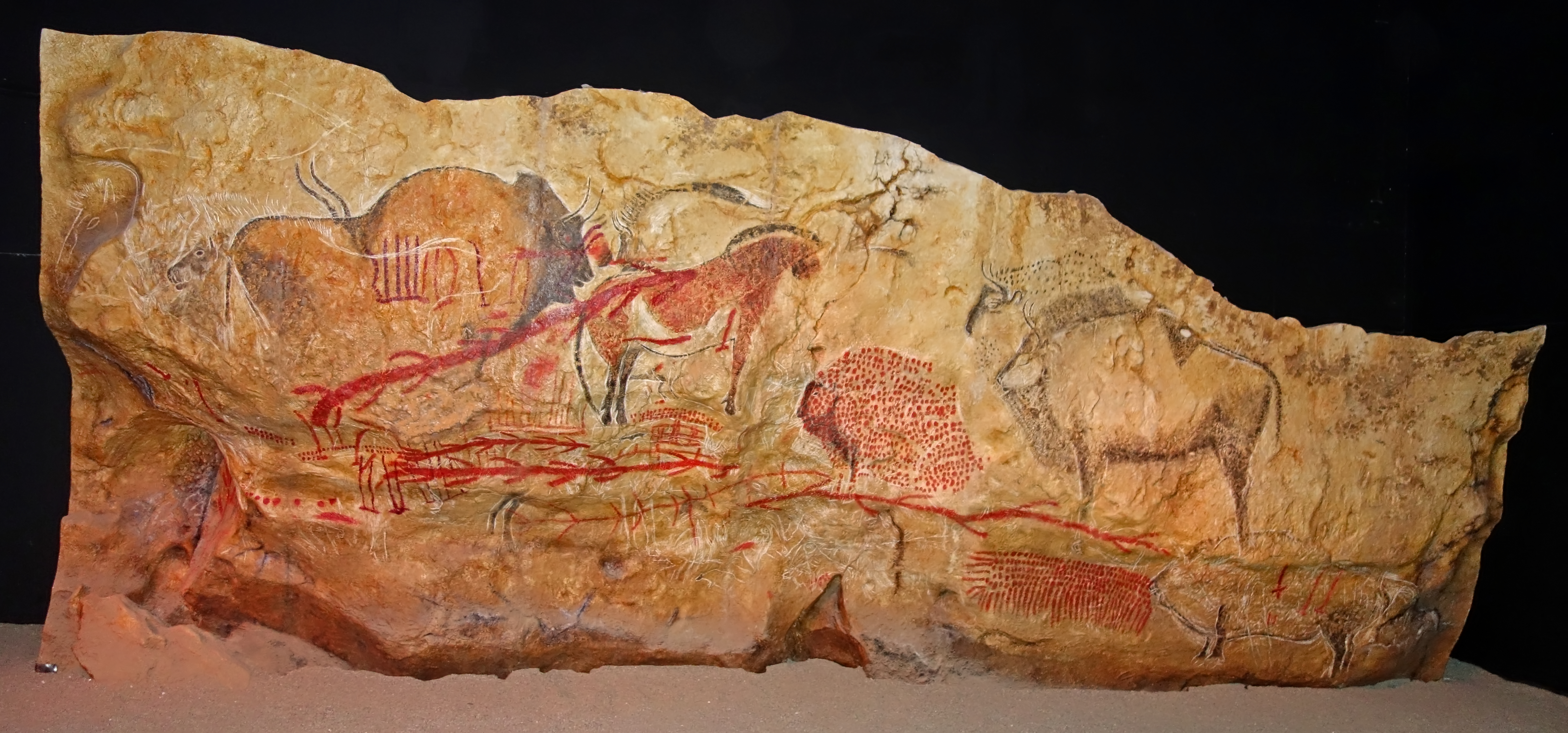
Brian Eno once defined art as “everything you don’t have to do.” But just because humans can live without art doesn’t mean we should—or that we ever have—unless forced by exigent circumstance. Even when we spent most of our time in the business of survival, we still found time for art and music. Marsoulas Cave, for example, “in the foothills of the French Pyrenees, has long fascinated researchers with its colorful paintings depicting bison, horses and humans,” Katherine Kornei writes at The New York Times. This is also where an “enormous tan-colored conch shell was first discovered, an incongruous object that must have been transported from the Atlantic Ocean, over 150 miles away.”
The 18,000-year-old shell’s 1931 discoverers assumed it must have been a large ceremonial cup, and it “sat for over 80 years in the Natural History Museum of Toulouse.” Only recently, in 2016, did researchers suspect it could be a musical instrument. Philippe Walter, director of the Laboratory of Molecular and Structural Archeology at the Sorbonne, and Carole Fritz, who leads prehistoric art research at the French National Center for Scientific Research, rediscovered the shell, as it were, when they revised old assumptions using modern imaging technology.
Fritz and her colleagues had studied the cave’s art for 20 years, but only understood the shell’s peculiarities after they made a 3D digital model. “When Walter placed the conch into a CT scan,” writes Lina Zeldovich at Smithsonian, “he indeed found many curious human touches. Not only did the ancient artists deliberately cut off the tip, but they also punctured or drilled round holes through the shell’s coils, through which they likely inserted a small tube-like mouthpiece.” The team also used a medical camera to look closely at the shell’s interior and examine unusual formations. Kornei describes the shell further:
This shell might have been played during ceremonies or used to summon gatherings, said Julien Tardieu, another Toulouse researcher who studies sound perception. Cave settings tend to amplify sound, said Dr. Tardieu. “Playing this conch in a cave could be very loud and impressive.”
It would also have been a beautiful sight, the researchers suggest, because the conch is decorated with red dots — now faded — that match the markings found on the cave’s walls.
The decoration on the shell looks similar to an image of a bison on the cave wall, suggesting it may have been played near that painting for some reason. The conch resembles similar “seashell horns” found in New Zealand and Peru, but it is much, much older. It may have originated in Spain, along with other objects found in the cave, and may have traveled with its owners or been exchanged in trade, explains archeologist Margaret W. Conkey at the University of California, who adds, writes Zeldovich, that “the Magdalenian people also valued sensory experiences, including those produced by wind instruments.
Many thousands of years later, we too can hear what those early humans heard in their cave: musicologist Jean-Michel Court gave a demonstration, producing the three notes above, which are close to C, C‑sharp and D. The shell may have had more range, and been more comfortable to play, with its mouthpiece, likely made of a hollow bird bone. The shell is hardly the oldest instrument in the world. Some are tens of thousands of years older. But it is the oldest of its kind. Whatever its prehistoric owners used it for—a call in a hunt, stage religious ceremonies, or a celebration in the cave—it is, like every ancient instrument and artwork, only further evidence of the innate human desire to create.
Related Content:
Hear the World’s Oldest Instrument, the “Neanderthal Flute,” Dating Back Over 43,000 Years
A Modern Drummer Plays a Rock Gong, a Percussion Instrument from Prehistoric Times
Josh Jones is a writer and musician based in Durham, NC. Follow him at @jdmagness
Read More...Watch the Food for Love Benefit Concert: David Byrne, The Chicks & Many More Raise Money for New Mexico Food Banks
Ever since COVID-19 struck, poverty levels have reached a crisis point in New Mexico, so much so that New Mexico food banks have become overloaded with requests, and they can’t keep up with demand. To provide assistance, a star-studded lineup of musicians banded together this weekend to stage the Food for Love Benefit Concert. Featured in the five hour performance were David Byrne (he gives a dance lesson), Jackson Brown, Shawn Colvin, The Chicks, Lyle Lovett, Kurt Vile, and many more. This video (above) will be available for a limited time–until midnight MST on Monday, February 15. Donations to support New Mexico’s food banks can be made here. To date, they’ve raised $704,000, or enough to provide 2.8 million meals.
Read More...Radio vs. Podcasting: A Discussion with Jason Bentley (KCRW, The Backstory) on Pretty Much Pop: A Culture Podcast #81

Jason was music director at KRCW, the LA NPR station, is also a DJ with a lot of experienced interviewing musicians, and now hosts a new podcast, The Backstory. He joins Mark and Erica to discuss the creative and business possibilities of podcasting in comparison to radio, what their futures may hold, and his own journey between the two media.
Follow Jason @thejasonbentley. Listen to his Backstory interview with Kristen Bell and his current radio show, Metropolis.
Here’s some comparison data and other basic information on radio and podcasts:
- “Audio and Podcasting Fact Sheet” from journalism.org
- “Podcast vs Radio: What Is the Difference?” from Buzzsprout
- “New Podcast Listeners Are Coming from Radio, Not Music” by Bill Rosenblatt
- “Is Radio Dying?” by Katherine Luck
Hear more of this podcast at prettymuchpop.com. This episode includes bonus discussion that you can access by supporting the podcast at patreon.com/prettymuchpop. This podcast is part of the Partially Examined Life podcast network.
Pretty Much Pop: A Culture Podcast is the first podcast curated by Open Culture. Browse all Pretty Much Pop posts.
Read More...The “Academic Tarot”: 22 Major Arcana Cards Representing Life in the Academic Humanities Under COVID-19
“Speculations about the creators of Tarot cards include the Sufis, the Cathars, the Egyptians, Kabbalists, and more,” writes “expert cartomancer” Joshua Hehe. All of these suppositions are wrong, it seems. “The actual historical evidence points to northern Italy sometime in the early part of the 1400s,” when the so-called “major arcana” came into being. “Contrary to what many have claimed, there is absolutely no proof of the Tarot having originated in any other time or place.”
A bold claim, yet there are precedents much older than tarot: “A few decades before the Tarot was born, ordinary playing cards came to Europe by way of Arabs, arriving in many different cities between 1375 and 1378. These cards were an adaptation of the Islamic Mamluk cards,” with suits of cups, swords, coins, and polo sticks, “the latter of which were seen by Europeans as staves.”
Whether the playing cards invented by the Mamluks were used for divination may be a matter of controversy. The history and art of the Mamluk sultanate itself is a subject worthy of study for the tarot historian. Originally a slave army (“mamluk” means “slave” in Arabic) under the Ayyubid sultans in Egypt and Syria, the Mamluks overthrew their rulers and created “the greatest Islamic empire of the later Middle Ages.”
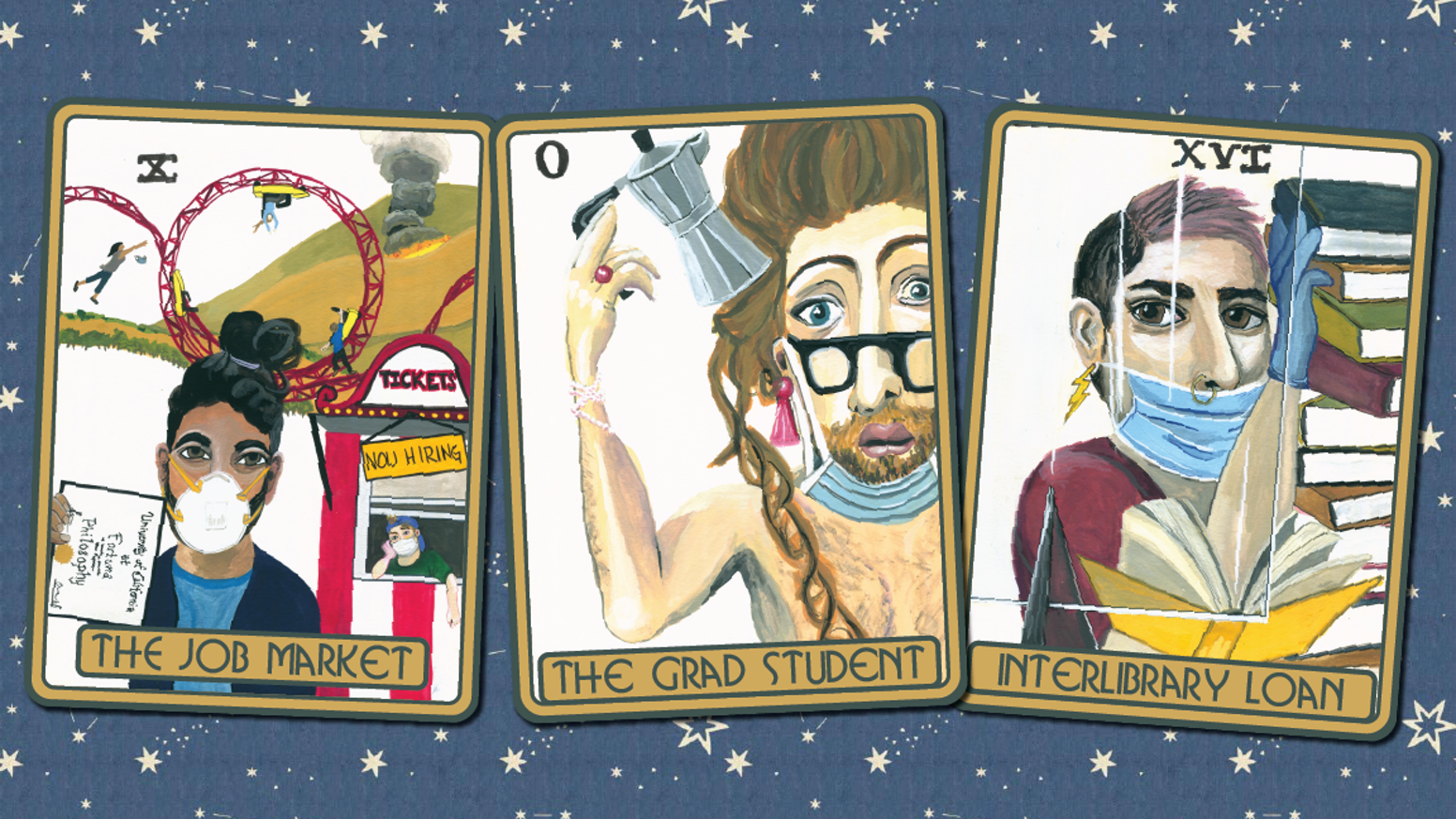
What does this have to do with tarot reading? These are academic concerns, perhaps, of little interest to the average tarot enthusiast. But then, the average tarot enthusiast is not the audience for the “Academic Tarot,” a project of the Visionary Futures Collective, or VFC, a group of 22 scholars “fighting for what higher education needs most,” Stephanie Malak writes at Hyperallergic, “a bringing together of thinkers who ‘believe in the transformational power and vital importance of the humanities.’”
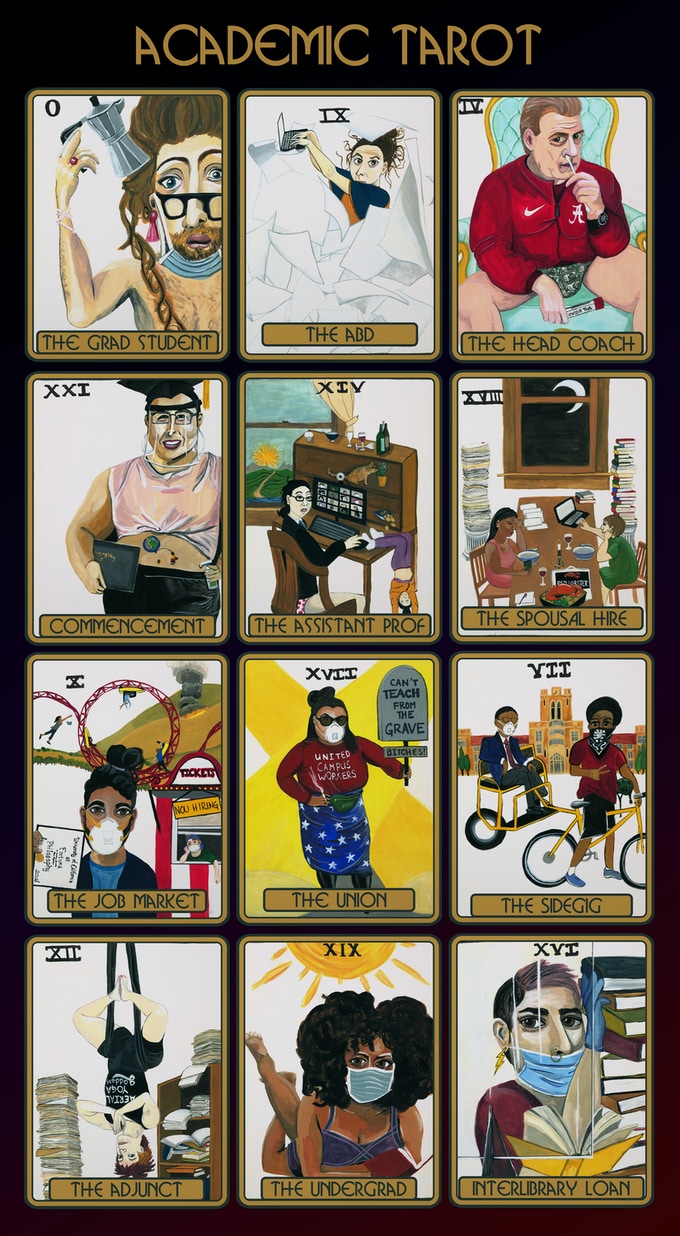
To that end, the Academic Tarot features exactly the kinds of characters who love to chase down abstruse historical questions—characters like the lowly, confused Grad Student, standing in here for The Fool. It also features those who can make academic life, with its endless rounds of meetings and committees, so difficult: figures like The President (see here), doing duty here as the Magician, and pictured shredding “campus-wide COVID results.”
The VFC, founded in the time of COVID-19 pandemic and “in the midst of the long-overdue national reckoning led by the Black Lives Matter movement,” aims to “trace the contours of things that define our shared human condition,” says Collective member Dr. Brian DeGrazia. In the case of the Academic Tarot, the conditions represented are shared by a specific subset of humans, many of whom responded to “feelings surveys” put out by the VFC in a biweekly newsletter.
The surveys have been used to make art that reflects the experiences of the grad students, professors, and professional staff working the academic humanities at this time:
VFC artist-in-residence Claire Chenette, a Grammy-nominated Knoxville Symphony Orchestra musician furloughed due to COVID-19, brought the tarot cards to life. What began as a three-card project to complement the VFC newsletter grew in spirit and in number.
“In tarot, the cards read us,” the VFC writes, “telling a story about ourselves that can provide clarity, guidance and hope.” What story do the 22 Major Arcana cards in the Academic Tarot tell? That depends on who’s asking, as always, but one gets the sense that unless the querent is familiar with life in a higher-ed humanities department, these cards may not reveal much. For those who have seen themselves in the cards, however, “the images made them laugh out loud,” says Chenette, or “they hit hard. Or… they even made them cry, but… it needed to happen.”
Struggling through yet another pandemic semester of attempting to teach, research, write, and generally stay afloat? The Academic Tarot cards are currently sold out, but you can pre-order now for the second run.
via Hyperallergic
Related Content:
Behold the Sola-Busca Tarot Deck, the Earliest Complete Set of Tarot Cards (1490)
Josh Jones is a writer and musician based in Durham, NC. Follow him at @jdmagness
Read More...Little Kid Merrily Grooves to ZZ Top While Waiting for the Bus
A musician in Vancouver, British Columbia took to the streets and busked some ZZ Top, much to the delight of a young child waiting for the bus. From the moment he starts playing “La Grange,” the child bops up and down, then twirls in a circle, losing herself in the song. On YouTube he writes, “I don’t often see this, but when it happens it’s always 99% kids that are doing it. Before they become jaded (age 8), they still have that spontaneous spark, that reaction to music that we all used to have. Emotion is no.1 priority and they express it without shame.”
If this brightens your day, even a little, consider giving the busker a tip on Paypal or Patreon. As he explains on YouTube, he’s had–like many of us–a rough year. He writes:
1) I’m glad everyone is enjoying this video but I want to mention a few things.
Street playing is not all fun and games and dancing kids. Doing this for 7 years. I regularly face not only verbal abuse, but physical assault as I work a few blocks from downtown eastside Vancouver. I’m surrounded by addicts, drunks, and people who should be in mental homes.
2) I’m unemployed. All live music including busking, is banned. I lost all work last year and received ZERO compensation. I had a very bad year in 2020 and only recently came out of a depression.
3) I make ZERO from youtube no matter how many views I get. I don’t run ads. And more importantly, even if I did, most of my videos are instantly copyrighted and auto monetized by record labels because they are COVERS. If you see an ad, it’s the record label collecting. If you liked the performance, please think about supporting me on patreon/paypal tip/bandcamp.
4) I’m a musician that writes his own music and has been doing it for 20 years. Check out my bandcamp page to see what I can really do with a guitar.
5) It’s a lot of unpaid work to post these videos all the time so please try to help me keep the channel going. Many thanks to those that have supported me! It means a lot!
6) I get asked this 100 times a day so here’s the answer: I play on the street and not in a band because all the clubs closed years ago. I used to lead many bands from 2006 to 2018. That’s all gone. Live music is dead, as well as banned. It’s also a lot more hassle, and less money, to run a band than play by myself.
Anyone who has music work to offer can contact me at sh***************@***oo.com
Related Content:
Crowd Breaks into Singing Bon Jovi in the Park: The Power of Music in 46 Seconds
Lenny Kravitz Overhears High School Kids Playing His Music and Surprises Them by Joining In
Street Artist Plays Leonard Cohen’s “Hallelujah” With Crystal Glasses
Neil Young Busking in Glasgow, 1976: The Story Behind the Footage
Read More...The Films of Hayao Miyazaki Celebrated in a Glorious Concert Arranged by Film Composer Joe Hisaishi
Director Hayao Miyazaki’s working relationship with composer Joe Hisaishi is up there with the other great film pairings: Sergio Leone with Ennio Morricone, Alfred Hitchcock with Bernard Herrmann, David Lynch with Angelo Badalamenti. Working together they attain a symbiosis of sound and vision, one of the reasons their work has become part of film history. But it’s also rare that a film composer gets to celebrate that relationship with a stunner of a retrospective concert like the one above.
In 2008, Hisaishi conducted and performed at a two-hour retrospective of 25 years working with Miyazaki at Studio Ghibli. This mammoth performance at the 14,000-seat Tokyo Budokan was big in every way: six featured vocalists, the 200-member New Japan Philharmonic World Dream Orchestra, the 800 combined voices of the Ippan Koubo, Ritsuyuukai and Little Singers of Tokyo choirs, along with a 160-piece marching band made up of members from four high schools.
The concert features selections from Nausicaä of the Valley of Wind, Princess Mononoke, My Neighbor Totoro, Kiki’s Delivery Service, Howl’s Moving Castle, Spirited Away, Porco Rosso, and what would have been his most recent score at the time, Ponyo. For those wondering when the marching band and color guard turn up, it’s 50 minutes in, playing selections from Laputa, Castle in the Sky.
Hayao Miyazaki met Joe Hisaishi in 1983, when his record company recommended him to score Nausicaä of the Valley of the Wind. They became true friends and collaborators, and the director himself appears just after an hour in to speak to the audience.
“After [our first] meeting,” Miyazaki says (according to a translation in the comments) “he sent me some piano sketches, which are used in many scenes in Nausicaä anyway, and those were so amazing that I played tapes of them on my desk over and over again while I was working…I have been working thanks to so many pieces of luck, and meeting him is definitely one of them. I guess I couldn’t wish for better luck than that.”
For someone whose music is often romantic, beautiful, and relaxed, the composer says the work doesn’t come easy.
“The most painful element of my life is composing because sometimes nothing comes to mind,” he told the South China Morning Post. “It is very hard and very difficult. Sometimes the result is zero, but I go to bed and I feel something and some idea is born. So in the end there might be a composition, but the experience is often most painful.” For those who have recently seen similar memes of Miyazaki being super hard on himself, it’s no wonder the two are friends.
A few in the YouTube comment section actually attended the concert, and this quote from “Love W” sums up what was an emotional concert for Ghibli and Hisaishi fans:
“It was also quiet afterwards. No one was talking very loudly, even with hundreds of people streaming out of the building. I think everyone were just too touched and wanted to reflect over what they had seen.”
Related Content:
Studio Ghibli Producer Toshio Suzuki Teaches You How to Draw Totoro in Two Minutes
A Virtual Tour Inside the Hayao Miyazaki’s Studio Ghibli Museum
Ted Mills is a freelance writer on the arts who currently hosts the Notes from the Shed podcast and is the producer of KCRW’s Curious Coast. You can also follow him on Twitter at @tedmills, and/or watch his films here.
Read More...Watch 36 Short Animations That Tell the Origin Stories of Mexico’s Indigenous Peoples in Their Own Languages
In our efforts to preserve endangered species we seem to overlook something equally important. To me it is a sign of a deeply disturbed civilization where tree huggers and whale huggers in their weirdness are acceptable while no one embraces the last speakers of a language.
Trees and whales aside, we suspect the ever quotable Herzog would warm to fellow director Gabriela Badillo’s 68 Voices, 68 Hearts, a series of one-minute animations that preserve indigenous Mexican stories with narration provided by native speakers.
“It was created in order to help foster pride, respect, and the use of indigenous Mexican languages between speakers and non-speakers, as well as to help reduce discrimination and foster a sense of pride towards all communities and cultures that are part of the cultural richness that makes up Mexico,” Badillo says in an interview with Awasqa.
The project stemmed from a realization in the wake of the death of her grandfather, a Maxcanu from Yucatan:
Aside from losing a loved one, I realized that an enormous wisdom had also been lost: a language, stories, traditions and customs, a whole world had dissolved with him.
Each animation involves collaboration with the National Institute of Indigenous Language and the community whose story is being shared. Community members choose the subject, then supply narration and translation. Their children draw scenes from the selected story, which steers the style of animation.
Prior to being released to the general public, each film is presented to its community of origin, along with a booklet of suggested educational activities for parents and teachers to use in conjunction with screenings. Boxes of postcards featuring artwork from the series are donated to the community school.
Some of the entries, like the above About Earthquakes and the Origin of Life on Earth, narrated in Ch’ol by Eugenia Cruz Montejo, pack a massive amount of story into the allotted minute:
They say many years ago Ch’ujtiat, the Heaven’s lord, created the Earth with 12 immortal men to carry it. And it is when they get tired that the Earth moves, provoking earthquakes.
At the same time he created the first men, who were ungrateful, so Ch’ujtiat sent the flood and turned the survivors into monkeys, and the innocent children into stars. He then created our first parents, na’al, Ixic y Xun’Ok, who multiplied and populated the Earth.
That’s how life on Earth began.That’s how the Ch’oles tell it.
Variants of “that’s how we tell it” are a common refrain, as in the Cora (also known as Náayeri) story of how the Mother Goddess created earth (and other gods), narrated by Pedro Muñiz López.
Here is the written version, in Cora:
E’itɨ tiuséijre cháanaka
Yaapú ti’nyúukari tɨkɨn a’najpú ɨtyáj náimi ajnáana Náasisaa, Téijkame jemín ɨ cháanaka ajtá ɨ máxkɨrai, góutaaguaka’a ɨ tabóujsimua yaati’xáata tɨkɨn mata’a já guatéchaɨn majtá tyuipuán iyakúi cháanaka japuá.
Muxáj kɨmenpú góutaaguaka’a tɨ’kí nájkɨ’ta gojoutyájtua. Áuna me’séira aɨjme taboujsimua matákua’naxɨ.
Tɨ’kí aɨjna tanáana Náasisaa, ukɨpuapú guatákɨɨnitya’a, yán guajaikagua’xɨjre uyóujmua matɨ’jmí jetsán guatyáakɨ yán miye’ntiné tajapuá. Kapú aɨn jé’i, matákua’naxɨ máj akábibɨɨ yán juté’e, makaupɨxɨɨ ujetsé matɨ’jmí chuéj kɨj tentyóu metya’úrara, ajtá ɨ Taja’as xu’rabe’táana tiuɨrɨj tyautyájtua ajpúi tanáana Náasisaa tsíikɨri guatyákɨstaka ukɨpuá kɨmen. Japuanpú aɨjna chuéj utíajka tɨ’kí goutaíjte aɨjme tabóujsimua guatáijte máj atapa’tsaren metya’tanya’tɨkɨ’káa ayaapú tiutéjbe máj tiunéitan.
Ayaapú tiuséijre cháanaka. Ayáj tigua’nyúukari Náayeri.
Badillo’s educational mission is well served by one of our favorites, The Origin of the Mountains. In addition to mountains, this Cucapá story, narrated by Inocencia González Sainz, delves into the origin of oceans and the Colorado River, though fair warning—it may be difficult to restore classroom order once the students hear that testicles and earwax figure prominently.
To watch a playlist of the 36 animations completed so far with English subtitles, click here.
68 Voices, 68 Heart’s Kickstarter page has more information about this ongoing project. Contributions will go toward animating stories in the three languages that are at the highest risk of disappearing—Akateko, Popoloca, and Ku’ahl.
As Badillo writes:
When a language disappears, not only a sound, a way of writing, a letter or a word goes away. Something much deeper than just a form of communication disappears — a way of seeing and conceiving the world, stories, tales, a way of naming and relating to things, an enormous knowledge that we should relearn because of its deep respect with nature.
via Boing Boing
Related Content:
Ayun Halliday is an author, illustrator, theater maker and Chief Primatologist of the East Village Inky zine. She most recently appeared as a French Canadian bear who travels to New York City in search of food and meaning in Greg Kotis’ short film, L’Ourse. Follow her @AyunHalliday.
Read More...Japanese Violinist Covers Eddie Van Halen’s “Eruption”: Metal Meets Classical Again
In a 1992 journal article “Eruptions: heavy metal appropriations of classical virtuosity,” musicologist Robert Walser explored the link between heavy metal and classical music–the way in which metal guitarists studied classical music and created “a new kind of guitar virtuosity.” Published by Cambridge University Press, Walser’s essay comes to focus on Eddie Van Halen’s “Eruption,” the “solo that transformed rock guitar.” He writes: “Released in 1978 on Van Halen’s first album, ‘Eruption’ [see an extended live version below] is one minute and twenty-seven seconds of exuberant and playful virtuosity, a violinist’s precise and showy technique inflected by the vocal rhetoric of the blues and rock ’n’ roll irreverence.” The solo features rhythmic patterns reminiscent of J. S. Bach’s famous ‘Prelude in C major’, while “the harmonic progressions of ‘Eruption’ lead the listener along an aural adventure,” much like you’d find in the music of Vivaldi. None of this was an accident. As a youngster, Eddie Van Halen was raised on a diet of Mozart and Beethoven.
Above, you can watch “Jill,” a member of the Japanese metal band Unlucky Morpheus, perform a violin-driven version of “Eruption.” It’s classical meets metal once again, except this time a classical instrument takes the lead. Enjoy.
If you would like to support the mission of Open Culture, consider making a donation to our site. It’s hard to rely 100% on ads, and your contributions will help us continue providing the best free cultural and educational materials to learners everywhere. You can contribute through PayPal, Patreon, and Venmo (@openculture). Thanks!
Related Content:
14-Year-Old Girl’s Blistering Heavy Metal Performance of Vivaldi
Musical Comedian Reggie Watts Reinvents Van Halen’s Classic, “Panama”
Read More...The Internet Archive Now Digitizing 1,000,000+ Objects from a Massive Cinema History Library
Major motion pictures need the work of writers, directors, actors, cinematographers, and a slew of other professionals besides. That group also includes researchers, whose role has until recently gone practically uncelebrated outside the industry. In 2015, filmmaker Daniel Raim brought the work of the film researcher to light with Harold and Lillian: A Hollywood Love Story, about production designer Harold Michelson and his researcher wife Lillian. “In Raim’s documentary, she talks about working on Fiddler on the Roof and the filmmakers needed to know what a Jewish woman’s undergarments looked like in the 1890s,” writes The Hollywood Reporter’s Emily Hilton. How could she find such obscure information?
“Michelson sat on a bench at Fairfax and Beverly near a Jewish deli and spoke to women who were about the right age to have been alive in that era.” One of these women “ran home and grabbed a sewing pattern for her to reference. This research inspired the outfits that Τevye’s daughters wear in the number: knee length bloomers with scalloped edges.”
As yet, this pattern hasn’t appeared in the Michelson Cinema Research Library, now hosted online at the Internet Archive. But it may yet, as the project of digitization and uploading has hardly begun: it was just last year that the nonagenarian Lillian Michelson donated to the Archive her formidable collection of research materials, amassed over her long career.

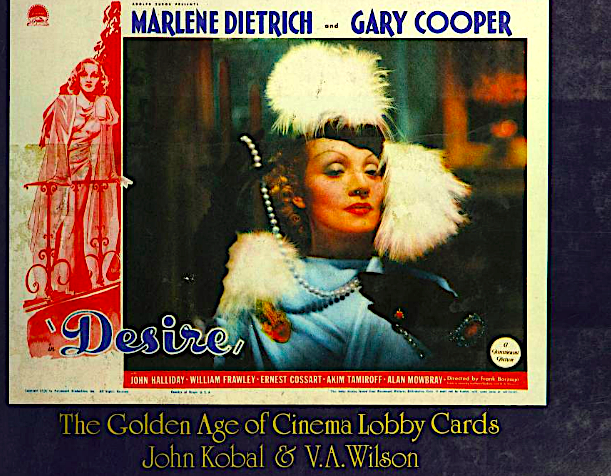
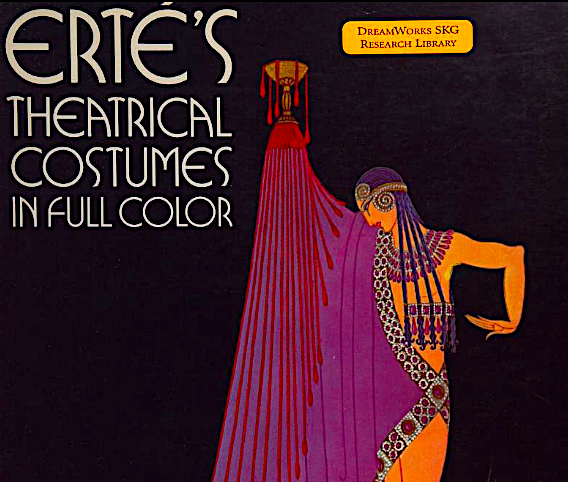
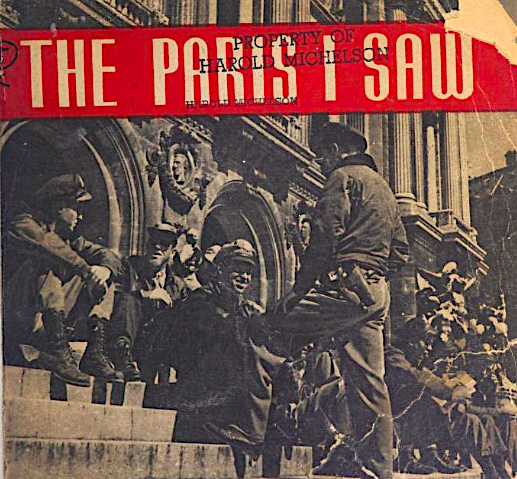
“After nearly six decades serving filmmakers first at Samuel Goldwyn, then the American Film Institute, Zoetrope Studio, Paramount and DreamWorks,” writes the Los Angeles Times’ Mary McNamara, “the library filled 1,594 boxes: tens of thousands of books, photographs, magazines and a panoply of other visual resources. All of this had been sitting for five years in a storage facility, paid for by friends who could not bear to see it all destroyed.” Now that the digital archival process is underway, you can browse the first 1,300 or so entries at the Internet Archive, which allows users to virtually check out the Michelson Cinema Research Library’s books on subjects ranging from theatrical costumes and vintage cinema lobby cards to places like Japan and Paris to less expected topics like the Amazing Kreskin and the externals of the Catholic Church.
But then, a Hollywood researcher must be prepared to learn about anything, and by all accounts Lillian Michelson was perhaps the greatest of them all. In addition to its comprehensiveness, her library became a hangout of choice for a variety of studio professionals and celebrities including Tom Waits. (“I wouldn’t be surprised if that’s how he found some time to unwind,” says Raim, “just drinking tea there.”) The Internet Archive describes her collection as consisting of “5,000 books, 30,000 photographs, and more than 1,000,000 clippings, scrapbooks and ephemera,” more of which will come online as time goes by. Eventually the site will contain all the materials from which Michelson drew vital knowledge for filmmakers like Roman Polanski, Alfred Hitchcock, and Stanley Kubrick. And if her research materials satisfied those three, they’re more than good enough for us.
Related Content:
Download 6600 Free Films from The Prelinger Archives and Use Them However You Like
Good Movies as Old Books: 100 Films Reimagined as Vintage Book Covers
1,150 Free Movies Online: Great Classics, Indies, Noir, Westerns, etc.
Based in Seoul, Colin Marshall writes and broadcasts on cities, language, and culture. His projects include the Substack newsletter Books on Cities, the book The Stateless City: a Walk through 21st-Century Los Angeles and the video series The City in Cinema. Follow him on Twitter at @colinmarshall or on Facebook.
Read More...Support Us
We're hoping to rely on loyal readers, rather than erratic ads. Please click the Donate button and support Open Culture. You can use Paypal, Venmo, Patreon, even Crypto! We thank you!

About Us

Open Culture scours the web for the best educational media. We find the free courses and audio books you need, the language lessons & educational videos you want, and plenty of enlightenment in between.
Advertise With Us
FREE UPDATES!
GET OUR DAILY EMAIL
Get the best cultural and educational resources on the web curated for you in a daily email. We never spam. Unsubscribe at any time.
FOLLOW ON SOCIAL MEDIA
Open Culture editor Dan Colman scours the web for the best educational media. He finds the free courses and audio books you need, the language lessons & movies you want, and plenty of enlightenment in between.
Advertise With Us