The Spinal Tap Sequel Arrives Next Month: Watch the Trailer and a Scene with Elton John & Paul McCartney
This Is Spinal Tap came out more than 40 years ago. At the time, says director Rob Reiner in a recent interview at San Diego Comic-Con, “nobody got it. I mean, they thought I’d made a movie about a real band that wasn’t very good, and why wouldn’t I make a movie about the Beatles or the Rolling Stones?” Indeed, stories circulated of people in the music industry (including the late Ozzy Osbourne) not realizing it was supposed to be a comedy, so close was its satire to their actual professional lives. Eventually, “the real word started creeping in”: the fictional band “played Glastonbury, they played Royal Albert Hall and Wembley Stadium.” Real-life rock and pop musicians also became fans of the film. “Every time I see it,” Reiner quotes Sting as saying, “I don’t know whether to laugh or cry.”
The boundaries between Spinal Tap’s world and the real one have remained porous enough that the production of the film’s upcoming sequel Spinal Tap II: The End Continues has involved a great many celebrities playing themselves, or at least versions thereof.
Take, for example, the newly released version of “Stonehenge,” whose music video features not just Elton John, but — to the delight of some fans, and perhaps the disappointment of others — a correctly scaled stage prop. The song will be included on the album of The End Continues, scheduled for release along with the film on September 12th, whose thirteen tracks bring in guest stars like Paul McCartney, Garth Brooks, and Trisha Yearwood.
It’s been about fifteen years since the last Spinal Tap album, a factor the sequel incorporates into its premise. “We created this whole idea that there’s bad blood, they’re not speaking to each other,” says Reiner, “but they now are forced together because of a contract” dictating that they must give one last performance, a prospect suddenly made viable when their song “Big Bottom” goes viral. As unrecognizable as both pop culture in general and the music industry in particular have become over the past four decades, Reiner assures us that David St. Hubbins, Nigel Tufnel, and Derek Smalls “have not grown emotionally, musically, or artistically. They are stuck in that heavy-metal world.” In a Hollywood movie, such a flagrant lack of character development would constitute a violation of storytelling laws; in rock, it’s unflinching realism.
Related content:
Ian Rubbish (aka Fred Armisen) Interviews the Clash in Spinal Tap-Inspired Mockumentary
The Spinal Tap Stonehenge Debacle
Watch The Nine Lives of Ozzy Osbourne: A Free Documentary on the Heavy Metal Pioneer (RIP)
Based in Seoul, Colin Marshall writes and broadcasts on cities, language, and culture. His projects include the Substack newsletter Books on Cities and the book The Stateless City: a Walk through 21st-Century Los Angeles. Follow him on the social network formerly known as Twitter at @colinmarshall.
Read More...Emma Willard, the First Female Mapmaker in America, Creates Pioneering Maps of Time to Teach Students about Democracy (Circa 1851)
We all know Marshall McLuhan’s pithy, endlessly quotable line “the medium is the message,” but rarely do we stop to ask which one comes first. The development of communication technologies may genuinely present us with a chicken or egg scenario. After all, only a culture that already prized constant visual stimuli but grossly undervalued physical movement would have invented and adopted television.
In Society of the Spectacle, Guy Debord ties the tendency toward passive visual consumption to “commodity fetishism, the domination of society by ‘intangible as well as tangible things,’ which reaches its absolute fulfillment in the spectacle, where the tangible world is replaced by a selection of images which exist above it, and which simultaneously impose themselves as the tangible par excellence.” It seems an apt description of a screen-addicted culture.
What can we say, then, of a culture addicted to charts and graphs? Earliest examples of the form were often more elaborate than we’re used to seeing, hand-drawn with care and attention. They were also not coy about their ambitions: to condense the vast dimensions of space and time into a two-dimensional, color-coded format. To tidily sum up all human and natural history in easy-to-read visual metaphors.
This was as much a religious project as it was a philosophical, scientific, historical, political, and pedagogical one. The domains are hopelessly entwined in the 18th and 19th centuries. We should not be surprised to see them freely mingle in the earliest infographics. The creators of such images were polymaths, and deeply devout. Joseph Priestley, English chemist, philosopher, theologian, political theorist and grammarian, made several visual chronologies representing “the lives of two thousand men between 1200 BC and 1750 AD” (conveying a clear message about the sole importance of men).
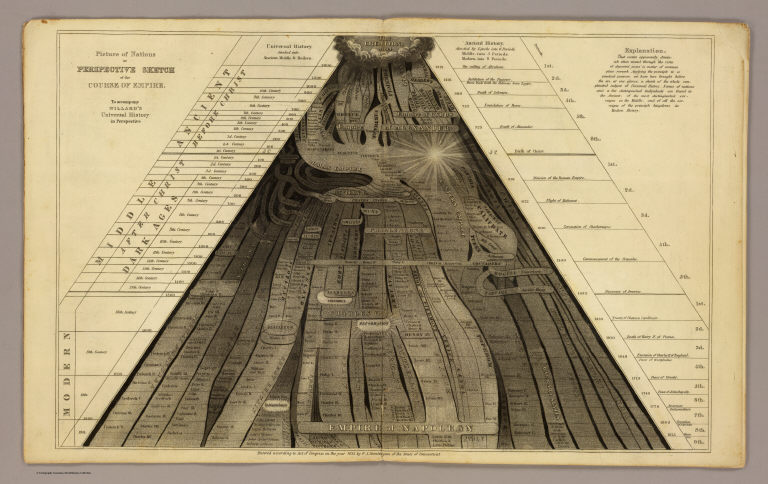
“After Priestley,” writes the Public Domain Review, “timelines flourished, but they generally lacked any sense of the dimensionality of time, representing the past as a uniform march from left to right.” Emma Willard, “one of the century’s most influential educators” set out to update the technology, “to invest chronology with a sense of perspective.” In her 1836 Picture of Nations; or Perspective Sketch of the Course of Empire, above (view and download high resolution images here), she presents “the biblical Creation as the apex of a triangle that then flowed forward in time and space toward the viewer.”
The perspective is also a forced point of view about origins and history. But that was exactly the point: these are didactic tools meant for textbooks and classrooms. Willard, “America’s first professional female mapmaker,” writes Maria Popova, was also a “pioneering educator,” who founded “the first women’s higher education institution in the United States when she was still in her thirties…. In her early forties, she set about composing and publishing a series of history textbooks that raised the standards and sensibilities of scholarship.”
Willard recognized that linear graphs of time did not accurately do justice to a three-dimensional experience of the world. Humans are “embodied creatures who yearn to locate themselves in space and time.” The illusion of space and time on the flat page was an essential feature of Willard’s underlying purpose: “laying out the ground-plan of the intellect, so far as the whole range of history is concerned.” A proper understanding of a Great Man (and at least one Great Woman, Hypatia) version of history—easily condensed, since there were only around 6,000 years from the creation of the universe—would lead to “enlightened and judicious supporters” of democracy.
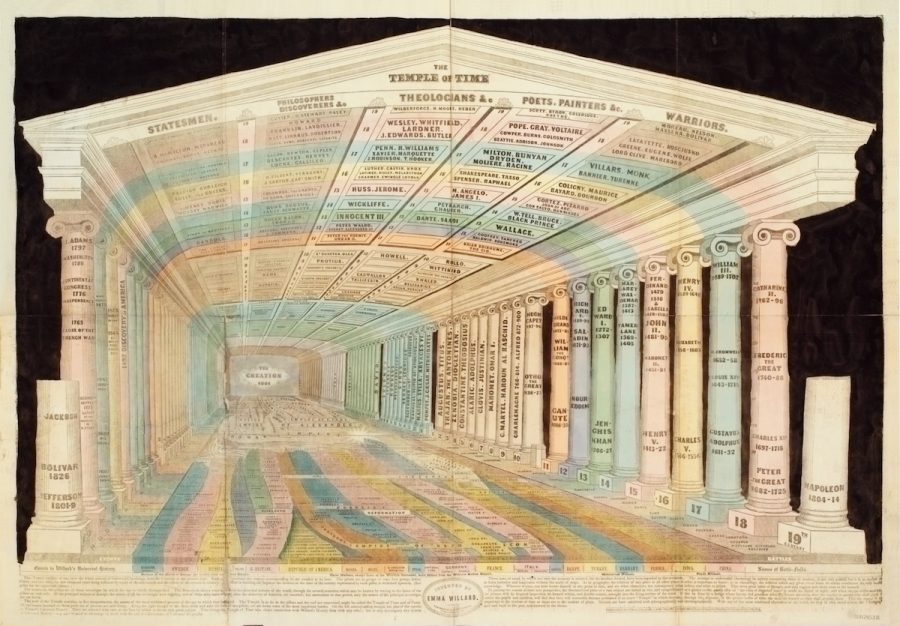
History is represented literally as a sacred space in Willard’s 1846 Temple of Time, its providential beginnings formally balanced in equal proportion to its every monumental stage. Willard’s intent was expressly patriotic, her trappings self-consciously classical. Her maps of time were ways of situating the nation as a natural successor to the empires of old, which flowed from the divine act of creation. They show a progressive widening of the world.
“Half a century before W.E.B. Du Bois… created his modernist data visualizations for the 1900 World’s Fair,” Popova writes, The Temple of Time “won a medal at the 1851 World’s Fair in London.” Willard accompanied the infographic with a statement of intent, articulating a media theory, over a hundred years before McLuhan, that sounds strangely anticipatory of his famous dictum.
The poetic idea of “the vista of departed years” is made an object of sight; and when the eye is the medium, the picture will, by frequent inspection, be formed within, and forever remain, wrought into the living texture of the mind.
Learn more about Emma Willard’s infographic revolution at the Public Domain Review and The Marginalian.
Note: An earlier version of this post appeared on our site in 2020.
Related Content:
The History of the World in One Beautiful, 5‑Foot-Long Chart (1931)
180,000 Years of Religion Charted on a “Histomap” in 1943
Josh Jones is a writer and musician based in Durham, NC.
Read More...A Live Studio Cover of Pink Floyd’s The Dark Side of the Moon, Played from Start to Finish
Pink Floyd’s Dark Side of the Moon is such a work of art that to split it up into nine tracks—like classic rock radio has done for years—always sounds nonsensical. How can you just end “Breathe” on that final chord and not follow it with the analog drones of “On the Run”? How can you play “Brain Damage” and not end with “Eclipse”? And how dare you fade the long coda of “Money” and segue into a car commercial?
You can’t, morally speaking, I’m telling you.
So that’s why I like the cut of the jib of the Martin Miller Session Band, who commit to covering the entirety of Dark Side of the Moon in this one long studio performance. According to Miller’s Patreon page, this is the only full album they’ve covered so far, and they pull through admirably.
And the thing that is refreshing here is that the band covers the album up to a point, but not slavishly. It’s not the Flaming Lips’ deconstruction or the surprisingly still listenable 8‑Bit version, but neither is it the kind of tribute band like Brit Floyd (below). When Miller solos, he’s not aping David Gilmour. The keyboardist Marius Leicht has his own knobs to twiddle, so to speak. And drummer Felix Lehrmann will never ever be confused for Nick Mason. (In fact, he gets a lot of grief in the comments for being too flash, but when you watch Miller’s other videos and see him giving Stewart Copeland a run for his money on their Police medley, you see where he’s coming from.)
Knowing what you’re in for, questions arise: are they going to include the various spoken samples sprinkled throughout (“I don’t know I was really drunk at the time,” “There is no dark side of the moon really…”). Answer: yes indeed, and funny they are too. Does a saxophonist turn up for “Money” and “Us and Them”? Answer: Yes, and it’s Michal Skulski. Who can possibly match Clare Torry’s pipes on “The Great Gig in the Sky”? Jenny Marsala does, thank you very much.
So I would settle in and try to unlearn your memory of every note and beat on the 1973 classic. By doing so, you’ll hear the album anew.
And after that, if you’re still hankering for that “even better than the real thing” vibe, enjoy this full concert, circular projection screen and all, by the aforementioned Brit Floyd, playing Liverpool in 2011.
Note: An earlier version of this post appeared on our site in 2020.
Related Content:
The Dark Side of the Moon Project: Watch an 8‑Part Video Essay on Pink Floyd’s Classic Album
Clare Torry’s Rare Live Performances of “Great Gig in the Sky” with Pink Floyd
Ted Mills is a freelance writer on the arts.
Read More...Hundreds of Medieval Medical Manuscripts with Strange Cures Get Digitized & Put Online: From Leeches to Crushed Weasel Testicles
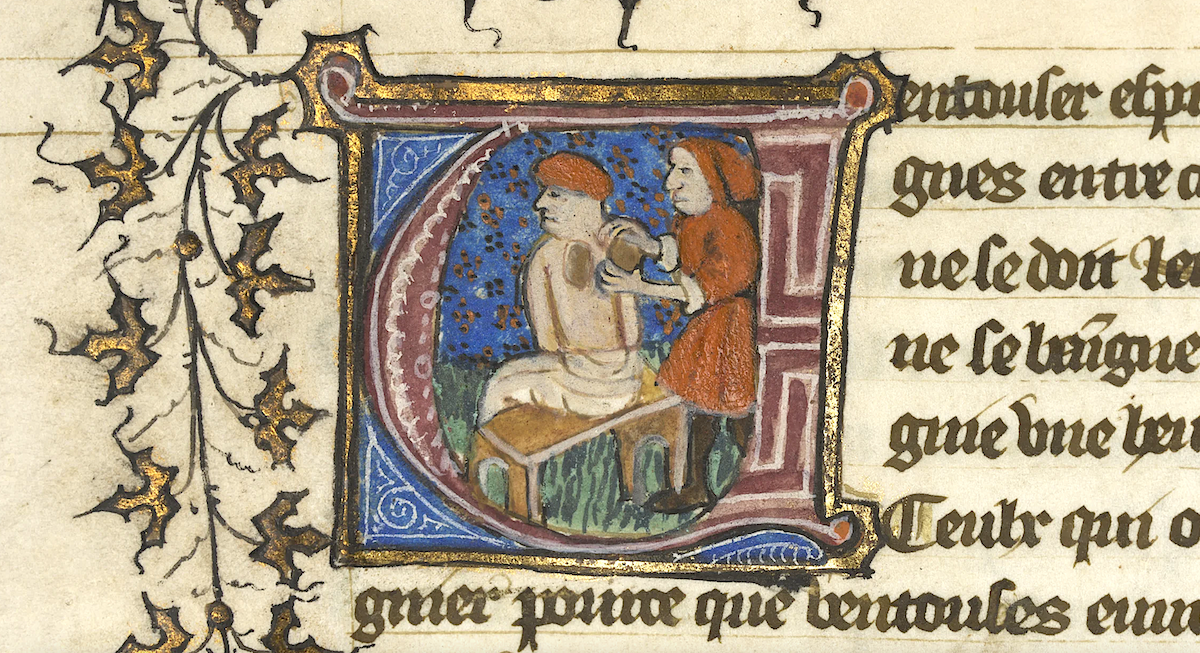
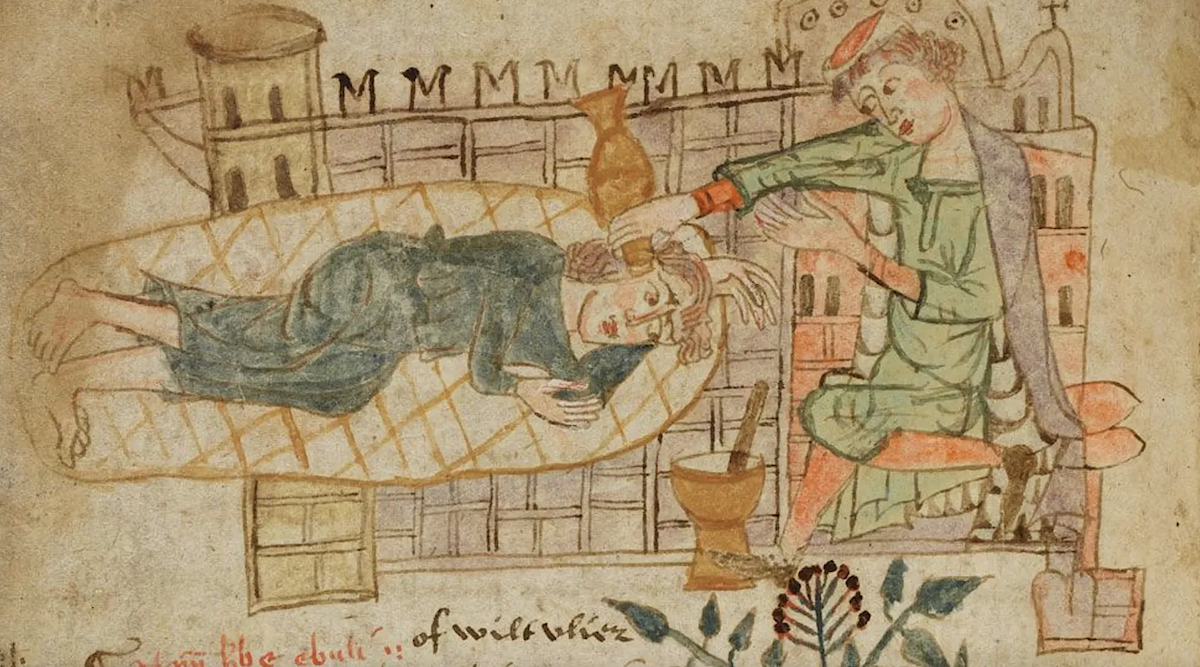
If any discussion of medieval medicine gets going, it’s only a matter of time before someone brings up leeches. And it turns out that the centrality of those squirming blood-suckers to the treatment of disease in the Middle Ages isn’t much overstated, at least judging by a look through Curious Cures. A Wellcome Research Resources Award-funded project of the University of Cambridge Libraries, it has recently finished conserving, digitizing, and making available online 190 manuscripts containing more than 7,000 pages of medieval medical recipes. These books contain a wealth of information even beyond the text on their pages: a multi-spectral imaging analysis of one of them, for example, revealed that it was once owned by a certain “Thomas Word, leche” — or leech, i.e., a healer who made intensive use of the tools you might imagine.
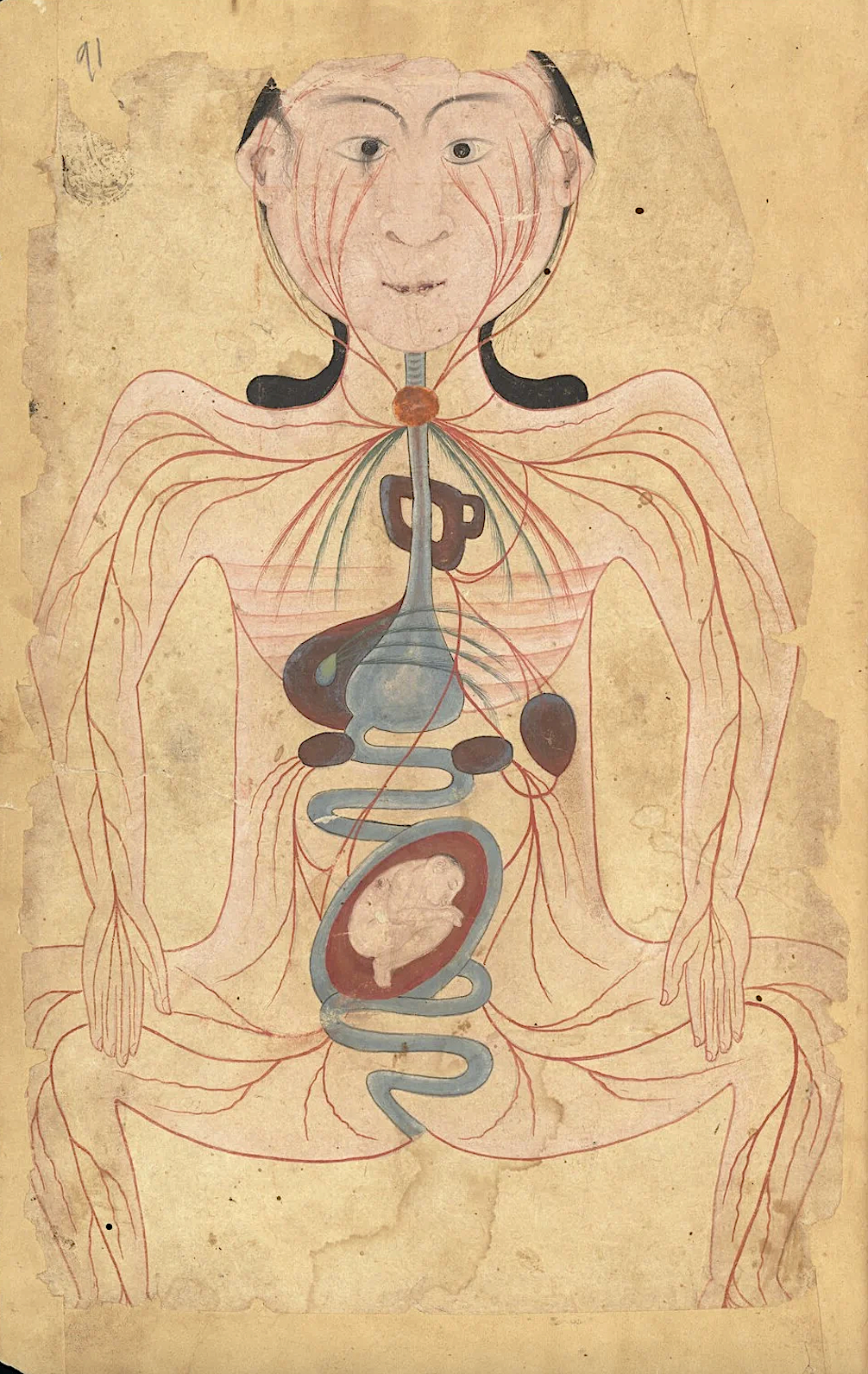
Not that the practice of medieval medicine came down to applying leeches and nothing more. In the manuscripts digitized by Curious Cures (which include not just strictly medical texts but also bibles, law texts, and books of hours), one finds a wonderland of dove feces, fox lungs, salted owl, eel grease, weasel testicles, quicksilver (i.e. mercury) — a wonderland for readers curious about medieval forms of knowledge, if not for the actual patients who had to undergo these dubious treatments.
But as any scholar of the subject would be quick to remind us, medical documents in the Middle Ages may have wantonly mixed folk and “official” knowledge, but they were hardly repositories of pure superstition: rather, they represent the best efforts of intelligent people to understand their own bodies and the world they inhabited, within the dominant worldview of their time and place.
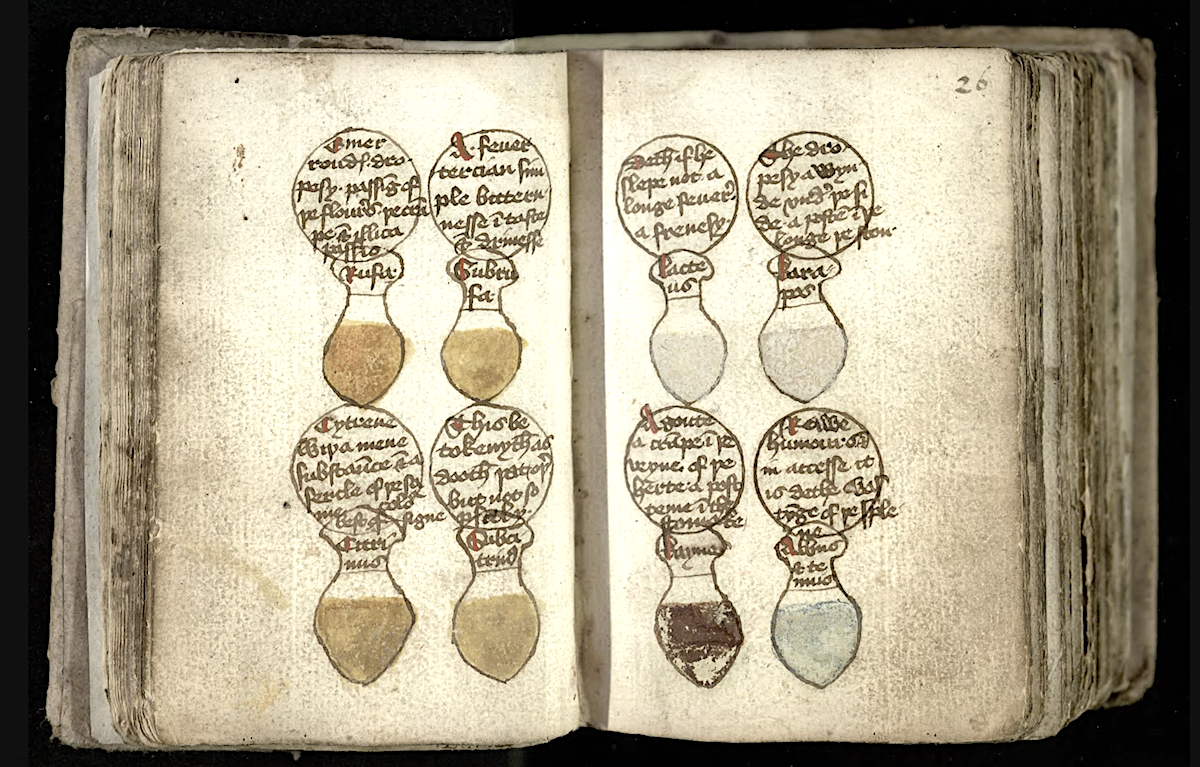
That was a time in which health was thought to be determined by the “four humors,” black bile, yellow bile, blood and phlegm; a time when certain parts of plants or animals were believed to be in “sympathetic” correspondence with certain parts of the human body; a time when repeatedly praying while clipping one’s fingernails, then burying those clippings in an elder tree, could plausibly cure a toothache. And now, it’s easier than ever to get a sense of what it must have been like, thanks to Curious Cures’ transcribed, translated, and searchable archive of all these manuscripts. The more outlandish remedies aside, what’s remarkable is how these books also acknowledge the importance of what we would now call a good night’s sleep, regular exercise, and a balanced, varied diet. Medievals may have understood their own health better than we imagine, but regardless, we’re probably not bringing back leechcraft anytime soon.
Related Content:
Based in Seoul, Colin Marshall writes and broadcasts on cities, language, and culture. His projects include the Substack newsletter Books on Cities and the book The Stateless City: a Walk through 21st-Century Los Angeles. Follow him on the social network formerly known as Twitter at @colinmarshall.
Read More...Hear the Pieces Mozart Composed When He Was Only 5 Years Old
A preternaturally talented, precocious child, barely out of toddlerhood, in powdered wig and knee-breeches, capering around the great houses of 18th century Europe between virtuoso performances on the harpsichord. A young boy who can play any piece anyone puts in front of him, and compose symphonies extemporaneously with ease…. Few scenes better capture the mythos of the child prodigy than those reported from the childhood of Wolfgang Amadeus Mozart.
If Milos Forman’s Amadeus is any reliable guide to his character, if not his history, Mozart may never have lost his boyish charm and exuberance, but his musical ability seemed to mature exponentially as he composed hundreds of sonatas, quartets, concertos, and operas, ending with the Requiem, an astonishing piece of work by any measure, despite remaining unfinished in the year of his death, 1791, at the age of 35.
While those feverish scenes of Requiem’s composition in Forman’s film may be tenuously attached to the truth, the stories of Mozart the preschool and boyhood genius are well attested. Not only did he play with unbelievable skill for “emperors and empresses in the courts of Europe,” but “by the time he was six he had composed dozens of remarkable pieces for the keyboard as well as for other instruments,” notes Willard Palmer in an introduction to Mozart’s most popular works. “His first efforts at composition began when he was only four years old.”
He composed several short pieces the following year, and you can hear them all performed above. At the Morgan Library’s site you can also see a scanned manuscript image of four of those compositions, written in Mozart’s father’s hand. Leopold Mozart—the driving stage-parental force, as we know, behind Wolfgang’s childhood career as a touring marvel—notated these first attempts, crediting them to “Wolfgangerl,” in what is known as the Nannerl Notebook, from the nickname of Mozart’s older sister, Maria Anna.
Leopold, Kapellmeister of the Salzburg court orchestra, recognized not only Wolfgang’s musical talents, but also those of Nannerl, and he devoted his time to overseeing both his children’s training. For sadly obvious reasons, the elder Mozart did not continue to perform, and the notebook named for her does not contain any of her compositions, only Leopold’s exercises for the children and her brother’s first original work. In addition to Mozart’s earliest pieces, it may also contain music composed by him at 7 or 8 years old—more extensive works that might, says Mozarteum researcher Ulrich Leisinger, bridge the short, simple first pieces and his first major compositions.
Nonetheless, we have dozens of Mozart’s compositions throughout his childhood and teenage years. Several of those earlier pieces come from the so-called London Notebook, a sketchbook kept during Mozart’s time in England between 1764–65. Here, writes Elena Abend, we find him “extending his musical themes compared to his earlier compositions.” And yet the music “almost always has a playfulness about it.” It’s a quality that never left Mozart’s work, excluding the awesome Requiem, of course, but then this final masterwork was completed by other composers, none of them with Mozart’s lightness of spirit, which we can trace all the way back to that first piece, “a courtly little composition.” Writes Abend, “gracefulness is essential in performing the piece.”
Note: An earlier version of this post appeared on our site in 2017.
Related Content:
Watch the First Performance of a Mozart Composition That Had Been Lost for Centuries
Hear the Evolution of Mozart’s Music, Composed from Ages 5 to 35
Mozart’s Diary Where He Composed His Final Masterpieces Is Now Digitized and Available Online
Josh Jones is a writer and musician based in Durham, NC. Follow him at @jdmagness
Read More...
Tom Lehrer, RIP: Hear All of His Witty, Satirical Songs in One Playlist
Tom Lehrer died last weekend, more than four decades after rumors of his death had first gone into circulation. He didn’t bother to contradict them, publicly claiming that he figured they would “cut down on the junk mail.” That quip proved not just that he was still alive, but that his wit was intact. And it was his wit, combined with a facility on the piano, that made him famous: mercilessly satirizing everything from the Boy Scouts to Harvard, his alma mater, to New Math to Vatican II to World War III, his lively show-tune pastiches became defining pieces of Cold War-era comedy — or in any case, defining pieces of early Cold War-era comedy.
A professor of mathematics for most of his career, he performed and recorded music mostly in the nineteen-fifties and sixties, beginning with his first concert, given as a graduate student in 1950, and ending with another in Copenhagen in 1967.
There was also an early-seventies coda in the form of a few songs written for PBS’ children’s show The Electric Company and a performance at a George S. McGovern rally. But by then, the frame of American culture had shifted. “The Vietnam War is what changed it,” Lehrer said in 1981. “Everybody got earnest. My purpose was to make people laugh and not applaud. If the audience applauds, they’re just showing they agree with me”: an observation today’s would-be satirists would do well to bear in mind.
Whether or not you have any aspirations of your own in that tradition, you can listen through the entirety of Lehrer’s recorded work in the YouTube playlist above and understand why his comic star burned so brightly — and, through the nearly sixty years that have followed, never quite burned out. Though clearly written in the spirit of Eisenhower-era liberalism, these songs (released by their author into the public domain a few years ago) don’t shy away from the absurdities of what Lehrer himself would not, with a straight face, be able to call the human condition. First tested out on campus, they also developed an early form of what we’ve come to think of as the “college” sensibility in popular music. In some sense, Lehrer never left that way of seeing the world behind — nor, like a true student, did he ever get around to finishing his Ph.D.
Related content:
Tom Lehrer Releases His All of Catchy and Savage Musical Satire Into the Public Domain
Hear Tom Lehrer Sing the Names of 102 Chemical Elements to the Tune of Gilbert & Sullivan
Based in Seoul, Colin Marshall writes and broadcasts on cities, language, and culture. His projects include the Substack newsletter Books on Cities and the book The Stateless City: a Walk through 21st-Century Los Angeles. Follow him on the social network formerly known as Twitter at @colinmarshall.
Read More...W.H. Auden’s 1941 Syllabus Asked Students to Read 32 Great Literary Works, Totaling 6,000 Pages
Whether willed, involuntary, or a mix of both, the declining literacy of college students is by now so often lamented that reports of it should no longer come as a surprise. And yet, on some level, they still do: English majors in regional Kansas universities find the opening to Bleak House virtually unintelligible; even students at “highly selective, elite colleges” struggle to read, let alone comprehend, books in their entirety. Things were different in 1941, and very different indeed if you happened to be taking English 135 at the University of Michigan, a class titled “Fate and the Individual in European Literature.” The instructor: a certain W. H. Auden.
In his capacity as an educator, the poet threw down the gauntlet of an “infamously difficult” syllabus, as literary academic and YouTuber Adam Walker explains in his new video above, that “asked undergraduates to read about 6,000 pages of classic literature.”
Not that the course was out of touch with current events: in its historical moment, “Nazi Germany had invaded the Soviet Union and expanded into Eastern Europe. Systematic extermination begins with mass shootings, and the machinery of genocide is accelerating. It’s no accident that Auden takes an interest in fate and the individual in European literature” — a theme that, as he frames it, begins with Dante. After the entirety of The Divine Comedy, Auden’s students had their free choice between Aeschylus’ Agamemnon or Sophocles’ Antigone.
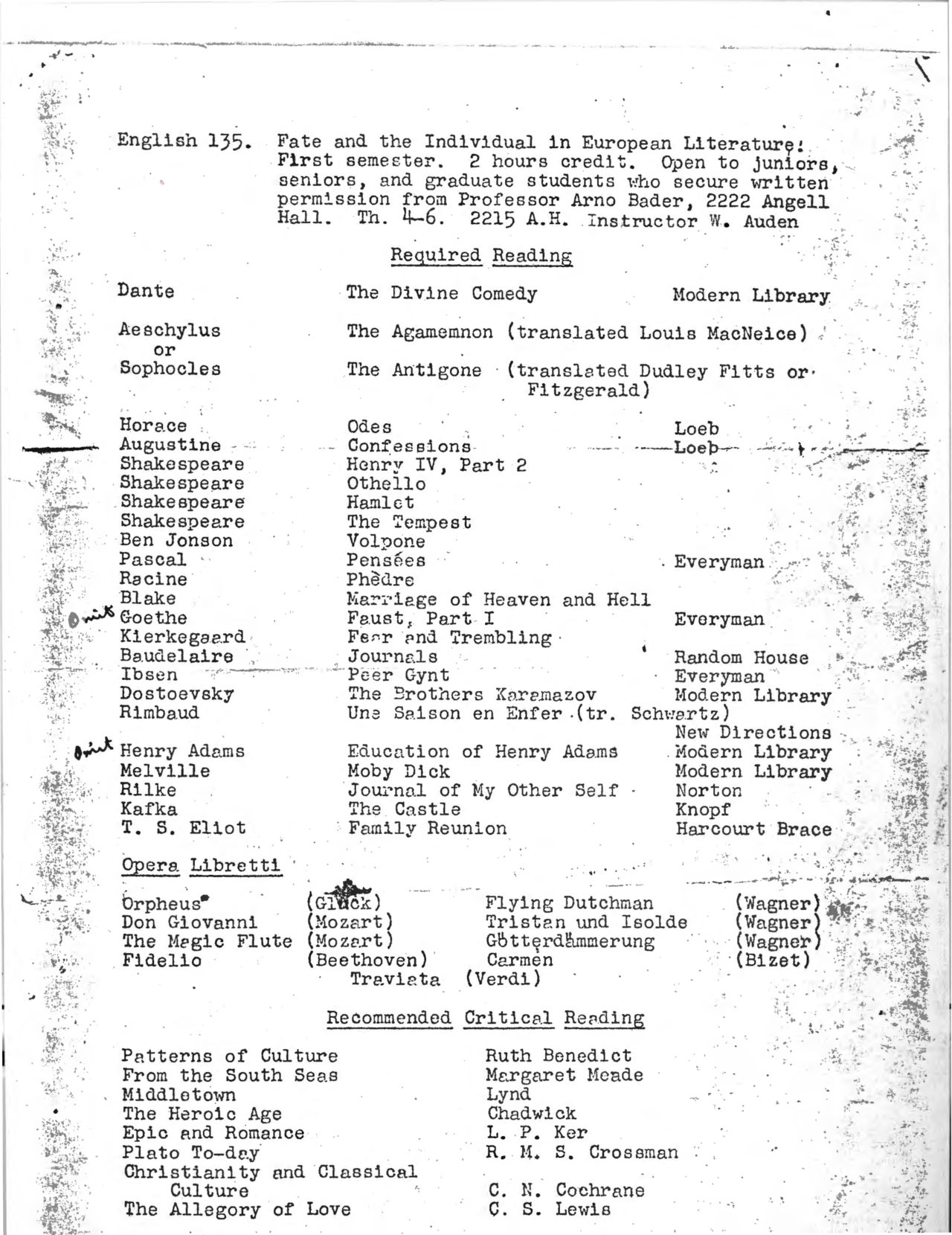
From there, the required reading plunged into Horace’s Odes and Augustine’s Confessions, four Shakespeare plays, Pascal’s Pensées, Goethe’s Faust (but only Part I), and Dostoevsky’s The Brothers Karamazov, to name just a few texts. Not everyone would consider Dostoevsky European, of course, but then, nobody would consider Herman Melville European, which for Auden was hardly a reason to leave Moby-Dick off the syllabus. Walker describes that novel as relevant to the course’s themes of “obsession and cosmic struggle,” evident in all these works and their treatments of “passion and historical forces, and how individuals navigate those forces”: ideas that transcend national and cultural boundaries by definition. Whether they would come across to the kind of twenty-first-century students who’d balk at being assigned even a full-length Auden poem is another question entirely.
View the syllabus in a larger format here.
Related content:
W. H. Auden Recites His 1937 Poem “As I Walked Out One Evening”
Discover Hannah Arendt’s Syllabus for Her 1974 Course on “Thinking”
David Foster Wallace’s 1994 Syllabus: How to Teach Serious Literature with Lightweight Books
Donald Barthelme’s Syllabus Highlights 81 Books Essential for a Literary Education
Carl Sagan’s Syllabus & Final Exam for His Course on Critical Thinking (Cornell, 1986)
Based in Seoul, Colin Marshall writes and broadcasts on cities, language, and culture. His projects include the Substack newsletter Books on Cities and the book The Stateless City: a Walk through 21st-Century Los Angeles. Follow him on the social network formerly known as Twitter at @colinmarshall.
Read More...Archaeologists Discover a 2,400-Year-Old Skeleton Mosaic That Urges People to “Be Cheerful and Live Your Life”
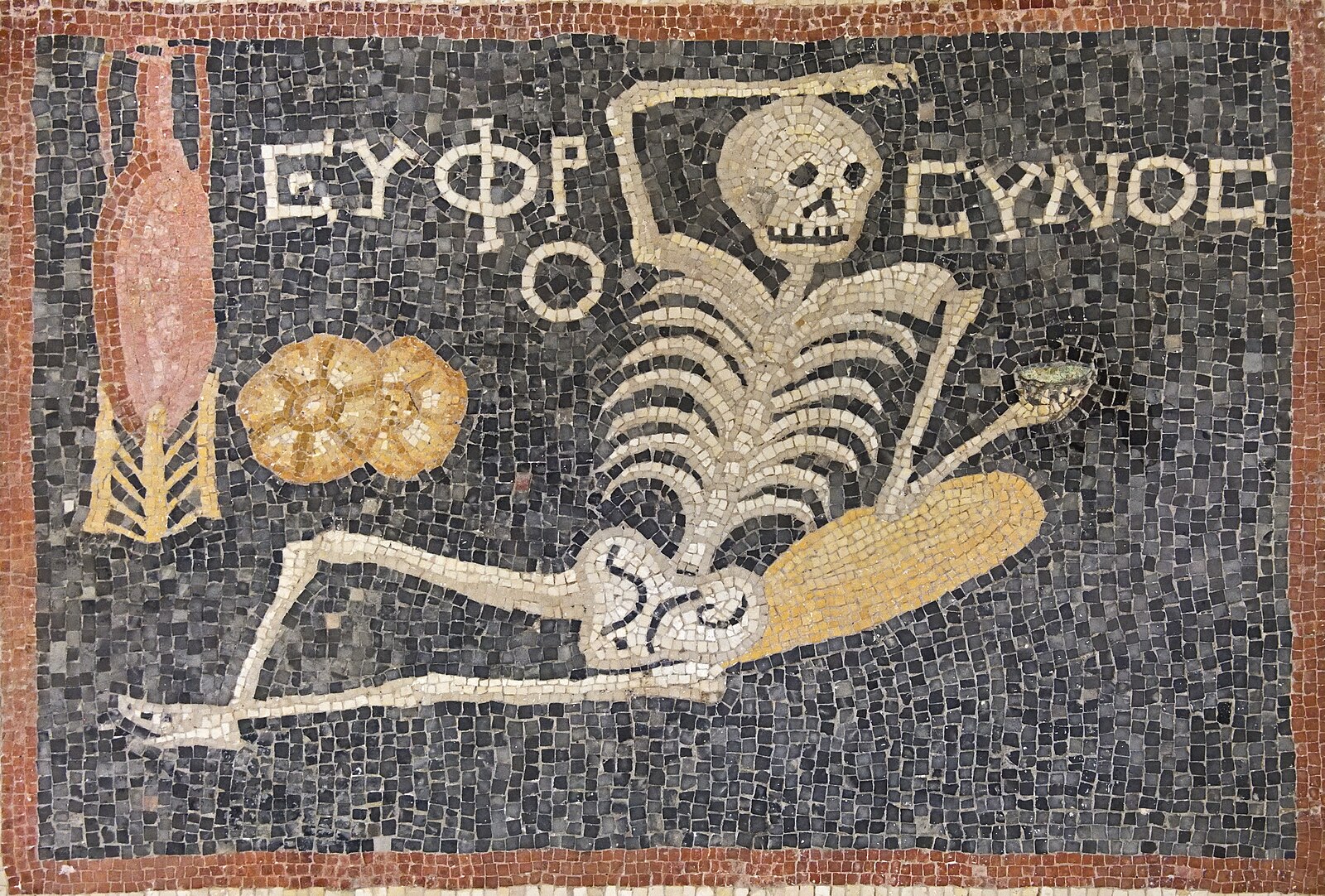
Image by Dosseman, via Wikimedia Commons
In 2012, archaeologists discovered in Southern Turkey a well-preserved mosaic featuring a skeleton savoring a loaf of bread and a pitcher of wine, surrounded by the Greek words “Be cheerful and live your life.” Dating back to the 3rd century BCE, the mosaic likely adorned the dining room of a wealthy villa in the ancient Greco-Roman city of Antioch. It’s a kind of memento mori, a reminder that life is short and you should enjoy it while you can. Or so that’s how many have interpreted the message of the mosaic.
If you would like to delve deeper, it’s worth reading the analysis and background information provided by The History Blog. Meanwhile, this separate post on Tumblr highlights other translations and interpretations of the mosaic’s key inscription.
If you would like to support the mission of Open Culture, consider making a donation to our site. It’s hard to rely 100% on ads, and your contributions will help us continue providing the best free cultural and educational materials to learners everywhere. You can contribute through PayPal, Patreon, and Venmo (@openculture). Thanks!
Related Content
A Rabbit Rides a Chariot Pulled by Geese in an Ancient Roman Mosaic (2nd century AD)
How to Make the 2000-Year-Old “Pizza” Discovered on a Pompeii Fresco
Read More...The Nazis’ 10 Control-Freak Rules for Jazz Performers: A Strange List from World War II
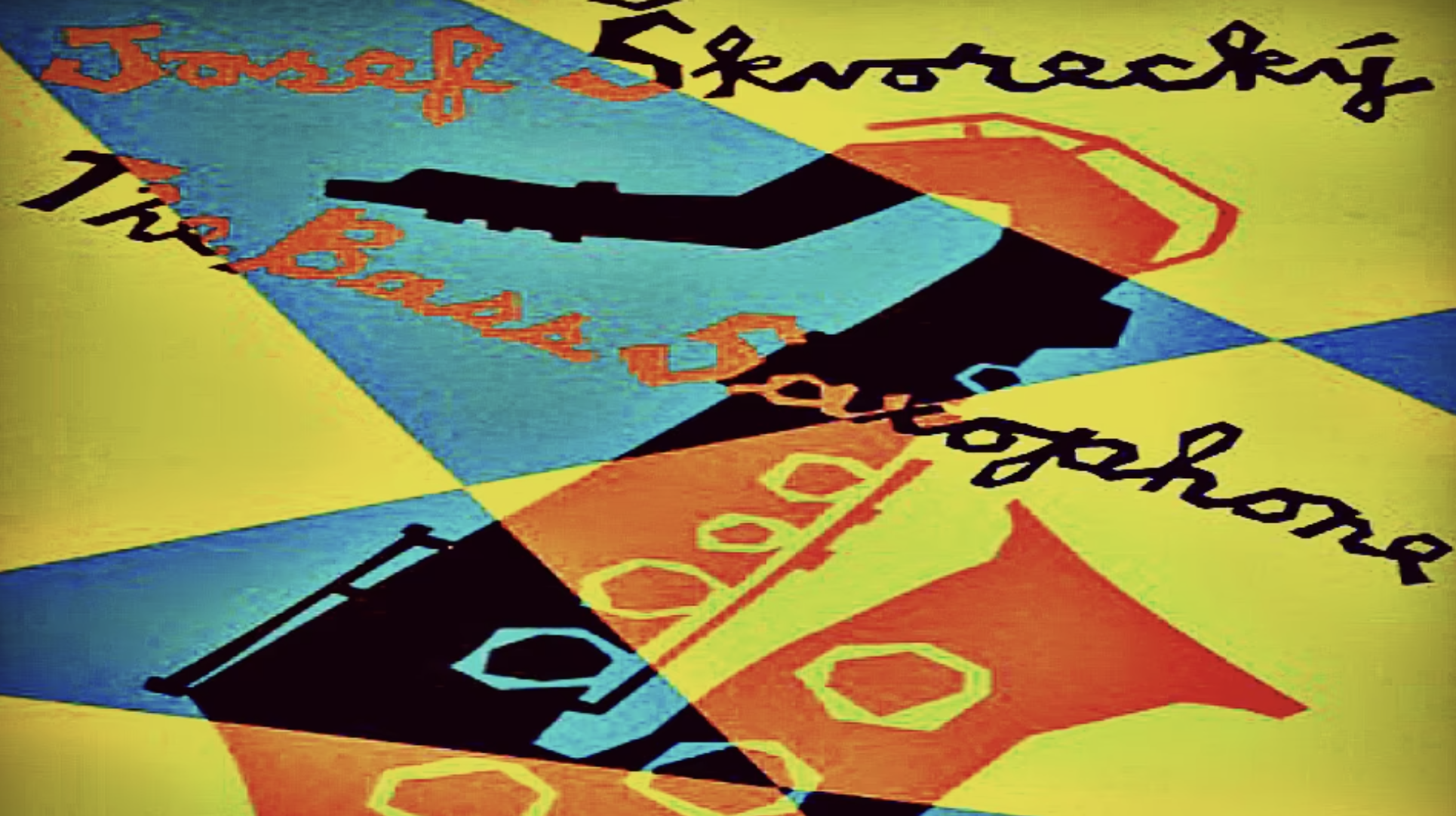
Like the rock and roll revolution of the 1950s, which shocked staid white audiences with translations of black rhythm and blues, the popularity of jazz caused all kinds of racial panic and social anxiety in the early part of the twentieth century. Long before the rise of European fascism, many American groups expressed extreme fear and agitation over the rise of minority cultural forms. But by World War II, jazz was intrinsically woven into the fabric of American majority culture, albeit often in versions scrubbed of blues undertones. This was not, of course, the case in Nazi occupied Europe, where jazz was suppressed; like most forms of modern art, it bore the stigma of impurity, innovation, passion… all qualities totalitarians frown on (even anti-fascist theorist Theodor Adorno had a serious beef with jazz).
And while it’s no great surprise that Nazis hated jazz, it seems they expressed their disapproval in a very oddly specific way, at least in the recollection of Czech writer and dissident Josef Skvorecky.
On the occasion of Skvorecky’s death, J.J. Gould pointed out in The Atlantic that the writer was himself one of the characters that so interested Kubrick. An aspiring tenor saxophone player living in Third Reich-occupied Czechoslovakia, Skvorecky had ample opportunity to experience the Nazis’ “control-freak hatred of jazz.” In the intro to his short novel The Bass Saxophone, he recounts from memory a set of ten bizarre regulations issued by a Gauleiter, a regional Nazi official, that bound local dance orchestras during the Czech occupation.
- Pieces in foxtrot rhythm (so-called swing) are not to exceed 20% of the repertoires of light orchestras and dance bands;
- In this so-called jazz type repertoire, preference is to be given to compositions in a major key and to lyrics expressing joy in life rather than Jewishly gloomy lyrics;
- As to tempo, preference is also to be given to brisk compositions over slow ones (so-called blues); however, the pace must not exceed a certain degree of allegro, commensurate with the Aryan sense of discipline and moderation. On no account will Negroid excesses in tempo (so-called hot jazz) or in solo performances (so-called breaks) be tolerated;
- So-called jazz compositions may contain at most 10% syncopation; the remainder must consist of a natural legato movement devoid of the hysterical rhythmic reverses characteristic of the barbarian races and conducive to dark instincts alien to the German people (so-called riffs);
- Strictly prohibited is the use of instruments alien to the German spirit (so-called cowbells, flexatone, brushes, etc.) as well as all mutes which turn the noble sound of wind and brass instruments into a Jewish-Freemasonic yowl (so-called wa-wa, hat, etc.);
- Also prohibited are so-called drum breaks longer than half a bar in four-quarter beat (except in stylized military marches);
- The double bass must be played solely with the bow in so-called jazz compositions;
- Plucking of the strings is prohibited, since it is damaging to the instrument and detrimental to Aryan musicality; if a so-called pizzicato effect is absolutely desirable for the character of the composition, strict care must be taken lest the string be allowed to patter on the sordine, which is henceforth forbidden;
- Musicians are likewise forbidden to make vocal improvisations (so-called scat);
- All light orchestras and dance bands are advised to restrict the use of saxophones of all keys and to substitute for them the violin-cello, the viola or possibly a suitable folk instrument.
As The Atlantic notes, “being a Nazi, this public servant obviously didn’t miss an opportunity to couch as many of these regulations as he could in racist or anti-Semitic terms.” This racialized fear and hatred was the source, after all, of the objection. It’s almost impossible for me to imagine what kind of music this set of restrictions could possibly produce, but it most certainly would not be anything people would want to dance to. And that was probably the point.
For more on Josef Skvorecky’s life as a writer under Nazism and his escape from Czechoslovakia after the Soviet invasion, read his illuminating Paris Review interview.
Note: An earlier version of this post appeared on our site in 2013.
Related Content:
Hear the Nazi’s Bizzaro Propaganda Jazz Band, “Charlie and His Orchestra” (1940–1943)
How France Hid the Mona Lisa & Other Louvre Masterpieces During World War II
When the Nazis Declared War on Expressionist Art (1937)
Josh Jones is a writer, editor, and musician based in Washington, DC. Follow him @jdmagness
Read More...Revisit One of the Most Polarizing Albums in Rock History: Lou Reed’s Metal Machine Music, Which Came Out 50 Years Ago
Fifty years ago this month, Lou Reed nearly destroyed his own career with one double album. Metal Machine Music sold 100,000 copies during the three weeks of summer 1975 between its release and its removal from the market. More than a few of the many buyers who promptly returned it would have been expecting something like Sally Can’t Dance, Reed’s solo album from the previous year, whose slickly produced songs went down easier than anything he’d recorded with the Velvet Underground. What they heard when they put the new album on their turntables (or inserted the Quadrophonic 8‑track tape into their decks) was “nothing, absolutely nothing but screaming feedback noise recorded at various frequencies, played back against various other noise layers, split down the middle into two totally separate channels of utterly inhuman shrieks and hisses.”
That description comes from voluble Creem rock critic and avowed enthusiast of decadence Lester Bangs, who also happened to be one of Metal Machine Music’s most fervent defenders. At one point he declared it “the greatest record ever made in the history of the human eardrum.” (“Number Two: Kiss Alive!”)
Much of what we know about the intentions behind this baffling album come from Bangs’ writings, including those that purport to transcribe conversations with Reed himself, who’d been one of the critic’s readiest verbal sparring partners. The inspiration, as Reed explained to Bangs, came from listening to composers Iannis Xenakis and La Monte Young, who dared to go beyond the boundaries of what most listeners would consider music at all. Reed also insisted that he’d deliberately inserted bits and pieces of Mozart, Beethoven, and other classical masters into his sonic maelstrom, though Bangs clearly didn’t buy it.
“Metal Machine Music doesn’t seem so weird now, does it?” asked an interviewer on Night Flight just a decade or so after the album’s release. “No, it doesn’t, does it?” Reed says. “In light of Eno and all this stuff that came out now, it’s not nearly as insane and crazy as they said it was then.” Indeed, it sounds almost of a piece with an influential work of ambient music like Brian Eno’s Music for Airports, though that album was meant to calm its listeners rather than drive them from the room. Over the half-century since its release, Metal Machine Music has accrued enough appreciation to be paid tributes like the live performances by German ensemble Zeitkratzer that have continued long after Reed’s death. The legacy of his “electronic instrumental composition,” as he said after one such concert in 2007, also includes a namesake clause in recording contracts stipulating that “the artist must turn in a record that sound like the artist that the record company signed — not come in with Metal Machine Music.”
Related content:
Teenage Lou Reed Sings Doo-Wop Music (1958–1962)
Hear Ornette Coleman Collaborate with Lou Reed, Which Lou Called “One of My Greatest Moments”
David Bowie and Lou Reed Perform Live Together for the First and Last Time: 1972 and 1997
Lou Reed Creates a List of the 10 Best Records of All Time
Based in Seoul, Colin Marshall writes and broadcasts on cities, language, and culture. His projects include the Substack newsletter Books on Cities and the book The Stateless City: a Walk through 21st-Century Los Angeles. Follow him on the social network formerly known as Twitter at @colinmarshall.
Read More...Support Us
We're hoping to rely on loyal readers, rather than erratic ads. Please click the Donate button and support Open Culture. You can use Paypal, Venmo, Patreon, even Crypto! We thank you!

About Us

Open Culture scours the web for the best educational media. We find the free courses and audio books you need, the language lessons & educational videos you want, and plenty of enlightenment in between.
Advertise With Us
FREE UPDATES!
GET OUR DAILY EMAIL
Get the best cultural and educational resources on the web curated for you in a daily email. We never spam. Unsubscribe at any time.
FOLLOW ON SOCIAL MEDIA
Open Culture editor Dan Colman scours the web for the best educational media. He finds the free courses and audio books you need, the language lessons & movies you want, and plenty of enlightenment in between.
Advertise With Us


