The Airline Toilets Theatre Company: Watch One Man Stage Comical Shows in Airplane Bathrooms
When COVID 19 struck, theater lovers were faced with a choice.
Let go entirely, or expand our definitions of what constitutes “theater.”
We’ve had 14 months to get used to the idea of performances staged in closets, in podcast form, or as phone calls hinging on audience participation.
We’re sick of Zoom, but we no longer consider it mandatory for the players to inhabit the same space as each other or the audience.
This is all old news to Peter Brooke Turner, a member of the Ukulele Orchestra of Great Britain and the founder of the Airline Toilets Theatre Company.
The ATTC’s repertoire consists of great works of literature, song and dance… performed exclusively in aircraft lavatories, a true feat when one considers that Turner, impresario and sole company member, is 6’8”.
2015’s inaugural production, above, remains among the company’s most ambitious — a 50th anniversary recreation of Bob Dylan’s 1965 promotional film clip for Subterranean Homesick Blues, shot on various flights throughout the Ukulele Orchestra’s US tour.
Before long, Turner’s carry-on was stuffed with props and costumes — a toga, three self-adhesive Abraham Lincoln beards, a fat suit, a plastic cigar, cardboard face masks of Jimi Hendrix and Queen’s Brian May, and a numbers of inflatables, including a woman, a horse, and a not particularly realistic handgun.
Staging solo, site specific mini productions struck Turner as a far more amusing prospect than remaining in his seat, watching a movie:
I don’t like passive consumerism — I’d rather make my own movie than watch some CGI blockbuster on a plane. 90% of touring is NOT performing but sitting around on a plane/train/bus staring into space — I’m just trying to do something creative to make the time pass.
With advance planning, the simpler productions can make it into the can on a single take.
The James Bond Tribute, below, which called for costume changes, puppets and cardboard masks of Sean Connery, Roger Moore, and Daniel Craig, was shot in segments — London to Frankfurt, Singapore to Auckland, and Singapore to London.
Rather than projecting for the benefit of folks in the non-existent back row, Turner prefers to lip synch prerecorded lines, fed to him via earbud. This helps dial down the suspicions of flight attendants and fellow passengers. Once the “occupied” light comes on, he reckons he has between 7 to 10 minutes to take care of business. Should anyone question the length of his stay, or his large bag of costumes and props, his excuse is that “I suffer from haemorrhoids and need to change my pants. (Believe me, this is a conversation no one wants to take further.)”
Watch a playlist of the Best of the Airline Toilets Theater Company here.
Related Content:
Drift: Passenger Shoots Striking Short Film Out of Airplane Window
Artist Nina Katchadourian Creates Flemish Style Self-Portraits in Airplane Lavatory
Ayun Halliday is an author, illustrator, theater maker and Chief Primatologist of the East Village Inky zine. Join her June 7 for a Necromancers of the Public Domain: The Periodical Cicada, a free virtual variety honoring the 17-Year Cicadas of Brood X. Follow her @AyunHalliday.
Read More...Art Historian Provides Hilarious & Surprisingly Efficient Art History Lessons on TikTok
@_theiconoclassIf youse come at me again for my Australian pronunciation I swear 😂 #arthistory #arthistorytiktok #baroque♬ original sound — AyseDeniz
Art Historian Mary McGillivray believes art appreciation is an acquired skill. Her TikTok project, The Iconoclass, is bringing those lacking formal art history education up to speed.
The 25-year-old Australian’s pithy observations double as surprisingly sturdy mnemonics, useful for navigating world class collections both live and online.
Some highlights from her whirlwind guide to the Baroque period, above:
If it looks like the chaos after blackout where everyone is stumbling around in the dark under one solitary emergency light, it’s a Caravaggio.
If there’s at least one person looking to the camera like they’re on The Office, it’s a Velázquez.
If there’s a room with some nice furniture, a window, and some women just going about their everyday business, it’s a Vermeer.
Rather than the traditional chronological progression, McGillivray mixes and matches, often in response to comments and Patreon requests.
When a commenter on the Baroque TikTok took umbrage that she referred to Artemisia Gentileschi by first name only, McGillivray followed up with an educational video explaining the convention from the 17th-century perspective.
@_theiconoclassReply to @rajendzzz her dad was hot, comment if you agree #baroque #artemisia #arthistoryclass♬ Guilty Love — Ladyhawke & Broods
At the urging of a Patreon subscriber, she leaps across four centuries to discover an unexpected kinship between Cubism and Renaissance painters, using George Braque’s Man with a Guitar and Sandro Botticelli’s Four Scenes from the Early Life of Saint Zenobius. One is attempting to escape the shackles of perspective by showing surfaces not visible when regarding a subject from a single point. The other is using a single space to depict multiple moments in a subject’s life simultaneously.
@_theiconoclass#arthistory #arthistorytiktok #renaissance #cubism #medievaltiktok♬ original sound — Finian Hackett
McGillivray is willing to be seen learning along with her followers. She’s open about the fact that she prefers Giotto and Fra Angelico to contemporary art (as perhaps befits an art historian whose face is more 1305 than 2021). Artist Dominic White’s wearable, environmental sculpture Hoodie Empathy Suit doesn’t do much for her until a conversation with the exhibiting gallery’s director helps orient her to White’s objectives.
@_theiconoclassWant to see me tackle more contemporary art? Big thanks to @mprg_vic ❤️🪶#arthistorytiktok #arthistory #contemporaryart #artgallery♬ original sound — Mary McGillivray
She tips her hand in an interview with Pedestrian TV:
I’m not very interested in deciding what is art and what isn’t. The whole “what is art” question has never been very important to me. The questions I prefer to ask are: Why was this image made?
She recommends art critic John Berger’s 1972 four-part series Ways of Seeing to fans eager to expand beyond the Iconoclass:
It’s got all the things you would expect from a 1970s BBC production – wide collared shirts, long hair, smoking on television – plus some of the most influential insights into how we look at art and also how we look at the world around us.
Watch Mary McGillivray’s The Iconoclass here. Support her Patreon here.
@_theiconoclassWant a part two? 😏😘 #arthistorytiktok #arthistorymajor #learnontiktok♬ Rasputin (Single Version) — Boney M.
Related Content:
Free Art & Art History Courses
An Introduction to 100 Important Paintings with Videos Created by Smarthistory
Steve Martin on How to Look at Abstract Art
Ayun Halliday is an author, illustrator, theater maker and Chief Primatologist of the East Village Inky zine. Join her June 7 for a Necromancers of the Public Domain: The Periodical Cicada, a free virtual variety honoring the 17-Year Cicadas of Brood X. Follow her @AyunHalliday.
Read More...The Art of Balancing Stones: How Artists Use Simple Materials to Make Impossible Sculptures in Nature
Not so long ago, a wave of long-form entreaties rolled through social media insisting that we stop building rock cairns. Like many who scrolled past them, I couldn’t quite imagine the offending structures they meant, let alone recall constructing one myself. The cairns in question turned out, mundanely, to be those little stacks of flat rocks seen in parks, alongside trails and streams. They’re as common in South Korea, where I live, as they seem to be in the United States. Both countries also share a great enthusiasm for Instagram, and it’s the apparent Instagrammability of these cairns that has increased their number (and consequent ecological and cultural harm) in recent years.
No matter how many likes they garner, these common cairns require little or no skill in the building. The same can hardly be said of rock balancing, an art that demands a great deal more discipline and patience than many an influencer can muster. The Wired video at the top of the post profiles one of the most famous living rock-balancers, a Canadian named Michael Grab.
“One of my core drives is to make the formation as impossible as possible,” he says, referring to the apparent defiance of gravity performed by all the rocks he finds and arranges into stacks, arcs, orbs, and other unlikely shapes. In fact, it is gravity alone that holds his artworks together — and repeatedly destroys them in the countless trials and errors before their completion.
Yes, Grab has an Instagram account: Gravity Glue, on which he showcases his precariously solid sculptures as well as their natural contexts. So does Jonna Jinton, a Swedish “artist, photographer and Youtuber” who also balances rocks. “It’s such a great way to also balance myself,” she says in the short video just above, “and to create something beautiful at the same time.” For her, the art has become a form of meditation: “As I try to find a tiny, tiny little balance point, my thoughts are completely silent, and that’s a very good feeling.” Jinton doesn’t say whether she personally ensures the destruction of her works, as Grab does. But doing so, as one should note before entering the rock-balancer lifestyle, may keep you on the better side of the ecological recommendations and indeed the law. But then the aforementioned anti-cairnism seemed to hit its zenith in early 2020, since which time, it’s fair to say, the world has had more pressing concerns.
Related Content:
Discover the Japanese Museum Dedicated to Collecting Rocks That Look Like Human Faces
Watch a Masterpiece Emerge from a Solid Block of Stone
A Modern Drummer Plays a Rock Gong, a Percussion Instrument from Prehistoric Times
Based in Seoul, Colin Marshall writes and broadcasts on cities, language, and culture. His projects include the Substack newsletter Books on Cities, the book The Stateless City: a Walk through 21st-Century Los Angeles and the video series The City in Cinema. Follow him on Twitter at @colinmarshall or on Facebook.
Read More...Meet the Linda Lindas, the Tween Punk Band Who Called Out Racism & Misogyny and Scored a Record Deal
“Sticks and stones may break my bones,” we chanted as kids, but “words will never hurt me.” The saying seems to both invite physical violence and deny the real effects of verbal abuse. Maybe this was once effective as a stock playground retort, but it’s never been true, as anyone who’s been picked on as a child can attest. When the taunts are racist, the damage is exponentially multiplied. Not only are kids being singled out and mocked for immutable characteristics, but their family and entire culture of origin are being targeted.
What to do? Lash out? Fight back? Ignore it and pretend it isn’t happening? To quote another cliche, “the best revenge is success.” More appropriately for the case at hand, take an original line from Radiohead’s Thom Yorke: “Be constructive with your blues.”
The Linda Lindas, a four-piece punk band ranging in age from 10 to 16 would agree. When one of the girls was harassed by a classmate, they got bummed about it, then rallied, wrote a song, went viral, and scored a record deal. Dealing with bullies will rarely lead to such joyful results, but it’s worth paying attention when it does.
The song, “Racist, Sexist Boy” has “become something of a 2021 anthem,” writes NPR, with its gleeful call-outs (“Poser! Blockhead! Riffraff! Jerk face!”) and crunchy power chords. “In what has become a very familiar cycle to music-industry watchers, the band landed a record deal almost as soon as its video went viral,” signing with L.A.’s Epitaph Records. “By Friday, the band’s performance of ‘Racist, Sexist Boy’ had been posted on Epitaph’s YouTube channel.” The video comes from a performance at the Los Angeles Public Library, which you can watch in full above, with an introduction and interview with the band. (See a setlist on YouTube and don’t miss their cover of Bikini Kill’s “Rebel Girl” at 35:56.)
So, who are the Linda Lindas? On their Bandcamp page, they describe themselves as “Half Asian / half Latinx. Two sisters, a cousin, and their close friend. The Linda Lindas channel the spirit of original punk, power pop, and new wave through today’s ears, eyes and minds.” You can meet the multi-talented tweens and teens in the video above, made in 2019 by a fifth grade teacher to inspire his students. The girls are hardly new to the music business. Clips in the video show them performing with Money Mark and opening for Bikini Kill. They got their start in 2018 at Girlschool LA, “a celebration of females challenging the status quo,” and they’ve been mentored by Karen O of the Yeah Yeah Yeahs.
The Linda Lindas also captured the attention of Amy Pohler, who featured the band in her Netflix documentary Moxie. See a clip above. Not every kid who fights bullying with music — or art, science, sports, or whatever their talent — can expect celebrity, and we shouldn’t set kids up to think they can all win the internet lottery. But the Linda Lindas have become heroes for millions of young girls who look like them, and who dream not of fame and fortune but of a united front of friendship and fun against racism, misogyny, and the pains of growing up.
Related Content:
Hear 11-Year-Old Björk Sing “I Love to Love”: Her First Recorded Song (1976)
Josh Jones is a writer and musician based in Durham, NC. Follow him at @jdmagness
Read More...Creative Thinking: A Free Online Course from Imperial College London
From Peter Childs (Head of the Dyson School of Design Engineering at Imperial College London) comes a free course that explores creative thinking techniques, and how to apply them to everyday problems and global challenges. The course description for Creative Thinking: Techniques and Tools for Success reads:
In today’s ever-growing and changing world, being able to think creatively and innovatively are essential skills. It can sometimes be challenging to step back and reflect in an environment which is fast paced or when you are required to assimilate large amounts of information. Making sense of or communicating new ideas in an innovative and engaging way, approaching problems from fresh angles, and producing novel solutions are all traits which are highly sought after by employers.
The greatest innovators aren’t necessarily the people who have the most original idea. Often, they are people- or teams- that have harnessed their creativity to develop a new perspective or more effective way of communicating an idea. You can train your imagination to seize opportunities, break away from routine and habit, and tap into your natural creativity.
This course will equip you with a ‘tool-box’, introducing you to a selection of behaviours and techniques that will augment your innate creativity. Some of the tools are suited to use on your own and others work well for a group, enabling you to leverage the power of several minds.
You can take Creative Thinking: Techniques and Tools for Success for free by selecting the audit option upon enrolling. If you want to take the course for a certificate, you will need to pay a fee.
Creative Thinking will be added to our list, 1,700 Free Online Courses from Top Universities.
Related Content:
David Lynch Explains How Simple Daily Habits Enhance His Creativity
Read More...Revisiting Marvin Gaye’s “What’s Goin’ On,” and the Album That Opened R&B to Resistance: Revisited 50 Years Later
I just want to be heard and that’s all that matters. — Marvin Gaye
R&B superstar Marvin Gaye was more than willing to risk his career on a record.
His polished public persona was a false front behind which lurked some serious demons — depression and addiction, exacerbated by the illness and death of his close friend and duet mate, Tammi Terrell.
His downward spiral was also fueled by his distress over events of the late 60s.
How else to respond to the Vietnam War, the murder of civil rights leaders, police brutality, the Watts Riots, a dire environmental situation, and the disenfranchisement and abandonment of lower income Black communities?
Perhaps by refusing to adhere to producer Barry Gordy’s mandate that all Motown artists were to steer clear of overt political stances….
He controlled their careers, but art is a powerful outlet.
Obie Benson also came under Gordy’s thumb as a member of the R&B quartet, the Four Tops. The shocking violence he witnessed in Berkeley’s People’s Park on Bloody Thursday while on tour with his band provided the lyrical inspiration for “What’s Goin’ On.”
When the other members of the group refused to touch it, not wanting to rock the boat with a protest song, he took it to Gaye, who had lost all enthusiasm for the “bullshit” love songs that had made him a star
Benson recalled that Gaye added some “things that were more ghetto, more natural, which made it seem more like a story than a song… we measured him for the suit and he tailored the hell out of it.”
Gordy was not pleased with the song’s message, nor his loosey goosey approach to laying down the track. Eli Fontaine’s famous saxophone intro was improvised and “Motown’s secret weapon,” bassist James Jamerson was so plastered on Metaxa, he was recorded sprawling on the floor.
Jamerson told his wife they’d been working on a “masterpiece,” but Gordy dubbed “What’s Going On” “the worst thing I ever heard in my life,” pooh-poohing the “Dizzy Gillespie stuff in the middle, that scatting.” He refused to release it.
Gaye stonewalled by going on strike, refusing to record any music whatsoever.
Eight months in, Motown’s A&R Head Harry Balk, desperate for another release from one of the label’s most popular acts, directed sales vice president Barney Ales to drop the new single behind Gordy’s back.
It immediately shot to the top of the charts, selling 70,000 copies in its first week.
Gordy, warming to the idea of more sales, abruptly reversed course, directing Gaye to come up with an entire album of protest songs. It ushered in a new era in which Black recording artists were not only free, but encouraged to use their voices to bring about social change.
The album, What’s Going On, recently claimed top honors when Rolling Stone updated its 500 Greatest Albums list. Now, it is celebrating its 50th anniversary, and as Polyphonic, producers of the mini-doc above note, its sentiments couldn’t be more timely.
Related Content:
Nina Simone’s Live Performances of Her Poignant Civil Rights Protest Songs
Ayun Halliday is an author, illustrator, theater maker and Chief Primatologist of the East Village Inky zine. Join her June 7 for a Necromancers of the Public Domain: The Periodical Cicada, a free virtual variety honoring the 17-Year Cicadas of Brood X. Follow her @AyunHalliday.
Read More...John Steinbeck Wrote a Werewolf Novel, and His Estate Won’t Let the World Read It: The Story of Murder at Full Moon
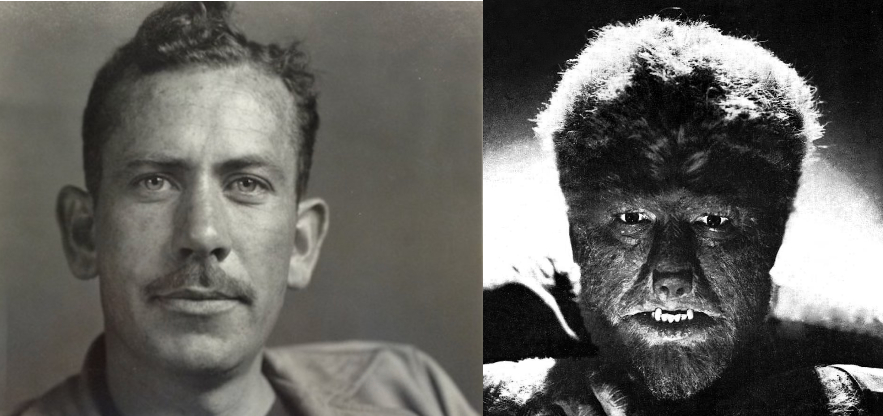
Photo of Steinbeck by Sonya Noskowiak, via Wikimedia Commons
John Steinbeck wrote Of Mice and Men, The Grapes of Wrath, and East of Eden, but not before he’d put a few less-acclaimed novels under his belt. He didn’t even break through to success of any kind until 1935’s Tortilla Flat, which later became a popular romantic-comedy film with Spencer Tracy and Hedy Lamarr. That was already Steinbeck’s fourth published novel, and he’d written nearly as many unpublished ones. Two of those three manuscripts he destroyed, but a fourth survives at the University of Texas in Austin’s Harry Ransom Center, which specialized in hoarding literary ephemera, especially from Nobel laureates. The unpublished novel deals not with laborers, farmers, or wastrels, but a werewolf.
“Set in a fictional Californian coastal town, Murder at Full Moon tells the story of a community gripped by fear after a series of gruesome murders takes place under a full moon,” writes The Guardian’s Dalya Alberge. “Investigators fear that a supernatural monster has emerged from the nearby marshes. Its characters include a cub reporter, a mysterious man who runs a local gun club and an eccentric amateur sleuth who sets out to solve the crime using techniques based on his obsession with pulp detective fiction.”
Alberge quotes Stanford literary scholar Gavin Jones describing the book as related to Steinbeck’s “interest in violent human transformation – the kind of human-animal connection that you find all over his work; his interest in mob violence and how humans are capable of other states of being, including particularly violent murderers.”
Then still in his twenties, Steinbeck wrote Murder at Full Moon under the pseudonym Peter Pym. After receiving only rejections from publishers, he shelved the manuscript and seems not to have given it another thought, even in order to dispose of it. Though Steinbeck’s estate has declared its lack of interest in its posthumous publication, Jones believes it would find a receptive readership today: “It’s a horror potboiler, which is why I think readers would find it more interesting than a more typical Steinbeck.” It also “predicts Californian noir detective fiction. It is an unsettling story whose atmosphere is one of fog-bound, malicious, malignant secrecy.” It could at least have made quite a noir film, ideally one starring Lon Chaney, Jr., whose performance in Of Mice and Men proved he could play a Steinbeck character — to say nothing of his subsequent turn in The Wolf Man.
Related Content:
John Steinbeck’s Six Tips for the Aspiring Writer and His Nobel Prize Speech
John Steinbeck Reads Two Short Stories, “The Snake” and “Johnny Bear” in 1953
Based in Seoul, Colin Marshall writes and broadcasts on cities, language, and culture. His projects include the Substack newsletter Books on Cities, the book The Stateless City: a Walk through 21st-Century Los Angeles and the video series The City in Cinema. Follow him on Twitter at @colinmarshall or on Facebook.
Read More...A Young Janis Joplin Plays a Passionate Set at One of Her First Gigs in San Francisco (1963)
From her early, unhappy teen years in Port Arthur, Texas, Janis Joplin seemed to know she wanted to be a blues singer. She once said she decided to become a singer when a friend “loaned her his Bessie Smith and Leadbelly records,” writes biographer Ellis Amburn. “Ten years later, Janis was hailed as the premier blues singer of her time. She paid tribute to Bessie by buying her a headstone for her unmarked grave.” She was devoted to the blues, from her earliest encounters with the music in her youth to her last recorded song, the lonely, a capella blues, “Mercedes Benz.”
But when Joplin first appeared on the San Francisco scene in 1963, she did so as a Dylan-influenced folkie fresh from the University of Texas, Austin. The year before, she had been described by a profile in The Daily Texan as an artist who “goes barefooted when she feels like it, wears Levis to class because they’re more comfortable, and carries her autoharp with her everywhere she goes so that in case she gets the urge to break into song, it will be handy.” The article was titled “She Dares to Be Different.”
Joplin’s folk persona was hardly unique in either San Francisco or Austin in the early 60s. “In fact, her love of Dylan and folk simply marked her out as a rider of the zeitgeist,” writes music journalist Chris Salewicz. “When, for example, a former University of Texas alumnus called Chet Helms passed through [Austin] he was astonished at the wealth of folk music.” Helms, who had already moved west, promised Joplin gigs in San Francisco. The pair hitchhiked to the city “midway through January 1963, with considerable trepidation… a trek in which they spent 50 hours on the road.”
Once in North Beach, a neighborhood defined by City Lights bookstore and the Beats, Helms found Joplin gigs at Coffee and Confusion, then the Coffee Gallery, where she “was just one of many future rockers to play the Coffee Gallery as a folkie,” writes Alice Echols. In South Bay coffeehouses, she met Jerry Garcia and future Jefferson Airplane guitarist Jorma Kaukonen. Everyone made the coffeehouse rounds, acoustic guitar in hand. It was the way to make a name in the scene, which Janis did quickly, appearing the same year she arrived in San Francisco on the side stage at the Monterey Folk Festival.
But Janis brought something different than other students of Dylan — bigger and bolder and louder and deeply rooted in a Southern blues tradition Joplin spread to astonished beatniks like a “Blues Historian,” one commenter notes, “turning a small audience on to some obscure and forgotten performers, whose music would serve as the foundation for an entire genre yet to come.” You can hear her do just that in the gig above at the Coffee Gallery in 1963: “no drums, no crowds. Just Janis and a small group of people gathered to hear some samples of rural blues, done by an enthusiast from Texas.”
See the full setlist below. Other performers on the recording, according to the YouTube uploader, are Larry Hanks on acoustic guitar and vocals, and Billy Roberts (or possibly Roger Perkins) on acoustic guitar, as well as banjo, vocals, and harmonica.
Leaving’ This Morning (K.C. Blues)
Daddy, Daddy, Daddy
Careless Love
Bourgeois Blues
Black Mountain Blues
Gospel Ship
Stealin’
Related Content:
Janis Joplin’s Last TV Performance & Interview: The Dick Cavett Show (1970)
Janis Joplin & Tom Jones Bring the House Down in an Unlikely Duet of “Raise Your Hand” (1969)
Josh Jones is a writer and musician based in Washington, DC. Follow him @jdmagness
Read More...The Great Wave Off Kanagawa by Hokusai: An Introduction to the Iconic Japanese Woodblock Print in 17 Minutes
When woodcut artist Katsushika Hokusai made his famous print The Great Wave off Kanagawa in 1830 — part of the series Thirty-six Views of Mount Fuji — he was 70 years old and had lived his entire life in a Japan closed off from the rest of the world. In the 19th century, however, “the rest of the world was becoming industrialized,” James Payne explains above in his Great Art Explained video, “and the Japanese were concerned about foreign invasions.” The Great Wave shows “an image of Japan fearful that the sea — which has protected its peaceful isolation for so long — would become its downfall.”
It’s also true, however, that The Great Wave would not have existed without a foreign invasion. Prussian blue, the first stable blue pigment, accidentally invented around 1705 in Berlin, arrived in the ports of Nagasaki on Dutch and Chinese ships in the 1820s. Prussian Blue would start a new artistic movement in Japan, aizuri‑e, woodcuts printed in bright, vivid blues.
“Hokusai was one of the first Japanese printmakers to boldly embrace the colour,” Hugh Davies writes at The Conversation, “a decision that would have major implications in the world of art.” When the country’s isolationist policies ended in the 1850s, “a showcase at the inaugural Japanese Pavilion elevated the artistic status of woodblock prints and a craze for their collection quickly followed.”
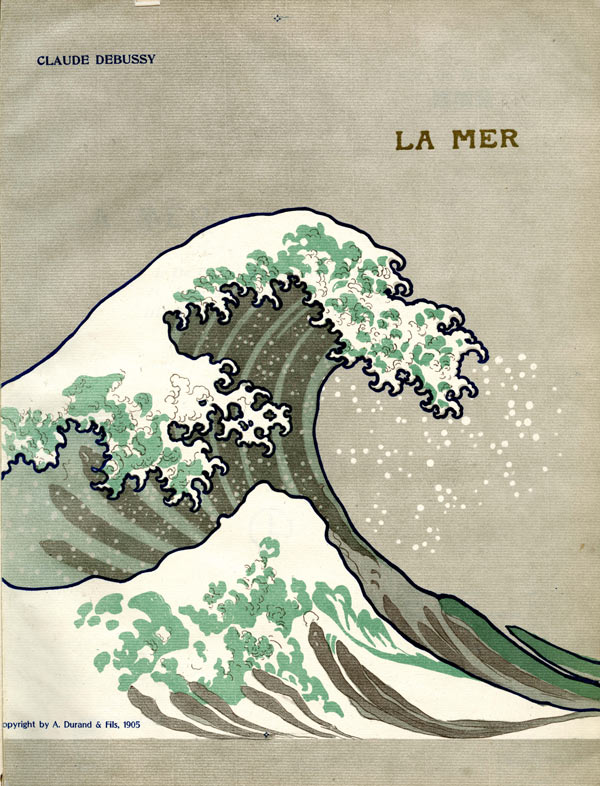
Chief among the works collected in the European and American fervor for Japanese prints were those from Hokusai, his contemporary Hiroshige, and other aizuri‑e artists. So famous was The Great Wave in the West by 1891 that French graphic artist Pierre Bonnard would satirize its stylish spray in an advertisement for champagne. A print of The Great Wave hung on Claude Debussy’s wall, and the first edition of his La Mer bore an adaptation of a detail from the print. As Michael Cirigliano writes for the Metropolitan Museum of Art:
Cultural circles throughout Europe greatly admired Hokusai’s work…. Major artists of the Impressionist movement such as Monet owned copies of Hokusai prints, and leading art critic Philippe Burty, in his 1866 Chefs-d’oeuvre des Arts industriels, even stated that Hokusai’s work maintained the elegance of Watteau, the fantasy of Goya, and the movement of Delacroix. Going one step further in his lauded comparisons, Burty wrote that Hokusai’s dexterity in brush strokes was comparable only to that of Rubens.
These comparisons are not misplaced, John-Paul Stonard explains in The Guardian: “That the Great Wave became the best known print in the west was in large part due to Hokusai’s formative experience of European art.” Not only did he absorb Prussian blue into his repertoire, but “prints from early in his career show him attempting, rather awkwardly, to apply the lesson of mathematical perspective, learnt from European prints brought into Japan by Dutch Traders.” By the time of The Great Wave, he had perfected his own synthesis of Western and Japanese art, over two decades before European painters would attempt the same in the explosion of Japanophilia of the late 19th and early 20th century.
Related Content:
Josh Jones is a writer and musician based in Durham, NC. Follow him at @jdmagness
Read More...Why Collect? A Conversation about Collectibles from Pretty Much Pop: A Culture Podcast (#92)
What drives someone to collect Star Wars figures or Transformers or LEGOs or whatever else? Your Pretty Much Pop hosts Mark Linsenmayer, Erica Spyres, and Brian Hirt are joined by guest Matt Young of the Hello from the Magic Tavern and Improvised Star Trek podcasts to talk about this potentially expensive and life-eating habit. No kidulting required.
For a little extra information on this topic, you may want to look at Wikipedia on the Psychology of Collecting, this incomplete list of nostalgic collectible IPs (that’s “intellectual property”), or this weird list of collections that includes erasers, confetti, traffic cones and sugar packets.
Most of the literature we found in researching this episode was either about what collections might present a future investment opportunity or other tips for doing this as a financial activity (please don’t try to do this) and surprise that adults buy toys.
After the episode, Matt remained on the line for our Aftertalk, which is typically only available for supporters via patreon.com/prettymuchpop, but this this case we’ve unleashed it to the public:
Hear more of this podcast at prettymuchpop.com. This podcast is part of the Partially Examined Life podcast network.
Pretty Much Pop: A Culture Podcast is the first podcast curated by Open Culture. Browse all Pretty Much Pop posts.
Read More...Support Us
We're hoping to rely on loyal readers, rather than erratic ads. Please click the Donate button and support Open Culture. You can use Paypal, Venmo, Patreon, even Crypto! We thank you!

About Us

Open Culture scours the web for the best educational media. We find the free courses and audio books you need, the language lessons & educational videos you want, and plenty of enlightenment in between.
Advertise With Us
FREE UPDATES!
GET OUR DAILY EMAIL
Get the best cultural and educational resources on the web curated for you in a daily email. We never spam. Unsubscribe at any time.
FOLLOW ON SOCIAL MEDIA
Open Culture editor Dan Colman scours the web for the best educational media. He finds the free courses and audio books you need, the language lessons & movies you want, and plenty of enlightenment in between.
Advertise With Us


