Download 222 Belle Époque Art Posters: An Online Archive of Masterpieces from the “Golden Age of the Poster” (1880–1918)
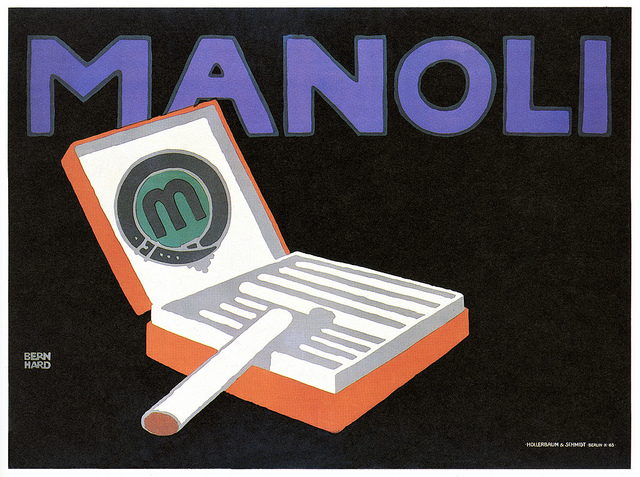
Europe at the end of the nineteenth century and beginning of the twentieth: what a time and place to be alive. Or rather, what a time and place to be alive for people in the right countries and, more importantly, of the right classes, those who saw a new world taking shape around them and partook of it with all possible heartiness. The period between the end of the Franco-Prussian War in 1871 and the outbreak of World War I in 1914, best known by its French name La Belle Époque, saw not just peace in Europe and empires at their zenith, but all manner of technological, social, and cultural innovations at home as well.
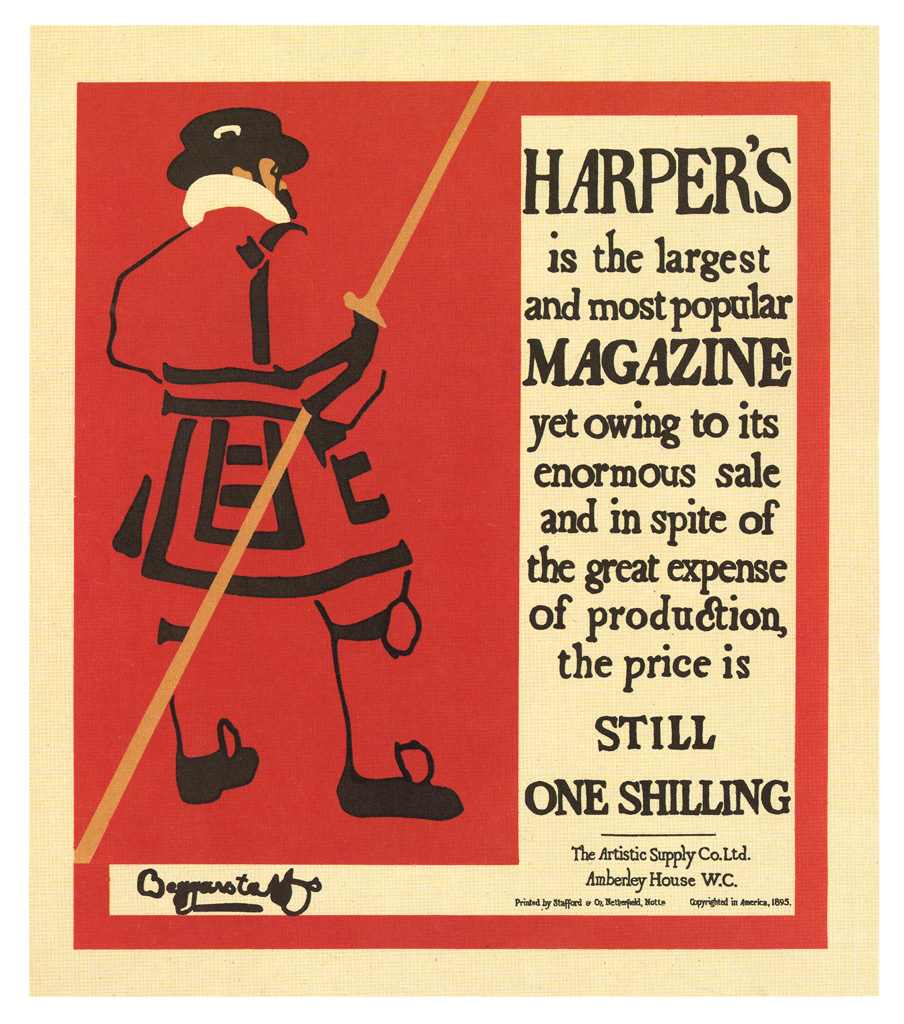
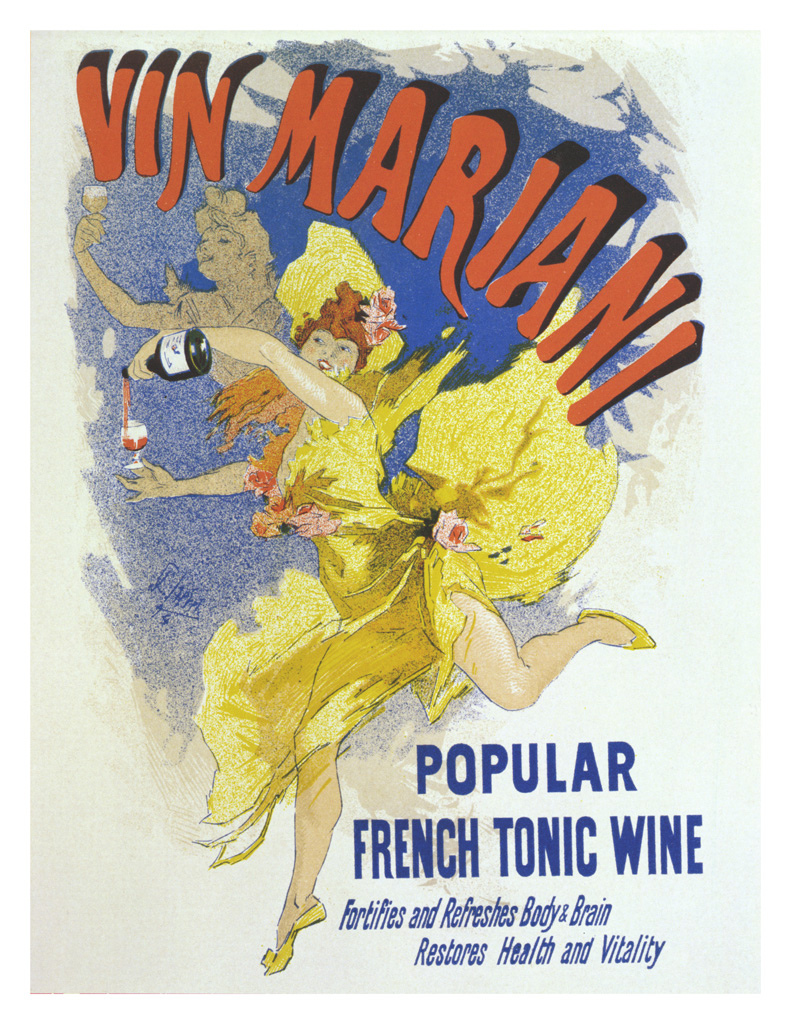
We here in the 21st century have few ways of tasting the life of that time as rich as its posters, more than 200 of which you can view in high resolution and download from the “Art of the Poster 1880–1918,” a Flickr collection assembled by the Minneapolis College of Art and Design.
“In the late nineteenth century, lithographers began to use mass-produced zinc plates rather than stones in their printing process,” says the accompanying text. “This innovation allowed them to prepare multiple plates, each with a different color ink, and to print these with close registration on the same sheet of paper. Posters in a range of colors and variety of sizes could now be produced quickly, at modest cost.”
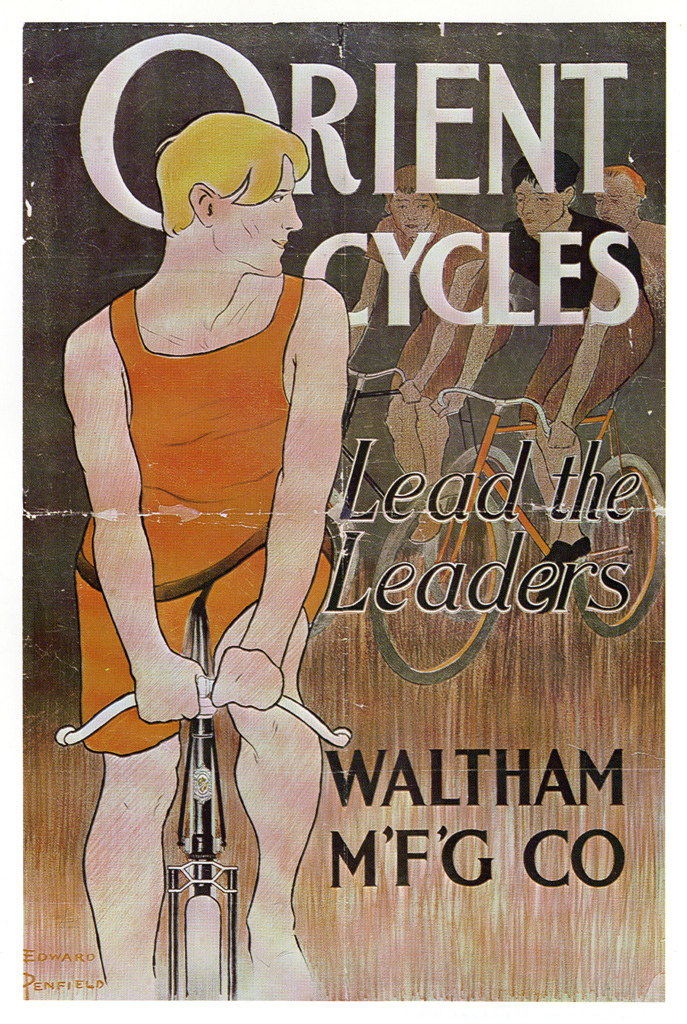
Like other of the most fruitful technological advancements of the era, this leap forward in poster-printing drew the attention, and soon the efforts, of artists: well-regarded illustrators and graphic designers like Alphonse Mucha, Jules Chéret, Eugène Grasset, and Henri de Toulouse-Lautrec took to the new method, and “The ‘Golden Age of the Poster’ was the spectacular result.”
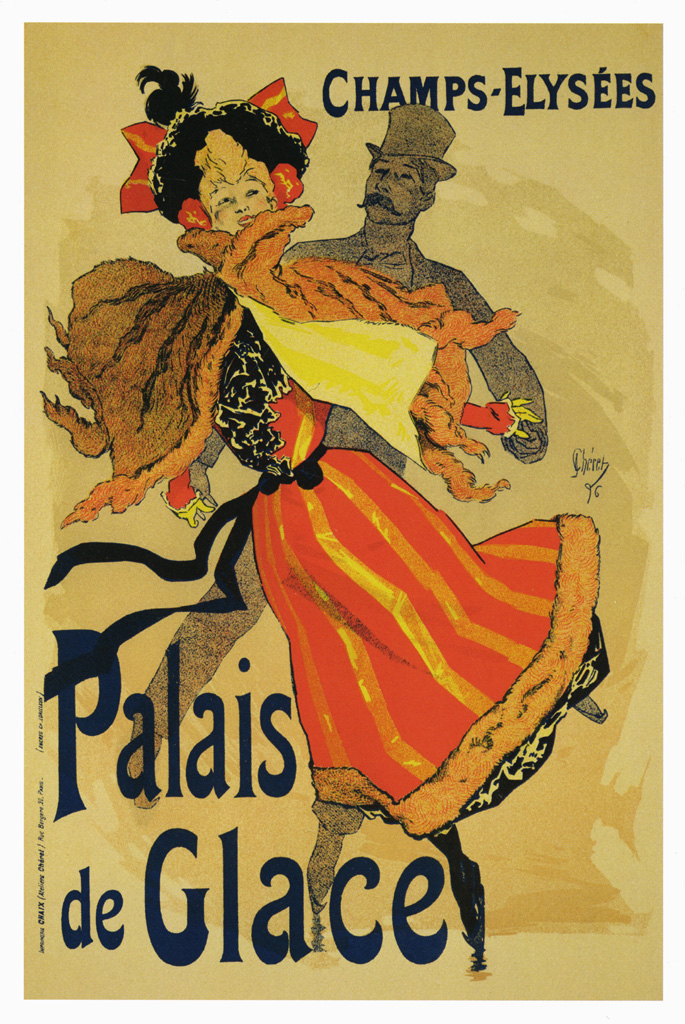
While many of the best-remembered posters of that Golden Age come from France, it touched the streets of every major city in western Europe as well as those of England and America, all places whose well-heeled populations found themselves newly and avidly interested in art, photography, motion pictures, magazines, bicycles, automobiles, absinthe, coffee, cigarettes, and world travel.

The companies behind all those exciting things had, of course, to advertise, but unlike in earlier times, they couldn’t settle for getting the word out; they had to use images, and the most vivid ones possible at that. They had to use them in such a way as to associate what they had to offer with the abundant spirit of the time, whether they called that time La Belle Époque, the Wilhelmine period, the late Victorian and Edwardian era, or the Gilded Age.
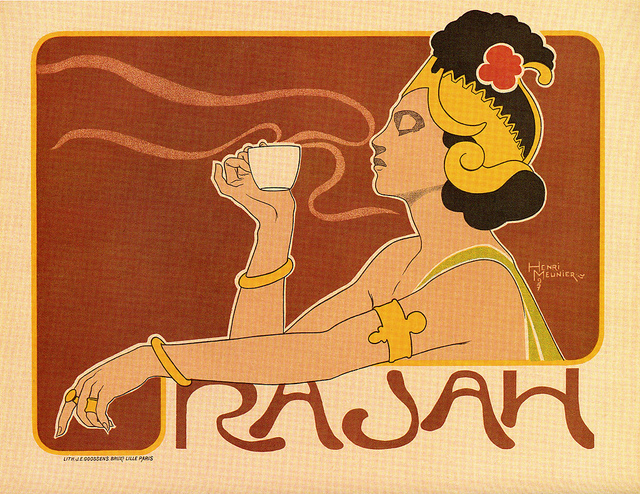
All those names, of course, were applied only in retrospect, after it became clear how bad times could get in the twentieth century. But then, none of us ever realize we’re living through a golden age before it comes to its inevitable end; until that time, best just to enjoy it. You can enter the poster archive here.
Note: An earlier version of this post appeared on our site in 2017.
Related Content:
René Magritte’s Early Art Deco Advertising Posters, 1924–1927
Read More...How to Pour a Beer the Right Way
?si=BKqiiloz1aFahBfk
How do you pour a beer? You think you know the answer. You’re pouring the beer into a tilted glass, and minimizing the foam. According to Max Bakker, a Master Cicerone (or sommelier for beer), you’re getting it wrong. Above, he demonstrates the proper technique. Watch and learn.
If you would like to support the mission of Open Culture, consider making a donation to our site. It’s hard to rely 100% on ads, and your contributions will help us continue providing the best free cultural and educational materials to learners everywhere. You can contribute through PayPal, Patreon, and Venmo (@openculture). Thanks!
Related Content
Watch Beer Ferment in Time-Lapse Motion, and Then Learn How to Make Beer with an Animated Video
Discover the Oldest Beer Recipe in History From Ancient Sumeria, 1800 B.C.
How to Make Ancient Mesopotamian Beer: See the 4,000-Year-Old Brewing Method Put to the Test
Read More...Meet Jason Arday, the Cambridge Professor Who Didn’t Learn to Talk Until Age 11, or to Read Until Age 18
When Jason Arday became a professor at University of Cambridge at the age of 37, he also became the youngest black person ever appointed to a professorship there. That’s impressive, but it becomes much more so when you consider that he didn’t learn to speak until he was eleven years old and read until he was eighteen. Diagnosed with Autism Spectrum Disorder at the age of three, he had to find different ways to develop himself and his life than most of us, and also to take advantage of help from the right collaborators: his mother, for instance, who learned the value of repetition to the autistic mind, and introduced her son to the highly repetitive game of snooker to get him used to mastering tasks.
“It’s hard to say if it worked or not,” Arday says in the Great Big Story video above. “Well, in terms of snooker, it did, because I became a really good snooker player.” An interested high school teacher, Chris Trace, and later a college tutor named Sandro Sandri, encouraged Arday to use his strong focus to not just catch up with but far surpass the average student.
“I don’t consider myself to be intelligent,” Arday says in the Black in Academia video below, “but I would bet that I’m one of the hardest-working people in the world.” In the Sociology of Education department, he’s directed his own work toward improving the situation of students possessed of similar drive in similarly difficult starting conditions.
Among Arday’s projects, according to the University of Cambridge’s web site, “a book with Dr. Chantelle Lewis (University of Oxford) about the challenges and discrimination faced by neurodiverse populations and students of color,” a program “to support the mental health of young people from ethnic minority backgrounds,” research into “the role of the arts and cultural literacy in effective mental health interventions,” and “a book about Paul Simon’s 1986 album, Graceland, focusing on the ethical dilemmas the singer-songwriter confronted by breaking cultural apartheid in South Africa to involve marginalized black communities in its production.”
Here on Open Culture, we’ve previously featured work on how music has helped autistic young people. It’s certainly helped Arday, who credits certain songs with helping him along in his quest for knowledge and academic credentials. He makes reference to David Bowie’s song “Golden Years,” because “there was a period of five years where it felt like everything I touched turned to gold — and I had another period of five years where it was just really, really difficult.” Overcoming disadvantages seems to have constituted half of Arday’s battle, but no less important, in his telling, has been his subsequent decision to focus on his distinctive set of strengths. Despite the young age at which he made professor, none of this came quickly — but then, he’d been psychologically prepared for that by another of his major musical touchstones: AC/DC’s “It’s a Long Way to the Top (If You Wanna Rock ‘N’ Roll).”
Related content:
The Wisdom & Advice of Maurice Ashley, the First African-American Chess Grandmaster
Based in Seoul, Colin Marshall writes and broadcasts on cities, language, and culture. His projects include the Substack newsletter Books on Cities, the book The Stateless City: a Walk through 21st-Century Los Angeles and the video series The City in Cinema. Follow him on Twitter at @colinmarshall or on Facebook.
Read More...What Makes James Joyce’s Ulysses a Masterpiece: Great Books Explained
Here on Open Culture, we’ve often featured the work of gallerist-Youtuber James Payne, creator of the channel Great Art Explained. Not long ago we wrote up his examination of the work of René Magritte, the Belgian surrealist painter responsible for such enduring images as Le fils de l’homme, or The Son of Man. Payne uses that famous image of a bowler-hatted everyman whose face is covered by a green apple again in the video above, but this time to represent a literary character: Leopold Bloom, the protagonist of James Joyce’s Ulysses. It is that much-scrutinized literary masterwork Payne has taken as his subject for his new channel, Great Books Explained.
Indeed, few great books are regarded as needing as much explanation as Ulysses. It was once described, Payne reminds us, as “spiritually offensive, anarchic, and obscene,” yet “in the hundred years since, the book has triumphed over criticism and censorship to become one of the most highly regarded works of art in the twentieth century.”
The strength of both this acclaim and this condemnation still today inspires a mixture of curiosity and trepidation. But as Payne sees it, Ulysses is ultimately “a novel about wandering, and we as readers should feel free to wander around the book, dip in and out of episodes, read it out aloud, and let the words wash over us like music.” It’s also “an experimental work, often strange and sometimes shocking, but it is consistently witty, and packed with a tremendous sense of fun.”
That latter quality belies the seven years of literary labor Joyce put into the book, all of it distilled into the events of a single day in Dublin, June 16, 1904, as experienced by Bloom, an “ordinary advertising agent” and a Jew among Catholics; the “rebellious and misanthropic intellectual” Stephen Dedalus, Joyce’s alter-ego and the hero of his previous novel A Portrait of the Artist as a Young Man; and Leopold’s “passionate, amorous, frank-speaking” wife Molly. (Payne represents Dedalus with Raoul Haussman’s The Art Critic and Molly with Hannah Höch’s Indian Dancer.) In this framework, Joyce delivers kaleidoscopic detail, from the quotidian to the mythological and the sexual to the scatological, all with a formal and linguistic bravado that has kept the reading experience of Ulysses fresh for 101 years and counting.
Related content:
James Joyce’s Ulysses: Download as a Free Audio Book & Free eBook
Why Should You Read James Joyce’s Ulysses?: A New TED-ED Animation Makes the Case
Everything You Need to Enjoy Reading James Joyce’s Ulysses on Bloomsday
The Very First Reviews of James Joyce’s Ulysses: “A Work of High Genius” (1922)
Read the Original Serialized Edition of James Joyce’s Ulysses (1918)
Based in Seoul, Colin Marshall writes and broadcasts on cities, language, and culture. His projects include the Substack newsletter Books on Cities, the book The Stateless City: a Walk through 21st-Century Los Angeles and the video series The City in Cinema. Follow him on Twitter at @colinmarshall or on Facebook.
Read More...A New Online Archive Lets You Read the Whole Earth Catalog and Other Whole Earth Publications, Taking You from 1970 to 2002
Today, if you want to get started in home brewing, shop for a synthesizer, find out what cybernetics is, order non-genetically-modified seeds, start your own mushroom farm, learn how to repair a Volkswagen, subscribe to libertarian publications, purchase the work of Marshall McLuhan, sign up for an outdoor excursion, read an essay on zen Buddhism, compare home-birth setups, gather homeschooling materials, build a geodesic dome, you go to one place first: the internet. Half a century ago, when the personal computer had only just come into existence, that wouldn’t have been an option. But provided you were sufficiently tapped into the counterculture, you could open up the nineteen-seventies equivalent of the internet: The Whole Earth Catalog.
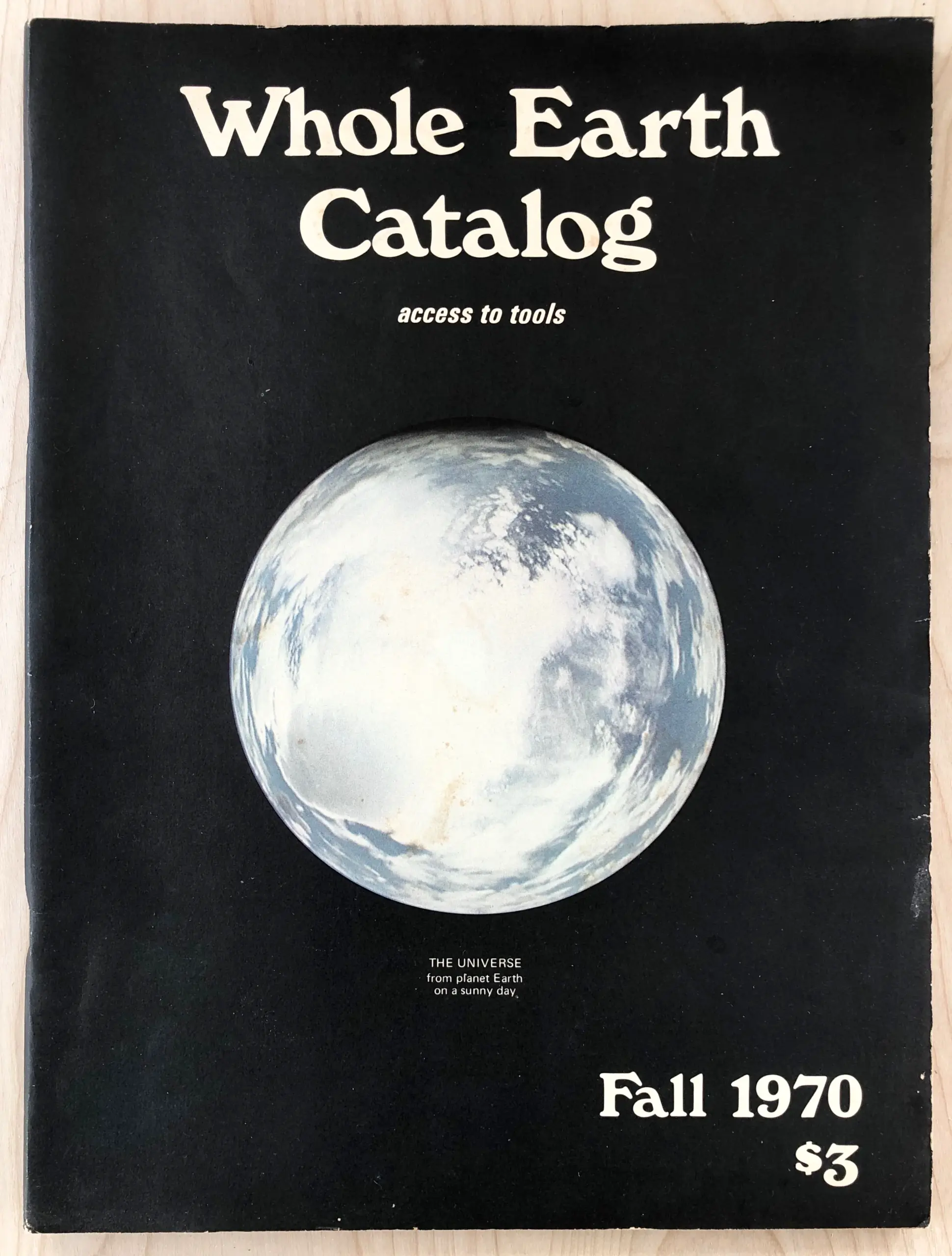
Launched by Stewart Brand in 1968, the Whole Earth Catalog curated and presented the products and services of a wide variety of businesses all between the covers of one increasingly weighty printed volume offering what its slogan called “access to tools.”
While certain of its sections reflected the most literal meaning of the term “tools” — you could’ve kept a pretty robust farm going with all the implements on offer, and no doubt more than a few readers tried to do so — the larger enterprise seemed to run on the goal of expanding the definition of what a tool could be, as well as the range of possibilities it could open to its user. Even subscribers who never bought a product could receive an education from the catalog’s often eccentric but always informative descriptions of those products.
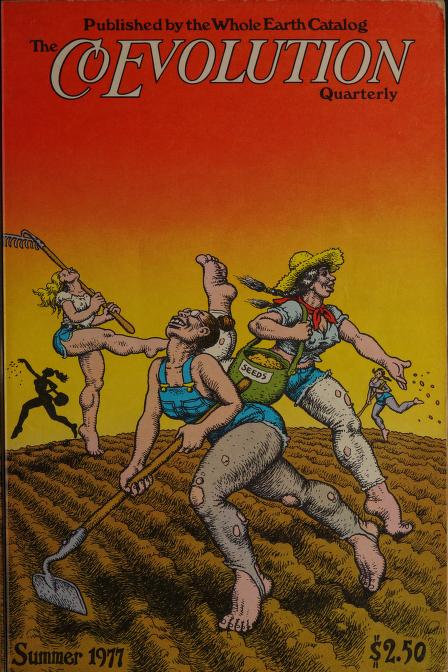
“Behind the information, the advice, the hints, and the facts, this book is about coming to see things as they are, through your own eyes, instead of the hired eyes of some expert or other. It’s about training yourself to trust yourself, and trusting yourself to train yourself, until you‘re able to claim your right as a human to be competent with your hands.” These words come from writer and documentarian Gurney Norman’s capsule review, in the spring 1970 Whole Earth Catalog, of Joan Ranson Shortney’s book, How to Live on Nothing (described therein as “our best-selling book”). But Norman could just as well have been describing the Whole Earth Catalog itself, which was all about the ability of individuals and small groups, equipped with not just technology new and old but also deep reserves of optimism and humor, to determine their own destiny.
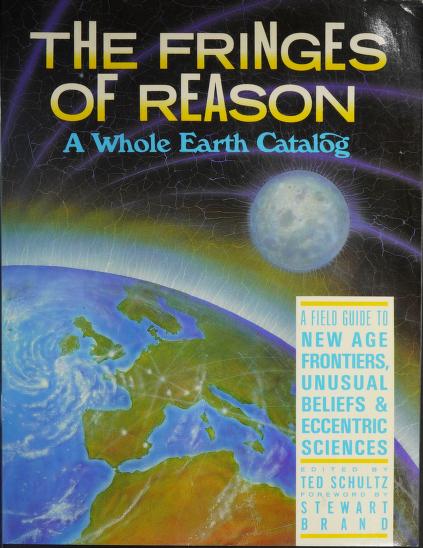
“The Whole Earth Catalog offered a vision for a new social order,” writes the New Yorker’s Anna Wiener, “one that eschewed institutions in favor of individual empowerment, achieved through the acquisition of skills and tools. The latter category included agricultural equipment, weaving kits, mechanical devices, books like Kibbutz: Venture in Utopia, and digital technologies and related theoretical texts, such as Norbert Wiener’s Cybernetics and the Hewlett-Packard 9100A, a programmable calculator.” Other sections might offer Gravity’s Rainbow; an Apple II home computer; something called “self-therapeutic rubber”; and even a hot tub. “Many a newcomer to California remembers forever the trauma of first being invited — at a perfectly ordinary party — to strip and enter a steaming tub full of strangers,” writes Brand in the Next Whole Earth Catalog of fall 1980, which may sound a bit late in the game for that sort of thing.
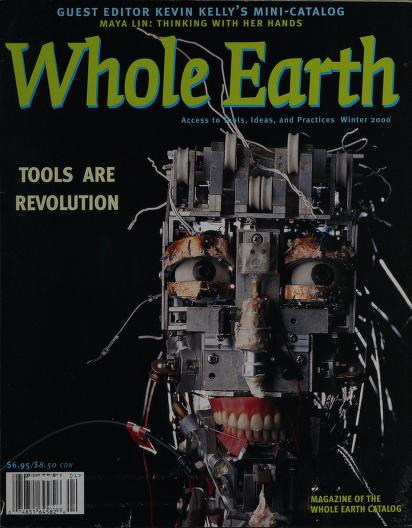
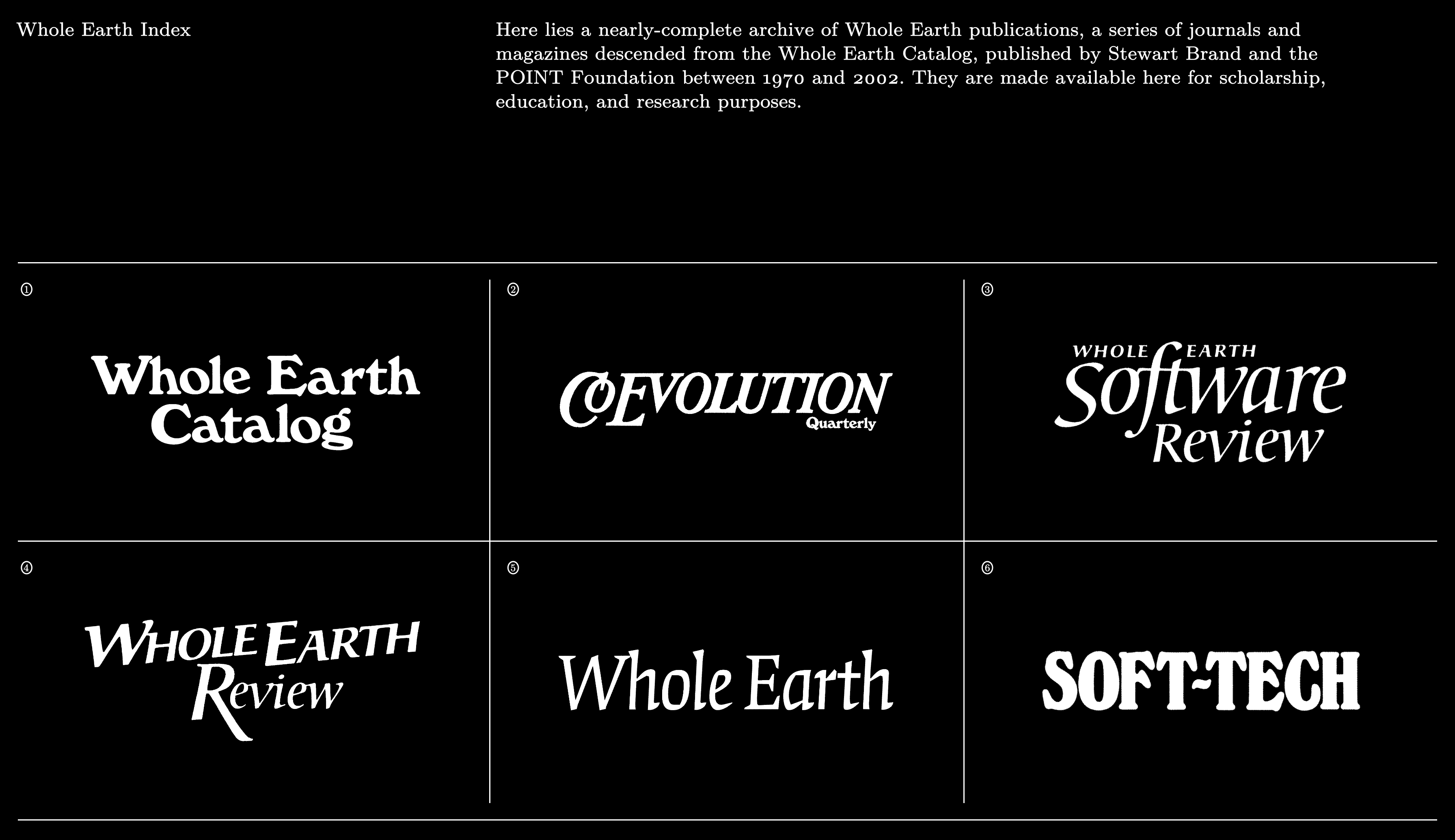
But then, the spirit of the Whole Earth Catalog, first animated by the free-enterprise-and-free-love nineteen-sixties and seventies, has long outlasted its original cultural moment — and indeed the catalog itself, which ceased publication in 1998. But now, thanks to Gray Area and the Internet Archive, you can read and download many issues of not just the Whole Earth Catalog but also its successor publications, from CoEvolution Quarterly to Whole Earth Magazine, in a new online collection spanning the years 1970 to 2002. To browse it is to enter a countercultural time machine, experiencing both the preposterousness and the prescience of the counterculture as if for the first time. But then, for the vast majority of its visitors here in the twenty-first century — who know that counterculture only indirectly, through its wide but diffuse influence on everything up to and including the internet — it will be the first time. Enter the collection here.
Related content:
Watch Stewart Brand’s 6‑Part Series How Buildings Learn, With Music by Brian Eno
Brian Eno Creates a List of 20 Books That Could Rebuild Civilization
Buckminster Fuller Tells the World “Everything He Knows” in a 42-Hour Lecture Series (1975)
Based in Seoul, Colin Marshall writes and broadcasts on cities, language, and culture. His projects include the Substack newsletter Books on Cities, the book The Stateless City: a Walk through 21st-Century Los Angeles and the video series The City in Cinema. Follow him on Twitter at @colinmarshall or on Facebook.
Read More...David Foster Wallace’s Famous Commencement Speech, “This is Water,” Gets Animated on a Whiteboard
Author David Foster Wallace titled his famous address to Kenyon College’s Class of 2005 “This is Water,” a reference to its opening joke — self-mockingly framed as a “didactic little parable-ish story” that is “a standard requirement of US commencement speeches:”
There are these two young fish swimming along and they happen to meet an older fish swimming the other way, who nods at them and says “Morning, boys. How’s the water?” And the two young fish swim on for a bit, and then eventually one of them looks over at the other and goes “What the hell is water?”
Mark Wooding, founder of After Skool, a YouTube channel “committed to finding the most powerful content and delivering it in the most engaging way possible” gave his whiteboard animation of the speech a different title: “Your Mind is an Excellent Servant, but a Terrible Master.”
It’s the “old cliche” Wallace invoked midway through, noting that “like many clichés, so lame and unexciting on the surface, (it) actually expresses a great and terrible truth:”
It is not the least bit coincidental that adults who commit suicide with firearms almost always shoot themselves in: the head. They shoot the terrible master. And the truth is that most of these suicides are actually dead long before they pull the trigger.
Wallace himself died by suicide a little more than three years after delivering the speech, prompting author Tom Bissell to write in an essay for the New York Times that “the terrible master eventually defeated David Foster Wallace, which makes it easy to forget that none of the cloudlessly sane and true things he had to say about life in 2005 are any less sane or true today, however tragic the truth now seems:”
This Is Water does nothing to lessen the pain of Wallace’s defeat. What it does is remind us of his strength and goodness and decency — the parts of him the terrible master could never defeat, and never will.
We braced a bit wondering how Wooding would handle this portion of the speech.
It would have been a good time for one of his more abstract flights of fancy.
In truth, sometimes Wooding’s dry erase drawings cluttered our headspace unnecessarily, distracting from Wallace’s message. Isn’t that ironic? A large part of the speech deals with choosing what to pay attention to, and how to pay attention to it.
In an attempt to follow Wallace’s advice and push back against the “basic self-centeredness …that is our default setting, hard-wired into our boards at birth”, we’ll concede that Wooding’s animation may help the speech land with those who’d give a pass on listening to an audio recording or reading a transcript.
As Wooding told the San Francisco Chronicle, “Some people are visual learners, some learn by hearing things, some have to do it… what I’ve tried to do with After Skool is combine every style of learning to make the ideas as accessible as possible, to take ideas that are kind of complex and make it so that an eighth-grader can understand it.”
The wicket grows a bit stickier when Wooding delves into the long passages wherein Wallace unleashes a torrent of grouchy self-serving thoughts born of boredom, routine and petty frustration… as an “example of how NOT to think”, he says in an aside.
Wallace presented this unvarnished ugliness as a set up, something to throttle back from — an illustration of how our lizard brains’ snap judgments need not get the final word:
… if you’re aware enough to give yourself a choice, you can choose to look differently at this fat, dead-eyed, over-made-up lady who just screamed at her kid in the checkout line. Maybe she’s not usually like this. Maybe she’s been up three straight nights holding the hand of a husband who is dying of bone cancer. Or maybe this very lady is the low-wage clerk at the motor vehicle department, who just yesterday helped your spouse resolve a horrific, infuriating, red-tape problem through some small act of bureaucratic kindness…If you’re automatically sure that you know what reality is, and you are operating on your default setting, then you, like me, probably won’t consider possibilities that aren’t annoying and miserable. But if you really learn how to pay attention, then you will know there are other options.
We wish Wooding had leaned out rather than in when Wallace’s bad mood makes him view the people suffering through traffic jams, crowded aisles, and long checkout lines with him as “repulsive”, “stupid”, “cow-like”, and “dead-eyed”.
Knowing that Wallace was winding up to reveal these knee jerk assessments as the fabrications of a testy, self-absorbed mind operating on autopilot, the illustrations might have better served the message had they been a step or two ahead of the messenger. Doodles depicting these people as far more neutral looking than the deliberately vitriolic portrait Wallace was painting could have added some dimension.
It’s important to remember that these visuals aren’t animated in the traditional sense. They’re manipulated time lapse drawings. Unless Wooding breaks out the eraser and doubles back to make modifications, they’re fixed on the whiteboard and in our minds.
This may explain in part why the fed up mom in the check out line appears to get a fairer shake in The Glossary’s live action adaptation of excerpts from the same speech, below.
If you’d rather not gild the lily with whiteboard animation, you can listen to Wallace’s speech and read the transcript here.
Related Content
– Ayun Halliday is the Chief Primatologist of the East Village Inky zine and author, most recently, of Creative, Not Famous: The Small Potato Manifesto and Creative, Not Famous Activity Book. Follow her @AyunHalliday.
Read More...Yuval Noah Harari and Fareed Zakaria Break Down What’s Happening in the Middle East
We give you two perspectives on what’s happening in the Middle East this week.
Above, foreign affairs columnist Fareed Zakaria talks with Scott Galloway about the conflict in Israel, providing historical context and exploring what’s likely to come. And below Yuval Noah Harari (historian, philosopher and best-selling author of Sapiens and Homo Deus) takes you inside the Israeli response to the massacres, how Israel might respond, and whether the prospects for peace have essentially vanished for quite some time.
If you would like to support the mission of Open Culture, consider making a donation to our site. It’s hard to rely 100% on ads, and your contributions will help us continue providing the best free cultural and educational materials to learners everywhere. You can contribute through PayPal, Patreon, and Venmo (@openculture). Thanks!
Related Content
Ian Bremmer on The Israel-Hamas War, and What It Means for the World
Read More...Researchers Use AI to Decode the First Word on an Ancient Scroll Burned by Vesuvius
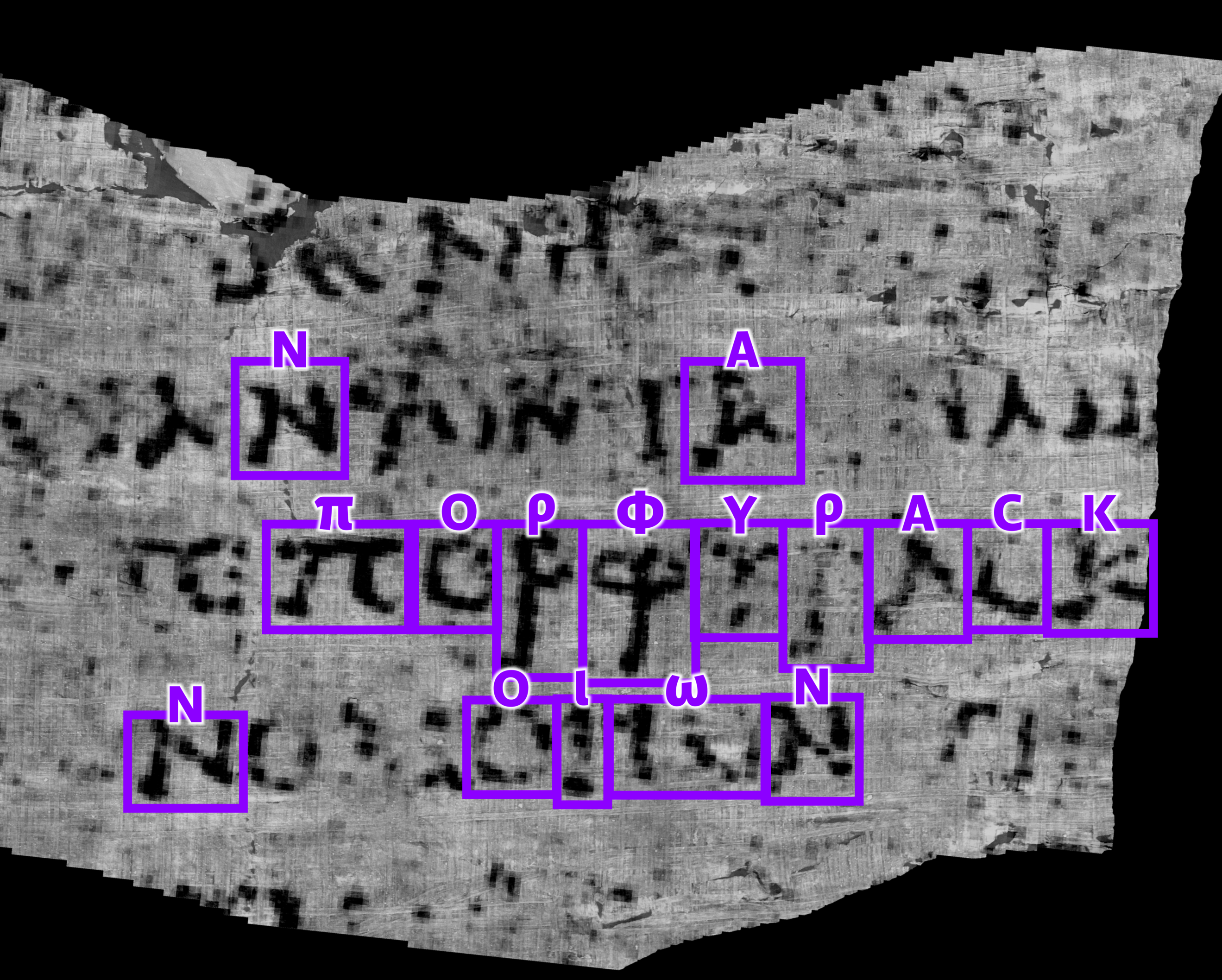
In the year 79, AD Mount Vesuvius erupted, burying both Pompeii and Herculaneum. In 1750, an Italian farmworker discovered an entombed seaside villa in Herculaneum while digging a well. When excavated, the residence yielded hundreds of scrolls, all of them turned into what looked and felt like lumps of ash, and practically all of them unrollable, let alone readable. Only in 2015 did humankind — or more specifically, University of Kentucky computer scientist Brent Seales and his team — develop the technology that could let us see what texts these ancient scrolls contain. Eventually, a particle accelerator and machine learning came into play. This timeline comes from the web site of the Vesuvius Challenge, “a machine learning and computer vision competition to read the Herculaneum Papyri.”
Funded by technology entrepreneurs Nat Friedman and Daniel Gross, the Vesuvius Challenge has given out $260,000 of its $1 million of prizes so far, including $40,000 to undergraduate student/engineer Luke Farritor, who identified ten letters in a section of one scroll, and $10,000 to biorobotics graduate student Youssef Nader, who subsequently and independently discovered those same letters.
The word they form? Porphyras, ancient Greek for “purple”: a color, incidentally, that signified wealth and power in the ancient world, not least because of the enormous amount of labor required to extract it from nature. That the Herculaneum Papyri have started to become readable also represents the culmination of a similarly impressive effort, albeit one based on technological development rather than the extraction of sea-snail glands.
As Nicholas Wade writes in the New York Times, the current method “uses computer tomography, the same technique as in CT scans” — executed with the aforementioned particle accelerator — “plus advancements in artificial intelligence” used “to help distinguish ink from papyrus.” You can learn more about the Vesuvius Challenge in the video above. Its creator Garrett Ryan, of ancient-history Youtube channel Told in Stone, has been previously featured here on Open Culture for his explanation of how 99 percent of ancient texts were lost — which means these charred scrolls could hold a great deal of knowledge about the ancient world. Do they contain, as Ryan fantasizes, the lost books of Livy, the dialogues of Aristotle, poems by Sappho? We’ll only know when someone figures out how best to use technology to decode them all. Artificial intelligence may be the key to the future, as we’ve often heard in recent years, but in this particular case, it offers a promising key to the past.
Related content:
Pompeii Rebuilt: A Tour of the Ancient City Before It Was Entombed by Mount Vesuvius
How 99% of Ancient Literature Was Lost
A Newly-Discovered Fresco in Pompeii Reveals a Precursor to Pizza
Based in Seoul, Colin Marshall writes and broadcasts on cities, language, and culture. His projects include the Substack newsletter Books on Cities, the book The Stateless City: a Walk through 21st-Century Los Angeles and the video series The City in Cinema. Follow him on Twitter at @colinmarshall or on Facebook.
Read More...How to Be Happier in 5 Research-Proven Steps, According to Popular Yale Professor Laurie Santos
Nature doesn’t care if you’re happy, but Yale psychology professor Laurie Santos does.
As Dr. Santos points out during the above appearance on The Well, the goals of natural selection have been achieved as long as humans survive and reproduce, but most of us crave something more to consider life worth living.
With depression rising to near epidemic levels on college campuses and elsewhere, it’s worth taking a look at our ingrained behavior, and maybe making some modifications to boost our happiness levels.
Psychology and the Good Life, Dr. Santos’ massive twice weekly lecture class that actively tackles ways of edging closer to happiness, is the most popular course in Yale’s more than 300-year history.
Do we detect some resistance?
Positive psychology — or the science of happiness — is a pretty crowded field lately, and the overwhelming demand created by great throngs of people longing to feel better has attracted a fair number of grifters willing to impart their proven methodologies to anyone enrolling in their paid online courses.
By contrast, Dr. Santos not only has that Yale pedigree, she also cites other respected academics such as the University of Chicago’s Nicholas Epley, a social cognition specialist who believes undersociality, or a lack of face-to-face engagement, is making people miserable, and Harvard’s Dan Gilbert and the University of Virginia’s Timothy Wilson, who co-authored a paper on “miswanting”, or the tendency to inaccurately predict what will truly result in satisfaction and happiness.
Yale undergrad Mickey Rose, who took Psychology and the Good Life in the spring of 2022 to fulfill a social science credit, told the Yale Daily News that her favorite part of the class was that “everything was cited, everything had a credible source and study to back it up:”
I’m a STEM major and it’s kind of my overall personality type to question claims that I find not very believable. Obviously the class made a lot of claims about money, grades, happiness, that are counterintuitive to most people and to Yale students especially.
With Psychology and the Good Life now available to the public for free on Coursera, even skeptics might consider giving Dr. Santos’ recommended “re-wirement practices” a peek, though be forewarned, you should be prepared to put them into practice before making pronouncements as to their efficacy.
It’s all pretty straightforward stuff, starting with “use your phone to actually be a phone”, meaning call a friend or family member to set up an in person get together rather than scrolling through endless social media feeds.
Other common sense adjustments include looking beyond yourself to help by volunteering, resolving to adopt a glass-is-half-full type attitude, cultivating mindfulness, making daily entries in a gratitude journal, and becoming less sedentary.
(You might also give Dr. Santos’ Happiness Lab podcast a go…)
Things to guard against are measuring your own happiness against the perceived happiness of others and “impact bias” — overestimating the duration and intensity of happiness that is the expected result of some hotly anticipated event, acquisition or change in social standing.
Below Dr. Santos gives a tour of the Good Life Center, an on-campus space that stressed out, socially anxious students can visit to get help putting some of those re-wirement practices into play.
Sign up for Coursera’s 10-week Science of Well-Being course here.
Related Content
The Science of Well-Being: Take a Free Online Version of Yale University’s Most Popular Course
Free Online Psychology & Neuroscience Courses, a subset of our collection, 1,700 Free Online Courses from Top Universities
What Are the Keys to Happiness? Lessons from a 75-Year-Long Harvard Study
– Ayun Halliday is the Chief Primatologist of the East Village Inky zine and author, most recently, of Creative, Not Famous: The Small Potato Manifesto and Creative, Not Famous Activity Book. Follow her @AyunHalliday.
Read More...A Lavishly Illustrated Catalog of All Hummingbird Species Known in the 19th Century Gets Restored & Put Online
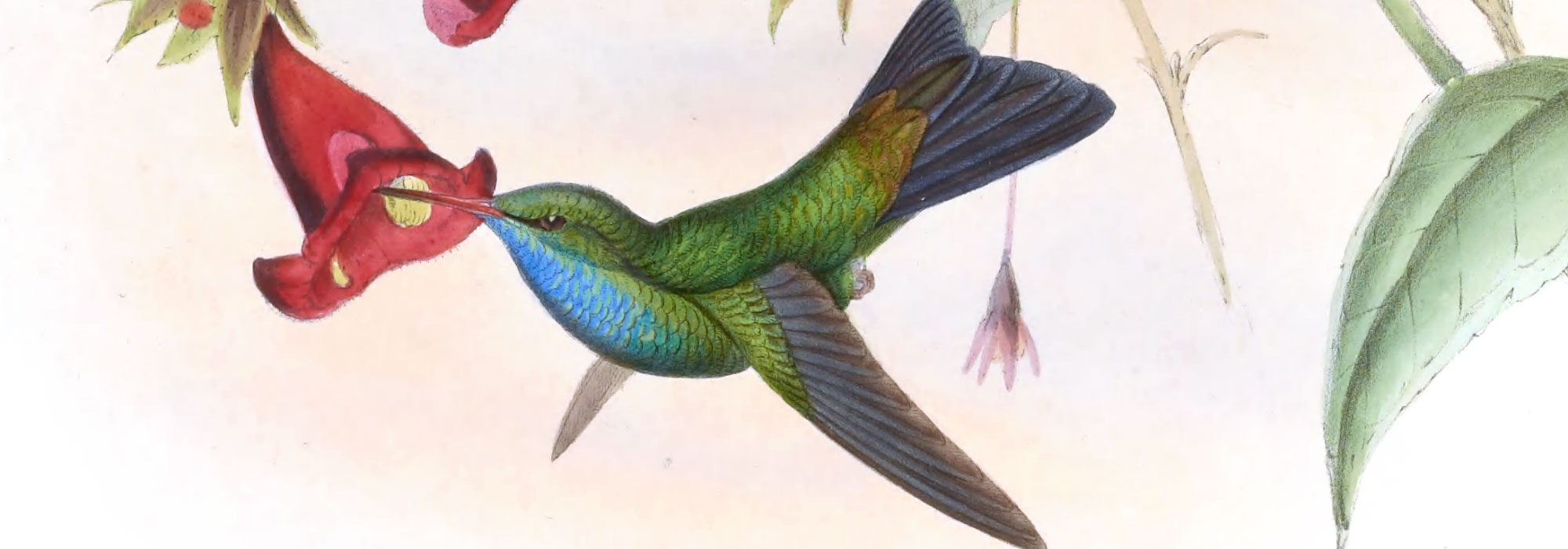
If you don’t live in a part of the world with a lot of hummingbirds, it’s easy to regard them as not quite of this earth. With their wide array of shimmering colors and frenetic yet eerily stable manner of flight, they can seem like quasi-fantastical creatures even to those who encounter them in reality. They certainly captured the imagination of English ornithologist John Gould, who between the years of 1849 and 1887 created A Monograph of the Trochilidæ, or Family of Humming-Birds, a catalog of all known species of hummingbird at the time. As you might expect, this is just the kind of old book you can peruse at the Internet Archive, but now there’s also an online restoration that returns Gould’s illustrations to their original glory.
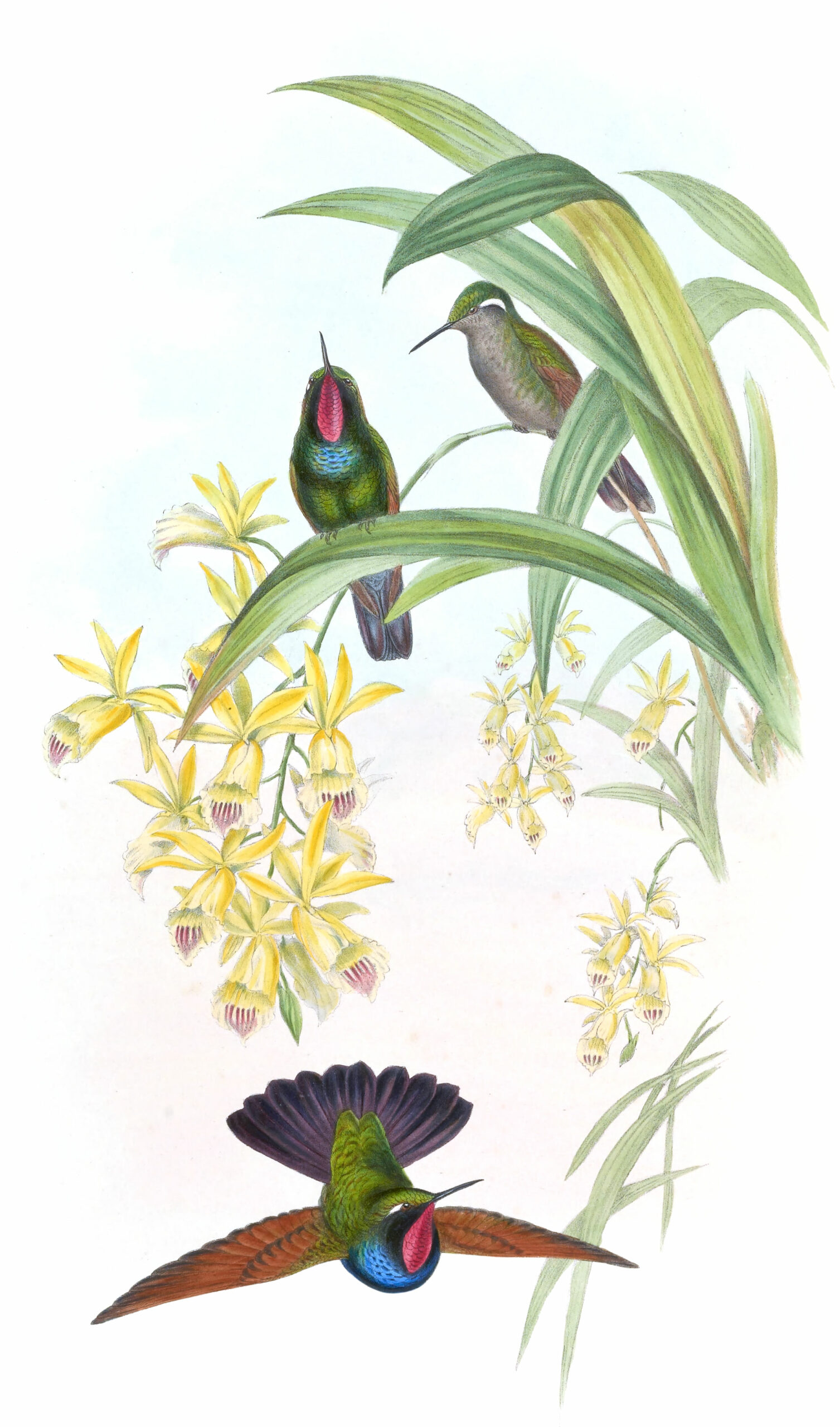
A Monograph of the Trochilidæ “is considered one of the finest examples of ornithological illustration ever produced, as well as a scientific masterpiece,” writes the site’s creator, Nicholas Rougeux (previously featured here on Open Culture for his digital restorations of British & Exotic Mineralogy and Euclid’s Elements).
“Gould’s passion for hummingbirds led him to travel to various parts of the world, such as North America, Brazil, Colombia, Ecuador, and Peru, to observe and collect specimens. He also received many specimens from other naturalists and collectors.” Taken together, the work’s five volumes — one of them published as a supplement years after his death — catalog 537 species, documenting their appearance with 418 hand-colored lithographic plates.
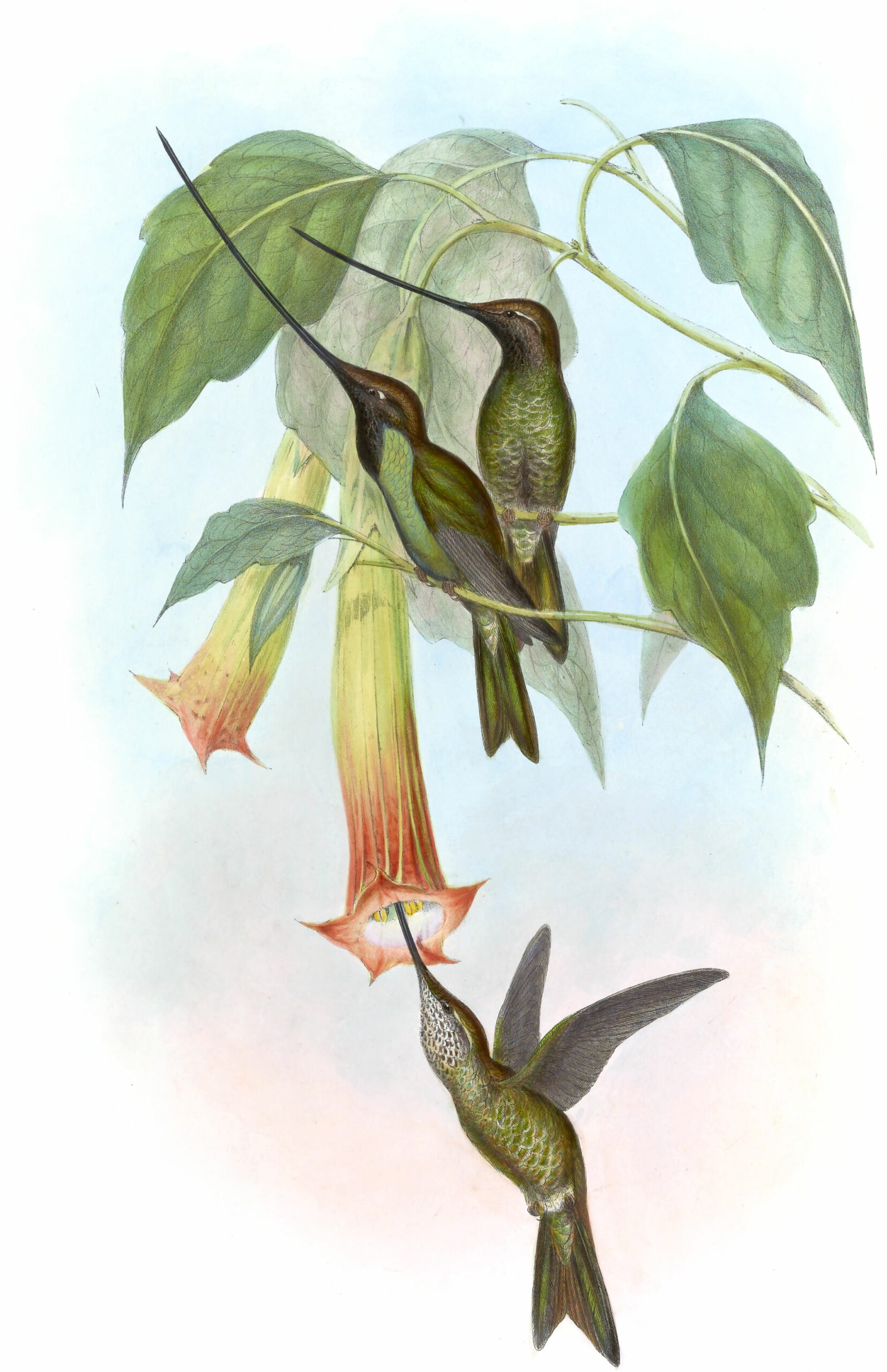
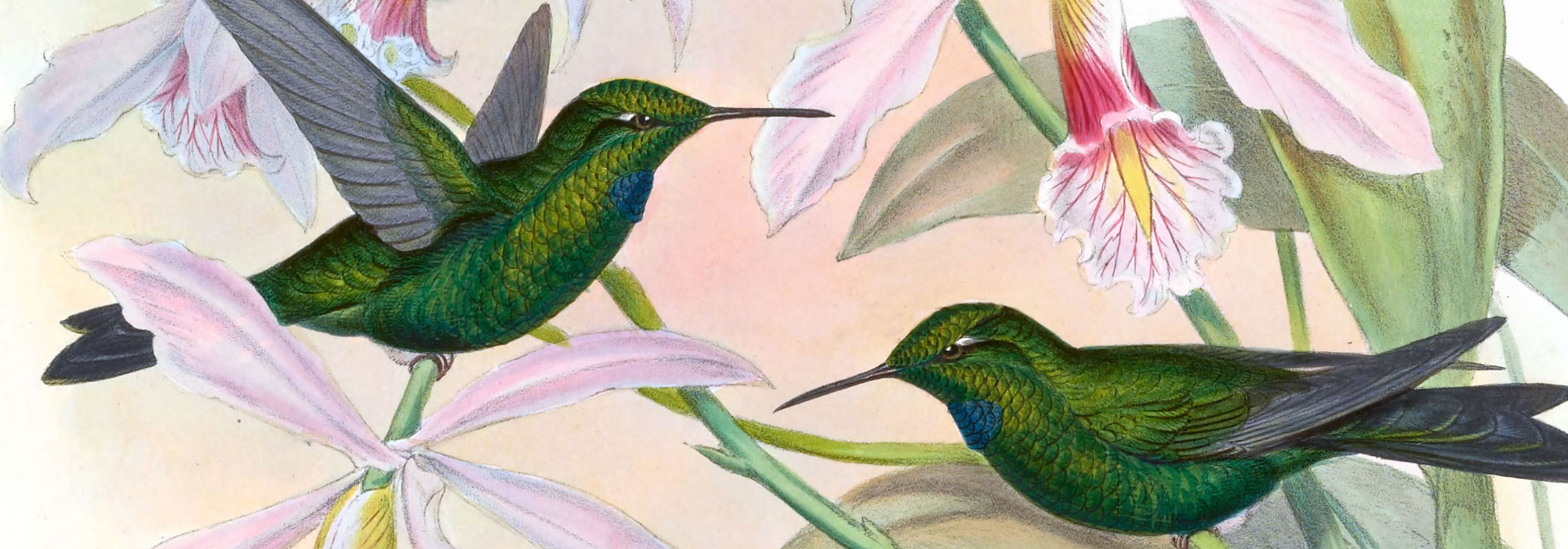
All these images were “analyzed and restored to their original vibrant colors in a process that took nearly 150 hours to complete. As much of the original plate was preserved — including the delicate colors of the scenic backgrounds in each vignette.” You can view and download them at the site’s illustrations page, where they come accompanied by Gould’s own text and classified according to the same scheme he originally used. You may not know your Phaëthornis from your Sphenoproctus, to say nothing of your Cyanomyia from your Smaragdochrysis, but after seeing these small wonders of the natural world as Gould did (all arranged into a chromatic spectrum by Rougeux to make a striking poster), you may well find yourself inspired to learn the differences — or at least to put a feeder outside your window.
via Kottke
Related content:
The Hummingbird Whisperer: Meet the UCLA Scientist Who Has Befriended 200 Hummingbirds
What Kind of Bird Is That?: A Free App From Cornell Will Give You the Answer
Based in Seoul, Colin Marshall writes and broadcasts on cities, language, and culture. His projects include the Substack newsletter Books on Cities, the book The Stateless City: a Walk through 21st-Century Los Angeles and the video series The City in Cinema. Follow him on Twitter at @colinmarshall or on Facebook.
Read More...Support Us
We're hoping to rely on loyal readers, rather than erratic ads. Please click the Donate button and support Open Culture. You can use Paypal, Venmo, Patreon, even Crypto! We thank you!

About Us

Open Culture scours the web for the best educational media. We find the free courses and audio books you need, the language lessons & educational videos you want, and plenty of enlightenment in between.
Advertise With Us
FREE UPDATES!
GET OUR DAILY EMAIL
Get the best cultural and educational resources on the web curated for you in a daily email. We never spam. Unsubscribe at any time.
FOLLOW ON SOCIAL MEDIA
Open Culture editor Dan Colman scours the web for the best educational media. He finds the free courses and audio books you need, the language lessons & movies you want, and plenty of enlightenment in between.
Advertise With Us

