Criterion Collection Films 50% Off for a Limited Time: Get Great Films at Half Price
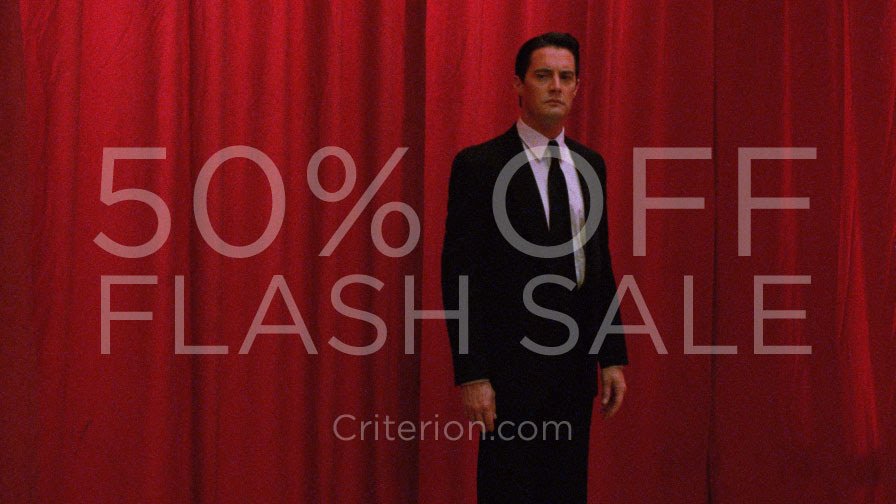
FYI. Until noon eastern time tomorrow (2/14), the Criterion Collection is running a flash sale (click here), giving you a chance to purchase “all in-stock Blu-rays & DVDs at 50% off.” Just use the promo code GOLD and get classic films by Hitchcock, Lynch, Welles, Kubrick, the Coen Brothers, and many others.
If you would like to support the mission of Open Culture, consider making a donation to our site. It’s hard to rely 100% on ads, and your contributions will help us continue providing the best free cultural and educational materials to learners everywhere. You can contribute through PayPal, Patreon, and Venmo (@openculture). Thanks!
Read More...Designer Creates Origami Cardboard Tents to Shelter the Homeless from the Winter Cold
During the day, Xavier Van der Stappen runs an electric car company. At night, the Belgian entrepreneur/designer helps spearhead the ORIG-AMI project, which creates origami-style cardboard tents designed to shield Brussels’ homeless from the bitter cold of winter. Cardboard is light and portable. It holds heat fairly well. And the cardboard tents (as opposed to other structures) are legal on Brussels’ streets. The cost for each life-saving structure? Only $36.
If you would like to support the mission of Open Culture, consider making a donation to our site. It’s hard to rely 100% on ads, and your contributions will help us continue providing the best free cultural and educational materials to learners everywhere. You can contribute through PayPal, Patreon, and Venmo (@openculture). Thanks!
Related Content:
MIT Creates Amazing Self-Folding Origami Robots & Leaping Cheetah Robots
Read More...How to Write Like an Architect: Short Primers on Writing with the Neat, Clean Lines of a Designer
We have another national crisis on our hands.
Our children are not only ill-equipped to read maps and tell time with analog clocks, their handwriting is in serious decline.
Forget cursive, which went the way of the dodo earlier in the millennium. Youngsters who are dab hands on the keyboard may have little impulse—or opportunity—to practice their printing.
It sure as shootin’ might be during a zombie invasion, given the attendant breakdown of digital communication and the electricity that powered it.
But even in less dire times, legible penmanship is a good skill to master.
As Virginia Berninger, professor emeritus and principal investigator of the University of Washington’s Interdisciplinary Learning Disabilities Center, told The New York Times, “Handwriting — forming letters — engages the mind, and that can help children pay attention to written language.”
Hand lettering is also a complex neurological process, a workout involving various cognitive, motor, and neuromuscular functions.
There’s also a school of thought that teachers who still accept handwritten assignments unconsciously award the highest grades to pupils with the neatest penmanship, which is easier on tired eyes. Something to keep in mind for those gearing up to take the handwritten essay portions of the SAT and ACT.
Let’s remember that letters are really just shapes.
The Finns and French have long-established uniformity with regard to handwriting. In the absence of classroom instruction, Americans have the freedom to peruse various penmanship styles, identify their favorite, and work hard to attain it.
(This writer is proof that penmanship can become part of the DNA through practice, having set out to duplicate my mother’s delightful, eccentric-to-the-point-of-illegibile hand at around the age of 8. I added a few personal quirks along the way. The result is I’m frequently bamboozled into serving as scribe for whatever group I happen to find myself in, and my children can claim they couldn’t read the important handwritten instructions hurriedly left for them on Post-Its.)
Historically, the most legible American penmanship belongs to architects.
Their precisely rendered all caps suggest meticulousness, accountability, steadiness of character…
And almost anyone can achieve it, regardless of whether those are qualities they personally possess.
All it takes is determination, time, and—as taught by Doug Patt in his How to Architect series, above—more tools than can be simultaneously operated with two hands:
a parallel rule or t‑square
a small plastic triangle customized with bits of tape
a .5mm Pentel drafting pencil
If this sounds needlessly laborious, keep in mind that such specialty equipment may appeal to reluctant hand writers with an interest in engineering, robotics, or scientific experimentation.
(Be prepared for some frustration if this is the student’s first time at the rodeo with these instruments. As any veteran comic book artist can attest, few are born knowing how to use an Ames lettering guide.)
It should be noted that Patt’s alphabet deviates a bit from traditional standards in the field.
His preference for breathing some life into his letters by not closing their loops, squashing traditionally circular forms into ellipses, and using “dynamic angles” to render crosspieces on a slant would likely not have passed muster with architecture professors of an earlier age, my second grade teacher, or the font designers responsible for the computer-generated “hand lettering” gracing the bulk of recent architectural renderings.
He’s likely the only expert suggesting you make your Ks and Rs reminiscent of actor Ralph Macchio in the 1984 film, The Karate Kid.
There’s little chance you’ll find yourself grooving to Patt’s videos for anything other than their intended purpose. Whereas the late Bob Ross’ Joy of Painting series has legions of fans who tune in solely for the meditative benefits they derive from his mellow demeanor, Patt’s rapid fire instructional style is that of the busy master, deftly executing moves the fledgling student can only but fumble through.
But if the Karate Kid taught us anything, it’s that practice and grit lead to excellence. If the above demonstration whips by too quickly, Patt expands on the shaping of each letter in 30-second video tutorials available as part of a $19 online course.
Those looking for architectural lower case, or techniques for controlling the thickness of their lines can find them in the episode devoted to lettering with a .7mm Pentel mechanical drafting pencil.
Explore further secrets of the architects on Patt’s How to Architect channel or 2012 book, also called How to Architect.
Related Content:
Discover What Shakespeare’s Handwriting Looked Like, and How It Solved a Mystery of Authorship
Helen Keller Had Impeccable Handwriting: See a Collection of Her Childhood Letters
Ayun Halliday is an author, illustrator, theater maker and Chief Primatologist of the East Village Inky zine. Follow her @AyunHalliday.
Read More...Watch Scenes from the “Pink Floyd Ballet:” When the Experimental Rock Band Collaborated with Ballet Choreographer Roland Petit (1972)
We all know that rock opera isn’t actually opera. It borrows some of the classical form’s affects—theatrical bombast and loud costuming, which seem a natural fit—but it doesn’t attempt the extreme formal rigor. Rock and roll is loose, intuitive, expressionistic, best played by or to libidinous kids or kids-at-heart; opera is tightly controlled and performed by trained vocal gymnasts to audiences of sophisticates. Both of these forms excel at emotive storytelling, but beyond that, with some rare exceptions, their similarities are mostly cosmetic.
Now imagine not rock opera, but a rock ballet. What could athletic European classical dance contribute to songs about sex and drugs? What could electric guitars, drums, and keyboards do for pirouettes, arabesques, or grand jetés? Part of the problem with such a mashup comes—as noted above—from the intrinsic formal differences between the two. Pink Floyd’s David Gilmour put it well when he noted in 1973 that his band found ballet “too restricting for us. I mean, I can’t play and count bars at the same time.”
Yes, there was once a Pink Floyd ballet, or, well, almost. For reasons that may or may not be obvious, the attempt was not popular, and it has not gone down in either rock or ballet history as a memorable event. But it was an interesting experiment, perhaps both more compelling and more incoherent than one might think. An unusual collaboration between the prog-rock superstars and French choreographer Roland Petit, the show first began to take shape in 1970 over a series of lunches and dinner and drinks—as a high-concept adaptation of Proust.
But the composition did not come easily. For one thing, the band couldn’t get through the source material. “David did the worst,” remembers Nick Mason, “he only read the first 18 pages.” Roger Waters reported that he finished “the second volume of Swann’s Way and when I got to the end of it I thought, ‘Fuck this, I’m not reading anymore. I can’t handle it.’ It just went too slowly for me.” A common complaint from attempted readers of Proust. Petit then floated the idea of adapting A Thousand and One Arabian Nights, then Frankenstein. At one point, Roman Polanski and Rudolph Nureyev were attached as director and star. There was talk of a film.
All of these schemes were abandoned, including the plan for original music. “Nureyev, Polanski, and the 108-piece orchestra,” writes Nicholas Schaffner, “were conspicuous in their absence.” In Petit’s eventual piece, performed in Marseilles and Paris in 1972–73, the band “gamely appeared… to provide live renditions of ‘Careful with That Axe Eugene’ and three newer works in which the Syd-less Floyd had at last discovered its raison d’être: ‘Echoes,’ ‘One of These Days,’ and ‘Obscured by Clouds,’” among other existing songs. The whole endeavor was consistent with the band’s other extra-curricular forays, into film and musique concrete for example, but the rote recycling of material was not.
The ballet, notes Dangerous Minds, “wasn’t shot live, but an in studio version was produced in 1977.” (You can see a clip from that rather slick artifact at the top of the post.) The other videos you see here come from rehearsals for the live 1973 shows (the clip second from top features interviews with Petit and a shy, French-speaking Gilmour). It’s an odd affair: male dancers who all vaguely resemble Bruce Lee—and pull off some Lee-like punches; inexplicable synchronized line dances; dancers forming pairs to the harrowing screams of “Careful with That Axe, Eugene”; and a very contemporary 70s feel overall mark these performances as the kind of thing likely to feel deeply unsatisfying to connoisseurs of either Pink Floyd or the ballet.
Who, exactly, one wonders, was the audience for this? Maybe you’ll get some sense of the appeal in the brief interviews and commentary from the French journalists in this rehearsal footage. Or perhaps a program from one of the Marseille performances sheds more light on the intentions behind this production. Petit did supposedly say, “It all began in the late ‘60s. One day my daughter… gave me an album by Pink Floyd and said, ‘Dad, you have to make a ballet with this music.’” After some initial skepticism, “when I heard the music,” he remembers, “I agreed with my daughter.” Perhaps he simply couldn’t refuse her a request.
Those who did attend these shows may have been delighted, confused, bored, enraged, or some combination of any of these emotions and more besides. As for the band’s struggles, Gilmour admits, “we had to have someone sitting on stage with us with a piece of paper telling us what bar we were playing.” (Before you make a joke about how rock musicians can’t count, bear in mind most classical players can’t improvise.) At the end, however, audiences wouldn’t have been left wanting. “The ballet climaxed,” Schaffner writes, “with a typically Floydian flourish: ten cans of oil exploding like fireballs from the front of the stage.”
Related Content:
Josh Jones is a writer and musician based in Durham, NC. Follow him at @jdmagness
Read More...Artist Re-Envisions National Parks in the Style of Tolkien’s Middle Earth Maps
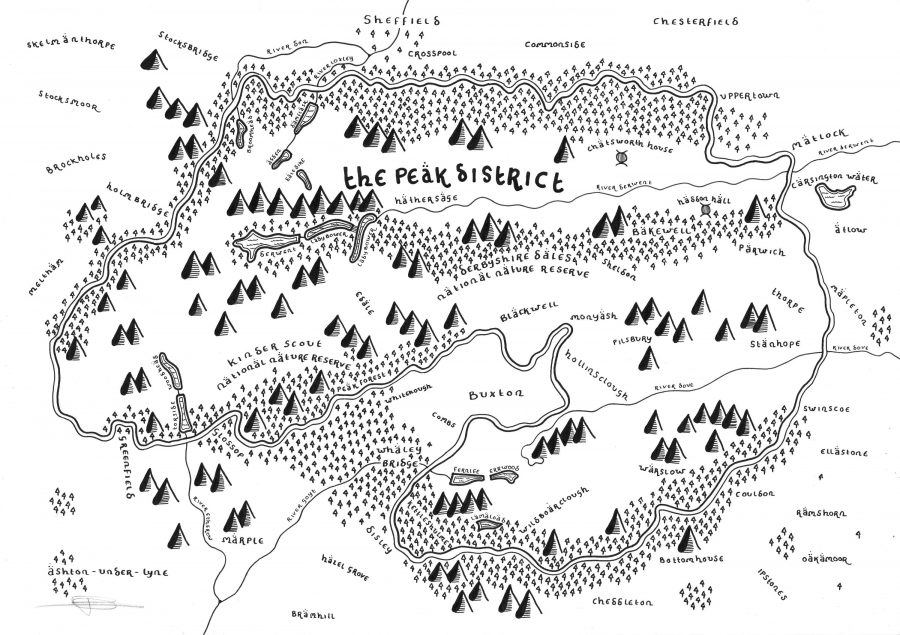
J.R.R. Tolkien imagined Middle-Earth by drawing not just from far-flung lands and old myths but the English landscape all around him. Of course, everyone who reads The Lord of the Rings trilogy, let alone the related books written by Tolkien as well as his followers, has their own way of envisioning the place, and those who go especially deep may even start seeing their own, real environments as versions of Middle-Earth. That seems to have happened in the case of Dan Bell, an English artist who maps his homeland’s national parks in an artistic style similar to the one in which Tolkien rendered Middle-Earth.
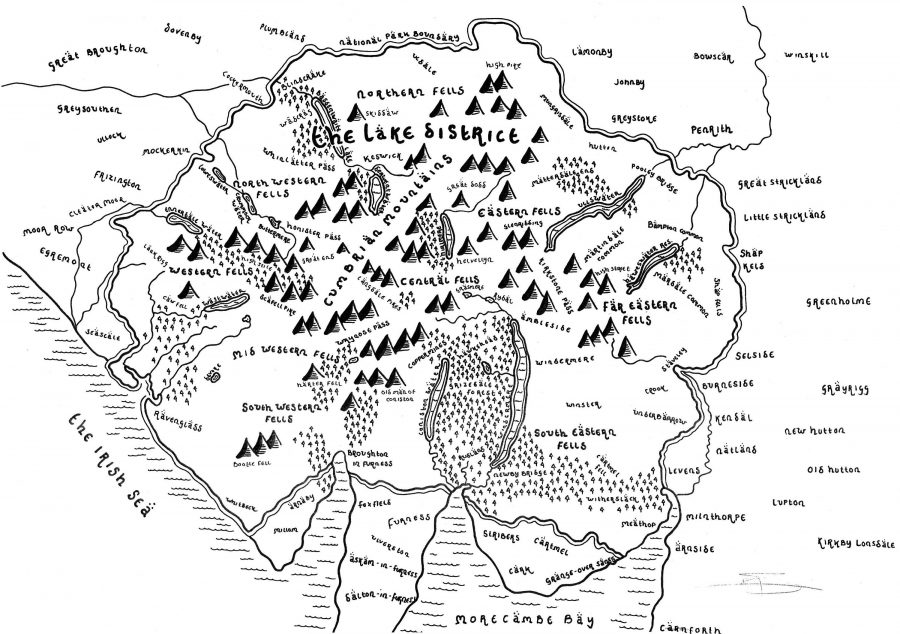
Bell “began reading Tolkien’s books when he was 11 or 12 years old, and fell in love with them,” writes The Verge’s Andrew Liptak. “In particular, he was struck by Tolkien’s maps.” To start, he “works from an open source Ordnance Survey map, and begins drawing by hand,” adding in such additional details, not always found in most national parks, as “forests, Hobbit holes, towers, and castles.” Having so adapted the national parks of the United Kindgom “as well as places like Oxford, London, Yellowstone National Park, and George R.R. Martin’s Westeros,” he’s made them available for purchase on his site.
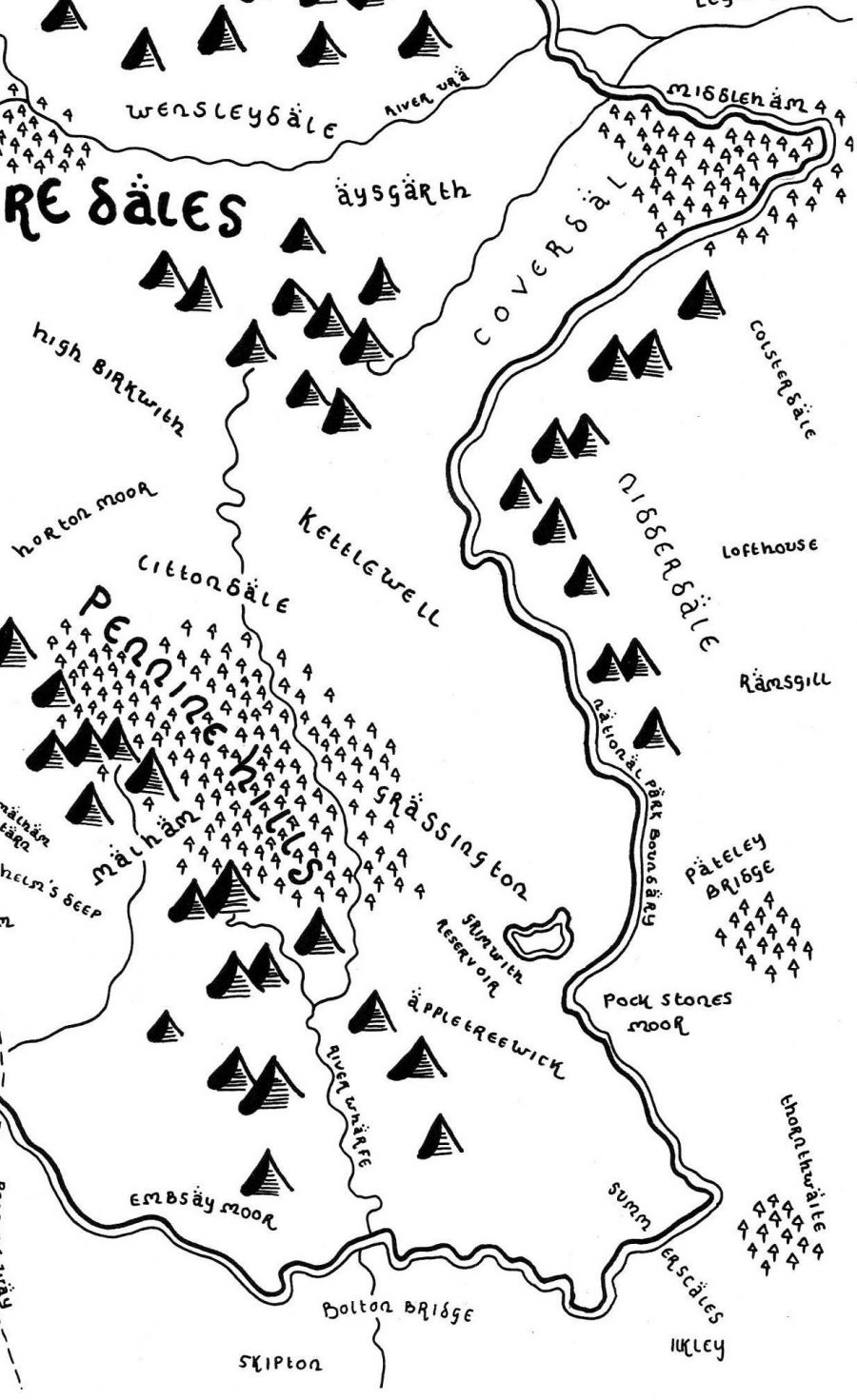
Most of us who first encounter The Lord of the Rings at the age Bell did have surely wished, if only for a moment or two, that we could live in Middle-Earth ourselves. Bell’s maps remind us that places like Middle-Earth always come in some way from, and resonate on some level with, the real Earth on which we have no choice but to live. Much like how the settings of science fiction stories, no matter how technologically amplified or culturally twisted and turned, always reflect the time of the story’s composition, thoroughly realized fantasy realms, no matter how fantastical — how many hobbit-holes, castles, or Eyes of Sauron with which they may be dotted — are never 100 percent made up. Just ask the tourist industry of New Zealand.
Enter Bell’s map collection here.
via The Verge
Related Content:
Map of Middle-Earth Annotated by Tolkien Found in a Copy of Lord of the Rings
110 Drawings and Paintings by J.R.R. Tolkien: Of Middle-Earth and Beyond
The Only Drawing from Maurice Sendak’s Short-Lived Attempt to Illustrate The Hobbit
Soviet-Era Illustrations Of J. R. R. Tolkien’s The Hobbit (1976)
226 Ansel Adams Photographs of Great American National Parks Are Now Online
Based in Seoul, Colin Marshall writes and broadcasts on cities and culture. His projects include the book The Stateless City: a Walk through 21st-Century Los Angeles and the video series The City in Cinema. Follow him on Twitter at @colinmarshall or on Facebook.
Read More...Beethoven’s “Ode to Joy” Played With 167 Theremins Placed Inside Matryoshka Dolls in Japan
Back in 2011, in Tokyo, 167 musicians performed some classic Beethoven with the “Matryomin,” a new-fangled instrument that lodges a theremin inside a matryoshka. A matryoshka, of course, is one of those Russian nested dolls where you find wooden dolls of decreasing size placed one inside the other. As for the theremin, it’s a century-old electronic musical instrument that requires no physical contact from the player. You can watch its inventor, Leon Theremin, give it a demo in the vintage video below. Or via these links you can see the Matryomin Ensemble performing versions of Amazing Grace and Memory of Russia. Enjoy.
Note: An earlier version of this post appeared on Open Culture in July, 2013. It’s like the Olympics. It comes back once every four years.
If you would like to support the mission of Open Culture, consider making a donation to our site. It’s hard to rely 100% on ads, and your contributions will help us continue providing the best free cultural and educational materials to learners everywhere. You can contribute through PayPal, Patreon, and Venmo (@openculture). Thanks!
Related Content:
“Somewhere Over the Rainbow” Played on a 1929 Theremin
New Order’s “Blue Monday” Played with Obsolete 1930s Instruments
Watch Jimi Hendrix’s ‘Voodoo Chile’ Performed on a Gayageum, a Traditional Korean Instrument
Pakistani Musicians Play Amazing Version of Dave Brubeck’s Jazz Classic, “Take Five”
Read More...Harry Potter Finally Gets Translated Into Scots: Hear & Read Passages from Harry Potter and the Philosopher’s Stane
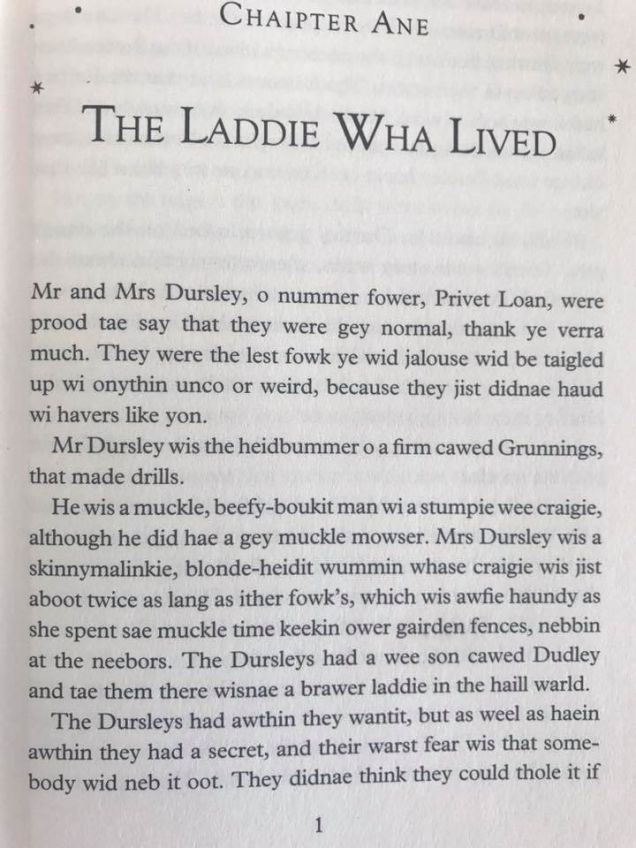
In something of a landmark, Harry Potter and The Sorcerer’s Stone has just been translated into its 80th language–Scots, a language spoken by 1.5 million people in Scotland. Originally written by J.K. Rowling in Edinburgh, the first Harry Potter book was carefully translated by children’s author, writer, poet, editor and translator Matthew Fitt. You can see the first page of Harry Potter and the Philosopher’s Stane above, and hear Fitt read samples of the text in the NPR interview below. Due out on March 1, the book can be pre-ordered now.
If you would like to support the mission of Open Culture, consider making a donation to our site. It’s hard to rely 100% on ads, and your contributions will help us continue providing the best free cultural and educational materials to learners everywhere. You can contribute through PayPal, Patreon, and Venmo (@openculture). Thanks!
Related Content:
J.K. Rowling Plotted Harry Potter with a Hand-Drawn Spreadsheet
Download Two Harry Potter Audio Books for Free (and Get the Rest of the Series for Cheap)
Take Free Online Courses at Hogwarts: Charms, Potions, Defense Against the Dark Arts & More
30 Minutes of Harry Potter Sung in an Avant-Garde Fashion by UbuWeb’s Kenneth Goldsmith
Read More...Celebrate the Women’s March with 24 Goddess GIFs Created by Animator Nina Paley: They’re Free to Download and Remix

As millions of women, men, and friends beyond the binary gear up for Women’s March events around the world this weekend, we can’t help but draw strength from the Venus of Willendorf in Graphics Interchange Format, above.
Like the pussy hats that became the most visible symbol of last year’s march, there’s a strong element of humor at play here.
Also respect for the female form.
As Dr. Bryan Zygmont notes in his Khan Academy essay on the Venus of Willendorf, her existence is evidence that “nomadic people living almost 25,000 years ago cared about making objects beautiful. And … that these Paleolithic people had an awareness of the importance of the women.”

Animator Nina Paley has taken up our Paleolithic ancestors’ baton by creating two dozen early goddess GIFs, including the Venus.
As further proof that sisterhood is powerful, Paley is sharing her unashamedly bouncy pantheon with the public. Visit her blog to download all 24 individual goddess GIFs. Disseminate them widely. Use them for good! No permission needed.
Paley is no stranger to goddesses, having previously placed the divine heroine of the Ramayana front and center in her semi-autobiographical feature length animation, Sita Sings the Blues.
She’s also incredibly familiar with rights issues, following massive complications with some vintage recordings her Betty Boop-ish Sita lip-synchs in the film. (She had previously believed them to be in the public domain.) Unable to pay the huge sum the copyright holders demanded to license the tunes, Paley ultimately decided to relinquish all legal claims to her own film, placing Sita Sings the Blues in the public domain, to be freely shared, exhibited, or even remixed.

If Paley’s the poster child for copyright issues she’s also a shining example of deriving power from unlikely sources.
As she wrote on her website nearly ten years ago:
My personal experience confirms audiences are generous and want to support artists. Surely there’s a way for this to happen without centrally controlling every transaction. The old business model of coercion and extortion is failing. New models are emerging, and I’m happy to be part of that. But we’re still making this up as we go along. You are free to make money with the free content of Sita Sings the Blues, and you are free to share money with me. People have been making money in Free Software for years; it’s time for Free Culture to follow. I look forward to your innovations.
As for Paley’s own plans for her goddesses, they’ll be a part of her upcoming animated musical, Seder-Masochism, noting that “all early peoples conceived the divine as female.”
Download Nina Paley’s Goddess GIFs here. Watch Sita Sings the Blues here. March ever onward!
Related Content:
How Ancient Greek Statues Really Looked: Research Reveals their Bold, Bright Colors and Patterns
Ayun Halliday is an author, illustrator, theater maker and Chief Primatologist of the East Village Inky zine. Join her on February 8 for Necromancers of the Public Domain, when a host of New York City-based performers and musicians will resurrect a long forgotten work from 1911 as a low budget, variety show. Follow her @AyunHalliday.
Read More...Binge-Watch Carl Sagan’s Original Cosmos Series Free Online (Available for a Limited Time)
FYI. Carl Sagan’s 13-episode series Cosmos originally aired in 1980 and became one of the most widely watched series in the history of American public TV. The show also won two Emmys and a Peabody Award.
Right now, you can watch the original Cosmos episodes over on Twitch.TV. From time to time, Twitch airs marathon sessions of old programs. They did Julia Child’s “The French Chef” back in 2016. Now it’s Sagan’s turn.
Usually the videos are only available for a few days. So you might want to start your binge-watching session now. If you miss the boat, you could always pick up a copy of the show on Blu-Ray.
Twitch.TV originally aired the Cosmos series last spring as part of a Science Week celebration. Read their press release for more information.
Update: Neil deGrasse Tyson just coincidentally announced this on Twitter: “Yup. We got the band back together. Another season of Cosmos is officially real. COSMOS: Possible Worlds To air on @FOXTV & @NatGeoChannel in a year — Spring 2019. Be there.”
If you would like to support the mission of Open Culture, consider making a donation to our site. It’s hard to rely 100% on ads, and your contributions will help us continue providing the best free cultural and educational materials to learners everywhere. You can contribute through PayPal, Patreon, and Venmo (@openculture). Thanks!
Related Content:
Carl Sagan Presents His “Baloney Detection Kit”: 8 Tools for Skeptical Thinking
Read More...A Brief History of Making Deals with the Devil: Niccolò Paganini, Robert Johnson, Jimmy Page & More
When the term “witch hunt” gets thrown around in cases of powerful men accused of harassment and abuse, historians everywhere bang their heads against their desks. The history of persecuting witches—as every schoolboy and girl knows from the famous Salem Trials—involves accusations moving decidedly in the other direction.
But we’re very familiar with men supposedly selling out to Satan, dealing—or just dueling—with the devil. They weren’t called witches for doing so, or burned at the stake. They were blues pioneers, virtuoso fiddlers, and guitar gods. From the devilishly dashing Niccolò Paganini, to Robert Johnson at the Crossroads, to Jimmy Page’s black magic, to “The Devil Went Down to Georgia,” to the omnipresence of Satan in metal…. The devil “seems to have quite the interest in music,” notes the Polyphonic video above.
Before musicians came to terms with the dark lord, power-hungry scholars used demonology to summon Luciferian emissaries like Mephistopheles. The legend of Faust dates back to the late 16th century and a historical alchemist named Johann Georg Faust, who inspired many dramatic works, like Christopher Marlowe’s The Tragical History of Doctor Faustus, Johann Goethe’s Faust, Thomas Mann’s Doctor Faustus, Mikhail Bugakov’s The Master and Margarita, and F.W. Murnau’s 1926 silent film.
The Faust legend may be the sturdiest of such stories, but it is not by any means the origin of the idea. Medieval Catholic saints feared the devil’s enticements constantly. Medieval occultists often saw things differently. If we can trace the notion of women consorting with the devil to the Biblical Eve in the Garden, we find male analogues in the New Testament—Christ’s temptations in the desert, Judas’s thirty pieces of silver, the possessed vagrant who sends his demons into a herd of pigs. But we might even say that God made the first deal with the devil, in the opening wager of the book of Job.
In most examples—Charlie Daniels’ triumphal folk tale aside—the deal usually goes down badly for the mortal party involved, as it did for Robert Johnson when the devil came for his due, and convened the morbidly fascinating 27 Club. Goethe imposes a redemptive happy ending onto Faust that seems to wildly overcompensate for the typical fate of souls in hell’s pawn shop. Kierkegaard took the idea seriously as a cultural myth, and wrote in Either/Or that “every notable historical era will have its own Faust.”
Modern-day Fausts in the popular genre of the day, the conspiracy theory, are famous entertainers, as you can see in the unintentionally humorous supercut above from a YouTube channel called “EndTimeChristian.” As it happens in these kinds of narratives, the cultural trope gets taken far too literally as a real event. The Faust legend shows us that making deals with the devil has been a literary device for hundreds of years, passing into popular culture, then the blues—a genre haunted by hell hounds and infernal crossroads—and its progeny in rock and roll and hip hop.
Those who talk of selling their souls might really believe it, but they inherited the language from centuries of Western cultural and religious tradition. Selling one’s soul is a common metaphor for living a carnal life, or getting into bed with shady characters for worldly success. But it’s also a playful notion. (A misunderstood aspect of so much metal is its comic Satanic overkill.) Johnson himself turned the story of selling his soul into an iconic boast, in “Crossroads” and “Me and the Devil Blues.” “Hello Satan,” he says in the latter tune, “I believe it’s time to go.”
Chilling in hindsight, the line is the bluesman’s grimly casual acknowledgment of how life on the edge would catch up to him. But it was worth it, he also suggests, to become a legend in his own time. In the short, animated video above from Music Matters, Johnson meets the horned one, a slick operator in a suit: “Suddenly, no one could touch him.” Often when we talk these days about people selling their souls, they might eventually end up singing, but they don’t make beautiful music. In any case, the moral of almost every version of the story is perfectly clear: no matter how good the deal seems, the devil never fails to collect on a debt.
Related Content:
The Story of Bluesman Robert Johnson’s Famous Deal With the Devil Retold in Three Animations
Josh Jones is a writer and musician based in Durham, NC. Follow him at @jdmagness
Read More...Support Us
We're hoping to rely on loyal readers, rather than erratic ads. Please click the Donate button and support Open Culture. You can use Paypal, Venmo, Patreon, even Crypto! We thank you!

About Us

Open Culture scours the web for the best educational media. We find the free courses and audio books you need, the language lessons & educational videos you want, and plenty of enlightenment in between.
Advertise With Us

FREE UPDATES!
GET OUR DAILY EMAIL
Get the best cultural and educational resources on the web curated for you in a daily email. We never spam. Unsubscribe at any time.
FOLLOW ON SOCIAL MEDIA

Open Culture editor Dan Colman scours the web for the best educational media. He finds the free courses and audio books you need, the language lessons & movies you want, and plenty of enlightenment in between.
Advertise With Us


