Kate Bush Enjoys a (Long-Overdue) Revival, Sparked by Season 4 of Stranger Things
There’s never been a bad time for a Kate Bush revival. Those who lived through the 1980s may always associate her biggest songs with their memories. Fans who only know the 80s by way of Netflix know it by proxy and don’t suffer from nostalgia. But whatever Kate’s big, reverb-soaked drums, big Fairlight synths, big hair, and enormous vocals evoke for audiences now, one thing is certain: Kate Bush’s music is timeless.
Rebecca Nicholson sums up the sentiment in a Guardian post on the renaissance Bush is now enjoying, thanks to the use of her 1985 hit, “Running Up That Hill (Deal With God)” in the new season of Netflix hit series, Stranger Things: “If any song can steel itself against over familiarity, it’s ‘Running Up That Hill.’ Whether it is for the first time or the 500th time, you still hear it now and think, what the hell was that? And then you play it again.”
Not to spoil, but the love of a perfect pop song after innumerable repetitions plays a significant role in the plot of Stranger Things’ Season 4, just one of the winking critical touches in the show’s use of 80s culture as commentary on the present. (If you haven’t seen the show yet, maybe skip the clip below.) Can we find the same comforts in our disposable pop culture, the show seems to ask? Maybe we need musical guidance from an icon like Kate Bush now more than ever.
When the show’s producers approached Bush about using the song, she displayed her usual reticence. Since her breakout debut single, “Wuthering Heights” and the resulting album and tour, she has shunned the press and stage, preferring to communicate with videos and taking several years off, only to return onstage recently after 35 years, to the delight of stalwart fans worldwide. Now, since Stranger Things’ new release, “a new generation is tapping ‘who is Kate Bush?’ into the search bar,” Nicholson writes.
The song is already back in the UK top 10 (where it hit no. 3 originally), and it should “at least give its original chart peak a run for its money” in the US, where it only reached no. 30, Billboard comments. For those who need an introduction, the Trash Theory video at the top, “Running Up That Hill: How Kate Bush Became the Queen of Alt-Pop,” will get you caught up on one of the most brilliant — and underrated, in the US — pop stars of the past forty years.
Despite showing her usual caution, however, when the show’s producers sent Bush a script and an explanation of how “Running Up That Hill” would be used, she revealed that she was already a fan of the show and agreed to the song’s licensing, something the 63-year-old singer almost never does. Then, she made a rare public statement on her website:
You might’ve heard that the first part of the fantastic, gripping new series of ‘Stranger Things’ has recently been released on Netflix. It features the song, ‘Running Up That Hill’ which is being given a whole new lease of life by the young fans who love the show — I love it too! Because of this, Running Up That Hill is charting around the world and has entered the UK chart at No. 8. It’s all really exciting! Thanks very much to everyone who has supported the song.
I wait with bated breath for the rest of the series in July.
Best wishes,
Kate
Fans of the show all wait, with Kate, for its return, but not nearly as eagerly as fans of Kate Bush awaited a sign from their idol for decades, a self-made artist who defined her era by never bowing to its dictates. Now, we hope, she’s come back to stay for a while.
Related Content:
Revisit Kate Bush’s Peculiar Christmas Special, Featuring Peter Gabriel (1979)
Josh Jones is a writer and musician based in Durham, NC. Follow him at @jdmagness
Read More...Watch Ella Fitzgerald Put Her Extraordinary Vocal Agility on Display, in a Live Rendition of “Summertime” (1968)
“I never knew how good our songs were until I heard Ella Fitzgerald sing them.” — Ira Gershwin
No one ever gave Ella Fitzgerald faint praise. We could point to cuts from nearly any one of her over 200 albums as evidence for why she is the undisputed “Queen of Jazz,” a title for which she worked hard in her nearly 60-year career. But she’s better known by another name, “The First Lady of Song,” for definitive interpretations of Cole Porter, Duke Ellington, Irving Berlin, and, of course, George and Ira Gershwin. Fitzgerald’s recordings of their songs played “an essential role in the broader transformation of the Gershwin’s music from show tunes to American Songbook standards,” writes the University of Michigan’s Gershwin Initiative.
What’s fascinating about that transformation is the way in which Fitzgerald’s renditions of popular songs elevated them to eternal mainstream status by drawing on the rhythmic and melodic resources of jazz, a distinctly Black American music sometimes cast as a threat to the U.S. establishment when Fitzgerald began her career. (We need look no further than the vicious persecution of Billie Holiday by the country’s first drug czar, Henry Anslinger, as case in point.) America may not always have been eager to embrace Fitzgerald, but she was happy nonetheless to gift the country its greatest music.
Fitzgerald’s 5‑LP set of Gershwin songs, produced by Norman Granz in 1959, continues to be “the most ambitious of the celebrated song books recorded by Ella,” Jazz Messengers writes, “and one of the best vocal jazz albums ever made.” Recorded two years earlier by Granz in Los Angeles, her Porgy and Bess with Louis Armstrong “remains one of the true gems in jazz history.” Fitzgerald’s voice is unparalleled. She could do almost anything with it, from reaching down low to imitate Armstrong’s growl to breaking a glass with her high C for a Memorex ad twenty years later.
Dizzy Gillespie once said that Fitzgerald could sing back anything he played for her, and she cited horns as her primary vocal inspiration. “She sang like an instrument,” says pianist Billy Taylor, who played with her in the 1940s, “like a clarinet or like a trombone or like a whatever.” The irony, of course, is that horns and many other melodic instruments achieved their timbre by trying to imitate the human voice. Fitzgerald had the original; she needed no accompaniment — she was the music, with “impeccable timing and perfect pitch,” NPR writes. “In fact, band musicians said they would tune up to her voice.”
In the video at the top from a performance in Berlin in 1968, you can see Fitzgerald “destroy” the harmonic minor scale, as the YouTube uploader puts it, while pianist Tee Carson looks on in awe. The song, from Porgy and Bess (see the full performance further up), is just one of many written by the Gershwins that “transcends its musical theatre origins” due to Fitzgerald’s improvisatory brilliance and musical sensitivity. Just above, you can hear that live vocal track stripped of instrumentation except Ella’s voice in a Wings of Pegasus analysis video of the “depth of her expression” and vocal perfection.
Related Content:
How Marilyn Monroe Helped Break Ella Fitzgerald Into the Big Time (1955)
Women of Jazz: Stream a Playlist of 91 Recordings by Great Female Jazz Musicians
How “America’s First Drug Czar” Waged War Against Billie Holiday and Other Jazz Legends
Josh Jones is a writer and musician based in Durham, NC. Follow him at @jdmagness
Read More...Ray Liotta (RIP) Talks About His Most Memorable Performances: Something Wild, Goodfellas, Field of Dreams, and More
Over the nearly four decades he acted in motion pictures, Ray Liotta worked with auteurs from Jonathan Demme to Martin Scorsese to Noah Baumbach — and also appeared in the likes of Operation Dumbo Drop, and Muppets from Space, and Street Kings 2: Motor City. But whether in an acclaimed Hollywood masterwork, a goofy comedy, or a direct-to-video thriller, Liotta’s characters always seem wholly to belong there, exuding his signature mixture of half-bluffing gravitas and erratically magnetic suavity. His death last month has sent many of us back to his varied filmography, some highlights of which the man himself discusses in the GQ video above.
After a few years in the soap-opera trenches, Liotta became a star in 1986 with his portrayal of a rough-hewn ex-convict in Demme’s modern screwball comedy Something Wild. But the chance to play that breakout part, as he explains in the video, only came his way after he worked up the nerve to ask Melanie Griffith — a connection he’d made in acting classes — to get him into the audition.
“I was just ready and wanting it,” he remembers, and surely these feelings stoked the characteristic intensity, sometimes menacing and sometimes comic, that would come through in that role, and for which he would soon become well known. Just three years later, Liotta was playing Shoeless Joe Jackson in Field of Dreams (a beloved picture he admits to never having seen).
The year after that, Liotta put in perhaps his best-known performance as the eager but doomed mafia associate Henry Hill in Scorsese’s Goodfellas. Though he could play everyone from a bartender to a commercial jingle-writer to Frank Sinatra, his roles thereafter would include no small number of criminals, police officers, military men, and special agents: each an authority figure in his way, each made vivid by Liotta’s paradoxical air of unstable solidity. It seems that he especially savored the recent NBC crime drama Shades of Blue, in which he played “a bisexual cop that is on the take, but also loves his group of cops that he works with.” With Liotta’s death, we lost one of the very few working performers who could bring such a character to leering, convincing life.
Related content:
How Martin Scorsese Directs a Movie: The Techniques Behind Taxi Driver, Raging Bull, and More
Orson Welles on the Art of Acting: “There is a Villain in Each of Us”
14 Actors Acting: A Gallery of Classic Screen Types
Based in Seoul, Colin Marshall writes and broadcasts on cities, language, and culture. His projects include the Substack newsletter Books on Cities, the book The Stateless City: a Walk through 21st-Century Los Angeles and the video series The City in Cinema. Follow him on Twitter at @colinmarshall, on Facebook, or on Instagram.
Read More...Susan Sontag’s Commencement Address Advice: “Pay Attention. It Connects You With Others. It Makes You Eager. Stay Eager.”
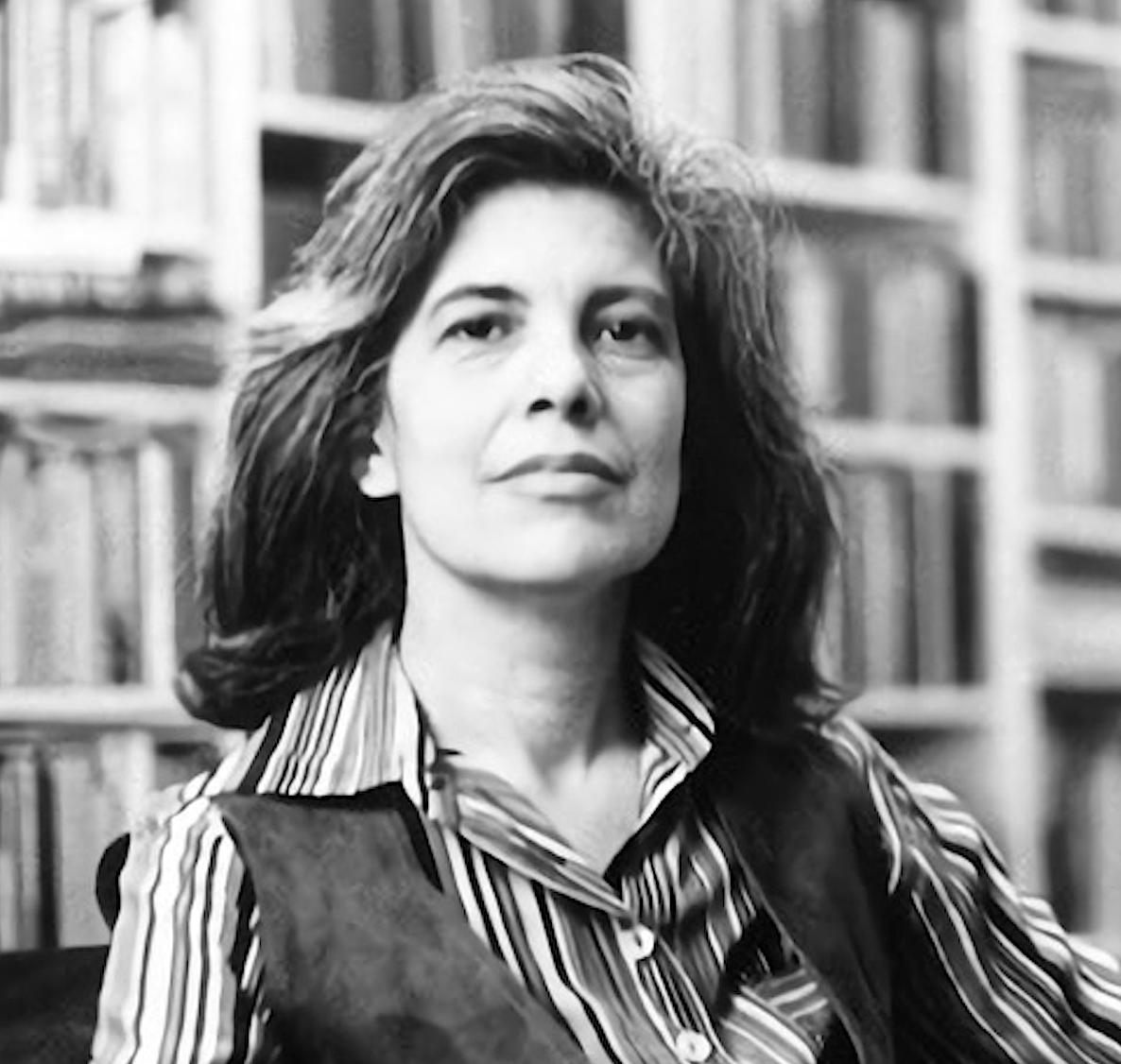
Image by Lynn Gilbert, via Wikimedia Commons
“The times we live in are indeed alarming. It is a time of the most appalling escalation of violence — violence to the environment, both ‘nature’ and ‘culture’; violence to all living beings.” But “it is also a time of a vertiginous drop in cultural standards, of virulent anti-intellectualism, and of triumphant mediocrity.” You may, at this point, already find yourself in agreement with these words. But they’re the words of Susan Sontag, now seventeen years dead, and as such can’t actually be describing our present moment. In fact she spoke them in, and about, 1983, during her first commencement address at Wellesley College.
Characteristically unsparing, Sontag extended her charge of mediocrity even to “the educational system that you have just passed through, or has passed you through.” In her view, “trivializing standards, using as their justification the ideal of democracy, have made the very idea of a serious humanist education virtually unintelligible to most people.” If it is to happen at all, resistance to this mediocrity must happen at the level of the individual. “Perhaps the most useful suggestion I can make on the day when most of you are ceasing to be students,” Sontag says, “is that you go on being students — for the rest of your lives. Don’t move to a mental slum.”
This point returned, somewhat altered, in Sontag’s last commencement address, delivered twenty years later at Vassar College. “Try not to live in a linguistic slum,” she advised the class of 2003. Indeed, “try to imagine at least once a day that you are not an American,” or “that you belong to the vast, the overwhelming majority of people on this planet who don’t have passports, don’t live in dwellings equipped with both refrigerators and telephones, who have never even once flown in a plane.” Though celebrated primarily as a critic, Sontag was also a novelist, and like Vladimir Nabokov understood full well the necessity of imagination to a proper intellectual life.
Elsewhere in her Vassar address, Sontag also makes the highly Nabokovian point that “no book is worth reading that isn’t worth re-reading.” Though the full text of the speech isn’t online, you’ll find these and other choice quotes from it at Vassar Quarterly. Sontag’s key theme seems to have been attention. “Pay attention,” she says in a passage still circulated on social media today. “It’s all about paying attention. Attention is vitality. It connects you with others. It makes you eager. Stay eager. (Two years later, David Foster Wallace would make a similar point about being ” “conscious and aware enough to choose what you pay attention to” in his famous 2005 commencement address at Kenyon College.)
When we develop and retain the habit of paying attention, we see things others don’t, especially those truths that run counter even to our own professed beliefs. “Our society does not censor as totalitarian societies do; on the contrary, our society promises liberty, self-fulfillment, and self-expression,” Sontag says. But pay attention, and you’ll notice that “many features of our so-called culture have as their goal and result the reduction of our mental life, or our mental operation; and this is precisely, I would argue, what censorship is about.” Nearly two decades have passed since Sontag said this, and as she might have expected, we tune out at greater peril than ever.
Related content:
John Berger (RIP) and Susan Sontag Take Us Inside the Art of Storytelling (1983)
Susan Sontag’s List of 10 Parenting Rules
Toni Morrison Lists the 10 Steps That Lead Countries to Fascism (1995)
David Foster Wallace’s Famous Commencement Speech “This is Water” Visualized in a Short Film
‘Never Be Afraid’: William Faulkner’s Speech to His Daughter’s Graduating Class in 1951
Based in Seoul, Colin Marshall writes and broadcasts on cities, language, and culture. His projects include the Substack newsletter Books on Cities, the book The Stateless City: a Walk through 21st-Century Los Angeles and the video series The City in Cinema. Follow him on Twitter at @colinmarshall, on Facebook, or on Instagram.
Read More...1,000 Musicians Perform “My Hero” in a Moving Tribute to Foo Fighters’ Drummer Taylor Hawkins
If you follow music news, or just scan entertainment headlines, you might have noticed that a few weeks after his death, beloved Foo Fighters’ drummer Taylor Hawkins’ final days became a controversial subject. According to a Rolling Stone article quoting Pearl Jam drummer Matt Cameron and Red Hot Chili Peppers drummer Chad Smith, Hawkins was exhausted by the Foo Fighters’ touring schedule. He needed a break, and he didn’t get one. Both drummers have issued statements disavowing the article. Meanwhile, as GQ noted, a Rolling Stone “Instagram post highlighting the article is being slammed by critical fans in the comments.”
Arguing over hearsay about a musician’s state of mind before his death seems like a poor way to remember him soon after he’s gone. If you’d rather steer clear of this scene, the original Rolling Stone piece is still worth checking out for its introduction: a feelgood story from three days before Hawkins, 50, was found in his Bogotá hotel room.
After Foo Fighters canceled a headlining concert in Asunción, the capital city of Paraguay, due to weather, Hawkins ended up hanging out with nine-year-old drummer Emma Sofía Peralta outside the Sheraton. She’d brought her drum kit and played for him. He posed for a photo with her, “crouching next to her and flashing the sort of warm, toothy smile that established him as one of the most beloved drummers in rock.”
More details of Hawkins’ death may become public, or they may not. But they shouldn’t obscure the reason he was famous in life. Like everyone else in the band, but most especially his “twin” Dave Grohl, Hawkins always looked like he was having the time of his life, whether onstage or meeting fans. The band won mass devotion not only through stellar songwriting and performances but through sheer, unbridled enthusiasm: the kind of spirit that drove 1000 musicians to stage a concert covering “Learn to Fly” in 2015, in a bid to bring the Foo Fighters to the town of Cesena, Italy. It worked, and thus was born the Rockin’ 1000 concept.
Getting a handful of rock musicians to show up on time is a feat in itself, much less 1000 of them, all playing not only on time but in time as well. Rockin’ 1000 has pulled this off consistently since they started, and their tribute above to Hawkins above is no different — a stadium-sized cover version of “My Hero” that conveys all the emotion of the original while multiplying it by the amplitude of a hundred marching bands. A fitting remembrance of what Hawkins meant to his fans if ever there was one.
Related Content:
Watch the Foo Fighters’ Taylor Hawkins (RIP) Give a Drumming Masterclass
Josh Jones is a writer and musician based in Durham, NC. Follow him at @jdmagness
Read More...What Is Batman? Pretty Much Pop: A Culture Podcast #124 Debates the Character, the Legacy, and the New Film

In light of the recent release of Matt Reeves’ film The Batman, we consider the strange alternation of darkness and camp that is Batman. Is he even a super hero? What’s with his rogues’ gallery? What’s with DC’s anti-world-building?
Your Pretty Much Pop host Mark Linsenmayer is joined by philosophy prof/NY Times entertainment writer Lawrence Ware, improv comedian/educator Anthony LeBlanc, and Marketing Over Coffee host John J. Wall, all of whom are deeply immersed in the comics, and we touch on other recent shows in the Batman universe.
Some relevant articles include:
- “Batman Actors Ranked from Worst to Best” from Den of Geek
- “All the Batman Movies, Ranked” by Eliana Docterman
- “The Best Order to Watch All the Batman Movies” in by Austen Goslin
- “The Top 27 Best Batman Comics and Graphic Novels” from IGN
- “5 Things ‘The Batman’ Got Right And 3 Things It Got Wrong” by Haley Petersen
Follow us @law_writes, @anthonyleblanc, @johnjwall, and @MarkLinsenmayer.
Hear more Pretty Much Pop. Support the show at patreon.com/prettymuchpop or by choosing a paid subscription through Apple Podcasts. This podcast is part of the Partially Examined Life podcast network.
Pretty Much Pop: A Culture Podcast is the first podcast curated by Open Culture. Browse all Pretty Much Pop posts.
Read More...Dying from Overwork: Disturbing Looks Inside Japan’s Karoshi and China’s “996” Work System
By most measures, Japan boasts the highest life expectancy in the world. But that ranking, of course, doesn’t mean that every Japanese person sees old age. Though the country’s rate of violent crime is low enough to be the envy of most of the world, its suicide rate isn’t, and it says even more that the Japanese language has a word that refers specifically to death by overwork. I first encountered it nearly thirty years ago in a Dilbert comic strip. “In Japan, employees occasionally work themselves to death. It’s called karōshi,” says Dilbert’s pointy-haired boss. “I don’t want that to happen to anybody in my department. The trick is to take a break as soon as you see a bright light and hear dead relatives beckon.”
You can see the phenomenon of karōshi examined more seriously in the short Nowness video at the top of the post. In it, a series of Japanese salarymen (a Japanese English term now well-known around the world) speak to the exhausting and unceasing rigors of their everyday work schedules — and, in some cases, to the emptiness of the homes that await them each night.
The CNBC segment just above investigates what can be done about such labor conditions, which even in white-collar workplaces contribute to the heart attacks, strokes, and other immediate causes of deaths ultimately ascribed to karōshi. In a grim irony, Japan has the lowest productivity among the G7 nations: its people work hard, yet their companies are hardly working.
Initiatives to put a stop to the ill effects of overwork, up to and including karōshi, include mandatory vacation days and office lights that switch off automatically at 10:00 p.m. Among the latest is “Premium Friday,” a program explained in the Vice video above. Developed by Keidanren, Japan’s oldest business lobby, it was initially received as “a direct response to karōshi,” but it has its origins in marketing. “We wanted to create a national event that bolstered consumption,” says the director of Keidanren’s industrial policy bureau. By that logic, it made good sense to let workers out early on Fridays — let them out to shop. But Premium Friday has yet to catch on in most Japanese enterprises, aware as they are that Japan’s economic might no longer intimidates the world.
The aforementioned low productivity, along with a rapidly aging and even contracting population, contributed to Japan’s loss of its position as the world’s second-largest economy. It was overtaken in 2011 by China, a country with overwork problems of its own. The Vice report above covers the “996” system, which stands for working from 9:00 a.m. to 9:00 p.m, six days a week. Prevalent in Chinese tech companies, it has been blamed for stress, illness, and death among employees. Laws limiting working hours have thus far proven ineffective, or at least circumventable. Certain pundits never stop insisting that the future is Chinese; if they’re right, all this ought to give pause to the workers of the world, Eastern and Western alike.
Related content:
The Employment: A Prize-Winning Animation About Why We’re So Disenchanted with Work Today
Charles Bukowski Rails Against 9‑to‑5 Jobs in a Brutally Honest Letter (1986)
Based in Seoul, Colin Marshall writes and broadcasts on cities, language, and culture. His projects include the Substack newsletter Books on Cities, the book The Stateless City: a Walk through 21st-Century Los Angeles and the video series The City in Cinema. Follow him on Twitter at @colinmarshall, on Facebook, or on Instagram.
Read More...The “All of Bach” Project Is Making Performances of Every Bach Piece Available Online: Watch 346 High-Quality Recordings
Granted a wish to travel back in time, many a Bach lover would leap to Thuringia, in a pre-unified Germany, circa the early 1700s, or to Arnstadt, Mühlhausen, the courts of Weimar and Köthen, or Leipzig. There, Bach composed his concertos, suites, fugues, preludes, canons, chorales, organ works, solo pieces, as well as unique works like the Goldberg Variations and The Well-Tempered Clavier. He wrote principally for churches and sovereigns who had his music performed in what we now call its original settings.
Of course, we can’t hear Bach’s Baroque masterworks the way his contemporaries did, though we can try. But imagine standing in St. Paul’s Church, hearing the composer play his organ works himself in the early 1720s. (Built in 1231, the church survived WWII, only to be demolished for redevelopment under the East German regime in 1968.) Imagine hearing Bach’s chamber works played in the ornate chambers of the 18th century. It’s a nice dream, but I think we’re fortunate to live in his distant future, and to have experienced his music through three-hundred years of interpretations, new arrangements and instrumentation, and thousands of recordings.
Bach might barely recognize the way some of his works have been interpreted. He might object to beloved, yet unorthodox recordings by Glenn Gould and Wendy Carlos. He might abhor the notion of recording altogether. Who knows. But the music is no longer his. As Yo Yo Ma has tried to show in his life’s work, Bach belongs to everyone. The Netherlands Bach Society shares this belief, and has endeavored to upload live performances of “All of Bach” to their website and YouTube. The opportunity to see Bach’s works performed live in Amsterdam, viewable from anywhere at any time, would seem like devilry to those in Bach’s day.
“Since the start of this unique project,” writes the Society, “more than 350 of the total of 1080 works by Johann Sebastian Bach have been performed and recorded in special ways” in this attempt to “share Bach’s music with the whole world” through “excellent audio visual recordings of the highest quality.” These performances include settings very like the originals, if very far away in time: “Cantatas are filmed in a church, for instance, and chamber music at the musician’s homes.” They also include highlights such as the Six Cello Suites at the Rijksmuseum and Brandenburg Concert no. 4 at Felix Maritis.
See highlighted performances here and just above, watch newly-added (as of February) performances of The Well-Tempered Clavier, “48 keyboard pieces in all 24 keys,” the Netherlands Bach Society notes, “the sort of challenge Bach enjoyed.” This is the composer at his freest — “In contrast to the iron discipline Bach had to apply to his church compositions, here he could abandon himself to Intellectual Spielerei without worrying about deadlines.” Help the Netherlands Bach Society continue their ambitious project with a donation here.
Related Content:
How a Bach Canon Works. Brilliant.
Hear J.S. Bach’s Music Performed on the Lautenwerck, Bach’s Favorite Lost Baroque Instrument
Bach Played Beautifully on the Baroque Lute, by Preeminent Lutenist Evangelina Mascardi
Josh Jones is a writer and musician based in Durham, NC. Follow him at @jdmagness
Read More...Machiavelli’s The Prince Explained in an Illustrated Film
Niccolò Machiavelli lived in a time before the internet, before radio and television, before drones and weapons of mass destruction. Thus one naturally questions the relevance of his political theories to the twenty-first century. Yet in discussions about the dynamics of power, no name has endured as long as Machiavelli’s. His reputation as a theorist rests mostly on his 1532 treatise Il Principe, or The Prince, in which he pioneered a way of analyzing power as it was actually wielded, not as people would have liked it to be. How, he asked, does a ruler — a prince — attain his position in a state, and even more importantly, how does he maintain it?
You can hear Machiavelli’s answers to these questions explained, and see them illustrated, in the 43-minute video above. It breaks The Prince down into seven parts summarizing as many of the book’s main points, including “Do not be neutral,” “Destroy, do not would,” and “Be feared.”
These commandments would seem to align with Machiavelli’s popular image as an apologist, even an advocate, for brutal and repressive forms of rule. But his enterprise has less to do with offering advice than with describing how real figures of power, princes and otherwise, had amassed and retained that power.
The video comes from Eudaimonia, a Youtube channel that has also featured similarly animated exegeses of Stoicism and Sun Tzu’s The Art of War. Its creator makes these ancient sources of knowledge accessible with not just his cartoonish illustrations, but also his inclusion of illuminating examples from more recent history. In the case of The Prince, these come from eras like the Russian Revolution, World War II, and even our own time of instant global communication, attention-hungry media, and a seemingly weak political class. In much of the world, we live in a time much less nasty and brutish than Machiavelli’s. But looking at the effectiveness (or lack thereof) of our own leaders, we have to admit that the principles of The Prince may not have gone out of effect.
To delve deeper into the world of Machiavelli, you can watch a BBC documentary on the Renaissance political theorist below.
Related content:
What Does “Machiavellian” Really Mean?: An Animated Lesson
Salman Rushdie: Machiavelli’s Bad Rap
Introduction to Political Philosophy: A Free Yale Course
Allan Bloom’s Lectures on Machiavelli (Boston College, 1983)
Based in Seoul, Colin Marshall writes and broadcasts on cities, language, and culture. His projects include the Substack newsletter Books on Cities, the book The Stateless City: a Walk through 21st-Century Los Angeles and the video series The City in Cinema. Follow him on Twitter at @colinmarshall, on Facebook, or on Instagram.
Read More...
Discover the Dystopian Surrealist Art of Polish Painter & Photographer Zdzisław Beksiński
“In the medieval tradition, Beksinski seems to believe art to be a forewarning about the fragility of the flesh — whatever pleasures we know are doomed to perish — thus, his paintings manage to evoke at once the process of decay and the ongoing struggle for life. They hold within them a secret poetry, stained with blood and rust.” — Guillermo del Toro
The life and death of Polish painter, photographer, and sculptor Zdzisław Beksiński has been sensationalized, made into a cursed tragedy in the telling of events late in his life that, taken together, all seem horrifying enough: the death of the artist’s wife from cancer in 1998, the suicide of his son, Tomasz, one year later, and, finally, his own stabbing death in 2005 at the hands of his caretaker’s teenage son. If we add to this account Beksiński’s childhood in Nazi-occupied, then Soviet-occupied Poland, we have ample reason to speculate about the meaning of his nightmarish visions.
But the “Nightmare Artist,” as he’s called in the video above, wants us to stay away from making meaning of any kind. Unlike artists whose work can seem inseparable from their statements of purpose (or personal or historical tragedies), Beksiński had nothing to say about his art or his life.
He preferred that others keep silent as well, though he himself hated silence, working to loud classical music and rock. Music, he said — not literature, film, history, or even other artists — was his only inspiration. The impression we get from these scant details and Beksiński’s disturbing work, is of an individual probably best left alone.
Judging an artist’s body of work by the worst things that have happened to them, however, is manifestly unfair. For the majority of his life, Beksiński embodied the famous Flaubert quote about a regular, orderly creative life. He studied architecture, went on to supervise construction projects and then design buses. Like many people, he hated his job (he left the bus company in 1967). He developed a passion for photography, sculpture, and painting. With no formal art training, he struck out on a successful fifty-year career as a prolific Surrealist, becoming a master of oil painting. Was he tormented? Those who knew him describe him as mild-mannered, pleasant, even funny. He seems to have been quite content.
Do we resist interpretation as Beksiński wanted? How can we, when the imagery of death in his work seems itself to interpret events that inevitably shaped his world? Beksiński was born in Sanok, in southern Poland, in 1929. When the Nazis came to Poland a decade later, Sanok’s population was “about 30% Jewish,” notes the Collector, “nearly all of which was eliminated by the war’s end.” Decades later, Nazi iconography and crowds of gaunt, corpse-like figures began to recur in Beksiński’s paintings, which he described as “photographing dreams.” These horrors predominate in his most popular work, even though Beksiński’s vision had more breadth than casual fans might know.
His sense of humor is evident in his photography, and in early, more abstract, paintings, he displays a much lighter touch. (See a broad sampling of Beksiński’s work at Artnet.) In the 90s, he began experimenting with computer graphics and “was granted his wish of being able to add surrealistic alterations to photographs,” bringing his career “full circle as he returned to his first medium,” notes Culture.pl. Yet, like his contemporary H.R. Giger, where Beksiński’s name is known, he’s usually known as a painter of nightmares and heavy metal album covers — and for good reason.
The Several Circles video on Beksiński above (which opens with a content warning) shows why his “epic universe of hellscapes” has proven so inescapable to the critics who embraced his work, the gallerists who sold it, and those who have discovered it since the artist’s tragic death.
Related Content:
An Introduction to Surrealism: The Big Aesthetic Ideas Presented in Three Videos
The Forgotten Women of Surrealism: A Magical, Short Animated Film
Josh Jones is a writer and musician based in Durham, NC. Follow him at @jdmagness
Read More...Support Us
We're hoping to rely on loyal readers, rather than erratic ads. Please click the Donate button and support Open Culture. You can use Paypal, Venmo, Patreon, even Crypto! We thank you!

About Us

Open Culture scours the web for the best educational media. We find the free courses and audio books you need, the language lessons & educational videos you want, and plenty of enlightenment in between.
Advertise With Us
FREE UPDATES!
GET OUR DAILY EMAIL
Get the best cultural and educational resources on the web curated for you in a daily email. We never spam. Unsubscribe at any time.
FOLLOW ON SOCIAL MEDIA
Open Culture editor Dan Colman scours the web for the best educational media. He finds the free courses and audio books you need, the language lessons & movies you want, and plenty of enlightenment in between.
Advertise With Us


