Bill Murray Explains How He Was Saved by John Prine
Judging by the outpouring of affection in online comment sections, Chicago folk musician John Prine (may he rest in peace) has helped a great many of his fans through tough times with his humanist, oft-humorous lyrics.
Add funny man Bill Murray to the list.
Taping a video in support of The Tree of Forgiveness, Prine’s first album of new material in over a decade, Murray recalled a grim period in which a deep funk robbed him of all enjoyment. Though he carefully stipulates that this “bummer” could not be diagnosed as clinical depression, nothing lifted his spirits, until Gonzo journalist Dr. Hunter S. Thompson—whom Murray embodied in the 1980 film, Where the Buffalo Roam—suggested that he turn to Prine for his sense of humor.
Murray took Thompson’s advice, and gave his fellow Illinoisian’s double greatest hits album, Great Days, a listen.
This could have backfired, given that Great Days contains some of Prine’s most melancholy—and memorable—songs, from “Hello in There” and “Angel from Montgomery” to “Sam Stone,” voted the 8th saddest song of all time in a Rolling Stone readers’ poll.
But the song that left the deepest impression on Murray is a silly country-swing number “Linda Goes to Mars,” in which a clueless husband assumes his wife’s vacant expression is proof of interplanetary travel rather than disinterest.
To hear Murray tell it, as he thumbs through a copy of John Prine Beyond Words, the moment was not one of gut-busting hilarity, but rather one of self-awareness and relief, a signal that the dark clouds that had been hanging over him would disperse.
A grateful Murray’s admiration runs deep. As he told The Washington Post, when he was awarded the Kennedy Center Mark Twain Prize for American Humor, he lobbied—unsuccessfully—to get Prine flown in for the ceremony:
I thought it would have been a nice deal because John Prine can make you laugh like no else can make you laugh.
Ditto Prine’s dear friend, the late, great folk musician, Steve Goodman, the author of “The Vegetable Song,” “The Lincoln Park Pirates” (about a legendary Chicago towing company), and “Go, Cubs, Go,” which Murray trilled on Saturday Night Live with players Dexter Fowler, Anthony Rizzo, and David Ross shortly before the Cubbies won the 2016 World Series.
I just found out yesterday that Linda goes to Mars
Every time I sit and look at pictures of used cars
She’ll turn on her radio and sit down in her chair
And look at me across the room as if I wasn’t there
Oh, my stars, my Linda’s gone to Mars
Well, I wish she wouldn’t leave me here alone
Oh, my stars, my Linda’s gone to Mars
Well, I wonder if she’d bring me something home
Something, somewhere, somehow took my Linda by the hand
And secretly decoded our sacred wedding band
For when the moon shines down upon our happy humble home
Her inner space gets tortured by some outer space unknown
Oh, my stars, my Linda’s gone to Mars
Well, I wish she wouldn’t leave me here alone
Oh, my stars, my Linda’s gone to Mars
Well, I wonder if she’d bring me something home
Now I ain’t seen no saucers ‘cept the ones upon the shelf
And if I ever seen one I’d keep it to myself
For if there’s life out there somewhere beyond this life on earth
Then Linda must have gone out there and got her money’s worth
Oh, my stars, my Linda’s gone to Mars
Well, I wish she wouldn’t leave me here alone
Oh, my stars, my Linda’s gone to Mars
Well, I wonder if she’d bring me something home
Yeah, I wonder if she’d bring me something home
Listen to a Great Days Spotify playlist here, though neither Open Culture, nor Bill Murray can be held accountable if you find yourself blinking back tears.
Bonus: Below, watch Prine and Murray “swap songs and stories about the early days in Chicago crossing paths with the likes of John Belushi, Steve Goodman and Kris Kristofferson.” Plus more.
Note: An earlier version of this post appeared on our site in June 2018.
Related Content:
The Philosophy of Bill Murray: The Intellectual Foundations of His Comedic Persona
Listen to Bill Murray Lead a Guided Mediation on How It Feels to Be Bill Murray
Ayun Halliday is an author, illustrator, theater maker and Chief Primatologist of the East Village Inky zine. Join her in NYC on Thursday June 28 for another monthly installment of her book-based variety show, Necromancers of the Public Domain. Follow her @AyunHalliday.
Read More...Dyson Creates 44 Free Engineering & Science Challenges for Kids Quarantined During COVID-19
A heads up: Dyson has “created 44 engineering and science activities for children to try out while at home during the coronavirus pandemic, from making a balloon-powered car to building a bridge from spaghetti,” writes the Dezeen website. They go on to add: “Comprised of 22 science tasks and 22 engineering activities, the Challenge Cards can be completed by children using common household items such as eggs, string and balloons.” You can also find a related playlist of videos on YouTube, one of which appears above.
This engineering/science activities have been added to our refreshed collection, 200 Free Kids Educational Resources: Video Lessons, Apps, Books, Websites & More. If you know of any great K‑12 resources, especially ones that are always free, please add them in the comments below, and we will try to add them to the list.
If you would like to support the mission of Open Culture, consider making a donation to our site. It’s hard to rely 100% on ads, and your contributions will help us continue providing the best free cultural and educational materials to learners everywhere. You can contribute through PayPal, Patreon, and Venmo (@openculture). Thanks!
Related Content:
1,500 Free Online Courses from Top Universities
Learn 48 Languages Online for Free: Spanish, Chinese, English & More
Read More...Meet Notorious Art Forger Han Van Meegeren, Who Fooled the Nazis with His Counterfeit Vermeers
People love stories of successful criminals. They must possess some admirable qualities, we assume, some great daring or cunning or keen insight. Myths supplant reality, and we forget about the networks of enablers that help ruthless but not especially bright people succeed. But successful art forgers present us with another case entirely. “Forgers, by nature, prefer anonymity,” notes the site Essential Vermeer 3.0, “and therefore are rarely remembered.” Yet the evidence of their mastery lies incontrovertibly before us, fooling collectors, curators, and even art historians. Fakes, may be “the great art of our age.”
Or so claims the subtitle of 2013 book Forged, in which philosopher and conceptual artist Jonathon Keats surveys the careers of six notorious forgers, including Dutch artist Han van Meegeren, who “tricked the world—and the Nazis—with his counterfeit Vermeer paintings,” the TED-Ed lesson above tells us.
Van Meegeren’s biography seems almost scripted. Having failed to interest critics in his work as a young man, he became embittered and decided to revenge himself upon the art world with fakes. His choice of Vermeer was “ambitious” to say the least, given the Baroque painter’s reputation for a unique technical brilliance.
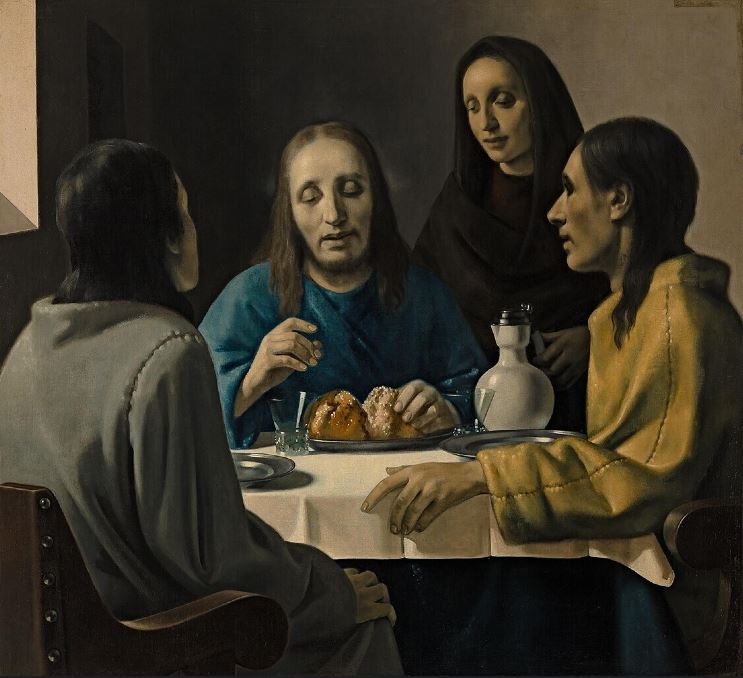
He worked for six years to re-create Vermeer’s materials and techniques and perfect an aging process for his canvases. The forensic science that would today detect such methods was not sufficiently advanced at the time. Yet “even today,” the lesson notes, authenticity is a matter of the “subjective judgment of specialists.” Van Meegeren used such dependence on authority against the experts by creating a work he knew would fill in a historical gap, an early religious period of Vermeer’s from which no works survived; also, conveniently, a period when the artist’s talents were less developed.
“In 1937,” Essential Vermeer writes, “Abraham Bredius… one of the most authoritative art historians,” who had “dedicated a great part of his life to the study of Vermeer” pronounced van Meegeren’s fake Vermeer, Christ and the Disciples at Emmaus (detail above), “a hitherto unknown painting by a great master, untouched, on the original canvas, and without any restoration, just as it left the painter’s studio.” His praise was so effusive it allowed no room for doubt. This was “the masterpiece of Johannes Vermeer of Delft… every inch a Vermeer.”
Van Meegeren counterfeited works by several other Dutch masters and “was so good,” says the narrator of a Sotheby’s profile, above, “that he duped art experts, museums, and even Hitler’s right-hand man Hermann Göring.” And here, the usual admiration for art forgers—who can seem like heroic tricksters next to their greedy, overconfident marks—takes a patriotic turn. Tried for collaboration, the forger argued he was in fact a national hero for trading another counterfeit Vermeer, Christ with the Woman Taken in Adultery (below), to Göring for 200 works of looted Dutch art.
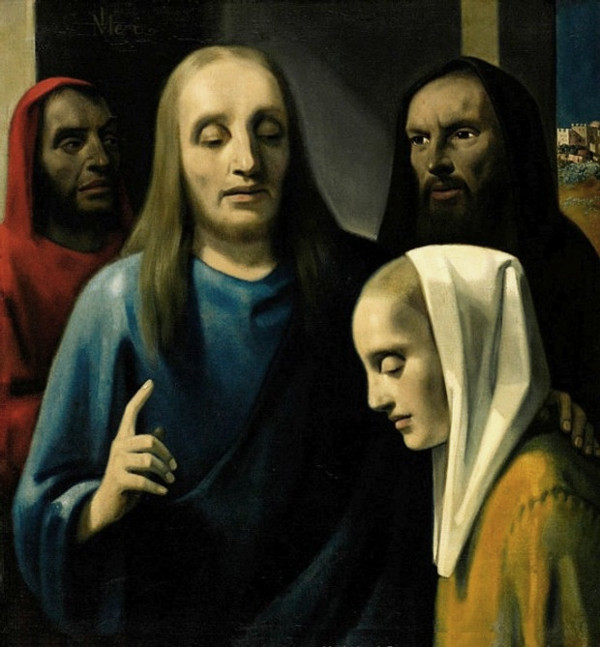
Van Meegeren’s defense depended on him convincing the court that he had made the painting. This took some doing. He had even forgone using models so there would be no witnesses. As Sotheby’s Director of Scientific Research James Martin and art historian Jonathan Lopez show us, van Meegeren’s work really was that convincing, its flaws nearly undetectable. He did serve two years for forgery and fraud, but in the end achieved his early desire for artistic fame and his later wish to be regarded as an outlaw hero. Perhaps more than most art world forgers, he is deserving of both reputations.
Related Content:
How a Book Thief Forged a Rare Edition of Galileo’s Scientific Work, and Almost Pulled it Off
F for Fake: Orson Welles’ Short Film & Trailer That Was Never Released in America
Josh Jones is a writer and musician based in Durham, NC. Follow him at @jdmagness
Read More...A 1665 Advertisement Promises a “Famous and Effectual” Cure for the Great Plague
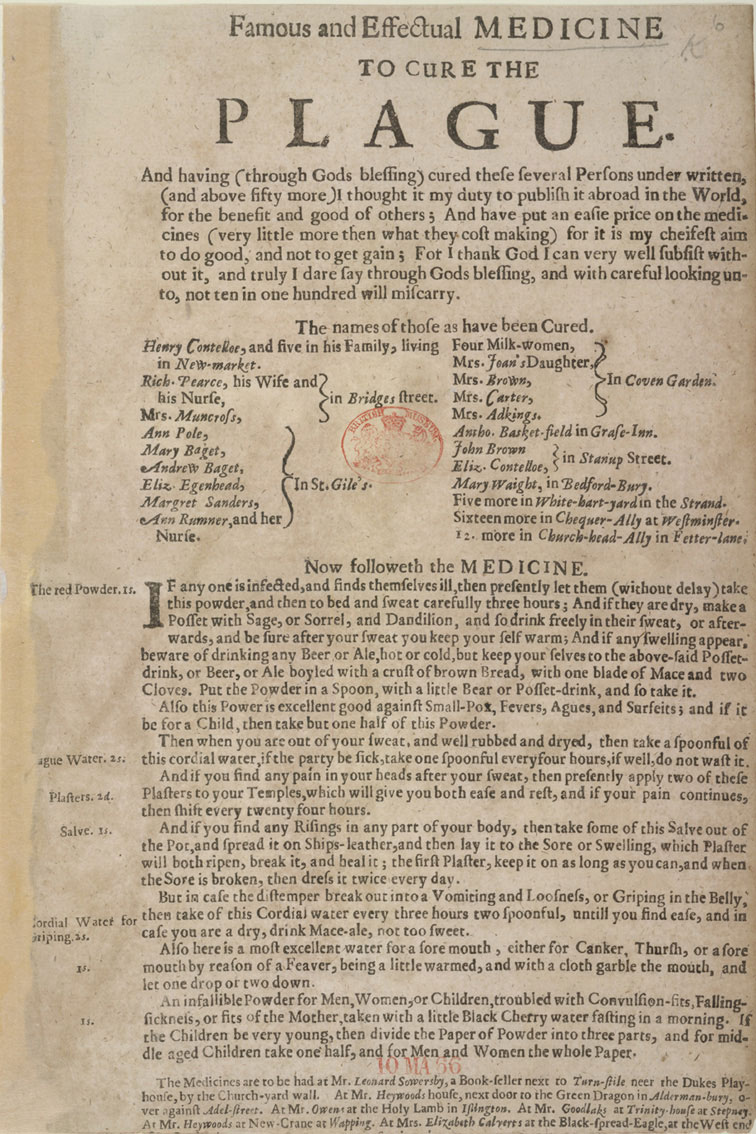
There is a level of avarice and depravity in defrauding victims of an epidemic that should shock even the most jaded. But a look into the archives of history confirms that venal mountebanks and con artists have always followed disaster when it strikes. In 1665, the Black Death reappeared in London, a disease that had ravaged medieval Europe for centuries and left an indelible impression on cultural memory. After the rats began to spread disease, terror spread with it. Then came the advertisements for sure cures.
“Everyone dreaded catching the disease,” notes the British Library. “Victims were often nailed into their houses in an attempt to stop the spread… They usually died within days, in agony and madness from fevers and infected swellings.” This grotesque scene of panic and pain seemed like a growth market to “quack doctors selling fake remedies. There were many different pills and potions,” and they “were often very expensive to buy and claimed, falsely, to have been successfully used in previous epidemics.”
Surely, there were many in the medical profession, such as it was, who genuinely wanted to help, but no honest doctor could claim, as the broadside above does, to have discovered a “Famous and Effectual MEDICINE TO CURE THE PLAGUE.” So confident is this ad that it lists the names and locations of several people supposedly cured (and promises to have cured “above fifty more”). You can go look up “Andrew Baget, in St. Gile’s,” or “Mrs. Adkings. In Coven Garden,” or “Mary-Waight, in Bedford-Bury.” Ask them yourself! Only, that might be a little difficult as you’ve currently got the plague…. (See a transcription of the advertisement here.)
This particular example appears to have been a guild effort. At the bottom of the pamphlet we find a list of merchants offering the needed ingredients for the medicine, which sufferers would presumably mix themselves, having first visited the shops of Mr. Leonard Sowersby, Mr. Heywoods, Mr. Owens, Mr. Goodlaks, a second Mr. Heywoods, and Mrs. Elizabeth Calverts (potentially infecting others all the time.) Customers were clearly desperate. They aren’t even given the stamp of a physician’s approval, only the merchants’ promise that others have returned from the brink by means of an “infallible Powder” that also cures “Small-Pox, Fevers, Agues, and Surfeits.” Children should take half a dose.
17th century physicians fared little better against the plague than doctors had over 300 years earlier when the disease first made its appearance in Europe in 1347, traveling from Asia to Italy. They did what they could, as the BBC points out, recommending “mustard, mint sauce, apple sauce and horseradish” as dietary aids. Other attempted 14th century cures included “rubbing onions, herbs or a chopped up snake (if available) on the boils or cutting up a pigeon and rubbing it over an infected body.”
This sounded specious to many people at the time. One 1380 source, Jean Froissart’s Chronicles, stated sarcastically, “doctors need three qualifications: to be able to lie and not get caught; to pretend to be honest; and to cause death without guilt.” Such qualifications have always suited those intent on careers in government or finance, where times of trouble can be highly profitable. We are fortunate, however, for the advances of modern medicine, and for medical professionals who risk their lives daily for victims of COVID-19, even if some other human qualities haven’t changed since people tried to end pandemics by marching through the streets whipping themselves.
Related Content:
The History of the Plague: Every Major Epidemic in an Animated Map
Download Classic Works of Plague Fiction: From Daniel Defoe & Mary Shelley, to Edgar Allan Poe
Josh Jones is a writer and musician based in Durham, NC. Follow him at @jdmagness
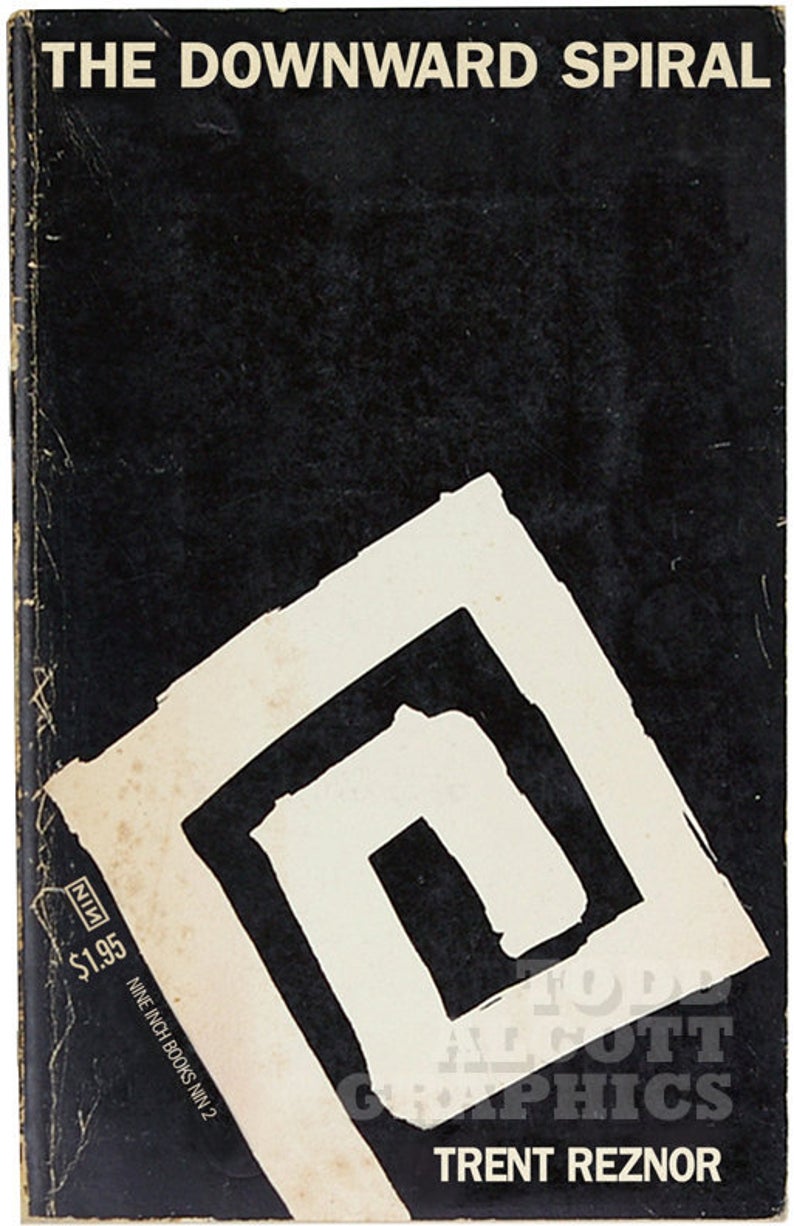
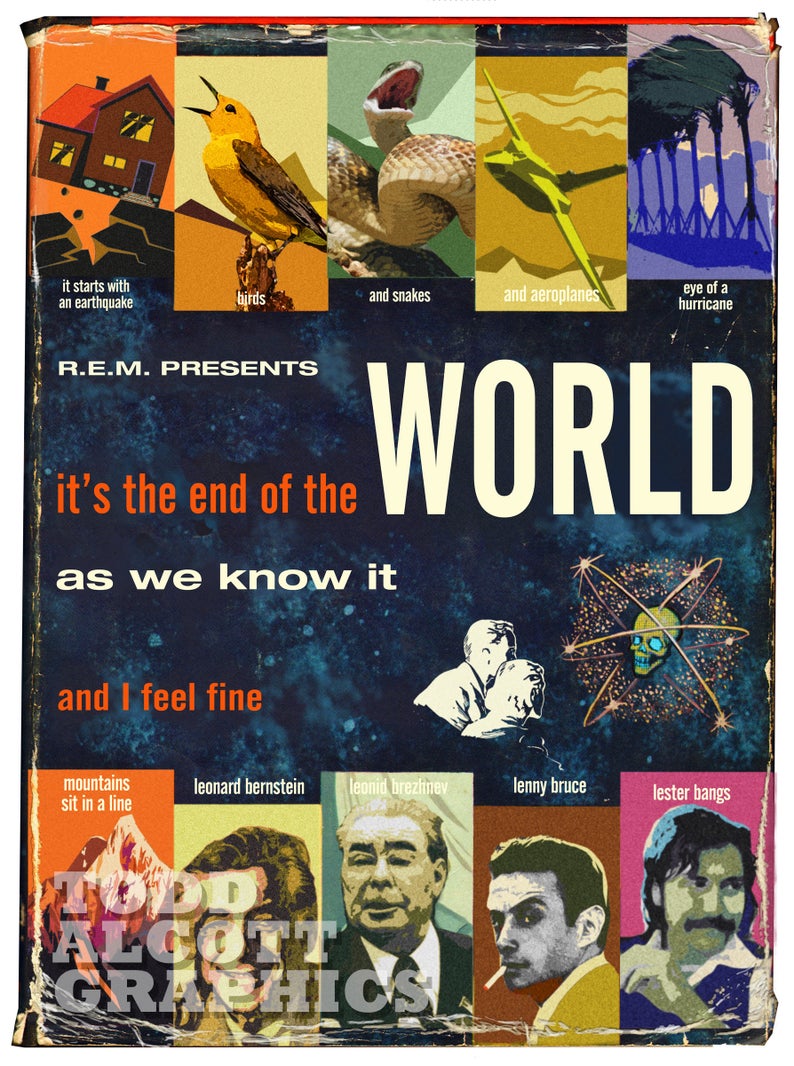
Read More...Classic Songs Re-Imagined as Vintage Book Covers During Our Troubled Times: “Under Pressure,” “It’s the End of the World as We Know It,” “Shelter from the Storm” & More
Even before the COVID-19 pandemic, how many of us sought solace from the turbulent 21st century in cultural artifacts of bygone eras? Our favorite records by the likes of the Beatles, Queen, David Bowie; our favorite novels by the likes of Raymond Chandler, Ian Fleming, Philip K. Dick: all of them now possess a solidity that seems lacking in much current popular culture. The work of all these creators has its own kind of artistic daring, and all of it, too, also came out of times troubled in their own way.
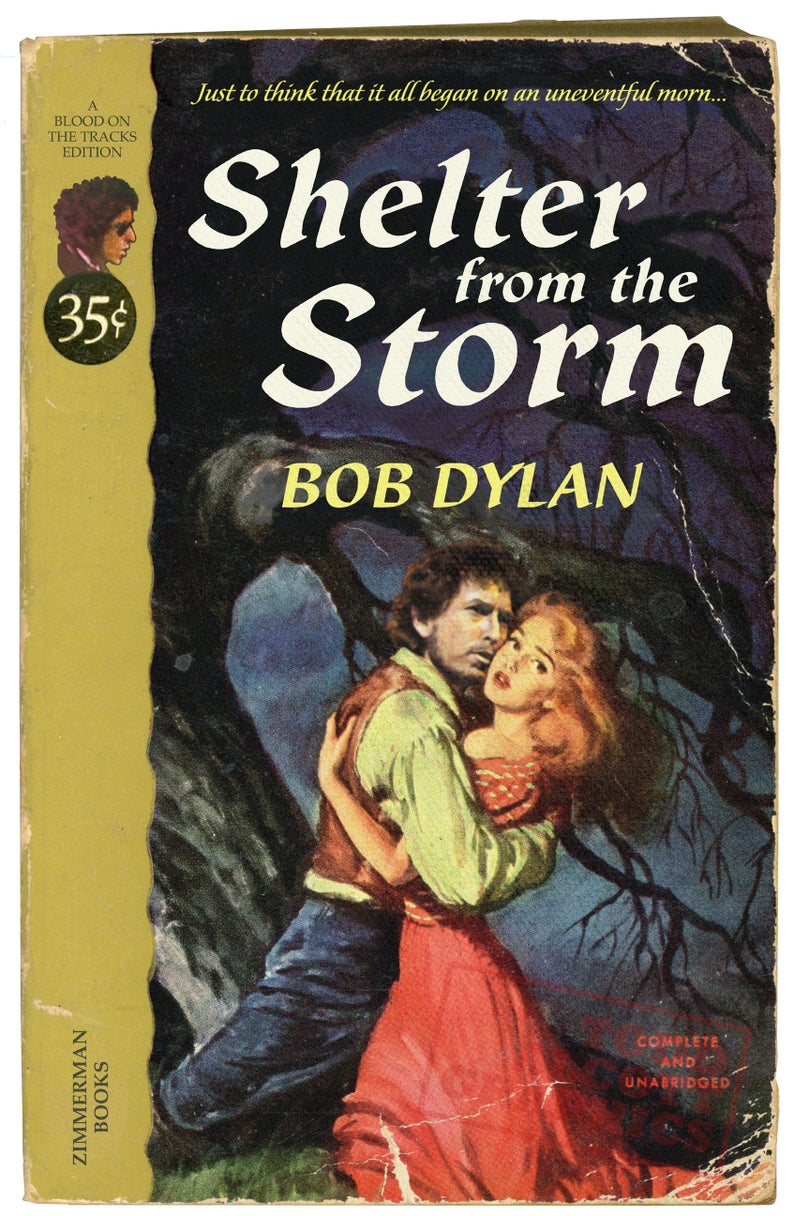
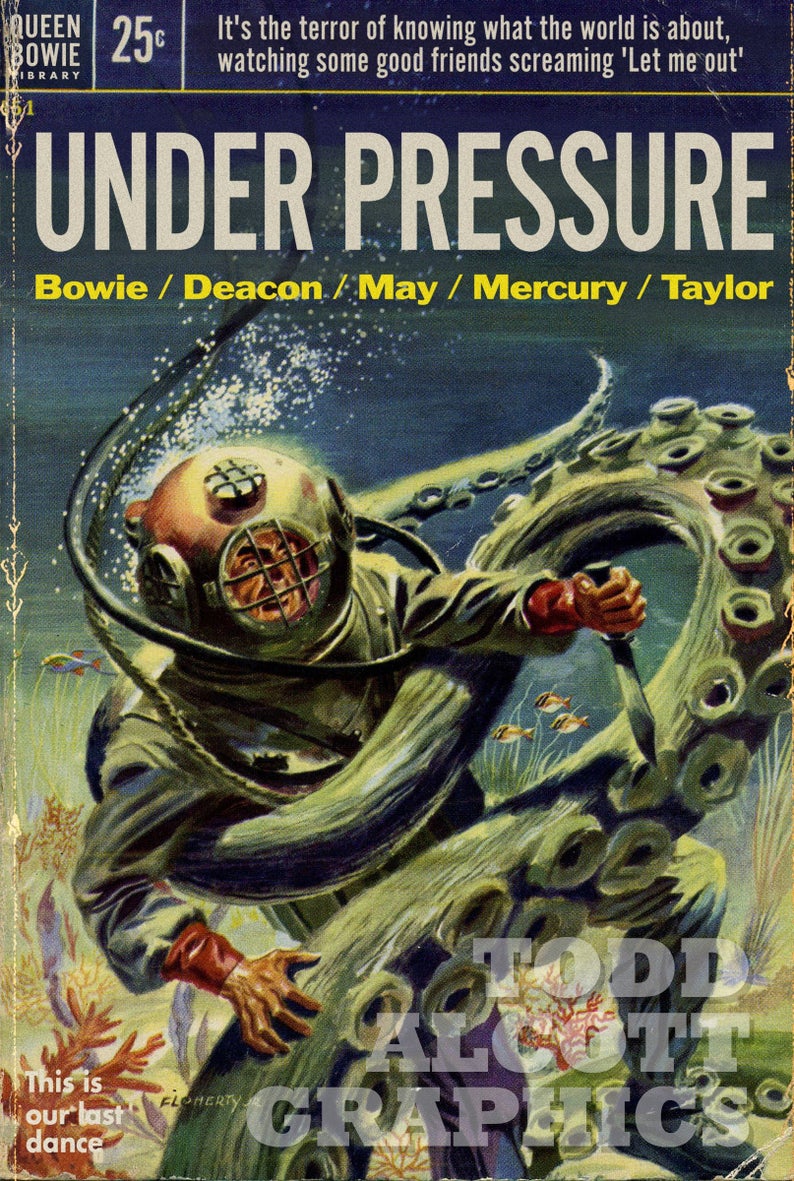
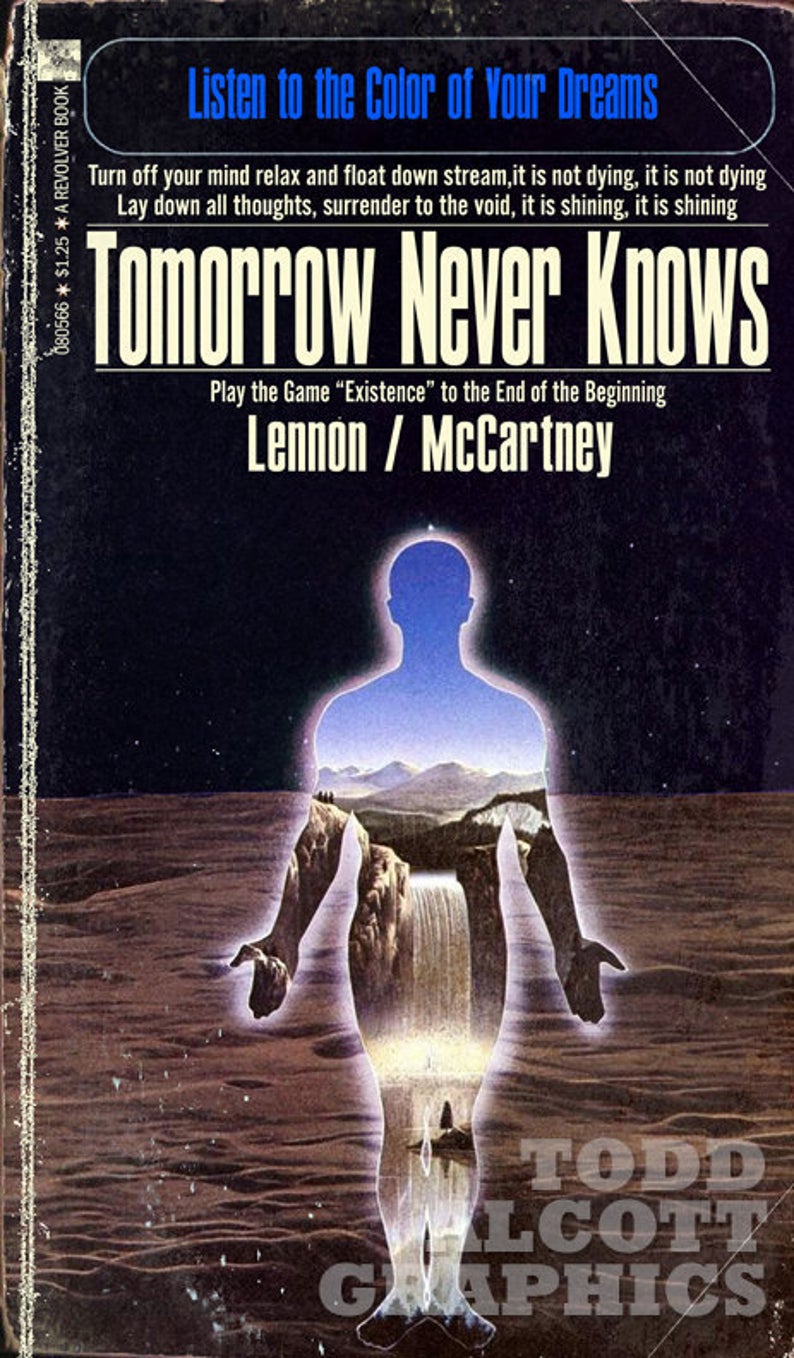
Hence the cultural resonance that has long outlasted their first burst of popularity — and that fuels the visual mash-ups of Todd Alcott. A professional screenwriter and graphic designer, Alcott takes mid-20th-century works of graphic design, most often paperback book covers, and reimagines them with the lyrics, themes, and even imagery of popular songs from a slightly later period. This project is easier shown than explained, but take a glance at his Etsy shop and you’ll understand it at once.
You’ll also take notice of a few mash-ups especially relevant to the present moment, one in which we all feel a bit “Under Pressure.” The whole of “Planet Earth,” after all, has found itself subject to the kind of deadly pandemic that only happens “Once in a Lifetime,” if that often.
Increasingly many of us feel the need to “Call the Doctor,” but increasingly often, the doctor has proven unavailable. Most of us can do no better than seeking “Shelter from the Storm” — and some of us have been forced by law to do so.
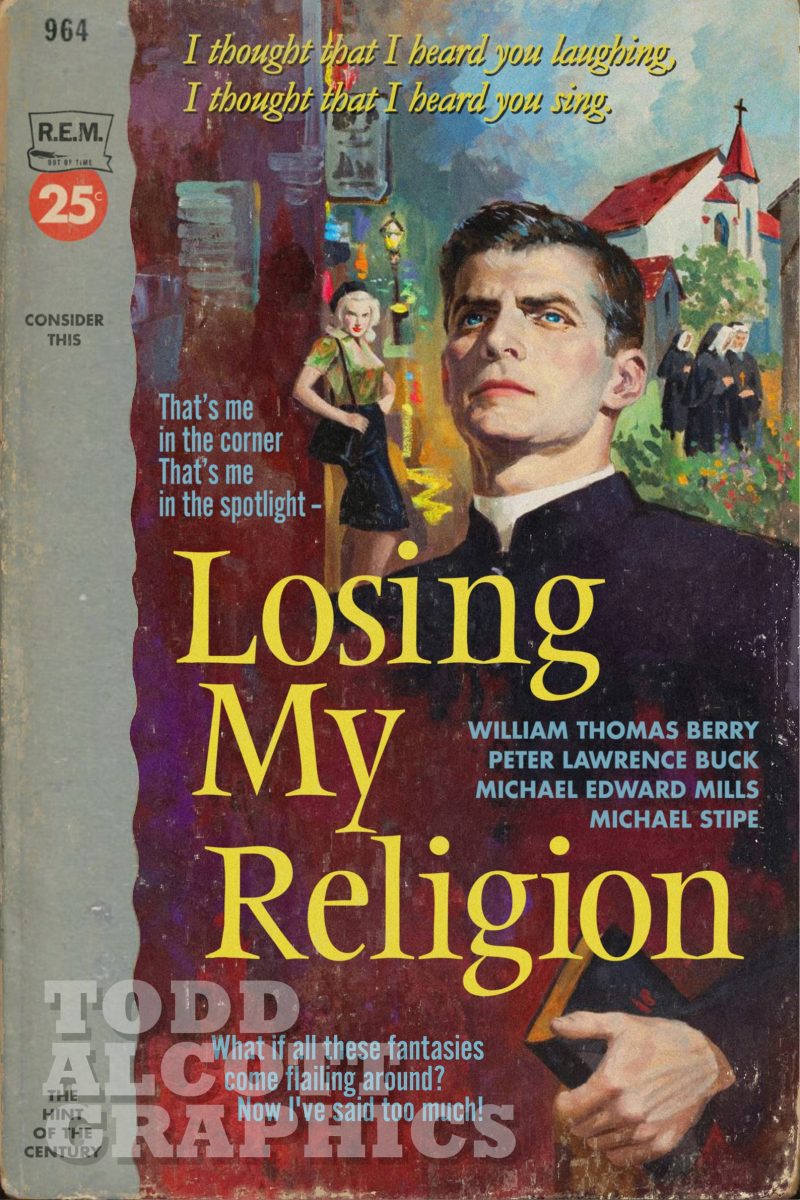
In some countries, all this has begun to feel like “Life During Wartime.” Extended periods confined to our homes have rendered some of us “Comfortably Numb,” and no few Americans have begun to say, “I’m So Bored with the U.S.A.” Perhaps you’ve even heard from friends who describes themselves as in the process of “Losing My Religion.” Some see humanity as plunging into “The Downward Spiral” that ultimately means “It’s the End of the World as We Know It.”
Others say “Don’t Worry About the Government,” expecting as they do a “Revolution” for which they’ve already begun to arm themselves with “Lawyers, Guns and Money.” But how many of us can really say with confidence what a post-coronavirus world will look like, and how or whether it will be different from the one we’ve grown used to? Best to draw all we can from the wisdom of the past — whatever form it comes in — and bear in mind that, as a 20th-century sage once put it, “Tomorrow Never Knows.” You can purchase copies of Todd Alcott’s covers (which extends well beyond what appears here) at his Etsy shop.
Related Content:
Songs by Joni Mitchell Re-Imagined as Pulp Fiction Book Covers & Vintage Movie Posters
Based in Seoul, Colin Marshall writes and broadcasts on cities, language, and culture. His projects include the book The Stateless City: a Walk through 21st-Century Los Angeles and the video series The City in Cinema. Follow him on Twitter at @colinmarshall, on Facebook, or on Instagram.
Read More...What is Albert Camus’ The Plague About? An Introduction
Topping lists of plague novels circulating these days, Albert Camus’ 1947 The Plague (La Peste), as many have been quick to point out, is about more than its blunt title would suggest. The book incorporates Camus’ experience as editor-in-chief of Combat, a French Resistance newspaper, and serves as an allegory for the spread of fascism and the Nazi occupation of France. It also illustrates the evolution of his philosophical thought: a gradual turn toward the primacy of the absurd, and away from associations with Sartre’s Existentialism.
But The Plague’s primary subject is, of course, a plague—a fictional outbreak in the Algerian “French prefecture” of Oran. Here, Camus relocates a 19th century cholera outbreak to sometime in the 1940s and turns it into the rat-borne epidemic that killed tens of millions in centuries past. As Daniel Defoe had done 175 years before in A Journal of the Plague Year—drawing on his own experiences as a journalist—Camus “immersed himself in the history of plagues,” notes the School of Life. Camus even quotes Defoe in the novel’s epigraph: “It is as reasonable to represent one kind of imprisonment by another, as it is to represent anything that really exists by that which exists not.”
Camus “read books on the Black Death that killed 50 million people in Europe in the 14th century; the Italian plague of 1629 that killed 280,000 people across the plains of Lombardy and the Veneto, the great plague of London of 1665 as well as plagues that ravaged cities on China’s eastern seaboard during the 18th and 19th centuries.” Perhaps more timely now than in its time, The Plague puts Camus’ historical knowledge in the mind of its protagonist, Dr. Bernard Rieux, who remembers in his growing alarm “the plague at Constantinople that, according to Procopius, caused ten thousand deaths in a single day.”
Rieux embodies another theme in the novel—the seemingly endless human capacity for denial, even among well-meaning, knowledgeable experts. Despite his reading of history and up-close observation of the outbreak, Rieux fails—or refuses—to acknowledge the disease for what it is. That is, until an older colleague says to him, “Naturally, you know what this is.” Forced to say the word “plague” aloud, Rieux allows the spreading epidemic to become real for the first time.
[L]ike our fellow citizens, Rieux was caught off his guard, and we should understand his hesitations in the light of this fact; and similarly understand how he was torn between conflicting fears and confidence. When a war breaks out, people say: “It’s too stupid; it can’t last long.” But though a war may well be “too stupid,” that doesn’t prevent its lasting. Stupidity has a knack of getting its way; as we should see if we were not always so much wrapped up in ourselves.
In this respect our townsfolk were like everybody else, wrapped up in themselves; in other words they were humanists: they disbelieved in pestilences.
Perpetually busy with mercantile projects and ideas about progress, the town, like “humanists,” ignores the reappearance of history and believe plagues to belong to the distant past. Camus writes that such people “pass away… first of all, because they haven’t taken their precautions.”
Everybody knows that pestilences have a way of recurring in the world; yet somehow we find it hard to believe in ones that crash down on our heads from a blue sky. There have been as many plagues as wars in history; yet always plagues and wars take people equally by surprise.
Whether we are prepared for them or not, plagues and wars will come upon us, aided by the brute force of human idiocy and irrationality. This terrible truth flies in the face of the untethered freedom of Sartrean existentialism. “They fancied themselves free,” Camus’ narrator says of Oran’s townspeople, “and no one will ever be free so long as there are pestilences.” The novel proceeds to illustrate just how devastating a deadly epidemic can be to our most cherished notions.
In Camus’ philosophy, “our lives,” the School of Life points out, “are fundamentally on the edge of what he termed ‘the absurd.’” But this “should not lead us to despair pure and simple,” though the feeling may be a stage along the way to “a redemptive tragi-comic perspective.” The recognition of finitude, of failure, ignorance, and repetition—what philosopher Miguel de Unamuno called “the tragic sense of life”—can instead cure us of the “behaviors Camus abhorred: a hardness of heart, an obsession with status, a refusal of joy and gratitude, a tendency to moralize and judge.” Whatever else The Plague is about, Camus shows that in a struggle for survival, these attitudes can prove worse than useless and can be the first to go.
Related Content:
Pandemic Literature: A Meta-List of the Books You Should Read in Coronavirus Quarantine
Josh Jones is a writer and musician based in Durham, NC. Follow him at @jdmagness
Read More...Ingenious Improvised Recreations of Vermeer’s Girl with a Pearl Earring, Using Materials Found Around the House
One can only tolerate so many educational videos in self-isolation before the brain begins to rebel.
Hands-on learning. That’s what we’re craving.
And ultimately, that’s what the Getty provides with an addictive challenge to captive audiences on Twitter, Facebook, and Instagram to re-create iconic artworks using three household objects.
Participants are encouraged to look at the Getty’s downloadable, digitized collection and beyond for a piece that speaks to them, possibly because of their ability to match it by dint of hair color, physique or perfect prop.)
Certain works quickly emerged as favorites, with Johannes Vermeer’s Girl with a Pearl Earring (c. 1665) the clear front runner.
The Mauritshuis, where Girl with a Pearl Earring is quarantined, along with other Hague-dwellers such as Rembrandt’s The Anatomy Lesson of Dr Nicolaes Tulp and Fabritius’ The Goldfinch, describes it thusly:
Girl with a Pearl Earring is Vermeer’s most famous painting. It is not a portrait, but a ‘tronie’ – a painting of an imaginary figure. Tronies depict a certain type or character; in this case a girl in exotic dress, wearing an oriental turban and an improbably large pearl in her ear.
Johannes Vermeer was the master of light. This is shown here in the softness of the girl’s face and the glimmers of light on her moist lips. And of course, the shining pearl.
Let’s have a look, shall we?
View this post on Instagram
View this post on Instagram
View this post on Instagram
Vermeer’s extraordinary application of light and shadow is a tall order for most amateurs, but it’s wonderful to see how much careful consideration has been given to the original subject’s expression, the cant of her head, the arrangement of her garments.
It seems the best way to study a work of art is to become that work of art… especially when one is trapped at home, seeking distraction, and forced to improvise with available objects.
Let us pray we’ll be set loose long before Halloween, but also that the challenge takers won’t forget how ingenious, easily sourced, and cost-effective their costumes were: a pillowcase, a button, an inverted party dress, the hem of a sibling’s blue t‑shirt, rescued from the rag bag still smelling faintly of vinegar from pre-coronavirus household cleaning.
That off-the-rack “sexy cat” won’t stand a chance.
View this post on Instagram
View this post on Instagram
View this post on Instagram
View this post on Instagram
No one’s disqualified if the number of items used in service of these recreations exceeds the originally stiuplated 3. As long as the participants are having (educational!) fun, this is one of those challenges where everybody wins… especially the baby, the dog, the guy with the mustache and the lady with the turkey on her head, even though the baby and the guy with the mustache forgot their earrings.
View this post on Instagram
View this post on Instagram
View this post on Instagram
View this post on Instagram
Some tips for participants accompany a handful of memorable entries on the Getty’s behind-the-scenes blog, The Iris. We’ve got links to a number of world class museums’ and libraries’ digital collections here and can’t wait to see what you come up with.
Meanwhile, enjoy even more recreations by searching for #gettychallenge or having a look at the Instagram of Tussen Kunst & Quarantaine, whose attempt to conjure Girl With A Pearl Earring using a placemat, a towel and a garlic bulb, launched the project that prompted the Getty and the Rijksmuseum to follow suit.
Extra points if you accept the #neckruffchallenge inspired by our history-loving artist friend, Tyler Gunther’s take on the #gettychallenge, below.
View this post on Instagram
Related Content:
Flashmob Recreates Rembrandt’s “The Night Watch” in a Dutch Shopping Mall
Ayun Halliday is an author, illustrator, theater maker and Chief Primatologist of the East Village Inky zine. She has been crowdsourcing art in isolation, most recently a hastily assembled tribute to the classic 60s social line dance, The Madison. Follow her @AyunHalliday.
Read More...Customize Your Zoom Virtual Background with Free Works of Art
Limitations stimulate creativity. While that phrasing is credited to business-management scholar Henry Mintzberg, the idea itself has a long history. We know we work more fruitfully when we work within boundaries, and we’ve known ever since our capabilities were limited in ways barely imaginable today. With the ongoing coronavirus pandemic having temporarily redrawn the boundaries of our lives, many of us have already begun to rediscover our own creativity. Some have even done it on Zoom, the teleconferencing software used by businesses and institutions to keep their meetings and classes going even in a time of social distancing.
Instead of their bedrooms or offices, students and office workers have started appearing in settings like a 1970s disco, the Taj Mahal, and the starship Enterprise. The technology making this possible is the “virtual background,” explained in the official Zoom instructional video down below.
Word of the virtual background’s possibilities has spread through institutions everywhere. It certainly has at the Getty, whose digital editor Caitlin Shamberg notes that “the Getty’s Open Content program includes over 100,000 images that are free and downloadable. This means they’re also fair game to use as your own custom background.”
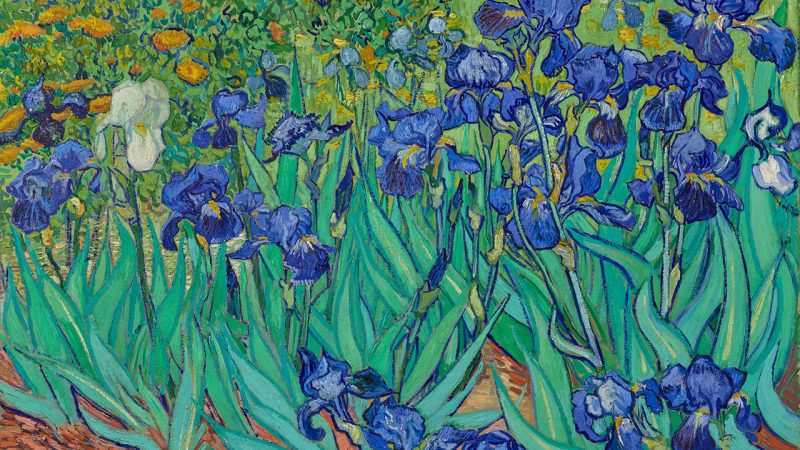
From the Getty’s digital collection Shamberg offers such works suitable for Zoom as Van Gogh’s Irises, Turner’s Van Tromp, going about to please his Masters, Ships a Sea, getting a Good Wetting, and other canvasses of such reliably pleasing settings as 18th-century Venice and a 16th-century forest with a rabbit. The Verge’s Natt Garun recently rounded up a few resources where you can find more promising virtual-background material, from bingo cards to beaches to “pop culture homes” including “Carrie Bradshaw’s apartment from Sex and the City, your favorite Friends lofts, Seinfeld living rooms, and more.”
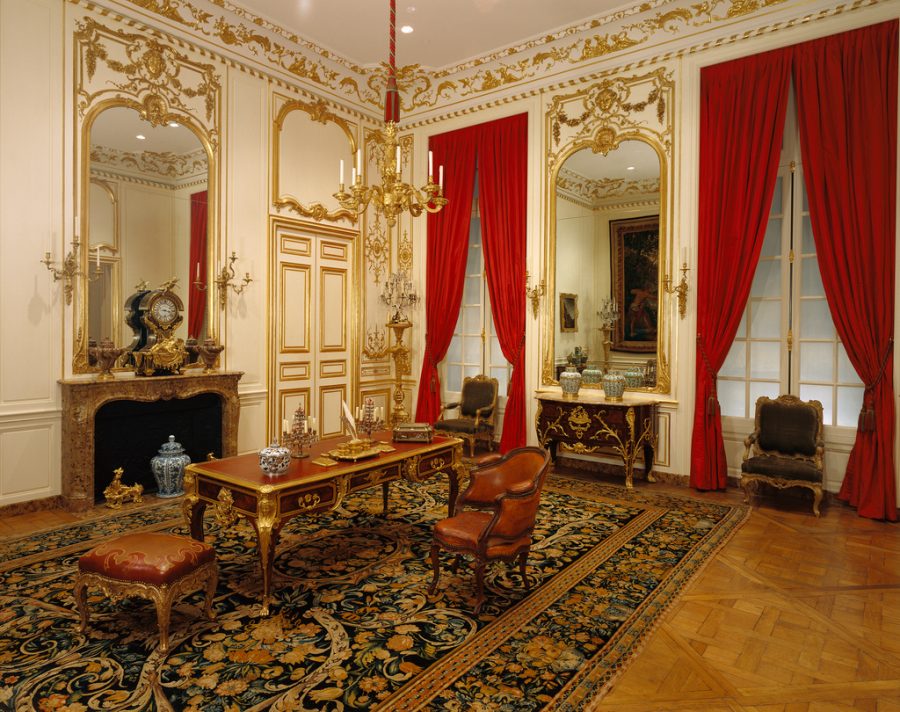
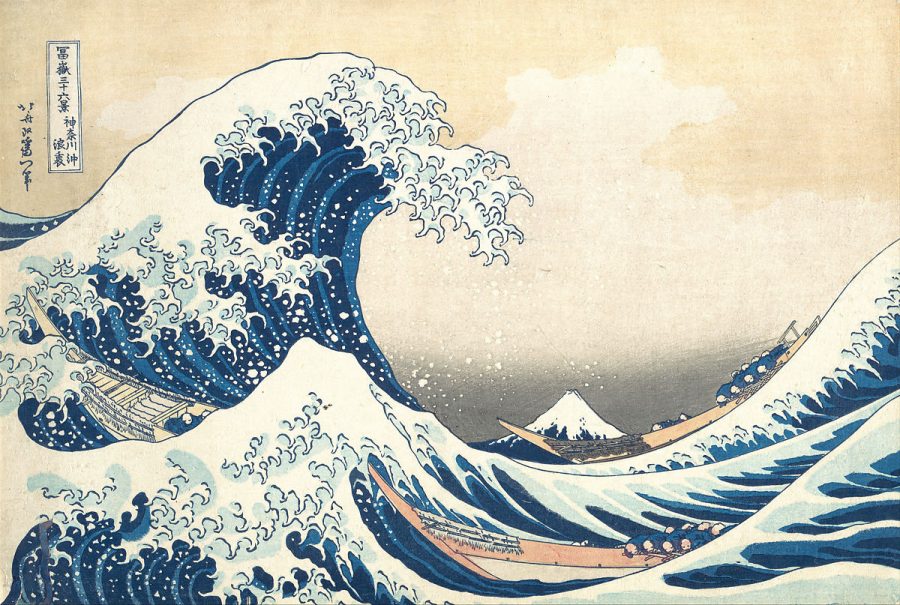
Here at Open Culture, we’ll point you to the thirty world-class museums that have put two million works of art online, many of which institutions have made them available for download. In this post appears, from the Metropolitan Museum of Art, Katsushika Hokusai’s Under the Wave off Kanagawa (whose evolution to the status of an iconic ukiyo‑e print we’ve previously covered); from the Getty, an 18th-century room “originally used as a bedroom or large cabinet in a private Parisian home at number 18 place Vendôme”; and from the Los Angeles County Museum of Art, George Bellows’ The Coming Storm.
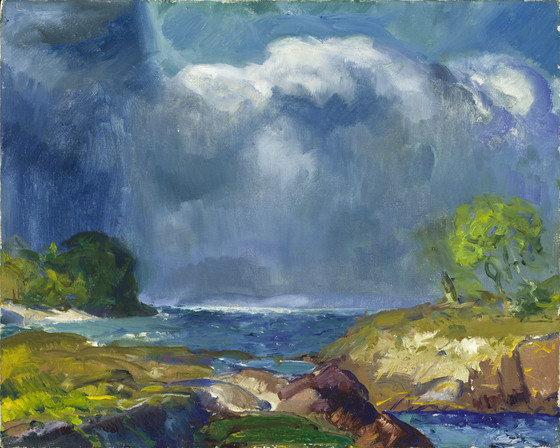
That last work, pictured above, has a certain metaphorical resonance with the situation the world now finds itself in, hoping though we are that the storm of COVID-19 is now passing rather than still coming. But while we’re sheltering from it — and continuing to carry on business as usual as best we can — we might as well get take every opportunity to get artistic. Find many more artistic images to download here.
Related Content:
The Metropolitan Museum of Art Puts 400,000 High-Res Images Online & Makes Them Free to Use
LA County Museum Makes 20,000 Artistic Images Available for Free Download
Take a Virtual Tour of 30 World-Class Museums & Safely Visit 2 Million Works of Fine Art
Based in Seoul, Colin Marshall writes and broadcasts on cities, language, and culture. His projects include the book The Stateless City: a Walk through 21st-Century Los Angeles and the video series The City in Cinema. Follow him on Twitter at @colinmarshall, on Facebook, or on Instagram.
Read More...HBO Is Streaming 500 Hours of Shows for Free: The Sopranos, The Wire, and More
We live, one often hears, in a golden age of television. But when did this age begin? Scholars of prestige TV drama — a field that, for both professionals and amateurs, has expanded in recent years — tend to point to The Sopranos, which premiered in 1999. In its eight-year run, David Chase’s series about a depressed New Jersey mafia boss, a protagonist analyzed in the Behind the Curtain video essay above, set new standards in its medium for craft and complexity. To understand how much of a departure The Sopranos marked from everything else on television, simply compare it to what was airing on major broadcast networks in the 1990s, most of which now looks unwatchably simplistic and repetitive.
Of course, The Sopranos didn’t air on a major broadcast network: it aired on HBO. Originally launched as “Home Box Office” in 1972, the oldest premium cable channel of them all has long since expanded its mandate from airing second-run movies to creating original programming of its own.
Its mid-1990s slogan “It’s Not TV. It’s HBO” reflects an intent to go beyond what was possible on conventional television networks, an enterprise whose promise The Sopranos signaled to the world. Critics lavished even more praise on The Wire, David Simon’s dramatic examination and indictment of American institutions that ran on HBO from 2002 to 2008. In the video essay just above, Thomas Flight explains what makes The Wire, whose fans include everyone from Barack Obama to Slavoj Žižek, “one of the most brilliant TV shows ever.”
If you haven’t seen these or the other acclaimed HBO shows that have done so much to gild this televisual age, now’s your chance to catch up. That’s true not just for the obvious reason — the threat of the coronavirus pandemic keeping so many shut in at home — but also because HBO will make 500 hours of its programming free to stream on its HBO Now and HBO Go platforms. If you’re in the United States or another area served by HBO online, you can watch not just The Sopranos and The Wire in their entirety, but the vampire-themed True Blood, the undertaking-themed Six Feet Under, and such comedic takes on American business and politics as Silicon Valley and Veep, a video essay from The Take on whose “satire in the age of Trump” appears above. Of all the ways we can define HBO-style prestige television, isn’t “TV shows good enough to inspire video essays” the most apt? Get started here.
Related Content:
The Wire as Great Victorian Novel
David Chase Reveals the Philosophical Meaning of The Sopranos’ Final Scene
Based in Seoul, Colin Marshall writes and broadcasts on cities, language, and culture. His projects include the book The Stateless City: a Walk through 21st-Century Los Angeles and the video series The City in Cinema. Follow him on Twitter at @colinmarshall, on Facebook, or on Instagram.
Read More...Join Choir! Choir! Choir! for a Community Singalong in Isolation
I love ya, and I think maybe if we sing together, well, we’d just feel a little bit better. Give it a try, okay? —Neil Diamond
Thus quoth singer-songwriter Neil Diamond on March 23, before launching into his surprisingly sturdy monster hit, “Sweet Caroline,” having reworked its lyrics to promote hand-washing and social distancing to help control the spread of COVID-19.
He’s not wrong about the therapeutic benefits of group singing. Ditto the imperative to resist gathering publicly, or even in the homes of extended family and close friends, until this crisis is in the rear view.
Choir! Choir! Choir!, an ongoing community sing that’s attained global renown thanks to its frequent tours, charitable work, and the support of such starry personages as Patti Smith and David Byrne, has had to put the kibosh on live group events. (Check out their 2014 singalong of Diamond’s “Sweet Caroline,” above, for a taste of the proceedings.)
With everyone staying home, founders Nobu Adilman and Daveed Goldman quickly implemented a digital work around, inviting fans and first-timers alike to weekly online sing-ins.
Their next Social Distan-Sing-Along is coming up this Saturday, April 4th at 3pm EDT, featuring a campfire-themed playlist:
“The Weight”
“Blowin’ In The Wind”
“Our House”
“Leaving On A Jet Plane”
“Redemption Song”
“Talkin Bout A Revolution”
“Dust In The Wind”
“Cats In The Cradle”
“Wild World”
(Sadly, no “Titanic,” but perhaps that one’s more summer camp than campfire, and these days, it’s probably best to sidestep any number, no matter how silly, that springs from mass casualties…)
Participants are instructed to print a file of the song lyrics in advance and show up to the digital campfire (live streaming on YouTube or Facebook) with a couple of devices—enough to follow along with Adilman and Goldman, while simultaneously Zooming in any friends you’ve pre-arranged to sing with.
(With 1000s attending, one of Choir! Choir! Choir!’s usual joys—lifting one’s voice with a vast chorus of mostly strangers—is a logistical and technological impossibility.)
Participants are also encouraged to share footage of themselves singing along, using the hashtag #NeverStopSinging—though we remind our non-performance-oriented readers that this is merely a suggestion.
Choir! Choir! Choir in isolation may well attract shower Sinatras who’d never dream of opening their mouths at an in-person event.
It’s a golden opportunity for the vocally shy to become part of one of the biggest choirs in history, secure in the knowledge that the only people to hear them croaking away will be the cat, the dog, any human co-inhabitants… and, oh dear, what about neighbors in the immediate vicinity?
Don’t worry about the neighbors. In fact, prick up your ears—you may hear them singing the exact same tunes.
To get you in the mood, here are some of our favorites from Choir! Choir! Choir!’s classic playlist:
Related Content:
Patti Smith Sings “People Have the Power” with a Choir of 250 Fellow Singers
Ayun Halliday is an author, illustrator, theater maker and Chief Primatologist of the East Village Inky zine. Like Choir! Choir! Choir!, she has been crowdsourcing art in isolation, most recently a hastily assembled tribute to the classic 60s social line dance, The Madison. Follow her @AyunHalliday.
Read More...Support Us
We're hoping to rely on loyal readers, rather than erratic ads. Please click the Donate button and support Open Culture. You can use Paypal, Venmo, Patreon, even Crypto! We thank you!

About Us

Open Culture scours the web for the best educational media. We find the free courses and audio books you need, the language lessons & educational videos you want, and plenty of enlightenment in between.
Advertise With Us

FREE UPDATES!
GET OUR DAILY EMAIL
Get the best cultural and educational resources on the web curated for you in a daily email. We never spam. Unsubscribe at any time.
FOLLOW ON SOCIAL MEDIA

Open Culture editor Dan Colman scours the web for the best educational media. He finds the free courses and audio books you need, the language lessons & movies you want, and plenty of enlightenment in between.
Advertise With Us

