The Internet Archive “Liberates” Books Published Between 1923 and 1941, and Will Put 10,000 Digitized Books Online
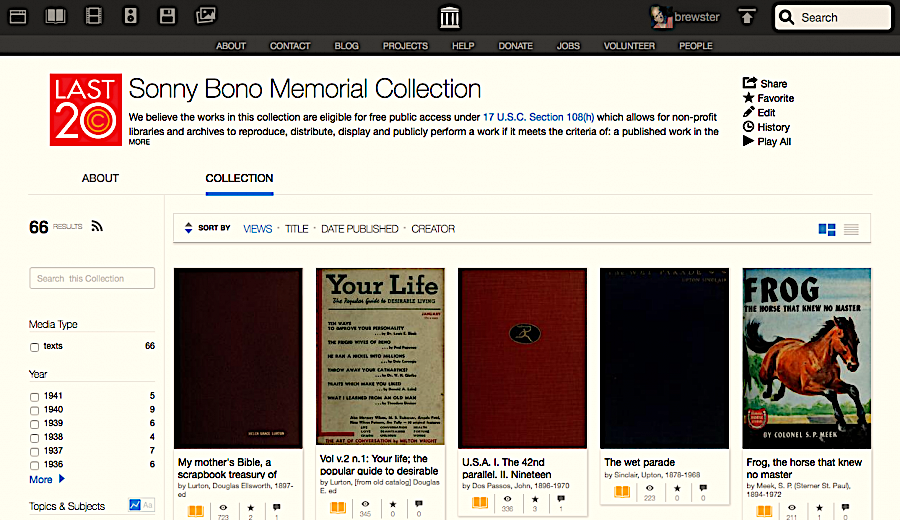
Here at Open Culture, we can never resist the chance to feature books free to read and download online. Books can become free in a number of different ways, one of the most reliable being reversion to the public domain after a certain amount of time has passed since its publication — usually a long time, with the result that the average age of the books freely available online skews quite old. Nothing wrong with old or even ancient reading material, of course, but sometimes one wishes copyright law didn’t put quite such a delay on the process. The Internet Archive and its collaborators have recently made progress in that department, finding a legal means of “liberating” books of a less distant vintage than usual.
“The Internet Archive is now leveraging a little known, and perhaps never used, provision of US copyright law, Section 108h, which allows libraries to scan and make available materials published [from] 1923 to 1941 if they are not being actively sold,” writes the site’s founder Brewster Kahle.
Tulane University copyright scholar Elizabeth Townsend Gard and her students “helped bring the first scanned books of this era available online in a collection named for the author of the bill making this necessary: The Sonny Bono Memorial Collection.” Yes, that Sonny Sono, who after his music career (most memorably as half of Sonny and Cher) served in the U.S. House of Representatives from 1994 until his death in 1998.
At the moment, the Sonny Bono Memorial Collection offers such 94-to- 76-year-old pieces of reading material as varied as André Malraux’s The Royal Way, Arnold Dresden’s An Invitation to Mathematics, René Kraus’ Winston Churchill: A Biography, Colonel S.P. Meek’s Frog, the Horse that Knew No Master, and Donald Henderson Clarke’s Impatient Virgin. Kahle assures us that “We will add another 10,000 books and other works in the near future,” and reminds us that “if the Founding Fathers had their way, almost all works from the 20th century would be public domain by now.” The intentions of the Founding Fathers may matter to you or they may not, but if you’re an Open Culture reader, you can hardly quibble with the new availability of dozens of free books online — and the prospect of thousands more soon to come. Stay tuned and watch the collection grow.
Related Content:
800 Free eBooks for iPad, Kindle & Other Devices
2,000+ Architecture & Art Books You Can Read Free at the Internet Archive
Download 200+ Free Modern Art Books from the Guggenheim Museum
Free: You Can Now Read Classic Books by MIT Press on Archive.org
British Library to Offer 65,000 Free eBooks
74 Free Banned Books (for Banned Books Week)
Based in Seoul, Colin Marshall writes and broadcasts on cities and culture. His projects include the book The Stateless City: a Walk through 21st-Century Los Angeles and the video series The City in Cinema. Follow him on Twitter at @colinmarshall or on Facebook.
Read More...23-Year-Old Eric Clapton Demonstrates the Elements of His Guitar Sound (1968)
In the fall of 1968, Eric Clapton was 23 years old and at the height of his creative powers. His band, Cream, was on its farewell tour of America when a film crew from the BBC caught up with the group and asked the young guitar virtuoso to show how he created his distinctive sound.
The result is a fascinating four-minute tour of Clapton’s technique. He begins by demonstrating the wide range of tones he could achieve by varying the settings on his psychedelically painted 1964 Gibson SG Standard guitar. His wah-wah pedal (an early Vox model) was critical to the sound of so many Cream classics, like “Tales of Brave Ulysses.” In the film, Clapton really has to stomp on it to get it working.
One of the most difficult skills to master, Clapton says, is the vibrato. In a 1970 interview with Guitar Player magazine he goes into more detail: “When I stretch strings,” he says, “I hook my thumb around the neck of the guitar. A lot of guitarists stretch strings with just their hand free. The only way I can do it is if I have my whole hand around the neck—actually gripping onto it with my thumb. That somehow gives me more of a rocking action with my hand and wrist.” If you watch the BBC clip closely you will see this in action.
The interview was conducted with Clapton seated in front of his famous stack of Marshall amplifiers. In the Guitar Player interview, however, he admits he rarely used both at the same time. “I always had two Marshalls set up to play through,” he says, “but I think it was just so I could have one as a spare. I usually used only one 100-watt amp.”
Clapton’s demonstration (along with interviews of bassist Jack Bruce and drummer Ginger Baker) was incorporated into Tony Palmer’s film of Cream’s Farewell Concert, which took place on November 21, 1968 at the Royal Albert Hall in London.
If you would like to support the mission of Open Culture, consider making a donation to our site. It’s hard to rely 100% on ads, and your contributions will help us continue providing the best free cultural and educational materials to learners everywhere. You can contribute through PayPal, Patreon, and Venmo (@openculture). Thanks!
Related Content:
Eric Clapton’s Isolated Guitar Track From the Beatles’ ‘While My Guitar Gently Weeps’ (1968)
Hear the Never Released Version of The Stones’ “Brown Sugar,” With Eric Clapton on Slide Guitar
Read More...Journey to the Center of a Triangle: Watch the 1977 Digital Animation That Demystifies Geometry
In 1977, Bruce and Katharine Cornwell used a Tektronics 4051 Graphics Terminal to create animated short films that demystify geometry. The films have now reemerged on the Internet Archive. Journey to the Center of a Triangle appears above. You can also watch below Congruent Triangles, which features the memorable ‘Bach meets Third Stream Jazz’ musical score. Enjoy them both. And find them in the Animation section of our collection, 4,000+ Free Movies Online: Great Classics, Indies, Noir, Westerns, Documentaries & More
If you would like to support the mission of Open Culture, consider making a donation to our site. It’s hard to rely 100% on ads, and your contributions will help us continue providing the best free cultural and educational materials to learners everywhere. You can contribute through PayPal, Patreon, and Venmo (@openculture). Thanks!
Related Content:
Watch “Geometry of Circles,” the Abstract Sesame Street Animation Scored by Philip Glass (1979)
The Complex Geometry of Islamic Art & Design: A Short Introduction
The Geometry of Sound Visualized
Read More...Watch a 17th-Century Portrait Magically Get Restored to Its Brilliant Original Colors
Every week, five million people in the United Kingdom alone tune in to the BBC’s Fake or Fortune?, a television show about the provenance and attribution of notable works of art. That may well say something about the British character, but it says even more about its host and co-creator, art dealer Philip Mould. Involved with antiques from a very early age, he displays in Fake or Fortune? and his other media projects a keen sense of not just how a piece of art appeals to us, but what hidden potential it carries within. Take, for instance, the grimy 17th-century portrait you can see partially restored in the clip above, which he posted on Twitter this week.
At first glance, the painting might not look that much worse for wear than anything else from the Jacobean era, but even the first few minutes of work reveal the true brilliance of the colors hidden underneath what turn out to be layers of brown and yellow. They’ve actually built up in the name of preservation: over about 200 years, a few (or more than a few) coats of varnish had been applied to the canvas in order to protect it, but that varnish turns color over time. Luckily, with the right tools and the right technique, it comes off.
“The painting was originally in a private collection in England,” Mould told the Telegraph. “A mixture of gel and solvent was created, specifically just to remove the varnish and not to damage the underlying paint.” Certainly the portrait’s subject would approve of her appearance’s return to its former splendor, though little information remains as to the identity of the lady herself: “We don’t know the identity yet but certain iconographic clues are starting to emerge,” said Mould. “All we know is she is 36 and it was painted in 1617.”
And so we happen upon another of the compelling aspects of art history: its potential to turn into a detective story. But if you’d like to accompany the narrative experience with a little more technical knowledge, have a look at the short video above showing what it takes to revive a 400-year-old masterwork. People once commissioned portraits so that posterity could know their likenesses, but one wonders if they understood just how far into posterity their likenesses would make it — some of them, thanks to art restorers, looking fresher than they have for centuries.
Related Content:
The Art of Restoring a 400-Year-Old Painting: A Five-Minute Primer
The Art of Restoring Classic Films: Criterion Shows You How It Refreshed Two Hitchcock Movies
Short Film Takes You Inside the Recovery of Andy Warhol’s Lost Computer Art
Based in Seoul, Colin Marshall writes and broadcasts on cities and culture. His projects include the book The Stateless City: a Walk through 21st-Century Los Angeles and the video series The City in Cinema. Follow him on Twitter at @colinmarshall or on Facebook.
Read More...A Digital Archive of the Earliest Illustrated Editions of Dante’s Divine Comedy (1487–1568)
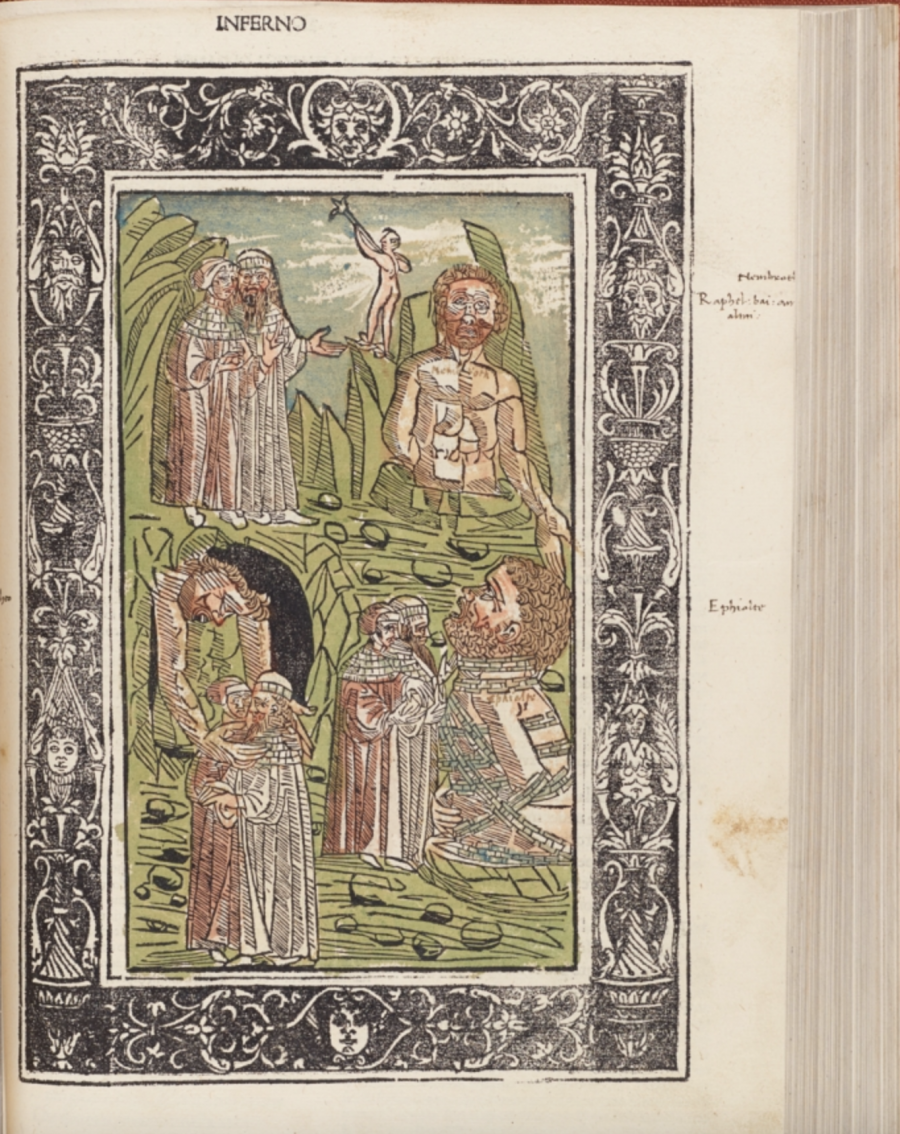
Book history buffs don’t need to be told, but the rest of us probably do: incunable—from a Latin word meaning “cradle,” “swaddling clothes,” or “infancy”—refers to a book printed before 1501, during the very first half-century of printing in Europe. An overwhelming number of the works printed during this period were in Latin, the transcontinental language of philosophy, theology, and early science. Yet one of the most revered works of the time, Dante’s Divine Comedy—written in Italian—fully attained its status as a literary classic in the latter half of the 15th century.
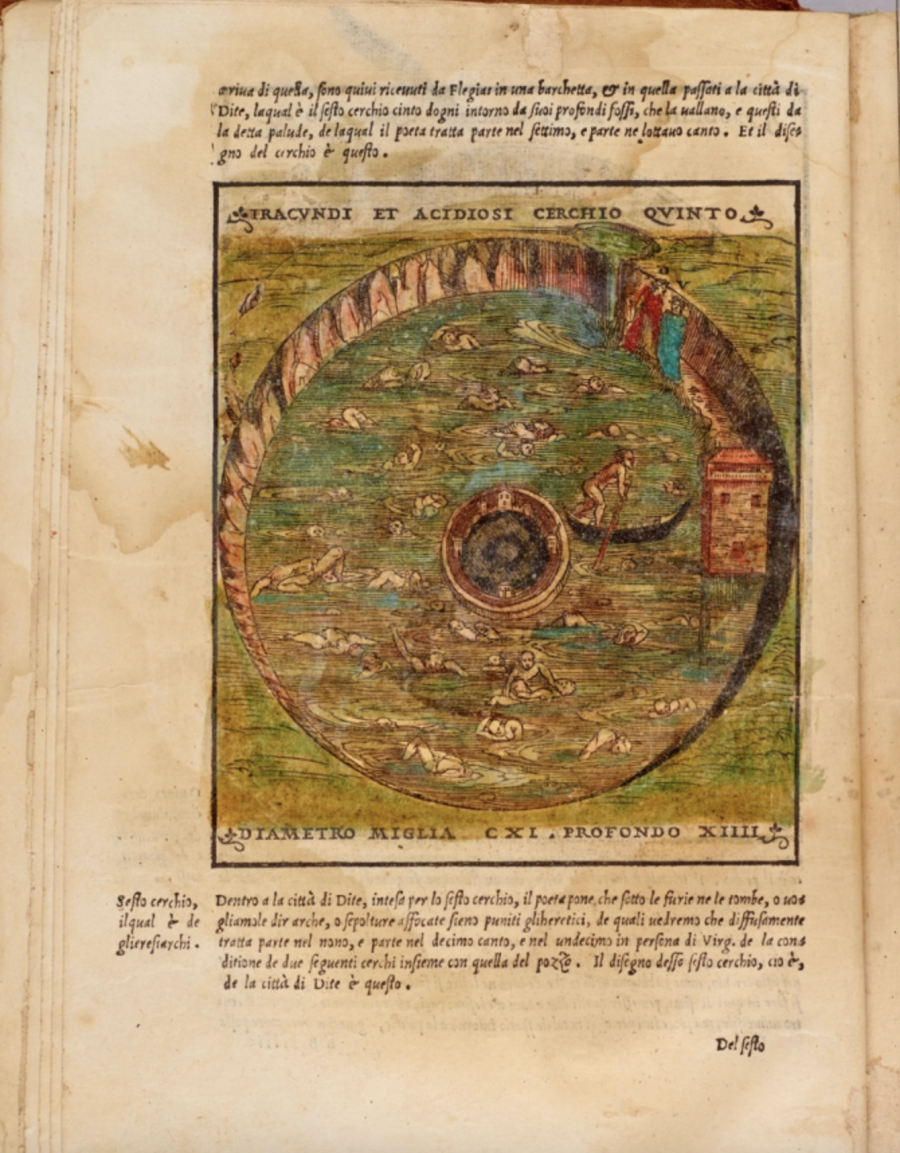
In addition to numerous commentaries and biographies of its author, over 10 editions of the epic Medieval poem— the tale of Dante’s descent into hell and rise through purgatory and paradise—appeared in the period of incunabula, the first in 1472. The 1481 edition contained art based on Sandro Botticelli’s unfinished series of Divine Comedy illustrations. The first fully-illustrated edition appeared in 1491. None of these printings included the word Divine in the title, which did not come into use until 1555. The Commedia, as it was originally called, continued to gain in stature into the 16th century, where it received lavish treatment in other illustrated editions.
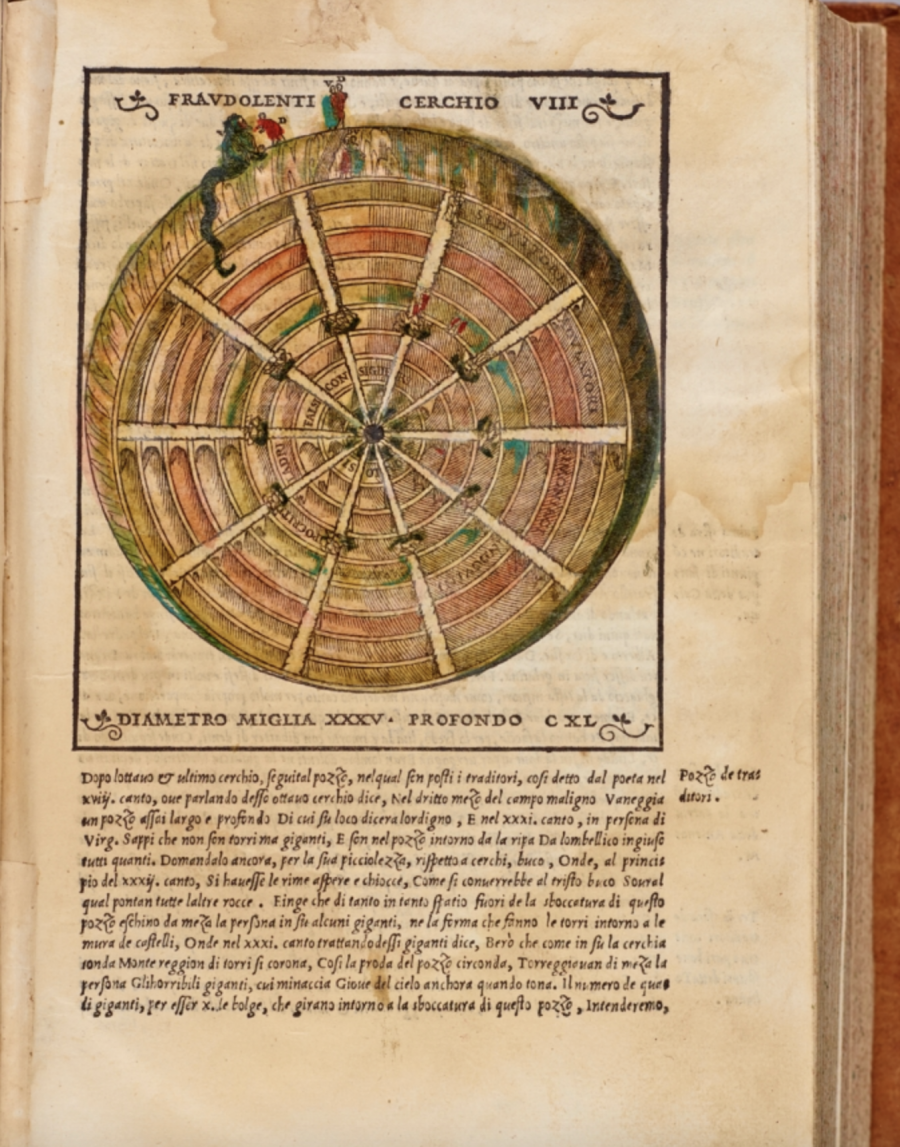
You can see Illustrations from three of the editions from the first 100-plus years of printing here, and many more at Digital Dante, a collaborative effort from Columbia University’s Library and Department of Italian. These images, from Columbia’s Rare Book and Manuscript Library, represent a 1497 woodcut edition, at the top, with a number of hand-colored pages; an edition from 1544, above, with almost 90 circular and traditionally-composed scenes, all of them probably hand-colored in the 19th century; and a 1568 edition with three engraved maps, one for each book, like the carefully-rendered visualization of purgatory, below.
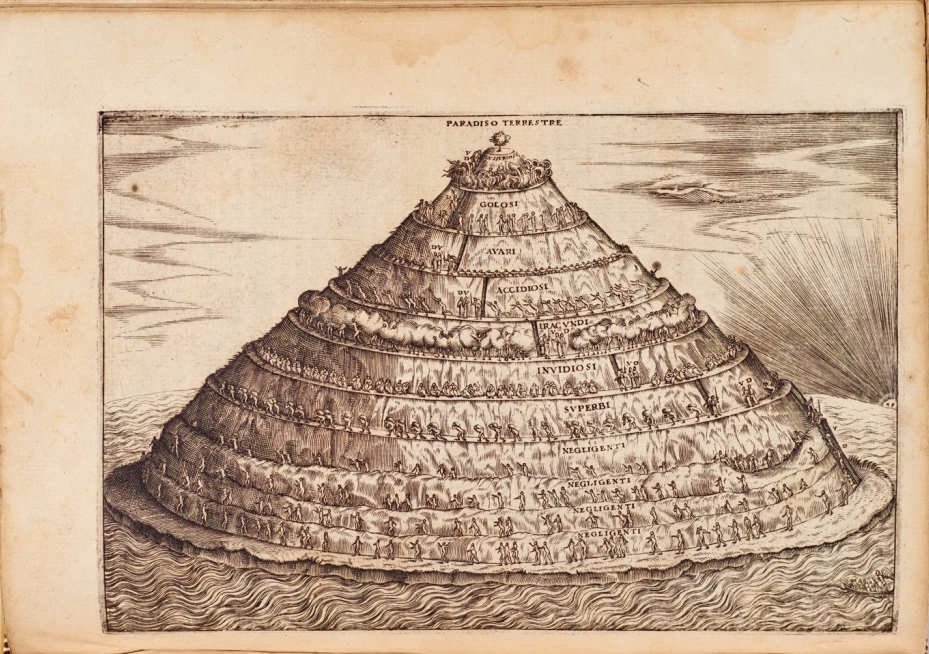
Of this last edition, Jane Siegel, Librarian for Rare Books, writes, “the relative lack of illustrations are balanced by the fineness and detail made possible by using expensive copper engravings as a medium, and by the lively decorated and historiated woodcut initials sprinkled throughout the volume at the head of each canto.” Each of these historical artifacts shows us a lineage of craftsmanship in the infancy and early childhood of printing, a time when literary works of art could be turned doubly into masterpieces with illustration and typography that complemented the text. Luckily for lovers of Dante, finely-illustrated editions of the Divine Comedy have never gone away.
You can see more images by entering the Digital Dante collection here.
Related Content:
A Free Course on Dante’s Divine Comedy from Yale University
Botticelli’s 92 Surviving Illustrations of Dante’s Divine Comedy (1481)
Mœbius Illustrates Dante’s Paradiso
Josh Jones is a writer and musician based in Durham, NC. Follow him at @jdmagness
Read More...Emily Wilson Is the First Woman to Translate Homer’s Odyssey into English: The New Translation Is Out Today
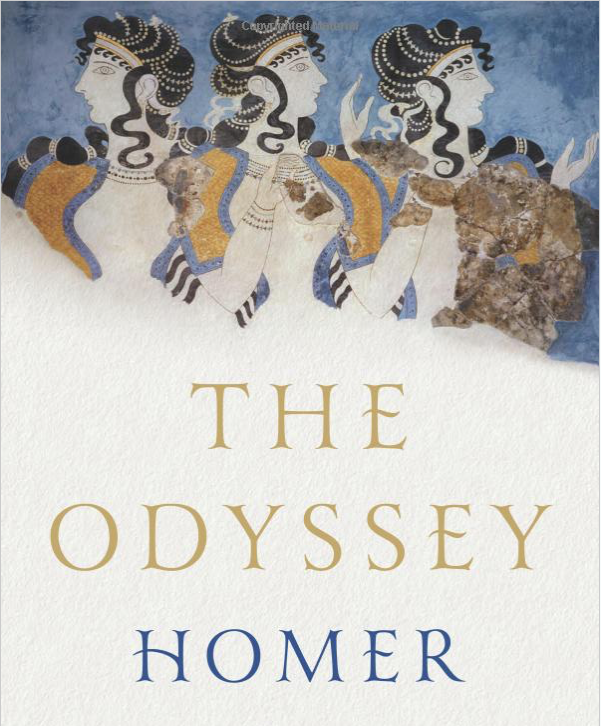
The list of English translators of Homer’s Odyssey includes an illustrious bunch of names every student of literature knows: Thomas Hobbes, Alexander Pope, William Cowper, Samuel Butler, T.E. Lawrence, Robert Fitzgerald, Robert Fagles…. Should you look further into the history of Homeric translation, you might notice one thing immediately. All of Homer’s translators, to a man, have been men. None have, presumably, approached the text from a woman’s point of view.
But what would that entail? Perhaps a certain critical distance, suspicion even—an unwillingness to readily identify with or admire the hero or credit the tales of his exploits at their supposed value. As Margaret Atwood writes in the introduction to The Penelopiad—her reimagining of the tale from Penelope’s perspective—“The story as told in The Odyssey doesn’t hold water: there are too many inconsistencies.”
Atwood is not a translator. Prolific poet and scholar Anne Carson, on the other hand, has published acclaimed translations of Sappho, Euripides, and Aeschylus. Of the art, she writes, “Silence is as important as words in the practice and study of translation.” Though Carson calls the observation “cliché,” the experience of another rare female classics translator in a field overcrowded with men bears out the importance of silence in a personal way.
Classicist Emily Wilson has made the first translation of The Odyssey by a woman. Her version, writes Wyatt Mason at The New York Times, approaches the text afresh, apart from the chattering conversations between hundreds of years of previous attempts. “Wilson has made small but, it turns out, radical changes to the way many key scenes of the epic are presented,” notes Mason. This translation is a corrective, she believes, of a text that “has through translation accumulated distortions that affect the way even scholars who read Greek discuss the original.”
Confronting silence is a theme of Wilson’s interview with Mason about her new translation. From a family of accomplished scholars, most notably her father, novelist and critic A.N. Wilson, she remembers her childhood as “a lot of silence… As a kid I was just aware of unhappiness, and aware of these things that weren’t ever being articulated.” She gravitated toward classics because of shyness and fear of mispronouncing living languages. “You don’t have to have beautiful Latin pronunciation,” she says. “It took away a whole level of shame.”
Greek tragedy appealed to Wilson because of its tumultuous irruption into the silence and shame of repressed emotion: “I had a childhood where it was very hard to name feelings, and just the fact that tragedy as a genre is very good at naming feelings. It’s all going to be talked out. I love that about it.” Her attention to emotional nuance as much as to action, concept, and image in part inspires her careful, independent approach to the language of the text. As a salient example, Wilson discusses the word polytropos, used as the first description we get of the poem’s hero.
The prefix poly… means “many” or “multiple.” Tropos means “turn.” “Many” or “multiple” could suggest that he’s much turned, as if he is the one who has been put in the situation of having been to Troy, and back, and all around, gods and goddesses and monsters turning him off the straight course that, ideally, he’d like to be on. Or, it could be that he’s this untrustworthy kind of guy who is always going to get out of any situation by turning it to his advantage. It could be that he’s the turner.
Mason surveys the many renderings of the word by some of Wilson’s “60 some predecessors.” Though these translations display “quite a range,” they also tend toward similarly flattering interpretations of Odysseus as “the turner.” He’s “prudent,” “for wisdom’s various arts renown’d,” “for shrewdness famed/And genius versatile,” “crafty,” “much-versed,” “deep,” “sagacious,” “ingenious,” “so wary and wise,” “clever,” and—in Stanley Lombardo’s translation—“cunning.”
Contrast these many superlatives with Wilson’s opening lines (many more of which you can read at the Paris Review):
Tell me about a complicated man.
Muse, tell me how he wandered and was lost
when he had wrecked the holy town of Troy,
and where he went, and who he met, the pain
he suffered in the storms at sea, and how
he worked to save his life and bring his men
back home. He failed to keep them safe; poor fools,
they ate the Sun God’s cattle, and the god
kept them from home. Now goddess, child of Zeus,
tell the old story for our modern times.
Find the beginning.
The silence in Wilson’s approach here is of the “metaphysical” variety—as Carson puts it—where “intentions are harder to define.” It is a refusal to make hasty appraisals or assume singular design or agency. “What gets us to ‘complicated,’” she says, “is both that I think it has some hint of the original ambivalence and ambiguity… and hints at ‘There might be a problem with him.’” We will learn about his turning and his being turned, and we must make up our own minds about what sort of person he is. The word also resonates strongly with contemporary usage. “I wanted it to feel like an idiomatic thing,” says Wilson, “that you might say about somebody: that he is complicated.” It is, she admits, “a flag. It says, ‘Guess what?—this is different.’ ”
Complicated: from a certain point of view, we might say this about everybody, which adds a modern layer of anxious, and very human, universalism to the description of the poem’s hero, so often cast as a heroic trickster archetype. Wilson expects pushback for her refusal to adhere to what she calls the “boys’ club” of classical translation shibboleths, many passed down from Matthew Arnold’s criteria in his 1860 lectures “On Translating Homer.” These criteria, she says, are about “noblesse oblige… you’re going to be the kind of gentlemen who’s going to have gone to Rugby and that will be the kind of language that we speak… It’s describing a boys’ club.”
Her observations turn the gaze back upon the lineage of male translators, examining how gender, as well as class and nationality, features in the way they used language. “I do think that gender matters,” she says, “and I’m not going to not say it’s something I’m grappling with.” But gender is only one part of the complicated identity of any translator. Wilson describes her approach as “trying to take this task and this process of responding to this text and creating this text extremely seriously, with whatever I have, linguistically, sonically, emotionally.” You may appreciate the results yourself—either enjoying them afresh or comparing them to previous translations you’ve loved, liked, or loathed—by purchasing a copy Wilson’s Odyssey starting today.
Related Content:
Hear What Homer’s Odyssey Sounded Like When Sung in the Original Ancient Greek
An Interactive Map of Odysseus’ 10-Year Journey in Homer’s Odyssey
Greek Myth Comix Presents Homer’s Iliad & Odyssey Using Stick-Man Drawings
Josh Jones is a writer and musician based in Durham, NC. Follow him at @jdmagness
Read More...2,000+ Impressionist, Post-impressionist & Early Modern Paintings Now Free Online, Thanks to the Barnes Foundation
Georges Seurat, Henri Rousseau, Giorgio de Chirico, Auguste Renoir, Vincent Van Gogh — all of us associate these names with great innovations in painting, but how many of us have had the opportunity to look long and close enough at their work to understand those innovations? To feel them, in other words, rather than just to know about them? The Barnes Foundation in Philadelphia has just recently made it possible for us to contemplate thousands of works of art including those of Impressionist, Post-Impressionist, and early Modern masters, zoomed in up close and at any length we like, by digitizing their collection and making it free online.
“Thanks to Open Access,” writes Artnet’s Sarah Cascone, “2,081 of the Barnes’s 4,021 objects have been published online. Of those, there are high-resolution images of 1,429 works available for download in the public domain.
It’s a big step for a museum that as recently as 1991 hadn’t published any color imagery of its holdings,” due in part to the preferences of founder and “eccentric art collector Alfred C. Barnes (1872–1951), who drew up strict rules for how the museum would be run.” For instance, it seems that Barnes, who disapproved of the way the early color photography reproduced paintings, felt he had no choice but to ban it in his museum entirely.
“As we were rethinking the presentation of our collection online we were considering the sensitivity Barnes had around color reproduction,” writes Deputy Director of Audience Engagement and Chief Experience Officer Shelley Bernstein, “but we also had to think about the needs of today’s students, researchers, and scholars. It goes without saying that the work of other institutions — the open access initiative at the Met, especially — helped make these decisions much easier.” And though the Barnes first started putting its works of art on the internet five years ago, “that last iteration of the collection online didn’t foreground the ability for users to download or share images easily.”
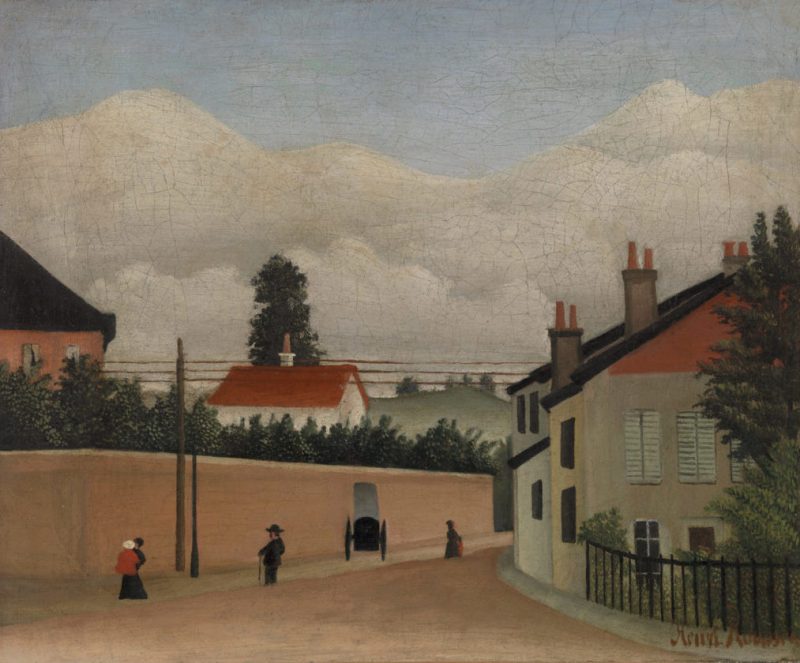
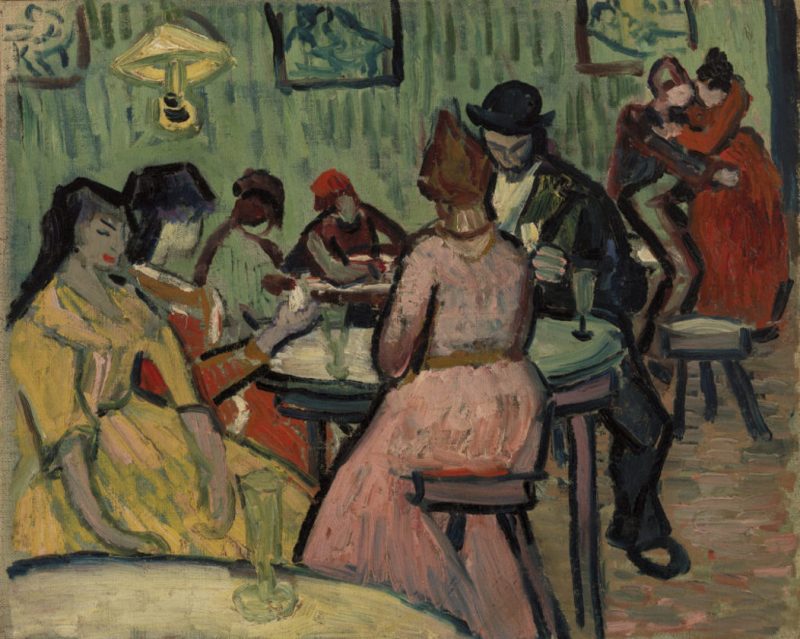
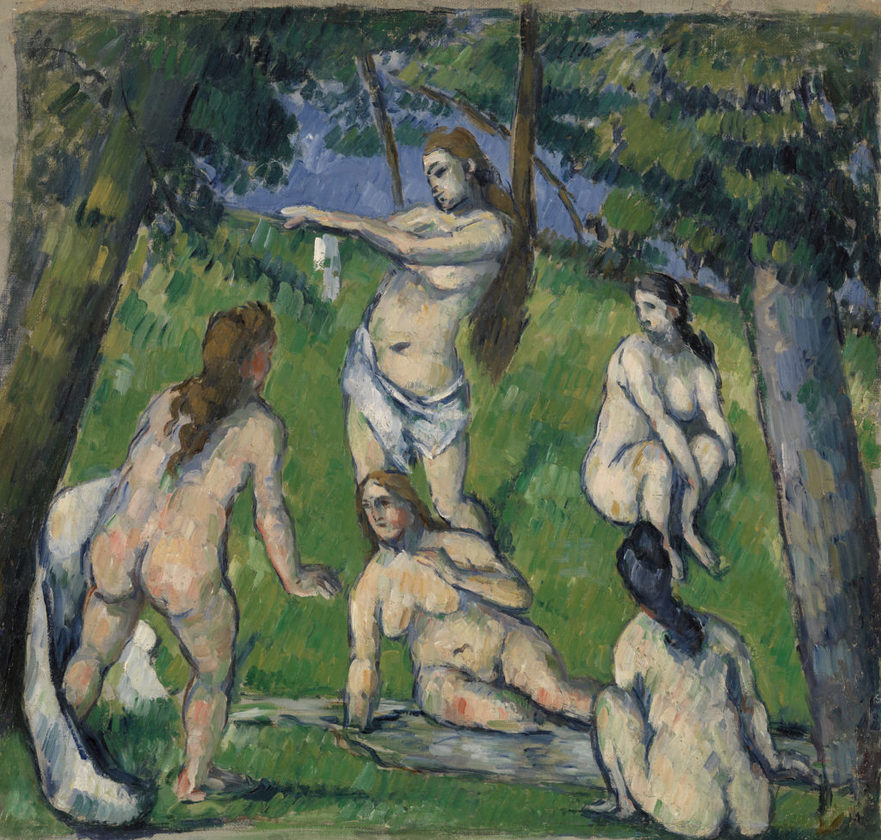
Now, the Barnes’ online collection features nearly 1,500 items free to download so far. But currently downloadable or not, everything uploaded so far appears in an easily searchable, browsable, and, most of all, viewable form. Here we have van Gogh’s The Brothel, Paul Cézanne’s The Bathers, and Rousseau’s Outskirts of Paris, four paintings that, in many ways, look as stylistically fresh as they did when first revealed in the late 19th century to the mid-20th. The fact that 21st-century technology has made it so much easier for all humanity to see that would, one likes to think, have pleased even old Mr. Barnes himself.
Enter the Barnes online collection here.
Related Content:
An Introduction to 100 Important Paintings with Videos Created by Smarthistory
Astonishing Film of Arthritic Impressionist Painter, Pierre-Auguste Renoir (1915)
Impressionist Painter Edgar Degas Takes a Stroll in Paris, 1915
Based in Seoul, Colin Marshall writes and broadcasts on cities and culture. His projects include the book The Stateless City: a Walk through 21st-Century Los Angeles and the video series The City in Cinema. Follow him on Twitter at @colinmarshall or on Facebook.
Read More...Jimmy Page Unplugged: Led Zeppelin’s Guitarist Reveals His Acoustic Talents in Four Videos (1970–2008)
There are those who say Jimmy Page’s guitar playing went into decline near the end of the 70s for reasons that are in dispute, whether drugs, tendonitis, or a broken ring finger during a 1975 tour. (Thirty-two years later, he broke his pinky and had to delay a Led Zeppelin reunion.) Every musician goes through slumps. Page talked in a 1977 interview about an earlier such episode, during his session work in the sixties when horns and orchestras began to eclipse guitars, and he found himself “taking a back seat with just the occasional riff.” The experience made him reevaluate his career. “I didn’t realize how rusty I was going to get until a rock and roll session turned up from France, and I could hardly play.”
One thing that sustained Page in those low times was his acoustic playing. As a session player, he tells the ‘77 interviewer, “I had to do it on studio work, and you come to grips with it very quickly too, very quickly, because it is what is expected. There was a lot of busking in the early days, but as I say, I had to come to grips with it, and it was a good schooling.”
Though Page first started out playing in acoustic skiffle bands, he says his first guitar was a Grazzioso, “which was like a copy of a Stratocaster,” his next instrument a real Fender Strat, and his third, the “Black Beauty” Gibson Les Paul that he played on Zeppelin’s early studio sessions before it was stolen. It was his earlier session work that trained him as a disciplined, and underrated, acoustic player—and at times a profoundly inspired one.
When, after almost ten years, Page reunited with Robert Plant in 1994 for a series of MTV Unplugged sessions (top), his acoustic playing was top notch. In other acoustic sessions from just a few years earlier (the 1989 video further up) a slightly out-of-it Page plays with quite much less subtlety and restraint, though he’s certainly still got the skill. But careless performances like these are not characteristic of Page’s true talents as an acoustic player. Ignore the poor video quality and listen to his incredible picking above on a 1970 broadcast of The Julie Felix Show in England.
Page could showcase his lead playing, adapted to a folk idiom, on the acoustic guitar, but he has always excelled as a rhythm player as well. Just above, in an outtake from the 2008 documentary It Might Get Loud—while still recovering from that broken pinky finger—Page plays what Guitar World identifies only as “an uncredited instrumental” on a guitar that “appears to be in an open tuning, possibly C.” Whatever this composition, we can hear in these broad strums a whole rhythmic arrangement, with drum and bass parts and negative space drawn around the hints of melody. Page has always had one of the most thoroughly imaginative guitar styles in rock and roll, and when he steps back from his blues-based electric playing and embraces the acoustic guitar, he showcases how much the influence of various acoustic world and folk musics “gave Led Zeppelin a richness,” writes Stephen Erlewine at Allmusic, “unheard in their heavy rock peers.”
Related Content:
Jimmy Page Tells the Story of “Kashmir”
Jimmy Page Tells the Story of “Stairway to Heaven”: How the Most Played Rock Song Came To Be
13-Year-Old Jimmy Page Plays Guitar on TV in 1957, an Early Moment in His Spectacular Career
Josh Jones is a writer and musician based in Durham, NC. Follow him at @jdmagness
Read More...“Library Extension” Helps You Find Books At Your Local Library While You Shop for Books Online
The concept beyond “Library Extension” is simple. As you browse books and e‑books websites like Amazon, Barnes and Noble and Goodreads, the Library Extension will check the online catalog of your local library and see whether the book you’re interested in happens to be available at your local library. The browser extension currently works on Chrome. Firefox is coming soon. And the browser extension currently has access to data from 4000 local libraries and library systems.
Above you can watch a short video that shows the browser extension in action. You can download it here. Below find a list of websites that Library Extension interacts with:
* Amazon (amazon.com, amazon.co.uk, amazon.ca, amazon.de)
* AR BookFinder (arbookfind.com)
* Barnes and Noble (barnesandnoble.com)
* BookDepository (bookdepository.com)
* Chapters/Indigo (chapters.indigo.ca)
* Good Reads (goodreads.com)
* Google Books (books.google.com, books.google.co.uk)
* LibraryThing (librarything.com)
If you would like to support the mission of Open Culture, consider making a donation to our site. It’s hard to rely 100% on ads, and your contributions will help us continue providing the best free cultural and educational materials to learners everywhere. You can contribute through PayPal, Patreon, and Venmo (@openculture). Thanks!
Related Content:
800 Free eBooks for iPad, Kindle & Other Devices
Read More...Salvador Dali’s 1978 Wine Guide, The Wines of Gala, Gets Reissued: Sensual Viticulture Meets Surreal Art
Popular food culture is dominated by status symbols of restaurant-inspired consumer kitchenware and appliances, thanks in large part to reality televisions shows about cooking competitions which can make the preparation of haute cuisine seem more accessible to the average home chef than it may actually be.
Many would argue, however, that we’ve come a long way since the 70s, when the mass-market products that held sway over best-selling cooking guides went by names like Hamburger Helper, Cool Whip, and Jello. Back then, willful anachronism Salvador Dali stepped into this commercial landscape with his 1973 cookbook Les Diners de Gala, offering aristocratic, extravagant recipes—next to even more extravagant art—with exotic ingredients often impossible to find at the local supermarket both then and now.
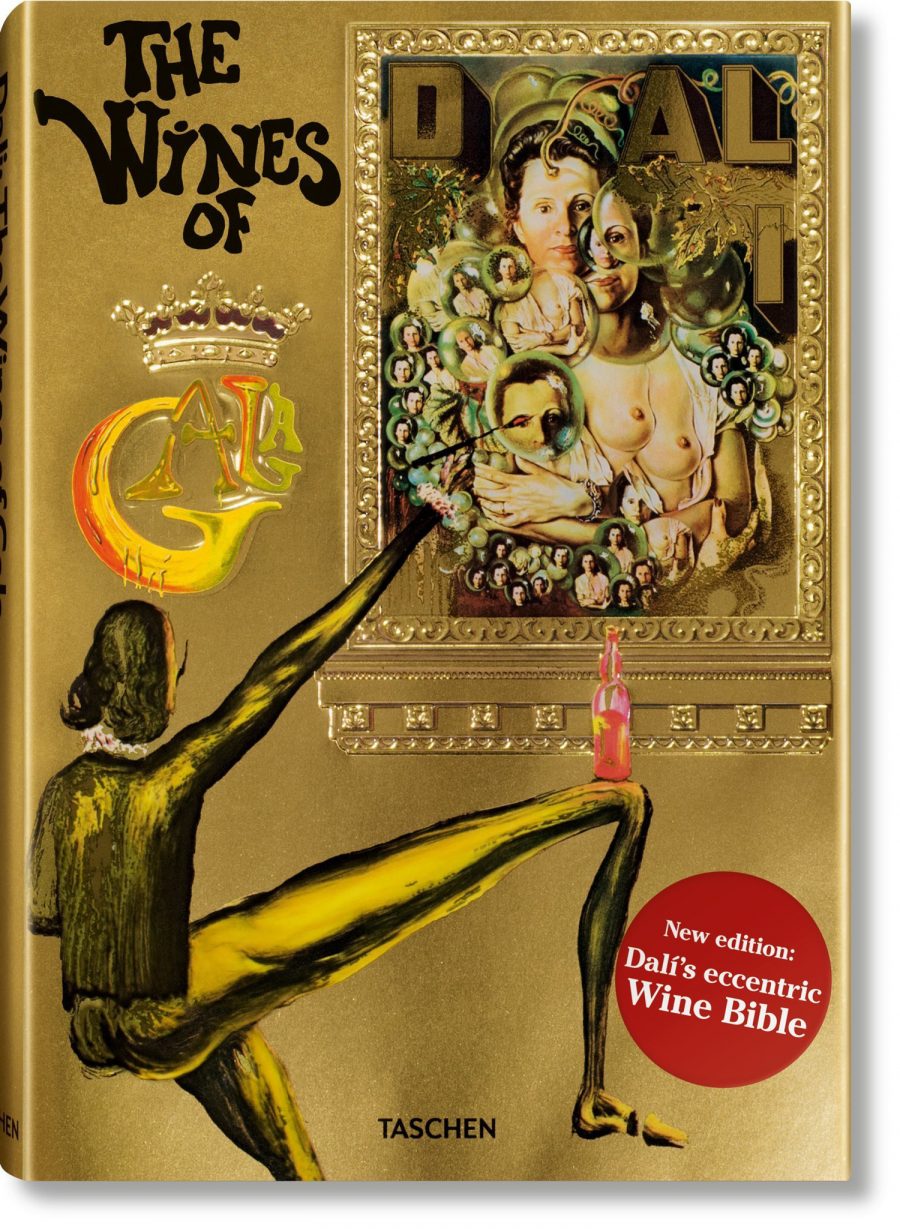
Dali made it plain that his object was to bring back pure pleasure to dining, the adventurous opulence he and his wife, Gala, so appreciated in their own outsized social lives. A few years later, Dali did the same thing with the fine-dining beverage of choice, publishing The Wines of Gala, an “eccentric guide to wine grapes and their origin,” writes This is Colossal. The book’s “groupings are appropriate imaginative classifications.”
The Wines of Gala splits into two parts: “Ten Divine Dali Wines” and “Ten Gala Wines.” The latter includes categories like “Wines of Frivolity,” “Wines of Joy,” “Wines of Sensuality,” “Wines of Purpose,” and “Wines of Aestheticism.” Among the Divine Dali Wines, we find “The Wine of King Minos,” “Lacrima Christi,” “Chateauneuf-du-Pape,” and “Sherry.” In an appendix, Dali surveys “Vineyards of the World,” generally, and “Vineyards of France,” specifically, and offers “Advice to the Wine-Loving Gourmet.”
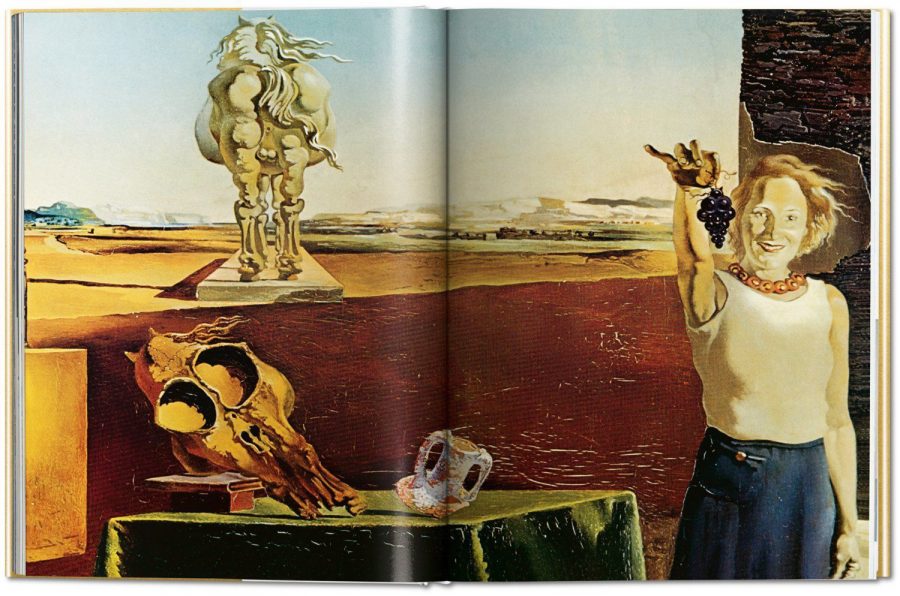
While some of Dali’s wine advice may go over our heads, maybe the real reason we’re drawn to his cookbook and wine guide is the artwork they contain within their pages, likely also the principle reason arts publisher Taschen has reissued both of these publications. The Wines of Gala is due out on November 21, but you can pre-order a hard copy now (or find used copies of the original 1970s edition here). In it you’ll find much bewitching original art to complement the passionate descriptions of wine.
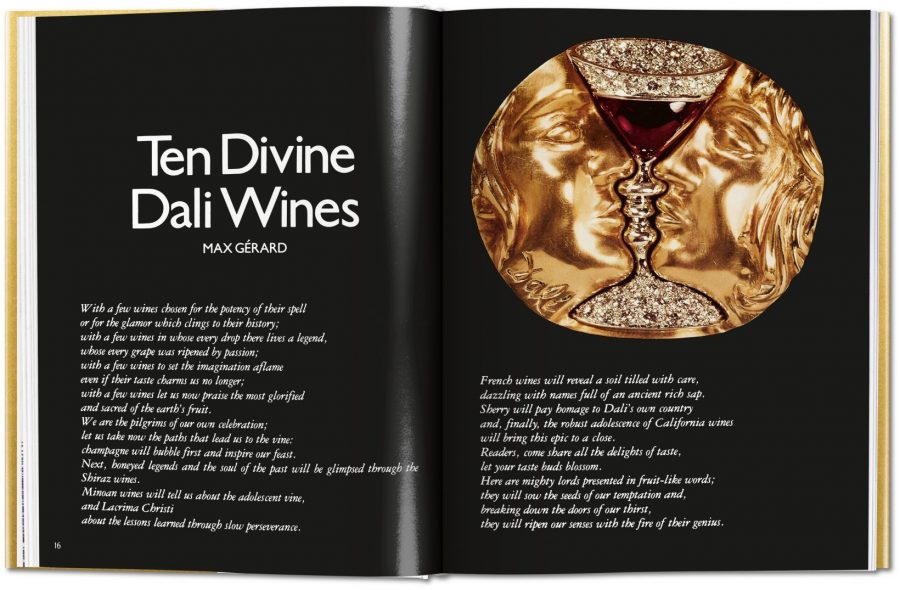
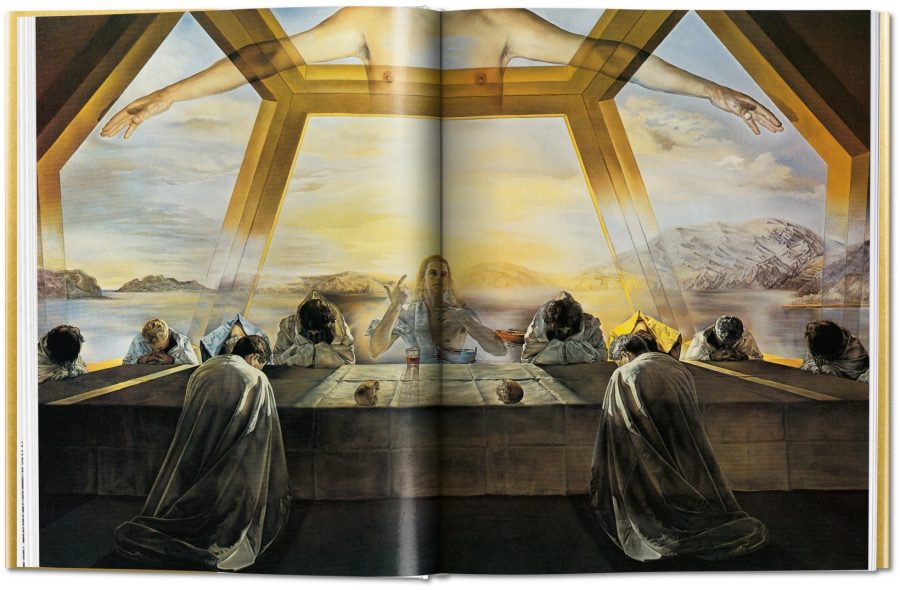
The “rich and extravagant wine bible features 140 illustrations by Dali,” notes Rebecca Fulleylove. “Many of the artworks featured are appropriated pieces, including… a work from Dali’s late Nuclear Mystic phase, The Sacrament of the Last Supper.” Even to this solemn affair, Dali brings “his ability to seek out pleasure and beauty in everything.”
via This is Colossal/It’s Nice That
Related Content:
Salvador Dalí’s 1973 Cookbook Gets Reissued: Surrealist Art Meets Haute Cuisine
Salvador Dalí Goes Commercial: Three Strange Television Ads
Salvador Dalí’s Melting Clocks Painted on a Latte
Josh Jones is a writer and musician based in Durham, NC. Follow him at @jdmagness
Read More...Support Us
We're hoping to rely on loyal readers, rather than erratic ads. Please click the Donate button and support Open Culture. You can use Paypal, Venmo, Patreon, even Crypto! We thank you!

About Us

Open Culture scours the web for the best educational media. We find the free courses and audio books you need, the language lessons & educational videos you want, and plenty of enlightenment in between.
Advertise With Us

FREE UPDATES!
GET OUR DAILY EMAIL
Get the best cultural and educational resources on the web curated for you in a daily email. We never spam. Unsubscribe at any time.
FOLLOW ON SOCIAL MEDIA

Open Culture editor Dan Colman scours the web for the best educational media. He finds the free courses and audio books you need, the language lessons & movies you want, and plenty of enlightenment in between.
Advertise With Us


