Watch a 1953 Animation of James Thurber’s “Unicorn in the Garden,” Voted One of the Best Animations Ever
Humorist James Thurber never tired of subjecting puny male milquetoasts to powerful female bullies.
In his view, members of the fairer sex were never femme fatales or fussy matrons, but rather battle-loving warriors in simple Wilma Flintstone-esque frocks. They are immune to the traditionally feminine concerns of the period—hair, children, the living room drapes… they get their pleasure dominating Walter Mitty and his ilk.
(Was he terrified of Woman? Resentful of her? The story he stuck to was that he’d conceived of his comic portrayal for the sole purpose of “egging her on.”)
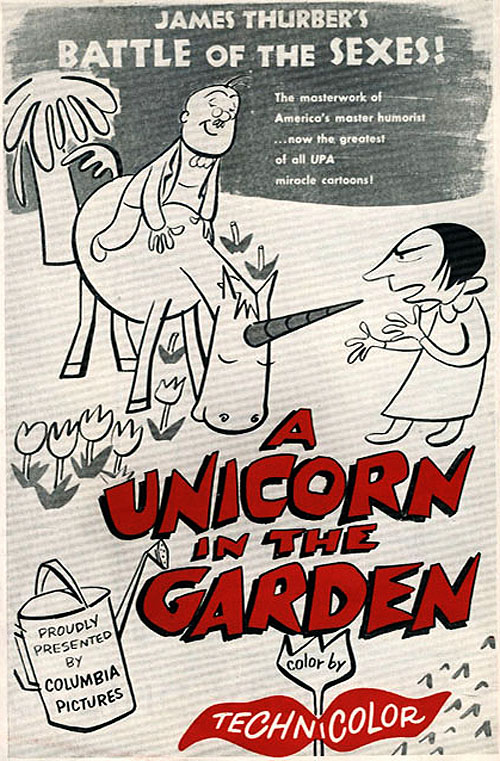
There is one memorable instance where the little guy was allowed to come out on top. “The Unicorn in the Garden” is a story first published in The New Yorker on October 31, 1939. No spoilers, but there’s a close resemblance to Harvey, Mary Chase’s much-produced play about a mild-mannered gent whose devotion to a 6’ tall invisible rabbit drives his domineering sister around the bend.
The 1953 cartoon adaptation above brought Thurber’s drawings to life, whilst preserving the dialogue of the original in its entirety. The original story was published with only a single illustration, but director William T. Hurtz’s had hundreds of New Yorker cartoons to draw upon. Legend has it that Hurtz purposefully assigned some of United Productions of America’s least gifted animators to the project, hoping to duplicate Thurber’s ”nice, lumpy look.” The plan was for “The Unicorn in the Garden” to be part of a full-length Thurber feature, but alas, the studio pulled the plug on Men, Women and Dogs before it could be completed. Moral: Don’t count your boobies until they are hatched.
“A Unicorn in the Garden” was later voted #48 of the 50 Greatest Cartoons of all time by members of the animation field. You can find more literary animations in our collection, 4,000+ Free Movies Online: Great Classics, Indies, Noir, Westerns, Documentaries & More.
Related Content:
Eudora Welty Writes a Quirky Letter Applying for a Job at The New Yorker (1933)
New Yorker Cartoon Editor Bob Mankoff Reveals the Secret of a Successful New Yorker Cartoon
Ayun Halliday is an author, illustrator, and Chief Primatologist of the East Village Inky zine. Follow her @AyunHalliday
Read More...
Victor Hugo’s Drawings Made with Coal, Dust & Coffee (1848–1851)
If you know of Victor Hugo, you most likely know him as the man of letters who wrote books like Les Misérables and Notre-Dame de Paris (better known in English as The Hunchback of Notre-Dame). If you know something else about him, it probably has to do with his politics: King Louis-Philippe granted him peerage in 1841, and he became a member of the French Parliament in 1848. This position gave him something of a pulpit from which to speak on his pet causes: abolition of the death penalty, freedom of the press, universal suffrage and education, and — lest anyone call the ambitions of his secondary career minor — the end of poverty.
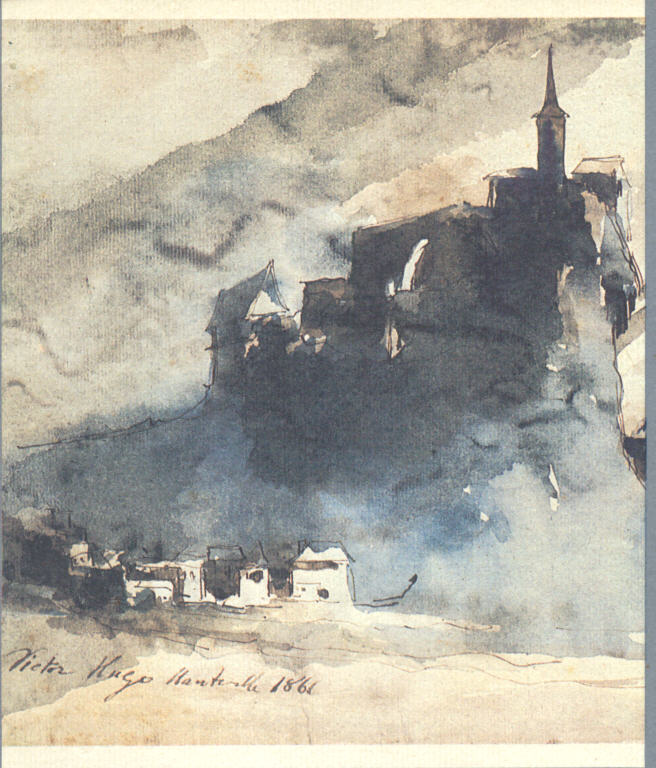
But this sensibility made Hugo no friend of Napoleon III, who took power in 1851, and so the writer went into political exile in Guernsey. That year marked the end of a period, beginning with his election to Parliament, during which Hugo put writing aside in order to devote himself fully to politics — well, almost fully. Even as he laid down his writing pen, he picked up his drawing pen, producing the images you see here and many, many more.
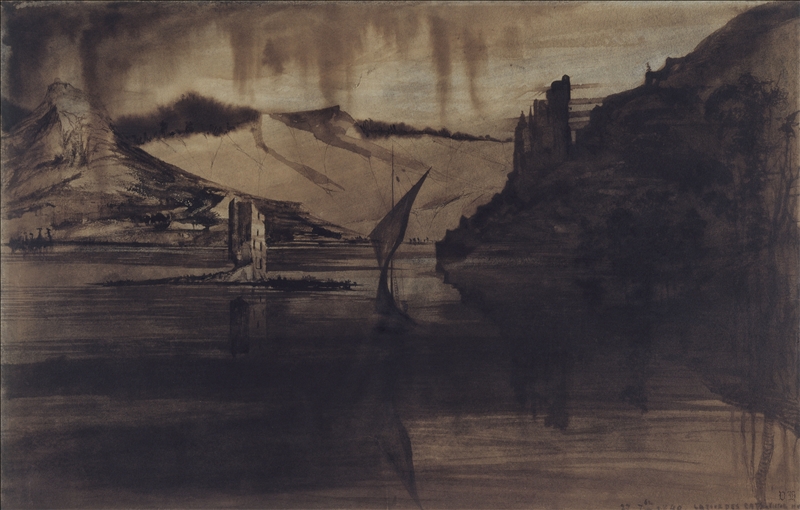
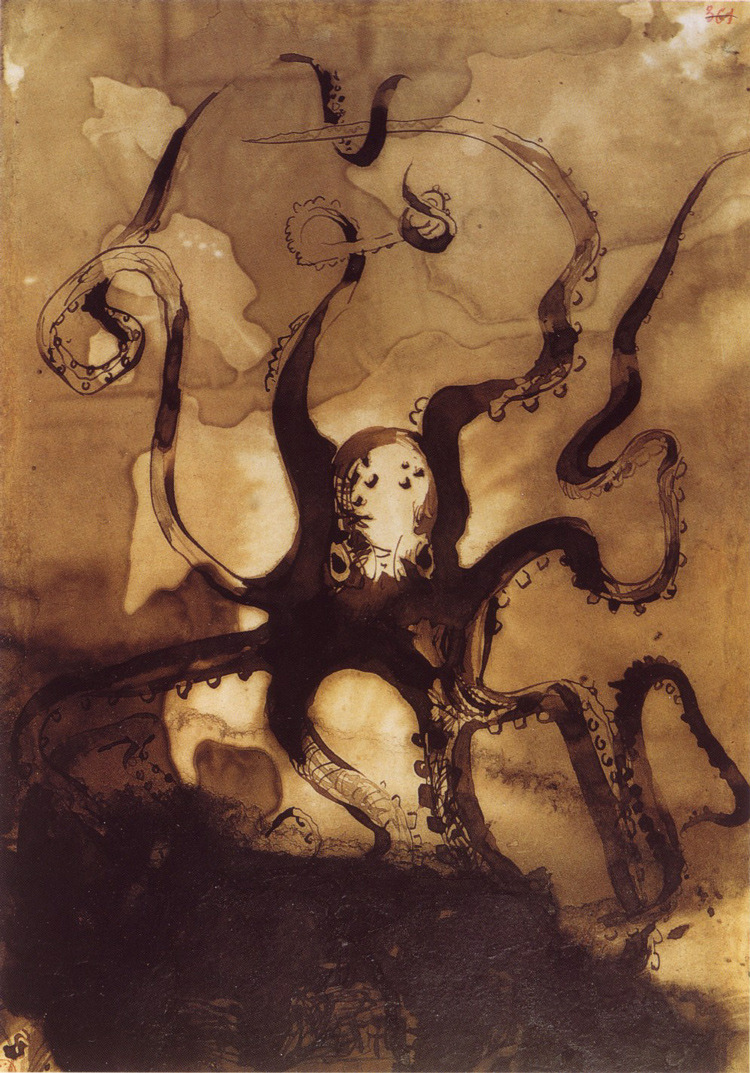
Hugo, writes The Paris Review’s Dan Piepenbring, “made some four thousand drawings over the course of his life. He was an adept draftsman, even an experimental one: he sometimes drew with his nondominant hand or when looking away from the page. If pen and ink were not available, he had recourse to soot, coal dust, and coffee grounds.” The Tate’s Christopher Turner writes of rumors “that he used blood pricked from his own veins in his many drawings.” Whatever liquid substance he used, in the drawing at the top we can see “a giant, menacing octopus, fashioned from a single stain [that] contorts its suckered limbs into the initials VH.”
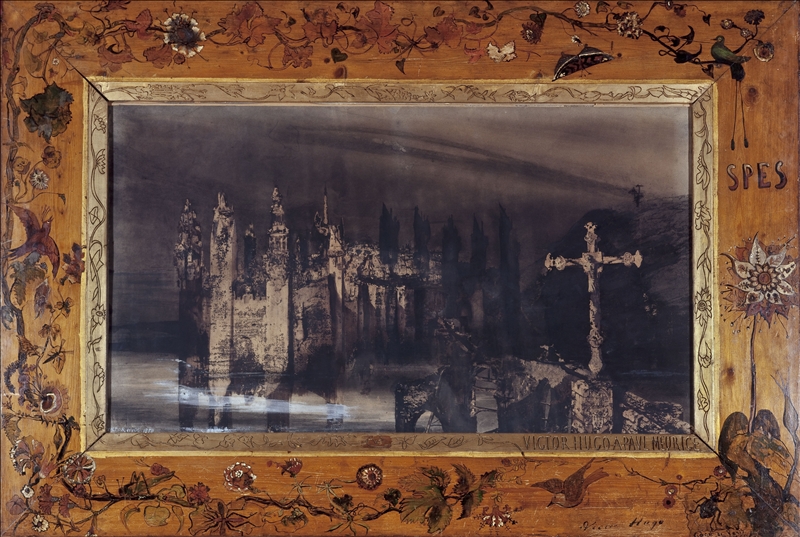
A bold signature indeed, but then, Hugo hardly played the shrinking violet in any domain. And yet, so as not to distract from the rest of his career, he seldom showed his drawings to anyone but family and friends, coming no closer to publishing anything any of his art than the hand-drawn calling cards he handed visitors in his period of exile. No less a painter than Eugène Delacroix, when he saw these drawings, thought that if Hugo hadn’t become a writer, he could have become one of the 19th century’s greatest artists instead. I’d certainly like to see what Andrew Lloyd Webber would have adapted that octopus into.
via The Paris Review
Related Content:
The Art of Franz Kafka: Drawings from 1907–1917
The Art of William Faulkner: Drawings from 1916–1925
Vladimir Nabokov’s Delightful Butterfly Drawings
The Art of Sylvia Plath: Revisit Her Sketches, Self-Portraits, Drawings & Illustrated Letters
Two Drawings by Jorge Luis Borges Illustrate the Author’s Obsessions
The Drawings of Jean-Paul Sartre
Colin Marshall hosts and produces Notebook on Cities and Culture as well as the video series The City in Cinema and writes essays on cities, language, Asia, and men’s style. He’s at work on a book about Los Angeles, A Los Angeles Primer. Follow him on Twitter at @colinmarshall or on Facebook.
Read More...Wes Anderson’s Cinematic Influences: Video Series Reveals His Roots in Truffaut, Welles, Scorsese & More
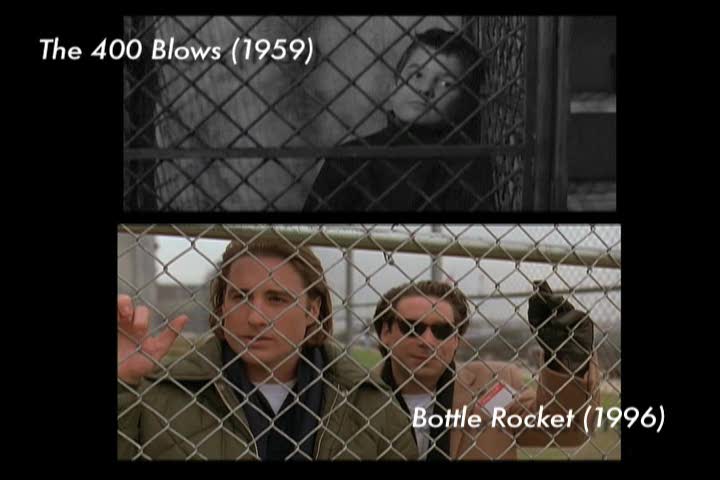
Matt Zoller Seitz is easily one of the finest film critics working today. Over the years, he has done quite a lot of work unpacking the dense visual world of filmmaker Wes Anderson, culminating in a gorgeous coffee table book called, aptly, The Wes Anderson Collection. Today you can explore a series of video essays that delve into the filmmaker’s work. Zoller Seitz argues that Anderson’s distinctive look is not merely empty aesthetics. Instead, he asserts that there is substance to Anderson’s style.
The first video outlines three of Anderson’s biggest cinematic influences. The filmmaker’s love of virtuous camera moves and preoccupation with fallen geniuses can be traced right back to Orson Welles. His focus on young people struggling to find peace in the adult world is influenced by Francois Truffaut, particularly his masterpiece 400 Blows. And the third, and perhaps most surprising, influence is Charles Schulz’s comic strip Peanuts.
In this second video, Zoller Seitz notes the stylistic similarities between Anderson and directors Mike Nichols, Richard Lester, and Martin Scorsese. It’s not terribly hard to see traces of The Graduate or Hard Day’s Night in Anderson’s movies, but Goodfellas? Zoller Seitz makes a pretty convincing argument.
While the previous videos come close to hagiography, the third video compares Anderson with another obvious influence Hal Ashby. It’s just about impossible to imagine Anderson’s delightfully twee world and deadpan humor without Ashby’s Harold and Maude. Like Anderson, Ashby too slipped effortlessly between different tones and different genres. But Anderson’s movies focus exclusively on upper class white people, something that he has been frequently criticized for. Ashby’s movies, on the other hand, cast a much wider socio-economic net. After watching this video, you get the sense that Ashby might be the better filmmaker.
The fourth video lays out how Anderson’s tendency of defining characters through their wardrobe goes right back to writer J.D. Salinger.
And with the fifth and final video, Zoller Seitz pulls together all of his arguments by annotating the prologue to arguably Anderson’s best and most influential movie, The Royal Tenenbaums.
Related Content:
The Perfect Symmetry of Wes Anderson’s Movies
A Glimpse Into How Wes Anderson Creatively Remixes/Recycles Scenes in His Different Films
Watch Wes Anderson’s Charming New Short Film, Castello Cavalcanti, Starring Jason Schwartzman
Wes Anderson’s First Short Film: The Black-and-White, Jazz-Scored Bottle Rocket (1992)
Watch 7 New Video Essays on Wes Anderson’s Films: Rushmore, The Royal Tenenbaums & More
Jonathan Crow is a Los Angeles-based writer and filmmaker whose work has appeared in Yahoo!, The Hollywood Reporter, and other publications. You can follow him at @jonccrow. And check out his blog Veeptopus, featuring lots of pictures of badgers and even more pictures of vice presidents with octopuses on their heads. The Veeptopus store is here.
Read More...Free eBook: Freud’s Couch, Scott’s Buttocks, Brontë’s Grave
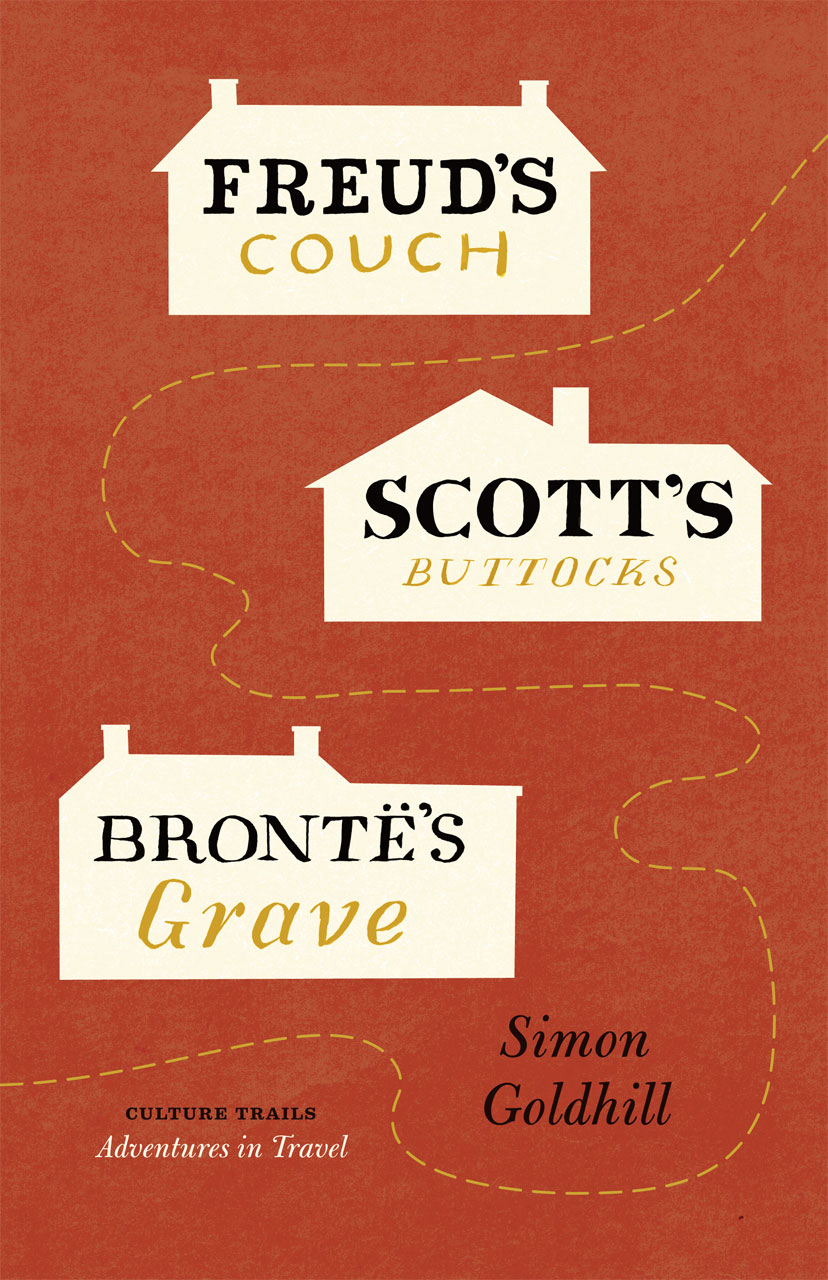
Worth a quick note: Every month, The University of Chicago Press makes available a free ebook, which you can read online. This month’s pick is Freud’s Couch, Scott’s Buttocks, Brontë’s Grave, by the University of Cambridge Classics professor Simon Goldhill, who doubles as the director of the Cambridge Victorian Studies group. The press describes the book as follows:
If you have toured the home of a famed writer, seen the desk at which they worked, or visited their grave, you are a literary pilgrim, partaking in a form of tourism first popular in the Victorian era. In our free e‑book for March, Freud’s Couch, Scott’s Buttocks, Brontë’s Grave, Simon Goldhill makes a pilgrimage to Sir Walter Scott’s baronial mansion, Wordsworth’s cottage in the Lake District, the Brontë parsonage, Shakespeare’s birthplace, and Freud’s office in Hampstead. He gamely negotiates distractions ranging from broken bicycles to a flock of giggling Japanese schoolgirls, as he tries to discern what our forebears were looking for at these sites, as well as what they have to say to the modern pilgrim. Take your literary pilgrimage in our free e‑book, Freud’s Couch, Scott’s Buttocks, Brontë’s Grave.
The book, which got a warm review in The Wall Street Journal, can be accessed via The U. Chicago site. Countless more free ebooks (downloadable ones!) can be found in our collection, 800 Free eBooks for iPad, Kindle & Other Devices.
If you would like to support the mission of Open Culture, consider making a donation to our site. It’s hard to rely 100% on ads, and your contributions will help us continue providing the best free cultural and educational materials to learners everywhere. You can contribute through PayPal, Patreon, and Venmo (@openculture). Thanks!
Read More...The Metamorphosis of Mr. Samsa: A Wonderful Sand Animation of the Classic Kafka Story (1977)
At home I often watch EBS, essentially Korea’s equivalent of PBS, which often airs short interstitial segments drawn in sand to fill the time between programs. Only recently have I learned that sand actually has a genuine history as a medium for animation, one that has produced a work as striking as Caroline Leaf’s The Metamorphosis of Mr. Samsa back in 1977. Astute (or even not-very-astute) Kafka fans will recognize this as an adaptation of The Metamorphosis, far and away the writer’s best-known story, in which the young salesman Gregor Samsa wakes up transformed into a giant bug. Find it in our Free Audio Books and Free eBooks collections.
We see this bug writhing his way out of bed before we see any other action in Leaf’s ten-minute sand short, whose (yes) ever-shifting visual texture lends itself well to the theme of the tale. Not that this convergence of form and substance came easily: “What makes [Leaf’s] work stand out is the control of the material,” writes Johnny Chew, About Tech’s animation expert. “The Metamorphosis of Mr. Samsa is an awesome short film on its own, and a great adaptation of the Kafka work, but when you consider the style in which it was made and the control that would have to go into each frame, it’s unbelievable.”
“The medium of animation, and specifically certain animated techniques, offer an ability to faithfully reproduce in part both the content and the perceptual experience of a literary work,” writes Geoffrey Beatty in his paper “The Problem of Adaptation Solved!.” In it, he quotes the animator on why she chose this particular story: “ ‘Kafka’s stories give this kind of room to invent,’ she says. This was an important value for Leaf as she was establishing a body of work based on a unique visual approach. The Metamorphosis, suggested to her by a friend and mentor, was a good fit, as her own ‘black and white sand images had the potential to have a Kafka-esque feel – dark and mysterious.’ ”
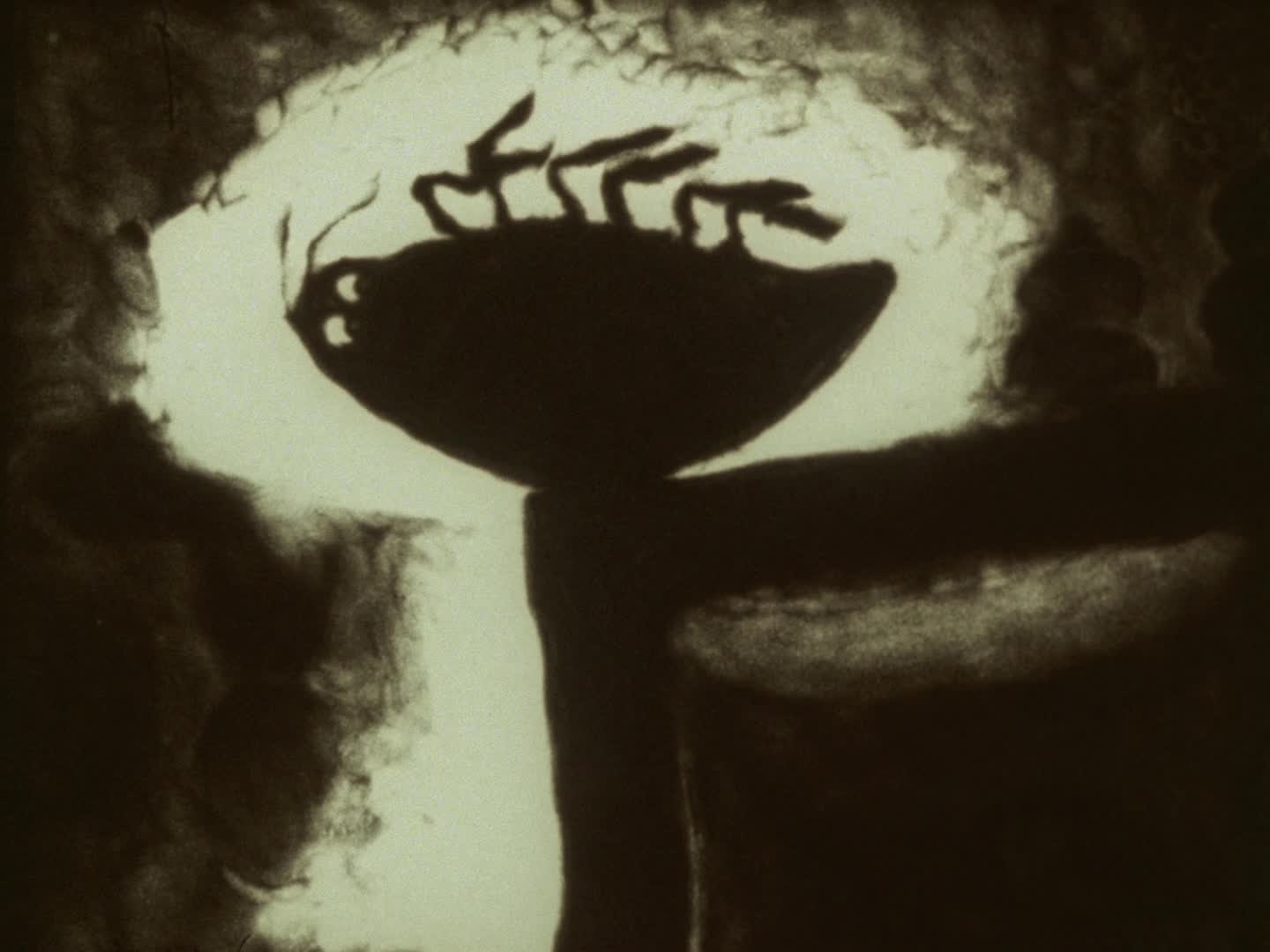
Any worthwhile artistic medium imposes limitations — and sand, as you’d imagine, imposes some pretty serious ones. Working with it, Leaf “would not be able to create highly detailed images [such as] the festering wound on Gregor’s back or his overall deterioration and decay. However, this limitation was not necessarily a problem. ‘I think that the limitations of drawing in sand, the simplifications that it requires, made me inventive in the storytelling in the ways I mentioned above. Sand forced me to adapt the story to sand, which is interesting.’ ”
Those readers who apply the word “Kafkan” to any pointlessly difficult task (like, say, getting out the door to work when you’ve become a giant bug) might also use it to describe Leaf’s labor-intensive sand animation process. But unlike a truly Kafkan labor, Leaf’s generated a result — and a delightful one at that. Now if only the next generation of sand animators would step foward to adapt the rest of Kafka’s oeuvre. Maybe we could interest PBS in airing it?
Find more literary animations in our collection, 4,000+ Free Movies Online: Great Classics, Indies, Noir, Westerns, Documentaries & More.
Related Content:
Watch Franz Kafka, the Wonderful Animated Film by Piotr Dumala
The Art of Franz Kafka: Drawings from 1907–1917
Colin Marshall hosts and produces Notebook on Cities and Culture as well as the video series The City in Cinema and writes essays on cities, language, Asia, and men’s style. He’s at work on a book about Los Angeles, A Los Angeles Primer. Follow him on Twitter at @colinmarshall or on Facebook.
Read More...Hear Kim Gordon, Sonic Youth Rocker, Read From Her New Memoir, Girl in a Band

I’ll admit it. I have a thing for listening to rock biographies and autobiographies on Audible, particularly memoirs narrated by the author him or herself. Look in my personal Audible library and you’ll find Patti Smith reading Just Kids. Keith Richards reading sections of his bestseller Life. And Pete Townshend narrating his 18-hour tome Who Am I. That’s just naming a few.
Right now, I’m getting started with Girl in a Band, the new memoir released by Kim Gordon, the co-founder of the influential indie rock band, Sonic Youth. And it looks like you can do the same with me. Rough Trade has made available online five audio clips, starting with Gordon reading from Chapter 1. Together, they amount to almost an hour of free audio. Find them all below.
Meanwhile, if you want to download the entire memoir for free, you can go here, and then click on the “Try Audible Free” button in the upper right corner. Just realize that you’re signing up for Audible’s 30-Day Free Trial program, which lets you download two free audiobooks and try out the service for 30 days. If you so choose, you can cancel before a fee kicks in. Please make sure you read all of the fine print before you sign up.
Chapter 1:
Writing About New York Is Hard
The Way The Band Composed Songs
First Time Seeing Nirvana
Fashion in New York
Follow us on Facebook, Twitter and Google Plus and share intelligent media with your friends. Or better yet, sign up for our daily email and get a daily dose of Open Culture in your inbox.
Related Content:
1,000 Free Audio Books: Download Great Books for FreeFear of a Female Planet: Kim Gordon (Sonic Youth) on Why Russia and the US Need a Pussy Riot
Read More...Miles Davis’ Entire Discography Presented in a Stylish Interactive Visualization
People can, and do, spend lifetimes tracking down and cataloguing all of the various releases of their favorite bands—studio, stage, bootleg, and otherwise. Certain groups—the Grateful Dead, naturally (hear 9,000 Dead shows here)—encourage this more than others. And if a rock band can send completists on lifelong scavenger hunts, how much more so a prolific jazz artist such as, say, Miles Davis? Like the musical form itself, jazz artists are mercurial by nature, spending years as journeymen for any number of other bandleaders before breaking off to form their own quartets, quintets, sextets, etc. Add to the profusion of different groups the tendency of jazz players to record the same songs—but never in the same way—dozens, hundreds, of times, and you’ve got discographies that number well into double-digit page lengths.
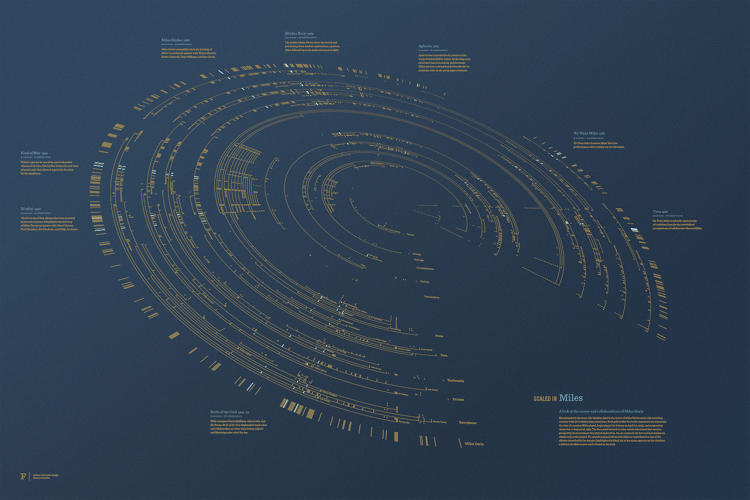
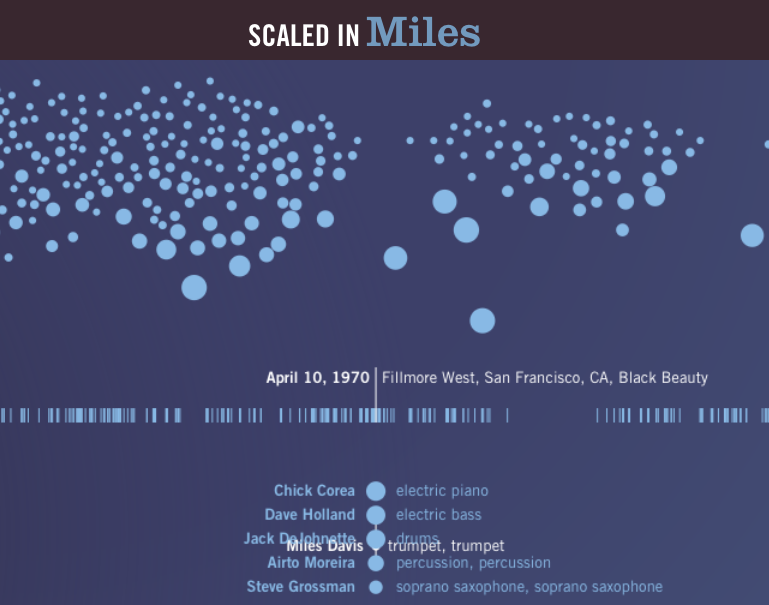
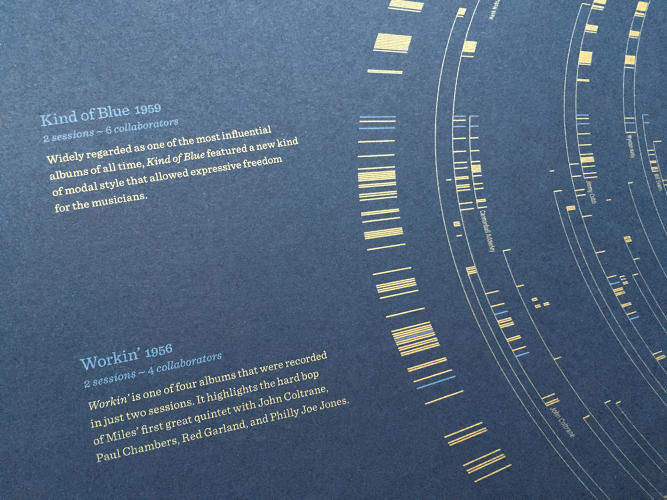
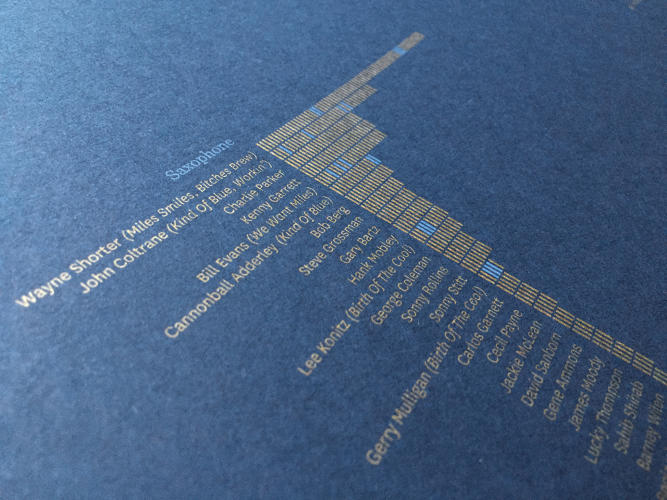
That’s the situation with Miles, for sure—even the most studied of his collectors couldn’t possibly call to mind all of his immense catalog without some handy reference guide. Perhaps “Scaled in Miles” can help. Condensing an incredible amount of musical history into a very concise and attractive form, “Scaled in Miles,” as it’s called—a huge online interactive discography—“tries to make sense of Davis’s storied career by visualizing each of the 577 artists he collaborated with over 405 recording sessions.” That description comes from Fast Company, who feature a few close-ups of the related “Scaled in Miles” poster, which they describe as resembling NASA’s “Golden Record.” The interactive visualization allows you to listen to the tunes as you learn the musicians who created them and the wheres and whens of their recordings.
Something about Miles’ music lends itself particularly well, I have to say, to the very streamlined, clean design of this impressive catalog’s online interface. Were someone enterprising enough to make one for the Grateful Dead, I’m guessing it would look less like a golden record in space and more like another, messier kind of spaced-out voyage. That’s not to suggest that Davis and the Dead have little in common but their vast recorded output. They did, after all, once share a stage at the Fillmore West in 1970. No need to go digging in the vaults to find that one; see the personnel from that night at the top of the post and stream the whole thing right here.
via Moses Hawk
Related Content:
The Miles Davis Story, the Definitive Film Biography of a Jazz Legend
The Night When Miles Davis Opened for the Grateful Dead in 1970: Hear the Complete Recordings
Josh Jones is a writer and musician based in Durham, NC. Follow him at @jdmagness
Read More...The Hedge Maze from The Shining Gets Recreated by Mythbuster’s Adam Savage
Like myself, Adam Savage went to the traveling Stanley Kubrick exhibition at LACMA last year and stayed several hours, just absorbing all the genius, from the scripts to the slates to the blueprints and the costumes to the props. Unlike myself, he went back two more times, that lucky man! Because the Mythbuster noticed that the Hedge Maze prop in The Shining section did not look like the one in the film in any way. In fact, it looked kinda cheap. So, being Adam Savage, a man for whom prop-making is one of a series of childhood obsessions turned jobs, he set out to accurately recreate the maze model from the film.
In this fascinating video (top) from his YouTube series Tested, we get a step-by-step walkthrough of the process. The LACMA model used plastic foam; Savage goes for a sturdy particle board, made to look like hedges through spray paint and flocking. His attention to detail goes down to the crowns at the tops of the outer maze wall, a newspaper kiosk and miniature map of the maze. He even geeks out (in the best way, of course!) about the scale model figures (at $4 a pop) he buys to populate the maze. (Strangely, there’s no representation of Jack, Wendy, Danny or even Halloran to be seen.)
Savage’s energy is infectious and if some of us had the time (55 hours total) and income to do this–and an understanding spouse–wouldn’t a lot of us love to travel down this rabbit hole?
The film ends with a nice surprise that I won’t spoil, but let’s just say the universe gets set right for once.
P.S. Does anybody know what is written on Savage’s worksheet? Is it his version of “All Work and No Play…”?
Related Content:
Stanley Kubrick’s List of Top 10 Films (The First and Only List He Ever Created)
Saul Bass’ Rejected Poster Concepts for The Shining (and His Pretty Excellent Signature)
Stanley Kubrick’s Annotated Copy of Stephen King’s The Shining
Ted Mills is a freelance writer on the arts who currently hosts the FunkZone Podcast. You can also follow him on Twitter at @tedmills and/or watch his films here.
Read More...The Linguistics Behind Kevin Spacey’s Southern Accent in House of Cards: A Quick Primer
Let’s take Kevin Spacey’s southern accent on the Netflix series House of Cards, and use it as a springboard for exploring the linguistics of that often times charming regional accent, shall we? In the video above, created by Vox, we learn all about “ay-unglidding.” And “r‑dropping,” that ever distinctive feature of the Southern accent that originated in England.
The clip was made with the help of university linguists — Dennis Preston at Oklahoma State University; Robin Dodsworth at North Carolina State University; and Kirk Hazen at West Virginia University. To learn more about how well Kevin Spacey masters the accent (and where he falls short), head over to Vox.
Follow us on Facebook, Twitter and Google Plus and share intelligent media with your friends. Or better yet, sign up for our daily email and get a daily dose of Open Culture in your inbox.
Related Content:
Nine Impersonations by Kevin Spacey in Six Minutes
The Ideas of Noam Chomsky: An Introduction to His Theories on Language & Knowledge (1977)
Learn 48 Languages Online for Free: Spanish, Chinese, English & More
Read More...Leonard Nimoy Recites Famous Soliloquy from Hamlet in Yiddish: “To Be or Not To Be”
Leonard Nimoy’s death yesteday at the age of 83 is an enormous loss to fans across the world who loved and respected the actor. Nimoy may have never transcended his Star Trek character Spock, though he tried, but he seemed to have made his peace with that, signing his many wise tweets in the last few months of his life with the acronym “LLAP,” or “live long and prosper,” the Vulcan farewell. The actor and his most famous character were very familiar to even non-fans of the show; Spock has come to represent an archetype of the dispassionate and rational, and Nimoy eventually immersed himself in the Star Trek universe, penning Star Trek novels and continuing to star in the franchise’s many films (and in good natured car ads with his replacement). He was an ambassador for science fiction, and an ambassador for science fact, as a major donor to NASA and narrator of several films about astronomy.
Nimoy also had several other non- Trek endeavors of note, including his work as a photographer and narrator of audiobooks about, for example, whales. And while Spock fans watched the actor inhabit the half-Vulcan, half-human character’s existential struggles with his identity, Nimoy the actor had his own distinctive background as the son of Ukrainian Jewish immigrants. His parents escaped the town of Zaslav in what was then Soviet Russia and emigrated to Boston’s West End, a neighborhood roughly 60 percent Italian and 25–30 percent Jewish. It was a place—Nimoy says in the engaging 10 minute excerpt above from an interview with Christa Whitney—where the Italians spoke Yiddish and the Jews spoke Italian (Nimoy speaks some Yiddish, some famous lines from Hamlet!, above).
Nimoy remembers his personal history, his parents’ bemusement with Spock, and his own identification with the famous character: “Spock is an alien wherever he is,” says Nimoy, “not totally at home in the Vulcan culture… not totally at home in the human culture. And that alienation is something that I had learned in Boston… so I understood that aspect of the character.” The interview was taped in October of 2013 as part of the Yiddish Book Center’s Wexler Oral History Project. As we grieve the loss of Nimoy-as-Spock, it’s a fitting way to get to know much more about the man himself. Hear much more of Nimoy’s Yiddish and much more about his life in the full, two-hour interview below. You can find basic Yiddish lessons in our collection, Learn 45+ Languages Online for Free: Spanish, Chinese, English & More.
Related Content:
Leonard Nimoy Narrates Short Film About NASA’s Dawn: A Voyage to the Origins of the Solar System
Read More...Support Us
We're hoping to rely on loyal readers, rather than erratic ads. Please click the Donate button and support Open Culture. You can use Paypal, Venmo, Patreon, even Crypto! We thank you!

About Us

Open Culture scours the web for the best educational media. We find the free courses and audio books you need, the language lessons & educational videos you want, and plenty of enlightenment in between.
Advertise With Us

FREE UPDATES!
GET OUR DAILY EMAIL
Get the best cultural and educational resources on the web curated for you in a daily email. We never spam. Unsubscribe at any time.
FOLLOW ON SOCIAL MEDIA

Open Culture editor Dan Colman scours the web for the best educational media. He finds the free courses and audio books you need, the language lessons & movies you want, and plenty of enlightenment in between.
Advertise With Us