176 Big Thinkers Answer the Question: What Scientific Idea is Ready to Be Dead and Buried?
 It’s a new year, which means it’s time for the Edge.org to pose its annual question to some of the world’s finest minds. The 2014 edition asks the question, “What Scientific Idea is Ready for Retirement?” The question came prefaced by this thought:
Science advances by discovering new things and developing new ideas. Few truly new ideas are developed without abandoning old ones first. As theoretical physicist Max Planck (1858–1947) noted, “A new scientific truth does not triumph by convincing its opponents and making them see the light, but rather because its opponents eventually die, and a new generation grows up that is familiar with it.” In other words, science advances by a series of funerals. Why wait that long?
So what established scientific idea is ready to be moved aside so that science can advance? The replies — 176 in total — feature thoughts by Steven Pinker, Kevin Kelly, Sherry Turkle, Robert Sapolsky, and Daniel Dennett, among others. If you’re willing to venture down the rabbit hole, you can access the complete collection of responses here.
Related Content:
Steven Pinker Explains the Neuroscience of Swearing (NSFW)
Philosopher Daniel Dennett Presents Seven Tools For Critical Thinking
New Animation Explains Sherry Turkle’s Theories on Why Social Media Makes Us Lonely
Read More...Neil Young Performs Classic Songs in 1971 Concert: “Old Man,” “Heart of Gold” & More
A theory of merit states that Neil Young reinvents himself every 10 years or so, but the work in-between isn’t always pretty. Yet for an artist with a somewhat limited range, he remains one of the most interesting singers and songwriters in rock and roll well over four decades after his start. Young once played guitar in a garage band with Rick James in 1965 called the Mynah Birds; released a surprisingly listenable electro album in 1982 complete with Giorgio Morodor-like synths and vocoders; and last year, recorded a collection of folk standards like “Oh, Susanna” and “She’ll Be Coming ‘Round the Mountain” in the style of 1979’s Rust Never Sleeps (an album, Paul Nelson wrote at the time, that “burns [rock & roll] to the ground”). In-between the stylistic leaps and innovations are some painfully mediocre albums and some that define, or rather redefine, genres. One of the latter, Young’s 1972 Harvest picked up and refined the folk-rock of his first band Buffalo Springfield’s self-titled 1966 debut—an album widely credited with the creation of folk-rock.
Harvest—by any account one of Young’s best albums and the highest-selling of ’72—produced “Heart of Gold,” “Old Man,” and, indirectly led to Lynyrd Skynyrd’s “Sweet Home Alabama” (written in response to Harvest’s anti-segregation rocker, “Alabama”). It’s a surprisingly quiet album for the impact it’s had, and it set the standard for later folk-acoustic Young albums like 1992’s Harvest Moon and 2000’s Silver & Gold. And as much as Young can destroy a venue with a full-on electric attack (even now!), he can mesmerize an audience with just an acoustic guitar, piano, harmonica, and casual banter, even while playing a suite of songs they’d never heard before. See him do so above in a 1971 concert live at the BBC’s Shepherds Bush Empire Theatre. Young plays four songs that would appear on Harvest: “Out on the Weekend,” “Old Man,” “Heart of Gold,” and “A Man Needs a Maid.” He also does “Journey Through the Past” and “Love in Mind,” which would appear two years later on the bleak 1973 Time Fades Away, and “Don’t Let it Bring You Down,” a song from 1970’s brilliant After the Gold Rush. Young performed the last song, “Dance Dance Dance,” with Crosby, Stills, and Nash, but it went unreleased in a studio version until the 2009 box set The Archives, Volume 1: 1963–1972.
Some further evidence of Young’s continued relevance: just last week, he performed a series of shows at Carnegie Hall, and audience members took video of several songs, including the title track to Harvest (above). It’s a song Young almost never played live until 2007. Onstage, alone, with acoustic and harp, he is still, forty-three years later, a mesmerizing presence.
Related Content:
Great Story: How Neil Young Introduced His Classic 1972 Album Harvest to Graham Nash
‘The Needle and the Damage Done’: Neil Young Plays Two Songs on The Johnny Cash Show, 1971
Neil Young Busking in Glasgow, 1976: The Story Behind the Footage
Josh Jones is a writer and musician based in Durham, NC. Follow him at @jdmagness
Read More...Hunter S. Thompson’s Personal Hangover Cure (and the Real Science of Hangovers)
Last year, we brought you a description of Hunter S. Thompson’s daily drug and alcohol regimen, consisting of frightening amounts of cocaine and liquor, supplanted by the occasional cup of coffee or acid tab. While the story may be apocryphal, Thompson was no dilettante when it came to psychoactive substances. The father of gonzo journalism burnished his image as a formidable substance user in the opening lines of Fear and Loathing in Las Vegas (1971):
The trunk of the car looked like a mobile police narcotics lab. We had two bags of grass, seventy—five pellets of mescaline, five sheets of high—powered blotter acid, a salt shaker half full of cocaine, and a whole galaxy of multi—colored uppers, downers, screamers, laughers and also a quart of tequila, a quart of rum, a case of Budweiser, a pint of raw ether and two dozen amyls. All this had been rounded up the night before, in a frenzy of high—speed driving all over Los Angeles County—from Topanga to Watts, we picked up everything we could get our hands on. Not that we needed all that for the trip, but once you get locked into a serious drug collection, the tendency is to push it as far as you can.
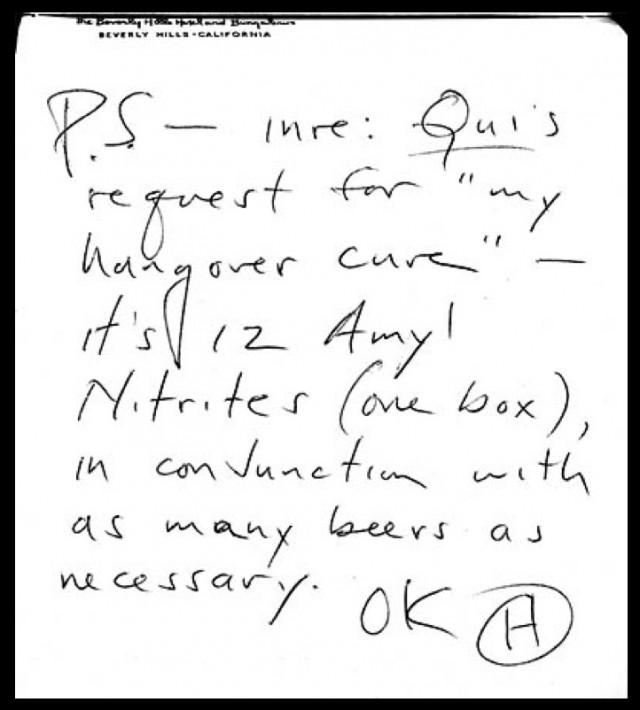
It’s safe to say that if you were to consult anyone about a hangover fix, Thompson would be a good candidate for counsel. Luckily, the author left us with a guide. In 2011, Playboy released a compendium of its 1960s and 1970s correspondences with Thompson. Most were disappointingly prosaic, but among the dross was a hurriedly scribbled note on the topic of hangover cures:
P.S. — inre: Oui’s request for “my hangover cure” — it’s 12 amyl nitrites (one box), in conjunction with as many beers as necessary.
OK H
If a hair of the dog approach doesn’t quite suit you, or if Thompson’s recipe exceeds your initial consumption, I suggest a bottle of sports drink at the tail end of a big night to replenish electrolytes. Still, according YouTube’s SciShow, which does a fantastic job of elucidating the chemical processes behind all the headaches and room spins, there’s only one foolproof method:
As a PSA to stave off angry comments, a spoiler alert: SciShow’s recommendation is on par with the abstinence model of birth control: just don’t do it, and you’ll be fine.
Ilia Blinderman is a Montreal-based culture and science writer. Follow him at @iliablinderman.
Related Content:
Hunter S. Thompson Calls Tech Support, Unleashes a Tirade Full of Fear and Loathing (NSFW)
Johnny Depp Reads Letters from Hunter S. Thompson (NSFW)
Hunter S. Thompson Remembers Jimmy Carter’s Captivating Bob Dylan Speech (1974)
Read More...Quentin Tarantino Lists His Favorite Records: Bob Dylan, Freda Payne, Phil Ochs and More
Quentin Tarantino cares about music, as you can tell from watching any of his films, from his maximally discomfiting use of Stealers Wheel’s “Stuck in the Middle with You” in Reservoir Dogs on out. A Telegraph article on that song’s writer Gerry Rafferty describes it as “written as a parody of Bob Dylan’s paranoia,” “little more than a joke but with a catchy pop arrangement” that unexpectedly sold more than a million copies. If Tarantino has a fascination with Dylan parodies, then he has an even deeper fascination with the real thing, as revealed in a post on his ten favorite records from Uncut’s Michael Bonner. He pulled Tarantino’s selections and comments from an interview he conducted with the director back around the time of Pulp Fiction. Above, you can watch Dylan play “Tangled Up in Blue,” which Tarantino calls his “all-time favorite song,” “one of those songs where the lyrics are ambiguous you can actually write the song yourself.” (Hear the original recording here.)
Just above, we have Freda Payne performing “Band of Gold,” another of Tarantino’s choice cuts, on Soul Train in 1970. “This is just so cool,” he says. “It’s a combination of the way it’s produced, the cool pop/R&B sound, and Freda’s voice. Its kinda kitschy in a way – y’know, it’s got a really up-tempo tune – and, the first few times I heard it, I was, like, totally into the coolness of the song. It was only on the third or fourth listen I realised the lyrics were so fucking heartbreaking.” Below you’ll find a cut from Phil Ochs’ I Ain’t Marching Anymore, which Tarantino calls “one of my favorite protest/folk albums. While Dylan was a poet Ochs was a musical journalist: he was a chronicler of his time, filled with humor and compassion. He’d write songs which would seem very black and white, and then, in the last verse, he’d say something which, like, completely shattered you.” This particular song, “Here’s To The State of Mississippi,” he considers “everything the movie Mississippi Burning should have been.”
In Bonner’s Uncut post, you can read Tarantino’s further thoughts on Bob Dylan, his declaration of Elvis’ finest era, and his film scores of choice. And speaking of things cinematic, see also our lists of Tarantino’s favorite films since 1992, his ten favorite films of last year, and what he deems the twelve greatest films of all time.
Related Content:
Quentin Tarantino Impersonates His Idol, Elvis Presley
Jim Jarmusch: The Art of the Music in His Films
The Rolling Stones at 50: Mick, Keith, Charlie & Ronnie Revisit Their Favorite Songs
Mick Jones Plays Three Favorite Songs by The Clash at the Library
Colin Marshall hosts and produces Notebook on Cities and Culture and writes essays on cities, Asia, film, literature, and aesthetics. He’s at work on a book about Los Angeles, A Los Angeles Primer. Follow him on Twitter at @colinmarshall or on his brand new Facebook page.
Read More...Fyodor Dostoevsky Draws Elaborate Doodles In His Manuscripts
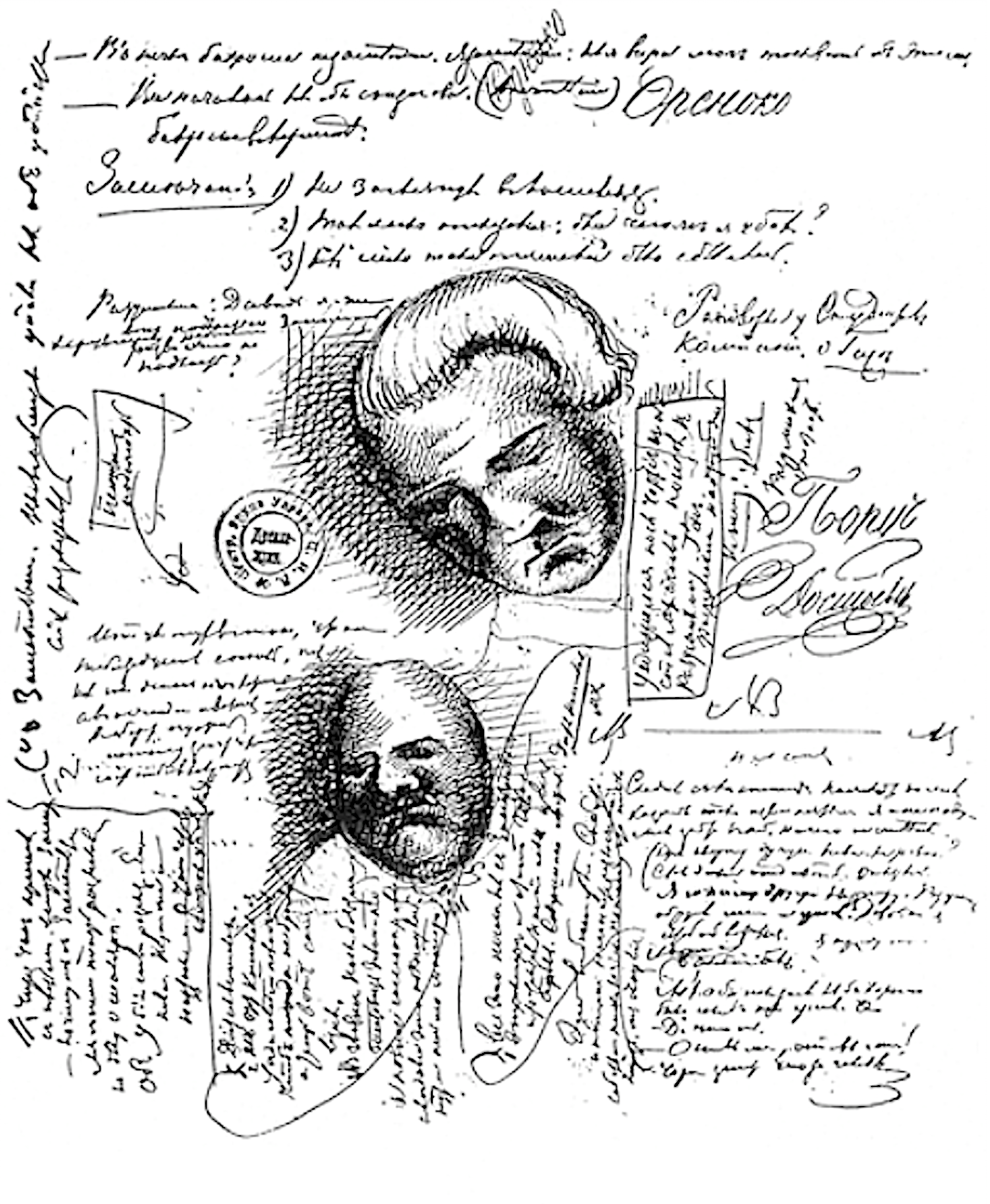
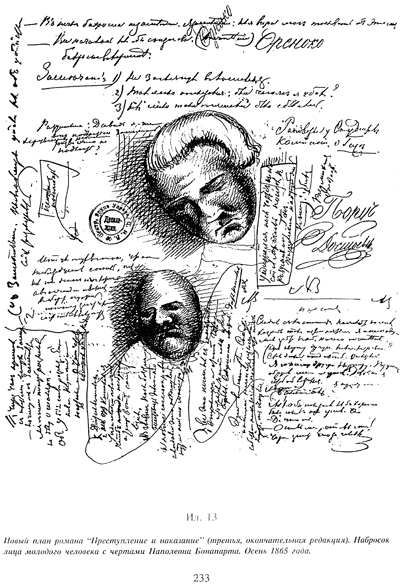
Few would argue against the claim that Fyodor Dostoevsky, author of such bywords for literary weightiness as Crime and Punishment, The Idiot, and The Brothers Karamazov, mastered the novel, even by the formidable standards of 19th-century Russia. But if you look into his papers, you’ll find that he also had an intriguing way with pen and ink outside the realm of letters — or, if you like, deep inside the realm of letters, since to see drawings by Dostoevsky, you actually have to look within the manuscripts of his novels.
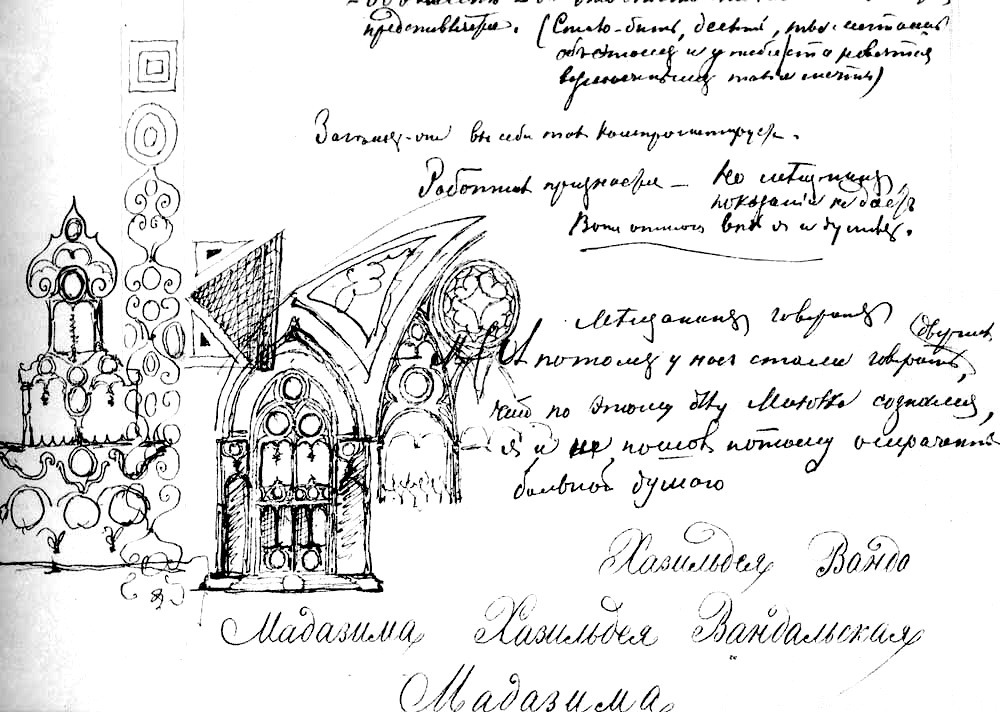
Above, we have a page from Crime and Punishment into which a pair of solemn faces (not that their mood will surprise enthusiasts of Russian literature) found their way. Just below, you’ll find examples from the same manuscript of his pen turning toward the ornamental and architectural while he “created his fiction step by step as he lived, read, remembered, reprocessed and wrote,” as the exhibition of “Dostoyevsky’s Doodles” at Columbia University’s Harriman Institute of Russian, Eurasian, and East European Studies put it.
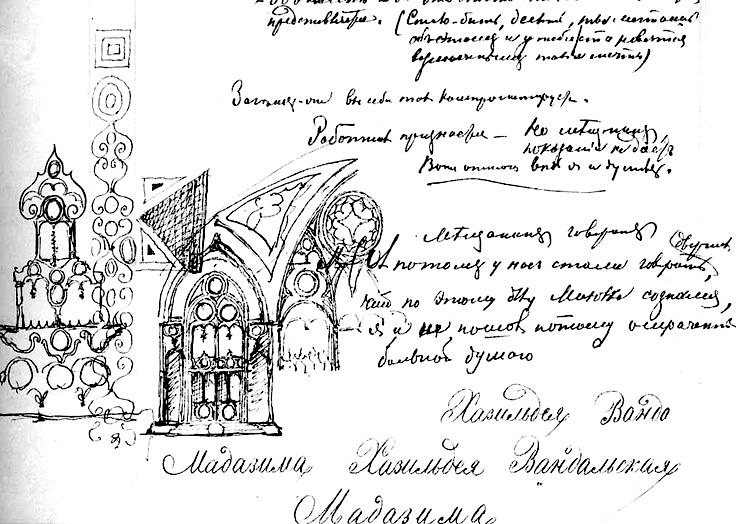
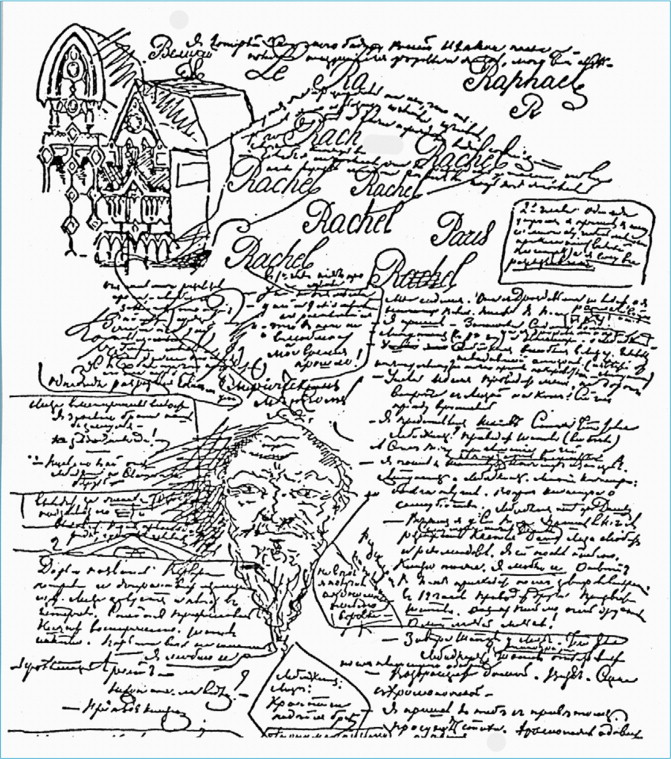
According to the exhibition description, Dostoevsky’s notes to himself “represent that key moment when the accumulated proto-novel crystallized into a text. Like many of us, Dostoevsky doodled hardest when the words came slowest.” Some of Dostoevsky’s character descriptions, argues scholar Konstantin Barsht, “are actually the descriptions of doodled portraits he kept reworking until they were right.” He didn’t just do so during the writing of Crime and Punishment, either; below we have a page of The Devils that combines the human, the architectural, and the calligraphic, apparently the three main avenues through which Dostoevsky pursued the doodler’s art.
Even if you would personally argue against his claim to greatness (and thus side with his countryman, colleague in literature, and fellow part-time artist Vladimir Nabokov, who found him a “mediocre” writer given to “wastelands of literary platitudes”), surely you can enjoy the charge of pure creation you feel from witnessing his textual mind interact with his visual one. Works by Dostoevsky can be found in our Free Audio Books and Free eBooks collections.
Related Content:
Albert Camus Talks About Adapting Dostoyevsky for the Theatre, 1959
Nabokov Makes Editorial Improvements to Kafka’s “The Metamorphosis”
Colin Marshall hosts and produces Notebook on Cities and Culture and writes essays on cities, Asia, film, literature, and aesthetics. He’s at work on a book about Los Angeles, A Los Angeles Primer. Follow him on Twitter at @colinmarshall or on his brand new Facebook page.
Read More...Student Rickrolls Teacher By Sneaking Rick Astley Lyrics into Quantum Physics Paper
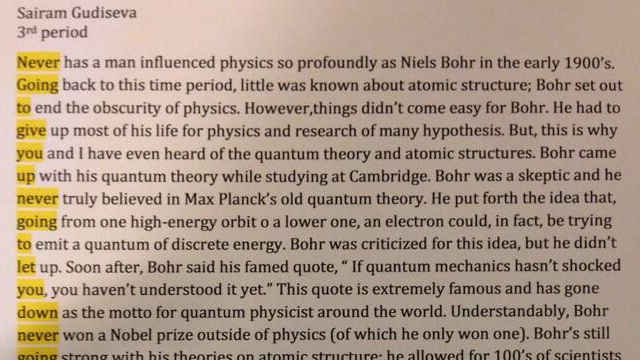
Here’s a funny little variation on “rickrolling,” a term some of our readers might not be familiar with. So let’s quickly refer you to Wikipedia:
Rickrolling is an Internet meme involving the music video for the 1987 Rick Astley song “Never Gonna Give You Up”. The meme is a bait and switch; a person provides a hyperlink which is seemingly relevant to the topic at hand, but actually leads to Astley’s video. The link can be masked or obfuscated in some manner so that the user cannot determine the true destination of the link without clicking. People led to the music video are said to have been rickrolled. Rickrolling has extended beyond web links to playing the video or song disruptively in other situations, including public places, such as a live appearance of Astley himself in the 2008 Macy’s Thanksgiving Day Parade in New York. The meme helped to revive Astley’s career.
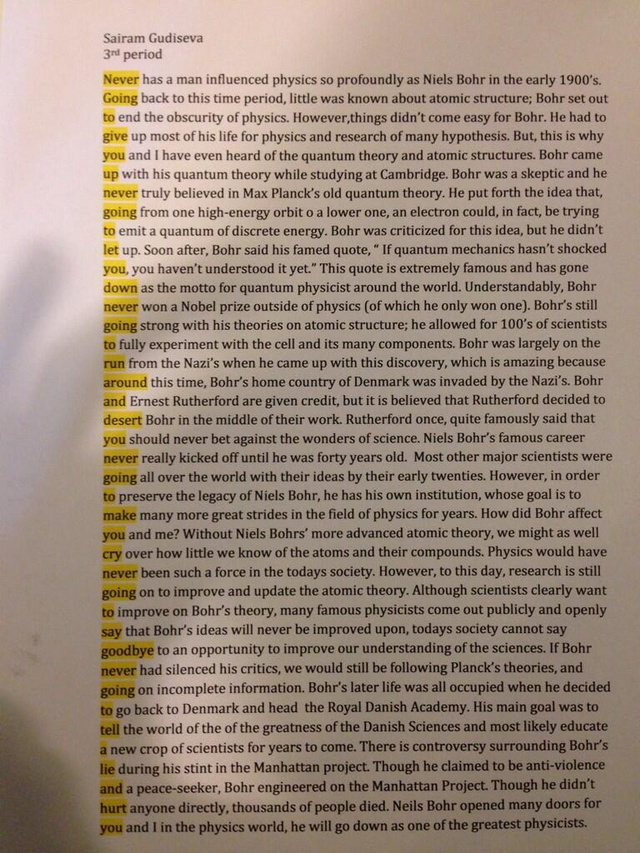
Now, in another sign that rickrolling has gone beyond the web, we have above a snapshot of a quantum physics written by Sairam Gudiseva, a student at (we believe) White Station High School in Tennessee. As the snapshot shows, Gudiseva managed to run the lyrics of “Never Gonna Give You Up” down the left margin of the page … while still keeping his ideas flowing. Well done, young man. You can see a full page of his essay here.
By the way, this is not the first time some levity has been introduced to a physic paper. You might want to refer back to our 2012 post, Physical Attraction: Marriage Proposal Comes in the Form of a Physics Paper.
Related Content:
Physics: Free Online Courses (Part of our collection of 825 Free Online Courses from Top Universities)
Marilyn Monroe Explains Relativity to Albert Einstein (in a Nicolas Roeg Movie)
The Most “Intellectual Jokes”: Our Favorite Open Culture Reader Submissions
Read More...View the Passport Photos of F. Scott Fitzgerald, James Joyce, Virginia Woolf & Other Cultural Icons
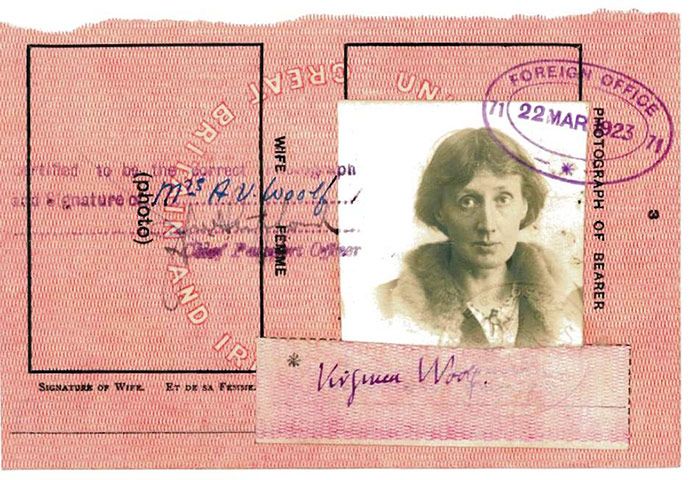
Click images to enlarge.
If you’ve had the fortune of travelling for leisure, you know that there are three types of mementoes that unfailingly elicit pangs of nostalgia. The first are photographs. The second are the running commentaries we write down in journals and blogs, documenting the various impressions, thoughts, and minutiae we experience. The third are passports. When brimming with exit stamps and tattered visas, passports are the mark of a worldly traveller: a grimy, well-worn sign to fellow hostel guests that you’re wanted company when the time comes to compare stories.
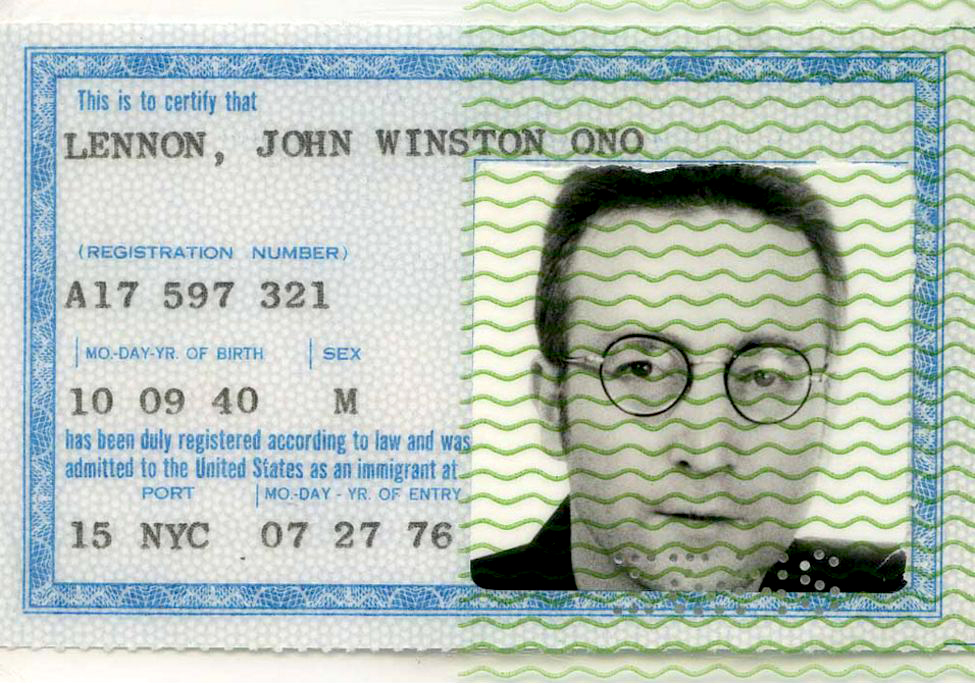
Today, we bring you several passport scans from a number of the 20th century’s best-known cultural figures. Above, you can see a travel document belonging to Virginia Woolf, who received a 1923 stamp from the Foreign Office. Below we have John Lennon’s entry card into the U.S., which the Beatle received after a battle for permanent residency that lasted for several years.
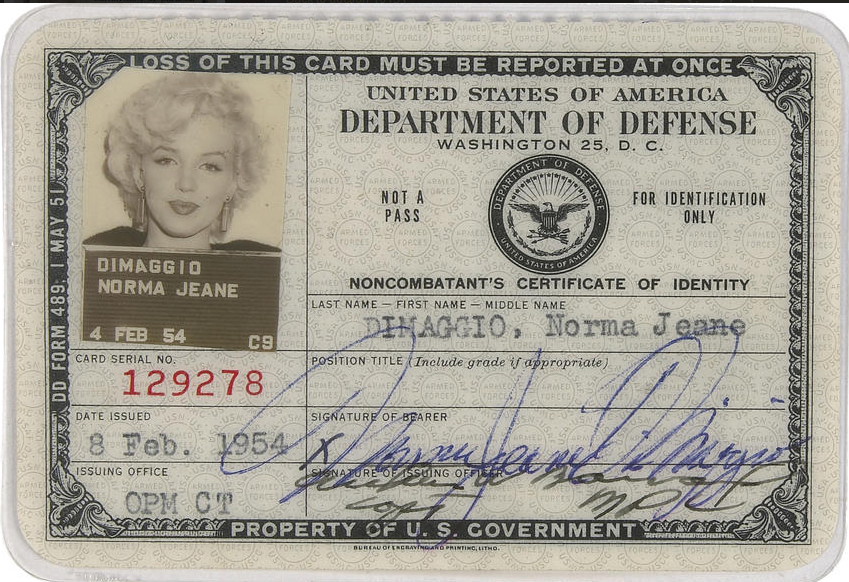
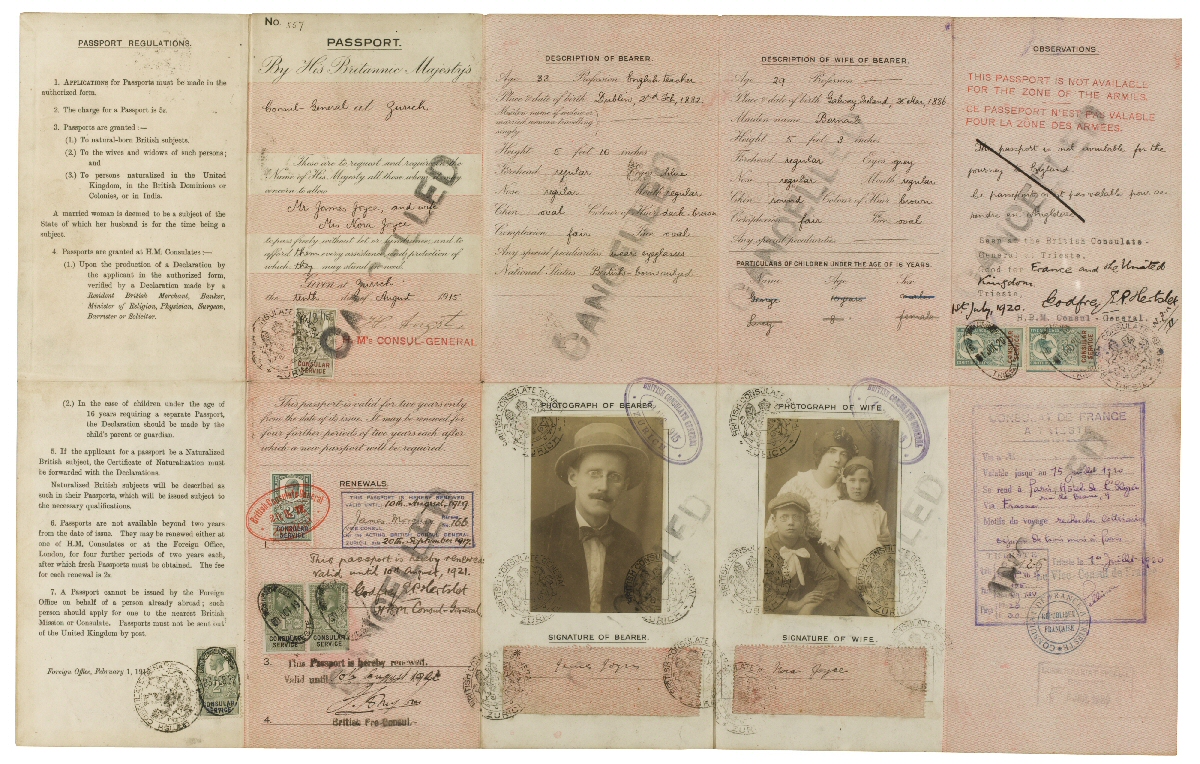
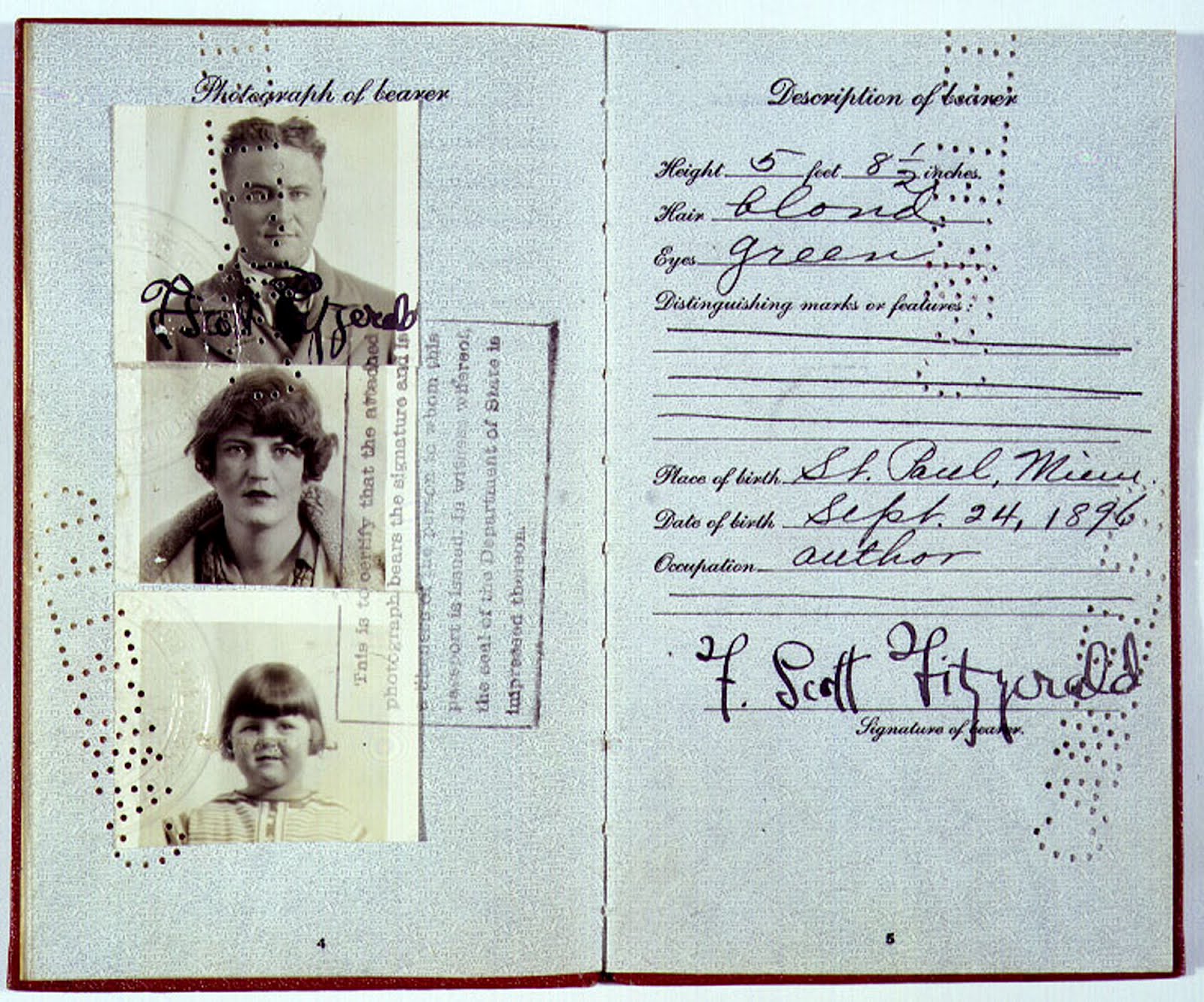
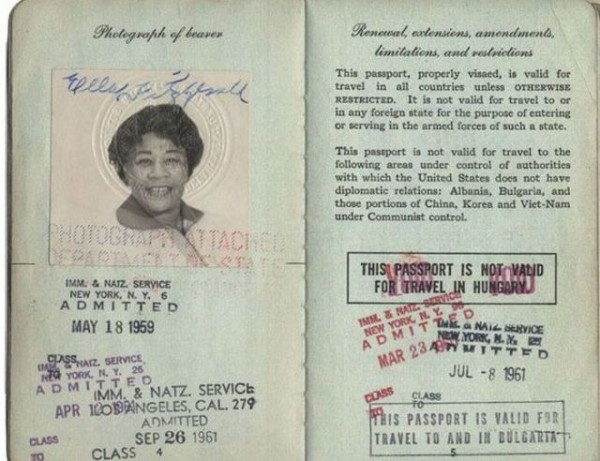
Then Marilyn Monroe’s Department of Defense-issued ID card, under the name of Norma Jean DiMaggio. Further down are the passport photos of writers James Joyce and F. Scott Fitzgerald, accompanied by their respective families, who were travelling under the same documents. Lastly, we present to you the most impressively decorated passport pages of all, belonging to Ella Fitzgerald:
John Lennon
Marilyn
James Joyce and Family
The Fitzgeralds
Ella Fitzgerald
For more iconic passport photos, head to Vintage.es or The Untravelled Paths blog.
Ilia Blinderman is a Montreal-based culture and science writer. Follow him at @iliablinderman.
Related Content:
Rare Footage of Scott and Zelda Fitzgerald From the 1920s
Ella Fitzgerald Sings ‘Summertime’ by George Gershwin, Berlin 1968
James Joyce Plays the Guitar, 1915
Six Postcards From Famous Writers: Hemingway, Kafka, Kerouac & More
Read More...Quentin Tarantino Impersonates His Idol, Elvis Presley
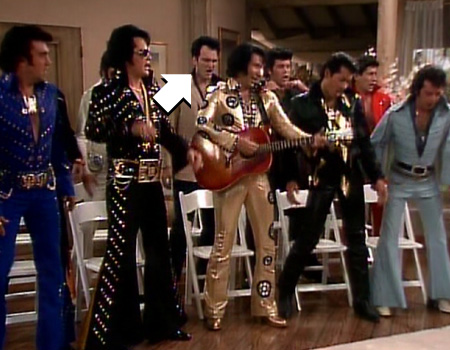
Quentin Tarantino once told an interviewer (Howard Stern, if you must know) about the Elvis phase he went through during his late teenage years. “When I was about eighteen-years-old, I got waaaay into rockabilly music.” “I was like the second coming of Elvis Presley. I dyed my hair black. I wore it in a big ole pompadour.” And he put Elvis impersonation on his resume. In 1988, just a year after he shot his first film, My Best Friend’s Birthday (watch the surviving parts here), the still-unknown auteur landed a cameo appearance on an episode of The Golden Girls. He described the appearance in a 1994 interview with Playboy:
Well, it was kind of a high point because it was one of the few times that I actually got hired for a job. I was one of 12 Elvis impersonators, really just a glorified extra. For some reason they had us sing Don Ho’s Hawaiian Love Chant. All the other Elvis impersonators wore Vegas-style jumpsuits. But I wore my own clothes,because I was, like, the Sun Records Elvis. I was the hillbilly cat Elvis. I was the real Elvis; everyone else was Elvis after he sold out.
Tarantino appears in the back row, dead center.
Related Content:
The Power of Food in Quentin Tarantino’s Films
625 Free Movies Online: Great Classics, Indies, Noir, Westerns, etc.
Read More...
Read Beethoven’s Lengthy Love Letter to His Mysterious “Immortal Beloved” (1812)
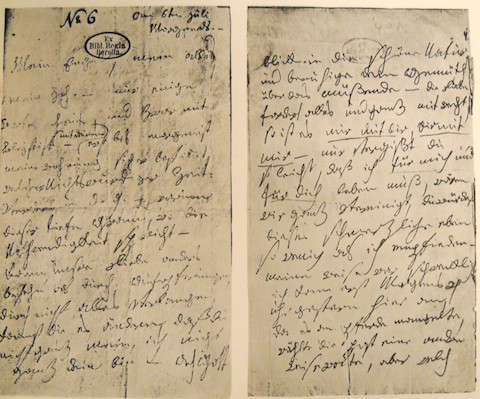
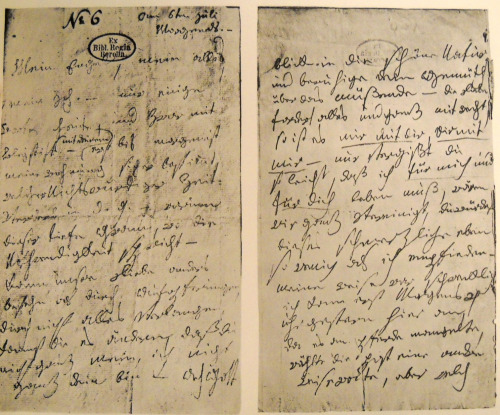
If you’ve ever seen the 1994 feature film where Gary Oldman plays Ludwig van Beethoven, you know the significance of the words “Immortal Beloved” from which it takes its title. But have you seen the actual artifact that inspired it? “Around 1812 Beethoven wrote a long letter (10 pages) to a woman who he was obviously quite taken with,” says the blog LvB and More. “Sadly we will never know for certain who it was. However the letter itself was discovered after Beethoven’s death in a secret drawer where he also kept the Heiligenstadt Testament, some savings and some pictures.” There you can find images of the letter in question (the first two pages appear above, the second two below) and a translation from LVBeethoven.com, faithful right down to the composer’s line breaks, which begins as follows:
July 6
In the morning-My angel, my all
my self — only a few
words today, and indeed with pencil
(with yours)
only tomorrow is my lodging positively fixed
what a worthless waste
of time on such — why
this deep grief, where
necessity speaks -
can our love exist but
by sacrifices
by not demanding everything
can you change it, that you
not completely mine. I am not
completely yours — Oh God
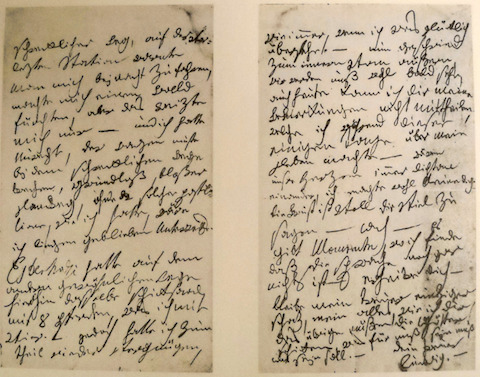
Despite the best efforts of Beethoven’s biographers (and of the widely disputed theory on which the aforementioned movie operates), ignorant we remain of the identity of the Immortal Beloved to whom Beethoven addressed such words of passion. Still, don’t let that stop you from drawing your own conclusions, such as you can from examination of the pages themselves, also available for perusal at Fu$k Yeah Manuscripts. You may remember them from our post on the drawings Dostoyevsky did as he wrote his novels, and from there you can draw the correct conclusion that the site offers a deep well of intriguing works in progress, pieces of correspondence, cris de coeur, and various combinations thereof.
Related Content:
Slavoj Žižek Examines the Perverse Ideology of Beethoven’s Ode to Joy
Beethoven’s Ode to Joy Played With 167 Theremins Placed Inside Matryoshka Dolls in Japan
James Joyce’s “Dirty Letters” to His Wife (1909)
Colin Marshall hosts and produces Notebook on Cities and Culture and writes essays on cities, Asia, film, literature, and aesthetics. He’s at work on a book about Los Angeles, A Los Angeles Primer. Follow him on Twitter at @colinmarshall or on his brand new Facebook page.
Read More...In 1968, Artist Imagines What John, Paul, George & Ringo Will Look Like When They’re 64
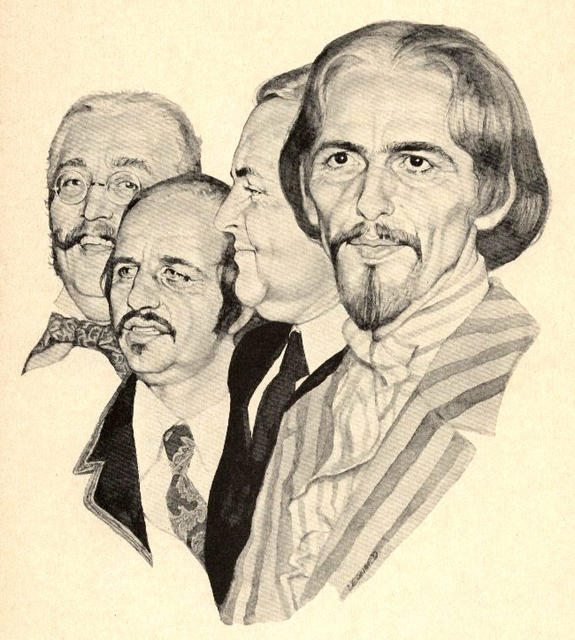
When I get older losing my hair,
Many years from now,
Will you still be sending me a valentine
Birthday greetings bottle of wine?
Paul McCartney’s wistful song “When I’m Sixty-Four” was released on the Beatles’ 1967 album Sgt. Pepper’s Lonely Hearts Club Band. The next year, an artist named Michael Leonard tried to imagine what the young musicians might look like four decades later — on their 64th birthdays. We never got a chance to figure out whether he sized up Lennon and Harrison correctly. But we know that Paul, even at 71 today, never got jowly. And Ringo never went the suit route. You can see for yourself when the two perform at the Grammys on January 26.
Don’t miss anything from Open Culture. Sign up for our Daily Email or RSS Feed. And we’ll send cultural curiosities your way, every day.
Related content
Flashmob Performs The Beatles’ ‘Here Comes the Sun’ in Madrid Unemployment Office
The Beatles: Unplugged Collects Acoustic Demos of White Album Songs (1968)
Read More...Support Us
We're hoping to rely on loyal readers, rather than erratic ads. Please click the Donate button and support Open Culture. You can use Paypal, Venmo, Patreon, even Crypto! We thank you!

About Us

Open Culture scours the web for the best educational media. We find the free courses and audio books you need, the language lessons & educational videos you want, and plenty of enlightenment in between.
Advertise With Us

FREE UPDATES!
GET OUR DAILY EMAIL
Get the best cultural and educational resources on the web curated for you in a daily email. We never spam. Unsubscribe at any time.
FOLLOW ON SOCIAL MEDIA

Open Culture editor Dan Colman scours the web for the best educational media. He finds the free courses and audio books you need, the language lessons & movies you want, and plenty of enlightenment in between.
Advertise With Us