100 Years of Rock in Less Than a Minute: From Gospel to Grunge
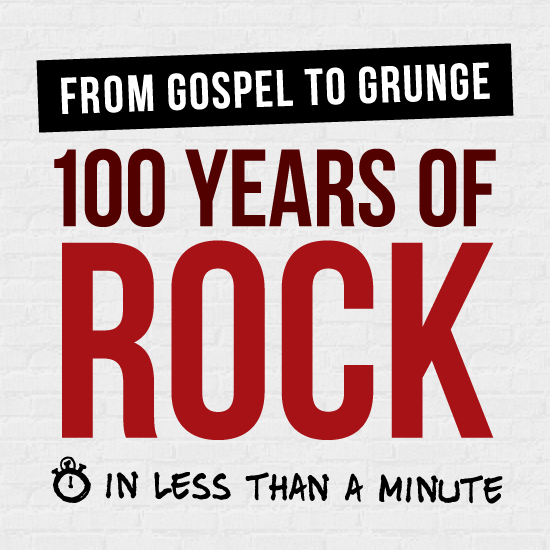
Click the image above and you’ll enter an interactive/moving graphic that gives you a fairly nice genealogy of rock n roll and the many forms of music it later spawned. The graphic starts you with the blues, appalachian folk, and bluegrass. Eventually you hit the 1950s and the advent of rock. Then you keep traveling through time, reaching the hard rock, glam rock and punk of the 70s; the power metal and emerging grunge of the 80s; the post metal and neo folk of the 90s; and beyond. At any point, you can click the pause button, click on the name of a particular musical genre (eg Gothabilly), and hear a sample of the music. When you’re done, you might want to check out some of the related items below:
A History of Rock ‘n’ Roll in 100 Riffs
The Evolution of the Rock Guitar Solo: 28 Solos, Spanning 50 Years, Played in 6 Fun Minutes
The History of Music Told in Seven Rapidly Illustrated Minutes
The Story of the Guitar: The Complete Three-Part Documentary
via Digg
Don’t miss anything from Open Culture. Sign up for our Daily Email or RSS Feed. And we’ll send cultural curiosities your way, every day.
Read More...Barry White’s Philosophy of Music and Making Love, Animated
Blank on Blank returns with an animated interview with Barry White, the singer-songwriter who rose to prominence during the 1970s, recording songs that put us all in a loving mood. With hits like “Can’t Get Enough Of Your Love Baby,” “You’re the First, the Last, My Everything,” and “Love Theme” (recorded by his 40-piece orchestral group The Love Unlimited Orchestra), White reached right into our bedroom and tried to nurture the best parts of humanity and subdue the worst. As he says in the animated interview above, “When a man is making love, the last thing he thinks about is war!” (Yes, it’s a gendered comment, but, let’s face it, it’s almost always men that screw up the world.) Other artists and authors featured in the Blank on Blank animated series include Kurt Cobain, Grace Kelley, Janis Joplin, Ray Charles, The Beastie Boys, David Foster Wallace, Jim Morrison & Dave Brubeck.
Don’t miss anything from Open Culture. Sign up for our Daily Email or RSS Feed. And we’ll send cultural curiosities your way, every day.
Read More...Read Dictator Kim Jong-il’s Writings on Cinema, Art & Opera: Courtesy of North Korea’s Free E‑Library
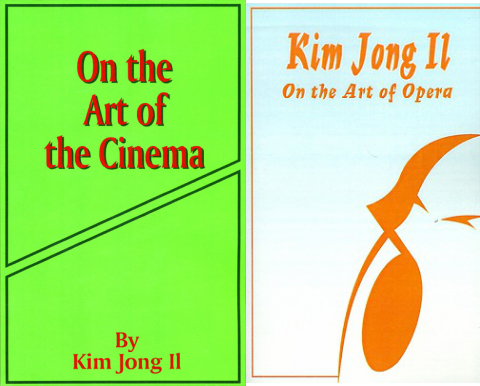
Kim Jong-Il (1941–2011), son of North Korea’s despotic Kim Il-sung and a tyrant in his own filial right, had as many titles as he did talents, with honorifics including the Sun of the Nation and the Shining Star of Paektu Mountain. Highfalutin nicknames aside, the younger dictator was a pretty able guy. North Korean sources assert that the Dear Leader once shot a 38 under par with 11 birdies (in his first and only game of golf), and could alter the weather using the power of his mind. Having turned his intellect to academia, Kim wrote 1500 books while studying at university. He also theorized extensively about art, cinema, and opera.
Kim once served as the Movie and Arts Division Director in North Korea’s Propaganda and Agitation Department, and was a renowned cinephile. As befitting a man whose personal video library reportedly housed over 20,000 titles, Kim (or some unfortunate ghostwriters) published numerous lectures and pamphlets on film, some of which are available in the Democratic Republic of Korea’s E‑Library. In his text The Cinema and Directing, for example, Kim shows off his talents for writing stilted academic prose while discussing ideology:
The ideological kernel of a production is the seed which the director and all the other creative workers should bring into flower through their collective efforts and wisdom. It is not only the basis of the interpretation by the individual creative workers, but also the foundation on which they all combine to produce one single cinematic presentation. When all interpretations are conducted on the basis of one seed, they form the components of one cinematic presentation because they are built on the same foundation [et cetera, ad nauseum].
Kim also pontificated on matters of literature. The treatise, entitled Life and Literature, offers the Ever-Victorious, Iron-Willed Commander’s thoughts on the essence of writing:
Literature belongs to the domain of humanics [sic]. The essential characteristic of literature as a humanics [sic] consists of describing real people and serving man… To say that literature portrays people means that it describes people and their lives, people who live, breathe, think and act as they do in real life. That literature serves man means that it solves urgent and important human problems through people and their lives and thus teaches them what life is and influences them to lead an honourable life. It is only through an accurate portrayal of people and their lives that literature can provide proper solutions for valuable human problems, and exert a great influence on people.
The key words here are “people” and “lives.” Got it?
Lest you dismiss these writings as pseudo-intellectual nonsense, it’s important to note that some philosophical interpretation is required. It’s the meanings behind the words, and the things that Kim leaves unsaid, that make up the real meat and potatoes of the piece… Or something.
You can find more of Kim Jong-il’s writings (alongside those of his father, Kim Il-sung) at the Democratic Republic of Korea E‑Library. Other titles include On the Art of the Drama and On the Art of Opera, which gets some pretty stellar reviews on Amazon. Take for example: “With over five books published per year in North Korea, it is a challenge to pick a single favorite. However, this book is a standout for North Korean opera connoisseurs and beginners alike.”
Ilia Blinderman is a Montreal-based culture and science writer. Follow him at @iliablinderman.
Related Content:
North Korea’s Cinema of Dreams
A Slo-Mo Look Inside North Korea
Orchestral Manoeuvres in North Korea Prove Yet Again That Music is Universal
Read More...Alain de Botton Shows How Art Can Answer Life’s Big Questions in Art as Therapy
Alain de Botton, pop philosopher, has come out with a new book. Like his others, it’s full of sweeping ideas about an entire mode of human existence. He’s written on religion, sex, success, and happiness, and now he takes on art in Art as Therapy, co-written with art historian and author John Armstrong. Like all of de Botton’s ventures, the new book is sure to polarize. Many people find his work powerful and immediate, many see it as blithe intellectual tourism. To the latter critics, one might reply that de Botton’s approach is somewhat like that of other non-professional philosophers ancient and modern, from Plato to Schopenhauer, who addressed any and every area of life. And yet de Botton is a professional of another kind—he is a professional author, speaker, and self-help guru, and unlike his predecessors, he expressly sells a product. There’s no inherent reason why this should render his philosophy suspect. Yet, to use a favorite descriptor of his, some may find his media savviness vulgar, as Socrates found the so-called “sophists” of his day (a term of abuse that may be generally undeserved then and now).
In the video above—one of de Botton’s “Sunday Sermons” for his School of Life, an organization that more and more resembles his vision of a “religion for atheists”—de Botton lays out the book’s argument in a pretty unconventional way. The intro looks exactly like an evangelical church service, scored by a Robbie Williams song, which de Botton uses as his first example of “art.” It’s a tongue-in-cheek demonstration of de Botton’s claim that “art is our new religion… culture is something that is imminently suited to filling [religion’s] shoes.” Whether all of this large talk, pseudo-religiosity, and Robbie Williams music inspires, bores, or disturbs you is a personal matter, I suppose, but it does prepare one for something very different from a philosophical lecture in any case. This is, in fact, a sermon, replete with literary and theoretical references, tailored to offer answers to Life’s Big Questions.
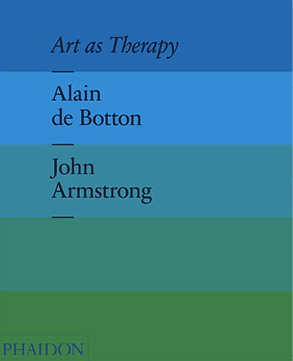 De Botton first identifies the problem. While the secular gatekeepers of culture pretend to believe in the mollifying spiritual effects of art, “in fact,” he says, “the idea is dead.” Museums are moribund because, for example, they don’t directly address individual’s fear of death. Presumably, his “art as therapy” approach does. The book’s website contains snippets divided into broad categories like “Politics,” “Work,” “Love,” “Anxiety,” “Self,” and “Free Time.” In his sermon, de Botton doesn’t seem to evince any recognition of the field of art therapy, which has been chugging along since the early 20th century, but as he tells Joshua Rothman in an interview for The New Yorker he means the word therapy—“a big, simple, vulgar word”—broadly. Sounding for all like an Anglican theologian, de Botton says of an annunciation altarpiece by Fra Fillippo Lippi:
There’s a sudden tenderness here, which is so far removed from the harshness outside. If I were to put a caption here, it might say: ‘Our world, for all its technological sophistication, is lacking in certain qualities. But this painting is a visitor from another world, where those qualities—tenderness, reverence, and modesty—are very highly valued. Take it as an argument against Fox News and the New York Post. Use it to find the still places in yourself.’
The notion of this piece of art as “an argument” on the same conceptual plane as corporate mass media seems to contradict de Botton’s premise that it’s “from another world.” This cheek-by-jowl referencing of the sacred and profane, high and low, offends the sensibilities of several philosophical thinkers, and may have offended Fra Fillippo Lippi. But perhaps it’s too easy to be cynical about de Botton’s populist approach. If all of his evangelism seems like nothing more than elaborate publicity for his books, he’s certainly made things difficult for himself by founding a school. Whether you find his ideas compelling or not, he proves himself a passionate, if not particularly modest, thinker attempting to grapple with the problems of middle-class Western malaise and existential angst.
Related Content:
Alain De Botton Turns His Philosophical Mind To Developing “Better Porn”
A Guide to Happiness: Alain de Botton Shows How Six Great Philosophers Can Change Your Life
Alain de Botton Proposes a Kinder, Gentler Philosophy of Success
Download 100 Free Online Philosophy Courses and Start Living the Examined Life
Josh Jones is a writer and musician based in Durham, NC. Follow him at @jdmagness
Read More...The University of Richmond Animates the 1932 Atlas of the Historical Geography of the United States

In 1902, the newly established Carnegie Institution of Washington set out to develop “a really first rate atlas of American history.” Work on the atlas began in earnest in 1912, under the direction of the naval historian Charles O. Paullin, who spent the better part of the next 15 years bringing it to life. In 1929, the American Geographic Society (AGS), along with the eminent geographer John K. Wright, took over the project and brought it to completion. The Atlas of the Historical Geography of the United States was finally published in 1932 to wide critical acclaim. Called a “monument to historical scholarship,” the compendium featured nearly 700 individual maps that gave visual insights into 500 years of American history. Topic covered included the “exploration and settlement of the North American continent, the location of colleges and churches, disputes over international and state boundaries, voting in presidential elections and in Congress, reforms from women’s suffrage to workmen’s compensation, transportation, industries, agriculture, commerce, the distribution of wealth, military history” and much more.
The Atlas of the Historical Geography of the United States remains a valuable historical resource today. But, for all of these years, it had one notable shortcoming. Around the time of its first publication, John K. Wright acknowledged that “The ideal historical atlas might well be a collection of motion-picture maps, if these could be displayed on the pages of a book without the paraphernalia of projector, reel, and screen.” The technology that would lend itself to creating motion-picture maps wasn’t available in the 1930s. But it is today. And thanks to the University of Richmond’s Digital Scholarship Lab, we can now view The Atlas of the Historical Geography of the United States in a new digital, sometimes animated format. If you want to see a good example of historical data put into motion, then you might want to check out this map of American Explorations in the West, 1803–1852. (Click here and then click “Animate” at the bottom of the screen.) This map will trace for you the expeditions of Lewis and Clark and many other explorers. Then, if you’re ready to be an explorer yourself, you can start your journey through the digitized atlas by entering the Table of Contents.
Related Content:
Visualizing Slavery: The Map Abraham Lincoln Spent Hours Studying During the Civil War
Henry David Thoreau’s Hand-Drawn Map of Cape Cod (1866)
An Interactive Map of Odysseus’ 10-Year Journey in Homer’s Odyssey
Geography of World Cultures by Martin Lewis (Stanford) in our collection of 825 Free Online Courses
Read More...Heavy Metal: BBC Film Explores the Music, Personalities & Great Clothing That Hit the Stage in the 1980s
In 1982, John Michael Osbourne was playing a show at the Veterans Memorial Auditorium, in Des Moines, Iowa. During the set, a fan tossed a bat onstage. Having drunkenly bitten off a dove’s head some months earlier, Osbourne obeyed his instincts and decapitated the bat in similar fashion. With a single bite, Osbourne, known as Ozzy to his legion fans, had become the most notorious example of metal’s dangerous, ungodly ways.
Those wary of metal’s loud sounds and louder hair will likely be surprised by what they find in the BBC documentary, Heavy Metal (1989), above. Interspersed amidst headbanging performances by Metallica, Motorhead, and Slayer, Heavy Metal includes several entertaining interviews, including an arrestingly sedate Osbourne together with Geezer Butler, Black Sabbath’s bassist and lyricist, who discuss launching their careers in a blues band. How does Osbourne justify the grim, confronting nature of Black Sabbath’s lyrics?
“It’s heavy metal, so you’ve got to put a heavy lyric to it. I suppose writing about the darker forces and about the darker sides of, whatever, fits the music. You would hardly write about a love song to that… kind of heaviness.”
In contrast with their brash, outsized personas, most interviewees are surprisingly demure. Axl Rose’s boasts of Guns N Roses’ musical integrity aside, Black Sabbath, Napalm Death, and Iron Maiden all prove disappointing ambassadors of satan-worship, providing lucid commentary on the state of metal, the differences between its American and English varieties, and codpieces. Iron Maiden’s Bruce Dickinson, whose non-musical pursuits include beer brewing, piloting commercial aircraft, penning novels, and Olympic-level fencing, distinguishes himself as the most thoughtful and engaging of the bunch.
For an entertaining look at the state of metal in 1989, watch the full documentary here. It’s also listed in our collection of Free Documentaries, part of our collection of 635 Free Movies Online.
Ilia Blinderman is a Montreal-based culture and science writer. Follow him at @iliablinderman.
Related Content:
Headbanging Anthropologist Takes Us Through the World of Heavy Metal in 2005 Documentary
Horror Legend Christopher Lee Presents a Heavy Metal Version of The Little Drummer Boy
Orson Welles Records Two Songs with the 1980s Heavy-Metal Band Manowar
Read More...
Designers Charles & Ray Eames Create a Promotional Film for the Groundbreaking Polaroid SX-70 Instant Camera (1972)
For several decades of its history, the Polaroid was called a “Land Camera” after the company’s founder Edwin Land, and the product line included not only consumer devices but also high-end machines like the SX-70, a folding SLR camera introduced in 1972. The SX-70 boasted a host of impressive features that allowed photographers to achieve the effects of non-instant SLRs such as “changes in depth of field, double exposure, fixed-point focusing, and closeup photography.” The SX-70 made a considerable impression on famed husband and wife design team Charles and Ray Eames, so much so that they produced the 11-minute advertisement above describing in detail the SX-70’s highly complex operations. In his introduction, Charles Eames tells us that no less an authority than Alfred Stieglitz “favored any means that might free the photographer’s whole energies so that they could be channeled in the direction of the decision, the picture itself.” Thus, Edwin Land’s inventions are given the imprimatur of the father of fine art photography himself, and in 1972, the SX-70 was Land’s highest achievement to date.
The Polaroid instant camera seems to have come full circle from consumer toy to utilitarian snapshot-maker to artists’ experimental tool to instrument of retro-hipsterism to consumer toy again. But the physical, real-world Polaroid aesthetic almost met its end in 2008 when the company discontinued production of its instant film, prompting the creators of the Impossible Project to “[save] analog instant photography from extinction by releasing various, brand new and unique instant films.” VP Dave Bias demonstrates the project’s device, which allows smartphone photogs to print images on Polaroid-style film. Responding to the massive demands of 21st century détourned nostalgia, Polaroid has introduced new lines of instant cameras, and Fuji is also bridging the Instagram/Polaroid divide with a portable printer this spring. But what the Impossible Project highlights—as the Eames did in ‘72—is just how much the Polaroid became a means of making fine art as well as kitsch, a too often unremarked upon application of the famous instant camera and the visual aesthetics it bequeathed the digital age.
via Mental Floss
Related Content:
Watch Laurence Olivier, Liv Ullmann and Christopher Plummer’s Classic Polaroid Ads
The Masterful Polaroid Pictures Taken by Filmmaker Andrei Tarkovsky
Josh Jones is a writer and musician based in Durham, NC. Follow him at @jdmagness
Read More...The Ten-Year Lunch: Watch the Award-Winning Documentary About the Great Writers Who Sat at the Algonquin Round Table
After reaching the rank of Sergeant during World War I, Alexander Woollcott returned to New York to become a drama critic for the New York Times. Woollcott was a man of large bulk and outsized personality, whose sharp, acerbic wit made him popular with his readers. According to The Ten-Year Lunch, an Oscar-winning documentary about the New York group of writers and journalists known as the Algonquin Round Table, Woollcott’s quick tongue made his bombastic presence nearly unbearable to his friends:
When he returned from the war, Woollcott boasted of his military adventures so often and so loudly that his friends grew tired of listening. He began every sentence with “When I was in the theatre of war…” Irritated by his pomposity, press agent Murdoch Pemberton lured Woollcott [to the Algonquin Hotel] with the promise of an ace pastry chef. The idea was to hold a sort of roast, at which a number of critics and journalists from around town would come and poke fun at him.
For better or worse, the attempt to puncture Woollcott’s ego at the Algonquin Hotel was unsuccessful. Rather than take offence, Woollcott was flattered by the attention, and the various figures in attendance also thoroughly enjoyed themselves. Serendipitously, the legendary luncheons of the Algonquin Round Table were born.
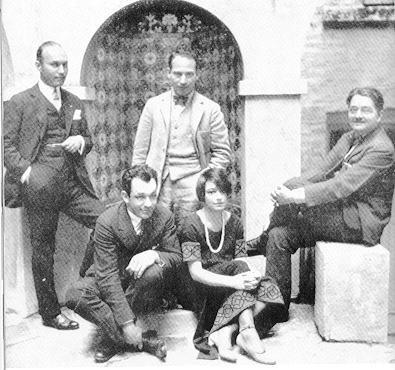
The near-daily meetings at the Algonquin Hotel fostered a close-knit cultural fraternity of New York’s best writers, illustrators, and artists. The group vacationed together at their jointly-owned Vermont island, played games of poker wagering houses and honeymoons, and criticized each other’s work. Whenever a member of the Round Table would make a conceited remark, everyone would immediately rise and bow, honoring their friend’s regal affectations. The only exception to the rule was Woollcott, whose bread and butter pomposity was tolerated by virtue of its regularity.
With its interviews of original Table members, the documentary is a tantalizing look at the lives of the men and women who ruled New York’s cultural milieu during the heyday of the printed word. Equal parts wish for the idyllic past and history of New York’s biggest cultural players, The Ten-Year Lunch leaves one with a pang of oddly potent nostalgia. We can’t recommend it enough.
In the image above, see Art Samuels, Charlie MacArthur, Harpo Marx, Dorothy Parker and Alexander Woollcott
Ilia Blinderman is a Montreal-based culture and science writer. Follow him at @iliablinderman.
Read More...The Beatles Perform a Fun Spoof of Shakespeare’s A Midsummer Night’s Dream (1964)
Before Brian Epstein discovered The Beatles in 1961, they looked nothing like the British mop-top mods of their early sixties pop phase. As the Quarrymen, they aped the looks of American fifties rockers (see a slideshow in this fan-made video of “In Spite of All the Danger”): Sometimes they dressed like folk revivalists in checkered shirts and jeans, sometimes like a Carl Perkins rockabilly band in matching suits and skinny ties, and sometimes like pompadoured greasers straight out of West Side Story.
But even after the band acquired its distinctive look and wrote a cache of original songs, they were still “competing for increased exposure just like everybody else.” This meant numerous goofy publicity stunts, every one of which they seemed to thoroughly love. In one such affair, the foursome taped a television special called “Around the Beatles,” a reference to the theater-in-the-round studio setup. In the first part of the program, they donned yet another costume, Shakespearean dress, and staged a spoof of Act V, Scene I of A Midsummer Night’s Dream in honor of Shakespeare’s 400th anniversary. (See the original black-and-white BBC broadcast from April 28, 1964 above. The show was broadcast in America on ABC that November, in color.)
After some fanfare, “Around the Beatles” opens on Ringo, in hose and doublet, firing a cannon. Then we get the obligatory hoard of screaming teenage fans singing the praises of each Beatle and marching into the studio with signs and banners. After another trumpet fanfare, the play begins, and we’re off into slapstick British comedy, with a mugging Paul as Pyramus, sneering John as Thisbe, smirking George as Moonshine, and a scene-chewing Ringo as Lion. The hecklers in the box seats were scripted, mostly (one yells “go back to Liverpool!”—probably not a plant). Overall the silly skit confirms what I’ve always maintained: if the Beatles’ hadn’t made it as musicians, they’d have done well to stay together as a comedy troupe.
The second part of the special featured musical performances from several other acts and, of course, from the Beatles themselves. See the band bop along to a medley of “Love Me Do”/ “Please Please Me”/ “From Me to You”/ “She Loves You”/ “I Want to Hold Your Hand” above. They prerecorded the music on April 19th and mimed the performances, as you can surely tell from the total lack of amplifiers onstage. This was, as it is again, the way of things in pop music on television. But if you are one of those who think The Beatles didn’t put on a good live show, Colin Fleming at The Atlantic begs to differ, with a thorough explication of rare recordings from an October 1963 performance in Stockholm.
via Brain Pickings
Related Content:
Peter Sellers Performs The Beatles “A Hard Day’s Night” in Shakespearean Mode
Pink Floyd’s David Gilmour Sings Shakespeare’s Sonnet 18
Shakespeare’s Satirical Sonnet 130, As Read By Stephen Fry
Find Shakespeare’s Collected Works in our Free eBooks and Free Audio Books Collections
Download Shakespeare Courses from our Collection of Free Online Courses
Josh Jones is a writer and musician based in Durham, NC. Follow him at @jdmagness
Read More...The Science of Willpower: 15 Tips for Making Your New Year’s Resolutions Last from Dr. Kelly McGonigal
At the stroke of midnight, millions of New Year’s resolutions went into effect, with the most common ones being lose weight, get fit, quit drinking and smoking, save money, and learn something new. Unfortunately, 33% of these resolutions will be abandoned by January’s end. And upwards of 80% will eventually fall by the wayside. Making resolutions stick is tricky business. But it’s possible, and Stanford psychologist Kelly McGonigal has a few scientifically-proven suggestions for you.
For years, McGonigal has taught a very popular course called The Science of Willpower in Stanford’s Continuing Studies program, where she introduces students to the idea that willpower is not an innate trait. Rather it’s a “complex mind-body response that can be compromised by stress, sleep deprivation and nutrition and that can be strengthened through certain practices.” For those of you who don’t live in the San Francisco Bay Area, you can also find McGonigal’s ideas presented in a recent book, The Willpower Instinct: How Self-Control Works, Why It Matters, and What You Can Do to Get More of It, which just came out in paperback yesterday. Below, we have highlighted 15 of Dr. McGonigal’s strategies for increasing your willpower reserves and making your New Year’s resolution endure.
- Will power is like a muscle. The more you work on developing it, the more you can incorporate it into your life. It helps, McGonigal says in this podcast, to start with small feats of willpower before trying to tackle more difficult feats. Ideally, find the smallest change that’s consistent with your larger goal, and start there.
- Choose a goal or resolution that you really want, not a goal that someone else desires for you, or a goal that you think you should want. Choose a positive goal that truly comes from within and that contributes to something important in life.
- Willpower is contagious. Find a willpower role model — someone who has accomplished what you want to do. Also try to surround yourself with family members, friends or groups who can support you. Change is often not made alone.
- Know that people have more willpower when they wake up, and then willpower steadily declines throughout the day as people fatigue. So try to accomplish what you need to — for example, exercise — earlier in the day. Then watch out for the evenings, when bad habits can return.
- Understand that stress and willpower are incompatible. Any time we’re under stress it’s harder to find our willpower. According to McGonigal, “the fight-or-flight response floods the body with energy to act instinctively and steals it from the areas of the brain needed for wise decision-making. Stress also encourages you to focus on immediate, short-term goals and outcomes, but self-control requires keeping the big picture in mind.” The upshot? “Learning how to better manage your stress is one of the most important things you can do to improve your willpower.” When you get stressed out, go for a walk. Even a five minute walk outside can reduce your stress levels, boost your mood, and help you replenish your willpower reserves.
- Sleep deprivation (less than six hours a night) makes it so that the prefrontal cortex loses control over the regions of the brain that create cravings. Science shows that getting just one more hour of sleep each night (eight hours is ideal) helps recovering drug addicts avoid a relapse. So it can certainly help you resist a doughnut or a cigarette.
- Also remember that nutrition plays a key role. “Eating a more plant-based, less-processed diet makes energy more available to the brain and can improve every aspect of willpower from overcoming procrastination to sticking to a New Year’s resolution,” McGonigal says.
- Don’t think it will be different tomorrow. McGonigal notes that we have a tendency to think that we will have more willpower, energy, time, and motivation tomorrow. The problem is that “if we think we have the opportunity to make a different choice tomorrow, we almost always ‘give in’ to temptation or habit today.”
- Acknowledge and understand your cravings rather than denying them. That will take you further in the end. The video above has more on that.
- Imagine the things that could get in the way of achieving your goal. Understand the tendencies you have that could lead you to break your resolution. Don’t be overly optimistic and assume the road will be easy.
- Know your limits, and plan for them. Says McGonigal, “People who think they have the most self-control are the most likely to fail at their resolutions; they put themselves in tempting situations, don’t get help, give up at setbacks. You need to know how you fail; how you are tempted; how you procrastinate.”
- Pay attention to small choices that add up. “One study found that the average person thinks they make 14 food choices a day; they actually make over 200. When you aren’t aware that you’re making a choice, you’ll almost always default to habit/temptation.” It’s important to figure out when you have opportunities to make a choice consistent with your goals.
- Be specific but flexible. It’s good to know your goal and how you’ll get there. But, she cautions, “you should leave room to revise these steps if they turn out to be unsustainable or don’t lead to the benefits you expected.”
- Give yourself small, healthy rewards along the way. Research shows that the mind responds well to it. (If you’re trying to quite smoking, the reward shouldn’t be a cigarette, by the way.)
- Finally, if you experience a setback, don’t be hard on yourself. Although it seems counter-intuitive, studies show that people who experience shame/guilt are much more likely to break their resolutions than ones who cut themselves some slack. In a nutshell, you should “Give up guilt.”
To put all of these tips into a bigger framework, you can get a copy of Kelly McGonigal’s book, The Willpower Instinct: How Self-Control Works, Why It Matters, and What You Can Do to Get More of It. Or you can get The WillPower Instinct, as a free audio book, if you care to try out Audible.com’s free trial program.
If you live in the SF Bay Area, you can take Kelly’s The Science of Willpower course that begins on January 13. (Anyone can enroll, and yes, I know that because I help run the Continuing Studies program at Stanford.)
Finally you might also want to peruse How to Think Like a Psychologist (iTunes Video), a free online course led by Kelly McGonigal. It appears in our collection of 800 Free Courses Online.
Related Content:
The Power of Empathy: A Quick Animated Lesson That Can Make You a Better Person
Jacques Lacan’s Confrontation with a Young Rebel: Classic Moment, 1972
New Animation Explains Sherry Turkle’s Theories on Why Social Media Makes Us Lonely
Free Online Psychology Courses (Part of our list of 800 Free Online Courses)
Read More...Support Us
We're hoping to rely on loyal readers, rather than erratic ads. Please click the Donate button and support Open Culture. You can use Paypal, Venmo, Patreon, even Crypto! We thank you!

About Us

Open Culture scours the web for the best educational media. We find the free courses and audio books you need, the language lessons & educational videos you want, and plenty of enlightenment in between.
Advertise With Us

FREE UPDATES!
GET OUR DAILY EMAIL
Get the best cultural and educational resources on the web curated for you in a daily email. We never spam. Unsubscribe at any time.
FOLLOW ON SOCIAL MEDIA

Open Culture editor Dan Colman scours the web for the best educational media. He finds the free courses and audio books you need, the language lessons & movies you want, and plenty of enlightenment in between.
Advertise With Us

