Berlin Street Scenes Beautifully Caught on Film (1900–1914)
Somewhere along the way, we’ve shown you vintage footage of 1906 San Francisco (before and after the devastating earthquake), 1927 London, 1930s Havana, and New York City circa 1889–1906. Now, let’s do the time warp again and revisit the street life of Belle Époque Berlin. Bikes, cars, trolleys, trains — they all crammed the streets of a city moving headlong into modernity. And with a fair amount of chaos to show for it. But, even so, these were idyllic days. Shot between 1900 and 1914, the videos show us a more relaxed city, one unaware that World War I and decades of destruction were right around the corner.
If you would like to support the mission of Open Culture, consider making a donation to our site. It’s hard to rely 100% on ads, and your contributions will help us continue providing the best free cultural and educational materials to learners everywhere. You can contribute through PayPal, Patreon, and Venmo (@openculture). Thanks!
Related Content:
Free History Courses from Our Collection of 700 Free Courses Online
British Actors Read Poignant Poetry from World War I
European Cultural History in 91 Lectures (Free)
Read More...Building Statues for Nikola Tesla and Bob Dylan: Two Kickstarter Campaigns
In the matter of a month, a group called Northern Imagination raised $127,000 on Kickstarter, the amount needed to fund the building of a statue dedicated to the inventor Nikola Tesla in Silicon Valley. It’s a way of paying tribute to “the person who used his brilliance to advance society” by making “hundreds of significant and groundbreaking inventions in areas of wireless energy, wireless communication, magnetism, radio, x‑rays, cosmic rays, radar, robotics, engine-powered aircraft and much more.” As currently planned, the statue will sit on California Ave in Palo Alto (right in my neck of the woods). Naturally, it will host a free Wi-Fi hotspot and also a time capsule to be opened on Jan 7, 2043.
Meanwhile, halfway across the country, the “Dylan by Duluth” campaign is hoping to raise $159,000 (again on Kickstarter) to build a statue honoring Duluth’s favorite son, the troubadour Bob Dylan. Once complete, the bronze statue will stand approximately 12 feet 6 inches tall and hopefully sit somewhere near Highway 61. Three days in, the still-very-young campaign has received $5,089 from 40 backers. You can help make the Dylan monument a reality right here.
Related Content:
Bob Dylan and The Grateful Dead Rehearse Together in Summer 1987. Listen to 74 Tracks.
Two Legends Together: A Young Bob Dylan Talks and Plays on The Studs Terkel Program, 1963
Read More...Buzz Aldrin and Thomas Dolby Geek Out and Sing “She Blinded Me With Science”
Buzz Aldrin is maybe the coolest ex-astronaut alive, with the possible exception of Story Musgrave. Both of these guys are forging ahead with life at the age when lesser humans pack it in. At 77, Musgrave has a five-year-old son and plans to go back into space soon (as a tourist); 83-year-old Aldrin is developing a new sci-fi series based on his 1996 novel Encounter with Tiber. Cool, right? Just maybe don’t ask Buzz to dance to ‘80s synthpop. He does have a great sense of humor, though.
Watch Aldrin duet with Thomas Dolby on “She Blinded Me With Science” above. Buzz gets to shout “Science!” and bop back and forth like your grandfather rocking out at your wedding reception. It’s cute. The performance happened during a daylong Smithsonian conference called “The Future is Here.” Aldrin was one of the fourteen featured speakers who delivered “narrative talks that focused on both great triumphs and future innovations in science and technology.”
via Boing Boing
Related Content:
The Moon Disaster That Wasn’t: Nixon’s Speech In Case Apollo 11 Failed to Return
Live: Watch NASA’s Coverage of Asteroid As It Buzzes By Earth
Josh Jones is a writer and musician based in Washington, DC. Follow him at @jdmagness
Read More...Neil Young Busts a Music Store for Selling a Bootleg CSNY Album (1971)
Grizzled granddad of rock Neil Young has railed against so-called “lossy” digital formats—our current standard of consumer audio—for at least a couple of years now, promising to replace Mp3s with his own high-end digital service and player. He even references concerns about digital music quality on the alternately cranky and wistful endless jam opening track “Driftin’ Back,” from his most recent album, Psychedelic Pills.
His advocacy is admirable, given the dismal sound of so much digital music these days. I suppose it takes a fogey like Young—who remembers what records sounded like in the Golden Age of analog—to care about the decline of audio quality. Given Young’s dismay over disposable digital formats, one might assume he’d take a hard stance against one of their biggest drivers: music piracy. Instead, Young has gone on record saying
It doesn’t affect me because I look at the internet as the new radio. I look at the radio as gone. […] Piracy is the new radio. That’s how music gets around. […] That’s the radio. If you really want to hear it, let’s make it available, let them hear it, let them hear the 95 percent of it.
This position makes a certain amount of sense. Mp3s, like broadcast audio, are cheap simulacra of master recordings—useful as promotional tools. Those who care deeply about sound quality should be willing to pay for it in the form of lossless digital audio, CD, or vinyl. Listeners neither pay for traditional radio nor for stolen Mp3s.
That difference may explain why Young expressed a very different view of piracy forty-two years ago. Let’s drift back to 1971, when Young found bootlegged vinyl copies of Dylan and CSNY albums at a record store (above). In the first few minutes, Young meanders, the camera following. But skip ahead to 3:30 and watch him discover the bootlegs and confront the clerk, who has no idea who he is. The clerk stammers and stutters, Neil demands answers and then dramatically walks out with the CSNY bootleg album, forcing the clerk to pull him back in and call a higher-up. Then Neil makes a case for his musical property. (All while The Beatles’ Magical Mystery Tour plays in the background.)
It’s a pretty amazing exchange that shows how invested young Neil Young was in managing the products of his labor. He’s not so young and hungry now, the industry has undergone some seismic shifts, but he’s still fighting for control over his sound. And he has good reason to. Psychedelic Pills is an instant classic, as endearing as Neil in ’71. Check him out below in a live performance that year for the BBC.
Related Content:
Neil Young Busking in Glasgow, 1976: The Story Behind the Footage
‘The Needle and the Damage Done’: Neil Young Plays Two Songs on The Johnny Cash Show, 1971
Free: Listen to Dave Grohl’s Soundtrack for New Film Celebrating the Days of Analog Recording
Josh Jones is a writer and musician based in Washington, DC. Follow him at @jdmagness
Read More...The Outspoken Ayn Rand Interviewed by Mike Wallace (1959)
Yesterday we featured Alain de Botton’s television broadcast on the philosophy of Friedrich Nietzsche. Today, we feature another, earlier television broadcast on a much more recently active philosopher: Mike Wallace’s 1959 interview of Ayn Rand, writer and founder of the school of thought known as Objectivism. But should we really call Rand, who achieved most of her fame with novels like The Fountainhead and Atlas Shrugged, a philosopher? Most of us come to know her through her fiction, and many of us form our opinions of her based on the divisive, capitalism-loving, religion-hating public persona she carefully crafted. Just as Nietzsche had his ideas about how individual human beings could realize their potential by enduring hardship, Rand has hers, all to do with using applied reason to pursue one’s own interests.
Mainstream, CBS-watching America got quite an introduction to this and other tenets of Objectivism from this installment in what Mike Wallace calls a “gallery of colorful people.” The interviewer, in the allotted half-hour, probes as many Randian principles as possible, especially those against altruism and self-sacrifice. “What’s wrong with loving your fellow man?” Wallace asks, and Rand responds with arguments the likes of which viewers may never have heard before: “When you are asked to love everybody indiscriminately, that is to love people without any standard, to love them regardless of whether they have any value or virtue, you are asked to love nobody.” Does Ayn Rand still offer the bracing cure for a rudderless, mealy-mouthed America which has forgotten what’s what? Or does her philosophy ultimately turn out to be too simple — too simple to engage with, and too simple to improve our society? The debate continues today, with no sign of resolution.
Related Content:
Ayn Rand Talks Atheism with Phil Donahue
Colin Marshall hosts and produces Notebook on Cities and Culture and writes essays on literature, film, cities, Asia, and aesthetics. He’s at work on a book about Los Angeles, A Los Angeles Primer. Follow him on Twitter at @colinmarshall.
Read More...Bauhaus, Modernism & Other Design Movements Explained by New Animated Video Series
UK’s Open University has developed a fun way to market their design courses: a series of six short animations called “Design in a Nutshell” that briefly survey important movements in the arts and architecture—from the late-nineteenth century Gothic Revival to late-twentieth century Postmodermism. While the former looked far into the past, seeking to preserve tradition, the latter looked everywhere, gleefully dismantling, recycling, and recombining fragmented and irrecoverable histories.
Between the two extremes, three inter-related post-WWI movements sought to make peace with the industrial present and design for a harmonious future. The first one featured, the Bauhaus movement (above)—founded in Weimar, Germany by Walter Gropius in 1919—integrated the fine arts and industrial design into one school. Famous teachers included artists Paul Klee and Wassily Kandinsky. Bauhaus designs permeate the larger movement known as Modernism.
The animation above gives us the briefest gist of Modernism, a sweeping umbrella term for a host of radical ‑isms in the arts, literature, design, and architecture—impressionism, cubism, fauvism, futurism, brutalism, surrealism…. European and American artists turned their back on the old-world past after the mass slaughter of World War One. Not all Modernists found solace in the breakdown of the old order. Writers like T.S. Eliot found much reason to despair. But designers like Eero Saarinen and the husband and wife team Charles and Ray Eames embraced industrial techniques and mass production to create forward-looking, minimalist furniture and buildings that still define the way we live now.
The episode above, “American Industrial Design,” describes how industrial designers made innovative use of new materials and production methods to create sleek, streamlined products that reinvigorated the American market in the midst of the Great Depression. Designers like Norman Bel Geddes created a futuristic landscape that inspired faith in technological progress, even as much of the country still lived on struggling farms.
Bel Geddes’ most notable achievement was his design of the “Futurama” ride (which gave the animated show its name) at the 1939–40 World’s Fair. Part of the General Motors exhibit, “Futurama” whisked riders past detailed miniatures of “the world of tomorrow.” The optimism of some Modernist designers would be shattered by the technological horrors of World War Two. But for a few brief decades, the future looked entirely manageable with the right designs, techniques, materials, and savvy marketing.
You can find all six videos appearing in the Design in a Nutshell series on YouTube.
Related Content:
Charles & Ray Eames’ Iconic Film Powers of Ten (1977) and the Lesser-Known Prototype from 1968
Wassily Kandinsky Caught in the Act of Creation, 1926
Josh Jones is a writer and musician based in Washington, DC. Follow him at @jdmagness
Read More...Philip Roth Reads “In Memory of a Friend, Teacher & Mentor” (A Free Download Benefiting a Public Library)

Philip Roth announced his retirement from the writing life last fall, a few months shy of his 80th birthday. Now, on a computer in his New York City apartment, hangs a Post-It note that reads, “The struggle with writing is over.” There won’t be another novel. There won’t be a 29th.
Admirers of Philip Roth may have to settle for the occasional odd publication, like the eulogy Roth published in the New York Times in April, when his high school teacher and long-time friend passed away. His name was Bob Lowenstein. He taught at Weequahic High School in Newark, New Jersey, and Roth came to know him like this:
Bob was my homeroom teacher. This meant that I saw him first thing in the morning, every single day of the school year. I was never to take a language course with him — I had Mademoiselle Glucksman for French and Señorita Baleroso for Spanish — but I didn’t forget him. Who at Weequahic did? Consequently, when it came his turn to be mauled in Congress’s anti-Communist crusade of the 1940s and 1950s, I followed his fate as best I could in the stories that I had my parents clip from the Newark newspapers and mail to me.
I don’t remember how we came together again around 1990, about 40 years after I’d graduated Weequahic High. I was back in America from having lived largely abroad for some 12 years, and either I wrote to him about something or he wrote to me about something and we met for lunch at Zelda and his house in West Orange. In the spirit of Bob Lowenstein, I will put the matter in plain language, directly as I can: I believe we fell in love with each other.
In recent weeks, Roth visited the headquarters of Audible.com — also based in Newark, New Jersey — and recorded an audio version of his tribute. You can download it for free at Audible (or hear an excerpt below), and, for every download, Audible will donate $1 to the Newark Public Library, capping at $25,000. The download requires registering with Audible.
Separately, if you want to download a novel by Philip Roth, you can always head over to Audible.com and register for a 30-day free trial. You can download any audiobook for free. Then, when the trial is over, you can continue your Audible subscription (as I do — I love the service), or cancel it, and still keep the audio book. And, by the way, whenever someone signs up for a free trial, it helps support Open Culture. Also find more great reads in our collection of Free Audio Books.
Read More...Does Math Objectively Exist, or Is It a Human Creation? A New PBS Video Explores a Timeless Question
In a famous scene from Boswell’s Life of Samuel Johnson, the biographer and his subject come to discuss the bizarre theories of Bishop Berkeley, who posited that everything is immaterial—nothing has any real existence; it’s all just ideal concepts held together by the mind of God. If God should lose his mind or fall asleep or die, everything would fall to pieces or cease to exist. Boswell insists there’s no way to refute the idea. Johnson, kicking a large stone with such force that his foot rebounds, cries, “I refute it thus.”
Johnson’s little demonstration doesn’t actually refute Berkeley’s radical idealism. It’s a conundrum still with us, like Plato’s Euthyphro stumper, which asks whether the rules governing human behavior exist independently of the gods, who simply enforce them, or whether the gods make the rules according to their whims. In other words, is morality objective or subjective?
A similar problem occurs when we consider the existence of the rules that govern physical laws—the rules of mathematics. Where does math come from? Does it exist independently of human (or other) minds, or is it a human creation? Do we discover mathematical problems or do we invent them?
The question has engendered two positions: mathematical realism, which states that math exists whether we do or not, and that there is math out there we don’t know yet, and maybe never can. This position may require a degree of faith, since, “unlike all of the other sciences, math lacks an empirical component.” You can’t physically observe it happening. Anti-realists, on the other hand, argue that math is a language, a fiction, a “rigorous aesthetic” that allows us to model regularities in the universe that don’t objectively exist. This seems like the kind of relativism that tends to piss off scientists. But no one can refute either idea… yet. The video above, from PBS’s Idea Channel, asks us to consider the various dimensions of this fascinating and irresolvable question.
Related Content:
The Math in Good Will Hunting is Easy: How Do You Like Them Apples?
Incredible Mental Math Gymnastics on “Countdown”
Josh Jones is a writer and musician based in Washington, DC. Follow him at @jdmagness
Read More...The Philosophy of Nietzsche: An Introduction by Alain de Botton
“To those human beings who are of any concern to me, I wish suffering, desolation, sickness, ill treatment, indignities, profound self-contempt, the torture of self-mistrust, and the wretchedness of the vanquished.” Thus wrote forbiddingly mustachioed German philosopher Friedrich Nietzsche, articulating his counterintuitive view of suffering as something desirable. But surely the Nietzschean way could never lead to an enjoyable life? On the contrary, explains the television series Philosophy: A Guide to Happiness. “Friedrich Nietzsche believed that all varieties of suffering and failure were to be welcomed by anyone seeking happiness. We should regard them as tough challenges to be overcome in the same way as a climber might tackle a mountain.” Thus speaks the show’s host, popularizer of philosophers from Socrates to Seneca, Epicurus to Schopenhauer, Alain de Botton.
Nietzsche perhaps put more compellingly than any writer before or since the notion of “no pain, no gain.” De Botton, a philosophy enthusiast eager to look for theory in practice, visits a dedicated, sacrifice-making dancer from the English National Ballet, the combination of whose acquired physical grace and painful history of toenail bruises make the argument in a visceral way.
He then chats with a drinks distributor fresh off the failure of his first business venture and already working hard on his second. According to our host, Nietzsche “didn’t think that having failed was, in itself, enough. All lives have failures in them. What makes some lives fulfilled as well is the manner in which failure has been met.” Or, in the simpler words of the distributor himself, “How would you be able to judge your success if you haven’t failed?”
Although this broadcast works as an introduction, we don’t recommend you limit your learning about a philosopher with a voluminous body of written work to videos alone. In our collection of free eBooks, you can download eight of Nietzsche’s volumes in a variety of formats: Beyond Good and Evil, Ecce Homo, Homer and Classical Philology, Human, All Too Human, The Anti Christ, The Case Against Wagner, The Gay Science, and Thus Spake Zarathustra.
You can watch more episodes in Alain de Botton’s series, A Guide to Happiness here.
Related Content:
Free Online Philosophy Courses
Walter Kaufmann’s Lectures on Nietzsche, Kierkegaard and Sartre (1960)
Sartre, Heidegger, Nietzsche: Three Philosophers in Three Hours
Colin Marshall hosts and produces Notebook on Cities and Culture and writes essays on literature, film, cities, Asia, and aesthetics. He’s at work on a book about Los Angeles, A Los Angeles Primer. Follow him on Twitter at @colinmarshall.
Read More...Listen as Albert Einstein Calls for Peace and Social Justice in 1945
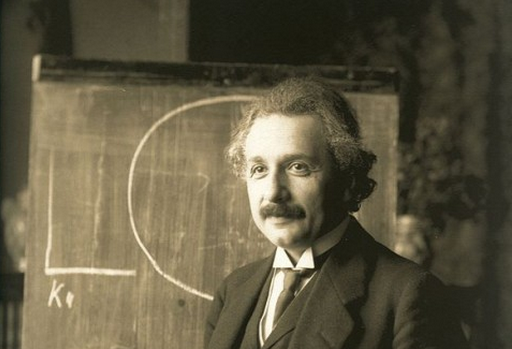
Here is a rare recording of Albert Einstein reading his speech on the immediate aftermath of World War II, “The War is Won, But the Peace is Not”:
The speech was delivered on December 10, 1945, at the Fifth Nobel Anniversary Dinner at the Hotel Astor in New York. Only four months earlier, the United States had dropped atomic bombs on civilian populations in the Japanese cities of Hiroshima and Nagasaki. Einstein didn’t work on the atomic bomb, but in 1939 he had signed a letter to President Franklin D. Roosevelt urging him to procure uranium and accelerate nuclear research. In his speech, Einstein draws a comparison between contemporary physicists and the founder of the Nobel Prize, who invented dynamite.
Physicists find themselves in a position not unlike that of Alfred Nobel himself. Alfred Nobel invented the most powerful explosive ever known up to his time, a means of destruction par excellence. In order to atone for this, in order to relieve his human conscience, he instituted his awards for the promotion of peace and for achievements of peace. Today, the physicists who participated in forging the most formidable and dangerous weapon of all times are harassed by an equal feeling of responsibility, not to say guilt. And we cannot desist from warning, and warning again, we cannot and should not slacken in our efforts to make the nations of the world, and especially their governments, aware of the unspeakable disaster they are certain to provoke unless they change their attitude toward each other and toward the task of shaping the future.
But Einstein says he is troubled by what he sees in the months following World War II.
The war is won, but the peace is not. The great powers, united in fighting, are now divided over the peace settlements. The world was promised freedom from fear, but in fact fear has increased tremendously since the termination of the war. The world was promised freedom from want, but large parts of the world are faced with starvation while others are living in abundance. The nations were promised liberation and justice. But we have witnessed, and are witnessing even now, the sad spectacle of “liberating” armies firing into populations who want their independence and social equality, and supporting in those countries, by force of arms, such parties and personalities as appear to be most suited to serve vested interests. Territorial questions and arguments of power, obsolete though they are, still prevail over the essential demands of common welfare and justice.
Einstein then goes on to talk about a specific case: the plight of his own people, the European Jews.
While in Europe territories are being distributed without any qualms about the wishes of the people concerned, the remainders of European Jewry, one-fifth of its prewar population, are again denied access to their haven in Palestine and left to hunger and cold and persisting hostility. There is no country, even today, that would be willing or able to offer them a place where they could live in peace and security. And the fact that many of them are still kept in the degrading conditions of concentration camps by the Allies gives sufficient evidence of the shamefulness and hopelessness of the situation.
Einstein concludes by calling for “a radical change in our whole attitude, in the entire political concept.” Without doing so, he says, “human civilization will be doomed.”
Note: The full text of “The War is Won, But the Peace is Not” is available in the Einstein anthologies Out of My Later Years and Ideas and Opinions.
Read More...Support Us
We're hoping to rely on loyal readers, rather than erratic ads. Please click the Donate button and support Open Culture. You can use Paypal, Venmo, Patreon, even Crypto! We thank you!

About Us

Open Culture scours the web for the best educational media. We find the free courses and audio books you need, the language lessons & educational videos you want, and plenty of enlightenment in between.
Advertise With Us

FREE UPDATES!
GET OUR DAILY EMAIL
Get the best cultural and educational resources on the web curated for you in a daily email. We never spam. Unsubscribe at any time.
FOLLOW ON SOCIAL MEDIA

Open Culture editor Dan Colman scours the web for the best educational media. He finds the free courses and audio books you need, the language lessons & movies you want, and plenty of enlightenment in between.
Advertise With Us

