The Acid Test Reels: Ken Kesey & The Grateful Dead’s Soundtrack for the 1960s Famous LSD Parties
“If you remember the ‘60s, you weren’t there.” The quote was supposedly uttered by Grace Slick. Or Paul Kantner. Or Dennis Hopper. The truth is no one really remembers who said it first.
Of course, the “60s” was not simply the decade that came between the ‘50s and the ‘70s but a shorthand for a generational revolt fueled in part by one stupid war and a general disillusionment with consumer capitalism. The ground zero for the “60s,” at least in the United States, was in San Francisco and, at the center of the scene, there was Ken Kesey, the Merry Pranksters and their legendary counterculture bacchanalias called Acid Tests. These happenings featured groovy flashing lights, live music from the likes of The Grateful Dead, and copious amounts of LSD. Up top, Kesey explains the meaning of the Acid Tests for you:
Thanks to the internet, you can experience a bit of what these original hippie fests were like. Above is audio from two shows in January 1966 which had Kesey and longtime Merry Prankster Ken Babbs cracking jokes and dropping truth bombs in between songs from the Grateful Dead. Below is the set list of that show along with the audio of two more shows with Kesey and the Dead. Some of the track listings might be incomplete probably because everyone was having too much fun to take notes. So crank it up and turn on, tune in and drop out.
The Fillmore Acid Test
Fillmore Auditorium, San Francisco, CA
January 8, 1966
1. Stage Chaos/More Power Rap
2. King Bee
3. I’m A Hog For You Baby
4. Caution: Do Not Step On Tracks >
5. Death Don’t Have No Mercy
6. Star Spangled Banner / closing remarksThe Sound City Acid Test
363 6th Street, San Francisco, CA
January 29, 1966
7. Ken Kesey interviewed by Frank Fey
8. Ken Babbs and harmonica
9. Take Two: Ken Kesey
10. Bull
11. Peggy The Pistol
12. One-way Ticket
13. Bells And Fairies
14. Levitation
15. Trip X
16. The End
The Pico Acid Test
Danish Center, Los Angeles, CA
March 12, 1966
1. Viola Lee Blues
2. You See A Broken Heart
3. In The Midnight Hour
[mis-dated, according to David Lemieux, and not corresponding to the vault copy’s setlist; these are probably from 3/19/1966]The San Francisco State Acid Test
Whatever It Is Festival
San Francisco State University, San Francisco, CA
Stereo Control Room Master (rec. 4:00AM — 6:00AM)
October 2, 1966
4. The Head Has Become Fat Rap
5. A Mexican Story: 25 Bennies
6. A Tarnished Galahad
7. Get It Off The Ground Rap >
8. It’s Good To Be God Rap >
9. Nirvana Army Rap >
10. The Butcher Is Back
11. Acid Test Graduation Announcement
12. Send Me To The Moon >Closing Rap
Credits on 10/2/66:
Voices: Ken Kesey and Hugh Romney
Guitar: Ken Kesey
Violin: Dale Kesey
Organ: Jerry Garcia
Engineering: Steve Newman, Ken Kesey, Mountain Girl
The San Francisco State Acid Test
Whatever It Is Festival
San Francisco State University, San Francisco, CA
October 2, 1966
1. Ken Kesey’s dialogue (isolated remix)Merry Prankster Sound Collage Sequences
October 2, 1966
2. Prankster Music/Sound Collage #1(sequence 1)
3. Kesey Rap > Prankster Music/Sound Collage #2 (sequence 2)
4. Prankster Sound Collage #3 > Prankster Raga(sequence 3)
Prankster Recordings broadcast over the P.A.End of Whatever It Is Festival
October 2, 1966
5. Closing Jam
6. Prankster ElectronicsAcid Test Graduation Jam
Winterland, San Francisco, CA
October 31, 1966
7. Jam Session (musicians unknown)
from The World Of Acid film soundtrack
Related Content:
Ken Kesey Talks About the Meaning of the Acid Tests in a Classic Interview
UC Santa Cruz Opens a Deadhead’s Delight: The Grateful Dead Archive is Now Online
The Grateful Dead Rock the National Anthem at Candlestick Park: Opening Day, 1993
Bob Dylan and The Grateful Dead Rehearse Together in Summer 1987. Listen to 74 Tracks.
Jonathan Crow is a Los Angeles-based writer and filmmaker whose work has appeared in Yahoo!, The Hollywood Reporter, and other publications. You can follow him at @jonccrow.
Read More...Visit The Museum of Online Museums (MoOM): A Mega Collection of 220 Online Exhibitions
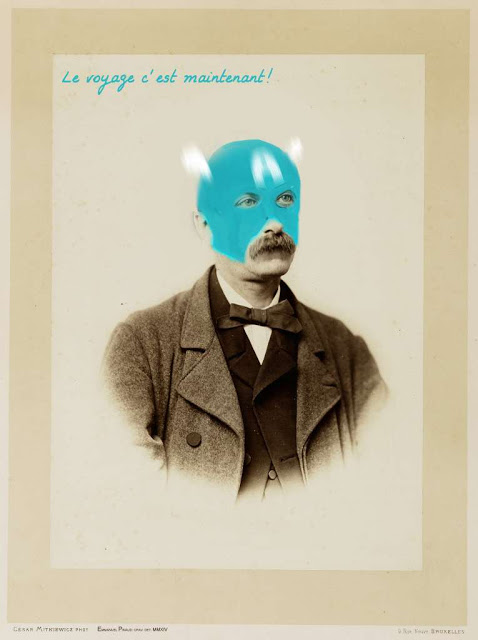
It is my habit, when travel looms, to case the Internet for obscure museums my destination might have to offer. Once loaded, I fixate. Chat me up about my itinerary, and you will definitely come away with the impression that these offbeat locales are the trip’s primary raison d’être.
It’s shocking how rarely I actually make it to one of these off-the-beaten path gems. Time flies and I rarely travel alone these days.
Take a recent family trip to London. Every time I brought up the Museum of Brands, my husband expressed reservations. “But what is it, exactly, other than a bunch of old labels?” he’d press.
I hemmed and hawed, realizing on the cellular level that neither he nor the kids could see the beauty in old labels. Dinosaurs, maybe. Vespas, no doubt. But old labels? This is how I found myself giving the British Museum nearly three times the Museum of Brand’s admission charge to join a mighty throng of pensioners, squinting at a handful of boring button fragments and a chunk of wood that no longer resembled a Viking Ship.
Next time, I swear…
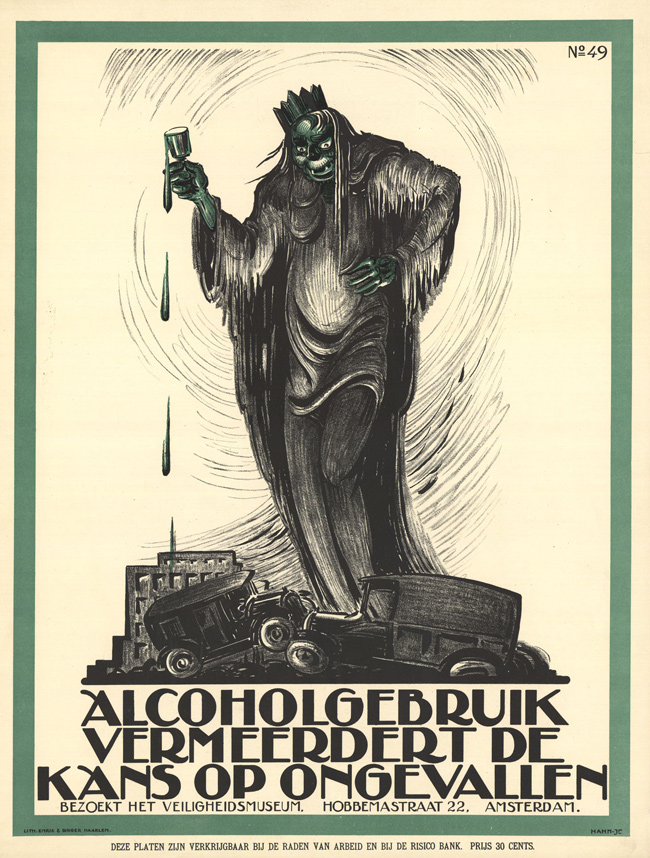
How fortunate for me and my ilk that Chicago design firm Coudal Partners is committed to laboring far outside its expected scope. In addition to championing Stanley Kubrick and poetry, they’ve taken it upon themselves to consolidate a panoply of digital collections into the Museum of Online Museums. (The preferred acronym is MoOM, FYI.)
Unlike that of certain of my traveling companions, Coudal Partners’ definition of what constitutes a museum is democratic. Generous, even. The Metropolitan Museum of Art, the Rijksmuseum, and the Musée d’Orsay share space with such non-brick-and-mortar companions as the Busy Beaver Button Museum, the Grocery List Collection, and Toaster Central.
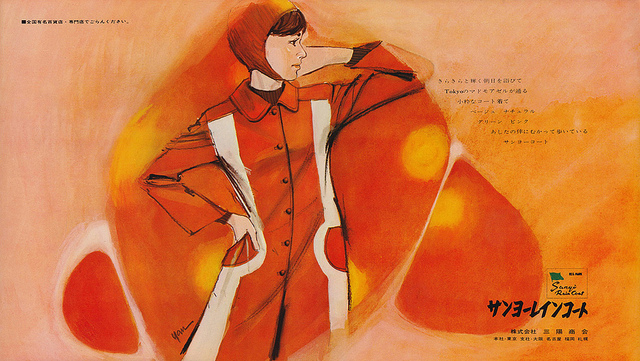
Like any major institution, MoOM touts their current exhibitions, a seasonal sampling of five. This spring brings together the Rijksmuseum’s Studio Project, NASA’s Space Food Hall of Fame, a collection of Dutch safety posters from 50 Watts, 40 retro-groovy Japanese ads compliments of Voices of East Anglia, and a photographic survey of eggnog cartons. (That last one really deserves a brick and mortar home. Location is immaterial. I’d just like to fantasize about visiting it someday.)

Meanwhile, the talk of the town here in New York City is the reappearance of Mmuseumm, an eclectic, non-profit housed in a 60-square-foot Tribeca elevator shaft. MoOM, take note.
Find more online exhibitions at the Museum of Online Museums.
Related Content:
The Metropolitan Museum of Art Puts 400,000 High-Res Images Online & Makes Them Free to Use
LA County Museum Makes 20,000 Artistic Images Available for Free Download
Download Over 250 Free Art Books From the Getty Museum
Ayun Halliday wrote about her experiences as a museum guard in her 3rd book, Job Hopper. Follow her @AyunHalliday
Read More...Morgan Freeman & Fake Neil deGrasse Tyson Teach Physics While High on Helium and Grass
Viral video #1: In a new ad for the Science Channel’s series, Through the Wormhole, actor Morgan Freeman uses helium to entice viewers into thinking about how physicists are studying gravity in places where it acts quite strangely. It’s kind of a cryptic message, but it grabs your attention, doesn’t it? Through the Wormhole returns to the airwaves, with Season 5, on June 4th.
Viral Video #2 asks you to imagine what happens when you put the grass in Neil deGrasse Tyson. “Everything is star stuff. This pizza, this cheese, this pepperoni.” That’s a reboot of Cosmos that may actually get ratings.
Read More...Salvador Dalí’s Haunting 1975 Illustrations for Shakespeare’s Romeo and Juliet
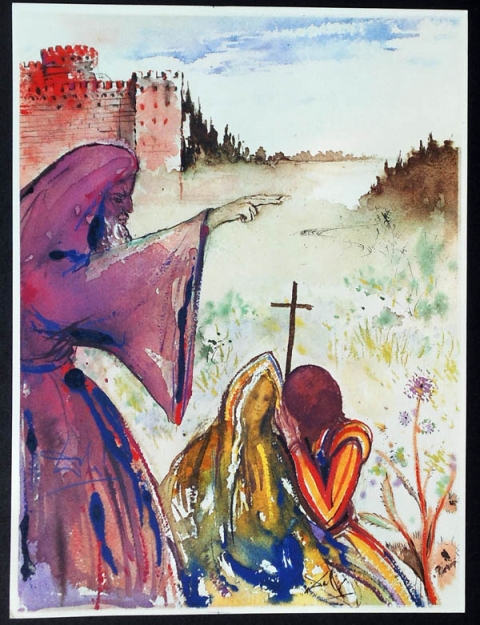
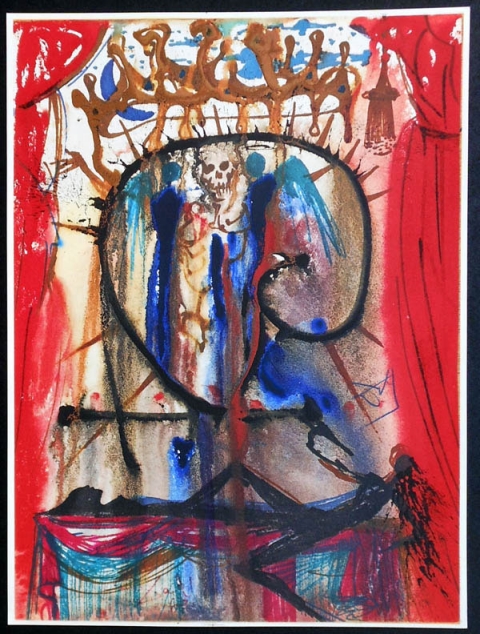
Even from just what we’ve posted about Salvador Dalí, you can tell he had a mission to spread his distinctive sensibility far and wide: he made films with Luis Buñuel, collaborated with Walt Disney and Alfred Hitchcock, showed up for Andy Warhol’s “screen tests,” and illustrated some of the best-known texts in western history, like Dante’s Divine Comedy, Lewis Carroll’s Alice’s Adventures in Wonderland, and Shakespeare’s Macbeth. All those projects might seem well suited to the Spanish surrealist’s famous skill at artistically rendering the torn edges of human consciousness, but what would he do when presented with something more psychologically straightforward — Romeo and Juliet, say? You can see the results of just such a project at Twisted Sifter, which presents ten notable illustrations from Dalí’s second Shakespearean project.
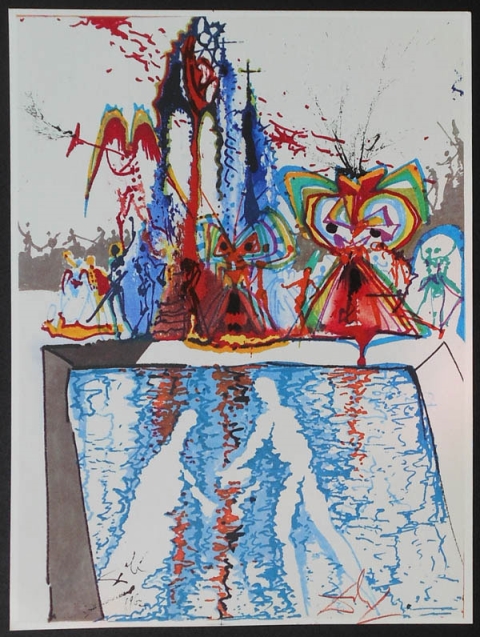
These images come from a 1975 Rizzoli and Rizzoli edition consisting of “ten off-set lithographs on heavy paper with 99 pages of bound text contained in a red/burgundy silk slipcase with the lithographs signed in the place.” You can find out more about this book at the site of Plainfield, Illinois’ Lockport Street Gallery, which offers the copy for sale and a warning against all the “fake prints” (inauthentic Dalí having long constituted a robust industry of its own) in circulation. Romeo and Juliet, perhaps due to its tendency to get assigned in high school, can come off as one of Shakespeare’s milder, more familiar plays, and modern interpretations of the material fall flat as often as they rise up to it. But Dalí’s contribution makes the old tale of star-crossed lovers strange and haunting again — exactly the specialty, I suppose, that would attract anybody to him with an offer of collaboration in the first place.
Related Content:
Two Vintage Films by Salvador Dalí and Luis Buñuel: Un Chien Andalou and L’Age d’Or
See Salvador Dali’s Illustrations for the 1969 Edition of Alice’s Adventures in Wonderland
Salvador Dalí’s 100 Illustrations of Dante’s The Divine Comedy
Destino: The Salvador Dalí – Disney Collaboration 57 Years in the Making
Alfred Hitchcock Recalls Working with Salvador Dali on Spellbound
Free Online Shakespeare Courses: Primers on the Bard from Oxford, Harvard, Berkeley & More
Colin Marshall hosts and produces Notebook on Cities and Culture and writes essays on cities, language, Asia, and men’s style. He’s at work on a book about Los Angeles, A Los Angeles Primer. Follow him on Twitter at @colinmarshall or on Facebook.
Read More...Teenage Lou Reed Sings Doo-Wop Music (1958–1962)
The Andy Warhol-masterminded avant-garde rock group The Velvet Underground brought Lou Reed to the attention of a generation — it and all of Reed’s artistically wide-ranging projects would draw notice from generations thereafter. But such a singular personality couldn’t have simply appeared, fully formed, along with the Velvets. What, then, had he done before that epochal band began playing together in 1965?
The answer, as you can hear in 1962’s “Merry Go Round” and “Your Love,” the pair of singles embedded at the top of the post: doo-wop. Though not released in their day, the songs find a certain “Lewis Reed” laying down his very first lead vocals. Years before, in 1958, the producer of those songs put out a 45 by the The Jades, the high-school band in which Reed had played but not sung. You can hear the doo-wop trio’s “So Blue” below:
“The Jades wasn’t a band, it was just one guitar and two other guys singing,” Reed later said. “I was in the background. I wrote the stuff, I didn’t sing it. We would play shopping malls and some really bad violent places. I was always, like, tremendously under age, which was pretty cool.” You can hear more reminiscences of The Jades’ heyday, such as they had, in this interview with lead singer (and Reed’s high-school classmate) Phil Harris. “One evening, at Lou’s house, we started fooling around with some lyrics and during that evening, both ‘So Blue’ and ‘Leave Her for Me’ were written. In those days, it didn’t take much imagination to come up with something. You just thought of an experience that you might have gone through and wrote it down.” Instead of continuing with music, Harris opted for the U.S. Navy and what he calls “a typical life in the work-a-day world.” His bandmate, on the other hand, went on to a long career that seemed to demand no small amount of imagination: being Lou Reed.
Related Content:
Watch Red Shirley, Lou Reed’s Short Documentary on His Fascinating 100-Year-Old Cousin (2010)
Nico, Lou Reed & John Cale Sing the Classic Velvet Underground Song ‘Femme Fatale’ (Paris, 1972)
Lou Reed Rewrites Edgar Allan Poe’s “The Raven.” See Readings by Reed and Willem Dafoe
Selling Cool: Lou Reed’s Classic Honda Scooter Commercial, 1984
Colin Marshall hosts and produces Notebook on Cities and Culture and writes essays on cities, language, Asia, and men’s style. He’s at work on a book about Los Angeles, A Los Angeles Primer. Follow him on Twitter at @colinmarshall or on Facebook.
Read More...Tim Burton’s Early Student Films: King and Octopus & Stalk of the Celery Monster
Tim Burton started his live-action directing career making Pee-wee’s Big Adventure and went on to direct a string of blockbusters including a CG-heavy version of Alice in Wonderland that featured a lot more sword fighting than Lewis Carroll’s original story. Burton has crafted a couple movies that could be called masterpieces (Ed Wood, Beetlejuice) and alot more that decidedly could not (Hello, Planet of the Apes). Yet whatever project he takes on, his movies always look stunning, distinctive and, well, a bit ghoulish.
Burton started his career studying animation at the California Institute of the Arts (CalArts) – an art school almost as famous for being the training ground of the likes of Burton, John Lasseter and Brad Bird as it is for its clothing-optional swimming pool. You can see fragments of a couple of Burton’s movies he did at CalArts above. One is from a short called King and Octopus and it shows a cephalopod looking quite bored on a king’s throne while a guy (presumably the king) shouts abuse from a dungeon.
The clip is missing its soundtrack so your guess is as good as mine as to what the story is about. The second is Stalk of the Celery Monster, a movie about the worst dentist this side of Marathon Man. Burton’s obsession with the macabre is clearly evident even in these early works, especially Celery Monster, which has the sort of Frankenstein-like mad scientist that would pop up over and over in his later work.
Based off of Celery Monster, Burton was hired by Disney as an animator and he was soon put to work on the very unmacabre feature-length movie The Fox and the Hound (1981). It wasn’t his cup of tea. “At first I thought, ‘Wow, this is incredible,’” he told the Chicago Tribune back in 1992. “But once I got into it, I realized I wasn’t cut out for it. I didn’t have the patience and I didn’t like what they [Disney] was doing.”
Fortunately, Disney let Burton make his own shorts. He ultimately made three movies there including Frankenweenie (1984), which got him the attention of producers in Warner Brothers and which was later adapted into a 2012 feature. The first short he produced, however, was Vincent (1982), a stop-motion animated film about a Calvin-like seven-year-old boy who fantasizes that he’s Vincent Price. Check it out below. It displays all the traits that would come to be known as “Burtonesque.” Many more great animated shorts can be found on our list of Free Animated Films, part of our bigger collection 4,000+ Free Movies Online: Great Classics, Indies, Noir, Westerns, Documentaries & More.
Related Content:
Tim Burton: A Look Inside His Visual Imagination
Tim Burton’s The World of Stainboy: Watch the Complete Animated Series
Vincent: Tim Burton’s Early Animated Film
Six Early Short Films By Tim Burton
Jonathan Crow is a Los Angeles-based writer and filmmaker whose work has appeared in Yahoo!, The Hollywood Reporter, and other publications. You can follow him at @jonccrow.
Read More...Disney’s 12 Timeless Principles of Animation
Animation is essentially an optical illusion- a series of still photographs that create the impression of movement. Though Winsor McCay pioneered ways of making drawings move, Walt Disney’s Nine Old Men were the ones who perfected it. While making Snow White and the Seven Dwarfs, not to mention countless shorts in the 1930s, this team of animators developed 12 basic principles that exaggerated the laws of physics to best bring these images to life.
The principles came to define Disney’s look and became part of the language of animators everywhere. Every time you see Wiley E. Coyote’s eyes bulge to the size of watermelons at the sight of a falling boulder, Olaf the Snowman from Frozen stretch during a sudden stop, or Tigger crouching down before a pounce, you can thank these principles.
Frank Thomas and Ollie Johnson, two of the nine old men, published the principles in their book Disney Animation: Illusion of Life. Jason Kottke has posted a really groovy (animated, of course) video illustrating the 12 Principles. Check it out above. And if you need further review watch this other animated video. The principles, themselves, appear below.
1. SQUASH AND STRETCH
This action gives the illusion of weight and volume to a character as it moves. Also squash and stretch is useful in animating dialogue and doing facial expressions. How extreme the use of squash and stretch is, depends on what is required in animating the scene. Usually it’s broader in a short style of picture and subtler in a feature. It is used in all forms of character animation from a bouncing ball to the body weight of a person walking. This is the most important element you will be required to master and will be used often.
2. ANTICIPATION
This movement prepares the audience for a major action the character is about to perform, such as, starting to run, jump or change expression. A dancer does not just leap off the floor. A backwards motion occurs before the forward action is executed. The backward motion is the anticipation. A comic effect can be done by not using anticipation after a series of gags that used anticipation. Almost all real action has major or minor anticipation such as a pitcher’s wind-up or a golfers’ back swing. Feature animation is often less broad than short animation unless a scene requires it to develop a characters personality.
3. STAGING
A pose or action should clearly communicate to the audience the attitude, mood, reaction or idea of the character as it relates to the story and continuity of the story line. The effective use of long, medium, or close up shots, as well as camera angles also helps in telling the story. There is a limited amount of time in a film, so each sequence, scene and frame of film must relate to the overall story. Do not confuse the audience with too many actions at once. Use one action clearly stated to get the idea across, unless you are animating a scene that is to depict clutter and confusion. Staging directs the audience’s attention to the story or idea being told. Care must be taken in background design so it isn’t obscuring the animation or competing with it due to excess detail behind the animation. Background and animation should work together as a pictorial unit in a scene.
4. STRAIGHT AHEAD AND POSE TO POSE ANIMATION
Straight ahead animation starts at the first drawing and works drawing to drawing to the end of a scene. You can lose size, volume, and proportions with this method, but it does have spontaneity and freshness. Fast, wild action scenes are done this way. Pose to Pose is more planned out and charted with key drawings done at intervals throughout the scene. Size, volumes, and proportions are controlled better this way, as is the action. The lead animator will turn charting and keys over to his assistant. An assistant can be better used with this method so that the animator doesn’t have to draw every drawing in a scene. An animator can do more scenes this way and concentrate on the planning of the animation. Many scenes use a bit of both methods of animation.
5. FOLLOW THROUGH AND OVERLAPPING ACTION
When the main body of the character stops all other parts continue to catch up to the main mass of the character, such as arms, long hair, clothing, coat tails or a dress, floppy ears or a long tail (these follow the path of action). Nothing stops all at once. This is follow through. Overlapping action is when the character changes direction while his clothes or hair continues forward. The character is going in a new direction, to be followed, a number of frames later, by his clothes in the new direction. “DRAG,” in animation, for example, would be when Goofy starts to run, but his head, ears, upper body, and clothes do not keep up with his legs. In features, this type of action is done more subtly. Example: When Snow White starts to dance, her dress does not begin to move with her immediately but catches up a few frames later. Long hair and animal tail will also be handled in the same manner. Timing becomes critical to the effectiveness of drag and the overlapping action.
6. SLOW-OUT AND SLOW-IN
As action starts, we have more drawings near the starting pose, one or two in the middle, and more drawings near the next pose. Fewer drawings make the action faster and more drawings make the action slower. Slow-ins and slow-outs soften the action, making it more life-like. For a gag action, we may omit some slow-out or slow-ins for shock appeal or the surprise element. This will give more snap to the scene.
7. ARCS
All actions, with few exceptions (such as the animation of a mechanical device), follow an arc or slightly circular path. This is especially true of the human figure and the action of animals. Arcs give animation a more natural action and better flow. Think of natural movements in the terms of a pendulum swinging. All arm movement, head turns and even eye movements are executed on an arcs.
8. SECONDARY ACTION
This action adds to and enriches the main action and adds more dimension to the character animation, supplementing and/or re-enforcing the main action. Example: A character is angrily walking toward another character. The walk is forceful, aggressive, and forward leaning. The leg action is just short of a stomping walk. The secondary action is a few strong gestures of the arms working with the walk. Also, the possibility of dialogue being delivered at the same time with tilts and turns of the head to accentuate the walk and dialogue, but not so much as to distract from the walk action. All of these actions should work together in support of one another. Think of the walk as the primary action and arm swings, head bounce and all other actions of the body as secondary or supporting action.
9. TIMING
Expertise in timing comes best with experience and personal experimentation, using the trial and error method in refining technique. The basics are: more drawings between poses slow and smooth the action. Fewer drawings make the action faster and crisper. A variety of slow and fast timing within a scene adds texture and interest to the movement. Most animation is done on twos (one drawing photographed on two frames of film) or on ones (one drawing photographed on each frame of film). Twos are used most of the time, and ones are used during camera moves such as trucks, pans and occasionally for subtle and quick dialogue animation. Also, there is timing in the acting of a character to establish mood, emotion, and reaction to another character or to a situation. Studying movement of actors and performers on stage and in films is useful when animating human or animal characters. This frame by frame examination of film footage will aid you in understanding timing for animation. This is a great way to learn from the others.
10. EXAGGERATION
Exaggeration is not extreme distortion of a drawing or extremely broad, violent action all the time. Its like a caricature of facial features, expressions, poses, attitudes and actions. Action traced from live action film can be accurate, but stiff and mechanical. In feature animation, a character must move more broadly to look natural. The same is true of facial expressions, but the action should not be as broad as in a short cartoon style. Exaggeration in a walk or an eye movement or even a head turn will give your film more appeal. Use good taste and common sense to keep from becoming too theatrical and excessively animated.
11. SOLID DRAWING
The basic principles of drawing form, weight, volume solidity and the illusion of three dimension apply to animation as it does to academic drawing. The way you draw cartoons, you draw in the classical sense, using pencil sketches and drawings for reproduction of life. You transform these into color and movement giving the characters the illusion of three-and four-dimensional life. Three dimensional is movement in space. The fourth dimension is movement in time.
12. APPEAL
A live performer has charisma. An animated character has appeal. Appealing animation does not mean just being cute and cuddly. All characters have to have appeal whether they are heroic, villainous, comic or cute. Appeal, as you will use it, includes an easy to read design, clear drawing, and personality development that will capture and involve the audience’s interest. Early cartoons were basically a series of gags strung together on a main theme. Over the years, the artists have learned that to produce a feature there was a need for story continuity, character development and a higher quality of artwork throughout the entire production. Like all forms of story telling, the feature has to appeal to the mind as well as to the eye.
via Kottke
Related Content:
How Walt Disney Cartoons Are Made
Donald Duck Wants You to Pay Your Taxes (1943)
Walt Disney Presents the Super Cartoon Camera (1957)
Jonathan Crow is a Los Angeles-based writer and filmmaker whose work has appeared in Yahoo!, The Hollywood Reporter, and other publications. You can follow him at @jonccrow.
Read More...Mr. Rogers Introduces Kids to Experimental Electronic Music by Bruce Haack & Esther Nelson (1968)
Experimental electronic musician and inventor Bruce Haack’s compositions expanded many a young consciousness, and taught kids to dance, move, meditate, and to be endlessly curious about the technology of sound. All of this makes him the perfect guest for Fred Rogers, who despite his totally square demeanor loved bringing his audience unusual artists of all kinds. In the clips above and below from the first, 1968 season of Mr. Roger’s Neighborhood, Haack introduces Rogers and a group of youngsters to the “musical computer,” a homemade analog synthesizer of his own invention—one of many he created from household items, most of which integrated human touch and movement into their controls, as you’ll see above. In both clips, Haack and longtime collaborator Esther Nelson sing and play charming songs as Nelson leads them in various movement exercises. (The remainder of the second video mostly features Mr. Roger’s cat.)
Although he’s seen a revival among electronic musicians and DJs, Haack became best known in his career as a composer of children’s music, and for good reason. His 1962 debut kid’s record Dance, Sing & Listen is an absolute classic of the genre, combining a dizzying range of musical styles—country, classical, pop, medieval, and experimental electronic—with far-out spoken word from Haack and Nelson. They followed this up with two more iterations of Dance, Sing & Listen, then The Way Out Record for Children, The Electronic Record for Children, the amazing Dance to the Music, and several more, all them weirder and more wonderful than maybe anything you’ve ever heard. (Don’t believe me? Take a listen to “Soul Transportation,” “EIO (New MacDonald),” or the absolutely enchanting “Saint Basil,” with its Doors‑y organ outro.)
A psychedelic genius, Haack also made grown-up acid rock in the form of 1970’s The Electric Lucifer, which is a bit like if Andrew Lloyd Webber and Tim Rice had written Jesus Christ Superstar on heavy doses of LSD and banks of analog synthesizers.
While Haack’s Mr. Rogers appearance may not have seemed like much at the time, in hindsight this is a fascinating document of an artist who’s been called “The King of Techno” for his forward-looking sounds meeting the cutting edge in children’s programming. It’s a testament to how much the counterculture influenced early childhood education. Many of the progressive educational experiments of the sixties have since become historical curiosities, replaced by insipid corporate merchandising. What Haack and Nelson’s musical approach tells me is that we’d do well to revisit the educational climate of that day and take a few lessons from its freeform experimentation and openness. I’ll certainly be playing these records for my daughter.
Related Content:
Mr. Rogers Takes Breakdancing Lessons from a 12-Year-Old (1985)
Mr. Rogers Goes to Washington
Josh Jones is a writer and musician based in Durham, NC. Follow him at @jdmagness.
Read More...Albert Camus Wins the Nobel Prize & Sends a Letter of Gratitude to His Elementary School Teacher (1957)
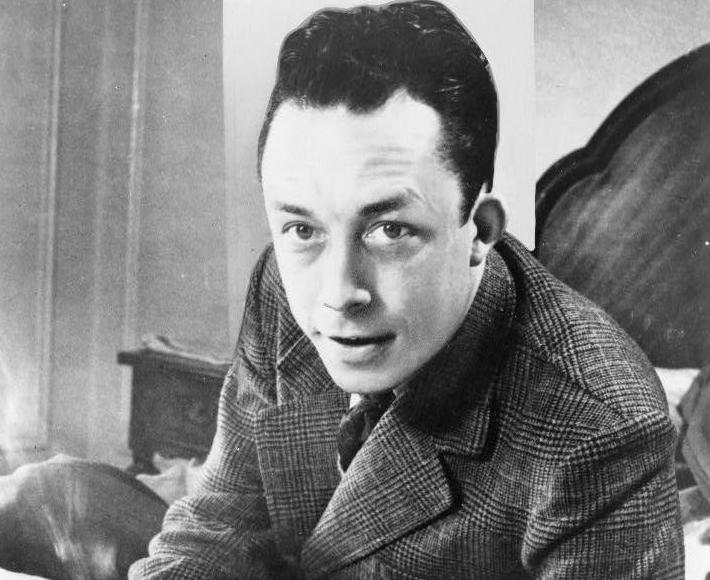
Image by United Press International, via Wikimedia Commons
What would you do if you won a Nobel Prize? Who would you thank? We’ve all wondered about it, perhaps not about the Nobel specifically, but about some potentially legacy-confirming prize or other — maybe an Oscar, maybe a MacArthur Fellowship. When Albert Camus, the short-lived French novelist-philosopher who wrote such enduring works as The Stranger and The Myth of Sisyphus, won the Nobel for Literature in 1957 “for his important literary production, which with clear-sighted earnestness illuminates the problems of the human conscience in our times,” he thanked an elementary-school teacher. “One could argue that, in the history of the field, few teacher-pupil relationships have had more dramatic impact than that of Louis Germain on his young pupil Albert Camus,” says a Chicago Tribune article published during an upswing in American interest in Camus’ work. That happened soon after the publication of his unfinished autobiographical novel The First Man, a “classic story of a poor boy who made good” whose appendix includes the author’s real-life correspondence with his former teacher.
One of these letters Camus wrote to Germain not long after winning the Nobel. (You can hear his actual acceptance speech here.) He no doubt saw the older man’s formative influence as essential to the work that brought that prestigious prize his way, since, as Letters of Note puts it, “he was just 11-months-old when his father was killed in action during The Battle of the Marne; his mother, partially deaf and illiterate, then raised her boys in extreme poverty with the help of his heavy-handed grandmother. It was in school that Camus shone, due in no small part to the encouragement offered by his beloved teacher.” Though never thrilled about public honors of this type, Camus nonetheless knew a chance to express long-felt gratitude when he saw it, and to Germain he wrote these sentences as brief and as powerful as many in his books:
19 November 1957
Dear Monsieur Germain,
I let the commotion around me these days subside a bit before speaking to you from the bottom of my heart. I have just been given far too great an honour, one I neither sought nor solicited.
But when I heard the news, my first thought, after my mother, was of you. Without you, without the affectionate hand you extended to the small poor child that I was, without your teaching and example, none of all this would have happened.
I don’t make too much of this sort of honour. But at least it gives me the opportunity to tell you what you have been and still are for me, and to assure you that your efforts, your work, and the generous heart you put into it still live in one of your little schoolboys who, despite the years, has never stopped being your grateful pupil. I embrace you with all my heart.
Albert Camus
For more such memorable correspondence, do consider having a look at Letters of Note’s newly published book, Letters of Note: An Eclectic Collection of Correspondence Deserving of a Wider Audience.
Related Content:
On His 100th Birthday, Hear Albert Camus Deliver His Nobel Prize Acceptance Speech (1957)
Albert Camus Talks About Adapting Dostoyevsky for the Theatre, 1959
The Fall by Albert Camus Animated
Colin Marshall hosts and produces Notebook on Cities and Culture and writes essays on cities, language, Asia, and men’s style. He’s at work on a book about Los Angeles, A Los Angeles Primer. Follow him on Twitter at @colinmarshall or on Facebook.
Read More...When Neil Young & Rick James Created the 60’s Motown Band, The Mynah Birds
The legacy of Rick James, who died in 2004, may be forever entwined with Dave Chappelle’s insane impersonations and MC Hammer’s use of “Super Freak,” but there is another major star whose onetime association with James has been obscured in music history. I’m talking about Neil Young, who once played guitar in a Toronto R&B group called The Mynah Birds, the first mostly white band signed to Motown Records in the mid-60s. The band’s lead singer? A young AWOL American sailor who went by the name of Ricky James Matthews, later Rick James. Before James went full-on funk and Young invented folk-rock, the two connected in this proto-supergroup that included, writes rock historian Nick Warburton, “several notable musicians who later found fame with the likes of Buffalo Springfield and Steppenwolf.” “It would be a gross oversight,” writes Warburton, “to view the group as merely a footnote to Rick James and Neil Young’s careers.”
It would also be a mistake to consider The Mynah Birds a minor league outfit. As you can hear above in “I’ve Got You In My Soul” (top), “It’s My Time” (above—co-written by Young and James), and “I’ll Wait Forever” (below), this was serious rock and roll, with a loose, garage-rock jangle and raw, soulful vocal melodies. The Mynah Birds were also, according to Jimmy McDonough, serious showmen. McDonough describes their onstage presence in his Neil Young biography Shakey:
The Mynah Birds—in black leather jackets, yellow turtlenecks and boots—had quite a surreal scene going…. Those lucky enough to see any of the band’s few gigs say they were electrifying. ‘Neil would stop playing lead, do a harp solo, throw the harmonica way up in the air and Ricky would catch it and continue the solo.’
This is a far cry from the scruffy, earnest Young of Harvest or CSNY or even the Les Paul-wielding jam-rocker of Crazy Horse and his 90s grunge revival period (and more recent Psychedelic Pill). But the folky leads in his guitar work with James’ band hint at his later incarnations.
Is it a stretch to imagine James fronting a band of white Canadian rockers? Young remembers the driven American singer—who crossed the border to avoid his draft assignment—as “a little bit touchy, dominating—but a good guy.” He also told McDonough that James was drawn primarily to the sound of the Rolling Stones, and brought the rest of the band around: “We got more and more into how cool the Stones were. How simple they were and how cool it was.” James had them play “Get Off My Cloud” and “Satisfaction”—before the braids, cocaine, and sequins, Rick James “fancied himself the next Mick Jagger.”
Unfortunately for the band, U.S. authorities caught up with James, Motown shelved the tapes, and they were never released. Discouraged—Young told MOJO Magazine in 1995—he “moved instead towards acoustic music and immediately became very introspective and musically-inward. That’s the beginning of that whole side to my music.” Young got in his hearse and headed for the States, James did his stint in the Navy, and the rest is, well, you know…. But the sound of The Mynah Birds lived on, perhaps, in at least one Neil Young song. His 1967 “Mr. Soul” with Buffalo Springfield, below, is classic sixties rock and soul with a riff lifted right from the Stones.
Related Content:
Great Story: How Neil Young Introduced His Classic 1972 Album Harvest to Graham Nash
Neil Young Busking in Glasgow, 1976: The Story Behind the Footage
See Neil Young Perform Classic Songs in 1971 BBC Concert: “Old Man,” “Heart of Gold” & More
Josh Jones is a writer and musician based in Durham, NC. Follow him at @jdmagness.
Read More...Support Us
We're hoping to rely on loyal readers, rather than erratic ads. Please click the Donate button and support Open Culture. You can use Paypal, Venmo, Patreon, even Crypto! We thank you!

About Us

Open Culture scours the web for the best educational media. We find the free courses and audio books you need, the language lessons & educational videos you want, and plenty of enlightenment in between.
Advertise With Us

FREE UPDATES!
GET OUR DAILY EMAIL
Get the best cultural and educational resources on the web curated for you in a daily email. We never spam. Unsubscribe at any time.
FOLLOW ON SOCIAL MEDIA

Open Culture editor Dan Colman scours the web for the best educational media. He finds the free courses and audio books you need, the language lessons & movies you want, and plenty of enlightenment in between.
Advertise With Us


