Free Online Drawing Lessons for Kids, Led by Favorite Artists & Illustrators
When I became the Kennedy Center Education Artist-in-Residence, I didn’t realize the most impactful word in that title would be “Residence.” —illustrator Mo Willems
Even as schools regroup and online instruction gathers steam, the scramble continues to keep cooped-up kids engaged and happy.
These COVID-19-prompted online drawing lessons and activities might not hold much appeal for the single-minded sports nut or the junior Feynman who scoffs at the transformative properties of art, but for the art‑y kid, or fans of certain children’s illustrators, these are an excellent diversion.
Mo Willems, author of Knuffle Bunny and the Kennedy Center’s first Education Artist-in-Residence, is opening his home studio every weekday at 1pm EST for approximately twenty minutes worth of LUNCHDOODLES. Episode 5, finds him using a fat marker to doodle a Candyland-ish game board (sans treacle).
Once the design is complete, he rolls the dice to advance both his piece and that of his home viewer. A 5 lands him on the crowd-pleasing directive “fart.” Clearly the online instructor enjoys certain liberties the classroom teacher would be ill-advised to attempt.
Check out the full playlist on the Kennedy Center’s YouTube channel and download activity pages for each episode here.
#MoLunchDoodles
If the daily LUNCHDOODLES leaves ‘em wanting more, there’s just enough time for a quick pee and snack break before Lunch Lady’s Jarrett J. Krosoczka takes over with Draw Everyday with JJK, a basic illustration lesson every weekday at 2pm EST. These are a bit more nitty gritty, as JJK, the kid who loved to draw and grew up to be an artist, shares practical tips on penciling, inking, and drawing faces. Pro tip: resistant Star Wars fans will likely be hooked by the first episode’s Yoda, a character Krosoczka is well versed in as the author and illustrator of the Star Wars Jedi Academy series.
Find the complete playlist here.
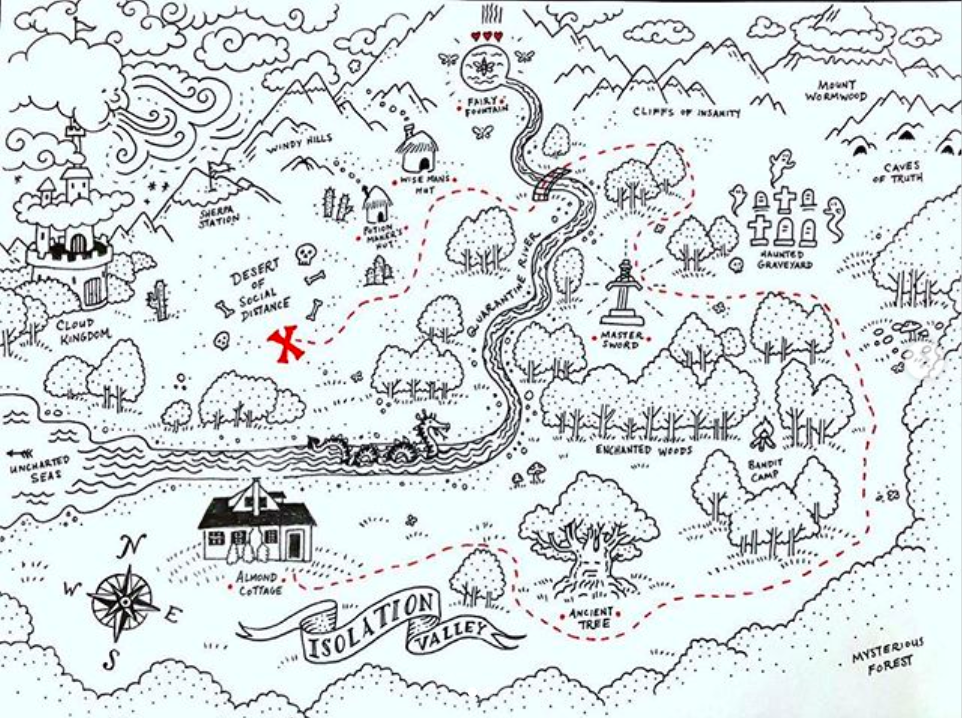
Illustrator Carson Ellis eschews video lessons to host a Quarantine Art Club on her Instagram page. Her most recent assignment is cartography based challenge, with helpful tips for creating an “impactful page turn” for those who wish to share their creations on Instagram:
DRAW A MAP: When we think of treasure maps, we think of sea monsters, islands with palm trees, pirate ships, anthropomorphic clouds blowing gales upon white-capped seas. YOUR map can be of anywhere: an enchanted wood, a dystopian suburb, your backyard, your apartment that has never felt so small, all of the above, none of the above. Or your map can be a traditional treasure map leading to a pirate’s hoard. It’s totally up to you. Three things that you MUST include are: a compass rose (very important—look this up if you don’t know what it is), the name of the place you are mapping, and a red X.
DRAW THE TREASURE: The first part of this assignment is to draw a map with a red X to mark the location of hidden treasure. The second part of this assignment is to draw the treasure. I don’t know what the treasure is. Only you know what the treasure is. Draw it on a separate piece of paper from the map.
BONUS POINTS: If you’re going to post this on instagram, I recommend formatting it with two images. Post the map first, then the treasure which the viewer will swipe to see. This will create what we in the kids book world call AN IMPACTFUL PAGE TURN. That’s the thing that happens when you’re reading a picture book and you turn the page to discover something funny or surprising. It’s kind of hard to explain, but you know a good page turn when you’ve experienced one.
#QuarantineArtClub
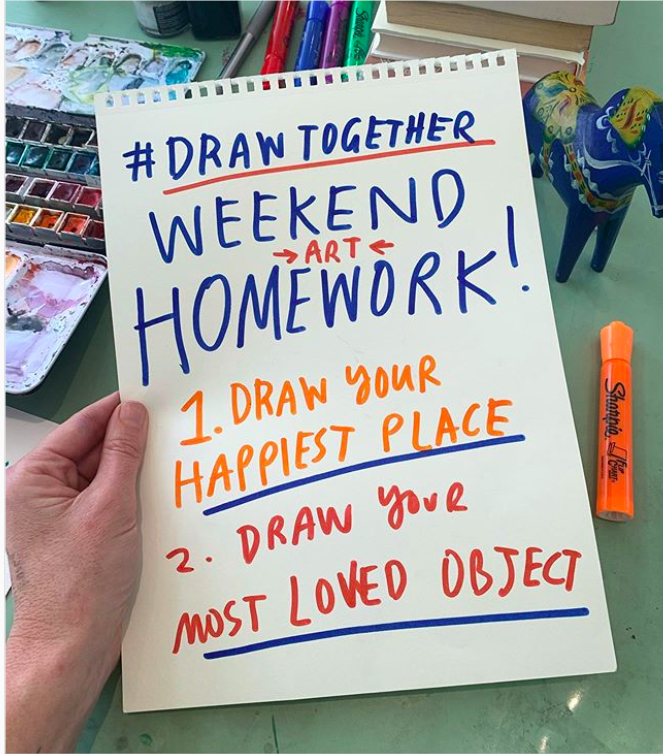
Wendy McNaughton, who specializes in drawn journalism, also likes the Instagram platform, hosting a live Draw Together session every school day, from 10–10.30 am PST. Her approach is a bit more freeform, with impromptu dance parties, special guests, and field trips to the backyard.
Her How to Watch Draw Together highlight is a hilarious crash course in Instagram Live, scrawled in magic marker by someone who’s possibly only now just getting a grip on the platform. Don’t see it? Maybe it’s the weekend, or “maybe ask a millennial for help?”
And bless E.B. Goodale, an illustrator, first time author and mother of a young son, who having counteracted the heartbreak of a cancelled book tour with a hastily launched week of daily Instagram Live Toddler Drawing Club meetings, made the decision to scale back to just Tuesdays and Thursdays:
It was fun doing it everyday but turned out to be a bit too much to handle given our family’s new schedule. We’re all figuring it out, right? I hope you will continue to join me in our unchartered territory next week as we draw to stay sane. Tune in live to make requests or watch it later and follow along at home.
(Her How to Draw a Cat tutorial, above, was likely intended for in-person bookstore events relating to her just published Under the Lilacs…)
#drawingwithtoddlers
Our personal favorite is Stickies Art School, whose online children’s classes are led not by multi-disciplinary artist Nina Katchadourian, whose Facebook page serves as the online institution’s home, but rather her senior tuxedo cat, Stickies.
Stickies, who comes to the gig with an impressive command of English, honed no doubt by frequent appearances on Katchadourian’s Instagram page, affects a diffident air to dole out assignments, the latest of which is above.
He allows his students ample time to complete their tasks—thus far all portraits of himself. The next one, to render Stickies in a costume of the artist’s choice, is due Wednesday by 9am, Berlin time.
Stickies also offers positive feedback on submitted work in delightful follow up videos, a responsibility that Katchadourian takes seriously:
There have been so many conversations at NYU Gallatin where I’m on the faculty about online teaching, how to do it, how to think of a studio course in this new form, etc, and I think perhaps that crossed over with the desire to cheer up some people with kids, many of whom are already Stickies fans, or so I have been told.
His child proteges are no doubt unaware that Stickies looked ready to leave the planet several weeks ago, a fact whose import will resonate with many pet owners in these dark days:
Maybe a third element was just being so glad he is still around, that having him actively “out there” feels good and life-affirming at the moment.
Stickies Art School is marvelous fun for adults to audit from afar, via Katchadourian’s public Facebook posts. If you are a parent whose child would like to participate, send her a friend request and mention that you’re doing so on behalf of your child artist.
Searching on the hashtag #artteachersofinstagram will yield many more resources.
Art of Education University has singled out 12 accounts to get you started, as well as lots of helpful information for classroom art teachers who are figuring out how to teach effectively online.
Related Content:
Learn to Draw Butts with Just Five Simple Lines
Cartoonist Lynda Barry Teaches You How to Draw
How to Draw the Human Face & Head: A Free 3‑Hour Tutorial
Ayun Halliday is an author, illustrator, theater maker and Chief Primatologist of the East Village Inky zine. Given the cancellation of everything, she’s taken to Instagram to document her social distance strolls through New York City’s Central Park, using the hashtag #queenoftheapeswalk Follow her @AyunHalliday.
Read More...The Internet Archive Hosts 20,000 VHS Recordings of Pop Culture from the 1980s & 1990s: Enter the VHS Vault

Image by Evan-Amos, via Wikimedia Commons
My neighborhood thrift store has a very large VHS wall, filled with Hollywood movies, endless children’s videos, instructional tapes, and best of all a box of unknown vids. Maybe they’re blank. Maybe they contain 6 episodes of Matlock. And maybe, just maybe, they have something completely nuts.
But who has time or the old technology for that, especially when the Internet Archive has recently expanded its VHS Vault section to 20,000 digitized tapes under the (non) curation of archivist Jason Scott. We make no claims for the quality of the videos contained therein, because that’s really up to you. A cursory glance shows episodes of Blues Clues next to Traci Lords’ workout tape next to Mystery Science Theater alongside Gerry Anderson’s Lavender Castle, a mix of claymation, puppetry, and rudimentary CGI.
So look: you have to go digging. There’s gems among the junk. There’s That’s My Bush! the ill-conceived and ill-fated sitcom from South Park’s Trey Parker and Matt Stone that disappeared down the memory hole after 9–11.
Or check out this Law Enforcement Guide to Satanic Cults, 75 minutes of paranoid lunacy with a halfway decent ambient soundtrack and some groovy visuals. Once you hear “abnormal sexology” you’ll be hooked!
This 1994 footage/interviews from the playa at Burning Man is a fascinating time capsule. “We have enough guns out here to start World War III,” one man says. Yep, it was certainly a different time.
You’ll also find plenty of just straight-up “no idea what’s on this, just hit play and record” VHS tapes, like this 4 hour block of MTV from 1995.
The Archive also serves another purpose: right now it acts as a kind of “safe space” from the increasingly unforgiving algorithms of YouTube, designed to take down anything its AI hears as unlicensed footage or music. It’s one reason for the amount of Mystery Science Theater episodes up here, as some can no longer be shown due to expired film rights.
And unlike YouTube, all the videos are available for you to download, keep, remix, edit, and/or purge. You won’t have to wash your hands like after a trip to the thrift store, but your soul will feel equally gross. Enjoy! Enter the archive here.
Related Content:
Watch 700 Videos Nostalgia-Inducing Videos from the Early Days of MTV
Ted Mills is a freelance writer on the arts who currently hosts the artist interview-based FunkZone Podcast and is the producer of KCRW’s Curious Coast. You can also follow him on Twitter at @tedmills, read his other arts writing at tedmills.com and/or watch his films here.
Read More...How African-American Explorer Matthew Henson Became the First Person to Reach the North Pole, Then Was Forgotten for Almost 30 Years
The history of exploration is replete with famous names everyone knows, like Robert Peary, the man most often credited with first reaching the North Pole. Those who work alongside the legends—doing the heavy lifting, saving lives, making essential calculations—tend to be forgotten or marginalized almost immediately in the telling of the story, especially when they don’t fit the profile for the kinds of people allowed to make history.
In Peary’s case, it seems that the most important member of his team—his assistant, African American explorer Matthew Henson—may have actually reached the North Pole first, along with four of the team’s Inuit crew members.
Henson and Perry first met in a Washington, DC clothing store where Henson worked. When they struck up a conversation, Peary learned that Henson had fled Maryland “after his parents were targeted by the Ku Klux Klan,” as Messy Nessy writes. He had then signed on as a cabin boy at 12 and sailed around the world, including the Russian Arctic seas, learning to read and write while aboard ship.
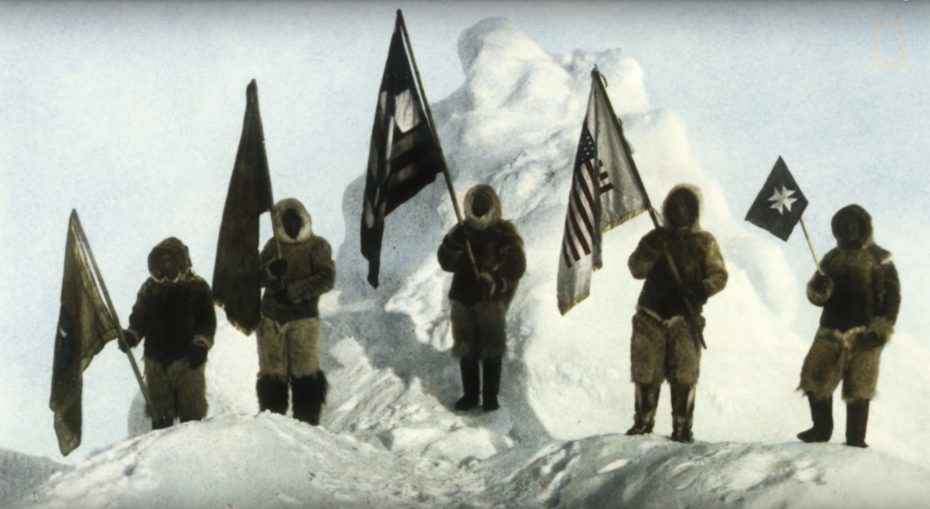
Peary was impressed and “hired him on the spot,” and “from that point forward, Henson went on every expedition Peary embarked on; trekking through the jungles of Nicaragua and, later, covering thousands of miles of ice in dog sleds to the North Pole.” Also on their last expedition were 39 Inuit men, women, and children, including the four Inuit men— Ootah, Egigingwah, Seegloo, and Oogueah—who accompanied Henson and Peary on the final leg of the 1909 journey, Peary and Henson’s eighth attempt.
As the six men neared the pole, Peary “grew more and more weary, suffering from exhaustion and frozen toes, unable to leave their camp, set up five miles” away. Henson and the others “scouted ahead,” and, according to Henson’s account, actually overshot the pole before doubling back. “I could see that my footprints were the first at the spot,” he later wrote.
Peary eventually caught up and “the sled-bound Admiral allegedly trudged up to plant the American flag in the ice—and yet, the only photograph of the historic moment shows a crew of faces that are distinctly not white.” Either Peary took the photograph as a “way of honoring the crew” or he wasn’t there at all when it was taken. The former doesn’t seem likely given Peary’s eagerness to claim full credit for the feat.
Peary accepted the sole honor from the National Geographic Society and an award from Congress in 1911, while Henson’s “contributions were largely ignored” at the time and “he returned to a very normal life” in relative obscurity, working as a U.S. Customs clerk for 23 years, unable to marshal the resources for further expeditions once Peary retired.
In his writings, Peary characterized Henson according to his usefulness: “This position I have given him primarily because of his adaptability and fitness for the work and secondly on account of his loyalty. He is a better dog driver and can handle a sledge better than any man living, except some of the best Eskimo hunters themselves.” The passage is reminiscent of Lewis and Clark’s descriptions of Sacagawea, who never emerges as a full person with her own motivations.
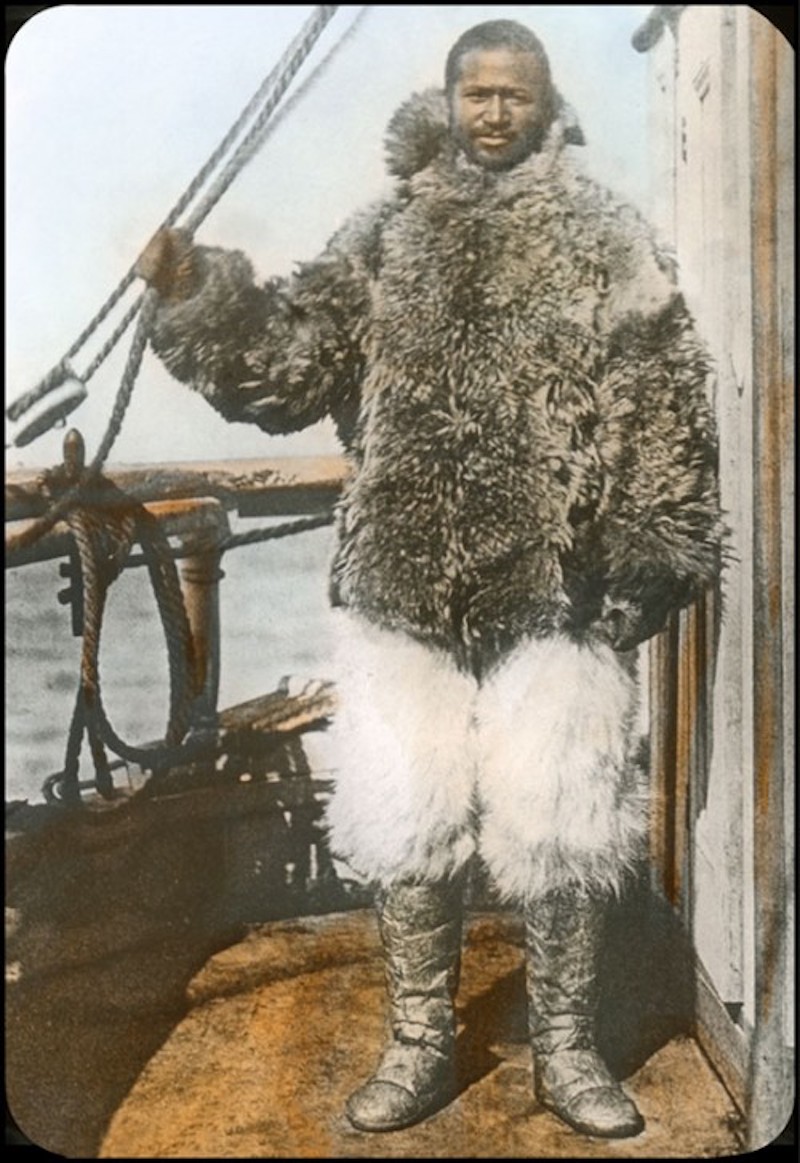
Sadly, in his 1912 account, A Negro Explorer at the North Pole, it seems that Henson internalized the racism that confined him to second-class status. “Another world’s accomplishment was done and finished,” he writes, passively eliding the doer of the deed. He then invokes a trope that appears over and over, from Shakespeare’s Tempest to Defoe’s Robinson Crusoe: “From the beginning of history, wherever the world’s work was done by a white man, he had been accompanied by a colored man. From the building of the pyramids and the journey to the cross, to the discovery of the new world and the discovery of the North Pole.”
The kind of history Henson had learned is obvious—a whitewashing on a world-historical scale. It would take almost 30 years for him to finally receive recognition, though he lived to become the first black member of The Explorers Club in 1937 and “with some irony,” Messy Nessy writes, he “was awarded the Peary Polar Expedition Medal” in 1944. Since then, his name has usually been mentioned with Peary’s in histories of the expedition, but rarely as the first person to reach the pole. Watch two short profiles of Henson’s accomplishments above, and see many more photos from the expedition at Messy Nessy.
via Messy Nessy
Related Content:
Watch the Very First Feature Documentary: Nanook of the North by Robert J. Flaherty (1922)
African American History-Emancipation to the Present: A Free Course from Yale University
Josh Jones is a writer and musician based in Durham, NC. Follow him at @jdmagness.
Read More...Updating Joseph Campbell’s “Hero’s Journey” to Cover Female Action Heroes–Pretty Much Pop: A Culture Podcast #33
This week’s guest Vi Burlew has arisen, a shining figure clad in mail, carrying aloft a shimmering broadsword to bring your hosts Mark Linsenmayer, Erica Spyres, and Brian Hirt this topic about the hero’s journey.
This general plot structure dating back to ancient myth was detailed by Joseph Campbell and famously and deliberately plundered to create the plot of the original Star Wars. So how has this evolved with the increasing introduction of female heroes in recent, largely Disney-owned blockbusters? We talk Wonder Woman and Captain Marvel, anticipate Black Widow and the new Mulan, but also bring in Lord of the Rings, Harry Potter, The Wizard of Oz, Little Women, Jane Eyre, Working Girl, and of course Road House.
What complicates this issue is that a distinct “heroine’s journey” had already been plotted in response to Campbell by feminist thinkers at least back to Maureen Murdock in 1990. The key difference is that while the hero achieves the goal and comes home in triumph, the heroine then realizes that there was something self-betraying about the triumph and requires an additional step of reconciliation with her origins. This is like if Luke realized after destroying the Death Star that he was a moisture farmer all along and had to come to terms with that. (Maybe he could actually grieve for his dead aunt and uncle and his best friend Biggs!)
It’s been argued that Harry Potter’s journey more closely resembles that heroine’s journey, whereas, say, Eowyn from Lord of the Rings (“I am no man!”) is a more traditional hero. Action films of today may feature female heroes, but when this is done thoughtfully (not just by taking an action hero and swapping the gender without further alteration), then filmmakers may tweak the structure of the myth to include some gender-specific elements and perhaps blend the two types of journey. These new variants that may or may not resonate in the way that caused the original Star Wars/Campbell formula to become so popular.
Two articles we specifically cite in our discussion are:
- “Is There a Heroine’s Journey?” by Rosanne Welch
- “This Is the Toxic Myth at the Heart of Female Movie Reboots” By Emily Spiers
For some basics about the journeys described by Joseph Campbell, Maureen Murdok, and a different version by Victoria Lynn Schmidt, see the Wikipedia entries on Hero’s Journey and Heroine’s Journey.
In addition, The Heroine Journeys Project website features numerous articles about female heroes in media. We also looked at this reddit thread, which among other things provides some opposing views to those of our guests about the Star Wars franchise character Rey.
This episode includes bonus discussion that you can only hear by supporting the podcast at patreon.com/prettymuchpop. This podcast is part of the Partially Examined Life podcast network.
Pretty Much Pop: A Culture Podcast is the first podcast curated by Open Culture. Browse all Pretty Much Pop posts or start with the first episode.
Read More...10 Rules of Self Discipline from the 1930 Self Help/Business Guru Napoleon Hill
It seems ridiculous to refer to the Golden Rule as a “weapon,” but that is just what it is—a weapon that no resistance on earth can withstand! —Napoleon Hill
Napoleon Hill—whose early books The Law of Success (1928), The Magic Ladder To Success (1930), and Think and Grow Rich (1937) helped establish the self-help genre—would be considered a life coach or motivational speaker in today’s parlance.
And were he alive today, he’d likely he’d be facing charges, or at the very least, cancelled for some of the behaviors, schemes, and whoppers Matt Novak details in an exhaustively researched essay for Gizmodo’s Paleofuture blog.
We think it’s important to tip you off to that shady side, because Hill’s “10 Rules for Profitable Self Discipline,” above, are so sunny, they could spur you to disseminate them immediately, leaving you vulnerable to harsh words from better informed friends and, more crucially, social media followers, who are already het up about any number of things in this election year, and who enjoy the catharsis a good call out affords.
Ergo, if you’re inclined to share, investigate the well from which they sprung, and then decide whether or not you want to proceed.
Why did we proceed?
Because practiced with the purest of intentions, these rules constitute extremely humanistic advice from a man whose outward philosophy continues to be a touchstone for many in the business community.
And as evidenced by the comments left by grateful YouTube viewers, many of whom stumbled across his words by accident, people are thirsty for such explicitly positive guideposts to interpersonal dealings.
(A good number also seem quite taken with the Virginia native’s old timey speech patterns and vintage lingo.)
If nothing else, applying these rules could sweeten your next argument with someone you love, or serve as inspiration if you’re ever called upon to give a commencement speech:
Napoleon Hill’s 10 Rules for Profitable Self Discipline
- Keep a cool head around hot heads. Rage doesn’t have to be contagious,.
- Believe that there are three sides to every argument. If you’re in a dust-up, don’t assume that the fault lays with the other person, but rather that you both shoulder a portion of the blame. This is a pretty compassionate way of ensuring that everyone’s ass will be partially covered for both better and worse.
- Never give directives to a subordinate when you are angry. Given that swift and decisive action is often required of those in leadership positions, you’ll have to learn to ice your own hot head pretty quickly to put this one into consistent play.
- Treat everyone as if they were a rich relative who might leave you a sizable inheritance. Which is kind of a gross way of putting it, but otherwise, we agree with Napoleon Hill that treating others with respect and loving attention is a real “honey” of a concept, especially if the other person can offer little beyond their friendship.
- When you find yourself in an unpleasant circumstance, immediately start searching for the seed of an equivalent benefit within the experience. If Novak’s Gizmodo essay is any indication, Hill probably had a lot of opportunity to put this one into practice, squeezing lemonade from lemons of his own making.
- Ask questions and listen to the answer. If you find yourself inclined to disagree with a statement, employ the phrase, “How do you know?” to get the speaker to do all the heavy lifting. For example, Napoleon Hill might say to Matt Novak, “How do you know?” which would be Matt Novak’s cue to produce a mountain of documentation.
- Never say or do anything before thinking if it will benefit someone or hurt them. The goal is to refrain from hurting others. Let those of us are without sin cast the first stone here. Hill’s karmic spin on this rule is that any injuries you cause that don’t immediately come around to bite you in the ass, will bite you in the ass much harder at some future point, a la compound interest.
- Learn the difference between friendly analysis and unfriendly criticisms. His not entirely foolproof method for distinguishing intent is to consider the nature of your relationship with the one offering the observations, their tone of voice, manner of delivery, and somewhat quaintly, whether or not they throw in any epithets. If it’s friendly, you can set some store by it. Otherwise, disregard.
- A good leader knows how to take orders cheerfully. This pairs nicely with Rule Number 3, don’t you think?
- Be tolerant of your fellow humans. Always.
Related Content:
How Much Money Do You Need to Be Happy? A New Study Gives Us Some Exact Figures
Ayun Halliday is an author, illustrator, theater maker and Chief Primatologist of the East Village Inky zine. Join Ayun’s company Theater of the Apes in New York City for her book-based variety series, Necromancers of the Public Domain, and the world premiere of Greg Kotis’ new musical, I AM NOBODY (March 5 — 28) Follow her @AyunHalliday.
Read More...Why We Should Read William Golding’s Lord of the Flies: An Animated Video Makes the Case
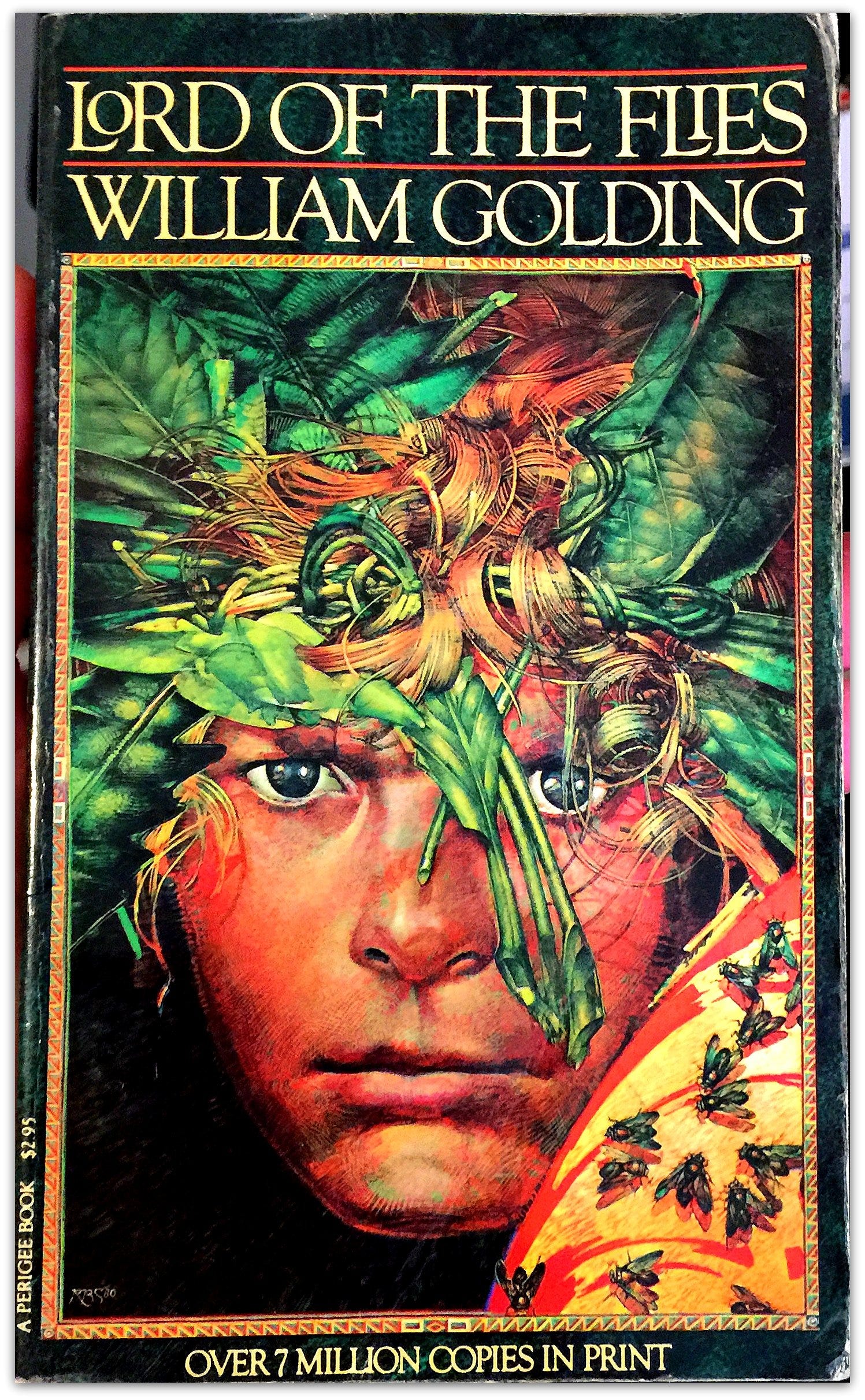
Like many of you, I was assigned to read William Golding’s Lord of the Flies in junior high. (Raise your hand if you had the one with this cover). Looking back, was there a subconscious reason our teacher gave us this famous tale of a group of shipwrecked children and young teens turning into murderous savages? Were we really that bad?
Perhaps you’ve never read the book and got assigned To Kill a Mockingbird or Kes instead. Is Golding’s book still worth picking up as an adult?
For sure, yes, and this animated explainer from Jill Dash of TED-Ed hopefully will entice you do so. What it provides is what we didn’t get in school: context.
Golding had been a lieutenant in the Royal Navy during the war, and had returned to find a post-war world where nuclear annihilation felt palpable. He was also teaching at a private school for boys. He got to wondering: are we doomed as a species to savagery? Is war inevitable?
Golding was also thinking about the popular Young Adult novels (as we now call them) of his day, because he read them to his own children. A popular trope featured young boys as castaways on a desert island who get up to all sorts of fun adventures, with a dash of British colonialism thrown in for good measure. All were riffs on Daniel Defoe’s Robinson Crusoe.
Lord of the Flies, then, is a brutal satire, reducing angelic British schoolboys to a bloodthirsty mob in very little time, while in the greater world of the novel nuclear war rages. (Having read this during the ‘80s, the nuclear background was never impressed on us students. I think I would have found the novel even more terrifying.)
It took Golding ten years to find an interested publisher, and even then it was a flop on initial release. But its reputation soon grew, helped by Peter Brook’s black-and-white film adaptation, and its pedagogical use as an allegorical tale during the Cold War. It also influenced a generation of writers. Stephen King named his fictional town Castle Rock after the kids’ fort in the novel. It also opened the door for any number of Young Adult authors to deal with dark and troubling themes.
There were also real-world examples to draw from. In the same year, 1954, as Golding’s novel appeared, Muzafer Sherif’s The Robbers Cave Experiment was published. This was non-fiction, however, detailing an experiment in which 22 middle-class white boys were set up in two groups at a deserted Oklahoma summer camp. With scientists posing as counselors, they let the groups–the Rattlers and the Eagles–sort out their own hierarchies, then set up competitions.
The psychologists watched the arms race escalate over the following days. Finally, one violent mob brawl became so sustained that the researchers were forced to step in, drag the boys apart and remove them to separate locations.
How long did it take for mere friction to escalate into a juvenile war, in an idyllic setting where everyone had plenty of food? Phase two lasted just six days from the first insult (“Fatty!”) to the final all-out brawl. Golding would have loved it.
We can see Golding’s warning everywhere in popular culture, from the back-biting and betrayals in reality shows like Survivor to horror movies like The Purge. We’ve also seen the terrors that children can inflict on each other, Columbine school shooting onward. In Golding’s novel, the children are rescued and revert back to a sobbing, dependent state. In the real world, alas, nobody’s coming to save us.
Related Content:
Why You Should Read One Hundred Years of Solitude: An Animated Video Makes the Case
Why Should We Read William Shakespeare? Four Animated Videos Make the Case
Ted Mills is a freelance writer on the arts who currently hosts the artist interview-based FunkZone Podcast and is the producer of KCRW’s Curious Coast. You can also follow him on Twitter at @tedmills, read his other arts writing at tedmills.com and/or watch his films here.
Read More...Watch This Year’s Oscar-Winning Short The Neighbor’s Window, a Surprising Tale of Urban Voyeurism
As the last couple of generations to come of age have rediscovered, urban living has its benefits. One of those benefits is the ability to keep an eye on your neighbors — quite literally, given a situation of buildings in close proximity, sufficiently large windows, and minimal usage of drapes. Fortysomething Brooklyn couple Alli and Jacob find themselves turned into voyeurs by just such a situation in Marshall Curry’s The Neighbor’s Window, the Best Live Action Short Film at this year’s Academy Awards. “Do they have jobs, or clothes?” asks Alli, overcome by the frustration of looking after her and Jacob’s three young children. “All they do is host dance parties and sleep ’till noon and screw.”
You may recognize Maria Dizzia and Greg Keller, who play Alli and Jacob, from their appearances in Noah Baumbach’s While We’re Young. That film, too, dealt with the envy New York Gen-Xers feel for seemingly more freewheeling New York Millennials, but The Neighbor’s Window takes it in a different direction.
Curry based it on “The Living Room,” an episode of the storytelling interview podcast Love and Radio in which writer and filmmaker Diana Weipert tells of all she saw when she enjoyed a similarly clear view into the life of her own younger neighbors. “Am I supposed to have maybe respected their privacy and just looked away?” Weipert asks, rhetorically. “But it’s impossible because that’s the way the chairs face. They face the window! I couldn’t have not seen them if I wanted to.”
Then again, she adds, “I guess I could’ve not gotten the binoculars.” That irresistible detail makes it into The Neighbor’s Window as a symbol of Alli and Jacob’s surrender to their fascination with the couple across the street. “They’re like a car crash that you can’t look away from,” as Alli puts it. “Okay, a beautiful, sexy, young car crash.” Yet both she and her husband, like any human beings with a partial view of other human beings, can’t help but compare their circumstances unfavorably with those seen from afar. Eventually, as in “The Living Room,” the twentysomethings experience a reversal of fortune, changing Alli and Jacob’s view of them. They also regain the view of themselves they’d lost amid all their voyeurism — enough of it to make them forget that the observers can also be observed.
The Neighbor’s Window will be added to our collection, 4,000+ Free Movies Online: Great Classics, Indies, Noir, Westerns, Documentaries & More.
Related Content:
Father and Daughter: An Oscar-Winning Animated Short Film
The Last Farm: An Oscar Nominated Short Film
Based in Seoul, Colin Marshall writes and broadcasts on cities, language, and culture. His projects include the book The Stateless City: a Walk through 21st-Century Los Angeles and the video series The City in Cinema. Follow him on Twitter at @colinmarshall or on Facebook.
Read More...Free Coloring Books from World-Class Libraries & Museums: Download & Color Hundreds of Free Images
There are many roads to wellness. Meditation, yoga, exercise, and healthy diet are all effective therapies for bringing down stress levels. But we shouldn’t discount an activity we once used to while hours away as children, and that adults by the millions have taken to in recent years. Coloring takes us out of ourselves, say experts like Doctor of Psychiatry Scott M. Bea, “it’s very much like a meditative exercise.” It relaxes our brain by focusing our attention and pushing distracting and disturbing thoughts to the margins. The low stakes make the activity easy and pleasurable, qualities grown-ups don’t get to ascribe to most of what they spend their time doing.
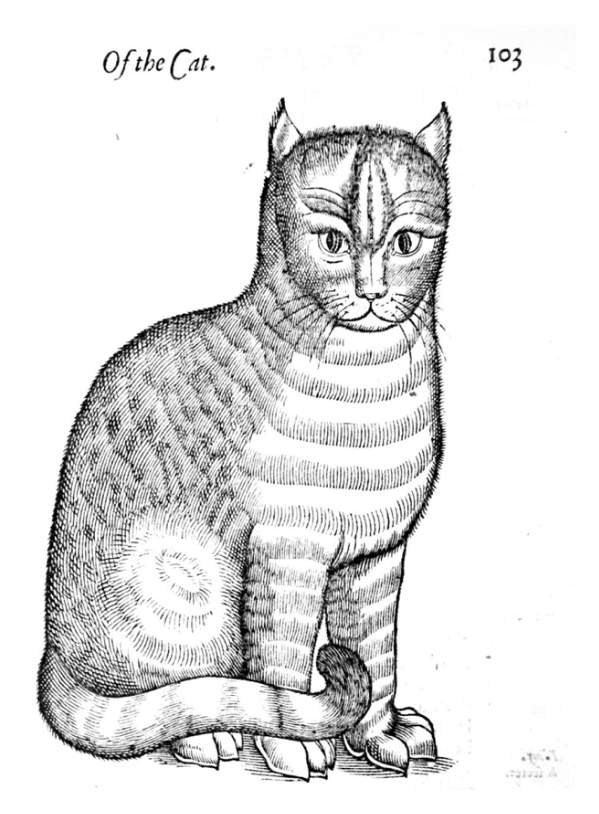
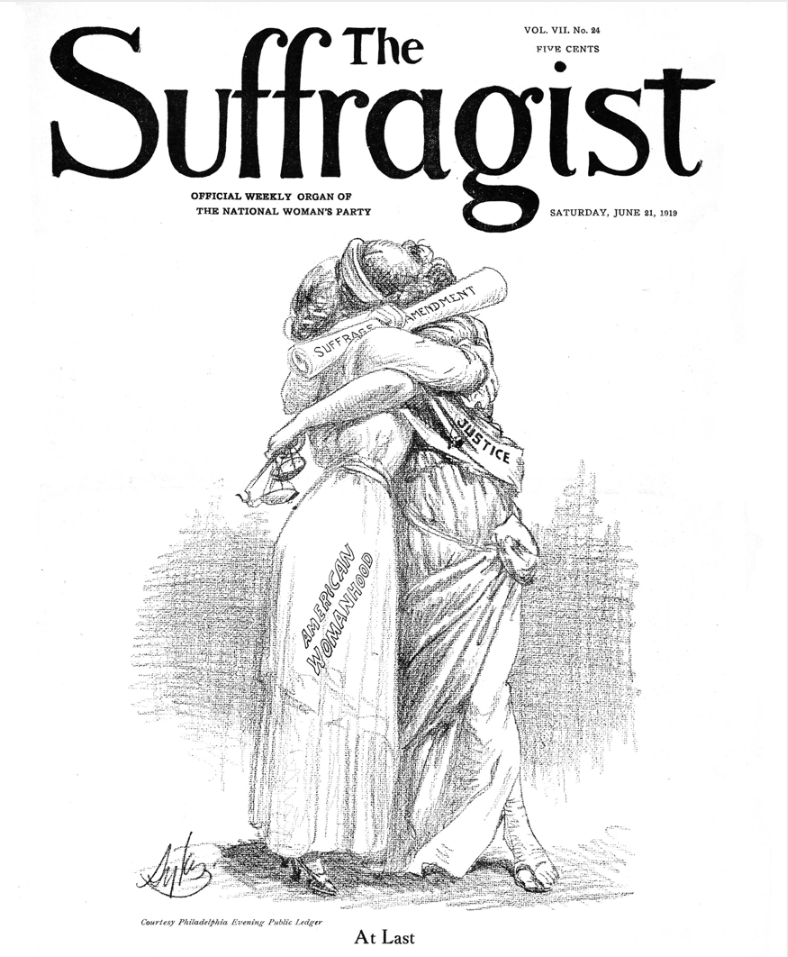
Reducing anxiety is all well and good, but some art and history lovers can’t accept just any old mass-market coloring book. Luckily, a consortium of over a hundred museums and libraries has given these special customers a reason to stick with it. Since 2016, the annual #ColorOurCollections campaign, led by the New York Academy of Medicine (NYAM), has made available, for free, adult coloring books. The range of images offers something for everyone, from early modern illustrations like the cat at the top, from Edward Topsell’s Historie of Foure-Footed Beastes (1607)—courtesy of Trinity Hall Cambridge; to the poignant cover of The Suffragist, below, from July 1919, a month after U.S. women won the right to the vote (from the Huntington Library, Art Museum, and Botanical Gardens).
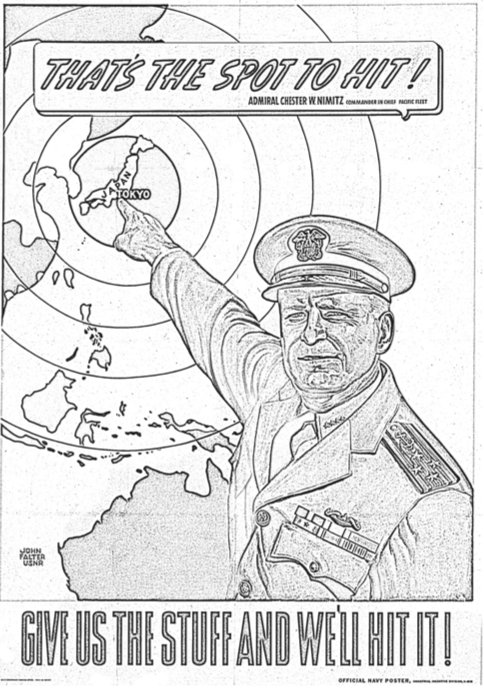
There are, unsurprisingly, copious illustrations of medical procedures and anatomy, like that below from the Library at the University of Barcelona. There are vintage advertisements, “canoe-heavy content” from a Canadian museum, as Katherine Wu reports at Smithsonian, and war posters like that further down of Admiral Chester Nimitz asking for “the stuff” to hit “the spot,” i.e. Tokyo –from the Pritzker Military Museum. “The only commonality shared by the thousands of prints and drawings available on the NYAM website is their black-and-white appearance: The pages otherwise span just about every taste and illustrative predilection a coloring connoisseur could conjure.”

One Twitter fan pointed out that the initiative provides “a great way to get to know some of the collections held in libraries around the world.” Their enthusiasm is catching. But note that few of the institutions (see full collection here) have uploaded a large quantity of colorable images. Most of the “coloring books” consist of only a handful of pages, some only one or two. Taken altogether, however, the combined strength of one hundred institutions, over four years (see previous years at the links below), adds up to many hundreds of pages of coloring fun and relaxation. If that’s your thing, start here. If you don’t know if it’s your thing, #ColorOurCollections is a free (minus the cost of printer ink and paper), educational way to find out. Grab those crayons, oil pastels, colored pencils, etc. and calm down again the way you did when you were six years old.
Related Content:
Download Free Coloring Books from 113 Museums
Josh Jones is a writer and musician based in Durham, NC. Follow him at @jdmagness
Read More...Terry Jones, the Late Monty Python Actor, Helped Turn Chaucer’s Canterbury Tales Into a Free App: Explore It Online
People’s eyes tend to glaze over when they hear the phrase “digital humanities.” Granted, it’s not the most thrilling combination of words. But when you show them what’s possible at the intersection of technology and the arts, the glaze turns to a gleam: a Shazam-like app for scanning, identifying, and learning about fine art? Yes, please…. An iPad app introducing the works of Shakespeare, with contextual notes, summaries, essays, and videos featuring Sir Ian McKellen? Fascinating….
The possibilities for casual learners and serious students alike are vast. You just have to know where to look. And if you’re looking for a tech-savvy way into Chaucer’s Canterbury Tales, the classic medieval story cycle written in Middle English verse and prose, you’ve found it. Thanks in part to medieval scholar Terry Jones, formerly a member of Monty Python—and the writer and director of Monty Python and the Holy Grail—we now have a Chaucer app.
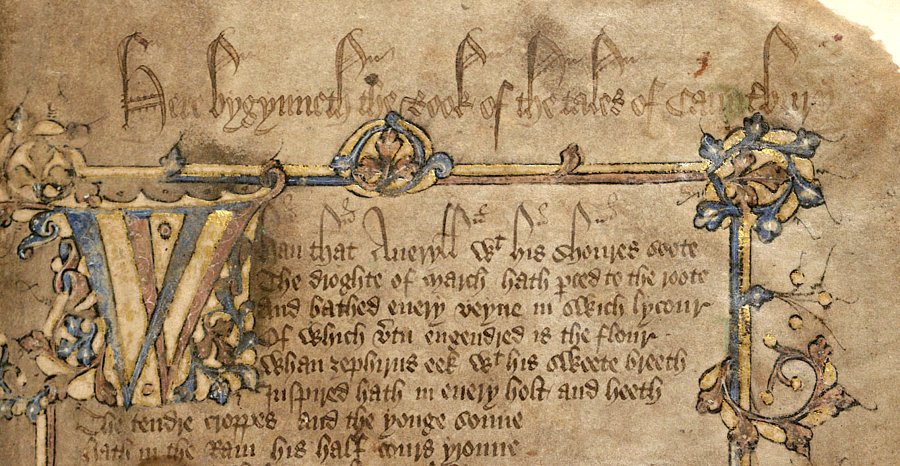
“The project… features a 45-minute audio performance of the General Prologue of the Tales,” writes Henry Bodkin at the Independent. “While listening to the reading, users have access to a modern translation, explanatory notes and a vocabulary explaining Middle English words used by Chaucer, as well as a digitized version of the original 14th century manuscript.” The project was Jones’ final scholarly work—he passed away last month—but his contribution is significant.
Jones’ two books on Chaucer and his translation of the “General Prologue” are both featured in the app’s introduction and notes, as Ellen Gutoskey notes at Mental Floss. One of the project’s leaders, Peter Robinson of the University of Saskatchewan, also points to his behind-the-scenes influence. “His work and his passion for Chaucer was an inspiration for us. We talked a lot about Chaucer and it was his idea that the Tales would be turned into a performance.”
We can enjoy many a modern English translation of Chaucer, and there’s nothing wrong with doing so, but to truly understand what made the text so revolutionary, we should hear it in its original language. Middle English is beautifully musical, but it was not in Chaucer’s time a literary tongue. Like Dante, he broke new ground by writing in the vernacular when most everyone else wrote in Latin or French.
The strangeness of Middle English to our eyes and ears can make approaching the Canterbury Tales for the first time a daunting experience. The Chaucer app is an excellent research tool for scholars, yet the researchers want “the public, not just academics to see the manuscript as Chaucer would have likely thought of it,” says Robinson, “as a performance that mixed drama and humor.” In other words, reading Chaucer should be fun.
Why else would Terry Jones—a man who knew his comedy as well as his medieval history—spend decades reading and writing about him? Find out for yourself at the Canterbury Tales app, where, with a click of a few buttons at the top of the page, you can see part of the original manuscript, a transcription of the Middle English text, explanatory notes, and Jones’ translation of the “General Prologue.”
Enter the app here.
Related Content:
Sir Ian McKellen Releases New Apps to Make Shakespeare’s Plays More Enjoyable & Accessible
Josh Jones is a writer and musician based in Durham, NC. Follow him at @jdmagness
Read More...The Word “Robot” Originated in a Czech Play in 1921: Discover Karel Čapek’s Sci-Fi Play R.U.R. (a.k.a. Rossum’s Universal Robots)
When I hear the word robot, I like to imagine Isaac Asimov’s delightfully Yiddish-inflected Brooklynese pronunciation of the word: “ro-butt,” with heavy stress on the first syllable. (A quirk shared by Futurama’s crustacean Doctor Zoidberg.) Asimov warned us that robots could be dangerous and impossible to control. But he also showed young readers—in his Norby series of kids’ books written with his wife Janet—that robots could be heroic companions, saving the solar system from cosmic supervillains.
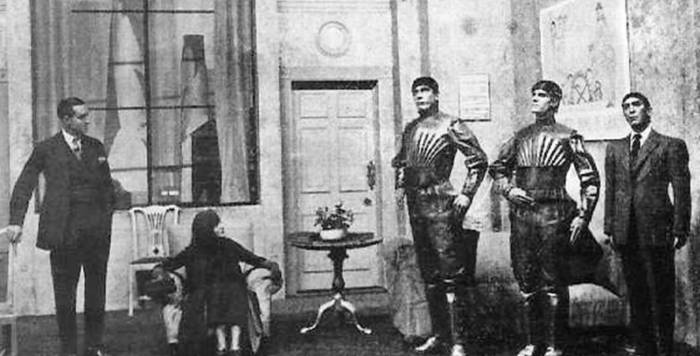
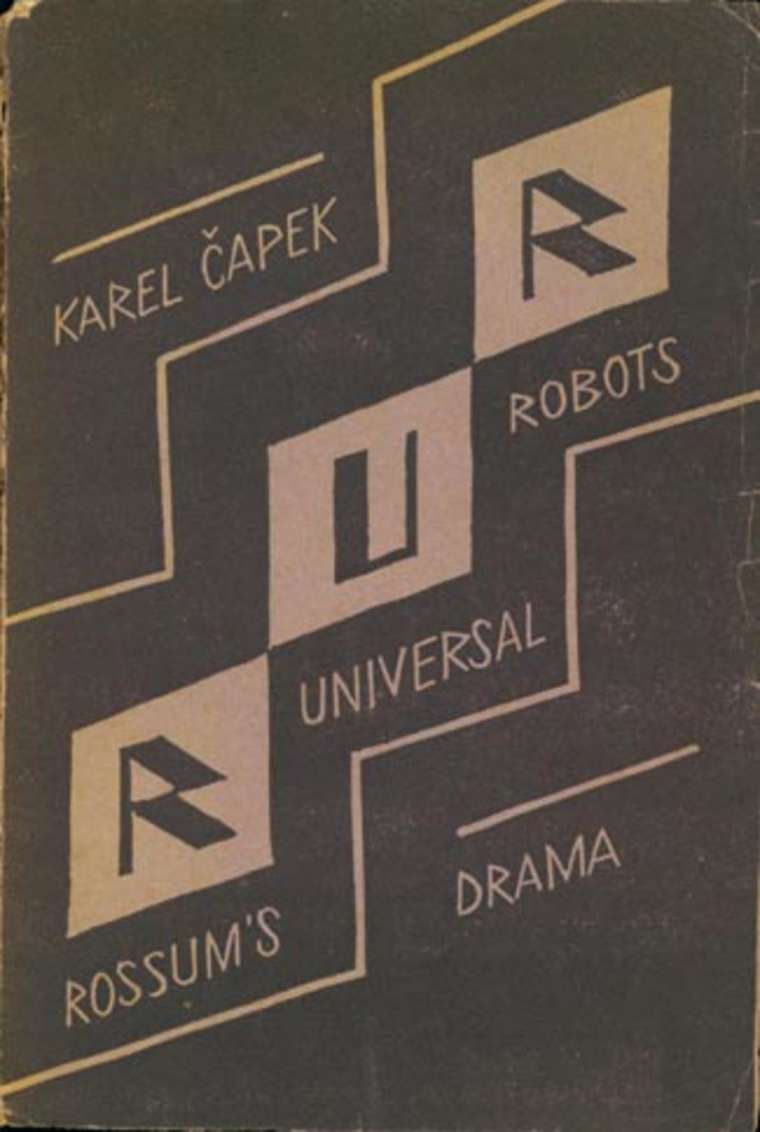
The word robot conjures all of these associations in science fiction: from Blade Runner’s replicants to Star Trek’s Data. We might refer to these particular examples as androids rather than robots, but this confusion is precisely to the point. Our language has forgotten that robots started in sci-fi as more human than human, before they became Asimov-like machines. Like the sci-fi writer’s pronunciation of robot, the word originated in Eastern Europe in 1921, the year after Asimov’s birth, in a play by Czech intellectual Karel Čapek called R.U.R., or “Rossum’s Universal Robots.”
The title refers to the creations of Mr. Rossum, a Frankenstein-like inventor and possible inspiration for Metropolis’s Rotwang (who was himself an inspiration for Dr. Strangelove). Čapek told the London Saturday Review after the play premiered that Rossum was a “typical representative of the scientific materialism of the last [nineteenth] century,” with a “desire to create an artificial man—in the chemical and biological, not mechanical sense.”
Rossum did not wish to play God so much as “to prove God to be unnecessary and absurd.” This was but one stop on “the road to industrial production.” As technology analyst and Penn State professor John M. Jordan writes at the MIT Press Reader, Čapek’s robots were not appliances become sentient, nor trusty, superpowered sidekicks. They were, in fact, invented to be slaves.
The robot… was a critique of mechanization and the ways it can dehumanize people. The word itself derives from the Czech word “robota,” or forced labor, as done by serfs. Its Slavic linguistic root, “rab,” means “slave.” The original word for robots more accurately defines androids, then, in that they were neither metallic nor mechanical.
Jordan describes this history in an excerpt from his book Robots, part of the MIT Press Essential Knowledge Series, and a timelier than ever intervention in the cultural and technological history of robots, who walk (and moonwalk) among us in all sorts of machine forms, if not quite yet in the sense Čapek imagined. But a Blade Runner-like scenario seemed inevitable to him in a society ruled by “utopian notions of science and technology.”
In the time he imagines, he says, “the product of the human brain has escaped the control of human hands.” Čapek has one character, the robot Radius, make the point plainly:
The power of man has fallen. By gaining possession of the factory we have become masters of everything. The period of mankind has passed away. A new world has arisen. … Mankind is no more. Mankind gave us too little life. We wanted more life.
Sound familiar? While R.U.R. owes a “substantial” debt to Mary Shelley’s Frankenstein, it’s also clear that Čapek contributed something original to the critique, a vision of a world in which “humans become more like their machines,” writes Jordan. “Humans and robots… are essentially one and the same.” Beyond the surface fears of science and technology, the play that introduced the word robot to the cultural lexicon also introduced the darker social critique in most stories about them: We have reason to fear robots because in creating them, we’ve recreated ourselves; then we’ve treated them the way we treat each other.
You can find the text of Čapek’s play in book format on Amazon.
via Boing Boing
Related Content:
Isaac Asimov Explains His Three Laws of Robots
Twerking, Moonwalking AI Robots–They’re Now Here
The Robots of Your Dystopian Future Are Already Here: Two Chilling Videos Drive It All Home
Josh Jones is a writer and musician based in Durham, NC. Follow him at @jdmagness
Read More...Support Us
We're hoping to rely on loyal readers, rather than erratic ads. Please click the Donate button and support Open Culture. You can use Paypal, Venmo, Patreon, even Crypto! We thank you!

About Us

Open Culture scours the web for the best educational media. We find the free courses and audio books you need, the language lessons & educational videos you want, and plenty of enlightenment in between.
Advertise With Us

FREE UPDATES!
GET OUR DAILY EMAIL
Get the best cultural and educational resources on the web curated for you in a daily email. We never spam. Unsubscribe at any time.
FOLLOW ON SOCIAL MEDIA

Open Culture editor Dan Colman scours the web for the best educational media. He finds the free courses and audio books you need, the language lessons & movies you want, and plenty of enlightenment in between.
Advertise With Us