Five Short Stories by Leo Tolstoy: A Free AudioBook

Though known for his long epic novels War and Peace and Anna Karenina, Leo Tolstoy wrote short stories too. Below, you can stream readings of five such stories, “The Three Hermits,” “Three Deaths,” “Albert,” “Ernak, and “God Sees the Truth But Waits.” They’re read by Bart Wolfe, and made freely available on Spotify. (If you need Spotify’s software, download it here.) If you want to get it from iTunes, it will run you $6.95.
This three-hour recording will be added to our collection, 1,000 Free Audio Books: Download Great Books for Free. Meanwhile, if you’d like to download two professionally-read audiobooks from Audible for free, get more information on that here.
Related Content:
Leo Tolstoy Creates a List of the 50+ Books That Influenced Him Most (1891)
Leo Tolstoy’s 17 “Rules of Life:” Wake at 5am, Help the Poor, & Only Two Brothel Visits Per Month
Free Online Literature Courses
Read More...Hear Kurt Vonnegut’s Novel, Cat’s Cradle, Get Turned into Avant-Garde Music (Featuring Kurt Himself)
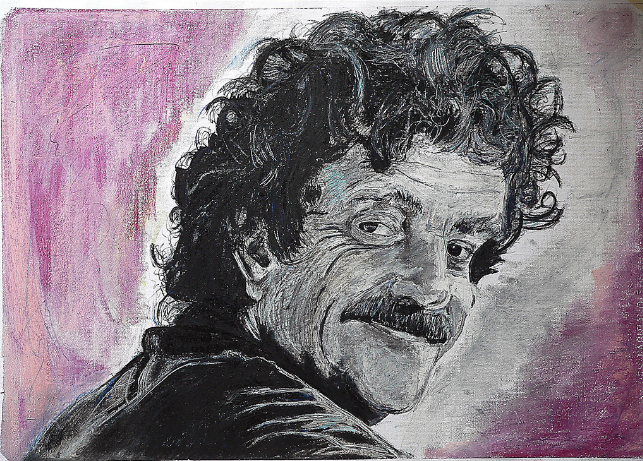
Image by Daniele Prati, via Flickr Commons
Kurt Vonnegut’s 1963 novel Cat’s Cradle resembles its title, a web of overlapping and entangled stories, all of which have huge holes in the middle. And the book—as have many of his slim, surrealist pop masterpieces—was read by many critics as lightweight—whimsical and sentimental. One reviewer in The New York Review of Books, for example, called Vonnegut a “compiler of easy to read truisms about society who allows everyone’s heart to be in the right place.”
Not so, argues University of Puerto Rico scholar Mark Wekander Voigt. For all its silliness—such as its Calypso-heavy “parody of a modern invented religion that will make everyone happy”—Cat’s Cradle, writes Voigt, “is essentially about the moral issues involved in a democratic government using the atom bomb.” Vonnegut’s novel suggests that “to be really ethical, to think about right and wrong, means that we must dispense with the authorities who tell us what is right and wrong.”
John, the hero of Cat’s Cradle, begins his absurdist hero’s quest by intending to write a “factual” accounting of what “important Americans had done on the day when the first atomic bomb was dropped on Hiroshima, Japan.” The references would not have been lost on Vonnegut’s contemporary readers, who would all have been familiar with John Hersey’s harrowing 1946 Hiroshima, the most popular book ever written about the dropping of the bomb, with six survivor’s stories told in a thrilling, engaging style and “all the entertainment of a well-written novel.”
Vonnegut, however, writes an alienating anti-novel, in part to demonstrate his point that “to discuss the ethical implications of dropping the bomb on Hiroshima, one should not look at the victims, but at those who were involved in developing such a bomb and their government.” Increasingly, however, it becomes harder and harder to look at anything directly. In the novel’s parody religion, Bokononism, all lies are potentially truths, all truths potentially lies. Language in the military-industrial-complex world of the bomb, Vonnegut suggests, had become as changeable and potentially deadly as the substance called “Ice‑9,” a polymorph of water that can instantly turn rivers, lakes, and even whole oceans into ice.
Evoking the novel’s high-wire balancing act of goofy songs and rituals and metaphors for the global annihilation of the earth by nuclear weapons, the 2001 album above, Ice‑9 Ballads, pairs Vonnegut with composer Dave Soldier and the Manhattan Chamber orchestra for an adaptation, of sorts, of Cat’s Cradle. Vonnegut narrates evocative snatches of the book, and the songs illustrate key themes, such as the strained patois the inhabitants of the fictional island of San Lorenzo speak. One example, the phrase “Dyot meet mat” (“God made mud”), gives us the title and refrain of the second track on the album.
“The music switches tones throughout to match the tone of the novel at some level,” writes Allmusic, and there are also two additional, vaguely-related pieces at the end. “A Soldier’s Story” is a “faux-radio opera,” notes Time Out New York’s Molly Sheridan, with a libretto, written by Vonnegut, about Eddie Slovik, the only soldier executed for desertion during World War II. A later 2005 release of “A Soldier’s Story” bore a Parental Advisory warning, though it is “not the obscenities that cause alarm, but the way in which moral contradictions inherent in the tale resonate against present-day military involvements.”
The final piece, “East St. Louis, 1968,” is a surprisingly experimental, orchestral-backed pastiche of soul, hip-hop and gospel. Truly, like many a Vonnegut novel, Ice‑9 Ballads, writes Allmusic, is “getting the avant-garde label from the eclecticism in it, but providing decidedly non-avant garde bits and pieces throughout that make the whole.… Don’t go in expecting something bland or predictable.” See more credits for the album at its label’s website here.
You can stream Ice‑9 Ballads on Spotify for free (get Spotify’s free software here) or purchase a copy online.
Related Content:
In 1988, Kurt Vonnegut Writes a Letter to People Living in 2088, Giving 7 Pieces of Advice
Kurt Vonnegut Diagrams the Shape of All Stories in a Master’s Thesis Rejected by U. Chicago
Josh Jones is a writer and musician based in Durham, NC. Follow him at @jdmagness.
Read More...Metallica Playing “Enter Sandman” on Classroom Toy Instruments
Things getting too serious around here? You want it lighter? Here’s Metallica playing “Enter Sandman” on classroom toy instruments. It features James Hetfield on the toy clarinet, Lars Ulrich on the Fisher Price Drum and toy cymbals, Kirk Hammett on the Melodica, and Robert Trujillo on the Baby Electric Axe. They’re joined by Jimmy Fallon on the kazoo. Next up, stunning, breathtaking timelapse films of boats sailing through Venetian canals.
If you would like to support the mission of Open Culture, consider making a donation to our site. It’s hard to rely 100% on ads, and your contributions will help us continue providing the best free cultural and educational materials to learners everywhere. You can contribute through PayPal, Patreon, and Venmo (@openculture). Thanks!
Related Content
A Bluegrass Version of Metallica’s Heavy Metal Hit, “Enter Sandman”
Finnish Musicians Play Bluegrass Versions of AC/DC, Iron Maiden & Ronnie James Dio
Read More...Stewart Brand’s List of 76 Books for Rebuilding Civilization
When the future looks dim, we can attend to the present with furious agency, spinning from task to task, forgetting for days on end to practice forethought. How much of this comes from tech-addled information overload and how much from physiological responses to real impending danger is anyone’s guess. But both sources of anxiety drive away thoughts of what Stewart Brand— futurist, founder of the Whole Earth Catalog, and one of Ken Kesey’s band of Merry Pranksters—calls the “Long Now,” also the name of his foundation advocating “the long view and the taking of long-term responsibility.”
But, you may object, we think of our children, and maybe of our grandchildren, too. Yet when Brand says long, he doesn’t mean 25, 50, or 100 years in the future. Inspired by an imagined clock that ticks away years, centuries, and millennia (and which Long Now is actually building) the foundation aims to create a version of Isaac Asimov’s “library of the deep future.” Long Now—whose board includes Brian Eno, Wired founder Kevin Kelly, and digital map maven David Rumsey—refers to their library as the “Manual for Civilization,” a somewhat grandiose title for a very ambitious project: an archive to help rebuild civilization in case of decimation or catastrophic collapse.
Many of the board members—like Kelly and Eno—have submitted their own lists of recommendations for titles to add to the collection of 3,500 books. (We’ve featured Eno’s list in a previous post.) The sampling of contributors so far is hardly a diverse group, and readers have pointed out that the sampling of authors (it’s overwhelmingly male) isn’t either. That perfectly legitimate criticism aside, these lists do provide us with ways of thinking about the kinds of books some possible future might need to rebuild. Would ancient Greek epics like The Iliad and The Odyssey have much relevance if the world lost its cultural wealth, along with the millions of references to Homer?
These epics, and those of Gilgamesh and Beowulf, have much more to contribute than just historical value. What about the science fiction of Ian Banks? Stoic philosophy of Marcus Aurelius and Lucretius? Edward Gibbon’s The History of the Decline and Fall of the Roman Empire (all six volumes)? All of these appear on Stewart Brand’s list, but so do practical and entertaining surveys like Peter Barber’s The Map Book, and scientific texts like Paul G. Hewitt’s Conceptual Physics and Theodore Gray’s The Elements: A Visual Exploration of Every Known Atom in the Universe.
Whether we can reasonably expect these books to survive hundreds or thousands of years from now is maybe beside the point. It’s an exercise in futurology. Long Now represents both “a mechanism and a myth,” Brand has written. His heavy emphasis on illustrated nonfiction suggests some critical acknowledgement that future readers may not be fluent and may have few memories of what things once looked like (especially through microscopes and telescopes). His heavy emphasis on classical literature and almost exclusively European history shows a particular cultural bias that may have little justification.
See a selected list of 20 titles from Brand’s list below, and see the full list of 76 books at the Long Now Foundation site here. Find his list myopic or missing some key areas of knowledge? Suggest your own additions in the comments.
The Story of Writing: Alphabets, Hieroglyphs & Pictograms by Andrew Robinson
Brave New World (The Folio Society) by Aldous Huxley and illustrated by Leonard Rosoman
Dune by Frank Herbert
The Singularity is Near: When Humans Transcend Biology by Ray Kurzweil
One True God: Historical Consequences of Monotheism by Rodney Stark
The Clash of Civilizations and the Remaking of World Order by Samuel P. Huntington
The Idea of Decline in Western History by Arthur Herman
What Technology Wants by Kevin Kelly
The Long Summer: How Climate Changed Civilization by Brian Fagan
A History of Civilizations by Fernand Braudel
The Foundation Trilogy by Isaac Asimov
The Prince by Machiavelli, translated by George Bull, published by Folio Society
The Nature of Things by Lucretius
The Iliad by Homer translated by Robert Fagles
The Memory of the World: The Treasures That Record Our History from 1700 BC to the Present Day by UNESCO
The Landmark Herodotus: The Histories edited by Robert B. Strassler
Brand is not so modest as to exclude his own work, listing his How Buildings Learn: What Happens After They’re Built as a candidate for a declining or post-apocalyptic world. That book is also a six-part BBC series, with music by Brian Eno. You can watch the first episode at the top of the post and find all six parts at our previous post on Brand here.
Again, Brand’s complete list of 76 books can be found here.
Related Content:
Watch Stewart Brand’s 6‑Part Series How Buildings Learn, With Music by Brian Eno
Josh Jones is a writer and musician based in Durham, NC. Follow him at @jdmagness
Read More...What Did Nietzsche Really Mean When He Wrote “God is Dead”?
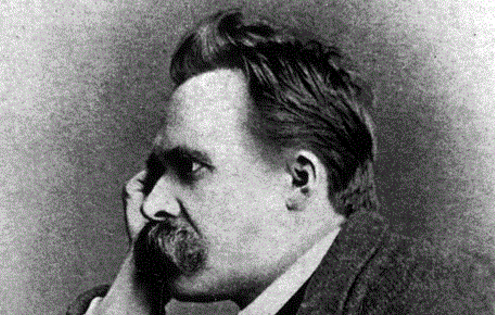
The quote inspired an anxious 1966 Time magazine cover, and a preachy 2016 movie franchise that works hard to inoculate the faithful against atheism’s threatening seductions: “God is Dead,” wrote Friedrich Nietzsche in his 1882 book of incisive aphorisms, The Gay Science, and unwittingly coined a phrase now inseparable from 20th century culture wars. Of course, Nietzsche knew he was tossing a Molotov cocktail into the fraught culture wars of his own time, but he didn’t blow things up for the sheer pleasure of it. Instead, his blunt assertion lay at the heart of what Nietzsche saw as both a tremendous problem and a necessary realization.
To clarify, Nietzsche never meant to say that there had been some sort of god but that he had died in recent history. “Rather,” writes Scotty Hendricks at Big Think, “that our idea of one had” been rendered a relic of a pre-scientific age. The philosopher, “an atheist for his adult life,” found no place for Christian belief in a post-Enlightenment world: “Europe no longer needed God as the source for all morality, value, or order in the universe; philosophy and science were capable of doing that for us.” Accepting this brute fact can impose a heavy existentialist burden, as well as a heavy philosophical and ethical one: theological thinking is deeply embedded in Western philosophy and language, or as Nietzsche wrote, “I am afraid we are not rid of God because we still have faith in grammar.”
A committed metaphysical naturalist, Nietzsche nonetheless saw that just as he was haunted by his strict religious upbringing, unable to easily rid himself of the traces of the Christian God, so too was European civilization haunted, particularly the bourgeois German society he often savaged. “God is dead; but given the way people are, there may still for millennia be caves in which they show his shadow.—And we—we must still defeat his shadow as well!” The “shadow” of god trails our ideas about morality. Fearing to give up religious thought, we cling to it even in the absence of religion. What is to take its place, we wonder, except for widespread, destructive nihilism, a condition Nietzsche feared inevitable?
Nietzsche even saw scientific discourse as haunted by ideas of divine agency. “Let us beware of saying that there are laws in nature,” he writes in The Gay Science, “There are only necessities: there is no one who commands, no one who obeys, no one who transgresses. Once you know that there are no purposes, you also know that there is no accident; for only against a world of purposes does the word ‘accident’ have a meaning.” Far from pulling away the source of human meaning, however, Nietzsche seeks to liberate his readers from the idea that “death is opposed to life”—or that losing a cherished belief is a catastrophe.
On the contrary—as philosopher Simon Critchley aptly paraphrases in a brief video at Big Think— Nietzsche thought that belief in God made us “cringing, cowardly, submissive creatures,” and profoundly unfree. He believed we would continue to be so until we accepted our place in nature—no easy feat in an age so steeped in god-think. “When will we be done with our caution and care?” Nietzsche wondered, “When will all these shadows of god no longer darken us? When will we have completely de-deified nature? When will we begin to naturalize humanity with a pure, newly discovered, newly redeemed nature?”
For Nietzsche, the mass of people may never do so. He reserves his redemption for “the kind of people who alone matter; I mean the heroic.” Failing to become heroes, ordinary people in modernity are fated to go the way of “the Last Man,” a figure, writes Hendricks, “who lives a quiet life of comfort, without thought for individuality or personal growth.” A passive consumer. We can read Nietzsche’s philosophy as thoroughgoing elitism, or as a call to the reader to personal heroism. Either way, the anxiety he tapped into has persisted for 134 years, and shows little sign of abating for many people. For others, the nonexistence of a supreme being has no effect on their psychological health.
For billions of Daoists and Buddhists, for example, the problem has never existed. Nietzsche knew perhaps as much about Eastern religion as his contemporaries, much of his knowledge tainted by Arthur Schopenhauer’s pessimistic take on Buddhism. “Compared to [Schopenhauer’s] world view,” writes Peter Abelson, “which is very severe, Buddhism seems almost cheerful.” Nietzsche could be equally severe, often as a matter of polemic, often as matter of mood, sometimes dismissing other religious systems with only slightly less contempt than he did Christianity. But he sums up one of his key atheistic values in a supposed quote from the Buddha: “Don’t flatter your benefactors! Repeat this saying in a Christian church, and it will instantly clear the air of everything Christian.” To live without belief in god, he suggests over and over, is to be fully free from servitude, and fully responsible for oneself.
Related Content:
Walter Kaufmann’s Classic Lectures on Nietzsche, Kierkegaard and Sartre (1960)
The Digital Nietzsche: Download Nietzsche’s Major Works as Free eBooks
Josh Jones is a writer and musician based in Durham, NC. Follow him at @jdmagness
Read More...Green Day Fan Joins Band On Stage, Takes Over on Guitar, and Acts Like He’s Been There Many Times Before
At a Green Day concert in Chicago, a fan held up a sign, “I can play every song on Dookie.” So Billie Joe Armstrong let him pop on stage to play “When I Come Around.” And the fan didn’t disappoint, from the moment he climbed on the amp and kicked things off, to his stage dive back into the crowd. The footage was recorded on October 23rd. Enjoy.
h/t Robin — via SFGate
Related Content:
Keith Moon, Drummer of The Who, Passes Out at 1973 Concert; 19-Year-Old Fan Takes Over
Blind Guitarist Lives Out Dream at U2 Show
A Paul Simon Feelin’-Very-Groovy Moment
Read More...The U.S. National Archives Launches an Animated GIF Archive: See Whitman, Twain, Hemingway & Others in Motion
Does it matter to you if some people insist on pronouncing GIF with a hard “g” rather than saying “Jiff,” as if they were telling you when they’d get back from the store? (I freely admit, I’m one of those people.) Well then, you, reader, certainly belong to a core audience for the National Archives and Records Administration’s online library of animated “jiffs.” Clearly NARA knows the correct pronunciation, since they announce their new collection with the dated pun “Getting’ Giphy With It.” And they know what the internet needs most from them in times like these: “quality animated GIFs from a reputable source.”
NARA’s archive of jerky, silent, digital moving pictures resides at their GIPHY channel, and contains an “animated history of all flavors including major historic events, celebrities, National Parks, newsreels, animated patents, dancing sailors,” etc…
“… wait, what’s that?,” you say, “animated patents”? Yes. Admittedly, not all of the collection’s GIFs make the quippiest of reaction shots. The archive does, as Allison Meier writes at Hyperallergic, “tell US history in motion.” But animated images of static photos—some dating from before the days of animation—tend to look a little stiff, as in the GIF below, made from two different exposures of a Walt Whitman portrait. Or the already exceedingly stiff portrait further down of a young Mark Twain and friend.
Meier compares these GIF anachronisms to the New York Public Library’s “Stereogranimator,” a neat online tool that allows us to experience a 19th century mechanical version of the GIF. In that regard, they join antiquarian interest with digital curiosity. But when we think of animated GIFs, we generally think of weird little vignettes, like the image at the top, which shows us architect William Van Alen dressed as his famous Chrysler Building, from a 1931 gathering of the Society of Beaux-Arts Architects (which we’ve featured in a previous post).
You’ll find plenty of nostalgic GIFS, such as (if you’re a GenX’er) that of Woody the “Give a Hoot, Don’t Pollute” public service owl, above.
Naturally, the archive contains its share of images with world historical significance—like the exploding swastika in Nuremberg from the end of World War II, above—and cultural significance, such as the tippling Hemingway and boyish Beatles, below.
Scenes from classic films and TV shows, advertisements and public service campaigns… the resource “currently has over 150 NARA GIFs,” writes Meier, “with more continuing to be added.” Is this a publicity stunt? Absolutely. “GIFs help keep us relevant,” remarks Darren Cole of the National Archives, “but also further the agency’s mission of providing access to our holdings to the public.”
In light of the popularity of “history image accounts” on social media, notes Meier, the NARA GIFs “are a savvy initiative to connect a wider audience with the richness of the National Archives”—a way that allows users to accurately document sources and place images in context. Each GIF on the NARA channel links back to the National Archives Catalog, with various levels of description and sourcing information. Gimmick or no, it’s a pretty cool resource full of some pretty cool GIFs—even, believe it or not, those “animated patents.”
Related Content:
Some of Buster Keaton’s Great, Death-Defying Stunts Captured in Animated Gifs
Josh Jones is a writer and musician based in Durham, NC. Follow him at @jdmagness
Read More...The Ukulele Orchestra of Great Britain Performs Great Covers of Nirvana’s “Smells Like Teen Spirit,” Talking Heads’ “Psycho Killer” & More
To the very end of his life, no less an authority on good musical vibes than George Harrison praised and played the ukulele, interpreting many classic tunes on the instrument, penning an enthusiastic endorsement, and supposedly buying ukes in bulk to give away at his home in Hawaii. As Harrison recognized, there is something special about the role of the ukulele in western pop, and that has been true since Hawaiian music exploded onto the mainland in the early 20th century.
So there’s no reason why the ukulele shouldn’t be a serious interpreter of modern hits from Nirvana, Talking Heads, The Who, David Bowie, etc. And also no reason those interpretations shouldn’t be played on stages like the Royal Albert Hall by men and women in formal wear, befitting the seriousness with which they take the cheerful-sounding instrument. The Ukulele Orchestra of Great Britain is so serious, in fact, that they filed and won a lawsuit last year against an alleged copycat group in Germany, claiming their “reputation as performers” and “international and celebrity fan base” were at stake.
Indeed, the UOGB isn’t shy about self-promotion, describing themselves as “a national institution.” But despite their thoroughgoing professionalism, their act is still in good fun. (They also, with humor, note they “are often blamed for the current Ukulele revival which is sweeping the globe.”) And the orchestra’s reputation is more than well-earned. Their site features quotes from luminaries like Bowie and Brian Eno, and endorsements from NME and the Financial Times, who aptly describe them as “both hilarious and heartfelt.” Their winning stage banter gives way to stunning renditions of popular songs that all of the members—including at times a double bass player who goes by the name “David Bowie”—sing in harmony. (They perform their take on “Pinball Wizard,” below, entirely acapella.)
In performances of “Smells Like Teen Spirit,” at the top,” “Psycho Killer,” further down, and, just below, “Life on Mars” the orchestra not only demonstrates how much great musical comedy depends upon great musicianship, they also show the incredible range of the diminutive Polynesian instrument. That’s especially the case in their act of Bowie “plagiarism,” in which six uke players pick out delicate, classical guitar-like arpeggios in the verses, then strum reggae-like percussive attacks under the complex vocal harmonies in the chorus.
The seventh member on stage plays an acoustic bass guitar—the only concession to an additional rhythm instrument, but even in these four anthemic rock songs, you won’t bemoan the lack of drums. As The New York Times remarks, the Ukulele Orchestra of Great Britain “extracts more than seems humanly possible from so small and so modest an instrument.” See them play a version of The Good, The Bad, and The Ugly theme at our previous post, and see many more videos and live performances at the orchestra’s YouTube channel.
Related Content:
George Harrison Explains Why Everyone Should Play the Ukulele, With Words and Music
Musicians Re-Imagine the Complete Songbook of the Beatles on the Ukulele
Josh Jones is a writer and musician based in Durham, NC. Follow him at @jdmagness
Read More...The Best Commercial Ever? James Brown Sells Miso Soup (1992)
Most stars are understandably choosy about what products, if any, they’re willing to endorse. Serious artists are mindful about their reputations.
The late great Godfather of Soul James Brown lent his prodigious talents to McDonalds (for a price), but it’s worth noting that most of the heavy lifting was done by a cast of unknowns playing ticket holders fortifying themselves before a hotly anticipated concert. Brown arrives at the end, to bedazzle everyone in the restaurant with his fancy footwork, sequined suit, and sheer proximity.
Clearly, the Hardest Working Man in Show Business had standards.
(Since his death in 2006, his hits have been used to sell athletic wear, gin, beer, and pork tenderloin, proof that these things are harder to control from beyond the grave.)
Japanese television is one arena where many Western celebrities are willing to relax their usual policies. The prospect of an enormous paycheck for so little work is hard to beat, though in the age of Youtube, there’s a far greater likelihood that their core fans will see the results.
Youtube was not a concern in 1992, when Brown filmed the above 15-second spot for Nissin Cup Noodles. No one can accuse him of phoning it in. He dances, lip synchs soup-centric Japanese lyrics to the tune of Sex Machine, and even—in a longer version on a kitchen set—pours boiling water into the cup, just like millions of budget-conscious artists and students the world over.
What he doesn’t do is “bite and smile,” a staple of commercial acting. He raises a forkful of product to his mouth with an obliging grin, but doesn’t ingest so much as a noodle.
For that, we must turn to former bodybuilder and Governor of California Arnold Schwarzenegger, who supplemented his movie career as Nissin Cup Noodles’ previous Japanese TV pitchman. Not only did he consent to funny costumes, he pile drives that ramen like a World Record in Competitive Eating depends on it. None of that clowning for Brown!
Readers, we invite you to contribute to our scholarship of Western celebs’ Japanese TV commercials in the comments section below.
Related Content:
James Brown Gives You Dancing Lessons: From The Funky Chicken to The Boogaloo
Jim Henson’s Violent Wilkins Coffee Commercials (1957–1961)
Ayun Halliday is an author, illustrator, theater maker, and Chief Primatologist of the East Village Inky zine. Her play Zamboni Godot is opening in New York City in March 2017. Follow her @AyunHalliday.
Read More...Bob Dylan Wins Nobel Prize in Literature for Creating “New Poetic Expressions within the Great American Song Tradition”
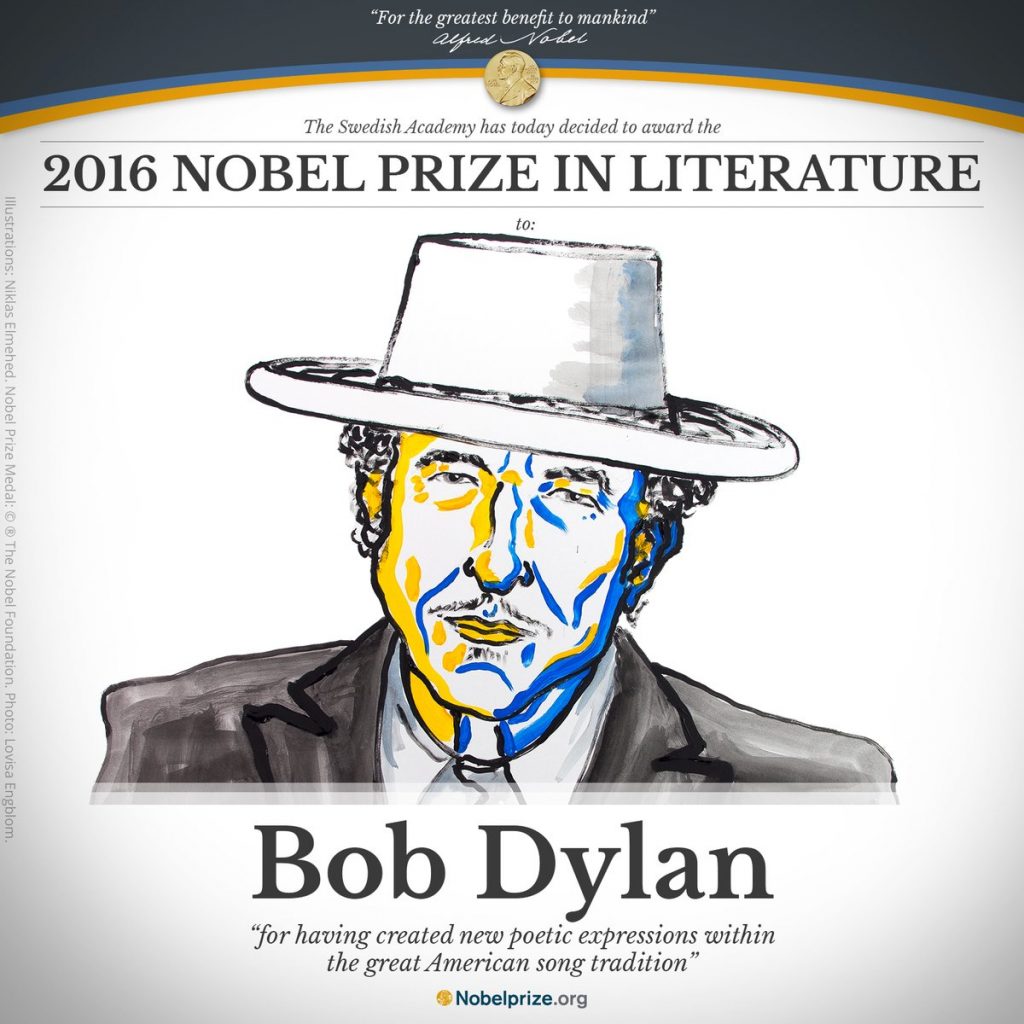
Image courtesy of The Nobel Prize’s Twitter stream.
His apocalyptic poetry plucks images and forms from the blues, the Bible, the Beats, Symbolists, William Blake, T.S. Eliot, and a balladeer tradition dating from medieval French and English minstrelsy to Appalachian settlement to Woody Guthrie, his first muse. His narrative voice shifts from work to work as he has fully embodied various American characters for over half a century—folk troubadour, rock and roll trickster, earnest country crooner, evangelist, weary bluesman, starry-eyed jazz singer. “There is no systematic way of analyzing Dylan’s song lyrics or poems,” writes Julia Callaway at the Oxford Dictionaries blog; “they span more than five decades of historical context and musical style. But perhaps one of the most interesting sides of Dylan is how he uses language and his lyrics to project certain identities, including folksinger and protest-musician.”
Dylan began in that tradition with songs like “The Times They Are A‑Changin’” and “A Hard Rains A‑Gonna Fall”—picking up Guthrie’s inflections and mannerisms in ballads much more sophisticated than they seemed at first listen. “A Hard Rain’s A‑Gonna Fall” is a “seven minute epic,” writes Rolling Stone, “that warns against a coming apocalypse while cataloging horrific visions—gun-toting children, a tree dripping blood—with the wide-eyed fervor of John the Revelator.” The song “began life as a poem, which Dylan likely banged out on a typewriter owned by his buddy… Wavy Gravy.” Dylan has been ambivalent about whether or not we should call him a poet, but this is how so much of his work took shape—banged out on typewriters in New York apartments—as poetry set to music. “Every line in [A Hard Rain’s A‑Gonna Fall] is actually the start of a whole song,” said Dylan, “but when I wrote it, I thought I wouldn’t have enough time alive to write all those songs, so I put all I could into this one.”
After over five decades of lyrics packed with allusion and densely woven themes and meanings, Dylan has had time to write those songs—several more apocalyptic epics set to a few chords on the acoustic guitar. “There are some novels, some trilogies, in fact, with less actual content than Bob Dylan’s ‘All Along the Watchtower,’” says the Nerdwriter in the analysis of that cryptic John Wesley Harding song above. One could say the same about certain songs that appear on nearly every Dylan record, like the 11-minute “Desolation Row,” below. Amid only a few missteps, Dylan has released album after album, decade after decade, that showcase his unparalleled wordcraft in various song forms. And some of his finest work has appeared only in recent years, when it seems his career might have come to a close. Despite some mixed reactions—and some concern for Philip Roth—most people have responded to news this morning of his win for the Nobel Prize in Literature with a decided, “yes, of course.”
Dylan’s recognition by the Nobel Committee validates not only the songwriter himself, but the form he embraced and shaped. As permanent secretary of the Swedish Academy Sara Danius remarked in her announcement, Dylan “created new poetic expressions within the American song tradition.” The award represents “a recognition of the whole tradition that Bob Dylan represents,” says critic David Hadju, “so it’s partly a retroactive award for Robert Johnson and Hank Williams and Smokey Robinson and the Beatles. It should have been taken seriously as an art form a long time ago.” One could argue that American song has already been taken as seriously as any art form, but that it isn’t literature.
Several people have done so. As New York Times writer Hiroko Tabuchi put it, “this might be a disappointing day for booksellers and publishers.” Hardly. Not only does Dylan have a memoir out, Chronicles: Volume One, the first of a planned trilogy, but we may also find renewed appreciation for his first book, 1966’s Tarantula. Dylan’s songs and drawings have been turned into picture books, published in collections, and pored over in biography after biography, commentary after commentary. And next month, Dylan himself will release The Lyrics: Since 1962, a comprehensive, definitive collection of the songwriter’s lyrics, complete with expert annotations. You can pre-order a copy here.
The literary output by and about Dylan should keep booksellers busy for many months after this announcement. But Dylan’s is primarily a living, bardic tradition, lest we forget that all literature began as song. So congratulations to Dylan and for perhaps long-overdue recognition of American songcraft as a genuinely literary art form.
Related Content:
Josh Jones is a writer and musician based in Durham, NC. Follow him at @jdmagness
Read More...Support Us
We're hoping to rely on loyal readers, rather than erratic ads. Please click the Donate button and support Open Culture. You can use Paypal, Venmo, Patreon, even Crypto! We thank you!

About Us

Open Culture scours the web for the best educational media. We find the free courses and audio books you need, the language lessons & educational videos you want, and plenty of enlightenment in between.
Advertise With Us

FREE UPDATES!
GET OUR DAILY EMAIL
Get the best cultural and educational resources on the web curated for you in a daily email. We never spam. Unsubscribe at any time.
FOLLOW ON SOCIAL MEDIA

Open Culture editor Dan Colman scours the web for the best educational media. He finds the free courses and audio books you need, the language lessons & movies you want, and plenty of enlightenment in between.
Advertise With Us

