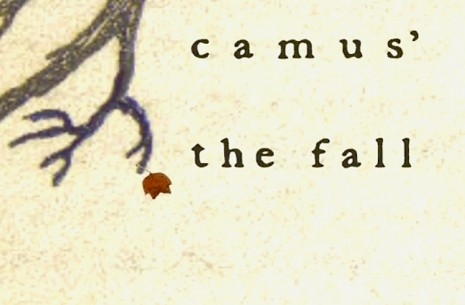
Now it’s time for something a little more modern — Mike McCubbins offers an animated adaptation of Albert Camus’ classic, The Fall, published in 1957, the same year that Camus won the Nobel Prize for Literature for his work that “illuminates the problems of the human conscience in our times.” Give McCubbins five minutes and he’ll give you the visual essence of the philosophical novel. You can watch it here.
When Slovenia’s hip Marxist/Lacanian critical theorist takes center stage at a Wall Street protest, it’s news for a culture site. No doubt. How can we not observe a rare moment of praxis? But, what it all means for the Occupy Wall Street movement, we’ll let you wrestle with that. Part 2 appears here. H/T Biblioklept.
Most of these “crazy ones, misfits, rebels and rule breakers” have been featured on Open Culture throughout the years (click the links above), and what make this ad special is that Steve Jobs narrates it himself. The original TV ad — the one that made it on air — had Richard Dreyfuss doing the voiceover…
This year marks the 400th anniversary of the King James Bible, a translation that influenced the development of the English language as much as it did the Christian faith. Right alongside many other anniversary celebrations taking place this year, Glen Scrivener, a minister in the Church of England, has started a blog about the linguistic impact of the text, focusing on 365 phrases that have passed in common parlance. A lot of this gets artfully distilled by Scrivener’s short video, The King’s English — 100 phrases in 3 Minutes (above).
When two teams of scientists announced in 1998 that the expansion of the Universe was not slowing down due to gravity but was in fact accelerating, the worldwide scientific community was shocked. The discovery turned many of the prevailing assumptions about the universe upside down. Looking back, perhaps the only thing that wasn’t a surprise was that the Nobel Prize Committee should take notice.
Last Tuesday the Swedish Academy of Sciences announced that the 2011 Nobel Prize in Physics would go to three American-born scientists from two rival teams: physicist Saul Permutter, head of the Supernova Cosmology Project at Lawrence Berkeley National Laboratory and the University of California, Berkeley, would receive half of the prize, while Brian P. Schmidt, head of the High‑z Supernova Search Team and an astronomer at the Research School of Astronomy and Astrophysics at the Australian National University, Weston Creek, would share the other half with a colleague who wrote the original paper announcing the team’s findings in 1998, astronomer Adam G. Riess of Johns Hopkins University and the Space Telescope Science Institute.
Despite popular belief, the two teams did not “discover” dark energy. As Perlmutter points out in the short film above, “People are using the term ‘dark energy’ basically as a place holder to describe any explanation for why it is that we seem to be seeing the universe’s expansion getting faster and faster.” What is actually known is that the universe has been expanding for as far back as we can observe, and about 7 billion years ago–roughly half the estimated age of the universe–the expansion began to accelerate.
“Why is it speeding up?” Perlmutter asked during a press conference on the morning his Nobel Prize was announced. “It could be that most of the universe is dominated by a dark energy that pervades all of space and is causing this acceleration. It could be, perhaps even more surprising, that Einstein’s Theory of General Relativity needs a little bit of a tweak, perhaps acting slightly differently on these very large scales of the universe. But at this moment I would say that the question is wide open.”
Today is John Lennon’s would-be 71st birthday, and it jogged my memory, reminding me of this lengthy 1970 interview. Conducted by Jann Wenner, the founder of Rolling Stone Magazine, this important conversation (listen via iTunes) was recorded shortly after The Beatles’ bitter breakup, and the emotions were still running high. Running over 3 hours, it is one of Lennon’s most extensive interviews, touching not just on the breakup, but also on art and politics, drugs, Yoko, primal therapy and more. It’s not always flattering, but it gives you a good feel for the man and the great artist.
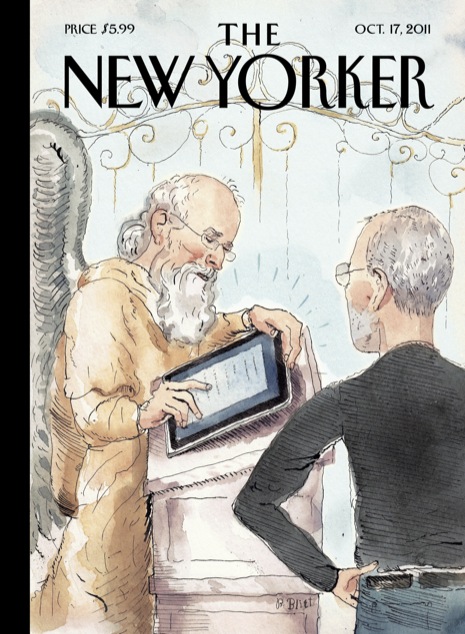
One drawing by The New Yorker cartoonists says it all. Brilliantly done. You can find the original cover here, and watch how the cartoonists go about their work here.
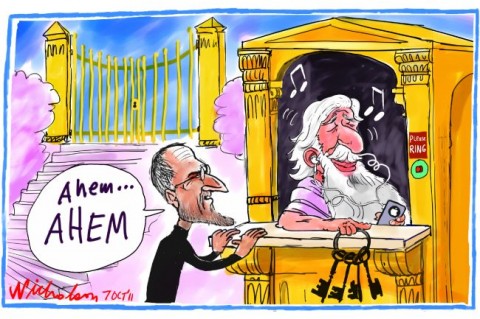
And then from across the very big pond, we have Australian cartoonist Peter Nicholson offering another creative take on Mr. Jobs’ meeting with St. Peter. Find original here, and thanks Geoff for sending…
Time to resurrect another suddenly relevant item we first mentioned back in 2009…
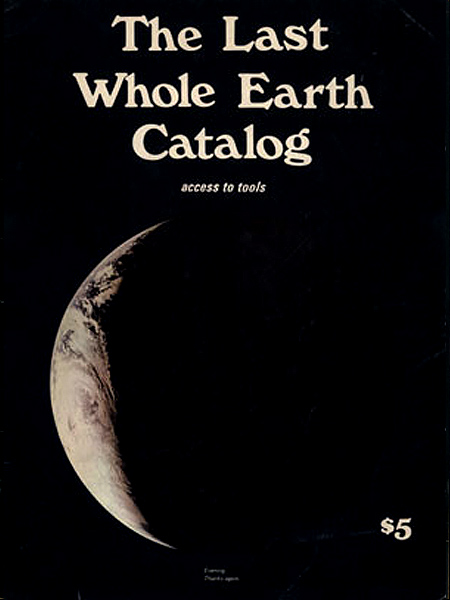
Between 1968 and 1972, Stewart Brand published The Whole Earth Catalog. For Kevin Kelly, the Catalog was essentially “a paper-based database offering thousands of hacks, tips, tools, suggestions, and possibilities for optimizing your life.” For Steve Jobs, it was a “Bible” of his generation, a life ‑transforming publication. Speaking to Stanford graduates in 2005, in what Ken Auletta has called the “Gettysburg Address of graduation-speechism,” Jobs explained why he drew inspiration from this intellectual creation of the 60s counterculture:
When I was young, there was an amazing publication called The Whole Earth Catalog, which was one of the bibles of my generation. It was created by a fellow named Stewart Brand not far from here in Menlo Park, and he brought it to life with his poetic touch. This was in the late 1960’s, before personal computers and desktop publishing, so it was all made with typewriters, scissors, and polaroid cameras. It was sort of like Google in paperback form, 35 years before Google came along: it was idealistic, and overflowing with neat tools and great notions.
Stewart and his team put out several issues of The Whole Earth Catalog, and then when it had run its course, they put out a final issue. It was the mid-1970s, and I was your age. On the back cover of their final issue was a photograph of an early morning country road, the kind you might find yourself hitchhiking on if you were so adventurous. Beneath it were the words: “Stay Hungry. Stay Foolish.” It was their farewell message as they signed off. Stay Hungry. Stay Foolish. And I have always wished that for myself. And now, as you graduate to begin anew, I wish that for you.
The good news is that The Whole Earth Catalog and some related publications are available online. You can read them for free, or download them for a fee. We suggest diving in right here, in Fall 1968, where it all begins. Enjoy.…
Once again, we’re heading back to 1971. Yesterday we had Dick Cavett’s 1971 interview with George Harrison. Today, it’s the clash of two intellectual titans, Noam Chomsky and Michel Foucault. In ’71, at the height of the Vietnam War, the American linguist and French historian/social theorist appeared on Dutch TV to debate a fundamental question: Is there such a thing as innate human nature? Or are we shaped by experiences and the power of cultural and social institutions around us?
40 years later, you can find the classic debate on YouTube. If you need subtitles, make sure you turn on the captions function at the bottom of the video.
All we can say is bless Don Pettit. While working on the International Space Station in 2008, the NASA astronaut shot videos that are literally and figuratively out of this world: The Aurora Borealis Viewed from Orbit and What It Feels Like to Fly Over Planet Earth. And then we discover that Pettit invented a “zero‑g coffee cup” that lets you drink coffee in outer space without using a straw. That’s one small step for man; one giant leap for mankind.…
With a series of three films, director Kirby Ferguson has been gradually making the case that “Everything is a Remix.” In doing what they do, artists collect material, combine and transform it, and eventually mold it into something unique, though not entirely new. Ferguson has traced this idea through literature and music, filmmaking, and technology/computing. And while we wait for the fourth and final installment in the series, we get a little treat to tide us over — a six minute look at the cinematic origins of the 1999 sci-fi action film, The Matrix. Made by Robert Wilson and with the help of some crowdsourcing, this fun video identifies 24 films that influenced The Matrix. They’re are all listed below the jump. Consider watching the clip in a wider format here.
We're hoping to rely on loyal readers, rather than erratic ads. Please click the Donate button and support Open Culture. You can use Paypal, Venmo, Patreon, even Crypto! We thank you!
Open Culture scours the web for the best educational media. We find the free courses and audio books you need, the language lessons & educational videos you want, and plenty of enlightenment in between.
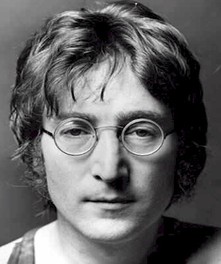 Today is John Lennon’s would-be 71st birthday, and it jogged my memory, reminding me of this