Above, we have the menu for an 1899 Thanksgiving dinner at the Plaza Hotel in New York. If you were a turkey, you had it relatively easy. But the ducks? Not so much. On the menu, you’ll find Mallard duck and Ruddy duck. But also Red-head duck, Long Island duckling, Teal duck and Canvas-back duck, too. A duck in NYC was not a good place to be.
And, oh, those prices! Not one item above a few dollars. But let’s account for inflation, shall we? In 2021, one Redditor noted: “I found a calculator and it turns out that $.30 in 1899 equals $10.00 now. The Fried oyster crabs would be $24.99 now and a Philadelphia chicken would be $66.65. So, the cheapest thing on the menu is Sweet buttermilk for $.10, but today would be $3.33.”
For our U.S. readers, enjoy your holiday tomorrow…
In his new video above, the writer Daniel Pink proposes the following exercise: “Grab a book and time yourself. How long can you read without getting up or checking your phone? Really try to push yourself, but don’t judge yourself if it’s only a few minutes. Write down your time; that’s your baseline.” From there, you “train your attention like a muscle: build it by starting small and gradually stretching it.” This is just one of five strategies he recommends to “fix your attention span,” a repair of which more and more of us feel in need the deeper we get into the twenty-first century. If even opening up a book sounds like a bit much, first take up Pink’s challenge of watching this four-and-a-half minute video “on full screen, 1x speed, with no distractions.”
As with any endeavor, it’s important to start small. Once you have your baseline, however you’ve measured it, you can set about improving it. In order to place yourself well to do so, Pink recommends eliminating distractions from your immediate environment, which has already been “rigged against you,” not least by social media companies: hence the importance of creating a “no phone zone,” or at least permanently turning off notifications.
Drawing on the work of Cal Newport (previously featured here on Open Culture), he also suggests creating cues — using certain physical movements, certain music, certain scents — that signal your brain to go into work mode. But even in work mode, you should make sure to take breaks, deliberately, every 90 minutes, or at whatever interval your brain starts performing like a toddler in a meltdown.
On the highest level of all, we must “reconnect attention to meaning.” In other words, we have to understand the reasons we’re doing a task, if any, before we can hope to concentrate on it. “I learned this myself on my last book,” Pink says. “I was struggling. I was distracted. I was on my phone and watching sports highlights rather than my work, and I realized the problem was that I didn’t know why I was writing this book. I didn’t have a purpose.” Only when he finally articulated the benefit of doing that work, and then posted that articulation above his desk, did it start to flow. When next you find yourself unable to stick to a task on the job, a personal project, or a book — whether you’re reading or writing one — ask yourself: Why am I doing this? Maybe the answer will empower you to attend to it. Or maybe you’ll be better off doing something else entirely.
Based in Seoul, Colin Marshall writes and broadcasts on cities, language, and culture. His projects include the Substack newsletterBooks on Cities and the book The Stateless City: a Walk through 21st-Century Los Angeles. Follow him on the social network formerly known as Twitter at @colinmarshall.
You might know Winsor McCay (1867? ‑1934) for the gorgeously surreal Little Nemo comic strip or for his early animated short Gertie the Dinosaur(1914). But did you know that he also created some of the earliest examples of animated propaganda ever?
On May 7, 1915, the RMS Lusitania was just off the coast of Ireland, heading towards its destination of Liverpool, when a German U‑boat attacked the ship without warning. Eighteen minutes after two torpedoes slammed into the ship, it was under water. 1,198 died. The furor over the incident eventually led to the United States entering WWI.
At the time of the sinking, McCay was employed by William Randolph Hearst as an editorial cartoonist. Though McCay was incensed by the attack, Hearst was an isolationist and demanded that he draw anti-war cartoons. This grated on the artist more and more until finally he decided to follow up on his hugely successful Gertie the Dinosaur by making The Sinking of the Lusitania (1918), which you can see above.
The movie took two years of painstaking effort to make and consisted of over 25,000 drawings—all done by hand and most done by McCay himself during his free time after work.
Compared to other animation done around this time, the film is both stark and serious, lending it the air of a documentary. The piece, which isn’t much shorter than the actual time it took for the Lusitania to sink, gives a blow-by-blow account of the attack. Though the incident is depicted largely from afar, as if from a camera on another ship, McCay doesn’t shy away from showing some really gut-wrenching moments of the tragedy up close. At one point, there is a shot of a desperate mother trying to keep her baby above the waves. At another point, dozens of people are seen bobbing in the choppy seas like driftwood.
And, just in case you haven’t quite grasped the thrust of the film, McCay includes some intertitles, which are, even by the standards of war propaganda, pretty heavy-handed.
The babe that clung to his mother’s breast cried out to the world – TO AVENGE the most violent cruelty that was ever perpetrated upon an unsuspecting and innocent people.
And
The man who fired the shot was decorated for it by the Kaiser! – AND YET THEY TELL US NOT TO HATE THE HUN.
The curious thing about the movie, considering its subject matter, is how beautiful it is. Just look at the stylized lines of the ocean, the baroque arabesques of the smoke coming off the ship’s smokestacks, the elegant use of negative space. Each and every cel of the movie is worthy of getting framed. How many war propaganda movies can you say that about?
Actor George Takei was once best known as Star Trek’s Mr. Sulu. He still is, of course, but over the last couple decades his friendly, intelligent, and wickedly funny presence on social media has landed him a new popular role as a civil liberties advocate. Takei’s activist passion is informed not only by his status as a gay man, but also by his childhood experiences. At the age of 5, Takei was rounded up with his American-born parents and taken to a Japanese internment camp in Arkansas, where he would live for the next three years. In an interview with Democracy Now, Takei spoke frankly about this history:
We’re Americans…. We had nothing to do with the war. We simply happened to look like the people that bombed Pearl Harbor. But without charges, without trial, without due process—the fundamental pillar of our justice system—we were summarily rounded up, all Japanese Americans on the West Coast, where we were primarily resident, and sent off to 10 barb wire internment camps—prison camps, really, with sentry towers, machine guns pointed at us—in some of the most desolate places in this country.
Takei and his family were among over 100,000 Japanese-Americans—over half of whom were U.S. citizens—interned in such camps.
Into one of these camps, Manzanar, located in the foothills of the Sierra Nevadas, celebrated photographer Ansel Adams managed to gain entrance through his friendship with the warden. Adams took over 200 photographs of life inside the camp.
In 1965, he donated his collection to the Library of Congress, writing in a letter, “The purpose of my work was to show how these people, suffering under a great injustice, and loss of property, business and professions, had overcome the sense of defeat and dispair [sic] by building for themselves a vital community in an arid (but magnificent) environment.”
Adams had another purpose as well—as scholar of the period Frank H. Wu describes it—“to document some aspects of the internment camp that the government didn’t want to have shown.” These include “the barbed wire, and the guard towers, and the armed soldiers.” Prohibited from documenting these control mechanisms directly, the photographer “captured them in the background, in shadows,” says Wu: “In some of the photos when you look you can see just faintly that he’s taking a photo of something, but in front of the photo you can see barbed wire, or on the ground you can see the shadow of barbed wire. Some of the photos even show the blurry outline of a soldier’s shadow.”
The photographs document the daily activities of the internees—their work and leisure routines, and their struggles to maintain some semblance of normalcy while living in hastily constructed barracks in the harshest of conditions.
Though the landscape, and its climate, could be desolate and unforgiving, it was also, as Adams couldn’t help but notice, “magnificent.” The collection includes several wide shots of stretches of mountain range and sky, often with prisoners staring off longingly into the distance. But the majority of the photos are of the internees—men, women, and children, often in close-up portraits that show them looking variously hopeful, happy, saddened, and resigned.
You can view the entire collection at the Library of Congress’ online catalog. Adams also published about 65 of the photographs in a book titled Born Free and Equal: The Story of Loyal Japanese Americans in 1944. The collection represents an important part of Adams’ work during the period. But more importantly, it represents events in U.S. history that should never be forgotten or denied.
Note: An earlier version of this post appeared on our site in 2015.
New York isn’t the oldest city in the United States of America, and it certainly isn’t the newest. But it is, quite possibly, the American city where more layers of history coexist than any other, a quality that manifests most vividly in its built environment. Even the most casual tourist can sense the sheer variety of time periods embodied in the buildings around them on, say, a stroll down Broadway — one of the streets featured in the ten-part walking tour compiled in the new Architectural Digest video above. As a whole, it offers a two-hour journey through the city beginning in Central Park and ending on Wall Street.
In between come on-foot examinations of everything from the fin-de-siècle “apartment hotels” of the Upper West Side to the recently built “super-tall” residential towers of West 57th Street to the developments atop the buried Grand Central Station to the disused industrial railway now known — and imitated around the world — as a linear park called the High Line.
Tend though longtime New Yorkers may to regard each part of the city as more or less a nation unto itself, a perspective with a bit more distance reveals signs of the never-ending social, economic, and aesthetic exchange between them: an important factor in how the use of and role played by even the city’s most august structures has been subject to change after unanticipated change.
Helping us to understand all this are architects Michael Wyetzner and Nick Potts, both professionally well placed to explain both the big picture of New York’s evolution and the significance of the various oddities and eccentricities on its streets. Even an architectural layman would take impressed notice while passing, say, the mansions once inhabited by Alexander Hamilton and Aaron Burr; the jagged bunker that has housed the Whitney Museum of American Art, the Met Breuer, and Frick Madison; the impossibly skinny-looking skyscrapers of the so-called “Billionaire’s Row”; or the Dakota, John Lennon’s final residence. But to learn what such buildings have to tell us about the history and nature of New York, we must look at them, as another famous rock star once sang, thru’ these architects’ eyes.
Based in Seoul, Colin Marshall writes and broadcasts on cities, language, and culture. His projects include the Substack newsletterBooks on Cities and the book The Stateless City: a Walk through 21st-Century Los Angeles. Follow him on the social network formerly known as Twitter at @colinmarshall.
The humorist Sandra Tsing Loh once described her generational cohort as “today’s young, highly trained, downwardly mobile professionals: ‘dumpies.’ We’re just emerging from years of college only to learn that there are no jobs available for people with our advanced qualifications,” and thus no route to ownership of all their hoped-for lifestyle accoutrements. No, she’s not a millennial, but rather what she calls a “late boomer” in an essay that dates from the mid-nineties — a few years after IKEA founder Ingvar Kamprad “came into Southern California, uttering those five immortal words: ‘Halogen! Impossible Price: $29!’ The rest was history. In that instant, we dumpies found our niche. We rose up and became the IKEA Generation!”
IKEA could expand so far out of its native Sweden thanks to the success of products like the LACK coffee table, the subject of the new Primal Space video above. Though small in scale and highly unprepossessing in appearance (and, let’s face it, a visual byword for cheap furnishings second only to the number-one-selling BILLY bookshelf) it’s long been a steady seller the world over, not least because its price, just under the equivalent of ten euros when introduced in 1981, has never been raised. To manage that, IKEA has had to use every trick in its book: not just the do-it-yourself “flat-packed” design it pioneered, but also non-warping particle board, honeycomb paper structures for maximum strength using a minimum of material, and even newly engineered leg-folding machines.
However briskly it sells, this particular product may be unfortunately named in an English-speaking market; “What they ‘lack’ is stability,” one interviewee says to Loh. Still, it remains emblematic enough of the corporate mission once articulated by Kamprad himself: “To create a better everyday life for the majority of people.” (“How many Republican politicians can say they’ve done that?” Loh adds. “How many Democrats?”) That extends to the design of IKEA’s stores, which offer only one path to follow all the way through, like an extra-large funhouse. As noted in the video, while this forces customers to pass every product — and thus every temptation to impulse buy — it also turns a visit into an experience unto itself, before the customer even reaches the cafeteria. Funny; I could go for a plate of meatballs right about now.
Based in Seoul, Colin Marshall writes and broadcasts on cities, language, and culture. His projects include the Substack newsletterBooks on Cities and the book The Stateless City: a Walk through 21st-Century Los Angeles. Follow him on the social network formerly known as Twitter at @colinmarshall.
Anyone who keeps an eye on Hollywood knows — indeed, has been ever more frequently and anxiously informed — that the theater business is in trouble. If fewer of us than ever have been going out to the movies, one reason must have to do with the easy availability of home streaming, to say nothing of all the proliferating digital distractions precision-engineered to capture our attention. But could it also have to do with a change in the pictures themselves? With more than two million views racked up in just four days, the new Like Stories of Old video essay above ventures an explanation as to “Why Movies Just Don’t Feel ‘Real’ Anymore.”
In recent years, even long, colossally budgeted, and ceaselessly marketed spectacles feel strangely insubstantial on any screen, big or small. The video’s creator Tom van der Linden points to a variety of factors, beginning with a worsening lack of correspondence between the cinematic image and our perception of reality.
One clearly — or rather, readily — noticeable contributing trend is the prevalence of shallow focus, which keeps the characters in the foreground sharp but lets all the details of the background go blurry: not the way we see the real world, unless we misplace our glasses. Because we live in deep focus, deep focus cinematography feels more real to us.
Of course, not every movie can be Lawrence of Arabia. But there was a time when practically all of them did deliver what’s called “haptic visuality,” the word haptic relating to the concept of our sense of touch. Older films have a tangibility about them in large part because the filmmakers had no choice: working only or primarily with analog tools, they could only do so much to detach images from our physical experience. Digital photography, post-production CGI, and now the open abyss of AI have made anything technically possible, though as van der Linden underscores, those technologies by themselves don’t guarantee that the resulting movie won’t feel real. Ultimately, unreality is a choice, and one we moviegoers should hope the industry will stop making — if not for our satisfaction, then for its own survival.
Based in Seoul, Colin Marshall writes and broadcasts on cities, language, and culture. His projects include the Substack newsletterBooks on Cities and the book The Stateless City: a Walk through 21st-Century Los Angeles. Follow him on the social network formerly known as Twitter at @colinmarshall.
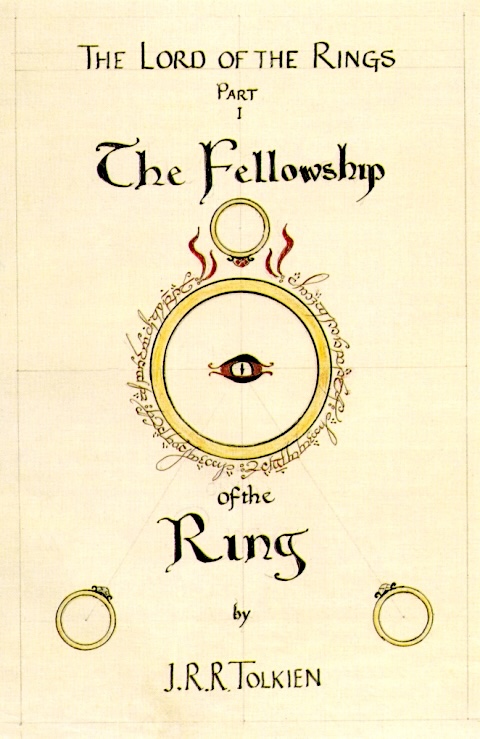
I’ve just started reading J.R.R. Tolkien’s The Hobbitto my daughter. While much of the nuance and the references to Tolkienian deep time are lost on her, she easily grasps the distinctive charms of the characters, the nature of their journey, and the perils, wonders, and Elven friends they have met along the way so far. She is familiar with fairy tale dwarfs and mythic wizards, though not with the typology of insular, middle-class, adventure-averse country gentry, thus Hobbits themselves took a bit of explaining.
While reading and discussing the book with her, I’ve wondered to myself about a possible historical relationship between Tolkien’s fairy tale figures and those of the Walt Disney company which appeared around the same time. The troupe of dwarves in The Hobbit might possibly share a common ancestor with Snow White’s dwarfs—in the German fairy tale the Brothers Grimm first published in 1812. But here is where any similarity between Tolkien and Disney begins and ends.
In fact, Tolkien mostly hated Disney’s creations, and he made these feelings very clear. Snow White debuted only months after The Hobbit’s publication in 1937. As it happened, Tolkien went to see the film with literary friend and sometime rival C.S. Lewis. Neither liked it very much. In a 1939 letter, Lewis granted that “the terrifying bits were good, and the animals really most moving.” But he also called Disney a “poor boob” and lamented “What might not have come of it if this man had been educated—or even brought up in a decent society?”
Tolkien, notes Atlas Obscura, “found Snow White lovely, but otherwise wasn’t pleased with the dwarves. To both Tolkien and Lewis, it seemed, Disney’s dwarves were a gross oversimplification of a concept they held as precious”—the concept, that is, of fairy stories. Some might brush away their opinions as two Oxford dons gazing down their noses at American mass entertainment. As Tolkien scholar Trish Lambert puts it, “I think it grated on them that he [Disney] was commercializing something that they considered almost sacrosanct.”
“Indeed,” writes Steven D. Greydanus at the National Catholic Register, “it would be impossible to imagine” these two authors “being anything but appalled by Disney’s silly dwarfs, with their slapstick humor, nursery-moniker names, and singsong musical numbers.” One might counter that Tolkien’s dwarves (as he insists on pluralizing the word), also have funny names (derived, however, from Old Norse) and also break into song. But he takes pains to separate his dwarves from the common run of children’s story dwarfs.
Tolkien would later express his reverence for fairy tales in a scholarly 1947 essay titled “On Fairy Stories,” in which he attempts to define the genre, parsing its differences from other types of marvelous fiction, and writing with awe, “the realm of fairy story is wide and deep and high.” These are stories to be taken seriously, not dumbed-down and infantilized as he believed they had been. “The association of children and fairy-stories,” he writes, “is an accident of our domestic history.”
Tolkien wrote The Hobbit for young people, but he did not write it as a “children’s book.” Nothing in the book panders, not the language, nor the complex characterization, nor the grown-up themes. Disney’s works, on the other hand, represented to Tolkien a cheapening of ancient cultural artifacts, and he seemed to think that Disney’s approach to films for children was especially condescending and cynical.
He described Disney’s work on the whole as “vulgar” and the man himself, in a 1964 letter, as “simply a cheat,” who is “hopelessly corrupted” by profit-seeking (though he admits he is “not innocent of the profit-motive” himself).
…I recognize his talent, but it has always seemed to me hopelessly corrupted. Though in most of the ‘pictures’ proceeding from his studios there are admirable or charming passages, the effect of all of them is to me disgusting. Some have given me nausea…
This explication of Tolkien’s dislike for Disney goes beyond mere gossip to an important practical upshot: Tolkien would not allow any of his works to be given the Walt Disney treatment. While his publisher approached the studios about a Lord of the Rings adaptation (they were turned down at the time), most scholars think this happened without the author’s knowledge, which seems a safe assumption to say the least.
Tolkien’s long history of expressing negative opinions about Disney led to his later forbidding, “as long as it was possible,” any of his works to be produced “by the Disney studios (for all whose works I have a heartfelt loathing).” Astute readers of Tolkien know his serious intent in even the most comic of his characters and situations. Or as Vintage News’ Martin Chalakoski writes, “there is not a speck of Disney in any of those pages.”
Note: An earlier version of this post appeared on our site in 2018.
If pressed to pick the most international art figure of the past dozen years, one could do much worse than the Swedish artist-mystic Hilma af Klint, despite her having been dead for more than 80 years now. As evidenced by the links at the bottom of the post, we’ve been featuring her here on Open Culture since 2017, first in the context of whether she counts as the first abstract painter. Just a few years before that, practically no one in the world had ever heard her name, let alone beheld any of her more than 1,200 paintings and drawings. In fact, it was only in 2013, with the show Hilma af Klint — A Pioneer of Abstraction at Stockholm’s Moderna Museet, that she first became publicly known.
From there, her canonization proceeded rapidly. One uses that word advisedly, given af Klint’s religiosity, whose intensity, esotericism, and rigor constitute one of the themes of Alice Gregory’s recent New Yorker piece on the artist’s work, legacy, and relatively newfound popularity, all of it colored by the fact that none of her pieces have ever been for sale.
The uncannily modern, before-its-time aesthetic appeal of af Klint’s work is one thing; the dearth of widespread knowledge about the details of her life and thought, which has allowed many of her suddenly avid twenty-first century fans to imagine her into their preferred artistic, philosophical, and social narratives, is another. Yet key to the fascination of her images is that, having been born in 1862, she wasn’t a twenty-first century woman.
Af Klint barely even belonged to the twentieth century, or indeed to any worldly time period at all. The complex and seemingly contradictory worldview that inspired her artwork is practically inaccessible to us, even if we manage to get through the 26,000 journal pages she left behind. Gregory interviews one such (and perhaps the only) dedicated individual, a nonprofit CEO and af Klint scholar dedicated to exploding the myths that have so readily accreted around her. One is that she worked alone: evidence suggests that some paintings attributed to her may actually have been executed by other members of her spiritualist circle, The Five. But even if she turns out not to have been a movement of one after all, her name will no doubt continue to sell out museum exhibitions for years to come.
Based in Seoul, Colin Marshall writes and broadcasts on cities, language, and culture. His projects include the Substack newsletterBooks on Cities and the book The Stateless City: a Walk through 21st-Century Los Angeles. Follow him on the social network formerly known as Twitter at @colinmarshall.
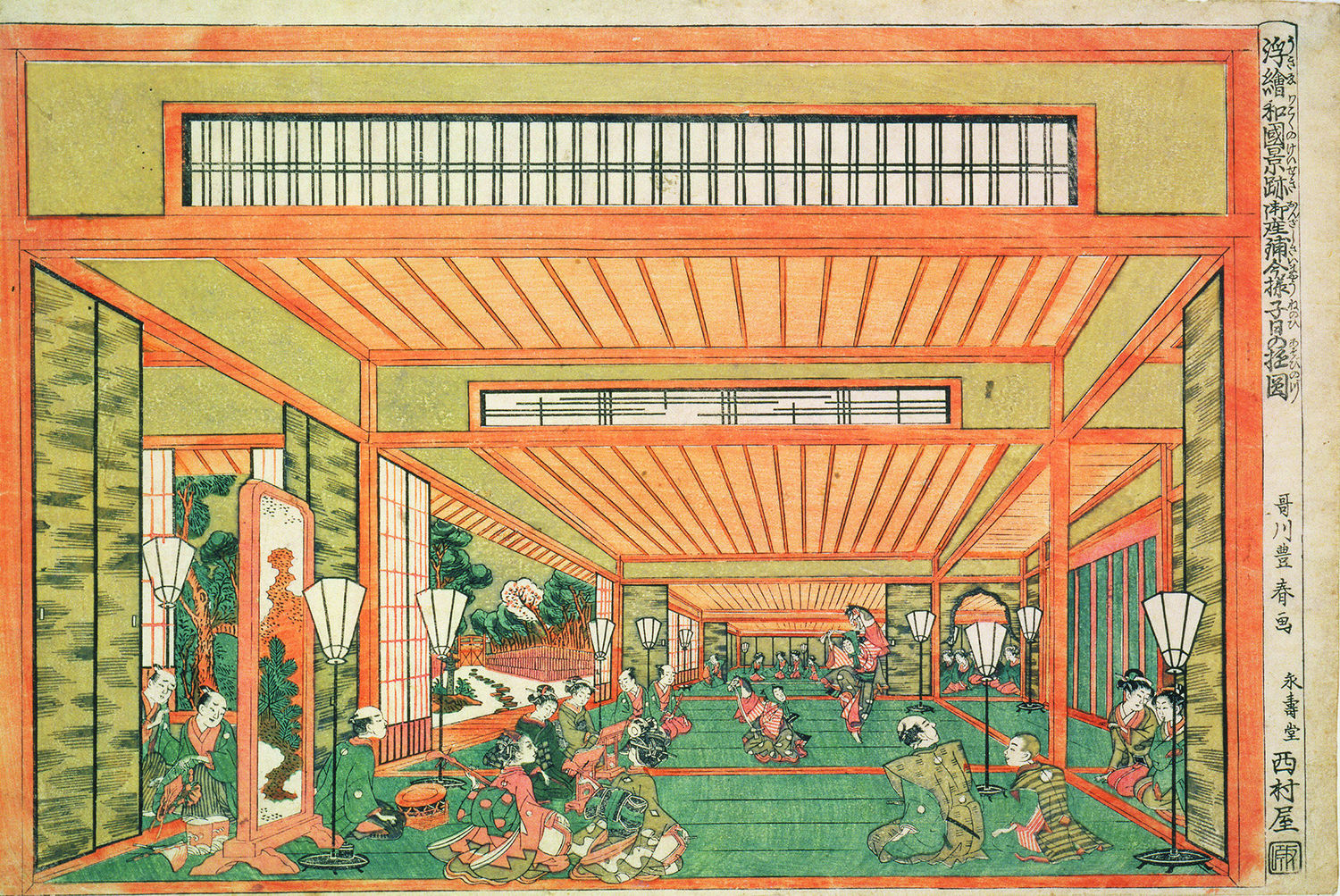
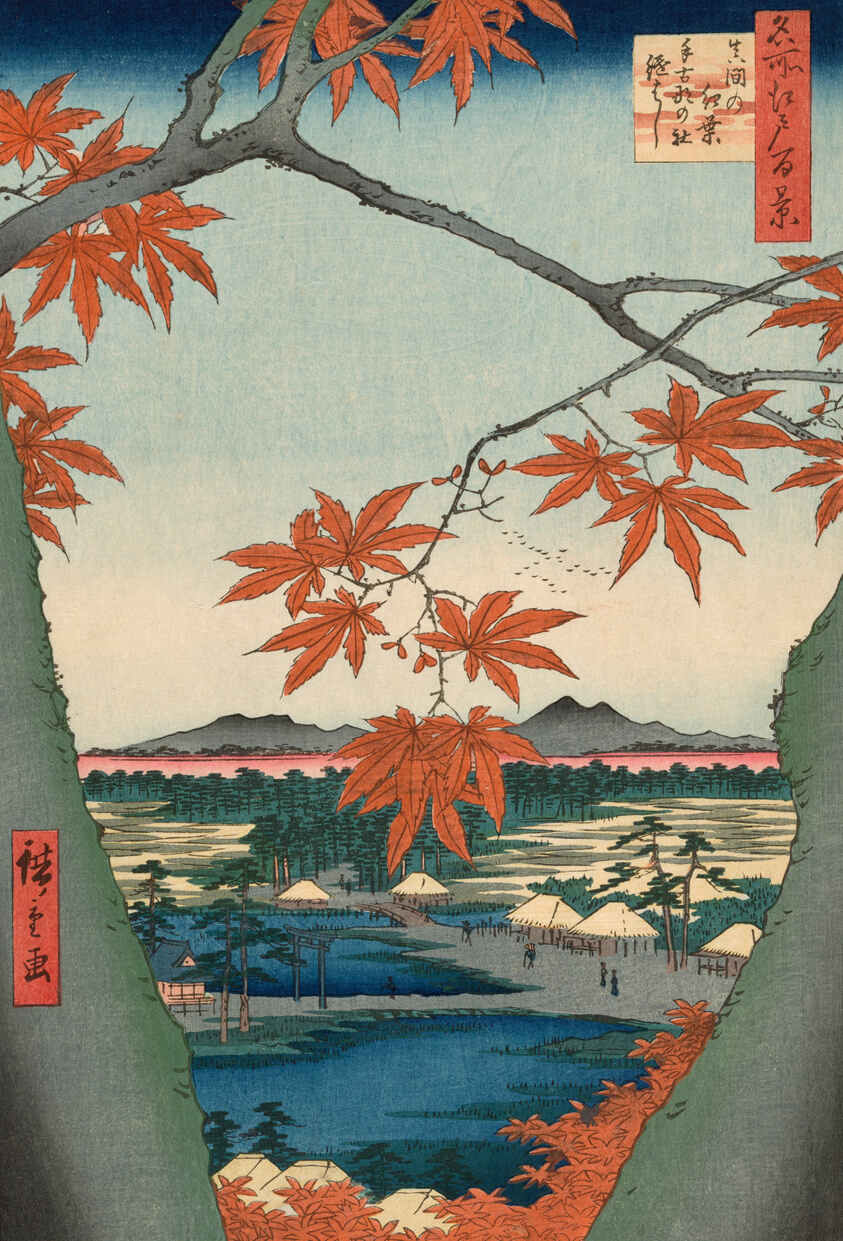
When woodcut artist Katsushika Hokusai made his famous print The Great Wave off Kanagawa in 1830 — part of the series Thirty-six Views of Mount Fuji — he was 70 years old and had lived his entire life in a Japan closed off from the rest of the world. In the 19th century, however, “the rest of the world was becoming industrialized,” James Payne explains above in his Great Art Explained video, “and the Japanese were concerned about foreign invasions.” The Great Wave shows “an image of Japan fearful that the sea — which has protected its peaceful isolation for so long — would become its downfall.”
It’s also true, however, that The Great Wave would not have existed without a foreign invasion. Prussian blue, the first stable blue pigment, accidentally invented around 1705 in Berlin, arrived in the ports of Nagasaki on Dutch and Chinese ships in the 1820s. Prussian Blue would start a new artistic movement in Japan, aizuri‑e, woodcuts printed in bright, vivid blues.
“Hokusai was one of the first Japanese printmakers to boldly embrace the colour,” Hugh Davies writes at The Conversation, “a decision that would have major implications in the world of art.” When the country’s isolationist policies ended in the 1850s, “a showcase at the inaugural Japanese Pavilion elevated the artistic status of woodblock prints and a craze for their collection quickly followed.”
Chief among the works collected in the European and American fervor for Japanese prints were those from Hokusai, his contemporary Hiroshige, and other aizuri‑e artists. So famous was The Great Wave in the West by 1891 that French graphic artist Pierre Bonnard would satirize its stylish spray in an advertisement for champagne. A print of The Great Wave hung on Claude Debussy’s wall, and the first edition of his La Mer bore an adaptation of a detail from the print. As Michael Cirigliano writes for the Metropolitan Museum of Art:
Cultural circles throughout Europe greatly admired Hokusai’s work…. Major artists of the Impressionist movement such as Monet owned copies of Hokusai prints, and leading art critic Philippe Burty, in his 1866 Chefs-d’oeuvre des Arts industriels, even stated that Hokusai’s work maintained the elegance of Watteau, the fantasy of Goya, and the movement of Delacroix. Going one step further in his lauded comparisons, Burty wrote that Hokusai’s dexterity in brush strokes was comparable only to that of Rubens.
These comparisons are not misplaced, John-Paul Stonard explains in The Guardian: “That the Great Wave became the best known print in the west was in large part due to Hokusai’s formative experience of European art.” Not only did he absorb Prussian blue into his repertoire, but “prints from early in his career show him attempting, rather awkwardly, to apply the lesson of mathematical perspective, learnt from European prints brought into Japan by Dutch Traders.” By the time of The Great Wave, he had perfected his own synthesis of Western and Japanese art, over two decades before European painters would attempt the same in the explosion of Japanophilia of the late 19th and early 20th centuries.
Note: An earlier version of this post appeared on our site in 2021.
Whether or not we believe that the cards of the tarot have supernatural powers, we all think of them primarily as tools for divination. It might seem as if they’ve played that cultural role since time immemorial, but in fact, that particular use only goes back to the eighteenth century. They were, at first, playing cards, used for a game known as tarocchi in Renaissance Italy. That was the original purpose of the oldest tarot cards in possession of the Victoria and Albert Museum, which you can see unboxed by curator Ruth Hibbard in the video above. Throughout its fifteen minutes, Hibbard and two colleagues also “unbox” five other decks produced across the half-millennium of tarot history.
These include the early eighteenth-century Minchiate Deck, whose name refers to a slightly more complex Florentine card game that evolved alongside tarot. The word itself possibly originates from the term sminchiare, “to play your highest card” (though in Sicilian dialect today, it has a rather different meaning).
Later, circa 1807, comes Le Petit Oracle des Dames, “the petite oracle of women,” the earliest deck in the video expressly produced for cartomancy, or prediction of the future through cards — albeit only as a form of light entertainment for gatherings of ladies. A decade or two later, out came the luxurious Tarocco Soprafino, which bears lavish illustrations made with copper-plate engraving and colored stenciling.
The V&A also has an early twentieth-century tarot deck with rich, lively art created by the occultist Pamela Colman-Smith, whose work has previously been featured here on Open Culture. “What makes these cards so great is that they’re just so rich with mythology and symbology and multilayered meaning,” says curator Beckie Billingham, “allowing you to read the cards in many different ways.” That’s even true of the much more thematically deliberate deck that follows, an example from the early two-thousands that brings into our digital century the mission of tarot art to “reveal clandestine knowledge and the hidden powers at work in the world.” Computers, drones, Aldous Huxley, world wars, the World Wide Web: perhaps these cards let us see our future, but they certainly give us a clear view on our present.
Based in Seoul, Colin Marshall writes and broadcasts on cities, language, and culture. His projects include the Substack newsletterBooks on Cities and the book The Stateless City: a Walk through 21st-Century Los Angeles. Follow him on the social network formerly known as Twitter at @colinmarshall.
We're hoping to rely on loyal readers, rather than erratic ads. Please click the Donate button and support Open Culture. You can use Paypal, Venmo, Patreon, even Crypto! We thank you!
Open Culture scours the web for the best educational media. We find the free courses and audio books you need, the language lessons & educational videos you want, and plenty of enlightenment in between.