Watch Free Cult Films by Stanley Kubrick, Fritz Lang, Boris Karloff, Bela Lugosi & More on the New Kino Cult Streaming Service

For many Open Cul­ture read­ers, the Hal­loween sea­son offers an oppor­tu­ni­ty — not to say an excuse — to re-expe­ri­ence clas­sic hor­ror films: F.W. Mur­nau’s Nos­fer­atu from 1922, for instance, or even George Méliès The Haunt­ed Cas­tle, which launched the whole form in 1896. This year, may we sug­gest a home screen­ing of the for­mi­da­ble work of vin­tage cin­e­ma that is 1968’s The Astro Zom­bies? Writ­ten, pro­duced, and direct­ed by Ted Mikels — auteur of The Corpse Grinders and Blood Orgy of the She-Dev­ils — it fea­tures not just “a mad astro-sci­en­tist” played by John Car­ra­dine and “two gore-crazed, solar-pow­ered killer robot zom­bies,” but “a bloody trail of girl-next-door vic­tims; Chi­nese com­mu­nist spies; dead­ly Mex­i­can secret agents led by the insane­ly volup­tuous Tura Satana” and an “intre­pid CIA agent” on the case of it all.

You can watch The Astro Zom­bies for free, and new­ly remas­tered in HD to boot, at Kino Cult, the new stream­ing site from film and video dis­trib­u­tor Kino Lor­ber. Pull up the front page and you’ll be treat­ed to a wealth of tit­il­lat­ing view­ing options of a vari­ety of eras and sub­gen­res: “Dri­ve-in favorites” like Ape and Beware! The Blob; “gold­en age exploita­tion” like Reefer Mad­ness and She Shoul­da Said ‘No’!; and even clas­sics like Fritz Lang’s Metrop­o­lis and Stan­ley Kubrick­’s Fear and Desire.

True cult-film enthu­si­asts, of course, may well go straight to the avail­able selec­tions, thought­ful­ly grouped togeth­er, from “Mas­ter of Ital­ian Hor­ror” Mario Bava and pro­lif­ic Span­ish “B‑movie” king­pin Jesús Fran­co. Those look­ing to throw a fright night might con­sid­er Kino Cult’s offer­ings filed under “hard­boiled hor­ror”: Kill­bil­lies, The House with 100 Eyes, Bun­ny: The Killer Thing.

Few of these pic­tures skimp on the grotesque; few­er still skimp on the humor, a nec­es­sary ingre­di­ent in even the most har­row­ing hor­ror movies. Far from a pile of cyn­i­cal hack­work, Kino Cult’s library has clear­ly been curat­ed with an eye toward films that, although for the most part pro­duced inex­pen­sive­ly and with unre­lent­ing intent to pro­voke vis­cer­al reac­tions in their audi­ences, are hard­ly with­out inter­est to seri­ous cinephiles. The site even includes an “art­sploita­tion” sec­tion con­tain­ing such taboo-breach­ing works as Cur­tis Burz’s Sum­mer House. Among its gen­er­al recent addi­tions you’ll also find Dog­tooth by Yor­gos Lan­thi­mos, per­haps the most dar­ing high-pro­file provo­ca­teur cur­rent­ly at work in the medi­um. Since Kino Cult has made all these films and more avail­able to stream at no charge, none of us, no mat­ter our par­tic­u­lar cin­e­mat­ic sen­si­bil­i­ties, has an excuse to pass this Hal­loween un-enter­tained — and more to the point, undis­turbed. Enter the col­lec­tion here.

Relat­ed Con­tent:

4,000+ Free Movies Online: Great Clas­sics, Indies, Noir, West­erns, Doc­u­men­taries & More

The First Hor­ror Film, George Méliès’ The Haunt­ed Cas­tle (1896)

Watch Nos­fer­atu, the Sem­i­nal Vam­pire Film, Free Online (1922)

Mar­tin Scors­ese Cre­ates a List of the 11 Scari­est Hor­ror Films

Stephen King’s 22 Favorite Movies: Full of Hor­ror & Sus­pense

Time Out Lon­don Presents The 100 Best Hor­ror Films: Start by Watch­ing Four Hor­ror Clas­sics Free Online

What Scares Us, and How Does this Man­i­fest in Film? A Hal­loween Pret­ty Much Pop Cul­ture Pod­cast (#66)

Based in Seoul, Col­in Mar­shall writes and broad­casts on cities, lan­guage, and cul­ture. His projects include the Sub­stack newslet­ter Books on Cities, the book The State­less City: a Walk through 21st-Cen­tu­ry Los Ange­les and the video series The City in Cin­e­ma. Fol­low him on Twit­ter at @colinmarshall or on Face­book.

by | Permalink | Make a Comment ( 2 ) |

An Introduction to the Painting of Artemisia Gentileschi, the First Woman Admitted to Florence’s Accademia di Arte del Disegno (1593–1653)

The works will speak for them­selves. — Artemisia Gen­tileschi

The praise Baroque painter Artemisia Gen­tileschi gar­nered dur­ing her life­time is aston­ish­ing.

Not because the work isn’t deserv­ing of the atten­tion, but rather, because she was a young woman in 17th-cen­tu­ry Flo­rence.

The first female to be accept­ed into Florence’s pres­ti­gious Accad­e­mia delle Arti del Dis­eg­no, she was col­lect­ed by the Medicis and respect­ed by her peers — almost all of them male.

Her style was as dra­mat­ic as the sub­jects she depict­ed.

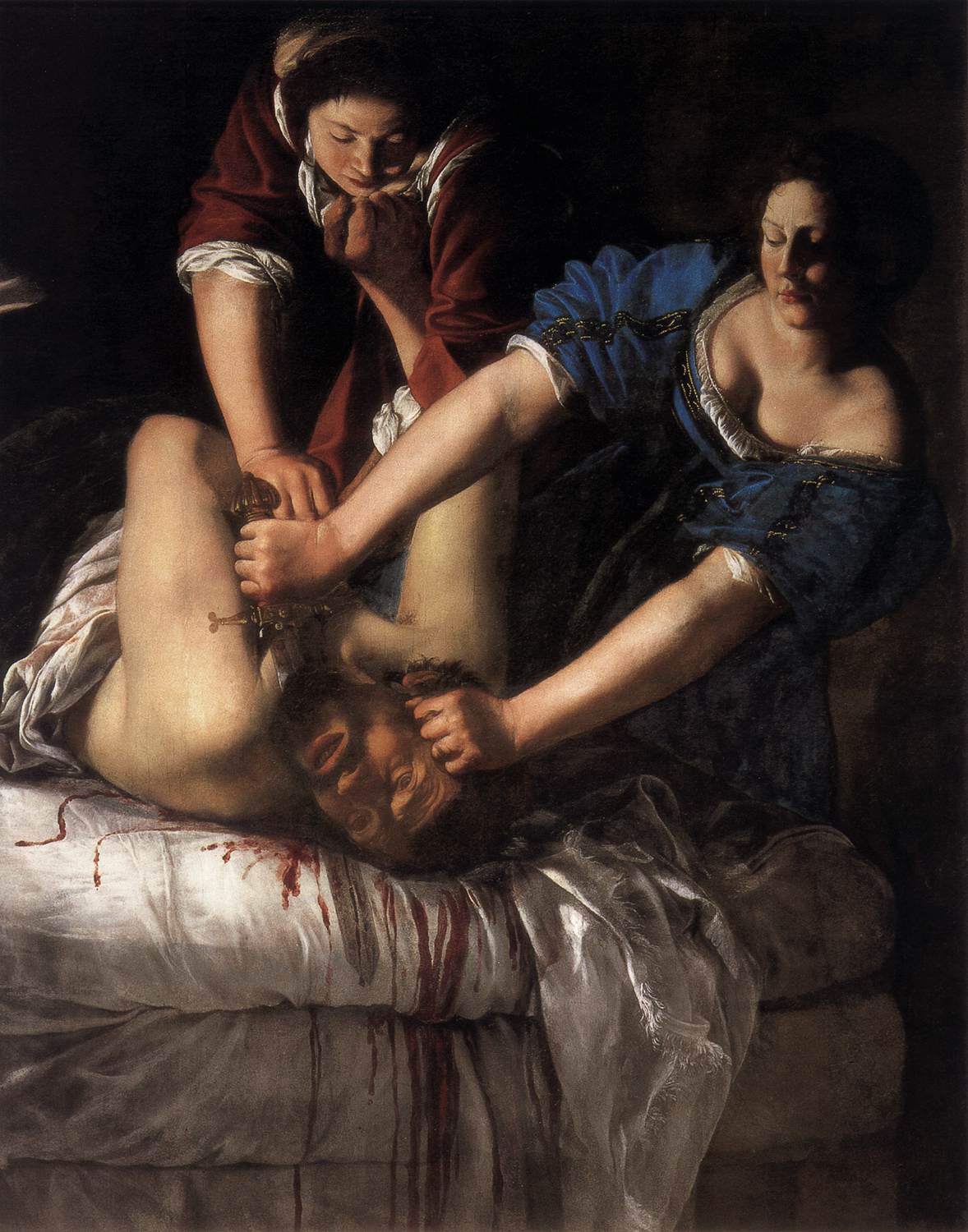
One of her most com­pelling ones, cov­ered in Alli­son Leigh’s ani­mat­ed TED-Ed les­son, above, comes from an apoc­ryphal book of the Old Tes­ta­ment. It con­cerns Judith, a come­ly Jew­ish wid­ow who, assist­ed by her maid­ser­vant, behead­ed the loutish Assyr­i­an gen­er­al Holofernes, whose forces threat­ened her town.

This sto­ry has attract­ed many artists over time: Lucas Cranach the Elder, Donatel­loBot­ti­cel­liMichelan­ge­lo, Cristo­fano Allori, Goya, Klimt, Franz von Stuck, and Car­avag­gio, the painter whom Artemisia most sought to emu­late as a teen.

Artemisia vis­it­ed Judith and Holofernes sev­er­al times through­out her career.

Her first attempt, at around the age of 19 or 20, fea­tures two healthy-look­ing young women, their sleeves sen­si­bly rolled so as not to dirty their bright dress­es, a prospect that seems much more like­ly than it does in Caravaggio’s ver­sion, paint­ed some 15 years ear­ly.

Caravaggio’s Judith is brave, but maid­en­ly, a bit ret­i­cent in her snowy frock.

Artemisia’s is a bad ass, sword casu­al­ly bal­anced on her shoul­der as she checks that the coast is clear before escap­ing with a bas­ket con­tain­ing her victim’s head. Although she prayed for the suc­cess of her endeav­or, this is a woman who might not have need­ed god’s help to “crush the ene­mies” arrayed against her peo­ple.

Things get even more vis­cer­al in Artemisi­a’s third depic­tion, paint­ed per­haps 10 years lat­er, after she had mar­ried and moved to Flo­rence.

Art his­to­ri­an Sis­ter Wendy Beck­ett, an unabashed fan, describes the mus­cu­lar and bloody scene in Sis­ter Wendy’s 1000 Mas­ter­pieces:

Gen­tileschi shows Judith grip­ping the head and wield­ing the sword with a feroc­i­ty of con­cen­tra­tion as she applies her­self to the gris­ly but nec­es­sary task, like a prac­ti­cal house­wife gut­ting a fish (there is none of that one stroke and it’s off, beloved of the male painter. The maid might feel qualms, not Judith… The hor­ri­fied face of the butchered male is bal­anced by the grim­ly com­posed face of the butcher­ing female.

Sev­er­al years fur­ther on, Artemisia again imag­ined Judith’s flight, in a scene so the­atri­cal, it could be a pro­duc­tion still.

It’s easy to imag­ine that Artemisia’s tal­ent was care­ful­ly cul­ti­vat­ed by her artist father, Orazio Gen­tileschi, but when it comes to the feroc­i­ty of her depic­tions, the spec­u­la­tion tends to take on a dark­er cast.

The TED-Ed les­son brings up her rape as a teenag­er, at the hands of her father’s friend, fel­low painter Agostono Tas­si. Leigh also pro­vides legal and soci­etal con­text, some­thing that is often miss­ing from more sen­sa­tion­al allu­sions to this trau­mat­ic event.

If you engage with the TED-Ed’s les­son plan more deeply, you’ll find a link to an arti­cle on nov­el­ist Joy McCul­lough’s research into 400-year-old court tran­scripts pri­or to describ­ing Artemisia’s rape tri­al in 2019 Blood Water Paint, as well as his­to­ri­an Eliz­a­beth S. Cohen’s essay The Tri­als of Artemisia Gen­tileschi: a Rape as His­to­ry:

Com­bin­ing irre­sistibly sex, vio­lence, and genius, like the sto­ry of Heloise and Abelard, the rape of Artemisia Gen­tileschi has been retold many times. So often indeed, and with such rel­ish that this episode over­shad­ows much dis­cus­sion of the painter and has come to dis­tort our vision of her. In the past as well as in the recent renew­al of inter­est in Artemisia, biog­ra­phers and crit­ics have had trou­ble see­ing beyond the rape. In her case, the old-fash­ioned notion that women are defined essen­tial­ly by their sex­u­al his­to­ries con­tin­ues to reign, as if a girl who suf­fers assault must be under­stood as there­after a pri­mar­i­ly sex­u­al crea­ture.

Explore a gallery of Artemisia Gentileschi’s paint­ings here.

As long as I live I will have con­trol over my being. — Artemisia Gen­tileschi

Relat­ed Con­tent 

A Space of Their Own, a New Online Data­base, Will Fea­ture Works by 600+ Over­looked Female Artists from the 15th-19th Cen­turies

The Female Pio­neers of the Bauhaus Art Move­ment: Dis­cov­er Gertrud Arndt, Mar­i­anne Brandt, Anni Albers & Oth­er For­got­ten Inno­va­tors

The Icon­ic Uri­nal & Work of Art, “Foun­tain,” Wasn’t Cre­at­ed by Mar­cel Duchamp But by the Pio­neer­ing Dada Artist Elsa von Frey­tag-Lor­ing­hoven

The Com­plete Works of Hilma af Klint Are Get­ting Pub­lished for the First Time in a Beau­ti­ful, Sev­en-Vol­ume Col­lec­tion

- Ayun Hal­l­i­day is the Chief Pri­ma­tol­o­gist of the East Vil­lage Inky zine and author, most recent­ly, of Cre­ative, Not Famous: The Small Pota­to Man­i­festo.  Fol­low her @AyunHalliday.

Hear 149 Vintage Halloween Radio Shows from the Golden Age of Radio

As Hal­loween radio broad­casts go, it would be hard to dis­place in Amer­i­can cul­tur­al mem­o­ry the adap­ta­tion of H. G. Wells’ The War of the Worlds that aired in 1938. Not every Hal­loween spe­cial can be direct­ed by a young Orson Welles, of course, but that’s hard­ly a rea­son to ignore the count­less oth­er Hal­loween broad­casts from the Gold­en Age of Radio. This year you can tune them in with the Youtube playlist above, which col­lects 149 such spook­i­est-time-of-the-sea­son episodes from such beloved shows as Lum and Abn­er, The Aldrich Fam­i­ly, Fib­ber McGee and Mol­ly, Our Miss Brooks, The Great Gilder­sleeve, The Jack Ben­ny Pro­gram, The Shad­ow, and more.

Whether com­e­dy, dra­ma, or anoth­er genre besides, old-time radio pro­grams tend­ed to seize upon the theme of every hol­i­day that came down the pike, and Hal­loween — with its cos­tume par­ties, ever-present threat of pranks, and door-to-door demands — offered their writ­ers and per­form­ers a once-in-a-year oppor­tu­ni­ty for unwont­ed degrees of mis­chief.

For nor­mal­ly light­heart­ed shows, it was also a chance to go at least a lit­tle bit dark; for a show like Sus­pense, whose long and often chill­ing run began with an Alfred Hitch­cock pro­duc­tion, most weeks were Hal­loween right up until the end of radio’s Gold­en Age. (This playlist fea­tures a broad­cast from August of 1961 that still enter­tains in Octo­ber of 2022.)

If you’d just like a sound­track straight from the clas­sic Amer­i­can air­waves for next Mon­day night (or a week­end par­ty before­hand), have a lis­ten to the new­ly uploaded vin­tage Hal­loween playlist just above. Its fif­teen tracks include sea­son­al­ly suit­able songs from Tom­my Dorsey, Glenn Miller, Bing Cros­by, Ella Fitzger­ald, Sam­my Davis Jr., and Sarah Vaugh­an (not to men­tion its open­er, a not-exactly-“Monster Mash” num­ber from Bob­by Pick­ett), with vin­tage adver­tise­ments and oth­er broad­cast ephemera in between. It was as true in radio’s hey­day of the late nine­teen-twen­ties through the ear­ly six­ties as it is now: Hal­loween is the time to let blur the bound­aries between light and dark, myth and real­i­ty, the ordi­nary and the grotesque — and to make more than a few corny gags while you’re at it.

Relat­ed con­tent:

Hear Vin­cent Price, Hor­ror Film Leg­end, Read 8+ Hours of Scary Sto­ries

Hap­py Hal­loween! Louis Arm­strong Per­forms Skele­ton in the Clos­et (1936)

Hear 14 Hours of Weird H.P. Love­craft Sto­ries on Hal­loween: “The Call of Cthul­hu,” “The Dun­wich Hor­ror” & More

Hear 90+ Episodes of Sus­pense, the Icon­ic Gold­en Age Radio Show Launched by Alfred Hitch­cock

What Scares Us, and How Does this Man­i­fest in Film? A Hal­loween Pret­ty Much Pop Cul­ture Pod­cast (#66)

Hear Orson Welles’ Icon­ic War of the Worlds Broad­cast (1938)

Based in Seoul, Col­in Mar­shall writes and broad­casts on cities, lan­guage, and cul­ture. His projects include the Sub­stack newslet­ter Books on Cities, the book The State­less City: a Walk through 21st-Cen­tu­ry Los Ange­les and the video series The City in Cin­e­ma. Fol­low him on Twit­ter at @colinmarshall or on Face­book.

Watch Hieronymus Bosch: Touched by the Devil, a Documentary Streaming Free Online

As pre­vi­ous­ly men­tioned here on OC, the film dis­trib­u­tor Kino Lor­ber has been qui­et­ly mak­ing com­plete art films avail­able to stream on YouTube and its own web­site. In recent weeks, they’ve uploaded to YouTube the doc­u­men­taries, Beyond the Vis­i­ble: Hilma Af Klint and M.C. Esch­er: Jour­ney to Infin­i­ty. Now comes Hierony­mus Bosch: Touched by the Dev­il, which they describe as fol­lows:

In 2016, the Noord­bra­bants Muse­um in the Dutch city of Den Bosch held a spe­cial exhi­bi­tion devot­ed to the work of Hierony­mus Bosch, who died 500 years ago. This late-medieval artist lived his entire life in the city, caus­ing uproar with his fan­tas­ti­cal and utter­ly unique paint­ings in which hell and the dev­il always played a promi­nent role. In prepa­ra­tion for the exhi­bi­tion, a team of Dutch art his­to­ri­ans criss­cross­es the globe to unrav­el the secrets of his art. They use spe­cial infrared cam­eras to exam­ine the sketch­es beneath the paint, in the hope of dis­cov­er­ing more about the artist’s inten­tions. They also attempt to estab­lish which of the paint­ings can be attrib­uted with cer­tain­ty to Bosch him­self, and which to his pupils or fol­low­ers. The experts shut­tle between Den Bosch, Madrid and Venice, cut­ting their way through the art world’s tan­gle of red tape, in a bat­tle against the obsta­cle of count­less egos and con­flict­ing inter­ests. Not every muse­um is pre­pared to allow access to their pre­cious art works.

You can find Hierony­mus Bosch: Touched by the Dev­il list­ed in our col­lec­tion of Free Doc­u­men­taries, a sub­set of our larg­er col­lec­tion 4,000+ Free Movies Online: Great Clas­sics, Indies, Noir, West­erns, Doc­u­men­taries & More.

To watch more free-to-stream Kino Lor­ber films, click here.

If you would like to sign up for Open Culture’s free email newslet­ter, please find it here. It’s a great way to see our new posts, all bun­dled in one email, each day.

If you would like to sup­port the mis­sion of Open Cul­ture, con­sid­er mak­ing a dona­tion to our site. It’s hard to rely 100% on ads, and your con­tri­bu­tions will help us con­tin­ue pro­vid­ing the best free cul­tur­al and edu­ca­tion­al mate­ri­als to learn­ers every­where. You can con­tribute through Pay­Pal, Patre­on, and Ven­mo (@openculture). Thanks!

Relat­ed Con­tent

A Dig­i­tal Archive of Hierony­mus Bosch’s Com­plete Works: Zoom In & Explore His Sur­re­al Art

Hierony­mus Bosch Fig­urines: Col­lect Sur­re­al Char­ac­ters from Bosch’s Paint­ings & Put Them on Your Book­shelf

Take a Vir­tu­al Tour of Hierony­mus Bosch’s Bewil­der­ing Mas­ter­piece The Gar­den of Earth­ly Delights

The Mean­ing of Hierony­mus Bosch’s The Gar­den of Earth­ly Delights Explained


200 Bassists Play the Famous Bass Line of Queen & Bowie’s “Under Pressure”

Ding, ding, ding, de de, ding, ding–the bassline for Queen and David Bowie’s “Under Pres­sure” is sim­ple and unfor­get­table. In Sao Paulo, ​British bassist Charles Berthoud paid trib­ute to John Dea­con’s riff, per­form­ing it with 200 oth­er bassists. Berthoud plays a beau­ti­ful lead; the oth­ers keep the rhythm going. Evi­dent­ly, the event was spon­sored by Rockin’ 1000, a col­lec­tive that stages gigs where hun­dreds of musi­cians per­form rock clas­sics togeth­er. You can find more of their videos in the Relat­eds below.

If you would like to sign up for Open Culture’s free email newslet­ter, please find it here. It’s a great way to see our new posts, all bun­dled in one email, each day.

If you would like to sup­port the mis­sion of Open Cul­ture, con­sid­er mak­ing a dona­tion to our site. It’s hard to rely 100% on ads, and your con­tri­bu­tions will help us con­tin­ue pro­vid­ing the best free cul­tur­al and edu­ca­tion­al mate­ri­als to learn­ers every­where. You can con­tribute through Pay­Pal, Patre­on, and Ven­mo (@openculture). Thanks!

via Laugh­ing Squid

Relat­ed Con­tent

Lis­ten to Fred­die Mer­cury and David Bowie on the Iso­lat­ed Vocal Track for the Queen Hit ‘Under Pres­sure,’ 1981

1,000 Musi­cians Per­form “My Hero” in a Mov­ing Trib­ute to Foo Fight­ers’ Drum­mer Tay­lor Hawkins

David Bowie’s “Rebel Rebel” Per­formed Live by The Biggest Rock Band on Earth (1,000 Musi­cians in Total)

Watch 1,000 Musi­cians Play the Foo Fight­ers’ “Learn to Fly,” Nirvana’s “Smells Like Teen Spir­it,” Queen’s “We Will Rock You,” Bowie’s “Rebel Rebel,” and The Who’s “Won’t Get Fooled


See Metropolis’ Scandalous Dance Scene Colorized, Enhanced, and Newly Soundtracked

It did­n’t take long after the inven­tion of cin­e­ma for its sheer pow­er of spec­ta­cle to become clear. Arguably, it was appar­ent even in the pio­neer­ing work of the Lumière broth­ers, though they attempt­ed only to cap­ture images famil­iar from every­day life at the time. But in a decade or two emerged auteurs like Fritz Lang, who, hav­ing grown up with cin­e­ma itself, pos­sessed high­ly devel­oped instincts for how to use it to cap­ti­vate large and var­i­ous audi­ences. Released in 1927, Lang’s Metrop­o­lis showed movie­go­ers an elab­o­rate vision, both fear­some and allur­ing, of the indus­tri­al dystopia that could lay ahead. But it also had danc­ing girls!

Or rather, it had a danc­ing girl who’s actu­al­ly a robot — a Maschi­nen­men­sch, accord­ing to the script — built by the film’s vil­lain in an attempt to besmirch the hero­ine who would lib­er­ate the tit­u­lar city’s down­trod­den work­ers. (Both the real woman and her mechan­i­cal imper­son­ator are skill­ful­ly played by Brigitte Helm.)

In the video above, you can see the scan­dalous and cin­e­mat­i­cal­ly inno­v­a­tive spec­ta­cle-with­in-a-spec­ta­cle that is Metrop­o­lis’ dance scene col­orized, upscaled to 4K res­o­lu­tion at 60 frames per sec­ond, and new­ly sound­tracked with a track called “Lemme See About It” by Max McFer­ren. This is rec­og­niz­ably Metrop­o­lis, but it’s also a Metrop­o­lis none of us has ever seen before.

The pro­duc­tion also com­bines visu­al mate­r­i­al from dif­fer­ent ver­sions of the film, quite a few of which have been edit­ed and re-edit­ed, lost and recov­ered over near­ly the past cen­tu­ry. (The run­ning times of the offi­cial­ly released cuts alone range from 83 to 153 min­utes.) Cer­tain dif­fer­ences in qual­i­ty between one shot and the next make this obvi­ous, though the con­sis­ten­cy of the over­all col­oriza­tion eas­es the sud­den tran­si­tions between them. A Metrop­o­lis fan could­n’t help but feel some curios­i­ty about how the whole pic­ture would play with all of these enhance­ments, not that it would resem­ble any­thing Lang could orig­i­nal­ly have envi­sioned. But then, no sin­gle cut exists that defin­i­tive­ly reflects his inten­tions — and besides, he’d sure­ly approve of how the film’s dance sequence has been made to cap­ti­vate us once again.

Relat­ed con­tent:

Metrop­o­lis: Watch Fritz Lang’s 1927 Mas­ter­piece

Watch Metrop­o­lis’ Cin­e­mat­i­cal­ly Inno­v­a­tive Dance Scene, Restored as Fritz Lang Intend­ed It to Be Seen (1927)

If Fritz Lang’s Icon­ic Film Metrop­o­lis Had a Kraftwerk Sound­track

One of the Great­est Dances Sequences Ever Cap­tured on Film Gets Restored in Col­or by AI: Watch the Clas­sic Scene from Stormy Weath­er

The Icon­ic Dance Scene from Hel­lza­pop­pin’ Pre­sent­ed in Liv­ing Col­or with Arti­fi­cial Intel­li­gence (1941)

Based in Seoul, Col­in Mar­shall writes and broad­casts on cities, lan­guage, and cul­ture. His projects include the Sub­stack newslet­ter Books on Cities, the book The State­less City: a Walk through 21st-Cen­tu­ry Los Ange­les and the video series The City in Cin­e­ma. Fol­low him on Twit­ter at @colinmarshall or on Face­book.

What Sex Was Like in Medieval Times?: Historians Look at How People Got It On in the Dark Ages

The adjec­tive medieval tends to con­jure up vivid and some­times off-putting images, not least when applied to sex. But how many of us have any sense at all of what the real peo­ple of the Mid­dle Ages got up to in bed? To get one, we could do worse than ask­ing his­to­ri­an Eleanor Jane­ga, teacher of the course Medieval Gen­der and Sex­u­al­i­ty and host of the His­to­ry Hit video above, “What Was Sex Real­ly Like For Medieval Peo­ple?” In it, Jane­ga has first to make clear that, yes, medieval Euro­peans had sex; if they had­n’t, of course, many of us would­n’t be here today. But we’d be for­giv­en for assum­ing that the seem­ing­ly absolute dom­i­nance of the Church quashed any and all of their erot­ic oppor­tu­ni­ties.

Accord­ing to the medieval Church, Jane­ga says, “the only time sex is accept­able is between two mar­ried peo­ple for pro­cre­ative pur­pos­es.” Its many oth­er restric­tions includ­ed “no sex on Sat­ur­days and Sun­days in case you’re too turned on dur­ing mass; only have sex in the mis­sion­ary posi­tion, because any­thing else sub­verts the nat­ur­al rela­tion­ship between men and women; don’t get ful­ly naked dur­ing sex, because it’s just too excit­ing; in short, dur­ing sex, you should be try­ing to have the least amount of fun pos­si­ble.” Strict and unam­bigu­ous though these rules were, “nobody real­ly lis­tened to them” — and what’s more, giv­en the lack of pri­vate spaces, “sex was almost a pub­lic affair in the Mid­dle Ages.”

So says Kate Lis­ter, who research­es the his­to­ry of sex­u­al­i­ty, and who turns up to bring her own knowl­edge of the sub­ject to the par­ty. “We tend to think about medieval peo­ple as being real prudes,” says Jane­ga, but even scant his­tor­i­cal records — and rather more copi­ous erot­ic man­u­script mar­gin­a­lia — show that “they were inter­est­ed in all kinds of sex and romance that we would find com­plete­ly unac­cept­able.” Lis­ter adds that, “in many ways, we’re not open like the medieval peo­ple were. We don’t have pub­lic com­mu­nal bathing. We don’t have sex in the same room as oth­er peo­ple. We don’t go to a high-brow din­ner par­ty and tell pubic-hair jokes.” Or we don’t, at least, if we haven’t devot­ed our careers to the sex­u­al­i­ty of the Mid­dle Ages, a field of his­to­ry clear­ly unfit for prudes.

Relat­ed con­tent:

The Ear­li­est Known Appear­ance of the F‑Word, in a Bizarre Court Record Entry from 1310

Peo­ple in the Mid­dle Ages Slept Not Once But Twice Each Night: How This Lost Prac­tice Was Redis­cov­ered

What Did Peo­ple Eat in Medieval Times? A Video Series and New Cook­book Explain

Why Butt Trum­pets & Oth­er Bizarre Images Appeared in Illu­mi­nat­ed Medieval Man­u­scripts

Medieval Monks Com­plained About Con­stant Dis­trac­tions: Learn How They Worked to Over­come Them

The Turin Erot­ic Papyrus: The Old­est Known Depic­tion of Human Sex­u­al­i­ty (Cir­ca 1150 B.C.E.)

Based in Seoul, Col­in Mar­shall writes and broad­casts on cities, lan­guage, and cul­ture. His projects include the Sub­stack newslet­ter Books on Cities, the book The State­less City: a Walk through 21st-Cen­tu­ry Los Ange­les and the video series The City in Cin­e­ma. Fol­low him on Twit­ter at @colinmarshall or on Face­book.

Hear Moby Dick Read in Its Entirety by Tilda Swinton, Stephen Fry, John Waters & Many Others

Moby-Dick is the great Amer­i­can nov­el. But it is also the great unread Amer­i­can nov­el. Sprawl­ing, mag­nif­i­cent, deliri­ous­ly digres­sive, it stands over and above all oth­er works of fic­tion, since it is bare­ly a work of fic­tion itself. Rather, it is an explo­sive expo­si­tion of one man’s inves­ti­ga­tion into the world of the whale, and the way humans have relat­ed to it. Yet it is so much more than that.”

That’s how Ply­mouth Uni­ver­si­ty intro­duces Her­man Melville’s clas­sic tale from 1851. And it’s what set the stage for their web project launched back in 2012. Called The Moby-Dick Big Read, the project fea­tured celebri­ties and less­er known fig­ures read­ing all 135 chap­ters from Moby-Dick — chap­ters that you can start down­load­ing (as free audio files) on iTunesSound­cloud, RSS Feed, or the Big Read web site itself.

The project start­ed with the first chap­ters being read by Til­da Swin­ton (Chap­ter 1), Cap­tain R.N. Hone (Chap­ter 2), Nigel Williams (Chap­ter 3), Caleb Crain (Chap­ter 4), Musa Okwon­ga (Chap­ter 5), and Mary Nor­ris (Chap­ter 6). John WatersStephen Fry, Simon Cal­low, Mary Oliv­er and even Prime Min­is­ter David Cameron read lat­er ones.

If you want to read the nov­el as you go along, find the text over at Project Guten­berg.

Til­da Swin­ton’s nar­ra­tion of Chap­ter 1 appears right below:

An ear­li­er ver­sion of this post appeared on our site in 2012.

If you would like to sign up for Open Culture’s free email newslet­ter, please find it here. It’s a great way to see our new posts, all bun­dled in one email, each day.

If you would like to sup­port the mis­sion of Open Cul­ture, con­sid­er mak­ing a dona­tion to our site. It’s hard to rely 100% on ads, and your con­tri­bu­tions will help us con­tin­ue pro­vid­ing the best free cul­tur­al and edu­ca­tion­al mate­ri­als to learn­ers every­where. You can con­tribute through Pay­Pal, Patre­on, and Ven­mo (@openculture). Thanks!

Relat­ed Con­tent:

An Illus­tra­tion of Every Page of Her­man Melville’s Moby Dick

How Ray Brad­bury Wrote the Script for John Huston’s Moby Dick (1956)

Hear a Com­plete 24-Hour Read­ing of Moby-Dick, Record­ed at the South­bank Cen­tre in Lon­don (2015)

« Go BackMore in this category... »
Quantcast