“Downton Abbey” and the Allure of Historical Drama — Pretty Much Pop: A Culture Podcast #127

 width=

We dis­cuss the appeal of this Julian-Fel­lowes-penned British his­tor­i­cal dra­ma in light of the new film. Is this real­ly “a new era” or just more of the same, and is that bad?

Your Pret­ty Much Pop host Mark Lin­sen­may­er is joined by return­ing guest Jon Lam­ore­aux (host of The Hus­tle music pod­cast), plus a cou­ple: for­mer news­cast­er Cor­rinne MacLeod (whom Mark SCANDOLOUSLY went on one date with at age 12) and her hus­band, the pho­tog­ra­ph­er Michael MacLeod.

We talk about the excel­lent cast­ing and how such a big cast gets jug­gled, the appeal of this par­tic­u­lar his­tor­i­cal set­ting, rev­o­lu­tions against the class sys­tem in the show, and the soapy plots. How can a film give us enough of such a big cast? We also touch on The Gild­ed Age, Bridger­ton, Howard’s End, Gos­ford Park, The Great, Poldark, and more.

A few rel­e­vant arti­cles we looked at include:

Hear more Pret­ty Much Pop, includ­ing recent episodes on Jack­ass, This Is Us, and The Expanse. Sup­port the show at patreon.com/prettymuchpop or by choos­ing a paid sub­scrip­tion through Apple Pod­casts. This pod­cast is part of the Par­tial­ly Exam­ined Life pod­cast net­work.

Pret­ty Much Pop: A Cul­ture Pod­cast is the first pod­cast curat­ed by Open Cul­ture. Browse all Pret­ty Much Pop posts.

John Waters’ Comical & Inspiring Commencement Speech: “You Too Can Fail Upwards” (2022)

John Waters has­n’t made a movie in quite some time, but that does­n’t mean he’s gone qui­et. In fact he’s remained as vis­i­ble a cul­tur­al fig­ure as ever by work­ing in oth­er forms: writ­ing a new nov­el, act­ing on tele­vi­sion, deliv­er­ing com­mence­ment address­es. His ded­i­ca­tion to that last pur­suit is such that he even kept it up in 2020, at the height of the COVID-19 pan­dem­ic. That year he deliv­ered his com­mence­ment speech for New York’s School of Visu­al Arts not at Radio City Music Hall, as sched­uled, but in front of a green screen in Bal­ti­more — which, of course, only enriched the Waters­esque sen­si­bil­i­ty of the pro­ceed­ings.

Hav­ing been forced into the role of “vir­tu­al keynote speak­er,” Waters made up for it this year by deliv­er­ing, in per­son, a make-up com­mence­ment address for the SVA class­es of both 2020 and 2021. And he did it onstage at Radio City, a venue “known for fam­i­ly movies and the Rock­ettes. What the hell am I doing here?” As usu­al in this phase of his career, Waters express­es sur­prise to find him­self in the role of elder states­man.

“In 2020, the School of Visu­al Arts gave me an hon­orary degree for, I guess, caus­ing trou­ble,” he says. “This year, the Nation­al Film Reg­istry — yes, that’s part of the Library of Con­gress, the U.S. Gov­ern­ment, for god’s sake — select­ed my film Pink Flamin­gos, which New York mag­a­zine once called ‘beyond pornog­ra­phy,’ to its annu­al list of 25 cul­tur­al­ly his­toric films.”

Safe to say that, half a cen­tu­ry after its release, Waters’ most noto­ri­ous motion pic­ture does­n’t repel the estab­lish­ment as it once did. And indeed, here in the 2020s, how can an artist get trans­gres­sive at all? Waters has much encour­age­ment and advice for young peo­ple in search of new bound­aries to vio­late. “Out­sider old mas­ter paint­ings, nar­ra­tive abstract expres­sion­ism, impen­e­tra­ble pop, dec­o­ra­tive min­i­mal­ism, non-con­cep­tu­al­ism, video folk art, appro­pri­at­ed NFT”: these are just a few of the artis­tic ven­tures not yet attempt­ed that could turn their pop­u­lar­iz­ers into cul­tur­al phe­nom­e­na. “You too can fail upwards, if you try,” Waters insists, but you’ve got to do it with a sense of humor. “Mock your­self first. Then you can be as crazi­ly right­eous as you want.”

Relat­ed con­tent:

John Waters’ RISD Grad­u­a­tion Speech: Real Wealth Is Life With­out A*Holes

David Byrne’s Grad­u­a­tion Speech Offers Trou­bling and Encour­ag­ing Advice for Stu­dents in the Arts

An Anti, Anti-Smok­ing Announce­ment from John Waters

David Lynch Gives Uncon­ven­tion­al Advice to Grad­u­ates in an Unusu­al Com­mence­ment Address

John Waters Talks About His Books and Role Mod­els in a Whim­si­cal Ani­mat­ed Video

Based in Seoul, Col­in Mar­shall writes and broad­casts on cities, lan­guage, and cul­ture. His projects include the Sub­stack newslet­ter Books on Cities, the book The State­less City: a Walk through 21st-Cen­tu­ry Los Ange­les and the video series The City in Cin­e­ma. Fol­low him on Twit­ter at @colinmarshall, on Face­book, or on Insta­gram.

The First Photographs Taken by the Webb Telescope: See Faraway Galaxies & Nebulae in Unprecedented Detail


Late last year we fea­tured the amaz­ing engi­neer­ing of the James Webb Space Tele­scope, which is now the largest opti­cal tele­scope in space. Capa­ble of reg­is­ter­ing phe­nom­e­na old­er, more dis­tant, and fur­ther off the vis­i­ble spec­trum than any pre­vi­ous device, it will no doubt show us a great many things we’ve nev­er seen before. In fact, it’s already begun: ear­li­er this week, NASA’s God­dard Space Flight Cen­ter released the first pho­tographs tak­en through the Webb tele­scope, which “rep­re­sent the first wave of full-col­or sci­en­tif­ic images and spec­tra the obser­va­to­ry has gath­ered, and the offi­cial begin­ning of Webb’s gen­er­al sci­ence oper­a­tions.”

The areas of out­er space depict­ed in unprece­dent­ed detail by these pho­tos include the Cari­na Neb­u­la (top), the South­ern Ring Neb­u­la (2nd image on this page), and the galaxy clus­ters known as Stephan’s Quin­tet (the home of the angels in It’s a Won­der­ful Life) and SMACS 0723 (bot­tom).

That last, notes Petapix­el’s Jaron Schnei­der, “is the high­est res­o­lu­tion pho­to of deep space that has ever been tak­en,” and the light it cap­tures “has trav­eled for more than 13 bil­lion years.” What this com­pos­ite image shows us, as NASA explains, is SMACS 0723 “as it appeared 4.6 bil­lion years ago” — and its “slice of the vast uni­verse cov­ers a patch of sky approx­i­mate­ly the size of a grain of sand held at arm’s length by some­one on the ground.”

All this can be a bit dif­fi­cult to get one’s head around, at least if one is pro­fes­sion­al­ly involved with nei­ther astron­o­my nor cos­mol­o­gy. But few imag­i­na­tions could go un-cap­tured by the rich­ness of the images them­selves. Sharp, rich in col­or, var­ied in tex­ture — and in the case of the Cari­na Neb­u­la or “Cos­mic Cliffs,” NASA adds, “seem­ing­ly three-dimen­sion­al” — they could have come straight from a state-of-the-art sci­ence-fic­tion movie. In fact they out­do even the most advanced sci-fi visions, as NASA’s Earth­rise out­did even the uncan­ni­ly real­is­tic-in-ret­ro­spect views of the Earth from space imag­ined by Stan­ley Kubrick and his col­lab­o­ra­tors in 2001: A Space Odyssey.

But these pho­tos are the fruits of a real-life jour­ney toward the final fron­tier, one you can fol­low in real time on NASA’s “Where Is Webb?” track­er. “Webb was designed to spend the next decade in space,” writes Colos­sal’s Grace Ebert. “How­ev­er, a suc­cess­ful launch pre­served sub­stan­tial fuel, and NASA now antic­i­pates a trove of insights about the uni­verse for the next twen­ty years.” That’s quite a long run by the cur­rent stan­dards of space explo­ration — but then, by the scale of space and time the Webb tele­scope has new­ly opened up, even 100 mil­len­nia is the blink of an eye.

Relat­ed con­tent:

The Amaz­ing Engi­neer­ing of James Webb Tele­scope

How to Take a Pic­ture of a Black Hole: Watch the 2017 Ted Talk by Katie Bouman, the MIT Grad Stu­dent Who Helped Take the Ground­break­ing Pho­to

How Sci­en­tists Col­orize Those Beau­ti­ful Space Pho­tos Tak­en By the Hub­ble Space Tele­scope

The Very First Pic­ture of the Far Side of the Moon, Tak­en 60 Years Ago

The First Images and Video Footage from Out­er Space, 1946–1959

The Beau­ty of Space Pho­tog­ra­phy

Based in Seoul, Col­in Mar­shall writes and broad­casts on cities, lan­guage, and cul­ture. His projects include the Sub­stack newslet­ter Books on Cities, the book The State­less City: a Walk through 21st-Cen­tu­ry Los Ange­les and the video series The City in Cin­e­ma. Fol­low him on Twit­ter at @colinmarshall, on Face­book, or on Insta­gram.

The German Cast of Hamilton Sings the Title Track, “Alexander Hamilton” in German

Lin-Manuel Miran­da’s Hamil­ton is com­ing to Ham­burg in Octo­ber 2022. And this video gives audi­ences a taste of what awaits them: The title track “Alexan­der Hamil­ton” sung in Ger­man. Enjoy…

If you would like to sign up for Open Culture’s free email newslet­ter, please find it here. It’s a great way to see our new posts, all bun­dled in one email, each day.

If you would like to sup­port the mis­sion of Open Cul­ture, con­sid­er mak­ing a dona­tion to our site. It’s hard to rely 100% on ads, and your con­tri­bu­tions will help us con­tin­ue pro­vid­ing the best free cul­tur­al and edu­ca­tion­al mate­ri­als to learn­ers every­where. You can con­tribute through Pay­Pal, Patre­on, and Ven­mo (@openculture). Thanks!

via Metafil­ter

Relat­ed Con­tent

“Alexan­der Hamil­ton” Per­formed with Amer­i­can Sign Lan­guage

Lin-Manuel Miran­da Breaks Down How He Wrote Hamilton‘s Big Hit, “My Shot”

Watch Lin-Manuel Miran­da Per­form the Ear­li­est Ver­sion of Hamil­ton at the White House, Six Years Before the Play Hit the Broad­way Stage (2009)

A Whiskey-Fueled Lin-Manuel Miran­da Reimag­ines Hamil­ton as a Girl on Drunk His­to­ry

What Americans Ate for Breakfast & Dinner 200 Years Ago: Watch Re-Creations of Original Recipes

For all the oth­er faults of the 2020s, most of human­i­ty now enjoys culi­nary vari­ety the likes of which it has nev­er before known. Two cen­turies ago, the selec­tion was con­sid­er­ably nar­row­er. Back then the Unit­ed States of Amer­i­ca, yet to become the high­ly devel­oped leader of “the free world,” remained for the most part a fair­ly hard­scrab­ble land. This comes through in a book like Democ­ra­cy in Amer­i­ca, which Alex­is de Toc­queville wrote after trav­el­ing across the coun­ty in the 1830s — or on a Youtube chan­nel like Ear­ly Amer­i­can, which re-cre­ates life as lived by Amer­i­cans of decades before then.

Not long ago, Ear­ly Amer­i­can’s view­er­ship explod­ed. This seems to have owed to cook­ing videos like the one at the top of the post, “A Reg­u­lar Folks’ Sup­per 200 Years Ago.” The menu, on this imag­ined March day in 1820 Mis­souri, includes beef, mashed turnips, car­rots, rolls, and boiled eggs: not a bad-look­ing spread, as it turns out, though its fla­vors may leave some­thing to be desired for the twen­ty-first-cen­tu­ry palate.

Many of Ear­ly Amer­i­can’s new com­menters, writes chan­nel co-cre­ator Jus­tine Dorn, are telling her “to add this sea­son­ing and this and that,” but “then it would no longer be loy­al to the actu­al orig­i­nal recipe, which is why you all are here to begin with.”

In the case of the reg­u­lar folks’ sup­per, its recipes come straight from an 1803 vol­ume called The Fru­gal House­wife. As for the john­ny­cakes fea­tured in “Mak­ing a Work­ing Class Break­fast in 1820,” you’ll find their recipe in Amelia Sim­mons’ Amer­i­can Cook­ery from 1796, the first known cook­book writ­ten by an Amer­i­can. The meal also includes a yeast­less bread for which no prop­er recipe exists. How­ev­er, Dorn writes, “there are sev­er­al men­tions of work­ing class peo­ple who baked bread with­out yeast in the auto­bi­ogra­phies of trav­el­ers in the eigh­teenth and ear­ly nine­teenth cen­turies. Because of this we know that it was a com­mon prac­tice.”

Made from a mod­i­fied fam­i­ly recipe passed down since the 1750s, this yeast­less bread looks appeal­ing enough, espe­cial­ly toast­ed over the fire and served with apple but­ter. But we must acknowl­edge that tastes have changed over the cen­turies. “I am not claim­ing that this food is good,” Dorn writes. “Some­times it isn’t. A lot of the foods and sea­son­ings that we take for grant­ed today were very hard to get back then or were only sea­son­al­ly avail­able.” But with sea­son­al, “local­ly sourced” ingre­di­ents in vogue these days, it’s worth exam­in­ing what, 200 years ago, real­ly went into a sim­ple Indi­an meal pud­ding or an ear­ly mac­a­roni and cheese — albeit one pre­pared, in true 2020s fash­ion, ASMR-style.

Relat­ed Con­tent:

The First Amer­i­can Cook­book: Sam­ple Recipes from Amer­i­can Cook­ery (1796)

Tast­ing His­to­ry: A Hit YouTube Series Shows How to Cook the Foods of Ancient Greece & Rome, Medieval Europe, and Oth­er Places & Peri­ods

An Archive of 3,000 Vin­tage Cook­books Lets You Trav­el Back Through Culi­nary Time

A Data­base of 5,000 His­tor­i­cal Cookbooks–Covering 1,000 Years of Food History–Is Now Online

Archive of Hand­writ­ten Recipes (1600 – 1960) Will Teach You How to Stew a Calf’s Head and More

10,000 Vin­tage Recipe Books Are Now Dig­i­tized in The Inter­net Archive’s Cook­book & Home Eco­nom­ics Col­lec­tion

Real Inter­views with Peo­ple Who Lived in the 1800s

Based in Seoul, Col­in Mar­shall writes and broad­casts on cities, lan­guage, and cul­ture. His projects include the Sub­stack newslet­ter Books on Cities, the book The State­less City: a Walk through 21st-Cen­tu­ry Los Ange­les and the video series The City in Cin­e­ma. Fol­low him on Twit­ter at @colinmarshall, on Face­book, or on Insta­gram.

Listen to Earth.fm, a Free Archive of Natural Soundscapes That Can Re-Connect You with Nature & Improve Your Wellbeing

“Just lis­ten. Silence is the poet­ics of space. What it means to be in a place…. Silence isn’t the absence of some­thing, but the pres­ence of every­thing.” – acoustic ecol­o­gist Gor­don Hemp­ton

The study of acoustic ecol­o­gy does­n’t get much main­stream atten­tion. But if you’ve been a read­er of Open Cul­ture, you’ve like­ly come across a post about pre­serv­ing nat­ur­al sounds by stream­ing record­ings of the world’s many envi­ron­ments. These projects all, in one way or anoth­er, con­tribute to goals artic­u­lat­ed by Cana­di­an com­pos­er and writer R. Mur­ray Schafer, the “self-declared father” of acoustic ecol­o­gy, which involves the study, con­ser­va­tion, and appre­ci­a­tion of envi­ron­men­tal sound.

As Neil Clarke notes at Earth.fm, Schaf­fer­’s com­plex dis­ci­pline can seem dif­fi­cult to grasp, as it “strad­dles ‘acoustics, archi­tec­ture, lin­guis­tics, music, psy­chol­o­gy, soci­ol­o­gy and urban plan­ning.’ ” Maybe all we need to know to appre­ci­ate the goals of Earth.fm — anoth­er excel­lent entry in a grow­ing list of nat­ur­al-sound stream­ing sites – comes through in Clarke’s descrip­tion of Schaffer’s World Sound­scape Project (WSP):

It was hoped that, even­tu­al­ly, the WSP would be able to cre­ate a bal­ance “between the human com­mu­ni­ty and its son­ic envi­ron­ment.” To this end, lis­ten­ing and “ear-clean­ing” prac­tices, includ­ing “sound­walks” – a walk­ing med­i­ta­tion where a high son­ic aware­ness is main­tained – were designed to increase indi­vid­u­als’ con­scious­ness of the sounds around them. By prompt­ing engage­ment with the real­i­ties of con­tem­po­rary sound­scapes, lis­ten­ers were intend­ed to gain aware­ness of their part in these sound­scapes’ cre­ation, and there­fore appre­ci­ate their respon­si­bil­i­ty towards them.

Schaf­fer began record­ing sound­scapes (a word he coined) in Van­cou­ver in the ear­ly 70s. Since then, his work has inspired and com­ple­ment­ed that of oth­er field recordists/acoustic theorists/sound archivists like Bernie Krauss and Gor­don Hemp­ton. Although the ear­ly acoustic ecol­o­gists could not have fore­seen stream­ing media, it has with­out a doubt become for many of us a dom­i­nant vehi­cle for sound in our dai­ly lives, includ­ing sounds of the nat­ur­al world.

With­out an appre­ci­a­tion for the sounds of nat­ur­al silence (which we know, since John Cage, does not mean absolute qui­et), our under­stand­ing of rain­forests, deserts, and oceans as liv­ing, breath­ing real­i­ties can become dulled, just as much as we lose touch with the green spaces out­side our win­dows. Recon­nect­ing through sound has the dual effect of calm­ing our inner states and attun­ing us more close­ly to the out­er world as it is, with­out the dis­trac­tions of record­ed music and video laid over­top.

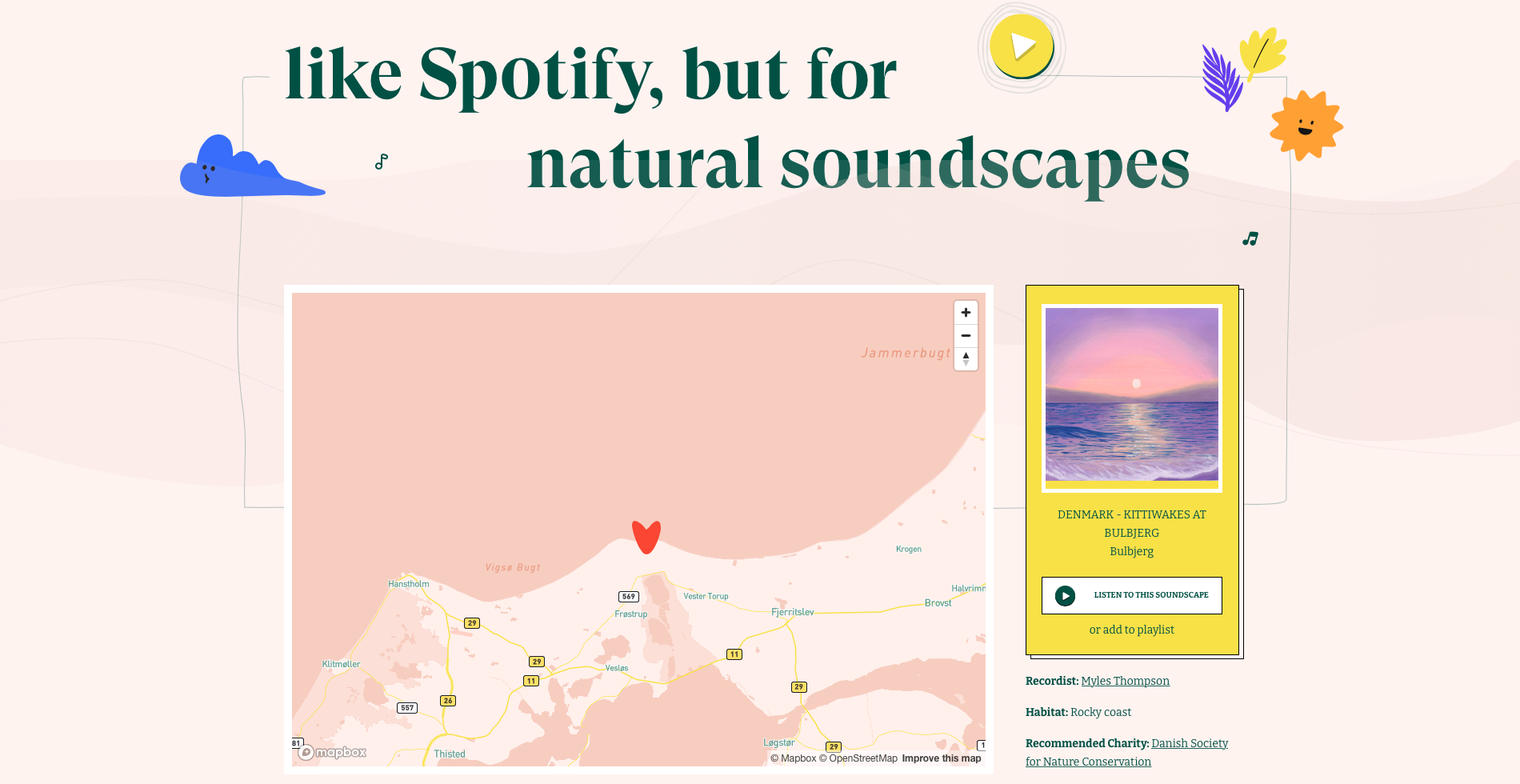
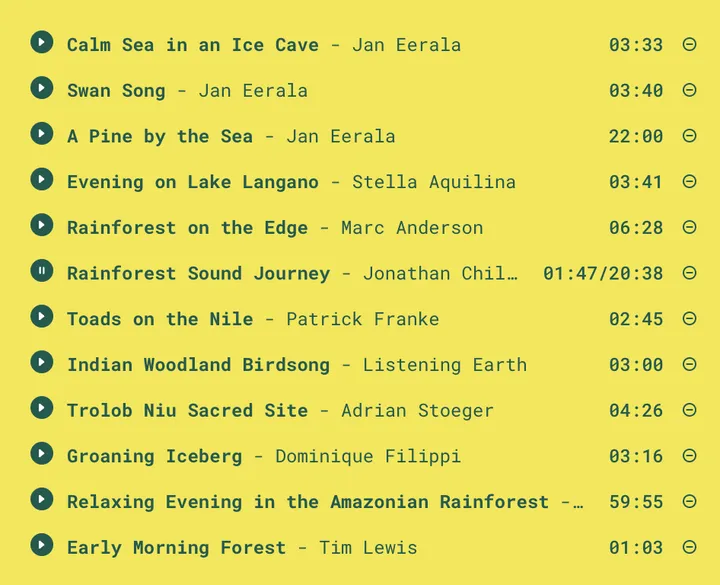
Billing itself as “like Spo­ti­fy, but for nat­ur­al sound­scapes,” Earth.fm, offers not a rival stream­ing ser­vice, but an alter­na­tive in which users can make their own playlists, The Verge explains, “zip­ping from Brazil to Egypt in a mat­ter of min­utes.” New sounds are added every three days. “You can lis­ten to bird species in Malaysia or India or for­est sounds in Ghana. The sounds are gath­ered from numer­ous con­trib­u­tors who have expe­ri­ence record­ing the nat­ur­al world in places includ­ing Brazil, Spain, Nor­way, New Zealand, and the Unit­ed King­dom.”

We can intu­it Earth.fm’s mis­sion not only as ther­a­peu­tic and preser­va­tion­ist but also as an eth­i­cal attempt to approach the cri­sis stream­ing media has intro­duced in the arts. Human-made sounds (or “anthro­pophy”) are just as much a part of our envi­ron­ment as those made by frogs, rivers, and ante­lope. Our con­stant, often mind­less stream­ing, how­ev­er — made pos­si­ble by infi­nite dig­i­tal repos­i­to­ries and cheap (for now) ener­gy — can be seen as a form of noise pol­lu­tion, and a sig­nif­i­cant con­trib­u­tor to ener­gy over­con­sump­tion.

The ethics of stream­ing must account for the impact on the beings (in this case, us) who make these sounds. Big Tech com­mod­i­fi­ca­tion of music requires a “vast con­ver­sa­tion,” argues an essay on the Earth.fm site, that includes “the for­mat’s impact on those at the heart of this whole under­tak­ing: those who cre­ate music.” By impli­ca­tion, Earth.fm and oth­er sites that stream acoustic record­ings of nat­ur­al sounds (like those in the links below), offer an eth­i­cal alter­na­tive to music stream­ing — one that recon­nects us, Eliz­a­beth Wadding­ton writes on the site, to “the music of a chang­ing world.” Learn more about Earth.fm’s activ­i­ties here.

Relat­ed Con­tent:

Free: Down­load the Sub­lime Sights & Sounds of Yel­low­stone Nation­al Park

Sounds of the For­est: A Free Audio Archive Gath­ers the Sounds of Forests from All Over the World

Tune Into Tree.fm: An Online Radio Sta­tion That Streams the Sooth­ing Sounds of Forests from Around the World

Josh Jones is a writer and musi­cian based in Durham, NC. Fol­low him at @jdmagness

Watch the Titanic Sink in Real-Time

Minute by minute time­lines have become a sta­ple of dis­as­ter report­ing.

Know­ing how the sto­ry ends puts the pub­lic in the posi­tion of help­less bystander, espe­cial­ly at those crit­i­cal junc­tures when some­one in a posi­tion of author­i­ty exer­cised poor judg­ment, result­ing in a larg­er loss of life.

Youtu­ber Phillip W, cre­ator of Titan­ic Ani­ma­tions, allows us to expe­ri­ence the famed lux­u­ry liner’s final two and half hours as a time­stamped hor­ror show, above, with­out resort­ing to the­atrics, or a crowd pleas­ing fic­tion­al romance.

Ver­i­fied crew orders, CQD reports, and vacant lifeboat seats pro­vide ample dra­ma along­side mes­mer­iz­ing CGI recre­ations of the doomed lux­u­ry lin­er, its light­ed port­holes reflect­ed in the dark water.

It took around 2 and a half hours for the Titan­ic to sink, just four days into her maid­en voy­age, after strik­ing an ice­berg around 11:40 pm.

As the Smith­son­ian Nation­al Muse­um of Amer­i­can His­to­ry recounts:

The berg scraped along the star­board or right side of the hull below the water­line, slic­ing open the hull between five of the adja­cent water­tight com­part­ments. If only one or two of the com­part­ments had been opened, Titan­ic might have stayed afloat, but when so many were sliced open, the water­tight integri­ty of the entire for­ward sec­tion of the hull was fatal­ly breached. 

Titan­ic Ani­ma­tions tracks myr­i­ad crew mem­bers from this moment on, using fac­tu­al titles, light­ly sup­ple­ment­ed with sound effects of ocean nois­es, alarm bells, and peri­od tunes that would’ve been in the reper­toire of the band that famous­ly did (or didn’t) play on. The head bak­er directs staff to car­ry arm­loads of bread to pro­vi­sion the lifeboats. These morsels of infor­ma­tion and the rel­a­tive­ly placid views affords our imag­i­na­tion free rein to fill in the con­fu­sion, pan­ic and mount­ing des­per­a­tion of those aboard.

This real time sink­ing ani­ma­tion is ren­dered with­out human fig­ures, but Titan­ic Animation’s Twit­ter indi­cates that Phillip W has been hard at work on a new project that places crew and pas­sen­gers on deck, a — for­give us — titan­ic under­tak­ing that also finds him striv­ing to recre­ate every riv­et and rip­ple. A sta­tus update from ear­li­er this spring reads, “2.5 months in. 52,035 frames completed.178,364 left to go.”

The orig­i­nal ani­ma­tion, above, took mul­ti­ple years to com­plete:

A friend and I start­ed work­ing on the first ver­sion back in 2012/2013 and it was released in 2015. It’s been updat­ed over the years, and now I’m the only one left after my friend depart­ed after los­ing inter­est. So around 8–9 years, give or take, and about $8000 in research and ren­der­farms to com­plete.


If you’re inclined to mess around with your own Titan­ic ani­ma­tions, Philip W. has shared a Cin­e­mat­ic Film­ing Mod­el of the Titanic’s exte­ri­or, fea­tur­ing accu­rate port­hole place­ments, telegraphs, fun­nels, rig­ging, ven­ti­la­tion equip­ment place­ments, lifeboats, and approx­i­mate­ly 95,000 riv­ets.

Sub­scribe to Titan­ic Ani­ma­tions here. Those with an inter­est in 3D ani­ma­tion will appre­ci­ate archived livestreams that give a peek at the process.

Nav­i­gate to key moments in real time sink­ing ani­ma­tion using the links below.

00:00:00 — Intro

00:05:00 — Ice­berg Col­li­sion

00:10:00 — 10 Degree List to Star­board

00:11:00 — Steam begins to escape the Fun­nels

00:15:45 — Mail Room begins to flood

00:25:00 — Mid­night

00:30:00 — Squash Court begins to flood

00:37:15 — Lifeboats ordered to be read­ied

00:42:00 — Band Begins Play­ing

00:49:40 — Thomas Andrews relays news to Capt. Smith

00:51:40 — First Dis­tress Call is Sent

01:01:18 — Dis­tress Coor­di­nates are Cor­rect­ed

01:01:38 — Carpathia Makes Con­tact

01:04:00 — Boat 7 (First Boat) is Launched

01:06:00 — The Straus’ Refuse Entry to Boat 8

01:07:00 — Grand Stair­case F‑Deck Begins Flood­ing

01:08:10 — Boat 5 is Launched

01:10:00 — Box­hall & Smith spot Carpathia

01:12:10 — 1st Dis­tress Rock­et Fired

01:15:00 — Grand Stair­case E‑Deck Begins Flood­ing

01:20:00 — Boat 3 is Launched

01:21:00 — Titan­ic Begins Send­ing SOS

01:25:00 — 1AM Boat 8 is Launched

01:30:00 — Boat 1 is Launched

01:35:00 — Boat 6 is Launched

01:35:15 — Boil­er Room 5 Floods

01:40:00 — Water Climbs Grand Stair­case

01:44:30 — Boil­er Room 4 is Aban­doned

01:45:00 — Boat 16 is Launched

01:50:00 — Boat 14 is Launched

01:55:15 — Boats 9 and 12 are Launched

02:00:00 — Boat 11 is Launched

02:04:00 — Titan­ic lists to Port

02:05:00 — Boat 13 is Launched

02:06:00 — Boat 15 is Launched

02:09:00 — D‑deck Recep­tion Room Floods

02:10:00 — Boat 2 is Launched

02:12:00 — Well Deck is Awash

02:14:00 — D‑Deck Recep­tion Room Goes

02:15:00 — Boat 10 is Launched

02:15:10 — Boat 4 is Launched

02:25:00 — 2AM Boat C is Launched

02:26:10 -  Pow­er Begins to Fade

02:29:00 — Boat D is Launched

02:37:15 — Near­er My God to Thee

02:40:00 — Final Plunge

02:42:00 — Breakup

Relat­ed Con­tent 

Titan­ic Sur­vivor Inter­views: What It Was Like to Flee the Sink­ing Lux­u­ry Lin­er

The Titan­ic: Rare Footage of the Ship Before Dis­as­ter Strikes (1911–1912)

How the Titan­ic Sank: James Cameron’s New CGI Ani­ma­tion

“Titan­ic Sink­ing; No Lives Lost” and Oth­er Ter­ri­bly Inac­cu­rate News Reports from April 15, 1912

- Ayun Hal­l­i­day is the Chief Pri­ma­tol­o­gist of the East Vil­lage Inky zine and author, most recent­ly, of Cre­ative, Not Famous: The Small Pota­to Man­i­festo.  Fol­low her @AyunHalliday.

Benedict Cumberbatch Reads Nick Cave’s Beautiful Letter About Grief

We would rather not grieve. Because we avoid it, death can leave us numb, and we may not know how to talk about it with­out turn­ing loss into a les­son. “Even when it’s expect­ed, death or loss still comes as a sur­prise,” writes psy­chother­a­pist Megan Devine in her book on griev­ing, It’s OK That You’re Not OKAnd in grief, it can so hap­pen that “oth­er­wise intel­li­gent peo­ple have start­ed spout­ing slo­gans and plat­i­tudes, try­ing to cheer you up. Try­ing to take away your pain.” Every­thing hap­pens for a rea­son, they’re in a bet­ter place, they’d want you to be hap­py, this will make you stronger….! How­ev­er well-inten­tioned, “plat­i­tudes and cheer­lead­ing solve noth­ing.”

Is loss a prob­lem to be solved? Can we avoid grief with­out shut­ting out the inti­ma­cy of love? There are many sage answers to these ques­tions. Few, for exam­ple, have writ­ten as ele­gant­ly or ago­nized as pub­licly about love and loss as singer Nick Cave of The Birth­day Par­ty and The Bad Seeds. These are sub­jects to which he returns on album after album and in entries of his cult-favorite blog The Red Hand Files, where Cave pub­lish­es answers to an assort­ment of fan ques­tions.

Mus­ing in 2019 on whether arti­fi­cial intel­li­gence will ever pro­duce a great song, for exam­ple, Cave states one of his major themes plain­ly: “A sense of awe is almost exclu­sive­ly pred­i­cat­ed on our lim­i­ta­tions as human beings. It is entire­ly to do with our audac­i­ty as humans to reach beyond our poten­tial.” From this capac­i­ty come our great­est imag­i­na­tive feats, Cave writes: our abil­i­ty to con­jure “bright phan­toms” in our deep­est grief.

Cave wrote these last words in 2018 to a fan named Cyn­thia who told him about her fam­i­ly’s loss­es and asked the singer if he and his wife Susie com­mu­ni­cat­ed with their son Arthur, who died trag­i­cal­ly in 2015. In answer, Cave avoids the clich­es that Devine says do noth­ing for us. He nei­ther denies the real­i­ty of Cyn­thi­a’s pain, nor does he leave her with­out hope for “change and growth and redemp­tion.”

Dear Cyn­thia,

This is a very beau­ti­ful ques­tion and I am grate­ful that you have asked it. It seems to me, that if we love, we grieve. That’s the deal. That’s the pact. Grief and love are for­ev­er inter­twined. Grief is the ter­ri­ble reminder of the depths of our love and, like love, grief is non-nego­tiable. There is a vast­ness to grief that over­whelms our minus­cule selves. We are tiny, trem­bling clus­ters of atoms sub­sumed with­in grief’s awe­some pres­ence. It occu­pies the core of our being and extends through our fin­gers to the lim­its of the uni­verse. With­in that whirling gyre all man­ner of mad­ness­es exist; ghosts and spir­its and dream vis­i­ta­tions, and every­thing else that we, in our anguish, will into exis­tence. These are pre­cious gifts that are as valid and as real as we need them to be. They are the spir­it guides that lead us out of the dark­ness.

I feel the pres­ence of my son, all around, but he may not be there. I hear him talk to me, par­ent me, guide me, though he may not be there. He vis­its Susie in her sleep reg­u­lar­ly, speaks to her, com­forts her, but he may not be there. Dread grief trails bright phan­toms in its wake. These spir­its are ideas, essen­tial­ly. They are our stunned imag­i­na­tions reawak­en­ing after the calami­ty. Like ideas, these spir­its speak of pos­si­bil­i­ty. Fol­low your ideas, because on the oth­er side of the idea is change and growth and redemp­tion. Cre­ate your spir­its. Call to them. Will them alive. Speak to them. It is their impos­si­ble and ghost­ly hands that draw us back to the world from which we were jet­ti­soned; bet­ter now and unimag­in­ably changed.

With love, Nick

Cave’s full let­ter, above, is as elo­quent a piece of writ­ing on grief and loss, in its way, as John Don­ne’s famous med­i­ta­tion (a poet for whom Nick Cave has a “soft spot,” he writes in anoth­er entry). At the top, you can hear a very mov­ing read­ing of the text by Bene­dict Cum­ber­batch for Let­ters Live. Read more of Cave’s brief-but-deep med­i­ta­tions and lyri­cal replies at The Red Hand Files.

Relat­ed Con­tent:

Nick Cave Answers the Hot­ly Debat­ed Ques­tion: Will Arti­fi­cial Intel­li­gence Ever Be Able to Write a Great Song?

How Do You Help a Griev­ing Friend? Acknowl­edge Their Pain and Skip the Plat­i­tudes & Facile Advice

An Ani­mat­ed Leonard Cohen Offers Reflec­tions on Death: Thought-Pro­vok­ing Excerpts from His Final Inter­view

Josh Jones is a writer and musi­cian based in Durham, NC. Fol­low him at @jdmagness

« Go BackMore in this category... »
Quantcast