Below, you can hear journalist David Epstein talks with Recode’s Kara Swisher about his book, Range: Why Generalists Triumph in a Specialized World. In it, “he argues that the world’s most successful athletes, artists, musicians, inventors, forecasters and scientists are more likely to be dabblers, rather than people who set out to do what they do best from a young age — and, in fact, the people who have highly specialized training from an early age tend to have lower lifetime earnings overall.” The #1 New York Times bestselling book makes the case that “in most fields—especially those that are complex and unpredictable—generalists, not specialists, are primed to excel. Generalists often find their path late, and they juggle many interests rather than focusing on one. They’re also more creative, more agile, and able to make connections their more specialized peers can’t see.”
If you would like to support the mission of Open Culture, consider making a donation to our site. It’s hard to rely 100% on ads, and your contributions will help us continue providing the best free cultural and educational materials to learners everywhere. You can contribute through PayPal, Patreon, and Venmo (@openculture). Thanks!
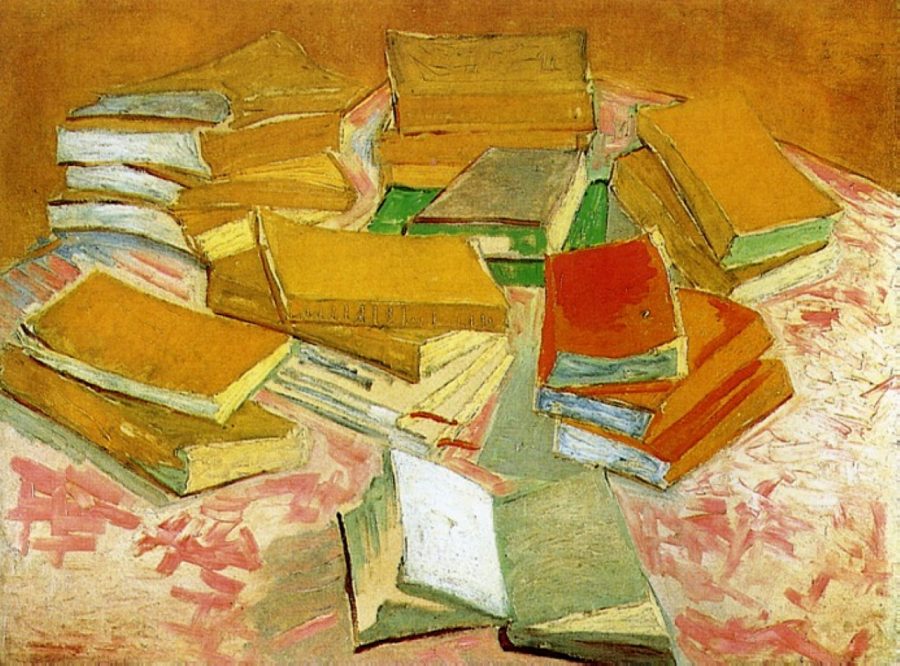
Among lovers of Vincent van Gogh, the Dutch artist is as well known for his letter writing as for his extraordinary painting. “The personal tone, evocative style and lively language” of his correspondence, writes the Van Gogh Museum, “prompted some people who were in a position to know to accord the correspondence the status of literature. The poet W.H. Auden, who published an anthology with a brief introduction, wrote: ‘there is scarcely one letter by Van Gogh which I, who am certainly no expert, do not find fascinating.’”
Auden was, of course, an expert on the written word, though maybe not on Van Gogh, and he refined his literary expertise the same way the painter did: by reading as copiously as he wrote. “When it was too dark to paint,” writes University of Puerto Rico professor of humanities Jeffrey Herlihy Mera at the Chronicle of Higher Education, “Van Gogh read prodigiously and compiled a tremendous amount of personal correspondence.” Much of his writing, especially his letters to his brother Theo, was in French, a language he learned in his teens and spoke in Belgium, Paris, and Arles.
Van Gogh’s command of written French, however, came from his reading of Victor Hugo, Guy de Maupassant, and Émile Zola. “Vincent loved literature,” the Van Gogh Museum writes. “In general, the books he read reflected what was going on in his own life. When he wanted to follow in his father’s footsteps and become a minister, he read books of a religious nature. He devoured Parisian novels when he was considering moving to the French capital.”
In his letters to Theo, he weaves together the sacred and profane, describing his spiritual and creative strivings and his unrequited obsessions. In his reading, he tested his values and desires. We get a sense of how Van Gogh’s reading complemented his pious, yet romantic nature in the list of some of his favorites, below, compiled by the Van Gogh Museum.
Charles Dickens, A Christmas Carol (1843)
Jules Michelet, L’amour (1858)
Émile Zola, L’Oeuvre (1886)
Alphonse Daudet, Tartarin de Tarascon (1887)
The Bible
John Keats, The Eve of St. Agnes (1820)
George Eliot, Scenes of Clerical Life (1857)
Henry Wadsworth Longfellow, The Poetical Works of Henry Wadsworth Longfellow (1887)
Hans Christian Andersen, What the Moon Saw (1862)
Thomas a Kempis, The Imitation of Christ (1471–1472)
“Vincent read moralistic books often favoured among members of the Protestant Christian community” in which he was raised by his minister father. He looked also to the morality of Charles Dickens, whose works he “read and reread… throughout his life.” Zola’s “rough, direct naturalism” appealed to Van Gogh’s desire “to give an honest depiction of what he saw around him: farm labourers, a weathered little old man, dejected or working women, a soup kitchen, a tree, dunes and fields.”
In Alphonse Daudet’s 1887 Tartarin de Tarascon, “an entertaining caricature of the southern Frenchman,” Van Gogh satisfied his “need for humor and satire.” Despite the stereotype of the artist as perpetually tortured, his letters consistently reveal his good-natured sense of humor. From French historian Jules Michelet’s 1858 L’amour, the artist “found wisdom he could apply to his own love life,” tumultuous as it was. He used Michelet’s insights “to justify his choices,” such as “when he fell in love with his cousin Kee Vos.”
In a letter to Theo, Vincent expressed his emotional struggles over Vos’s rejection of him as “a great many ‘petty miseries of human life,’ which, if they were written down in a book, could perhaps serve to amuse some people, though they can hardly be considered pleasant if one experiences them oneself.” He is at a loss for what to do with himself, he writes, but “‘wandering we find our way,’ and not by sitting still.” For Van Gogh, “wandering” just as often took the form of sitting still with a good book.
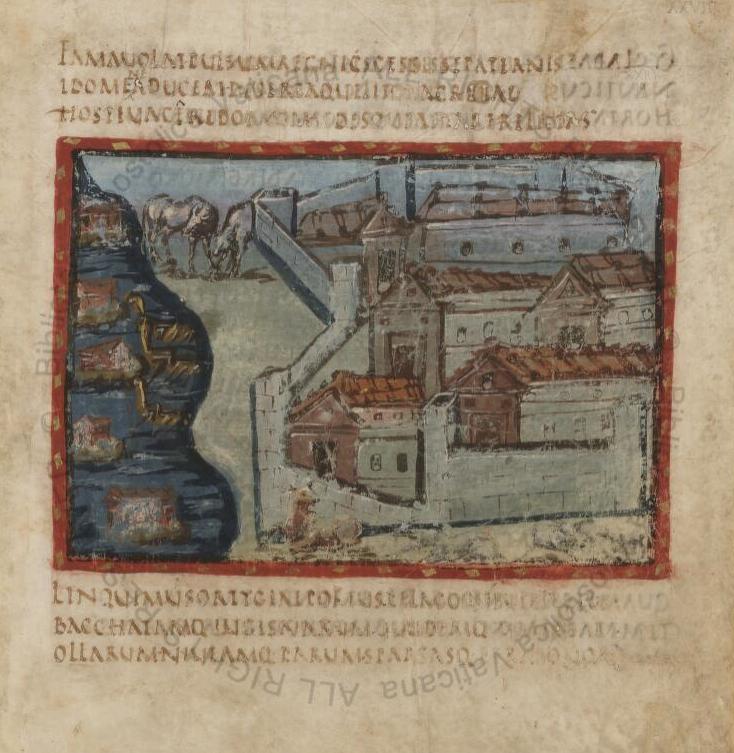
If any one of us ran our own country, we’d surely drive no small amount of resources toward building an impressive national library. That would be true even if we ran a country the size of the Vatican, the smallest sovereign state in the world — but one that, unsurprisingly, punches well above its weight in terms of the size and historical value of its holdings. “It was in 1451 when Pope Nicholas V, a renowned bibliophile himself, attempted to re-establish Rome as an academic center of global importance,” writes Aleteia’s Daniel Esparza. That formidable task involved first “building a relatively modest library of over 1,200 volumes, including his personal collection of Greek and Roman classics and a series of texts brought from Constantinople.”
The Vatican Apostolic Library, known as “VAT,” has grown a bit over the past five and a half centuries. Today it contains around 75,000 codices and 85,000 incunabula (which Esparza defines as “editions made between the invention of the printing press and the 16th century”) amid a total of over one million volumes.
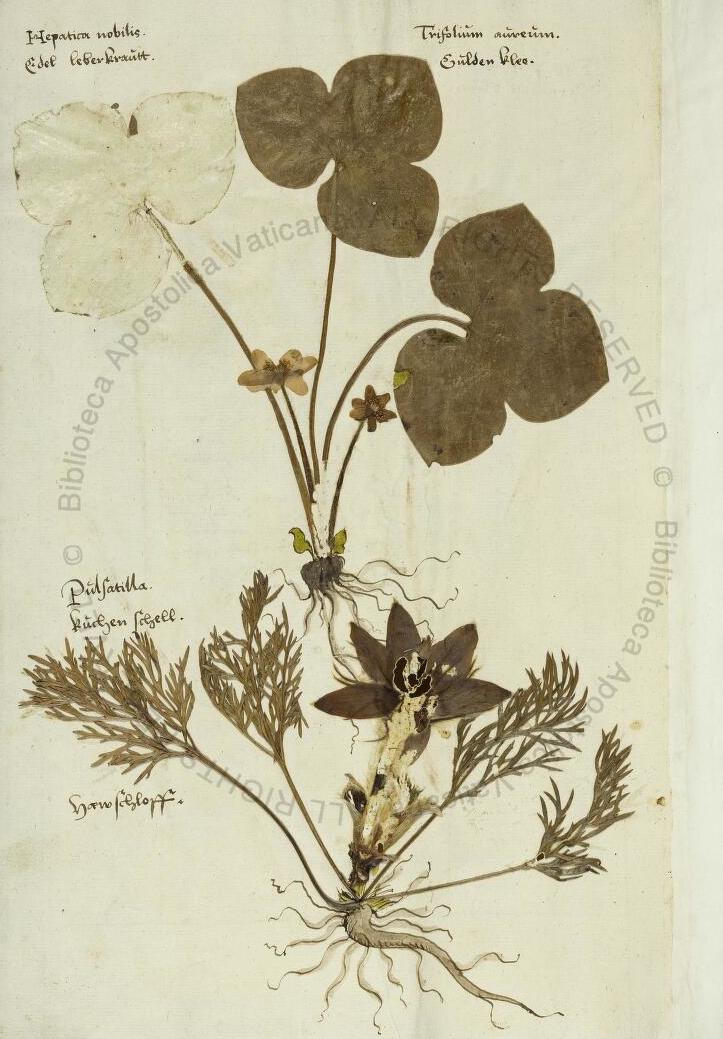
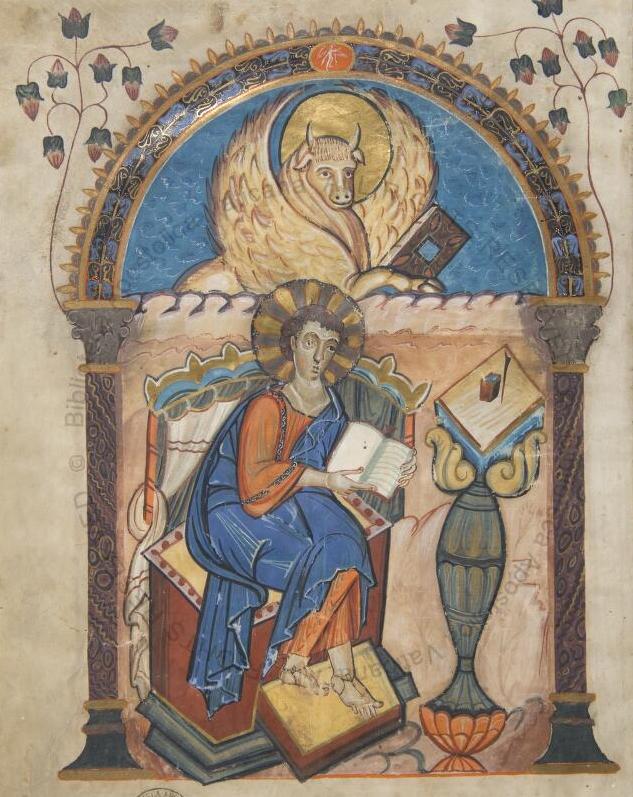
And in the case of increasingly many of these documents, you no longer have to make the journey to Vatican City to see them. Thanks to an ongoing digitization project launched a decade ago, increasingly many have become searchable and downloadable on DigiVatLib, a databaseof the Vatican Library’s digitized collections including not just the aforementioned codices and incunabula but “archival materials and inventories as well as graphic materials, coins and medals.”
Back in 2016 we featured a digital collection of 5,300 rare manuscripts digitized by the collection, including the Iliad and Aeneid as well as Japanese and Aztec illustrations. The VAT’s scanning, uploading, and organizing has continued apace since, and though it prioritizes manuscripts “from the Middle Age and Humanistic period,” its materials taken together have a wider historical and indeed cultural sweep, one that only gets wider with each page added. You can get started exploring this wealth of documents by scrolling down a little on DigiVatLib’s front page, in the middle of which you’ll find the latest digitized materials as well as a host of selected manuscripts, a few of whose pages you see above. The VAT has enjoyed its status as one of the chief repositories of Western civilization longer than any of us has been alive, but we can count ourselves in the first generation of humanity to see it open up to the world.
Based in Seoul, Colin Marshall writes and broadcasts on cities, language, and culture. His projects include the book The Stateless City: a Walk through 21st-Century Los Angeles and the video series The City in Cinema. Follow him on Twitter at @colinmarshall or on Facebook.
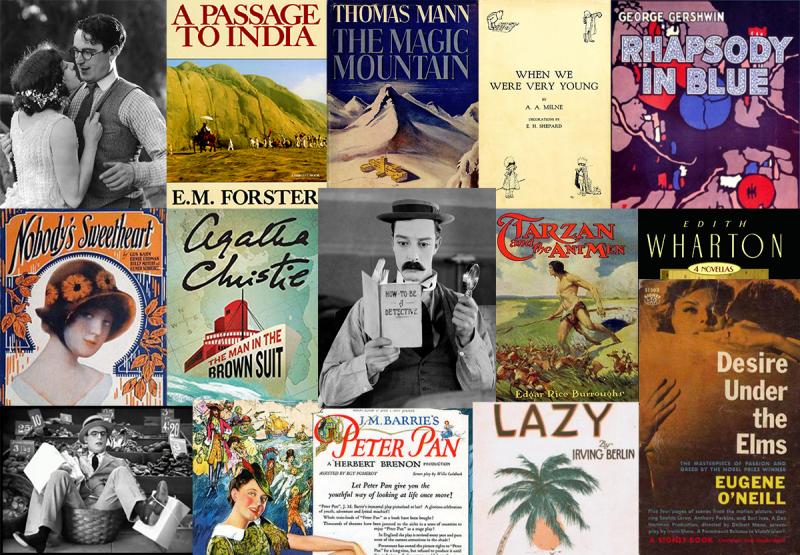
“I heard it as a sort of musical kaleidoscope of America, of our vast melting pot, of our unduplicated national pep, of our blues, our metropolitan madness.” So said Porgy and Bess composer George Gershwin of Rhapsody in Blue, the orchestral piece he wrote back in 1924 and which has remained in the American canon ever since. It will surely become even more widely heard from this year on, since 1924 plus 95 — the term of a copyright under current United States law — equals 2020. Given that Rhapsody in Blue’s entrance into the public domain means that creators can now freely do what they like with it, the piece will also, no doubt, undergo all manner of creative rearrangement and repurposing in order to reflect the America of the 2020s.
Copyright terms didn’t always last nearly a century. Before the 1998 Copyright Term Extension Act they lasted only 75 years, and for the additional two decades of waiting for works to enter the public domain we usually blame Disney. That entertainment giant did indeed do much of the lobbying for copyright extension, seeking to retain its rights to Mickey Mouse’s 1928 debut Steamboat Willie.
But as Duke Law’s Center for the Study of the Public Domain reports in a post on the works newly in public domain this year, “the Gershwin Family Trust also pushed for the extension, so that George and Ira Gershwin’s works from the 1920s and 1930s would remain under copyright.” But now several been liberated from it: not just Rhapsody in Blue, but also standards (with lyrics penned by Gershwin’s brother Ira) like “Fascinating Rhythm” and “Oh, Lady Be Good!”
2020’s is a promising Public Domain Day indeed for fans of the Great American Songbook, what with the work of other composers like Irving Berlin (specifically the popular tune “Lazy,” well known from Marilyn Monroe’s performance in There’s No Business Like Show Business.) But the list of literary works that have just gone public-domain is even more impressive, boasting internationally acclaimed books like Thomas Mann’s The Magic Mountain, E.M. Forster’s A Passage to India, Edith Wharton’s novella collection Old New York, and the pillar of modern dystopian literature that is Yevgeny Zamyatin’s We (in English translation by Gregory Zilboorg). In many works of 1924, we can see the roots of the art we make and enjoy in 2020.
That holds especially true in the realm of film, which this year contributes to the public domain pictures from two masters of silent comedy: Harold Lloyd’s Girl Shy and Hot Water, and Buster Keaton’s The Navigator and Sherlock, Jr. That last film has the honor of being preserved by the United States Library of Congress for its cultural significance, as well as of having been named by the American Film Institute one of the funniest motion pictures in American history. You can learn more about all that entered the public domain this year (and what might, but for changes in the law, have entered it) at the Center for the Study of the Public Domain and the Public Domain review. But even more important than what enters the increasingly kaleidoscopic melting pot of the public domain, of course, is what we do with it. Future George Gershwins, Thomas Manns, and Buster Keatons, take note.
Based in Seoul, Colin Marshall writes and broadcasts on cities, language, and culture. His projects include the book The Stateless City: a Walk through 21st-Century Los Angeles and the video series The City in Cinema. Follow him on Twitter at @colinmarshall or on Facebook.
If you’re a regular reader of Open Culture, you know we like to bring you the latest attempts to decipher the legendary Voynich Manuscript, a strange medieval book whose language has baffled scholars for centuries. Like many other early 15th century texts, the Voynich seems to combine medicine, alchemy, herbology, botany, zoology, astrology, and other forms of folk knowledge in a compendium. But it’s filled with bizarre illustrations (see an online version here) and written in a language no one can read. Is it a lost ancestor tongue? The secret code of a cult? Is it a hoax? Why was it made and by whom?
Researchers have tried to translate the Voynich language as variant forms Latin, Arabic, and Sino-Tibetan. An AI identified it as Hebrew. This year a father and son team convincingly made the case for Old Turkic. No Voynich translation has been definitively accepted by a scholarly consensus, and perhaps none ever will. This may say as much about the mysterious Voynich as it does about the niche research area, in which academic linguists, codicologists, and all manner of amateur sleuths try to make a name for themselves as Jean-François Champollions of Voynich studies.
The hour-long documentary above tells the story of both the manuscript’s enigmas and the cult of fascination that has grown up around them. We first learn the origin of the name: Acquired by Polish bookseller Wilfrid Voynich in 1912, the manuscript passed into the care of his wife Ethel, an Irish artist and novelist, upon his death in 1930. Ethel died 30 years later in New York, leaving the manuscript behind, sealed in a bank vault. “Its fate had troubled both Mrs. Voynich and her husband before her.”
Wilfred Voynich has often been suspected as the manuscript’s true author, but its materials have been carbon dated to the early 1400s, and its first confirmed owner, an alchemist from Prague named George Baresch, lived in the 17th century. Other proposed authors have included Queen Elizabeth I’s advisor John Dee, an alchemist and occult philosopher, and Franciscan friar and philosopher Roger Bacon, who was renowned as a wizard almost two centuries before the extant Voynich could have been produced.
Evidence for these claims is often tenuous, but the wealth of speculation to which the Voynich has given rise only deepens the mystery of its creation. As more Voynich scholars undertake frustrating, and often fruitless, investigations, they add to the manuscript’s lore, itself so rich as to occasion another, two-hour, follow-up video from our documentarian, who goes by the name The Histocrat on YouTube. See the further “Deep Dive” on the Voynich manuscript’s many historical owners—both confirmed and rumored—just above.
A vision of humanity’s future without most of the high technology we expect from science fiction, but with a surfeit of religions, martial arts, and medieval politics we don’t; pronunciation-unfriendly names and terms like “Bene Gesserit,” “Kwisatz Haderach,” and “Muad’Dib”; a sand planet inhabited by giant killer worms: nearly 55 years after its publication, Duneremains a strange piece of work. But applying that adjective to Frank Herbert’s highly successful saga of interstellar adventure and intrigue highlights not just the ways in which its intricately developed world is unfamiliar to us, but the ways in which it is familiar — and has grown ever more so over the decades.
“Following an ancient war with robots, humanity has forbidden the construction of any machine in the likeness of a human mind,” says Dan Kwartler in the animated TED-Ed introduction to the world of Dune above. This edict “forced humans to evolve in startling ways, becoming biological computers, psychic witches, and prescient space pilots,” many of them “regularly employed by various noble houses, all competing for power and new planets to add to their kingdoms.” But their superhuman skills “rely on the same precious resource: the spice,” a mystical crop that also powers space travel, “making it the cornerstone of the galactic economy.”
Herbert sets Dune — the first of five books by him and many successors by his son Brian Herbert and Kevin J. Anderson — on the desert planet Arrakis, where the noble House Atreides finds itself relocated. Before long, its young scion Paul Atreides “is catapulted into the middle of a planetary revolution where he must prove himself capable of leading and surviving on this hostile desert world.” Not that Arrakis is just some rock covered in sand: an avid environmentalist, Herbert “spent over five years creating Dune’s complex ecosystem. The planet is checkered with climate belts and wind tunnels that have shaped its rocky topography. Differing temperate zones produce varying desert flora, and almost every element of Dune’s ecosystem works together to produce the planet’s essential export.”
Herbert’s world-building “also includes a rich web of philosophy and religion,” which involves elements of Islam, Buddhism, Sufi mysticism, Christianity, Judaism, and Hinduism, all arranged in configurations the likes of which human history has never seen. What Dune does with religion it does even more with language, drawing for its vocabulary from a range of tongues including Latin, Old English, Hebrew, Greek, Finnish, and Nahuatl. All this serves a story dealing with themes both eternal, like the decline of empire and the misplaced trust in heroic leaders, and increasingly topical, like the consequences of a feudal order, ecological change, and wars over resources in inhospitable, sandy places. At the center is the story of a man struggling to attain mastery of not just body but mind, not least by defeating fear, described in Paul’s famous line as the “mind-killer,” the “little-death that brings total obliteration.”
The scope, complexity, and sheer oddity of Herbert’s vision has repeatedly tempted filmmakers and the film industry — and repeatedly defeated them. Perhaps unsurprisingly Alexander Jodorowsky couldn’t get his plans off the ground for a 14-hour epic Dune involving Pink Floyd, Salvador Dalí, Moebius, Orson Welles, and Mick Jagger. In 1984 David Lynch managed to direct a somewhat less ambitious adaptation, but the nevertheless enormously complex and expensive production came out as what David Foster Wallace described as “a huge, pretentious, incoherent flop.” Dune will return to theaters in December 2020 in a version directed by Denis Villeneuve, whose recent work on the likes of Arrival and Blade Runner 2049 suggests on his part not just the necessary interest in science fiction, but the even more necessary sense of the sublime: a grandeur and beauty of such a scale and starkness as to inspire fear, much as every Dunereader has felt on their own imagined Arrakis.
Based in Seoul, Colin Marshall writes and broadcasts on cities, language, and culture. His projects include the book The Stateless City: a Walk through 21st-Century Los Angeles and the video series The City in Cinema. Follow him on Twitter at @colinmarshall or on Facebook.
As we approach three full decades of a world without the Soviet Union, certain details about life in the societies that constituted it inevitably begin to fade from living memory. But nobody who grew up Soviet could ever forget the children’s books they grew up reading, and recent efforts to digitally archive them — such as Playing Soviet at the Cotsen Collection at Princeton’s Firestone Library, previously featured here on Open Culture — have ensured that future generations will be able to enjoy them too, no matter the regime under which they come of age, or even what language they speak.
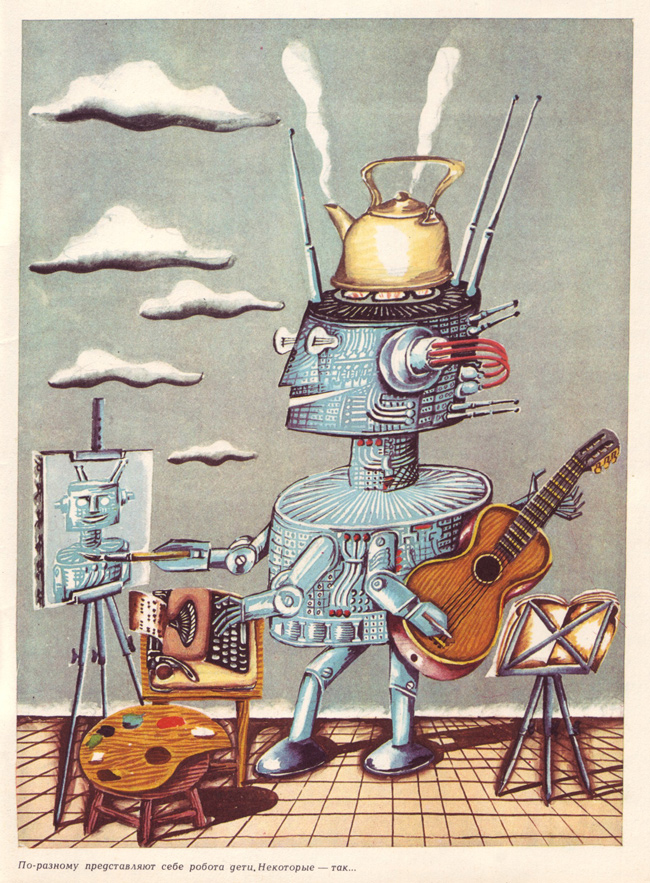
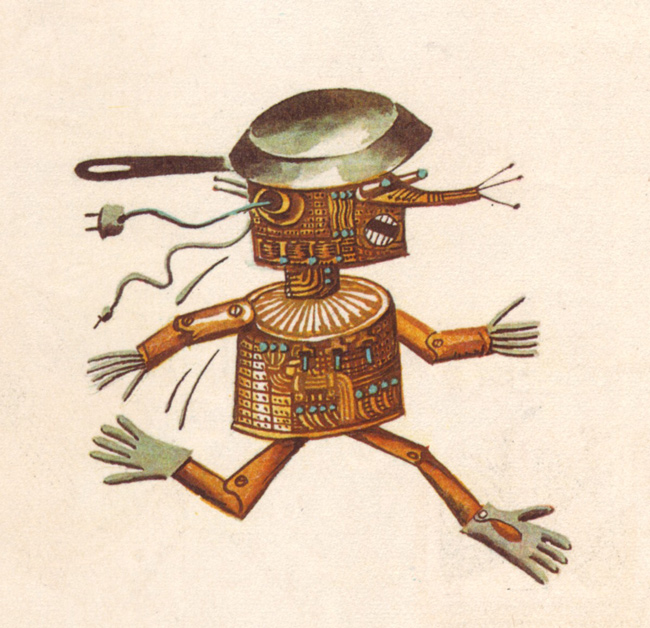
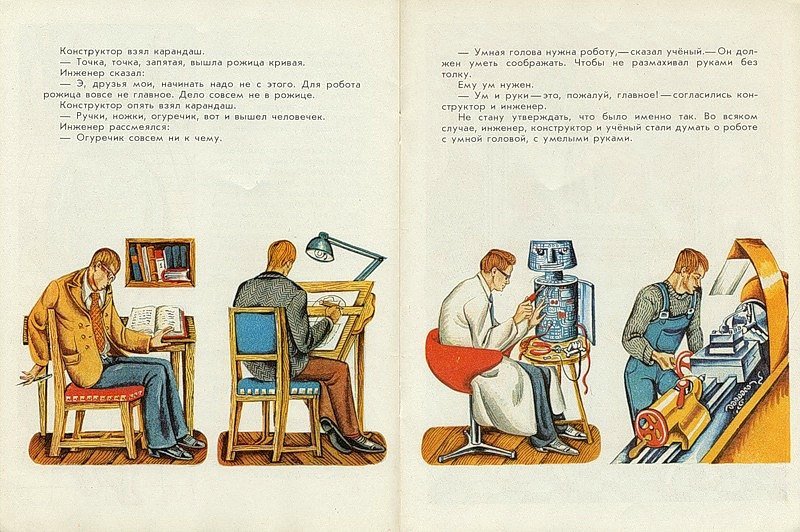
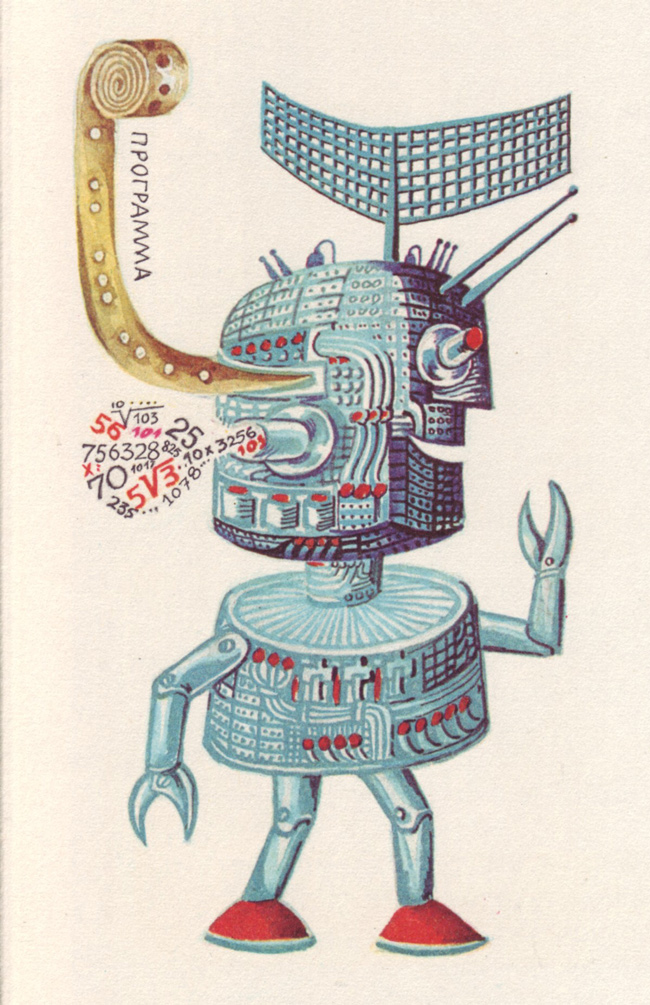
Most Soviet children’s books have such captivating illustrations that one need not read them to enjoy them. Take, for instance, Your Name? Robot, a 1979 Soviet picture book featured on book and design blog 50 Watts.
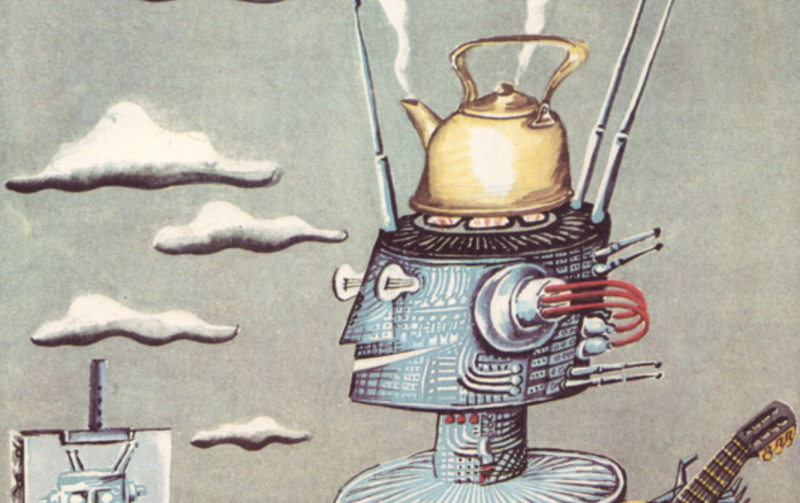
Who could resist the charm of these mechanical creatures displaying their many abilities: picking up signals, playing music, painting pictures, spouting complicated figures, boiling water? With their hypnotically detailed patterns of circuits and wires, the inner workings of these robots also look quite unlike anything else — and certainly unlike the also-popular robot characters who have long figured into stories for American children.
In the mid-20th century, America and the Soviet Union were racing each other to the future: though visionaries in both lands may have disagreed about what exact form that future would take, many saw some kind of utopia made real through high technology dead ahead. And whether worker’s paradise or consumer’s paradise, the rest of the millennium would surely see the development of intelligent robots to assist, educate, and entertain us.
But by the late 1970s, some of these visions had turned dystopian: to borrow the tagline from Zardoz, they’d seen the future, and it didn’t work — itself a grim reversal of American journalist Lincoln Steffens’ optimistic early-20th-century declaration about Soviet Russia.
From Soviet cinema, one less-than-optimistic treatment of the future endures above all: 1972’s Solaris, adapted by Andrei Tarkovsky from the novel by Stanislaw Lem. The production designer who gave that film’s future its look and feel was none other than Mikhail Romadin, the artist who would go on to illustrate Your Name? Robot just a few years later (in an illustration career involving hundreds of books, including volumes by Leo Tolstoy and Ray Bradbury).
“Romadin’s character is hidden, forced deep inside,” said Tarkovsky of his collaborator and friend since film school. “In his best works what often happens is that the outward characteristics of barely ordered dynamism and chaos that one perceives initially, melt imperceptibly into the appreciation of calm and noble form, silent and simple” — an appreciation Your Name? Robot must have done its part to instill in a generation of young readers.
Based in Seoul, Colin Marshall writes and broadcasts on cities, language, and culture. His projects include the book The Stateless City: a Walk through 21st-Century Los Angeles and the video series The City in Cinema. Follow him on Twitter at @colinmarshall or on Facebook.
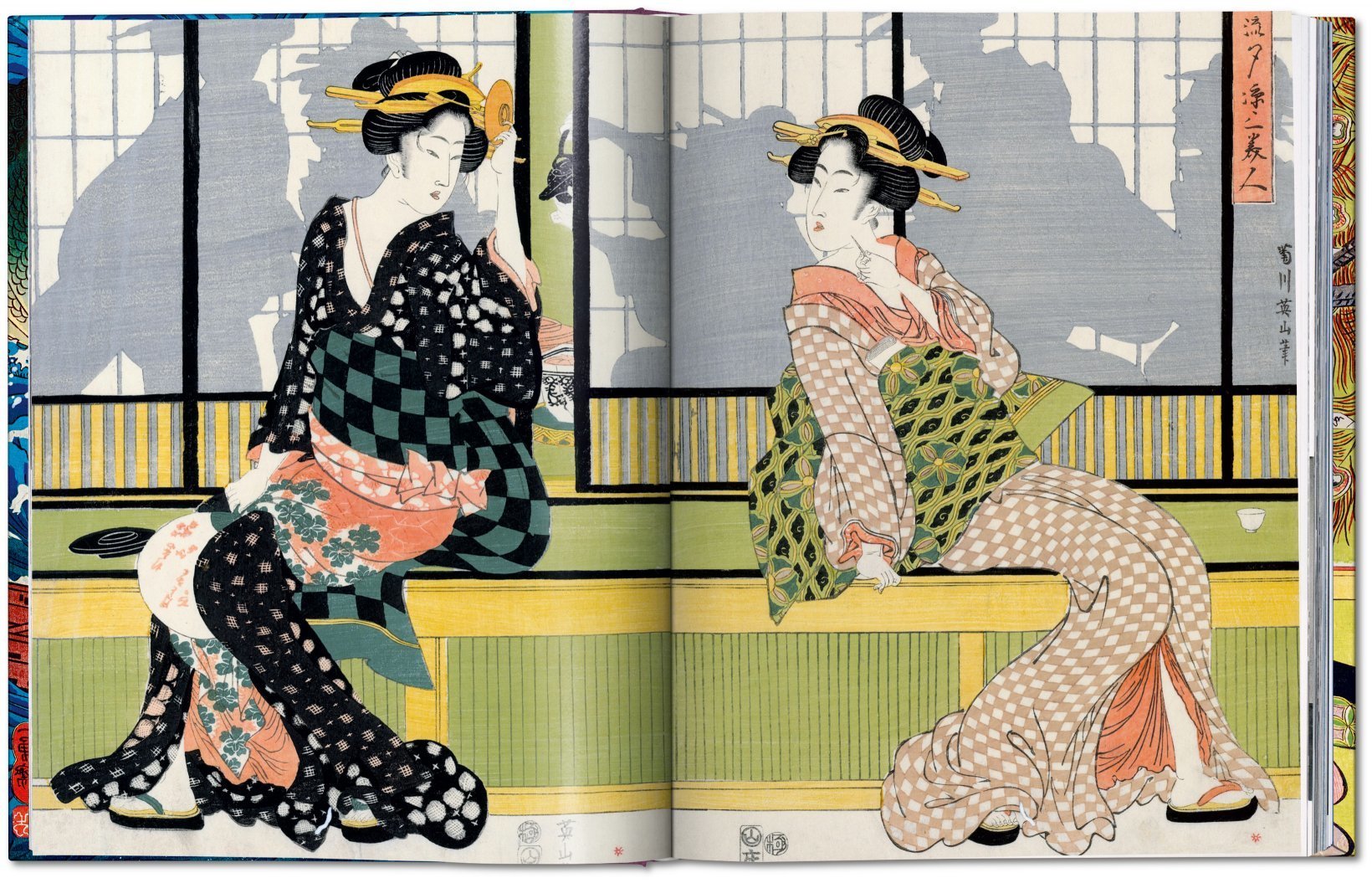
Japanese woodblock prints, especially in the style known in Japanese as ukiyo‑e, or “pictures of the floating world,” portray the social, natural, and supernatural realms in a way no other art form ever has. They also repay the attention you give them, one reason we here on Open Culture have tried to share with you every opportunity to download them — from the archive at Ukiyo‑e.org, for example, or at the Library of Congress — and build your own digital collection.
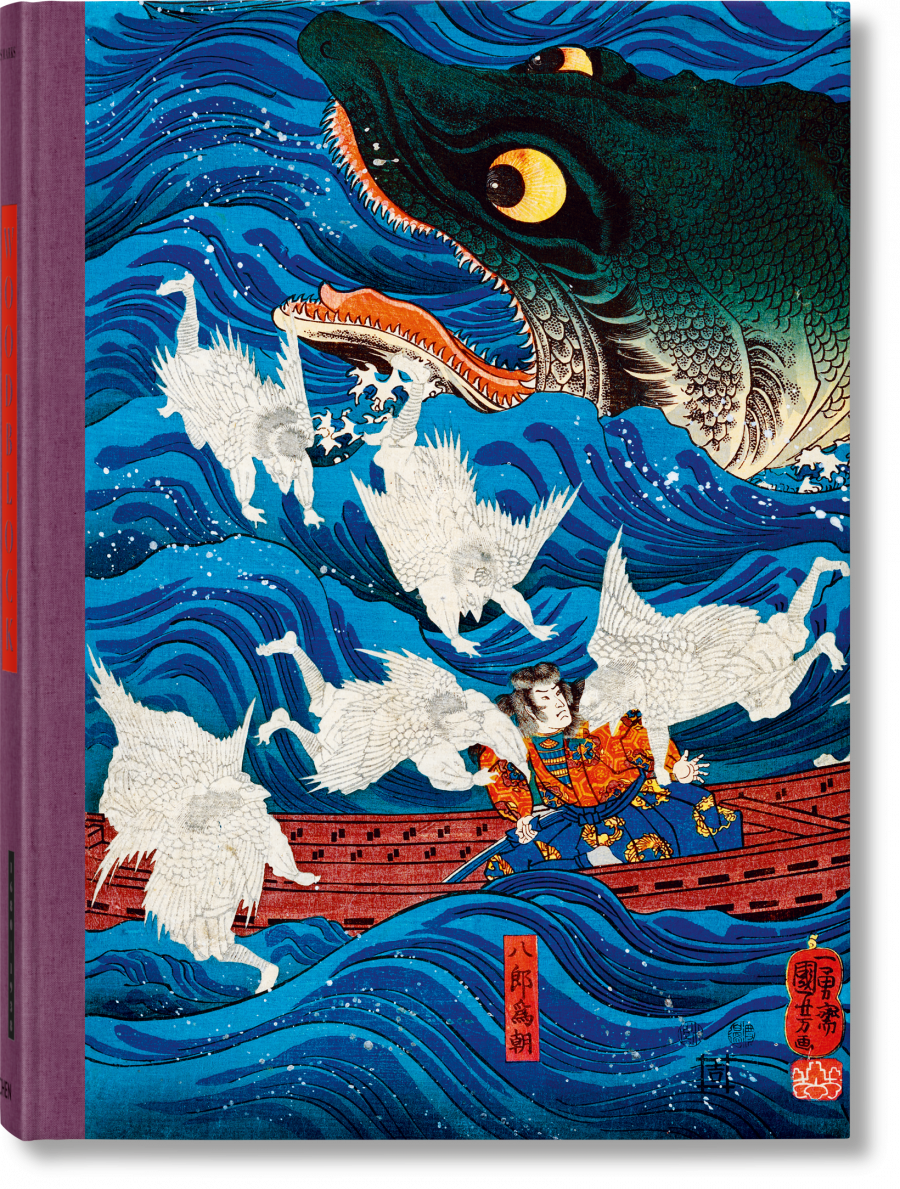
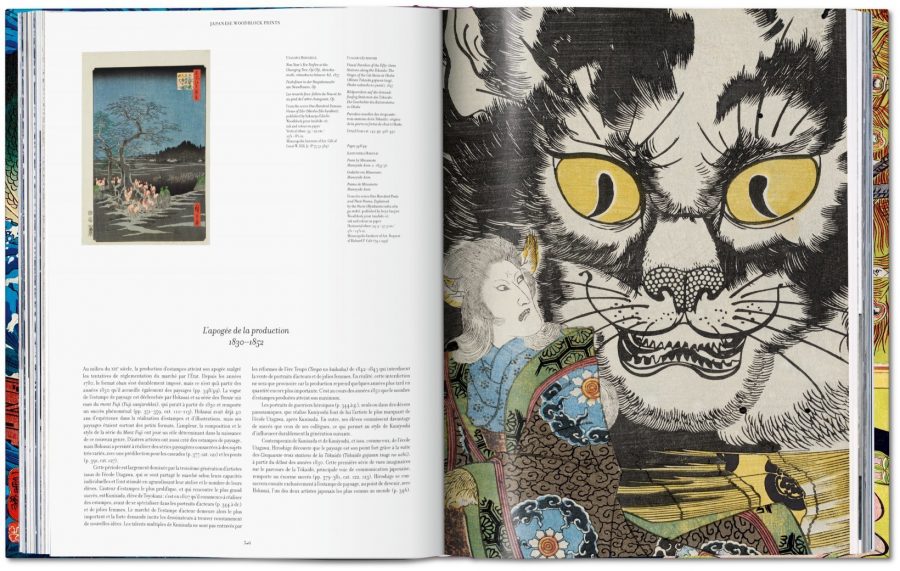
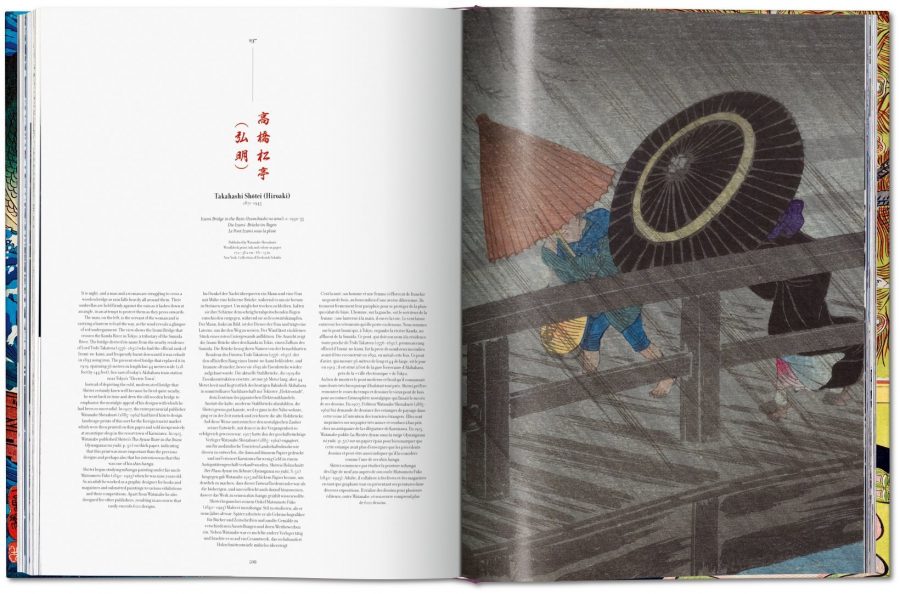
But appreciating Japanese woodblock prints on a screen is one thing, and appreciating them in large-scale reproductions on paper is quite another. At least that’s one implicit premise of the book Japanese Woodblock Prints (1680–1938), newly published by Taschen.
As a publisher, Taschen has made its formidable name in part by collecting between two covers the lesser-known work of famous artists of the recent past: Andy Warhol’s hand-illustrated books, for example, or Salvador Dalí’s cookbook and tarot deck.
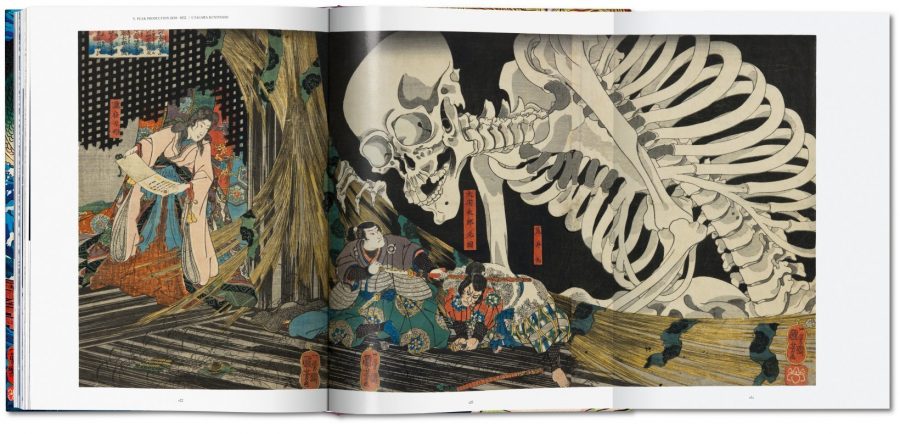
Never an outfit to fear accusations of immodesty, Taschen’s projects also include “XXL books” like a 500-page, 14-pound volume on Jean-Michel Basquiat. Surpassing even that book in length by more than 200 pages, Japanese Woodblock Prints contains, according to Taschen’s official site, an artistic reality where “breathtaking landscapes exist alongside blush-inducing erotica; where demons and otherworldly creatures torment the living; and where sumo wrestlers, kabuki actors, and courtesans are rock stars.”
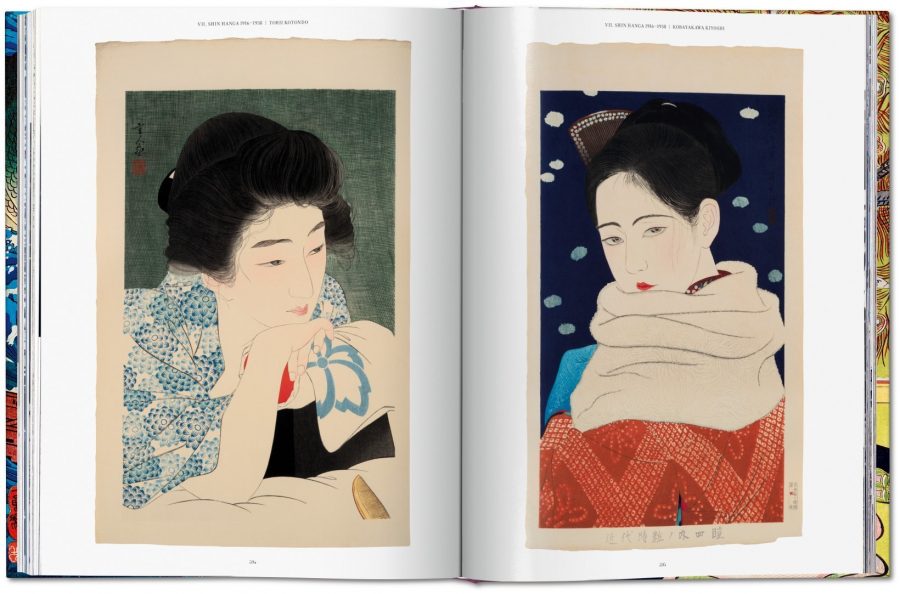
“For this tome, Taschen spent three years reproducing woodblock prints from museums and private collections from around the world,” writes Colossal’s Andrew Lasane. “Written by Andreas Marks, head of the Japanese and Korean Art Department at the Minneapolis Institute of Art, the book is divided chronologically into seven chapters beginning with the 17th century early masters and concluding with the Shin-hanga movement.” (That last is a late 19th- and early 20th-century woodblock style, in which we once featured renderings of Hayao Miyazaki’s characters.)
No matter our temporal and cultural distance from the Japanese masters of ukiyo‑e, we’ve nearly all been captivated by their work at one time or another, most often when we run across pieces of it online. With Japanese Woodblock Prints, Taschen means to get those of us who prefer print even more captivated — and at the same time, to teach us more than a little about the cultural and historical context of all these landscapes, cityscapes, monsters, beauties, and historical figures at which we marvel.
If you want to pick up a copy of this artistic work, you can make a purchas on Amazon.
Based in Seoul, Colin Marshall writes and broadcasts on cities, language, and culture. His projects include the book The Stateless City: a Walk through 21st-Century Los Angeles and the video series The City in Cinema. Follow him on Twitter at @colinmarshall or on Facebook.
We're hoping to rely on loyal readers, rather than erratic ads. Please click the Donate button and support Open Culture. You can use Paypal, Venmo, Patreon, even Crypto! We thank you!
Open Culture scours the web for the best educational media. We find the free courses and audio books you need, the language lessons & educational videos you want, and plenty of enlightenment in between.