75 Years of CIA Maps Now Declassified & Made Available Online

russian-front-review

Satel­lite-con­nect­ed devices do all the hard work of nav­i­ga­tion for us: plan jour­neys, plot dis­tances, tell us where we are and where we’re going. The age of the high­ly skilled car­tog­ra­ph­er may be com­ing to an end. But in the past few hun­dred years—since Euro­pean states began carv­ing the world between them—the win­ners of colo­nial con­tests, World War bat­tles, and Cold War skir­mish­es were often those who had the best maps. In addi­tion to their indis­pens­able role in sea­far­ing and bat­tle strat­e­gy, “good maps,” writes Dan­ny Lewis at Smith­son­ian, have been “an inte­gral part of the trade­craft of espi­onage.”

The CIA will tell you as much… or they will now, at least, since they’ve declas­si­fied decades of once-secret maps from the days when they “relied on geo­g­ra­phers and car­tog­ra­phers for plan­ning and exe­cut­ing oper­a­tions around the world” rather than on “dig­i­tal map­ping tech­nolo­gies and satel­lite images.”

Now cel­e­brat­ing its 75th anniver­sary, the CIA’s Car­tog­ra­phy Cen­ter boasts of “a long, proud his­to­ry of ser­vice to the Intel­li­gence Com­mu­ni­ty,” at the Agency’s friend­ly web­site; “Since 1941, the Car­tog­ra­phy Cen­ter maps have told the sto­ries of post-WWII recon­struc­tion, the Suez cri­sis, the Cuban Mis­sile cri­sis, the Falk­lands War, and many oth­er impor­tant events in his­to­ry.”

ussr-gross-national-product

What­ev­er noble or nefar­i­ous roles the Agency may have played in these and hun­dreds of oth­er events, we can now see–thanks to this new online gallery at Flickr–what pres­i­dents, Direc­tors, and field agents saw when they planned their actions, begin­ning with the country’s first “non-depart­men­tal intel­li­gence orga­ni­za­tion,” the COI (Office of the Coor­di­na­tor of Infor­ma­tion). Once the U.S. entered WWII, it became the Office of Strate­gic Ser­vices (OSS). The Car­tog­ra­phy Center’s first chief, Arthur Robin­son, was only 26 and a grad­u­ate stu­dent in geog­ra­phy when COI direc­tor William Dono­van recruit­ed him to lead the orga­ni­za­tion. The office rapid­ly expand­ed dur­ing the war, and by 1943, “geo­g­ra­phers and car­tog­ra­phers amassed what would be the largest col­lec­tion of maps in the world.”

cuban-missiles-1962

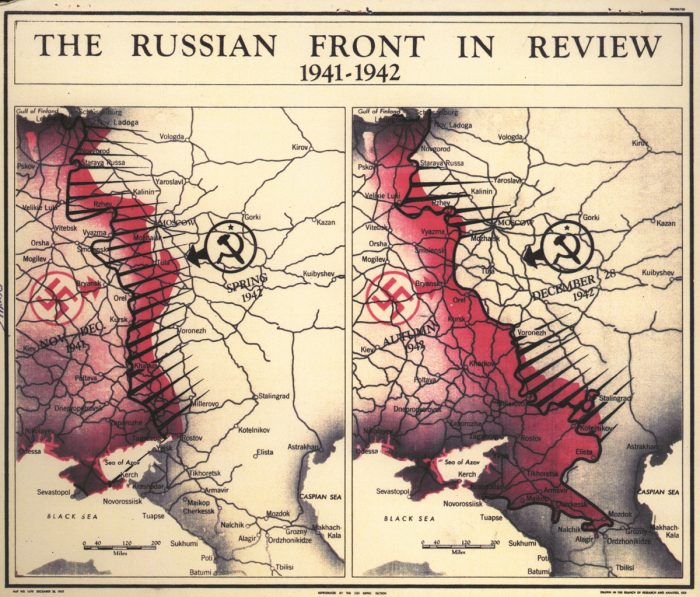
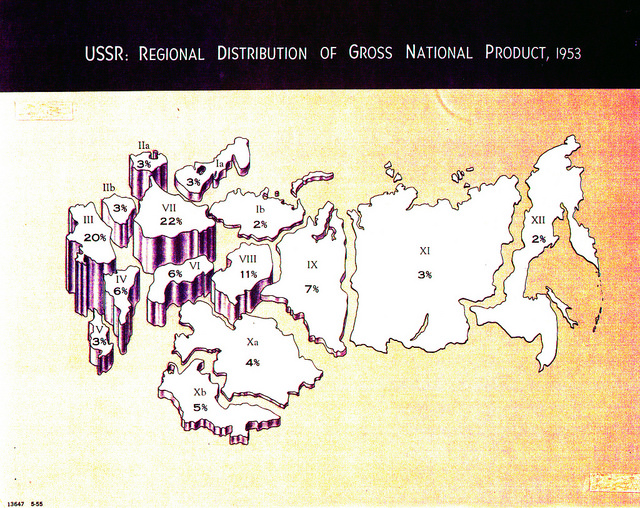
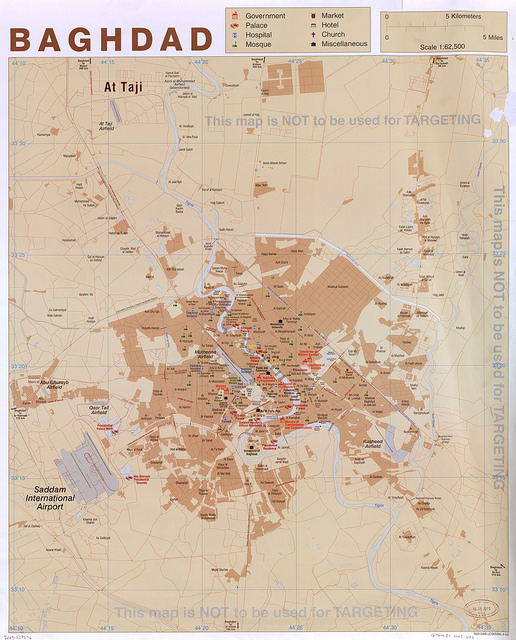
In the ear­ly for­ties, “map lay­ers were draft­ed by hand using pen and ink on translu­cent acetate sheets mount­ed on large Strath­more boards.” These drafts were typ­i­cal­ly four times larg­er than the print­ed maps them­selves, one of which you can see at the top of the post, “The Russ­ian Front in Review.” In the fifties, “improved effi­cien­cy in map com­pi­la­tion and con­struc­tion” pro­duced visu­al­ly strik­ing doc­u­ments like that fur­ther up from 1955, “USSR: Region­al Dis­tri­b­u­tion of Gross Nation­al Prod­uct.” Not a map, but what we would call an info­graph­ic, this image shows how the Car­tog­ra­phy Cen­ter per­formed ser­vices far in excess of the usu­al map app—visualizing threats to the U.S. from Cuban sur­face-to-air mis­sile sites in 1962 (above) and threats to the African ele­phant pop­u­la­tion from poach­ers in 2013 (below). Fur­ther down, you can see a 2003 map of Bagh­dad, with the omi­nous­ly non-threat­en­ing note print­ed at the top and right, “This map is NOT to be used for TARGETING.”

african-elephant-range

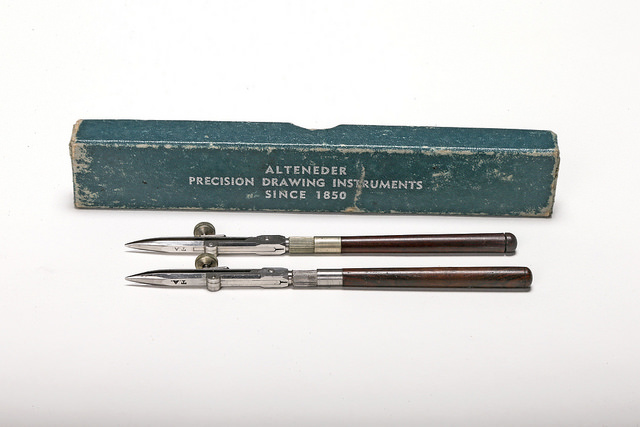
These maps and many more can be found at the CIA Car­tog­ra­phy Flickr account, which has a cat­e­go­ry for each decade since the 1940s. Each map is down­load­able in low to high res­o­lu­tion scans. In addi­tion, one cat­e­go­ry, “Car­tog­ra­phy Tools,” fea­tures high-qual­i­ty pho­tog­ra­phy of vin­tage draughtsman’s instru­ments, all of them, like the Ger­man-made ink pens fur­ther down, sym­bols of the painstak­ing hand­i­craft map­mak­ing once required. While we can prob­a­bly draw any num­ber of polit­i­cal lessons or his­tor­i­cal the­ses from a deep analy­sis of this deep state archive, what it seems to ask of us first and fore­most is that we con­sid­er car­tog­ra­phy as not only a use­ful dis­ci­pline but as a fine art.

baghdad-2003

As the Car­tog­ra­phy Center’s first direc­tor put it, “a map should be aes­thet­i­cal­ly pleas­ing, thought-pro­vok­ing, and com­mu­nica­tive.” Giv­en these stan­dards we might see how cur­rent tech­nol­o­gy, for all its tremen­dous ease of use and unde­ni­able util­i­ty, might improve by look­ing to maps of the past. Vis­it the CIA’s flickr gallery here.

drawing-instruments

via Smith­son­ian

Relat­ed Con­tent:

Free: Nation­al Geo­graph­ic Lets You Down­load Thou­sands of Maps from the Unit­ed States Geo­log­i­cal Sur­vey

New York Pub­lic Library Puts 20,000 Hi-Res Maps Online & Makes Them Free to Down­load and Use

19th Cen­tu­ry Maps Visu­al­ize Measles in Amer­i­ca Before the Mir­a­cle of Vac­cines

Josh Jones is a writer and musi­cian based in Durham, NC. Fol­low him at @jdmagness

Meet the Memphis Group, the Bob Dylan-Inspired Designers of David Bowie’s Favorite Furniture

David Bowie, in his years at Brom­ley Tech­ni­cal High School before becom­ing David Bowie, stud­ied not just music but art and design as well. Despite becom­ing a rock star, he nev­er for­got about the impor­tance of the visu­al, a sen­si­bil­i­ty man­i­fest in the per­for­mances he put on, the per­son­ae he assumed, and the music videos in which he starred right up until his death ear­li­er this year. After his suc­cess, the artist also became a full-fledged art con­nois­seur, and next month Sothe­by’s will hold Bowie/Collector, a series of three auc­tions “encom­pass­ing over 350 works from the pri­vate col­lec­tion of the leg­endary musi­cian.”

The first two auc­tions will sell Bowie’s mod­ern and con­tem­po­rary art; the third will focus entire­ly on his col­lec­tion of fur­ni­ture and oth­er pieces of design by Ettore Sottsass and the Mem­phis Group. Even if you haven’t heard of the Mem­phis Group, you’ve cer­tain­ly seen their fur­ni­ture. “It’s Pee-Wee’s Play­house meets Mia­mi Vice,” in the words of Alis­sa Walk­er at Giz­mo­do. “It’s Saved By The Bell plus Beetle­juice.” As the post­mod­ern wing of the 1980s Art Deco revival, Mem­phis “com­bined overt­ly geo­met­ric shapes from a vari­ety of mate­ri­als in bright, con­trast­ing col­ors. Graph­ic pat­terns — usu­al­ly black and white — were not unusu­al.”

1280px-memphis-milano_movement

Image by Zanone, via Wiki­me­dia Com­mons

Mem­phis, whose influ­ence has extend­ed far beyond the move­men­t’s offi­cial life­time of 1981 to 1988, began “when Ettore Sottsass, one of Italy’s archi­tec­tur­al grandees, met with a group of younger archi­tects in his apart­ment on Milan’s Via San Galdino,” accord­ing to Design Muse­um. (Sot­tass had made his name with, among oth­er things, Olivet­ti’s bright-red Valen­tine portable type­writer.) “They were there to dis­cuss Sottsass’ plans to pro­duce a line of fur­ni­ture with an old friend, Ren­zo Bru­go­la, own­er of a car­pen­try work­shop,” an idea that turned into “an exu­ber­ant two-fin­gered salute to the design estab­lish­ment after years in which col­or and dec­o­ra­tion had been taboo.”

Why call it Mem­phis? Dur­ing the meet­ing, the group put on Bob Dylan’s song “Stuck Inside of Mobile (With the Mem­phis Blues Again),” which gave Sot­tass the inspi­ra­tion. “Every­one thought it was a great name,” wrote Mem­phis mem­ber, and lat­er Mem­phis chron­i­cler, Bar­bara Radice, with its evo­ca­tions of “Blues, Ten­nessee, rock’n’roll, Amer­i­can sub­urbs, and then Egypt, the Pharoahs’ cap­i­tal, the holy city of the god, Ptah.” This aes­thet­ic foment even­tu­al­ly pro­duced such items found in the Bowie col­lec­tion as Michele de Luc­chi’s Flamin­go side table, Peter Shire’s Bel Air arm­chair, Achille and Pier Gia­co­mo Cas­tiglion­i’s friend­ly-look­ing radio-phono­graph, and Sot­tass’ own Carl­ton room divider, the most pop­u­lar Mem­phis object and one still made today.

Always aes­thet­i­cal­ly polar­iz­ing, Mem­phis has under­gone a bit of a revival in recent years: younger design­ers have looked to the group for ideas, and its sur­viv­ing mem­bers have heard a new call for their spe­cial brand of bold col­ors and strik­ing geom­e­try. In the video at the top of the post, gal­lerists Leo Koenig, Mar­garet Liu Clin­ton, and Joe Shef­tel show and tell about Mem­phis, and in the sub­se­quent videos you can learn more about Sottsass’ life and times and the mem­o­ries of Mem­phis design­er Mattheo Thun. Call the fruits of the Mem­phis Group’s labors dat­ed if you like — “it just looks like the 80s,” writes Walk­er — but they’re dat­ed, like many a Bowie or Dylan record, in the best way: unde­ni­ably time-stamped, yet some­how always fresh.

Relat­ed Con­tent:

Bauhaus, Mod­ernism & Oth­er Design Move­ments Explained by New Ani­mat­ed Video Series

Charles & Ray Eames’ Icon­ic Lounge Chair Debuts on Amer­i­can TV (1956)

David Bowie Paper Dolls Recre­ate Some of the Style Icon’s Most Famous Looks

Based in Seoul, Col­in Mar­shall writes and broad­casts on cities and cul­ture. He’s at work on a book about Los Ange­les, A Los Ange­les Primer, the video series The City in Cin­e­ma, the crowd­fund­ed jour­nal­ism project Where Is the City of the Future?, and the Los Ange­les Review of Books’ Korea Blog. Fol­low him on Twit­ter at @colinmarshall or on Face­book.

W.E.B. Du Bois Creates Revolutionary, Artistic Data Visualizations Showing the Economic Plight of African-Americans (1900)

du-bois-graph-1

Few peo­ple have done more to accu­rate­ly fore­see and help shape the cen­tu­ry ahead of them as W.E.B. Du Bois. And per­haps few intel­lec­tu­als from the ear­ly twen­ti­eth cen­tu­ry still have as much crit­i­cal rel­e­vance to our con­tem­po­rary glob­al crises. Du Bois’ inci­sive soci­ol­o­gy of racism in The Souls of Black Folk, Black Recon­struc­tion in Amer­i­ca, and his arti­cles for the NAACP’s jour­nal, The Cri­sis, remained root­ed in a transcon­ti­nen­tal aware­ness that antic­i­pat­ed glob­al­ism as it cri­tiqued trib­al­ism. Du Bois, who stud­ied in Berlin and trav­eled wide­ly in Europe, Africa, and Latin Amer­i­ca, also became one of the most influ­en­tial of Pan-African­ist thinkers, unit­ing the anti-colo­nial con­cerns of African and Caribbean nations with the post-Recon­struc­tion issues of Black Amer­i­cans.

du-bois-8

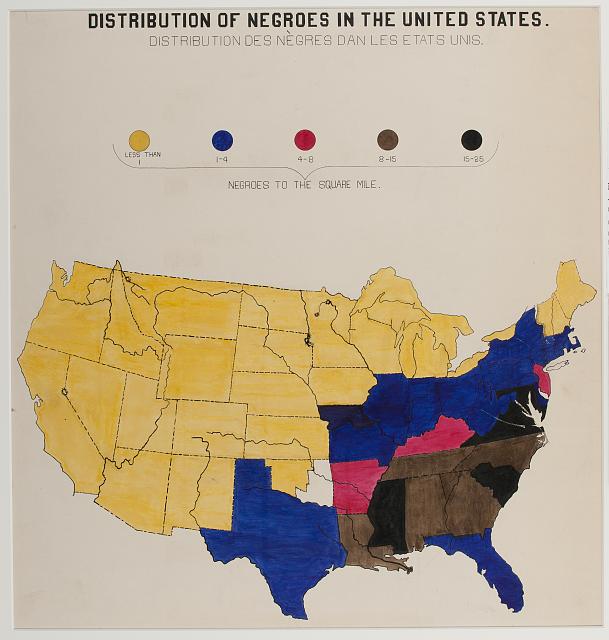
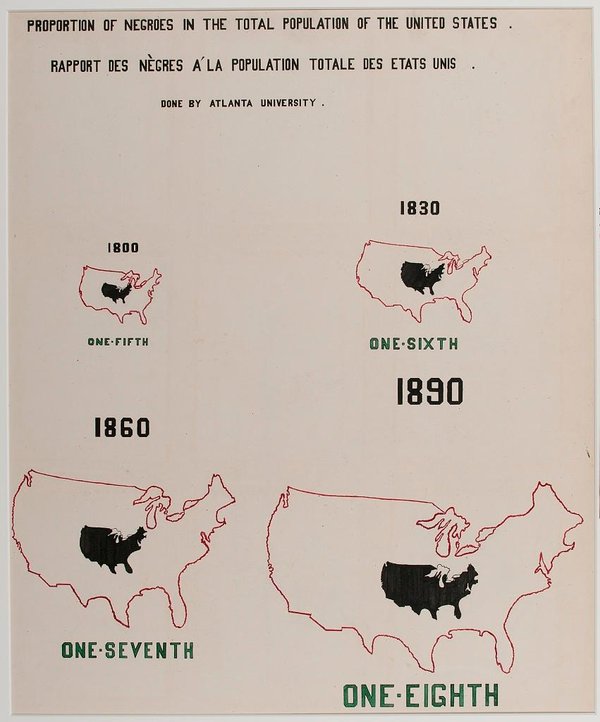
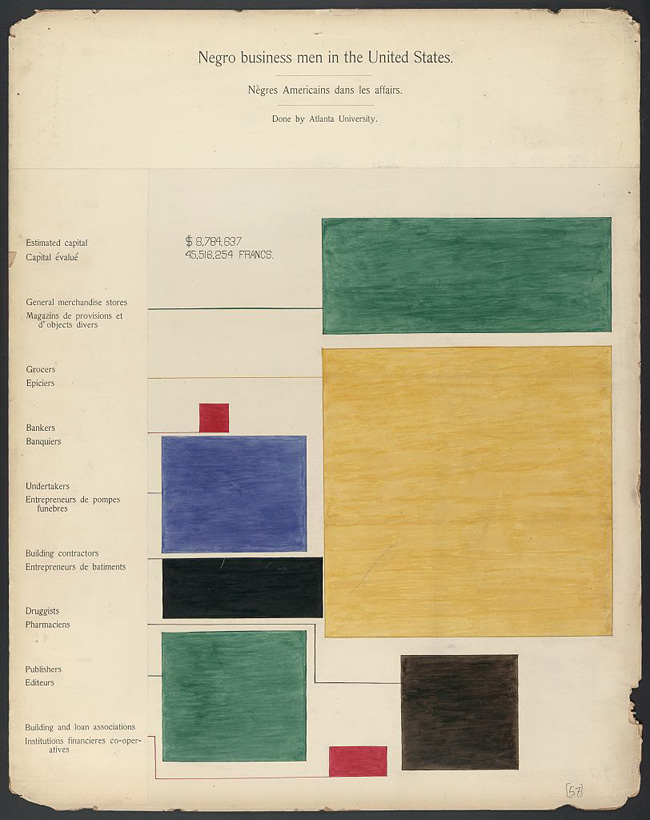
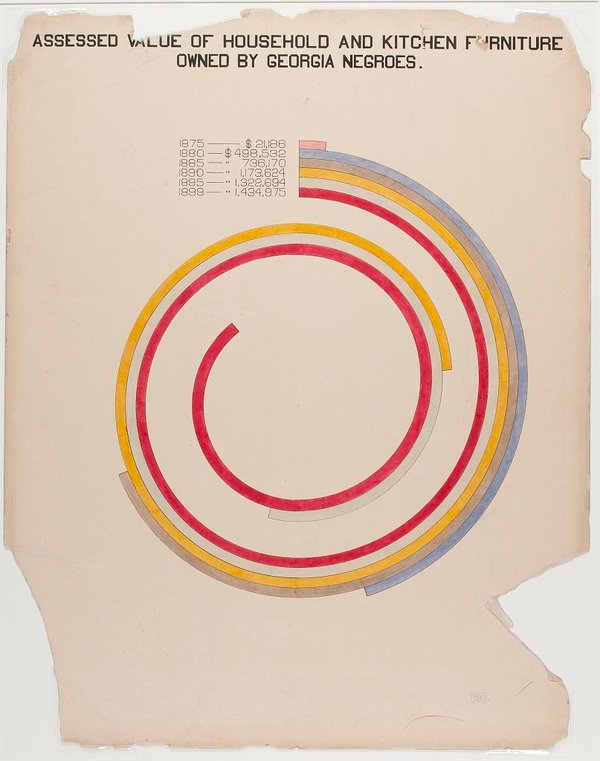
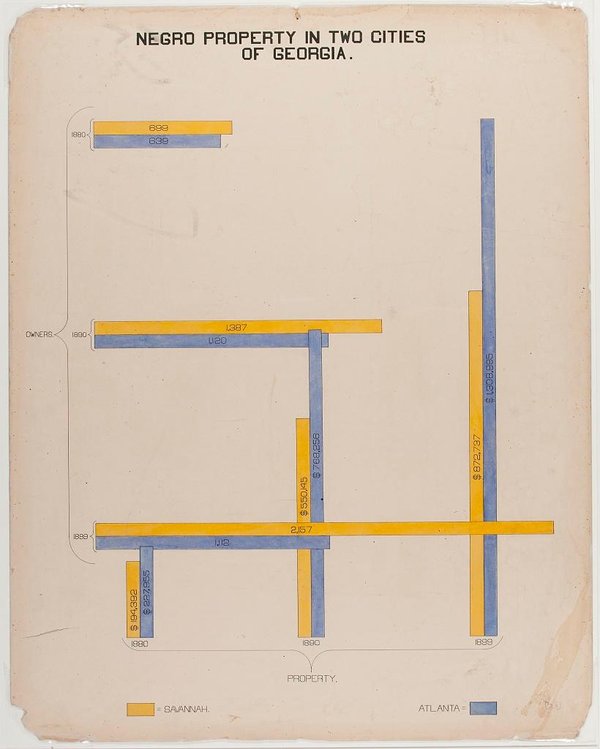
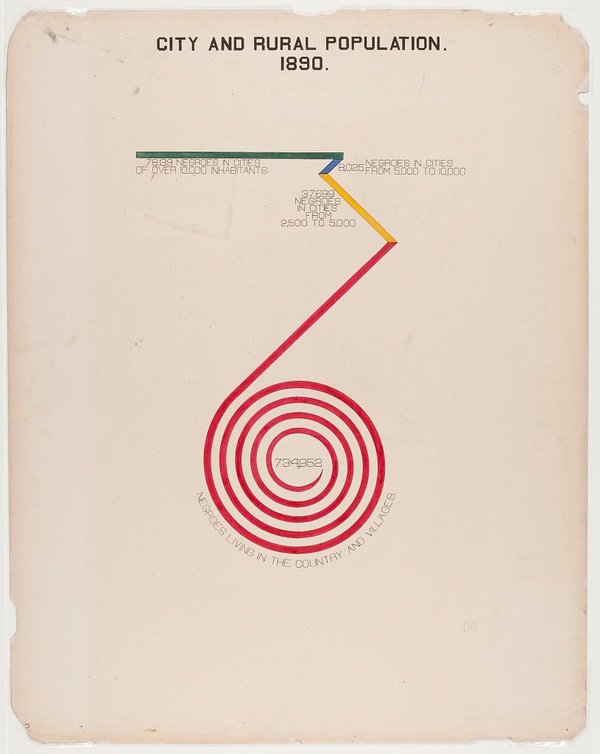
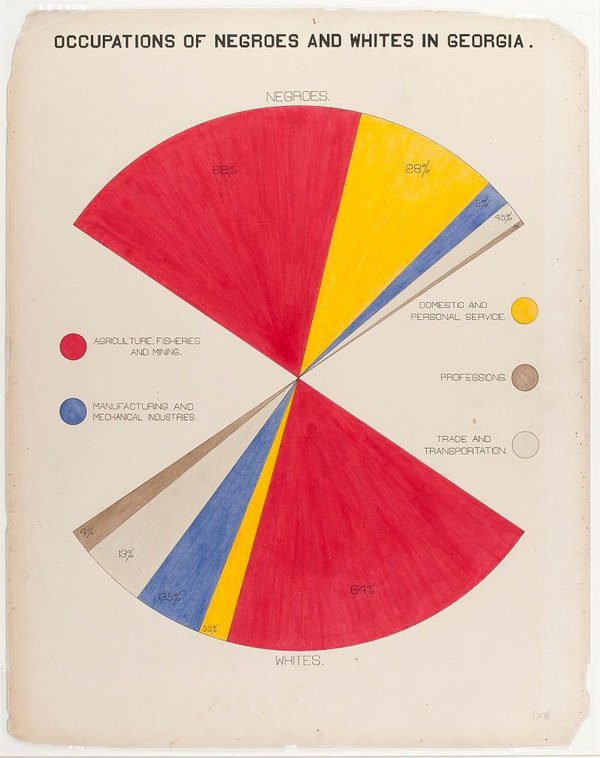
In 1900, Du Bois attend­ed the First Pan-African Con­fer­ence, held in Lon­don at West­min­ster Hall just pri­or to the Paris Exhi­bi­tion. Atten­dees pre­sent­ed papers on “the African ori­gins of human civ­i­liza­tion,” writes Ram­la Ban­dele at Northwestern’s Glob­al Map­pings, on African self-gov­ern­ment, and on the impe­r­i­al aggres­sion of Euro­pean coun­tries (includ­ing the host coun­try). Du Bois arrived armed with what might have seemed like a dull offer­ing to some: a col­lec­tion of sta­tis­tics. But not just any col­lec­tion of sta­tis­tics. Though they’re now an often banal sta­ple of our every­day work­ing lives, his pre­sen­ta­tion used then-inno­v­a­tive charts and graphs to con­dense his data into a pow­er­ful set of images.

du-bois-graph-6

Once again antic­i­pat­ing glob­al trends of over a cen­tu­ry hence, the activist and soci­ol­o­gy pro­fes­sor at Atlanta Uni­ver­si­ty cre­at­ed around 60 eye-catch­ing data visu­al­iza­tions, “charts and maps,” writes the blog All My Eyes, “hand drawn and col­ored at the turn of the 19th cen­tu­ry” by Du Bois and his stu­dents.

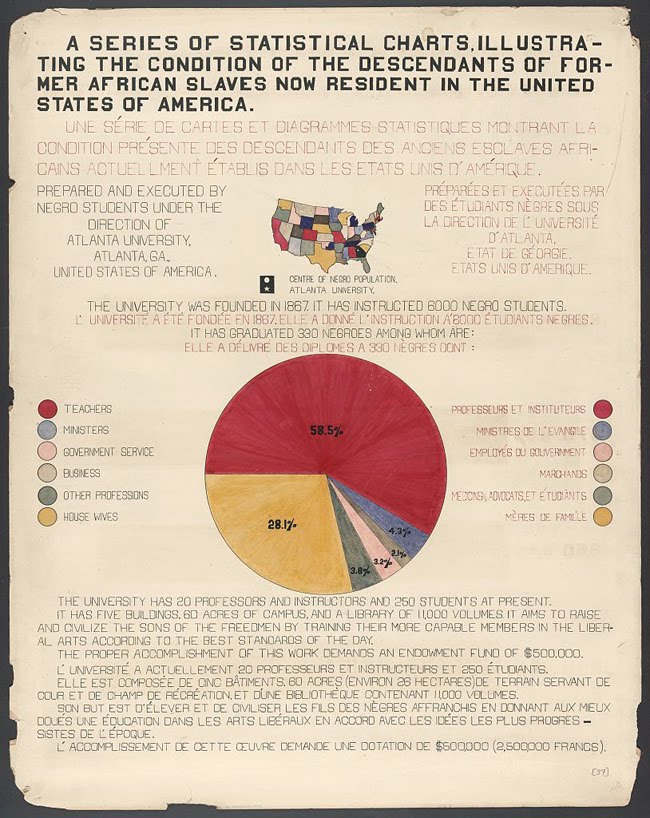
For audi­ences at the time, these must have packed the evi­den­tiary punch that Michelle Alexander’s The New Jim Crow or Ta-Nehisi Coates’ “The Case for Repa­ra­tions” have recent­ly. Du Bois and his stu­dents’ charts show us—as the first “slide” at the top of the post notes—“the con­di­tion of the descen­dants of for­mer African slaves now res­i­dent in the Unit­ed States of Amer­i­ca.”

du-bois-graph-9

The col­lec­tion of info­graph­ics, Dan­ny Lewis argues at The Smith­son­ian, “is just as rev­o­lu­tion­ary now as it was when it was first cre­at­ed,” for an exhib­it Du Bois orga­nized with a lawyer named Thomas J. Cal­loway and his occa­sion­al rival Book­er T. Wash­ing­ton. “This was less than half a cen­tu­ry after the end of Amer­i­can slav­ery,” writes Alli­son Meier at Hyper­al­ler­gic, “and at a time when human zoos dis­play­ing peo­ple from col­o­nized coun­tries in repli­cas of their homes were still com­mon.” In the U.S., the grotesque stereo­types of black­face min­strels pro­vid­ed the pri­ma­ry depic­tion of African-Amer­i­can life.

du-bois-graph-7

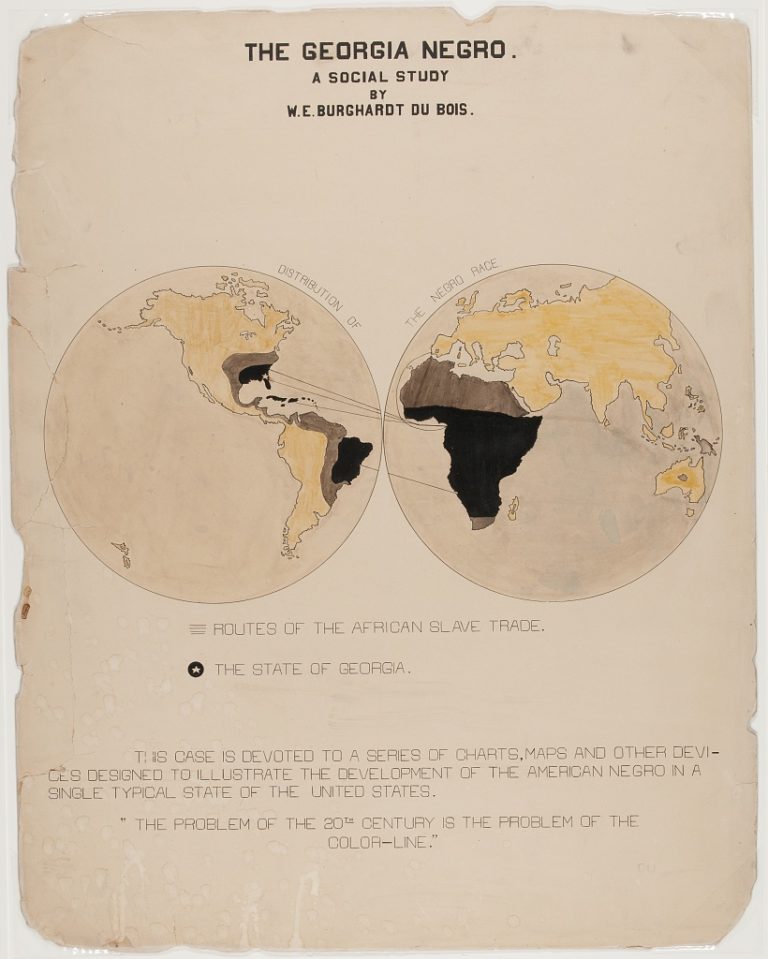
“Du Bois’ stu­dents,” writes data blog See­ing Com­plex­i­ty, “made a rad­i­cal deci­sion when they visu­al­ized the eco­nom­ic plight of a group explic­it­ly exclud­ed from sta­tis­ti­cal analy­sis and thus hid­den from inter­na­tion­al atten­tion.” The lev­el of detail—for Du Bois’ time and ours—is over­whelm­ing, remind­ing us that “the sim­ple act of dis­sem­i­nat­ing infor­ma­tion can, in itself, be a rad­i­cal­ly and poten­tial­ly trans­for­ma­tive act.” In one of Du Bois’ graph­ic stud­ies, “The Geor­gia Negro,” he quotes his key line from The Souls of Black Folk, “The prob­lem of the 20th cen­tu­ry is the prob­lem of the col­or-line.” Far too much cur­rent data demon­strates that the state­ment still holds true in the 21st cen­tu­ry, as gross dis­par­i­ties in wealth and in the crim­i­nal jus­tice sys­tem grim­ly per­sist, or wors­en, along racial lines.

du-bois-graph-4

Data may not be as trans­for­ma­tive as Du Bois had hoped, but it forces us to con­front the real­i­ty of the situation—and either ratio­nal­ize the sta­tus quo or seek to change it. One of three parts of the exhib­it, The Geor­gia Negro study was Du Bois’ “most impor­tant con­tri­bu­tion to the project,” writes Pro­fes­sor Eugene Proven­zo in his book on the sub­ject. The charts are tru­ly impres­sive for their dis­til­la­tion of “an enor­mous amount of sta­tis­ti­cal data,” drawn from “sources such as the Unit­ed States Cen­sus, the Atlanta Uni­ver­si­ty Reports, and var­i­ous gov­ern­men­tal reports that had been com­piled by Du Bois for groups such as the Unit­ed States Bureau of Labor.” (Much of the data would have gone uncol­lect­ed were it not for Du Bois’ tire­less efforts.)

du-bois-graph-5

The charts are also, Proven­zo notes, “remark­able in terms of their design,” as you can see for your­self. Du Bois and his stu­dents com­mit­ted to “exam­in­ing every­thing,” Meier writes, quot­ing Slate’s Rebec­ca Onion, “from the val­ue of house­hold and kitchen fur­ni­ture to the ‘rise of the negroes from slav­ery to free­dom in one gen­er­a­tion.’” And they did so in a way that still looks “strik­ing­ly vibrant and mod­ern, almost antic­i­pat­ing the cross­ing lines of Piet Mon­dri­an or the inter­sect­ing shapes of Wass­i­ly Kandin­sky.” How­ev­er much their cre­ators had explic­it­ly mod­ernist inten­tions, these designs also draw from his­tor­i­cal tech­niques in data visu­al­iza­tion—from 17th cen­tu­ry sci­en­tif­ic texts to Flo­rence Nightingale’s rev­o­lu­tion­ary 19th cen­tu­ry epi­demi­o­log­i­cal maps.

du-bois-graph-2

You can view and down­load scans of all the hand-drawn Du Bois’ Pan-African Con­fer­ence charts and graphs at the Library of Con­gress. There, you’ll also find oth­er fea­tures of the Du Bois/Calloway/Washington Exhib­it, includ­ing pho­tographs of sev­er­al African-Amer­i­can men who had “received appoint­ment as clerks in civ­il ser­vice depart­ments… through com­pet­i­tive exam­i­na­tions” and a “hand-let­tered descrip­tion of Hamp­ton Nor­mal and Agri­cul­tur­al Insti­tute” in Vir­ginia. Du Bois’ descrip­tion of his project says as much about his sense of Black Nation­al­ism as it does about pride in the progress made a gen­er­a­tion after slav­ery: “an hon­est straight­for­ward exhib­it of a small nation of peo­ple, pic­tur­ing their life and devel­op­ment with­out apol­o­gy or gloss, and above all made by them­selves.”

du-bois-3

via Hyper­al­ler­gic/All My Eyes/See­ing Com­plex­i­ty/Slate

Relat­ed Con­tent:

Visu­al­iz­ing Slav­ery: The Map Abra­ham Lin­coln Spent Hours Study­ing Dur­ing the Civ­il War

Flo­rence Nightin­gale Saved Lives by Cre­at­ing Rev­o­lu­tion­ary Visu­al­iza­tions of Sta­tis­tics (1855)

The Art of Data Visu­al­iza­tion: How to Tell Com­plex Sto­ries Through Smart Design

Josh Jones is a writer and musi­cian based in Durham, NC. Fol­low him at @jdmagness

Every Exhibition Held at the Museum of Modern Art (MoMA) Presented in a New Web Site: 1929 to Present

oc-moma-exhibition-archive-1

Images cour­tesy of MoMA

We all hate it when we hear of an excit­ing exhi­bi­tion, only to find out that it closed last week — or 80 years ago. New York’s Muse­um of Mod­ern Art has made great strides toward tak­ing the sting out of such nar­row­ly or wide­ly-missed cul­tur­al oppor­tu­ni­ties with their new dig­i­tal exhi­bi­tion archive. The archive offers, in the words of Chief of Archives Michelle Ellig­ott, “free and unprece­dent­ed access to The Muse­um of Mod­ern Art’s ever-evolv­ing exhi­bi­tion his­to­ry” in the form of “thou­sands of unique and vital mate­ri­als includ­ing instal­la­tion pho­tographs, out-of-print exhi­bi­tion cat­a­logues, and more, begin­ning with MoMA’s very first exhi­bi­tion in 1929,” a show of post-Impres­sion­ist paint­ings by Cézanne, Gau­guin, Seu­rat, and Van Gogh.

oc-moma-exhibition-archive-2

The pho­to­graph of Andy Warhol’s Mar­i­lyn Mon­roe por­traits at the top of the post comes from a much more recent exhi­bi­tion, 2015’s Andy Warhol: Campbell’s Soup Cans and Oth­er Works, 1953–1967. But MoMA, of course, did­n’t just just dis­cov­er the king of pop art last year: search by his name and you’ll find no few­er than 128 shows that have includ­ed his work, start­ing with Recent Draw­ings U.S.A. in 1956.

You can track any num­ber of oth­er cul­tur­al icons through the muse­um’s his­to­ry: Yoko Ono, for instance, a view of whose One Woman Show, 1960–1971, which also opened in 2015, appears above, but whose work you can see in eleven dif­fer­ent exhi­bi­tions archived online.

oc-moma-exhibition-archive-3

A look through even a frac­tion of the 3,500 shows whose mate­ri­als MoMA has so far made avail­able (and pub­lic-domain) reveals a the­mat­ic vari­ety through­out the muse­um’s entire exis­tence: not just indi­vid­ual artists or groups of them, but fast cars (the idea of a “ratio­nal auto­mo­bile” in gen­er­al in the 1960s and the Jaguar E‑Type in par­tic­u­lar in the 90s), trav­el postersJapan­ese archi­tec­ture (fea­tur­ing an entire tra­di­tion­al Japan­ese house built in and shipped from Nagoya for the occa­sion), and the font Hel­veti­ca. You can also have a look at the mate­ri­als archived from the var­i­ous film series and per­for­mance pro­grams they’ve put on over the years.

oc-moma-exhibition-archive-4

This sort of tech­no­log­i­cal inno­va­tion demon­strates that MoMA has, since that moment in the late 1920s when “a small group of enter­pris­ing patrons of the arts joined forces to cre­ate a new muse­um devot­ed exclu­sive­ly to mod­ern art,” remained as excit­ing an insti­tu­tion as ever. But noth­ing can replace the expe­ri­ence of actu­al­ly going there and see­ing its exhi­bi­tions in per­son, which is why, when­ev­er I pay a vis­it to its dig­i­tal archive, I’ll also click over to its cal­en­dar of upcom­ing shows. For 86 years, it has giv­en the pub­lic the chance to expe­ri­ence the thrill of the mod­ern, but as a trip through the dig­i­tal archive reveals, the thrill of the mod­ern goes much deep­er than the shock of the new.

Relat­ed Con­tent:

The Muse­um of Mod­ern Art (MoMA) Puts Online 65,000 Works of Mod­ern Art

Kids Record Audio Tours of NY’s Muse­um of Mod­ern Art (with Some Sil­ly Results)

Muse­um of Mod­ern Art (MoMA) Launch­es Free Course on Look­ing at Pho­tographs as Art

The Guggen­heim Puts Online 1600 Great Works of Mod­ern Art from 575 Artists

Free: The Met­ro­pol­i­tan Muse­um of Art and the Guggen­heim Offer 474 Free Art Books Online

Down­load Over 300+ Free Art Books From the Get­ty Muse­um

The His­to­ry of Mod­ern Art Visu­al­ized in a Mas­sive 130-Foot Time­line

Art Crit­ic Robert Hugh­es Demys­ti­fies Mod­ern Art in The Shock of the New

Based in Seoul, Col­in Mar­shall writes and broad­casts on cities and cul­ture. He’s at work on a book about Los Ange­les, A Los Ange­les Primer, the video series The City in Cin­e­ma, the crowd­fund­ed jour­nal­ism project Where Is the City of the Future?, and the Los Ange­les Review of Books’ Korea Blog. Fol­low him on Twit­ter at @colinmarshall or on Face­book.

Joseph Priestley Visualizes History & Great Historical Figures with Two of the Most Influential Infographics Ever (1769)

A_New_Chart_of_History_color

Not a day now goes by with­out the appear­ance of new info­graph­ics, each of them meant to bring its view­ers a fuller under­stand­ing of a sub­ject or phe­nom­e­non (or con­vince them of an argu­ment) at a glance. Mod­ern tech­nol­o­gy has made it pos­si­ble for us to see, as well as cre­ate, a wider vari­ety of info­graph­ics filled with more data than ever, but their cre­ation as an artis­tic and intel­lec­tu­al pur­suit began longer ago than you might think. Here we have two hand­made info­graph­ics by the 18th-cen­tu­ry Eng­lish poly­math Joseph Priest­ley, notable not just for their ear­li­ness, but for the fact that they remain among the most impres­sive exam­ples of the form.

Priest­ley’s 1769 A New Chart of His­to­ry appears at the top of the post (click for larg­er ver­sion or see this one too). Accom­pa­nied by a descrip­tion and sub­ti­tles, “A View of the Prin­ci­pal Rev­o­lu­tions of Empire that have tak­en place in the World” lit­er­al­ly illus­trates its cre­ator’s view, uncon­ven­tion­al at the time, that to tru­ly under­stand his­to­ry requires more than just exam­in­ing the his­to­ry of one coun­try or one peo­ple. It requires exam­in­ing the his­to­ry of all the civ­i­liza­tions of Earth, which he divid­ed into Scan­di­navia, Poland, Rus­sia, Great Britain, Spain, France, Italy, “Turkey in Europe” and “Turkey in Asia,” Ger­many, Per­sia, India, Chi­na, Africa, and Amer­i­ca.

PriestleyChart

His ear­li­er A Chart of Biog­ra­phy (1765), a piece of which appears just above, had visu­al­ized not the for­tunes of empires but the for­tunes of indi­vid­u­als, more than 2000 states­men, war­riors, divines, meta­physi­cians, math­e­mati­cians, physi­cians, poets, artists, ora­tors, crit­ics, his­to­ri­ans, and anti­quar­i­ans who lived between 1200 BC and his own day. “What makes this viz espe­cial­ly amaz­ing,” says a pre­sen­ta­tion by Tableau Soft­ware on the five most influ­en­tial data visu­al­iza­tions of all time, “is that we can still learn from it at the aggre­gate lev­el when we com­bine it with the sec­ond part of his two-part visu­al­iza­tion” — the New Chart of His­to­ry.

“Togeth­er, they weave an intri­cate sto­ry. They explain and doc­u­ment both the rise and fall of empires, and the unique thinkers that defined those nations,” the lead­ing lights of the Greeks, the Romans, the Enlight­en­ment, and oth­er civ­i­liza­tions and peri­ods besides. They make his­to­ry, at least as Priest­ley and his stu­dents knew it, quick­ly gras­pable at a com­bi­na­tion of scales sel­dom con­sid­ered before, and one which has influ­enced think­ing ever since about how civ­i­liza­tions grow, col­lapse, expand, and col­lide. After their ini­tial pub­li­ca­tion, the Chart of Biog­ra­phy and New Chart of His­to­ry met with great acclaim and decades of pop­u­lar demand, and they still read as not just his­tor­i­cal, geo­graph­i­cal, and polit­i­cal, but some­how poet­ic — poet­ic in the man­ner, specif­i­cal­ly, of Shelly’s Ozy­man­dias.

You can read more about both charts at MIT’s Dig­i­tal Human­i­ties site.

Relat­ed Con­tent:

An Inter­ac­tive Time­line Cov­er­ing 14 Bil­lion Years of His­to­ry: From The Big Bang to 2015

10 Mil­lion Years of Evo­lu­tion Visu­al­ized in an Ele­gant, 5‑Foot Long Info­graph­ic from 1931

6,000 Years of His­to­ry Visu­al­ized in a 23-Foot-Long Time­line of World His­to­ry, Cre­at­ed in 1871

4000 Years of His­to­ry Dis­played in a 5‑Foot-Long “His­tom­ap” (Ear­ly Info­graph­ic) From 1931

5‑Minute Ani­ma­tion Maps 2,600 Years of West­ern Cul­tur­al His­to­ry

The His­to­ry of Phi­los­o­phy, from 600 B.C.E. to 1935, Visu­al­ized in Two Mas­sive, 44-Foot High Dia­grams

The Tree of Lan­guages Illus­trat­ed in a Big, Beau­ti­ful Info­graph­ic

Based in Seoul, Col­in Mar­shall writes and broad­casts on cities and cul­ture. He’s at work on a book about Los Ange­les, A Los Ange­les Primer, the video series The City in Cin­e­ma, the crowd­fund­ed jour­nal­ism project Where Is the City of the Future?, and the Los Ange­les Review of Books’ Korea Blog. Fol­low him on Twit­ter at @colinmarshall or on Face­book.

An Eye-Popping Collection of 400+ Japanese Matchbox Covers: From 1920 through the 1940s

Matchbook 1

Phillu­me­ny — the prac­tice of col­lect­ing match­box­es — strikes me as a fun and prac­ti­cal hob­by. As a child, I was fas­ci­nat­ed with the con­tents of a large glass vase my grand­par­ents had ded­i­cat­ed to this pur­suit. Their col­lec­tion was an ersatz record of all the hotels and night­clubs they had appar­ent­ly vis­it­ed before trans­form­ing into a dowdy old­er cou­ple who enjoyed rock­ing in match­ing Bicen­ten­ni­al themed chairs, mon­i­tor­ing their bird feed­er.

As any seri­ous phillu­menist will tell you, one need not have a per­son­al con­nec­tion to the items one is col­lect­ing. Most match­box enthu­si­asts are in it for the art, a micro­cosm of 20th cen­tu­ry design. The urge to pre­serve these dis­pos­able items is under­stand­able, giv­en the amount of artistry that went into them. It was good busi­ness prac­tice for bars and restau­rants to give them to cus­tomers at no charge, even if they nev­er planned to strike so much as a sin­gle match.

Matchbook 2

Smoking’s hey­day is over, but until some­one fig­ures out how to make fire with a smart phone, match­box­es and books are unlike­ly to dis­ap­pear. Wher­ev­er you go, you’ll be able to find good­ies to add to your col­lec­tion, usu­al­ly for free.

Or you could stay at home, trawl­ing the Inter­net for some of the most glo­ri­ous, and sought after exam­ples of the form — those pro­duced in Japan between the two World Wars. As author Steven Heller, co-chair of the School of Visu­al Arts’ MFA Design pro­gram, writes in Print mag­a­zine:

The design­ers were seri­ous­ly influ­enced by import­ed Euro­pean styles such as Vic­to­ri­an and Art Nou­veau… (and lat­er by Art Deco and the Bauhaus, intro­duced through Japan­ese graph­ic arts trade mag­a­zines, and incor­po­rat­ed into the design of match­box labels dur­ing the late 1920s and ’30s). West­ern graph­ic man­ner­isms were har­mo­nious­ly com­bined with tra­di­tion­al Japan­ese styles and geome­tries from the Mei­ji peri­od (1868–1912), exem­pli­fied by both their sim­ple and com­plex orna­men­tal com­po­si­tions. Since match­es were a big export indus­try, and the Japan­ese dom­i­nat­ed the mar­kets in the Unit­ed States, Aus­tralia, Eng­land, France, and even India, match­box design exhib­it­ed a hybrid typog­ra­phy that wed West­ern and Japan­ese styles into an intri­cate mélange.

Find some­thing that catch­es your eye? It shouldn’t cost more than a buck or two to acquire it, though Japan­ese clut­ter-con­trol guru, Marie Kon­do, would no doubt encour­age you to adopt car­toon­ist Roz Chast’s approach to match­book appre­ci­a­tion.

Matchbook 3

Ear­li­er this spring, Chast shared her pas­sion with read­ers of The New York­er, col­lag­ing some of her favorites into an auto­bi­o­graph­i­cal com­ic where­in she revealed that she doesn’t col­lect the actu­al objects, just the dig­i­tal images. Those famil­iar with Can’t We Talk About Some­thing More Pleas­ant, Chast’s hilar­i­ous­ly painful mem­oir about her dif­fi­cult, aging par­ents’ “gold­en years,” will be unsur­prised that she opt­ed not to add to the unwel­come pile of “crap” that gets hand­ed down to the next gen­er­a­tion when a col­lec­tor pass­es away.

If you’re inspired to start a Chast-style col­lec­tion, have a rum­mage through the large album of Japan­ese vin­tage match­box cov­ers that web design­er, Jane McDe­vitt post­ed to Flickr, from which the images here are drawn.

Those 418 labels, culled from a friend’s grandfather’s col­lec­tion are just the tip of McDevitt’s match­box obses­sion. To date, she’s post­ed over 2050 cov­ers from all around the world, with the bulk hail­ing from East­ern Europe in the 50s and 60s.  You can vis­it her col­lec­tion of 400+ Japan­ese match­box cov­ers here. And if you’re into this stuff, check out the Japan­ese book, Match­box Label Col­lec­tion 1920s-40s.

Matchbook 4

via coudal.com

Relat­ed Con­tent:

Adver­tise­ments from Japan’s Gold­en Age of Art Deco

What Hap­pens When a Japan­ese Wood­block Artist Depicts Life in Lon­don in 1866, Despite Nev­er Hav­ing Set Foot There

The Mak­ing of Japan­ese Hand­made Paper: A Short Film Doc­u­ments an 800-Year-Old Tra­di­tion

Ayun Hal­l­i­day, author, illus­tra­tor, and Chief Pri­ma­tol­o­gist of the East Vil­lage Inky zine, will be read­ing from her trav­el mem­oir, No Touch Mon­key! And Oth­er Trav­el Lessons Learned Too Late at Indy Reads Books in down­town Indi­anapo­lis, Thurs­day, July 7. Fol­low her @AyunHalliday

Photographer Bill Cunningham (RIP) on Living La Vie Boheme Above Carnegie Hall

New York City lost some of its charm this week­end, with the news that Bill Cun­ning­ham, the Times’ beloved, on-the-street fash­ion pho­tog­ra­ph­er, had passed away at the age of 87.

Much has been made over the fact that he was des­ig­nat­ed a liv­ing land­mark by the New York Land­marks Con­ser­van­cy. It’s an hon­or he earned, hit­ting the streets dai­ly in his usu­al mufti of khakis, sneak­ers, and bleu de tra­vail cot­ton jack­et to hunt his quar­ry by bicy­cle, but one could nev­er accuse him of court­ing it.

His employ­er fre­quent­ly sent him to cov­er the elite, but he had no inter­est in join­ing their ranks, despite his own grow­ing celebri­ty. His “Evening Hours” col­umn doc­u­ment­ed the dressed up doings on the “par­ty cir­cuit.” (This liv­ing New York land­mark nev­er shook his Boston accent, one of the chief delights of his week­ly video series for the Times.) A recent install­ment sug­gests that shoot­ing the likes of actress Nicole Kid­man and Vogue Edi­tor-in-Chief Anna Win­tour dur­ing tony pri­vate func­tions at MoMA and the Met­ro­pol­i­tan Muse­um of Art (“aht”) was far less excit­ing than encoun­ter­ing col­or­ful­ly clad Himalayan dancers and a children’s craft table at an entire­ly free Sun­day after­noon street fair spon­sored by the Rubin Muse­um of Art.

Play­wright Win­ter Miller shared this anec­dote the morn­ing Cunningham’s death was announced:

…he did­n’t give a fk about who was famous or not. I once met Bill Mur­ray in the lob­by of the old New York Times build­ing. He’d shown up to see if he could track down a pho­to of him and his then-wife that Bill had shot. I brought one Bill to the oth­er, but Bill (Cun­ning­ham) was out on the streets with his blue jack­et, white bike and cam­era. When he returned, I explained how I’d come to take Bill Mur­ray under my wing to help him track down this pho­to. Bill had no idea who Bill Mur­ray was and not unkind­ly told me (that) none of his pho­tos were dig­i­tal, so it would involve him per­son­al­ly dig­ging through old files and he did­n’t have time. I admired that he knew his pri­or­i­ties and nev­er strayed from his task. I had been eager to get Bill Mur­ray the thing he’d want­ed and would have combed though vast files myself… but I nev­er looked. Bill Cun­ning­ham’s files were impen­e­tra­ble to an out­sider.

One likes to think that Mur­ray, who’s known for using his fame as his tick­et to hang with ordi­nary mor­tals, would find much to love about that.

In fact, Mur­ray strikes me as the per­fect can­di­date to play Cun­ning­ham in a biopic cov­er­ing the six decades spent liv­ing and work­ing in a stu­dio over Carnegie Hall. As far as I know, Bill Cun­ning­ham New York, a fea­ture length doc­u­men­tary, is the only time his sto­ry has been cap­tured on the sil­ver screen. How can it be that no one has thought to make a movie cen­tered on the lost bohemi­an peri­od Cun­ning­ham recalls so fond­ly in the slideshow above? It sounds like an Amer­i­can spin on the Lost Generation—sneaking down to the unlocked stage for pho­tog­ra­ph­er Edit­ta Sher­man’s impromp­tu ama­teur per­for­mances of The Dying Swan, an elder­ly cir­cus per­former and her dog roam­ing the halls on a uni­cy­cle, some­one always in a state of undress…

Per­haps Murray’s fre­quent col­lab­o­ra­tor, Wes Ander­son, could be enlist­ed to set these wheels in motion. The col­or­ful cast of char­ac­ters seem tai­lor-made for this direc­tor, already a fash­ion world favorite.

The hats alone!

Pri­or to acquir­ing an Olym­pus Pen D half-frame cam­era from a friend in 1966, Cun­ning­ham worked as a milliner. Mar­i­lyn Mon­roe used to crack her­self up, try­ing them on in between class­es at the Actor’s Stu­dio. The wife of a Carnegie Hall neigh­bor and Cunningham’s boss, fash­ion pho­tog­ra­ph­er Ray Solowin­s­ki, served as his mod­el. After he was estab­lished as a fash­ion expert in his own right, Cun­ning­ham admit­ted that his designs were “a lit­tle too exot­ic – you know, for nor­mal peo­ple”.

billhat6

I think they’re won­der­ful, and hope­ful­ly, Bill Mur­ray, Wes Ander­son and you will agree. See below. I think they’re won­der­ful, and hope­ful­ly, Bill Mur­ray, Wes Ander­son and you will agree. Hats off to the inim­itable Bill Cun­ning­ham, as much a fix­ture of New York as Carnegie Hall.

Relat­ed Con­tent:

Hunter S. Thompson’s Advice for Aspir­ing Pho­tog­ra­phers: Skip the Fan­cy Equip­ment & Just Shoot

Alfred Stieglitz: The Elo­quent Eye, a Reveal­ing Look at “The Father of Mod­ern Pho­tog­ra­phy”

Stan­ley Kubrick’s Jazz Pho­tog­ra­phy and The Film He Almost Made About Jazz Under Nazi Rule

Ayun Hal­l­i­day is an author, illus­tra­tor, and Chief Pri­ma­tol­o­gist of the East Vil­lage Inky zine. Fol­low her @AyunHalliday

Al Jaffee, the Longest Working Cartoonist in History, Shows How He Invented the Iconic “Folds-Ins” for Mad Magazine

Keep copy­ing those Sun­day fun­nies, kids, and one day you may beat Al Jaf­fee’s record to become the Longest Work­ing Car­toon­ist in His­to­ry.

You’ll need to take extra good care of your health, giv­en that the Guin­ness Book of World Records noti­fied Jaf­fee, above, of his hon­orif­ic on his 95th birth­day.

Much of his leg­endary career has been spent at Mad Mag­a­zine, where he is best known as the father of Fold-ins.

Con­ceived of as the satir­i­cal inverse of the expen­sive-to-pro­duce, 4‑color cen­ter­folds that were a sta­ple of glossier mags, the first Fold-In spoofed pub­lic per­cep­tion of actress Eliz­a­beth Tay­lor as a man-eater. Jaffe had fig­ured it as a one-issue gag, but edi­tor Al Feld­stein had oth­er ideas, demand­ing an imme­di­ate fol­low up for the June 1964 issue.

Jaffe oblig­ed with the Richard Nixon Fold-in, which set the tone for the oth­er 450 he has hand ren­dered in sub­se­quent issues.

Al Jaffee Mad

For those who made it to adult­hood with­out the sin­gu­lar plea­sure of creas­ing Mad’s back cov­er, you can dig­i­tal­ly fold-in a few sam­ples using this nifty inter­ac­tive fea­ture, cour­tesy of The New York Times.

With all due respect, it’s not the same, just enough to give a feel for the thrill of draw­ing the out­er­most pan­el in to reveal the visu­al punch­line lurk­ing with­in the larg­er pic­ture. The print edi­tion demands pre­ci­sion fold­ing on the reader’s part, if one is to get a sat­is­fac­to­ry answer to the rhetor­i­cal text posed at the out­set.

Jaffe must be even more pre­cise in his cal­cu­la­tions. In an inter­view with Sean Edgar of Paste Mag­a­zine, he described how he turned a Repub­li­can pri­ma­ry stage shared by Nel­son Rock­e­feller and Bar­ry Gold­wa­ter into a sur­prise por­trait of the man who would become pres­i­dent five years hence:

The first thing I did was draw Richard Nixon’s face, not in great detail, just a very rough estab­lish­ment of where the eyes, nose and mouth would be, and the gen­er­al shape. I did an exag­ger­at­ed car­i­ca­ture of Nixon and then I cut it in half, and moved it apart. Once the face was cut in half, it didn’t have the integri­ty of a face any­more — it was sort of a half of face. Then I looked at what the eyes were like, and I said, ‘what can I make out of the eyes?’ He had these heavy eye­brows. I played around with many things, but I had to keep in mind all the time what the big pic­ture was. So there they (Gold­wa­ter and Rock­e­feller) were up on a stage some­where, doing a debate, and I thought, ‘What kind of stage prop can I put along­side these guys that would seem nat­ur­al there?’ I decid­ed that I could make eyes out of the lamps, and as far as the nose was con­cerned, that could come out of the fig­ures — their cloth­ing. Then I fig­ured the mouth; I could use some sort of table that could give me those two sides. That’s how it all came about. You have to have some kind of visu­al imag­i­na­tion to see the pos­si­bil­i­ties. I had to con­cen­trate on stuff that looked nat­ur­al on a stage.

Each Fold-In is a reflec­tion of the zeit­geist. Past pre­oc­cu­pa­tions have includ­ed Viet­nam, fem­i­nism, ille­gal drug use and, more recent­ly, the Jer­sey Shore.

via Gothamist

Relat­ed Con­tent:

A Gallery of Mad Magazine’s Rol­lick­ing Fake Adver­tise­ments from the 1960s

Watch Mad Magazine’s Edgy, Nev­er-Aired TV Spe­cial (1974)

A Look Inside Char­lie Heb­do, Their Cre­ative Process & the Mak­ing of a Fate­ful Car­toon

Chuck Jones’ 9 Rules For Draw­ing Road Run­ner Car­toons, or How to Cre­ate a Min­i­mal­ist Mas­ter­piece

Car­toon­ists Draw Their Famous Car­toon Char­ac­ters While Blind­fold­ed (1947)

Ayun Hal­l­i­day is an author, illus­tra­tor, and Chief Pri­ma­tol­o­gist of the East Vil­lage Inky zine. Fol­low her @AyunHalliday

« Go BackMore in this category... »
Quantcast