Wes Anderson, it seems, has entered his European period. His next feature film, The Grand Budapest Hotel, which comes out in March, takes place in its titular location. His new short film Castello Cavalcanti, too, takes place in its titular location, a hamlet tucked away somewhere undisclosed in Italy. Then again, hasn’t Anderson, aesthetically and referentially speaking, always enjoyed something of a European period? (Maybe we can call it European by way of his native Texas, which, for me, only adds to the visual interest.) This, combined with his apparent fascination with the objects and built environment of the early- to late-middle twentieth century, has won him a great many fans sympathetic to his sensibilities. (Along with, of course, a handful of detractors less sympathetic to them.) This brief but vibrant new piece should, for them, resonate on several levels at once.
Anderson transports us to Castello Cavalcanti in the suitably midcentury year of 1955. The quiet evening scene, exuding that richly Italian feeling falling somewhere between idyll and indolence, splinters apart when a race car crashes into the center of town. Out of the wreck emerges the unscathed but enraged driver: Jed Cavalcanti, played by none other than Jason Schwartzman, star of Anderson’s 1998 breakout Rushmore. Once his anger at his brother-in-law mechanic cools — evidently, the steering wheel got screwed on backward — the Italian-American Cavalcanti realizes he may have driven not only straight into his own ancestral village, but into the company of his ancestors themselves. These charming and vividly colorful seven Andersonian minutes come brought to you by Prada, who, apart from our hero’s racing suit, don’t seem to have left many overt stamps on the finished product. Prada’s prices may still keep me away from their door, but their taste in directors sure won’t.
Castello Cavalcantiwill be added to our collection of 600 Free Movies Online.
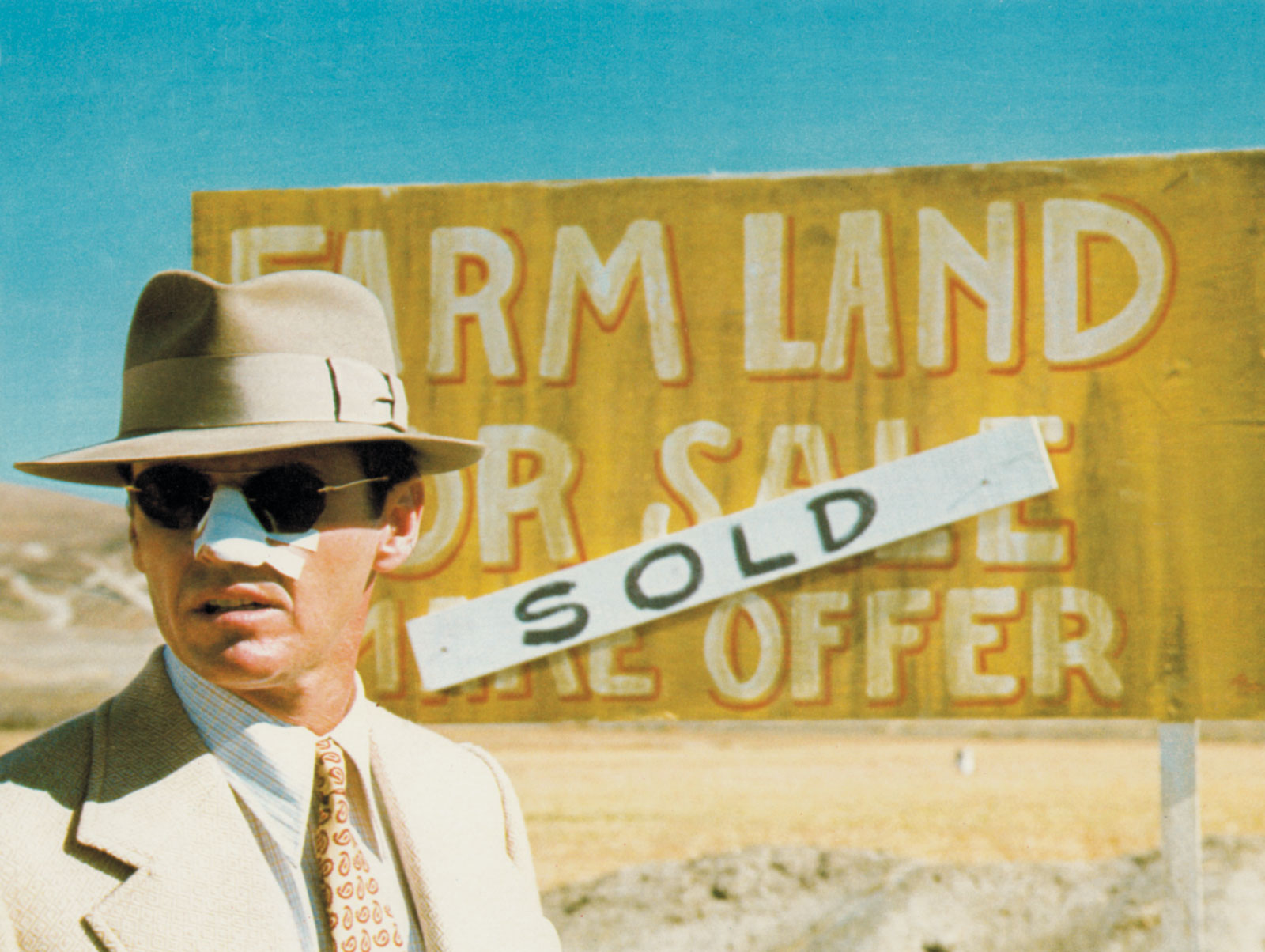
Next year marks the 40th anniversary of a modern classic, Roman Polanski’s Chinatown. And surely no other film has even come close to making the construction of an aqueduct so thrilling.
For sure, the sizable servings of incest, corruption, and greed help carry Robert Towne’s brilliant screenplay. But under Towne’s script are the bones of another story, the story of an engineering feat that eclipsed the Panama Canal. Yes we’re talking about the building of the great Los Angeles aqueduct starting in 1908.
In the preface to the script Towne wrote this, “the great crimes in California have been committed against the land—and against the people who own it and future generations. It was only natural that the script should evolve into the story of a man who raped the land and his own daughter.”
Towne didn’t worry about sticking to the facts (he set the action of Chinatown in the 1930s—an inherently more glamorous period, especially in Los Angeles). Some even argue that the film creates an entirely different (and wrong) history of the project that is remembered as fact.
Definitely worth a quick mention. For a limited time, PBS is making available its latest film from its great American Masters documentary series. My Train A Comin’traces Jimi Hendrix’s “remarkable journey from his hardscrabble beginnings in Seattle, through his stint as a US Army paratrooper and as an unknown sideman, to R&B stars until his discovery and ultimate international stardom.” It features “previously unseen footage of the 1968 Miami Pop Festival, home movies, and interviews with those closest to Jimi Hendrix.” From what we can tell, PBS will keep this film online for only a matter of days. So watch it while you can.
In daily life, Woody Allen is far from the delicate bundle of cerebral nerves he so often portrays in his films. He was a successful track runner in high school, and, according to Eric Lax’s biography, trained for several months to participate in the Golden Gloves. But, as with so many young pugilists, parental concern got in the way—his parents refused to sign the consent form to let him box.
On screen, however, Woody Allen remains Hollywood’s reigning nebbish. Jesse Eisenberg once seemed poised to take the title, but while he is sometimes nervous and introverted, his performance in The Social Network confirmed that he can harness the flashes of intensity seen in teenage films like The Squid and The Whale and Adventureland.Michael Cera, meanwhile, the second most prominent of the contenders, is a wholly different actor to Allen—while Allen is insecure and all-too-voluble, Cera is simply all-too-nice.
Allen’s unabashed delight in his insecurities and his hypochondriac concern with neuroses is the platform for much of his humor. He has honed the persona’s mannerisms to perfection, and the clip above provides a master class in just one: the Allen stammer. By the end of this staggeringly impressive 44-minute supercut, containing every single one of Allen’s verbal stumbles and foot-drags from all of his movies, you should have laughed, cried, and fallen into a stupor. Please enjoy responsibly.
“The following film describes an unusual motion picture now being produced in London for release all over the world starting in 1967.” We hear and see this announcement, which precedes A Look Behind the Future, the promotional documentary above, delivered by a pomade-haired, horn-rimmed middle-aged fellow. He has much else to say about our need to prepare ourselves through edifying entertainment for the “radical revisions in our total society” fast ushered in by the Space Age. Another, even more official-sounding announcer introduces this man as “the publisher of Look magazine, Mr. Vernon Myers.” This could happen at no time but the mid-1960s, and Myers could refer to no other “unusual motion picture” than Stanley Kubrick’s 2001: A Space Odyssey.
Modern-day examinations of 2001 usually celebrate the film’s still-striking artistic vision and its influence on so much of the science fiction that followed. But when this short appeared, not only did the year 2001 lay far in the future, so did the movie itself. Contemporary with Kubrick’s production, it touts how thoroughly researchers have rooted the speculative devices of the story in the thrilling technologies then in real-life development (whether ultimately fruitful or otherwise), and how the picture thus offers the most accurate prediction of mankind’s high-tech future yet. It even brings in co-author Arthur C. Clarke himself to comment upon the NASA lunar exploration gear under construction. The Apollo 11 moon landing would, of course, come just three years later. A Look Behind the Future reflects the enterprising if square technological optimism of that era, a tone that perhaps hasn’t aged quite as well as the haunting, bottomlessly ambiguous film it pitches.
If you would like to support the mission of Open Culture, consider making a donation to our site. It’s hard to rely 100% on ads, and your contributions will help us continue providing the best free cultural and educational materials to learners everywhere. You can contribute through PayPal, Patreon, and Venmo (@openculture). Thanks!
Cinema history now looks back to Georges Méliès, creator of 1902’s A Trip to the Moon and other early motion pictures previously featured here, as the medium’s first master of the fantastical. Visual effects, imagined worlds, and the seemingly impossible made seemingly real remain reliable draws for modern-day filmgoers, but so does something far simpler to produce: skin. But Méliès knew that, and he even demonstrated the extent of his knowledge in 1897’s After the Ball, viewable in all of its 19th-century titillation, and for its entire 1:06 length, here. While not the very first “adult” film — that historical honor goes to Eugène Pirou’s Bedtime for the Bride in France, and Esmé Collings’ A Victorian Lady in Her Boudoir in Britain — it must count as the earliest one by such a distinguished filmmaker. And it’s the only one of the three mentioned here you can watch online.
Michael Brooke’s Georges Méliès blog describes the action, shall we say, as follows: “A woman enters her boudoir, and her maid helps her to undress, peeling off her outer garments until she is clad in a shift and stockings. She sits down, and the maid helps remove the latter. Almost naked aside from skimpy underwear, the woman gets into a tub and the maid pours the contents of a large jug over her, drying her off with a towel afterwards. They leave the room together.” While modern-day adult filmmakers can and do continue to dine out on such premises, After the Ball’s rendition of the circumstances now looks tame enough to play freely on Youtube. Brooke adds that this film, along with Collings’ and probably Pirou’s, was “marketed as being suitable for private screenings to broad-minded bachelors.” Méliès’ contribution to this innovation must have made for a few worthwhile fin de siècle bachelor parties.
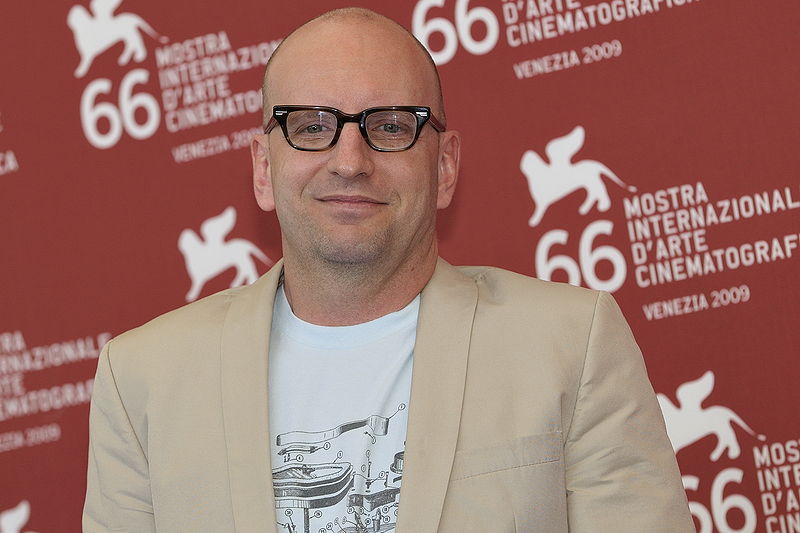
Following his retirement from filmmaking earlier this year, Steven Soderbergh has filled his time with some interesting endeavors. He tweeted an entire novella, and now he has posted a log of all the films and television shows he watched, and all the books and plays he read, in 2009.
As you will see in the log (below), Soderbergh spent much of that year in preparation for the scheduled June shoot of his adaptation of Michael Lewis’s book Moneyball, which was abruptly shut down only days before shooting was to begin, due to disagreements over revisions to Steven Zaillian’s screenplay. Soderbergh read the book for the second, third, and fourth time, as well as much of the work of baseball statistician Bill James, including every abstract James published from 1977 to 1988.
More interesting is his film and television log, which alternates between current Hollywood and indie releases and classic Hollywood titles. The list should be no surprise coming from a filmmaker repeatedly called a stylistic chameleon. Should we be surprised he follows a Ken Russell phase with The Lone Ranger? Or that he’s just like us and binge-watches Breaking Bad?
The log also sheds light on the post-production process of two of his films released in 2009, The Girlfriend Experience and The Informant, the former viewed three times, the latter four. Was his repeated viewing of Being There inspiration? Or is it simply one of his favorite films?
This is not the first time Soderbergh revealed his viewing log. In 2011, he gave Studio 360’s Kurt Anderson his 2010 log, which included twenty viewings of his film Haywire and several Raiders of the Lost Ark, in black and white.
See the full 2009 list below.
SEEN, READ 2009
All caps: MOVIE
All caps, star: TV SERIES*
All caps, italics: BOOK
Quotation marks: “Play”
1/1/09 VALKRYIE, THE GODFATHER
1/4/09 REMAINDER, Tom McCarthy
1/7/09 BURN AFTER READING
1/10/09 MADE IN USA, STATE AND MAIN
1/13/09 BEING THERE
1/14/09 THE INFORMANT, THE GIRLFRIEND EXPERIENCE
1/15/09 ARSENALS OF FOLLY, Richard Rhodes
1/24/09 THE GRAND, JAWS
1/25/09 THE HOT ROCK
1/27/09 SOLITARY MAN
1/30/09 THE APARTMENT, MONEYBALL (2) Michael Lewis
2/3/09 THE INFORMANT
2/6/09 “The Removalists”
2/7/09 “The War of the Roses, Part One”, THE GIRLFRIEND EXPERIENCE
2/8/09 THINGS I DIDN’T KNOW, Robert Hughes, FIVE EASY PIECES
2/9/09 SOLITARY MAN
2/11/09 MONEYBALL (3)
2/11/09 “The Talking Cure”, Christopher Hampton
2/14/09 HISTORICAL BASEBALL ABSTRACT, Bill James. CORALINE, W., REBECCA.
2/15/09 FROZEN RIVER, WHATEVER HAPPENED TO COOPERSTOWN, Bill James.
2/18/09 BEING THERE
2/20/09 THE OSCAR
2/21/09 PANIC ROOM, THE PARALLAX VIEW
2/22/09 THE BRIDE WORE BLACK
2/23/09 1977, ’78, ’79 BASEBALL ABSTRACT, Bill James.
5/24/09 DIGITAL BARBARISM, Mark Helprin, BREAKING BAD* (1 episode), TRANSSIBERIAN
5/31/09 THREE DAYS OF THE CONDOR, DRAG ME TO HELL, BREAKING BAD* (1 episode)
6/02/09 THE CULT OF THE AMATEUR, Andrew Keen
6/04/09 3 NIGHTS IN AUGUST, Buzz Bissinger
6/06/09 THE HANGOVER, MISSION: IMPOSSIBLE
6/21/09 MOON
6/23/09 THE FORTUNE COOKIE
6/26/09 THE HURT LOCKER, BARRY LYNDON
6/27/09 THE GRADUATE
6/28/09 BEING THERE
6/29/09 2001: A SPACE ODYSSEY
7/01/09 SUNSET BOULEVARD
7/02/09 CLOSE ENCOUNTERS OF THE THIRD KIND
7/03/09 PUBLIC ENEMIES
7/04/09 THE KILLING OF SISTER GEORGE
7/07/09 TWO LOVERS
7/08/09 THE EMPEROR’S NAKED ARMY MARCHES ON, THE FAILURE, James Greer.
7/09/09 HUMAN SMOKE, Nicholson Baker
7/10/09 SLAP SHOT
7/11/09 BRUNO
7/12/09 THE PRIVATE LIFE OF SHERLOCK HOLMES, PERSONA, THE CHARGE OF THE LIGHT BRIGADE (’68), ELGAR*, THE DEBUSSY FILM*, PYGMY, Chuck Palahniuk
7/14/09 ALWAYS ON SUNDAY*, ISADORA: THE BIGGEST DANCER IN THE WORLD*
7/15/09 DANTE’S INFERNO*, ALTERED STATES
7/16/09 THE LONE RANGER
7/17/09 THE LONE RANGER AND THE CITY OF LOST GOLD
7/18/09 GET SHORTY
7/26/09 ORPHAN, REPULSION
7/27/09 THE HOSPITAL
7/30/09 THE COLLECTOR (’65)
7/31/09 ZODIAC, SONG OF SUMMER*, MUSICOPHILIA, Oliver Sacks
8/01/09 A PERFECT MURDER
8/02/09 VOX, NIcholson Baker, CACHE
8/03/09 ADVISE AND CONSENT
8/05/09 THE LONG GOODBYE
8/06/09 THE RED SHOES
8/08/09 INHERENT VICE, Thomas Pynchon, UNMAN, WITTERING, AND ZIGO, ELECTRA GLIDE IN BLUE, THE ASCENT OF MONEY*, THE SHINING
8/13/09 THIEVES LIKE US, REDS (part two)
8/15/09 CHINATOWN, CITIZEN RUTH
8/16/09 DISTRICT 9, MADE MEN* (1 episode)
Justin Alvarez is the digital director of The Paris Review. His work has appeared in Ploughshares, Guernica, and Flatmancrooked’s Slim Volume of Contemporary Poetics. Follow him at @Alvarez_Justin.
American movie stars have long found work across the pacific in Japanese television commercials: Nicolas Cage, Paul Newman, Dennis Hopper, Harrison Ford, Jodie Foster — the list goes on. If their spots aired stateside, we’d probably buy what they sell too, but celebrities in their image-protective league have thus far shown a reluctance to endorse products in their own country. Japan’s ad industry hasn’t only sought the participation of America’s big-name actors, though; it’s also gone after the directors. At the top, you’ll see one featuring a filmmaker never afraid of exposure: Pulp Fiction auteur Quentin Tarantino taking a turn in local costume (and alongside a talking dog) in a commercial for Japanese cell phone service provider Softbank. Just below, we have Orson Welles, he of Citizen Kane and British frozen-peas narration alike, in a spot for G&G Whisky.
“I direct films and act in them,” Welles says by way of introduction. “What we’re always trying for is perfection, but of course, that’s only a hope. But with G&G, you can rely on it.” It may put you in the mind of Sofia Coppola’s Lost in Translation, wherein Bill Murray’s character famously turns up in Japan to shoot a whisky commercial of his own. Makers of that beverage have shown quite an interest in the imprimatur of cinema’s luminaries, Eastern as well as Western.
We’ve previously featured a Suntory commercial including not just The Gofather and Apocalypse Now director Francis Ford Coppola, but Akira Kurosawa, the maker of Rashomon and Seven Samurai, known in his homeland as “the Emperor.” It makes you wonder: do we in America know our directors well enough that they could sell us things? Then again, the Japanese did enjoy all those old Woody Allen Seibu spots when most of them still hadn’t a clue about the beloved filmmaker’s identity.
We're hoping to rely on loyal readers, rather than erratic ads. Please click the Donate button and support Open Culture. You can use Paypal, Venmo, Patreon, even Crypto! We thank you!
Open Culture scours the web for the best educational media. We find the free courses and audio books you need, the language lessons & educational videos you want, and plenty of enlightenment in between.