Pangea to the Present to the Future: Watch Animations Showing 500 Million Years of Continental Drift

Things change…

Espe­cial­ly when you’re track­ing the con­ti­nen­tal move­ment from Pangea to the present day in 5 mil­lion years incre­ments at the rate of 2.5 mil­lion years per sec­ond.

Wher­ev­er you are, 350 mil­lion years ago, your address would’ve been locat­ed on the mega-con­ti­nent of Pangea.

Here’s a map of what things looked like back then.
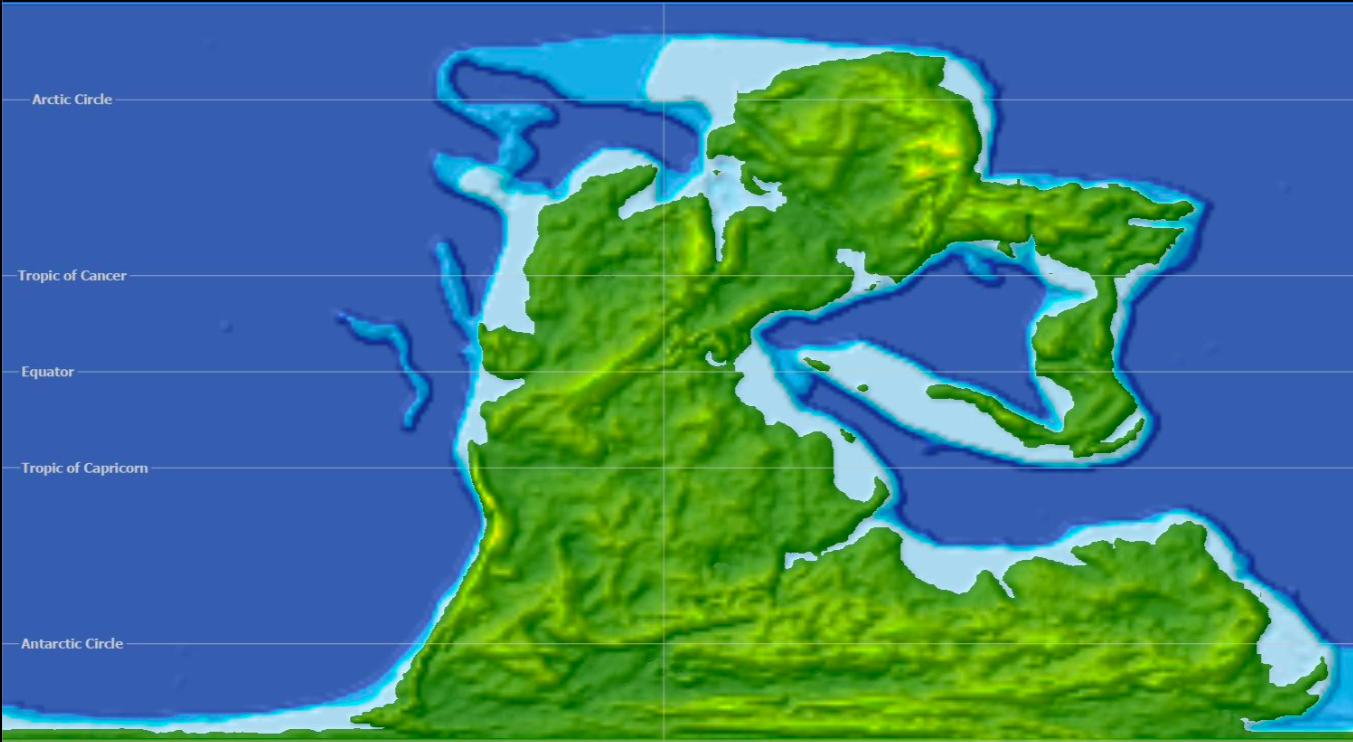
Those who’ve grown a bit fuzzy on their geog­ra­phy may require some indi­ca­tions of where future land­mass­es formed when Pangea broke apart. Your map apps can’t help you here.
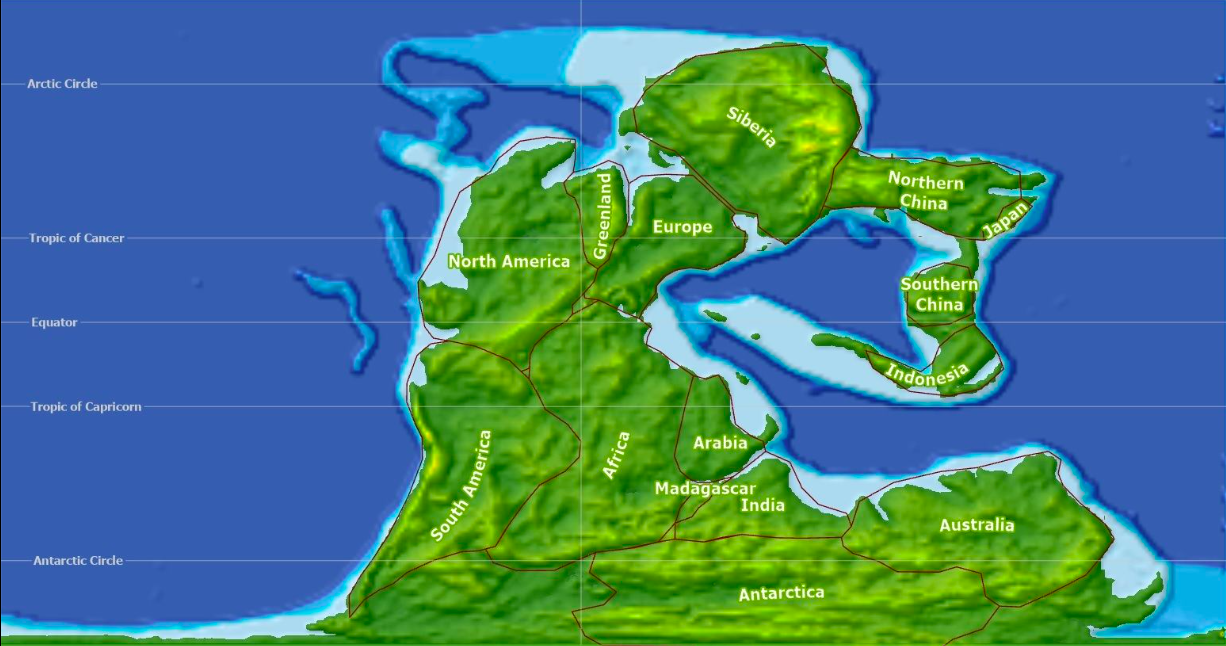
The first split occurred in the mid­dle of the Juras­sic peri­od, result­ing in two hemi­spheres, Laura­sia to the north and Gond­wana.

As the project’s sto­ry map notes, 175 mil­lion years ago Africa and South Amer­i­ca already bore a resem­blance to their mod­ern day con­fig­u­ra­tions.

North Amer­i­ca, Asia, and Europe need­ed to stay in the oven a bit longer, their famil­iar shapes begin­ning to emerge between 150 and 120 mil­lion years ago.

India peeled off from its “moth­er” con­ti­nent of Gond­wana some 100 mil­lion years ago.

Its tec­ton­ic plate col­lid­ed with the Eurasian Plate, giv­ing rise to the Himalayas and the Tibetan Plateau, by which point, dinosaurs had been extinct for about 15 mil­lion years…)


Geog­ra­phy nerds may chafe at the seem­ing­ly inac­cu­rate sizes of Green­land, Antarc­ti­ca and Aus­tralia. Rest assured that the map­mak­ers are aware, chalk­ing it to the “dis­tor­tion of the car­to­graph­ic pro­jec­tion that exag­ger­ates areas close to the Poles.”

Just for fun, let’s run it back­wards!

But enough of the past. What of the future?

Those who real­ly want to know could jump ahead to the end of the sto­ry map to see PALEOMAP Project founder Christo­pher Scotese’s spec­u­la­tive con­fig­u­ra­tion of earth 250 mil­lion years hence, should cur­rent tec­ton­ic plate motion trends con­tin­ue.

Behold his vision of mega-con­ti­nent, Pangea Prox­i­ma, a land­mass “formed from all cur­rent con­ti­nents, with an appar­ent excep­tion of New Zealand, which remains a bit on the side:”

On the oppo­site side of the world, North Amer­i­ca is try­ing to fit to Africa, but it seems like it does not have the right shape. It will prob­a­bly need more time…

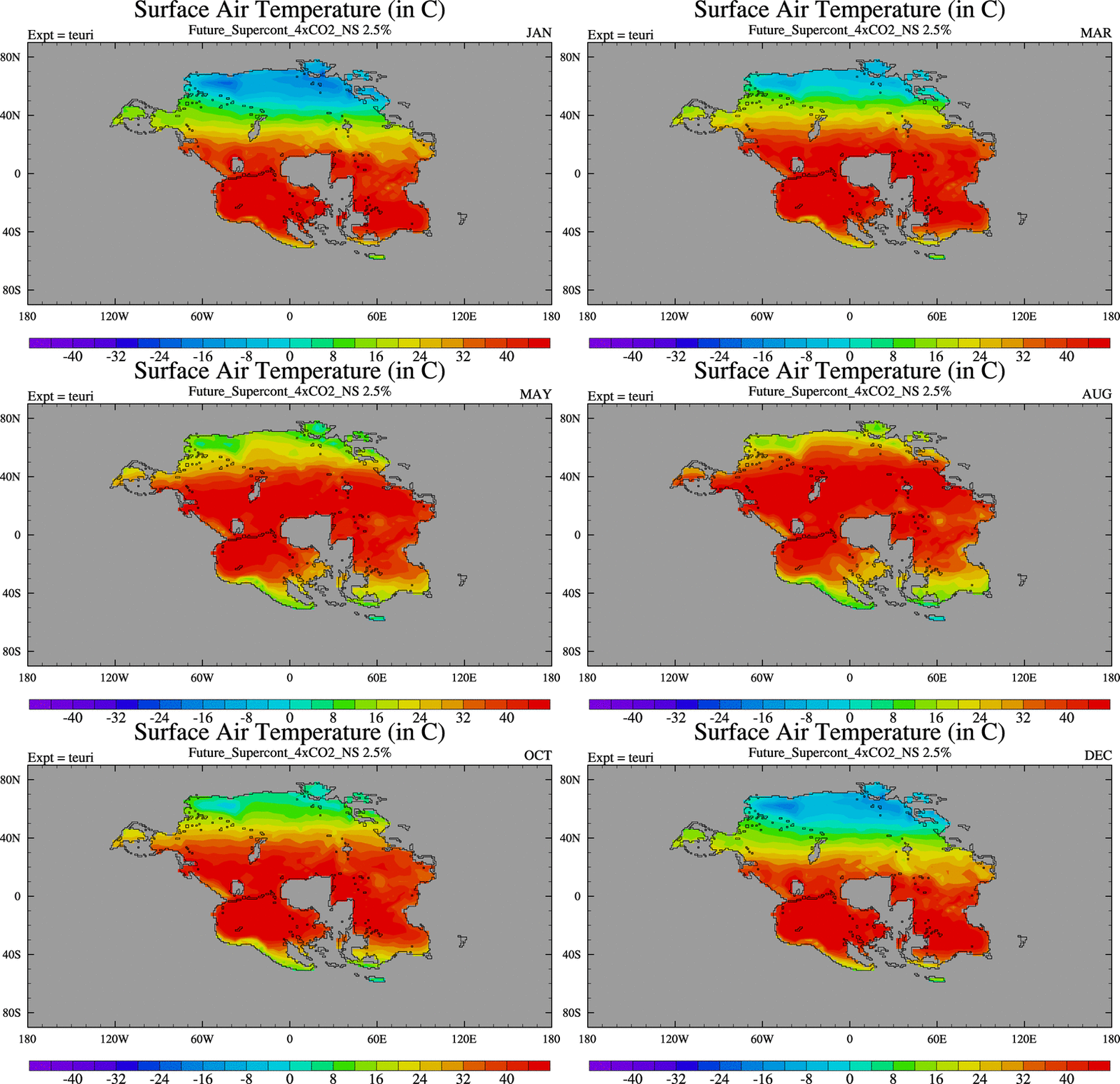
Not to bum you out, but a more recent study paints a grim­mer pic­ture of a com­ing super­con­ti­nent, Pangea Ulti­ma, when extreme tem­per­a­tures have ren­dered just 8 per­cent of Earth’s sur­face hos­pitable to mam­mals, should they sur­vive at all.

As the study’s co-author, cli­ma­tol­o­gist Alexan­der Farnsworth, told Nature News, humans might do well to get “off this plan­et and find some­where more hab­it­able.”

Relat­ed Con­tent 

Map Show­ing Where Today’s Coun­tries Would Be Locat­ed on Pangea

Find the Address of Your Home on Pan­gaea: Open Source Project Lets You Explore the Ancient Land Mass­es of Our Plan­et

Paper Ani­ma­tion Tells Curi­ous Sto­ry of How a Mete­o­rol­o­gist The­o­rized Pan­gaea & Con­ti­nen­tal Drift (1910)

– Ayun Hal­l­i­day is the Chief Pri­ma­tol­o­gist of the East Vil­lage Inky zine and author, most recent­ly, of Cre­ative, Not Famous: The Small Pota­to Man­i­festo and Cre­ative, Not Famous Activ­i­ty Book. Fol­low her @AyunHalliday.

The Golden Age of Japanese Cinema: Kurosawa, Ozu, Mizoguchi & Beyond


Oliv­er Her­manus’ lat­est film Liv­ing trans­plants the sto­ry of Aki­ra Kuro­sawa’s Ikiru to post­war Lon­don. Apart from its own con­sid­er­able mer­its, it has giv­en view­ers across the world rea­son to revis­it the 1952 orig­i­nal, a stand­out work even in a gold­en decade of Japan­ese cin­e­ma — the decade The Cin­e­ma Car­tog­ra­phy co-cre­ator Lewis Bond (pre­vi­ous­ly fea­tured here for oth­er explo­rations of Japan­ese cin­e­ma and ani­ma­tion) explains in the video above. In the nine­teen-fifties, “con­cen­trat­ed with­in a sin­gle coun­try were some of the great­est film­mak­ers to ever live, simul­ta­ne­ous­ly pro­duc­ing their great­est works. The result was a com­plete decen­tral­iza­tion of clas­sic cin­e­ma as the world was exposed to its new troupe of mas­ters.”

After World War II, the Japan­ese peo­ple were “left with the real­i­ty that they were an eth­ni­cal­ly homo­ge­neous and cul­tur­al­ly uni­fied unit that did not fit in with the new, demo­c­ra­t­ic world.” The Amer­i­can mil­i­tary occu­pa­tion “took con­trol of the entire Japan­ese film indus­try from 1945 until 1952,” forcibly remov­ing any image, theme, or line of dia­logue thought liable stoke recidi­vist pop­u­lar sen­ti­ment. With not just war movies but “feu­dal” peri­od pieces off the table, the only viable genre was what schol­ars have since labeled shominge­ki, the real­is­tic cin­e­ma of com­mon peo­ple in ordi­nary sit­u­a­tions. Even there, the cen­sors had their scis­sors out: on their orders, Masahi­ro Maki­no had to elim­i­nate a shot of the poten­tial­ly nation­al­ist sym­bol of Mount Fuji; Yasu­jirō Ozu had to cut a line from Late Spring about Tokyo being full of bomb sites.

These rules loos­ened toward the end of the occu­pa­tion. By 1951, Kuro­sawa could make a dar­ing his­tor­i­cal pic­ture like Rashomon, and even have it (with­out his con­sent) go on to screen at the Venice Film Fes­ti­val and win a Gold­en Lion, then an Acad­e­my Award. The West had acquired a taste for Japan­ese movies, and the Japan­ese film indus­try was only too hap­py to cater to it. The coun­try’s five major stu­dios “hired the best artists of the time and gave them the finan­cial back­ing and cre­ative free­dom that they need­ed. The result was that the stu­dios made a lot of mon­ey, the film­mak­ers cre­at­ed an abun­dance of mas­ter­pieces, and the gold­en age of Japan­ese cin­e­ma meant that peo­ple filled the the­aters.”

The nine­teen-fifties brought world­wide acclaim to a Mount Rush­more of Japan­ese auteurs. Kuro­sawa, who revived the samu­rai film, “did for cin­e­ma as a whole was what most film­mak­ers hope, at some point, to do”: bridg­ing “the gap between one’s artistry and main­stream appeal.” Uget­su direc­tor Ken­ji Mizoguchi looked on all real­i­ty — and espe­cial­ly women — with a tran­scen­den­tal gaze. “Although not as grandiose as Kuro­sawa, nor as spir­i­tu­al as Mizoguchi, Ozu epit­o­mizes a sen­ti­men­tal­i­ty that, per­haps, has not been as well achieved by any oth­er film­mak­er to this day.” Mikio Naruse, Masa­ki Kobayashi, Teinosuke Kin­u­gasa, Hiroshi Ina­ga­ki: one could enjoy a rich cin­e­mat­ic life with only the works of Japan­ese film­mak­ers of the fifties. It shows us “the pin­na­cle of what cin­e­ma can achieve, and the stan­dard we should con­tin­ue to strive for,” as Bond’s puts it in his clos­ing line, speak­ing over a shot from Ikiru.

Relat­ed con­tent:

Essen­tial Japan­ese Cin­e­ma: A Jour­ney Through 50 of Japan’s Beau­ti­ful, Often Bizarre Films

How Did Aki­ra Kuro­sawa Make Such Pow­er­ful & Endur­ing Films? A Wealth of Video Essays Break Down His Cin­e­mat­ic Genius

The Aes­thet­ic of Ani­me: A New Video Essay Explores a Rich Tra­di­tion of Japan­ese Ani­ma­tion

How One Sim­ple Cut Reveals the Cin­e­mat­ic Genius of Yasu­jirō Ozu

A Page of Mad­ness: The Lost, Avant Garde Mas­ter­piece from Ear­ly Japan­ese Cin­e­ma (1926)

Wes Ander­son & Yasu­jirō Ozu: New Video Essay Reveals the Unex­pect­ed Par­al­lels Between Two Great Film­mak­ers

Based in Seoul, Col­in Marshall writes and broad­casts on cities, lan­guage, and cul­ture. His projects include the Sub­stack newslet­ter Books on Cities, the book The State­less City: a Walk through 21st-Cen­tu­ry Los Ange­les and the video series The City in Cin­e­ma. Fol­low him on Twit­ter at @colinmarshall or on Face­book.

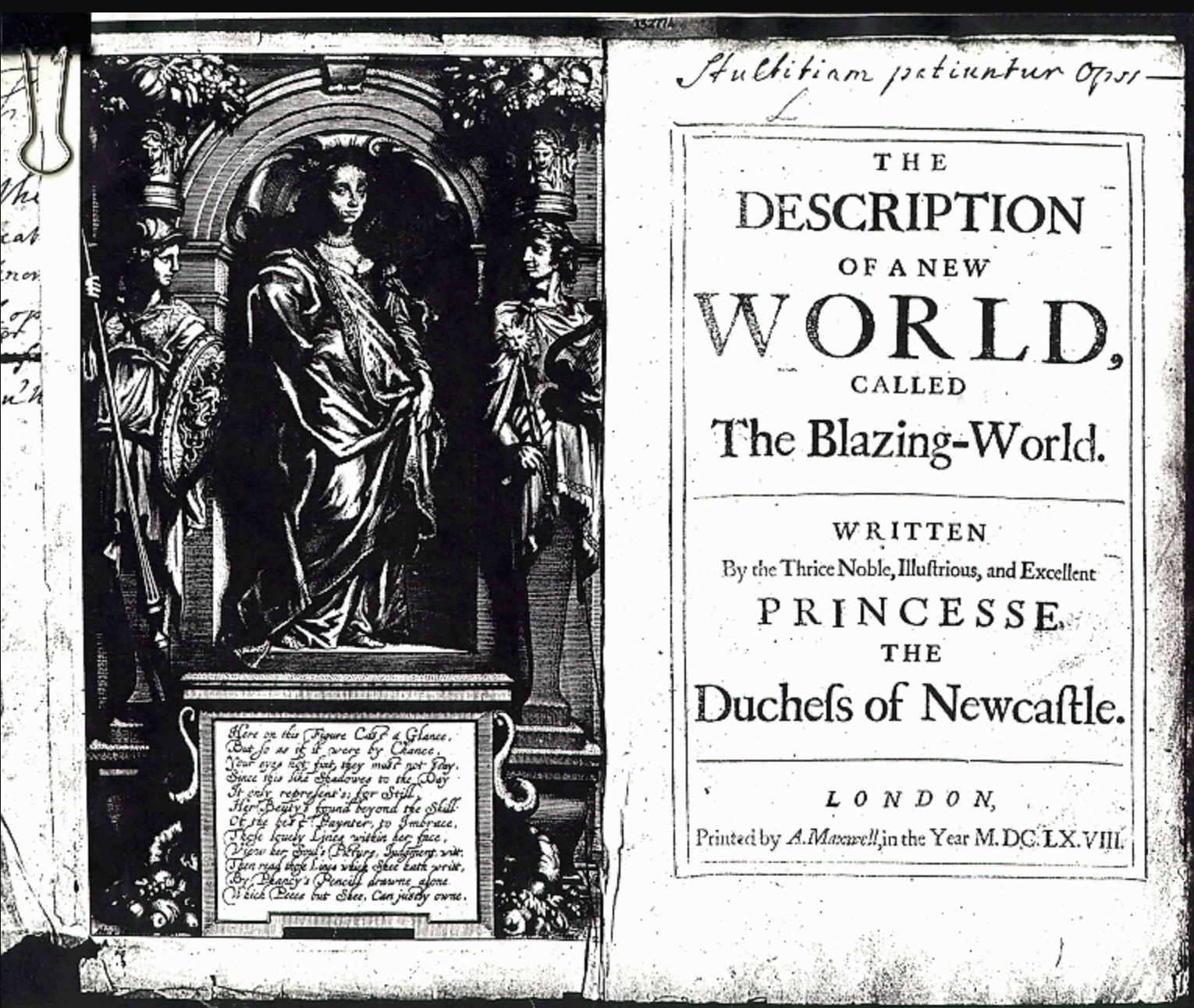
Read Margaret Cavendish’s The Blazing World: The First Sci-Fi Novel Written By a Woman (1666)

For a vari­ety of rea­sons, sci­ence fic­tion has long been regard­ed as a most­ly male-ori­ent­ed realm of lit­er­a­ture. This is evi­denced, in part, by the eager­ness to cel­e­brate par­tic­u­lar works of sci-fi writ­ten by women, like Ursu­la K. LeGuin’s Earth­sea saga, Octavia But­ler’s Para­ble nov­els, Joan­na Russ’ The Female Man, or Mar­garet Attwood’s The Hand­maid­’s Tale (uneasi­ly though it fits with­in the bound­aries of the genre). But those who pre­fer the ear­ly stuff can go all the way back to the mid-sev­en­teenth cen­tu­ry, where they’ll find Mar­garet Cavendish’s The Blaz­ing World, read­able and down­load­able in all its strange glo­ry free online.

The Blaz­ing World was first pub­lished in 1666 and is often con­sid­ered a fore­run­ner to both sci­ence fic­tion and the utopi­an nov­el gen­res,” writes book blog­ger Eric Karl Ander­son. “It’s a total­ly bonkers sto­ry of a woman who is stolen away to the North Pole only to find her­self in a strange bejew­eled king­dom of which she becomes the supreme Empress. Here she con­sults with many dif­fer­ent animal/insect peo­ple about philo­soph­i­cal, reli­gious and sci­en­tif­ic ideas. The sec­ond half of the book pulls off a meta-fic­tion­al trick where Cavendish (as the Duchess of New­cas­tle) enters the sto­ry her­self to become the Empress’ scribe and close com­pan­ion.”

In the video just below, Youtu­ber Great Books Prof frames this as not just a work of pro­to-sci­ence fic­tion, but also a pio­neer­ing use of the “mul­ti­verse” con­cept that has under­gird­ed any num­ber of twen­ty-first-cen­tu­ry block­busters.

The Blaz­ing World con­tin­ues to inspire: actor-direc­tor Carl­son Young put out a loose cin­e­mat­ic adap­ta­tion just a few years ago. Cavendish her­self described the book as a “her­maph­ro­dit­ic text,” pos­si­bly in ref­er­ence to its engage­ment with top­ics then addressed almost exclu­sive­ly by men. But it also occu­pied two cat­e­gories at once in that she orig­i­nal­ly pub­lished it as a fic­tion­al sec­tion of her book Obser­va­tions upon Exper­i­men­tal Phi­los­o­phy, one of six philo­soph­i­cal vol­umes she wrote. In fact, her work qual­i­fied her as not just philoso­pher and nov­el­ist, but also sci­en­tist, poet, play­wright, and even biog­ra­ph­er. That last she accom­plished by writ­ing The Life of the Thrice Noble, High and Puis­sant Prince William Cavendish, who hap­pened to be her hus­band. Let her life be a les­son to those young girls who simul­ta­ne­ous­ly dream of becom­ing a princess and a writer whose books are read for cen­turies: some­times, you can have it all.

Relat­ed con­tent:

100 Great Sci-Fi Sto­ries by Women Writ­ers (Read 20 for Free Online)

The First Work of Sci­ence Fic­tion: Read Lucian’s 2nd-Cen­tu­ry Space Trav­el­ogue A True Sto­ry

When Astronomer Johannes Kepler Wrote the First Work of Sci­ence Fic­tion, The Dream (1609)

The Ency­clo­pe­dia of Sci­ence Fic­tion: 17,500 Entries on All Things Sci-Fi Are Now Free Online

Every Pos­si­ble Kind of Sci­ence Fic­tion Sto­ry: An Exhaus­tive List Cre­at­ed by Pio­neer­ing 1920s Sci­Fi Writer Clare Winger Har­ris (1931)

Based in Seoul, Col­in Marshall writes and broad­casts on cities, lan­guage, and cul­ture. His projects include the Sub­stack newslet­ter Books on Cities, the book The State­less City: a Walk through 21st-Cen­tu­ry Los Ange­les and the video series The City in Cin­e­ma. Fol­low him on Twit­ter at @colinmarshall or on Face­book.

Before ChatGPT, There Was ELIZA: Watch the 1960s Chatbot in Action

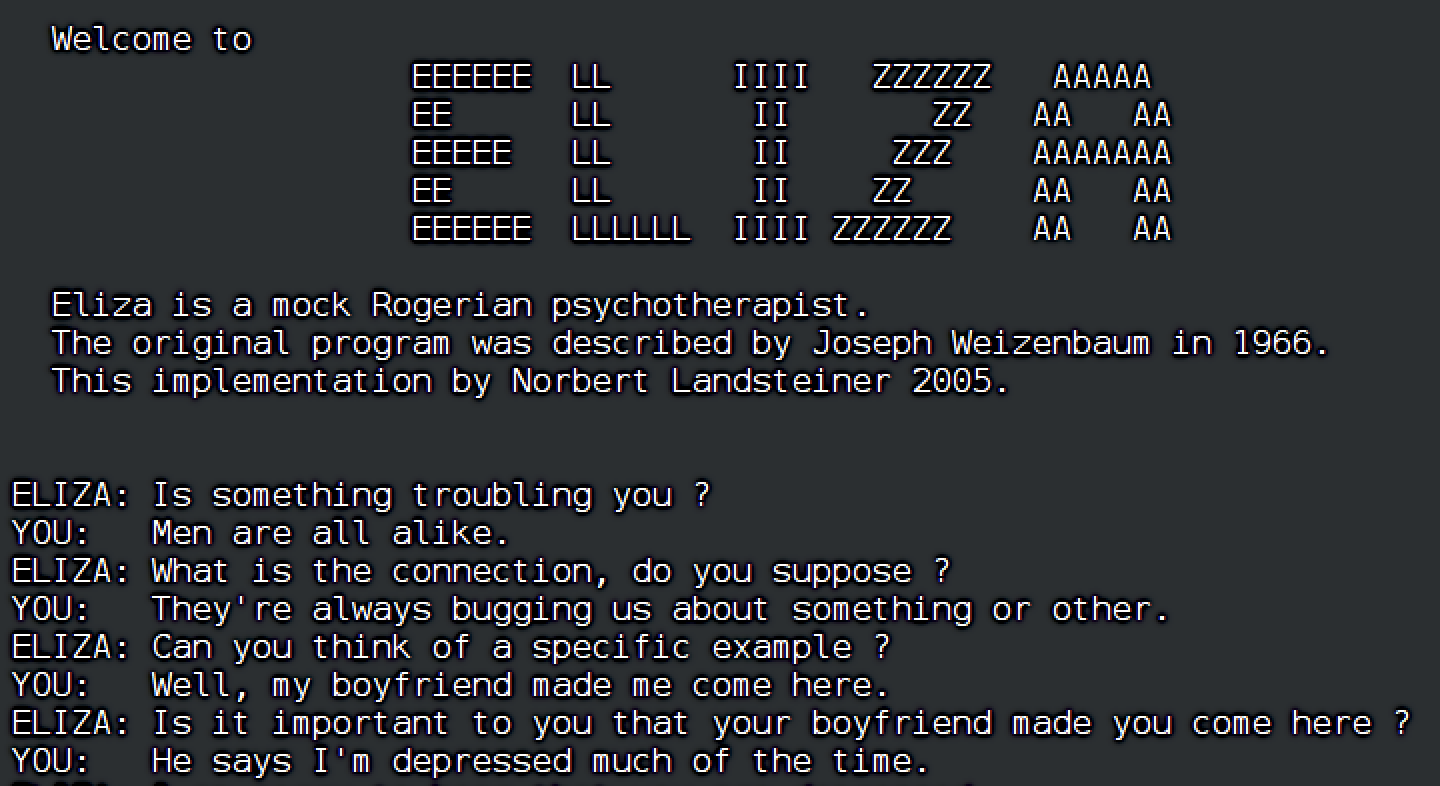
In 1966, the soci­ol­o­gist and crit­ic Philip Rieff pub­lished The Tri­umph of the Ther­a­peu­tic, which diag­nosed how thor­ough­ly the cul­ture of psy­chother­a­py had come to influ­ence ways of life and thought in the mod­ern West. That same year, in the jour­nal Com­mu­ni­ca­tions of the Asso­ci­a­tion for Com­put­ing Machin­ery, the com­put­er sci­en­tist Joseph Weizen­baum pub­lished “ELIZA — A Com­put­er Pro­gram For the Study of Nat­ur­al Lan­guage Com­mu­ni­ca­tion Between Man and Machine.” Could it be a coin­ci­dence that the pro­gram Weizen­baum explained in that paper — the ear­li­est “chat­bot,” as we would now call it — is best known for respond­ing to its user’s input in the non­judg­men­tal man­ner of a ther­a­pist?

ELIZA was still draw­ing inter­est in the nine­teen-eight­ies, as evi­denced by the tele­vi­sion clip above. “The com­put­er’s replies seem very under­stand­ing,” says its nar­ra­tor, “but this pro­gram is mere­ly trig­gered by cer­tain phras­es to come out with stock respons­es.” Yet even though its users knew full well that “ELIZA did­n’t under­stand a sin­gle word that was being typed into it,” that did­n’t stop some of their inter­ac­tions with it from becom­ing emo­tion­al­ly charged. Weizen­baum’s pro­gram thus pass­es a kind of “Tur­ing test,” which was first pro­posed by pio­neer­ing com­put­er sci­en­tist Alan Tur­ing to deter­mine whether a com­put­er can gen­er­ate out­put indis­tin­guish­able from com­mu­ni­ca­tion with a human being.

In fact, 60 years after Weizen­baum first began devel­op­ing it, ELIZA — which you can try online here — seems to be hold­ing its own in that are­na. “In a preprint research paper titled ‘Does GPT‑4 Pass the Tur­ing Test?,’ two researchers from UC San Diego pit­ted Ope­nAI’s GPT‑4 AI lan­guage mod­el against human par­tic­i­pants, GPT‑3.5, and ELIZA to see which could trick par­tic­i­pants into think­ing it was human with the great­est suc­cess,” reports Ars Tech­ni­ca’s Benj Edwards. This study found that “human par­tic­i­pants cor­rect­ly iden­ti­fied oth­er humans in only 63 per­cent of the inter­ac­tions,” and that ELIZA, with its tricks of reflect­ing users’ input back at them, “sur­passed the AI mod­el that pow­ers the free ver­sion of Chat­G­PT.”

This isn’t to imply that Chat­G­P­T’s users might as well go back to Weizen­baum’s sim­ple nov­el­ty pro­gram. Still, we’d sure­ly do well to revis­it his sub­se­quent think­ing on the sub­ject of arti­fi­cial intel­li­gence. Lat­er in his career, writes Ben Tarnoff in the Guardian, Weizen­baum pub­lished “arti­cles and books that con­demned the world­view of his col­leagues and warned of the dan­gers posed by their work. Arti­fi­cial intel­li­gence, he came to believe, was an ‘index of the insan­i­ty of our world.’ ” Even in 1967, he was argu­ing that “no com­put­er could ever ful­ly under­stand a human being. Then he went one step fur­ther: no human being could ever ful­ly under­stand anoth­er human being” — a propo­si­tion arguably sup­port­ed by near­ly a cen­tu­ry and a half of psy­chother­a­py.

Relat­ed con­tent:

A New Course Teach­es You How to Tap the Pow­ers of Chat­G­PT and Put It to Work for You

Thanks to Arti­fi­cial Intel­li­gence, You Can Now Chat with His­tor­i­cal Fig­ures: Shake­speare, Ein­stein, Austen, Socrates & More

Noam Chom­sky on Chat­G­PT: It’s “Basi­cal­ly High-Tech Pla­gia­rism” and “a Way of Avoid­ing Learn­ing”

What Hap­pens When Some­one Cro­chets Stuffed Ani­mals Using Instruc­tions from Chat­G­PT

Noam Chom­sky Explains Where Arti­fi­cial Intel­li­gence Went Wrong

Based in Seoul, Col­in Marshall writes and broad­casts on cities, lan­guage, and cul­ture. His projects include the Sub­stack newslet­ter Books on Cities, the book The State­less City: a Walk through 21st-Cen­tu­ry Los Ange­les and the video series The City in Cin­e­ma. Fol­low him on Twit­ter at @colinmarshall or on Face­book.

The Roman Author Pliny the Younger Gets Ghosted by a Friend, and Goes on a Rant: Hear It Read by Actor Rob Delaney

Pliny the Younger may be best remem­bered for writ­ing the only eye-wit­ness account of the destruc­tion of Pom­peii in 79 AD. It’s a mem­o­rable let­ter still found in mod­ern col­lec­tions of Pliny the Younger’s cor­re­spon­dence. There, you can also find a sim­ple let­ter authored by Pliny, one that reflects not on a shat­ter­ing his­tor­i­cal event, but rather some­thing we can all relate to: the anger the author felt upon get­ting ghost­ed by a friend. To set the scene, Pliny had invit­ed Sep­ti­cius Clarus to join him for some food, wine, and con­ver­sa­tion. But his friend nev­er showed up, and so Pliny fired off a snub let­ter, which actor and come­di­an Rob Delaney reads above at a Let­ters Live event. You can fol­low along with the text below:

Shame on you! You promised to come to din­ner, and you nev­er came!

I’ll take you to court, and you will pay to the last pen­ny for my loss­es, and quite a sum! Ready for each of us were a let­tuce, three snails, and two eggs, bar­ley water with hon­ey wine cooled with snow (you must add the cost of snow as well, in fact the snow in par­tic­u­lar, as it melts in the dish). There were olives, beet­root, gourds, onions, and count­less oth­er del­i­ca­cies no less ele­gant. You would have heard per­form­ers of com­e­dy, or a read­er, or a lyre-play­er, or even all three, such is my gen­eros­i­ty!

But you pre­ferred to dine at some nobody’s house, enjoy­ing oys­ters, sow’s tripe, sea urchins, and per­form­ing-girls from Cadiz. You’ll be pun­ished for this, I won’t say how. What boor­ish­ness was this! You begrudged per­haps your­self, and cer­tain­ly me – but yes, your­self as well. What jok­ing and laugh­ter and learn­ing we would have enjoyed!

You can dine in many hous­es on more elab­o­rate fare, but nowhere more genial­ly, inno­cent­ly, and unguard­ed­ly. Farewell!

In the end, Pliny for­gave his friend. For Pliny ded­i­cat­ed the first of his let­ter to Sep­ti­cius, stat­ing: “You have con­stant­ly urged me to col­lect and pub­lish the more high­ly fin­ished of the let­ters that I may have writ­ten. I have made such a col­lec­tion… I can only hope that you will not have cause to regret the advice you gave, and that I shall not repent hav­ing fol­lowed it.” You can read the col­lec­tion online here.

Relat­ed Con­tent

The Only Writ­ten Eye-Wit­ness Account of Pompeii’s Destruc­tion: Hear Pliny the Younger’s Let­ters on the Mount Vesu­vius Erup­tion

The Lit­tle-Known Bomb­ing of Pom­peii Dur­ing World War II

What the Romans Saw When They Reached New Parts of the World: Hear First-Hand Accounts by Appi­an, Pliny, Tac­i­tus & Oth­er Ancient His­to­ri­ans

How George Washington Became President of the United States: It Was Weirder Than You Think

After serv­ing two terms as the first Pres­i­dent of the Unit­ed States of Amer­i­ca, George Wash­ing­ton refused to con­tin­ue on to a third. We now see this action as begin­ning the tra­di­tion of peace­ful relin­quish­ment of pow­er that has con­tin­ued more or less ever since (inter­rupt­ed, as in recent years, by the occa­sion­al trou­bled tran­si­tion). At the time, not every­one expect­ed Wash­ing­ton to step down, his­to­ry hav­ing most­ly offered exam­ples of rulers who hung on until the bit­ter end. But the new repub­lic’s cre­ation of not just rules but cus­toms result­ed in a vari­ety of unusu­al polit­i­cal events; even Wash­ing­ton’s elec­tion was “weird­er than you think.”

So declares his­to­ry Youtu­ber Pre­mod­ernist in the video above, an expla­na­tion of the very first Unit­ed States pres­i­den­tial elec­tion in 1789. “There were no offi­cial can­di­dates. There was no cam­paign­ing for the office. There were no polit­i­cal par­ties, no nom­i­nat­ing con­ven­tions, no pri­ma­ry elec­tions. The entire elec­tion sea­son was very short, and the major issue of this elec­tion was the Con­sti­tu­tion itself.” It also took place after thir­teen pres­i­dent-free years, the U.S. hav­ing been not a sin­gle coun­try but “a col­lec­tion of thir­teen sep­a­rate colonies,” each tied more close­ly to Britain than to the oth­ers; there had­n’t even been a fed­er­al gov­ern­ment per se.

The U.S. Con­sti­tu­tion changed that. Draft­ed in 1787, it pro­posed the exec­u­tive, leg­isla­tive, and judi­cial branch­es of gov­ern­ment, whose names every Amer­i­can who’s tak­en a cit­i­zen­ship exam (and every immi­grant who’s tak­en the cit­i­zen test) remem­bers. Set­ting up those branch­es in real­i­ty would prove no easy task: how, to name just one prac­ti­cal ques­tion, would the exec­u­tive — the pres­i­dent — actu­al­ly be cho­sen? Con­gress, the leg­isla­tive branch, could the­o­ret­i­cal­ly do it, but that would vio­late the now prac­ti­cal­ly sacred prin­ci­ple of the sep­a­ra­tion of pow­ers. The vot­ers could also elect the pres­i­dent direct­ly, but the framers reject­ed that option as both imprac­ti­cal and unwise.

Enter “the famous elec­toral col­lege,” a body of spe­cial­ized vot­ers cho­sen by the indi­vid­ual states in any man­ner they please. Hav­ing reject­ed the Con­sti­tu­tion itself, North Car­oli­na and Rhode Island did­n’t par­tic­i­pate in the 1789 elec­tion. Each of the oth­er states chose their elec­tors in its own way (exem­pli­fy­ing the polit­i­cal lab­o­ra­to­ry of Amer­i­can fed­er­al­ism as orig­i­nal­ly con­ceived), though it did­n’t go smooth­ly in every case: the wide­spread divi­sion between fed­er­al­ists and anti-fed­er­al­ists was pro­nounced enough in New York to cre­ate a dead­lock that pre­vent­ed the state from choos­ing any elec­tors at all. The elec­tors that did make it cast two votes each, with the first-place can­di­date becom­ing Pres­i­dent and the sec­ond-place can­di­date becom­ing Vice Pres­i­dent.

That last proved to be a “bad sys­tem,” whose mechan­ics encour­aged a great deal of schem­ing, intrigue, and strate­gic vot­ing (even by the sub­se­quent­ly estab­lished stan­dards of Amer­i­can pol­i­tics). Only with the rat­i­fi­ca­tion of the twelfth amend­ment, in 1804, could elec­tors sep­a­rate­ly des­ig­nate their choice of Pres­i­dent and Vice Pres­i­dent. In 1789, of course, “Wash­ing­ton eas­i­ly got all 69 elec­toral votes,” and went on reluc­tant­ly to pre­vail again in the next pres­i­den­tial elec­tion, which more recent­ly became the sub­ject of its own Pre­mod­ernist video. Both of them mer­it a watch in this par­tic­u­lar moment, as the run-up to the U.S. con­test of 2024 gets into full swing. This elec­tion cycle cer­tain­ly won’t be as short as 1789, but it may well be as weird.

Relat­ed con­tent:

George Wash­ing­ton Writes to the First Jew­ish Con­gre­ga­tion of New­port, Rhode Island: “The Gov­ern­ment… Gives to Big­otry No Sanc­tion, to Per­se­cu­tion No Assis­tance” (1790)

Sal Khan & the Mup­pets’ Grover Explain the Elec­toral Col­lege

A Japan­ese Illus­trat­ed His­to­ry of Amer­i­ca (1861): Fea­tures George Wash­ing­ton Punch­ing Tigers, John Adams Slay­ing Snakes & Oth­er Fan­tas­tic Scenes

Elect­ing a US Pres­i­dent in Plain Eng­lish

George Washington’s 110 Rules for Civil­i­ty and Decent Behav­ior

Based in Seoul, Col­in Marshall writes and broad­casts on cities, lan­guage, and cul­ture. His projects include the Sub­stack newslet­ter Books on Cities, the book The State­less City: a Walk through 21st-Cen­tu­ry Los Ange­les and the video series The City in Cin­e­ma. Fol­low him on Twit­ter at @colinmarshall or on Face­book.

Why Perpetual Motion Machines Never Work, Despite Centuries of Experiments

Accord­ing to the laws of physics — at least in sim­pli­fied form — an object in motion will stay in motion, at least if no oth­er forces act on it. That’s all well and good in the realm of the­o­ry, but here in the com­plex real­i­ty of Earth, there always seems to be one force or anoth­er get­ting in the way. Not that this has ever com­plete­ly shut down mankind’s desire to build a per­pet­u­al-motion machine. Accord­ing to Google Arts & Cul­ture, that quest dates at least as far back as sev­enth-cen­tu­ry India, where “the math­e­mati­cian Brah­magup­ta, who want­ed to rep­re­sent the cycli­cal and eter­nal motion of the heav­ens, designed an over­bal­anced wheel whose rota­tion was pow­ered by the flow of mer­cury inside its hol­low spokes.”

More wide­ly known is the suc­ces­sor design by Brah­magup­ta’s twelfth-cen­tu­ry coun­try­man and col­league Bhāskara, who “altered the wheel design by giv­ing the hol­low spokes a curved shape, pro­duc­ing an asym­met­ri­cal course in con­stant imbal­ance.” Despite this ren­di­tion’s mem­o­rable ele­gance, it does not, like the ear­li­er over­bal­anced wheel, actu­al­ly keep on turn­ing for­ev­er. To blame are the very same laws of physics that have dogged the sub­se­quent 900 or so years of attempts to build per­pet­u­al-motion machines, which you can see briefly explained in the TED-Ed video above.

“Ideas for per­pet­u­al-motion machines all vio­late one or more fun­da­men­tal laws of ther­mo­dy­nam­ics, the branch of physics that describes the rela­tion­ship between dif­fer­ent forms of ener­gy,” says the nar­ra­tor. The first law holds that “ener­gy can’t be cre­at­ed or destroyed; you can’t get out more ener­gy than you put in.” That alone would put an end to hopes for a “free” ener­gy source of this kind. But even machines that just keep mov­ing by them­selves — much less use­ful, of course, but still sci­en­tif­i­cal­ly earth-shat­ter­ing — would even­tu­al­ly “have to cre­ate some extra ener­gy to nudge the sys­tem past its stop­ping point, break­ing the first law of ther­mo­dy­nam­ics.”

When­ev­er machines seem to over­come this prob­lem, “in real­i­ty, they invari­ably turn out to be draw­ing ener­gy from some exter­nal source.” (Nine­teenth-cen­tu­ry Amer­i­ca seems to have offered end­less oppor­tu­ni­ties for engi­neer­ing char­la­tanism of this kind, whose per­pe­tra­tors made a habit of skip­ping town when­ev­er their trick­ery was revealed, some obtain­ing patents and prof­its all the while). But even if the first law of ther­mo­dy­nam­ics did­n’t apply, there would remain the mat­ter of the sec­ond, which dic­tates that “ener­gy tends to spread out through process­es like fric­tion,” thus “reduc­ing the ener­gy avail­able to move the sys­tem itself, until the machine inevitably stopped.” Hence the aban­don­ment of inter­est in per­pet­u­al motion by such sci­en­tif­ic minds as Galileo and Leonar­do — who must also have under­stood that mankind would nev­er ful­ly relin­quish the dream.

Relat­ed con­tent:

Leonar­do da Vinci’s Ele­gant Design for a Per­pet­u­al Motion Machine

M. C. Escher’s Per­pet­u­al Motion Water­fall Brought to Life: Real or Sleight of Hand?

Leonar­do da Vinci’s Inven­tions Come to Life as Muse­um-Qual­i­ty, Work­able Mod­els: A Swing Bridge, Scythed Char­i­ot, Per­pet­u­al Motion Machine & More

How the Bril­liant Col­ors of Medieval Illu­mi­nat­ed Man­u­scripts Were Made with Alche­my

A Com­plete Dig­i­ti­za­tion of Leonar­do Da Vinci’s Codex Atlanti­cus, the Largest Exist­ing Col­lec­tion of His Draw­ings & Writ­ings

Based in Seoul, Col­in Marshall writes and broad­casts on cities, lan­guage, and cul­ture. His projects include the Sub­stack newslet­ter Books on Cities, the book The State­less City: a Walk through 21st-Cen­tu­ry Los Ange­les and the video series The City in Cin­e­ma. Fol­low him on Twit­ter at @colinmarshall or on Face­book.

Martin Luther King, Jr. Gives Life-Changing Advice to Teens: Watch His Speech, “What Is Your Life’s Blueprint?” (1967)

Six months before his assas­si­na­tion, Mar­tin Luther King Jr. spoke to stu­dents at Bar­ratt Junior High School in Philadel­phia, and asked What Is Your Life’s Blue­print?

Address­ing the stu­dents, he observed: “This is the most impor­tant and cru­cial peri­od of your lives. For what you do now and what you decide now at this age may well deter­mine which way your life shall go. When­ev­er a build­ing is con­struct­ed, you usu­al­ly have an archi­tect who draws a blue­print. And that blue­print serves as the pat­tern, as the guide, as the mod­el, for those who are to build the build­ing. And a build­ing is not well erect­ed with­out a good, sound, and sol­id blue­print.”

So what makes for a sound blue­print? The civ­il rights leader had some sug­ges­tions:

Num­ber one in your life’s blue­print should be: a deep belief in your own dig­ni­ty, your own worth and your own some­bod­i­ness. Don’t allow any­body to make you feel that you are nobody. Always feel that you count. Always feel that you have worth, and always feel that your life has ulti­mate sig­nif­i­cance.

Now that means you should not be ashamed of your col­or. You know, it’s very unfor­tu­nate that in so many instances, our soci­ety has placed a stig­ma on the Negro’s col­or. You know there are some Negros who are ashamed of them­selves? Don’t be ashamed of your col­or. Don’t be ashamed of your bio­log­i­cal fea­tures…

Sec­ond­ly, in your life’s blue­print you must have as the basic prin­ci­ple the deter­mi­na­tion to achieve excel­lence in your var­i­ous fields of endeav­or. You’re going to be decid­ing as the days and the years unfold, what you will do in life — what your life’s work will be.

And once you dis­cov­er what it will be, set out to do it, and to do it well.

You can read a tran­script of the speech here. As a post­script, it’s worth high­light­ing a remark­able com­ment left on YouTube, from the stu­dent who appar­ent­ly record­ed the speech on Octo­ber 26, 1967. It reads:

I can­not believe that I found this footage. I am the stu­dent cam­era­man that record­ed this speech. I remem­ber this like it was yes­ter­day. I have been telling my boys for years about this and now I can show them. I thought this was lost years ago and am so hap­py that it sur­vived the years. I was 12 or 13 years old when he can to Bar­rett and was mes­mer­ized by what he was say­ing. I can’t wait to share this with my fam­i­ly. Wow I am elat­ed that I found this.

Amaz­ing.

Relat­ed Con­tent 

How Mar­tin Luther King, Jr. Used Niet­zsche, Hegel & Kant to Over­turn Seg­re­ga­tion in Amer­i­ca

Mar­tin Luther King, Jr.‘s Hand­writ­ten Syl­labus & Final Exam for the Phi­los­o­phy Course He Taught at More­house Col­lege (1962)

How Mar­tin Luther King Jr. Got C’s in Pub­lic Speaking–Before Becom­ing a Straight‑A Stu­dent and a World Class Ora­tor

« Go BackMore in this category... »
Quantcast