The cassette tape is so ubiquitous, so much a part of my life since I can even remember music as a thing, that it was a shock to find out that the man who invented it, Lou Ottens, passed away at the age of 94. Of course, somebody did have to invent the cassette tape, but in all these years I never thought to look the person up. Such an invention first makes you think of the world before it: records (dearly beloved, still around), and reel-to-reel tape (not so dearly beloved). The former was a fixed object, an art object, immutable (until turntablists came along). The latter was a way to record ourselves, but so much more was involved in the act. People had to wind the spindle, to thread the tape through the capstan and heads, and record usually in mono. You can see an overview of a model from the 1950s here.
Ottens was a Dutch engineer working at Philips who became head of new product development in Hasselt, Belgium. His assignment was to shrink the reel-to-reel and, like the radio, make it more portable. And here is the most important decision: Ottens wanted the format to be licensed to other manufacturers for free, so everybody could partake. Considering the endless format battles that we fight every day, this decision was as monumental as it was humanist.
He designed his prototype out of wood and sized it to fit into a pocket for true portability. (This prototype, by the way, disappeared from history after he used it to prop up a jack when fixing a flat tire.) The actual compact cassette, promoted as a cheaper and smaller format for major label releases, immediately gained a second life as an artistic tool: a way for regular folk to record whatever they wanted. Keith Richards reportedly recorded the riff for “Satisfaction” on the portable cassette player near his bed. People recorded lectures, the television, the radio, their relatives, their friends, the random sound of life. People started to curate: their favorite music, their favorite people, their favorite sounds. People pretended to be DJs, pretended to be artists, pretended to be television hosts, pretended to be authors, pretended to be critics. And some through pretending became the things they wanted to be.
People made mixtapes for friends and for lovers. They looked at the remaining tape on the spindle and wondered if the song they had to end side two would fit. People realized that cassette tape could be a collage of sounds, cut up by the pause button.
Ottens may not have realized it, but he had created a completely democratic format. In the 1980s, the back pages of music magazines flourished with the catalogs of cassette-only album releases. If you had a Walkman and a friend with a halfway decent tape recorder, you could carry around your favorite music and listen to it whenever you wanted.
The record industry rebelled (for a while). They wanted you to know that “home taping is killing music” but did so with a skull and bones graphic that made it that much cooler. In the end it didn’t really matter. The music fans repurchased everything on CD anyway. (Apart from the people who taped CDs and even then after that *those* people downloaded the mp3s.)
And here’s the thing. Ottens wasn’t precious about any of it. He was part of the development of the Compact Disc. The cassette was just another stepping stone.
But despite the numerous articles that cassettes were a dead medium, they kept coming back. Mixtapes, the lifeblood of hip hop culture continued to thrive, even if by the end of the century the idea was more of a concept. And then in the middle of the 2010s cassettes came roaring back after the vinyl resurgence. For bands it was a cheap way to provide a physical product, what with vinyl still being very expensive to produce. Bandcamp, the place to go for cassette-only releases, offers artistic tapes for the same price as a digital download. So why not get both and start your library again?
Ottens never foresaw any of this happening, but it speaks to something very human: we want control of our music, and digital music, especially in the cloud, ain’t cutting it. We want to hold something in our hands and claim it as our own.
So pour one out for Lou Ottens, who started a revolution that hasn’t finished. Do *not* press pause.
Ted Mills is a freelance writer on the arts who currently hosts the Notes from the Shed podcast and is the producer of KCRW’s Curious Coast. You can also follow him on Twitter at @tedmills, and/or watch his films here.
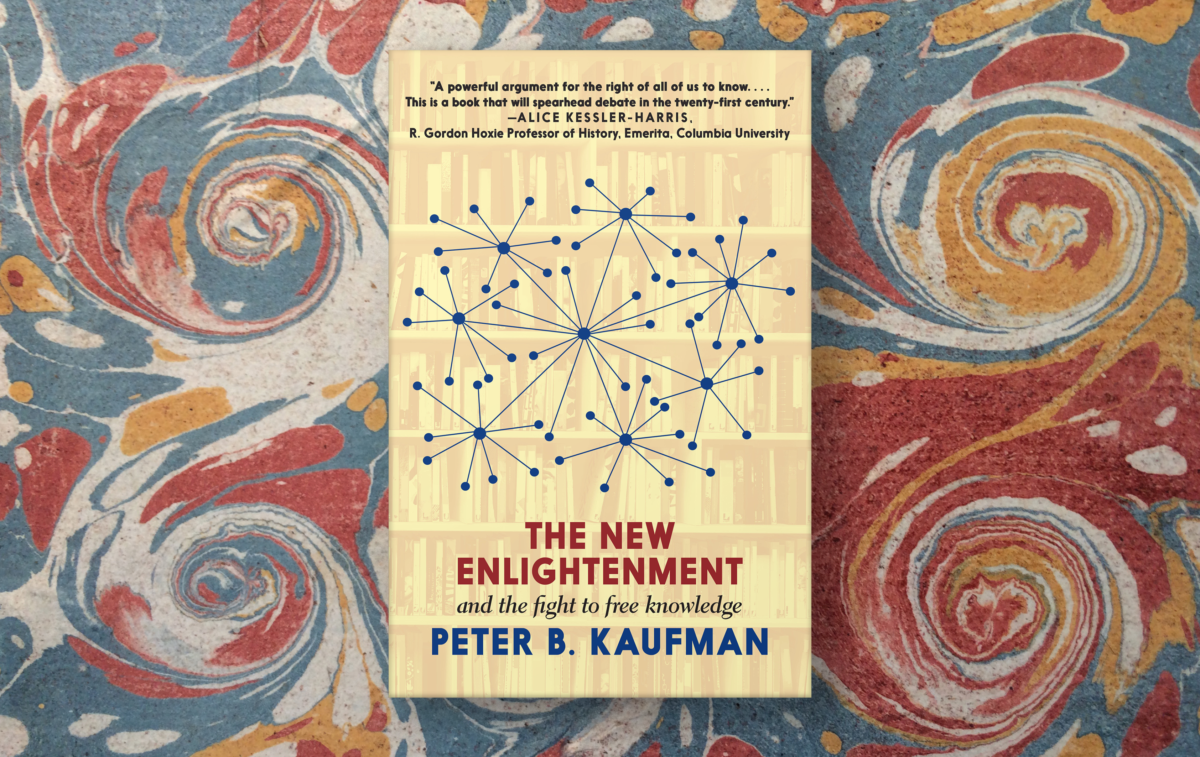
Editor’s Note: This month, MIT Open Learning’s Peter B. Kaufman has published The New Enlightenment and the Fight to Free Knowledge, a book that takes a historical look at the powerful forces that have purposely crippled our efforts to share knowledge widely and freely. His new work also maps out what we can do about it. In the coming days, Peter will be making his book available through Open Culture by publishing three short essays along with links to corresponding sections of his book. Today, you can read his second essay “On Wikipedia, the Encyclopédie, and the Verifiability of Information” (below), plus download the second chapter of his book here. Read his first essay, “The Monsterverse” here, and purchase the entire book online.
When the ideas that matter most to us – liberals, democrats, progressives, republicans, all in the original sense of the words – were first put forward in society in order to change society, they were advanced foremost in print. The new rules, new definitions, and new codicils of human and civil rights that undergird many of the freedoms we value today had as their heart text and its main delivery mechanism, the printing press.
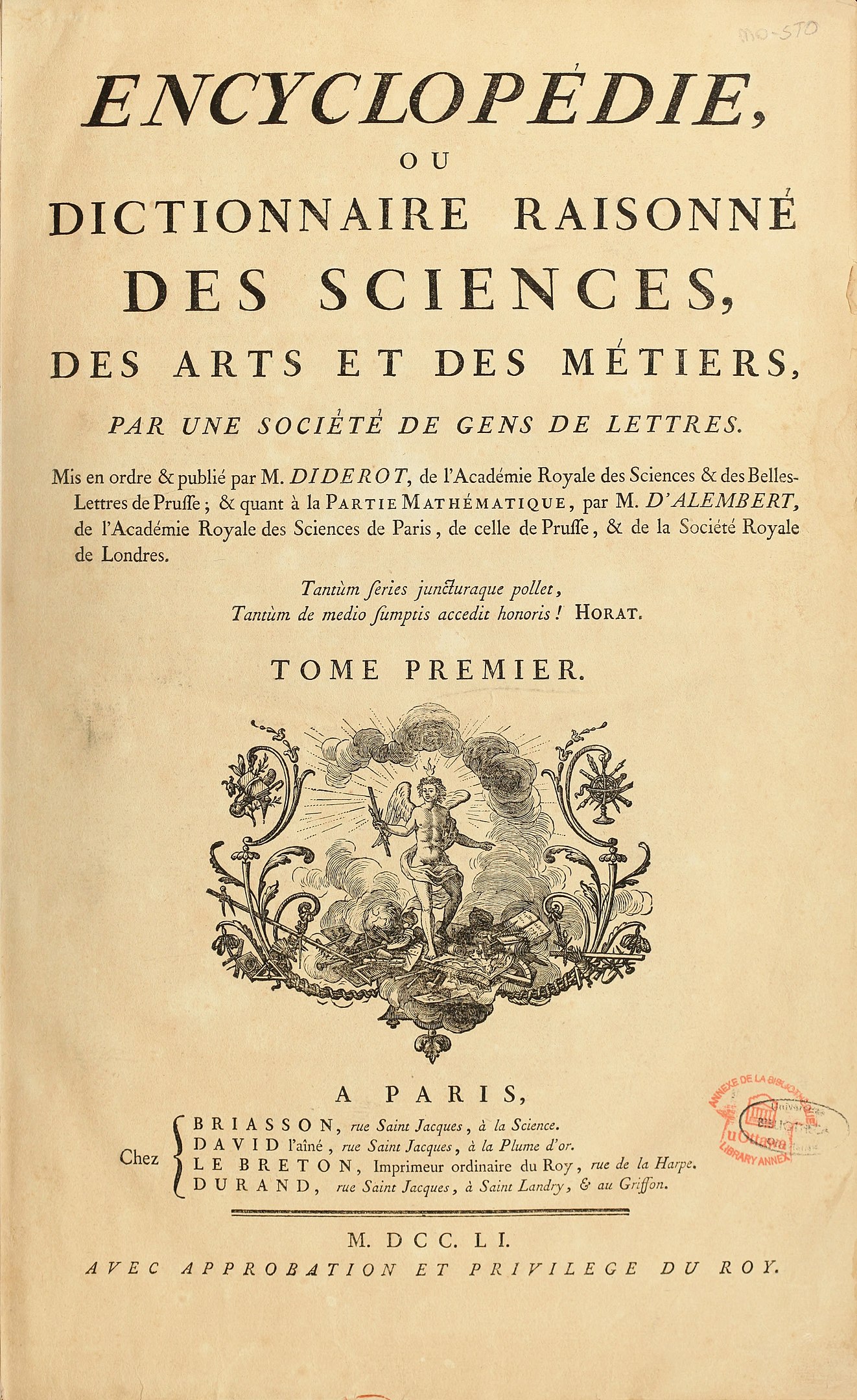
In that sense the first Enlightenment was based upon the foundation of the printed word. And of the 18th century’s contributions to knowledge and society – Newton’s physics, Montesquieu’s laws, Linnaeus’s taxonomies, Rousseau’s political philosophy, the Declaration of Independence, the Declaration of the Rights of Man – there was perhaps no greater printed offering than the 22-million-word Encyclopédie that the French Enlightenment philosophers starting writing, compiling, and offering to the public in 1750.
The Encyclopédie was monumental. Not just from a content-assembly perspective – an effort to gather all the world’s knowledge and to print and publish it – but also from a sociopolitical one, given the powerful forces suppressing knowledge that such an effort would provoke. The Encyclopédie found the state and the church banning at one time or another almost every one of its 72,000 articles, 18,000 pages, and 28 volumes and invoking a hundred ways to forbid its distribution.
The encyclopedia’s entire approach to collecting and presenting knowledge was radical. The articles presented truths – some heretical, some blasphemous – that astonished contemporary readers. And its innovative approach to the verification its own content, to proving what could be proved, which was really its nuclear core, rocked the Western world.
The Encyclopédie smote 18th-century orthodoxy with ink-and-paper sledgehammers. The article on “RAISON,” or “REASON,” for example, told every reader who for centuries had been steeped in church doctrine and the divine rights of royals that:
No proposition can be accepted as divine revelation if it contradicts what is known to us, either by immediate intuition, as in the case of self-evident propositions, or by obvious deductions of reason, as in demonstrations. It would be ridiculous to give preference to such revelations, because the evidence that causes us to adopt them cannot surpass the certainty of our intuitive or demonstrative knowledge…
Clerics and kings, needless to say, were not fans. Articles on religion, philosophy, and politics and society challenged the government and the church even as the censors watched. Direct swipes at the monarchy and the church appeared even where you might not expect – in articles on CONSCIENCE, LIBERTÉ DE; CROISADES; FANATISME; TOLÉRANCE; etc. The entry for FORTUNE spotlighted the gross inequalities of wealth already evident in 18th-century Europe. And a zinging condemnation of slavery in the article on the SLAVE TRADE made few friends among any who had a hand anywhere in the business.
Slave trade is the purchase of Negroes made by Europeans on the coasts of Africa, who then employ these unfortunate men as slaves in their colonies. This purchase of Negroes to reduce them into slavery […] violates all religion, morals, natural law, and human rights.
The Encyclopédistes announced from day one that this new work would be, as we would say today, fact-based. There would be an underlying and overarching commitment on the part of all contributors and the work as a whole to the verification of all of its source materials. Verification is potentially “a long and painful process,” Diderot wrote in his introduction to the whole enterprise – the famous “Preliminary Discourse” that these philosophers used to sell in the whole project:
We have tried as much as possible to avoid this inconvenience by citing directly, in the body of the articles, the authors on whose evidence we have relied and by quoting their own text when it is necessary.
We have everywhere compared opinions, weighed reasons, and proposed means of doubting or of escaping from doubt; at times we have even settled contested matters.… Facts are cited, experiments compared, and methods elaborated … in order to excite genius to open unknown routes, and to advance onward to new discoveries, using the place where great men have ended their careers as the first step.
What this meant in practice was revolutionary. There would be no accepted truths but for those that could be proven and cited. Fact-based versus faith- and belief-based: the start and spark of the Enlightenment. One of Diderot’s biographers explains that approximately 23,000 articles had at least one cross-reference to another article in one of the encyclopedia’s 28 volumes. “The total number of links – some articles had five or six – reached almost 62,000.” And all while retaining a sly sense of humor. The article on CANNIBALS ended with “the mischievous cross-reference,” as another historian would later describe it: “See Eucharist, Communion, Altar, etc.”
That commitment to reference citation continues in the Enlightenment’s most important successor project – Wikipedia, founded by Jimmy Wales and colleagues 20 years ago this year. It’s the foundation of what today’s Wikipedia terms verifiability, and in many key ways it’s the foundation for truth in knowledge and society today:
“Verifiability” … mean[s] that material added to Wikipedia must have been published previously by a reliable source. Editors may not add their own views to articles simply because they believe them to be correct, and may not remove sources’ views from articles simply because they disagree with them.
[V]erifiability is a necessary condition (a minimum requirement) for the inclusion of material, though it is not a sufficient condition (it may not be enough).
In 1999, free-software activist Richard M. Stallman called for this universal online encyclopedia covering all areas of knowledge, along with a complete library of instructional courses – and, equally important, a movement to develop it, “much as the Free Software Movement gave us the free operating system GNU/Linux.” That call (reproduced in full as the appendix in my book) is credited by Wikipedia as the origins of the work that is now the largest knowledge resource in history.
The free encyclopedia will provide an alternative to the restricted ones that media corporations will write.
Stallman published a list of what that the encyclopedia would need to do, what sort of freedoms it would need to give to the public, and how it could get started.
An encyclopedia located everywhere.
An encyclopedia open to anyone—but, most promisingly, to teachers and students.
An encyclopedia built of small steps.
An encyclopedia built on the long view: “If it takes twenty years to complete the free encyclopedia, that will be but an instant in the history of literature and civilization.”
An encyclopedia containing one or more articles for any topic you would expect to find in another encyclopedia – “for example, bird watchers might eventually contribute an article on each species of bird, along with pictures and recordings of its calls” – and “courses for all academic subjects.”
1999, and it sounds familiar. Wikipedia, of course, is one of the world’s most popular websites (the world’s most popular noncommercial one) now and an irreplaceable source of verifiable information – open to any and all. Its processes are transparent, and thanks to hackers affiliated with the project, you now can watch and listen to its edits live online:
Communities that work with Wikipedia are likely to benefit from this commitment to citation, and new collaborations that take effect around it are likely to benefit society. The Internet Archive is working with Wikipedia now, digitizing books so that links to sources in Wikipedia link all the way through to the books themselves – and render images and text on the cited pages. The reference link to a biography by Taylor Branch at the bottom of a Wikipedia article on Martin Luther King, Jr., for example, now hotlinks to the readable book online at Archive.org. That work is essential. “Only the use of footnotes and the research techniques associated with them” – as Princeton historian Anthony Grafton writes – “makes it possible to resist the efforts of modern governments, tyrannical and democratic alike, to conceal the compromises they have made, the deaths they have caused, the tortures they or their allies have inflicted.… Only the use of footnotes enables historians to make their texts not monologues but conversations, in which modern scholars, their predecessors, and their subjects all take part.”
Can we take verifiability further now, especially as our epistemic crisis deepens? Can we improve citation for the medium that’s beginning to overtake us all, which is video? Can we make resources on the web – also a new thing – verifiable? What is a citation like in a … podcast?
The great historian of the Encyclopédie, Robert Darnton, tells us in his new book, “When the printed word appeared in France in 1470, the state did not know what to make of it.” So, 700 years from now, what will tomorrow’s historians say about us? Further thoughts about how we can start more consciously collaborating with one another and producing – but immediately – for our burgeoning knowledge networks: next week.
We live in an age of less-than-total agreement as to the purpose of higher education. Should it immerse students in the best that has been thought and said? Provide an environment in which to come of age? Produce “leaders”? Or should it, as increasingly many argue, first and foremost secure professional futures? In the practice of recent decades, higher education has done a bit of each, to the satisfaction of some and the dissatisfaction of others. It has, in other words, become an industry subject to “disruption” by other players offering specialized solutions of their own. Take for example the new Career Certificates offered by Google and the online education platform Coursera.
“Designed to prepare learners for an entry-level role in under six months,” as Coursera CEO Jeff Maggioncalda explains it, these newly-unveiled Career Certificates “don’t have any prerequisites,” which means that most anyone interested in earning them can do so right now. This goes for “new grads landing their first job, front-line workers seeking stable employment, mid-career professionals making a pivot, or parents planning their return to the workforce,” and presumably myriad other walks of life besides.
Available in Data Analytics, Project Management, and User Experience (UX) Design, “each certificate is completely online, self-paced, and costs $39 per month” — significantly less than most existing forms of higher education, even of the most professionally or technologically oriented varieties.
If you’ve dipped into our list of online courses, you’ve probably encountered Coursera, a leading platform for massive online open courses (or MOOCs) used by some of the world’s best-known traditional universities. Its new provision of Google’s Career Certificates should go some way to making more familiar — at least to those us who’ve already learned online — a reimagining of professional education. This program’s “disruptive” potential, due not least to Google’s own consideration of these certificates as equivalent to a four-year degree, has already been well noted. “But while the new programs offer a fast track to new skills and possibly even a new job in a fraction of the time of a degree program,” writes Inc.‘s Justin Bariso, “students shouldn’t expect the courses to be a walk in the park.” And given that they’re unlikely to get easier, anyone interested in earning a Career Certificate would do well to look into it today.
Below, you can find a list of the new Career Certificates.
User Experience (UX) Design Professional Certificate – UX design jobs are projected to steadily grow over the coming years, with median salaries for an entry-level role around $82,000. This seven-course certificate explores UX principles, UX terms, and industry-standard tools, including Figma and Adobe XD. By the time they complete the program, learners will have three portfolio projects to use in their job applications.
Data Analytics Professional Certificate – In the U.S., there are nearly 15,000 open entry-level data analytics roles, with an annual median entry-level salary of more than $63,000. This seven-course certificate explores analytical skills, concepts, and tools used in many introductory data analytics roles – including SQL, Tableau, RStudio, and Kaggle.
Project Management Professional Certificate – Employers will need to fill nearly 2.2 million new project-oriented roles each year through 2027, according to the Project Management Institute. This six-course certificate prepares learners to launch a project management career. It covers industry-standard tools and methods, including the agile project management system, and key soft skills, such as stakeholder management, problem-solving, and influencing.
IT Support Professional Certificate — Prepare for an entry-level job as an IT support specialist. In this program, you’ll learn the fundamentals of operating systems and networking, and how to troubleshoot problems using code to ensure computers run correctly. This is for you if you enjoy solving problems, learning new tools, and helping others.
IT Automation Professional Certificate — This is an advanced program for learners who have completed the Google IT Support Professional Certificate. This is for you if you want to build on your IT skills with Python and automation.
Note: Open Culture has a partnership with Coursera. If readers enroll in certain Coursera courses and programs, it helps support Open Culture.
Based in Seoul, Colin Marshall writes and broadcasts on cities, language, and culture. His projects include the Substack newsletterBooks on Cities, the book The Stateless City: a Walk through 21st-Century Los Angeles and the video series The City in Cinema. Follow him on Twitter at @colinmarshall or on Facebook.
We know you’re Zoomed out, but might you make an exception for the pre-recorded drawing and writing session above with legendary cartoonist and illustrator Lynda Barry?
Under the auspices of Graphic Medicine’s participatory online series, Drawing Together, the notoriously playful Barry led participants through a series of exercises from her book, Making Comics, and seemed genuinely pleased to be back in teaching mode. (All of her in-person classes at the University of Wisconsin have been cancelled until further notice due to the Covid-19 pandemic, as has her usual summer stint at the Omega Institute.)
Barry endeavored to loosen her students up right away, brandishing toys and dancing to an amazing playlist in a friend’s borrowed attic, confiding that the wifi situation here was far superior to that in her old farmhouse.
Teacher divided the large group in half by birthdays, as a way to organize viewing each other’s work after each timed exercise.
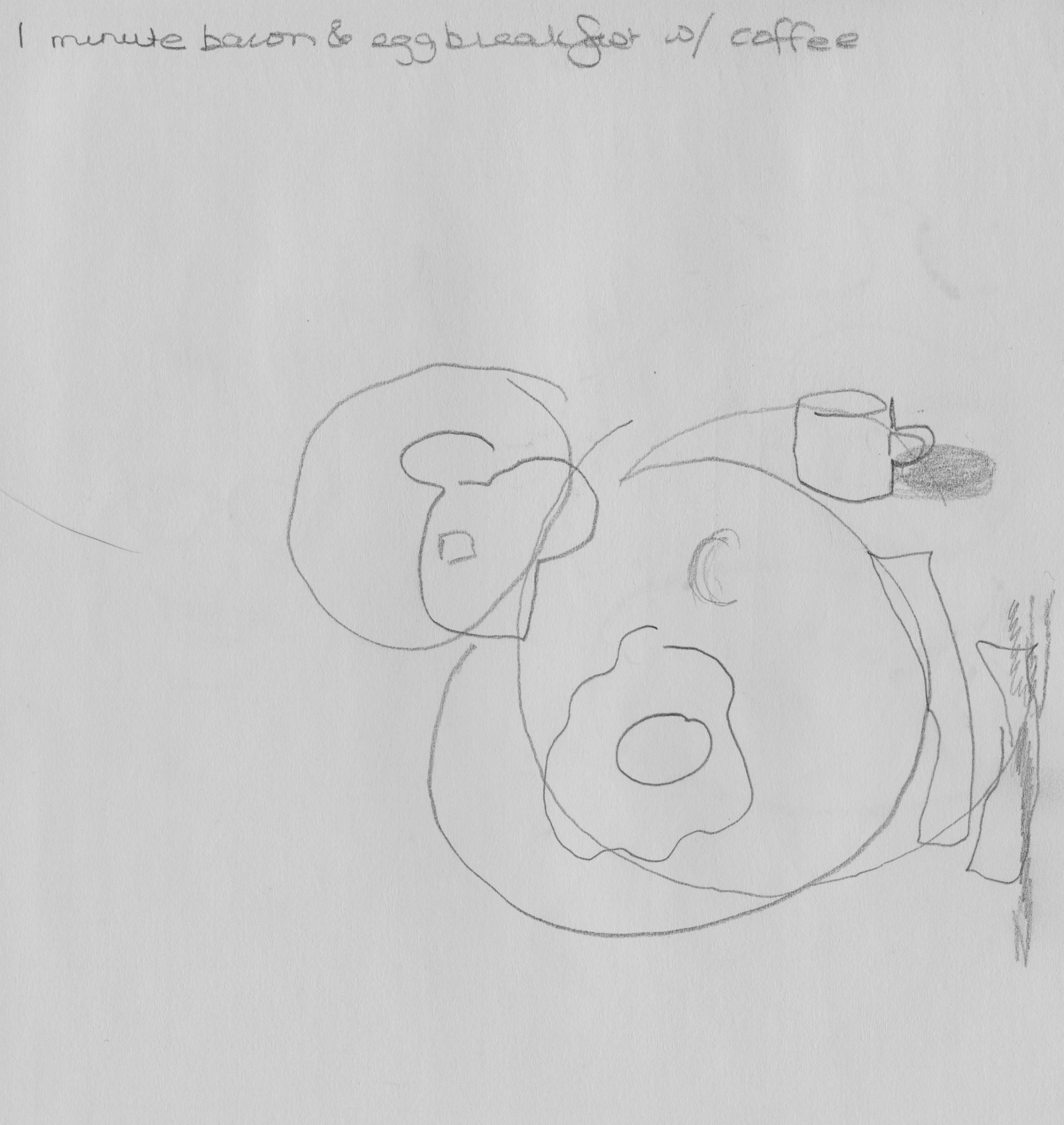
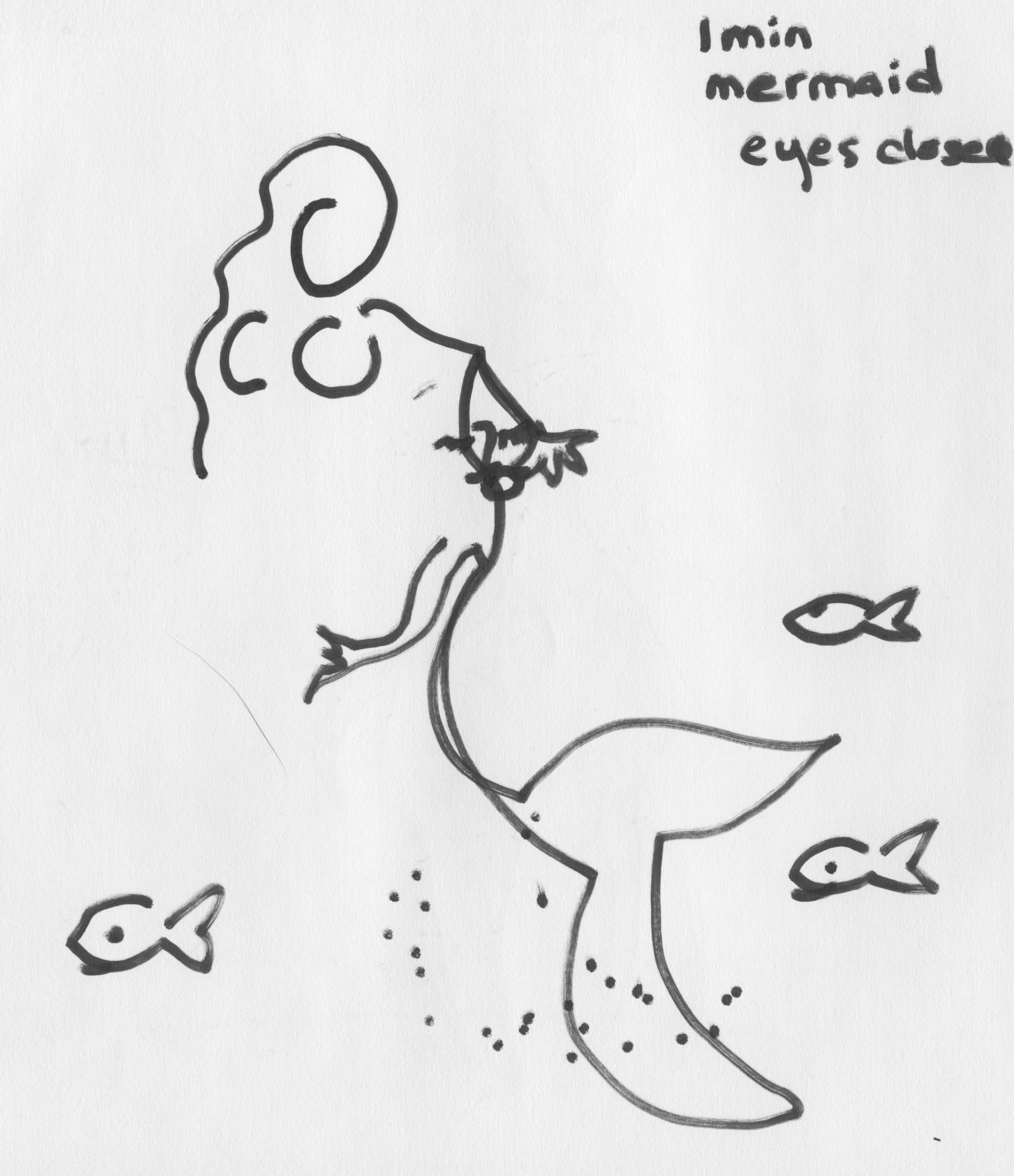
This couldn’t quite replicate the experience of the live classroom, where students have the opportunity to handle each other’s work, and more time to take it in, but still fun to see the incredible diversity—and in the case of closed-eye exercises—thrilling similarities on display.
Barry’s delight extended beyond the confines of the page, imitating the way some students beam like swaying sunflowers throughout the 60-second closed eye sessions, while others knit their brows, lower their chins and power through.
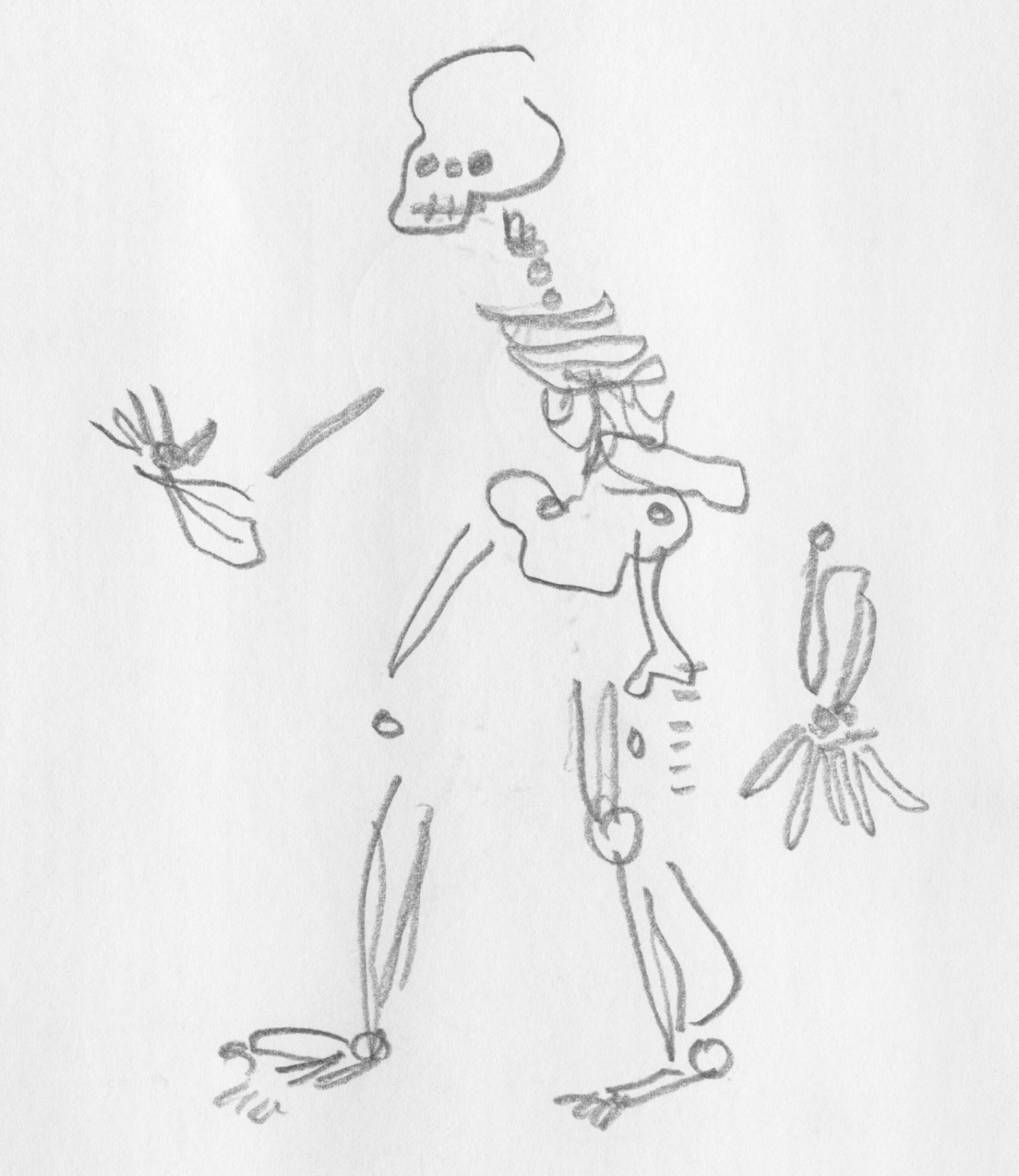
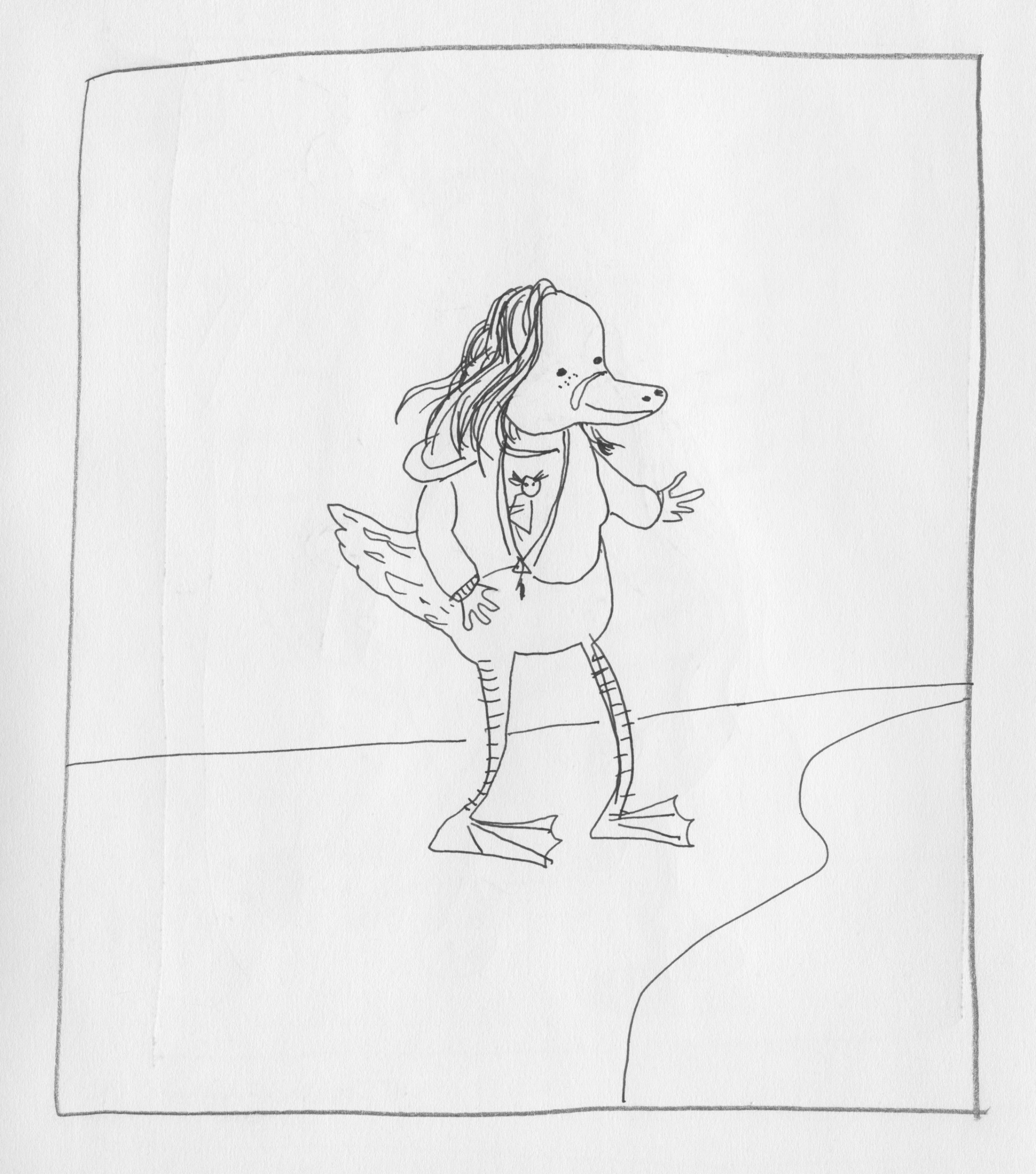
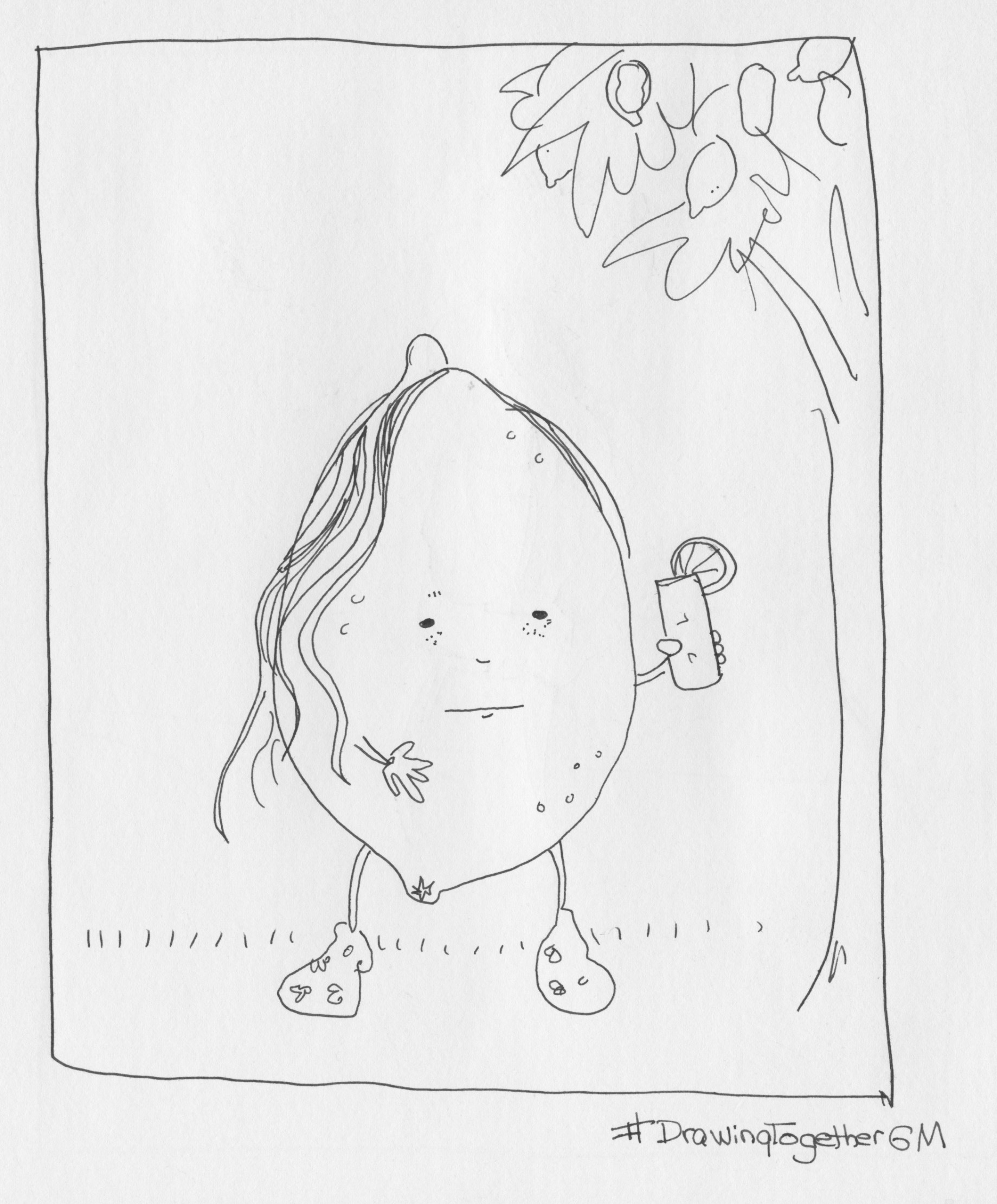
A series of self-portraits followed, with prompts designed to tap into the sort of imaginative powers that frequently seep away in adolescence—draw yourself as an animal, an astronaut, a member of a marching band, any fruit that’s not a banana…
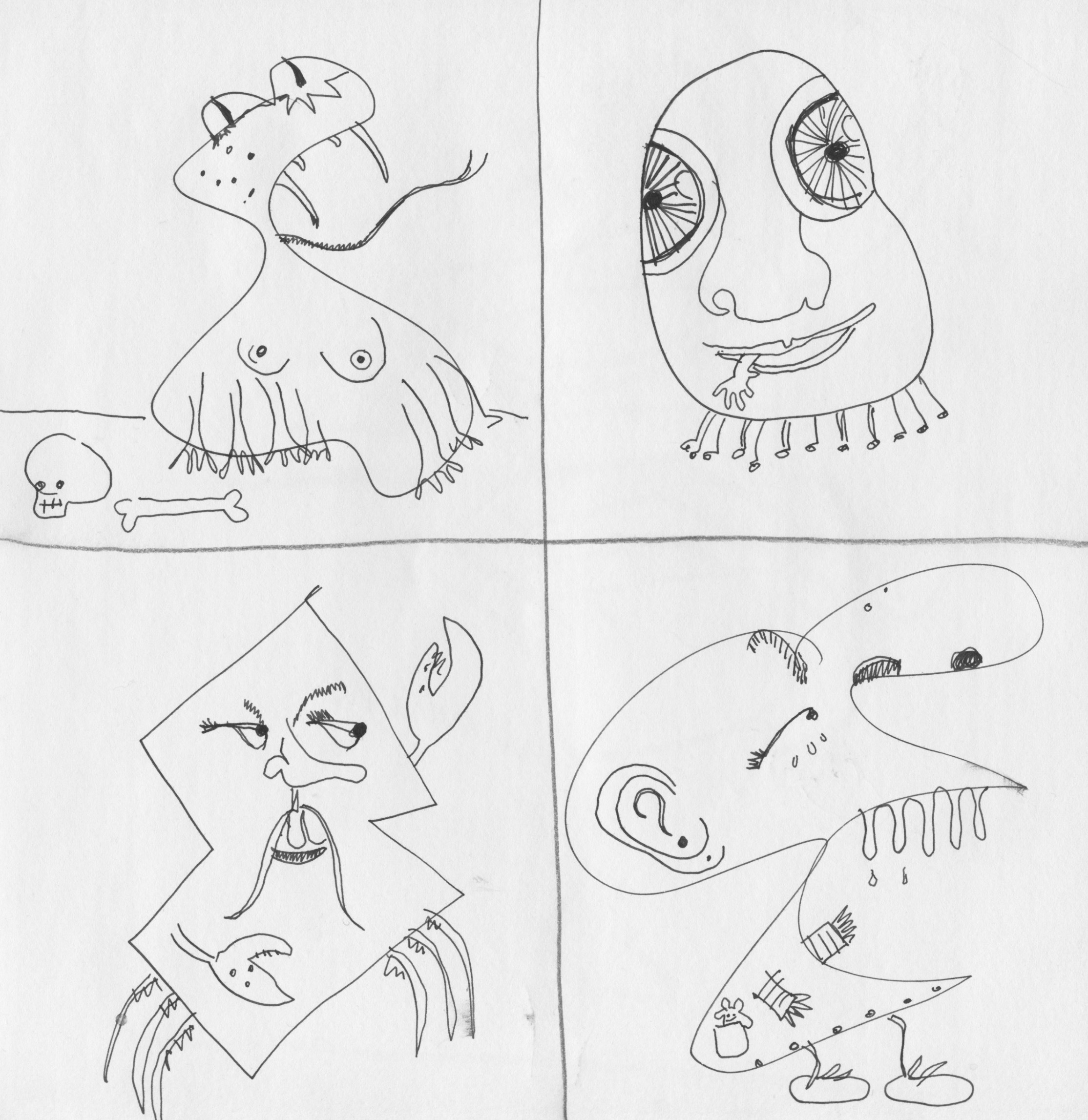
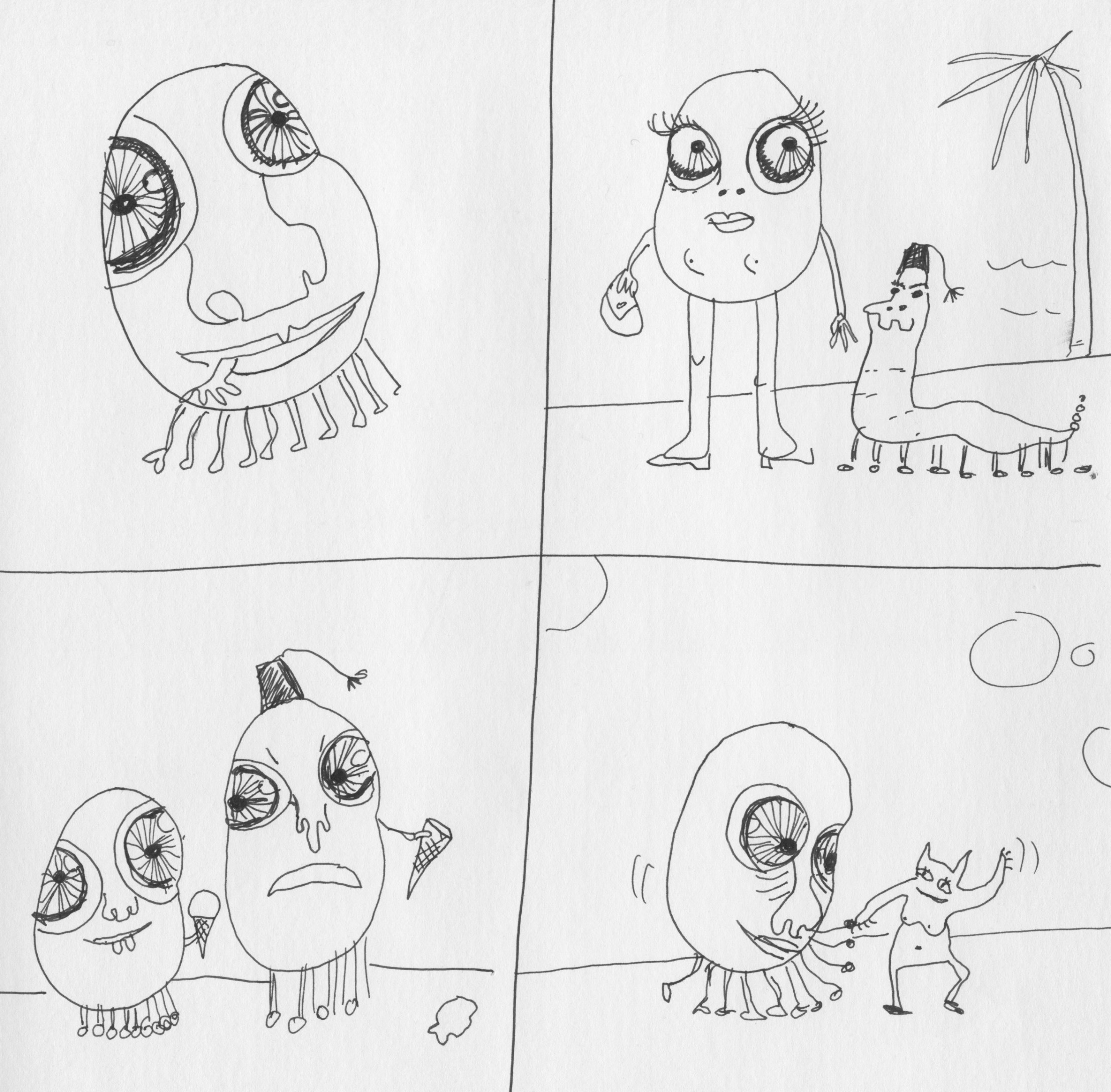
Longer exercises involved turning random squiggles into monsters, with an extra minute granted after the timer went off to add whatever missing things the artist felt each drawing needed, then choosing one of those monsters to star in a family album of sorts.
Barry, who has, over the course of her career, filled a number of panels with hilariously out-of-touch teachers making life a hell for child characters, is audibly appreciative of her students’ efforts, frequently congratulating them for bringing something into the world that didn’t exist a few minutes prior:
This is the thing about comics! They come intact, they come all together and the most important thing you need to do is just make time to draw them, the uninterrupted time, even if it’s just 2 minutes.
Truth!
The final exercise of the day drew on some of the writing techniques Barry featured in Syllabus, with participants, quickly jotting down memories after a prompt, then choosing one to explore more deeply, with special attention devoted to sensory recall.
To play along from home after the fact, you’ll need a couple of hours, ten or so sheets of paper, a pencil or pen (Barry favors black felt tips), and your “original digital devices” (hint: they’re attached to the ends of your arms).
Ayun Halliday is an author, illustrator, theater maker and Chief Primatologist of the East Village Inky zine. She most recently appeared as a French Canadian bear who travels to New York City in search of food and meaning in Greg Kotis’ short film, L’Ourse. Follow her @AyunHalliday.
The 2010 documentary Exit Through the Gift Shop seemed to critics both too contrived to be reality and too bizarre to be a hoax: Frenchman-in‑L.A. Thierry Guetta obsessively films graffiti artists and begins pursuing Banksy, who takes over the project and makes a film about Guetta, who, at Banksy’s suggestion, takes up street art, becomes an overnight sensation and — to the somewhat horrified astonishment of Banksy — sells a million dollars worth of his work at his first show as “Mr. Brainwash.”
Worth, in the art world, is a relative term, as Roger Ebert pointed out. So what if Guetta was doing mediocre riffs on Warhol, among others? “Surely Warhol’s message was that Theirry Guetta has an absolute right to call his work art, and sell it for as much as he can.” If he can get away with it, more power to him, but surely there’s a higher authority that really determines what we think of as art? Some honest body of scholars with rigorous standards and generous tastes? Surely there’s something more than sales to determine the value of art?
Or maybe, the Vox video above suggests, it really is the eponymous gift shop, whose carefully curated tchotchkes and souvenirs include such collections as “an ear-shaped eraser,” writes Micaela Marini Higgs, “a $495 Versace t‑shirt… and of course, the classics: postcards, mugs, and magnets.” And that’s not to mention all those wonderful books…. Museum gift shops have convinced us that if it sells, it’s art. “Basically, stores are like the ultimate cheat sheet — the more you see a piece of art referenced, the more important it probably is.”
Some visitors even choose to enter through the gift shop, which may, after all, be no stranger than walking through an exhibition the wrong way. Professor of Anthropology Sharon Macdonald describes the retail area of a museum as a show’s final exhibit. Visitors may feel a lack if they can’t conspicuously consume what they have seen. The more they do so, the more they act as advertisements for the art on their tote bags. This is by design, of course.
Museum gift shops not only see themselves as revenue sources — some providing up to a quarter of an institution’s funds — but also as art educators. Store buyers collaborate with curators, who want to give potential visitors a sense of their exhibitions’ main ideas. There is no sinister plot at work, only the reinforcing, through commerce, of the museum’s pre-existing criteria for what qualifies as important art. But you might see a problem — it’s all a bit circular, isn’t it? — and thanks to the “mere-exposure effect,” the circle ripples outward through repeated viewings.
It’s a phenomenon not unlike hearing the same song over and over on the radio and growing to like it through sheer familiarity. Do we “appreciate” art by consuming its likenesses on keychains and mousepads? Maybe we’re also participating in a ritual of commercial consent to the value of certain works over others, mostly unaware of how overpriced gift shop swag meme-ifies art and amplifies cultural values we could think about more critically.
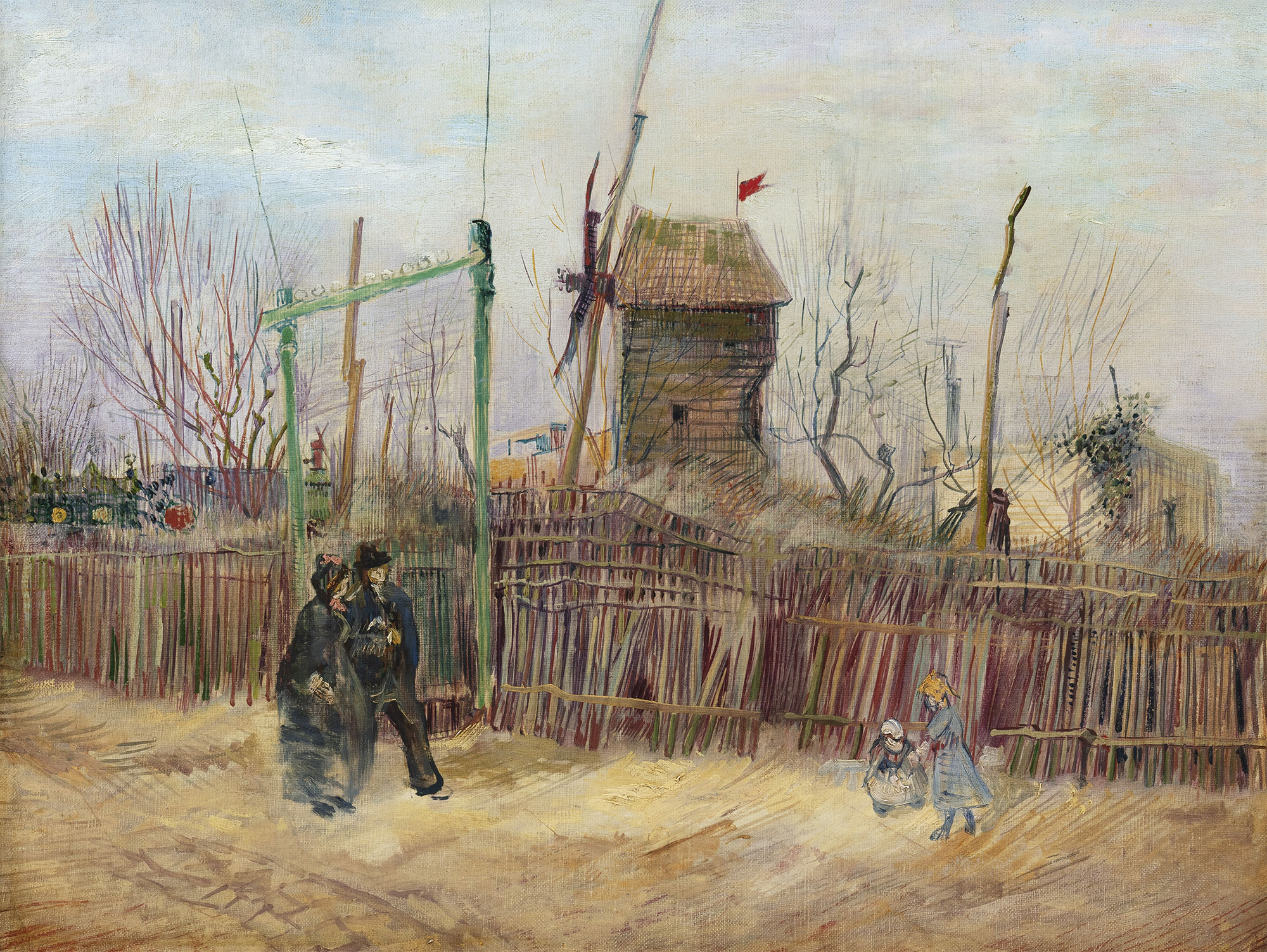
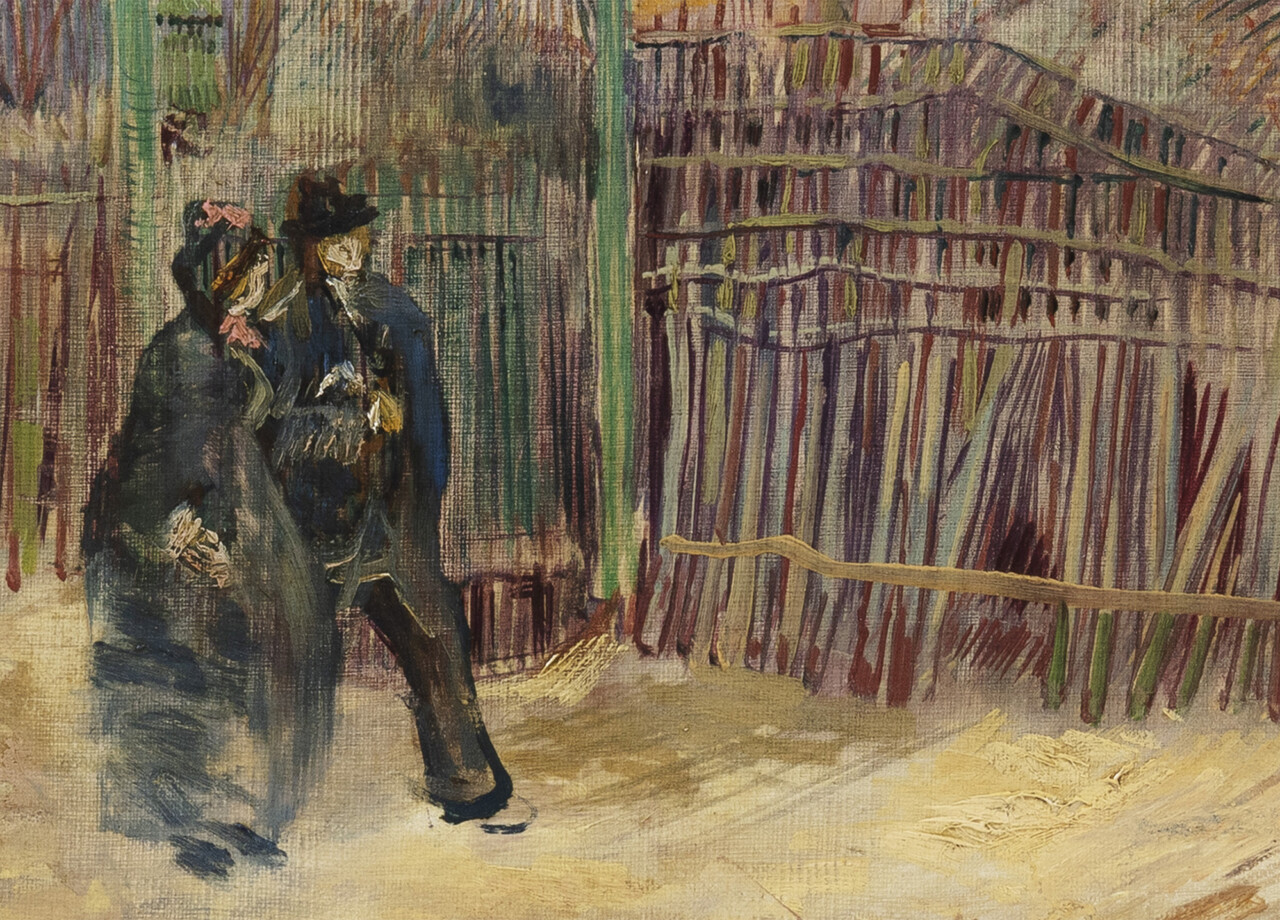
Not every Vincent van Gogh painting hangs at the Van Gogh Museum, or indeed in a museum at all. Though many private collectors loan their Van Goghs to art institutions that make them available for public viewing, some have never let such prized possessions out of their sight. Such, until recently, was the case with Scène de rue à Montmartre (Impasse des Deux Frères et le Moulin à Poivre), painted in 1887 but not shown to the world until this year — in preparation for its auction on March 25. During its century of possession by a single French family, the painting counted as one of the few privately-held entries in Van Gogh’s Montmartre series, which he painted in the eponymous neighborhood during the two years spent in Paris with his brother Theo.
“Unlike other artists of his era, like Toulouse-Lautrec, Van Gogh was attracted to the pastoral side of Montmartre and would transcribe this ambience rather than its balls and cabarets.” So says Aurélie Vandevoorde, head of the Impressionist and Modern Art department at Sotheby’s Paris to The Art Newspaper’s Anna Sanson.
The landscape “marks van Gogh’s turn to his distinctive Impressionist style,” writes Colossal’s Grace Ebert, and its “lively street is thought to be the same as that in Impasse des Deux Frères, which currently hangs at the Van Gogh Museum in Amsterdam, and similarly depicts a mill and flags promoting the cabaret and bar through the gates.”
As depicted by Van Gogh more than 130 years ago, Montmartre looks nearly rural — quite unlike it does now, as anyone who’s frequented the neighborhood in living memory can attest. But the status of the painting has changed even more than the status of the place: Scène de rue à Montmartre “is expected to sell for between $6 million and $9.7 million (€5 million to €8 million),” writes Smithsonian.com’s Isis Davis-Marks. Still, like most of Van Gogh’s Paris paintings, its value doesn’t touch that of the work he did in his subsequent Provençal sojourn (under the influence of Japanese ukiyo‑e). “One such painting, Laboureur dans un champ (1889),” adds Davis-Marks, “sold at Christie’s in 2017 for $81.3 million.” Well-heeled readers should thus keep an eye on Sotheby’s site: this could be your chance to keep a (relatively) affordable Van Gogh in your own family for the next century.
Based in Seoul, Colin Marshall writes and broadcasts on cities, language, and culture. His projects include the Substack newsletterBooks on Cities, the book The Stateless City: a Walk through 21st-Century Los Angeles and the video series The City in Cinema. Follow him on Twitter at @colinmarshall or on Facebook.
It should be clear by now that rock and roll poses no danger to the status quo. Fair enough: It’s going on 70 years since Elvis and Chuck Berry freaked out parents of screaming teens, and 50 years since Iggy and the Stooges ripped up stages in Detroit and the denizens of CBGB made rock subversive again. That’s a long time for an edge to dull, and dull it has. Perhaps nowhere is this more in evidence than rock films like CBGB, which “somehow manages to make punk rock boring,” and Netflix’s The Dirt, a movie about Mötley Crüe that gives us as much insight into the band as a couple spins of “Dr. Feelgood,” argues critic Brian Tallerico.
Yes, we can chalk up bad rock films to lazy filmmaking and studio greed, but there’s also a general sense that the culture now understands rock only as a matter of gestures and anecdotes: the making of the music reduced to stylistic quirks and kitschy artifice.
This is in contrast, Radiohead producer Nigel Godrich felt, to earlier media like the live performances on The Old Grey Whistle Test. (It’s certainly in contrast to John Peel’s raw sessions and films like Urgh! A Music War.) In making his From the Basement series, Godrich said, “I’m a sad fan trying to bring the magic back to music TV.”
Just as rock photography was reduced from “total access all the time” to well-kept marketing and PR (or so claimed the late, legendary Baron Wolman), rock performance has become overproduced spectacle in which it can be difficult to tell pre-recorded tracks from real playing. Add to this the loss of intimacy in live venues in the time of COVID, and we get even farther away from the music’s creation. Godrich and producer Dilly Gent conceived of From the Basement years before the pandemic, but it’s almost as if they anticipated a cultural crisis of our moment, the enforced separation from the making of live music.
Like the best Zoom concerts, From the Basement, produced between 2006 and 2009, eschews the trappings of host, audience, and studio lighting for an immediate experience of live creation. It’s a safe, sterile environment — missing are mosh pits, fans swarming the stage, and the sex, drugs, and violence of old. But to pretend that rock is dangerous in the 21st century is nothing more than pretense. There’s no need to turn the music into the edgy spectacle it isn’t anymore (and hasn’t been since “Creep” ruled the radio), Godrich and Gent’s concept suggests. In doing so, we miss what it is now.
Or as Thom Yorke — whose band got first dibs, playing “Videotape” and “Down is the New Up” in the debut episode — remarked, the show “was exciting because it came from the desire to cut out the crap that lies between the music and the viewer. To get plugged straight into the mains. No producer or director egos messing it up.” See From the Basement performances from Radiohead, Sonic Youth, the White Stripes, and PJ Harvey above and many more archived at the From the Basement YouTube channel here.
How do you kick off the longest running live sketch comedy show in television history? If you’re in the cast and crew for the first episode of Saturday Night Live, you have no idea you’re doing anything of the kind. Still the pressure’s on, and the newly hired “Not Ready for Primetime Players” had a lot of competition on their own show that night. When Saturday Night, the original title for SNL, made its debut on October 11, 1975, doing live comedy on television was an extremely risky proposition.
So, what do you do if you’re producers Dick Ebersol and Lorne Michaels? Put your riskiest foot forward — John Belushi, the “first rock & roll star of comedy” writes Rolling Stone, and “the ‘live’ in Saturday Night Live.” The man who would be comedy’s king, for a time, before he left the stage too soon. His first sketch, and the first on-air for SNL, reveals “a tendency toward the timelessly peculiar,” Time magazine writes, that made the show an instant cult hit.
Rather than skewering topical issues or impersonating celebrities, the first sketch, “The Wolverines” goes after the ripe targets of an immigrant (Belushi) learning English and his teacher, played by head writer Michael O’Donoghue, who insists on making Belushi repeat the titular word in nonsensical phrases like “I would like to feed your fingertips to the wolverines.”
Belushi’s accent has shades of Andy Kaufman’s “foreign man” from Caspiar, and he gets a brief moment to display his physical comedy skills when he keels over in imitation of his teacher having a heart attack. “The Wolverines” is short, nonsensical, and weirdly sweet. “No one would know what kind of show this was from seeing that,” Michaels remembered. We can still look back at that wildly uneven first season and wonder what kind of show SNL would be now if it had held on to the anarchic spirit of the early years. But that’s a lot to ask of a 45-year-old live comedy show.
The night’s guest was George Carlin, who did not appear in any sketches, but who did get three separate monologues. The show also featured two musical guests, Billy Preston and Janis Ian. Andy Kaufman made an appearance doing his famous Mighty Mouse bit, and the Muppets were there (not the fun Muppets, but a “dark and grumpy version” Jim Henson disowned after the first season.)
The first episode was also the first to feature the iconic intro, “Live from New York, it’s Saturday Night!” — delivered by Chevy Chase. Though it has become a celebratory announcement, at the time “it’s Saturday Night!” was a dark reminder of the live comedy variety show, Saturday Night Live with Howard Cosell, then failing through its first and only season before its 18-episode run came to an end the following year.
See more from that weird first night above, including Carlin’s Football and Baseball monologue and the forgotten SNL Muppets, just above.
Using an FPV drone, YouTuber “jaybyrdfilms” takes you on a somewhat dizzying tour of Bryant Lake Bowl, a vintage bowling alley in Minneapolis. As CNET puts it, “It’s an impressive bit of filmmaking as the … drone flies down bowling lanes, nuzzles close to the pins and then soars back toward the bowlers. Crisp, atmospheric audio — of people chatting, bowling balls rolling on wood, pins clanging, glasses clinking — adds to the immediacy.” Enjoy.
If you would like to support the mission of Open Culture, consider making a donation to our site. It’s hard to rely 100% on ads, and your contributions will help us continue providing the best free cultural and educational materials to learners everywhere. You can contribute through PayPal, Patreon, and Venmo (@openculture). Thanks!
Guitarist, singer, and songwriter Gary Clark, Jr. was “supposed to save the blues,” writes Geoff Edgers at The Washington Post. That’s a lot of weight to hang on the shoulders of a musician born in 1984. Clark grew up in Austin, Texas listening to Jimi Hendrix, Stevie Ray Vaughan, Green Day, and Nirvana. He’s been onscreen in John Sayles’ Honeydripper, played Eric Clapton’s Crossroads Guitar Festival, and played alongside his hero B.B. King.
His ringing tone recalls King, his searing leads sound like Hendrix, but he’s just as happy evoking Curtis Mayfield, Stax Records, and Quincy Jones. He’s described his ideal sound as “Snoop Dogg meets John Lee Hooker.” The blues, whatever Clark’s critics might think they are, have come a long way since white 60s revivalists traveled south and discovered country bluesmen like Clark’s fellow Texan Mance Lipscomb, a sharecropper all his life, even after his first album made him famous in 1961 and he recorded with a “who’s who of musicians.”
Lipscomb, “despite his fame,” writes Texas Monthly, “remained poor.” Clark has done quite well for himself. His success provided the occasion for his furious, reggae-tinged track “This Land,” which recounts a confrontation with a neighbor who refused to believe a Black man could own the 50-acre ranch Clark owns in rural Texas, outside Austin. Clark’s got blues, but it’s a different era, and the music is more multi-faceted than it was sixty, ninety, or 100 years ago, even if some other cultural attitudes haven’t changed at all.
He clearly wants to evade traditional labels and avoid repeating himself. “If it were up to everybody else,” Clark once sneered, “I would do Hendrix covers all the time.” (See his “Voodoo Child” live.) He may not want to wear the mantle of the “savior of the blues.” But he “can bang out a country blues on an 80-year-old resonator guitar,” Edgers writes, as comfortably as he drops samples into the demos he arranges at his home studio.
See Clark at the top in a spontaneous 12-bar acoustic jam in Berlin, and just above, he breaks out the resonator for “Nextdoor Neighbor Blues.” This song is not, in fact, about a racist neighbor but about a much more universal subject, one Mance Lipscomb — and all the bluesmen whose songs he remembered and recorded in his own surprisingly versatile, virtuoso style — sang about all the time: a love affair gone wrong. It’s a story as old as music and maybe one reason we don’t have to worry that the blues are going anywhere.
After Charles Lindbergh “hopped” the Atlantic in 1927, his history-making solo flight set off a craze for all things “Lindy.” Of the countless songs, foods, products, and trends created or named in honor of the famous onetime U.S. Air Mail pilot, only one remains recognizable these more than 90 years later: the Lindy Hop. Developed on the streets and in the clubs of Harlem, the dance proved explosively popular, though it took Hollywood a few years to capitalize on it. In the late 1930s, the musical Hellzapoppin’ brought the Lindy Hop to Broadway, and in 1941, Universal Pictures turned that stage show into a major motion picture directed by H.C. Potter (now best known for Mr. Blandings Builds His Dream House).
An often surreal, fourth-wall-breaking affair, Hellzapoppin’ is remembered mainly for the five-minute Lindy Hop musical number that comes about halfway through the film. It features a dance troupe called the Harlem Congaroos, played by the real-life Whitey’s Lindy Hoppers, a group of professional swing dancers founded at Harlem’s Savoy Ballroom, the origin point of the Lindy Hop as we know it today.
Its appearing members include Frankie Manning, whose name had become synonymous with the Lindy Hop in the 1930s, and Norma Miller, who as a twelve-year-old girl famously did the dance outside the Savoy for tips. Hellzapoppin’ preserves their athleticism and vitality for all time — with a hot jazz soundtrack to boot.
Like most Hollywood musicals of the early 1940s, Hellzapoppin’ was shot in black-and-white, and cinephiles will maintain that it’s best seen that way. But just as the technology powering long-haul flights has developed greatly since the days of Charles Lindbergh, so has the technology of film colorization. Take DeOldify, the “open-source, Deep Learning based project to colorize and restore old images and film footage” that “uses AI neural networks trained with thousands of reference pictures” – and that was used to produce the version of Hellzapoppin’s Lindy Hop number seen at the top of the post. It all looks much more convincing than when Ted Turner attempted to colorize Citizen Kane, but in lovers of dance, whatever sense of realism DeOldify contributes will mainly inspire a deeper longing to experience the culture of Harlem as it really was in the 1920s.
Based in Seoul, Colin Marshall writes and broadcasts on cities, language, and culture. His projects include the Substack newsletterBooks on Cities, the book The Stateless City: a Walk through 21st-Century Los Angeles and the video series The City in Cinema. Follow him on Twitter at @colinmarshall or on Facebook.
We're hoping to rely on loyal readers, rather than erratic ads. Please click the Donate button and support Open Culture. You can use Paypal, Venmo, Patreon, even Crypto! We thank you!
Open Culture scours the web for the best educational media. We find the free courses and audio books you need, the language lessons & educational videos you want, and plenty of enlightenment in between.