How Egon Schiele Made Enduring Art from His Troubled Life and Times
“May you live in interesting times,” goes the apocryphal but nevertheless much-invoked “Chinese curse.” Egon Schiele, born in the Austria-Hungary of 1890, certainly did live in interesting times, and his work, as featured in the new Great Art Explained video above, can look like the creations of a cursed man. That’s especially true of those of his many self-portraits that, as host James Payne puts it, render his own body “more emaciated than it actually was, radically distorted and twisted, sometimes faceless or limbless, sometimes in abject terror.” Here Schiele worked at “an intersection of suffering and sex, as if he is disgusted by his own body.”
Such a preoccupation, as Payne suggests, may not seem completely unreasonable in a man who witnessed his own father’s death from syphilis — caught from a prostitute, on the night of his wedding to Schiele’s mother — when he was still in adolescence.
But what tends to occupy most discussions of Schiele’s art is less his familial or psychological background than his line: the “thin line between beauty and suffering” that clearly obsessed him, yes, but also the line created by the hand with which he drew and painted. His art remains immediately recognizable today because “his line has a particular rhythm: angular, tense, and economically placed. It’s not just a means of describing form; it’s a voice.”
In this voice, Schiele composed not likenesses but “psychological portraits, a search for the self or the ego, a preoccupation of the time.” The figure of Sigmund Freud loomed large over fin-de-siècle Vienna, of course, and into the twentieth century, the city and its civilization were “caught between the old imperial order and modern democratic movements.” A “laboratory for psychoanalysis, radical art, music, and taboo-breaking literature,” Vienna had also given rise to the career of Schiele’s mentor Gustav Klimt. By the time Schiele hit his stride, he could express in his work “not just personal discomfort, but the sickness and fragility of an entire society” — before he fell victim to the Spanish flu pandemic of 1918 at just 28 years old, along with his wife and unborn child. In a sense, he was unlucky to live when and where he did. But as his art also reminds us, we don’t merely inhabit our time and place; we’re created by them.
Related Content:
Based in Seoul, Colin Marshall writes and broadcasts on cities, language, and culture. His projects include the Substack newsletter Books on Cities and the book The Stateless City: a Walk through 21st-Century Los Angeles. Follow him on the social network formerly known as Twitter at @colinmarshall.
Read More...A Live Studio Cover of Pink Floyd’s The Dark Side of the Moon, Played from Start to Finish
Pink Floyd’s Dark Side of the Moon is such a work of art that to split it up into nine tracks—like classic rock radio has done for years—always sounds nonsensical. How can you just end “Breathe” on that final chord and not follow it with the analog drones of “On the Run”? How can you play “Brain Damage” and not end with “Eclipse”? And how dare you fade the long coda of “Money” and segue into a car commercial?
You can’t, morally speaking, I’m telling you.
So that’s why I like the cut of the jib of the Martin Miller Session Band, who commit to covering the entirety of Dark Side of the Moon in this one long studio performance. According to Miller’s Patreon page, this is the only full album they’ve covered so far, and they pull through admirably.
And the thing that is refreshing here is that the band covers the album up to a point, but not slavishly. It’s not the Flaming Lips’ deconstruction or the surprisingly still listenable 8‑Bit version, but neither is it the kind of tribute band like Brit Floyd (below). When Miller solos, he’s not aping David Gilmour. The keyboardist Marius Leicht has his own knobs to twiddle, so to speak. And drummer Felix Lehrmann will never ever be confused for Nick Mason. (In fact, he gets a lot of grief in the comments for being too flash, but when you watch Miller’s other videos and see him giving Stewart Copeland a run for his money on their Police medley, you see where he’s coming from.)
Knowing what you’re in for, questions arise: are they going to include the various spoken samples sprinkled throughout (“I don’t know I was really drunk at the time,” “There is no dark side of the moon really…”). Answer: yes indeed, and funny they are too. Does a saxophonist turn up for “Money” and “Us and Them”? Answer: Yes, and it’s Michal Skulski. Who can possibly match Clare Torry’s pipes on “The Great Gig in the Sky”? Jenny Marsala does, thank you very much.
So I would settle in and try to unlearn your memory of every note and beat on the 1973 classic. By doing so, you’ll hear the album anew.
And after that, if you’re still hankering for that “even better than the real thing” vibe, enjoy this full concert, circular projection screen and all, by the aforementioned Brit Floyd, playing Liverpool in 2011.
Note: An earlier version of this post appeared on our site in 2020.
Related Content:
The Dark Side of the Moon Project: Watch an 8‑Part Video Essay on Pink Floyd’s Classic Album
Clare Torry’s Rare Live Performances of “Great Gig in the Sky” with Pink Floyd
Ted Mills is a freelance writer on the arts.
Read More...Hundreds of Medieval Medical Manuscripts with Strange Cures Get Digitized & Put Online: From Leeches to Crushed Weasel Testicles
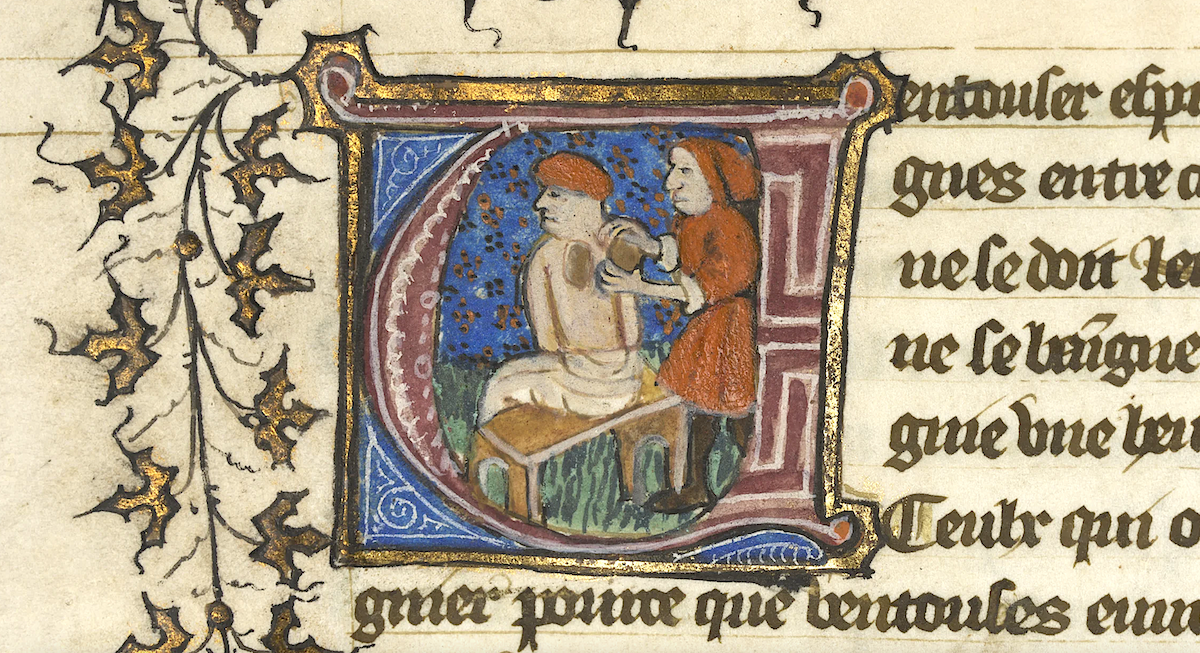
If any discussion of medieval medicine gets going, it’s only a matter of time before someone brings up leeches. And it turns out that the centrality of those squirming blood-suckers to the treatment of disease in the Middle Ages isn’t much overstated, at least judging by a look through Curious Cures. A Wellcome Research Resources Award-funded project of the University of Cambridge Libraries, it has recently finished conserving, digitizing, and making available online 190 manuscripts containing more than 7,000 pages of medieval medical recipes. These books contain a wealth of information even beyond the text on their pages: a multi-spectral imaging analysis of one of them, for example, revealed that it was once owned by a certain “Thomas Word, leche” — or leech, i.e., a healer who made intensive use of the tools you might imagine.
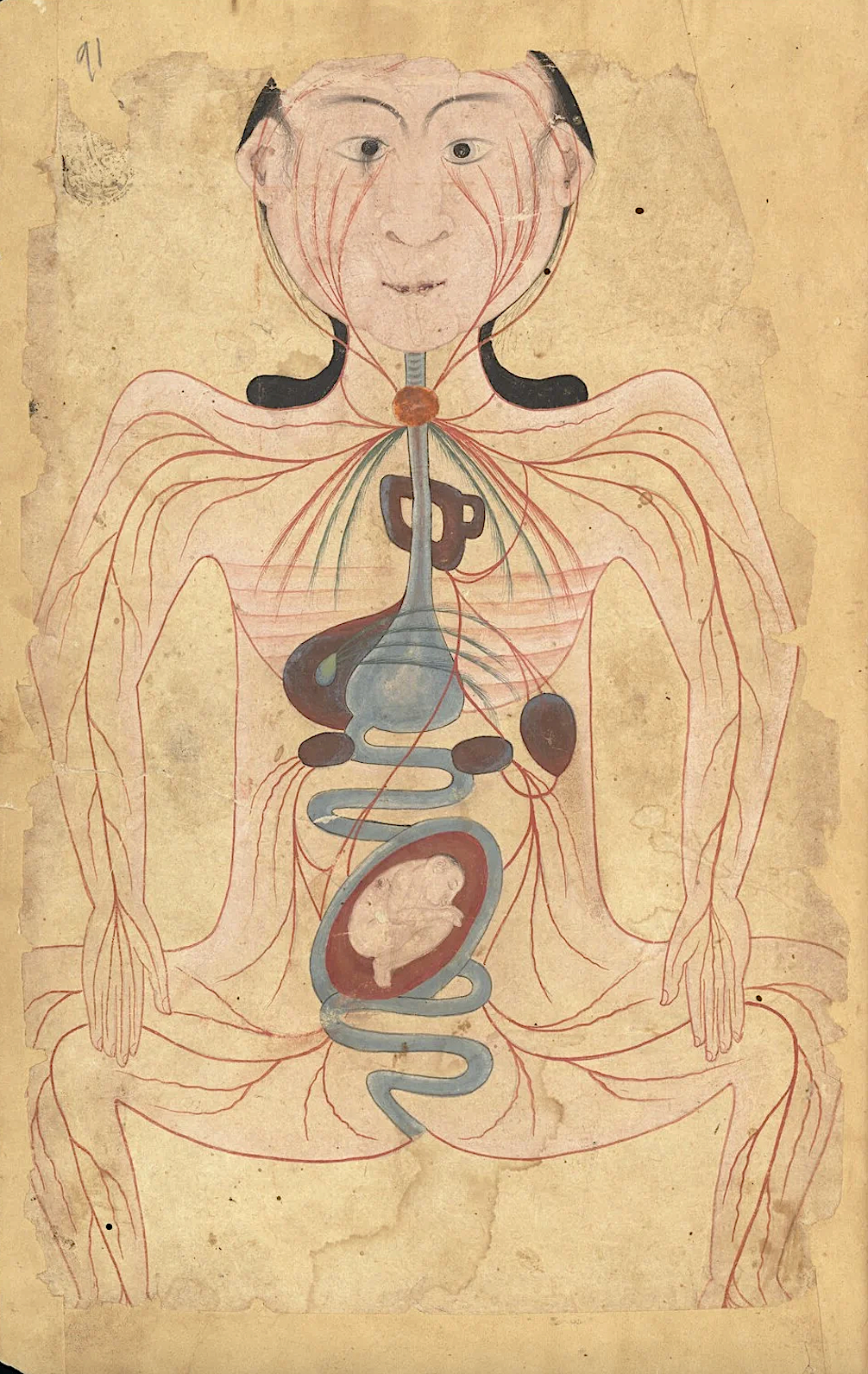
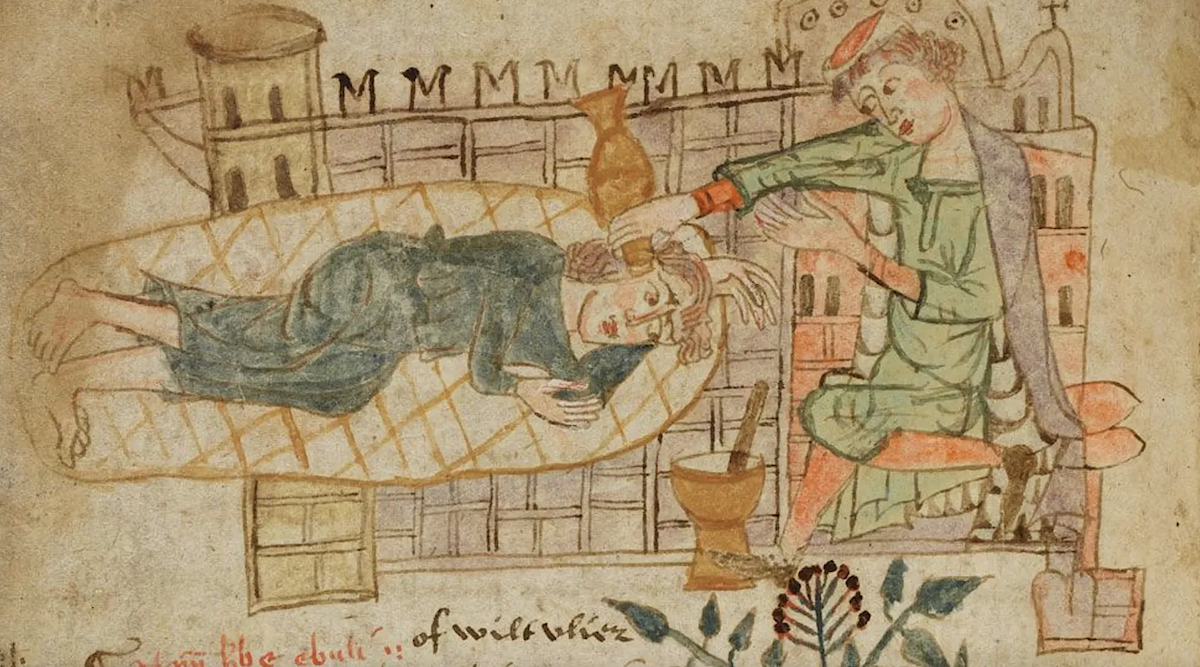
Not that the practice of medieval medicine came down to applying leeches and nothing more. In the manuscripts digitized by Curious Cures (which include not just strictly medical texts but also bibles, law texts, and books of hours), one finds a wonderland of dove feces, fox lungs, salted owl, eel grease, weasel testicles, quicksilver (i.e. mercury) — a wonderland for readers curious about medieval forms of knowledge, if not for the actual patients who had to undergo these dubious treatments.
But as any scholar of the subject would be quick to remind us, medical documents in the Middle Ages may have wantonly mixed folk and “official” knowledge, but they were hardly repositories of pure superstition: rather, they represent the best efforts of intelligent people to understand their own bodies and the world they inhabited, within the dominant worldview of their time and place.
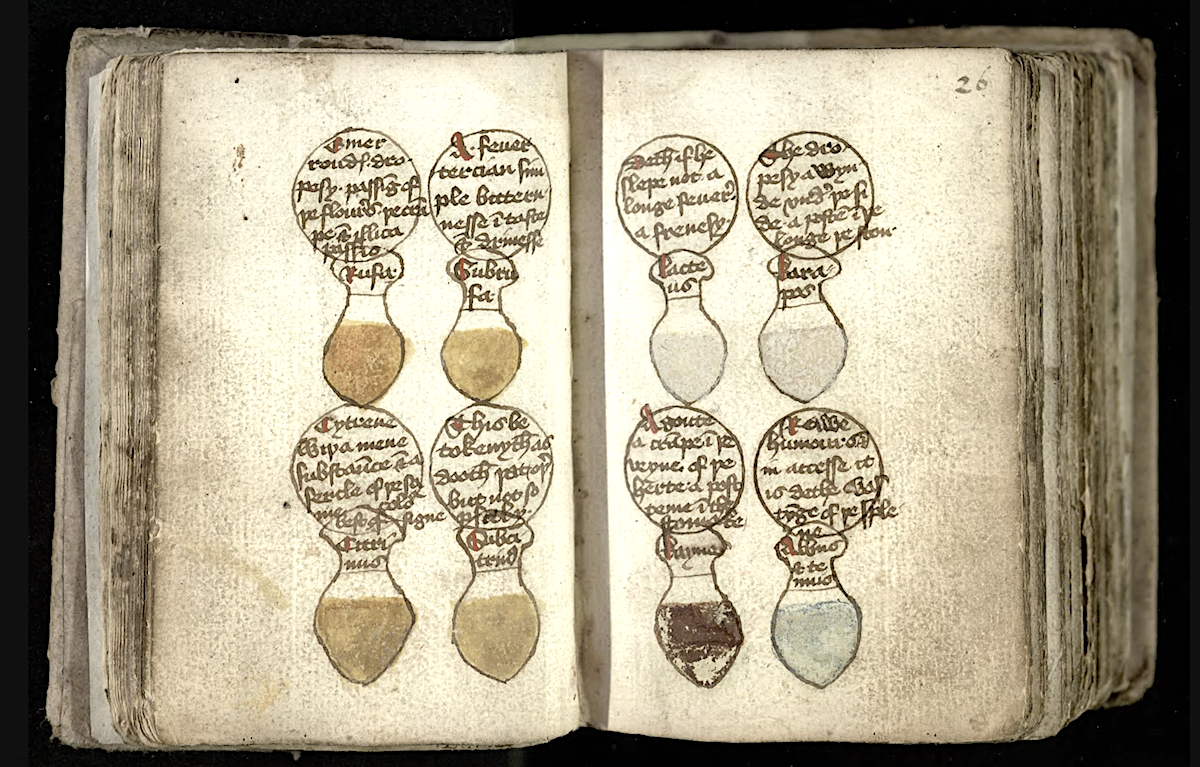
That was a time in which health was thought to be determined by the “four humors,” black bile, yellow bile, blood and phlegm; a time when certain parts of plants or animals were believed to be in “sympathetic” correspondence with certain parts of the human body; a time when repeatedly praying while clipping one’s fingernails, then burying those clippings in an elder tree, could plausibly cure a toothache. And now, it’s easier than ever to get a sense of what it must have been like, thanks to Curious Cures’ transcribed, translated, and searchable archive of all these manuscripts. The more outlandish remedies aside, what’s remarkable is how these books also acknowledge the importance of what we would now call a good night’s sleep, regular exercise, and a balanced, varied diet. Medievals may have understood their own health better than we imagine, but regardless, we’re probably not bringing back leechcraft anytime soon.
Related Content:
Based in Seoul, Colin Marshall writes and broadcasts on cities, language, and culture. His projects include the Substack newsletter Books on Cities and the book The Stateless City: a Walk through 21st-Century Los Angeles. Follow him on the social network formerly known as Twitter at @colinmarshall.
Read More...Archaeologists Discover a 2,400-Year-Old Skeleton Mosaic That Urges People to “Be Cheerful and Live Your Life”
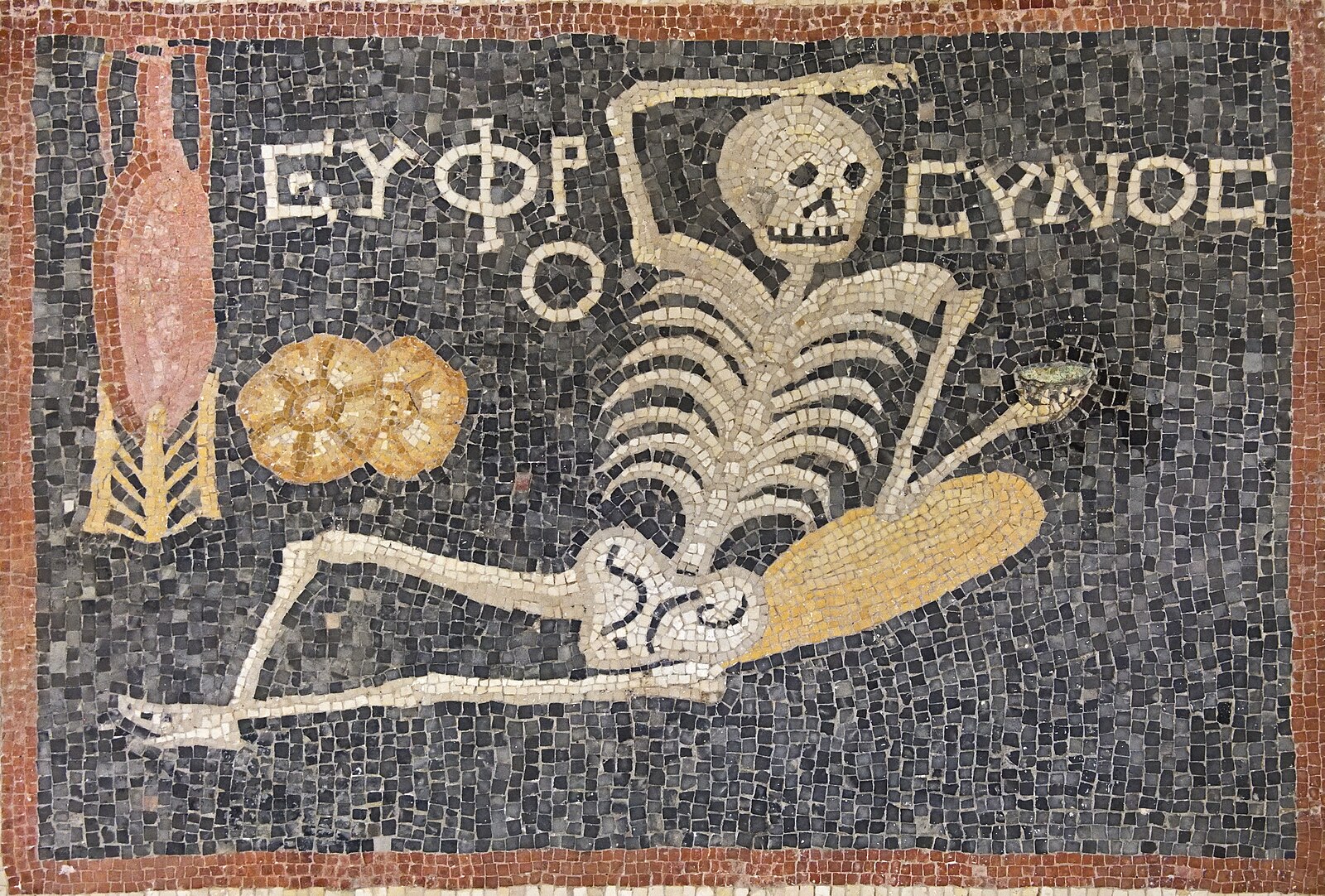
Image by Dosseman, via Wikimedia Commons
In 2012, archaeologists discovered in Southern Turkey a well-preserved mosaic featuring a skeleton savoring a loaf of bread and a pitcher of wine, surrounded by the Greek words “Be cheerful and live your life.” Dating back to the 3rd century BCE, the mosaic likely adorned the dining room of a wealthy villa in the ancient Greco-Roman city of Antioch. It’s a kind of memento mori, a reminder that life is short and you should enjoy it while you can. Or so that’s how many have interpreted the message of the mosaic.
If you would like to delve deeper, it’s worth reading the analysis and background information provided by The History Blog. Meanwhile, this separate post on Tumblr highlights other translations and interpretations of the mosaic’s key inscription.
If you would like to support the mission of Open Culture, consider making a donation to our site. It’s hard to rely 100% on ads, and your contributions will help us continue providing the best free cultural and educational materials to learners everywhere. You can contribute through PayPal, Patreon, and Venmo (@openculture). Thanks!
Related Content
A Rabbit Rides a Chariot Pulled by Geese in an Ancient Roman Mosaic (2nd century AD)
How to Make the 2000-Year-Old “Pizza” Discovered on a Pompeii Fresco
Read More...The Real Science Experiments That Inspired Frankenstein
With the Halloween season mere months away, the time has come to start thinking about what frightening reads to line up for ourselves this year. Some of us may reach for Mary Shelley’s Frankenstein; or, The Modern Prometheus, a story we all think we know. But a look into its context reveals that what’s now regarded as a timeless classic was, in its day, quite a topical novel. Introducing the 1931 James Whale film adaptation, the regular horror-movie player Edward Van Sloan describes Frankenstein as dealing with “the two great mysteries of creation: life and death” — which, when Shelley’s novel was published more than a century earlier, were yet more mysterious still.
“Worried by the potential inability to distinguish between the states of life and death, two doctors, William Hawes and Thomas Cogan, set up the Royal Humane Society in London in 1774,” writes Sharon Ruston at The Public Domain Review. At the time, it was actually called the Society for the Recovery of Persons Apparently Drowned, a name that would’ve doubled neatly as a mission statement. Falling into the rivers and canals of London was, it seems, a common occurrence in those days, and few members of the public possessed the swimming skills to save themselves. Thus the Society’s members took it upon themselves to devise methods of reviving those “persons apparently drowned,” whether their plunges were accidentally or deliberately taken.
One such attempted suicide, writes Ruston, “seems to have been Mary Shelley’s mother, the feminist, Mary Wollstonecraft,” who later complained about how, after leaping into the Thames, she was “inhumanly brought back to life and misery.” That incident could well have done its part to inspire Frankenstein, though notions of reviving the dead were very much in the air at the time, not least due to the attention being paid to the practice of “Galvanism,” which involved stimulating the muscles of dead animals and human bodies to movement using the then-novel phenomenon of electricity. In the England of that historical moment, it wasn’t entirely far-fetched to believe that the dead really could be brought back to life.
You can learn more about the scientific developments, social changes, and human anxieties (including about the possibility of being buried alive) that formed Frankenstein’s cultural background from the Vox History Club video above. In a way, it seems inevitable that someone in the early nineteenth century would write about a scientist avant la lettre who dares to create life from death. It just happened to be the teenage Shelley, to whom the idea came while engaged in a competition with Lord Byron, the writer-physician John Polidori, and her soon-to-be husband Percy Bysshe Shelley to see who could write the scariest story. Two centuries later, the story of Frankenstein may no longer scare us, but as told by Shelley, it still has a way of sounding strangely plausible.
Related content:
Based in Seoul, Colin Marshall writes and broadcasts on cities, language, and culture. His projects include the Substack newsletter Books on Cities and the book The Stateless City: a Walk through 21st-Century Los Angeles. Follow him on the social network formerly known as Twitter at @colinmarshall.
Read More...Tomorrow Never Knows: How The Beatles Invented the Future With Studio Magic, Tape Loops & LSD
“Tomorrow Never Knows” couldn’t be made today, and not just because the Beatles already made it in 1966. Marking perhaps the single biggest step in the group’s artistic evolution, that song is in every sense a product of its time. The use of psychedelic drugs like LSD was on the rise in the counterculture, as was the awareness of the religion and music of faraway lands such as India. At the same moment, developments in recording-studio technology were making new approaches possible, involving sounds that musicians never would have imagined trying before — and, when brought together, produced a result that many listeners of just a few years earlier would hardly have recognized as music at all.
In the new You Can’t Unhear This video above, host Raymond Schillinger explains all that went into the recording of “Tomorrow Never Knows,” which he calls “arguably the most pivotal song of the Beatles’ career.” It seems that John had undergone some considerable experiences during the group’s five-month-long break after Rubber Soul, given that he turned up to EMI Studios afterward with a song that “defied pretty much every convention of pop music at the time: the lyrics didn’t rhyme, the chord progression didn’t really progress, and instead of romantic love, the subject matter was expanding one’s psychic consciousness through ego death.” A young Geoff Emerick, who’d just been promoted to the role of the Beatles’ recording engineer, rose to the challenge of facilitating an equally non-standard studio process.
The wholly new sonic texture that resulted owes in large part to the use of multiple tape loops, literal sections of audio tape connected at the beginning and end to allow theoretically infinite repetition of their content. This was a fairly new musical technology at the time, and the Beatles made use of it with gusto, creating loops of all manner of sped-up sounds — an orchestra playing, a Mellotron, a reversed Indian sitar, Paul sounding like a seagull — and orchestrating them “live” during recording. (Ringo’s drum track, despite what sounds like a superhuman regularity in this context, was not, in fact a loop.) Other technologically novel elements included John’s double-tracked vocals run through a revolving Leslie speaker and a backwards guitar solo about whose authorship Beatles enthusiasts still argue.
What John had called “The Void,” was retitled after one of Ringo’s signature askew expressions (“a hard day’s night” being another) in order to avoid drawing too much attention as a “drug song.” But listeners tapped into the LSD scene would have recognized lyrical inspiration drawn from The Tibetan Book of the Dead, the ancient work that also informed The Psychedelic Experience, the guidebook by Timothy Leary and Richard Alpert (later Baba Ram Dass) with which John directed his own first trip. But even for the least turned-on Beatle fan, “Tomorrow Never Knows” was “like stepping from a black-and-white world into full color,” as Schillinger puts it. The Beatles might have gone the way of the Rolling Stones and chosen to record in an American studio rather than their home-away-from-home on Abbey Road, the unconventional use of its less-than-cutting-edge gear resulted in what remains a vividly powerful dispatch from the analog era — even here in the twenty-twenties, when consciousness expansion itself has gone digital.
Related content:
How John Lennon Wrote the Beatles’ Best Song, “A Day in the Life”
The Amazing Recording History of The Beatles’ “Here Comes the Sun”
The Experimental Movement That Created The Beatles’ Weirdest Song, “Revolution 9”
How “Strawberry Fields Forever” Contains “the Craziest Edit” in Beatles History
Based in Seoul, Colin Marshall writes and broadcasts on cities, language, and culture. His projects include the Substack newsletter Books on Cities and the book The Stateless City: a Walk through 21st-Century Los Angeles. Follow him on the social network formerly known as Twitter at @colinmarshall.
Read More...How Jackson Pollock Redefined Modern Art: An Introduction
In his lifetime, Jackson Pollock had only one successful art show. It took place at the Betty Parsons Gallery in New York in November 1949, and afterward, his fellow abstract expressionist Willem de Kooning declared that “Jackson has finally broken the ice.” Perhaps, according to Louis Menand’s book The Free World: Art and Thought in the Cold War, he meant that “Pollock was the first American abstractionist to break into the mainstream art world, or he might have meant that Pollock had broken through a stylistic logjam that American painters felt blocked by.” Whatever its intent, de Kooning’s remark annoyed art critic and major Pollock advocate Clement Greenberg, who “thought that it reduced Pollock to a transitional figure.”
It wasn’t necessarily a reduction: as Menand sees it, “all figures are transitional. Not every figure, however, is a hinge, someone who represents a moment when one mode of practice swings over to another.” Pollock was such a hinge, as, in his way, was Greenberg: “After Pollock, people painted differently. After Greenberg, people thought about painting differently.”
When they made their mark, “there was no going back.” Gallerist-YouTuber James Payne examines the nature of that mark in the new Great Art Explained video above, the first of a multi-part series on Pollock’s art and the figures that made its cultural impact possible. Even more important than Greenberg, in Payne’s telling, is Pollock’s fellow artist — and, in time, wife — Lee Krasner, whose own work he also gives its due.
We also see the paintings of American regionalist Thomas Hart Benton, Pollock’s teacher; Mexican muralist David Alfaro Siqueiros, in whose workshop Pollock participated; and even Pablo Picasso, who exerted subtle but detectable influences of his own on Pollock’s work. Other, non-artistic sources of inspiration Payne explores include the psychological theory of Carl Gustav Jung, with whose school of therapy Pollock engaged in the late nineteen-thirties and early forties. It was in those sessions that he produced the “psychoanalytic drawings,” one of several categories of Pollock’s work that will surprise those who know him only through his large-canvas, wholly abstract drip paintings. Each represents one stage of a complex evolutionary process: Pollock may have been the ideal artist for the new, post-war American world, but he hardly came fully formed out of Wyoming.
Related content:
Watch Portrait of an Artist: Jackson Pollock, the 1987 Documentary Narrated by Melvyn Bragg
The MoMA Teaches You How to Paint Like Pollock, Rothko, de Kooning & Other Abstract Painters
Based in Seoul, Colin Marshall writes and broadcasts on cities, language, and culture. His projects include the Substack newsletter Books on Cities and the book The Stateless City: a Walk through 21st-Century Los Angeles. Follow him on the social network formerly known as Twitter at @colinmarshall.
Read More...The Genius of Brian Wilson (RIP) and How He Turned “Good Vibrations” Into the Beach Boys’ Pocket Symphony
This week, Brian Wilson became the last of the Wilson brothers to shuffle off this mortal coil. Dennis, the first of the Wilsons to go, died young in 1983 — but not before offering this memorable assessment of the family musical project: “Brian Wilson is the Beach Boys. He is the band. We’re his messengers. He is all of it. Period. We’re nothing.” That was a bit harsh: Dennis may not have been a virtuoso drummer, but Beach Boys enthusiasts all credit his faintly despairing songs with enriching the band’s signature emotional landscape. Brian may have written “God Only Knows,” but he did so with his brother Carl’s voice in mind. And could even Brian’s other masterpiece “Good Vibrations” have made the same impact without the participation of his much-resented cousin Mike Love?
Still, without Brian’s orchestration, the other Beach Boys’ voices would never have come together in the powerful way they did, to say nothing of the contributions of the countless studio musicians who played on their recordings. Before “Good Vibrations,” never had a pop song owed so much to so many musicians — and, at the same time, even more to the fertile and unconventional sonic imagination of just one man.
Laboriously crafted over seven months in four different studios, it came out in October of 1966 as the most expensive single ever produced. Its then-epic length of 3:35 filled Capitol Records with doubts about its radio viability, but that turned out to be an astonishingly brief running time to contain the sheer compositional intensity that soon got the song labeled a “pocket symphony.”
“Good Vibrations” and its myriad intricacies are scrutinized to this day, most recently in video essays like the ones you see here. On his Youtube channel Polyphonic, Noah Lefevre calls it “dense enough that you could teach an entire music course on it.” David Hartley grants it the status of “probably the most complex song ever recorded,” and even “the first song ever created using copy and paste.” Long before the era of digital audio workstations, Brian Wilson used wholly analog studio technology to string together “feels,” his name for the disparate fragments of music in his mind. His method contributed to the symphonic construction of “Good Vibrations,” and his willingness to follow the mood wherever it led resulted in the song’s distinctive use of an Electro-Theremin. Despite all this, some listeners still question his centrality to the Beach Boys’ music; for them, there will always be “Kokomo.”
Related content:
How the Beach Boys Created Their Pop Masterpieces: “Good Vibrations,” Pet Sounds, and More
Based in Seoul, Colin Marshall writes and broadcasts on cities, language, and culture. His projects include the Substack newsletter Books on Cities and the book The Stateless City: a Walk through 21st-Century Los Angeles. Follow him on the social network formerly known as Twitter at @colinmarshall.
Read More...They Study Authoritarianism. And They’re Leaving the U.S.: Why Three Yale Professors Have Moved to U. Toronto
Three Yale professors—Timothy Snyder, Jason Stanley and Marci Shore–have spent their careers studying fascism and authoritarianism. They know the signs of emerging authoritarianism when they see it. Now, they’re seeing those signs here in the United States, and they’re not sitting by idly. They’ve moved to the University of Toronto where they can speak freely, without fearing personal or institutional retribution. Above, they share their views in the NYTimes Op-Doc. It comes prefaced with the text below:
Legal residents of the United States sent to foreign prisons without due process. Students detained after voicing their opinions. Federal judges threatened with impeachment for ruling against the administration’s priorities.
In this Opinion video, Marci Shore, Timothy Snyder and Jason Stanley, all professors at Yale and experts in authoritarianism, explain why America is especially vulnerable to a democratic backsliding — and why they are leaving the United States to take up positions at the University of Toronto.
Professor Stanley is leaving the United States as an act of protest against the Trump administration’s attacks on civil liberties. “I want Americans to realize that this is a democratic emergency,” he said.
Professor Shore, who has spent two decades writing about the history of authoritarianism in Central and Eastern Europe, is leaving because of what she sees as the sharp regression of American democracy. “We’re like people on the Titanic saying our ship can’t sink,” she said. “And what you know as a historian is that there is no such thing as a ship that can’t sink.”
She borrows from political and apolitical Slavic motifs and expressions, arguing that the English language does not fully capture the democratic regression in this American moment.
Professor Snyder’s reasons are more complicated. Primarily, he’s leaving to support his wife, Professor Shore, and their children, and to teach at a large public university in Toronto, a place he says can host conversations about freedom. At the same time, he shares the concerns expressed by his colleagues and worries that those kinds of conversations will become ever harder to have in the United States.
“I did not leave Yale because of Donald Trump or because of Columbia or because of threats to Yale — but that would be a reasonable thing to do, and that is a decision that people will make,” he wrote in a Yale Daily News article explaining his decision to leave.
Their motives differ but their analysis is the same: ignoring or downplaying attacks on the rule of law, the courts and universities spells trouble for our democracy.
To delve deeper into their work, see Stanley and Snyder’s respective works: How Fascism Works: The Politics of Us and Them and On Tyranny: Twenty Lessons from the Twentieth Century.
Related Content
Actor John Lithgow Reads 20 Lessons on Tyranny, Penned by Historian Timothy Snyder
Umberto Eco’s List of the 14 Common Features of Fascism
Toni Morrison Lists the 10 Steps That Lead Countries to Fascism (1995)
Read More...How Charlie Chaplin, Buster Keaton & Harold Lloyd Pulled Off Their Spectacular Stunts During Silent Film’s Golden Age
It can be tempting to view the box office’s domination by visual-effects-laden Hollywood spectacle as a recent phenomenon. And indeed, there have been periods during which that wasn’t the case: the “New Hollywood” that began in the late nineteen sixties, for instance, when the old studio system handed the reins to inventive young guns like Peter Bogdanovich, Francis Ford Coppola, and Martin Scorsese. But lest we forget, that movement met its end in the face of competition from late-1970s blockbusters like Jaws and Star Wars, a new kind of blockbuster that signaled a return to the simple thrills of silent cinema.
Even a century ago, many moviegoers expected two experiences above all: to be wowed, and to be made to laugh. No wonder that era saw visual comedians like Harold Lloyd, Buster Keaton, and Charlie Chaplin become not just the most famous actors in the world, but some of the most famous human beings in the world.
Staying on top required not just serious performative skill, but also equally serious technical ingenuity, as explained in the new Lost in Time video above. It breaks down just how Lloyd, Keaton, and Chaplin pulled off some of their career-defining stunts on film, putting the actual clips alongside CGI reconstructions of the sets as they would have looked during shooting.
When Lloyd hangs from the arms of a clock high above downtown Los Angeles in Safety Last! (1923), he’s really hanging high above downtown Los Angeles — albeit on a set constructed atop a building, shot from a carefully chosen angle. When the entire façade of a house falls around Keaton in Steamboat Bill, Jr. (1928), leaving him standing unharmed in a window frame, the façade actually fell around him — in a precisely choreographed manner, but with only a couple of inches of clearance on each side. When a blindfolded Chaplin skates perilously close to a multistory drop in Modern Times (1936), he’s perfectly safe, the edge of the floor being nothing more than a matte painting: one of those analog technologies of movie magic whose obsolescence is still bemoaned by classic-film enthusiasts, from whom CGI, no matter how expensive, never quite thrills or amuses in the same way.
Related content:
The Art of Creating Special Effects in Silent Movies: Ingenuity Before the Age of CGI
Watch the Only Time Charlie Chaplin & Buster Keaton Performed Together On-Screen (1952)
Charlie Chaplin Does Cocaine and Saves the Day in Modern Times (1936)
Based in Seoul, Colin Marshall writes and broadcasts on cities, language, and culture. His projects include the Substack newsletter Books on Cities and the book The Stateless City: a Walk through 21st-Century Los Angeles. Follow him on the social network formerly known as Twitter at @colinmarshall.
Read More...Support Us
We're hoping to rely on loyal readers, rather than erratic ads. Please click the Donate button and support Open Culture. You can use Paypal, Venmo, Patreon, even Crypto! We thank you!

About Us

Open Culture scours the web for the best educational media. We find the free courses and audio books you need, the language lessons & educational videos you want, and plenty of enlightenment in between.
Advertise With Us
FREE UPDATES!
GET OUR DAILY EMAIL
Get the best cultural and educational resources on the web curated for you in a daily email. We never spam. Unsubscribe at any time.
FOLLOW ON SOCIAL MEDIA
Open Culture editor Dan Colman scours the web for the best educational media. He finds the free courses and audio books you need, the language lessons & movies you want, and plenty of enlightenment in between.
Advertise With Us


